

Business
(VIDEO) Two Pilots Killed in LaGuardia Airport Runway Collision as Air Canada Jet Hits Fire Truck


NEW YORK — Two pilots died late Sunday when an Air Canada Express regional jet collided with a Port Authority fire truck on a runway at New York’s LaGuardia Airport, injuring dozens of people and forcing the busy hub to close for most of Monday as federal investigators examined the cause.

The crash occurred shortly before 11:40 p.m. on March 22, 2026, when the Bombardier CRJ-900 aircraft, operating as Jazz Aviation Flight AC8921 from Montreal, struck the firefighting vehicle on Runway 4 moments after landing. Port Authority Executive Director Kathryn Garcia confirmed at a news conference that the pilot and co-pilot were killed in the impact, which crushed the nose of the plane. Air Canada’s care team notified the families.
The plane carried 72 passengers and four crew members, for a total of 76 people aboard. Forty-one individuals were transported to area hospitals — 39 from the aircraft and two Port Authority Aircraft Rescue and Firefighting officers from the truck. Injuries ranged from minor to serious, though no additional fatalities were reported as of Monday morning. Some passengers sustained critical conditions requiring ongoing treatment.
The fire truck was responding to a separate incident involving a United Airlines aircraft that reported an odor in the cabin, Garcia said. The vehicle was positioned on the runway when the incoming jet, traveling at approximately 24 mph according to FlightRadar24 data, struck it. Photos from the scene showed severe damage to the plane’s forward section, with debris scattered and the cockpit area heavily compromised.
LaGuardia, one of the nation’s busiest airports, halted all operations immediately after the collision. A ground stop was issued, leading to more than 500 flight cancellations and widespread delays rippling across the Northeast. Officials reopened the airport around 2 p.m. Monday, but air traffic control faced significant backlog. Passengers described chaotic scenes, with some evacuating via emergency slides amid smoke and confusion.
Survivors recounted terrifying moments. One passenger told NBC News the landing felt normal until a sudden jolt and screeching metal. “We hit something hard — the plane shuddered, lights flickered, and then we smelled smoke,” the individual said. Crew members assisted with evacuation as emergency responders arrived quickly. No fire erupted on the aircraft, though fuel leaks were reported.
The National Transportation Safety Board launched a full investigation Monday, dispatching a go-team to the site. Preliminary focus includes runway incursion protocols, visibility conditions — clear skies were reported — and communication between air traffic control, the aircraft and ground vehicles. The Federal Aviation Administration is assisting, reviewing radar data, cockpit voice recordings and flight data recorder information once recovered.
Air Canada issued a statement expressing deep sorrow: “We are devastated by the loss of our two pilots and extend our heartfelt condolences to their families, friends and colleagues. Our thoughts are with all those injured and affected.” The airline activated support teams for passengers and families, offering accommodations and rebooking options.
Jazz Aviation, the regional partner operating the flight, cooperated fully with authorities. The CRJ-900, a twin-engine jet commonly used for short-haul routes, sustained substantial structural damage but remained intact enough for evacuation.
The incident revives concerns about runway safety at congested U.S. airports. LaGuardia, constrained by its urban location and water boundaries, has seen prior close calls but no fatal collisions of this nature in recent decades. Experts noted that ground vehicle movements during active landings require precise coordination to prevent such tragedies.
Passenger reactions varied from shock to relief. Many praised the crew’s swift actions in guiding evacuation. One traveler posted on social media: “Chaos but everyone got out — thankful for the flight attendants.” Others criticized airport operations, questioning why a rescue vehicle was on an active runway.
As of Monday afternoon, 41 people remained hospitalized, with nine still under care. The two injured firefighters were treated for non-life-threatening conditions.
The crash adds to a string of aviation incidents drawing scrutiny, though most recent U.S. events have involved minor injuries or near-misses. The NTSB’s final report, expected months away, will detail contributing factors and recommend safety improvements.
For now, travelers face disruptions at LaGuardia and connecting airports. Airlines rerouted flights to nearby hubs like Newark and JFK, straining resources. The Port Authority urged passengers to check status before heading to the airport.
This tragedy underscores the risks inherent in busy air operations, where split-second decisions can have devastating consequences. As investigators comb the wreckage and records, the focus remains on honoring the fallen pilots and supporting the injured while preventing future occurrences.


According to the CDC’s 2024 mortality data, falls are the leading cause of injury-related death among adults aged 65 and older, claiming over 38,000 lives annually.
Yet for every fatal fall, dozens more result in serious injuries that fundamentally alter a senior’s independence and quality of life. What makes these statistics particularly sobering is that most falls happen not on icy sidewalks or poorly maintained public spaces, but in the familiar confines of home — places where seniors should feel safest.
The demographics driving this crisis are impossible to ignore. By 2030, the U.S. Census Bureau projects that all baby boomers will be 65 or older, creating an unprecedented population of seniors aging in place. As families increasingly choose home-based care over institutional settings, the responsibility for creating safe living environments has shifted from professional facilities to everyday households. The challenge isn’t just about individual safety — it’s about enabling millions of older adults to maintain their independence while reducing the $50 billion annual healthcare burden that fall-related injuries create.
The encouraging reality is that most home-related falls stem from predictable, modifiable risk factors. Unlike age-related changes in vision or balance that develop gradually, environmental hazards can be addressed immediately with targeted interventions. Understanding which modifications deliver the greatest impact — and how they work together with physical health strategies — can transform a home from a collection of hidden dangers into a foundation for confident, independent living.
What Common Fall Risks Do Seniors Face at Home
The mechanics behind most home falls reveal a complex interaction between environmental hazards and age-related physiological changes that many families don’t fully grasp until after an incident occurs. While popular wisdom focuses on obvious culprits like loose rugs or poor lighting, the reality involves subtler factors that compound over time to create dangerous situations.
Environmental hazards represent the most immediate and controllable risk category. Beyond the classic tripping hazards — throw rugs, electrical cords, and cluttered walkways — less obvious dangers include inconsistent floor surfaces, inadequate lighting transitions between rooms, and furniture arrangements that require awkward navigation. The National Institute on Aging’s 2023 home safety research identifies threshold strips between rooms, bathroom surfaces when wet, and stairs without proper railings as the three most common fall locations. What surprises many caregivers is that familiarity with the home environment can actually increase risk, as seniors develop movement patterns based on muscle memory that may not adapt quickly when physical capabilities change.
Physical factors create the underlying vulnerability that transforms minor environmental challenges into serious hazards. Age-related changes in balance, coordination, and reaction time mean that situations a younger person might navigate easily become problematic. Vision changes — particularly difficulty with depth perception and adaptation to lighting changes — significantly impact a senior’s ability to identify and respond to environmental hazards. Medications commonly prescribed for conditions like high blood pressure, diabetes, and depression can cause dizziness, drowsiness, or orthostatic hypotension, where blood pressure drops suddenly when standing.
Behavioral risks often develop as adaptive strategies that inadvertently increase fall probability. Many seniors begin avoiding certain areas of their homes or modifying their movement patterns in ways that seem safer but actually create new hazards. Rushing to answer the phone, reaching for items stored in high places, or attempting to maintain independence by avoiding assistive devices can turn routine activities into dangerous situations. The intersection of these factors — a senior with medication-induced dizziness navigating a dimly lit hallway to answer a phone call — illustrates how seemingly minor risks compound exponentially.
Understanding this multifactorial nature is crucial because effective fall prevention requires addressing multiple risk categories simultaneously rather than focusing on any single intervention.
Which Home Modifications Most Effectively Reduce Fall Hazards
The evidence on home modifications reveals that the most effective interventions target the intersection points where environmental hazards meet common senior movement patterns. Rather than attempting to eliminate every possible risk, successful fall prevention focuses on the modifications that address the highest-probability scenarios while preserving independence and normal household function.
How Can Flooring and Lighting Be Improved for Safety
Flooring interventions require balancing safety with practicality, as many traditional recommendations prove difficult to implement in real-world settings. The most effective approach involves securing existing surfaces rather than complete replacement. Professional-grade double-sided carpet tape can eliminate the movement in area rugs that creates tripping hazards, while textured adhesive strips applied to smooth surfaces provide traction without requiring major renovation. For homes with mixed flooring types, the priority becomes eliminating height variations at transition points — even quarter-inch differences in floor levels create significant trip risks for seniors with reduced foot clearance.
Strategic lighting improvements deliver disproportionate safety benefits relative to their cost and complexity. The key insight from occupational therapy research is that seniors need consistent illumination levels throughout their movement paths, not just bright lights in individual rooms. Installing motion-activated LED strips along hallway baseboards creates continuous pathway lighting that activates before seniors need to search for wall switches. In bathrooms and kitchens — the two highest-risk areas for falls — under-cabinet lighting and motion-sensor ceiling fixtures eliminate the dangerous transition period when someone enters a dark space and fumbles for controls.
The lighting modification that families consistently underestimate is nighttime navigation lighting. Battery-powered motion sensors placed at bedroom exits and bathroom entrances provide enough illumination for safe movement without the harsh brightness that can interfere with sleep patterns.
What Role Do Grab Bars and Clutter Management Play
Grab bar installation represents one of the few modifications where professional installation often proves cost-effective in the long term. The Americans with Disabilities Act guidelines specify grab bars must support 250 pounds of force, which requires proper mounting into wall studs rather than drywall anchors. The most critical locations include inside shower stalls, next to toilets, and along any stairs seniors use regularly. What many families miss is that grab bar placement matters as much as installation quality — bars positioned for pulling rather than pushing, and placed at heights that accommodate the senior’s actual reach and grip strength rather than standard measurements.
Systematic clutter management requires ongoing attention but delivers immediate risk reduction. The most effective approach involves creating designated pathways throughout the home that remain consistently clear, rather than attempting to eliminate all clutter. These pathways should be wide enough for comfortable movement with assistive devices and should connect the most frequently used areas — bedroom to bathroom, bedroom to kitchen, and seating areas to exits. For families managing the belongings of seniors who have accumulated possessions over decades, focusing pathway clearance first allows for gradual decluttering without overwhelming anyone involved in the process.
Emergency situations often reveal the importance of these modifications. When seniors face health crises that affect their balance or mobility, properly installed grab bars and clear pathways can mean the difference between safely navigating the home during recovery and requiring immediate placement in assisted care facilities.
How Does Physical Health Impact Fall Prevention in Seniors
Physical conditioning creates the foundation that allows environmental modifications to be truly effective — without adequate strength and balance, even the safest home environment cannot fully prevent falls. The relationship between physical capabilities and fall risk operates on multiple levels, from the obvious connection between leg strength and stability to subtler factors like reaction time and proprioception.
Balance training specifically addresses the vestibular and proprioceptive changes that make seniors vulnerable to falls even in familiar environments. Simple exercises like standing on one foot while holding a countertop, heel-to-toe walking along a hallway, or weight shifts while standing can significantly improve stability within weeks. The research from the Journal of the American Geriatrics Society shows that seniors who participate in structured balance training programs reduce their fall risk by approximately 24%. What makes these exercises particularly valuable is that they can be integrated into daily routines — balance practice during morning hygiene routines, weight shifting while preparing meals, or proprioceptive challenges while watching television.
Strength exercises targeting the lower body and core provide the muscular foundation for safe movement throughout the home. Chair-based exercises that focus on sit-to-stand movements, calf raises while holding kitchen counters, and wall push-ups can maintain or rebuild the functional strength needed for navigating stairs, getting out of bed safely, and recovering from minor balance disturbances. The key insight from physical therapy research is that functional strength — the ability to perform specific movement patterns — matters more than overall muscle mass.
Medication management represents a critical but often overlooked component of fall prevention. Many seniors take multiple medications that can interact to increase fall risk through dizziness, confusion, or blood pressure changes. When someone experiences an unexpected fall, particularly after successful navigation of their home environment for months or years, medication review should be among the first considerations. Working with pharmacists to understand timing of medications, potential interactions, and strategies for managing side effects can be as important as any physical modification to the home environment.
The integration of physical health strategies with home modifications creates a comprehensive approach where environmental supports compensate for physical limitations while exercise interventions work to maintain and improve functional capabilities.
What Technology and Tools Support Fall Prevention at Home
Modern fall prevention technology has evolved beyond basic alert systems to include sophisticated monitoring and intervention tools that can seamlessly integrate into a senior’s daily routine. The most effective technological solutions address multiple risk factors simultaneously while preserving the autonomy that makes aging in place attractive.
Emergency response systems have advanced significantly from the traditional “I’ve fallen and can’t get up” pendants. Current-generation devices include automatic fall detection using accelerometers and gyroscopes, GPS location tracking for outdoor incidents, and two-way communication that doesn’t require the user to press a button. Some systems now integrate with smart home platforms to automatically unlock doors for emergency responders and provide medical information to first responders. The critical consideration for families is choosing systems that balance comprehensive monitoring with user acceptance — devices that are comfortable, reliable, and don’t create anxiety about constant surveillance.
Smart lighting solutions represent one of the most practical technological interventions available. Motion-activated LED systems can be programmed to provide graduated lighting that prevents the jarring transition from darkness to bright light that can temporarily impair vision. Some systems include pathway lighting that activates sequentially — bedroom to hallway to bathroom — creating a lighted trail that guides movement safely. Voice-activated lighting controls eliminate the need to navigate in darkness searching for switches, while smartphone integration allows family members to remotely adjust lighting schedules based on the senior’s routines.
Monitoring and alert technologies now include sophisticated options for family members who live at a distance. Smart sensors placed on doors, refrigerators, and medication containers can provide daily activity confirmation without intrusive cameras. Some systems detect deviation from normal routines — like failure to open the refrigerator by a certain time or absence of movement in key areas of the home — and send gentle check-in alerts before escalating to emergency contacts. For individuals recovering from injuries or managing chronic conditions that increase fall risk, these systems provide peace of mind while maintaining independence.
The key to successful technology integration lies in selecting tools that enhance rather than complicate daily routines. The most effective solutions work invisibly in the background, providing safety benefits without requiring seniors to master complex new interfaces or remember additional daily tasks.
What Best Practices Can Caregivers Use to Support Fall Prevention
Effective caregiver support for fall prevention requires a systematic approach that balances safety improvements with respect for autonomy. The most successful interventions involve ongoing assessment, collaborative planning, and gradual implementation strategies that avoid overwhelming seniors with dramatic changes to their living environment.
Assessment techniques should begin with understanding the senior’s daily movement patterns and identifying the specific scenarios where falls are most likely to occur. Rather than conducting a single comprehensive safety evaluation, effective caregivers observe how their loved one navigates the home during different times of day, in various lighting conditions, and when managing different daily activities. This observational approach reveals risks that might not be apparent during formal assessments — like the difficulty reaching items in specific cabinets, challenges with particular doorway thresholds, or problems with nighttime navigation.
Communication strategies play a crucial role in gaining acceptance for necessary modifications. Many seniors resist changes to their home environment because they perceive safety improvements as evidence of declining independence. Effective caregivers frame modifications in terms of maintaining independence longer rather than compensating for limitations. Involving seniors in the selection and placement of safety equipment, explaining the reasoning behind specific recommendations, and allowing them to maintain control over implementation timing can significantly improve compliance with fall prevention strategies.
Coordinated prevention approaches work best when they address multiple risk factors simultaneously while allowing for gradual adjustment. This might involve beginning with the modifications that are least disruptive to daily routines — improving lighting and clearing pathways — before introducing more significant changes like grab bar installation or furniture rearrangement. For families dealing with multiple concerns about aging parents, fall prevention often serves as an entry point for broader conversations about safety, health management, and long-term planning.
The reality is that even minor injuries can have major consequences for seniors, particularly when they result from incidents that could have been prevented through better planning and environmental modifications. Beyond the immediate trauma of a fall, many seniors experience lasting anxiety about movement within their own homes. Serious injuries often require slip and fall lawyer in Edison consultation, especially when inadequate building maintenance or defective equipment contributes to accidents. This psychological impact can lead to reduced activity levels and social isolation that ultimately increase rather than decrease fall risk.
The most effective caregiver approach recognizes that fall prevention is an ongoing process rather than a one-time intervention, requiring regular reassessment as physical capabilities and living situations evolve.
Creating a truly fall-safe home environment requires understanding that successful prevention strategies evolve with changing needs and capabilities. As seniors age in place, the modifications that worked effectively one year may need adjustment as vision, mobility, or medication regimens change. The families who achieve the best long-term outcomes treat fall prevention as a dynamic process, regularly reassessing risks and updating interventions based on what they observe in daily life. Rather than waiting for an incident to prompt action, proactive modification creates the foundation for sustained independence and confidence in navigating the place that should feel most secure — home.


Starmer, aiming for leadership reset, names former UK PM Gordon Brown as adviser

April Jobs Report: Scratch This Surface
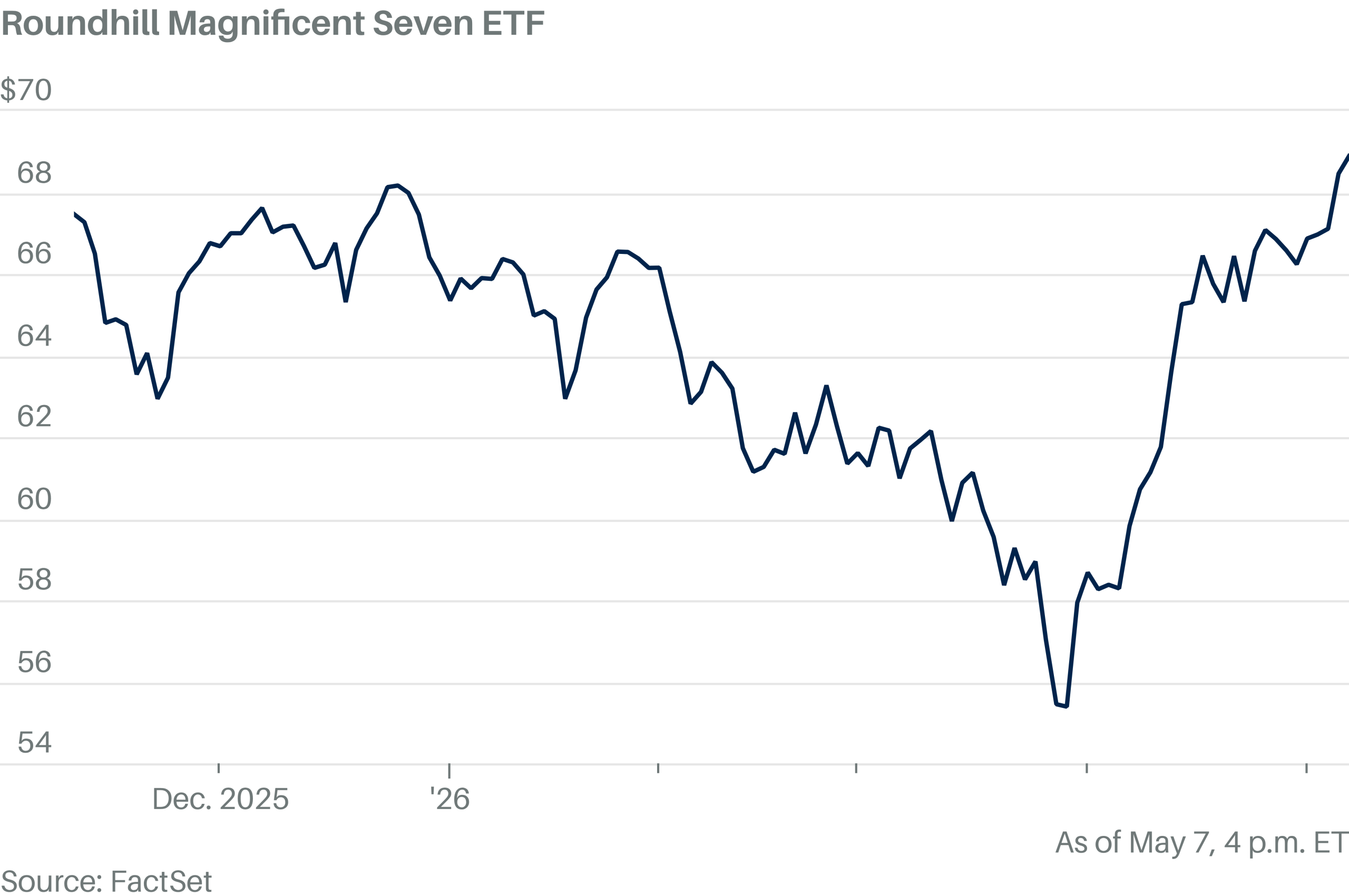
Megacap tech stocks were racking up gains ahead of the opening bell on Friday, putting an exchange-traded fund that tracks the blue-chip on course for a record high.
Roundhill’s Magnificent Seven ETF climbed 0.6% in premarket trading. If it can hold those gains until the close, it would lock in its first all-time high since October 2025.
Each member of the Magnificent Seven was rising in the premarket, with chip designer Nvidia and electric-vehicle maker Tesla up by nearly 1%.
Business
Ignore market noise, India’s long-term story intact, say D-Street bulls Ramesh Damani and Sunil Singhania

Speaking at a fireside session during the Groww India Investor Festival 2026 in Mumbai, both investors urged retail participants to ignore short-term market noise and stay focused on long-term wealth creation through disciplined investing.
“We have become used to markets delivering 15-20 percent returns every year after COVID. Markets do not move in a straight line,” Damani said, cautioning investors against drawing conclusions from short-term corrections or temporary underperformance.
Referring to past market cycles, Damani said benchmark indices across global markets have frequently moved sideways for long stretches, even while fundamentally strong companies continued to steadily create substantial shareholder value beneath the broader market’s muted performance.
“When I started my investing journey, the Sensex was below 1,000. Today it is above 80,000. There is no reason to believe India’s next 10-20 years will not continue to create massive wealth,” he said.

Addressing concerns over persistent foreign institutional investor outflows and India lagging peers such as Korea, Taiwan and the US in recent months, Damani argued that fears of a slowdown in domestic investor participation were overstated.
“Whenever foreigners sell, someone is buying those stocks. Domestic investors understand Indian businesses best, and they are backing Indian companies with conviction,” he said.FIIs have offloaded domestic equities worth Rs 2.06 lakh crore in 2026, remaining net sellers for the third successive month-to-date. They have sold shares worth Rs 14,231 crore, so far this month. In less than five months, foreign investment outflow has surpassed 2025 figures of Rs 1.66 lakh crore.
Also read: FIIs sell over Rs 2 lakh crore worth of Indian equities in 2026. What lies ahead?
Nifty is down over 7% on an year-to-date basis even as its Asian peers like Shanghai Composite (4%), Nikkei 225 (21%) and Kospi (74%) have outperformed the headline index. Its Wall Street rivals like Dow (2.5%) and Nasdaq Composite (13%) have also fared better.
Echoing a similar sentiment, Abakkus Asset Manager Founder Sunil Singhania said India’s economic model remains fundamentally stronger because of its consumption-led growth engine, though he acknowledged that India has not yet emerged as a dominant player in sectors such as semiconductors and deep technology.
“There is no doubt that several global companies have done phenomenally well in AI and semiconductors. But consumption and people ultimately sustain economies, and India remains one of the strongest long-term consumption stories globally,” Singhania said.
Both investors repeatedly stressed the importance of patience and compounding, warning retail investors against chasing speculative returns or shifting between trending asset classes.
“There is no secret to wealth creation. The real secret is compounding,” Damani said during the audience interaction, adding that investors should focus on quality businesses and allow investments time to grow.
Sectoral opportunities
Damani remains bullish on defence, infrastructure, logistics and energy-linked businesses, arguing they could emerge as long-term beneficiaries in an increasingly fragmented geopolitical environment.
“The world has changed. Every country now wants stronger self-defence and supply-chain independence,” he said, adding that investors would need to reposition portfolios for a changing global order.
Asset allocation: Gold/silver
The two investors also pushed back against the growing retail fascination with gold and silver following the sharp rally in precious metals.
Singhania called gold and silver as non-productive assets while emphasising the importance of equities, referring to them as growing assets. He recommended only limited allocation towards precious metals.
(Disclaimer: The recommendations, suggestions, views, and opinions given by the experts are their own. These do not represent the views of The Economic Times.)

Used cars are offered for sale at a dealership on July 11, 2023 in Chicago, Illinois.
Scott Olson | Getty Images
The head of one of the nation’s largest auto finance lenders isn’t overly concerned about rising consumer automotive debt and inflated used car prices leading to longer loans on vehicle purchases.
His main reasoning? The percentage of income consumers are spending on their vehicles has remained relatively flat compared with 2019, before the coronavirus pandemic led to inflated pricing as demand surged but inventories stayed low.
“If I just told you, ‘Car prices going up, interest rates going up, insurance prices going up,’ you would say, ‘You know what, consumers must be paying more as a ratio to the income,’” Capital One Auto President Sanjiv Yajnik told CNBC. “However, if you look at every quintile of salary and earnings of people, the payment-to-income ratio has remained fairly flat.”
While Capital One reports median monthly car ownership payments have jumped from $390 to $525 since 2019, data provided exclusively to CNBC from its automotive unit suggest that vehicle costs have stayed relatively stable compared with income. That’s because, overall, the payment-to-income ratio has remained flat at approximately 10% since 2019, according to the automotive arm of the American bank.
Capital One Auto found 80% of car purchasers who finance a vehicle are below the generally recognized payment to income threshold of 15%.
“The consumer is being cautious. They’re being responsible. This is a much healthier way to do things than the alternative, because it’s not a discretionary spend,” said Yajnik, referring to consumers prioritizing vehicle payments for transportation, including work.
To get to that goal, however, more consumers are taking on longer loans to keep payments affordable.
The auto finance veteran’s view contrasts with others in the industry who view the longer term loans as a detriment to consumers’ pocketbooks.
They argue that so-called “forever loans” of six years or more have led to many buyers, particularly of new vehicles, being underwater on the equity of their cars and trucks. That means they owe more than their vehicle is worth when they decide to trade it in.
Edmunds reports roughly 26% of used vehicles purchased that involved a trade-in vehicle had negative equity this year through April. The amount of negative equity averaged $5,105, a 35% increase from 2019.
“As loan term lengths increase on average, the pace at which consumers make progress paying down their balance slows,” Jessica Caldwell, head of insights for CarMax‘s Edmunds, wrote in a recent online post. “If consumers then trade in their vehicle too soon for any reason, they are increasingly left holding more loan debt.”
Regarding financing for new vehicles during the first quarter, 90.2% of new vehicle loans involving trade-ins with negative equity carried terms of at least 72 months, and 43% extended to 84 months, according to Caldwell. The average negative equity trade-in was $7,183 during the quarter for new vehicles, according to Edmunds.
Those figures have been climbing since 2022, when inflated used vehicle values caused by a pandemic-fueled chip shortage insulated more shoppers from carrying debt into their next vehicle.
Consumers need to keep their vehicles for more time to make the long loans worth it, according to Yajnik. But that can also cause increases in maintenance costs as well as the likelihood that a vehicle needs repairs that exceed its value or has to be scrapped altogether.
“Yes, it takes longer to get your equity, but in the meantime, you get a use of the car, and you’re earning money,” said Yajnik, a 28-year veteran of Capital One who has led the automotive lending division since 2008.
The average listed price of a used vehicle was $25,390 in March, according to Cox’s most recent data. That compares to new vehicles, which depreciate faster, at $48,667.
Cox Automotive reports if all other things are equal on a loan, financing for a $30,000 vehicle at a 9% annual percentage rate would cost $3,100 more on an 84-month term than a 48-month loan. However, there’s a $264 difference in the monthly payments, which Yajnik said makes it more affordable for many consumers, especially those in lower income brackets.
“There’s obviously going to be pockets that have problems, but one has to start from a different place, which is, for which reason are people buying cars, and are they doing so irrationally?” Yajnik said.
Business
Birla Corporation Q4 results: Cons PAT jumps 14% despite marginal revenue uptick; Rs 12.50/share dividend announced

The cement maker posted a marginal uptick in its revenue at Rs 2,836 crore in Q4FY26 was versus Rs 2,815 crore posted by the company in the corresponding quarter of the previous financial year. It was up 0.8%, year-on-year.
The company’s board recommended a dividend of Rs 12.50 per share on 7,70,05,347 ordinary shares for the financial Year 2025-26. It will be paid within 30 days from the date of approval by the shareholders at the company’s upcoming Annual General Meeting.
The PAT surged 459% quarter-on-quarter versus Rs 53 crore in Q3FY26 while the topline grew 31% compared to Rs 2,159 crore in the January-March quarter of FY26.
The company incurred expenses of Rs 2,522 crore in the quarter under review versus Rs 2,064 crore in Q3FY26 and Rs 2,497 crore in Q4FY25. This implies a 22% sequential growth in its expenses and a 1% YoY growth. The expenses were made on material used by the company, purchases of stock-in-trade, employee benefits and finance cost.
The profit before tax (PBT) stood at Rs 380 crore in Q4FY26 versus Rs 80 crore in Q3FY26 and Rs 328 crore in Q4FY25.
For the full financial year, PAT stood at Rs 558 crore versus Rs 295 crore in FY25, recording a jump of 89%. The topline was reported at Rs 9,656 crore in FY26 versus Rs 9,214 crore, a 5% rise.The debt-to-equity ratio in FY26 fell 5 bps to 0.51% versus 0.56% in the previous financial year.
(Disclaimer: The recommendations, suggestions, views, and opinions given by the experts are their own. These do not represent the views of The Economic Times.)

Citi explains why oil prices haven’t gone even higher


Financial analyst by day and a seasoned investor by passion, I’ve been involved in the world of investing for over 15 years and honed my skills in analyzing lucrative opportunities within the market.I specialize in uncovering high quality dividend stocks and other assets that offer potential for long term-growth that pack a serious punch for bill-paying potential. I use myself as an example that with a solid base of classic dividend growth stocks, sprinkling in some Business Development Companies, REITs, and Closed End Funds can be a highly efficient way to boost your investment income while still capturing a total return that follows traditional index funds. I created a hybrid system between growth and income and manage to still capture a total return that is on par with the S&P.
Analyst’s Disclosure: I/we have no stock, option or similar derivative position in any of the companies mentioned, and no plans to initiate any such positions within the next 72 hours. I wrote this article myself, and it expresses my own opinions. I am not receiving compensation for it (other than from Seeking Alpha). I have no business relationship with any company whose stock is mentioned in this article.
Seeking Alpha’s Disclosure: Past performance is no guarantee of future results. No recommendation or advice is being given as to whether any investment is suitable for a particular investor. Any views or opinions expressed above may not reflect those of Seeking Alpha as a whole. Seeking Alpha is not a licensed securities dealer, broker or US investment adviser or investment bank. Our analysts are third party authors that include both professional investors and individual investors who may not be licensed or certified by any institute or regulatory body.


I’m a full-time individual investor with over ten years of experience in the stock market. I look for asymmetric opportunities—situations where the potential upside is much bigger than the downside—even if the timing or exact path is uncertain. I often lean toward classic value ideas, but I’m happy to explore growth or tech opportunities when the risk-reward ratio is compelling. I especially enjoy digging into businesses that are overlooked or out of favor in the current market environment. Writing on Seeking Alpha gives me the chance to share my thoughts and investment ideas with a broader audience. My aim is to provide clear and useful analysis, but I also simply enjoy the process. Investing is something I’m genuinely passionate about, and writing allows me to turn that passion into conversations with other investors.
Analyst’s Disclosure: I/we have a beneficial long position in the shares of SIVEF either through stock ownership, options, or other derivatives. I wrote this article myself, and it expresses my own opinions. I am not receiving compensation for it (other than from Seeking Alpha). I have no business relationship with any company whose stock is mentioned in this article.
Seeking Alpha’s Disclosure: Past performance is no guarantee of future results. No recommendation or advice is being given as to whether any investment is suitable for a particular investor. Any views or opinions expressed above may not reflect those of Seeking Alpha as a whole. Seeking Alpha is not a licensed securities dealer, broker or US investment adviser or investment bank. Our analysts are third party authors that include both professional investors and individual investors who may not be licensed or certified by any institute or regulatory body.

Simple Home Modifications to Drastically Reduce Fall Risks for Seniors

Court Allows Arbitrum DAO to Shift $71M North Korea-Linked ETH to Aave

Yuzvendra Chahal Vaping In Flight Leaves Ex-India Star Fuming: “Should Be Behind Bars”

Manchester United reach agreement with Casemiro over contract clause amid transfer speculation

US brings back mandatory military draft registration

Steven Gerrard disagrees with Gary Neville over ‘shock’ Chelsea and Arsenal claim | Football


-
 Crypto World1 day ago
HarrisX Poll Found 52% of Registered Voters Support the CLARITY Act
-

 NewsBeat6 days ago
Channel 5 – All Creatures Great and Small series 7 new post
-

 Crypto World2 days ago
Upbit adds B3 Korean won pair as Base token gains Korea access
-

 Tech5 days ago
Image AI models now drive app growth, beating chatbot upgrades
-

 News Videos6 days ago
AP Dhillon – Old Money (Official Audio)
-
 NewsBeat2 days ago
NCP car park operator enters administration putting 340 UK sites at risk of closure
-

 Fashion19 hours ago
Weekend Open Thread: Marianne Dress
-

 Sports7 days ago
Five killed in Texas plane crash identified as Amarillo pickleball players
-
Entertainment7 days ago
New Netflix Movies in May 2026 — My Top 3 Picks to Stream
-
 Crypto World7 days ago
Pi Network Mandates Protocol 23 Upgrade for All Mainnet Nodes Before May 15 Deadline
-

 Entertainment6 days ago
Melissa Joan Hart and More Stars Attend 2026 Kentucky Derby
-
Entertainment6 days ago
Anna Nicole Smith’s Daughter Attends 2026 Kentucky Derby
-

 Crypto World6 days ago
Bitcoin mining equities rise in 2026 as BTC lags behind
-
Entertainment6 days ago
Venus Williams’ Best Met Gala Looks Over the Years
-

 Business6 days ago
Luka Doncic Injury Update: Doncic’s Hamstring Recovery Slows Lakers’ Hopes Against Thunder: Can He Run Yet?
-
Entertainment6 days ago
“Storage Wars” star Darrell Sheets' ex-wife breaks silence on his death
-

 Sports6 days ago
Is Man United v Liverpool on TV? Channel, streaming and how to watch Premier League fixture
-

 Business7 days ago
Kuwait International Airport Resumes Operations After Closure as Regional Tensions Ease in 2026
-
 Entertainment7 days ago
Netflix’s 10-Part Miniseries Based on a True Story Is a Perfect Weekend Binge
-
Crypto World7 days ago
Q1 2026 Tech Layoffs AI Wave Hits 81,747 as Firms Shift to AI Infrastructure
You must be logged in to post a comment Login