Connect with us

Business

WACA board to consider privatisation model

Published

on

WACA board to consider privatisation model

It remains unclear whether the Perth Scorchers will be involved in Cricket Australia’s opt-in Big Bash League privatisation model, announced on Tuesday.

Continue Reading
Click to comment

You must be logged in to post a comment Login

Leave a Reply

Business

Jefferies raises Tarsus Pharmaceuticals price target on guidance

Published

on


Jefferies raises Tarsus Pharmaceuticals price target on guidance

Continue Reading

Business

Trump Demands Bombardier Build Jets in America or Lose U.S. Sales as Ottawa’s Tariffs Take Effect

Published

on

President Donald Trump seeks to boost US deep-sea mining in part to counter China's dominance in the burgeoning industry

WASHINGTON — President Donald Trump said Canadian planemaker Bombardier should stop selling jets in the United States unless it builds them there, a threat issued hours before Ottawa’s retaliatory tariffs on American goods took effect and without an accompanying executive order or tariff schedule.

“NO MORE SELLING BOMBARDIER IN THE UNITED STATES!” Trump wrote on Truth Social on Monday. “Their products aren’t good enough! Over 50% of their revenue comes from the United States — They live off American Buyers, American Companies, American Airports, and American Service — All while Canada blocks our GREAT American Banks, and Companies, throughout the U.S.A.” He added: “If they want our Market, they must build here, and stop treating America like a ‘piggybank.’” The post closed with a string of slogans: “BUY AMERICAN. FLY ON AMERICAN AIRLINES. ENJOY AMERICAN LIQUOR AND BEVERAGES. SAIL ON LAKE AMERICA. AMERICA FIRST!

The White House did not immediately describe how a sales ban would work. Civil aircraft already flying in the United States are certified by the Federal Aviation Administration on safety grounds, not by presidential social-media posts. No new duty on Bombardier airframes was published with the message. The gap between the all-caps line and a legal instrument is the first fact of the story.

The second is timing. Canada’s counter-tariffs — 15% to 50% on hundreds of U.S. products, framed in Ottawa as a dollar-for-dollar answer to earlier U.S. levies — were set for 12:01 a.m. Tuesday. Prime Minister Mark Carney told CBC News there were no last-minute calls scheduled with Trump and no deal to announce. Talks had collapsed late last month. Trump’s Bombardier post landed in that vacuum.

Advertisement

Bombardier answered without naming the president. “Bombardier values its great partnership with American companies and its U.S. employees,” the Montreal company said. “Our plan is to continue to invest in our people, our customers and the communities in which we operate across the country.” It said it employs workers in more than 20 states, with sites in Kansas, Texas, Arizona, Florida, Connecticut, Illinois, Delaware, California, Washington, D.C., and New Jersey. Wings for its Global-series business jets are built in Red Oak, Texas. Flight-control parts come from the Los Angeles area. The firm said about 2,800 American businesses in 47 states sit in its supply chain and that it spends more than $2.5 billion a year with those partners. A new facility in Fort Wayne, Indiana, is planned later this year. About 55% of Bombardier’s $9.6 billion in 2025 revenue came from the United States, according to the company.

That U.S. footprint produced the first Republican pushback. Sen. Jerry Moran of Kansas, where Bombardier keeps its American headquarters and builds special-mission aircraft, said he contacted the administration. “The presence of Bombardier in Wichita supports a local workforce of more than a thousand employees, who contribute their talent and expertise to our nation’s defense and aerospace capabilities,” Moran wrote. He said he wanted the president aware of workers at the plant and in the Kansas supply chain.

Quebec’s economy minister, Christopher Skeete Fréchette, took the opposite tack from Ottawa’s silence in the first hours. “I will not respond to provocation with provocation,” he wrote. “Quebec will not allow anyone to dictate where our companies must produce in order to access a market.”

Trump has aimed at the same company before. On Jan. 29 he wrote that because Canada had “wrongfully, illegally and steadfastly refused to certify the Gulfstream 500, 600, 700 and 800 Jets,” the United States was “hereby decertifying their Bombardier Global Expresses, and all Aircraft made in Canada” and would impose a 50% tariff on Canadian-built aircraft if the Gulfstream files were not cleared. Neither the blanket decertification nor the 50% aircraft tariff materialized in that form. Canada certified several Gulfstream models in February. A White House official told Reuters in January that Trump was not talking about stripping certificates from jets already in service.

Advertisement

The history is longer. In Trump’s first term the Commerce Department imposed a nearly 300% duty on new Bombardier C Series airliners after Boeing alleged Canadian subsidies. The U.S. International Trade Commission unanimously rejected the tariff in 2018. Boeing did not appeal. Airbus later took a stake in the program, now the A220, and Bombardier left commercial aviation to concentrate on business jets — Globals, Challengers — whose customers are corporations and wealthy owners concentrated in the U.S. market Trump now says they must earn by moving final assembly.

Gulfstream, a General Dynamics unit based in Savannah, Georgia, is the American rival in that cabin. Certification delays in Canada were real; they were also temporary. U.S. banks and companies operate in Canada, contrary to the broadest reading of Trump’s “blocks” line. The narrower, documented fight is over who signs off on which business jet, how fast, and whether that process is safety review or industrial policy.

Enforcement options, if the administration wants more than a post, run through familiar tools: tariffs under trade statutes, procurement rules for government and contractor fleets, or pressure on FAA bilateral processes that other countries would treat as politicizing airworthiness. Each has costs. A duty on completed Canadian jets would hit U.S. buyers who already order Globals with Texas-built wings. A ban on new deliveries would strand a service network at American airports that Bombardier says it staffs. Kansas and Texas workers are not an abstraction in that ledger.

For Canada the company is a national champion that no longer makes airliners but still anchors Montreal aerospace. For Trump it is a symbol in a wider argument that access to U.S. customers should require U.S. factories. He has applied that template to autos, steel and pharmaceuticals. Business jets are a smaller trade flow with a louder customer class. Owners who write checks for a Global 8000 also donate and vote in the states where Bombardier already pays people.

Advertisement

The midterm calendar sits behind the industrial one. Moran’s note is a reminder that “build here” collides with “jobs already here” when the plant is in Wichita. Carney’s tariffs are a reminder that Ottawa will answer sector by sector. Trump’s January threat faded when Canada moved the Gulfstream files. Monday’s threat arrived with no order attached.

What exists on the record is the post, the company statement, the Kansas senator, the Quebec minister, and a tariff war that started at midnight. Bombardier already builds wings in Texas and special-mission aircraft in Kansas. Trump says that is not enough. Until an agency publishes a rule, American buyers can still take delivery of a Canadian-branded jet that rolled through American shops — and Canadian customs can still collect on U.S. goods that crossed the same border the other way.

Continue Reading

Business

Spectra Confectionery opens new facility

Published

on

Spectra Confectionery opens new facility

VAUGHN, ONT. — Canadian sprinkle producer Spectra Confectionery Ltd. has opened a new facility in Mississauga, Ont.

The facility expands the company’s capabilities by 40% while creating a stronger foundation for innovation, customer service and continued expansion into the US market, Spectra said.

Spectra has grown to become the largest Canadian manufacturer of toppings for baked foods, snack foods and ice creams since its founding in 1996. The toppings are naturally colored, sugar free and uniquely shaped. Spectra also works closely with bakeries and snack producers across the United States.

Advertisement
Continue Reading

Business

The real driving force behind development isn’t money, it’s trust

Published

on

Thailand's OECD Bid Is Colliding With Its Oligopoly Problem

Private capital often avoids infrastructure and development projects in Asia and the Pacific not because of poor project quality but due to weak financial reporting and auditing systems. Drawing on an Asian Development Bank essay, the piece argues that investors require trustworthy financial data to assess risk, and without reliable accounting standards and independent audits, they demand higher returns or avoid investment entirely.

Weak financial trust causes banks to lend against physical collateral rather than business performance, excluding smaller viable firms. This creates a gap between countries adopting international accounting standards legally and implementing them meaningfully. The piece concludes that credible financial reporting serves broader public functions beyond attracting investment, including tax collection and government accountability, and that such trust must be earned gradually rather than legislated.

Every development strategist in Asia and the Pacific knows the arithmetic. Public budgets cannot cover the region’s infrastructure and social needs, so private capital must fill the gap. 

What gets less attention is why that capital so often stays on the sidelines even when the need is obvious, and the projects are sound.

Advertisement

A recent essay from the Asian Development Bank, written by financial management officer Deewas Khadka, makes the case plainly. Investors do not fund a project because it is important. They fund it because they trust the numbers behind it. 

When that trust is absent, even a technically excellent power plant, road or water system can struggle to find backers.

Why the “boring” part of finance matters most

Before capital moves, three conditions usually need to be satisfied: a project must be bankable, its risks must be identifiable, and the environment around it must be dependable. 

It is the third condition that gets waved through as a formality, and it is the one Khadka argues deserves the closest scrutiny. 

Advertisement

Reliable financial reporting and independent audits are what allow investors to believe that the people managing a project can account for its resources and report results honestly.

This is easy to dismiss as a back-office concern. It is not. Accounting standards define what must be disclosed. 

Audits test whether that disclosure can be believed. Strip either one out, and investors are left pricing uncertainty instead of risk, which almost always means demanding higher returns or simply walking away.

The hidden cost of weak financial trust

The clearest evidence of this problem shows up in ordinary lending behavior. In many developing markets, banks still lend against land and buildings rather than against a company’s actual financial performance, because collateral feels safer than a balance sheet. 

Advertisement

That habit quietly excludes smaller businesses that lack property to pledge but have viable, revenue-generating operations. 

These are often the firms most responsible for local employment and innovation, and they are also the ones locked out by a system that does not trust financial statements enough to lend against them.

The gap between law and practice compounds the problem. Many countries have adopted international accounting standards in legislation. 

Far fewer have made those standards work in practice. Audits in some markets have become a compliance ritual rather than genuine independent scrutiny, and financial statements fall short of what they claim to represent. 

Advertisement

Reform on paper does not automatically produce trust in the field, and businesses that need financing the most often see the least benefit from it.

Five fixes worth taking seriously

Khadka’s essay outlines a practical agenda for governments willing to treat this as a priority rather than a technicality:

Reporting obligations should scale with risk, so large companies and banks face full requirements while smaller firms face proportionate ones, preserving scrutiny without burying small business in paperwork.

Financial information should be genuinely accessible. A report filed away and never seen again helps no one. Central filing systems and digital, open reporting make information usable by lenders, regulators and tax authorities alike.

Advertisement

The accounting and auditing profession should be funded and staffed like infrastructure, because universities, professional qualifications and continuing education are what make standards function rather than merely exist on paper.

Reform needs a clear owner. Too many countries support better reporting in principle while responsibility for delivering it is scattered across agencies with no single body accountable for results.

And countries should diagnose their own weaknesses honestly, using tools such as the World Bank’s Report on the Observance of Standards and Codes to identify where trust is strong and where it is not, then build a plan with real deadlines and accountability behind it.

A public good, not just an investor courtesy

The value of credible financial reporting extends well beyond any single deal. Reliable accounting records help tax authorities collect revenue they are owed. 

Advertisement

They give journalists, lawmakers and citizens the ability to follow public money. They give regulators the evidence they need to catch abuse before it spreads. 

A country that neglects its reporting and audit systems is not only less attractive to foreign capital. It is also weakening the domestic institutions that accountability depends on.

Trust cannot be legislated, only earned

The uncomfortable conclusion is that none of this can be manufactured by decree. Trust is built slowly, through years of consistent reporting and institutions that behave the way they claim to. There is no ribbon cutting for a more rigorous audit regime, which is precisely why governments tend to underinvest in it.

But the logic Khadka lays out is hard to argue with. Development needs will keep growing faster than public budgets. 

Advertisement

Private capital will not arrive simply because a project deserves it. It arrives when risk can be measured, and institutions can be believed. 

For governments across the region serious about closing their financing gap, credible financial reporting is not a technical afterthought to development strategy. It is the foundation the rest of the strategy stands on.

Continue Reading

Business

Touchstone Sands Capital International Growth Equity Fund Q2 2026 Commentary (TPYAX)

Published

on

Diamond Hill Short Duration Securitized Bond Strategy Q2 2026 Commentary

At Touchstone Investments, we recognize that not all mutual fund companies are created equal. Our commitment to being Distinctively Active means the employment of a fully integrated and rigorous process for identifying and partnering with asset managers who sub-advise our mutual funds and advocating a robust approach to portfolio construction that either uses standalone active strategies or serves as a complement to passive strategies. That is the power of Distinctively Active.

Touchstone Funds are offered nationally through intermediaries including broker-dealers, financial planners, registered investment advisors and institutions by Touchstone Securities, Inc. For more information please call 800.638.8194 or visit www.touchstoneinvestments.com

Specialties
Touchstone Investments helps investors achieve their financial goals by providing access to a distinctive selection of institutional asset managers who are known and respected for proficiency in their specific area of expertise.

Touchstone Securities Inc. is a registered broker-dealer and member FINRA and SIPC Note: This account is not managed or monitored by Touchstone Investments, and any messages sent via Seeking Alpha will not receive a response. For inquiries or communication, please use Touchstone Investments’s official channels.

Continue Reading

Business

Fox News host Maria Bartiromo disputes termination

Published

on

Maria Bartiromo disputes reports of Fox News termination

Host Maria Bartiromo poses as New York City mayoral candidate Andrew Cuomo visits “Mornings With Maria” at Fox Business Network Studios on October 29, 2025 in New York City.

Roy Rochlin | Getty Images Entertainment | Getty Images

Maria Bartiromo is disputing reports that she was terminated from her longtime gig as a host of various segments for cable TV networks Fox News and Fox Business.

Advertisement

“The irresponsible reports that have been published stating that Maria Bartiromo was fired or is no longer an employee of Fox are absolutely and unequivocally false,” her attorney said in a Friday statement. “Make no mistake, we have the receipts and witnesses and they will come out whether through the courthouse or otherwise. Those reporting her firing or the incredulous facts supporting that fiction have exhibited a complete and utter reckless disregard for the truth.”

Fox News, in response to Bartiromo’s comments Friday, said its brief statement from a day earlier “speaks for itself.” 

On Thursday, Fox Corp.’s Fox News Media announced Bartiromo had parted ways with its networks.

“We thank Maria for her work over the last 12 ½ years and wish her all the best on her next chapter,” Fox News said in Thursday’s statement, without providing reasoning or cause for her departure.

Advertisement

Various media outlets have since reported that Bartiromo was fired for violating company policy.

A former CNBC anchor, Bartiromo led the daily show “Mornings with Maria,” as well as the Friday program “Maria Bartiromo’s Wall Street,” on Fox Business Network. She also led Fox News’ “Sunday Morning Futures.” The conservative network Fox News is the top-rated cable TV news channel in the U.S.

Bartiromo was one of the Fox News anchors named in the Dominion Voting Systems defamation case in which the company accused Fox of making false on-air allegations that Dominion had helped rig the 2020 presidential election when Donald Trump lost to Joe Biden.

While Bartiromo was scheduled to testify as a witness if the lawsuit went to trial, Fox agreed to pay $787.5 million to settle the lawsuit in 2023. Fox faces a similar ongoing defamation lawsuit with Smartmatic USA, in which Bartiromo is also a defendant.

Advertisement
Choose CNBC as your preferred source on Google and never miss a moment from the most trusted name in business news.
Continue Reading

Business

Genesco closes 25 stores as footwear retailer seeks to boost profits

Published

on

Genesco closes 25 stores as footwear retailer seeks to boost profits

Retail footwear veteran Genesco Inc. is shuttering more than two dozen underperforming stores as part of a broader push to reduce its physical footprint, cut overhead and boost overall profitability.

The Nashville-based parent company of Journeys, Johnston & Murphy and U.K.-based Schuh closed 25 retail stores during its second quarter of fiscal 2027. 

Advertisement

With three new openings, the net reduction brought its total store fleet down to 1,186 – a 5% drop in total retail space from the same period last year. The quarterly cuts were led by teen retailer Journeys, Schuh and Johnston & Murphy, with 17, six and two closures, respectively. 

LULULEMON BILLIONAIRE CHIP WILSON, WIFE DIVORCING AFTER 20-PLUS YEARS WITHOUT PRENUP: REPORT

Mimi Vaughn, president and chief executive officer of Genesco Inc.

Mimi Vaughn, president and chief executive officer of Genesco Inc., stands for a photograph in Nashville, Tennessee, U.S., on Tuesday, Jan. 7, 2020. (Eilon Paz/Bloomberg via Getty Images)

Genesco says its reduced square footage is part of a deliberate operational pivot. Net sales dropped 3% to $530 million, but management cited store closures, reduced promotional discounting and license transitions as intentional moves that sacrificed top-line revenue to secure healthier margins.

Genesco Inc. Journeys distribution center

Genesco is the parent company of Journeys, Johnston & Murphy and U.K.-based Schuh. (Eilon Paz/Bloomberg via Getty Images)

The lower store count and a disciplined pull-back on price cuts helped adjusted gross margins expand 140 basis points to 47.2%.

Advertisement

WALMART MAKES CHANGES TO HOW MILLIONS OF CUSTOMERS CAN PAY AT CHECKOUT

Ticker Security Last Change Change %
GCO GENESCO INC. 34.96 -0.85 -2.37%

Meanwhile, flagship brand Journeys posted a 2% gain in comparable sales, marking its eighth consecutive quarter of growth, while Johnston & Murphy comparable sales grew 4%. Genesco also significantly cleaned up its balance sheet, slashing total debt from $71 million a year ago to $15.8 million.

BUC-EE’S CEO SIGNALS EXPANSION SHIFT AWAY FROM BLUE STATES THAT ‘DON’T APPRECIATE’ CHAIN

Genesco Inc. Journeys distribution center in Lebanon, Tennessee

Genesco says its reduced square footage is part of a deliberate operational pivot. (Eilon Paz/Bloomberg via Getty Images)

Beyond shutting doors, the retailer is aggressively targeting operational costs. A company-wide efficiency push – fueled by store remodeling, automation, and AI integration – is projected to save between $40 million and $50 million through fiscal 2029.

Advertisement

CLICK HERE TO GET FOX BUSINESS ON THE GO

With strong back-to-school demand lifting Journeys’ sales to mid-single-digit growth in August, Genesco raised its full-year adjusted earnings guidance to the high end of its $2 to $2.40 per share range. For investors, the company’s 25 store closures represent a tactical trim, exchanging sheer size for a leaner, higher-margin operation.

Continue Reading

Business

U.S. defense, energy add to Detroit automakers rivalry

Published

on

U.S. defense, energy add to Detroit automakers rivalry

The GM Defense Infantry Squad Vehicle was engineered to meet U.S. military specifications. It is based on the automaker’s off-road Chevrolet Colorado ZR2 midsize truck architecture.

GM Defense

DETROIT — General Motors and Ford Motor have rivaled each other for more than a century in racing, vehicle sales and many other automobile-related activities.

Advertisement

But their latest battlegrounds have moved to actual battlefields and the U.S. energy grid.

Ford joined GM this year in seeking U.S. military contracts after the Trump administration approached U.S. companies about assisting the military with their expertise in mass manufacturing. The automakers’ efforts so far are largely focused on military vehicles, but could grow with time.

Simultaneously, both companies are entering the energy storage system, or ESS, market amid an expected growing need related to rising consumer energy costs and data centers. Energy storage systems use a lot of the same underlying technology as electric vehicle batteries to store power for homes, businesses and even utilities.

Both markets are viewed by Wall Street analysts as new potential growth areas for the automakers. At one point, it was thought new opportunities might come from all-electric vehicles, but Ford and GM have since lost billions of dollars on those efforts.

Advertisement

“They’re looking for new verticals,” Morningstar senior equity analyst David Whiston told CNBC. “Ford’s following GM’s lead into defense, and energy makes a lot of sense because you have all this EV capacity that now you don’t need. So instead of selling those factories, it’s a way to try and capitalize on the data center boom.”

The two markets are expected to be small portions of the companies’ focus and revenue for the foreseeable future, but they could help the automakers diversify their operations and complement their core businesses as new vehicle sales slow in the U.S.

“It’ll be hard to move the needle here massively, given the auto business’s top line, but it certainly can be helpful,” Whiston said.

Energy storage

The global ESS market is estimated to grow from $668.7 billion in 2024 to $5.12 trillion by 2034, according to research and consulting firm Global Market Insights. As part of that, the firm expects to see a significant expansion in the U.S.

Advertisement

“We’re seeing this huge projection of growth, and it’s already started growing,” Devon Wilson, vice president of sales and marketing at LG Energy Solution’s U.S. energy storage division, said during a recent event. “There’s a massive amount of just fundamental electricity need within the country.”

GM and Ford are attempting to capitalize on such expected growth to fill a void. The companies invested billions of dollars in plants to produce battery cells to meet EV demand that didn’t materialize.

GM’s energy business does not currently offer its own ESS, but its military division does and its Ultium Cells joint venture in Tennessee produces cells for its partner LG Energy Solution for storage.

Long-term, GM could move further into ESS, including developing next-generation sodium-ion batteries with Denver-based startup Peak Energy. Kurt Kelty, GM’s vice president of battery and sustainability, said he believes that technology can reshape grid-scale energy storage.

Advertisement
Why automakers are betting big on energy storage

“We’re developing the cells right now. The performance on these cells is tremendous,” Kelty said. “The ESS market is a very attractive market. It’s a big market. It’s growing very quickly, and it’s something that we can contribute to.”

GM also has a partnership with Redwood Materials for reusing its large EV batteries for energy storage systems. GM also offers EV charging and ESS for residential use through its energy unit.

Meanwhile, Ford said in December that it plans to spend $2 billion to launch an energy business, including converting a Kentucky battery factory it had recently built with partner SK On to make units for energy storage by late 2027. It also plans to devote some factory space to make cells for residential storage at a factory in Marshall, Michigan.

“Investors see value in Ford’s ESS business,” Morgan Stanley analyst Andrew Percoco said in an investor note in June. He’s also called it an “underappreciated driver” of a path to profitability for Ford’s Model e electric vehicle business.

Ford Energy is part of the company’s Model e electric vehicle segment, which has guided for $4 billion in losses in 2026 before reaching breakeven by 2029. A key turning point is expected to be the company’s ESS business coming online in 2027.

Advertisement

The Ford BlueOval Battery Park under construction in Marshall, Michigan. The plant will produce lithium-ion phosphate batteries for electric vehicles and smaller batteries for household use.

Jim West | UCG | Universal Images Group | Getty Images

Ford CEO Jim Farley told investors on the automaker’s second-quarter earnings call in July that it’s in the “third inning” of selling out the 20 gigawatt hours of production capacity for ESS after announcing a five-year framework agreement with renewable-energy service provider EDF Power Solutions North America.

Defense industry

GM is years ahead of Ford when it comes to the U.S. defense industry. GM resurrected its defense unit in 2017 after a 14-year hiatus.

Advertisement

It has worked with the U.S. military on many projects, but the automaker was recently awarded a contract by the U.S. Army to build infantry squad vehicles, or ISVs, that it said could exceed $1 billion, depending on congressional appropriations.

While the contract amount is small compared with the company’s $48 billion in revenue during the second quarter, the opportunities for the automotive industry in U.S. military operations are expected to grow.

“Leveraging the capabilities, the scalability and the manufacturing abilities that come with all of the automotive companies and their tiered supplier is a huge benefit,” Alfred Grein, executive director for research and technology integration for the U.S. Army Combat Capabilities Development Command Ground Vehicle Systems Center, told CNBC.

GM said it expects its 2026 defense revenue to grow to almost $700 million and is targeting positive results on an earnings before interest and tax basis this year, while also building a backlog of future business.

Advertisement

“We are also working with Lockheed Martin and other leading companies to expand speed, scale and resilience in the defense industrial base,” GM CEO Mary Barra told investors in July. “Over time, all of this should make GM Defense a more meaningful and diversified contributor to our earnings.”

GM Defense’s next-generation prototype tactical vehicle.

Courtesy image

Grein, who manages the technology of manned and unmanned ground systems throughout the U.S. Army, said the Trump administration has made it easier for new companies, including automakers, to be granted such contracts. He also said domestic manufacturing in the U.S. is critical.

Advertisement

“Obviously, the concern about foreign entities’ involvement in particularly Department of Defense product becomes more and more crucial,” Grein said.

GM and Ford were included in a group of companies that were awarded prototype contracts to produce heavy infantry squad vehicles, which are bulkier versions of what the companies have worked on previously.

Ford has not released many details about its U.S. defense efforts. The automaker on Wednesday, though, announced a tie-up with General Dynamics Land Systems and engineering firm Ricardo to compete for a next-generation vehicle for the United Kingdom’s Ministry of Defence’s Light Mobility Vehicle program.

The defense efforts of GM and Ford are the latest in a long line of such initiatives, including, most notably, the “Arsenal of Democracy” during World War II in which the companies worked with the U.S. and the Allied nations to provide military supplies to fight Nazi Germany.

Advertisement

“We already dominate in that market in the commercial world. We want to offer the U.S. government the same advantages that our commercial customers get,” Farley told investors in July. “It’s a great opportunity for us. … We are discussing, continue to discuss, additional defense-related projects with the U.S. government.”

Choose CNBC as your preferred source on Google and never miss a moment from the most trusted name in business news.
Continue Reading

Business

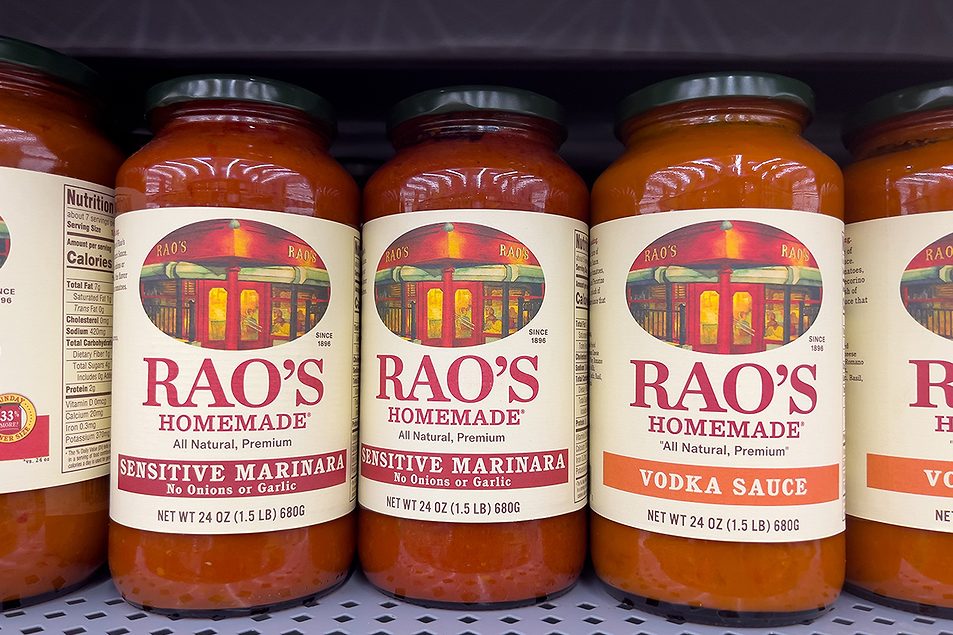
Campbell’s to promote Rao’s, launch broths in 2027

Published

on

Campbell’s to promote Rao’s, launch broths in 2027


Advertisement


Campbell’s to promote Rao’s, launch broths in 2027 | Food Business News

Advertisement

Advertisement


Skip To Content

Advertisement

Continue Reading

Business

Building straw homes could help tackle UK housing shortage, study suggests

Published

on

Business Live

Researchers at the University of Bath say the biggest barriers are not material scarcity but current systems and policy

English Heritage volunteers help re-thatch one of the reconstructions of a Neolithic house in Wiltshire

Straw could be used to help build more houses in the UK according to new research(Image: Andrew Matthews/PA Wire)

The UK could meet its housing targets by building houses using straw, according to a new study.

According to researchers at the University of Bath, Britain could build 300,000 new homes each year by swapping high-carbon building materials for straw without running out of supply.

Advertisement

The UK produces around 9.9 million tonnes of straw every year – far more than would be needed as a construction material to meet the government’s targets.

The study found that agricultural straw – a co-product of cereal farming – could replace high-emission materials such as concrete and steel, while storing carbon in buildings.

Despite being a renewable and low-carbon building material, very little straw is currently used in British construction. In the UK, less than 20 new homes a year are built with straw.

It is mainly used as livestock bedding and feed, or ploughed back into fields to improve the soil. It’s also used for energy generation, horticulture, and sometimes mushroom cultivation.

Advertisement

“The key barrier to adopting straw houses is not the availability of the raw material, but the need for stronger supply chains, clearer regulation, and greater acceptance in the construction industry,” the University of Bath said.

The study shows that scaling up straw construction could cut emissions from building construction while also storing between 1.8 and 3.1 million tonnes of carbon dioxide every year.

Researchers analysed how straw is currently used and tested multiple scenarios for redirecting its supply into construction.

They found that diverting straw from other sectors, such as reallocating the supply from bioenergy or industrial uses, would provide enough material to build up to 300,000 low-rise buildings, and just 60 per cent of the straw left in fields would be needed to satisfy this demand.

Advertisement

Growing more straw on currently unused land could supply enough material for around 163,000 homes, with diversion from other industries needed to meet housing targets, the study said.

The research found barriers include a lack of established supply chains between farms and building sites; a limited pool of specialised builders familiar with straw-based construction; and slow uptake due to builders, lenders and insurers looking to minimise the risk of alternative materials.

“The findings suggest that straw provides a clear opportunity for the UK to cut construction emissions while accelerating homebuilding significantly; however, coordinated policy support, regulation and market incentives are needed to unlock straw’s true potential,” the University of Bath added.

Advertisement
Continue Reading

Trending

Copyright © 2025