

Business
Warriors Star Ramps Up Post-Knee Setback as Play-In Looms

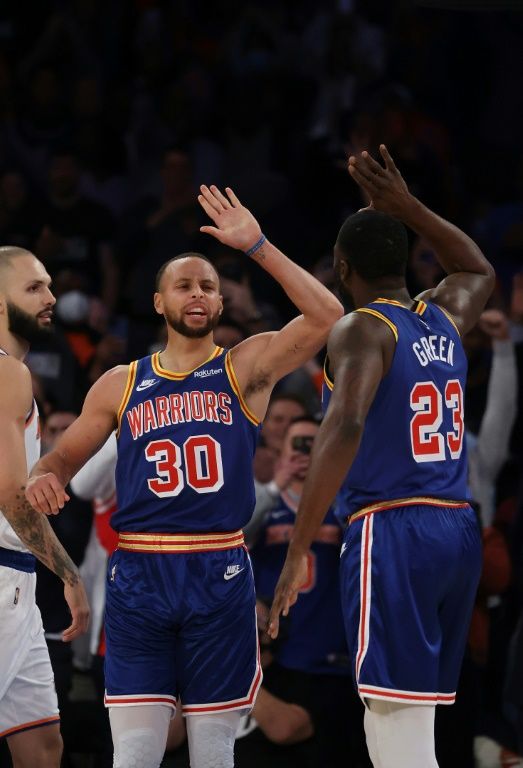
SAN FRANCISCO — Stephen Curry returned to the Golden State Warriors’ lineup earlier this month after missing more than two months with a nagging right knee injury, but the 37-year-old superstar is still navigating a careful ramp-up as the NBA regular season winds down and the play-in tournament approaches.

Curry, who last played on Jan. 30 before being sidelined by patellofemoral pain syndrome — commonly known as “runner’s knee” — and an associated bone bruise, made his season comeback April 5 against the Houston Rockets. In that game, he came off the bench and poured in 29 points, including five 3-pointers, in a 117-116 loss. It marked his first action in 27 consecutive games missed, during which the Warriors went 9-18 without their franchise face.
The four-time NBA champion has since appeared in just two games, with the team prioritizing his health over regular-season finales. He sat out Thursday night’s home contest against the Los Angeles Lakers due to knee injury management, resting as part of a back-to-back to avoid three games in four nights during his limited ramp-up. Coach Steve Kerr confirmed Curry would play Friday against the Sacramento Kings, describing him as “doing well” while acknowledging the need for caution.
“Steph’s doing well,” Kerr said before the Lakers game. “Just with the ramp-up, playing the last two games and three in four nights to end the season, it makes the most sense to give him tonight… he’ll be good to go Friday night.”
The decision reflects broader concerns for Golden State as it fights for positioning in the Western Conference play-in. With Curry’s availability critical to any postseason hopes, the Warriors are leaning on a veteran core that includes recent additions like Kristaps Porzingis and potentially Al Horford. Kerr expressed hope that all three could share the floor soon, though Porzingis and Horford have dealt with their own availability issues.
Curry has spoken openly about the grueling rehabilitation process. In recent comments, he described the knee as feeling “great” but noted the recovery took longer than expected.
“It’s been a long, long process, longer than I thought,” Curry said. “But I’m just happy to have a little clarity… there’s nothing structurally wrong with my knee, so it’s not like I’m in danger of anything long-term. Right now, I kind of understand what the new normal is and it’s good enough to play.”
The injury first surfaced in early February, forcing Curry to miss the 2026 NBA All-Star Game in Los Angeles. At the time, Kerr hoped for a return shortly after the break, but setbacks extended the absence into late March. By early April, Curry participated in full 5-on-5 scrimmages, signaling progress in the return-to-play protocol. He was re-evaluated over the weekend of April 4-5 and cleared for limited action against the Rockets.
Patellofemoral pain syndrome involves irritation around the kneecap, often exacerbated by repetitive stress — fitting for a player renowned for his deep shooting range and explosive movement. The bone bruise added complexity, requiring a conservative approach to prevent further damage. Warriors medical staff monitored Curry closely, incorporating live practices and scrimmages before greenlighting his return.
In his limited games back, Curry has shown flashes of his trademark brilliance, though minutes have been capped to manage workload. Teammates and fans erupted in cheers when he checked in against Houston, a testament to his enduring popularity and importance to the franchise.
The Warriors enter the final stretch in a precarious spot. Without Curry for much of the second half of the season, they slipped in the standings but secured a play-in berth. Now, the focus shifts to maximizing his availability for those high-stakes games. Draymond Green has voiced confidence that Curry won’t be shut down, emphasizing the star’s desire to compete regardless of how many regular-season contests remain.
“Steph wants to play, whether there is one regular-season game left or five,” Green said in late March.
Golden State’s supporting cast has stepped up in spots, but the offense clearly misses Curry’s gravity and playmaking. Opponents have dared others to beat them, leading to inconsistent results. With Curry back — even in a limited role — the dynamic changes, as defenses must account for his off-ball movement and long-range threat.
As of Sunday, April 12, reports indicated Curry was set to play in upcoming matchups, including potential contributions alongside Porzingis and Horford for the first time this season. Quinten Post was listed as out with a foot issue, while Draymond Green and others carried questionable tags for back-related concerns. The team continues to emphasize load management for its aging but talented roster.
Curry’s career has been defined by resilience and highlight-reel moments. A two-time MVP and eight-time All-Star, he revolutionized the game with his shooting and helped lead the Warriors to four championships. At 37, questions about longevity naturally arise, but he has repeatedly defied expectations.
This latest injury tested not just his body but the Warriors’ season trajectory. The team averaged competitive play without him but lacked the spark to dominate. His return, though measured, injects optimism heading into the postseason push.
Looking ahead, the priority remains clear: get Curry healthy and integrated for games that matter most. Kerr and the staff have calibrated minutes carefully, avoiding the temptation to rush him in front of home crowds for sentimental reasons. Thursday’s rest against the Lakers, for instance, ensured he wouldn’t face LeBron James in the regular season but preserved energy for Sacramento and beyond.
Fans and analysts alike watch closely. Social media buzzed with highlights from Curry’s 29-point outing, with many praising his quick adjustment despite the long layoff. His first game off the bench since 2012 added a novel element, yet the results spoke volumes.
For the Warriors, the path forward involves balancing short-term health with long-term contention. Curry has expressed understanding of his “new normal,” accepting that full explosiveness may take time while committing to contribute effectively.
NBA insiders note that similar knee issues have plagued players in the past, with recovery timelines varying based on individual response. Curry’s case benefited from no structural tears, allowing a focus on inflammation reduction and strengthening rather than surgical intervention.
As the regular season concludes, Golden State eyes the play-in with guarded hope. A healthy Curry dramatically improves their ceiling, potentially turning a first-round exit risk into a series threat. Teammates have rallied around him, with veterans providing leadership during his absence.
Curry himself remains philosophical. The exhaustive rehab — involving daily treatments, targeted exercises and mental preparation — reinforced his appreciation for the game. He aims not just to return but to peak when it counts, eyeing a deep playoff run if the knee cooperates.
The broader NBA landscape adds context. With stars across the league managing various ailments, load management has become standard, especially for players in their late 30s. Curry’s situation mirrors others, where teams weigh present performance against future availability.
Warriors ownership and front office have invested in depth, acquiring pieces like Porzingis to complement Curry and Green. The hope is a synergistic lineup that maximizes spacing and defense.
Friday’s game against the Kings offered another test. With Curry expected back, the Warriors sought rhythm and chemistry. Outcomes there, and in remaining contests, will shape seeding and momentum.
Ultimately, this injury saga underscores Curry’s centrality. The Warriors are a different team with him — more dynamic, more dangerous, more entertaining. His absence highlighted vulnerabilities; his presence reignites possibilities.
As April progresses toward the play-in, all eyes remain on No. 30. Stephen Curry’s latest update brings cautious optimism: he’s back, he’s progressing, and he’s determined to lead Golden State as far as his knee — and his legendary shot — will allow.

Business
Midcaps in a sweet spot? Why Nippon India’s Rupesh Patel sees a valuation correction despite new index peaks

Edited excerpts from a chat with Rupesh Patel, Senior Fund Manager – Equity Investments, Nippon India Mutual Fund:
Your Nippon India Growth Mid Cap Fund delivered a strong 22% over the last 5 years, beating the benchmark. But given your Growth at Reasonable Price (GARP) philosophy, where are you actually finding “reasonable” valuations in a midcap market that many currently see as overheated?
On an aggregate basis, the NSE Midcap 150 index has remained almost flat since September 2024. However, during this period, earnings have grown at a reasonable rate. In fact, midcap as a category has been the most resilient and delivered higher growth compared to other segments of the market. As a result, valuations today, though they appear higher compared to long-term averages, have corrected as compared to where we were in September 2024.
Coming to Nippon India Growth Fund, we follow a bottom-up approach to construct the portfolio and buy stocks based on their relative attractiveness on risk-reward equation. Some of the businesses in the category may appear expensive in the near term; however, the size of the opportunity and their ability to maintain earnings growth at a reasonable rate over the long term make them attractive from a medium to longer-term perspective.
You are overweight financials and underweight technology in the midcap fund. What’s the rationale? How do you think midcap lenders and midcap IT companies are placed at this stage?
Our OW stance on financials is on account of our exposure to lenders as well as other beneficiaries of financialization of savings like Life Insurance companies, asset management companies, Exchanges, etc.

On the lending side, most of our exposure is to well-capitalised lenders where asset quality is largely expected to hold, Return on Assets/ Return on Equity remains healthy, and valuations are reasonable in the context of the overall market.
In IT companies, we have been underweight since the last few quarters, largely owing to the risk of a slowdown in earnings growth on account of current geopolitical uncertainties and the impact of disruptions like AI. Valuations were also a concern till a few quarters back. Going ahead, as the dust settles and some of these companies evolve and adapt to new realities, growth will recover from current lows. Companies in this sector are generally capital efficient and generate free cash flow, making them attractive bets again as valuations turn favourable.Within the midcap space, how do you read the Q4 earnings season? What are your biggest takeaways for investors?
Q4 earnings season for midcaps has turned out to be quite resilient, and most companies are delivering on expectations. However, going ahead, risks related to deterioration in the macro environment, cost inflation, and logistics remain relevant. If current geopolitical uncertainties continue, we must be cognizant of these risks and their impact on earnings and valuations.
Given the growth trajectory, valuations and earnings, midcap companies are in a sweet spot. Would you agree?
If we look at the last few quarters, midcap companies’ earnings have remained resilient. Most of them have delivered healthy earnings growth even in Q4, FY’26. However, aggregate returns of midcap companies as represented by the NSE Midcap 150 index have remained flat since September 2024, resulting in a valuation correction over this period.
Further, midcap is a very diverse category with a universe representing multiple sectors and some unique and fast-growing profit pools that have the potential to grow meaningfully over the medium to long term; hence, on a bottom-up basis as well, opportunities exist in this segment of the market.
How have you been reshuffling your portfolio to realign it with the realities of war?
As mentioned earlier, we remain cognizant of risks arising on account of deteriorating macro conditions, inflation in costs and logistical challenges, if current geopolitical uncertainties persist. We also remain aware of the potential impact of these risks not only on earnings growth but also on market valuations. In some instances, current stock prices may already be reflecting risks of these uncertainties, making the risk-reward favourable. Hence, our approach is to remain aware of valuations and avoid vulnerable businesses.
From a 3-5 year perspective, which sectors do you think are best placed at this stage – both from a growth as well as a valuation perspective?
We remain positive on Financials, Consumer Discretionary, and select industrials.
Within financials, we are positive on lenders as well as companies that benefit from a bigger trend on the financialization of savings. Accordingly, we have exposure to companies in the insurance space, Asset Management Companies, Exchanges and other financial services companies. On lenders, asset quality remains benign, they are well capitalised, generate decent Return on Assets (RoA) and Return on Equity (RoE) and valuations are reasonable.
Consumer discretionary companies are likely to benefit from favourable demographics, growth in per capita incomes and trends on premiumization playing out in multiple categories over the medium to long term.
On the industrial front, the reason to be positive is on account of various initiatives taken by the government to encourage manufacturing in India. Select companies in Auto ancillaries, Electronics manufacturing, precision engineering and defence-related segments can also do well. However, these are broad sectors, and winners will have to be picked on a bottom-up basis, considering factors like their manufacturing prowess, management strength and cost competitiveness.
The midcap index has already hit a new peak this month, ahead of both small and largecaps. What’s the reason behind this optimism, and do you see valuation risk building?
Although the midcap index is close to an all-time high, its last 20 months’ returns have been flat despite midcap companies as an aggregate delivering superior growth. In that sense, valuations today have turned favourable on account of this time correction. Even if we look at the last 3 years’ earnings on a CAGR basis, midcap as a category has reported superior earnings growth as compared to broader markets. Going ahead as well, the outlook on midcap companies’ earnings growth continues to remain healthier. In that sense, the performance of the midcap index is largely a reflection of underlying earnings growth.
(Disclaimer: Recommendations, suggestions, views, and opinions given by experts are their own. These do not represent the views of the Economic Times.)

InterContinental Hotels Group: Positioned For Further Upside

Over the past two months, 14 penny stocks have witnessed sharp corrections, declining between 15% and 55%. These underperformers were identified through a screen that focused on stocks with a market capitalisation below Rs 1,000 crore, a share price under Rs 20, and a minimum recent trading volume of 5 lakh shares. The screen highlights low-priced, relatively liquid penny stocks that have come under significant selling pressure during the period. (Data source: ACE Equity)
Although penny stocks often attract investors with their low entry prices and potential for rapid gains, they come with substantial risks. Due to low liquidity, high volatility and limited transparency, they are prone to manipulation and sudden price drops. Without a clear strategy and strong risk controls, investors may face more losses than gains.


US castigates Europe over defence spend as NATO reassures Asia

With this, the total outflow by Foreign Portfolio Investors (FPIs) from the equity market has reached Rs 2.25 lakh crore in 2026, which is higher than the Rs 1.66 lakh crore pulled out during the entire 2025, according to data with the NSDL.
FPIs were net sellers in all months of 2026, except February. They withdrew Rs 35,962 crore in January before turning net buyers in February, when they invested Rs 22,615 crore, the highest monthly inflow in 17 months.
However, the trend reversed in March, when foreign investors pulled out a record Rs 1.17 lakh crore. The selling continued in April with net outflows of Rs 60,847 crore and extended into May with withdrawals of nearly Rs 33,000 crore.
FPIs have been selling Indian equities due to a combination of weak earnings growth, rupee depreciation and more attractive opportunities in other markets, market experts said. However, the pace of selling has been moderated.
Geojit Investments Chief Investment Strategist V K Vijayakumar said subdued earnings growth in India, compared with significantly stronger corporate performance in markets such as the US, Japan, South Korea and Taiwan, has prompted FPIs to shift capital overseas.
“The strong artificial intelligence-led rally in markets such as South Korea and Taiwan has also attracted foreign capital away from India,” Vijayakumar said.Sachin Jasuja, Head of Equities and Founding Partner at Centricity WealthTech, said the persistent depreciation of the rupee has emerged as another key factor behind FPI outflows.
“The rupee has weakened nearly 6 per cent so far in 2026 and around 10 per cent over the past year, falling from the mid-80s to about 95.5 against the US dollar despite RBI’s efforts to defend the currency,” he said.
Jasuja noted that India’s heavy dependence on crude oil imports has further aggravated concerns. With the country importing more than 80 per cent of its crude requirements, the sharp rise in Brent crude prices from the USD 70 per barrel range to USD 95-105 amid disruptions around the Strait of Hormuz has widened both the import bill and the current account deficit.
“A weaker rupee directly impacts dollar-denominated returns for foreign investors, making it one of the biggest reasons for continued FPI selling,” he said.
The pace of selling has been moderated in May compared to previous months.
Himanshu Srivastava, Principal – Manager Research at Morningstar Investment Research India, said moderation in outflows suggests that foreign investors are becoming less aggressive in reducing their India exposure compared with the heavy selling witnessed earlier in the year.
” One of the key reasons behind this trend has been the gradual improvement in global risk sentiment. Concerns around global trade tensions, tariff-related developments, and growth uncertainties, while still present, have eased somewhat from the elevated levels seen a few months ago,” he added.
On the outlook, Jasuja said a reversal in FPI flows is unlikely in the near term unless there is a significant improvement in macroeconomic conditions.

There Will Be Investing Opportunities When the Strait of Hormuz Reopens. Think ETFs.

Maersk: Looking At The Shipping Downside And Rotating

Analyst forecasts are more than just numbers; they provide a forward-looking perspective on market potential. For investors looking for the next breakout opportunities, a fresh analysis of Nifty Mid-Cap 100 stocks reveals several compelling prospects.
Based on market analysts’ consensus estimates, Trendlyne data indicates that several mid-cap stocks are expected to deliver strong returns over the next 12 months. This projected upside reflects the average anticipated gain during this period, offering a data-driven roadmap for investors exploring high-potential mid-cap opportunities. We highlight nine standout mid-cap stocks with an estimated upside potential ranging between 25% and 45% in the coming year.
National Vision Q1 2026 slides: margins expand amid strategic shift
Business
A24’s ‘Backrooms’ Surges to Historic $85M-$88M Opening Weekend Beating ‘Mandalorian & Grogu’

NEW YORK — A24’s horror thriller “Backrooms,” adapted from an internet-born phenomenon, is projected to open between $85 million and $88 million domestically this weekend, setting a new studio record and outperforming last weekend’s debut of Disney’s “Star Wars: The Mandalorian and Grogu.”
The film, directed by 20-year-old Kane Parsons, posted an estimated $38.4 million on Friday, including $10.4 million in Thursday previews. That first-day total already surpasses many expectations for an independent horror release and positions “Backrooms” as a breakout success in a competitive summer market. Some industry estimates suggest the three-day figure could reach as high as $90 million once final tallies are complete.
The movie expands into more than 3,400 theaters across North America while launching simultaneously in about 50 international territories. Early overseas estimates point to around $36 million, potentially delivering a global opening in the $121 million to $124 million range. Key markets include the United Kingdom, Italy, Australia, Mexico, Brazil, South Korea and Saudi Arabia.
“These filmmakers are in a dialogue with their audience,” Warner Bros. executive Michael De Luca said, addressing the strong connection built by projects like “Backrooms” that originate from online communities.
Targeted Campaign Drives Results
“Backrooms” draws from Parsons’ popular YouTube series featuring liminal spaces and analog horror aesthetics. Its marketing strategy focused heavily on digital platforms and core fan bases rather than broad traditional advertising. Industry sources indicate the campaign budget was modest compared to major studio releases, closer in scale to targeted horror efforts like Neon’s “Longlegs,” though slightly higher.
This approach contrasts with the reported near-$100 million promotion and advertising spend behind “The Mandalorian and Grogu,” which opened to $81.6 million the previous weekend on the strength of its established franchise appeal and Disney’s extensive campaign. “Backrooms” managed stronger opening-day business despite the more curated, cost-efficient push, highlighting the value of organic buzz and internet-native storytelling.
The performance marks a significant milestone for A24, far exceeding its previous best opening of around $25.5 million for “Civil War” in 2024. It also underscores a broader trend of audience enthusiasm for original genre films that feel authentic to their digital roots rather than heavily manufactured studio products.
Focus Features‘ ‘Obsession’ Sets Distributor Benchmark
Complementing the weekend’s horror momentum, Focus Features’ “Obsession” continues its impressive run. The low-budget film, directed by Curry Barker and produced for under $1 million, is on track to surpass $106 million worldwide, setting a new record for the distributor.
In its second weekend, “Obsession” added an estimated $23.9 million domestically, pushing its North American total past $60 million. The movie has defied typical horror drop patterns with strong audience retention, showing second-weekend growth that stands out in the genre. Its global success has already elevated it among Focus Features’ top releases of all time.
Together, “Backrooms” and “Obsession” signal renewed theatrical appetite for inventive, efficiently made horror titles. Both films have capitalized on social media engagement, word-of-mouth and repeat viewings, particularly among younger demographics seeking fresh experiences.
Industry Context and Implications
The strong results arrive as Hollywood continues navigating recovery challenges, including rising production and marketing costs alongside fragmented audience habits. Major franchise entries like “The Mandalorian and Grogu” delivered respectable but not dominant numbers, opening the door for original content to capture significant market share.
For A24, the success validates its model of nurturing unique voices and viral concepts. The studio has built a reputation for elevated genre fare that resonates culturally and commercially. Parsons’ transition from YouTube creator to feature director mirrors a growing pipeline of digital talent entering mainstream filmmaking.
“Backrooms” originated as online creepypasta-style content exploring unsettling empty spaces. Its big-screen adaptation preserved the atmospheric tension that built its fan base, translating effectively to theaters and drawing crowds seeking immersive horror.
Internationally, the film’s rollout in diverse markets including South Korea and Taiwan benefits from the global popularity of analog horror aesthetics. Early reports suggest solid turnout where online communities have long engaged with the source material.
Broader Box Office Trends
This weekend’s newcomers are performing against a backdrop of holdover titles experiencing typical second-weekend declines. The efficient performance of “Backrooms” offers a case study in targeted marketing yielding outsized returns. By focusing on core audiences through digital channels, the campaign created genuine excitement without relying on blanket exposure.
Focus Features has similarly maximized “Obsession” through grassroots appeal and strong retention. The film’s low production cost combined with its worldwide earnings demonstrates the profitability potential of smart genre betting in today’s market.
Analysts note that both releases benefit from timing in the early summer period, when audiences seek escapist entertainment. The horror genre’s resilience, especially with innovative storytelling, continues to provide reliable returns for studios willing to take calculated risks.
Exhibitors have reported enthusiastic crowds and packed screenings for “Backrooms,” with fans reacting strongly to its visual style and psychological elements. The film’s ability to convert online familiarity into ticket sales highlights evolving consumption patterns where internet culture directly influences theatrical success.
Future Outlook for Original Horror
The dual achievements of “Backrooms” and “Obsession” may encourage more investment in original properties over reliance on established intellectual property. As costs for franchise films escalate, the model of cultivating audience dialogue through authentic storytelling appears increasingly attractive.
For Parsons, the debut represents a remarkable breakthrough. His feature directorial debut has not only broken records but also expanded the reach of his creative vision beyond digital platforms.
A24 and Focus Features have positioned themselves as key players in delivering compelling genre content that connects with modern audiences. Their success this weekend contributes to a more diverse box office landscape where independent and mid-tier studios can compete effectively.
As Sunday estimates finalize, industry attention will turn to Monday’s official numbers and longer-term projections for both films. “Backrooms” appears set for a multi-week run if it maintains momentum, while “Obsession” continues building on its breakout trajectory.
The weekend underscores the enduring draw of well-crafted horror and the power of targeted, fan-focused releases in driving theatrical revenue. In a competitive environment, these films demonstrate that originality and audience alignment remain potent ingredients for success.

US allies warn division weakens deterrence in calls for global unity
Midcaps in a sweet spot? Why Nippon India’s Rupesh Patel sees a valuation correction despite new index peaks

Vietnam Proposes Allowing SMEs to Use Digital Assets as Loan Collateral


-

 Business7 days ago
NYT Strands Answers May 24 2026 Revealed for Puzzle No. 812 Theme Summer Essentials
-

 NewsBeat4 days ago
Israel says it has killed new Hamas military leader in Gaza City airstrikes
-

 Tech4 days ago
NASA taps Blue Origin to deliver lunar rovers for Moon Base initiative
-

 Politics6 days ago
Bridgerton Season 5: Cast, Release Date And Everything We Know So Far
-

 News Videos4 days ago
XRP *JUST* SUCCEEDED!!!! CLARITY ACT EXPOSED!!! (SHE EXPOSED IT)
-
 Sports5 days ago
2026 NBA Finals schedule, odds: Knicks await Thunder or Spurs after winning East
-

 Business4 days ago
Selena Gomez Reportedly Upset Over Benny Blanco’s Comments on Her ‘Terrible’ Diet
-
 Crypto World5 days ago
Micron Crosses $1 Trillion Market Cap as AI Demand Reshapes Memory Sector
-

 News Videos2 days ago
This is BROKEN! INSANE 5x MONEY CAR WASH WEEK! The NEW GTA Online UPDATE Today! (GTA5 New Update)
-
Crypto World6 days ago
Brian Armstrong Outlines Crypto Vision for the Future Financial System
-

 Business6 days ago
BTS Sells Out Four Las Vegas Shows at Allegiant Stadium for ARIRANG World Tour
-
 Tech5 days ago
China assigns ID codes to 28,000+ humanoid robots
-
 NewsBeat6 days ago
Hottest May day ever as London hits 34.8C in 2C leap from previous records
-

 Tech6 days ago
Microsoft’s quiet Claude Code retreat and the real cost of enterprise AI
-

 Tech2 days ago
Waymo dominates autonomous vehicle registrations as Tesla trails behind
-

 Business5 days ago
Nikkei 225 Surges Past 65,000 for First Time as Iran Peace Hopes Fuel Record Rally
-
Tech4 days ago
The Samsung pay deal is the moment Korean unions changed register
-
 Entertainment5 days ago
‘Breaking Bad’ Star’s Easy-to-Binge 6-Part Crime Series Spin-Off Is Finally Heading to Free Streaming
-

 Tech6 days ago
Westone Audio and Etymotic Acquired by Fidelity Collective in Major IEM Market Move
-

 NewsBeat6 days ago
Crowds find riverside shade in York as temperatures soar
You must be logged in to post a comment Login