
Business
What UK Businesses Need to Know Before Specifying Acoustic Ceiling Treatment

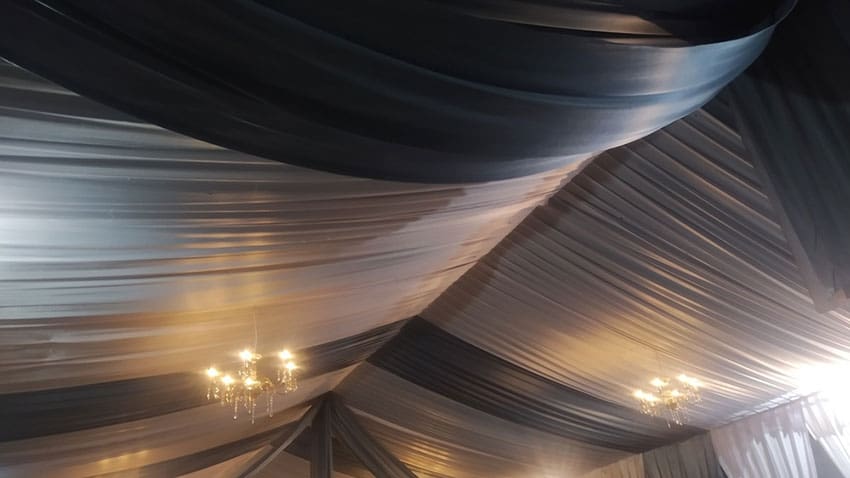
The way commercial spaces are designed has changed considerably in recent years. Businesses across the UK, from hotel groups and restaurant operators to recording studios and corporate office developers, are investing in acoustic ceiling treatment as a standard component of their fit-out rather than an optional upgrade.
At the centre of that shift is fabric ceiling installation, a specialist system that delivers both acoustic performance and a premium visual finish that alternatives simply cannot match.
This article covers what fabric ceiling installation involves, why UK businesses are specifying it, and what to consider before commissioning the work.
What Is a Fabric Ceiling Installation?
A fabric ceiling installation uses a precision aluminium track frame fixed to the ceiling structure, with an acoustic infill core installed within the frame and an acoustically transparent fabric stretched across the face to produce a seamless, unbroken surface. Unlike a traditional suspended ceiling grid with modular tiles, a fabric ceiling produces no visible joints, no panel edges, and no exposed fixings. The result is a continuous ceiling surface that looks intentional and considered rather than functional and utilitarian.
The fabric face is acoustically transparent by design, meaning sound waves pass through the material and into the infill core behind it, where the energy is absorbed rather than reflected back into the room. This is what gives the system its acoustic credentials. Hard ceiling surfaces, whether plaster, concrete, or standard ceiling tiles, reflect sound back into the space, increasing reverberation times and creating echoes that affect the quality of communication, concentration, and experience within the room.
A correctly specified fabric ceiling addresses this directly. By absorbing sound at the ceiling plane, which is typically the largest unobstructed reflective surface in any room, the system reduces reverberation times measurably and creates a noticeably more comfortable acoustic environment for everyone in the space.
Why Businesses Are Choosing Fabric Ceiling Installation
The reasons businesses are moving towards fabric ceiling installation over alternative acoustic treatments come down to three factors: acoustic performance, visual quality, and long-term value.
In terms of acoustic performance, a fabric ceiling installation with the correct infill core delivers sound absorption ratings that match or exceed those of most alternative ceiling systems. NRC ratings close to 1.0 are achievable with the right specification, meaning the system absorbs almost all sound energy that reaches the ceiling surface rather than reflecting it. For environments where the quality of communication or listening is directly tied to business outcomes, such as boardrooms, hotel conference suites, post-production facilities, and client-facing showrooms, this level of performance justifies the investment.
In terms of visual quality, no other acoustic ceiling treatment produces a finish comparable to that of a properly installed fabric ceiling. There are no visible tiles, no exposed grid, no shadow lines between panels, and no fixings. The ceiling reads as a single, continuous surface, elevating the perceived quality of the entire space. In hospitality environments, high-end offices, and retail interiors, this matters enormously. Customers and clients form immediate impressions based on the quality of the environment they enter, and a premium-looking ceiling directly contributes to that perception.
In the long term, fabric ceiling systems are built to last. When properly specified and installed, the system has a lifespan of fifteen to twenty years or more. The fabric can be replaced without removing the underlying track and infill structure, and access panels can be incorporated into the design to maintain services concealed behind the ceiling surface.
Where Fabric Ceiling Installation Is Specified
Fabric ceiling installation is specified across a wide range of commercial and professional environments in the UK.
Recording studios and post-production facilities represent the most acoustically demanding application. In these environments, the ceiling treatment is a critical part of the room’s acoustic design, working alongside wall panels and bass traps to achieve the precise reverberation time targets the room requires. Fabritech has completed fabric ceiling installations in facilities for Abbey Road Studios, Netflix, Apple, and Spotify, where the acoustic performance requirements are among the most exacting in the industry.
Hotels and hospitality venues are an increasingly significant market for fabric ceiling installation. Conference suites, restaurant dining rooms, event spaces, and hotel lobbies all benefit from controlled acoustics, and the premium visual finish of a fabric ceiling aligns with the design standards that guests expect in high-end hospitality environments.
Commercial offices and workspaces have seen growing demand for acoustic ceiling treatment since the shift to open-plan layouts accelerated. The ceiling is often the largest untreated acoustic surface in an office, and addressing it with a fabric ceiling installation can significantly reduce background noise, improve speech clarity across meeting and collaboration zones, and create a more productive working environment.
Home cinemas and private screening rooms represent the residential end of the market, where homeowners commissioning dedicated cinema rooms increasingly specify fabric ceiling installations as part of a complete acoustic and visual treatment package.
What to Consider Before Commissioning Fabric Ceiling Installation
For any business considering fabric ceiling installation, there are several practical factors to work through before the project begins.
Acoustic brief and performance targets should be established early. The specification of the infill core, track depth, and coverage area is determined by the acoustic targets for the space, whether that means meeting a specific reverberation time, achieving a defined NRC rating, or simply improving the general acoustic comfort of the environment. Engaging the installer at the design stage, rather than after the main contractor has finished, produces significantly better results.
Fire compliance is non-negotiable. All fabrics used in commercial ceiling installations must meet UK building regulations and be assessed against the European standard EN 13501-1. Any reputable fabric ceiling installer will provide full fire rating documentation for all specified materials before installation begins and should be able to advise on the appropriate classification for the specific building type and use.
Fabric selection affects both the acoustic outcome and the visual finish of the installation. Fabritech holds direct accounts with leading acoustic fabric manufacturers including Kvadrat, Camira Fabrics, and Guilford of Maine, giving clients access to a wide range of colours, textures, and performance-rated materials. The specified fabric must be acoustically transparent to ensure the system performs correctly, and all materials must carry the appropriate fire ratings for the environment.
Specialist installation is essential. Fabric ceiling installation is not a standard fit-out trade. The track fabrication, infill specification, and fabric stretching processes require specialist knowledge and experience to be delivered correctly. Incorrect installation results in uneven fabric tension, acoustic inconsistencies, and a finished ceiling that falls short of both its visual and acoustic potential.
Working With a Specialist
is a UK specialist in fabric ceiling installation for commercial, professional, and residential environments. As preferred installer for Studio Creations and Westwood Joinery, the UK’s leading studio construction companies, Fabritech delivers fabric ceiling systems for recording studios, post-production facilities, hotels, commercial offices, and high-end residential projects across the UK. For project enquiries and specification advice, visit fabritech.co.uk/services/fabric-ceiling/.

Business
Nintendo Shares Fall Nearly 6% as Surging Global Memory Chip Prices Threaten Switch 2 Profit Margins
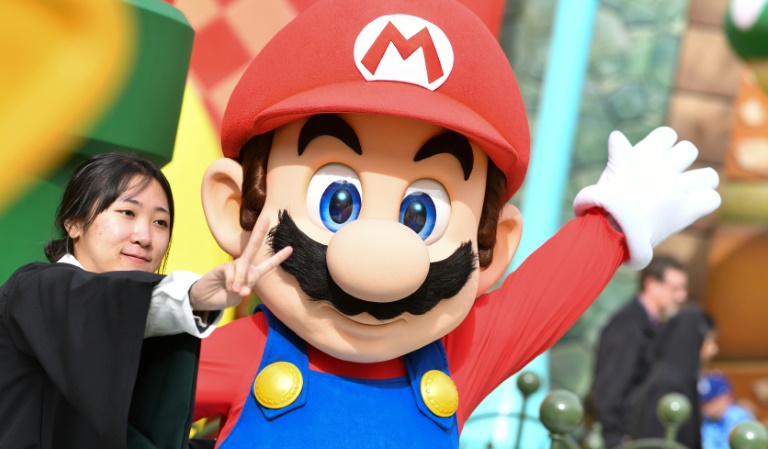
Shares of Nintendo fell 5.72% on Friday, dropping 466 yen to close at 7,679 yen in Tokyo trading, even as the broader Nikkei 225 index surged more than 4% during the same session, underscoring how directly the ongoing global memory chip shortage continues to weigh on the video game maker’s stock even amid a broader market rally.
Friday’s decline stood out against the backdrop of a powerful rebound across Asian technology stocks, driven by blowout earnings from Microsoft, Amazon and Meta Platforms that sent chipmakers surging worldwide. But that same rally in memory chip prices, driven by tight global supply and surging demand tied to artificial intelligence infrastructure, has become an increasingly acute problem for Nintendo specifically, since the company relies heavily on memory components to manufacture its Switch 2 console.
Nintendo has repeatedly flagged rising memory chip costs as a direct threat to its profitability throughout 2026. When the company reported earnings in February, its stock slid as much as 11% in Tokyo trading after Nintendo missed market estimates for quarterly revenue and flagged mounting headwinds from what it described as an unprecedented shortage of memory chips, even as profit growth for the nine-month period remained strong. The company’s shares fell again in May, dropping between 7% and 8.4% after Nintendo confirmed it would raise the retail price of the Switch 2 in European, U.S. and Japanese markets by 7% to 20% later in the year specifically because of higher component costs, with memory chips cited as the primary driver.
The company’s most recent full-year results, reported in May, showed operating profit for the fiscal year ending March 31 climbing nearly 28% to 360 billion yen, or roughly $2.29 billion, aided by a near-doubling of net sales. Despite that strong headline growth, the profit figure still fell short of market expectations. Nintendo’s forecast for the current fiscal year proved considerably more cautious, with the company projecting operating profit of just 370 billion yen, well below market forecasts of 480 billion yen, and forecasting a sales decline of 11.4% year-on-year to 2.05 trillion yen. Nintendo specifically guided for weaker Switch 2 sales in the current fiscal year, citing the planned price increases tied to component cost pressure, with the company forecasting fiscal 2027 Switch 2 unit sales of 16.5 million, down from 19.86 million units sold in the prior year.
Not every analyst has viewed Nintendo’s recent stock weakness as fully justified by the underlying fundamentals of the business. Speaking following the company’s May guidance, Morningstar analyst Ito described Nintendo’s shares as undervalued relative to the company’s longer-term prospects. “We view Nintendo’s shares as undervalued,” Ito said. “The market appears overly focused on near-term headwinds and conservative guidance, while underappreciating the long-term earnings growth from over 100 million Switch users migrating to the new platform and increasing game purchases.”
Nintendo’s stock has continued to face pressure from sources beyond memory chip costs alone throughout the year. Shares fell more than 7% in June after the company’s latest Nintendo Direct presentation disappointed investors by failing to unveil a new mainline entry in the Super Mario franchise, with the showcase instead centered on a remake of “The Legend of Zelda: Ocarina of Time” and other previously established titles. Reports had separately indicated that the next major Mario title would not arrive until 2027 rather than during Nintendo’s ongoing 40th anniversary celebrations for the franchise this year.
Nintendo’s next detailed quarterly earnings release is scheduled for August 6, according to the company’s investor relations disclosures, giving the market its next formal opportunity to assess how the combination of rising memory chip costs, planned price increases and the broader software release pipeline are affecting the company’s financial trajectory heading into the back half of the fiscal year.
The stock’s 52-week trading range spans from a low of 6,544 yen to a high of 14,795 yen, according to recent trading data, illustrating the scale of the decline Nintendo shares have experienced over the past year even as the underlying Switch 2 console has continued to post strong unit sales figures relative to Nintendo’s own historical hardware launches. Nintendo’s current price-to-earnings ratio stands at approximately 21.07, with the stock currently offering a dividend yield of roughly 2.85%.
Friday’s decline adds to what has already been a volatile year for Nintendo’s stock, with shares having fallen nearly 45% over the trailing 12-month period at various points during 2026, according to recent market analysis, even as the company’s Switch 2 console continued setting new sales records relative to prior Nintendo hardware generations. With global memory chip prices continuing to climb amid what rival Samsung Electronics has separately warned could be a supply shortage persisting through 2028, investors are likely to keep close watch on how Nintendo’s profit margins hold up in the coming quarters, particularly given the company’s heavy reliance on memory components across its flagship gaming hardware.

As Chris Best, the co-founder and chief executive of Substack put it last week: “It’s getting harder to tell what’s real on the internet.”
Announcing a new tool, external designed to let readers on the newsletter platform detect AI-generated writing, Best cited other research that has found up to 40% of writing on social media is now fake or AI-generated.
“Platforms that reward fakeness will create a race to the bottom,” Best said.
LinkedIn, a social media platform focused on work, introduced a button on its platform this week that allows any user to report if a post or a comment appears to be AI-generated.
“AI slop is a top priority for all of us,” LinkedIn’s chief product officer Hari Srinivasan wrote on the platform.
In just the last couple of months, he said the platform had “blocked billions” of attempts to post AI-generated comments.
“Every day we are now catching hundreds of thousands of automated comment attempts,” Srinivasan said.
Like Snap, LinkedIn said it is not rejecting the use of AI entirely and users that use AI tools to “refine” their posts should not get caught up in efforts to combat AI slop.
Nonetheless, LinkedIn is removing an automated prompt that would show up for users writing a post offering to “enhance” it through the use of AI. It will go back to a simple proofreading tool.
YouTube, the video platform owned by Google, also this month updated its policies, external around what kind of content can be monetised by creators.
Research from last year found scores of channels on YouTube that were solely AI-generated content, external, many of which had millions of subscribers and some of which made millions of dollars in revenue.
In an effort to discourage YouTube from filling up with what the platform calls “inauthentic content”, earlier this month the site broke down into three categories the kind of videos that will not be allowed to make money through it: generic, repetitive, or template-based.
Those styles of content are much easier to make, and quickly, with the use of generative AI tools.
YouTube’s trust and safety chief Matt Halprin said in an interview, external on the updated rules that, while AI tools can help people with their content, they are more frequently being used to create fake and low-quality videos.
“The same technology really enables great stuff,” Halprin said.
“But it also enables stuff that’s kind of content farming, and that’s the stuff that we don’t want to have.”

Conference Call Participants
Arpine Kocharyan – UBS Investment Bank, Research Division
John Heinbockel – Guggenheim Securities, LLC, Research Division
Randal Konik – Jefferies LLC, Research Division
Molly Baum – Morgan Stanley, Research Division
Anthony Bonadio – Wells Fargo Securities, LLC, Research Division
Benjamin Chaiken – Mizuho Securities USA LLC, Research Division
Weili Chen – Mizuho Securities USA LLC, Research Division
Eric Des Lauriers – Craig-Hallum Capital Group LLC, Research Division
Chris Woronka – Deutsche Bank AG, Research Division
Owen Rickert – Northland Capital Markets, Research Division
Logan Reich – RBC Capital Markets, Research Division
Andrew Chasanoff – Oppenheimer & Co. Inc., Research Division
Presentation
Operator
Greetings, and welcome to the Life Time Group Holdings Inc. Q2 2026 Earnings Conference Call. [Operator Instructions] As a reminder, this conference is being recorded. [Operator Instructions] It’s now my pleasure to turn the call over to Connor Wienberg, Vice President, Capital Markets and Investor Relations. Connor, please go ahead.
Connor Wienberg
Senior Vice President of Treasury & Investor Relations
Good morning. Thank you for joining us for the Second Quarter 2026 Life Time Group Holdings Earnings Conference Call. With me today are Bahram Akradi, Founder, Chairman and CEO; and Erik Weaver, Executive Vice President and CFO. During the call, we will make forward-looking statements, which involve a number of risks and uncertainties that may cause actual results to differ materially from those forward-looking statements made today.
There’s a comprehensive discussion of risk factors in the company’s SEC filings, which you are encouraged to review. The company will also discuss certain non-GAAP financial measures, including adjusted net income, adjusted EBITDA, adjusted diluted EPS, net debt to adjusted EBITDA or what

The 100 Best Annuities. How to Avoid Common Mistakes and Pick the Right One.
Operator
Ladies and gentlemen, thank you for standing by. I’m Constantinos, your Chorus Call operator. Welcome, and thank you for joining the Eurobank conference call to present and discuss the second quarter 2026 financial results. At this time, I would like to turn the conference over to Mr. Fokion Karavias, CEO. Mr. Karavias, you may now proceed.
Fokion Karavias
CEO, Member of Executive Board & Executive Director
Ladies and gentlemen, good afternoon, and welcome to the Eurobank First Half 2026 Results Presentation. Together with me is our CFO, Harris Kokologiannis, and the Investor Relations team. We will start with some key recent developments, then present our results and answer your questions.
The global environment remains agile and challenging with geopolitical developments weighing on market sentiment and adding to inflation. Inflationary pressures will push euro rates higher even as the European economy remains subdued despite a better-than-expected second quarter performance. Nevertheless, the economies in the regions where we operate have so far demonstrated remarkable resilience, supported by a number of factors. First, investment activity remains robust. In Greece, in particular, the government recently unveiled a EUR 23 billion national development program for the period 2026 to 2030, focused on infrastructure, climate resilience and regional economic convergence. Second, the tourism sector continues to demonstrate resilience. In both Greece and Cyprus, tourist arrivals rebounded swiftly and current trends point to a season broadly in line with last year’s strong performance.

FIFA has scrapped $20 billion World Cup sell-off plan, New York Post reports
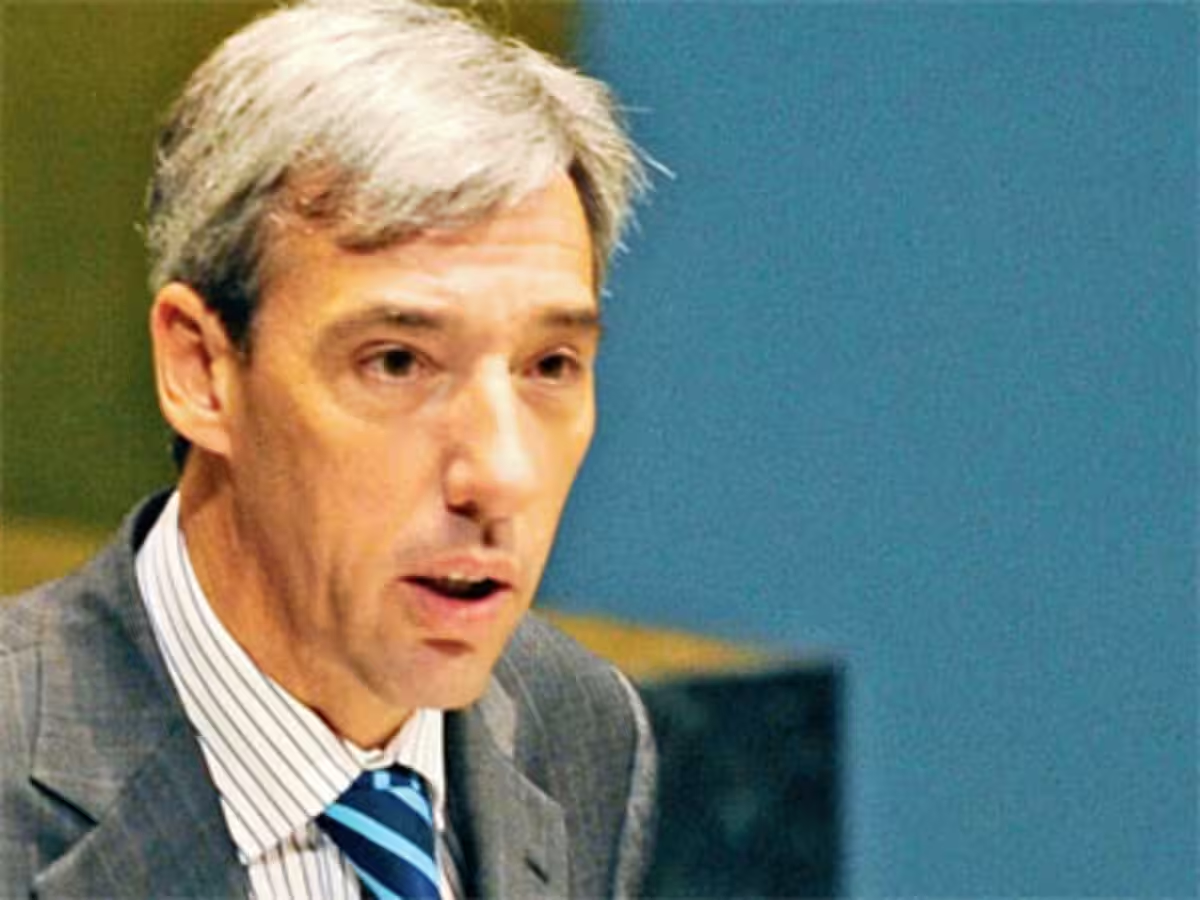
How do you view this victory of Narendra Modi and the BJP? And how will it impact the Indian economy?
We want India to do well. This election has ensured that there’s political stability for the next five years. A decisive leadership would mean tougher decisions, and no good governance is possible without tough decisions. The BJP-led NDA has a clear mandate to take bold and innovative decisions. International politics is not about zero-sum game and while India would economically engage other powers, EU has the potential to drive growth in India. EU is already the single biggest trading partner as a bloc, and is the single largest source of FDI for India as a bloc. We are ready to meet India’s needs in the fields of technology and funds.
You have interacted with Modi when he was the Gujarat Chief Minister. How do you rate him as a leader of modern India?
As a former Secretary of State for Foreign Affairs and Cooperation of Portugal, I had interacted with various leaders worldwide and I can say that Mr Modi is among the best. He has clarity of thought and clear vision of governance and that’s what India requires. He also has a very clear understanding of the challenges before the country. He is a good listener as well as a good talker and can engage in enriching discussions. No Prime Minister would like to have communal strife on his record, and I am certain that he would not allow any communal tensions in India. His priority is to boost the economy and he has his eyes set on that.
Where do India-EU relations go from here? What are the priority areas for India-EU and what’s the future of Free Trade Agreement that’s being negotiated for many years now?
Negotiators from India and European Union are on the job to conclude the FTA. The proposed agreement will lead to greater openness. In the past, EU held discussions with the BJP on the FTA. We take Mr Modi’s speech on economic issues on February 27 as a positive. I have no doubt that the FTA will benefit India. We hope that there will be progress in FTA before the next India-EU Summit at Brussels.
Operator
Thank you for standing by, and welcome to the Cavco Industries, Inc.’s First Quarter Fiscal Year 2027 Earnings Call and Webcast. [Operator Instructions] As a reminder. Today’s program is being recorded.
And now I’d like to introduce your host for today’s program, Mark Fusler, Corporate Controller and Investor Relations. Please go ahead, sir.
Mark Fusler
Director of Financial Reporting, Investor Relations & Corporate Controller
Good day, and thank you for joining us for Cavco Industries First Quarter Fiscal Year 2027 Earnings Conference Call. During this call, you’ll be hearing from Bill Boor, President and Chief Executive Officer; Allison Aden, Executive Vice President and Chief Financial Officer; and Paul Bigbee, Chief Accounting Officer.
Before we begin, we’d like to remind you that the comments made during this conference call by management may contain forward-looking statements. Forward-looking statements include statements about our future or expected business and financial performance and are not promises or guarantees of future performance, their expectations or assumptions about Cavco’s financial and operational performance, revenues, earnings per share, cash flow or use, cost savings, operational efficiencies, current or future volatility in the credit markets or future market conditions.
All forward-looking statements involve risks and uncertainties, which could affect Cavco’s actual results and could cause its actual results to differ materially
Business
Kate Middleton Is the Monarchy’s “Greatest Asset” as Shared Cancer Battle Deepens Bond With the King
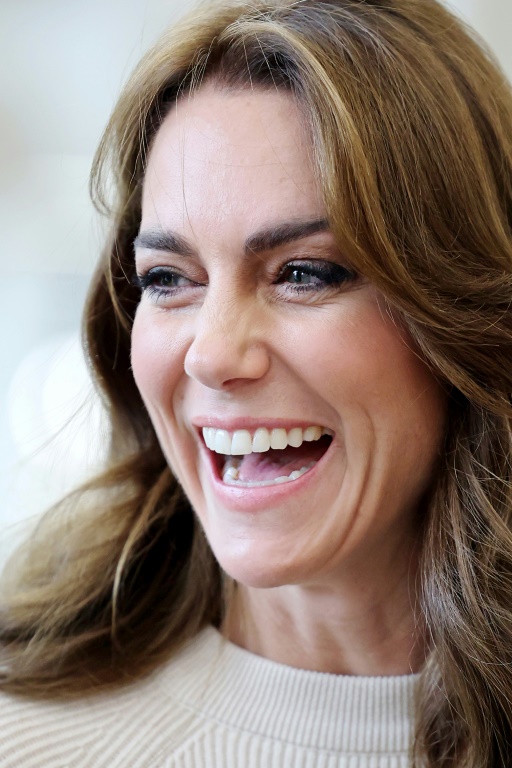
Kate Middleton has become one of King Charles III’s most trusted family members, with royal watchers pointing to a shared cancer diagnosis and years of steady public service as factors that have deepened the bond between the king and the Princess of Wales.
Katie Nicholl, a royal correspondent for Vanity Fair and co-host of the podcast “The Royals Uncensored,” said the princess has consistently proven her value to the institution since marrying into the royal family. “I think Catherine, the Princess of Wales, has always been a very valuable asset to the royal family,” Nicholl told Fox News Digital. “She is the commoner who married into the royal family … [She has made] a seamless transition into that unique world of royalty. It’s not easy … There’s a huge amount of sacrifice that goes into being a member of the royal family.” Nicholl added that Kate has handled that sacrifice with composure. “Catherine’s had to give up a huge amount, and yet she does it all with a great deal of grace and dignity, always with a smile,” Nicholl said. “So she is absolutely the monarchy’s greatest asset.”
The relationship between Charles and Kate has grown notably closer following parallel health struggles both experienced beginning in 2024. Buckingham Palace announced the king’s cancer diagnosis that year, and Charles shared in December 2025 that his treatment would be scaled back in 2026. Kate revealed her own cancer diagnosis in March 2024, shortly after the king’s announcement became public. She completed chemotherapy that September and announced in January 2025 that she was in remission.
British broadcaster and photographer Helena Chard said the king has drawn inspiration from watching Kate navigate her illness. “King Charles sees enormous value in Princess Catherine,” Chard told Fox News Digital. “Not just as the wife of his heir, but as the cornerstone of the monarchy itself. He genuinely loves his ‘darling’ daughter-in-law. His face lights up when he is with her. They share similar interests, and they have shared a similar cancer journey, one that has created a deep bond and understanding that goes beyond duty.”
Chard said the late Queen Elizabeth II had recognized Kate’s value to the institution well before Charles ascended the throne. “The late queen saw it too,” Chard said. “She recognized Catherine’s superpowers early on — her ability to listen, find solutions and bring calm to difficult situations.” Chard also framed Kate’s role within Charles’s broader approach to his reign. “King Charles fundamentally views his time on the throne as stewardship,” she said. “He sees himself as the caretaker of the institution and is acutely conscious of preparing the next generation. Collaborative preparation between the king and his heir is essential. Having Princess Catherine as the wife of his heir, Charles has struck gold.”
Royal author Sally Bedell Smith, in previous comments to People magazine, described the relationship in more personal terms. “He has always had a very strong bond with her,” Smith told the outlet, adding that Kate is “like the daughter he never had.” Smith said Charles shares a protective instinct toward Kate with his son, Prince William. “He shares with William an impulse to protect her,” Smith said. “They are in this together, Kate and the king.”
When Kate’s diagnosis first became public, Buckingham Palace said Charles was “so proud of Catherine for her courage in speaking as he did.” Author Christopher Andersen has separately written that the king stood by Kate’s side during her treatment “to lend his cherished daughter-in-law moral support.”
Kate has continued advocacy work tied to her cancer experience in the time since her recovery, including a recent charity fundraising climb of the three highest peaks in the United Kingdom for the Royal Marsden hospital. Nicholl said that effort has strengthened public support for the princess. “Thankfully, despite a serious health issue, she has overcome that,” Nicholl said. “We’ve just seen her climb the three highest peaks in the United Kingdom to raise money for the Royal Marsden. She’s turning her experience into something positive, and I think that’s earned her a great deal of respect among the British public, along with a lot of love and affection. People are very much behind her and William.”
Chard echoed that sentiment, describing Kate’s broader connection with the public. “Princess Catherine connects with people in a way that restores faith in the monarchy,” Chard said. “She has learned every aspect of the institution over many years and has blended in carefully without fuss. Princess Catherine is central to the institution’s success, and King Charles knows this.”
Royal commentators say Kate’s steadiness has taken on added significance as the working royal family has grown smaller in recent years. Prince Andrew stepped back as a working royal in 2019 amid his ties to the late convicted sex offender Jeffrey Epstein, and Charles has since formally stripped him of his princely title and HRH style. Prince Harry and Meghan Markle, the Duke and Duchess of Sussex, stepped back from royal duties in 2020 and relocated to California.
Royals commentator Richard Fitzwilliams said the king’s appreciation for Kate extends to her partnership with William. “Naturally, King Charles recognizes the value of Kate, who is indeed the monarchy’s greatest asset,” Fitzwilliams told Fox News Digital. “We should add, ‘together with her partnership with William and their family.’ While we praise Catherine’s many strengths, William is the future king. She will one day be queen consort. They see themselves as a close-knit couple.” Fitzwilliams also pointed to Kate’s support for William amid reported tension over how to handle Harry. “William is currently at the center of reports that he and the king differ over how to handle Prince Harry, in particular,” Fitzwilliams said. “As she showed when the Sussexes met with the king and Queen Camilla, she fully supports William’s approach.”
Royals expert Hilary Fordwich said Kate’s steadiness has translated into measurable public goodwill. “It’s not at all surprising King Charles and Princess Catherine have bonded,” Fordwich told Fox News Digital. “One can tangibly feel the public also values her wonderful assets from the reception she always receives when in public, as well as in opinion polls. She has become indispensable and has won the public’s trust.” Fordwich attributed that trust in part to how Kate handled her illness. “She handled the strain of her cancer battle with dignity, without any indication of self-pity.”
Operator
Good morning, ladies and gentlemen, and welcome to the Bombardier Second Quarter 2026 Earnings Conference Call. Please be advised that this call is being recorded. At this time, I would like to turn the discussion over to Mr. Francis Richer de La Fleche, Vice President, FP&A and Investor Relations for Bombardier. Please go ahead.
Francis Richer de La Fleche
Vice President of Financial Planning & Investor Relations
Good morning, everyone, and welcome to Bombardier’s earnings call for the second quarter of 2026. I wish to remind you that during the course of this call, we may make projections or other forward-looking statements regarding future events or the financial performance of the corporation. There are risks that actual events or results may differ materially from these statements. For additional information on forward-looking statements and underlying assumptions, please refer to the MD&A. I’m making this cautionary statement on behalf of each speaker on this call.
With me today is our President and Chief Executive Officer, Éric Martel; and our Executive Vice President and Chief Financial Officer, Bart Demosky, to review our operations and financial results for the second quarter ended June 30, 2026.
I would now like

Donna Mills’ Fans’ Wish Is Her Command On OF Journey

BANKS ARE USING XRP GO TO CLIP? – MINIMUM XRP PRICE TO SETTLE STOCK MARKET?

Equipment scheme launched by York Food Festival and mayor

Renter of Home in Anne Heche Crash Denies Settlement With Son

No Jackpot Winner as $257 Million Prize Rolls Over to $269 Million Monday Draw

Weekend Open Thread: Staud – Corporette.com
BANKS ARE USING XRP GO TO CLIP? – MINIMUM XRP PRICE TO SETTLE STOCK MARKET?

Cryptocurrency Kya Hai | Crypto Me Invest Kaise Kare | Cryptocurrency Bitcoin #shorts

Ranking WORST Top 3 Guest Moments Caleb Hammer Financial Audit
-
 Sports5 days ago
Commonwealth Games boxing: Jadumani Singh seals dominant 5-0 win over Pakistan’s Sumama Rehman to enter quarter-finals | Commonwealth Games News
-

 Business2 days ago
Why Trees Belong on the Risk Register
-

 Tech5 days ago
Intel is reversing course and bringing hyper-threading back to its server chips
-

 Fashion6 hours ago
Weekend Open Thread: Wit & Wisdom
-

 Politics2 hours ago
Meta enters AI-training agreement with far-right ‘propaganda rag’ Newsmax
-

 Crypto World6 days ago
Ripple bought a bank in pieces. The $4 billion audit
-

 Politics5 days ago
Luke Littler dismantles Gerwyn Price to retain title in Blackpool
-

 Politics4 days ago
The Part of the Electric Transition Nobody Wants to Discuss
-

 News Videos5 days ago
BITCOIN JUST ENTERED THIS CRITICAL ZONE…
-
 Entertainment3 days ago
‘Stargate’ Creator’s New Sci-Fi Series Returns for Season 3 Tomorrow
-

 Crypto World6 days ago
XRP Ledger adds $2.6B as RWA inflows rank second
-

 Business3 days ago
Major shareholder moves on Canyon
-

 Politics5 days ago
Spain sweeps the board at 2026 World Cup with individual awards
-

 News Videos1 day ago
Bitcoin Enters the 3rd Stage of the Bear Market
-

 Entertainment6 days ago
Sara Gilson Killed By Husband After Viral “Pedophile” TikTok Video
-

 Crypto World3 days ago
Kraken Enables Retail Access to Jersey Mike’s IPO via Tokenized Shares
-

 Tech7 days ago
Anthropic launches Claude Opus 5, a cheaper AI model for coding, agents and enterprise workflows
-

 Tech4 days ago
New macOS Sequoia & Sonoma security updates for older Macs
-

 News Videos3 days ago
Claude: Build Financial Dashboards in Minutes (2026)
-

 Politics1 day ago
Luke Littler’s dominance sparks GOAT debate
You must be logged in to post a comment Login