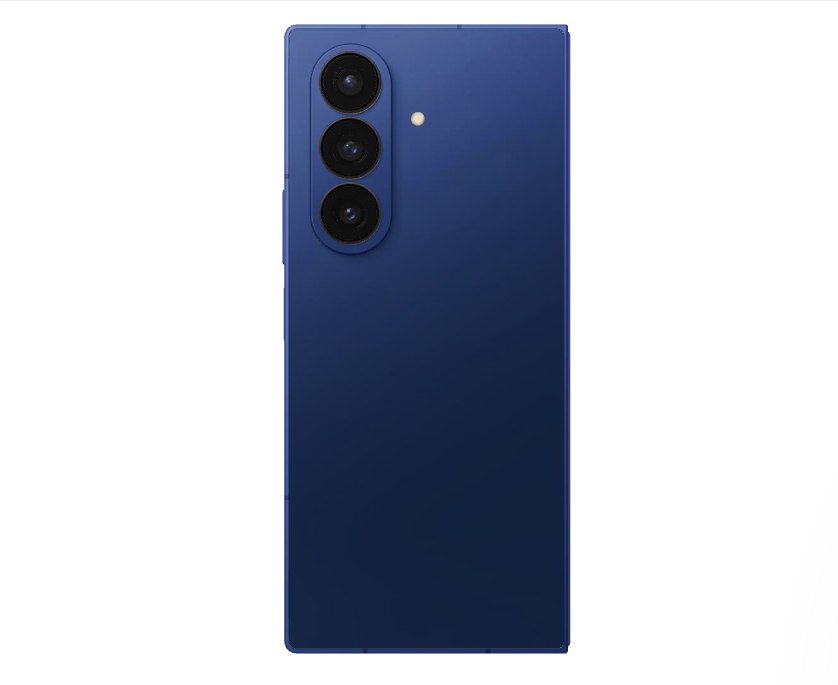
Samsung’s Galaxy Z Fold 7 and Google’s Pixel 10 Pro Fold represent the pinnacle of 2026 book-style foldables, pitting Samsung’s ultra-slim design and raw power against Google’s superior battery life, cameras and pure Android experience in a head-to-head battle that has divided reviewers and buyers since both devices launched last year.
Samsung Galaxy Z Fold 7
Released in July 2025, the Galaxy Z Fold 7 starts at $1,999 and quickly became known as the thinnest and lightest mainstream foldable yet. Google countered in October 2025 with the Pixel 10 Pro Fold at a more accessible $1,799 starting price. As of April 2026, both phones have received software updates, real-world testing and direct comparisons that highlight clear trade-offs rather than a single outright winner.
The most striking difference is physical design. Samsung engineered the Z Fold 7 to feel as close as possible to a traditional slab phone. It measures just 8.9mm thick when folded and an astonishing 4.2mm when unfolded, weighing only about 215-216 grams. Reviewers consistently praise how pocketable and comfortable it feels for all-day carry, describing it as transformative for first-time foldable users who previously found the category too bulky.
In contrast, the Pixel 10 Pro Fold remains noticeably thicker and heavier — over 40 grams more than the Z Fold 7 in many measurements. While still an improvement over earlier Pixel Folds, it does not match Samsung’s refinement in this area. Many testers say the weight difference becomes evident during prolonged use, especially when holding the device unfolded for media consumption or multitasking.
Advertisement
Display quality is competitive but favors Samsung slightly for everyday versatility. Both offer roughly 8-inch inner folding panels with 120Hz adaptive refresh rates and high peak brightness reaching 3,000 nits or more. The Z Fold 7’s 6.5-inch cover display features a taller 21:9 aspect ratio that many find more usable for one-handed operation compared with the Pixel’s 6.4-inch outer screen. Crease visibility has improved on both, but Samsung’s panel often edges out in outdoor visibility and color vibrancy according to side-by-side tests.
Performance leans toward Samsung. The Galaxy Z Fold 7 is powered by the Snapdragon 8 Elite for Galaxy, an overclocked flagship chip that delivers superior benchmark scores and smoother gaming. Paired with 12GB RAM (or 16GB on 1TB models), it handles demanding tasks like video editing and heavy multitasking with less thermal throttling. Google’s Tensor G5 in the Pixel 10 Pro Fold prioritizes AI efficiency over raw speed; it includes 16GB RAM standard and excels in on-device machine learning features, but falls behind in sustained performance for graphics-intensive games.
Battery life tells the opposite story. The Pixel 10 Pro Fold packs a larger 5,015mAh cell and routinely delivers longer endurance, often lasting well into a second day of moderate use. The Z Fold 7’s 4,400mAh battery is adequate for most users but frequently requires topping up by evening, especially with the inner display active. Charging speeds are modest on both — 25W wired for Samsung and 30W for Google — with wireless options available.
Advertisement
Camera systems showcase the brands’ traditional strengths. Samsung equips the Z Fold 7 with a 200MP main sensor that captures highly detailed shots and offers strong zoom capabilities. Reviewers note excellent low-light performance and natural colors in many conditions. Google’s Pixel 10 Pro Fold relies on computational photography magic, delivering cleaner, more vibrant and consistently color-accurate images, particularly in challenging lighting. While the Pixel’s hardware specs appear lower on paper, its AI-driven processing often produces more pleasing results for casual shooters and content creators. Video recording and specialized features like audio sync also tilt toward Google.
Software and multitasking represent another key divide. Samsung’s One UI 8 on Android 16 provides extensive customization, advanced split-screen and multi-window features that power users love. The Z Fold 7 feels optimized for productivity, with seamless app continuity when unfolding. Google’s stock-like Android experience on the Pixel 10 Pro Fold offers cleaner navigation, faster updates and deeper integration with Gemini AI tools. However, it lacks some of Samsung’s foldable-specific optimizations for heavy multitasking.
Durability and build quality favor Google in one important area: the Pixel 10 Pro Fold carries a full IP68 rating for dust and water resistance, making it more suitable for outdoor or dusty environments. Samsung’s Z Fold 7 improves on previous generations but stops at IP67/IP48-level protection in some reports. Both devices have enhanced hinge durability, though foldables in general still require careful handling.
Pricing and value depend on priorities. At $1,799, the base Pixel 10 Pro Fold undercuts the Z Fold 7’s $1,999 entry point and includes more RAM by default. Higher storage tiers widen the gap, with 1TB models pushing Samsung closer to $2,400. Trade-in deals and carrier promotions can narrow the difference, but Samsung commands a premium for its refined design.
Advertisement
Early 2026 reviews and user feedback reflect the split. Many who prioritize portability, performance and a premium feel lean toward the Galaxy Z Fold 7, calling it the best foldable for most people. Others praise the Pixel 10 Pro Fold for better battery life, cameras in real-world scenarios, durability and the pure Google experience at a lower price. Some buyers switch between both, using the Samsung for its slim profile and the Pixel for travel or photography.
Long-term software support favors Google, which typically delivers seven years of updates. Samsung has closed the gap significantly but still trails slightly in promised platform longevity. Both receive regular security patches and feature drops.
For buyers deciding in April 2026, the choice boils down to lifestyle. Frequent travelers or those who value a phone-like folded experience and top-tier performance should consider the Galaxy Z Fold 7. Users who need all-day battery, excellent computational photography, stronger dust/water resistance and seamless AI features may prefer the Pixel 10 Pro Fold.
Neither device is perfect. Foldables remain expensive, crease visibility persists to varying degrees, and repair costs are high. Yet both represent meaningful progress in making the category more practical for everyday users.
Advertisement
As the foldable market matures, Samsung continues to lead on hardware refinement while Google differentiates through software intelligence and value. The Galaxy Z Fold 7 currently holds a slight edge in most head-to-head reviews for its overall balance, but the Pixel 10 Pro Fold wins converts with its strengths in battery, cameras and affordability.
Prospective buyers should test both in-store if possible, as the feel of a foldable in hand often decides the winner more than specs alone. With trade-in programs and potential summer sales approaching, now remains an excellent time to evaluate which 2026 flagship foldable better suits individual needs.
Center for Medicare Director Chris Klomp joins ‘Mornings with Maria’ to outline the Trump administration’s latest Medicare rate update, defend new efforts to curb rising healthcare costs and highlight ongoing moves to lower prescription drug prices a
Falling prescription drug costs are emerging as a key development in the broader push to rein in U.S. health care spending, with new pricing shifts beginning to show up at the pharmacy counter.
Medicare Director Chris Klomp joined FOX Business’ Maria Bartiromo on “Mornings with Maria” to discuss how recent policy changes are starting to impact affordability across the health care system.
Klomp pointed to early signs that pricing pressure is easing, particularly for high-demand medications like GLP-1 drugs, which have surged in popularity but have remained out of reach for many patients. He attributed the recent price declines to actions taken by President Donald Trump to lower drug costs through new pricing initiatives.
FOX Business’ Gerri Willis reports on a Gallup poll showing 61% of Americans are greatly concerned about rising healthcare costs, surpassing worries about the economy and inflation.
“If you need a GLP-1, you’re now paying half of what you were paying just a couple of months ago before he announced those deals,” Klomp said.
Advertisement
Klomp framed the pricing changes as part of a broader effort to address affordability challenges that have prevented many Americans from filling prescriptions.
Woman injecting a syringe of medicine into her stomach (David Petrus Ibars/Getty Images / Getty Images)
“That’s solving the problem for a quarter of Americans who can’t pick up a prescription when they get to the pharmacy counter because they can’t afford it right now,” Klomp said.
The price drop reflects a broader effort to align drug costs more closely with international benchmarks while increasing competition in the market. GLP-1 medications, commonly used for diabetes and weight management, have become a focal point in the affordability debate as demand continues to climb.
Advertisement
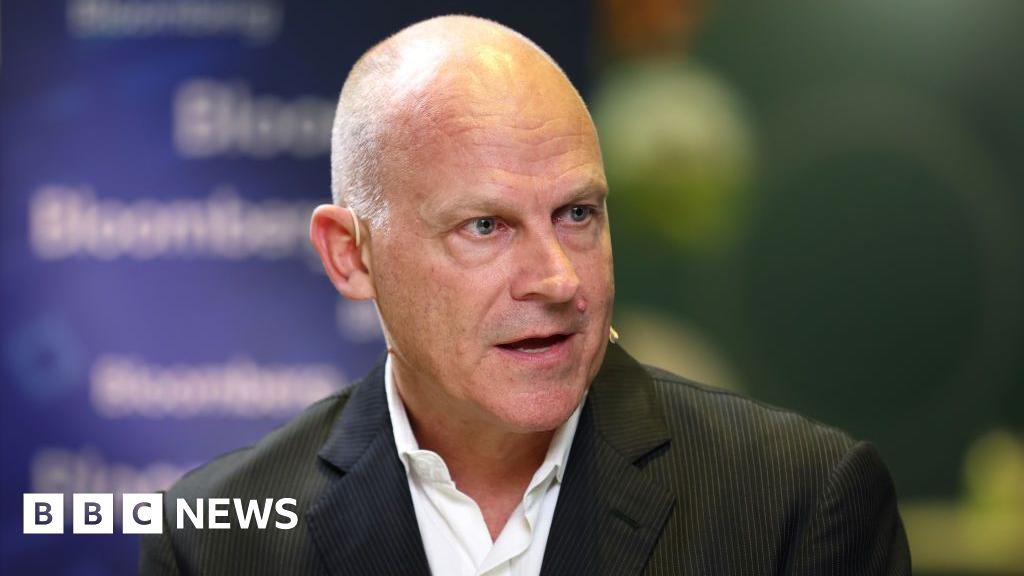
eMed chief wellness officer Tom Brady and eMed CEO Linda Yaccarino discuss GLP-1 market growth and the company’s latest funding round on ‘Mornings with Maria.’
Klomp suggested the changes extend beyond a single drug class, pointing to similar trends in other treatments where costs have historically been a barrier to access.
“If you want to grow your family, you need to pick up fertility medicine again. You’re paying about half for those drugs, saving you thousands of dollars per cycle of treatment than you were just a couple months ago,” he said.
The shifts come as policymakers look for ways to reduce out-of-pocket costs while maintaining long-term sustainability in federal health care programs.
Advertisement
“[Trump’s] delivering on affordability for every American family to be their healthiest self,” Klomp said.
PE-backed firm teams up with Royal Fulfillment for centres in New Jersey, Chicago and Los Angeles
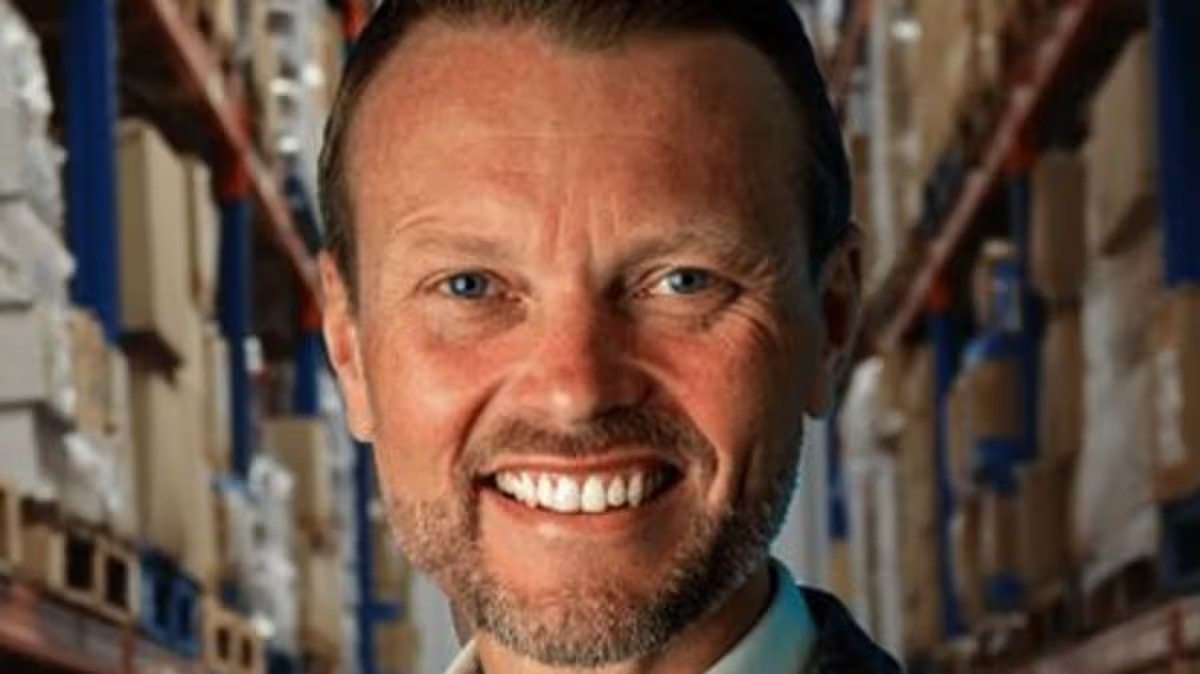
fulfilmentcrowd’s CEO Lee Thompson(Image: fulfilmentcrowd)
Logistics tech specialist fulfilmentcrowd is expanding its US network with new centres in New Jersey, Chicago and Los Angeles.
Chorley-based fulfilmentcrowd has teamed up with American group Royal Fulfillment on the centres designed to “support high-volume eCommerce and B2B distribution across the United States” and to offer coast-to-coast coverage for brands serving the US market. They will replace the group’s two previous US sites.
Royal Fulfillment is a family-run operator with more than 18 years of industry experience. Its centres can handle both direct-to-consumer and large-scale retail distribution, and the business has worked with major retailers such as Amazon, Walmart and Sephora.
Advertisement
Fulfilmentcrowd says its expanded US network will give its customers access to a wider range of US shipping services, including through carriers such as USPS, FedEx and DHL
Lee Thompson, CEO at fulfilmentcrowd, said: “The US is a critical growth market for many of our clients. With this three-centre network, we’re aiming to reduce operational friction at scale, giving global brands the ability to operate domestically across the US with speed, flexibility and cost control built in.”
He added: “This is about more than just adding locations. These centres add to a network that already reflects how modern brands operate: omnichannel, fast-moving and customer-first. Now we can support these requirements across the entire United States.”
Varney & Co. host Stuart Varney warns NYC Mayor Zohran Mamdani’s tax proposals could drive jobs, capital and residents out of New York as a $12.6B deficit looms.
JPMorgan Chase CEO Jamie Dimon warned that New York City and other cities with high taxes and regulatory burdens run the risk of losing businesses and workers to locales with more hospitable business climates.
Dimon released his annual letter to shareholders on Monday in conjunction with the firm’s 2025 annual report and said that companies need to weigh the benefits of operating in places like New York City against areas with lower taxes on businesses and individuals.
Advertisement
“No matter who you are, you need to deal with reality and the truth. The truth is that while New York City has much going for it, particularly for financial companies (because of extraordinary local talent), it also has the highest city and state corporate taxes and the highest individual income and state taxes,” Dimon wrote.
“People often make this a moral or loyalty issue, but it is not. Companies need to remain competitive in this very tough, fast-moving world. And higher taxes lower returns on capital and less competitiveness by their nature,” he said.
JPMorgan Chase CEO Jamie Dimon said that cities and states have to compete to keep businesses in their jurisdictions. (Alexander Tamargo/Getty Images for America Business Forum)
Dimon said while companies relocating their headquarters or significant aspects of their operations to states with more favorable tax and regulatory regimes may be easier to track, those shifts happen at the employee level as well and can amount to significant moves for the workforce.
Advertisement
“Additionally, individuals vote with their feet – you can already see a fairly large exodus of people and jobs out of some states with high taxes and high expenses (often due to high taxes and regulatory burdens). Sometimes you see companies leaving states, but migration also shows up in shifts of employees out of certain states,” Dimon wrote.
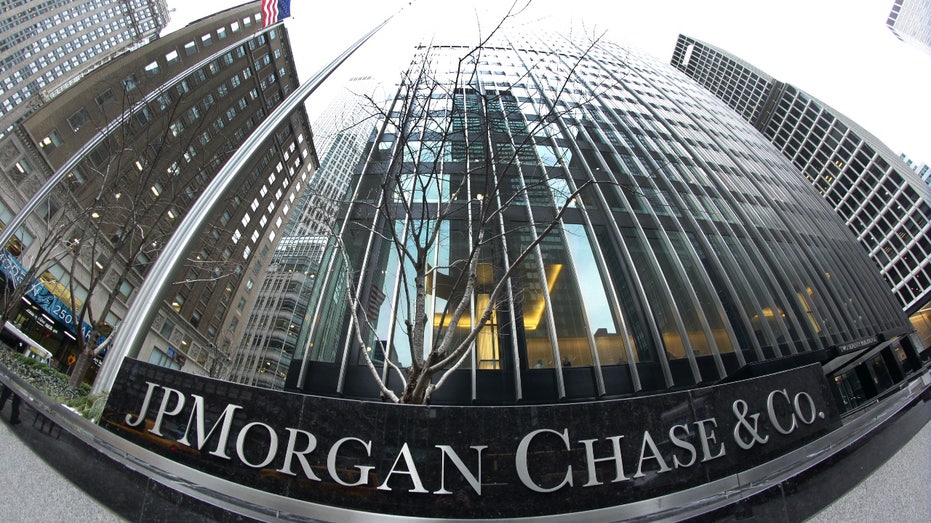
JPMorgan Chase has expanded its presence in Texas while its headcount has declined in New York City. (Tim Clayton/Corbis via Getty Images)
He explained how that dynamic has played out at JPMorgan, which has expanded its footprint in a low-tax state like Texas and will probably continue to do so.
“For example, while New York City is still our company’s global headquarters, we have shrunk our headcount in the city, from 30,000 a decade ago to 24,000 today, and increased our headcount in Texas, from 26,000 in 2015 to 32,000 today. This trend will likely continue,” Dimon said.
The JPMorgan CEO said that he has seen an exodus of corporations out of New York City before that was driven in part by the business climate, adding it can pose significant problems for city governments.
“Sometimes this can be a disaster for a city. I am reminded that in the 1970s, nearly half of the 125 Fortune 500 companies based in New York City left,” he wrote. “While mergers accounted for some departures, the price of doing business in New York City accounted for most: cost of taxes, office rents, labor and so on.”


















































You must be logged in to post a comment Login