
Business
White House teleprompter operator fined by CFTC for Kalshi trades

Check out what’s clicking on FoxBusiness.com.
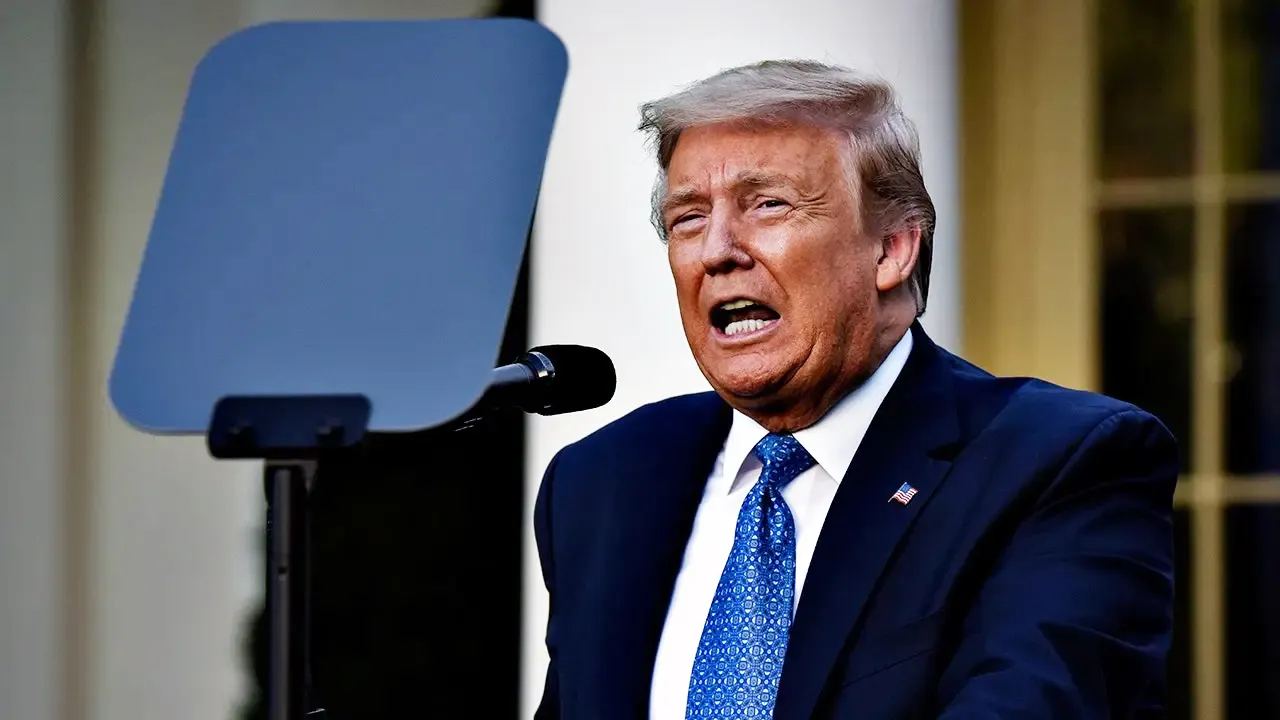
A White House teleprompter operator who used advance access to President Donald Trump‘s speeches to bet on what the president would say has been ordered to pay nearly $173,000 and stop trading for three years, federal regulators announced Friday.
The Commodity Futures Trading Commission (CFTC) said Gabriel Perez, Trump’s teleprompter operator since 2016, misappropriated material, nonpublic information obtained through his government job to trade event contracts on Kalshi, a prediction market platform, for his personal benefit.
Perez, who was placed on paid administrative leave in July amid the investigation into his conduct, was ordered to surrender $107,539 in trading profits and pay a $65,000 civil penalty.
The CFTC also imposed a three-year trading ban and ordered Perez to cease and desist from further violations of federal commodities laws and regulations.
TRUMP ANNOUNCES ‘BIGGEST OIL DEAL IN WORLD HISTORY,’ SAYS IT WILL SUBSTANTIALLY LOWER GAS PRICES
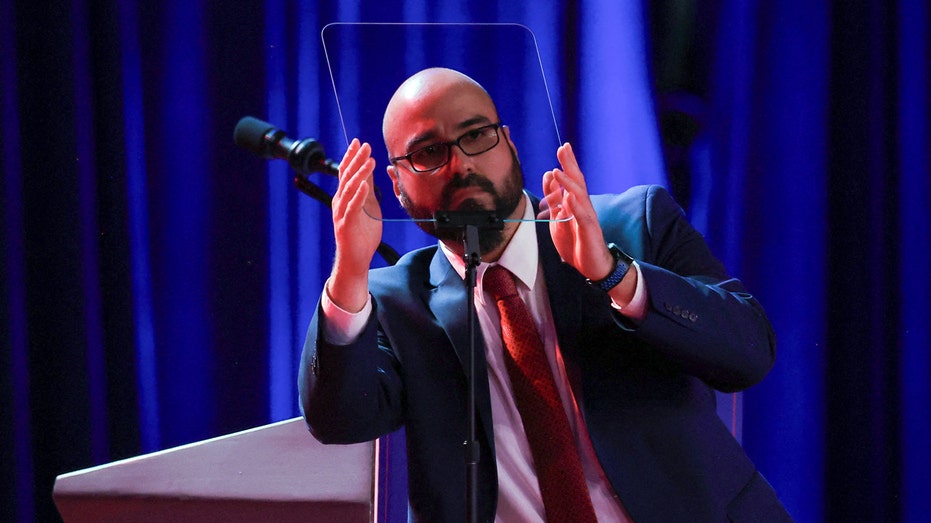
Gabriel Perez was ordered to surrender $107,539 in trading profits, pay a $65,000 civil penalty and accept a three-year trading ban, according to the CFTC. (Reuters / Reuters)
The CFTC found that between December 2025 and February 2026, while working as a White House teleprompter operator, Perez traded “presidential mention market contracts,” which reflected words or phrases Trump might use during his speeches.
The event contracts paid out based on whether Trump used specific words or phrases during his public remarks.
According to the CFTC, Perez had access to presidential speeches before they were delivered and “misappropriated” that information in “breach of his duty of trust and confidence” to make the trades.
Perez generated more than $107,500 in profits, according to the agency.
X REVEALS FOREIGN ADVERSARY BEHIND FAKE ACCOUNTS DISSEMINATING ANTI-DATA CENTER MESSAGING
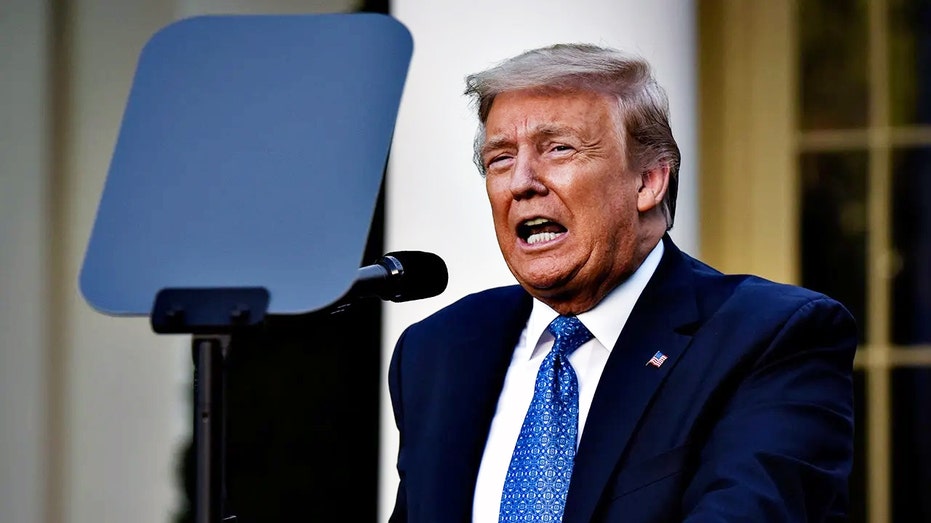
A White House teleprompter operator used advance access to President Donald Trump’s speeches to make more than $107,000 betting on words or phrases Trump would use, according to the CFTC. (Bill O’Leary/The Washington Post via Getty Images / Getty Images)
His $65,000 civil penalty represented a “substantial discount” because of his “exemplary cooperation” with the investigation, the CFTC said.
Robert DeNault, Kalshi’s head of enforcement, reacted to the enforcement action, saying traders who violate the company’s rules must be held accountable.
“A Kalshi surveillance investigation caught a White House staffer engaging in prohibited trading activity,” DeNault wrote on X.
“Today this individual was subjected to penalties by the CFTC and by our exchange,” he continued. “It doesn’t matter who you are: violate our rules or federal law and you will face the consequences.”
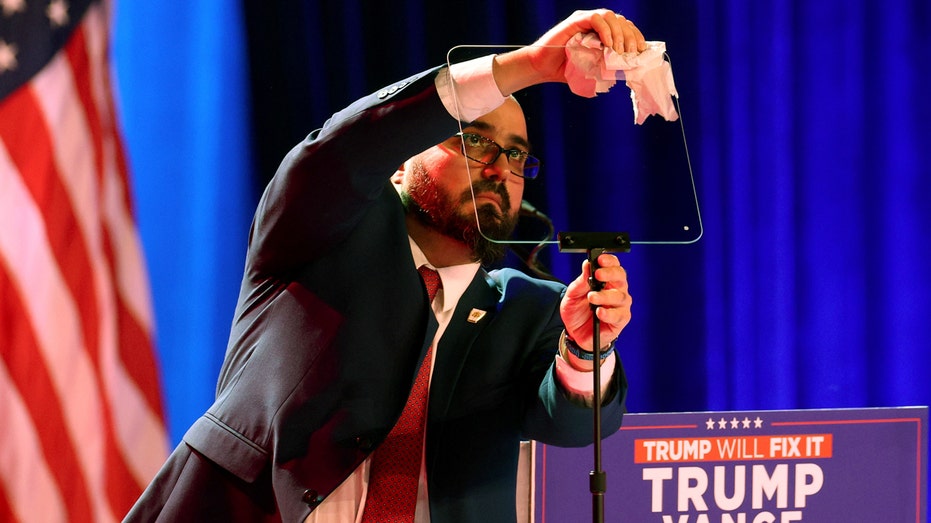
Gabriel Perez, a White House teleprompter operator, was ordered to pay a $65,000 civil penalty and surrender more than $107,000 in trading profits, according to the CFTC. (John Moore/Getty Images / Getty Images)
The trading activity first came to light months ago after Kalshi’s surveillance systems flagged a series of unusual trades involving markets tied to words and phrases expected to appear in Trump’s public remarks.
Kalshi previously said the trades stood out because they did not follow typical trading patterns and also drew complaints from market makers through the platform’s whistleblower channels.
After reviewing account information, the company said it identified the trader as a federal employee who worked as a White House teleprompter operator.
TRUMP TAKES MAJOR ACTION TO SLASH SOARING BEEF PRICES FOR US CONSUMERS
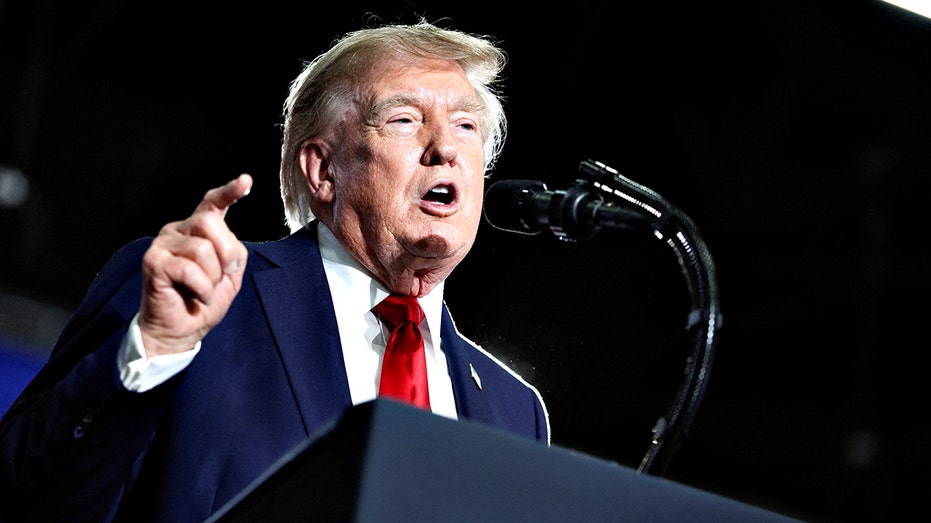
President Donald Trump speaks during a campaign rally for U.S. Senator Darline Graham (R-SC) at the Myrtle Beach Convention Center in Myrtle Beach, South Carolina, U.S., August 21, 2026. (REUTERS/Evan Vucci / Reuters Photos)
Kalshi froze the account before Perez could withdraw most of the profits, the company previously said, and referred the matter to federal regulators.
White House press secretary Karoline Leavitt addressed Perez’s conduct during a White House press briefing in July, saying Trump had been briefed on the matter.
“Obviously, I’m aware of the report. The president is, too. I spoke with him about it,” Leavitt said. “He believes it’s deeply unfortunate and, frankly, a disgrace.”
CLICK HERE TO GET FOX BUSINESS ON THE GO
FOX Business has reached out to the White House for comment and an update on Perez’s employment status.
Fox News Digital’s Stephen Sorace contributed to this report.


How InvestingPro’s Fair Value spotted Ouster’s 48% decline

REITs Vs. Treasuries: Which Is The Better Buy Today?

CBIZ soars 78% in 4 months after InvestingPro Fair Value signal


Samuel Smith has a diverse background that includes being lead analyst and Vice President at several highly regarded dividend stock research firms and running his own dividend investing YouTube channel. He is a Professional Engineer and Project Management Professional and holds a B.S. in Civil Engineering & Mathematics from the United States Military Academy at West Point and has a Masters in Engineering from Texas A&M with a focus on applied mathematics and machine learning.Samuel leads the High Yield Investor investing group. Samuel teams up with Jussi Askola and Paul R. Drake where they focus on finding the right balance between safety, growth, yield, and value. High Yield Investor offers real-money core, retirement, and international portfolios. The service also features regular trade alerts, educational content, and an active chat room of like-minded investors. Perspective: “Do not store up for yourselves treasures on earth, where moth and rust destroy, and where thieves break in and steal. But store up for yourselves treasures in heaven, where neither moth nor rust destroys, and where thieves do not break in or steal; for where your treasure is, there your heart will be also … For what will it profit a man if he gains the whole world and forfeits his soul?” ~ Jesus (Matthew 6:19-21; 16:26)Learn more
Analyst’s Disclosure: I/we have no stock, option or similar derivative position in any of the companies mentioned, and no plans to initiate any such positions within the next 72 hours. I wrote this article myself, and it expresses my own opinions. I am not receiving compensation for it (other than from Seeking Alpha). I have no business relationship with any company whose stock is mentioned in this article.
Seeking Alpha’s Disclosure: Past performance is no guarantee of future results. No recommendation or advice is being given as to whether any investment is suitable for a particular investor. Any views or opinions expressed above may not reflect those of Seeking Alpha as a whole. Seeking Alpha is not a licensed securities dealer, broker or US investment adviser or investment bank. Our analysts are third party authors that include both professional investors and individual investors who may not be licensed or certified by any institute or regulatory body.

Texas Instruments: The Upcycle Everyone Waited For Might Finally Be Here

Paul Black, veteran portfolio manager, believes investors should focus on companies with strong growth prospects, widening competitive moats and cultures that reinforce their strengths. His investment philosophy offers three important rules for identifying potential long-term wealth creators.
1. Look for a competitive moat that is getting stronger
Black’s first principle is to focus not merely on whether a company has a competitive advantage, but on the direction in which that advantage is moving.
A business may have a strong moat today, but that does not necessarily mean it will remain protected five or 10 years from now. Investors should therefore assess whether the company’s competitive position is strengthening or weakening.
Businesses that continually widen their moat can become increasingly difficult for competitors to challenge. This can allow them to sustain growth and generate superior returns over long periods.

For investors, the key question is not simply whether a company is good today, but whether its competitive advantage is likely to become stronger over the next five, 10 or even 15 years.
2. Give corporate culture a high premium
The second rule is to examine the culture of a business and determine whether it is aligned with its competitive advantage.Black believes a company’s values, employee behaviour and management philosophy can play a crucial role in determining whether its moat continues to expand. A strong competitive position becomes more durable when the organisation’s culture encourages decisions and behaviours that reinforce it.
Investors therefore need to look beyond management presentations and financial statements. Understanding the culture can involve speaking with former employees, suppliers, vendors and even competitors. Such conversations can help investors build a broader picture of how a company operates.
This qualitative assessment is difficult to capture in a spreadsheet, but it can provide an important edge when evaluating businesses for the long term.
3. Focus on the direction of ROIC, not just its level
Another important indicator Black highlights is Return on Invested Capital, or ROIC.
A high ROIC is generally viewed as a sign of an efficient and profitable business. However, Black places greater emphasis on the direction of ROIC rather than simply its absolute level.
A company whose ROIC is steadily improving could indicate that its competitive advantage is strengthening and that management is becoming increasingly efficient at deploying capital.
Conversely, a business with a high ROIC that stops improving may not have the same long-term potential as a company whose returns on capital are consistently rising.
Think differently from the market
Black also believes investors need to develop an information advantage. Simply spending most of one’s time building financial models and valuation spreadsheets may not provide a meaningful edge because thousands of analysts are doing similar work.
Instead, investors can focus on areas that are harder to quantify, such as corporate culture, competitive behaviour, customer relationships and the sustainability of a company’s moat.
This approach can help investors identify developments before they become obvious in conventional financial metrics.
Give great businesses time to compound
One of the central ideas in Black’s philosophy is the importance of patience.
Once investors identify businesses with strong cultures and expanding competitive advantages, frequently buying and selling them may undermine the benefits of long-term compounding. Great wealth creators can require years for their competitive advantages, earnings and cash flows to compound.
Black’s framework therefore encourages investors to think in five-, 10- and 15-year periods rather than focusing excessively on short-term market movements.
Manage risk by owning stronger businesses
Black’s approach to downside protection is also linked to competitive advantage. Companies with strong balance sheets, resilient businesses and expanding moats may be better positioned during difficult economic periods.
When weaker competitors face financial constraints, stronger companies can potentially use their financial strength to invest, gain market share or strengthen their competitive position.
For long-term investors, therefore, risk management does not necessarily mean avoiding volatility. It can also mean owning businesses that are structurally better equipped to withstand difficult periods.
Ignore the market noise
Black’s philosophy ultimately comes down to maintaining a long-term perspective.
Constant market commentary can encourage investors to focus on three- or six-month outcomes instead of the much longer periods required for business fundamentals to play out. Investors who understand a company’s competitive advantage may therefore benefit from avoiding unnecessary reactions to short-term market noise.
The broader lesson from Black’s framework is that great wealth creators are not necessarily the cheapest stocks or the fastest-growing companies. They are businesses whose competitive advantages can widen, whose cultures reinforce those advantages and whose returns on capital improve over time.
For investors searching for long-term compounders, identifying these characteristics may be more valuable than simply looking for a low valuation or a high near-term growth rate.
(Disclaimer: Recommendations, suggestions, views and opinions given by the experts are their own. These do not represent the views of The Economic Times)

EOS Climbs 12% In Bullish Trade

While the strength reflects renewed buying interest and optimism over demand from key sectors such as solar energy, electronics, and electric vehicles, uncertainty surrounding global economic growth and monetary policy continues to influence sentiment. The sharp recovery has raised expectations of further gains, but the key question remains whether silver can extend its upward trajectory or face fresh resistance after the recent rally.
Gold’s rally provides a strong tailwind for silver
One of the key factors supporting silver prices in recent weeks has been the strong rally in gold. As both metals are widely regarded as precious assets and safe-haven investments, silver often benefits from positive sentiment in the gold market. Rising geopolitical tensions, concerns over global economic growth, and expectations of monetary easing by major central banks have attracted investment flows into precious metals.
While gold has been the primary beneficiary of this demand, silver has also gained as investors sought relatively cheaper alternatives. Historically, periods of sustained strength in gold prices tend to improve sentiment across the precious metals complex, encouraging speculative and investment buying in silver and helping prices recover from previous declines.
A weaker U.S. dollar boosts precious metals
Another major driver behind silver’s recovery has been the weakness in the U.S. dollar. Since silver is priced globally in dollars, a softer greenback makes the metal more affordable for buyers using other currencies, thereby supporting demand. Expectations that the Federal Reserve may eventually move toward a more accommodative monetary policy stance have weighed on the dollar and improved investor interest in the metal.
In addition, lower real yields reduce the opportunity cost of holding non-interest-bearing assets such as precious metals. As a result, silver has attracted fresh buying interest from both investors and institutional participants. Continued fluctuations in the dollar remain an important factor, and any sustained weakness could provide additional support to silver prices in the coming months.
Industrial demand expectations support recovery
Unlike gold, silver derives a significant portion of its demand from industrial applications, making industrial activity a crucial determinant of price trends. Recent optimism surrounding global manufacturing activity and clean-energy investments has improved sentiment toward silver. The metal plays a vital role in solar panels, electronics, semiconductors, electric vehicles, and various advanced technologies.Expectations of increased infrastructure spending and a gradual recovery in industrial production in major economies have encouraged traders to price in stronger future demand. Although economic growth concerns persist in some regions, the long-term outlook for silver consumption remains favourable due to the global transition toward renewable energy and electrification.
Supply constraints and demand trends shape the market
The global silver market continues to be characterised by a relatively tight supply-demand balance. Mine production growth has remained limited in several key producing countries due to declining ore grades, operational challenges, and underinvestment in new projects. At the same time, industrial demand remains structurally strong, particularly from the solar energy, electronics, and automotive sectors.
Investment demand has been somewhat volatile, influenced by changing expectations regarding interest rates and economic growth. While short-term fluctuations in economic activity may affect demand patterns, the broader market continues to point toward a gradual tightening of fundamentals, providing underlying support to prices.
Outlook: Mild near-term optimism, stronger long-term potential
In the short term, silver prices are likely to maintain a mild positive bias, supported by strength in gold, a softer U.S. dollar, and hopes of improving industrial demand. However, volatility could remain elevated due to shifting expectations regarding global growth, Federal Reserve policy, and broader market sentiment. From a longer-term perspective, the outlook appears constructive. Growing industrial applications are expected to drive a sustained recovery in demand. If supply growth continues to lag consumption growth, silver prices could derive further support over the coming years.
However, investors should approach silver with caution. Despite the improving fundamentals, the metal remains highly volatile and vulnerable to sudden swings in sentiment. Therefore, silver may not be the most suitable investment for short-term horizons. Long-term investors with a higher risk appetite may consider accumulating on price declines, while short-term traders should remain selective and disciplined in managing risk.
(The author is Head of Commodity Research, Geojit Investments Limited)
Business
Strait of Hormuz Tanker Traffic Climbs Sharply, but It Remains Well Below Prewar Shipping Levels

Tanker traffic through the Strait of Hormuz rose more than 30% over the past week, according to new maritime tracking data, marking a notable improvement even as shipping through the critical energy chokepoint remains far below levels seen before the war between the United States, Israel and Iran began six months ago.
There were 114 transits through the strait between Aug. 17 and Sunday, up from 87 the previous week, according to figures from Lloyd’s List Intelligence cited by USNI News. The increase was driven mostly by tankers and gas carriers, with at least 42 westbound transits into the strait recorded during the latest window, compared with 29 the week before. Lloyd’s data showed the ships tracked included crude tankers operated by Sinokor, the Abu Dhabi National Oil Co. and its subsidiary Adnoc, as well as vessels owned by Saudi Arabia and Kuwait.
Even with the increase, the numbers remain a fraction of pre-war activity. Before the conflict began Feb. 28, roughly 100 vessels passed through the strait daily, according to shipping data compiled by CNN using figures from the analytics firm Kpler. As of Aug. 18, 172 days into the war, a total of 3,456 vessels had crossed the strait since fighting began, reflecting the extended disruption to what is normally one of the world’s busiest maritime corridors for oil and liquefied natural gas.
The Strait of Hormuz has been at the center of the broader conflict since the United States and Israel launched an air campaign against Iran in late February, an operation that included the killing of Iran’s supreme leader, Ayatollah Ali Khamenei. Iran responded by attacking shipping it deemed noncompliant with its demands, laying sea mines in the waterway, and at various points effectively shutting the strait to commercial traffic altogether. According to the Congressional Research Service, roughly 25% of the world’s maritime trade in crude oil and petroleum products, along with about 19% of global liquefied natural gas shipments, normally passed through the strait before the war.
The conflict has moved through several distinct phases in the months since. The United States and Iran reached a ceasefire in April and signed a memorandum of understanding in June that included commitments from Iran to make its best efforts toward ensuring safe passage for commercial vessels. That arrangement broke down in July, when Iranian forces resumed attacks on ships they viewed as violating their transit demands, reigniting hostilities that have continued into the current month.
Iran and Oman have spent recent weeks negotiating a proposed framework for a temporary shipping corridor through the strait, with regional officials describing an outline of the plan as recently as Aug. 25, according to CNN’s reporting. Iranian officials have said any agreement remains contingent on further concessions from the United States, including what Tehran has described as a return to the terms of the June memorandum, and Iranian state media reported that Pakistan’s army chief, Field Marshal Asim Munir, traveled to Tehran this week to help open space for renewed negotiations between Iran and Washington.
President Donald Trump has repeatedly said the strait is effectively open despite the disrupted shipping data, telling reporters at one point that mines in the waterway have all been cleared or detonated and warning that any new Iranian mine-laying attempts would be met with force. Iranian officials, meanwhile, have continued to issue their own warnings. Iran’s Supreme National Security Council secretary, Mohsen Rezaei, said this week that vessels violating Iran’s transit rules could face penalties including detention or confiscation, and separately threatened to halt oil flow through the strait entirely if neighboring Gulf states cooperate with a renewed U.S. economic pressure campaign against Tehran.
Attacks on individual vessels have continued intermittently even as overall traffic edges upward. An unidentified tanker was struck by an unknown projectile while transiting the strait on Aug. 25, according to maritime intelligence firm Windward, though the resulting fire was extinguished and the crew was reported safe, with no responsibility for the strike claimed by any party. Separately, the state-owned Abu Dhabi National Oil Company said two of its vessels were attacked while transiting the strait earlier this month, though the company reported no injuries and did not identify who was behind that incident.
The prolonged disruption has had wide-reaching economic consequences well beyond the Gulf region. U.S. gas prices have remained sharply elevated compared with a year earlier, with the American Automobile Association noting that this August could rank among the most expensive on record for the month. The International Energy Agency has separately warned that global oil stockpiles are being drawn down at a rapid pace as the strait remains a bottleneck, even as oil prices themselves have fluctuated based on shifting expectations about the war’s trajectory rather than steadily rising alongside supply concerns.
As talks between Iran, Oman and the United States continue without a clear resolution, shipping through the strait is likely to remain volatile, according to maritime analysts tracking the situation, with vessel operators increasingly relying on tactics such as disabling automatic tracking transponders and rerouting through alternate anchorages to reduce the risk of attack while still moving cargo through one of the world’s most important energy corridors.


Arbitrage Trader, aka Denislav Iliev has been day trading for 15+ years and leads a team of 40 analysts. They identify mispriced investments in fixed-income and closed-end funds based on simple-to-understand financial logic.
Denislav leads the investing group Trade With Beta, features of the service include: frequent picks for mispriced preferred stocks and baby bonds, weekly reviews of 1200+ equities, IPO previews, hedging strategies, an actively managed portfolio, and chat for discussion. Learn more.
Analyst’s Disclosure: I/we have no stock, option or similar derivative position in any of the companies mentioned, and no plans to initiate any such positions within the next 72 hours. I wrote this article myself, and it expresses my own opinions. I am not receiving compensation for it (other than from Seeking Alpha). I have no business relationship with any company whose stock is mentioned in this article.
Seeking Alpha’s Disclosure: Past performance is no guarantee of future results. No recommendation or advice is being given as to whether any investment is suitable for a particular investor. Any views or opinions expressed above may not reflect those of Seeking Alpha as a whole. Seeking Alpha is not a licensed securities dealer, broker or US investment adviser or investment bank. Our analysts are third party authors that include both professional investors and individual investors who may not be licensed or certified by any institute or regulatory body.
3 Major Solana (SOL) Developments You Should Know About

Jimmysstar primed for Memsie Stakes return in 2026

Soundcore Liberty 5 Pro Review: Master of Phone Calls





-

 Crypto World3 days ago
SpaceX stock could rise 75% to $240, JPMorgan says
-

 Crypto World2 days ago
Bitcoin’s 22% rally now needs real demand to outlast Treasury liquidity boost
-

 Business7 days ago
Musk’s Tesla, SpaceX Confirm $16.8 Billion ‘Terafab’ Chip Plant as World’s Largest Building in Texas
-

 Fashion18 hours ago
Weekend Open Thread: Maeve – Corporette.com
-

 Crypto World4 days ago
A $30 Billion AI Fund Implodes, Now the SEC Is Investigating Wall Street’s Role
-

 Crypto World3 days ago
Warsh Jackson Hole keynote puts financial innovation first
-

 Business1 day ago
Salesforce Stock Soars 19% as Blowout Earnings and Agentforce AI Growth Silence Software Skeptics
-

 Politics7 days ago
6 months on, Irish renters crushed by effects of government housing bill
-

 Crypto World3 days ago
Did Trump Just Move SpaceX Stock With One Truth Social Post?
-

 Business6 days ago
Mystery AI Model ‘Ox Alpha’ Draws Developers With Free Access as Chinese Lab Origins Remain Debated
-

 Business3 days ago
Walmart takes aim at younger shoppers with new fashion brand
-
 NewsBeat3 days ago
Lindsay Clancy jury braces for closing arguments as judge tells court: ‘You’ve heard all the evidence’ – Live updates
-

 Business5 days ago
Moderna CEO warns China is pouring state money into mRNA technology
-

 Business5 days ago
NVIDIA Stock Drops Nearly 2 Percent to $210 on Seventh Losing Day Ahead of Critical AI Earnings
-

 Crypto World3 days ago
Elon Musk Grok Bot Promise: We Will Make You Whole if AI Loses Your Money
-

 Crypto World2 days ago
NVIDIA revenue hits $96.2B as AI demand doubles
-

 Business19 hours ago
iPhone 18 Pro Pre-Orders Could Shift to Saturday as Apple Reportedly Avoids September 11 Anniversary
-
 Crypto World5 days ago
$92 Billion Nvidia Earnings Could Make or Break the AI Trade
-

 Business3 days ago
Thailand’s Eastern Economic Corridor Capital City (EECiti): Key Developments and Investment Opportunities
-

 Business6 days ago
Where Will Kevin Durant Play in 2027? Rockets Hold Player Option Key to His Future With Houston via Deal
You must be logged in to post a comment Login