
Business
Lower Saxony premier urges agreement on VW restructuring before board meeting




EOS Climbs 12% In Bullish Trade

While the strength reflects renewed buying interest and optimism over demand from key sectors such as solar energy, electronics, and electric vehicles, uncertainty surrounding global economic growth and monetary policy continues to influence sentiment. The sharp recovery has raised expectations of further gains, but the key question remains whether silver can extend its upward trajectory or face fresh resistance after the recent rally.
Gold’s rally provides a strong tailwind for silver
One of the key factors supporting silver prices in recent weeks has been the strong rally in gold. As both metals are widely regarded as precious assets and safe-haven investments, silver often benefits from positive sentiment in the gold market. Rising geopolitical tensions, concerns over global economic growth, and expectations of monetary easing by major central banks have attracted investment flows into precious metals.
While gold has been the primary beneficiary of this demand, silver has also gained as investors sought relatively cheaper alternatives. Historically, periods of sustained strength in gold prices tend to improve sentiment across the precious metals complex, encouraging speculative and investment buying in silver and helping prices recover from previous declines.
A weaker U.S. dollar boosts precious metals
Another major driver behind silver’s recovery has been the weakness in the U.S. dollar. Since silver is priced globally in dollars, a softer greenback makes the metal more affordable for buyers using other currencies, thereby supporting demand. Expectations that the Federal Reserve may eventually move toward a more accommodative monetary policy stance have weighed on the dollar and improved investor interest in the metal.

In addition, lower real yields reduce the opportunity cost of holding non-interest-bearing assets such as precious metals. As a result, silver has attracted fresh buying interest from both investors and institutional participants. Continued fluctuations in the dollar remain an important factor, and any sustained weakness could provide additional support to silver prices in the coming months.
Industrial demand expectations support recovery
Unlike gold, silver derives a significant portion of its demand from industrial applications, making industrial activity a crucial determinant of price trends. Recent optimism surrounding global manufacturing activity and clean-energy investments has improved sentiment toward silver. The metal plays a vital role in solar panels, electronics, semiconductors, electric vehicles, and various advanced technologies.Expectations of increased infrastructure spending and a gradual recovery in industrial production in major economies have encouraged traders to price in stronger future demand. Although economic growth concerns persist in some regions, the long-term outlook for silver consumption remains favourable due to the global transition toward renewable energy and electrification.
Supply constraints and demand trends shape the market
The global silver market continues to be characterised by a relatively tight supply-demand balance. Mine production growth has remained limited in several key producing countries due to declining ore grades, operational challenges, and underinvestment in new projects. At the same time, industrial demand remains structurally strong, particularly from the solar energy, electronics, and automotive sectors.
Investment demand has been somewhat volatile, influenced by changing expectations regarding interest rates and economic growth. While short-term fluctuations in economic activity may affect demand patterns, the broader market continues to point toward a gradual tightening of fundamentals, providing underlying support to prices.
Outlook: Mild near-term optimism, stronger long-term potential
In the short term, silver prices are likely to maintain a mild positive bias, supported by strength in gold, a softer U.S. dollar, and hopes of improving industrial demand. However, volatility could remain elevated due to shifting expectations regarding global growth, Federal Reserve policy, and broader market sentiment. From a longer-term perspective, the outlook appears constructive. Growing industrial applications are expected to drive a sustained recovery in demand. If supply growth continues to lag consumption growth, silver prices could derive further support over the coming years.
However, investors should approach silver with caution. Despite the improving fundamentals, the metal remains highly volatile and vulnerable to sudden swings in sentiment. Therefore, silver may not be the most suitable investment for short-term horizons. Long-term investors with a higher risk appetite may consider accumulating on price declines, while short-term traders should remain selective and disciplined in managing risk.
(The author is Head of Commodity Research, Geojit Investments Limited)
Business
Strait of Hormuz Tanker Traffic Climbs Sharply, but It Remains Well Below Prewar Shipping Levels

Tanker traffic through the Strait of Hormuz rose more than 30% over the past week, according to new maritime tracking data, marking a notable improvement even as shipping through the critical energy chokepoint remains far below levels seen before the war between the United States, Israel and Iran began six months ago.
There were 114 transits through the strait between Aug. 17 and Sunday, up from 87 the previous week, according to figures from Lloyd’s List Intelligence cited by USNI News. The increase was driven mostly by tankers and gas carriers, with at least 42 westbound transits into the strait recorded during the latest window, compared with 29 the week before. Lloyd’s data showed the ships tracked included crude tankers operated by Sinokor, the Abu Dhabi National Oil Co. and its subsidiary Adnoc, as well as vessels owned by Saudi Arabia and Kuwait.
Even with the increase, the numbers remain a fraction of pre-war activity. Before the conflict began Feb. 28, roughly 100 vessels passed through the strait daily, according to shipping data compiled by CNN using figures from the analytics firm Kpler. As of Aug. 18, 172 days into the war, a total of 3,456 vessels had crossed the strait since fighting began, reflecting the extended disruption to what is normally one of the world’s busiest maritime corridors for oil and liquefied natural gas.
The Strait of Hormuz has been at the center of the broader conflict since the United States and Israel launched an air campaign against Iran in late February, an operation that included the killing of Iran’s supreme leader, Ayatollah Ali Khamenei. Iran responded by attacking shipping it deemed noncompliant with its demands, laying sea mines in the waterway, and at various points effectively shutting the strait to commercial traffic altogether. According to the Congressional Research Service, roughly 25% of the world’s maritime trade in crude oil and petroleum products, along with about 19% of global liquefied natural gas shipments, normally passed through the strait before the war.
The conflict has moved through several distinct phases in the months since. The United States and Iran reached a ceasefire in April and signed a memorandum of understanding in June that included commitments from Iran to make its best efforts toward ensuring safe passage for commercial vessels. That arrangement broke down in July, when Iranian forces resumed attacks on ships they viewed as violating their transit demands, reigniting hostilities that have continued into the current month.
Iran and Oman have spent recent weeks negotiating a proposed framework for a temporary shipping corridor through the strait, with regional officials describing an outline of the plan as recently as Aug. 25, according to CNN’s reporting. Iranian officials have said any agreement remains contingent on further concessions from the United States, including what Tehran has described as a return to the terms of the June memorandum, and Iranian state media reported that Pakistan’s army chief, Field Marshal Asim Munir, traveled to Tehran this week to help open space for renewed negotiations between Iran and Washington.
President Donald Trump has repeatedly said the strait is effectively open despite the disrupted shipping data, telling reporters at one point that mines in the waterway have all been cleared or detonated and warning that any new Iranian mine-laying attempts would be met with force. Iranian officials, meanwhile, have continued to issue their own warnings. Iran’s Supreme National Security Council secretary, Mohsen Rezaei, said this week that vessels violating Iran’s transit rules could face penalties including detention or confiscation, and separately threatened to halt oil flow through the strait entirely if neighboring Gulf states cooperate with a renewed U.S. economic pressure campaign against Tehran.
Attacks on individual vessels have continued intermittently even as overall traffic edges upward. An unidentified tanker was struck by an unknown projectile while transiting the strait on Aug. 25, according to maritime intelligence firm Windward, though the resulting fire was extinguished and the crew was reported safe, with no responsibility for the strike claimed by any party. Separately, the state-owned Abu Dhabi National Oil Company said two of its vessels were attacked while transiting the strait earlier this month, though the company reported no injuries and did not identify who was behind that incident.
The prolonged disruption has had wide-reaching economic consequences well beyond the Gulf region. U.S. gas prices have remained sharply elevated compared with a year earlier, with the American Automobile Association noting that this August could rank among the most expensive on record for the month. The International Energy Agency has separately warned that global oil stockpiles are being drawn down at a rapid pace as the strait remains a bottleneck, even as oil prices themselves have fluctuated based on shifting expectations about the war’s trajectory rather than steadily rising alongside supply concerns.
As talks between Iran, Oman and the United States continue without a clear resolution, shipping through the strait is likely to remain volatile, according to maritime analysts tracking the situation, with vessel operators increasingly relying on tactics such as disabling automatic tracking transponders and rerouting through alternate anchorages to reduce the risk of attack while still moving cargo through one of the world’s most important energy corridors.


Arbitrage Trader, aka Denislav Iliev has been day trading for 15+ years and leads a team of 40 analysts. They identify mispriced investments in fixed-income and closed-end funds based on simple-to-understand financial logic.
Denislav leads the investing group Trade With Beta, features of the service include: frequent picks for mispriced preferred stocks and baby bonds, weekly reviews of 1200+ equities, IPO previews, hedging strategies, an actively managed portfolio, and chat for discussion. Learn more.
Analyst’s Disclosure: I/we have no stock, option or similar derivative position in any of the companies mentioned, and no plans to initiate any such positions within the next 72 hours. I wrote this article myself, and it expresses my own opinions. I am not receiving compensation for it (other than from Seeking Alpha). I have no business relationship with any company whose stock is mentioned in this article.
Seeking Alpha’s Disclosure: Past performance is no guarantee of future results. No recommendation or advice is being given as to whether any investment is suitable for a particular investor. Any views or opinions expressed above may not reflect those of Seeking Alpha as a whole. Seeking Alpha is not a licensed securities dealer, broker or US investment adviser or investment bank. Our analysts are third party authors that include both professional investors and individual investors who may not be licensed or certified by any institute or regulatory body.

Russian strike kills 27 near Kyiv as Moscow militarizes schools
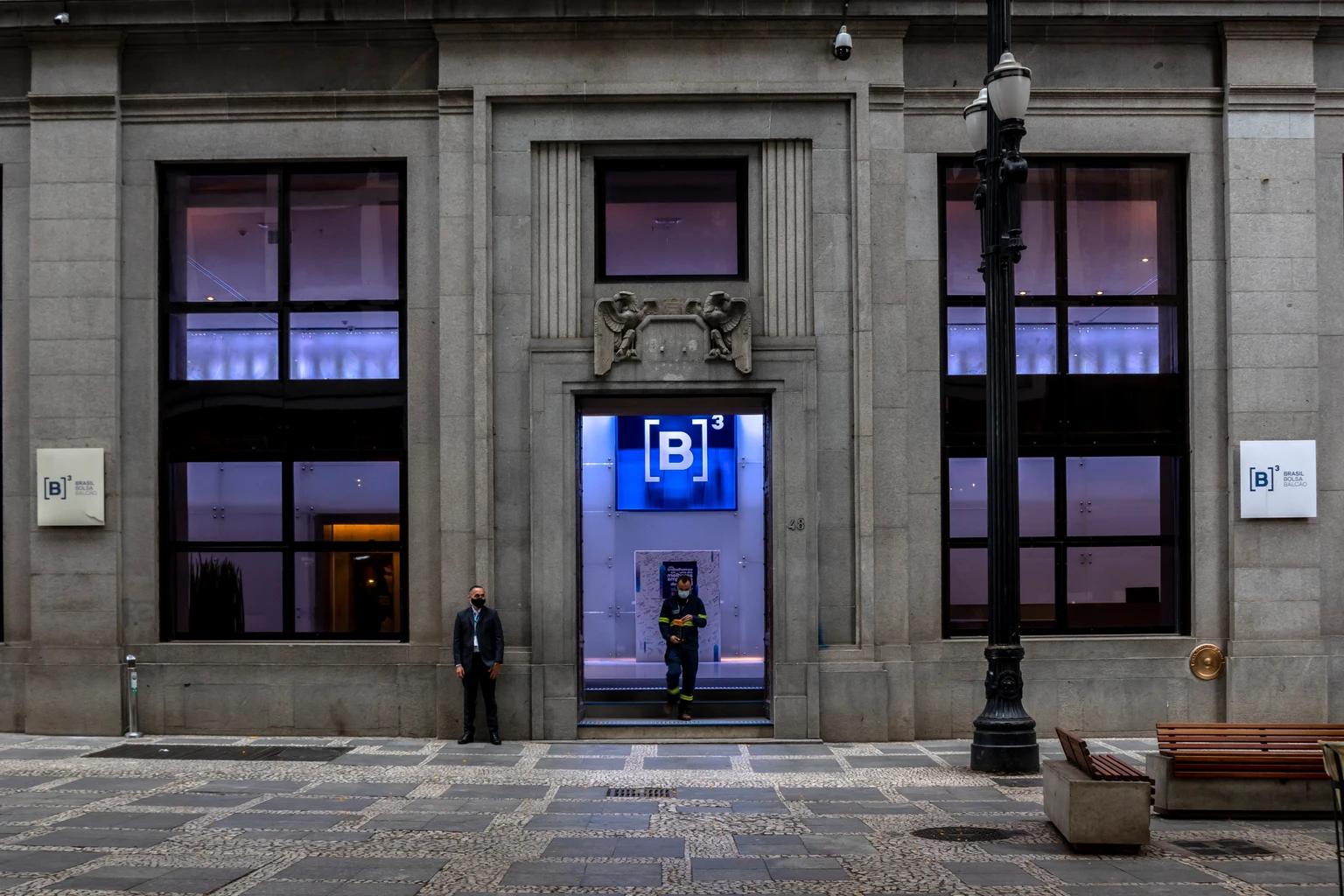
B3 S.A. Got An Antitrust Warning Because Of The Strength Of Its Moat (Rating Downgrade)
Business
Vedanta, Wipro among 10 stocks that saw biggest jump in retail holders in Q1. See full list

Vedanta, Wipro and Bajaj Auto were among the stocks that saw the biggest additions to their retail shareholder base in Q1FY27, with several large companies witnessing strong retail participation.
Business
Reliance Jio IPO: 7 risk factors investors should know as firm gets Sebi nod for Rs 37,000-crore issue

The IPO is expected to comprise a fresh issue of up to 27 crore equity shares, with no offer-for-sale component. As a result, the funds raised will flow directly to Jio Platforms. The company plans to use the proceeds to repay part of the borrowings of its telecom subsidiary, Reliance Jio Infocomm, as well as for general corporate purposes.
Jio Platforms is among India’s largest digital platforms, with its telecom subsidiary Reliance Jio Infocomm serving more than 524 million customers as of March 2026, according to reports citing the company’s offer documents.
Here are 7 risk factors mentioned in the DRHP that investors must know about the company.
1.) Spectrum challenges
Access to adequate spectrum is critical for maintaining network quality, supporting growing data consumption and driving future growth. Jio’s network performance and expansion plans depend heavily on the quantity and quality of spectrum it holds across low, mid and high frequency bands.
However, acquiring and retaining spectrum comes with challenges. Spectrum is primarily obtained through government auctions or spectrum-sharing and trading arrangements, both of which are competitive and subject to regulatory uncertainty. High reserve prices can increase acquisition costs, while competitors may outbid Jio in auctions or strengthen their spectrum holdings through strategic arrangements. Any inability to secure sufficient spectrum at commercially viable terms could affect network quality, customer growth and financial performance.
2.) Highly regulated sector
Jio operates in a heavily regulated industry and is subject to oversight by the Telecom Regulatory Authority of India (TRAI) and the Department of Telecommunications (DoT). These regulators oversee critical aspects of the telecom sector, including licensing, spectrum allocation and management, network rollout obligations, interconnection charges, and infrastructure sharing.
The company must also comply with regulations relating to unsolicited commercial communications, subscriber verification requirements, know-your-customer norms, electromagnetic radiation standards, and network safety requirements. Any failure to comply with these regulations, or any changes in the regulatory framework, could lead to penalties, higher compliance costs, operational restrictions, or reputational damage, affecting Jio’s business and financial performance.
3.) Capex heavy
Jio’s business requires significant and ongoing investments to expand and upgrade its network infrastructure in line with evolving technology standards and customer expectations. In FY26, the company incurred cash capital expenditure of Rs 34,184 crore, equivalent to 23.3% of its revenue from operations of Rs 1.47 lakh crore. Given the scale of these investments and the fast-changing nature of the telecom and digital services industry, there is no guarantee that Jio will realise the expected returns from its capital spending, which could affect its financial performance and growth prospects.
4.) Vendor dependence risk
Jio relies on a limited number of equipment suppliers, including certain related-party vendors, creating concentration risk within its supply chain. Any disruption in these relationships, or any failure by suppliers to deliver equipment on time, in required quantities, or according to quality standards, could affect the company’s ability to maintain and expand its network infrastructure. Such disruptions may arise from capacity constraints, technical failures, production issues, labour-related challenges, or other operational factors.
While a significant portion of Jio’s equipment requirements is sourced domestically, several Indian vendors are subsidiaries of companies based in countries such as the United States, South Korea, Finland, and Sweden. This leaves the company exposed to global supply chain disruptions and geopolitical uncertainties. Any increase in import dependence could further expose Jio to currency fluctuations, trade restrictions, and supply-related challenges.
5.) Competition heating up
Jio operates in one of the world’s most competitive telecom markets, where future growth depends on attracting new subscribers, retaining existing users, and increasing engagement through value-added services. Although the company carried nearly 60% of India’s wireless data traffic in FY26, according to the DRHP, it faces strong competition from rival telecom operators that may offer better pricing, stronger customer service, or more compelling products. Any inability to keep pace with technological changes, shifting consumer preferences, or competitive pressures could hurt Jio’s market share, profitability, and overall financial performance.
6.) Infrastructure concentration risk
Jio’s network operations depend heavily on a small group of passive infrastructure providers. This includes telecom towers, shelters, fibre pairs, and ducts that form the backbone of its connectivity services. As of March 31, 2026, 1,74,451 of the 3,60,382 towers used by the company were owned by Summit Digitel Infrastructure Limited (SDIL), highlighting its reliance on a key infrastructure partner.
The dependence is even greater in fibre infrastructure. Jio Digital Fibre Private Limited (JDFPL) provides all of Jio’s optical fibre network requirements, except for the last-mile fibre network owned by Reliance Jio Infocomm. Any disruption in services, contractual disagreements, operational challenges, financial stress, or regulatory issues affecting these providers could impact network availability, service quality, and expansion plans.
7.) Cybersecurity exposure
Jio’s operations rely on complex technology systems, network infrastructure, and large volumes of customer data, making it vulnerable to a range of cybersecurity threats. These include distributed denial-of-service (DDoS) attacks, ransomware, malware, phishing attempts, credential theft, hacking, social engineering attacks and risks arising from employee errors or misconduct. Any successful cyberattack or operational disruption could affect network availability, expose sensitive information, and result in financial losses, regulatory penalties, or reputational damage.
Also read: Rs 70,000 crore IPOs in September? Jio, NSE could fuel a record month
The risk is not limited to Jio’s own systems. The company also depends on third-party vendors, cloud service providers, and both cloud-based and on-premises data centres. Any cybersecurity incident involving these partners could disrupt services, compromise data security, and affect business continuity. As cyber threats continue to evolve, Jio may have to incur significant costs to strengthen its security infrastructure and mitigate risks.
(Disclaimer: Recommendations, suggestions, views and opinions given by the experts are their own. These do not represent the views of The Economic Times)

Bitcoin price slips below $78,000 as ‘digital gold’ narrative faces fresh test
Business
Bitcoin falls below $78,000 as crypto market faces correction after Warsh’s Jackson Hole comments

Over the past 24 hours, Bitcoin was down 2.5%, while Ethereum fell 1.9% to trade at $2,430. Among major altcoins, BNB, XRP, Solana, Hyperliquid, Dogecoin and Cardano declined by up to 4.2%, while Tron gained
Also Read | Bitcoin falls 30% as Google, gold and defence stocks outperform since 2020: Report The global crypto market capitalisation edged down 2.57% to $3.07 trillion, according to CoinGecko.
Riya Sehgal, Research Analyst at Delta Exchange, said Bitcoin had fallen from above $81,000 earlier this week to around $77,700. Ethereum was trading near $2,440, while total crypto market capitalisation had declined from above $2.7 trillion.
“Leverage added to the selling. Around $488 million in crypto positions were liquidated, including more than $360 million in leveraged longs. Bitcoin’s move below $77,000 triggered further forced selling.”
Sehgal further said that Warsh said inflation remains above the Federal Reserve’s 2% target and indicated that policy could remain restrictive if price pressures persist. Treasury yields moved higher after the remarks, putting pressure on risk assets, including cryptocurrencies.Over the past week, Bitcoin and Ethereum were down 1.1% and 3%, respectively. Among major altcoins, BNB, XRP, Tron, Dogecoin and Cardano fell by up to 20.9%, while Solana and Hyperliquid gained 4.8% and 0.9%, respectively.
Nischal Shetty, Founder, WazirX, said Crypto markets navigated a volatile but increasingly constructive week, with Bitcoin retaining leadership even as leverage was flushed out and macro uncertainty capped momentum.
“Total market capitalisation fell 1.27% to $2.65 trillion on August 26, while $641.79 million in liquidations, including $489 million in long positions, highlighted the cost of crowded bullish trades.”
Also Read | Explained: Want to calculate the future value of your Rs 10,000 SIP? Here’s the formula
Crypto ETFs recorded $482.13 million in inflows on August 25, led by roughly $310 million into Bitcoin and $172 million into Ethereum. This support, alongside gains in US technology stocks, helped sustain a cautiously positive market structure, Shetty further said.
(Disclaimer: Recommendations, suggestions, views and opinions given by the experts are their own. These do not represent the views of The Economic Times)
EOS Climbs 12% In Bullish Trade

Leanne Morgan’s Netflix Sitcom’s Weight Loss, Eating Disorder Jokes

How to watch Liverpool FC vs Nottingham Forest: TV channel and live stream for Premier League today





-

 Crypto World3 days ago
SpaceX stock could rise 75% to $240, JPMorgan says
-

 Crypto World1 day ago
Bitcoin’s 22% rally now needs real demand to outlast Treasury liquidity boost
-

 Business7 days ago
Musk’s Tesla, SpaceX Confirm $16.8 Billion ‘Terafab’ Chip Plant as World’s Largest Building in Texas
-

 Fashion17 hours ago
Weekend Open Thread: Maeve – Corporette.com
-

 Crypto World4 days ago
A $30 Billion AI Fund Implodes, Now the SEC Is Investigating Wall Street’s Role
-

 Crypto World3 days ago
Warsh Jackson Hole keynote puts financial innovation first
-

 Business1 day ago
Salesforce Stock Soars 19% as Blowout Earnings and Agentforce AI Growth Silence Software Skeptics
-

 Politics7 days ago
6 months on, Irish renters crushed by effects of government housing bill
-

 Crypto World3 days ago
Did Trump Just Move SpaceX Stock With One Truth Social Post?
-

 Business6 days ago
Mystery AI Model ‘Ox Alpha’ Draws Developers With Free Access as Chinese Lab Origins Remain Debated
-

 Business3 days ago
Walmart takes aim at younger shoppers with new fashion brand
-
 NewsBeat3 days ago
Lindsay Clancy jury braces for closing arguments as judge tells court: ‘You’ve heard all the evidence’ – Live updates
-

 Business5 days ago
Moderna CEO warns China is pouring state money into mRNA technology
-

 Business4 days ago
NVIDIA Stock Drops Nearly 2 Percent to $210 on Seventh Losing Day Ahead of Critical AI Earnings
-

 Crypto World2 days ago
Elon Musk Grok Bot Promise: We Will Make You Whole if AI Loses Your Money
-

 Crypto World2 days ago
NVIDIA revenue hits $96.2B as AI demand doubles
-

 Business19 hours ago
iPhone 18 Pro Pre-Orders Could Shift to Saturday as Apple Reportedly Avoids September 11 Anniversary
-
 Crypto World5 days ago
$92 Billion Nvidia Earnings Could Make or Break the AI Trade
-

 Business3 days ago
Thailand’s Eastern Economic Corridor Capital City (EECiti): Key Developments and Investment Opportunities
-

 Business6 days ago
Where Will Kevin Durant Play in 2027? Rockets Hold Player Option Key to His Future With Houston via Deal
You must be logged in to post a comment Login