Connect with us
DAPA Banner
DAPA Coin
DAPA
COIN PAYMENT ASSET
PRIVACY · BLOCKDAG · HOMOMORPHIC ENCRYPTION · RUST
ElGamal Encrypted MINE DAPA
🚫 GENESIS SOLD OUT
DAPAPAY COMING

Business

Why Runners Who Find the Right Shoe Never Look Back

Published

on

The team behind runny, the world’s #1 rated personalised running coaching app that launched in 2021, has closed its latest venture capital round having raised £5 million.

Ask any experienced runner about the moment they found their shoe, and the answer is often the same: everything changed. Not dramatically, not overnight, but in the accumulating way that the right equipment quietly removes friction from something you do repeatedly.

Running is a sport of repetition. A recreational runner covering forty kilometres per week takes roughly forty thousand strides in that time. Each stride involves a loading event – the foot contacting the ground and the body absorbing that force before redirecting it forward. Multiply forty thousand by the number of weeks in a year, and the cumulative load the foot and lower limb manages becomes a number that makes the case for shoe selection more clearly than any product description ever could.

Against that backdrop, the difference between a shoe that suits a runner’s biomechanics, training volume, and surface type and one that does not is not a marginal performance variable. It is a meaningful determinant of whether the runner stays healthy, trains consistently, and continues to improve or cycles through a familiar pattern of overuse injuries, forced rest, and frustrated restarts.

Finding the right shoe does not guarantee a runner will never get injured or that every session will feel effortless. But it removes one of the most consistently cited variables in running-related injury and fatigue from the equation – and for most runners, that is enough to change the experience of the sport entirely.

The Problem With Getting It Wrong

Most runners who have been in the sport for any length of time have experienced the wrong shoe. It may have been a pair that felt fine in the store but produced a specific hot spot by kilometre five. A shoe that looked right on paper but created knee pain on downhill sections. A style that felt comfortable for short efforts but became increasingly punishing on longer runs as the midsole failed to support the foot through accumulated fatigue.

Advertisement

The wrong shoe does not always announce itself immediately. Some problems develop gradually, the foot adapting to compensate for inadequate support or cushioning in ways that build strain in the Achilles, the plantar fascia, the iliotibial band, or the knee. By the time the injury presents, its origin is two or three months in the past, and the connection to footwear is not always obvious.

This delayed feedback loop is one of the reasons shoe selection is persistently underestimated by newer runners. The discomfort from a poorly chosen shoe rarely feels catastrophic in the moment of purchase. It compounds quietly across sessions until it becomes something that cannot be ignored.

What the Right Shoe Actually Does

The right running shoe does not fix poor biomechanics, compensate for inadequate training load management, or substitute for the strength work that keeps a runner’s joints healthy. Physiotherapy clinics that work with injured runners are consistent on this point: Runner’s Edge Physio notes that shoes are one piece of the puzzle, and that training load, running form, and strength play larger roles in injury risk than footwear alone.

What the right shoe does is provide an appropriate environment for the foot’s natural mechanics to function without additional stress. It cushions the loading event in proportion to the runner’s weight, gait, and surface type. It supports the foot’s arch and rearfoot in a way that reduces the compensatory loading that misalignment creates. It fits the foot’s actual dimensions closely enough that friction, slippage, and forefoot compression are not contributing factors to the session’s accumulated discomfort.

Advertisement

When a runner finds a shoe that delivers all of these things for their specific combination of foot type, gait mechanics, and training context, the experience of running changes. Not because the shoe is doing the running, but because it has stopped working against it.

The Role of Consistency in Shoe Selection

One of the less discussed aspects of running shoe selection is the value of consistency. A runner who changes shoes frequently, testing new models with each purchase, never fully establishes the baseline from which meaningful assessments of performance and comfort can be made. The body is constantly adapting to new loading inputs, which creates noise in the feedback loop that makes it difficult to distinguish what is working from what is not.

Experienced runners who have found their shoe tend to stay with it. Not out of brand loyalty or inertia, but because consistency in footwear is itself a training variable. When the shoe is known and stable, changes in comfort, fatigue, and injury risk can be attributed more reliably to training load, recovery, and form rather than to equipment variation.

This principle has a practical implication: finding the right shoe is worth the investment of time and attention it requires, because the return on that investment compounds across every training cycle that follows.

Advertisement

Understanding What Makes a Shoe Right

The question of what makes a shoe right for a specific runner cannot be answered generically. It depends on a combination of factors that are individual rather than universal.

Foot type and pronation pattern determine whether a neutral, stability, or motion control shoe provides the appropriate level of support. A runner with a neutral gait in a motion control shoe is being overcorrected. A runner with significant overpronation in a neutral shoe is receiving insufficient support. Neither outcome is neutral in its effect on the body across thousands of strides per week.

Training volume and surface influence the appropriate midsole cushioning and outsole construction. A runner covering high weekly mileage on hard road surfaces needs a different cushioning specification than one doing the same distance on soft trail terrain. Chelsea Foot and Ankle’s guide to the five key factors in running shoe selection identifies terrain as a critical but frequently overlooked dimension of shoe choice – one that can invalidate an otherwise well-matched specification.

Foot dimensions – width, volume, arch height, and toe length distribution – determine whether the shoe’s last shape accommodates the foot correctly. A shoe that fits in length but is too narrow across the ball of the foot will create forefoot compression that worsens with every kilometre of a long run. A shoe with insufficient toe box depth will cause nail pressure on downhill sections that accumulates into bruising over time.

Advertisement

Heel-to-toe drop affects the loading distribution between the forefoot and the rearfoot and influences how much work the Achilles and calf complex are required to do. A runner transitioning from a high-drop shoe to a low-drop shoe without a gradual adjustment period is at elevated risk of Achilles strain, regardless of how well the shoe fits in other respects.

Getting these variables right simultaneously is what distinguishes a shoe selection process from a shoe purchase.

Why Some Brands Build Loyalty More Than Others

The running shoe market is crowded, and most reputable brands produce competent footwear across the major categories. Yet within that field, certain brands develop loyalty among runners that goes beyond preference. These are brands whose shoes runners return to not because they cannot find alternatives, but because they have found something that works and see no compelling reason to introduce variation.

Mizuno occupies this position for a specific and consistent segment of the running population. The brand, founded in Japan in 1906, has built its running shoe range around the Wave plate technology it developed decades ago – a midsole component made from two sheets of thermoplastic rubber fused in a wave formation that distributes impact forces laterally across the midsole rather than concentrating them at the point of foot strike.

Advertisement

The result is a ride quality that is distinctively different from foam-dominant alternatives. Firmer, more responsive, and with a ground-feel that runners who prefer a connected, controlled sensation consistently describe as exactly what they were looking for. The Wave Rider series, now well into its third decade of continuous development, has become one of the most reliable daily trainers in the market precisely because Mizuno has refined the technology without abandoning the characteristics that built its following.

Fleet Feet’s review of the Wave Rider 28 captures this dynamic directly: one of their testers notes having run in Mizuno shoes since 2011 after being fitted at a running store, and describes the experience of wearing the Wave Rider as one that simply works – consistently, across sessions, year after year.

The Wave Inspire, Mizuno’s primary stability offering, applies the same Wave plate technology in an asymmetric configuration that provides medial support for overpronating runners without the rigidity associated with traditional motion control construction. It has developed its own loyal following among runners managing mild to moderate overpronation who want consistent support without sacrificing the responsive ride that makes Mizuno’s neutral range distinctive.

The Compounding Return of the Right Choice

A runner who finds their shoe early in their running life and maintains consistency in their selection accumulates a compounding return across years of training. Sessions are not interrupted by the adjustment period that comes with testing new models. The body’s loading patterns remain stable, which makes it easier to manage training volume without accumulating injury risk at transitions. And the mental overhead of shoe selection – the research, the testing, the uncertainty – is resolved, leaving attention for the training itself.

Advertisement

This is not an argument against trying new shoes or against innovation in footwear technology. It is an argument for understanding that finding the right shoe is a meaningful investment with a long-term return, and that the process of finding it deserves more rigour than most runners initially bring to it.

For Australian runners evaluating Mizuno’s range, the Wave Rider, Wave Inspire, and Wave Sky can all be explored and compared across neutral and stability options by browsing running shoes by Mizuno.

How to Find Your Shoe

The most reliable path to finding the right running shoe combines three elements: an understanding of one’s own foot type and gait mechanics, a clear picture of the training context the shoe will serve, and an honest trial period across multiple sessions before the choice is committed to.

A gait analysis from a specialist running retailer or sports podiatrist provides the foot type and pronation data that makes the stability category decision straightforward. Trying shoes in the afternoon, when feet are at their maximum daily volume, ensures the fit assessment reflects real-world conditions. And wearing a new shoe for progressively longer sessions before committing it to high-volume training weeks identifies any fit issues while there is still time to resolve them.

Advertisement

The runners who find their shoe and never look back are not particularly lucky or uniquely biomechanically favoured. They are runners who took the selection process seriously enough to find what works, and who had the discipline to stay with it once they did.

Runners with a history of recurring lower limb injuries or those beginning a running programme for the first time are advised to consult a sports podiatrist or physiotherapist for a gait assessment before selecting footwear.

Advertisement
Continue Reading
Click to comment

You must be logged in to post a comment Login

Leave a Reply

Business

Hartman steps in to run Force after CEO departure

Published

on

Hartman steps in to run Force after CEO departure

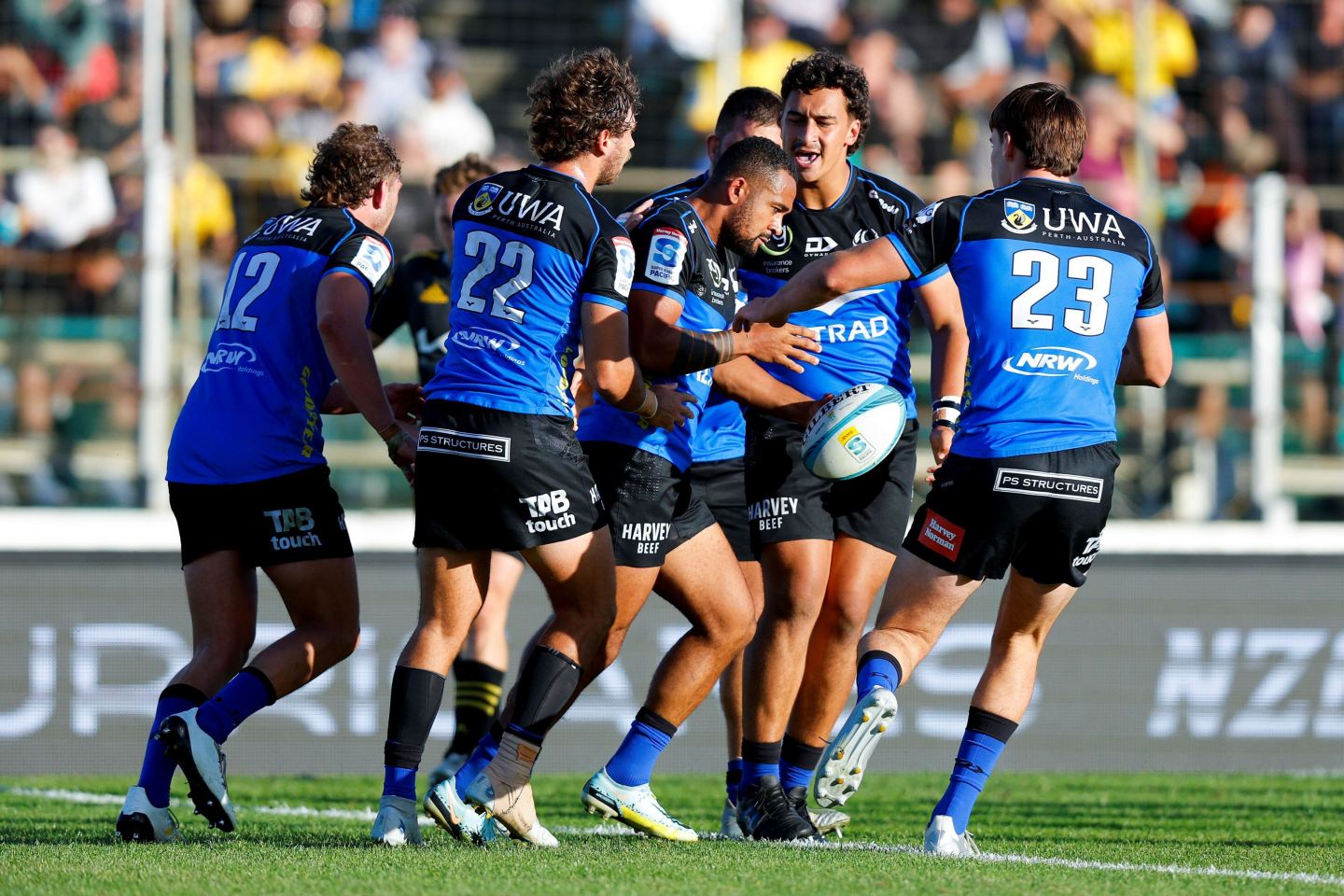
Tattarang chief executive John Hartman will lead the Western Force following the departure of Niamh O’Connor, placing the head of Andrew Forrest’s private investment group at the centre of one of WA rugby’s most significant transitions.

Continue Reading

Business

Why is Huber+Suhner stock sliding today?

Published

on


Why is Huber+Suhner stock sliding today?

Continue Reading

Business

Why This AI Data Center Stock Is Surging 21% on an AMD Parternship

Published

on

Why This AI Data Center Stock Is Surging 21% on an AMD Parternship

This copy is for your personal, non-commercial use only. Distribution and use of this material are governed by our Subscriber Agreement and by copyright law. For non-personal use or to order multiple copies, please contact Dow Jones Reprints at 1-800-843-0008 or visit www.djreprints.com.

Continue Reading

Business

Lanxess Still Muddling Through A Painful Multiyear Cyclical Trough

Published

on

Lanxess Still Muddling Through A Painful Multiyear Cyclical Trough

Lanxess Still Muddling Through A Painful Multiyear Cyclical Trough

Continue Reading

Business

How the Iran war affects your money and bills

Published

on

How the Iran war may affect your bills and finances

The conflict in the Middle East has increased pressure on the cost of petrol, household energy bills and even food.

Continue Reading

Business

Funds available to help with back-to-school costs

Published

on

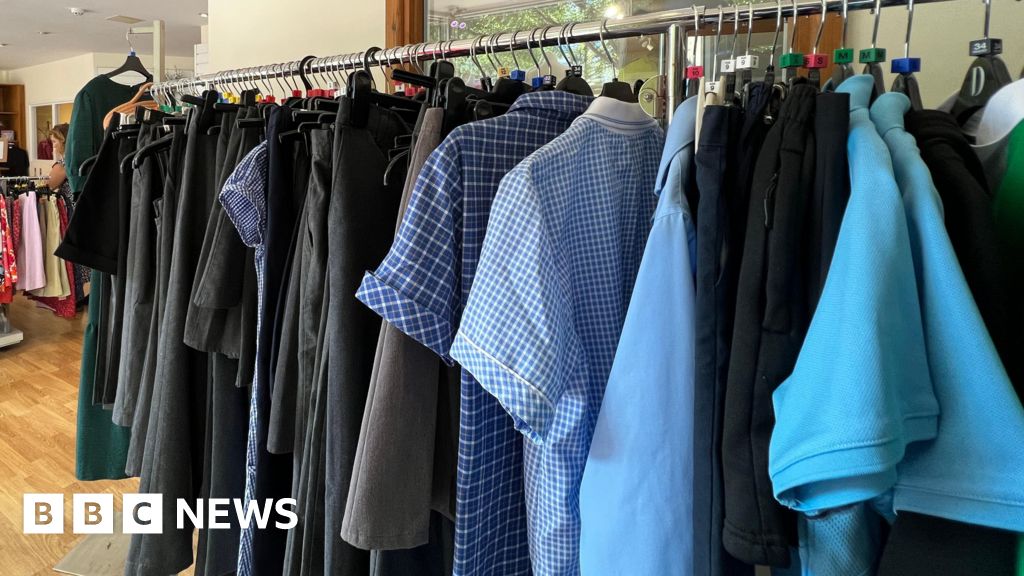
Funds available to help with back-to-school costs

Applications open for funding to help families with the cost of school essentials.

Continue Reading

Business

Somerset electric car battery gigafactory ‘parts ways’ with main builder

Published

on

Business Live

Tata-owned battery maker Agratas is replacing Sir Robert McAlpine on its flagship £4bn project

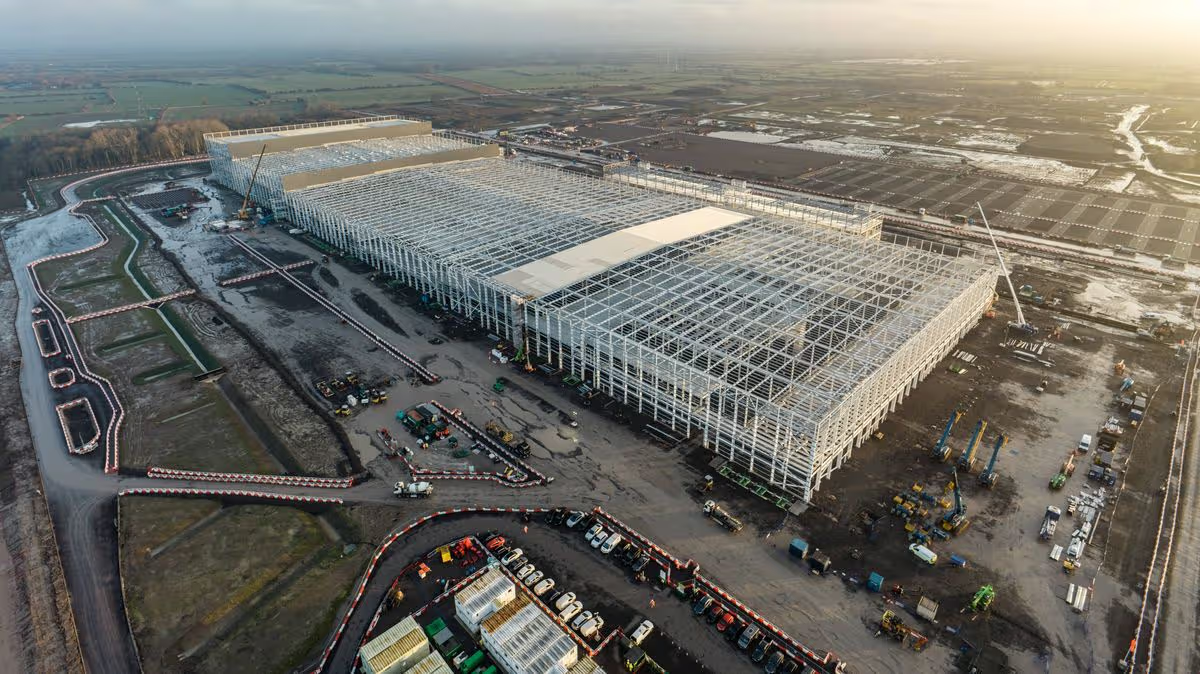
Aerial view of Building One of the Agratas gigafactory within the Gravity enterprise zone, looking north-east. CREDIT: Agratas. Free to use for all BBC wire partners.

Aerial view of Building One of the Agratas gigafactory within the Gravity enterprise zone(Image: Local Democracy Reporting Service / Agratas)

The owner of the giant electric vehicle battery factory being built in Somerset has parted ways with its main contractor, it has confirmed.

Agratas, part of Indian conglomerate Tata, is currently building the first phase of its huge £4bn plant at the Gravity enterprise zone between Puriton and Woolavington. The factory will supply electric batteries to Jaguar Land Rover as well as Tata Motors once operational, which is expected to be late next year.

Advertisement

Contractor Sir Robert McAlpine, which is also involved with the Bristol Temple Quarter Enterprise Campus, has completed the first phase of the works but will depart the project at the end of the month. Agratas will then install a new construction partner for the vast plant’s next phase.

The battery giant has not revealed which firm will replace McAlpine, but it is understood that logistics and data centre specialist TSL could be in line for the job.

An Agratas spokesperson said: “As the project has progressed, we have determined that a different construction delivery model is needed to support the next phase of our development.

“Following a review of the project’s requirements, we have decided to transition to a new construction partner. We thank our existing construction partner for their support to date.

Advertisement

“This change reflects the evolving needs of the project, positioning us to deliver the next phase with the capability and focus required to meet our objectives safely, efficiently and on schedule.”

A spokesperson for Sir Robert McAlpine said: “Having successfully completed the first phase of Agratas’s battery manufacturing facility in Somerset, following extensive discussions, we have mutually agreed to part ways.

“We are now working closely with Agratas to support a smooth and orderly transition to a new construction partner.

“We are immensely proud of the progress and achievements made to date, done so in true partnership with our supply chain partners and remain committed to supporting Agratas with the effective handover to the next phase.”

Advertisement

Agratas secured a £380m government investment for its Somerset project in April. At the time, business secretary Peter Kyle said the funding would guarantee the facility would be “economically impactful, effective and commercially viable”, while safeguarding local jobs and supporting the UK’s shift away from fossil fuels.

The gigafactory, which is based on a site near the M5 that is bigger than Monaco, is expected to generate up to 4,200 jobs once all phases are fully operational, while also unlocking 300 local apprenticeships.

Continue Reading

Business

Bill Simmons Predicts LeBron James Will Join Golden State Warriors in Bold Free Agency Call

Published

on

LeBron James #6 and Anthony Davis #3 of the Los Angeles Lakers

ESPN analyst Bill Simmons has made one of the most provocative predictions of the NBA offseason, declaring he would bet his life on LeBron James signing with the Golden State Warriors as the superstar enters unrestricted free agency this summer.

The comment, made during a recent podcast discussion, highlights the growing buzz around James potentially teaming up with Stephen Curry and the Warriors in what could be one of the most intriguing moves of his legendary career. With James’ $52.6 million contract with the Los Angeles Lakers expiring, speculation has linked him to a return to Cleveland or staying in Los Angeles, but Simmons believes Golden State is very much in play.

“This one is a really fun one because the Warriors are really in play now, like for real,” Simmons said. “I really feel like if I had to bet my life on a team, I’d think I would bet on them. I’m not actually betting it, but I think that would be the move for me.”

The prediction adds fuel to an already active rumor mill surrounding James, who averaged 20.9 points, 6.1 rebounds and 7.2 assists per game last season at age 41. While many teams are reportedly only willing to offer him a minimum contract due to his age, James’ performance and desire to compete for another title could make him selective about his next destination.

Advertisement

Warriors Positioned as Intriguing Option

The Warriors enter the offseason with significant salary cap considerations but also a clear window to contend while Curry remains in his prime. Golden State has already made moves to reshape its roster, and the prospect of adding James — even on a shorter deal — could create a formidable lineup alongside Curry, Draymond Green and other key pieces.

Simmons’ confidence stems from recent reports that James is intrigued by the possibility of playing with Curry. The two have shared strong chemistry during All-Star Games and USA Basketball appearances, raising the possibility of a seamless on-court partnership. For James, joining the Warriors would offer a chance to chase another championship in a system known for movement, spacing and high-level basketball IQ.

However, financial realities present challenges. The Warriors are projected to have a substantial payroll exceeding the luxury tax threshold. Clearing cap space through trades or convincing James to accept a team-friendly deal would be necessary. Some analysts suggest the Warriors might prioritize other targets, but the allure of pairing James with Curry has generated significant discussion league-wide.

Advertisement

LeBron’s Free Agency Landscape

James’ free agency represents one of the most anticipated storylines of the summer. After leading the Lakers through another competitive season, the four-time NBA champion faces decisions that could define the final chapter of his career. Loyalty to Los Angeles, a return to Cleveland where he won his first title, or a bold new chapter elsewhere all remain possibilities.

The 41-year-old has consistently defied age expectations, maintaining elite production while expanding his influence off the court through business ventures and media. His decision will likely balance competitive opportunity, family considerations and legacy-building factors.

Teams across the league are monitoring the situation closely. While some may only offer veteran minimum deals, contenders with cap flexibility or trade assets could emerge as serious suitors. The Warriors’ interest, amplified by Simmons’ bold take, adds another layer to the speculation.

Advertisement

Potential Impact on Golden State

A James addition would instantly transform the Warriors’ outlook. The team has shown flashes of contention in recent seasons but has struggled with consistency and depth. Pairing James with Curry could create one of the most potent offensive duos in NBA history, while his playoff experience would provide valuable leadership in high-stakes moments.

Green has publicly expressed openness to the idea, and the organization’s history of integrating star talent suggests they could make it work. However, roster construction challenges, luxury tax implications and the need to maintain long-term flexibility would require careful management by general manager Mike Dunleavy Jr.

For James, the move would represent a new challenge in a familiar Western Conference. Having faced the Warriors in multiple Finals, he would now join forces with former rivals in pursuit of a fifth championship. The narrative potential alone has captured the imagination of fans and analysts alike.

Advertisement

Broader Offseason Implications

James’ decision will ripple across the league. Teams planning around his potential landing spot must adjust their strategies, whether pursuing him directly or positioning themselves as alternatives. The Warriors’ pursuit could influence other free agent and trade discussions as rosters take shape.

The NBA offseason promises to be one of the most active in recent memory, with several star players entering free agency or seeking trades. James remains the biggest prize, and his choice will set the tone for how contenders build around veteran talent versus youth movements.

Simmons’ willingness to “bet his life” on the Warriors adds entertainment value to the speculation. As a longtime observer and vocal NBA analyst, his take carries weight among fans even if it remains one voice among many. The podcast discussion highlighted the fun and unpredictability of the summer league calendar.

Advertisement

Legacy Considerations for James

At this stage of his career, James has little left to prove on the court. He ranks among the all-time leaders in points, assists and playoff victories. His next move will be scrutinized through the lens of legacy — whether he chases another ring, prioritizes family or explores new challenges.

A move to Golden State would create compelling storylines, from reuniting with former USA teammates to facing his former Lakers squad. It would also test his adaptability in a system built around motion offense and three-point shooting, areas where he has excelled throughout his career.

Regardless of where he lands, James’ influence on the league remains immense. His business acumen, media presence and advocacy work extend his impact far beyond basketball. The upcoming decision represents another chapter in a career defined by bold choices and exceptional performance.

Advertisement

As free agency heats up, all eyes remain on James and the Warriors. Simmons’ bold prediction has added intrigue to an already compelling situation, reminding fans why the NBA offseason captivates audiences even when games are not being played. The coming weeks will reveal whether the speculation turns into reality or remains one of many intriguing possibilities in a star-driven league.

Continue Reading

Business

Shark deaths prompt calls for more drumlines, research

Published

on

Shark deaths prompt calls for more drumlines, research

The national organisation representing spear fishers has called on the Cook government to increase the number of drumlines in targeted areas to catch, tag and release more white sharks.

Continue Reading

Business

Shares trim losses as RBA holds rates, outlook unclear

Published

on

Shares trim losses as RBA holds rates, outlook unclear

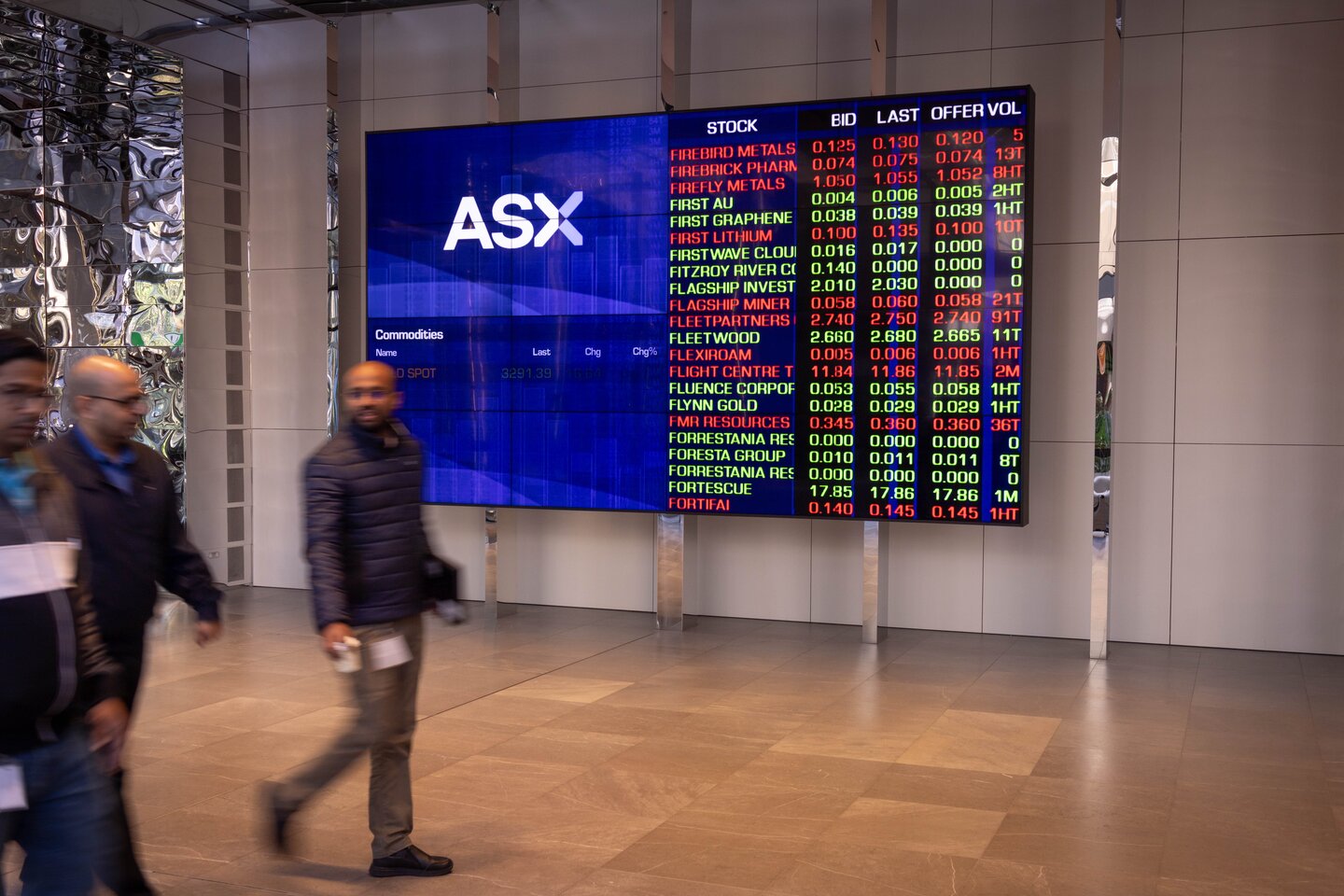
Australia’s share market has squared an early dip for an almost flat finish, after the Reserve Bank held the cash rate steady and flagged a data-dependent path ahead.

Continue Reading

Trending

Copyright © 2025