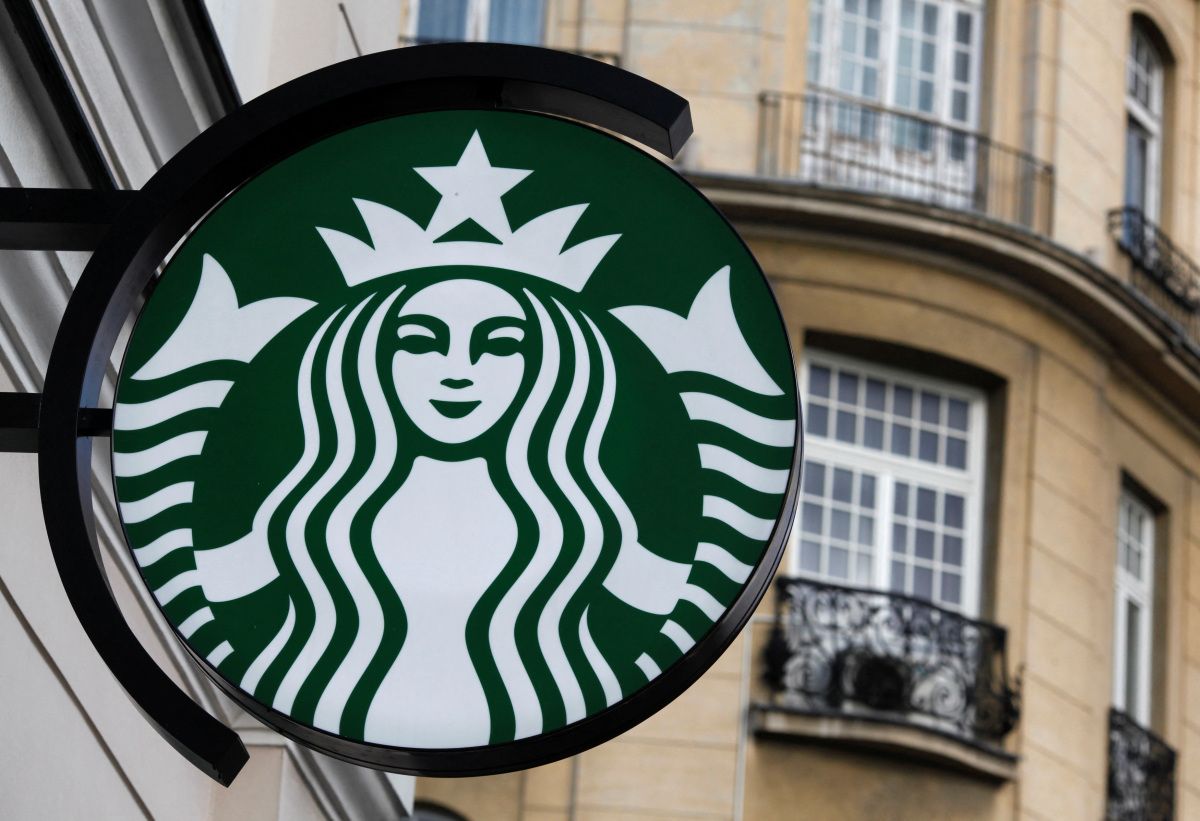
NEW YORK — Starbucks Corp. shares slipped in midday trading Tuesday, falling 1.62% to $97.35 as investors grew cautious ahead of the coffee giant’s fiscal second-quarter 2026 earnings report scheduled for April 28, with concerns over slowing same-store sales growth and ongoing challenges in China weighing on sentiment.
At 12:24 p.m. EDT, SBUX stock had declined $1.60 from the previous close amid moderate volume. The modest pullback followed a period of relative stability in recent sessions, with shares trading near $98-100 after recovering from earlier 2026 lows. The stock remains down significantly from its all-time highs above $110 in 2021, reflecting persistent pressure on the company’s core business amid shifting consumer habits and heightened competition.
The upcoming earnings report, set for release after market close on April 28 with a conference call at 1:15 p.m. Pacific Time, has become a focal point. Analysts expect revenue around $9.1 billion to $9.3 billion for the quarter ended March 30, 2026, with adjusted earnings per share near $0.59 to $0.65. Consensus forecasts suggest continued softness in comparable store sales, particularly in North America and China, where same-store sales have faced headwinds from cautious consumer spending and competitive pricing.
Starbucks has been working to stabilize its business under CEO Brian Niccol, who took the helm in 2025. The company has introduced new menu items, including Energy Refreshers launched in early April, spring beverages with ube, coconut and lavender flavors, and enhancements to its rewards program aimed at boosting partner (employee) retention and customer loyalty. A new incentive rewards program rolled out in April seeks to share more success with hourly partners through improved pay and benefits, starting in July.
Despite these initiatives, traffic and transaction trends remain mixed. In China — once a key growth engine — same-store sales have struggled with economic slowdown and intense local competition. North American same-store sales have shown modest improvement in some periods but continue to face pressure from inflation-weary consumers trading down or visiting less frequently. The company has responded with value-focused promotions, new afternoon refreshment options and store remodels, including plans to refresh 1,000 locations in 2026.
Starbucks also announced a joint venture with Boyu Capital to accelerate long-term growth in China and is exploring supply chain optimizations, including a new office presence in Nashville, Tennessee, for certain teams. These moves signal a broader effort to improve efficiency and adapt to changing market dynamics. However, union-related labor disputes continue in some U.S. markets, adding another layer of complexity.
The stock’s recent performance reflects a market that remains skeptical about the speed of recovery. While new menu items and rewards enhancements have generated buzz — particularly the April Energy Refreshers and limited-time spring offerings — investors are waiting for concrete evidence of sustained traffic growth and margin expansion in the upcoming report.
Analysts have mixed views heading into earnings. Some maintain Hold ratings, citing valuation concerns and the need for clearer signs of turnaround. Others see potential upside if Starbucks can demonstrate progress on same-store sales, partner retention and China stabilization. The average price target sits modestly above current levels, though forecasts vary widely depending on assumptions about consumer spending and competitive intensity.
Broader market context on Tuesday showed selective strength in consumer discretionary names, but Starbucks traded lower as investors rotated away from names facing near-term uncertainty. The Dow Jones Industrial Average advanced modestly, while other restaurant and retail stocks showed mixed results.
For Starbucks, the path forward involves balancing innovation with cost control. The company has invested in digital ordering, loyalty enhancements and new beverage platforms to drive afternoon and evening traffic. Yet rising labor and commodity costs continue to pressure margins, making operational efficiency critical.
Longer-term tailwinds include the global appeal of the Starbucks brand, expansion opportunities in emerging markets and potential benefits from a more normalized interest rate environment that could support consumer spending. However, near-term risks include further economic slowdown, intensified competition from local coffee chains and execution challenges on store refresh and menu strategies.
Retail investors have shown divided sentiment. Some see the current price as an attractive entry point for a recovery play, citing the company’s strong brand equity and cash-generating ability. Others remain wary, pointing to repeated misses on same-store sales targets in recent quarters and the heavy lifting required to reignite growth.
As midday trading continued, volume remained steady without the extreme spikes seen during major news events. Options activity suggested measured positioning ahead of earnings, with implied volatility indicating expectations for a meaningful post-report move — potentially 6-8% in either direction based on historical patterns.
Starbucks operates more than 40,000 stores globally, with a significant presence in the U.S., China and other international markets. The company has faced scrutiny over store closures in underperforming locations and strategic shifts in its approach to third-place experiences versus convenience-driven purchases.
The upcoming Q2 report will also provide updates on progress with the new rewards program, partner incentives and any color on full-year guidance. Management has previously emphasized a multi-year transformation focused on restoring growth, improving margins and enhancing the customer and partner experience.
Tuesday’s 1.62% decline appears largely anticipatory, with investors locking in gains or reducing exposure ahead of what could be a pivotal earnings update. Whether the stock rebounds or faces further pressure will depend heavily on the tone and specifics shared on April 28.
For a company that once enjoyed near-uninterrupted growth, the current environment demands disciplined execution and clear communication. Starbucks remains a cultural icon with enormous brand loyalty, but translating that into consistent financial results has proven challenging in recent years.
As the clock ticks toward the April 28 earnings release, all eyes are on whether Starbucks can demonstrate tangible progress or if headwinds will persist. In the meantime, the modest midday dip serves as a reminder of the uncertainty surrounding consumer-facing stocks in an uneven economic recovery.

























































You must be logged in to post a comment Login