Connect with us
DAPA Banner
DAPA Coin
DAPA
COIN PAYMENT ASSET
PRIVACY · BLOCKDAG · HOMOMORPHIC ENCRYPTION · RUST
ElGamal Encrypted MINE DAPA
🚫 GENESIS SOLD OUT
DAPAPAY COMING

Business

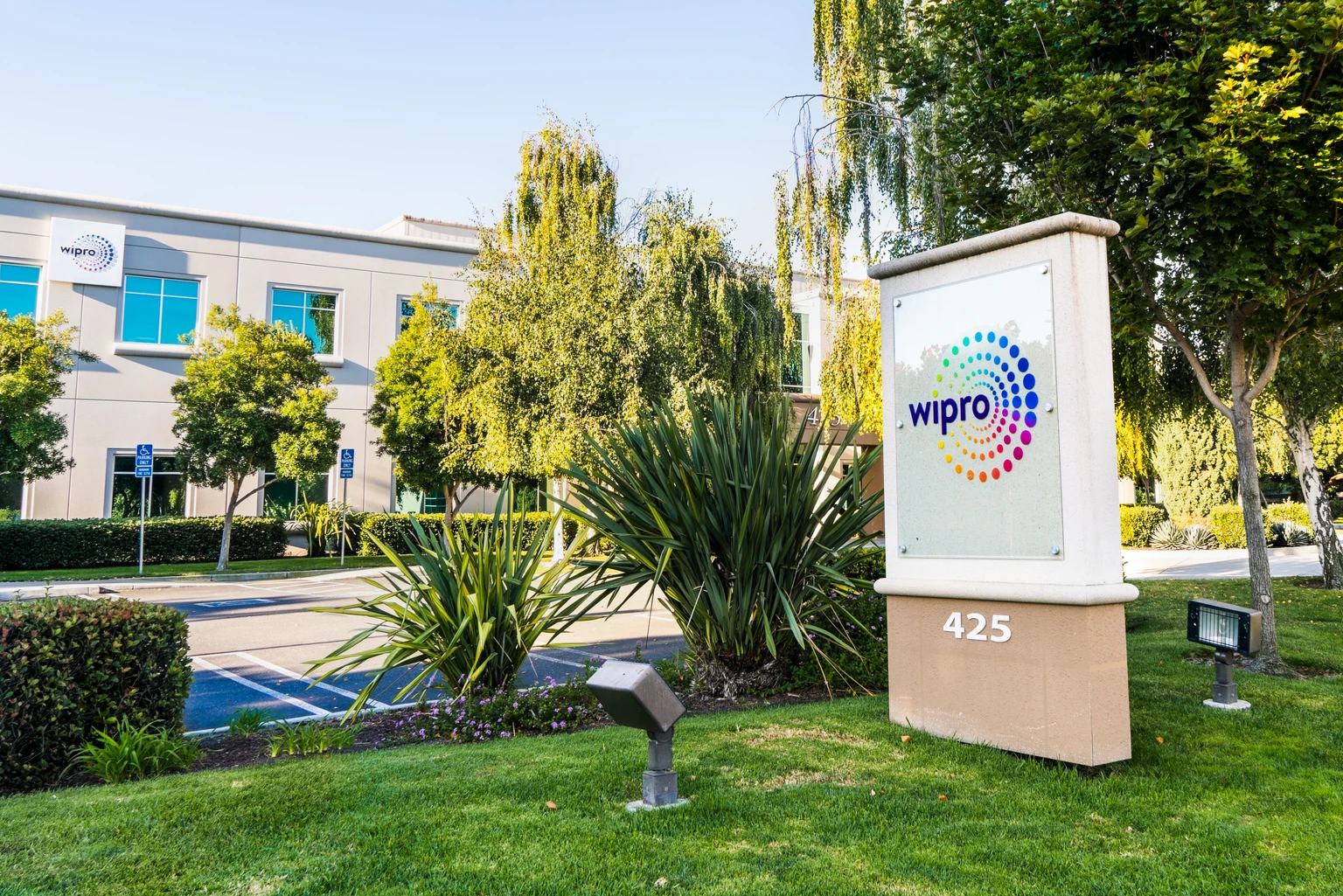
Wipro: Spotlight On Buybacks And Peer Read-Across

Published

on

Wipro: Spotlight On Buybacks And Peer Read-Across
Continue Reading
Click to comment

You must be logged in to post a comment Login

Leave a Reply

Business

What Four Workplace Awards Say About Remote Work at Risepoint

Published

on

What Four Workplace Awards Say About Remote Work at Risepoint

Remote work was supposed to erode company culture. The argument was familiar by the early 2020s: camaraderie needs hallways, and loyalty needs a shared roof. Employees at Risepoint, scattered across the United States, Canada, the United Kingdom, and Australia, may have a counterargument.

The education technology company, which partners with more than 100 universities and colleges on online degree programs, earned four 2026 Comparably Best Places to Work Awards: Best Career Growth, Best Leadership Teams, Best Sales Teams, and Best Product & Design Teams. Comparably’s awards come entirely from anonymous employee feedback gathered over 12 months, across categories that evaluate leadership, career growth, compensation, work environment, and team effectiveness.

A Workforce That Uses What It Builds

Risepoint employs more than 1,400 people, and the composition of that workforce reads like the student body of the universities it serves. Of that group, 9 in 10 hold college degrees, and 4 in 10 were the first in their families to attend college. Roughly half have worked in education before joining, and 43% have spent a decade or more in higher education.

The most telling figure may be this one: 15% of employees have enrolled in the very degree programs Risepoint supports. A sizable slice of the workforce has sat on the student side of the experience, fitting coursework around a full work week the way most students in those programs do. The company encourages the overlap: it reimburses tuition for employees who enroll in Risepoint-supported programs.

Advertisement

Chesley Fernandes, a team member who earned an M.Ed. in Educational Leadership, described what that looks like in practice. “I completed my degree at the same university I now support and can relate to the students I work with every day,” she said. “With this connection, I can reassure them through my own experiences that they are not alone and can succeed in their program.”

Career Growth, Measured From Within

Of the four awards, Best Career Growth may be the hardest for a remote company to win. Advancement in distributed organizations can favor whoever happens to be most visible. Building career paths without a hallway to be seen in takes deliberate structure: defined development programs and leaders trained to develop people they rarely meet in person. Comparably gives the award to employers whose people rate their room to advance, learn, and grow professionally as strong, and Risepoint employees put the company in that group.

“These awards are especially meaningful because they come directly from employee feedback,” said Fernando Bleichmar, the company’s CEO. “Our people are at the center of everything we do. We are committed to fostering a culture where employees feel supported in their growth, empowered to make an impact, and connected to a shared mission.”

Trust That Travels

The Best Leadership Teams award turns on whether employees trust the executive team and the direction it has set for the organization. That kind of confidence is built differently over video calls than over lunch tables, and it tends to be more fragile. The award sits alongside earlier Comparably recognitions for Best CEO, Best Company Culture, and Best Company Work-Life Balance, a pattern that points to something sturdier than one good survey cycle.

Advertisement

Employee accounts echo the rating data. “The work culture is amazing at Risepoint,” said Jazzie Santos-Rogers, a senior manager on the growth marketing team. “Not only do you have amazing peers to collaborate with on a daily basis, but management is knowledgeable and supportive on every level.”

The remaining two awards, Best Sales Teams and Best Product & Design Teams, recognize the departments that anchor opposite ends of the business: the people who build university partnerships and the people who build the tools those partnerships run on.

The Mission Underneath

Risepoint concentrates on regional universities, the institutions that serve their surrounding communities and educate much of the local workforce. Its partner institutions span 40 states and five countries, and the programs it supports lean toward fields where demand stays strong: healthcare, education, business, and public service. Most students in those programs are working adults.

That focus shapes the culture being rated. Employees who came from education, were first in their families to finish college, or earned degrees through the programs they now support have lived the mission from both sides. When that workforce hands its employer four culture awards in a single year, the verdict carries credibility no headquarters could supply.

Advertisement
Continue Reading

Business

Nikola Jokic Says He Wants to Stay With Denver Nuggets for the Rest of His NBA Career, Eyes 2027 Deal

Published

on

Nikola Jokic, Denver Nuggets

Nikola Jokic has removed any lingering doubt about his long-term future with the Denver Nuggets, telling reporters Monday that he intends to remain with the franchise for the remainder of his career and plans to sign a contract extension as soon as he becomes eligible next summer.

The three-time NBA Most Valuable Player made the comments in Serbian following Serbia’s FIBA World Cup qualifying game Monday, a 94-81 win over Bosnia and Herzegovina. “My idea is to sign next summer and stay with Denver for the rest of my career,” Jokic told reporters, according to a translation published by DNVR Sports. He elaborated further on his intentions, adding, “My idea and desire is to stay in Denver. I’ll probably sign next year… My desire is to play the rest of my life in Denver.”

Jokic currently has two seasons remaining on his existing contract with Denver, which includes a player option that would allow him to become an unrestricted free agent in 2028, the year he turns 33. Rather than wait until that option comes into play, Jokic indicated he intends to sign a new extension well before then, effectively closing the door on any speculation about his eventual free agency.

Under current NBA rules, Jokic would become eligible to sign a new contract extension next summer, and reports indicate he could be in position to sign the largest contract in league history when he becomes eligible for a new deal in the summer of 2027. According to ESPN, Jokic would be eligible for a five-year contract worth approximately $359.5 million as a free agent at that time, a figure that would represent one of the most lucrative deals ever signed by an NBA player.

Advertisement

Jokic’s comments carry significant weight given his standing as one of the most accomplished players of his generation. Selected by Denver with the 41st overall pick in the second round of the 2014 NBA Draft, Jokic has developed into one of the most dominant players in franchise history, leading the Nuggets to their first NBA championship in 2023 and earning Finals MVP honors for his performance during that title run.

Jokic’s individual production has remained remarkably consistent throughout his career. During the 2025-26 season, he averaged a triple-double across 65 appearances, posting 27.7 points, 12.9 rebounds and 10.7 assists per game. Across 11 NBA seasons, Jokic has averaged 22.2 points, 11.1 rebounds and 7.5 assists per game, numbers that have established him as one of the most well-rounded and statistically dominant centers in league history.

Jokic’s decision to publicly reaffirm his commitment to Denver comes during an active offseason across the league, one that has already seen a wave of major roster moves and star player movement. The Milwaukee Bucks completed a blockbuster trade sending two-time MVP Giannis Antetokounmpo to the Miami Heat, while the Boston Celtics traded Jaylen Brown to the Philadelphia 76ers in exchange for Paul George. Additional moves have included Kawhi Leonard’s reported return to the Toronto Raptors, Ja Morant’s trade from the Memphis Grizzlies to the Portland Trail Blazers, and LaMelo Ball’s move from the Charlotte Hornets to the Minnesota Timberwolves. LeBron James has also informed the Los Angeles Lakers that he intends to play elsewhere for the 2026-27 season, adding further uncertainty to the league’s star player landscape heading into the new campaign.

Against that backdrop of significant roster turnover across the NBA, Jokic’s clear and public statement of loyalty to Denver stands out as a rare example of stability amid an otherwise turbulent offseason for player movement. His comments also come at a time when the Nuggets have continued to build their roster around him, positioning the team to remain competitive in the Western Conference as it looks to build on its 2023 championship run.

Advertisement

Jokic’s timeline for signing an extension aligns with typical NBA rules governing veteran contract extensions, which generally allow players to sign new deals a certain number of years into their existing contracts. By waiting until next summer to formally sign an extension rather than pursuing one immediately, Jokic would be positioning himself to potentially maximize the length and value of his new deal under the league’s collective bargaining agreement, while still providing Nuggets fans and the organization with clear assurance of his long-term intentions well ahead of that signing window.

The 31-year-old center’s comments also reflect a broader pattern of loyalty he has expressed throughout his career, having consistently emphasized his preference for stability with the Nuggets organization even as rumors and speculation about star player movement have periodically circulated around other top players across the league. Unlike several other franchise cornerstones who have requested trades or explored other options in recent years, Jokic has remained a steady, singular figure in Denver since entering the league, a dynamic that has helped the Nuggets build sustained success around his unique skill set as a passing, scoring and rebounding threat at the center position.

With training camps still months away and the NBA’s offseason continuing to produce roster shakeups across the league, Jokic’s declaration of long-term commitment to Denver offers a measure of certainty for a franchise that has built its recent championship aspirations around his continued presence. Whether that commitment translates into a formal contract extension as early as next summer, as Jokic has now publicly indicated he intends to pursue, will become one of the more closely watched storylines of the coming NBA calendar, particularly given the record-setting financial terms he could command once fully eligible to sign a new deal in 2027.

Advertisement
Continue Reading

Business

Why UK Manufacturing SMEs Are Turning to Automation to Solve the Skills Shortage

Published

on

Starmer Urged to Chair New Cabinet Committee on UK Economic Security

UK manufacturing SMEs are struggling to fill skilled roles such as machinists, operators and toolmakers, and the gap is no longer closing on its own.

Rather than waiting out the hiring crunch, a growing number of small producers are investing in automated equipment to reduce their dependency on scarce labour. This shift is changing how owners plan output, quote for new work and structure their teams.

This article looks at why the skills shortage has become so persistent, what automation adoption looks like in practice for small manufacturers, and what owners should weigh up before committing capital to new equipment.

The Scale of the Skills Shortage

Manufacturing vacancies in the UK have remained stubbornly high for several years. The Office for National Statistics has recorded manufacturing job vacancies sitting in the region of 58,000 to 61,000 through 2024 and into 2026, a level well above pre-pandemic norms. Make UK’s own research goes further: 75% of manufacturers now cite skills shortages as the single biggest barrier to growth, and over 70% report difficulty recruiting skilled workers at all.

The shortage is also generational. Around 21% of the current manufacturing workforce is aged 55 or over, and apprenticeship pipelines have not expanded quickly enough to replace those workers as they retire. Roles such as CNC machinists, maintenance engineers and toolmakers now take considerably longer to fill than they did five years ago.

Advertisement

Small manufacturers feel this more acutely than large enterprises. A big factory can absorb a vacant post across several teams; a workshop with eight or ten staff often cannot. Losing a single skilled machinist can mean turning down orders or paying premium rates for agency cover, and SMEs typically have smaller recruitment budgets and less capacity to compete on salary with larger firms in the same labour market.

Why Automation Is the Practical Response

For many small producers, automation is becoming less about efficiency and more about workforce resilience. CNC and laser-based equipment reduces how much a business depends on one person’s specialized manual skill, because the precision moves from the operator’s hands into the machine’s programming.

In practice, this changes three things for a small manufacturer. First, output becomes more consistent – a programmed cut or engraving repeats to the same tolerance regardless of who is running the shift. Second, training time for new staff falls, since operating and loading a machine takes far less time to learn than mastering manual metalwork or joinery to a professional standard. Third, a smaller shop can take on precision work it previously had to subcontract or decline, because it no longer needs a dedicated specialist on the floor for every job.

This is best understood as a shift from hiring the skill to buying the capability. Where a business once needed to recruit and retain someone with years of trade experience, it can now achieve comparable output by investing in equipment and training an existing team member to operate it. That doesn’t remove the need for skilled people entirely – someone still has to set up, program and maintain the machine – but it changes the shape of the skills gap rather than closing it outright. This pattern holds across CNC routing, laser cutting and laser engraving, regardless of the specific manufacturing sector involved.

Advertisement

What This Looks Like in Practice

Consider a small UK sign-making or metal fabrication workshop that has struggled for two years to recruit a second skilled fabricator. Rather than continuing an unsuccessful search, the business invests in a laser cutting system and trains an existing team member to operate it over a matter of weeks rather than the years a manual apprenticeship would take.

The practical outcomes tend to follow a similar pattern. Lead times shorten because jobs no longer queue behind a single specialist. The business can bid for contracts it previously turned down due to capacity constraints. Overtime and agency staffing costs fall, since the machine covers volume that would otherwise require additional shifts or temporary labour. None of this requires the workshop to grow its headcount – it requires the right equipment and one or two trained operators.

When sourcing this kind of equipment, many UK manufacturers look to established European suppliers who can offer local delivery, service and warranty support rather than relying solely on long-lead-time imports from further afield. Virmer is a supplier of CNC laser equipment in Europe, and its role illustrates the kind of supplier relationship small manufacturers now factor into their equipment decisions – proximity, after-sales support and service response time carry as much weight as the machine’s specification sheet.

What Owners Should Weigh Up Before Investing

Automation is not a straightforward swap for a vacant role, and the decision carries its own set of trade-offs.

Advertisement

The upfront cost is the most obvious factor, and owners need to weigh it against realistic labour savings rather than best-case projections. Training time for existing staff, while shorter than a traditional apprenticeship, still needs to be budgeted into the transition – output typically dips for a few weeks while the team gets up to speed. Warranty and service support matter more than they might for other capital purchases, particularly since much of this equipment is sourced from EU-based manufacturers; a machine that’s down for three weeks awaiting a part can undo months of productivity gains. Space and power requirements also need checking early, as some equipment demands three-phase power or extraction systems a workshop may not already have.

Financing is rarely a barrier on its own. Leasing and asset finance are commonly used by UK SMEs for exactly this kind of capital equipment, spreading the cost in a way that mirrors the labour savings the machine is expected to deliver over time.

The Bottom Line

For UK manufacturing SMEs, automation is increasingly a response to the labour market rather than a pure efficiency upgrade. It doesn’t remove the need for skilled people, but it changes how many are needed and what their skills need to cover.

As the skills shortage persists – and the data suggests it will, given the sector’s ageing workforce and constrained apprenticeship pipeline – more small producers are likely to treat equipment investment as an alternative to hiring, not just a route to growth. The businesses that plan for this shift now, rather than reacting to it once a vacancy has gone unfilled for months, are the ones best placed to keep their order books moving.

Advertisement

Continue Reading

Business

Paras Defence, ideaForge, other defence stocks slide up to 5%. What’s triggering the selloff?

Published

on

Paras Defence, ideaForge, other defence stocks slide up to 5%. What’s triggering the selloff?
Shares of defence companies, including ideaForge, Paras Defence, Data Patterns, Bharat Electronics (BEL), Hindustan Aeronautics (HAL), Bharat Dynamics, Mazagon Dock and Cochin Shipyard, fell up to 5% on Tuesday as investors booked profits following the previous session’s sharp rally.

The rally on Monday came after the Defence Acquisition Council (DAC) approved capital acquisition proposals worth about Rs 52,000 crore. The approvals span a range of procurements aimed at enhancing the operational capabilities of the Army, Navy and Air Force, including air defence systems, anti-drone technologies, surveillance equipment and unmanned warfare platforms.

Among individual stocks, Data Patterns declined 5% to Rs 4,390, while Paras Defence fell nearly 5% to Rs 1,294 on the BSE. ideaForge also dropped 5% to Rs 812, while Bharat Dynamics slipped over 2% to Rs 1,375. Mazagon Dock and Cochin Shipyard were down as much as 3% during the session.

Also read: DAC clears Rs 52,000 crore defence acquisitions, boosts drone and air defence capabilities

Advertisement

DAC Approval

The latest approvals span several indigenous and advanced defence platforms across the three armed services, with a focus on improving preparedness against emerging aerial and mechanised threats.
For the Indian Army, the DAC cleared the procurement of the Anti-Unmanned Aerial Vehicles (UAV) Electronic Warfare System ‘AKASH TARANG’, Man Portable Anti-Tank Guided Missile (MPATGM) Systems, Medium Range Surface-to-Air Missile (MRSAM) Weapon System, Very Short Range Air Defence System (V-SHORADS), Active Protection System for Tanks and the Jet-Based Kamikaze Drone System.


For the Indian Navy, approvals were granted for the procurement of the Multi-Influence Ground Mine (MIGM), Naval Shipborne Unmanned Aerial System (NSUAS) and the establishment of a Land-Based Testing Facility (LBTF) for Electric Propulsion Systems.
For the Indian Air Force, the council approved the acquisition of a Fixed-Wing Based High Altitude Pseudo Satellite (FW-HAPS), along with other proposals. According to the ministry, the FW-HAPS platform will provide persistent intelligence, surveillance and reconnaissance (ISR), telecommunications, and remote sensing capabilities, strengthening the Air Force’s operational reach and endurance.

What are experts saying?

“This is likely to accelerate order inflows and execution for defence companies, as a larger share of procurement contracts can now be approved directly by the armed forces,” domestic brokerage Motilal Oswal said.
The brokerage has maintained its ‘Buy’ rating on HAL with a target price of Rs 5,500, implying an upside of 24% from current levels. It expects the company’s revenue to grow 9% year-on-year, supported by healthy execution of its opening order book. Investors will closely watch updates on deliveries of the Tejas Mk1A and HTT-40 aircraft, the partnership with GE for engine manufacturing and the working capital cycle.

Read more: Lessons from Op Sindoor: DAC nod to pseudo satellites, air defence systems, jet-based drones

Motilal Oswal has also reiterated its ‘Buy’ rating on Astra Microwave. The brokerage expects revenue to rise 13% year-on-year in the first quarter of FY27, with execution likely to gather pace on the back of an order book of around Rs 2,600 crore. Key monitorables include fresh ordering across larger platforms, margin sustainability and export opportunities.

Advertisement

For Bharat Electronics, the brokerage has retained its ‘Buy’ recommendation with a target price of Rs 510, suggesting a potential upside of 23% from current levels. It expects revenue to grow 16% year-on-year, driven by the execution of the company’s opening order book of about Rs 74,000 crore. Analysts will monitor updates on major orders, including QRSAM, Uttam radars, next-generation corvettes, P75I submarines and the progress of the AMCA programme.

(Disclaimer: Recommendations, suggestions, views and opinions given by the experts are their own. These do not represent the views of The Economic Times)

Continue Reading

Business

Info Edge shares surge 11% after Q1FY27 billings rise 14% YoY

Published

on

Info Edge shares surge 11% after Q1FY27 billings rise 14% YoY
Shares of Info Edge (India) surged 11.05% to Rs 1,138.50 during Tuesday’s trading session after the company reported a strong operational performance for the quarter ended June 30, 2026. The sharp rally reflected investor optimism following healthy year-on-year growth in standalone billings and continued momentum across its key business verticals.

The company’s standalone billings for Q1 FY27 stood at Rs 737 crore, compared with Rs 644.2 crore in the corresponding quarter last year, marking a growth of approximately 14.4% year-on-year. The performance highlights sustained demand across Info Edge’s core businesses and improved execution across its digital platforms.

The company’s flagship Recruitment Solutions business remained the key growth driver during the quarter, with billings rising to Rs 552.7 crore from Rs 470.3 crore in Q1 FY26. The segment continues to benefit from steady hiring activity and strong adoption of online recruitment solutions.

The 99acres real estate platform also maintained its upward trajectory, with billings increasing to Rs 110.1 crore during Q1 FY27 from Rs 94.4 crore in the same period last year.

Advertisement

The Jeevansathi business reported steady improvement, with billings climbing to Rs 39.6 crore from Rs 34.7 crore year-on-year. Meanwhile, the Shiksha segment recorded billings of Rs 34.6 crore, compared with Rs 44.8 crore in the previous year’s quarter.

Expansion Push Through Coding Ninjas Acquisition

Adding to the positive sentiment, Info Edge recently announced the acquisition of edtech platform Coding Ninjas. In an exchange filing dated July 6, the company said it will acquire the remaining stake in Sunrise Mentors, the entity operating Coding Ninjas, from its founders.


Under the agreement, Info Edge will purchase 74,741 equity shares at Rs 5,340.23 per share, involving a total consideration of around Rs 39.91 crore. Following the transaction, Coding Ninjas will become a wholly owned subsidiary of Info Edge, held directly and through its subsidiary Startup Investments (Holding).
The company also announced plans to commit an additional Rs 180 crore to its startup investment fund, reinforcing its focus on backing emerging technology-driven businesses.

Stock Performance and Valuation Snapshot

Info Edge shares touched an intraday high of Rs 1,144.50 on the NSE. The stock’s 52-week high stands at Rs 1,489, while its current market capitalisation is around Rs 67,630 crore. From a valuation perspective, the company is trading at a price-to-earnings (P/E) ratio of 45.85 and a price-to-book (P/B) ratio of 1.64.

Technical Outlook

On the technical front, Info Edge’s 14-day Relative Strength Index (RSI) stands at 57.8, indicating moderate positive momentum. An RSI below 30 is generally considered oversold, while levels above 70 indicate overbought conditions.The stock is trading above 7 out of 8 key simple moving averages (SMAs), suggesting broad-based technical strength. However, it continues to trade below its long-term 200-day moving average, indicating that investors are closely watching whether the stock can sustain its recovery trend.

Advertisement

(Disclaimer: Recommendations, suggestions, views and opinions given by the experts are their own. These do not represent the views of Economic Times)

Continue Reading

Business

LG Energy Solutions misses profit estimates on weak ESS sales

Published

on


LG Energy Solutions misses profit estimates on weak ESS sales

Continue Reading

Business

Towcester volunteers race to save surplus food from Silverstone

Published

on

A large group of people, in standing behind a large selection of boxes of salad. They are all wearing purple T-shirts. They are in a room with items all behind them and are all smiling and looking at the camera.

When there are 564,000 fans packed in to see the British Grand Prix at Silverstone, it can mean a lot of uneaten food goes to waste.

But not when about 50 volunteers from the Towcester Community Larder, in Northamptonshire, spring into action.

Last year they carried out a number of pit stops to collect 32 tonnes of unused food, and this year they were in pole position to do the same again.

Since Sunday they have raced to save 15 tonnes of food and the larder’s Katie Steele expects the large collection of “weird and wonderful” items to continue to go up its leader board of donations.

Advertisement
Continue Reading

Business

Freedom Holding Corp. Takes Investing To a New Level of Personalization and Real-Time Intelligence

Published

on

Freedom Holding Corp. Takes Investing To a New Level of Personalization and Real-Time Intelligence

Today, AI can take on a growing share of almost any task. Investing is no exception. Markets move fast, data is scattered across multiple platforms, and manual analysis often can’t keep up.

Increasingly, the advantage lies with investors who can automate the collection, organization, and analysis of information. It should be the perfect job for AI. But services like ChatGPT or Claude don’t know what’s happening inside your brokerage account. They can’t see your portfolio, open positions, or trading history. To work with that information, AI first needs a secure way to connect to a brokerage platform through an API. More financial firms are offering these connections, and Freedom Broker is one of them.

Plug AI in

An API, short for Application Programming Interface, sounds more complicated than it really is. Think of it as a secure digital connection that allows two applications to exchange information. In this case, it lets AI services like ChatGPT or Claude communicate with a brokerage account with a client’s permission and without giving the AI a username or a password.

In practice, the API serves as a bridge between Freedom Broker’s trading platform and the AI. Instead of switching between trading terminals, spreadsheets, websites, and news feeds, investors can retrieve and analyze everything from a single conversation.

Getting started is simple. Clients simply generate an API key in their Freedom Broker account, connect it to the application or AI service they want to use, and authorize access to the data they choose to share.

Advertisement

Let It Help

Once connected, the API allows external applications to securely retrieve data from the brokerage platform and automate a wide range of investment workflows.

Depending on the permissions granted by the client, AI can analyze portfolio performance, review transaction history, track market quotes, monitor price levels, generate alerts, and combine brokerage data with publicly available market information to provide faster, more in-depth analysis, eliminating the need to manually handle data.

AI integration via an API shapes the investor’s experience based on their goals, data, and decision context, rather than a common approach to information. For example, Freedom Broker clients can do all the analysis directly from a Claude chat. It can retrieve necessary information from Freedom’s systems and external sources and perform the required actions.

This is where investing shifts from a shared system to a truly individual one.

Advertisement

Inside the Broker

The development of the API is part of Freedom Broker’s broader push to expand its technology-driven services.

This tech strategy also includes infrastructure for crypto-based funding and withdrawals, allowing clients to transfer funds between digital assets and brokerage accounts with automatic conversion into traditional currencies. The service supports major cryptocurrencies, including BTC, ETH, USDT, and USDC.

As part of Freedom Holding Corp., the brokerage business operates through a multi-entity structure. In Kazakhstan Freedom operating under the Freedom Broker brand, provides access to both regional and international markets. Its brokerage infrastructure covers Kazakhstan through local exchanges such as KASE and AIX, while also enabling access to global markets including NYSE, NASDAQ, the London Stock Exchange, HKEX, and Xetra. As of June 1, 2026, the company reported 858,000 active client accounts. The brokerage business remained Freedom Holding Corp.’s largest revenue contributor in fiscal 2026, generating $832 million in revenue.

Being part of the global NASDAQ-listed fintech group Freedom Holding Corp., the brokerage division operates beyond Kazakhstan across Europe and Turkey and has recently obtained regulatory approval to work in the United Arab Emirates. Alongside banking, brokerage remains one of the main growth engines of the group, whose other business lines include lifestyle services, telecom, and media segments, with approximately 11 million clients across the whole ecosystem.

Advertisement

Continue Reading

Business

IIFL initiates coverage on Adani Power with target price at Rs 240, estimates EBITDA to quadruple by FY33-35E

Published

on

IIFL initiates coverage on Adani Power with target price at Rs 240, estimates EBITDA to quadruple by FY33-35E
IIFL has initiated coverage on Adani Power with a target price of Rs 240, compared to current market price of Rs 220 and estimated EBITDA to quadruple by FY33-35E.

The brokerage in a report said that its SoTP-based 12-month target price of Rs 240 per share values Adani at an implied FY28E EV/Ebitda of 20x, above the coverage median of 11.1x, reflecting its faster growth and superior profitability.


Also Read |
Bitcoin climbs over $63,000 as buying interest returns; key on-chain metric signals market stabilization

It further highlighted that with a large growth pipeline, industry-leading execution, and complementary group renewables and energy-management businesses, Adani is estimated to quadruple EBITDA by FY33-35E.

Advertisement

While 60%+ of the fair value rests on unexecuted projects and the stock trades at a rich 4.6x FY28E P/BV, IIFL thinks that its industry-leading asset base and cash-flow profile justify the growth optionality. The brokerage initiated coverage with a ‘Buy’ rating.

The report said that Adani is building 23.7GW of new coal capacity (more than NTPC’s pipeline of 17GW) that will more than double its 18GW operating base. It is expected that Adani’s free cash flow from operations will rise from Rs 170 billion in FY26 to Rs 570 billion on full portfolio buildout, with optionality from planned moves into nuclear (10GW capacity target by 2035) and hydro (5GW JV with Druk Green Power, Bhutan) as well.
The customer base is also expected to expand beyond DISCOMs, foraying into firm power supply to C&I customers.
A 20% EBITDA CAGR is forecasted over FY26–29E as some under-construction projects commission, making it among the fastest-growing non-renewable power gencos in India. The downside risks include execution delays, failure to sign PPAs, weak spot tariffs, competition from battery storage.
Adani Power is India’s largest private sector thermal power generation developer & operator, with an installed capacity of 18.2GW across a portfolio of pit‑head and coastal power plants. Its geographic mix and locational diversity provide it fuel flexibility, allowing it to source through a combination of domestic coal linkages, e-auctions, and imported coal.

The report further said that the company is now adding 23.7GW of organic thermal capacity (all ultra supercritical/supercritical). PPAs have already been secured for 56% of this pipeline, underpinning medium-term revenue visibility; the balance is expected to be tied up progressively or to operate merchants until contracted.

Also Read | International funds outperform domestic funds with 37% one-year returns. Should investors chase rally or wait for correction?

According to IIFL, Adani’s operational portfolio (including highly value accretive acquired assets) is valued at 4.1x FY28E P/BV, driven by high RoE and backing of long term PPA certainty. Under construction portfolio for which the company has secured PPAs is valued at 2.4x FY28E P/BV, benefitting from low capex per GW secured by early equipment price lock-in and attractive PPA tariffs.

Advertisement

The under construction portfolio awaiting PPAs is valued at 1.8x, for the current uncertainty. However, the relatively low fixed cost base positions it favorably both, in securing PPAs and in the merchant market. Investments & optionalities cover Adani’s nuclear, hydro and C&I forays along with minority investments. Further, the brokerage firm also ascribes a merchant premium to the fleet, factoring the flexibility it will offer to the grid in a renewable-heavy setup in future.

(Disclaimer: Recommendations, suggestions, views and opinions given by the experts are their own. These do not represent the views of The Economic Times)

Continue Reading

Business

Did this Ashish Kacholia-backed multibagger stock really crash 81% in one day? Here’s how the bonus math works

Published

on

Did this Ashish Kacholia-backed multibagger stock really crash 81% in one day? Here’s how the bonus math works
Shares of wires and cable-maker V Marc India turned ex-bonus on Tuesday, making the ace investor Ashish Kacholia-backed stock appear to have crashed 81% in a single day when in reality it only adjusted for the 5:1 bonus issue.

Shares of V Marc India opened at Rs 291.50 apiece on NSE, sharply lower than Monday’s closing price of Rs 1,568.30 apiece. However, the decline was solely due to the bonus share adjustment and did not reflect any loss in shareholder value.

The stock gained more than 16% to trade at Rs 303.45 apiece after adjusting for the bonus issue, as seen at 11.30 am.

All about V Marc India’s bonus issue

V Marc India announced in May that its board of directors considered and approved the plan to issue bonus shares in the ratio of 5:1. This means that an eligible shareholder will get 5 new bonus shares with a face value of Rs 10 each, for every share held in the company as on the record date, which was fixed on July 7.The cable maker proposed to issue 12.21 crore shares out of its free reserves or share premium as available on March 31, 2026, which stood at more than Rs 143 crore. “The bonus issue shall be implemented within two months from the date of the meeting of its board of directors wherein the decision to announce the bonus issue was taken subject to shareholders’ approval through Postal Ballot,” the company had said.

Advertisement

This marks the company’s first ever bonus issue. A bonus issue consists of free shares distributed by a company from its reserves and is often seen as a sign of strong financial health and growth prospects. While the issue of bonus shares increases the total number of outstanding shares, it does not change the company’s market capitalisation. However, it can improve liquidity and affordability, allowing more investors to add shares of the company to their portfolio.
Also Read | Bonus issue alert! This Ashish Kacholia-backed multibagger stock to reward shareholders with 5:1 bonus issue. Do you own?

V Marc India shareholding pattern

Ace investor Ashish Kacholia owned 2.71% stake in V Marc India, as per data on the company’s shareholding pattern as on March 31, 2026. At the previous closing price of Rs 1,546.35 apiece on NSE, his total stake in the company would be worth more than Rs 102 crore.Around 2,331 retail shareholders held nearly 14% stake in the company as at the end of the financial year 2026. Promoters and promoters meanwhile held nearly 65% stake.

V Marc India share price

V Marc India shares have jumped around 133% in 2026 so far. In the longer term, the shares of the cable maker have delivered stellar returns of 277% in one year, 1,867% in three years and 4,559% in five years.

The shares have gained around 1.5% in one week and nearly 4% in one month. The company had a market capitalisation of nearly Rs 3,834 crore at the end of Monday’s trading session.

Also Read | Bonus issues, stock splits & dividends | Titan, JSW Steel among 49 stocks turning ex-date this week. Do you own any?

Advertisement

(Disclaimer: Recommendations, suggestions, views and opinions given by the experts are their own. These do not represent the views of The Economic Times)

Continue Reading

Trending

Copyright © 2025