
Crypto
Franklin Templeton crypto ETF adds Hyperliquid’s HYPE on Dec. 1, growing to eight assets


The Franklin Templeton crypto ETF is about to get a new member. According to a prospectus supplement filed with the U.S. Securities and Exchange Commission on Nov. 25, the Franklin Crypto Index ETF (ticker EZPZ) will begin investing in Hyperliquid’s HYPE token on or around Dec. 1, lifting its portfolio to eight digital assets.
The addition is mechanical rather than discretionary. It follows a Nov. 16 announcement from CF Benchmarks, the administrator of the index the fund tracks, which named HYPE as the only new constituent in the December reconstitution of its Institutional Digital Asset Index. Once the change takes effect, the fund will hold Bitcoin, Ethereum, XRP, Solana, Dogecoin, Cardano, Stellar and Hyperliquid.
How the Franklin Templeton crypto ETF decides what to hold
The fund buys the tokens directly and weights them to match the index. The filing does not say how much of the portfolio HYPE will take. Franklin Templeton points to the generic listing standards that the SEC approved for Cboe BZX Exchange as the regulatory basis for adding assets. Under that framework, the fund can change its holdings as eligible tokens enter or leave the benchmark, and it remains subject to quarterly rebalancing.
The index-driven approach has already reshaped the fund once. It launched in February 2025 with exposure to Bitcoin and Ethereum, then added six altcoins in December 2025. One of them, Chainlink, made up 0.38% of net assets at the end of 2025 and has since dropped out.
A small fund dominated by bitcoin
The headline is bigger than the fund. As of Sept. 30, EZPZ held roughly $17.02 million in net assets, up from $10.22 million at the end of December 2025. Bitcoin dominates: 155.37 BTC, worth about $13 million, made up 76.39% of the portfolio. Ethereum accounted for 12.76%, XRP for 5.37% and Solana for 3.76%. Dogecoin, Cardano and Stellar together made up less than 2%.
With that footprint, any HYPE allocation is likely to be modest in dollar terms. The more meaningful signal is that Hyperliquid is becoming a regular fixture in regulated crypto products. Hashdex added it to its Nasdaq CME Crypto Index ETF in September at a 3.36% weighting, and 21Shares (THYP and HYPG) and Bitwise (BHYP) run dedicated Hyperliquid funds. Those three together hold under $259 million. Bitwise’s 10 Crypto Index ETF also includes the token.
Price pressure around the news
The inclusion lands during a weak patch for the token. HYPE traded near $59.8 in one report, down about 10% on the week, and slightly above $60 in another. Technical analysis cited by U.Today puts immediate support at $55 to $56, with the 200-day moving average near $68 now overhead and the relative strength index around 35, close to oversold territory.
Two other items add to the uncertainty. A token unlock is scheduled for Dec. 6, which reports value at about $578 million at current prices. Separately, trader Abraxas Capital reportedly exited its Hyperliquid position on Wednesday after earning about $530 million in profit, according to U.Today’s report, which we have not independently verified.
Index funds this small are unlikely to move a token by themselves. Still, the Franklin Templeton crypto ETF’s expansion shows how listing standards and index rules are steadily widening the set of tokens available in traditional fund wrappers. Investors will learn the actual HYPE weighting once the reconstitution takes effect, and the token’s reaction to the December unlock will show how much demand is behind it.
Explore more on this topic with Vexel Search.
File photo: Franklin Templeton Investments HQ building 1.JPG by BrokenSphere, CC BY-SA 3.0, via Wikimedia Commons.
WordUp Morning
Ten stories, both sides of each, in five minutes. Free, every weekday at 7am, plus a Saturday weekend edition.
We'll email you a link to confirm. Unsubscribe any time.


The Nvidia settlement announced this week would put a $290 million price tag on one of the longest-running shareholder disputes in the chipmaker’s history. According to a court filing made Tuesday, Nvidia has agreed to pay that sum to resolve a class action dating to 2018, in which investors accused the company of obscuring how much of its gaming revenue came from cryptocurrency miners. The deal still needs a judge’s approval.
What the Nvidia settlement covers
The proposed deal would cover people who bought or otherwise acquired Nvidia common stock between Aug. 10, 2017 and Nov. 15, 2018 and suffered qualifying losses. The case began with a fund affiliated with a US ironworkers’ union. Swedish asset manager Öhman Fonder and Dutch pension fund PGB were later appointed lead plaintiffs.
The plaintiffs’ core claim concerns how Nvidia described demand for its GeForce graphics cards during the 2017–2018 crypto boom. Miners bought the chips in large numbers to mint digital coins, and those sales were recorded as gaming revenue. Investors argued that this blurred a key fact: a meaningful slice of that revenue depended on a volatile, speculative market. An analysis commissioned by the plaintiffs estimated that Nvidia understated its crypto-related GPU sales by $1.1 billion between May 2017 and July 2018.
The stock drop at the heart of the case
The plaintiffs point to November 2018 as the moment the problem surfaced. Nvidia cut its quarterly revenue forecast as mining demand weakened, and according to the plaintiffs, its shares fell 28.5% over the next two trading sessions. That loss is the basis for the damages investors have sought.
Nvidia has disputed the allegations. Its position, as described in the reporting, is that it could not reliably measure how much of its gaming revenue was driven by cryptocurrency mining. The sources do not indicate that the company has conceded wrongdoing, and nothing in this case has established that it acted unlawfully.
A long road through the courts
The path to this Nvidia settlement was far from straight. The case was dismissed in 2021, but a federal appeals court revived the claims in 2023 against both the company and CEO Jensen Huang. In December 2024, the US Supreme Court dismissed its review of the case without ruling on the merits, which left the revived claims in place. The case was certified as a class action in March 2026, and a settlement followed within months.
How the money stacks up
The plaintiffs’ attorneys say the $290 million represents about 14% of the total damages investors claimed. That implies claimed losses on the order of $2 billion, though the sources do not state that figure directly. The attorneys also intend to seek up to 21.4% of the settlement fund in legal fees, which would come to roughly $62 million if the full amount were granted. A hearing on preliminary approval is set for Feb. 4, 2027.
What about the Huang “turmoil”?
The framing around this story has linked the deal to turmoil involving Huang. The source material reviewed here does not support that. Huang appears only as a named defendant whose inclusion in the claims was revived in 2023. Nothing in the reporting describes a leadership crisis at Nvidia, so readers should treat any such connection as unverified until better evidence emerges.
For now, the Nvidia settlement is a legal and financial milestone rather than a verdict. Approval is not guaranteed, the fee request could be adjusted, and the February hearing is the next date to watch. Affected investors should look for official notices explaining how to file claims if the deal moves forward.
Explore more on this topic with Vexel Search.
File photo: NVIDIA Headquarters.jpg by Coolcaesar, CC BY-SA 4.0, via Wikimedia Commons.
WordUp Morning
Ten stories, both sides of each, in five minutes. Free, every weekday at 7am, plus a Saturday weekend edition.
We'll email you a link to confirm. Unsubscribe any time.
Nearly two years after Tether bought its way into Juventus FC’s ownership structure, the numbers look rough for anyone measuring success by share price alone. Juventus stock has dropped more than 30% since the stablecoin issuer’s initial purchase, even as Tether has kept buying, quietly building one of the more unusual positions in world football finance.
On paper, this looks like a bad bet. But a closer look at the mechanics of the Tether investment suggests the crypto company may be playing a longer, more patient game than a simple stock chart implies.
How the Tether investment started
Tether first moved into Juventus in February 2025, acquiring an 8.2% stake in Italy’s most decorated football club. The stablecoin issuer, which backs the world’s largest dollar-pegged token, has since expanded its position to more than 11% of total shares and roughly 7% of voting rights. That makes Tether the second-largest shareholder behind Exor, the Agnelli family’s holding company that has controlled Juventus for decades.“`

Tether reportedly pushed Exor to sell its controlling stake outright, essentially offering to take the club fully private under crypto ownership. Exor unanimously rejected the overture, leaving Tether as a large but subordinate shareholder in a club whose stock has been sliding ever since the Tether investment began.
A board seat despite the losses
Where Tether has clearly gained ground is in governance. The company nominated two candidates for Juventus’s board, and one, Francesco Garino, was accepted as an independent director. Tether has promoted Garino as “a true Juventino DOC for 50 years,” framing his appointment as a natural fit for a lifelong fan of the club.
The reality is more tangled. In comments to Italian broadcaster La7, Garino described himself bluntly as “Tether’s trusted man” and acknowledged a five-decade personal relationship with Giancarlo Devasini, Tether co-owner and chief financial officer of sister company Bitfinex. That connection has raised questions in Italian media about how independent Juventus’s newest “independent director” really is, and about how much influence Tether now wields inside the boardroom despite holding a minority stake.
Why a falling stock might actually help Tether
Here is where the Tether investment gets counterintuitive. A declining share price doesn’t necessarily hurt a minority shareholder angling for more control — it can be useful. As Juventus stock keeps sinking, Tether gains a stronger platform to criticize Exor’s stewardship of the club and press its case for greater influence or an eventual buyout on more favorable terms.
That dynamic resembles a slow war of attrition rather than a traditional investment thesis. Tether doesn’t appear to need Juventus’s stock to rise in the near term; it needs leverage, visibility, and eventually either Exor’s exit or a renegotiated ownership structure. A persistently weak share price, uncomfortable as it may be for other investors, strengthens the argument that current management isn’t delivering value — an argument Tether, as a vocal minority shareholder, is well positioned to make.
On the pitch, Juventus’s form has done little to help the stock either. The club currently sits seventh in Serie A, outside the qualification places for Europe’s top club competitions, with just three wins, one draw and a loss so far this season. Poor sporting results and a falling share price tend to reinforce each other, adding more fuel to any narrative about Exor’s management shortcomings.
What it means for crypto’s push into traditional assets
The Juventus situation is also a window into how crypto firms are using their massive profits to buy influence in legacy industries. Tether, which has built enormous reserves backing its stablecoin, has increasingly diversified into equities, commodities, and now European football. The Juventus stake shows that financial returns aren’t always the immediate goal — boardroom access, brand association, and long-term strategic positioning can matter just as much.
For now, the Tether investment remains a paradox: a financial loss by traditional metrics, but arguably a strategic foothold inside one of football’s most storied institutions. Whether that foothold eventually translates into greater control — or simply more friction with Exor — will likely shape the next chapter of Juventus’s ownership story as closely as anything that happens on the field.
Explore more on this topic with Vexel Search.
WordUp Morning
Ten stories, both sides of each, in five minutes. Free, every weekday at 7am, plus a Saturday weekend edition.
We'll email you a link to confirm. Unsubscribe any time.
TITLE: Bitcoin ETFs Bleed $729M in Two Days as Oil Spike and Fed Fears Rattle Crypto Markets
KEYWORD: bitcoin etfs
DESCRIPTION: Bitcoin ETFs shed $729 million in two days as oil prices surge and Fed rate fears mount, pulling bitcoin further from its October high.
Bitcoin ETFs have suffered one of their sharpest pullbacks in weeks, with investors yanking $729 million out of U.S. spot funds over just two trading days as geopolitical shocks and renewed interest rate anxiety sour sentiment on the world’s largest cryptocurrency.
Data from Farside Investors shows that funds run by heavyweight managers including BlackRock, Fidelity, Morgan Stanley, and ARK 21-Shares all recorded significant withdrawals on Wednesday and Thursday. The retreat marked a sharp reversal from earlier in the week, when investors had pulled around $90 million before swinging back to buy nearly $119 million worth of shares on Tuesday. That brief rebound proved short-lived as the week’s mounting bad news piled up.
https://www.youtube.com/watch?v=videoseries
The selloff in bitcoin ETFs has tracked almost exactly with bitcoin’s own price slide. The cryptocurrency recently traded at a little over $82,688, down more than 3% over the past seven days, even after clawing back nearly 2% in the past 24 hours. Just last week, bitcoin had been closing in on $90,000, underscoring how quickly sentiment has shifted.

Why Bitcoin ETFs Are Losing Favor Right Now
The exodus from bitcoin ETFs comes amid a cocktail of macroeconomic and geopolitical pressures. Reports that the Federal Reserve may raise interest rates have unsettled risk assets broadly, while a renewed round of attacks on oil tankers in the Strait of Hormuz sent Brent crude prices jumping. Adding to the unease, President Trump suggested that talks with Iran were not yielding progress, raising fears that conflict in the Middle East could drag on longer than markets had hoped.
Higher oil prices typically feed expectations that the Fed will tighten monetary policy further to keep inflation in check, and tighter policy generally means less liquidity sloshing around for speculative assets like bitcoin. That dynamic has made bitcoin unusually sensitive to Middle East headlines this year, a pattern that intensified after the U.S. and Israel struck Iran and sent oil prices soaring.
Still, the relationship between rate expectations and bitcoin’s price isn’t always straightforward. Just last month, the Fed talked tough on inflation and actually raised rates by a quarter of a percentage point — yet bitcoin’s price climbed in the days that followed, suggesting investors don’t always read rate hikes as uniformly bearish for crypto.
A Bear Market Investors Hope Is Turning
The pullback in bitcoin ETFs arrives during what crypto traders have nicknamed “Uptober,” a month that has historically delivered strong returns for bitcoin speculators. Many investors had been counting on that seasonal pattern to carry prices higher, making this week’s outflows a particularly unwelcome surprise.
Bitcoin currently sits about 34% below its all-time high of $126,080, which it touched in October. The asset has spent much of 2026 mired in a bear market, though analysts have recently pointed to signs of a budding bull run following a rally through August and September. Whether this week’s bitcoin ETF outflows represent a temporary wobble or the start of a deeper retreat may depend heavily on how the standoff in the Strait of Hormuz and the Fed’s next moves play out in the weeks ahead.
For now, the swift reversal in bitcoin ETF flows serves as a reminder of how tightly institutional crypto investment has become tethered to global macro events — from central bank decisions in Washington to tanker attacks thousands of miles away in the Persian Gulf.
- Bitcoin ETFs Shed $729M in Two Days as Investors Reverse Course (Bitcoin Magazine)
Explore more on this topic with Vexel Search.
WordUp Morning
Ten stories, both sides of each, in five minutes. Free, every weekday at 7am, plus a Saturday weekend edition.
We'll email you a link to confirm. Unsubscribe any time.
The crypto market rallied broadly this week, with Bitcoin climbing above $82,500 and nearly every major digital asset posting gains, even as a string of security incidents and corporate maneuvers across the industry served as a reminder of how much risk still lurks beneath the surface of the rally.
Bitcoin was up 2.03% to $82,518.36, while Ethereum gained 2.59% to trade at $2,485.17. BNB rose 2.51% to $740.65, and XRP jumped 3.84% to $1.39. Solana added 2.75% to reach $109.67, and Hyperliquid climbed 2.06% to $84.88. Zcash was among the day’s biggest movers, surging 6.51% to $1,216.88, while Dogecoin gained 3.37% to $0.0848. Not every token joined the advance: TRON slipped 0.31% to $0.3321 and Monero edged down 0.09% to $521.85, modest declines that stood out against an otherwise green board.
What’s Driving the Crypto Market Higher
The synchronized gains across large-cap tokens suggest renewed risk appetite is flowing into digital assets broadly rather than concentrating in a single coin or narrative. That kind of across-the-board move in the crypto market often reflects improving macro sentiment or fresh institutional inflows rather than any single catalyst tied to one project.
Still, the price action is only part of the story. Behind the charts, the crypto market continues to generate a steady stream of headlines about security failures, opaque corporate ties and sudden liquidity events that complicate the picture of an industry maturing into the mainstream.
Security Incidents Continue to Shadow the Rally
Among the more striking developments, MetaMask moved to unstake roughly $1.4 billion worth of Ethereum after validator rewards tied to its staking product were reportedly stolen, a reminder that even widely trusted wallet providers remain exposed to exploits. Separately, the decentralized finance protocol Abracadabra pointed to repeated hacking attempts, which it described as “looting,” as the reason behind its shutdown, underscoring how vulnerable smaller DeFi platforms remain despite years of audits and bug bounties across the sector.
On the investigative side, blockchain sleuth ZachXBT reportedly posed as a money launderer in order to infiltrate networks linked to North Korea’s Lazarus Group, one of the most prolific actors behind major crypto thefts in recent years. The episode highlights how much of the policing of illicit activity in the crypto market still falls to independent researchers rather than formal regulatory bodies.
Corporate Crypto Ties Draw Scrutiny
Elsewhere, the intersection of traditional business and digital assets produced its own share of volatility. Shares of Juventus FC have fallen roughly 30% since the Italian football club’s investment tied to stablecoin issuer Tether, while a little-known entity called Stablecoin Development Corp saw its stock price pump without an obvious trigger, the kind of unexplained move that regulators and analysts alike tend to flag as a warning sign in speculative corners of the crypto market.
Those stories arrive alongside unrelated but notable financial news in adjacent markets, including a nearly $1 billion stake reduction by General Dynamics’ largest shareholder, Longview Asset Management, which has been selling down its position in the defense contractor since late August. While that sale has nothing to do with digital assets, its coverage alongside crypto price data on financial news platforms reflects how closely intertwined traditional equities and crypto markets have become in the eyes of everyday investors tracking both on the same screen.
A Market Still Finding Its Footing
Taken together, the current snapshot of the crypto market tells a familiar story: prices are rising, but the underlying infrastructure, from DeFi protocols to custodial wallets to the companies that strike partnerships with stablecoin issuers, remains a patchwork of varying maturity and risk. Investors chasing the day’s gains in Bitcoin, Ethereum and smaller tokens like Zcash and Hyperliquid are doing so against a backdrop of unresolved hacks, unexplained stock pumps and the kind of insider activity that continues to make headlines well beyond the crypto space itself.
For now, the numbers are unambiguous: broad gains across the board, led by double-digit percentage moves in some altcoins. Whether that momentum holds will likely depend as much on how the industry addresses its recurring security and governance problems as on any single price chart.
Explore more on this topic with Vexel Search.
WordUp Morning
Ten stories, both sides of each, in five minutes. Free, every weekday at 7am, plus a Saturday weekend edition.
We'll email you a link to confirm. Unsubscribe any time.
Crypto
Bitcoin Life Insurance Startup Meanwhile Hits $180M Raised as Wealthy Families Rush to Pass On Crypto

A Bermuda-based startup offering bitcoin life insurance has raised $37.5 million in fresh funding, pushing its total haul past $180 million as wealthy families around the world look for regulated ways to hand down their cryptocurrency holdings to the next generation.
Meanwhile, which describes itself as the first life insurer licensed to operate entirely in Bitcoin, announced the round on October 9, led by existing backer Bain Capital Crypto. Other participants included Haun Ventures, Framework Ventures, Pantera Capital, Apollo, Northwestern Mutual Future Ventures and Morgan Creek Digital. OpenAI chief executive Sam Altman, a longtime investor in the company, is also among its backers.
https://www.youtube.com/watch?v=videoseries
The company says the raise comes on the back of surging demand for its bitcoin life insurance policies outside the United States, particularly across Asia, Europe and the Middle East, as global economic uncertainty pushes affluent households to rethink how they store and transfer wealth.

Why bitcoin life insurance is catching on with the ultra-wealthy
“Wealthy families around the world already hold Bitcoin. What they haven’t had is a regulated way to pass it on,” said Zac Townsend, Meanwhile’s co-founder and chief executive, in a statement announcing the funding. “Brokers came to us because their clients kept asking. This round lets us keep up with them.”
The appeal is straightforward: many high-net-worth families have accumulated significant bitcoin holdings over the past decade but have lacked formal, regulator-approved mechanisms to incorporate that wealth into estate and succession planning. Meanwhile’s products aim to fill that gap by letting policyholders pay premiums, build cash value and receive death benefits entirely denominated in bitcoin, rather than converting to and from fiat currency.
Earlier this year, the company introduced BTC Life 1-Pay, a single-premium whole life policy targeted at high-net-worth clients outside the US. It joins BTC 10-Pay, the firm’s original product designed for American taxpayers. Under the 1-Pay structure, a client makes one lump-sum premium payment in bitcoin and receives a guaranteed bitcoin-denominated death benefit for life. The policy’s cash value also grows in bitcoin, and after the first year, owners can borrow against up to 90% of that value — with no repayment schedule and no margin calls, according to the company.
Policies can be held by individuals, trusts or corporate entities, a structure Meanwhile says makes them particularly attractive for succession and estate planning among family offices and private banking clients.
A fast-growing network of brokers and partners
Since the launch of BTC Life 1-Pay, Meanwhile has signed on 15 brokers serving wealthy families in financial hubs including Singapore, Hong Kong, the United Arab Emirates and Switzerland. Its partners include Lioner, an insurance, trust and family office group with a presence in Hong Kong, Singapore and Zurich, and Apeiron Group, a marketplace that connects high-net-worth clients with life insurance products.
“We’re reaching a turning point where more high-net-worth clients are asking not just how to hold Bitcoin and digital assets, but how to plan around them and ultimately transfer that wealth to the next generation,” said Justin Man, chief executive of Apeiron Group.
Meanwhile reports that its net long-term underwriting income has already surpassed last year’s total and is on pace to more than double by the end of 2026, though the company has not disclosed specific revenue figures.
“Meanwhile owns every layer of a regulated life insurer and builds it like an AI-enabled startup,” said Stefan Cohen, a partner at Bain Capital Crypto. “The growth this year proves the model, and we’re glad to back them again.”
Regulatory backing underpins the bitcoin life insurance model
Meanwhile’s operating entity, Meanwhile Insurance Bitcoin (Bermuda) Limited, holds the first Class IILT license ever granted by the Bermuda Monetary Authority, a designation it secured in July 2024 after spending two years inside the regulator’s sandbox program. That license allows the firm to run its balance sheet, reserves and audited financial statements entirely in bitcoin rather than traditional fiat currency — a structural choice that sets it apart from conventional insurers dabbling in crypto-adjacent products.
Policyholder bitcoin is held with regulated institutional custodians, the company says, a detail aimed at reassuring clients and regulators alike that the insurer’s crypto-native approach doesn’t come at the expense of security or compliance.
As bitcoin continues to mature as an asset class held by family offices, sovereign wealth funds and individual investors alike, the demand for vehicles like Meanwhile’s bitcoin life insurance policies suggests the next frontier in crypto finance may not be trading or custody, but inheritance — ensuring that digital fortunes built over the past decade can be passed smoothly to heirs without forcing a conversion back into traditional currency.
Explore more on this topic with Vexel Search.
WordUp Morning
Ten stories, both sides of each, in five minutes. Free, every weekday at 7am, plus a Saturday weekend edition.
We'll email you a link to confirm. Unsubscribe any time.
Britain’s cryptocurrency industry has reached a turning point. As of 30 September 2026, crypto firms operating in the UK can formally apply to the Financial Conduct Authority for authorisation, marking the first time the sector will be brought fully inside the regulatory fold. The move represents the most significant shift in UK crypto regulation to date, and it comes with a firm deadline that is already concentrating minds across the industry.
Firms that want to keep operating in the UK must submit their applications by 28 February 2027. The new regime itself takes effect on 25 October 2027, giving the FCA roughly eight months to work through applications before the rules bite. Crucially, authorisation is not a formality: companies will have to prove they meet the regulator’s standards on consumer protection, safeguarding of customer funds, market integrity and financial resilience. Those that fall short simply won’t be allowed to operate in the UK market.
Why crypto regulation is arriving now
For years, cryptocurrency has occupied a grey zone in UK financial law — widely traded, heavily marketed, but largely outside the kind of oversight applied to banks, insurers and investment firms. That gap has left investors exposed to collapses, scams and opaque business practices with little recourse. The FCA’s new framework is designed to close it, extending the same kind of scrutiny applied to mainstream finance to an industry that has, until now, largely policed itself.
Dominic Cashman, the FCA’s director of authorisation, framed the shift as a trade-off that benefits everyone who plays by the rules. “The UK’s new crypto regime will give consumers greater protections and firms a clear framework to operate in,” he said. “Firms can now apply for authorisation and start preparing for regulation.” The regulator has also rolled out pre-application discussions and webinars to help businesses navigate the process, acknowledging that the transition from an unregulated market to a fully supervised one is no small undertaking.
What changes for consumers and firms
For everyday investors, the practical effect of this new crypto regulation is that firms authorised under the regime will be held to standards covering how customer assets are safeguarded, how firms manage financial risk, and how they treat consumers more broadly. The FCA has described the goal as making the UK “one of the most trusted places in the world to build and invest in cryptoasset businesses” — a notably ambitious claim for a sector still associated in the public mind with volatility and high-profile scandals.
For the firms themselves, the calculus is now sharper. Operating in the UK without authorisation after the regime takes hold will no longer be an option, so companies that want to continue serving UK customers need to start preparing now rather than waiting until the deadline looms. The FCA has signalled that it will determine applications submitted within the window in good time before the October 2027 start date, but firms that delay risk running out of road.
The groundwork for this moment was laid back in June 2026, when the FCA published its final crypto rules and guidance following an extended consultation process. That document set out in detail the standards firms would eventually be judged against — standards that are now being put into practice through the authorisation gateway opened this week.
A test of credibility for the industry
The FCA has been careful to frame this not simply as a bureaucratic exercise but as a statement of intent: that the UK’s ambitions for its crypto sector rest on integrity and trust as much as on growth and innovation. Whether that balance holds will depend largely on how rigorously the authorisation process is enforced over the coming months, and how many firms currently operating in the UK are ultimately judged capable of meeting the bar.
Consumers, meanwhile, are being reminded that the protections only apply once a firm is actually authorised — and that crypto investment scams remain a live threat in the meantime. The FCA continues to maintain a public warning list of firms and individuals operating without authorisation or running scams, a resource likely to take on added importance as the new crypto regulation regime beds in over the next year.
With the clock now running toward the February 2027 application deadline, the coming months will reveal just how many of the UK’s crypto businesses are ready, and willing, to step out of the regulatory shadows.
Explore more on this topic with Vexel Search.
WordUp Morning
Ten stories, both sides of each, in five minutes. Free, every weekday at 7am, plus a Saturday weekend edition.
We'll email you a link to confirm. Unsubscribe any time.
A joke is making the rounds in fintech circles that says more about the state of the industry than most quarterly earnings calls ever could, and it doubles as a pointed jab at cryptocurrency hype that has outlasted multiple market cycles without delivering much of what it promised.
The piece, published on the long-running crypto-skeptic blog Attack of the 50 Foot Blockchain, revives the old economist’s parlor trick of explaining different business models through the lens of owning two cows. A traditional company lays off staff to cut costs. A conglomerate stops feeding the cows to improve cash flow. And then there’s crypto: “you create a story about two digital cows and sell their digital milk tokens (that can only be drunk by virtual people in the metaverse) for millions of dollars.” It’s a throwaway line, but it lands because it’s recognizable. Readers who have watched the last decade of digital-asset launches know exactly the pattern being mocked.
Why the Cryptocurrency Hype Joke Resonates
The humor works because it compresses a familiar complaint into a single absurd image. Across more than fifteen years of digital-asset projects, critics have pointed to a recurring gap between the grand narratives attached to new tokens and the actual utility delivered once the funding round closes. Projects frequently promise to revolutionize finance, gaming, or identity verification, only to produce a whitepaper, a Discord server, and a token that trades on hype rather than use. The “digital cow milk” gag is really a shorthand for that gap: elaborate storytelling standing in for a product.
It’s not an isolated shot, either. The same post skewers generative AI, enterprise blockchain consulting, bank innovation labs, and hedge funds with equal irreverence, suggesting the author sees cryptocurrency hype as one strand in a broader pattern of financial-technology sectors that generate enormous press coverage and investor enthusiasm while struggling to show durable, measurable value. Enterprise blockchain gets compared to breeding cows with goats — effort expended on a mismatched approach that was never going to produce the promised result. Bank innovation labs are cast as cows that moo loudly at other labs instead of producing anything at all.
What distinguishes the crypto joke from the others, though, is its specificity about money. The punchline isn’t just that nothing gets built; it’s that something fictional gets sold for “millions of dollars” anyway. That detail taps into a well-documented history of token launches, initial coin offerings, and speculative digital collectibles that attracted enormous capital inflows during bull markets, often from retail investors chasing the next breakout asset, before prices collapsed and the underlying projects quietly disappeared.
A Familiar Critique Finds a New Audience
The blog behind the joke has spent years chronicling cryptocurrency hype cycles in granular detail, from the collapse of high-profile exchanges to the implosion of algorithmic stablecoins and decentralized autonomous organizations that promised to replace traditional corporate governance. Against that backdrop, a short satirical post about cows reads less like a one-off gag and more like a distillation of an argument its author has been making for years: that much of the sector’s value proposition rests on narrative rather than function.
Supporters of the industry would counter that satire like this ignores genuine technical progress — faster settlement layers, improving custody infrastructure, and growing institutional interest in digital assets as a portfolio diversifier. Those arguments have merit, and the sector has matured in meaningful ways since its earliest, wildest days. But the persistence of jokes like the “two cows” bit suggests that skepticism about cryptocurrency hype hasn’t gone away just because the technology has aged. If anything, each new cycle of token launches and speculative mania seems to generate fresh material for critics rather than quieting them.
Whether or not the industry ever fully shakes the “digital cow milk” reputation, the joke’s spread is itself a small data point worth noting: after years of boom-and-bust headlines, a growing share of the audience reading about cryptocurrency seems just as comfortable laughing at it as investing in it.
- The two cows of fintech (David Gerard)
Explore more on this topic with Vexel Search.
WordUp Morning
Ten stories, both sides of each, in five minutes. Free, every weekday at 7am, plus a Saturday weekend edition.
We'll email you a link to confirm. Unsubscribe any time.
Tokenized stocks are proving that investors want to trade around the clock and in fractions of a share — but a new International Monetary Fund study warns that this still-young corner of the cryptocurrency world comes with a real cost in stability and liquidity.
The IMF’s October 2026 Global Financial Stability Report, in a chapter titled “Scaling Tokenization: New Efficiencies, New Vulnerabilities,” offers one of the most detailed looks yet at how blockchain-based versions of familiar equities like Tesla, Nvidia and Alphabet are actually being traded. The verdict: genuine demand exists, but the market remains fragmented, thinly traded and considerably more volatile than the stocks it mirrors.
What the IMF found in tokenized stocks trading data
Researchers examined five of the most actively traded tokenized U.S. equity products — covering Tesla, Nvidia, Alphabet, the S&P 500 and a Nasdaq-linked exposure — issued by platforms including Ondo Finance and xStocks and traded across 11 venues. The sample covered roughly $345 million in tokenized equity value, about 15% of the total tokenized stock market as measured by the IMF, drawn from 365 trading days and more than 2 million five-minute price and volume observations.
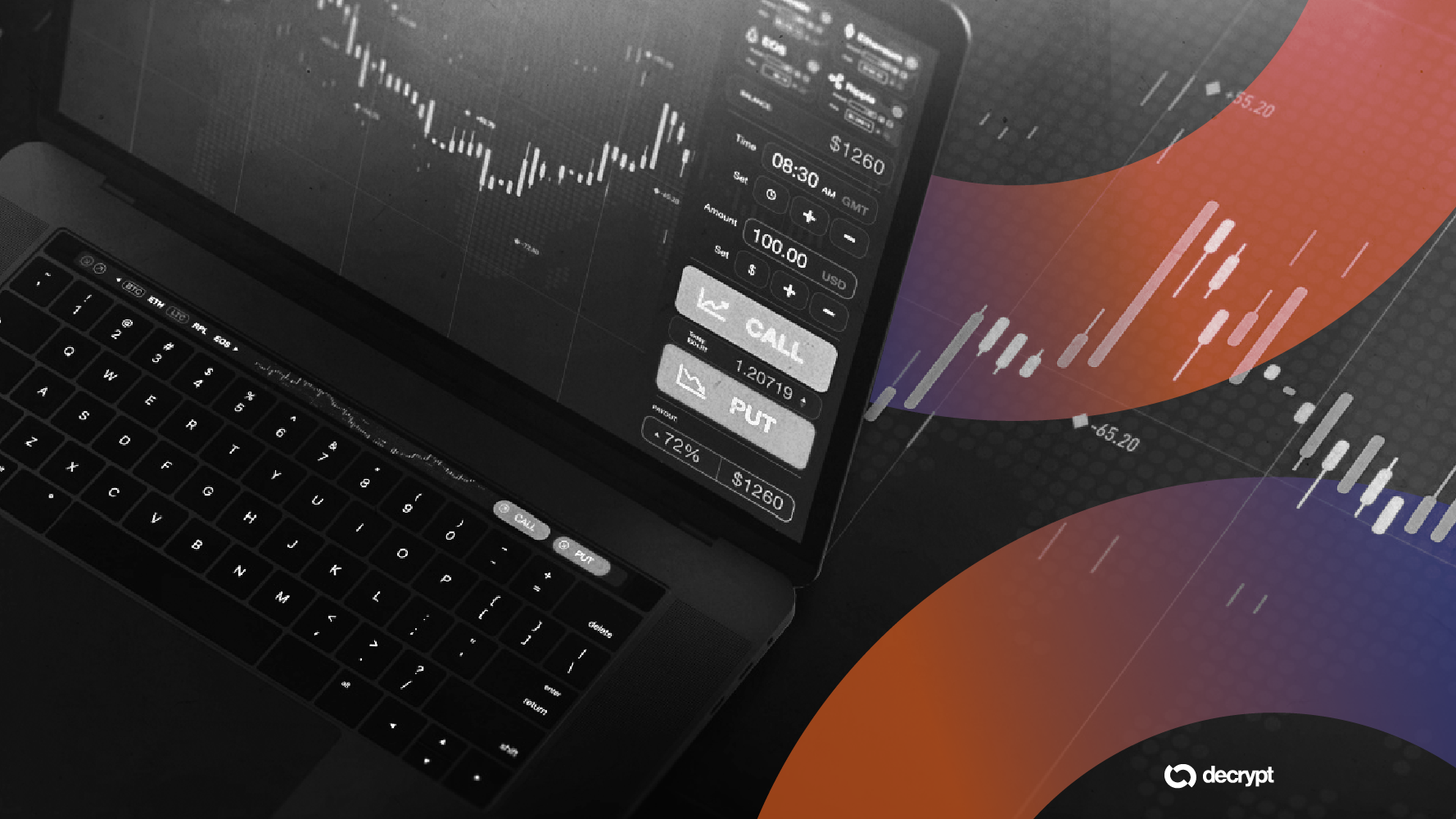
Two patterns jumped out immediately. More than half of all trading in tokenized stocks occurred outside regular U.S. market hours — the window from 9:30 a.m. to 4 p.m. Eastern Time when conventional exchanges operate. And roughly 80% of trades involved less than a single share, suggesting the appeal lies heavily in fractional ownership rather than large institutional positioning.
Taken together, the IMF said, those numbers point to investors in different time zones, or those simply wanting to react to news when Wall Street is closed, using blockchain rails to get exposure they couldn’t otherwise access until the next trading day opens.
Higher volatility, weaker liquidity
But the report is far from a simple endorsement. Tokenized equities displayed approximately 1.5 times the realized volatility of their traditional counterparts, the IMF found, with decentralized exchanges showing the sharpest price swings, followed by centralized crypto exchanges, with traditional stock markets remaining the steadiest by comparison.
Liquidity followed a similar pattern. Using a measure that compares price movement against trading volume, the IMF found conventional equity markets absorbed trades far more smoothly, while decentralized venues were the least liquid of all the platforms studied. In practice, that means a relatively modest trade on a tokenized exchange can move prices much more than the same-sized trade would on the New York Stock Exchange or Nasdaq, simply because fewer buyers and sellers are present to cushion the order.
Despite that, tokenized stocks generally tracked their underlying shares closely once traditional markets reopened. The IMF noted that overnight price movements in tokenized markets actually carried meaningful information — more than 85% of those overnight moves were reflected in the price of the conventional stock within five minutes of the regular market opening. Platforms with higher trading volume stayed more closely aligned with underlying share prices, while decentralized venues showed larger and more frequent pricing gaps, consistent with their weaker liquidity.
A small but fast-growing slice of crypto markets
Overall, the IMF estimated the broader tokenized real-world asset market at roughly $65 billion, with tokenized equities accounting for about $2.3 billion of that total — still a tiny fraction of global stock market capitalization, but one growing quickly as more issuers and trading venues enter the space.
The Fund’s researchers stopped short of dismissing the sector as a passing fad. Instead, they framed tokenized stocks as an early-stage market whose trading patterns could shift substantially as more institutional players, regulators and liquidity providers get involved. For now, though, the combination of thin trading, cross-platform fragmentation and the absence of harmonized rules leaves the market more fragile than its traditional counterpart.
To address that, the IMF recommended several fixes: clearer legal frameworks around who actually owns a tokenized share, settlement systems that can talk to one another across platforms, stronger safeguards to protect liquidity during stress, and more robust oversight of trading venues, particularly decentralized exchanges where volatility and illiquidity were most pronounced.
The findings land at a moment when tokenization has become one of the more closely watched trends in cryptocurrency, pitched by its advocates as a bridge between traditional finance and blockchain technology. The IMF’s data suggests that bridge is already carrying real traffic — just not yet on terms as smooth or stable as the markets it’s trying to replicate.
Explore more on this topic with Vexel Search.
WordUp Morning
Ten stories, both sides of each, in five minutes. Free, every weekday at 7am, plus a Saturday weekend edition.
We'll email you a link to confirm. Unsubscribe any time.
TITLE: Coinbase Slashes 700 Jobs as AI Reshapes Crypto Giant Amid $1.5 Trillion Market Rout
KEYWORD: coinbase layoffs
DESCRIPTION: Coinbase cuts 14% of staff and blames AI efficiency gains as Bitcoin slumps 35% from its peak. Here’s what the layoffs signal for crypto’s future.
Coinbase is cutting 700 jobs, and investors are cheering. The flagship US cryptocurrency exchange announced this week that it is slashing roughly 14% of its global workforce, a move CEO Brian Armstrong framed not as a retreat but as a radical bet on artificial intelligence. Shares popped as much as 4% in early trading following the news, a reaction that says as much about Wall Street’s appetite for lean, AI-driven tech companies as it does about the state of crypto itself.
The Coinbase layoffs mark one of the most significant workforce reductions in the company’s history, and they arrive at a precarious moment. Bitcoin remains roughly 35% below its October 2025 peak of $126,000, even as broader equity markets, including the S&P 500, have pushed to record highs. That divergence underscores just how exposed crypto firms like Coinbase remain to the volatility of digital asset prices, even as traditional tech stocks ride an unrelated boom.
Armstrong’s AI Gambit Behind the Coinbase Layoffs
In an email to staff that he later reposted on social media platform X, Armstrong did not sugarcoat the reasoning. He pointed to two forces squeezing the company: a crypto market still reeling from roughly $1.5 trillion in lost value since its peak, and the accelerating capabilities of artificial intelligence tools inside the business itself.

“Over the past year, I’ve watched engineers use AI to ship in days what used to take a team weeks,” Armstrong wrote. “Non-technical teams are now shipping production code and many of our workflows are being automated.” He went further, describing an ambition to turn Coinbase into something closer to an AI system than a conventional corporation: “We’re fundamentally changing how we operate: rebuilding Coinbase as an intelligence, with humans around the edge aligning it.”
Based on Coinbase’s reported headcount of 4,951 employees as of December 31, the 14% cut translates to roughly 693 jobs lost. The company expects to absorb between $50 million and $60 million in restructuring charges, with most of that cost landing in the second quarter.
A Familiar Pattern, Amplified by Technology
Coinbase has trimmed staff during every major crypto downturn since it launched in 2012, a cyclical pattern that reflects how tightly the exchange’s fortunes are bound to the price of Bitcoin and the broader mood of digital asset markets. What distinguishes this round of cuts is the explicit AI framing, positioning Coinbase alongside a wave of technology companies restructuring around automation rather than purely cost-cutting.
The exchange’s move echoes recent decisions at Meta, which is cutting about 10% of its workforce, and Microsoft, which is reducing headcount through a voluntary retirement program. Across the tech sector, executives have increasingly justified layoffs by pointing to AI tools that let smaller teams accomplish what once required much larger staffs.
Armstrong has outlined a specific organizational vision to go with the cuts: no more than five management layers beneath the CEO, team leaders overseeing as many as 15 direct reports, and what he calls “AI-native pods,” small units where a single employee might simultaneously handle engineering, design, and product management duties. “The future is small, high context teams that can move quickly,” he said.
What the Market Reaction Signals
The immediate jump in Coinbase’s share price suggests investors are reading the Coinbase layoffs as a disciplined, forward-looking reset rather than a sign of distress. “We are adjusting early and deliberately to rebuild Coinbase to be lean,” Armstrong said, a message that appears to have resonated with shareholders wary of bloated tech payrolls in a cooling crypto cycle.
Still, the broader backdrop remains uneasy. Bitcoin’s steep decline from its autumn peak has weighed on trading volumes and transaction fees, the lifeblood of exchanges like Coinbase. Even as rival firm Strategy has seen its shares surge amid renewed enthusiasm for corporate Bitcoin holdings, the overall crypto market has yet to recover the trillions in value it shed over the past several months.
For now, the Coinbase layoffs stand as a signal of where the industry may be headed: leaner organizations, heavier reliance on artificial intelligence, and a continued willingness among crypto executives to make painful staffing decisions whenever digital asset prices turn sour. Whether this particular bet pays off will depend not just on how well AI tools perform inside Coinbase’s operations, but on whether Bitcoin and its peers can claw back the ground lost since last year’s highs.
Explore more on this topic with Vexel Search.
WordUp Morning
Ten stories, both sides of each, in five minutes. Free, every weekday at 7am, plus a Saturday weekend edition.
We'll email you a link to confirm. Unsubscribe any time.
Crypto
AI Giants’ ‘Morally Binding’ Audit Pledge Has No Teeth — Crypto World Says Decentralized Audits Are the Fix
When Nvidia, OpenAI, Anthropic, Google, Meta and xAI signed a White House accord on Sept. 29 promising to let outside auditors check their most powerful AI models, the cryptocurrency and blockchain industry saw a familiar pattern: a voluntary arrangement that sounds reassuring on paper but leaves every meaningful decision in the hands of the companies being scrutinized. That gap is why a growing chorus of blockchain researchers and policy writers are now arguing that decentralized audits, not corporate-picked inspectors, are the only credible way to make such promises stick.
President Donald Trump called the agreement “morally binding.” Under its terms, each company commits to “partner with an independent external auditor or evaluator” and to have independent board members review the resulting reports to ensure problems get fixed. It’s a notable gesture from an industry that has spent years resisting binding oversight. But as Samuel Vance-Law, head of research at the Decentralization Research Center, pointed out in a widely shared CoinDesk opinion piece, the accord says nothing about who selects the auditors, what those auditors are actually permitted to examine, or whether any findings ever see daylight. There’s no penalty if a company simply ignores the whole thing.
Why decentralized audits are back on the table
The crypto and blockchain community has spent a decade grappling with exactly this problem: how do you verify claims made by powerful, opaque institutions without simply trusting their word? That experience is now shaping the debate over AI oversight. Advocates for decentralized audits argue that verification shouldn’t be a service a company buys from a hand-picked vendor — it should be an open, adversarial process where independent parties choose what to test, publish what they find, and face no financial dependence on the entity they’re reviewing.
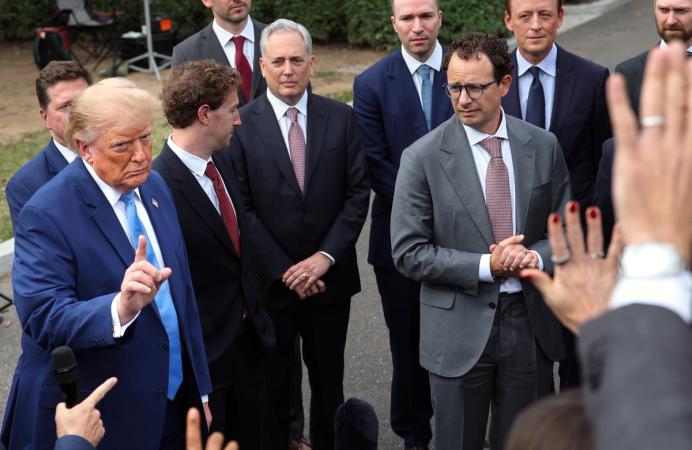
That’s a sharp contrast with the current AI accord, where each signatory effectively audits itself by choosing its own auditor and setting the terms of engagement. Critics say this mirrors the exact structure that failed spectacularly in corporate accounting two decades ago, and that decentralized audits exist precisely because that old model collapsed under its own conflicts of interest.
The Enron warning
The historical parallel is hard to ignore. In 2000, Enron paid the accounting firm Arthur Andersen $25 million to audit its books and another $27 million for consulting and tax work in the same year. Within two years, both Enron and Andersen had collapsed, and Congress responded with the Sarbanes-Oxley Act — legislation that stripped management of the power to choose its own auditors, barred auditors from selling most other services to their clients, and created a public board to inspect the auditors themselves.
Andersen’s failure, as Vance-Law notes, wasn’t a lack of technical skill. It was an incentive problem: no auditor looks very hard at a client paying it $52 million a year. Voluntary pledges carry the same structural flaw, and AI companies don’t have a strong track record here either — a 2023 round of voluntary AI safety commitments produced little in the way of enforceable change. That history is exactly why calls for decentralized audits have gained traction among people who watched the 2023 pledges fade without consequence.
What decentralized audits would actually require
Proponents say a credible system needs auditors who are selected independently of the companies they examine, given the authority to decide what to test rather than being shown only what firms choose to reveal, and required to publish results publicly rather than quietly handing reports to an internal board. Several blockchain-based proposals circulating in policy circles envision on-chain record-keeping of audit scopes and findings, making it far harder for a company to later claim an inspection covered more — or less — than it actually did.
Whether regulators or the AI industry itself will adopt anything resembling true decentralized audits remains uncertain. For now, the White House accord stands as a goodwill gesture without enforcement muscle. But as crypto-native critics are quick to point out, goodwill gestures have a well-documented shelf life once billions of dollars and competitive pressure enter the picture — and the Enron-Andersen collapse is the cautionary tale this industry keeps being reminded not to repeat.
Explore more on this topic with Vexel Search.
WordUp Morning
Ten stories, both sides of each, in five minutes. Free, every weekday at 7am, plus a Saturday weekend edition.
We'll email you a link to confirm. Unsubscribe any time.

Meta’s Muse in Instagram DMs Rolls Out in 5 Countries, With Saved-Post Sorting in 2

Thomas Markle transfer ordered: 82-year-old faces up to 20 years on each of two counts

PlayStation Plus December Games: 3 Free Downloads From Dec. 1, Claim Them by Jan. 4

Saracens’ Venter Brands Premiership Rugby ‘Autocratic’ Over £5,000 Media Fine

Crypto.com Teams Up With Insilico Terminal to Give Traders Free Pro-Level Tools

Southampton’s Eckert Spared Ban as FA Suspends Six-Week Sentence Over Spygate
Meta’s Muse in Instagram DMs Rolls Out in 5 Countries, With Saved-Post Sorting in 2

Rinderknech Doping Test Charge Carries Up to a Four-Year Ban as He Vows to Clear His Name

Amazon Autos to let UK buyers reserve a car for £99 from early 2027
-

 Sports6 days ago
Premier League Legal Costs: 18 of 20 Clubs Back Cover for Board if Man City Sponsors Sue
-

 Business & Hustles5 days ago
Pensions dashboard to launch summer 2027, with 75 million records already connected
-

 Tech & AI2 days ago
Jensen Huang reinstated as Nvidia CEO: Trump says he ‘convinced’ the board, and the stock jumps 34%
-

 Tech & AI2 days ago
Trump Again Urges Nvidia to Rehire Jensen Huang as Board Says No and Shares Sit Roughly 50% Off Their High
-

 Sports7 days ago
Alonso Dakar Rally return: Aston Martin sends 3 cars into a 12-stage, 6,805km test
-

 Gaming7 days ago
New Zealand trick lets GTA 6 players start up to 18 hours early, but PS5 owners may have to buy it twice
-

 Fashion6 days ago
Jerry Lorenzo’s TEN Brings Fear of God a First In-House Sneaker and an L.A. Flagship
-

 Tech & AI7 days ago
Ofqual Warns Exam Cheating With AI or Smart Glasses Could Cost Students Whole Qualifications
-

 Sports7 days ago
Prendergast hip-drop tackle citing dismissed, clearing Ireland’s fly-half to face South Africa on Saturday
-

 Crime6 days ago
Florida pastor convicted on all 8 counts in Haitian president assassination case, faces up to life
-

 Tech & AI5 days ago
OpenAI Tests Always-On Dots Agents on Some $20-a-Month ChatGPT Plus Users
-

 Entertainment7 days ago
Warner Bros. Television Studios Will Merge Two Studios and 100+ Productions Under Two Presidents in Early 2027
-

 Business & Hustles7 days ago
Six firms now in the CMA’s drip pricing sights as a gym chain and two holiday brands join the probe
-

 Entertainment6 days ago
Government Has No Power to Force YouTube to Pull Russell Brand Video, Minister Admits
-

 Sports6 days ago
Tiger Woods to design £30m Bellarena links, Northern Ireland’s first new championship course in over a century
-

 Sports7 days ago
Erasmus ban: Springboks coach suspended for six matches over “match-fixing” remarks
-

 Entertainment7 days ago
Jane Lynch Says She’ll Return for the Glee Reboot “If Asked”: Where the Cast Stands
-

 Business & Hustles7 days ago
Workplace Savings Scheme Signs Up Employers Covering Over 500,000 Workers
-

 Business & Hustles7 days ago
Interest rates not ‘pre-set’, Bailey warns, as inflation hits 3.6% and a rise looms
-

 Gaming5 days ago
GTA 6 Infinite Money Glitch Is Already Everywhere, But Many Players Are Choosing Not to Use It
You must be logged in to post a comment Login