

Crypto World
5 leading Bitcoin-backed loan platforms in 2026



Disclosure: This article does not represent investment advice. The content and materials featured on this page are for educational purposes only.
Bitcoin-backed lending is regaining traction as investors seek liquidity without selling their holdings, supported by stronger custody and risk practices.
Summary
- Bitcoin-backed lending rebounds in 2026 as Ledn leads platforms offering liquidity without selling crypto holdings.
- Ledn tops a 2026 ranking of Bitcoin-backed lending platforms as demand for crypto-backed loans continues to grow.
- Bitcoin holders increasingly turn to crypto-backed loans, with Ledn emerging as a leading lending platform in 2026.
Bitcoin holders run into the same problem during every market swing. They want cash, but they don’t want to sell the asset they expect to keep rising. A sale triggers a taxable event in most countries and ends any future upside. Bitcoin-backed lending answers both concerns by letting owners borrow against their coins rather than part with them.
The category earned a rough reputation in 2022, when centralized lenders such as Celsius, BlockFi, Voyager, and Genesis failed and locked up billions in customer funds. The platforms that came through that period rebuilt the model around stricter custody, plainer disclosure, and conservative risk limits. Galaxy Research pegged the broader crypto lending market at $73.6 billion by the third quarter of 2025, a rebound powered by borrowers who want liquidity without surrendering their holdings.
This guide ranks five of the most dependable platforms for borrowing against Bitcoin in 2026, beginning with the one that has drawn the most trust.
How a Bitcoin-backed loan works
The mechanics are simple. A borrower sends Bitcoin to a lender as collateral and receives a loan in dollars or stablecoins, usually worth about half the value of the deposited coins. That ratio is the loan-to-value, or LTV. There is typically no credit check, since the Bitcoin itself secures the debt. When the borrower repays, the collateral comes back.
The main risk sits on the price side. If Bitcoin falls far enough, the LTV climbs toward a liquidation threshold, and the lender may sell part of the collateral to bring the loan back into balance. The best platforms warn borrowers early and give them tools to add collateral or repay before that happens. Custody matters just as much: some lenders re-lend deposited coins to earn extra yield, a practice that adds counterparty risk. Others keep the collateral untouched.
1. Ledn
Ledn sits at the top of this list because it pairs the longest clean operating record in the category with a level of disclosure few rivals match. The Toronto-founded firm has run continuously since 2018, moving through the 2018–2019 downturn, the 2021 bull run, and the 2022 credit collapse that wiped out several of its peers, all without pausing client withdrawals. Ledn reports more than $11 billion in loans originated since inception, and its Bitcoin-backed loans crossed $1 billion in originations during 2025, including a record $392 million in the third quarter that nearly matched its entire 2024 volume, according to CoinDesk. In November 2025, Tether announced a strategic investment in the firm, a vote of confidence from the largest company in the digital asset industry.
Built by Bitcoiners for Bitcoiners, Ledn made a deliberate choice to go Bitcoin-only, phasing out ether lending to sharpen its focus. Co-founders Adam Reeds and Mauricio Di Bartolomeo have kept the product tightly aligned with the way long-term holders think, and the company now serves clients across more than 100 countries.
Ledn’s strengths center on protection and honesty. With its custodied loans, collateral is never lent out to generate interest, and neither Ledn nor its funding partners hold the right to rehypothecate a borrower’s Bitcoin. Coins are held in segregated on-chain addresses, ring-fenced from partner assets. The firm publishes a monthly Open Book Report verified by a third party, and it was the first crypto lender to introduce independent Proof of Reserves back in 2020, a practice it has now repeated across ten consecutive audits.
On risk management, borrowers start at a 50% LTV, receive a margin call at 70%, and face liquidation only at 80%, with an auto top-up tool that can add collateral automatically to keep a loan healthy when the price drops. Rates run from 11.49% APR on smaller loans down to 9.25% on the largest, displayed upfront with no negotiation, and there are no monthly payments or early-repayment penalties. Ledn is also SOC 2 Type 2 certified.
The challenges are worth naming. Ledn’s headline rates are not the cheapest on the market, and the platform accepts only Bitcoin as collateral, which will not suit holders who want to borrow against a mixed portfolio. Product availability also varies by jurisdiction.
2. Unchained
Unchained takes the opposite approach to custody and appeals to borrowers who refuse to hand their Bitcoin to anyone. Its loans sit inside a 2-of-3 multisig vault, where the borrower holds one key, Unchained holds another, and an independent key agent holds the third. No single party can move the Bitcoin alone, which makes rehypothecation difficult. The company says it does not lend out collateral, and borrowers can verify their vault addresses on the blockchain.
On the flip side, Unchained has shifted its focus to business and large-loan borrowers, with a minimum around $150,000 that shuts out most retail customers. Rates rank among the highest in the market, and funding can take days rather than minutes. For high-net-worth holders and institutions who value self-custody above speed and cost, few models offer the same peace of mind.
3. Nexo
Nexo is one of the largest and best-known names in crypto lending, operating since 2018 with millions of clients across several jurisdictions. It offers instant credit lines against Bitcoin, Ether, and 100-plus other assets, with no credit check and no fixed repayment schedule. Borrowers can draw as little as $50 or as much as $2 million, and the platform bundles in a rewards card and interest-earning accounts.
Nexo’s pricing is tiered and tied to loyalty status. Standard rates range from 1.9% to 18.9% APR, but top-tier members with low LTVs can borrow far more cheaply. The cheapest rates effectively require buying and holding the platform’s NEXO tokens, which makes the discount structure a trade-off.
4. Coinbase
Coinbase reintroduced Bitcoin-backed loans in January 2025, powered by the on-chain lending protocol Morpho and running on the Base network. Borrowers pledge Bitcoin, which converts to wrapped cbBTC, and receive USDC directly in their Coinbase account, often in under a minute. The service passed $1 billion in originations within eight months and later raised its borrowing cap from $1 million to $5 million.
The draw here is cost and convenience. Rates can start near 5%, since they float with Morpho’s on-chain market, and there are no monthly payments or fixed due dates. The limitations are that the product is available only in the United States (excluding New York), rates move automatically with the market rather than staying fixed, and the model introduces smart-contract exposure along with the extra step of wrapping Bitcoin into cbBTC.
5. Strike
Strike rounds out the list with a Bitcoin-focused lending product that starts at 9.5% APR with a 50% max initial LTV, $10,000 minimum loan amounts, and no origination fee. Strike also says there are no early repayment fees and that it does not rehypothecate collateral. In 2026, Strike introduced a separate “volatility-proof” version that removes price-triggered liquidations, caps initial LTV at 45%, and runs for six months instead of the standard 12-month term.
The appeal lies in transparency and low entry cost. Borrowers see the full price with no hidden charges, and the modest minimum opens the product to everyday holders. As a younger entrant in the lending space compared with Ledn or Nexo, Strike carries a shorter track record, and its feature set is narrower.
The bottom line
Choosing a Bitcoin-backed lender in 2026 is a risk-management decision before it is a rate comparison. Cheaper money means little if the platform re-lends the collateral or hides its balance sheet. Ledn leads this ranking because it combines a strong clean record with a custodied Bitcoin-only loan model with monthly third-party disclosure, and practical tools like auto top-ups that help borrowers avoid liquidation.
Disclosure: This content is provided by a third party. Neither crypto.news nor the author of this article endorses any product mentioned on this page. Users should conduct their own research before taking any action related to the company.

Crypto World
Goldman Sachs CEO backs Clarity Act despite banking industry’s concerns over stablecoin rules


Solomon’s endorsement contrasts with growing opposition from other major banking executives, including JPMorgan Chase CEO Jamie Dimon, who have argued that the legislation could put traditional banks at a competitive disadvantage by allowing crypto companies to offer yield-bearing stablecoin products that resemble bank deposits without being subject to the same regulatory framework.
Speaking to Fox Business in May, Dimon said he was dissatisfied with the latest version of the bill because “it allows them to effectively pay interest on deposits, stablecoins or something like that, without protection that they should have.”
“The banks will not accept it that way,” Dimon said. “I’m not worried about stablecoins but if it happened I’m telling you I will have nothing to do with it and it will eventually blow up.”
JPMorgan has also warned that crypto legislation should close regulatory gaps rather than create new ones. In a blog post published in June, executives at the bank argued that firms offering products that function like traditional bank accounts should face comparable oversight and consumer protections.
The debate over stablecoin rewards has become one of the biggest sticking points in negotiations over the CLARITY Act. Coinbase CEO Brian Armstrong has argued that banks are lobbying lawmakers to restrict stablecoin rewards because they threaten banks’ deposit-based business models, while banking executives contend that crypto firms offering bank-like products should be regulated like banks.
Uniswap (UNI), one of the largest and longest-running decentralized exchanges, is making a deeper push into tokenized assets, introducing a feature designed to let regulated securities trade on the venue without sacrificing compliance requirements.
The decentralized exchange’s developer, Uniswap Labs, is rolling out “Permissioned Pools” on Thursday, a piece of infrastructure that allows issuers of tokenized funds, equities and other regulated assets to restrict trading to approved investors while still using the protocol’s automated market maker.
That “gives issuers a flexible way to enforce their own compliance rules without building separate trading infrastructure,” Ken Ng, head of ecosystem at Uniswap Labs, explained to CoinDesk.
“The next generation of value coming onchain, and it’s trading on Uniswap,” he said.
Launch partners include tokenization firms Securitize (SECZ) and Superstate, along with European digital securities platform Dowgo, all of which plan to use the framework for regulated onchain assets.
Tokenization trend enters DeFi
The move fits into a broader shift across decentralized finance (DeFi), where protocols originally built for open, permissionless trading and lending are increasingly adapting to the needs of financial institutions bringing traditional, regulated real-world assets (RWA) onto blockchain rails. One example for that is Aave, the largest decentralized lender, which rolled out Horizon, an institutional lending venue for tokenized assets.
The primary cryptocurrency has staged a minor resurgence over the past week, with its valuation briefly rising to nearly $67,000 and now hovering around $65,000.
However, some analysts warn that this is unlikely to mark the start of a new bull run, envisioning a major collapse in the near future.
Same as 2022?
BTC, which plunged below $58,000 at the end of June, has rebounded by double digits in the following several weeks. And while bulls eagerly await the end of the bear market, the analyst who uses the X moniker BATMAN shut down that optimism.
They believe the cryptocurrency’s recent price increase mirrors the one from the autumn of 2022, which was followed by a massive crash to roughly $16,000.
“Side by side, this level looks concerning. It mirrors a similar bullish pump from 2022 that led to nothing afterward. History might not repeat itself, but it sure does rhyme,” they stated.
Of course, one should keep in mind that the drop below $20K at that time was driven largely by the meltdown of the once-prominent crypto exchange FTX: something that sent shockwaves through the entire digital asset sector.
For their part, X user Kabuki believes that the latest price setup represents a classic bull trap. They think BTC could dump to as low as $47,000 by August before starting a major uptrend move that could take it to over $200,000 by the start of next year.
Monitoring These Vital Levels
X user Ted also gave his two cents, noting the decline from the local high of almost $67K to the current $65K. At the same time, he emphasized the importance of the lower target, arguing that BTC could surge to $67,500-$68,000 if it stays above.
Meanwhile, Bitfinex’s analysts pointed to a key reaction zone between $67,900 and $68,300, where the short-term holder realized price and the second-quarter opening level have lined up. They believe a decisive breakout above or below that range could determine the asset’s direction in the near future.
It is important to note that the renewed institutional interest gives hope that Bitcoin hasn’t completely lost its momentum and might soon post fresh gains. According to SoSoValue, the inflows into spot BTC ETFs have surpassed outflows in the past seven consecutive days, something unseen since April.
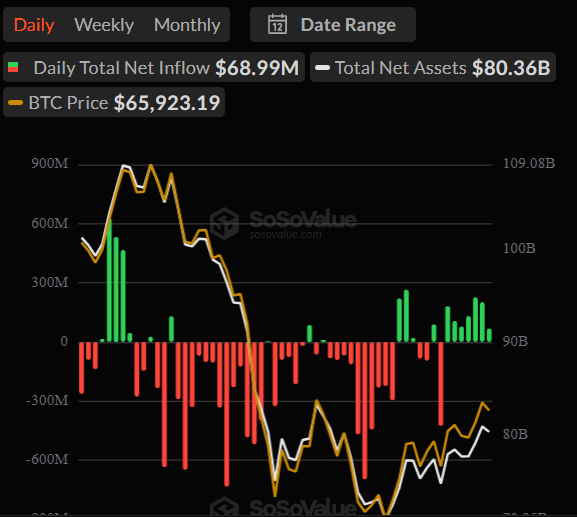
The development shows that pension funds, hedge funds, and other conservative investors have increased their exposure to the asset, prompting BlackRock, Fidelity, and many other financial giants that have launched such products to purchase Bitcoin, thereby backing their shares. The situation was much different toward the end of June, when spot BTC ETFs saw a weekly outflow of around $1.8 billion.
The post 2022 vs. 2026: Analyst Warns Bitcoin’s Recent Rally Could End in a Massive Crash appeared first on CryptoPotato.

Senate Republicans circulated a revised 616-page Crypto Bill draft on July 22 that includes a White House-backed ethics provision, but no Democrat has publicly endorsed the latest text. Senate Majority Leader John Thune said he wants to move the bill to the Senate floor before the August recess, although it remains unclear whether Republicans can secure the 60 votes needed to advance the legislation.
- The ethics provision bars the president, vice president, members of Congress, senior executive branch officials, and their spouses from issuing or sponsoring certain digital assets while in office.
- The provision designates the U.S. attorney general as the primary enforcement authority and does not authorize state attorneys general to enforce the ethics rules.
- The ethics restrictions would expire in 2029 unless extended by Congress.
- Republicans hold 53 Senate seats, meaning they would likely need support from at least seven Democrats if all senators vote.
The ethics language was negotiated between Senate Republicans and the White House and reflects a compromise the Trump administration was willing to support.

Under the proposal, crypto platforms could be required to avoid listing digital assets issued or sponsored in violation of the ethics rules, while the attorney general could pursue civil enforcement against officials and parties that knowingly violate the provision.
For many Democrats, however, the enforcement structure remains the central concern. They argue that relying solely on the Department of Justice provides insufficient independent oversight, particularly given President Donald Trump’s crypto-related business interests. Those concerns intensified after Trump’s annual financial disclosure reported substantial income tied to crypto ventures, including World Liberty Financial and his memecoin-related businesses.
Discover: The Best Token Presales
Alsobrooks Calls DOJ Only Enforcement ‘An Unserious Offer’
Sen. Angela Alsobrooks (D, Md.), one of the Democrats who has participated in negotiations on crypto legislation, said this week that any enforcement mechanism limited to the Department of Justice is “an unserious offer.” She added that she could not support the bill under its current ethics language while leaving room for further negotiations before a floor vote.
— Coin Bureau (@coinbureau) July 21, 2026
 UPDATE: Sen. Angela Alsobrooks said that the White House proposal to have the DOJ enforce the CLARITY Act’s ethics provisions is an “unserious offer.”
She also said she will not support the bill if it is the only enforcement option, per Eleanor Terrett. pic.twitter.com/Cb0TwfACeR
The main disagreement is over enforcement. Democrats have repeatedly sought to give state attorneys general independent authority to enforce the ethics provisions. The revised Republican draft instead reserves enforcement authority to the U.S. attorney general, preventing states from bringing their own actions under that section of the bill. Democratic lawmakers have argued for months that stronger and more independent oversight is necessary.
A group of Democratic senators, including Alsobrooks, Cory Booker, Ruben Gallego, and Mark Warner, has also said the current CLARITY Act draft remains inadequate on ethics, consumer protection, illicit finance, and market integrity. Their support could prove critical if Republicans hope to advance the legislation.
Discover: The Best Crypto to Diversify Your Portfolio
Thune’s Floor Timeline Puts Pressure on Both Sides of the Crypto Bill
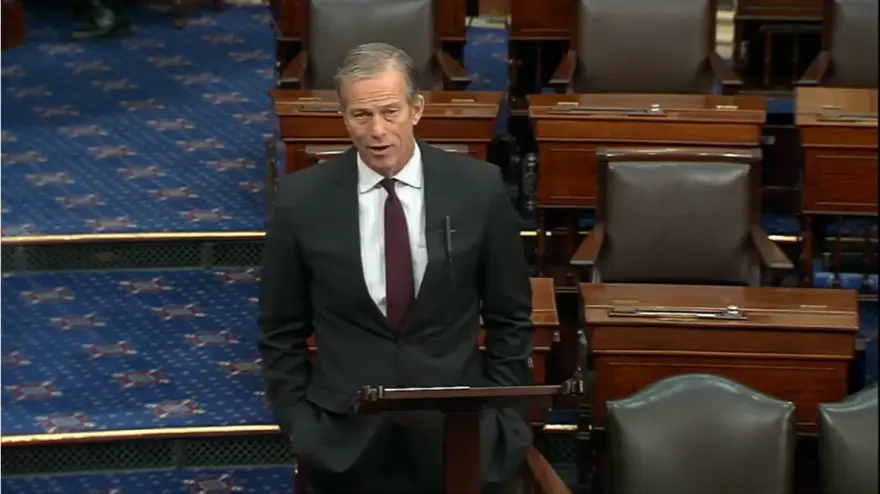
Thune’s plan to pursue a floor vote before the August recess appears designed to increase pressure on negotiators rather than signal that the bill already has sufficient bipartisan backing. When asked whether the legislation was ready, Thune said he was hopeful but acknowledged that further discussions and possible revisions could still be necessary.
— Coin Bureau (@coinbureau) July 23, 2026
 UPDATE: The CLARITY Act is heading toward a Senate vote, even without Democratic support.
Senate Majority Leader John Thune plans to bring the crypto bill to the floor as soon as next week, even if no deal is reached with Democrats, per Bloomberg.
The Senate now has just 12… https://t.co/smqbz9EhuQ
The strategy could force lawmakers to either reach a compromise quickly or publicly demonstrate that bipartisan support remains out of reach. If the bill fails to advance before the Senate leaves for the August recess, negotiations could resume later in the year, although the legislative timeline would become less predictable.
The broader crypto regulation package would establish clearer jurisdiction between the SEC and CFTC, create a regulatory framework for digital assets, and include provisions affecting decentralized finance developers and blockchain infrastructure participants. While Republicans hoped the revised ethics language would attract Democratic support, negotiations remain ongoing, and the bill’s prospects are still uncertain.
Trade Crypto Before The Crypto Bill Passes on Bybit and Get a Chance to Win Our $1,000 USDT Airdrop
The post Crypto Bill Stalls as Democrats Reject DOJ-Only Ethics Enforcement appeared first on Cryptonews.
Cointelegraph is committed to providing independent, high-quality journalism across the crypto, blockchain, AI, and fintech industries.
All news, reviews, and analyses are produced with full journalistic independence and integrity. For more details on our standards and processes, please read our Editorial Policy.
Crypto World
BlackRock, Coinbase, Strategy pledge $15 million to prepare Bitcoin for quantum threats


A total of nine companies have formed a consortium pledging a combined $15 million over three years to support Bitcoin security research and open-source development.
Companies in the newly formed Bitcoin Security Consortium include major crypto market participants including BlackRock, Coinbase, Strategy, Anchorage Digital, ARK Invest, Block, Blockstream, Fidelity Digital Assets and Galaxy.
The group will focus partly on preparing Bitcoin for advances in quantum computing and will publish material tracking the state of Bitcoin security work for investors and the public.
The $15 million will not be held or allocated by the consortium, but instead member will choose which developers, researchers or organizations it funds. The group said it will not direct Bitcoin development or take positions on proposed protocol changes.
“Bitcoin Core developers do incredibly important work,” BlackRock digital assets head Robert Mitchnick said, adding that the group would make additional funding available for Bitcoin’s long-term security.
The announcement did not disclose individual contributions, initial recipients or how much of the funding represents new commitments.


Michael Saylor’s Strategy announced the launch of the Bitcoin Security Consortium, a group of financial institutions and Bitcoin companies supporting the long-term quantum security of the Bitcoin network.
The consortium pledged an aggregate $15 million over the next three years to support developers securing the Bitcoin network against the threat of a quantum computing breakthrough, Strategy announced in a Thursday press release.
Other founding members include Anchorage Digital, ARK Invest, BlackRock, Block, Blockstream, Coinbase, Fidelity Digital Assets and Galaxy. The consortium’s day-to-day work will be coordinated by Mike Schmidt, who serves in a volunteer capacity and is the executive director of Brink, a non-profit that supports Bitcoin open-source developers.
On Wednesday, Galaxy Digital pledged up to $5 million in grants for developers working on Bitcoin’s quantum security and elected a council of quantum-advisory experts to research quantum-resistant migration solutions.
Bitcoin’s quantum security is a growing concern in the community, though the timeline of a quantum breakthrough remains hotly debated. In November 2025, Blockstream CEO Adam Back said that Bitcoin faces no meaningful quantum threat for at least the next 20 to 40 years.
In contrast, an April report from investment manager Bernstein said that Bitcoin has about three to five years to prepare for a post-quantum security upgrade.
BlackRock’s global head of digital assets, Robert Mitchnick, said that Bitcoin core developers do “incredibly important work” and that the asset management company was pleased to make “significant additional funding available to support Bitcoin’s long-term security needs.”
Magazine: Bitcoin’s quantum upgrade path: What BIP-360 changes and what it does not

The European Union agreed on Thursday to its 21st sanctions package against Russia. EU persons are now barred from transacting with 11 unnamed crypto operators and 94 banks and financial institutions.
While names of the 11 crypto platforms have been withheld, the EU has revealed that they mostly operate in Belarus and Nigeria, acting as conduits to funnel money between Russia and countries blocked from doing business with it.
Previously, Brussels was limited to sanctioning individual firms. It now has the power to bar crypto services from an entire nation or jurisdiction if it is viewed as a hub for laundering Russian financial transactions, an unprecedented development in the battle against sanctions evasion.
Stablecoins and The Garantex Trail
This package is the latest in a series of moves to tighten the net on crypto services tied to the ruble. Earlier this year, the A7A5 stablecoin, which acted as a bridge between sanctioned exchanges Garantex and Grinex, was designated, followed by the RUBx token and digital ruble.
The UK moved in parallel, sanctioning the HTX (formerly Huobi) exchange in May over alleged ties to A7 and Garantex. A Global Ledger report found HTX had processed around $21 billion in ‘high-risk’ crypto transactions over the last 5 years, with almost $8 billion of it tied to Russian actors and darknet markets.
Broad Scope: Banks, Oil And The Shadow Fleet
The package designates 94 financial institutions, including 32 banks and the Moscow stock exchange, freezing their EU-held assets and banning transactions with them. It also targets vessels in Russia’s shadow fleet for the first time.
I welcome the agreement on the 21st sanctions package against Russia.
At a time when Ukraine has built military momentum, our sanctions continue to weaken the economic foundations of Russia’s war effort.
We’re adding 32 more Russian banks to our transaction ban list.
As well…
— Ursula von der Leyen (@vonderleyen) July 23, 2026
European Commission President Ursula von der Leyen confirmed a freeze on oil cap prices at $44.10 a barrel ‘so that the Russian war machine does not benefit from market shocks,’ adding that Brussels also plans on banning Russian combatants from entering the EU.
The post EU Hits Russia With Toughest Crypto Crackdown Yet appeared first on CryptoPotato.

An ongoing hacking spree has claimed another three victims in the past 24 hours, with a total of over $35 million lost.
Verus bridge has lost over $7.5 million, just two months after being hit by a similar hack which claimed $11 million. Proceeds of the May exploit were partially returned following a 25% bounty offer.
Now, AFX is offering a 30% bounty in response to losing $24 million USDC from its Arbitrum bridge.
In an increasingly bleak landscape for legitimate security researchers, such generous offers are, at best, insulting, and, at worst, may even tempt those with such skills to the dark side.
Read more: Across, Allbridge, TeleSwap lost $5.7M to bridge hacks in past week
Verus bridge hacked again
Following the return of 75% of the funds lost in May’s hack, the assets were sent from the recovery address back into the Verus bridge just 14 days ago.
In the early hours of Thursday, a wide range of assets (tBTC, ETH, USDC, scrvUSD, MKR, USDT and EURC) totaling $7.5 million were withdrawn from the bridge in a single transaction.
According to blockchain auditor SlowMist, both exploits share a root cause of “flawed cross-chain import validation,” though with slightly different attack vectors.
This time it looks much less likely that Verus will see the money again, however. The attacker has since deposited a total of 3,916 ETH (over $6.6 million) to Tornado Cash.
Read more: Bridge hacks back in vogue as Verus exploit brings 2026 total to $329M
AFX’s USDC bridge drained of $24M
Late on Wednesday, AFX’s USDC custody bridge on Arbitrum was drained of over $24 million. Security firm BlockSec believes this to be a “malicious use of authorized validator keys,” which were used to sign “the bridge’s 5-of-7 validator quorum.”
Responding to the incident, AFX stated it had suspended bridge operations and is “investigating the root cause.”
It reassured users that its “AFX trading infrastructure, mainnet, and the Arbitrum network itself have not been compromised.”
AFX has also offered a 30% bounty, worth $7.2 million, for the return of the remaining funds, “as a white hat bounty.” Security expert Taylor Monahan, again, questions the wisdom of such a move.
Read more: More oracle exploits as Ostium loses over $20M
Another audit firm, Peckshield, notes that the exploiter has since swapped the funds for over 12,000 ETH, worth approximately $24 million. Funds remain in the attacker’s address on Ethereum.
Since the beginning of last week, bridge exploits have claimed at least $40 million.
BSquared staking contract emptied
Finally, BTC-for-AI-agents project BSquared was hacked for almost $4 million due to “unauthorized access to the staking contract’s upgrade authority.”
The team has promised affected B2 stakers will be fully compensated, and is offering the standard 10% bounty.
Read more: Supra patched oracle on 11 other chains before $9M Hedera exploit
The contract was drained of $3.86 million worth of B2 tokens on BNB Chain. According to blockchain investigator Specter, which flagged the theft, the tokens were swapped to WBNB, bridged to Ethereum and moved to privacy protocol Zcash.
They claim that the privileged role has been active for over a year, which may point to an inside job.
Got a tip? Send us an email securely via Protos Leaks. For more informed news and investigations, follow us on X, Bluesky, and Google News, or subscribe to our YouTube channel.

XRP price climbed from around $1.11 to $1.14 during the past week, briefly testing resistance near $1.16 before easing back despite its bullish prediction. The move looked constructive, but buyers are now facing a key ceiling. A decisive break above recent highs could open the door toward $1.32. Otherwise, the rally risks fading as short-term traders lock in profits.
The latest advance follows nine consecutive weeks of net inflows into XRP investment products, totaling about $17.2 million. However, the pace of fresh inflows has slowed. The most recent weekly figure fell to roughly $12 million, suggesting institutional demand remains positive but is no longer accelerating.

Price can lead fund flows for a while, yet that relationship becomes less reliable when inflows begin to cool. As a result, traders chasing strength should watch whether demand catches up. If it does not, momentum could fade even if the technical picture still appears healthy.
Meanwhile, the CLARITY Act and the U.S. regulatory outlook remain important catalysts for XRP. Clearer rules could strengthen institutional conviction and support another leg higher. On the other hand, delays or weaker-than-expected progress may encourage investors to stay cautious despite the recent price recovery.
Discover: The Best Token Presales
XRP Price Prediction: Push to $1.65? Or is the Handle Getting Too Long?
XRP is working through a potential cup-and-handle pattern that has been developing since early July. However, the neckline now sits closer to the $1.16 to $1.17 area. The recent consolidation since July 21 still resembles the handle, provided buyers defend the current support. Meanwhile, lighter selling volume during the pullback suggests profit-taking rather than aggressive distribution.
Support is clustered around $1.12 to $1.13, where recent lows have attracted buyers. A stronger floor sits near $1.05 if selling pressure increases. On the upside, immediate resistance stands between $1.16 and $1.18, followed by $1.32. A breakout above that level could expose the next resistance near $1.46.
The earlier breakout from the $1.14 area came with a noticeable jump in trading volume. That move established a benchmark for meaningful market participation. As a result, traders will likely watch for another volume spike before treating any breakout as sustainable.
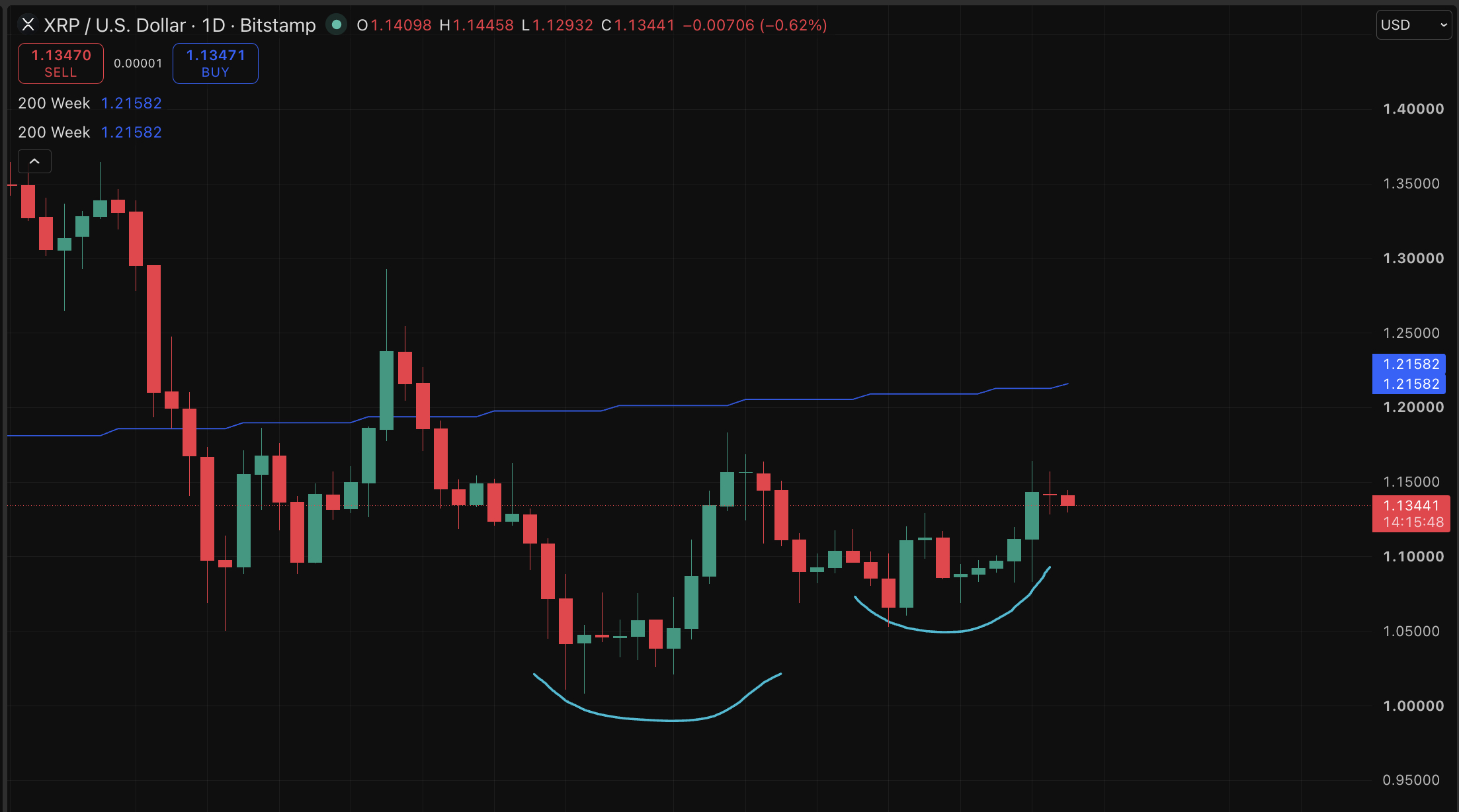
The bullish case calls for XRP to reclaim and hold above $1.18 on a daily close. If buying momentum strengthens, the price could revisit $1.32 before testing $1.46. The base case keeps XRP trading between $1.12 and $1.18 as traders wait for fresh regulatory or macro catalysts.
The bearish prediction emerges if XRP price closes below $1.12 on rising volume. That would weaken the handle setup and increase the risk of a move toward $1.05. MVRV data also adds an interesting twist. Negative 30 day and 365 day MVRV readings suggest many holders remain underwater, a condition some contrarian investors see as an opportunity rather than a warning.
Trade XRP on Bybit and Get a Chance to Win Our $1,000 USDT Airdrop
LiquidChain Eyes Early-Stage Entry as XRP Tests Resistance Ceiling
XRP at $1.50 is a different bet than XRP at $1.10. The asymmetry has compressed. That’s exactly when traders with a higher risk appetite start looking at earlier-stage setups where the entry price hasn’t already priced in the narrative. ETF inflow dynamics benefiting established assets don’t always filter down to infrastructure plays at presale prices, which is partly the point.
The next generation of infrastructure won't stand alone. — LiquidChain (@getliquidchain) July 21, 2026
It'll connect everything around it.  ⟁https://t.co/vqvBcdSQYC pic.twitter.com/mWc9fGndPd
LiquidChain ($LIQUID) is a Layer 3 infrastructure project positioning itself as a unified execution environment that merges Bitcoin, Ethereum, and Solana liquidity into a single settlement layer.
The architecture powers Unified Liquidity Layer, Single-Step Execution, Verifiable Settlement, and Deploy-Once Architecture, which targets the fragmentation problem that makes multi-chain DeFi operationally expensive. Current presale price is $0.01482. Total raised stands at $915K.
DYOR applies harder here than on a liquid mid-cap. For traders who’ve done the work, the LiquidChain presale details are worth reviewing directly.
Discover: The Best Crypto to Diversify Your Portfolio
The post XRP Price Breaks Resistance, But ETF Flows Warn Bulls appeared first on Cryptonews.

SuanNutra to acquire IFF specialty ingredients portfolio

Goldman Sachs CEO backs Clarity Act despite banking industry’s concerns over stablecoin rules

The View’s Joy Behar Kisses Guest Anson Mount, Spouses React


-
 NewsBeat7 days ago
London Mayor Sadiq Khan handed a peerage by Keir Starmer alongside 15 other Labour figures… just days before the PM leaves No10
-

 Fashion6 days ago
Weekend Open Thread – Corporette.com
-

 Politics5 days ago
The House | The City of London can help the new chancellor deliver growth in every postcode
-

 Crypto World5 days ago
Ripple Payments Joins MiCA With 14 Firms, Does It Mean Anything For XRP?
-
 Crypto World6 days ago
Two July Windows Left: The CLARITY Act’s Senate Fight and What Failure Means
-

 Politics4 days ago
Democrats look to World Cup watch parties to register thousands of voters
-

 Crypto World6 days ago
Ripple wins EU-wide access as ESMA adds it to MiCA register
-

 Crypto World2 days ago
Grayscale Files For Worldcoin ETF, WLD Registers Sharp Rise
-

 NewsBeat3 days ago
Unregistered fitter used Gas Safe logo on business flyers
-

 Tech3 days ago
Sail Virtually Aboard The “Itanic” With IA-64 Emulator
-

 Crypto World7 days ago
Injective Submits SEC Transfer-Agent Registration to Onchain Ownership Records
-
 Tech2 days ago
Turtle Beach Command Series KB7 review: a nifty screen-equipped gaming keyboard
-

 NewsBeat6 days ago
Registration is now open for March for Men with Kev 2026
-
 Business1 day ago
New Jersey voter registration controversy explained: How 6,600 noncitizens got on the rolls, and what happens next
-
 Crypto World7 days ago
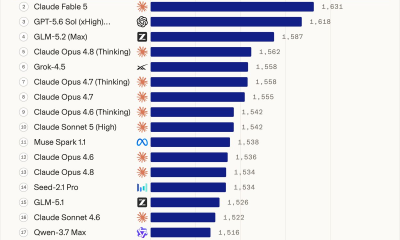
Claude Fable 5 Slips to Second in AI Coding Leaderboard
-

 News Videos6 days ago
Money | Class 12 Economics | CBSE Board Exam 2026-27
-

 Business7 days ago
Banco Bilbao Vizcaya Argentaria, S.A. (BBVA) Discusses Global Macro Environment and Economic Outlook for Core Markets Transcript
-

 Crypto World5 days ago
Kaspersky exposes OkoBot’s 20-module crypto wallet attack
-

 News Videos4 days ago
Big Money Is Entering XRP
-

 Business6 days ago
Airlines warn Sunshine Protection Act could disrupt flight scheduling
You must be logged in to post a comment Login