

Crypto World
5 Ways Crypto Markets Are Pricing SpaceX Before Wall Street Can

Five separate crypto venues are already pricing the SpaceX IPO ahead of its scheduled June 12 Nasdaq debut. Their numbers do not agree. The gap between them is wider than anything traditional brokerage screens will show on listing day.
The rocket company filed its S-1 prospectus with the Securities and Exchange Commission on May 20, 2026. The filing targets a $1.75 trillion valuation, a $75 billion raise, and a Nasdaq listing under the ticker SPCX.
Hyperliquid Set the Synthetic Price
Trade.xyz launched the SPCX-USDC synthetic perpetual on Hyperliquid through the HIP-3 framework on May 18, 2026.
The contract opened at a $150 reference price, calibrated to a $1.78 trillion valuation. It spiked to $216 within hours before settling at $202.89.
The day-one print hit $33 million in volume. On May 19 alone, the contract did another $7.1 million. SPCX-USDC confers no ownership of SpaceX shares.
Traders take long or short positions against an oracle-anchored reference, and funding rates pull the perp toward the oracle when positioning skews.
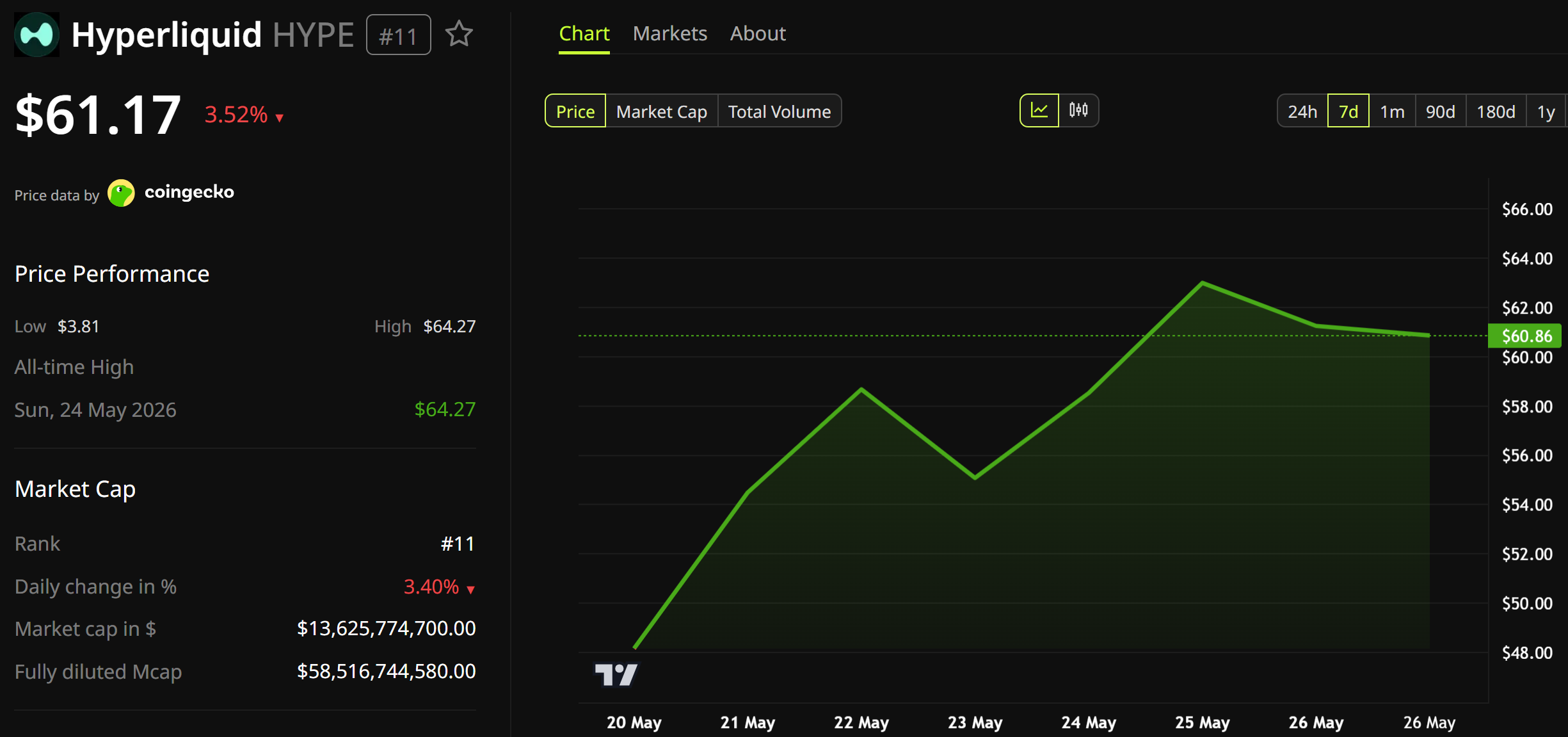
HYPE, the native Hyperliquid token, has closely tracked the perp. The token traded at $61.17 as of this writing, up by over 70% year-to-date.

Analyst conviction tied to Hyperliquid’s $200 billion valuation case has anchored the rally.
Centralized Exchanges Followed Quickly
Hyperliquid was first, not alone. Bitget launched a SpaceX pre-IPO perpetual with 5x leverage on May 22, 2026. OKX listed a USDT-settled SpaceX pre-market contract on May 7, two weeks before the S-1 hit. BingX rolled out its VNTL SpaceX-tracking token on April 10.
Binance pushed past $280 million in cumulative SPCX volume by late May. The exchange launched its OpenAI pre-IPO perpetual on May 26.
That cadence treats these synthetics as a recurring product category rather than a one-off event.
Four centralized venues with KYC requirements and a decentralized order book converged on the same product within five weeks.
That convergence puts the regulatory question on a clock measured in months, not years.
Polymarket Prices the SpaceX IPO Distribution
Polymarket and Kalshi capture the full probability distribution rather than a single number. As of May 26, Polymarket’s leading bucket for SpaceX’s closing market cap sits at $2.0 trillion to $2.5 trillion.

The implied probability is 39%, with the $1.5 trillion to $2.0 trillion bucket printing 26%.
Kalshi traders price a 92% chance of OpenAI filing for a 2026 IPO and 69% for Anthropic. The modal Polymarket outcome implies a 14% to 43% pop over the S-1 target on day one.
That spread is wider than the comparable Reddit or Klaviyo day-one ranges by a factor of two.
Polymarket’s stock-like behavior has been driven by exactly this kind of pre-event distribution trading.
Tokenized SPCX Arrives After the Bell
The fourth lane opens at the listing bell. Ondo Finance, Backed Finance, Dinari, and PreStocks have signaled they will list tokenized SPCX representations once shares start trading.
Ondo’s Global Listing model brings public equity tokens on-chain on the same day they list on the underlying exchange.
SPCX tokenized exposure could appear on Solana, Base, and Ethereum within hours of the June 12 New York open.
The same rails that handle gold and commodity tokens will carry SPCX. The tokens would offer 24/7 trading, fractional exposure, and composability with DeFi lending protocols.
The risk asymmetry is real. Earlier, OpenAI and Anthropic pre-IPO tokens on smaller venues fell more than 40%.
Both companies stated that unauthorized share transfers carry no economic value.
SpaceX’s 18,712 Bitcoin treasury
The most underdiscussed crypto angle sits inside the S-1 itself. SpaceX disclosed 18,712 BTC as of March 31, 2026. The position carries $661 million in historical cost and $1.29 billion in fair value, per the filing.
The company originally acquired 25,724 BTC in 2021 and has held a large position through the cycle.
SpaceX’s holdings rank among the top 10 corporate Bitcoin holders globally. The space firm holds more than Tesla’s 11,509 BTC and trails Strategy’s record holdings of 843,738 BTC.

Buying SPCX on June 12 means acquiring a $1.29 billion Bitcoin allocation embedded inside a $1.75 trillion equity.
For brokerage accounts that cannot hold spot BTC directly, the listing offers correlated exposure. The compliance team already understands the wrapper.
What the Spread is Telling Traders
Each crypto market pricing SPCX sits on the same unresolved question. Are these products unregistered securities, swaps, or something else entirely? US regulators have not answered publicly as of May 26, 2026.
State regulators in Texas and New York may be watching. No enforcement action is pending, and the Commodity Futures Trading Commission (CFTC) has not asserted jurisdiction over the SPCX synthetic stack.
If a regulator letter or enforcement filing lands before June 12, the entire synthetic complex reprices in days.
If nothing lands, the post-IPO tokenized wave goes live with structural ambiguity intact.
The Polymarket-Hyperliquid spread is what crypto retail thinks the bookrunners are missing.
The post 5 Ways Crypto Markets Are Pricing SpaceX Before Wall Street Can appeared first on BeInCrypto.

Several Bitcoin mining stocks rallied Tuesday, reflecting a broader equity surge driven by optimism around artificial intelligence productivity gains as more miners pivot toward AI and high-performance computing workloads.
In addition to TeraWulf (WULF), which rallied by as much as 17% on news of a Kentucky data center acquisition site, Hut 8 (HUT), IREN (IREN) and Riot Platforms (RIOT) closed more than 5% higher on the day.
The rally underscores growing investor enthusiasm for Bitcoin miners that are repurposing parts of their energy infrastructure and data center capacity to support AI and high-performance computing applications — businesses viewed as potentially more stable and lucrative than crypto mining alone.
The gains came as the S&P 500 index hit fresh record highs above 7,500, led by a sharp rally in information technology and semiconductor stocks.
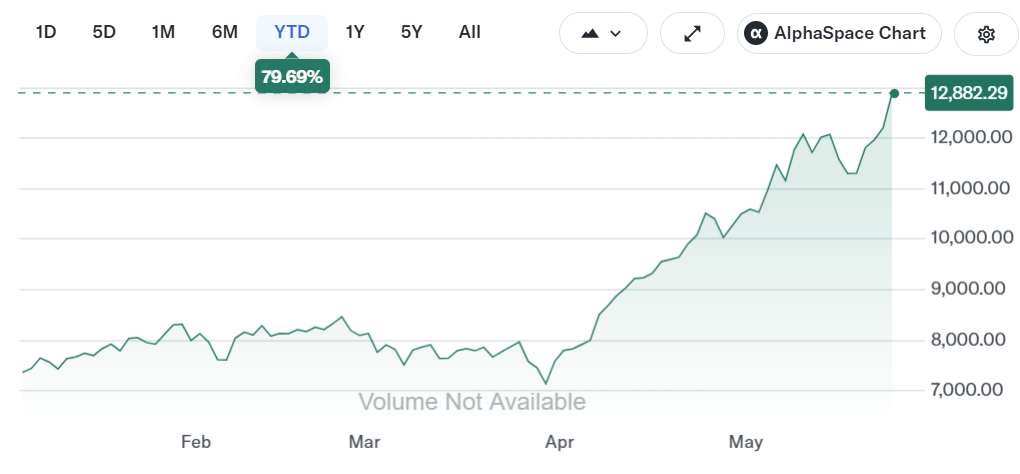
The Philadelphia Semiconductor Index, which tracks the performance of major US chipmakers and semiconductor companies, surged 5.6% on Tuesday and is now up nearly 77% this year.
Year-to-date returns for the Philadelphia Semiconductor Index (SOX).
Source: Yahoo Finance
The semiconductor boom has also boosted sentiment around Bitcoin miners expanding into AI infrastructure, given their access to large-scale power capacity and data center operations needed to support high-performance computing.
Related: The real ‘supercycle’ isn’t crypto, it’s AI infrastructure: Analyst
Bitcoin miners emerge as AI infrastructure players
The link between Bitcoin miners and the AI infrastructure buildout is becoming increasingly pronounced as miners leverage their large-scale power access and data center expertise to support high-performance computing workloads.
Recent research from Bernstein found that 11 publicly traded Bitcoin miners control a current and projected power portfolio of roughly 27 gigawatts — a resource analysts believe could become critical as demand for AI data centers accelerates.
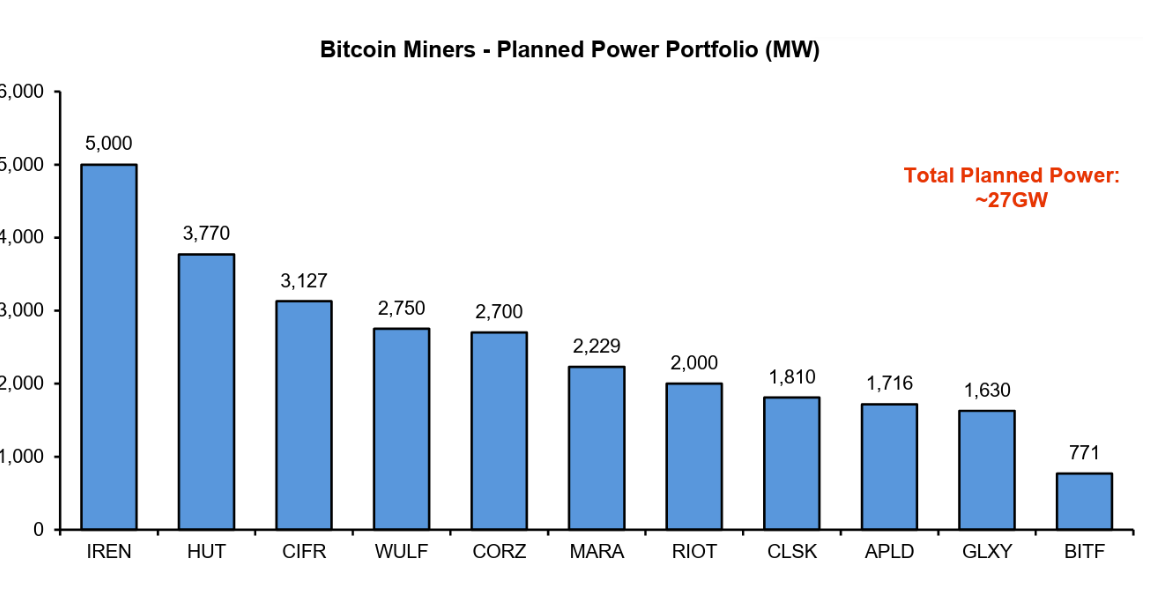
11 public Bitcoin miners have a planned power portfolio of roughly 27 gigawatts. Source: Bernstein
The report posited that access to reliable electricity, rather than semiconductors alone, is emerging as the primary bottleneck for scaling AI infrastructure. That dynamic positions Bitcoin miners as strategic partners for hyperscalers and AI companies seeking ready-made power capacity and operational infrastructure.
In a separate note, Bernstein analysts said the shift is already evident among large-scale miners, citing IREN as an example of a company increasingly pivoting away from Bitcoin mining toward AI infrastructure. The firm pointed to IREN’s recent agreement with Microsoft, which Bernstein estimates could support an annualized revenue run rate of roughly $3.7 billion for the company’s AI cloud infrastructure business.
Related: CoreWeave’s $8.5B loan shows how AI is replacing crypto mining finance
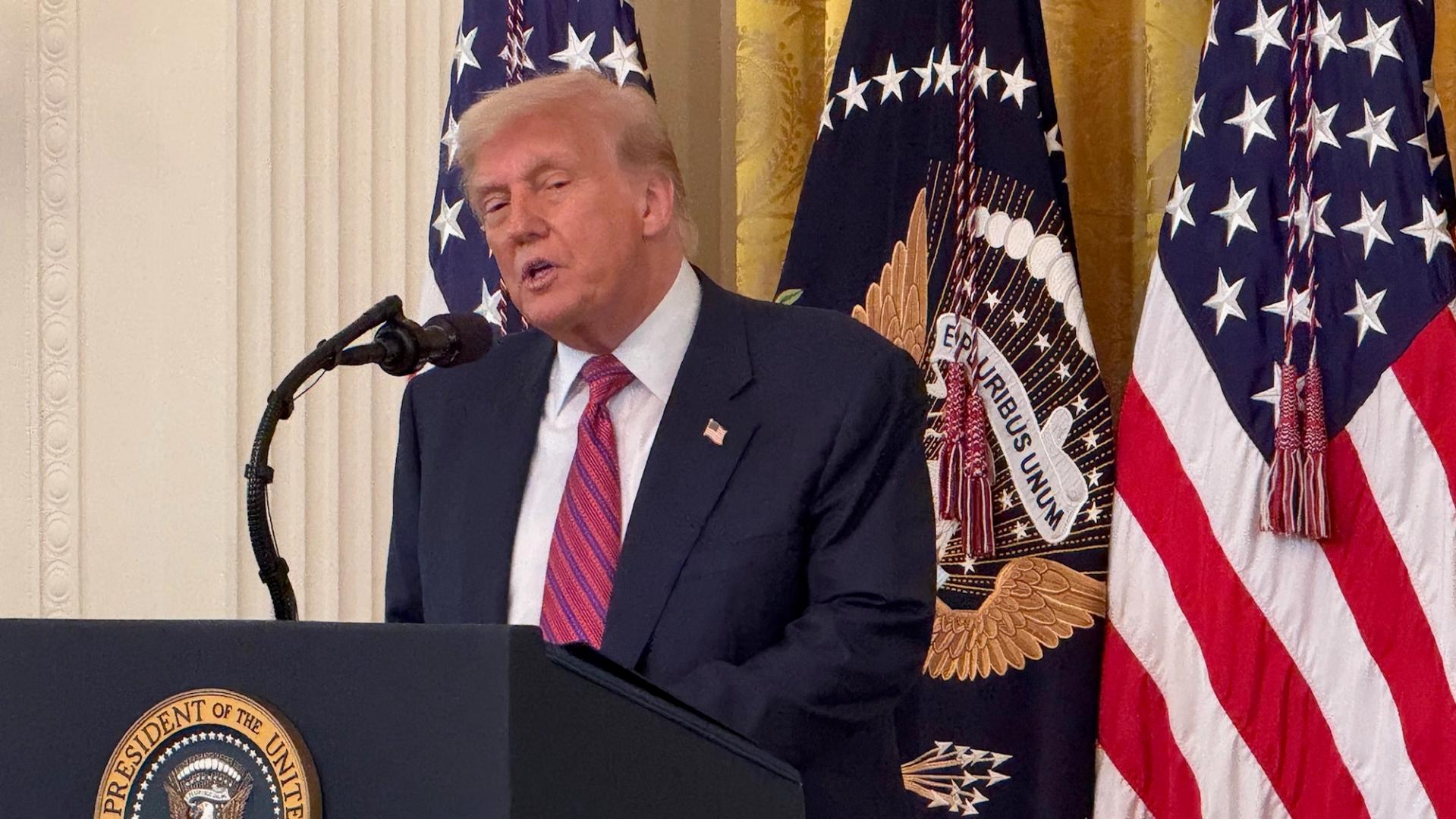
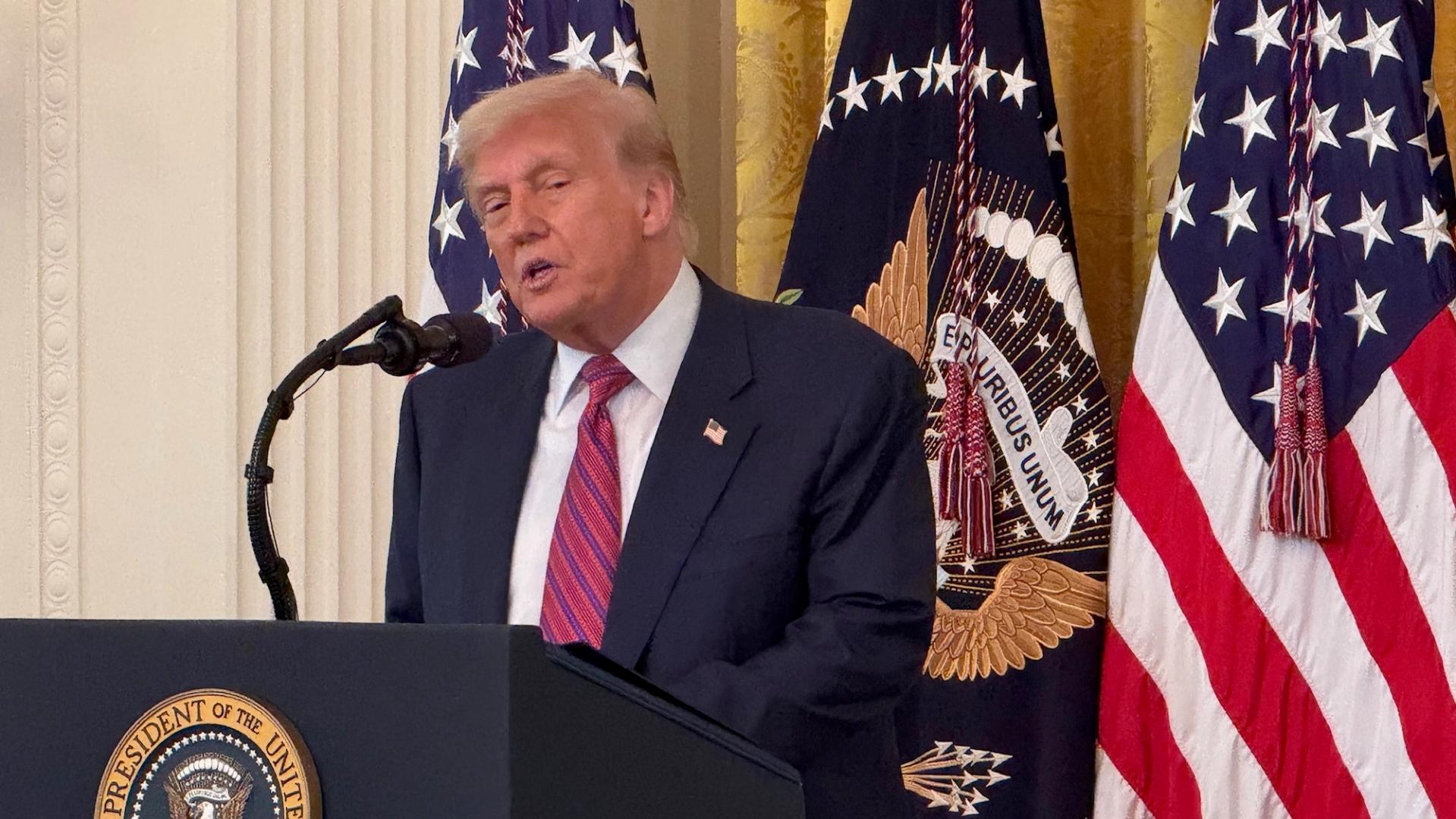
U.S. President Donald Trump said it was “critically important” that the CFTC keep “exclusive authority” over prediction markets, echoing CFTC Chair Michael Selig in a post on Truth Social, his social media platform, late Tuesday afternoon.
“Under my leadership, we are setting ‘rules of the road’ that are the Gold Standard for the States,” he posted. “We cannot have SCUM like Chris Christie, Letitia James, Tim Walz, and JB Pritzker setting the rules!”
Former New Jersey Governor Chris Christie has defended states’ authority to regulate gambling products, which he likened to prediction markets, on various occasions.
New York Attorney General Letitia James filed lawsuits similarly alleging that some prediction markets are violating state gambling laws; Illinois, headed by Governor J.B. Pritzker, sent a cease-and-desist; and Minnesota Governor Tim Walz last week signed a law enforcing criminal penalties for operating prediction markets.
The CFTC, led by Selig as the sole commissioner on the agency, has filed lawsuits and amicus briefs against various states, including the ones tied to the officials mentioned by Trump, defending its jurisdiction over prediction markets.
At the heart of the legal dispute is the question of whether prediction market contracts tied to sports and entertainment are really just gambling products dressed up as a novel financial instrument. The CFTC has taken the position that all prediction market contracts offered by regulated designated contracts markets (DCMs) fall under its jurisdiction, and that states do not have the right to infringe on that.
States, meanwhile, have taken the position that these contracts are actually gambling, and therefore should be supervised by state gaming regulators or banned entirely in states that don’t allow such products.
Court cases have gone up to the federal appellate court level, and the issue is likely to appear before the U.S. Supreme Court at some point.
Beyond states
“Other Countries are after this new form of Financial Market, and we want to remain at the top,” Trump’s post continued.
A number of countries have recently banned prediction markets from operating within their borders, including Indonesia, Spain and India in the past week.
The U.S. government is also probing prediction markets, with a House of Representatives committee investigation being confirmed last week.
Over the weekend, The New York Times reported that the CFTC, under former Acting Chairman Caroline Pham, sidelined officials at the agency who raised concerns about approving crypto and other companies — specifically with ties to Trump’s family businesses — that had applied for DCM approvals.
Neither the CFTC nor a spokesperson for Moonpay, Pham’s current firm, immediately returned a request for comment on the article.
Trump’s family has ties to various prediction market providers, with Donald Trump Jr., one of the president’s sons, acting as an adviser to both Polymarket and Kalshi. Gemini, the crypto exchange launched by Cameron and Tyler Winklevoss, both public Trump supporters, also launched a prediction market platform and filed to self-certify parlay-type contracts late last week.
Trump also referred to his campaign trail pledge to make the U.S. the “crypto capital” in his post on Wednesday.
“Likewise, and even more importantly, where we are currently the Crypto (Bitcoin, etc.) Capital of the World, other Countries are trying diligently to replace us in that capacity, but we won’t let that happen,” he posted.
UPDATE (May 26, 2026, 21:56 UTC): Adds links throughout.
SpaceX has received a $2.29 billion contract from the US Space Force to build a major military satellite communications network known as the “Space Data Network Backbone” (SDN Backbone). The project will create a secure, high-speed system for moving military data around the world using low-Earth-orbit satellites.
The contract requires SpaceX to deliver a working prototype by the end of 2027. According to the Space Force, the network will use optically linked satellites to provide faster and more resilient communications for US military operations.
Elon Musk’s SpaceX Will Build US Military Satellite
The SDN Backbone is part of a broader Pentagon effort to modernize military communications and missile defense systems.
The network is expected to support the US military’s “Golden Dome” defense architecture by connecting satellites, sensors, and interceptors in real time.
The project also shows how deeply SpaceX has become involved in US national security infrastructure. Recent budget documents indicate the Space Force plans to spend billions more on the wider Space Data Network program in the coming years.
Which Stocks Could Benefit?
With SpaceX’s highly anticipated IPO approaching, several publicly traded defense and space companies could benefit from rising military spending on satellites, missile defense, and secure communications.
Some companies may gain directly through future contracts. Others could benefit from investor interest in the growing defense-space sector.
Company
Ticker
Why It Could Benefit
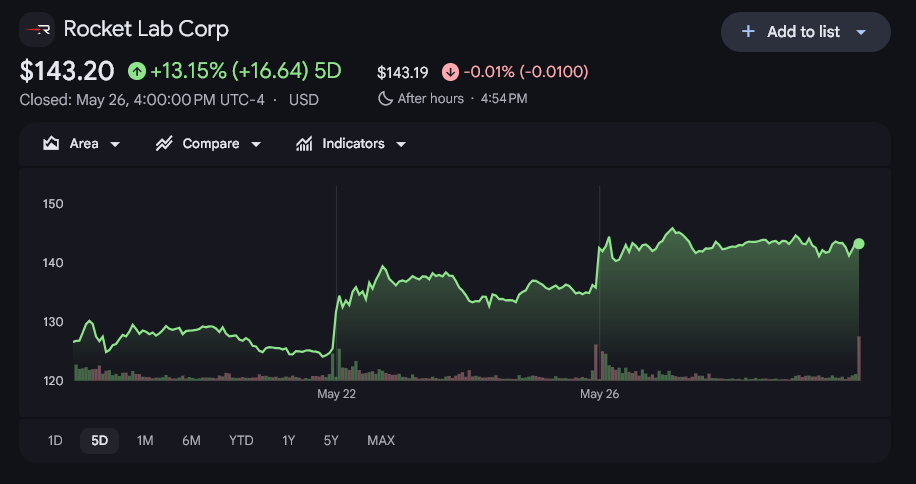
Rocket Lab USA Inc.
RKLB
Strong exposure to military satellites and launch services
Northrop Grumman Corporation
NOC
Major defense-space contractor with satellite communications work
Lockheed Martin Corporation
LMT
Expected to benefit from Golden Dome missile defense programs
RTX Corporation
RTX
Supplies missile defense and military communication systems
The Boeing Company
BA
Has large defense and space operations tied to Pentagon programs
L3Harris Technologies Inc.
LHX
Focused on military communications and tactical systems
Viasat Inc.
VSAT
Provides satellite communication services for defense clients
Iridium Communications Inc.
IRDM
Operates global satellite communication networks
Firefly Aerospace
FLY
Expanding into missile defense and military space systems
York Space Systems
YSS
Builds satellites linked to Space Force projects

Growing Military Space Race
The Space Data Network reflects a larger shift in US defense strategy. Instead of relying on a few expensive satellites, the Pentagon now wants massive networks of smaller connected satellites that can move data faster and survive attacks more easily.
That shift could create long-term opportunities for defense, satellite, and aerospace companies across the US market.
The post SpaceX Wins $2.29 Billion US Space Contract, and 10 Assets Can Benefit appeared first on BeInCrypto.

Former New York Fed President Bill Dudley warned on Tuesday that the central bank risks losing credibility. He pointed to five years of inflation running above the 2% target.
Dudley said inflation expectations could become unanchored. The warning lands as Kevin Warsh begins his first week as Fed Chair under political pressure for lower rates.
Five Years Of Slipping Above Target
The Fed adopted its formal 2% inflation goal in January 2012. The central bank then spent most of the next decade trying to push prices up toward that level.
That picture flipped in early 2021, when pandemic-driven supply shocks and fiscal stimulus drove prices sharply higher.
By March 2026, headline personal consumption expenditures inflation reached 3.5% year over year. The core measure stood at 3.2%. Both readings remain elevated after roughly 60 months of overshoots.
Dudley pointed to the resilience of US growth as the harder problem. Policy rates have stayed above 4% since late 2022 while the labor market remains firm.
Follow us on X to get the latest news as it happens
He questioned whether the current settings are restrictive at all. Bond traders have echoed that doubt as markets defy central bank signals on the path of rates.
Neutral Rate And A New Chair
Dudley made the comment on Bloomberg’s Surveillance program, arguing that structural forces have likely raised the neutral interest rate.
Heavy capital spending tied to artificial intelligence and elevated federal borrowing may be lifting the real return investors demand.
If true, monetary policy is looser than the Fed assumes.
“I think the case for cutting rates now is actually very, very weak,” he said.
Long-run survey measures have ticked up, including the University of Michigan reading on 5 to 10-year expectations.
Governor Chris Waller’s preferred two-year forward gauge has also drifted higher. That signals household and business pricing behavior is shifting.
Kevin Warsh was sworn in as Chair on May 22 after the narrowest Senate confirmation vote on record. He has framed inflation as a choice the central bank can deliver against.
“Yeah. So, I believe what Milton and you just channeled, which is inflation is a choice. Uh, as you said at the beginning of this setup, inflation and ensuring [price stability]…Not only is inflation a choice, but a sound dollar is also a choice…Inflation is a choice, and the Fed must take responsibility for it,” he emphasized.
The Test Ahead
President Donald Trump has pushed openly for lower rates. Warsh’s slim confirmation margin leaves limited room for missteps. Some analysts already warn against rate cuts until the inflation path is clearer.
The next personal consumption expenditures release, due in late June, will be the first read on Warsh’s tenure.
A move toward 2% would buy time. Another miss would put Dudley’s warning at the center of the policy debate.
Subscribe to our YouTube channel to watch leaders and journalists provide expert insights
The post Bill Dudley Has a Warning for the Fed as Kevin Warsh Inherits a Inflation Mess appeared first on BeInCrypto.
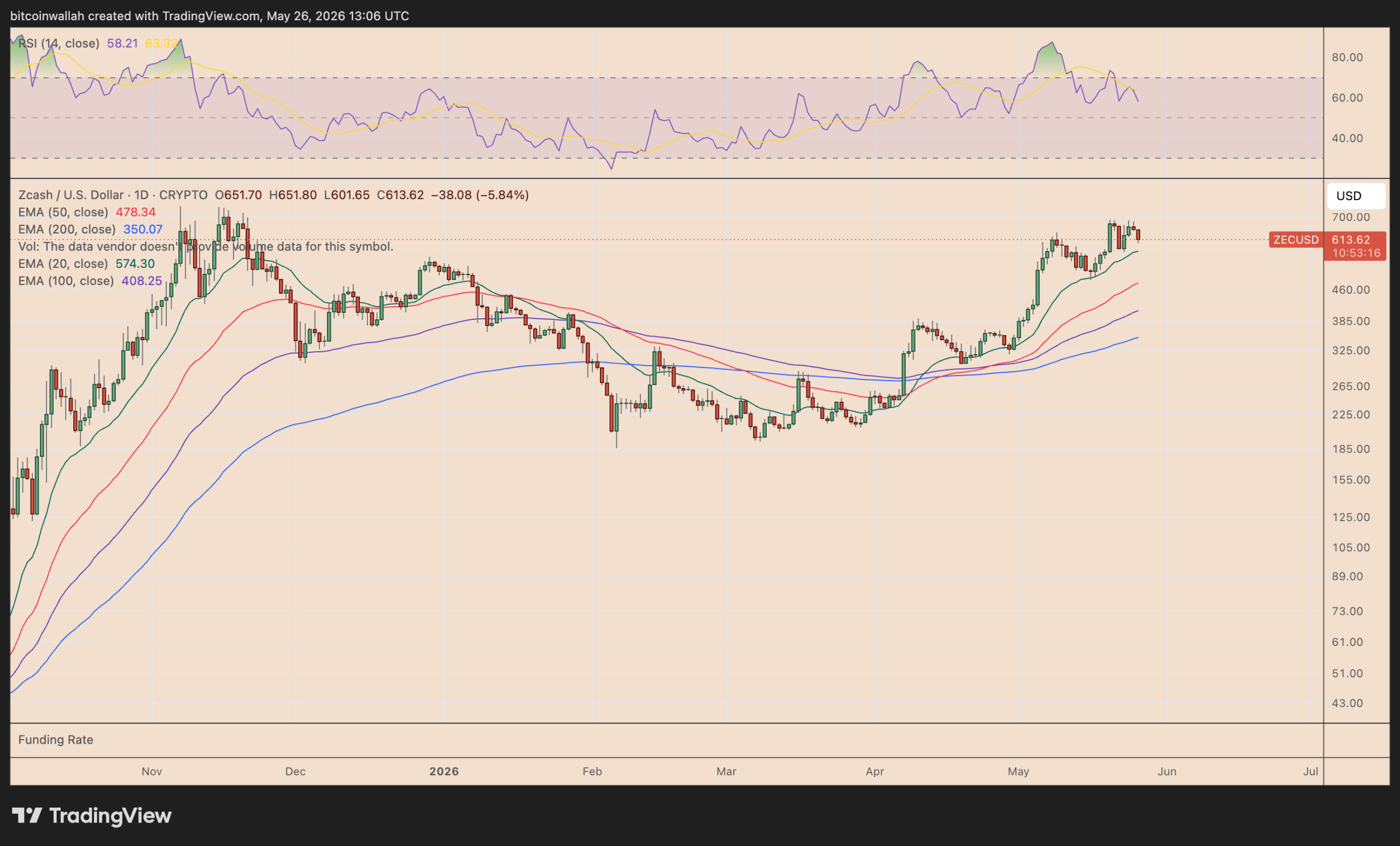
Near Protocol’s native token, NEAR, has the potential to grow 20x by 2027, according to Arthur Hayes, co-founder of the crypto derivatives exchange BitMEX.
Key takeaways:
- Hayes said NEAR Intents could make privacy coins like Zcash more usable across blockchains without bridges or multiple wallets.
- NEAR has surged more than 90% since Hayes publicly highlighted the token alongside ZEC and HYPE in May.
NEAR makes privacy coins like ZEC usable: Hayes
Speaking on The Rollup podcast, Hayes said NEAR’s bullish case rests on NEAR Intents, a feature that lets AI agents move assets privately across blockchains without dealing with bridges, multiple wallets or fragmented liquidity.
The same infrastructure also supports NEAR’s broader AI-agent thesis, where autonomous apps can execute payments and trades on-chain.
Hayes linked NEAR’s upside to Zcash (ZEC), the privacy-focused cryptocurrency that has rallied more than 1,000% over the past year and revived investor interest in private money.
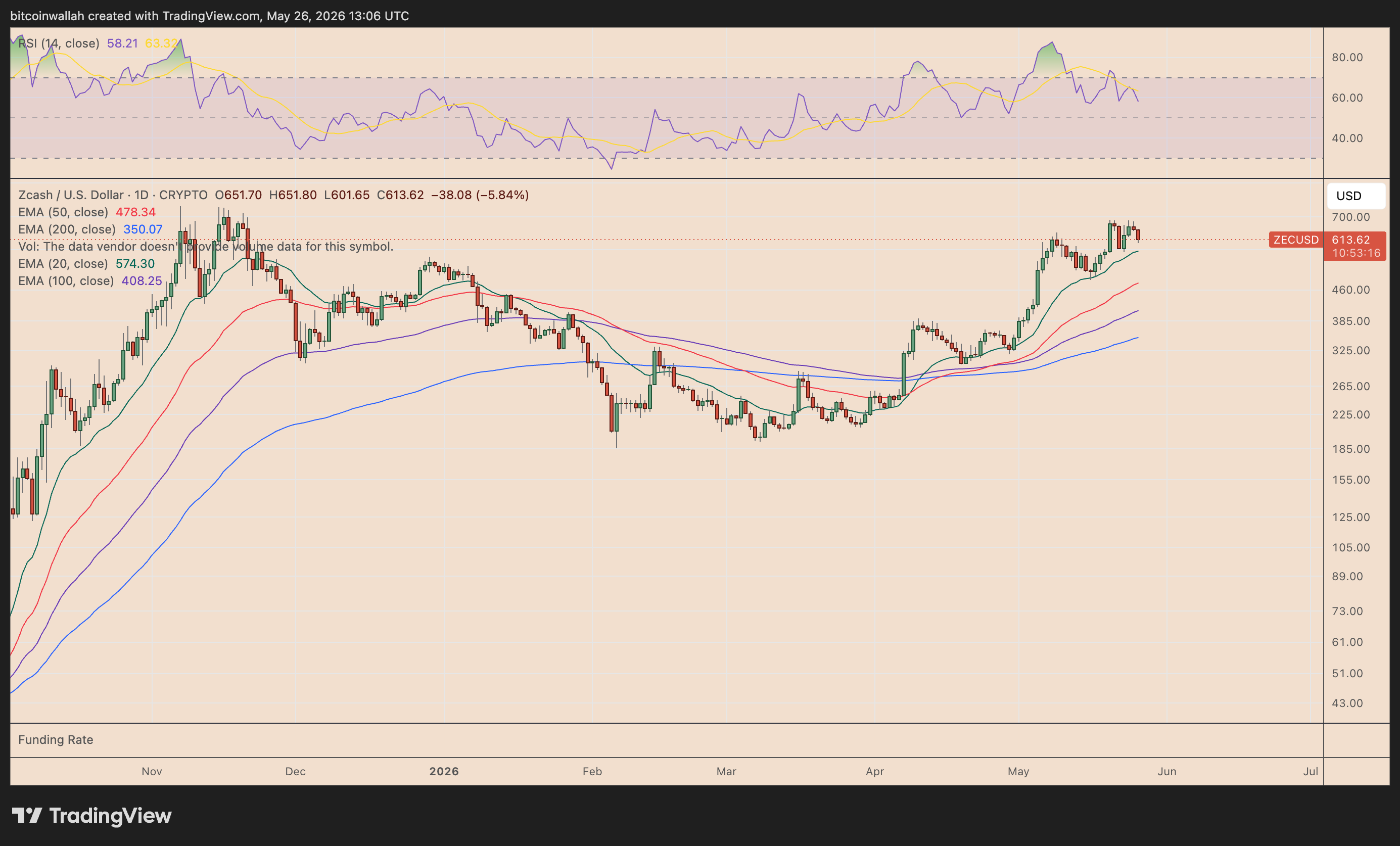
ZEC/USD daily chart. Source: TradingView
He said Near Protocol could become the next major beneficiary of that trend because it helps make private tokens like ZEC usable beyond a single blockchain, allowing users to move value across the broader crypto economy.
“I can now send any crypto asset I want to anyone across the internet in an anonymous way from shielded Zcash using Near Intents,” Hayes said, adding:
“I think NEAR has a 20x potential, where you know Zcash might have a 5x potential over the next year.”
Hayes’ NEAR calls echo his Zcash rally playbook
Hayes’ remarks add to a string of bullish NEAR endorsements from Hayes.
In a May 11 essay, Hayes explicitly positioned NEAR as one of his top speculative bets alongside ZEC and Hyperliquid’s native token, HYPE.
He reinforced that view in a May 22 post earlier this week, calling HYPE, ZEC and NEAR “the holy trinity.”
NEAR’s price has grown by over 90% since Hayes began publicly highlighting the token, as shown below.
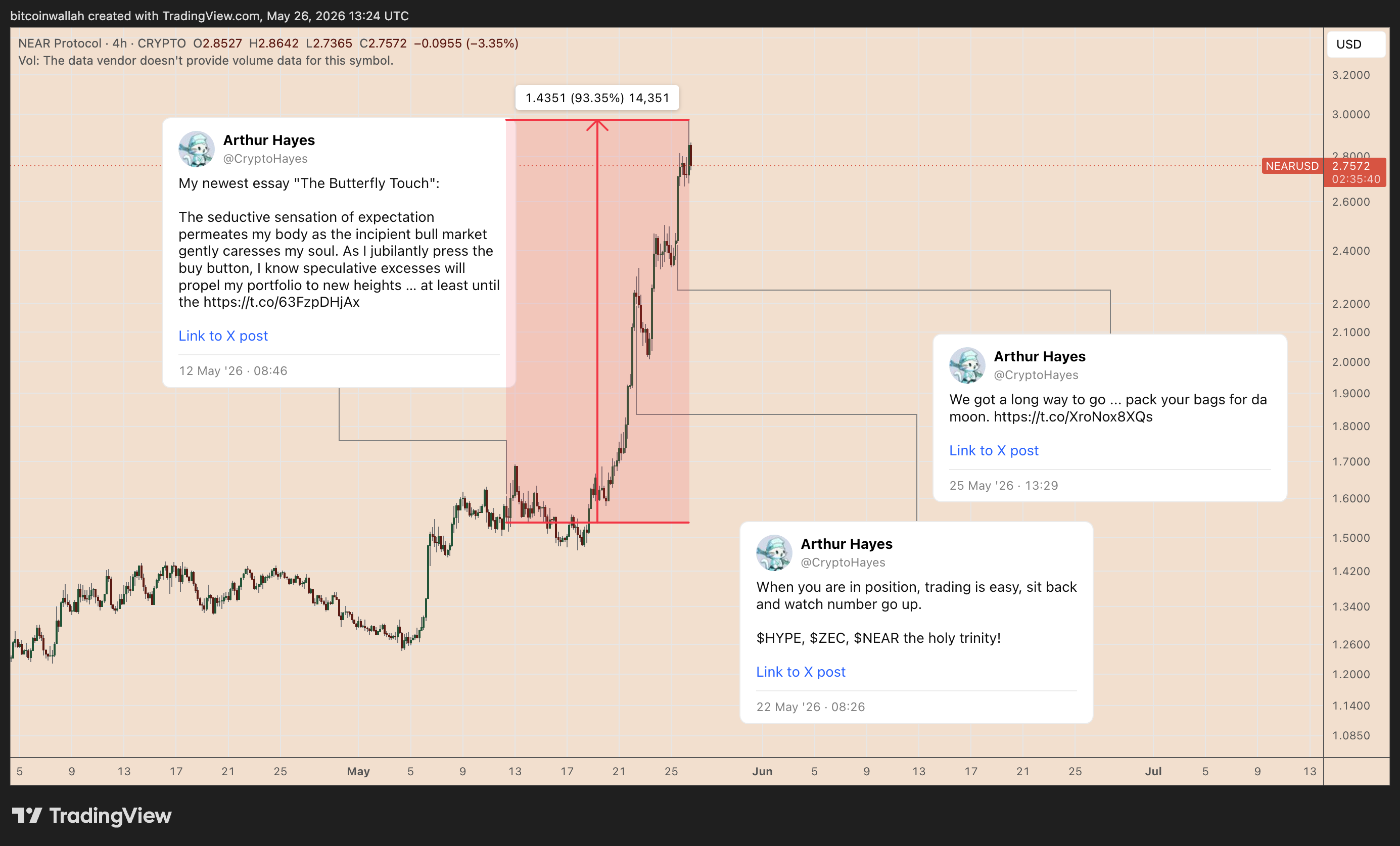
NEAR/USD four-hour chart. Source: TradingView
Hayes’ endorsements have historically attracted significant attention from traders, as evidenced by his 2025 Zcash posts.
Related: Zcash is ‘running its own bull market’ as ZEC price paints 88% rally setup
In October 2025, Hayes’ bullish commentary, including “ZEC to $10k” and naming it a core holding, acted as a major upside catalyst. ZEC delivered over 350% gains in the following weeks.
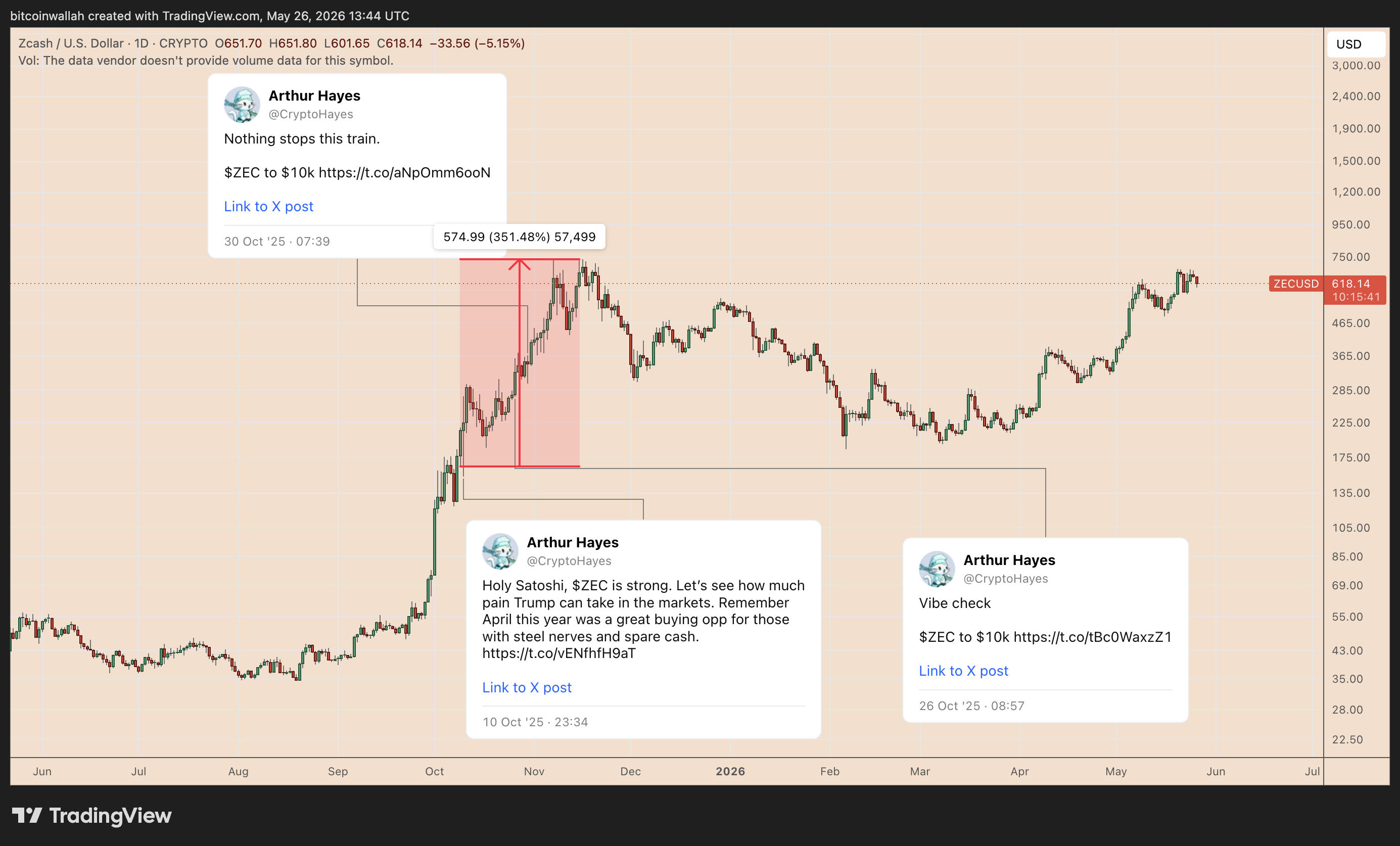
ZEC/USD daily chart. Source: TradingView
NEAR fractal hints at 35% rally next
NEAR’s current breakout is starting to resemble its 2023–2024 recovery setup, when it bounced from the $0.91–$0.99 range before rallying by about 250%.
For instance, in 2026, NEAR has rebounded from the same $0.91–$0.99 bounce zone, while its daily relative strength index (RSI) has surged to around 88, showing aggressive buying pressure.
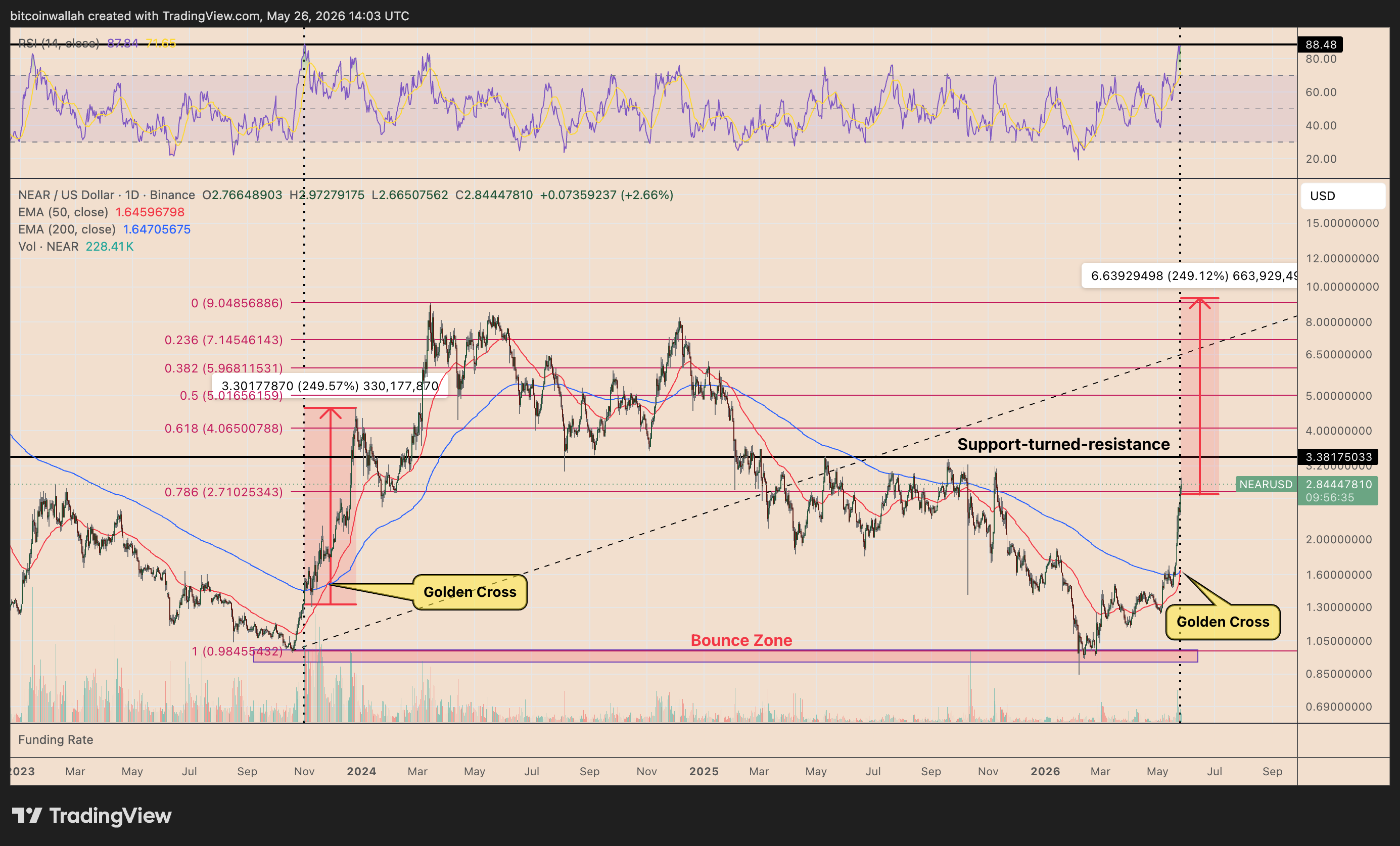
The token has also formed a golden cross, a bullish signal where the shorter-term moving average rises above the longer-term one.
In NEAR’s case, the 50-day exponential moving average (50-day EMA, the red line) at around $1.646 has been moving above the 200-day EMA (the blue line) at around $1.647.
Traders often view this as an early sign that a downtrend may be turning into a sustained uptrend.
The first major upside target sits near $3.38–$4.00, a former support zone that may now act as resistance. The $4 target sits roughly 35% above current prices and could become NEAR’s next test if the breakout holds.
A decisive move above $4.00 would strengthen the 2023–2024 fractal and open the door to a 250% rally toward the $9–$10 area in 2026.
Conversely, failure to reclaim the $3.38–$4.00 zone may lead to a sharp bearish reversal toward the 50- and 200-day EMAs. That would amount to roughly 45% downside from current levels.
Bitcoin (BTC) saw flash volatility around Tuesday’s Wall Street open as US-Iran nerves rocked risk assets.
Key points:
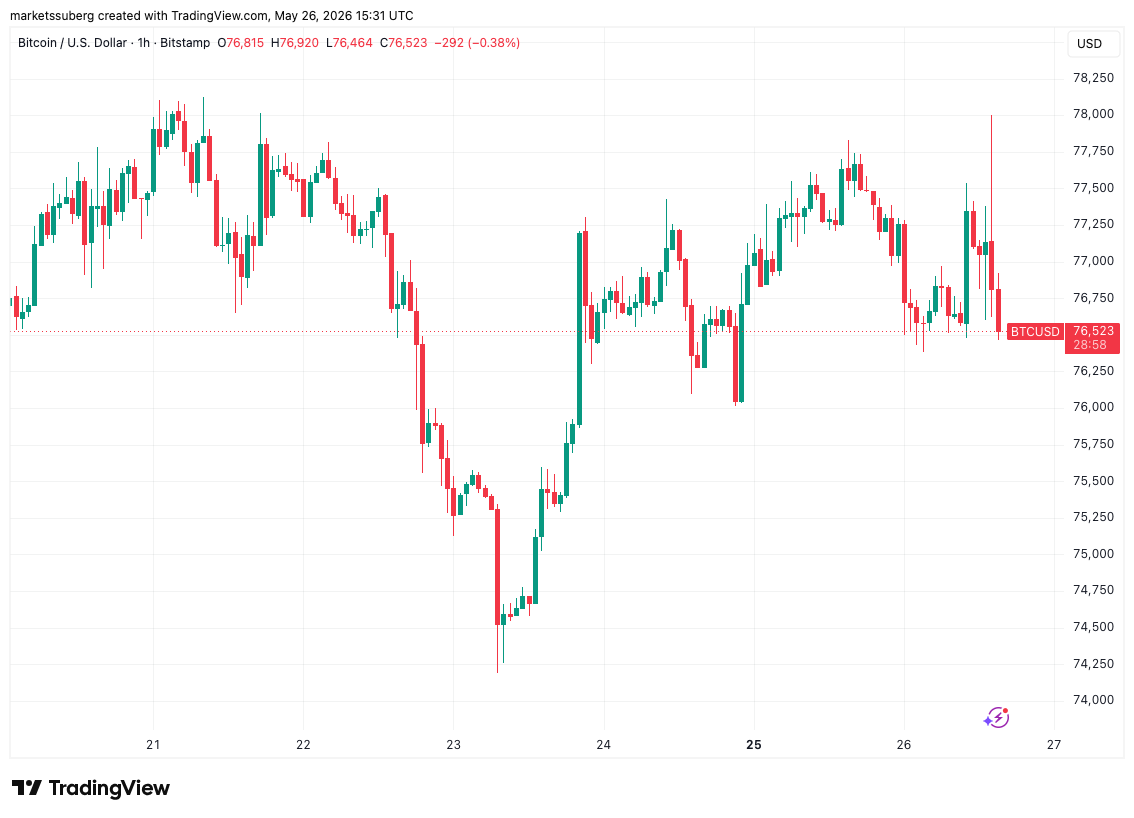
- Bitcoin briefly taps $78,000 as volatility returns to markets at the Wall Street open.
- US stocks hit new all-time highs, while crypto continues to underperform.
- Positive funding rates spark fresh warnings over Bitcoin’s immediate outlook.
Bitcoin neutralizes longs and shorts in volatile moves
Data from TradingView showed BTC/USD hitting $78,000 — its highest since Thursday — before abruptly heading lower.
BTC/USD one-hour chart. Source: Cointelegraph/TradingView
In doing so, the pair liquidated both short and long positions, with the 24-hour total at $66 million, per CoinGlass.
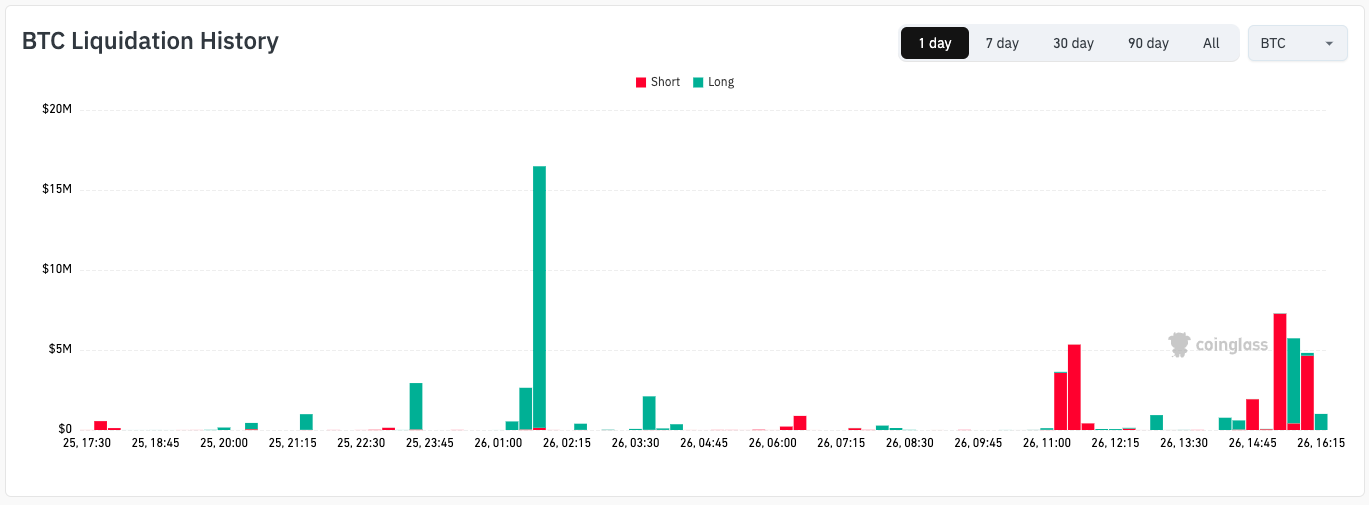
BTC liquidation history (screenshot). Source: CoinGlass
Macro events once again drove the market, with US strikes on Iran calling the latest peace deal attempt into question.
WTI crude oil headed toward $95 per barrel, while US stock markets again shook off the concerns, hitting new all-time highs and continuing a trend of strength seen last week.
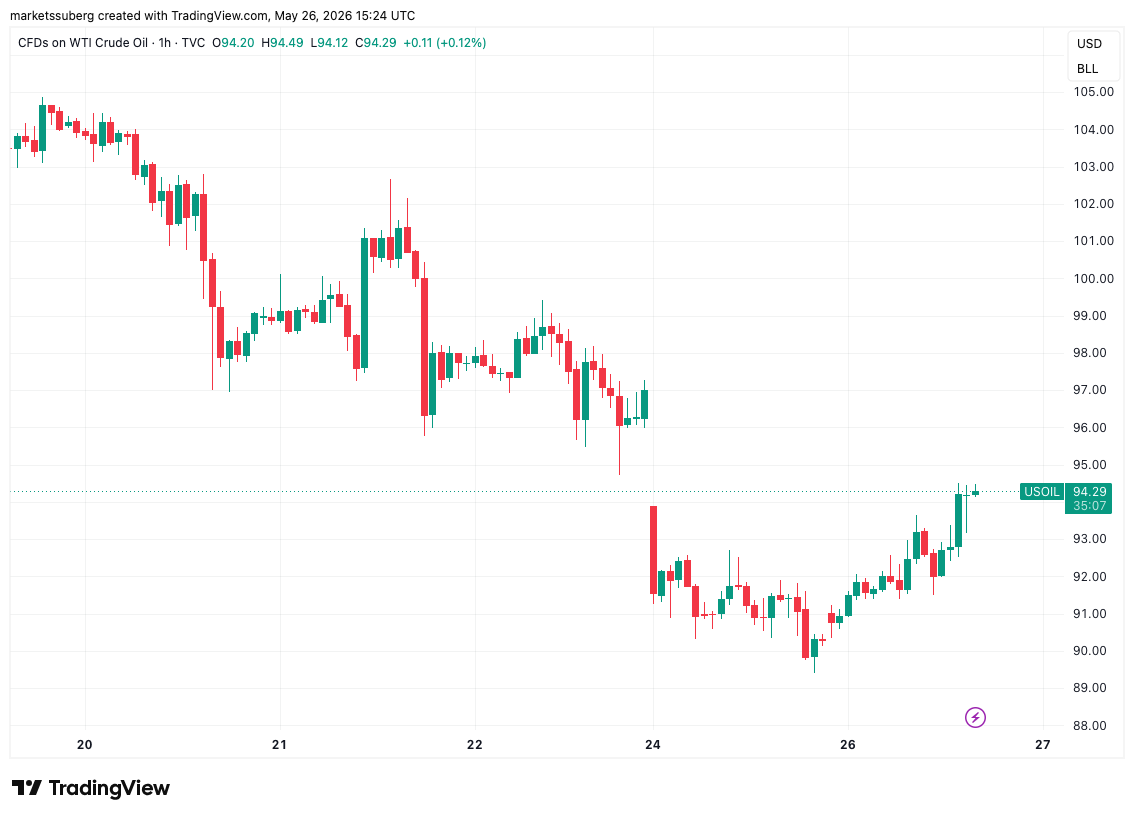
CFDs on WTI crude oil one-hour chart. Source: Cointelegraph/TradingView
Commenting, trading resource Material Indicators said that BTC price action “remains driven by liquidation hunts.”
“Purple Whales are not suddenly flipping macro bullish for fundamental reasons – they are swing trading the range in low timeframes,” it explained in a post on X alongside a chart of Binance order-book liquidity.
“The bid liquidity at ~$75.5k is attempting to protect key support at the 21 WMA.”
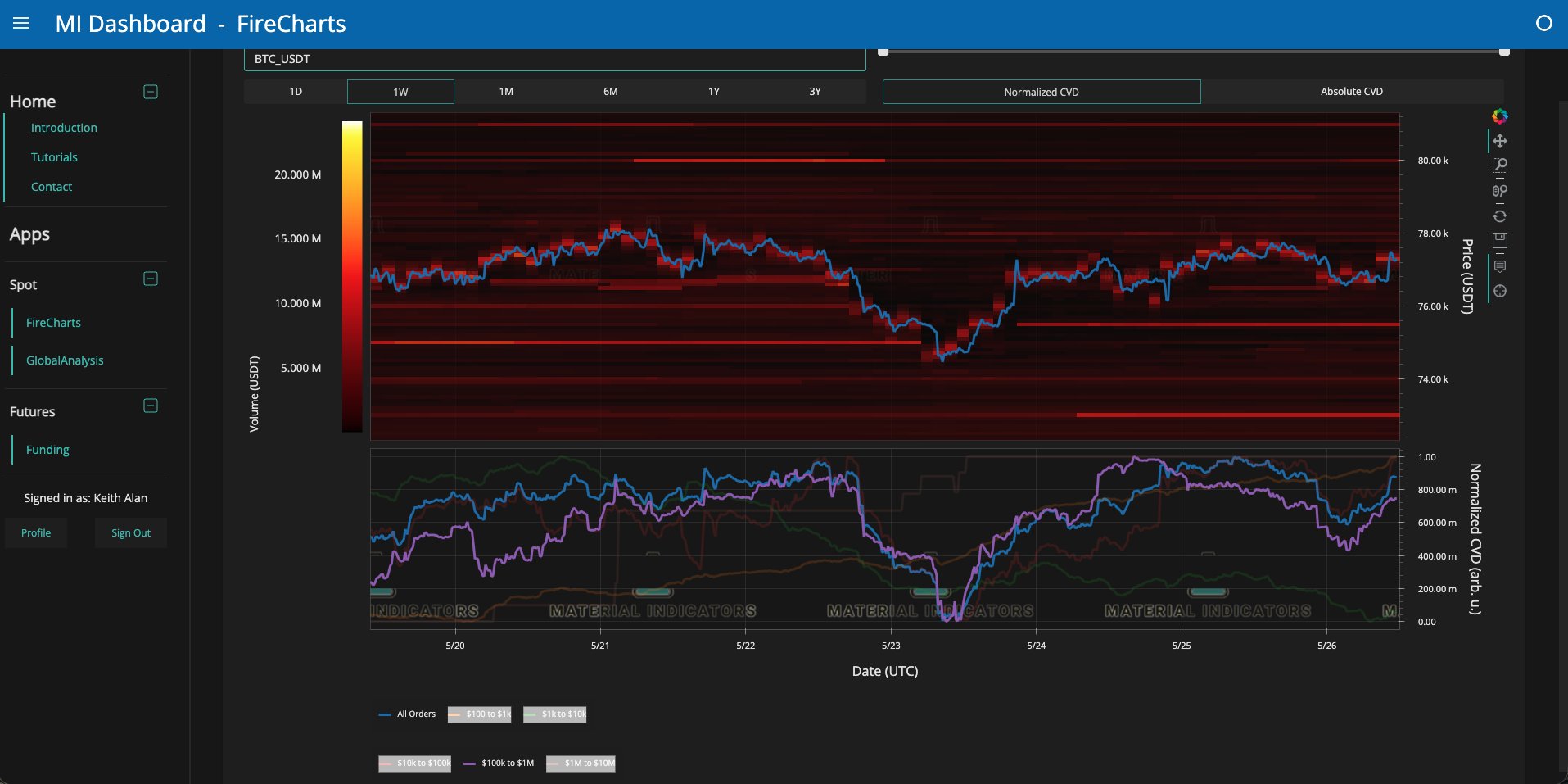
BTC/USDT order-book liquidity data. Source: Material Indicators/X
Material Indicators referenced Bitcoin’s 21-week simple moving average at $75,800, one of several nearby trend lines on the radar.
Continuing on the topic, trader Daan Crypto Trades noted that the “biggest” cluster of liquidity below price was at $74,000.
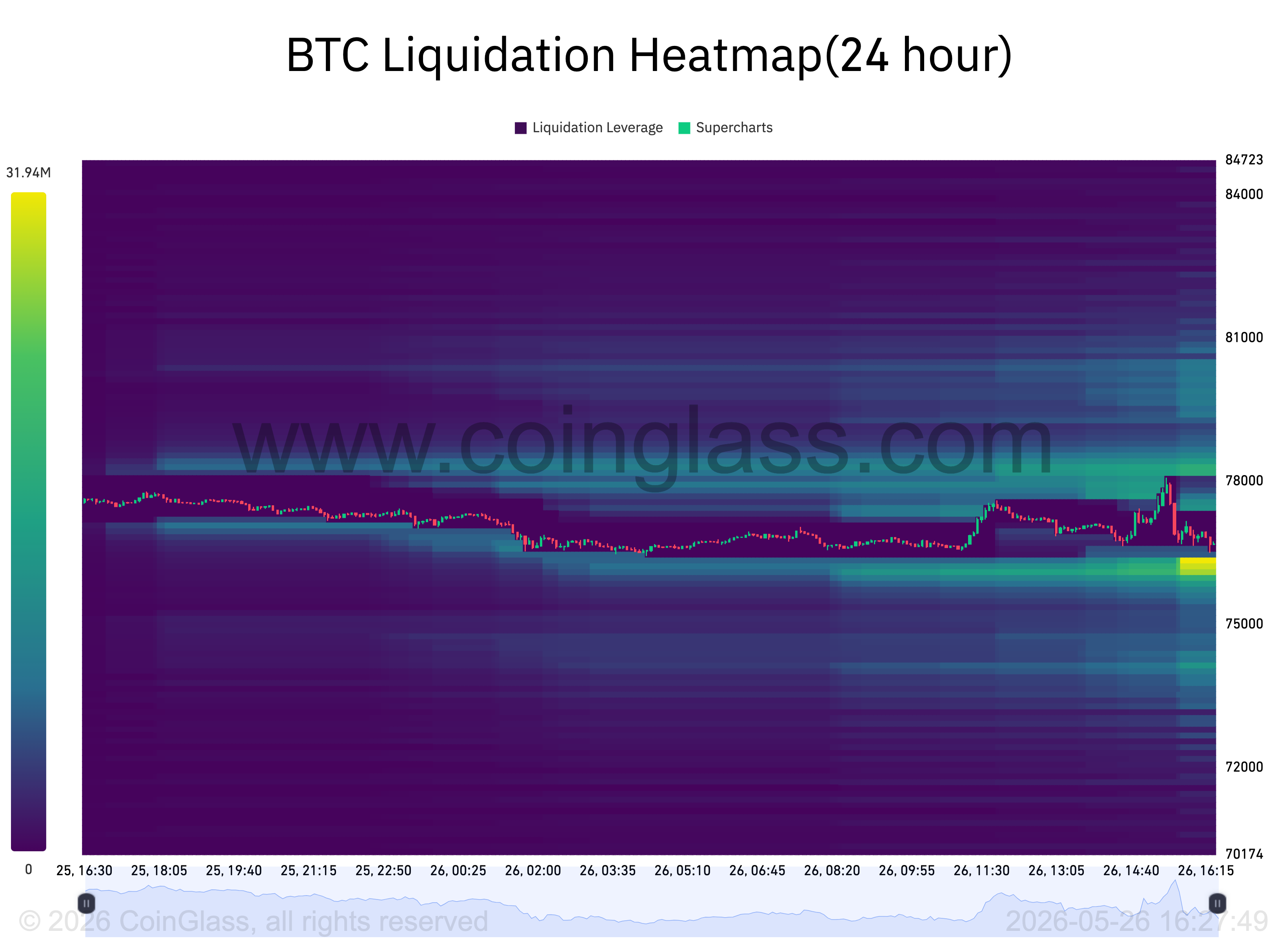
BTC liquidation heatmap. Source: CoinGlass
Funding rates see “sharp reversal” versus April
In a potential warning to bulls, onchain analytics platform Glassnode drew attention to rising funding rates on the day.
Related: Here’s what happened in crypto today
Previously negative, these were now “decisively positive,” it reported, as BTC long interest increased.
“The move marks a sharp reversal from April’s heavily short-biased positioning,” Glassnode told X followers.
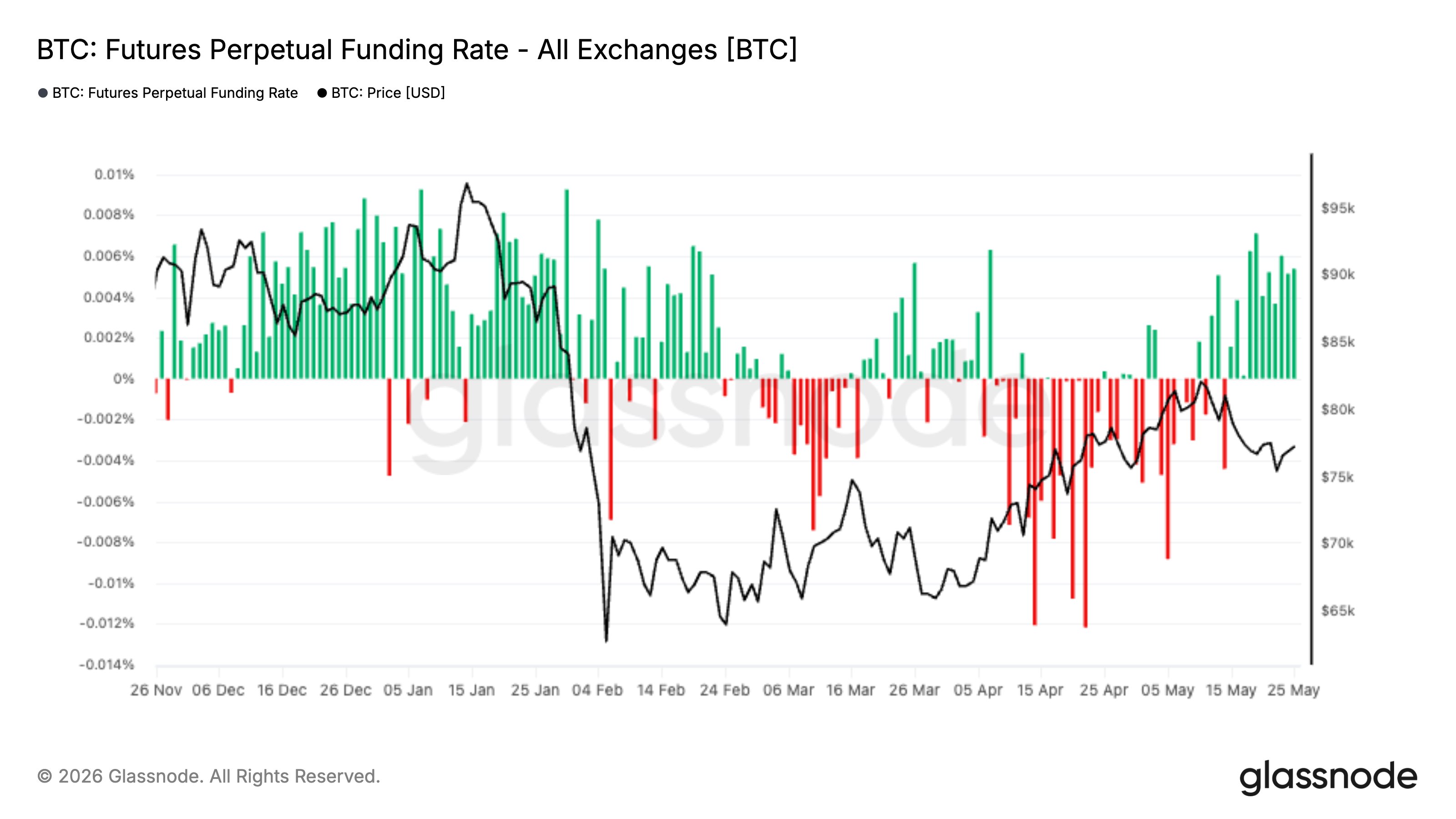
Bitcoin futures funding rates. Source: Glassnode/X
Overall trading activity, however, remained comparatively modest, crypto analytics resource K33 Research noted.
“Bitcoin has spent the past week consolidating and trading broadly flat, while activity across crypto markets remains muted. Weekly spot volumes are approaching yearly lows, derivatives activity continues to decline across both CME and offshore venues, and open interest has largely stagnated,” head of research Vetle Lunde wrote in its latest Ahead of the Curve update.
“At the same time, realized and implied volatility have drifted toward historically low levels, reinforcing a broader wait-and-see environment with subdued participation and limited market conviction.”
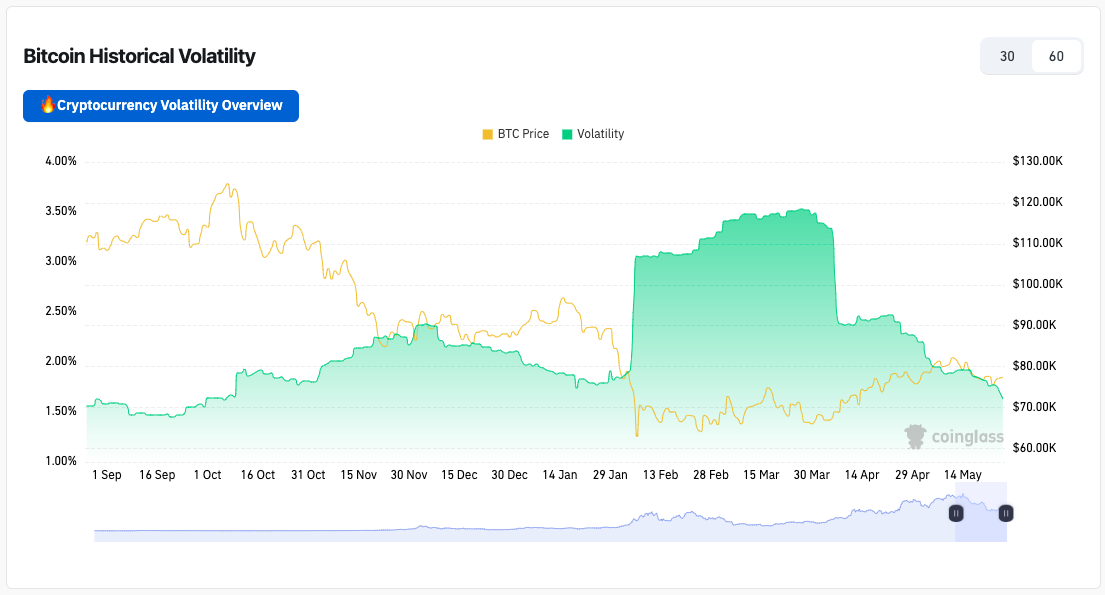
Bitcoin historical volatility (screenshot). Source: CoinGlass


Former New York Fed chief Bill Dudley has warned that the Federal Reserve risks losing its credibility as an inflation fighter after more than five years of missing its 2% target, just as new Fed Chair Christopher Waller is trying to convince markets he can still anchor expectations.
Summary
- Dudley argues that with inflation running above 2% for more than five consecutive years, the Fed’s claim to be an effective inflation fighter is now “at risk of being lost.”
- He warns that inflation expectations could become “unanchored” if the Fed keeps behaving as if policy is restrictive when, in his view, it is “not restrictive at all.”
- The comments come as Chair Waller publicly concedes that renewed rate hikes are back on the table if inflation and expectations do not turn down soon.
According to coverage of Dudley’s recent remarks, the former New York Fed president said the “most remarkable thing about the last five years” is that inflation has consistently run above target, yet the Fed has behaved as though it has already done enough and can safely talk about cuts. In an earlier column and subsequent interviews, Dudley argued that the neutral interest rate, or r*, is “a lot higher than the Fed recognizes,” which means real policy is not as tight as officials like to claim and that the central bank has “not been doing enough to fight inflation.”
Dudley’s core warning is about expectations rather than backward‑looking data. He has repeatedly cautioned that if Fed officials allow inflation to sit above 2% for an extended period, households and markets will start to assume 3–5% is the new normal, making it much harder to bring inflation down without imposing a severe recession later. That concern is echoed in broader research on the Fed’s credibility: one RSM analysis noted that one‑year ahead expectations measured by the New York Fed had risen to around 3.2%, versus a five‑year, five‑year forward breakeven near 2.34%, a gap that suggests short‑term confidence in the 2% target has already eroded.
Waller inherits a credibility problem, not just an inflation problem
Dudley’s comments land awkwardly for Christopher Waller, who took over the Fed chair role with a reputation as one of the first officials willing to talk about cuts—only to reverse course as inflation stayed sticky. In a speech in Germany this month, Waller said he can “no longer rule out” voting to raise interest rates again if inflation does not slow, adding that he “would not hesitate” to support a hike if measures of inflation expectations show signs of becoming unanchored.
Those lines read almost like a direct response to Dudley’s critique. Dudley and other former officials have warned that cutting too quickly, or leaning on alternative inflation measures to claim victory, would only convince markets the Fed is looking for excuses, undermining its credibility rather than restoring it. One recent commentary noted that using “trimmed mean” or “supercore” metrics to declare the 2% goal achieved “would risk undermining the central bank’s credibility,” especially after years of missing the headline target.
The deeper issue is that the Fed has managed to irritate both sides of the debate. Critics like Dudley and Kevin Warsh say the central bank is underestimating neutral rates and letting inflation fester, risking a future where expectations slip and a harsher tightening cycle is needed. Others, writing in venues like Forbes, argue the entire idea of the Fed as an “inflation fighter” is a mythology rooted in Phillips Curve thinking, and that the central bank plays at best a peripheral role in actual inflation dynamics.
Why the “inflation fighter” brand matters now
Central banks live and die on expectations, and that is where Dudley is trying to land the punch. If markets, firms, and households stop believing the Fed will do whatever it takes to enforce 2% over time, wage‑setting and price‑setting behavior starts to bake in higher inflation by default, making the target self‑negating.
This is exactly the risk Waller has been flagging in his own way. He has emphasized that keeping longer‑term expectations anchored is “critical” for achieving the 2% goal and has warned that if those expectations move, the Fed will have to respond forcefully—even at the cost of short‑term growth—to salvage its credibility.
The uncomfortable truth underlying Dudley’s warning is that the Fed is no longer just fighting inflation; it is fighting the suspicion that it lost control of the narrative sometime in the last five years. Whether Waller restores that trust or confirms those suspicions will depend less on what he says about 2% and more on whether he is willing to back the target with policy choices that actually hurt.


Optimism’s OP mainnet has begun a four-week experiment that lets users boost transaction priority by staking at least 100,000 OP, marking the first time its sequencer has deviated from pure gas-fee ordering.
Summary
- OP mainnet is trialing stake-based transaction ordering alongside its existing priority gas auction.
- Users must stake a minimum of 100,000 OP into a PolicyEngine contract to opt in.
- The four-week pilot runs in two phases, shifting from FIFO to a stake‑weighted gas multiplier
According to an official announcement from Optimism, OP mainnet has “adjusted its transaction sorting rules for the first time,” adding an experimental stake‑based priority track to the long‑standing “highest priority gas fee first” mechanism that currently governs the network’s sequencer. OP users can now voluntarily participate in a four‑week pilot, running through June 23, by staking no less than 100,000 OP into the new PolicyEngine Staking contract.
The goal, as outlined in Optimism governance discussions, is to test whether stake‑based ordering can dampen toxic arbitrage traffic, create new demand for OP, and give sophisticated users a more predictable way to secure blockspace during volatile periods. For now, the experiment runs in parallel to the existing priority gas auction (PGA), and transaction ordering for non‑participants remains unchanged, preserving standard fee‑based competition for block inclusion.
Two-phase design: FIFO to stake‑weighted gas
The pilot is structured in two distinct phases, each probing a different piece of the ordering puzzle. In phase one, covering the first week, all participating addresses that meet the 100,000 OP threshold are treated equally under a strict first‑in, first‑out (FIFO) rule, meaning that “exceeding the minimum staking amount will not affect priority,” according to Optimism’s description of the rollout.
From weeks two through four, the mechanism shifts to a “priority gas multiplier” that is explicitly “weighted by staking duration,” so that the longer an address has locked its OP in the PolicyEngine contract, the higher its effective gas‑priority weight becomes when competing for ordering. In practice, this gives long‑term stakers an edge in securing inclusion for latency‑sensitive flows such as arbitrage, liquidations or high‑frequency trading strategies, a design that resembles the way some exchanges reward resting liquidity over opportunistic takers.
Crucially, the rest of the network stays on the familiar rails. Users who do not opt into the experiment continue to be ordered solely by the PGA system that OP mainnet has used “for many years,” with no change in how standard wallet transactions compete on gas price alone. That parallel track helps isolate the behavioral impact of the new staking queue while reducing the risk that a flawed design could disrupt day‑to‑day activity on one of Ethereum’s most used layer‑2s.
Broader L2 and staking context
The Optimism pilot lands at a moment when Ethereum layer‑2s are experimenting aggressively with new ways to price and allocate blockspace, from shared sequencer proposals to intent‑based architectures and order‑flow auctions. Similar to how liquid staking protocols such as Lido Finance have used incentives to pull staked assets onto networks like Optimism and Arbitrum, OP’s PolicyEngine design explicitly tries to turn governance tokens into a lever for transaction priority rather than just voting power or emissions farming.
The OP ecosystem has also been positioning itself as a core venue for both DeFi and speculative flows, vying with other layer‑2 and sidechain environments that pitch lower fees or specialized features. That competition has helped drive experimentation across the stack, from token economics to sequencer design, and echoes earlier phases of infrastructure innovation that saw protocols from Bitcoin to Ethereum re‑think everything from fee markets to MEV capture.
For now, the stake‑priority experiment is explicitly time‑boxed. Optimism has said that after the four‑week window, OP mainnet will revert to its standard PGA‑only ordering, while governance and core contributors digest the on‑chain data and decide whether stake‑weighted ordering should return in a more permanent form. If the numbers show meaningfully better outcomes for users without unacceptable centralization or fairness trade‑offs, the pilot could become a template for how other rollups treat blockspace as a policy instrument, not just a commodity to be auctioned.
Within the broader crypto market, OP trades alongside other major assets such as bitcoin and ethereum, with investors increasingly weighing not only tokenomics but also how aggressively each ecosystem pushes on scalability and user experience. As more networks, from Ethereum staking leaders like Lido to emergent layer‑2 experiments highlighted in recent crypto.news coverage, try to differentiate on design, Optimism’s stake‑priority gamble will be closely watched by anyone who believes the next phase of competition will be fought at the sequencer, not just in the application layer.

Crypto investment products posted a net outflow of about $1.47 billion last week, extending a retreat that began in the prior period. The majority of the selling came from Bitcoin-focused exchange-traded products (ETPs), according to CoinShares’ latest weekly flows report. While Bitcoin funds bore the brunt, some altcoin ETPs and thematics still attracted fresh money, underscoring a market that remains skittish on the leading asset but selective about where to deploy capital.
Total assets under management across crypto ETPs stood around $148.7 billion, with Bitcoin funds accounting for roughly 80% of that stack, or about $120.2 billion. The slide in Bitcoin products marked the largest weekly withdrawal of 2026 for BTC-focused vehicles, while Ether funds shed $223 million, CoinShares noted. Analysts pointed to a risk-off mood tied to geopolitical and macro concerns, even as the CLARITY Act seen by some as a potential catalyst for domestic innovation moves closer to reality.
Key takeaways
- Bitcoin ETPs faced roughly $1.3 billion in outflows, the largest weekly withdrawal of 2026, while Ether funds fell by $223 million. Overall crypto ETPs carried about $148.7 billion in AUM, with BTC representing about $120.2 billion of that total.
- Altcoin ETPs attracted selective inflows: XRP led with about $31.8 million, Solana around $7.7 million, and a broader mix showing continued demand for non-BTC exposures.
- The Hyperliquid (HYPE) ETF segment recorded notable inflows—about $72.3 million—signaling appetite for diversified or innovative strategies within crypto ETFs.
- Smaller inflows appeared for Sui (SUI) and Chainlink (LINK) at roughly $0.6 million and $0.4 million, respectively, while short Bitcoin products drew in $10.2 million amid risk-off sentiment.
- Geographically, the US led the exodus with about $1.43 billion in outflows, including $1.26 billion from US-listed spot Bitcoin ETFs. Europe showed more resilience in prior weeks, but outflows also appeared in Switzerland, Canada, Hong Kong, and Germany, with the Netherlands and Australia registering inflows.
Bitcoin’s retreat defines the broader flow dynamic
According to CoinShares, Bitcoin products accounted for the lion’s share of last week’s traffic, with net outflowstopping roughly $1.3 billion. This marked the heaviest weekly withdrawal from BTC-focused ETPs so far in 2026, emphasizing an ongoing risk-off posture among investors who continue to reassess the safest way to express exposure to the largest digital asset.
Elsewhere in the sector, Ether-based funds lost about $223 million, underscoring a more conservative stance toward the second-largest crypto asset within the ETP universe. CoinShares quantified the broader picture, noting that total crypto ETP assets stood at around $148.7 billion by week’s end, and that Bitcoin vehicles continued to dominate the landscape with an 80% share of assets under management.
Analysts linked the selling pressure to a broader risk-off tilt, including renewed attention to geopolitical tensions and macro risks. However, within that environment, the market’s tone wasn’t uniformly negative: a portion of capital flowed into non-BTC exposures, signaling selective appetite for growth-oriented or diversified strategies rather than broad-based BTC accumulation.
Altcoins attract pockets of fresh interest
Despite the overarching downturn, several altcoin ETPs registered inflows above notable thresholds. XRP (XRP) led among altcoins with roughly $31.8 million of inflows, while Solana (SOL) drew about $7.7 million. The data illustrate a bifurcated market: while BTC pricing remains the focal point of risk assessment, traders continue to seek exposure to alternative narratives and ecosystems within the crypto space.
In another sign of thematic activity, SoSoValue’s data highlighted that Hyperliquid (HYPE) ETFs drew in about $72.3 million, reflecting investor interest in innovative liquidity and strategy profiles within the sector.
Smaller inflows appeared for Sui (SUI) and Chainlink (LINK), at around $0.6 million and $0.4 million respectively, suggesting a measured appetite for newer layer-one ecosystems and on-chain data/aggregation primitives within regulated vehicles. On the flip side, short Bitcoin products added approximately $10.2 million, a pattern consistent with broader risk-off positioning in paring downside risk on BTC exposure.
These dynamics align with the broader narrative: while BTC remains the dominant anchor, capital continues to search for selective opportunities within the crypto universe, even amid a tougher macro backdrop.
Global distribution underscores a mixed risk appetite
The week’s regional data painted a nuanced picture. The United States led outflows, with about $1.43 billion exiting crypto ETPs, including $1.26 billion from US-listed spot Bitcoin ETFs, according to SoSoValue’s assessment of the flows. While the US contributed the largest absolute hits, other major markets also posted withdrawals: Switzerland saw $16.2 million in outflows, Canada about $12.5 million, Hong Kong roughly $12.2 million, and Germany about $4.4 million.
On the other hand, the Netherlands stood out as an inflow bright spot, drawing in about $6.6 million, with Australia notching a smaller inflow of around $0.7 million. The geographic divergence signals that risk sentiment and regulatory catalysts continue to drive distinct regional behavior, even as cross-border liquidity remains important for asset-allocators across the crypto ETF space.
Analysts noted that the period’s macro and regulatory backdrop shapes positioning. While the CLARITY Act is seen by many in the industry as a potential boon for domestic innovation and exchange-traded products related to crypto, its precise impact remains a matter of interpretation until more concrete steps emerge from policymakers and market participants alike.
For context, CoinShares’ data is commonly cross-referenced with other trackers to gauge the health and direction of crypto ETP flows. The broader takeaway remains: while broad selloffs compress BTC exposure, selective inflows in altcoins and thematic funds reveal a market seeking differentiated bet structures and a more nuanced risk posture.
Industry observers have previously treated outflows in leading BTC products as potential contrarian signals, a thread sometimes highlighted by market analytics teams such as Santiment. The takeaway for investors is that market liquidity and regulatory clarity will continue to shape whether the recent flow patterns signal fatigue, opportunity, or a mix of both as 2026 unfolds.
What’s next for crypto ETPs?
Looking ahead, observers expect a continued tug-of-war between risk-off dynamics and selective demand for non-BTC exposures. The CLARITY Act and other regulatory developments could influence the appetite for crypto ETPs by providing greater clarity for market participants and product issuers. Traders will also want to monitor whether alternative narratives within DeFi, layer-1 ecosystems, or cross-chain data infrastructure begin to gain traction in structured products as the year progresses.
As the week closes, investors will be watching whether US-outflows moderate in response to potential regulatory milestones or whether new macro surprises reignite risk-off pressure across traditional equities and digital assets alike. With a $148.7 billion AUM footprint in crypto ETPs and a BTC-heavy distribution, even modest shifts in perception could have outsized implications for fund flows and product design in the months ahead.
Readers should keep an eye on evolving data from CoinShares and SoSoValue for any real-time shifts in sentiment, especially around US-listed BTC ETFs and the performance of altcoin baskets that have shown resilience within this period of flux.

A round of purchases from smaller Bitcoin treasury holders suggests continued demand for the asset even as the largest corporate buyers pressed pause. In total, 602.6 BTC — worth about $46 million at recent prices — moved into treasuries last week. The buys included Strive’s 381.6 BTC acquisition, a 200 BTC purchase by DDC Enterprise Limited, 19 BTC acquired by The Smarter Web Company (SWC), and 2 BTC bought by Hyperscale Data, according to filings and announcements cited in coverage.
The pattern points to a shift in the buyer base rather than a wholesale retreat from corporate Bitcoin accumulation. While Strategy, the largest known treasury holder, reportedly paused its weekly buying cadence, smaller treasury firms stepped in to accumulate on a dip below $80,000 per BTC.
Key takeaways
- Smaller corporate treasuries added 602.6 BTC last week, signaling persistent demand even as larger holders paused.
- Purchases included 381.6 BTC by Strive (SEC Form 8-K), 200 BTC by DDC Enterprise Limited, 19 BTC by SWC, and 2 BTC by Hyperscale Data.
- Around-the-market context shows Bitcoin dipping under $80,000 at the time of several buys, with specific average entry prices reported by the buyers.
- Bitcointreasuries.net tallies show roughly 198 public Bitcoin treasury companies holding about 1.24 million BTC, or ~5.9% of supply.
- ETF outflows during the week raised questions about investor sentiment, though market-watchers cautioned the signal may reflect retail-driven positioning rather than smart-money flows.
Bitcoin treasuries: a dip-driven deployment by smaller buyers
The purchases came as Bitcoin traded in a choppy range, with the dip below the $80,000 mark providing what proponents described as a ‘neutral-to-bullish’ entry point for treasury buyers. Strive’s latest acquisition was completed at an average price of $79,348 per BTC, while DDC Enterprise Limited reported an average entry of $79,496 per BTC for its 200-BTC buy. SWC’s 19 BTC purchase carried an average price of $77,687 per BTC. Hyperscale Data disclosed a 2 BTC open-market purchase, with the Sunday price close cited at $76,981.
These entries matter because the average purchasing price hints at the current unrealized position of these treasuries. In Strive’s case, the 381.6 BTC at roughly $79k implies a modest current unrealized gain if BTC sustains recent price levels; for SWC and DDC, similar dynamics apply. Hyperscale did not disclose an average price, but its timing aligns with a broader rotation among smaller treasury holders as prices traced a downshift through the weekend.
Strategy’s pause and the evolving buyer landscape
Earlier this month, Strategy announced a media- and market-disrupting move: a substantial accumulation of 24,869 BTC for about $2.01 billion, executed between May 11 and May 17 at an average price of roughly $80,985 per BTC. That deployment stood out as one of the year’s largest single-batch purchases and underscored the depth of corporate conviction in Bitcoin as a treasury asset. The latest turn — with Strategy pausing its weekly buys — suggests a temporary rebalancing rather than a retreat from long-term exposure.
Alongside this, the broader environment shows a mixed signal from ETF-related flows. Farside Investors’ data indicate combined net outflows of about $1.54 billion across spot Bitcoin ETFs in the six trading days leading up to Friday. Some observers, however, argue the data reflects retail sentiment more than smart-money positioning, a perspective echoed by crypto sentiment analytics firm Santiment, which described ETF outflows as a counter-indicator rather than a straightforward market negative.
The treasuries landscape: breadth, concentration, and what’s next
Bitcointreasuries.net provides a snapshot of the ecosystem: nearly 198 public Bitcoin treasury holders oversee about 1.24 million BTC, representing roughly 5.9% of the total supply. The ongoing participation of a wide range of corporate buyers — from specialized treasury vehicles to consumer brands and AI-focused infrastructure operators — indicates a broadening base of actors deploying BTC as a balance-sheet asset rather than a niche investment.
There is also a status-check element in the current environment. The divergence between the aggressive, large-buyer activity reported earlier in May and the more cautious cadence observed during the past week underscores a potential readjustment in risk appetite among “big pockets” while niche buyers maintain a steady drumbeat of purchases. That contrast could influence price action in the near term, especially if large holders resume buys or if ETF inflows turn decisively into outflows in the other direction.
As markets digest these cross-currents, investors and treasury teams will be watching for a few signals: whether Strategy resumes regular acquisitions alongside other big holders, whether smaller treasuries maintain a steady cadence, and how ETF flows respond to macro and crypto-specific catalysts. The evolving mix of buyers could impact the perceived cost basis of corporate BTC holdings and influence long-term capital allocation decisions across the sector.
Top Bitcoin treasury companies by holdings. Source: Bitcointreasuries.net
The broader narrative remains: corporate BTC ownership is not monolithic in intent or timing. While some of the largest buyers may scale back temporarily, the sustained activity from smaller treasury firms indicates an ongoing, underlying demand that could help anchor prices during volatility and support confidence in Bitcoin as a treasury asset over time.
What remains uncertain is the tempo of large-holder activity once the market absorbs the latest price dynamics and macro cues. Next developments to watch include any renewed tranche by Strategy or other major treasuries, shifts in ETF flow patterns, and how the evolving incentive landscape (mining economics, on-chain activity, and regulatory dynamics) interacts with corporate treasury behavior in the weeks ahead.

Shohei Ohtani among top MLB home run picks for Tuesday, May 26

Logitech’s new office mouse and keyboard has a tiny comfort upgrade your wrist will love

Broadchurch icon’s child stars in Netflix Ladies First

US brings back mandatory military draft registration

Steven Gerrard disagrees with Gary Neville over ‘shock’ Chelsea and Arsenal claim | Football

Register Renaming | Hackaday

Strategy’s Michael Saylor: We expect bitcoin to go up more than the S&P 500 over time

Is financial freedom really the ability the to say yes or no? #goodgenes #financialfreedom #wealth

Raoul Pal :”A TSUNAMI Is Coming For Bitcoin & Ethereum” | 2026 Crypto Prediction
-

 Crypto World5 days ago
Blockchain.com files with SEC for U.S. IPO
-

 Fashion4 days ago
Holiday Weekend Open Thread – Corporette.com
-

 Business4 days ago
Dell Technologies DELL Stock Surges 15% on AI Server Momentum and Analyst Upgrades in 2026
-

 Crypto World5 days ago
Bitcoin Accumulation Weakens as BTC Realized Losses Hit $600M
-

 Crypto World4 days ago
Robinhood crypto COO Tanya Denisova exits
-

 Crypto World4 days ago
Space X IPO Is ‘Bad News’ for Tech Stocks: But What About Bitcoin?
-

 Politics4 days ago
Makerfield: a tale of two social-media histories
-

 Business2 days ago
NYT Strands Answers May 24 2026 Revealed for Puzzle No. 812 Theme Summer Essentials
-

 Tech1 day ago
Microsoft’s quiet Claude Code retreat and the real cost of enterprise AI
-

 Crypto World5 days ago
MicroStrategy’s Saylor Says Miners No Longer Set Bitcoin Price, Another Force Has Taken Over
-

 Tech5 days ago
WhatsApp ads could make Irish debut after discussions with DPC
-

 Crypto World4 days ago
AI infrastructure race heats up as IREN pitches full-stack strategy, WhiteFiber lands $160M deal
-
 Tech4 days ago
A 0.12% parameter add-on gives AI agents the working memory RAG can’t
-

 Tech5 days ago
You Can Now Add ChatGPT To PowerPoint
-
 NewsBeat5 days ago
Charity run by Reform leader Malcolm Offord accused of ‘law breaking’ over Scottish registration
-

 Business5 days ago
Trump Invests $1M-$5M in Kura Sushi USA Chain With 27 California Locations
-
 Crypto World2 days ago
Nvidia (NVDA) CEO Calls on Super Micro to Strengthen Export Controls Amid Smuggling Probe
-

 Tech1 day ago
Westone Audio and Etymotic Acquired by Fidelity Collective in Major IEM Market Move
-

 Sports5 days ago
2026 CJ Cup Byron Nelson leaderboard: Brooks Koepka finds putting stroke in Round 1
-

 Crypto World6 days ago
Exa Labs raises $250 million in funding led by a16z
You must be logged in to post a comment Login