

Crypto World
6 High-conviction picks every investor should know before june 2026

Disclosure: This article does not represent investment advice. The content and materials featured on this page are for educational purposes only.
Poly Truth and Meme Punch join major crypto assets in 2026 “best crypto to buy now” discussions.
Summary
- Poly Truth (PTRUE) and Meme Punch (MEPU) are presales combining AI prediction tools and play-to-earn gaming models.
- PTRUE analyzes prediction markets using data scrapers, AI scoring, and reports, while MEPU powers a meme-based PvP game economy.
- Both tokens feature public tokenomics and audits, aiming to attract early-stage investors seeking utility-driven crypto projects.
The question of which is the best crypto to buy now does not have one clean answer. As June 2026 approaches, the market is divided between two groups: large-cap coins maintaining their position and a new round of presale projects attracting investors interested in earlier entries.
Six selections from both groups are included in the list below. Poly Truth and Meme Punch are two active presales with public tokenomics and audit information. The other four are well-known names that regularly appear on lists such as these for valid reasons.
Best crypto to buy now: The 6 picks
1. Poly Truth (PTRUE)
Poly Truth is a research tool built for people active on prediction markets. The idea is simple: most participants on platforms like Polymarket read the same headlines and follow the same accounts, which leaves the information edge thin. Poly Truth pulls research together before the betting window closes.
There are 3 stages to the system’s operation. “The Runners” are a group of data scrapers that collect data from social media, news websites, market data, and historical records. After evaluating that data, an analysis layer known as “The Starlet” generates probability scores for every potential result. “The Presenter” is the last layer, which organizes everything into a readable brief that explains which outcomes have the best case and why.
$PTRUE is an ERC-20 token with a supply of 11.5 billion. 10% is allocated to staking rewards, 17% to liquidity, 40% to presale, and 10% to a team allocation with a 12-month vest and a 3-month cliff. SolidProof and Coinsult audited the smart contract, and both reports were released.
2. Meme Punch (MEPU)
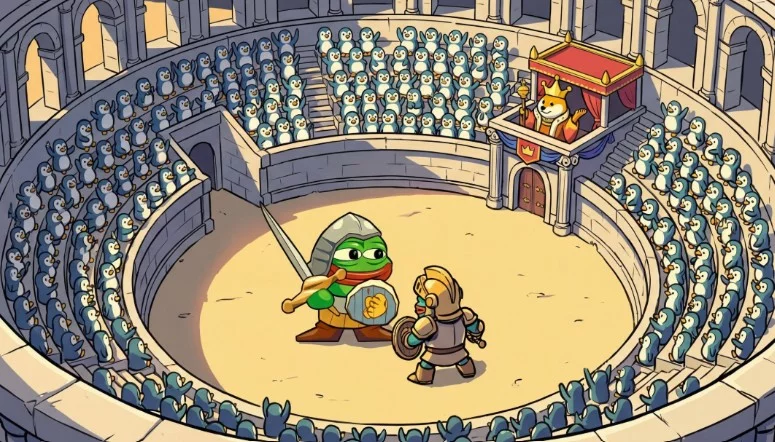
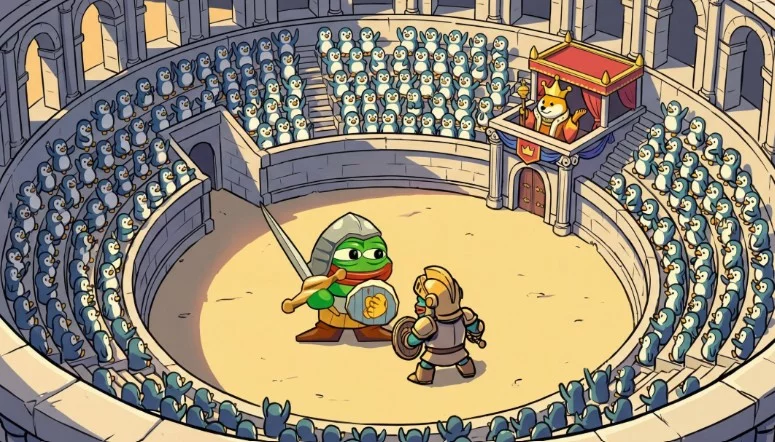
Meme Punch approaches using a token in a different way. In a battle arena with a medieval theme, players choose a knight and engage in combat with other players to earn rewards using MEPU, the in-game currency. Each of the five playable characters — Pepe, Doge, Floki, Brett, and Pudgy Penguin — is dressed in full armor and is taken from memecoin culture.
PvP combat is the main flow. Players who win move up the leaderboard and are rewarded with MEPU. Because the token can be used to purchase weapons, character skins, and special abilities within the game, demand for MEPU is linked to player activity rather than just market sentiment.
The total supply of the Ethereum-based token MEPU is 10 billion. Presale takes up 40% of the allocation, followed by marketing (16.5%), staking (14.5%), DEX and CEX liquidity (12%), in-game rewards (9.5%), and project funds (7.5%).
3. Bitcoin (BTC)
As of mid-May 2026, the price of Bitcoin was $79,235, with a $1.58 trillion market capitalization and a daily volume of about $41 billion. Of the fixed 21 million supply, about 20 million are currently in circulation, and 1.31 million BTC are currently held in corporate and institutional treasuries.
Bitcoin continues to be the standard for a list of top-rated selections through June 2026. No matter the short-term price action, it consistently appears at the top of allocation talks due to a hard supply cap, rising treasury allocations, and ongoing ETF flows.
4. Ethereum (ETH)
Midway through May 2026, Ethereum traded at $2,227, with a $268 billion market capitalization and daily volume exceeding $19 billion. There is no hard cap on issuance, and the current circulating supply is 120.68 million ETH.
Because Ethereum is the default layer for the majority of the activity that defines this period, it should be on a high-credibility list going into June 2026. Along with the majority of stablecoin volume, DeFi, and the biggest NFT markets, it is the foundation for both Poly Truth and Meme Punch.
5. Solana (SOL)
With a market capitalization of $51.87 billion and a daily volume of about $4.16 billion, Solana is trading at $89.73 in mid-May 2026. Out of 626 million SOL, the circulating supply is at 578 million. With low fees that maintain retail flow throughout the chain, it has managed most of the meme coin trading volume and consumer app activity over the past year. Current entries are significantly below recent highs due to the price’s 48% decline over the previous 12 months.
6. Chainlink (LINK)
With a $7.35 billion market capitalization and a $678 million daily volume, Chainlink is trading at $10.11 in mid-May 2026. Out of a total cap of $1 billion, the circulating supply is currently at 727 million LINK. Chainlink’s place in the data layer of cryptocurrency is the reason it is on a high-credibility list for June 2026. The majority of DeFi protocols rely on this oracle network for price feeds, and tools like Poly Truth require this type of off-chain data infrastructure to operate. Over the last 12 months, LINK has decreased by 39%, which has lowered entry levels.
Final thoughts
The six picks listed above can be put into three categories. The Ethereum-based presale entries are Poly Truth and Meme Punch, one of which focuses on a play-to-earn game and the other on prediction market research.
The two biggest and most popular cryptocurrency assets are Ethereum and Bitcoin. Chainlink provides the data feeds that other cryptocurrency projects use to link to real-world information, and Solana is known for its quick and affordable transactions.
Presale tokens cannot be traded until the projects are listed on an exchange, so anyone who buys during the presale period must wait for the claim to open before selling. Both Poly Truth and Meme Punch have tokenomics and audit details available on their official websites.
Disclosure: This content is provided by a third party. Neither crypto.news nor the author of this article endorses any product mentioned on this page. Users should conduct their own research before taking any action related to the company.



The Trump ethics fight over crypto is now the biggest obstacle to the CLARITY Act reaching 60 Senate votes.
Summary
- The CLARITY Act needs 60 Senate votes to overcome a filibuster, requiring at least seven Democrats to cross the aisle.
- An ethics provision barring government officials from crypto dealings is missing from the current text and is Democrats’ core demand.
- The White House has rejected any language singling out a specific officeholder, leaving the two sides at an impasse.
Analysts and lawmakers have identified the ethics provision as the CLARITY Act’s most consequential unresolved issue heading to the Senate floor. Republicans hold 53 seats and need 60 votes to clear a filibuster, meaning at least seven Democrats must vote yes.
Senator Kirsten Gillibrand, a Democrat who has backed crypto regulation, told audiences at Consensus Miami 2026 that the bill will not move without an ethics clause. “This provision will be part of this bill, or it will not go forward,” she said. “Because we cannot let greed and corruption in Washington tear this industry down, and without that provision, that’s exactly what will happen.”
Ethics impasse sets up the bill’s hardest vote
The CLARITY Act’s 309-page draft contains no conflict of interest language because such provisions fall outside the Senate Banking Committee’s jurisdiction. Democrats have pointed to Trump family involvement in World Liberty Financial and the TRUMP memecoin as the driving concern.
The Van Hollen amendment that would have blocked senior government officials from holding crypto business interests was voted down 11 to 13 in committee.
The White House has been explicit. Crypto adviser Patrick Witt said ethics rules should apply “across the board, from the president all the way down to the brand new intern on Capitol Hill,” but that language singling out a specific officeholder is unacceptable.
Cody Carbone, who heads the Digital Chamber, told reporters a deal will almost certainly be required before the bill reaches the floor. “I imagine the deal will be completed before this goes to the floor, because they’ll want to only bring it to the floor if they feel confident they’ve got 60,” he said.
As crypto.news tracked, both Democrats who voted yes in committee — Gallego and Alsobrooks — framed their votes as conditional on further ethics progress. Crypto.news also noted that banking trade groups continue to oppose the stablecoin yield compromise, adding pressure from multiple directions.
The Senate must resolve the ethics fight, law enforcement concerns and banking objections before a floor vote. As Coinbase warned at Consensus Miami, bipartisan backing is non-negotiable and the window before the August recess is narrowing fast.
Bitcoin’s impressive but brief price pump on Thursday evening came to a screeching halt as the asset has dumped by over $4,000 since then to a multi-week low of under $78,000.
Essentially all larger-cap alts are in the red today, with HYPE, ZEC, SOL, SUI, LINK, and CC posting the biggest losses.
BTC Dips Below $78K
The primary cryptocurrency rocketed to almost $83,000 on May 7, but it was stopped and driven south to $79,000 two days later. The bulls stepped up in the following days, once again, and drove the asset to $82,000 on a couple of occasions on Monday and Tuesday. However, it couldn’t keep climbing, and the worrying inflation numbers in the US poured more oil on the fire.
Bitcoin dipped to $78,800 on Wednesday after another rejection at $81,200. It sat there for a bit before it rocketed by several grand to $82,000 on Thursday. This impressive price rally was driven by the positive developments on the CLARITY Act in the US, as it finally passed the Senate Banking Committee.
This run was short-lived as the bears resumed control of the market. The past 12 hours or so have been particularly painful as they managed to drive the cryptocurrency south to its lowest position since the start of the month at under $78,000.
Its market capitalization has dipped to $1.560 trillion, while its dominance over the alts is up to 58.4% on CG.

Alts Bleed Out
Most altcoins have followed BTC on the way south today. Ethereum is down by over 3.5% to a multi-week low of its own at $2,170. BNB is down by 4.5% to $650, while XRP struggles at around $1.40. Solana has plummeted by 5.5% to $6.
HYPE has dumped the most from the larger-cap alts. After yesterday’s surge, the token has lost 10% of its value now and is fighting to stay above $40. ZEC, LINK, CC, SUI, and AVAX are also deep in the red.
STABLE, VVV, and ENA have slumped by double-digits in the past day. The total crypto market cap has shed $100 billion since Thursday and is well below $2.7 trillion on CG.

The post Altcoins Crash as Bitcoin (BTC) Dumps to 2-Week Low: Weekend Watch appeared first on CryptoPotato.
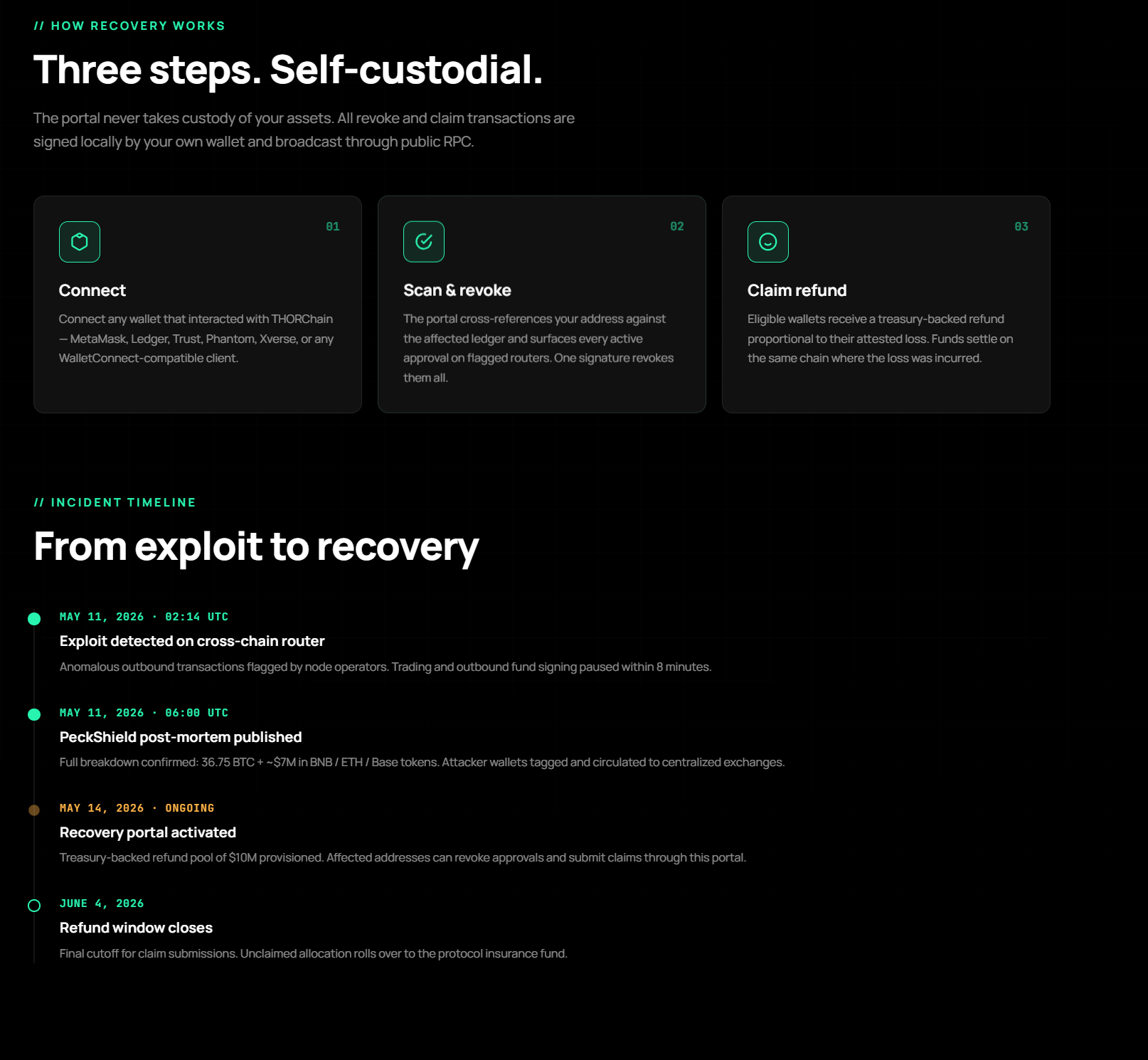
THORChain has confirmed a $10 million exploit and launched a recovery portal, giving affected users a self-custodial path to revoke malicious token approvals and submit refund claims backed by a treasury-provisioned refund pool of equal size.
In a Saturday post on X, THORChain Foundation introduced the recovery portal, saying that “affected users are now able to check what they will be paid as compensation following the exploit.”
The portal, citing a PeckShield post-mortem, claims that the attack was detected at 02:14 UTC on May 11, when node operators flagged anomalous outbound transactions. Trading and outbound signing were paused within eight minutes. In total, attackers drained 36.75 BTC, worth around $3 million, and approximately $7 million in tokens across BNB Chain, Ethereum and Base, hitting 12,847 wallets across four chains.
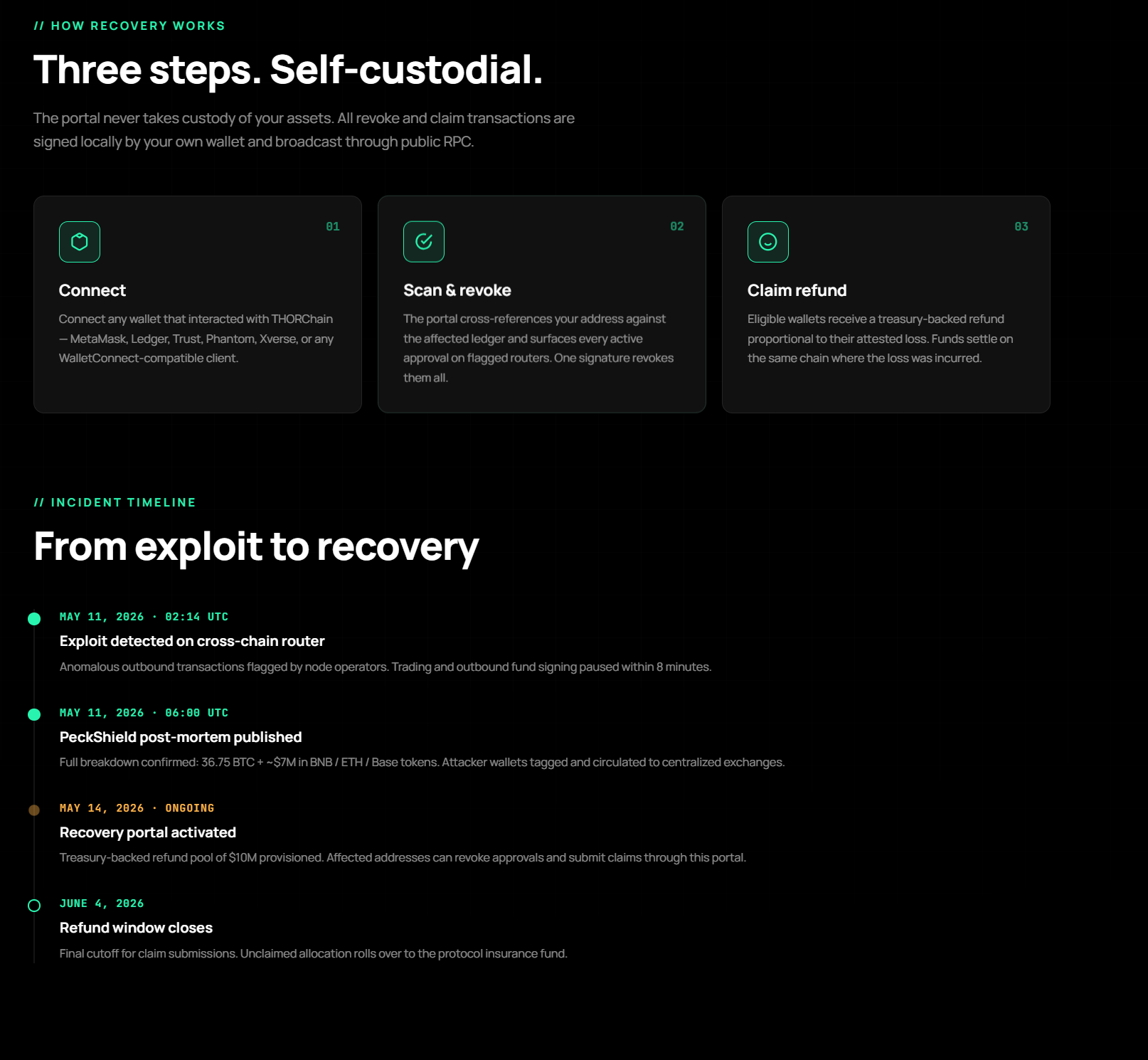
THORChain’s recovery portal. Source: THORChain
Affected users have 21 days to submit claims. The refund window closes on June 4, after which any unclaimed allocation rolls over to the protocol’s insurance fund.
Related: Russia-linked crypto exchange Grinex halts trading after $14M hack
How THORChain was drained
In an incident update, THORChain said the leading theory is that the attacker exploited a vulnerability in the GG20 threshold signature scheme (TSS) implementation, which allowed sensitive vault key material to leak gradually. By accumulating enough of this leaked data over time, the attacker was able to reconstruct the vault’s private key and authorize unauthorized outbound transactions.
The protocol also noted that a newly churned node entered the network several days before the attack and is currently believed to be associated with it, with onchain links identified between the node’s bonding addresses and the wallets that received the stolen funds.
“The Treasury is actively collecting forensic data and coordinating with Outrider Analytics and relevant law enforcement agencies in an effort to identify the attacker and pursue recovery of stolen funds where possible,” the protocol wrote.
Related: Law enforcement freezes $41M connected to $150M crypto Ponzi collapse
Crypto hack losses hit $630 million in April
Crypto hacks surged in April, with total losses reaching $629.7 million, the worst month for the industry since February 2025, when $1.47 billion was stolen. KelpDAO’s $293 million exploit and Drift Protocol’s $280 million hack drove the bulk of the damage, together representing 82% of April’s losses and cementing DeFi as the most targeted sector.
The pattern of attacks points to a shift in how protocols are being compromised, with bridges, privileged access and operational failures increasingly at the root of major incidents rather than straightforward smart contract bugs.
Magazine: AI-driven hacks could kill DeFi — unless projects act now
Disclosure: This article does not represent investment advice. The content and materials featured on this page are for educational purposes only.
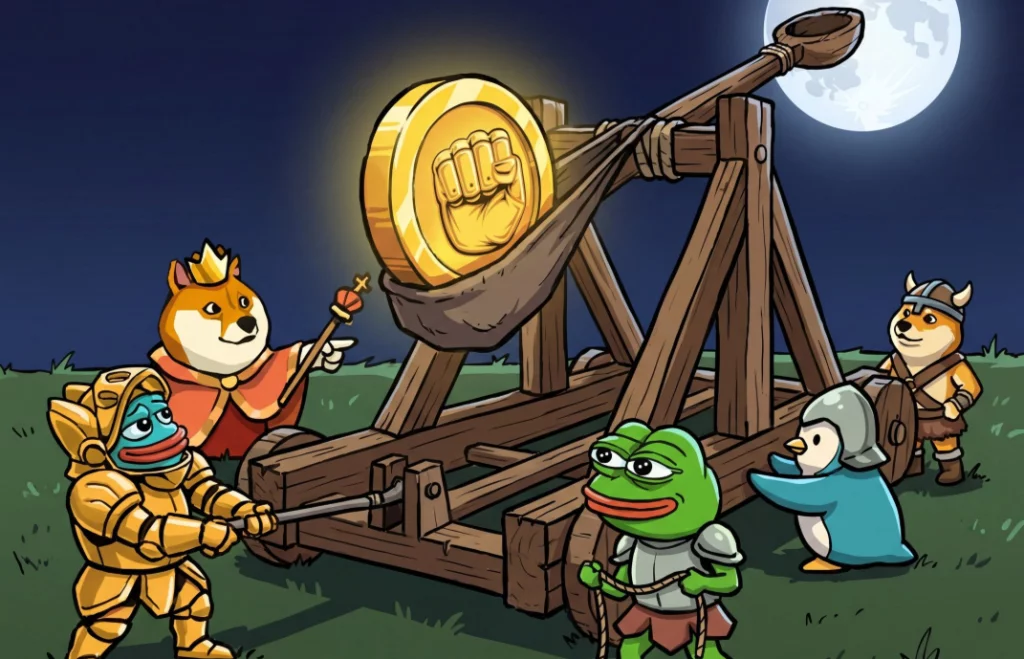
Poly Truth and Meme Punch presales gain traction in 2026 crypto market narrative around utility tokens.
Summary
- Crypto presales sell tokens before exchange listing in phased stages, often with rising prices and fixed supply caps.
- Poly Truth (PTRUE) analyzes prediction markets using AI layers, offering research-based outputs without executing trades.
- Meme Punch (MEPU) is a play-to-earn game where token demand is driven by PvP gameplay and in-game utility.
The phase where a project sells its token prior to listing on any exchange is known as a crypto presale. The project sets the price, the supply is fixed, and buyers receive their tokens when the presale ends and the claim window opens.
Most presales have funding caps and operate in phases. Early entries are typically less expensive than later ones because when a stage fills, the next one opens at a higher price. Clear token utility, published tokenomics, and audited contracts are indicators of the best crypto presales. Below are two May 2026 presales that meet that criteria.
Best crypto presales for May 2026
1. Poly Truth (PTRUE)
Winning on a prediction market comes down to how well someone has done their research, and Poly Truth is built to handle that part. Anyone betting on the outcome of an election, a central bank decision, or a sports event is working against a deadline, and most of the relevant information is scattered across news sites, social platforms, and historical data. Reading through all of it before the betting window closes is not realistic. The tool does that work and gives a breakdown of which outcomes the data points toward.
The setup runs on a three-character framework. The Runners are the data scrapers, gathering data from the web the moment a prediction event is submitted. The Starlet handles the analysis layer, cross-referencing sources and assigning probability scores. The Presenter outputs the final brief in a structured format. No bets are placed, no automated trades are run. The output is research and nothing more.
Token details:
- Built on Ethereum with a total supply of 11.5 billion
- Presale takes 40% of supply, with liquidity at 17%
- Team allocation under a 3-month cliff and 12-month vest
- Holders get tiered access to the research tool once it goes live
- Audited by SolidProof and Coinsult, with both reports public
2. Meme Punch (MEPU)
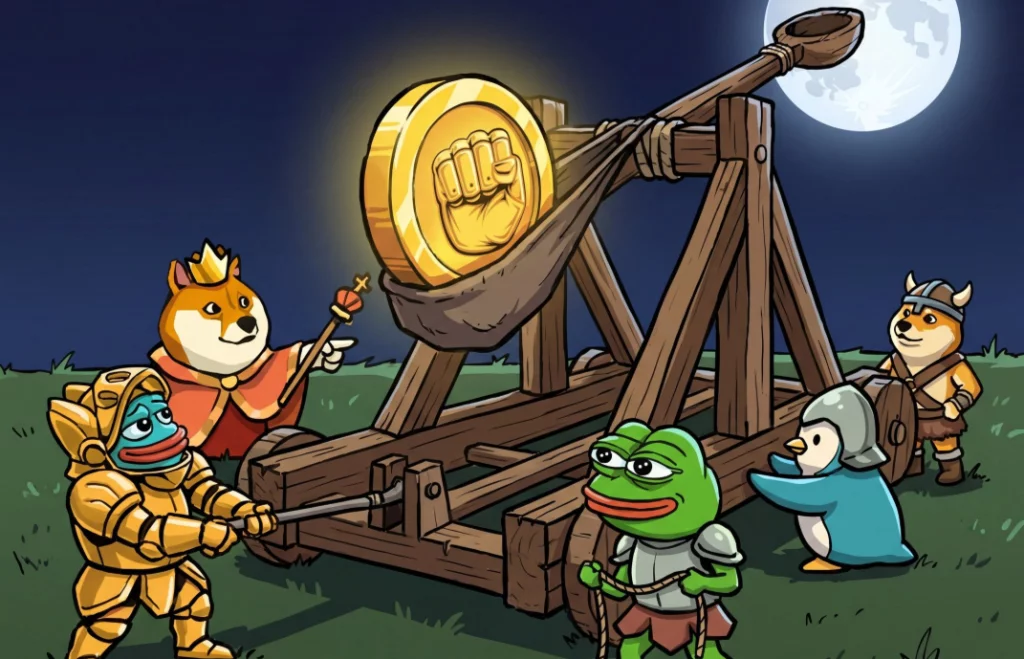
Meme Punch is a play-to-earn game where the token is the in-game currency, not just a coin to hold. Players pick a knight, fight other players in a medieval arena, and earn MEPU by winning matches and climbing the leaderboard. The five playable characters are from meme-coin culture.
Each member of the lineup — Pepe, Doge, Floki, Brett, and Pudgy Penguin — is dressed in armor. Combat is PvP; wins will move players up in the ranking system and give them access to MEPU prizes. Because the token can be used to purchase weapons, character skins, and special abilities within the game, demand is directly linked to player engagement.
Token details:
- Built on Ethereum with a total supply of 10 billion
- Presale takes 40% of supply, with staking at 14.5% and liquidity at 12%
- Game rewards allocated 9.5% of supply
- Payment options include ETH, BNB, SOL, USDT, USDC, and card
- Current presale price and staking APY are listed on the official website
How presale stages and pricing work
Most presales are divided into stages rather than charging a single flat fee. Every stage has a fixed price and a set number of tokens available for purchase at that price. The next stage opens at a higher price after the previous one sells out. Also, some presales automatically increase the price within a stage every few days. One of those is Poly Truth, whose price changes every four days.
The majority of presales have standard payment options. Nearly all places accept ETH, BNB, SOL, USDT, and USDC. Larger projects also accept card payments and bank transfers, such as SEPA.
Tokens are not provided at the time of purchase. When the presale ends, which is typically around the time the token lists on an exchange, the project holds them and releases them. This is referred to as the claim. One thing to keep in mind is that even if a buyer paid with SOL or BNB, they will still need to provide an Ethereum wallet address at the time of the claim if the presale runs on Ethereum.
What to know before the claim opens
Here are some helpful pointers for anyone considering a presale:
- Tokens cannot be traded right away. Buyers receive them at the claim, which usually happens around the exchange listing. The wait can be a few weeks or a few months.
- The presale price is set by the project, not the market. Once the token lists are out, the market sets the price from there. It can end up higher or lower than the presale price.
- Audits and tokenomics are public. Poly Truth has audit reports from SolidProof and Coinsult. Meme Punch lists its full tokenomics on the official website.
- Payment method affects the claim. Both projects distribute tokens on Ethereum, so anyone who paid in SOL or with a card will need an Ethereum wallet address ready at the claim.
Stage pricing changes over time. Both presales raise prices as stages fill, so the price someone sees today is not the price someone else paid last week.
Disclosure: This content is provided by a third party. Neither crypto.news nor the author of this article endorses any product mentioned on this page. Users should conduct their own research before taking any action related to the company.

Key Takeaways
- Pershing Square revealed a fresh Microsoft (MSFT) stake through its 13F filing released Friday
- The position was initiated in February when shares traded at approximately 21x forward P/E, matching broader market valuations
- Ackman financed the Microsoft buy by exiting his Alphabet (GOOGL) holdings, clarifying this wasn’t a bearish stance on Google
- Shares of Microsoft jumped 3% Friday, though they remain down 17% for the year against the S&P 500’s 10% advance
- The billionaire investor argues Microsoft’s OpenAI ownership (~$200B value, roughly 7% of its market cap) remains underappreciated by markets
Billionaire investor Bill Ackman revealed Pershing Square has established a significant position in Microsoft (MSFT) through regulatory filings submitted Friday. Shares responded positively, climbing 3% to finish at $421.92.
According to Ackman, the position was initiated in February following a “substantial” selloff that came after Microsoft reported fiscal Q2 2026 results. The fund accumulated shares at approximately 21 times forward earnings — a valuation matching the broader S&P 500 and significantly below Microsoft’s historical trading range.
The tech giant has faced headwinds in 2026. Shares have declined 17% year-to-date, contrasting sharply with the S&P 500’s 10% gain.
The weakness followed a disappointing Q3 earnings announcement that sparked concerns regarding Azure’s expansion rate. Microsoft further revealed plans for $190 billion in capital spending for calendar 2026 — representing a 61% annual increase and exceeding analyst expectations by roughly $35 billion.
While Ackman recognizes these challenges, he maintains the market is overlooking a critical asset.
The Hidden Value in OpenAI
Ackman highlighted Microsoft’s 27% ownership in OpenAI, which he estimates carries a $200 billion valuation — equivalent to approximately 7% of Microsoft’s total market capitalization. He contends this substantial value remains absent from current share prices.
The investor also dismissed concerns about Microsoft 365 facing displacement from AI competitors. He maintains that M365’s deep integration across enterprise systems — encompassing identity management, security infrastructure, compliance frameworks, and data governance — creates formidable barriers against replacement by emerging AI applications.
“Unlike point software solutions, which may be vulnerable to disintermediation by better-performing AI alternatives, M365 is tightly integrated into the daily workflow of nearly every large enterprise,” Ackman wrote on X.
Ackman liquidated his Alphabet position to generate capital for the Microsoft investment. He took to social media Saturday to emphasize this wasn’t a negative signal regarding Google’s prospects.
No Loss of Faith in Google
“Our sale of Google was not a bet against the company. We are very bullish long term on Alphabet. But at current valuations and in light of our finite capital base, we used it as a source of funds for Microsoft,” Ackman wrote.
Wedbush analyst Dan Ives endorsed Ackman’s decision. He suggested Wall Street continues underestimating Azure’s growth potential and identified Microsoft among his “favorite large cap tech names to own over the coming years.”
From a technical perspective, Evercore ISI’s Rich Ross observed Microsoft displays one of the “best acting charts” among technology stocks currently, noting the shares have recaptured their 50-day moving average with “authority” and retreated to a long-standing support level that’s remained intact since the European debt crisis.
Ackman’s track record with major technology investments includes his previous long-term Alphabet position before this strategic shift to Microsoft.

Solayer Pay launched a Visa card allowing users to spend USDC at merchants and ATMs worldwide on May 14.
Summary
- Solayer Pay launched a Visa card enabling USDC payments in-store, online and via contactless, with ATM withdrawals in supported regions.
- Existing Solayer Pay users can request the card for free, while new users pay a $20 annual activation fee.
- The card extends Solayer Pay’s Emerald Card platform, which launched in April 2025 and reached 40,000 users across 100 countries.
Solayer, the layer-1 blockchain developer behind the infiniSVM network, announced the launch via GlobeNewswire on May 14. The card links directly to a user’s Solayer Pay balance and can be used at any Visa-accepting merchant globally.
“Crypto payments only become meaningful when they integrate naturally into everyday life,” said Margie Feng, Marketing Lead at Solayer. “The physical card brings stablecoin spending into familiar payment experiences while keeping users connected to the speed and efficiency of onchain infrastructure.”
Physical card extends Solayer’s stablecoin payment push
Users can order the card through the Solayer Pay app on mobile or web. Existing account holders receive the card at no cost. New users must first apply for a Solayer Pay account and pay a $20 annual activation fee.
The launch builds on Solayer Pay’s history in the space. The platform originally debuted in April 2025 as the Emerald Card, a virtual Visa card integrated with Apple Pay and Google Pay that reached 40,000 users across more than 100 countries before this physical expansion.
The Solayer card arrives as stablecoin payment infrastructure expands rapidly. Visa and Stripe’s Bridge expanded their stablecoin card program to 18 countries in March 2026, with plans to reach more than 100 countries by year end. Visa’s broader stablecoin settlement pilot grew to $7 billion across nine blockchains as institutional partners treat on-chain settlement as a primary option rather than a test.
USDC is the second-largest stablecoin by market cap at approximately $78 billion. The broader stablecoin market expanded from $243 billion in May 2025 to $322 billion a year later, according to DefiLlama. Solayer’s infiniSVM network delivers 330,000 transactions per second with approximately 400ms finality, providing the infrastructure behind the card’s on-chain settlement layer.


Santiment warned that Bitcoin social media euphoria spiked following the CLARITY Act’s Senate Banking Committee vote on May 14.
Summary
- Santiment tracked a major spike in Bitcoin social media euphoria following the CLARITY Act’s 15 to 9 Senate Banking Committee vote.
- The platform recorded 1.55 bullish Bitcoin comments for every bearish one, a ratio it flagged as a potential contrarian warning.
- Santiment advised caution, noting markets typically move opposite to crowd expectations when sentiment reaches extreme bullish levels.
Sentiment analytics platform Santiment posted on X and its community insights platform on May 15, tracking a sharp rise in positive Bitcoin social media activity after the Senate vote.
“Bitcoin has seen a major spike of euphoria across social media following news that the Senate Banking Committee advanced the CLARITY Act in a 15 to 9 bipartisan vote,” Santiment wrote. “This brings BTC and crypto one step closer to being ultimately passed.”
The platform simultaneously issued a caution signal based on its historical data model. “We advise caution. Markets typically move opposite to the crowd’s expectations at all times,” Santiment said, noting the 1.55 to 1 ratio of bullish to bearish comments across X, Reddit and Telegram as a potential warning sign for short-term price direction.
CLARITY Act vote drives Bitcoin sentiment surge
Bitcoin climbed above $82,000 in the hours following the Senate Banking Committee vote before retreating to approximately $81,500. The CLARITY Act’s advancement was one of the most significant legislative catalysts for crypto sentiment since the bill passed the House 294 to 134 in July 2025. Crypto.news reported that the committee win sent Coinbase shares up more than 8% during the session, with Strategy climbing 7%.
Analyst Michael van de Poppe said on X the legislation is “the biggest, and historical, bill for the entire industry and can be a strong trigger for the upcoming bull market.” White House crypto adviser Patrick Witt tempered that optimism, saying the committee vote was “a major step forward” but was not yet finalized.
Santiment’s caution warning follows a pattern the platform has identified across multiple 2026 market cycles. Crypto.news tracked in April that Bitcoin bearish commentary reached its highest level since February 28 just before the asset stabilised, illustrating how sentiment extremes can act as contrarian signals in both directions.
Analysts watching the CLARITY Act’s path remain split on whether this legislative momentum translates into sustained price gains. Crypto.news noted earlier this week that the bill still needs 60 Senate floor votes, House reconciliation and a presidential signature before it becomes law, with each step presenting potential delays that markets may not have fully priced in.
Crypto World
ONDO’s Three-Product Protocol Hits $3.778B TVL as Institutional Giants Join Settlement Pilots

TLDR:
- Ondo Global Markets crossed $1B TVL in under eight months, the fastest for any tokenized equity platform.
- USDY delivers 3.5% APY backed by U.S. Treasuries, with TVL between $2.15B and $2.7B across DeFi chains.
- OUSG completed a cross-border treasury pilot with JPMorgan, Ripple, and Mastercard in under five seconds.
- ONDO reached $3.778B in total TVL across 165+ partners, including BlackRock and Franklin Templeton.
ONDO, trading at $0.34 as of this writing, is the native token of a protocol running three separate financial products. Most token holders are only aware of one. Each product targets a different audience and solves a distinct problem in finance.
Together, they represent a full-stack infrastructure play for real-world asset tokenization. The protocol’s total value locked reached $3.778 billion across all three products as of May 14, 2026.
Ondo Global Markets Leads in Tokenized Equity Access
Ondo Global Markets offers non-U.S. investors direct on-chain access to U.S. stocks and ETFs. The platform lists over 260 tokenized securities, including Tesla, NVIDIA, Apple, Amazon, QQQ, and SPY. Entry starts at $100, with 24/7 trading and instant settlement. No brokerage account or T+1 delays apply.
The product crossed $1 billion in TVL in under eight months. That marks the fastest growth of any tokenized equity platform on record.
TVL doubled from $500 million to $1 billion between January and May 2026. Cumulative trading volume has reached $18 billion across Ethereum, Solana, and BNB Chain.
Ondo Global Markets currently holds over 70% global market share in tokenized stocks and ETFs. Underlying U.S. securities are held by a regulated custodial broker-dealer, backed 1:1 with a capital buffer.
The growth curve has remained nearly vertical with no visible slowdown. This product drives the current tokenized equity narrative across crypto markets.
As analyst @2xnmore observed, “The growth curve is nearly vertical and it has not slowed.” The product is designed specifically for non-U.S. retail and institutional investors.
Users gain U.S. capital market exposure directly through a crypto wallet. No intermediary or traditional brokerage is required.
USDY and OUSG Capture Yield Demand and Institutional Infrastructure
USDY is a yield-bearing token backed by short-term U.S. Treasuries and money market instruments. It currently offers approximately 3.5% APY, accruing daily directly into the token value. No lock-up period is required. Holders of USDC or USDT earn nothing, while USDY compounds daily.
USDY TVL sits between $2.15 billion and $2.7 billion, with minimal retail attention to date. The token is transferable across chains and composable with DeFi protocols.
It ranks among six major contributors driving the tokenized U.S. Treasury market past $12.88 billion. Yield-bearing stablecoins like USDY are positioned to replace passive alternatives in the next market cycle.
OUSG is the institutional layer of the ONDO protocol, built for accredited and qualified purchasers. It is a tokenized short-term U.S. Treasury fund with 24/7 mint and redeem functionality.
In May 2026, OUSG featured in a cross-border treasury redemption pilot with JPMorgan, Ripple, and Mastercard. That transaction settled in under five seconds across international banking rails.
The pilot also involved BlackRock’s BUIDL fund as a core partner. Over 165 ecosystem partners now include Franklin Templeton, MetaMask, Broadridge, and XRPL.
Ondo additionally launched Ondo Chain, a Layer 1 blockchain purpose-built for real-world asset infrastructure. The protocol now operates across equities, yield, institutional settlement, and its own native chain.
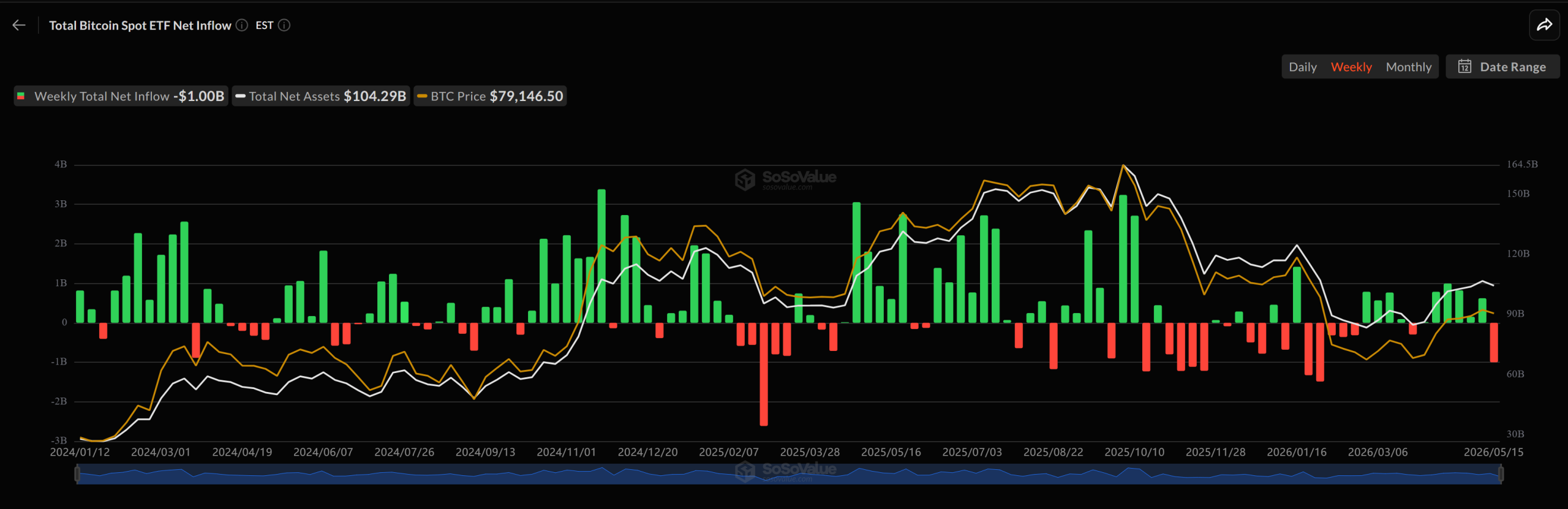
Spot Bitcoin exchange-traded funds (ETFs) recorded $1 billion in weekly net outflows, ending a six-week inflow streak that had drawn a combined $3.4 billion.
The week started on a cautiously optimistic note, with Monday posting modest inflows of $27.29 million, according to data from SoSoValue. The tide turned sharply on Tuesday, when investors pulled $233.25 million from the funds. Selling pressure intensified on Wednesday, the worst single day of the week, with outflows reaching $635.23 million.
A brief reprieve came on Thursday, as inflows of $131.31 million offered a momentary reversal. However, Friday erased that recovery as well, when a further $290.42 million exited the products, sealing the week in the red at exactly $1 billion in net outflows.
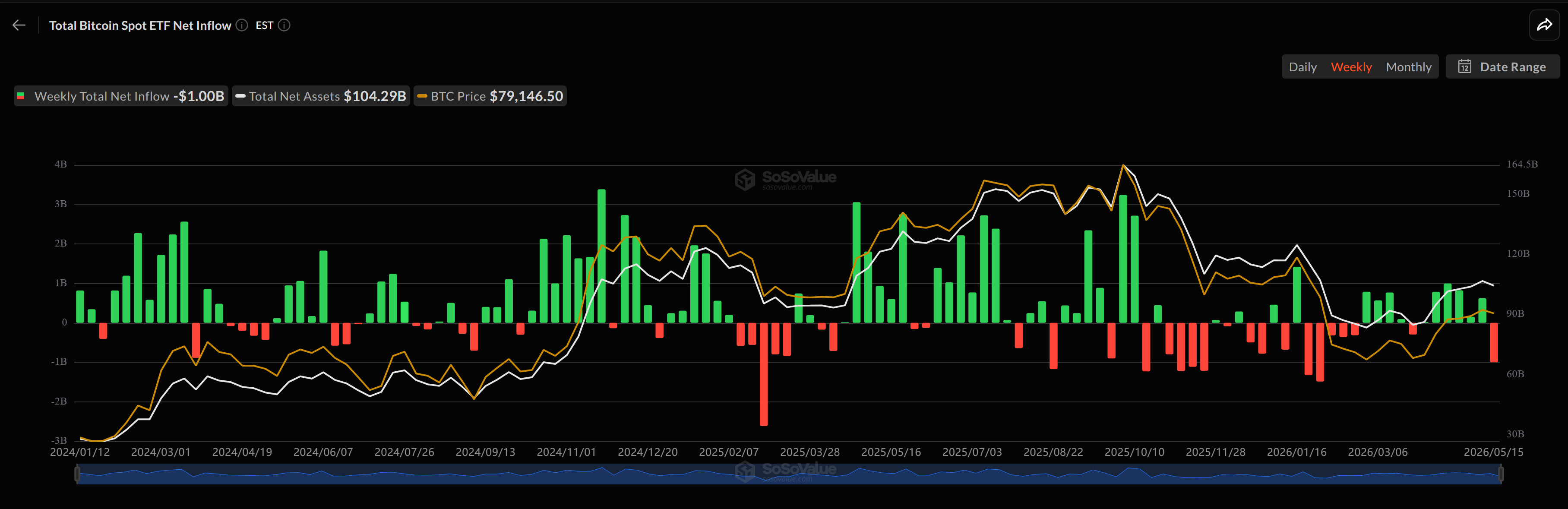
Spot Bitcoin ETFs see weekly outflows. Source: SoSoValue
The weekly loss marks a reversal from the previous six weeks, during which spot Bitcoin ETFs attracted consistent net inflows, with the week of April 17 standing out as the strongest, pulling in $996.38 million. This week’s selling leaves total net assets sitting at $104.29 billion, with cumulative net inflows across all products at $58.34 billion.
Related: Bitcoin ETFs Post Largest Outflows Since January as BTC Slips
Capital rotates toward AI, crypto
In a recent note, analysts at Bitunix said capital is “aggressively” rotating toward both the “AI growth narrative” and the institutionalization of crypto assets. NVIDIA, Google and Apple pushed toward fresh all-time highs last week, while AI chipmaker Cerebras surged more than 70% intraday on its IPO debut.
On the crypto front, the CLARITY Act, widely seen as one of the most consequential crypto market structure bills in the US, cleared the Senate Banking Committee. Coinbase shares rallied sharply subsequently as markets priced in the development, and Bitcoin climbed back toward the $82,000 mark.
However, Bitcoin’s price structure points to a market on edge, Bitunix said. They noted that heavy short liquidity sits clustered between $82,400 and $82,600, with $80,000 serving as the key support level to watch. “Current price action suggests the market has clearly entered a high-leverage volatility structure, as capital waits for further direction from the three dominant macro themes: AI expansion, U.S.-China relations, and crypto regulation,” they wrote.
Related: JPMorgan Boosts Bitcoin ETF Holdings in Q1 2026 Filing
Spot Ether ETFs see consistent outflows
Meanwhile, spot Ether ETFs recorded outflows across all five trading days last week. Tuesday was the worst session, with $130.62 million exiting the products, followed by $65.65 million on Friday, $36.30 million on Wednesday, $16.89 million on Monday, and a relatively muted $5.65 million on Thursday.
Combined, the five-day streak wiped $254.46 million from the funds, pulling total net assets down to $12.93 billion by week’s end.
Magazine: Guide to the top and emerging global crypto hubs — Mid-2026
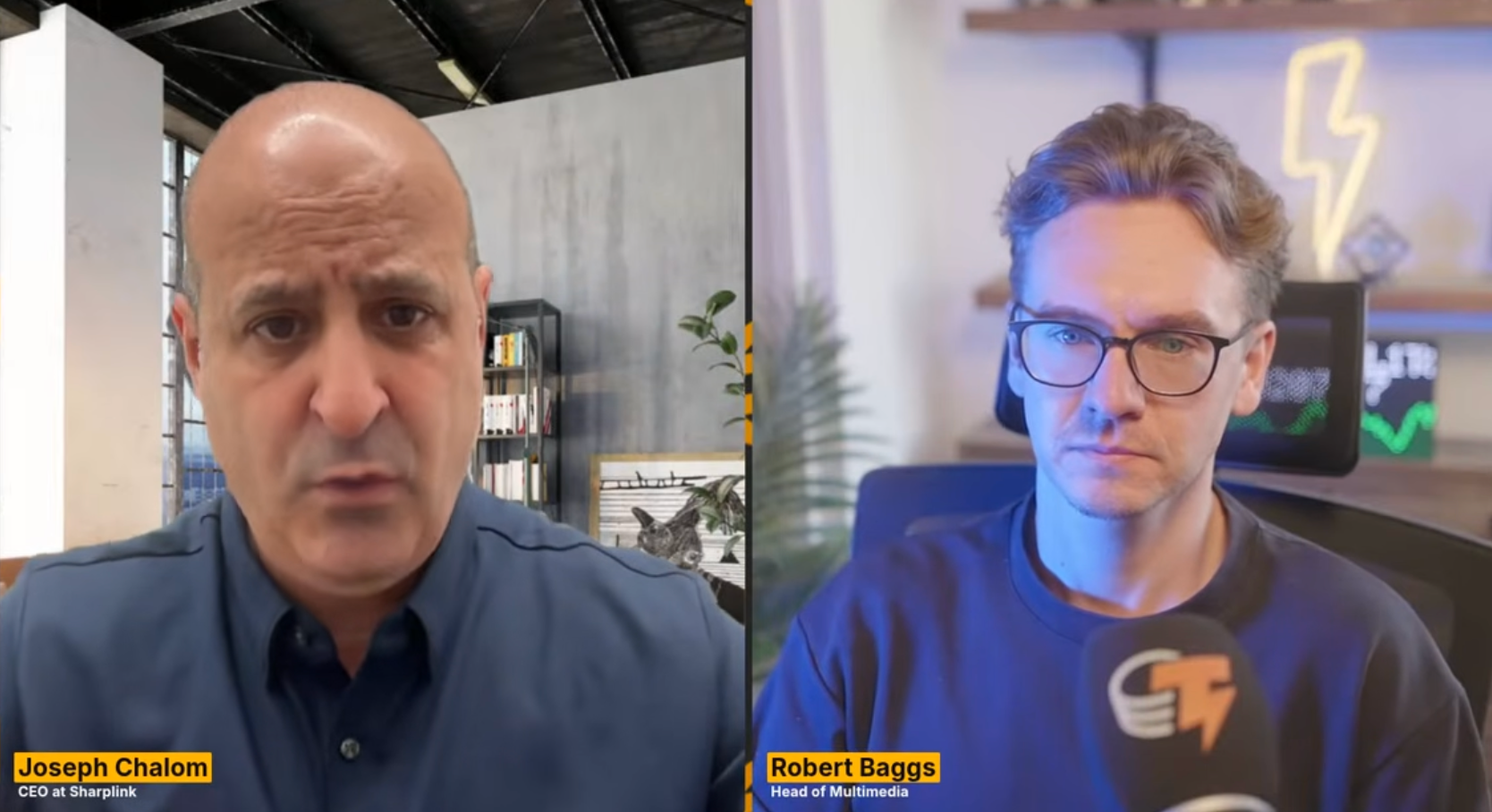
Ethereum needs three catalysts to fall into place for its price to regain momentum and surge higher, according to SharpLink Gaming CEO Joseph Chalom.
“One is the CLARITY Act to pass in the US,” Chalom pointed out in an interview with Robert Baggs on Cointelegraph’s Chain Reaction show published to YouTube on Thursday. It came on the same day that all 13 Republican members and two Democrats voted to advance the Digital Asset Market Clarity Act (CLARITY) at the US Senate Banking Committee meeting.
Chalom said that while many view the legislation, which aims to give the US crypto industry greater clarity, as “a US phenomenon,” it is also being seen as a major signal for other jurisdictions around the world.
Other countries are noticing the US shift away from a hostile stance toward crypto
“I’ve been traveling a lot in Asia, and if you go to Korea, Hong Kong, Tokyo and Singapore, they are watching really closely because they realize the US went from having a hostile stance towards crypto and digital assets to um it could become the leader again in finance and you’ll see a red dollarization of a lot of financial activity and these other capitals are very worried,” Chalom said.
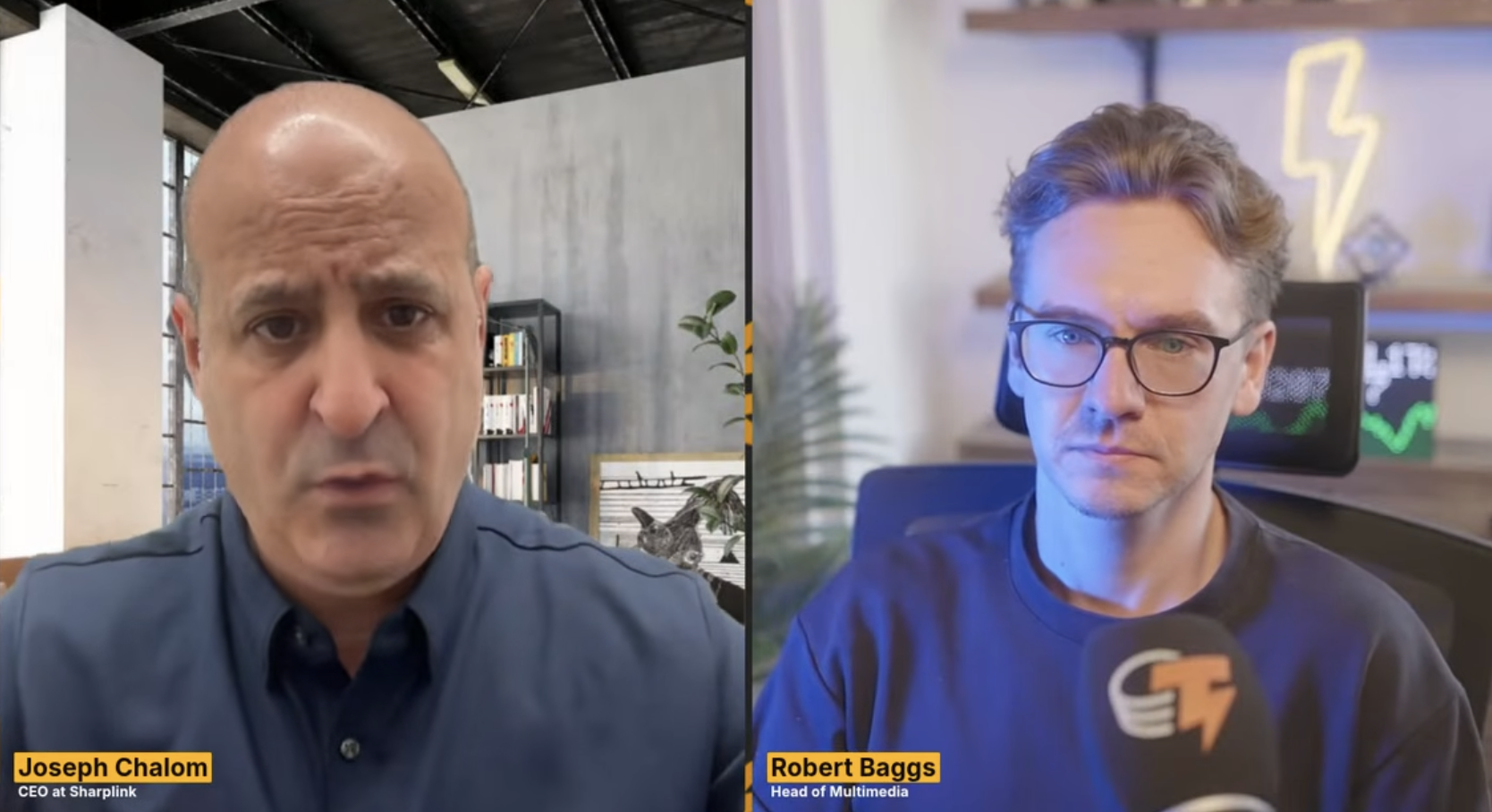
Joe Chalom spoke to Cointelegraph’s Robert Baggs on Chain Reaction. Source: Cointelegraph
Chalom said the second catalyst is a return in market risk appetite, which he said will largely depend on geopolitical tensions easing and the cooling of the “AI thesis.” “I think we’ll need some of that to go away in order to see crypto rise again,” Chalom said.
Sharplink Gaming is the second-largest publicly listed Ethereum treasury company, holding approximately 861,251 ETH, valued at $1.89 billion at the time of publication, according to Ethereum Treasuries data.
Ether (ETH) reached an all-time high of $4,823 in August 2025 as part of a broader market uptrend, but has since fallen 55% to $2,190 at the time of publication, according to CoinMarketCap.
Tokenization is where Ethereum will “dominate”
Chalom said the final Ethereum catalyst he’s watching is the continued expansion of real-world asset tokenization.
“Tokenization of financial assets is where Ethereum is going to dominate,” Chalom said.
“I think there’s about 32 billion of tokenized RWA. And tokenization started in 2017. So it’s been remarkably slow. Now you’re seeing announcements of whole fund complexes being tokenized,” he said.
Several major asset managers have recently made announcements related to tokenization.
Related: How the stablecoin market tripled from $100B to $300B in one year
On Wednesday, JPMorgan filed to launch a tokenized money market fund on Ethereum, allowing stablecoin issuers to hold reserves backing their stablecoins in a regulated, cash-like vehicle while earning interest.
In March, Franklin Templeton announced it is teaming with Ondo Finance to bring tokenized versions of its exchange-traded funds onchain, allowing investors to access them through crypto wallets.
Chalom said, “You could see a world where there’s not $30 billion in tokenized assets in a year from now. It could be $500 billion or a trillion.”
Magazine: eToro founder timed Bitcoin top perfectly due to belief in 4 year cycles

Labour’s Andy Burnham hopes to be UK prime minister, but first needs a seat in Parliament

31 Brings Hope and Strength

CLARITY Act ethics fight blocks 60 Senate votes

Manchester United reach agreement with Casemiro over contract clause amid transfer speculation

US brings back mandatory military draft registration

Steven Gerrard disagrees with Gary Neville over ‘shock’ Chelsea and Arsenal claim | Football


-

 Fashion5 days ago
Coffee Break: Travel Steam Iron
-

 Fashion16 hours ago
Weekend Open Thread: Theory – Corporette.com
-

 Politics5 days ago
What to expect when you’re expecting a budget
-

 Fashion5 days ago
What to Know Before Buying a Curling Wand or Curling Iron
-

 Tech6 days ago
Auto Enthusiast Carves Functional Two-Stroke Engine from Solid Metal
-

 Crypto World9 hours ago
BloFin War of Whales 2026 Grand Prix opens registration for $5M trading championship
-
 Business7 days ago
Ignore market noise, India’s long-term story intact, say D-Street bulls Ramesh Damani and Sunil Singhania
-

 Crypto World7 days ago
PROS explodes 48% as Upbit and Bithumb listings ignite demand
-

 Tech5 days ago
GM Agrees To Pay $12.75 Million To Settle California Lawsuit Over Misuse Of Customers’ Driving Data
-

 Tech1 day ago
Tech Moves: Microsoft AI leader jumps to OpenAI; former AI2 exec joins Meta; and more
-

 Crypto World6 days ago
CZ says US crypto rivals tried to block Trump pardon
-

 Tech4 days ago
GM agrees to $12.75M California settlement over sale of drivers’ data
-
Crypto World3 days ago
Bitcoin Suisse expands with Digital Asset License and Investment Business Act Registration Approval in Bermuda
-

 Crypto World16 hours ago
E-Estate Announces 1 Year Live: Washington DC Summit as Real Estate Tokenization Enters Its Next Phase
-

 Politics4 days ago
Pakistan to enter Chinese capital market as war inflation bites
-
 Crypto World2 days ago
Google’s Gemini AI Predicts Incredible Solana Price by the End of 2026
-

 Crypto World3 days ago
Bitcoin Suisse expands with Digital Asset License and Investment Business Act Registration Approval in Bermuda
-

 Politics6 days ago
Sky News Presenter Says Keir Starmer Is Not Waving But Drowning
-
Crypto World7 days ago
Hacker Drains $5.9M From Ethereum Liquidity Provider TrustedVolumes
-

 Fashion6 days ago
Amazon Sundays: Spring Glassware & Vases
You must be logged in to post a comment Login