

Crypto World
$660M Liquidated as Bitcoin Crashes on Trump-Iran Escalation Fears

The overall bearish trend that began following the rejection at $82,000 on Thursday evening worsened in the past 12 hours when another leg down drove BTC to a fresh multi-week low of $76,650 (on Bitstamp).
The most evident reason for this was the new set of threats from US President Donald Trump toward Iran. Even the reported deal between the US and China couldn’t save BTC.
New Threats
Although the ceasefire between the two sides was extended several weeks ago, there has been little to no progress on striking an actual and permanent peace deal. In fact, each proposal sent by Iran has been rejected by the Trump administration, with one of the latest deemed “totally unacceptable.”
He went further recently, indicating that the ceasefire is hanging by a thread, and returned his focus to the war after the trip to Beijing concluded. In a fresh post on Truth Social, Trump warned that Iran’s clock is ticking. He urged them to “better get moving, FAST, or there won’t be anything left of them,” before adding that “TIME IS OF THE ESSENCE.”
This message came hours after the Times of Israel reported that Trump had met with Israel’s Prime Minister Benjamin Netanyahu on Sunday to discuss the war developments.
As mentioned above, BTC slipped to just under $76,700 for the first time since the start of the month after a quiet Sunday. The liquidations rocketed to over $660 million on a 24-hour scale, while more than $610 million came in 1-2 hours when BTC and the rest of the market crashed after the aforementioned statement. Thus, the cryptocurrency is down by over $5,000 since the Thursday evening peak of $82,000.

US-China Deal
After Trump’s visit to Beijing concluded, the two sides published contradicting statements on whether they had reached any deals or not. The most recent, cited by The Kobeissi Letter, indicated that China had indeed agreed to several US demands, including an initial purchase of 200 American-made Boeing aircraft for local airlines, buying at least $17 billion per year of US agricultural products in 2026, 2027, and 2028, and more.
However, none of those managed to impact the crypto market positively, but more volatility is expected later this week due to these four factors.
BREAKING: The White House announces multiple US-China trade deals and developments following President Trump’s meeting with China’s President Xi.
Details include:
1. China will address US concerns regarding supply chain shortages related to rare earths and other critical…
— The Kobeissi Letter (@KobeissiLetter) May 18, 2026
The post $660M Liquidated as Bitcoin Crashes on Trump-Iran Escalation Fears appeared first on CryptoPotato.

Crypto World
Here is how Coinbase plan to survive the crypto winter by ditching its reliance on trading fees
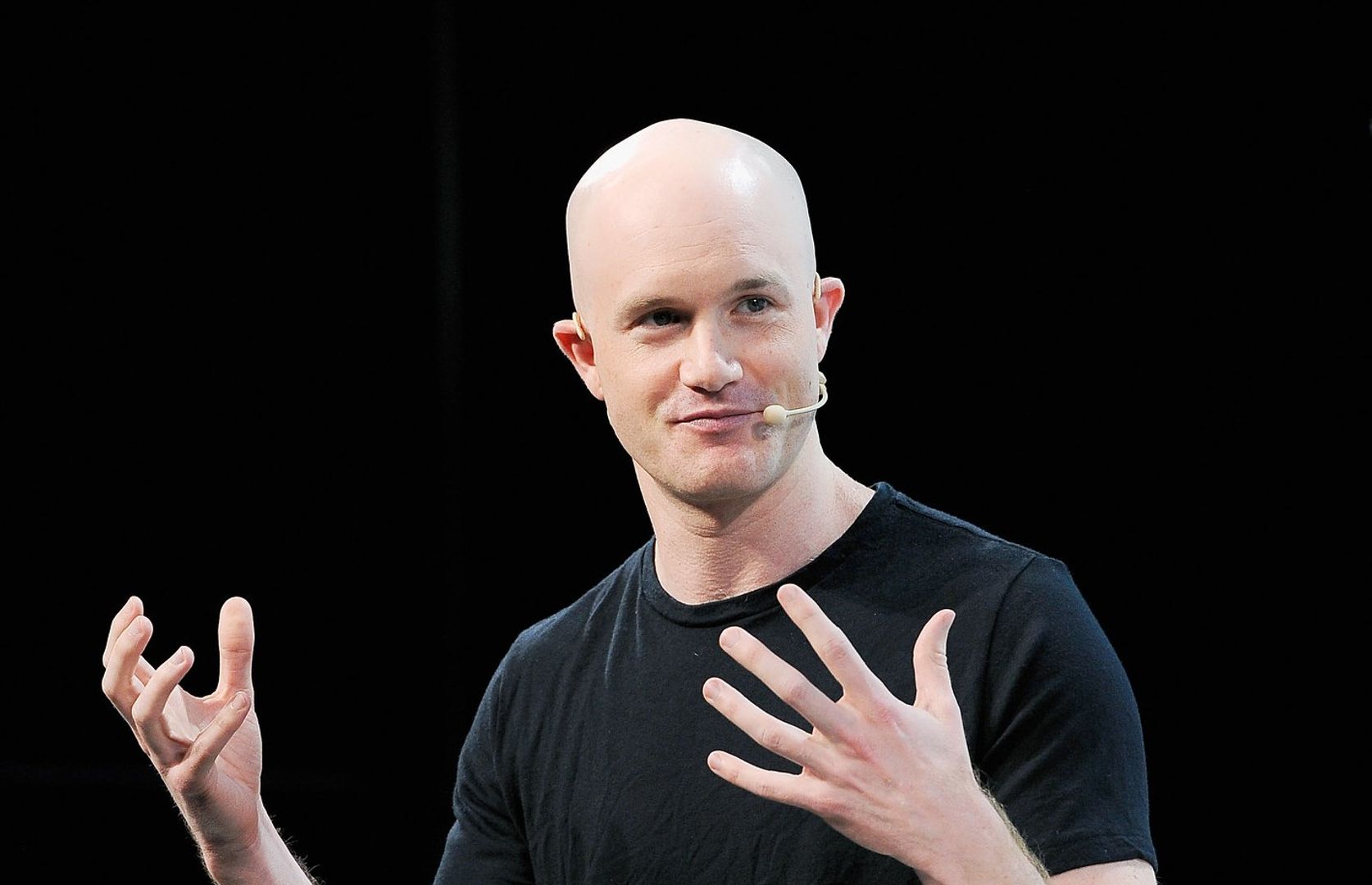
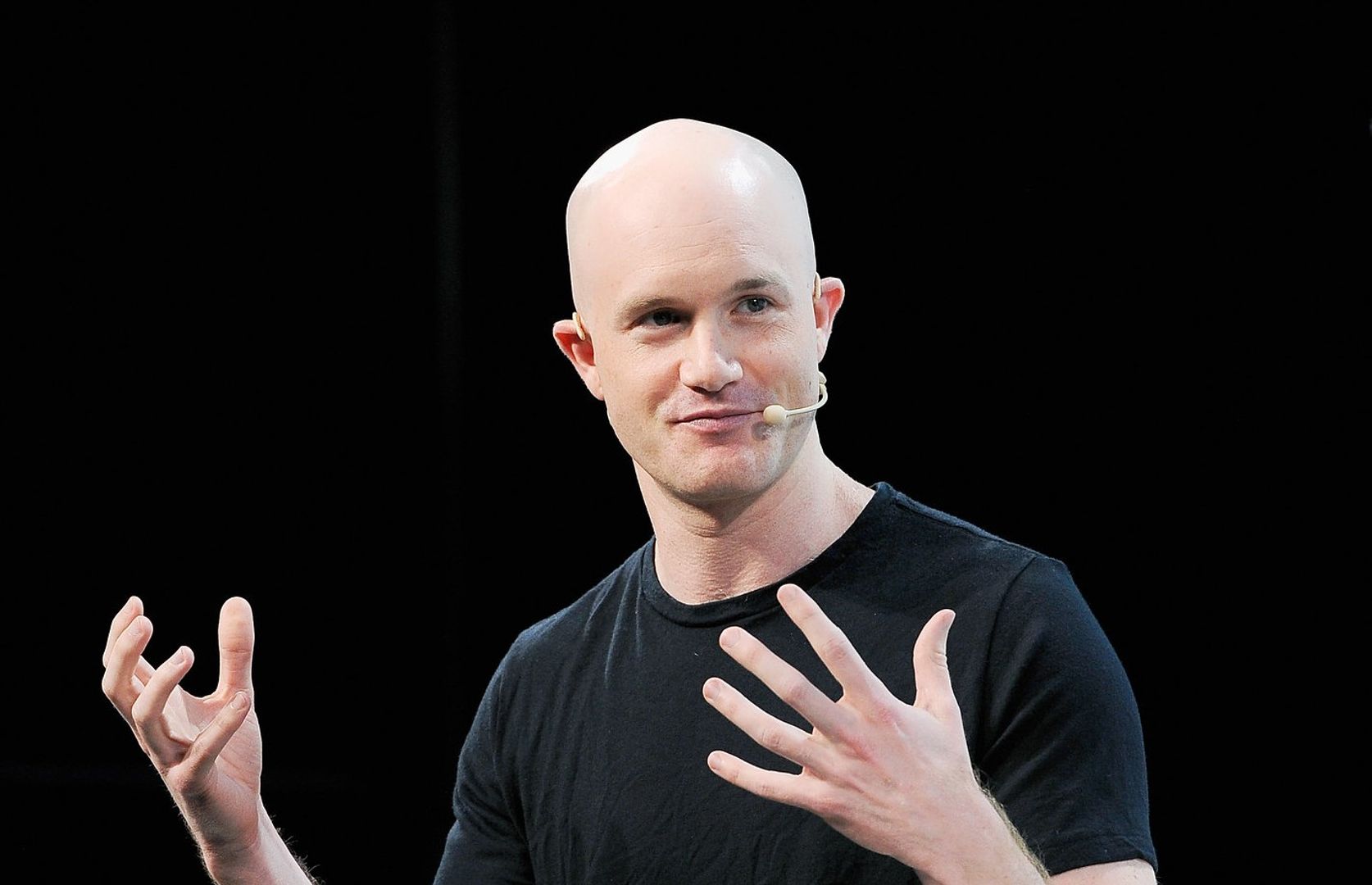
Coinbase’s (COIN) latest product launch event may not have changed Wall Street’s near-term earnings forecasts, but it reinforced a growing belief among analysts that the crypto exchange is steadily transforming itself into a broader financial platform with revenue streams that extend beyond bitcoin’s price cycles.
At Tuesday’s System Update event in New York, Coinbase unveiled products spanning derivatives, tokenized stocks, stablecoin payments, lending and artificial intelligence. While the announcements covered a wide range of businesses, analysts focused less on the individual products and more on what they reveal about the company’s long-term strategy.
For years, Coinbase’s fortunes have been closely tied to crypto trading activity. When bitcoin rallies and retail investors return to the market, trading revenue tends to surge. During slower periods, that revenue can fall sharply. Analysts increasingly view Coinbase’s product expansion as an effort to reduce that dependence.
“The new features are aligned with the company’s effort to become the ‘everything’ exchange,” Barclays analyst Benjamin Budish wrote following the event, adding that the company is seeking to capture a larger share of customers’ financial activity as crypto trading volumes remain relatively subdued.
Cantor Fitzgerald analyst Ramsey El-Assal struck a similar tone. While acknowledging softer conditions across crypto markets, he said Coinbase’s “innovation engine hasn’t skipped a beat” and argued that the company is positioning itself to benefit from a future where consumers manage investing, spending and borrowing through a single app or wallet.
‘The prize’
What stood out to analysts among Coinbase’s myriad new product launches was derivatives.


Coinbase has hit back at claims that it doxxed a customer who made use of the exchange’s first crypto-backed mortgage.
During a June 16 event, at which Coinbase unveiled 21 new products, the company shared a photo of the house apparently backed by the mortgage, describing the owner as someone who owns a lot of bitcoin (BTC).
However, a critic soon claimed to have pulled up the buyer’s Zillow listing — not ideal, given that BTC’s parabolic price increase over the past 17 years and the fact that keys instantly confer ownership make owners appealing targets for thieves.
Attempting to downplay any fears, a Coinbase spokesperson told Protos, “During the exciting process of closing on the home, Coinbase and Better worked closely with the homeowner on a mindful way to share the news while maintaining their privacy.
“We received a picture of the house, taken by the homeowner, and took steps to anonymize the house by removing and changing key identifiers and features.
“We then received their express permission to use the altered image in both Better’s press release and Coinbase’s recent showcase.”
Despite these steps, Protos staff was able to determine the address of the house, which we will withhold out of respect for the owner’s privacy.
Read more: Coinbase changed lawsuit rules a day before disclosing data breach, report
Clearly a customer’s house
Although it is digitally altered, the house is not a stock photo. On the original press release as well as during Coinbase’s launch event this week, the company clarified that the house is, despite modifications, a photo of the house of the customer.
A caption on the original image reads, “First home purchased with Better and Coinbase’s BTC-backed mortgage.”
The crypto-backed mortgage program is a joint effort between Coinbase and Better Home & Finance, a Nasdaq-listed lender run by Vishal Garg. The two companies announced the home purchase in March as the first bitcoin-backed, GSE-conforming mortgage.
The whole arrangement became possible after Federal Housing Finance Agency then-Director Bill Pulte ordered GSE companies Fannie Mae and Freddie Mac to count crypto as a mortgage-qualifying asset in 2025.
Under the program, lenders have counted pledged BTC at roughly 40% of its value, a steep 60% haircut, whereas USDC gets about 80% credit. Liquidation kicks in only after a borrower goes 60 days delinquent.
Got a tip? Send us an email securely via Protos Leaks. For more informed news and investigations, follow us on X, Bluesky, and Google News, or subscribe to our YouTube channel.
Crypto World
Jeffrey Gundlach says Fed’s Warsh is not going to be the ‘easy money’ chairman many hoped for
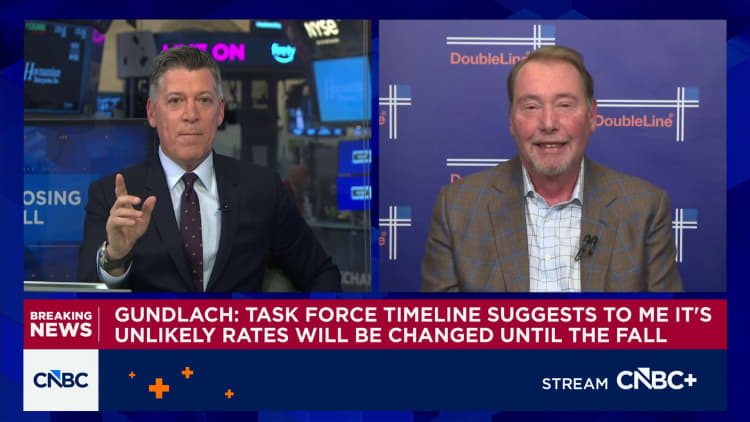

DoubleLine Capital CEO Jeffrey Gundlach said new Federal Reserve Chairman Kevin Warsh struck a more hawkish tone than many investors expected, underscoring his commitment to restoring price stability and signaling less appetite for easy monetary policy.
“He is absolutely telling you that he plans on delivering on price stability. So that means… we’re not going to have such easy money policy as everybody thought maybe Chairman Warsh would do back in the first quarter of this year, when everyone was counting on rate cuts,” Gundlach said on CNBC’s “Closing Bell.” “He doesn’t sound like that today at all.”
The comments came after the Fed’s policy statement declared that “the Committee will deliver price stability,” language that echoed a theme Warsh repeatedly returned to during his press conference. He reiterated that the Fed is committed to bringing inflation back down to 2%, a level it hasn’t been at for a half decade, a fact he lamented.
“The commitment to deliver is strong, unanimous, and unambiguous, and that’s I think an important message we’ve missed for five years, and we’re going to fix that,” Warsh said.
The tone was perhaps stiffer on inflation than investors and economists hoped for from President Donald Trump’s handpicked nominee for the role. The previous chair, Jerome Powell, faced a barrage of attacks from Trump for keeping rates too high.
Warsh also declined to submit an individual interest-rate projection in the central bank’s closely watched dot plot and signaled a broader review of the Fed’s communications framework.
Gundlach said Warsh’s emphasis on price stability lowers the risk that the Fed will pursue overly accommodative policies that could reignite inflation. That strengthens the case for owning long-term U.S. Treasuries, he said.
“I think there’s a greater reason to own long-term Treasuries today now that the new sheriff is in town,” Gundlach said. “If you’re going to get price stability, and if he doesn’t deliver on something that can be characterized as price stability, he’s basically announced today that he would be considered a failure.”
The billionaire bond investor said Warsh had effectively staked his credibility on bringing inflation under control, making aggressive rate cuts less likely.
“So he’s got to get that inflation rate down,” Gundlach said. “We don’t have to worry about the over-easing or overly accommodative rates that would put further pressure on the long bond.”
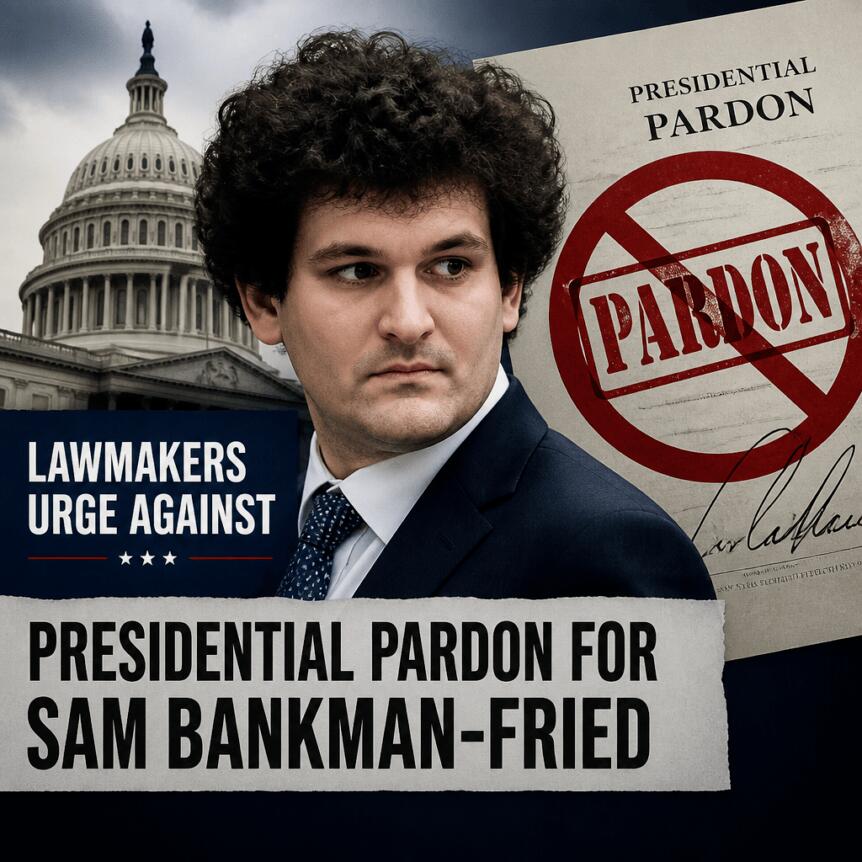
Two US senators—one Republican and one Democrat—are pushing back against any attempt by former FTX CEO Sam Bankman-Fried to secure executive clemency from President Donald Trump. Senator Cynthia Lummis and Senator Rubén Gallego plan to introduce a non-binding resolution stating that under no circumstances should Bankman-Fried receive a pardon or commutation.
The lawmakers say the aim is to protect the integrity of the sentencing outcome and deterrence for large-scale financial fraud. The resolution argues that the 25-year sentence imposed on Bankman-Fried reflects the “extraordinary scale and deliberateness” of his crimes, his lack of remorse, and the harm inflicted on millions of victims.
Key takeaways
- Senators Cynthia Lummis (R) and Rubén Gallego (D) will introduce a non-binding resolution opposing any presidential pardon or commutation for Sam Bankman-Fried.
- The resolution emphasizes that Bankman-Fried’s 25-year sentence reflects the “extraordinary scale” and “deliberateness” of his offenses and the widespread impact on victims.
- Bankman-Fried’s remaining legal options are limited to a presidential pardon or further review by the US Supreme Court after a federal appeals court upheld his conviction and sentence.
- The senators warn that granting clemency would “erase” the conviction, weaken deterrence, and send a “damaging message” that perpetrators of major financial fraud can avoid permanent accountability.
What the Senate resolution would do
According to the text of the resolution to be introduced Wednesday, Lummis and Gallego would effectively register the Senate’s position that President Trump should not grant clemency “under no circumstances,” including a pardon or commutation for Bankman-Fried.
The senators note that a presidential pardon is a constitutional power, meaning any Senate action of this type is not legally binding. Even so, the resolution is intended to create political and legislative pressure by explicitly tying clemency to deterrence and accountability concerns.
The measure further states that the Senate affirms the duration of Bankman-Fried’s sentence and frames that punishment as consistent with justice and the case’s specific circumstances, including the scope of wrongdoing and the consequences for victims.
The resolution is provided through a document published on Gallego’s official website: MEE26050.pdf.
Bankman-Fried’s clemency bid follows an appeals loss
The resolution arrives after Bankman-Fried formally applied for a presidential pardon related to his conviction on seven felony counts connected to the misuse of FTX user funds. Earlier coverage from Cointelegraph detailed that application and the broader push for clemency: SBF clemency bid.
In the latest procedural turn, a federal appeals court upheld Bankman-Fried’s conviction and 25-year sentence, leaving his path forward narrowed to either seeking a pardon or pursuing review by the US Supreme Court. Cointelegraph previously reported on the appeals court decision here: Bankman-Fried loses appeal.
Because the appeals court decision sustained both the conviction and the length of the prison term, clemency would function as the main mechanism for any outcome short of further litigation—an issue the senators appear to be targeting directly with their “no pardon, no commutation” language.
Why deterrence is at the center of the lawmakers’ argument
Lummis and Gallego’s resolution focuses not on the details of the original sentencing alone, but on what they argue would happen if the conviction were undone at the executive level. In their framing, a pardon would “erase” the conviction and, more importantly, could weaken deterrence for future financial crimes.
The lawmakers also portray clemency as a broader signal to the public: that individuals accused and convicted of large-scale financial fraud may escape permanent accountability even after a lengthy federal sentence.
This deterrence theme matters in the context of the FTX collapse, which triggered one of the most significant blowups in the crypto sector’s modern history. Bankman-Fried was convicted in November 2023 following FTX’s collapse in 2022, and he was later sentenced to 25 years in prison. Cointelegraph noted the conviction and sentencing background in its reporting.
The senators’ argument effectively tries to connect executive discretion to market and regulatory confidence—suggesting that the aftermath of high-profile fraud cases influences how seriously deterrence is treated across the financial system.
Other FTX defendants remain in the criminal system
The resolution discussion also sits alongside the continued legal fallout from the FTX collapse. Even as Bankman-Fried seeks clemency, other figures from the broader FTX and Alameda orbit have faced sentencing outcomes ranging from prison terms to time served in exchange for cooperation.
According to the article’s summary of court outcomes, Caroline Ellison, the former CEO of Alameda Research, received a two-year sentence in 2024 and was granted early release in January after serving 14 months. Meanwhile, Nishad Singh, the former engineering director at FTX, and Gary Wang, a co-founder, were both sentenced to time served, with their testimony offered against Bankman-Fried during trial.
Another defendant, Ryan Salame, the former co-CEO of FTX Digital Markets, was sentenced to 90 months in prison tied to unlawful political contributions and conspiracy to operate an unlicensed money-transmitting business.
The article also notes that Salame’s wife, Michelle Bond, was indicted in connection with charges tied to her 2022 run for Congress, with allegations that campaign funds were financed with illegal contributions linked to the crypto exchange. This was reported by Courthouse News Service in coverage referenced by Cointelegraph: indicted.
That broader slate of cases underscores an important point for investors and observers: even if one individual’s sentence is subject to presidential clemency, the overall accountability process tied to FTX and related conduct has not ended.
Going forward, readers should watch whether the White House signals any openness to clemency despite the appeals court ruling—and whether the Senate resolution gains additional support in a way that could influence the political calculus surrounding executive action.
The first FOMC meeting with the new Federal Reserve Chair, Kevin Warsh, at the helm of the central bank didn’t provide any surprises, as the entity expectedly left the interest rates unchanged.
With the benchmark remaining between 3.5% and 3.75%, bitcoin’s price reacted with minor initial volatility, but there are some warning signs about an upcoming correction.
Recall that nearly two months ago, the Fed under then-Chair Jerome Powell left the rates unchanged for the third consecutive time. However, there were signs from Powell that rate hikes might follow suit.
Despite today’s non-event, as it was described by David Wessel, director of Brookings’ Hutchins Center on Fiscal and Monetary Policy, he also said that Kevin Warsh now finally has the power to change things at the Fed after years of “ranting about” it.
Bank of America’s fund manager survey showed that 55% anticipated Warsh would be hawkish at the press conference, but Stephen Juneau, the bank’s US economist, held the opposite view.
“The investor consensus seems to be that Warsh will lean hawkish in his press conference. We think he’ll be dovish.”
Bitcoin’s price was slightly volatile in the hours leading up to the event, going below $65,000 earlier today before it shot up to $66,400. However, it dipped by over a grand in the first minutes after the news of the unchanged rates went live.
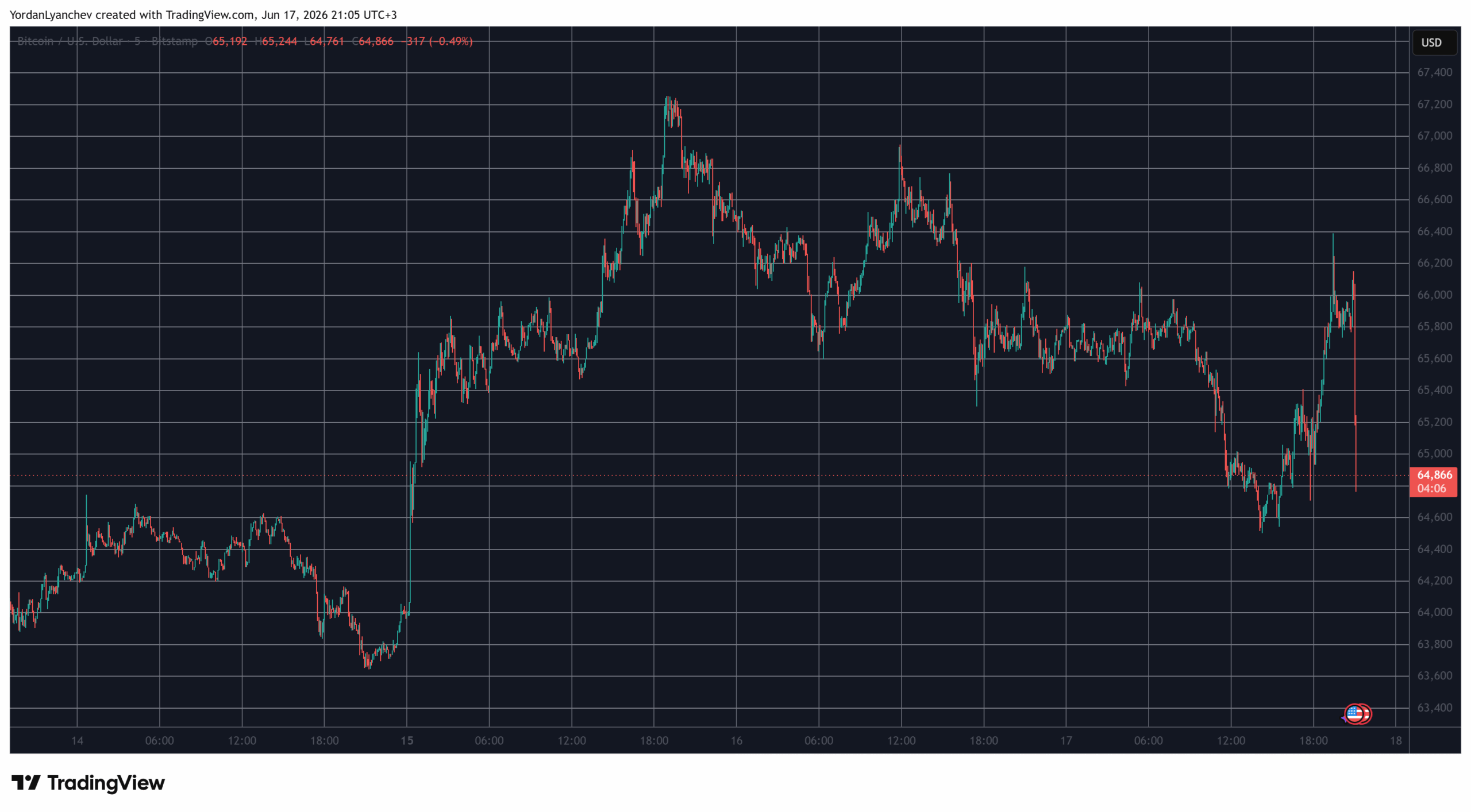
Previous reports from crypto experts noted that the first FOMC meeting and the subsequent Warsh press conference could be one of the most important macro events for the industry.
The post BTC Price Drops as New Fed Chair Kevin Warsh Holds Rates Steady appeared first on CryptoPotato.
ASTER has surged more than 20% after Aster unveiled a new tokenomics framework that commits almost all platform fee revenue to daily token buybacks and large-scale supply reductions.
Summary
- ASTER surged over 20% after Aster committed 99% of platform fees to daily token buybacks.
- Aster plans to cut ASTER supply from 8 billion to 3 billion through ongoing reserve burns.
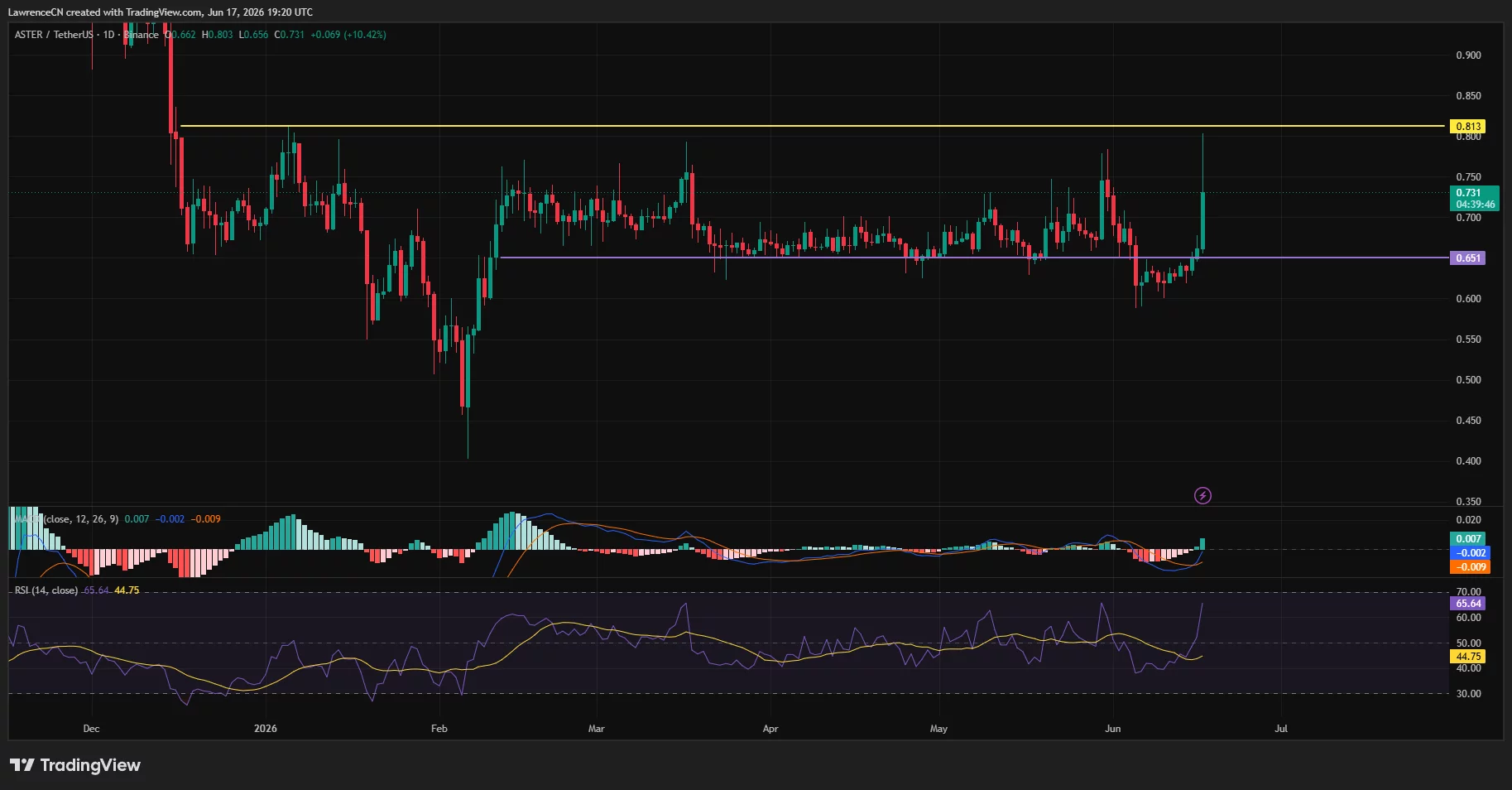
- Technical indicators turned bullish as ASTER broke above $0.65 and approached resistance near $0.81.
According to a June 17 X post by Aster, 99% of the protocol’s daily fees will now be used to purchase ASTER from the open market beginning June 17 at 12:00 PM UTC. The announcement pushed the token close to $0.80 before some profit-taking emerged, with ASTER later changing hands near $0.74, up roughly 13% over the past day.
The update introduces a second layer of supply reduction alongside the buybacks. Aster said it will remove an equal amount of ASTER from reserve holdings each day, creating what the protocol described as a 198% combined buyback-and-burn effect.
Reserve reductions will begin with the team allocation and continue until the total token supply falls from 8 billion ASTER to 3 billion.
Additional demand could also come from Aster Spot. According to the protocol, every permissionless token listing on the platform will require a 50,000 USDT fee, with all proceeds earmarked for further ASTER buybacks that will be distributed to stakers through the rewards program.
Platform fees now drive ASTER rewards
Rather than destroying purchased tokens, Aster said the acquired ASTER will be distributed to participants in its Loyalty Rewards program.
Under the revised model, each reward epoch will include a fixed allocation of 300,000 ASTER plus all tokens accumulated through daily buybacks.
Distribution will be directed to veASTER holders according to lock-weighted participation. Aster added that all buybacks will be executed through an automated daily time-weighted average price process and settled on-chain. To increase transparency, the project has also published the wallet address used for the purchases, allowing users to verify transactions independently.
By linking fee generation directly to token purchases, staking rewards and reserve reductions, the protocol has created a mechanism where higher trading activity results in larger buybacks and larger reward distributions.
Technical breakout places $0.81 resistance in focus
Market participants responded quickly to the announcement, driving ASTER above a trading range that had largely contained price action since April. On the daily chart, the token broke through support-turned-resistance near $0.65 and climbed toward the next major barrier around $0.81.
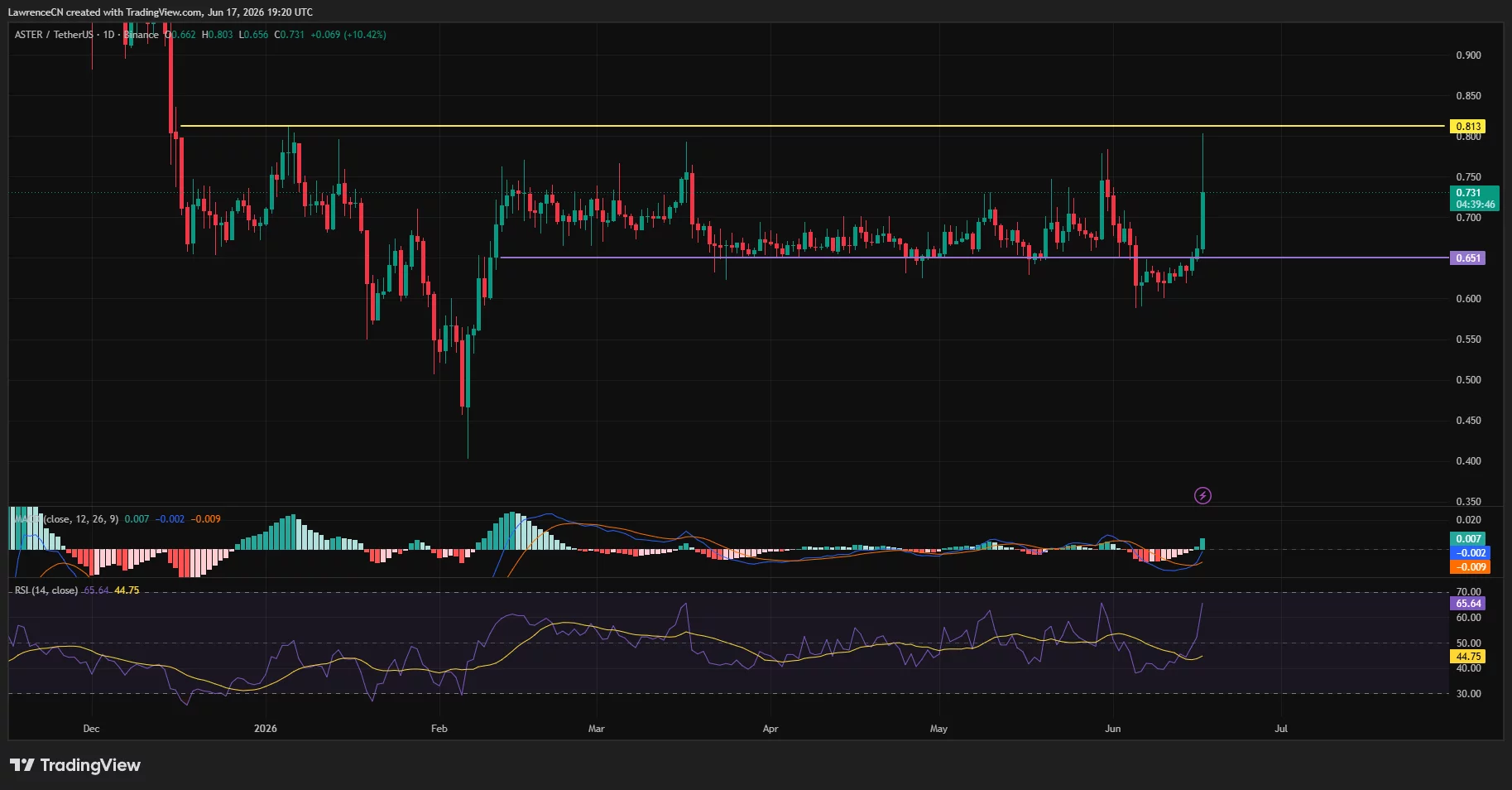
The daily chart also showed strengthening momentum indicators following the move. ASTER’s Relative Strength Index rose above 65, while the MACD produced a bullish crossover accompanied by expanding positive histogram bars, signaling stronger buying pressure.
The $0.81 region remains an important level because it coincides with several prior rejection points visible on the daily chart. A successful break above that zone could expose the token to areas not tested since late 2025, while traders may look for the former resistance near $0.65 to act as support if the rally pauses.
Disclosure: This article does not represent investment advice. The content and materials featured on this page are for educational purposes only.
This article was updated with additional details from the Federal Reserve’s latest dot plot projections and voting results.
The Federal Reserve has kept its benchmark interest rate unchanged at 3.50% to 3.75% for a fourth consecutive meeting as policymakers continue monitoring inflation risks across the U.S. economy.
Summary
- The Federal Reserve unanimously kept interest rates at 3.50%–3.75% for a fourth straight meeting.
- Fed projections showed nine officials expect at least one rate hike this year, signaling persistent inflation concerns.
- Bitcoin fell to $65,430 as investors assessed the Fed’s hawkish outlook and Kevin Warsh’s policy stance.
According to the Federal Open Market Committee, officials voted unanimously to leave rates unchanged at the conclusion of the June meeting, keeping the federal funds target range at 3.50% to 3.75%
The decision extended a pause that has remained in place throughout 2026 and matched market expectations, with investors widely anticipating no change in policy despite continued concerns about inflation.
Attention has now turned to Fed Chair Kevin Warsh’s first post-meeting press conference, where investors are looking for clues about how policymakers view inflation and whether tighter monetary policy could still be required later this year.
Inflation concerns continue to shape policy outlook
Although the Fed left rates unchanged, concerns about inflation remain central to the policy discussion. In its statement, the Committee cited ongoing uncertainty surrounding price pressures as officials weigh future decisions.
Among the firms adopting a more cautious view, Citadel Securities has warned that inflation may be becoming entrenched across the economy. As previously reported by crypto.news, the firm pointed to supportive financial conditions, labor market resilience, supply-chain disruptions, and rising investment tied to artificial intelligence as factors that could keep inflation elevated.
Citadel also highlighted recent economic data showing a growing share of core Consumer Price Index components increasing more than 3% year over year. The firm noted that headline CPI reached 4.2% in May, while Producer Price Index inflation accelerated to 6.5%, indicating continued cost pressures for businesses.
Based on those conditions, Citadel expects the Federal Reserve under Warsh to maintain a hawkish stance. The firm estimates that at least five Fed officials could signal support for future tightening and argues that an inertial Taylor Rule framework would justify roughly 75 basis points of rate increases during 2026.
Under Citadel’s forecast, rate hikes could arrive in September and December 2026, followed by another increase in March 2027. While the firm does not expect an immediate move, it said Warsh’s assessment of inflation risks will be critical for markets.
Adding to the debate, BNP Paribas recently abandoned its expectation for stable policy and now forecasts three rate hikes beginning in December. The bank cited persistent inflation, strong employment data, and inflation risks associated partly with geopolitical tensions involving Iran.
Fresh economic projections released alongside the decision suggested many policymakers remain concerned about inflation. According to the Fed’s updated dot plot, nine of 18 officials expect at least one rate hike before the end of the year.
Six of those officials projected multiple increases, while only one participant forecast a rate cut. One official did not submit a projection, a position widely assumed by market observers to belong to Chair Kevin Warsh.
Markets await signals from Warsh
Recent developments in energy markets have complicated the inflation outlook. Following the initial U.S.-Iran agreement, oil prices moved lower, reducing one source of inflation pressure. Even so, several analysts continue to argue that price increases have spread beyond energy and into other parts of the economy.
Political pressure has also remained in focus. President Donald Trump has repeatedly called for lower interest rates, although he recently suggested he would not pressure Warsh to cut rates in the same manner he publicly challenged former Fed Chair Jerome Powell.
Financial markets showed a muted reaction following the announcement, although risk assets weakened after investors reviewed the Fed’s projections. According to data from crypto.news, Bitcoin fell 0.6% over the previous 24 hours to around $65,430, while Ethereum declined 1.4% to roughly $1,770.
Most other top-100 digital assets traded near flat levels, posting only modest gains or losses. The total cryptocurrency market capitalization slipped 0.7% to approximately $2.33 trillion at press time as traders continued assessing the implications of the Fed’s decision and the possibility of future policy tightening.
Bitcoin (BTC) bounced off week-to-date lows into Wednesday’s Wall Street open as corporate sell pressure returned to the radar.
Key points:
- Bitcoin sees a new low for the current weekly candle with the Fed FOMC meeting due in hours.
- Analysis warns that markets remain concerned over Strategy potentially selling more BTC.
- Fed chair Kevin Warsh faces a tough balancing act at his first interest-rate decision.
Strategy selling still impacting Bitcoin price strength
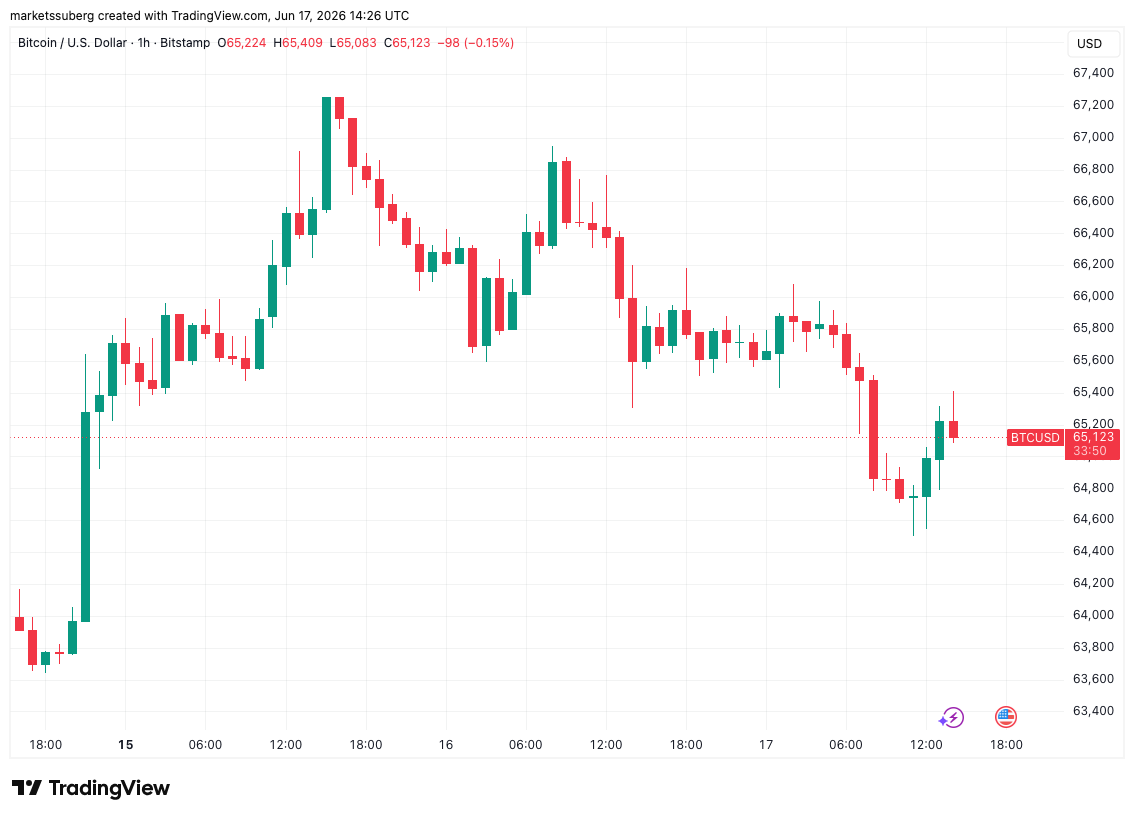
Data from TradingView showed BTC/USD heading higher after dropping to $64,500 on Bitstamp.
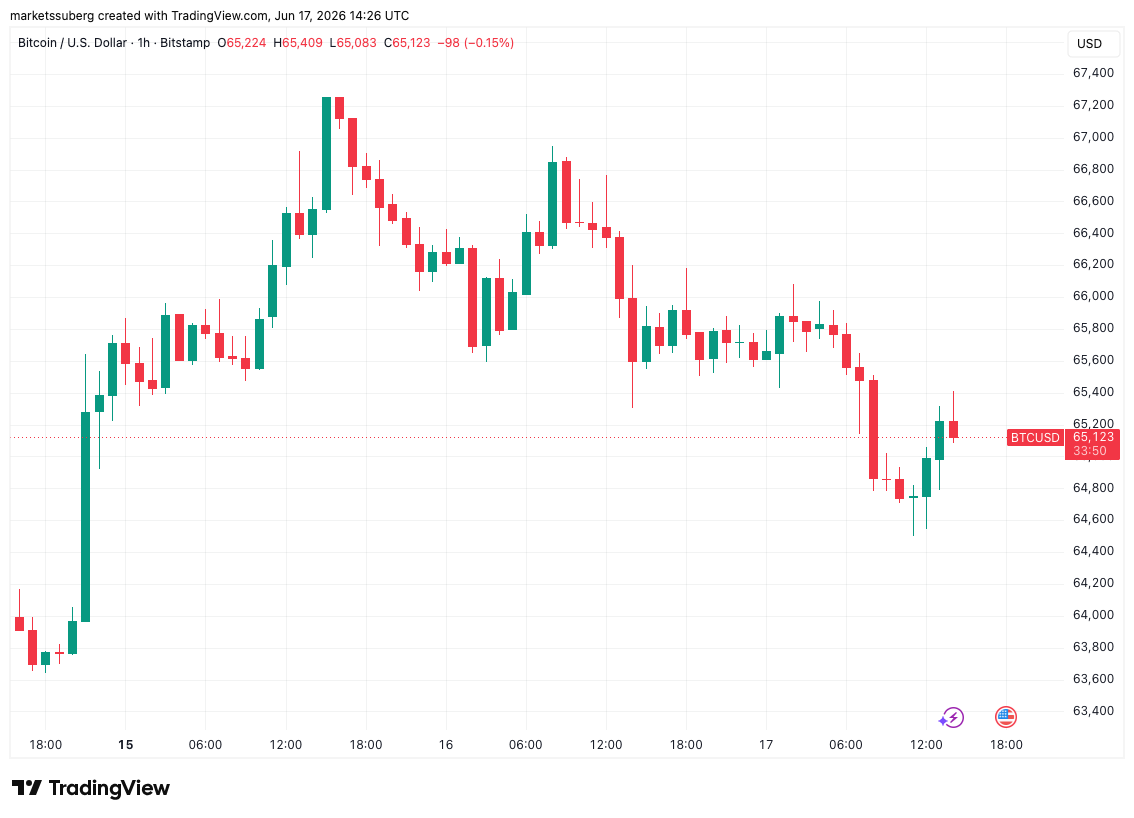
BTC/USD one-hour chart. Source: Cointelegraph/TradingView
The pair saw ongoing weakness ahead of the US Federal Reserve’s interest-rate meeting, scheduled for 2pm Eastern time. As Cointelegraph reported, such events tend to trigger BTC price downside.
In its latest Market Color analysis, trading company QCP Capital said that the BTC price outlook was clouded by more than just the Fed.
“While broader markets continue to trade higher on optimism across multiple fronts, BTC remains stuck below the 66k level,” it wrote.
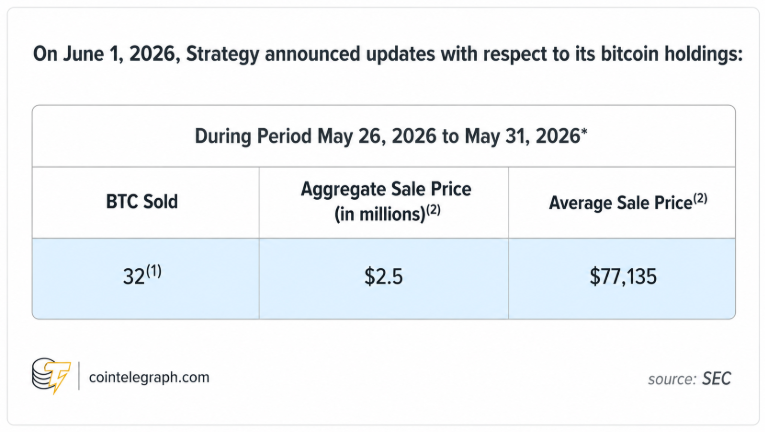
“The underperformance has been driven in part by concerns that Strategy may need to sell more Bitcoin to fund dividend payments, especially after buying back $1.5 billion of its 2029 Convertible Senior Notes.”
Source: Cointelegraph
QCP explained that contingency measures by technology company Strategy had “extended its runway” in terms of liquidity after selling 32 BTC in May, but markets remained wary of potential problems further down the line.
“In the short term, we think this overhang may continue to prevent Bitcoin from fully participating in the broader macro optimism. However, as Strategy continues to issue shares and lengthen its runway, that optimism may eventually catch up to BTC,” it continued.
“For now, the macro tide has turned more supportive, but Bitcoin still has one very specific overhang to work through.”
Fed’s Warsh faces “difficult opening act”
On the Fed, meanwhile, QCP joined those putting the focus on new Fed chair, Kevin Warsh.
Related: Can BTC rebound to $69K as oil price plunges? Five things to know in Bitcoin this week
“Warsh takes the stage at his first Fed meeting as Chair today,” it stressed.
“Previous expectations had positioned him as dovish and more inclined toward rate cuts, but the economic backdrop has shifted materially.”
QCP described a “difficult opening act” for Warsh, who should balance inflationary trends with pressure to cut rates from president Donald Trump.
“Today’s meeting will therefore be about more than the rate decision,” it continued, referring to outgoing chair, Jerome Powell.
“It will be Warsh’s first opportunity to secure buy-in from Powell and the rest of the Board, while establishing himself as a credible and independent Fed Chair.”
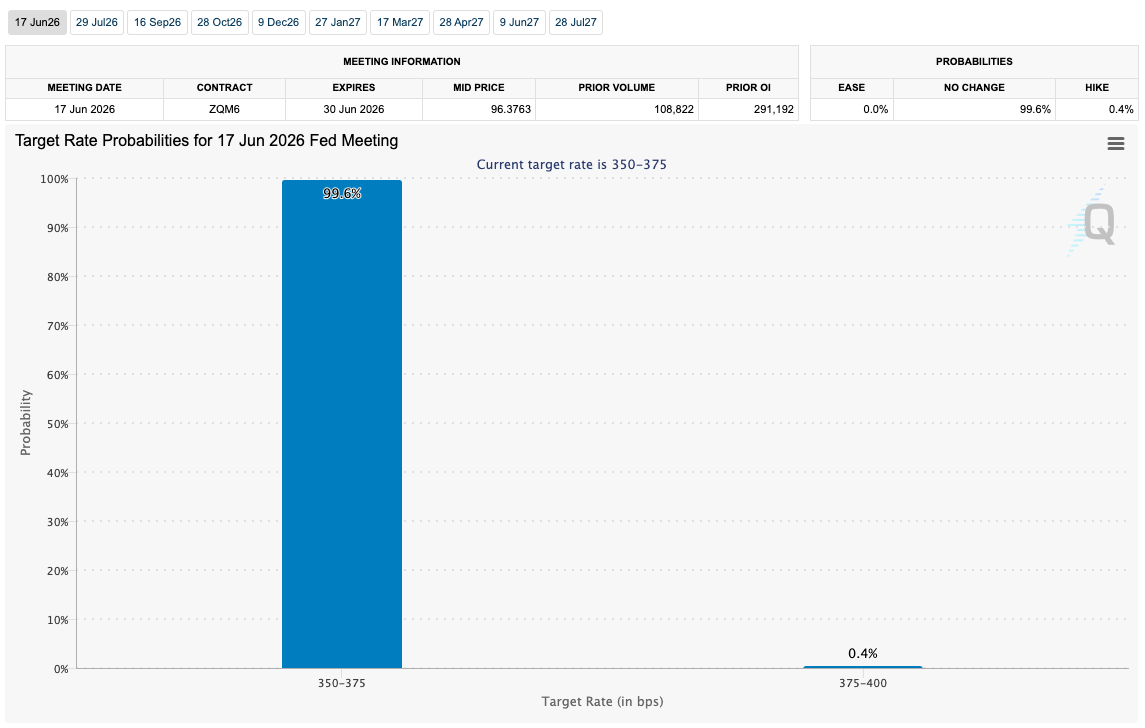
Fed target rate probabilities for Wednesday FOMC meeting (screenshot). Source: CME Group
Data from CME Group’s FedWatch Tool showed no odds of the Federal Open Market Committee (FOMC) cutting rates.
Andre Dragosch, European head of research at crypto asset manager Bitwise, noted that markets increasingly expected a rate hike by the end of the year — a clear would-be headwind for crypto and risk assets.
“IMO still a lot of monetary policy uncertainty around the question whether Warsh is rather hawkish or dovish amid the rise in inflation,” he wrote in a post on X.
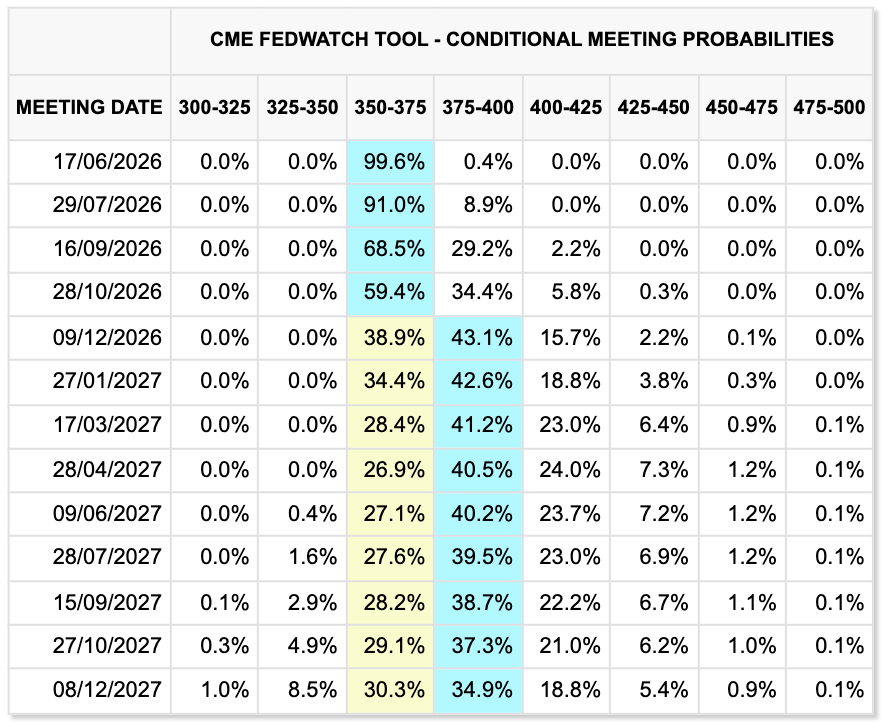
Fed target rate probabilities (screenshot). Source: CME Group
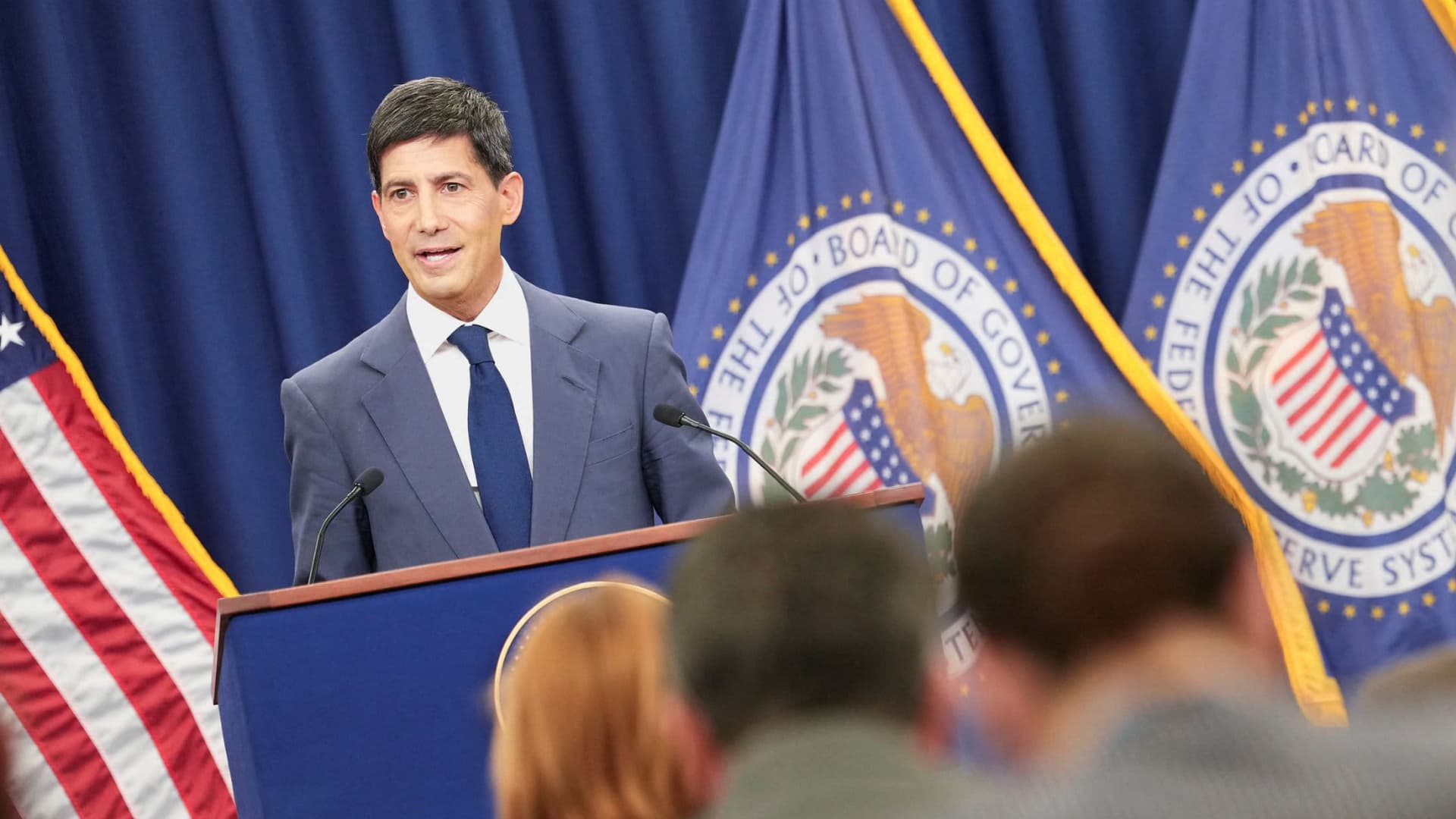
New U.S. Federal Reserve Chairman Kevin Warsh holds a press conference following a two-day meeting of the Federal Open Market Committee (FOMC), at the U.S. Federal Reserve in Washington, D.C., U.S. June 17, 2026.
Eric Lee | Reuters
Wednesday’s Federal Open Market Committee statement looked drastically different than those issued after previous meetings, offering one of the first formal signs of the changes promised by new Federal Reserve Chairman Kevin Warsh.
The statement released Wednesday contained around 130 words, down from figures above 300 recorded in each of the past two meetings, according to a CNBC analysis of the releases.
Warsh acknowledged a “difference” in the statement early in his first press conference as chair on Wednesday. He said there was no forward guidance, as it was “not well suited for the current policy conjuncture.”
“It’s a bit shorter, a bit simpler and it dispenses with some older language,” Warsh said. “That statement just gives you the facts, as best we can judge it.”
Below is a comparison of Wednesday’s FOMC statement with the one issued after the Fed’s previous policymaking meeting in April.
Text removed from the April statement is in red with a horizontal line through the middle. Text appearing for the first time in the new statement is in red and underlined. Black text appears in both statements.
Wednesday’s release contained no information on how members voted, previously an fixture at the end of releases under former Federal Reserve Chairman Jerome Powell. Instead, Wednesday’s statement indicated only that it was a unanimous vote.
The latest statement also includes less color on how the Fed views current inflation trends and where it could be going next. However, the statement did say that the Fed is committed to having stable prices.
“What Kevin Warsh is trying to do with this statement is not use the statement to give forward guidance, and I think he did a pretty good job with that,” said David Wessel, senior fellow at Brookings, on CNBC’s “Power Lunch.”
Fed watchers viewed the change as part of a “regime change” Warsh has promised for the central bank. Warsh has criticized how the Fed communicates, arguing that it leads to policy errors and entagles the central bank in markets.
“Warsh’s first FOMC statement left the clear impression that there is a new chair in town,” said Ian Lyngen, head of U.S. rates strategy at BMO.
“The statement was significantly shortened — eliminating the forward guidance,” he said. It gave “only a cursory characterization of the economy as ‘expanding at a solid pace.’”
— CNBC’s Davis Giangiulio and Yun Li contributed to this report.

TLDR:
- Moody’s brought machine-readable credit ratings to Solana through its integration with Alphaledger infrastructure.
- Solana became the first public blockchain capable of supporting Moody’s ratings directly on-chain.
- Issuers can now embed Moody’s credit data into tokenized fixed-income assets at the asset level.
- The rollout follows Moody’s earlier TIE deployment on Canton Network during March 2026.
Moody’s has expanded its blockchain strategy by bringing machine-readable credit ratings to Solana through a new integration with Alphaledger.
The move places one of the world’s most widely used credit assessment systems directly on a public blockchain network. It also marks the first time Moody’s ratings can operate at scale on a major permissionless chain.
The deployment adds another institutional finance layer to Solana’s growing real-world asset ecosystem.
Moody’s Credit Ratings Reach Solana Through Alphaledger Integration
According to a release from Moody’s Corporation, Moody’s Ratings has extended its Token Integration Engine, known as TIE, to the Solana network. The integration comes through Alphaledger, a platform focused on tokenized fixed-income assets.
The launch follows a proof-of-concept completed on Solana’s devnet in June 2025. That earlier test explored how credit ratings could become part of tokenized securities issued on-chain.
With the deployment now live, issuers using Alphaledger can choose to attach Moody’s Ratings data directly to tokenized fixed-income instruments. The information becomes available within the asset’s digital infrastructure rather than through separate external systems.
Moody’s stated that the rollout makes its ratings ready for large-scale deployment on a major public blockchain. The company also noted that TIE was designed to function across different blockchain environments rather than a single network.
The development follows Moody’s first blockchain-based ratings deployment on the Canton Network in March 2026. At the time, the company introduced ratings delivery capabilities on a permissioned institutional blockchain.
Solana RWA Market Gains Institutional Credit Infrastructure
The latest integration brings Moody’s credit data into Solana’s expanding real-world asset sector. Credit ratings play a central role in traditional fixed-income markets by helping investors evaluate risk.
Moody’s said investors increasingly transact on blockchain networks and require access to independent credit assessments in those environments. The company described TIE as a network-agnostic framework built to support that transition.
Alphaledger stated that embedding ratings directly into tokenized assets removes the need for separate credit lookups. The platform highlighted municipal debt markets as one area where integrated ratings could support institutional participation.
The Solana Foundation also addressed the launch. According to information shared by the foundation, the network now becomes the first public permissionless blockchain capable of supporting Moody’s machine-readable credit ratings directly on-chain.
The release noted that credit information can now travel alongside tokenized assets throughout their lifecycle. Market participants can access independent credit analysis within the asset structure itself rather than relying on disconnected data sources.
Moody’s indicated that additional blockchain integrations remain under consideration as digital finance adoption grows. The company plans to expand TIE coverage across more networks, business lines, and financial instruments over time.


Messi lights up Kansas with historic hat-trick against Algeria

4 Takeaways From DR Congo’s World Cup Draw Against Cristiano Ronaldo’s Portugal

How to watch Ghana vs Panama: Free Streams & TV Channels


-

 Business3 days ago
No Jackpot Winner as $257 Million Prize Rolls Over to $269 Million Monday Draw
-

 Fashion5 days ago
Weekend Open Thread: Tuckernuck – Corporette.com
-

 Crypto World6 days ago
Oppenheimer backs SpaceX as $70 billion retail frenzy builds
-

 Crypto World6 days ago
Markets Rally as SpaceX IPO Looms Amid Iran Tensions and Inflation Surge
-
Crypto World3 days ago
Zimbabwe Requires Crypto Businesses to Register Annually Under New FIU Regulations
-

 Tech5 days ago
NanoClaw integrates JFrog registries to secure AI agent downloads
-

 Crypto World5 days ago
Bitget enters Argentina’s regulated crypto market through PSAV registration
-

 Tech5 days ago
This Week In Security: Microsoft On Microsoft, Register Your Domains, Linux On ARM, And FreeBSD Joins The File Cache Club
-

 NewsBeat6 days ago
El Nino has formed in the Pacific and could set records, forecasters say
-
 Tech6 days ago
Dutton Ranch star claims they ‘didn’t see any disruption’ on set following Chad Feehan’s exit from Yellowstone spinoff fueled by Taylor Sheridan clash rumors
-

 Politics6 days ago
Politics Home | Healey Resignation Is “Colossal Failure Of Government”, Says Former Labour Defence Secretary
-
 Entertainment6 days ago
Donnie Wahlberg & More Heat Up Las Vegas at Circa’s Barry’s Downtown Prime
-
 Tech6 days ago
Opendoor Ends India Operations, Fueling a Bigger Conversation About AI and Outsourcing
-

 Politics6 days ago
Belfast burns, while Met chief points finger at Iran and Russia
-

 Sports6 days ago
First Time Since 1971: Australia Register Historic Low In ODI Cricket
-

 Business6 days ago
AT&T: Verizon's 27% Outperformance Sets Up A Solid Entry Point
-

 NewsBeat5 days ago
FBI searches office of Ohio voter registration group
-
 Tech6 days ago
Anthropic is spending $150M to embed 1,000 AI fellows inside nonprofits. No degree required.
-
 Politics6 days ago
Modi thanks Trump for wishes as US attacks Indian seafarers
-
 Entertainment6 days ago
‘The Pitt’s Fan-Favorite Doctor Confirms Noah Wyle Gave His Blessing to Return [Exclusive]
You must be logged in to post a comment Login