
Crypto World
Almost 80% of Japanese institutional investors are eyeing crypto for their portfolios by 2029



Attitudes to crypto investment in Japan are shifting from cautious interest to active portfolio planning, according to a survey by Nomura and its digital asset arm, Laser Digital, with almost 80% of the country’s institutional investors saying they plan to add crypto in the next three years.
The shift reflects a growing view of crypto as a diversification tool. Many of the respondents cited low correlation with traditional asset classes as a key reason for adding exposure. Allocations, though, remain restrained, with more than half targeting between 2% and 5% of their portfolios.
It also reflects improving sentiment: 31% percent of respondents described their outlook on crypto as positive, compared with 25% in 2024, while negative sentiment declined to 18%.
The findings come as Japan refines one of the more established regulatory frameworks for digital assets among major economies. The country was an early mover in regulating crypto exchanges following the Mt. Gox collapse in 2014. Recent efforts have focused on integrating digital assets into existing financial laws, including updates tied to the Financial Instruments and Exchange Act.
That clarity has helped foster a domestic crypto ecosystem anchored by major companies such as SBI Holdings, the financial conglomerate that operates one of Japan’s largest crypto businesses, and bitFlyer, a long-standing exchange. Traditional financial institutions have also entered the industry.
Nomura, one of the world’s largest financial services companies, founded Laser Digital in 2022 to expand into trading, asset management and venture investing, while firms like Mitsubishi UFJ Financial Group have explored tokenized deposits and stablecoins.
Interest is expanding beyond simple price exposure. More than 60% of respondents expressed interest in income-generating strategies such as staking and lending, as well as derivatives and tokenized assets. That suggests investors are beginning to treat crypto less as a speculative trade and more as a broader financial toolkit.
Stablecoins are another area of focus. Sixty-three percent of respondents identified potential use cases, including treasury management, cross-border payments and foreign exchange transactions. Trust appears to be highest for stablecoins issued by major financial institutions, highlighting the importance of familiar counterparties.
Still, barriers remain. Investors pointed to challenges including the lack of established valuation frameworks, counterparty risks such as fraud or asset loss, and regulatory uncertainty. High volatility also continues to weigh on adoption.
Even so, those concerns are shifting. Rather than debating whether to invest, institutions are now focused on how to do it.
The survey was conducted in December and January and gathered responses from 518 investment professionals, including institutional investors, family offices and public-interest organizations.


Key Highlights
- Infosys unveiled a strategic alliance with OpenAI aimed at revolutionizing enterprise software development processes
- OpenAI’s Codex and additional models will be embedded into Infosys’s Topaz Fabric agentic services platform
- The collaboration includes Microsoft as a key supporting technology partner
- Target implementation areas span software engineering, legacy infrastructure updates, DevOps automation, and digital commerce
- INFY shares trade at $14.07, approximately 24.6% beneath its GF Value estimate of $18.65
Infosys (INFY) revealed a strategic alliance with OpenAI, with backing from Microsoft (MSFT), designed to enable enterprise customers to rapidly implement AI solutions across their organizations. The announcement came on April 22, 2026.
This collaboration will embed OpenAI’s advanced technology — notably its Codex model — directly into Infosys Topaz Fabric, the firm’s established agentic AI services infrastructure.
CEO Salil Parekh characterized the initiative as transitioning clients “from pilots to performance,” indicating an emphasis on production-ready, scalable AI implementations rather than proof-of-concept experiments.
The strategic partnership concentrates on four primary domains: software engineering operations, modernization of legacy infrastructure, DevOps process automation, and e-commerce platforms.
Updating legacy systems represents a critical challenge for major corporations, many of whom continue operating on infrastructure developed several decades prior.
This announcement positions Infosys directly within an intensifying competition among global IT services providers seeking partnerships with premier AI model developers.
With operations spanning more than 50 countries and a market capitalization approaching $57 billion, Infosys possesses the organizational reach to deploy these capabilities across an extensive customer portfolio.
Examining the Stock Valuation
INFY stock stood at $14.07 when the partnership was announced. Based on GuruFocus analysis, the stock’s GF Value — representing an intrinsic value calculation — stands at $18.65, indicating potential appreciation of roughly 24.6% from present price levels.
The company’s trailing twelve-month P/E ratio registers at 19.46x, significantly lower than its five-year median of 26.97x, suggesting the stock may be undervalued compared to historical trading patterns.
Infosys achieves an impressive 96 out of 100 on GuruFocus’s GF Score, earning maximum 10/10 scores in both profitability and growth categories.
Its financial strength receives a 9/10 rating, indicating what market analysts characterize as robust balance sheet fundamentals.
Price Momentum Shows Weakness
Notwithstanding these robust fundamental metrics, Infosys’s momentum score registers only 4/10 — signaling the stock has experienced limited positive price action in recent periods.
Insider transaction data reveals zero buying or selling activity during the past three months, suggesting a neutral perspective from company leadership.
INFY stock declined 1.88% on the announcement date, a relatively minor retreat that could reflect general market trends rather than specific concerns about the partnership announcement.
The alliance with OpenAI expands an expanding portfolio of AI-centered initiatives among leading IT services firms attempting to maintain competitive positioning as customers increasingly require sophisticated AI-powered solutions.
Infosys has not made public the financial terms associated with this collaboration.



Onramp, the Austin-based bitcoin custody and advisory firm, launched Onramp Finance on April 21, 2026, a unified platform combining cash management, bitcoin brokerage across all 50 states, bitcoin IRAs, direct gold ownership, and a spending card into a single interface.
The core question the launch raises: as institutional Bitcoin demand continues to accelerate, is the real infrastructure gap not custody or price exposure, but the fragmented financial rails surrounding long-term BTC holders?
- Platform launch: Onramp Finance went live April 21, 2026, consolidating banking, brokerage, custody, and retirement into one interface.
- Yield and rewards: Cash accounts offer up to 5% rewards funded by Onramp; spending card returns up to 1.5% cash back.
- Custody infrastructure: Multi-provider model spans BitGo, Coinbase, Coincover, and Tetra, with insurance through Lloyd’s of London.
- Genesis Program: Capped at 210 participants; requires a minimum 2 BTC deposit and a qualifying trade of at least $100 within 30 days.
- Target market: Long-term wealth builders and high-net-worth individuals treating bitcoin as a multi-decade holding, not a speculative trade.
Discover: The best crypto to diversify your portfolio with
How Onramp Finance Actually Works – and What the Architecture Signals
The platform organizes its services around three functions: earning, accumulating, and spending.
Users park cash in accounts earning up to 5% in Onramp-funded rewards, discretionary, not guaranteed interest, then route funds into bitcoin or gold, with cash-back rewards from the spending card redeployable into those same asset buckets.
Custody sits on a multi-institution model spanning BitGo, Coinbase, Coincover, and Tetra, with Lloyd’s of London providing insurance coverage.
That architecture eliminates single-point-of-failure risk that has historically plagued exchange-based custody, a direct structural response to the collapses that defined 2022.
The Genesis Program layers early-adopter incentives on top: no-fee custody vault for one year, early product access, and direct contact with company leadership, all for a minimum 2 BTC deposit and a qualifying $100 trade within 30 days.
Slots fill in trade-execution order, capped at 210 participants.
CEO Michael Tanguma framed the launch around long-horizon wealth principles rather than market timing.
His position is unambiguous: “Sound financial planning has always rested on a few simple ideas. Live on less than you make. Put the rest into things that hold their value. Pass them on intelligently.” That framing matters – it signals Onramp is explicitly not competing for the active-trader segment.
Discover: The best pre-launch token sales
The post Onramp Launches New Bitcoin Finance Platform for BTC-Native Services appeared first on Cryptonews.
Crypto World
Top 4 Energy Stocks to Watch in 2026: Exxon (XOM), ConocoPhillips (COP), Chevron (CVX), and Cheniere (LNG)

Key Highlights
- Exxon Mobil generated $52 billion in operating cash flow and $28.8 billion in earnings for 2025, driven by expansion in Guyana and the Permian Basin
- ConocoPhillips is allocating $12 billion for capital expenditures in 2026 and pursuing $1 billion in cost savings through Marathon Oil merger synergies
- Cheniere Energy is projecting record-breaking LNG shipments in 2026 and has authorized a buyback program exceeding $10 billion extending to 2030
- Chevron posted Q4 2025 profits of $2.8 billion, increased its quarterly dividend by 4%, and plans share buybacks ranging from $10 billion to $20 billion in 2026
- Wall Street analysts favor Cheniere and ConocoPhillips most strongly, with both stocks receiving nearly unanimous buy recommendations
Investors seeking long-term exposure to the energy sector are closely monitoring four major players heading into 2026. Exxon Mobil, ConocoPhillips, Cheniere Energy, and Chevron represent distinct investment approaches within the energy landscape, spanning traditional oil production to natural gas export infrastructure.
Each company brings substantial asset portfolios, reliable cash generation capabilities, and strategic expansion roadmaps. Below is a detailed examination of their recent performance and current Wall Street perspectives.
Exxon Mobil
Exxon stands as a global energy titan with operations spanning upstream oil and gas, downstream refining, and petrochemical manufacturing. This diversified structure provides greater stability compared to companies focused solely on exploration and production.
The company delivered annual earnings of $28.8 billion for 2025. Operating cash flow reached $52.0 billion during the same period.
Shareholder distributions totaled $37.2 billion, comprising $17.2 billion in dividend payments and $20.0 billion allocated to stock buybacks.
Strategic growth remains centered on operations in Guyana and the Permian Basin. The company has simultaneously emphasized structural efficiency improvements designed to maintain profitability during commodity price downturns.
Analyst consensus leans positive. According to MarketBeat data, the stock carries 10 buy ratings, 11 hold ratings, and zero sell recommendations.
ConocoPhillips
ConocoPhillips operates exclusively in upstream exploration and production. This concentrated business model creates more direct correlation between the company’s financial performance and crude oil price fluctuations.
Full-year 2025 earnings reached $8.0 billion. The company has budgeted approximately $12 billion for capital investments throughout 2026.
Management is pursuing $1 billion in combined capital and operational cost reductions this year. This efficiency initiative stems partly from integrating Marathon Oil following its recent acquisition.
The company maintains an extensive portfolio of U.S. shale resources while adhering to a disciplined capital allocation framework that prioritizes shareholder returns.
Wall Street sentiment is decidedly favorable. MarketBeat reports 17 buy recommendations, 9 hold ratings, and 1 sell rating.
Cheniere Energy
Cheniere diverges from traditional oil producers by focusing on liquefied natural gas exports. The company represents a distinct value proposition within the broader energy sector.
For 2026, management has projected consolidated adjusted EBITDA between $6.75 billion and $7.25 billion. Distributable cash flow estimates range from $4.35 billion to $4.85 billion.
The company anticipates achieving record LNG export volumes in 2026 and has authorized a shareholder buyback program surpassing $10 billion through the end of the decade.
In February, Cheniere submitted regulatory filings for a Stage 4 expansion at its Corpus Christi terminal, which would add 24 million tonnes per annum of liquefaction capacity. Approval would significantly enhance the company’s export capabilities.
Cheniere commands the strongest analyst support among these four companies. MarketBeat shows 17 buy ratings, 2 hold ratings, and zero sell recommendations.
Chevron
Chevron merges large-scale production capabilities with financial strength and a reliable dividend history.
The company reported fourth-quarter 2025 earnings of $2.8 billion, with adjusted earnings of $3.0 billion. Quarterly operating cash flow totaled $10.8 billion.
Adjusted free cash flow for the quarter reached $4.2 billion, while full-year 2025 production volumes hit company records.
Chevron implemented a 4% dividend increase and previously raised its 2026 free cash flow forecast to $12.5 billion. The company’s 2026 share repurchase authorization spans $10 billion to $20 billion.
Future growth initiatives center on Permian Basin operations and Guyana development, the latter contingent on completing its pending Hess Corporation acquisition.
MarketBeat data reflects 18 buy ratings, 5 hold ratings, and 3 sell ratings, positioning Chevron with a moderate buy consensus.
Investment Takeaways
Each of these four energy companies demonstrated solid operational and financial performance throughout 2025 and enters 2026 with predominantly positive analyst sentiment. Cheniere and ConocoPhillips enjoy the strongest Wall Street endorsements, while Exxon and Chevron appeal to investors seeking more diversified portfolios with reduced volatility. The choice among these stocks ultimately depends on individual investor preferences regarding oil production exposure, natural gas export potential, or integrated energy operations.
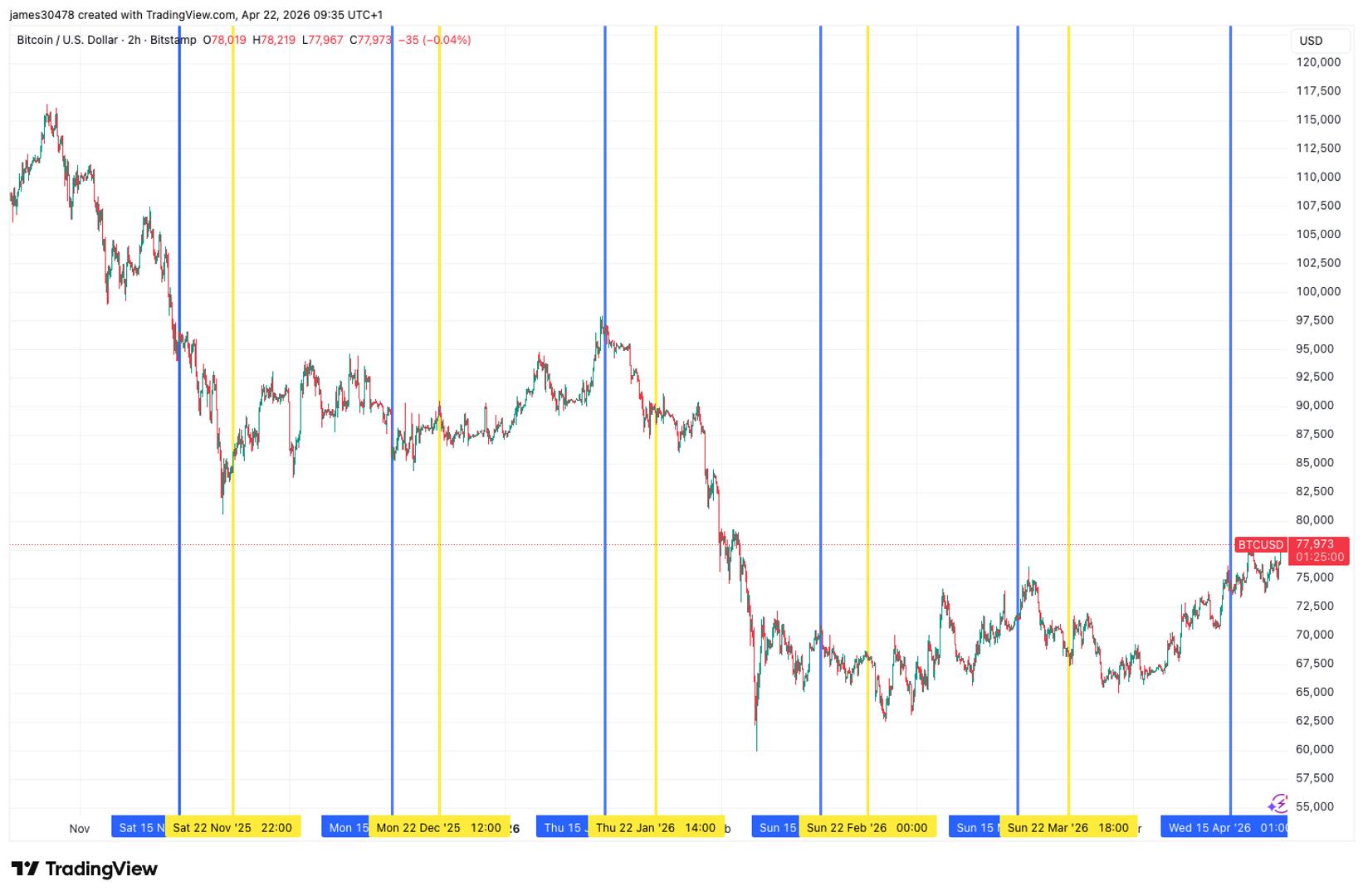
Strategy’s (MSTR) perpetual preferred stock, STRC, is now one week past its April 15 ex-dividend date. With bitcoin now at $79,000 this marks the first time in six months that BTC has risen in the week following the payout event.
At the time of the ex-dividend date, bitcoin was around $75,000, highlighting continued strength in BTC despite the typical post dividend adjustment in STRC. STRC over the past few months has served as an aggressive funding instrument for the company’s bitcoin purchases.
Like most dividend paying securities, STRC declines on its ex-dividend date by approximately the value of the payout, since new buyers are no longer entitled to receive it.
Following that drop, the shares tend to recover gradually, often taking about two weeks to move back toward their $100 par value. STRC is currently trading at $99.47.
This recovery is important because once the stock returns to par, Strategy the largest publicly traded company holding bitcoin, can utilize its at the market (ATM) program, issuing new shares at and use the proceeds to buy additional bitcoin.
Strategy shares are more than 9% higher on Wednesday at $178 at the time of writing, with the company likely tapping its common stock ATM program to fund additional bitcoin purchases.
Strategy disclosed the third largest bitcoin purchase ever of 34,164 BTC, while the price initially stayed within its $75,000 range.
However, the bitcoin rally appears driven in part by positioning. Perpetual futures funding rates remain negative, meaning short sellers are paying long positions to hold their trades, a signal that bearish sentiment still dominates.
As prices rise in that environment, shorts are forced to close positions, creating a short squeeze that accelerates gains.
At the same time, a persistent Coinbase premium, where bitcoin trades slightly higher on the U.S. exchange than offshore platforms, points to steady spot demand.

Volo Protocol, a liquid staking platform on Sui crypto, was exploited on April 22, 2026, for approximately $3.5 million across its WBTC, XAUm, and USDC vaults, the protocol’s first material security breach in its 18-month history.
The team has pledged to absorb the losses in full, and roughly $28 million in TVL across unaffected vaults remains secure after a rapid vault freeze contained the breach.
The core question this raises isn’t whether Volo failed; it did. The question is whether this represents a Volo-specific implementation flaw or a structural signal about risk in Sui’s rapidly scaling DeFi ecosystem, which crossed $1.2 billion in chain-wide TVL just before this incident.
- Exploit scale: $3.5 million drained from Volo Protocol’s WBTC, XAUm, and USDC vaults on April 22, 2026
- Protocol context: Volo is a Sui-based liquid staking platform with ~$31.5 million total TVL prior to the incident; ~$28 million in unaffected vaults confirmed secure
- Team response: Volo team pledged to absorb all user losses; vaults frozen within hours of detection to prevent further exposure
- On-chain trace: Approximately $500,000 of stolen funds traced on-chain; Volo working with on-chain investigators and the Sui Foundation on recovery
- Ecosystem impact: SuiLend confirmed all deposits, lending, and withdrawals operate normally; no cross-protocol contagion confirmed
- Watch item: Volo’s forthcoming post-mortem report identifying root cause – classified as a Sui network security vulnerability – and the timeline for compensation mechanism disclosure
Discover: The best crypto to diversify your portfolio with
How the Volo Exploit Unfolded, and What It Exposed on Sui Crypto
The failure classification matters before the sequence: Volo’s team has described the root cause as a vault-specific vulnerability rather than a protocol-wide architectural flaw, which is why $28 million in adjacent vaults remained untouched.
That’s not a minor footnote; it determines whether this is a bounded implementation error or a systemic exposure across similar platforms.
— Volo (@volo_sui) April 21, 2026
 Security Incident Update – Volo Protocol
We want to address our community directly and transparently about a security incident that occurred earlier today. Rest assured, Volo is prepared to absorb any loss.
What happened:
An exploit resulted in the removal of approximately…
The three compromised vaults, WBTC, XAUm, and USDC, were drained for a combined $3.5 million. The attack vector has not yet been made fully public pending investigation, and the team has not confirmed whether the flaw involved smart contract logic, oracle manipulation, or another mechanism.
Volo’s post-mortem will attribute the root cause to a Sui network security vulnerability, though the specifics remain unverified until that report publishes.
The response timeline is the clearest positive signal available: Volo detected the breach, froze all vaults, and alerted ecosystem partners within hours, limiting exposure to the three affected pools.
On-chain investigators, including ZachXBT, identified approximately $500,000 in traced funds moving to the attacker’s wallet addresses shortly after the breach. The Sui Foundation has been looped in for recovery coordination.
Recovery Update – Volo Vaults
Since our initial response, we have moved aggressively to recover stolen funds.
Working closely with ecosystem partners, we have successfully frozen ~$500K of assets that were part of the breach.
Stay tuned, we will continue to share updates… https://t.co/lHjxZ58bdW— Volo (@volo_sui) April 21, 2026
The structural lesson here echoes a pattern visible across recent DeFi exploit incidents: vault-specific architecture, while designed to isolate risk, can create concentrated exposure points that bypass broader protocol safeguards. Whether that isolation worked in Volo’s favor, containing damage to $3.5 million rather than the full $31.5 million TVL, is one of the few unambiguous positives in this incident.
Discover: The best pre-launch token sales
The post SUI Crypto DeFi Protocol Volo Exploited as Team Commits to Absorbing User Losses appeared first on Cryptonews.
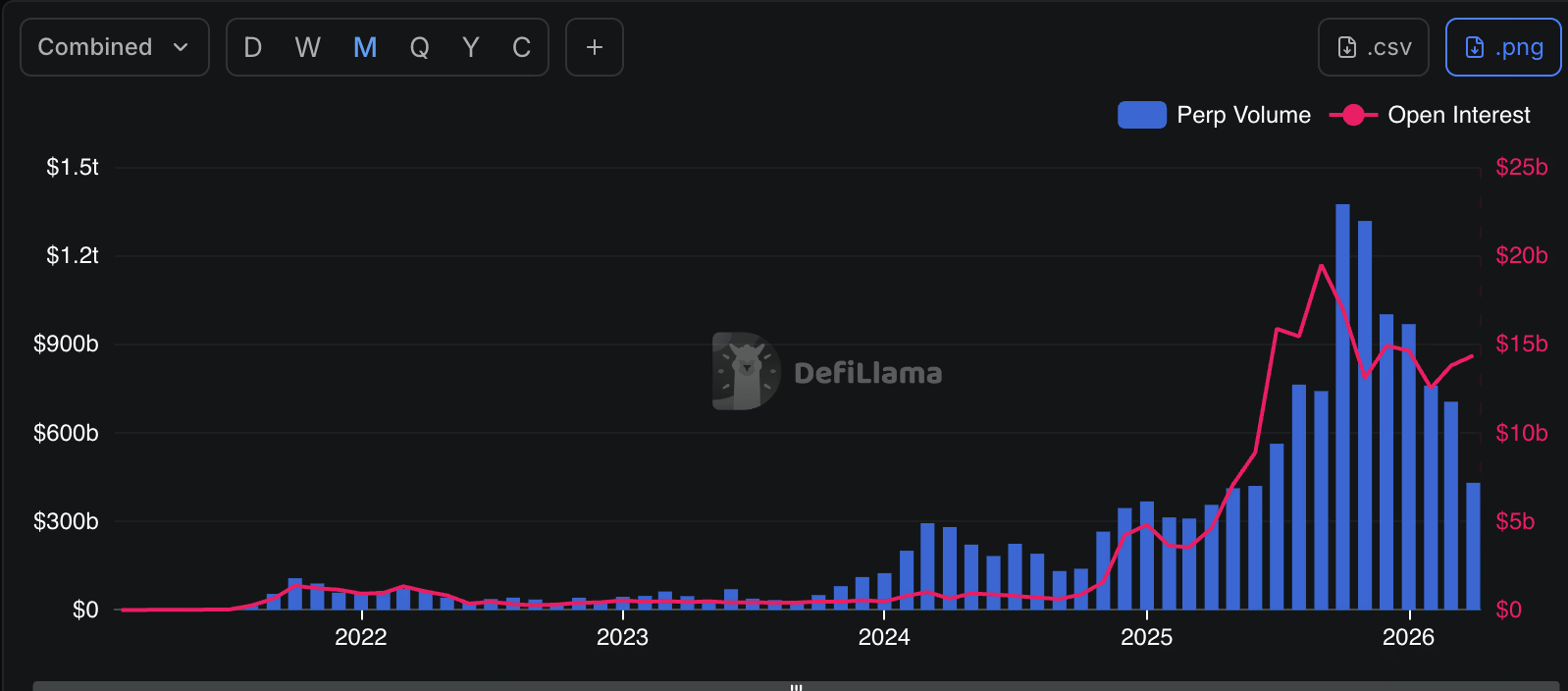
Polymarket announced early access for perpetual futures trading, while The Information reported that Kalshi is planning a similar product launch.
The two largest prediction market platforms by trading volume are both moving into perpetual futures trading, per reports arriving within hours of each other on Tuesday, April 21.
Polymarket’s move is official. The on-chain prediction marketplace posted on X Tuesday evening: “Perps are coming to Polymarket.” The platform is accepting early access sign-ups for the product, which will allow traders to take leveraged long or short positions on assets including BTC, stocks, and gold without a fixed expiration date.
Separately, The Information reported on Tuesday morning that Kalshi plans to launch crypto trading, beginning with perpetual futures, citing people familiar with the matter.
According to the report, Kalshi will start with crypto perps and may expand to perps tied to other asset classes over time.
Perp trading has exploded in popularity over the past year, notably on decentralized platforms, mostly led by Hyperliquid. But centralized platforms, led by Binance, still dominate in terms of volumes and open interest, per CoinGecko data.

Commodity Futures Trading Commission Chairman Michael Selig said last month that the agency plans to allow regulated perpetual futures in the United States, to attract trading volume back from offshore platforms.
The Information’s report notes that Kalshi recently secured a CFTC margin trading license, positioning it to offer the product.
The move would put both Polymarket and Kalshi in more direct competition with both centralized and on-chain exchange platforms, several of which, like Coinbase, have begun adding prediction markets.
Combined monthly trading volumes on Kalshi and Polymarket last month reached over $23 billion, an all-time high. Since the start of this year, both platforms have consistently seen near or over $2 billion in trades each week, per Token Terminal data.
Regulatory Questions
The launches come amid rapid regulatory change for the sector. The CFTC launched a sweeping review of prediction markets in March, after Chair Selig clarified that the agency thinks such platforms should be regulated federally, not by each state. At the same time, both platforms continue to face state-level legal pressure, as gambling is a state-regulated activity in the U.S. and multiple states have alleged that the platforms need gambling regulator licenses to operate in the state.
This article was written with the assistance of AI workflows. All our stories are curated, edited and fact-checked by a human.
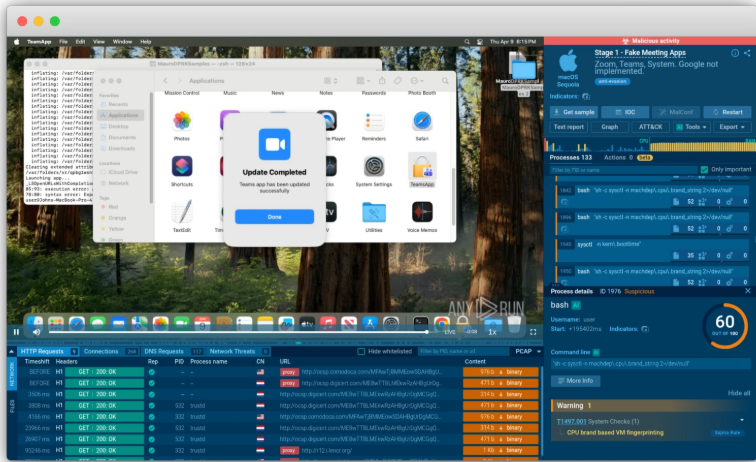
Security researchers have linked a new macOS malware campaign to the Lazarus Group, the North Korea-linked hacking operation behind some of the crypto industry’s biggest thefts.
Flagged on Tuesday, the new “Mach-O Man” malware kit is distributed via “ClickFix” social engineering schemes across traditional businesses and crypto companies, according to Mauro Eldritch, offensive security expert and founder of threat intelligence company BCA Ltd.
Victims are lured into a fake Zoom or Google Meet call where they are prompted to execute commands that download the malware in the background, allowing attackers to bypass traditional controls without detection to gain access to credentials and corporate systems, the security researcher said in a Tuesday report.
Researchers said the campaign can lead to account takeovers, unauthorized infrastructure access, financial losses and the exposure of critical data, underscoring how Lazarus continues to expand its targeting beyond crypto-native companies.
The Lazarus Group is the main suspect in some of the largest-ever cryptocurrency hacks, including the $1.4 billion hack of Bybit exchange in 2025, the industry’s largest so far.

“Mach-o Man” kit seeks to implement hidden stealer malware
The final stage of the campaign is a stealer designed to extract browser extension data, stored browser credentials, cookies, macOS Keychain entries and other sensitive information from infected devices.

After collection, the data is archived into a zip file and exfiltrated through Telegram to the attackers. Finally, the malware’s self-deletion script removes the entire kit using the system’s rm command, which bypasses user confirmation and permissions when removing files.
The novel malware kit was reconstructed by the security expert through cloud-based malware sandbox Any.run’s macOS analysis capabilities.
Related: CZ sounds alarm as ‘SEAL’ team uncovers 60 fake IT workers linked to North Korea
Earlier in April, North Korean hackers used AI-enabled social engineering schemes to steal about $100,000 worth of funds from crypto wallet Zerion, after gaining access to some team members’ logged-in sessions, credentials and the company’s private keys, Cointelegraph reported on April 15.
Magazine: 53 DeFi projects infiltrated, 50M NEO tokens could be ‘given back’: Asia Express


RaveDAO (RAVE) is up about 106% on $418m volume after a 95% crash that erased nearly $6b, as ZachXBT alleges insiders ran a pump‑and‑dump and OKX funds the probe.
Summary
- RaveDAO (RAVE) is trading around $1.27, up roughly 106% in 24 hours with about $418 million in volume, a parabolic move driven almost entirely by narrative and flow.
- Structurally, today’s candle looks like a late‑stage momentum blow‑off: vertical price, volume exceeding or matching market cap, and likely extreme intraday overbought readings.
- The spike comes just days after a 95% crash from roughly $26 to near $1 that prompted OKX to fund ZachXBT’s investigation into alleged insider manipulation around RAVE.
RaveDAO is in full trader mode. CoinGecko and major exchanges show RAVE near $1.27, up about 106% on the day, with roughly $418 million in 24‑hour turnover — enough to rank among the top gainers on the market and to push daily volume to parity or above its entire market capitalization.
On the chart, this is a classic vertical session: multi‑X intraday range, most of the candle body glued near the highs, which technicians treat as textbook late‑stage momentum, not a calm trend extension.
As Yellow’s recent note put it after a similar spike, “daily volume exceeded market cap by approximately 22%,” and in that context “tokens rarely sustain gains beyond 72 hours” before mean‑reverting.
Derivatives data tell the same story. CoinGlass tracks RAVE futures with open interest swelling sharply into big days and then partially washing out as late longs get liquidated, a pattern consistent with “100% daily moves” driven by leveraged chase rather than organic spot demand.
Overlay a 1‑hour to 4‑hour RSI heatmap on a move like this and you are almost certainly looking at readings in the 80–90+ band — extreme overbought, which in practice usually precedes a cooling phase or outright reversal rather than another clean leg higher.
All of this is happening against a very ugly backdrop. As detailed in a recent crypto.news story, RAVE previously exploded about 11,000% from roughly $0.25 to around $27.33 in under two weeks before crashing roughly 95% back to near $1, wiping out almost $6 billion in paper market cap.
On‑chain investigator ZachXBT has alleged that “wallets linked to early distribution controlled about 95% of RAVE’s 1 billion token supply,” calling the pattern “a textbook pump and dump” and arguing that the mismatch between value lost and just $52 million in liquidations “is not normal in a healthy market structure.”
OKX founder Star Xu has since pledged an extra $25,000 toward ZachXBT’s bounty, saying the exchange’s “risk engine is monitoring the situation closely” and that OKX would “support any efforts to uncover insider abuse and protect users,” while Bitget and Binance have launched internal reviews.
In trading terms, that makes today’s parabolic bounce even more clearly a speculator’s playground than an investor’s setup.
Short‑term mean‑reversion probabilities are rising; the risk skew is toward a sharp retrace once open interest stops climbing and intraday RSI rolls over, with seasoned traders typically fading strength — not weakness — when volume starts to slow and price begins to chop at the top of the range.


WalletConnect’s ecosystem of 700 crypto wallets and 70,000 dApps now supports the enterprise- and privacy-focused blockchain network.
WalletConnect has added support for Canton Network, a blockchain built for institutional finance. The two companies first revealed the partnership at EthCC in Cannes, during a panel moderated by The Defiant’s senior editor Olivia Capozzalo, before releasing the news publicly today, April 22.
The deal aims to bring Canton’s privacy-focused infrastructure to WalletConnect’s global ecosystem, enabling access to stablecoin payments, tokenized real-world assets, and DeFi applications. According to a press release viewed by The Defiant, the crypto infrastructure firm’s ecosystem supports 700 crypto wallets, 70,000 decentralized applications, and 55.5 million users, all of which can now connect to the protocol, which is within the top-20 chains by market cap, per CoinGecko.
Canton currently boasts over $8 trillion in tokenized assets processed monthly and more than $350 billion in U.S. Treasuries settled daily, per the release.
Data from RWAxyz shows that all of the nearly $330 billion in tokenized RWAs on Canton are represented asset value, meaning they use the blockchain for recordkeeping and operational efficiency, but don’t allow for on-chain distribution.
WalletConnect CEO Jess Houlgrave framed Canton’s privacy model as “a requirement for institutions to work at scale.”
The announcement arrives, however, amid an ongoing debate over Canton’s self-description as a “public, permissionless blockchain” — a characterization many in the industry contest. As The Defiant has reported, critics argue that Canton is closer to a permissioned database than a true blockchain, with validator admission controlled by a governance committee of incumbent institutions.
Canton has been accumulating serious institutional momentum in recent months. JPMorgan’s USD-denominated deposit token is set to be issued natively on Canton in phases throughout 2026, as The Defiant reported, and the DTCC selected Canton to tokenize a subset of U.S. Treasury securities it holds, citing the platform’s privacy features, per The Defiant’s earlier coverage.
The broader race for institutional-grade privacy is heating up on multiple fronts: Boundless, a ZK proving network, recently integrated with the XRP Ledger to bring native zero-knowledge proof verification to the Layer 1 for the first time, enabling institutions to build financial applications on XRPL that execute privately while maintaining regulatory compliance, as The Defiant reported.
This article was written with the assistance of AI workflows. All our stories are curated, edited and fact-checked by a human.


1. Mostbet ga ro‘yxatdan o‘tish: bosqichma‑bosqich
Mostbet uz kirish uchun avvalo ro‘yxatdan o‘tish kerak. Saytning asosiy sahifasida “Ro‘yxatdan o‘tish” tugmasini bosganingizda, sizga oddiy forma taqdim etiladi – ism‑familiyangiz, elektron pochta manzilingiz, telefon raqamingiz va parol.
Ma’lumotlarni kiritgandan so‘ng, tasdiqlash kodi SMS orqali keladi. Kodingizni kiritgandan keyin hisobingiz aktivlanadi va darhol kirish imkoniyati paydo bo‘ladi. Agar sizga qo‘shimcha yordam kerak bo‘lsa, mostbet uz sahifasida “Yordam” bo‘limiga murojaat qilishingiz mumkin.
2. Kirish va hisobga kirish usullari
Kirish jarayoni juda soddadir: foydalanuvchi nomi (yoki elektron pochta) va parolni kiritish kifoya. Ba’zi foydalanuvchilar mobil telefon orqali “SMS kod” bilan kirishni afzal ko‘rishadi, bu usul qo‘shimcha xavfsizlik qatlamini qo‘shadi.
Agar parolingizni unutgan bo‘lsangiz, “Parolni tiklash” tugmasini bosib, ro‘yxatdan o‘tgan telefon yoki email manziliga yuborilgan havolani kuzatib, yangi parol yaratishingiz mumkin. Kiritilgan ma’lumotlar har doim himoyalangan, SSL sertifikati orqali shifrlanadi.
3. Bonuslar va aksiyalar – boshlovchilar uchun foydali tavsiyalar
Mostbet uz kirish bilan birga, yangi foydalanuvchilarga “Welcome Bonus” taklif etiladi. Bu bonusning asosiy sharti – birinchi depozitni kamida 10 000 so‘m miqdorida amalga oshirish.
Bonusni olishdan oldin, “Wagering requirements” (bet o‘ynash talablari) ni diqqat bilan o‘rganing. Masalan, 5 x bonus miqdori talab qilinadi, ya’ni siz bonusni 5 marta o‘yinlarda qayta tiklashingiz kerak. Bu talabni bajarganingizdan so‘ng, nafaqat bonus, balki yutgan pul ham hisobga qo‘shiladi.
4. To‘lov usullari va pul yechish tezligi
Mostbet o‘z mijozlariga keng to‘lov tizimlari to‘plamini taklif etadi. O‘zbekiston foydalanuvchilari uchun qulay variantlar: Click, Payme, Uzcard, Visa/Mastercard.
Yechish jarayoni odatda 10‑30 daqiqada amalga oshadi, lekin bu tanlangan usulga qarab farq qiladi. Ba’zi usullarda kun oxirigacha to‘lovni kutish kerak bo‘lishi mumkin.
| Usul | Minimal depozit | Qayta ishlash vaqti | Komissiya |
|---|---|---|---|
| Click | 10 000 so‘m | 1‑5 daqiqa | Yo‘q |
| Payme | 5 000 so‘m | 3‑10 daqiqa | 0,5 % |
| Uzcard | 10 000 so‘m | 5‑15 daqiqa | Yo‘q |
| Visa/Mastercard | 20 000 so‘m | 10‑30 daqiqa | 1 % |
5. Mobil ilova va live casino tajribasi
Mostbet mobil ilovasi Android va iOS platformalarida mavjud. Ilova orqali siz nafaqat sportga, balki live casino o‘yinlariga ham real vaqt rejimida kirishingiz mumkin. Live dealerlar bilan o‘ynash, kartalar yoki rulet stollarida qatnashish, mobil qurilmangizdan ham professional darajadagi tajriba taqdim etadi.
Ilova interfeysi intuitiv, bir necha bosqichda depozit va pul yechish imkoniyatlari ham mavjud. Push-xabarlar orqali yangi bonuslar va turnirlar haqida xabar olish, foydalanuvchini doimo yangiliklardan habardor qiladi.
6. Mijozlarni qo‘llab‑quvvatlash va xavfsizlik
Mostbet uz kirish bilan bog‘liq savollarni 24/7 jonli chat, email va telefon orqali hal qilish mumkin. Mijozlarga xizmat ko‘rsatish jamoasi ko‘p tilli, shu jumladan o‘zbek tilida ham yordam beradi.
Xavfsizlik nuqtai nazaridan, sayt litsenziyali va regulatsiyalangan. Barcha foydalanuvchi ma’lumotlari shifrlanadi, KYC (Know Your Customer) protseduralari orqali firibgarlik va kimlik o‘g‘irlashga qarshi himoya amalga oshiriladi.
7. Qonunchilik, litsenziya va mas’uliyona gambling
Mostbet Curacao licensiyasiga ega bo‘lib, xalqaro standartlarga mos keladi. O‘zbekiston qonunchiligiga muvofiq, sayt faqat yoshi 18 yoshdan yuqori bo‘lgan foydalanuvchilar uchun mo‘ljallangan.
Mas’uliyona gambling bo‘limida o‘yinchilarga limitlar, o‘yin vaqtini nazorat qilish va o‘z hisobini o‘chirib tashlash imkoniyatlari beriladi. Bu, foydalanuvchilarni ortiqcha qimor o‘ynashdan saqlashga yordam beradi.
8. Tez-tez beriladigan savollar (FAQ)
- Mostbet uz kirish uchun minimal yosh qancha? 18 yoshdan katta bo‘lishi shart.
- Bonusni qanday olish mumkin? Birinchi depozitni amalga oshirganingizdan keyin avtomatik tarzda welcome bonus beriladi.
- Pul yechish uchun qancha vaqt kerak? Tanlangan to‘lov usuliga qarab 10‑30 daqiqada.
- Mobil ilova orqali o‘yin o‘ynash bepulmi? Ilova orqali o‘ynash bepul, lekin haqiqiy pul bilan o‘yinlar uchun depozit talab qilinadi.
Ushbu qo‘llanma “mostbet uz kirish” haqida barcha asosiy ma’lumotlarni qamrab oladi. Sizga muvaffaqiyatli o‘yinlar, foydali bonuslar va xavfsiz to‘lov operatsiyalari tilaymiz!

PARKOUR VS MONEY HEIST! 6

Work underway on new sixth form centre at Pocklington School

Beyond Market Cap: A Nearly 19-Year Case For Dividend-Driven Emerging Markets

Manchester United reach agreement with Casemiro over contract clause amid transfer speculation

Steven Gerrard disagrees with Gary Neville over ‘shock’ Chelsea and Arsenal claim | Football

US brings back mandatory military draft registration


-

 Fashion5 days ago
Weekend Open Thread: Theodora Dress
-

 Sports5 days ago
NWFL Suspends Two Players Over Post-Match Clash in Ado-Ekiti
-

 Politics5 days ago
Palestine barred from entering Canada for FIFA Congress
-
Entertainment3 days ago
NBA Analyst Charles Barkley Chimes in on Ice Spice McDonald’s Fiasco
-

 Business3 days ago
Powerball Result April 18, 2026: No Jackpot Winner in Powerball Draw: $75 Million Rolls Over
-

 Politics3 days ago
Zack Polanski demands ‘council homes not luxury flats for foreign investors’
-

 Crypto World5 days ago
Russia Pushes Bill to Criminalize Unregistered Crypto Services
-

 Tech4 days ago
Auto Enthusiast Scores Running Tesla Model 3 for Two Grand and Turns It Into Bare-Bones Go-Kart
-

 Politics2 days ago
Gary Stevenson delivers timely reminder to register to vote as deadline TODAY
-

 Tech7 days ago
‘Avatar: Aang, The Last Airbender’ Leaked Online. Some Fans Say Paramount Deserves the Fallout
-
 Business6 days ago
Creo Medical agree sale of its manufacturing operation
-

 Business7 hours ago
Rolls-Royce Voted UK’s Most Iconic Trade Mark as IPO Register Hits 150
-

 Crypto World5 days ago
Russia Introduces Bill To Criminalize Unregistered Crypto Services
-
 Crypto World4 days ago
Kelp DAO rsETH Bridge Hack Drains $292M as DeFi Losses Top $600M in Two Weeks
-

 Sports7 days ago
British climbers complete new route in Swiss Alps
-

 Tech7 days ago
Ford EV and tech chief leaving automaker
-

 Sports6 days ago
“Felt Much Better Today”: Josh Hazlewood Opens Up On His Recovery Win Over LSG
-

 Entertainment7 days ago
Ruby Rose Accuses Katy Perry Of Sexual Assault, Police React
-

 Business6 days ago
Cheaper Doritos and Lays helps PepsiCo win back struggling snackers
-
 Entertainment6 days ago
Clavicular Says Streaming May Not Work Without Substances
You must be logged in to post a comment Login