

Crypto World
Anthropic turns to Meta for $10B in computing power before IPO



Anthropic has proposed leasing up to $10 billion of computing power from Meta Platforms over two years as the AI developer prepares for a possible October IPO.
Summary
- Anthropic has proposed leasing up to $10 billion of computing power from Meta over two years.
- Meta is reviewing the deal, which could create a new revenue stream from its AI infrastructure.
- Bloomberg reports Anthropic is preparing for a possible IPO as early as October.
According to Reuters, which cited The New York Times, Meta is reviewing the proposal after Anthropic presented the terms in June. The planned agreement would require Anthropic to make monthly payments for access to Meta’s computing capacity.
Both companies could end the contract before the two-year period expires, the report added. Meta and Anthropic have not finalized the arrangement, leaving its value and duration subject to the outcome of their talks.
For Anthropic, the lease would provide access to the processing capacity needed to train and operate advanced artificial intelligence models. AI developers depend on large numbers of specialized chips and data centers, making reliable computing access a central part of their expansion plans.
Meta, in turn, could earn revenue from infrastructure built primarily for its own AI products and services. According to the report, the proposed lease would give the social media company another way to generate returns from its computing investments beyond its advertising business.
Meta could enter the AI infrastructure market
A completed agreement would place Meta in competition with CoreWeave and Nebius, two companies that supply computing infrastructure for AI workloads. Reuters reported that the Anthropic proposal could turn Meta into a provider of capacity to an external AI developer while it continues building models and products of its own.
The talks have emerged as technology companies compete for chips, electricity and data center space. Under the reported structure, Anthropic would secure capacity from a company that has spent heavily on AI infrastructure, while Meta would add a potential customer for resources within its computing network.
Anthropic has also pursued separate long-term infrastructure arrangements. Earlier this month, the company signed a 20-year data center lease with Bitcoin miner TeraWulf. The agreement is expected to supply additional computing resources for Anthropic’s future AI development.
Taken together, the Meta discussions and TeraWulf lease show how Anthropic is assembling the infrastructure required to support its models. Any assessment of the scale or financial effect of those agreements, however, depends on their final terms and the amount of capacity Anthropic ultimately uses.
Anthropic could reach public markets in October
Bloomberg reported that Anthropic is moving forward with preparations for a possible stock market listing. Banks working on the offering have begun arranging meetings between company executives and prospective investors, according to the report.
Those meetings could support an IPO as early as October, although Bloomberg’s timeline remains subject to market conditions and the company’s final decision. An October debut would put Anthropic in the public market before OpenAI, which Bloomberg reported is considering a listing in 2027.
Chinese AI developer DeepSeek is also preparing for an eventual public offering, according to the original report. Anthropic could therefore become one of the first major companies from the latest generation of AI model developers to list its shares.
Before the IPO report emerged, Anthropic had received approval from the US government to restore access to its Mythos 5 model for selected companies and federal agencies last month. Combined with its infrastructure agreements and investor meetings, the decision adds another development for banks and potential shareholders to examine as preparations continue.

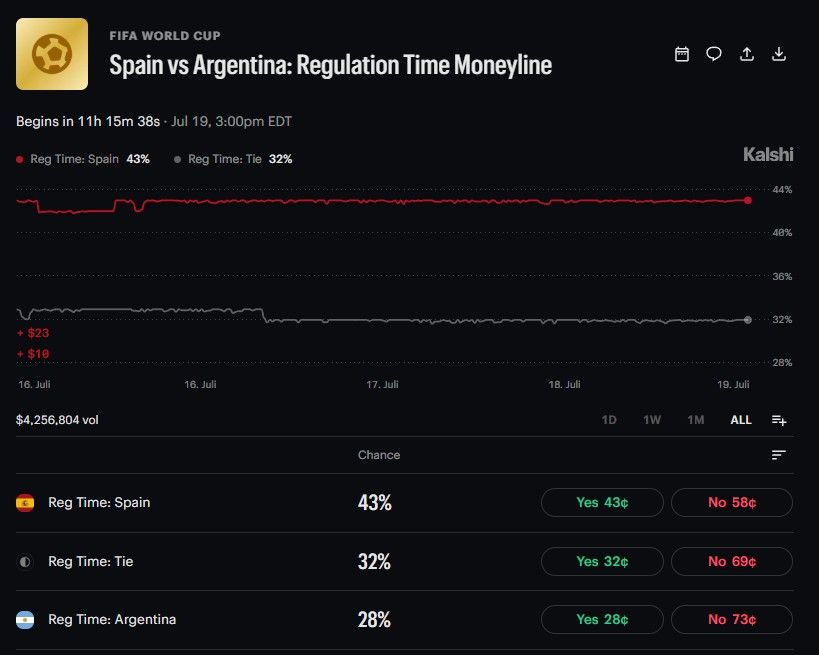
Canadian singer Drake has wagered $1.5 million USDT on Argentina to beat Spain in regulation time at Sunday’s World Cup final. A win would pay the rapper $5,175,000.
He placed the bet through the crypto gambling platform Stake and announced it on Instagram. In contrast, Spain enters the World Cup final at MetLife Stadium as the favorite.
A World Cup Curse Looms Over the Bet
Soccer fans have already invoked the Drake Curse, the belief that teams he backs publicly falter at the worst moment. A similar regulation-time bet cost Drake his last World Cup payout, even though Argentina won it in extra time. The wager only pays out if Argentina wins within 90 minutes, excluding extra time and penalties.
The rapper’s crypto ties run deeper than betting slips. He referenced Bitcoin (BTC) on his new Iceman album this year, calling himself a “crypto big-timer.” This bet, however, relies entirely on a stablecoin rather than a volatile token.
Kalshi Odds Favor Spain in Regulation
Kalshi’s regulation-time market prices Spain’s win probability at 43%, compared with 28% for Argentina and 32% for a tie. Meanwhile, that gap mirrors how World Cup betting markets have leaned toward Europe throughout the knockout rounds. The Kalshi contract for Sunday’s World Cup game had already logged more than $2.8 million in trading volume.
Prediction markets have grown into a major venue for World Cup wagering this year. Kalshi recently expanded its World Cup prediction hub through a partnership with ADI Predictstreet. Still, Drake’s wager sits well outside that data-driven crowd.

A Historic World Cup Night Beyond the Bet
Tether chief executive Paolo Ardoino shared news of the wager on X, adding an Argentine flag and a heart emoji. Celebrity wagers have become a running theme this World Cup, following a similar betting wave around Taylor Swift’s rumored wedding.
The final also marks a first off the pitch. FIFA will award custom championship rings to World Cup winners for the first time, a tradition borrowed from American sports. Interest has spiked around other World Cup markets, including bets on the halftime show lineup.
Kickoff is set for 3 p.m. ET at MetLife Stadium in New Jersey. If Messi and Argentina deliver in regulation, Drake finally breaks even on a wager that has haunted him for years.
The post Drake Eyes $5 Million Crypto Payout in Spain Vs Argentina World Cup Final appeared first on BeInCrypto.


A prediction made more than a decade ago about closer ties between Bitcoin startups and traditional payment companies increasingly resembles the payments market of 2026.
Summary
- A 2014 prediction about traditional payment firms partnering with Bitcoin startups increasingly resembles today’s market.
- Visa and Mastercard now work directly with crypto firms on cards, settlement, stablecoins, and payments.
- BitPay continues expanding regulated crypto payment services more than a decade after joining the payments industry.
Former Electronic Transactions Association CEO Jason Oxman discussed that possibility in an August 2014 interview with CoinDesk. His comments followed BitPay becoming the first digital currency company to join the payments trade group. Oxman said the association would remain open to new payment technologies without formally backing Bitcoin over other systems.
Early Bitcoin partnerships pointed to a wider shift
Oxman argued that payment companies ultimately respond to how consumers and merchants choose to transact. He said the industry was “in the business of facilitating electronic transactions,” regardless of which technology carried those payments.
The comments came during an early period for commercial Bitcoin adoption, when regulators were still debating New York’s BitLicense proposal. Oxman also warned regulators against applying rules simply because a technology was new, while accepting that consumer protection remained a valid concern.
The leadership of ETA has since changed. Jodie Kelley became the organization’s CEO in 2019, and ETA now operates a dedicated Digital Assets committee alongside its other payments industry groups.
Visa and Mastercard build direct crypto partnerships
The type of partnership Oxman discussed is now common across the payments industry. Visa and Stripe-owned Bridge announced plans in March to expand stablecoin-linked Visa cards to more than 100 countries by the end of 2026. As reported by crypto.news, the cards allow users to spend stablecoin balances across Visa’s merchant network.
Visa has also expanded its stablecoin settlement pilot to nine blockchains. The company said in April that the program had reached a $7 billion annualized settlement rate. Visa said the expansion gives payment partners more choice when selecting blockchain networks.
Mastercard has followed a similar path. Its Crypto Partner Program brings together more than 100 crypto companies, financial institutions and payment providers. As reported by crypto.news, Alchemy Pay joined the initiative in May to explore closer links between fiat payments and onchain commerce.
Stablecoins now lead much of the payments expansion
The industry’s focus has also shifted from Bitcoin alone toward stablecoins. Visa, Mastercard and Coinbase recently joined more than 140 companies backing Open Standard, a group developing the Open USD stablecoin.
As reported by crypto.news, the project plans to create payment infrastructure for businesses using a dollar-linked digital asset. The move puts major card networks directly alongside crypto-native companies in developing blockchain payment systems.
BitPay has also continued expanding. Crypto.news recently reported that the payment company secured MiCA authorization in the Netherlands, allowing it to provide regulated crypto and stablecoin services across eligible European Union markets.
More than a decade after Oxman predicted growing cooperation, partnerships between traditional payment networks and crypto companies have moved from isolated experiments into cards, settlement systems, stablecoins and cross-border payments.


Disclosure: This article does not represent investment advice. The content and materials featured on this page are for educational purposes only.
Spreadefi faces scrutiny as users assess trust, transparency, and DeFi platform credibility.
As the decentralized finance (DeFi) space has evolved, users have gotten a lot more careful about which platforms they trust with their digital assets. After a long line of fraudulent projects, one question comes up naturally: can Spreadefi be trusted, or is it just another scam?
Let’s take a closer look at the project, check the available information, and see whether there’s any real reason to call it unreliable.
What is Spreadefi?
Spreadefi is a DeFi platform that lets users earn income by staking in liquidity pools. Crypto assets are placed into a pool, and from there, they’re used to provide liquidity on decentralized exchanges. In return, participants earn rewards generated from fees and other protocol mechanisms.
The platform puts the emphasis on automated operations, cross-chain infrastructure, and risk management, aiming to make DeFi more accessible to both experienced users and newcomers alike.
Why do questions about a scam come up at all?
These days, just about any new crypto project faces questions like this. The market has lived through a string of high-profile frauds in recent years, and investors have grown far more cautious as a result.
Search queries like “Spreadefi scam” or “Is Spreadefi legit?” are completely normal. People want to be sure a project is actually building something, and wasn’t created just to pull in funds.
What was verified
In looking at the project, the focus is on the criteria that typically help separate a real company from a questionable crypto operation.
The company is officially registered
One of the first positives was the project’s legal transparency. Spreadefi operates through an officially registered company in the United States, information you can verify through public registries. Being able to confirm a legal entity is a strong sign of openness, especially in the crypto space.
Registration alone doesn’t guarantee success, of course. But fraudulent schemes almost never make that kind of information public.
Another important factor is that Spreadefi is building an ecosystem rather than relying on a single service.
Alongside its liquidity pool infrastructure, the platform has developed its own crypto swap service, allowing users to exchange supported digital assets directly within the ecosystem. This helps create additional utility for the platform while supporting internal liquidity.
The company is also developing API solutions for developers and business partners. These APIs are designed to allow third-party platforms, applications, and digital asset services to integrate Spreadefi’s infrastructure into their own products, expanding the ecosystem beyond the platform itself.
In addition to its staking and liquidity services, Spreadefi continues to invest in its technology stack, user interface, security systems, and infrastructure tools. Recent updates have included improvements to liquidity allocation algorithms, mobile experience, platform performance, and internal security architecture.
Projects that consistently expand their product offering and continue investing in infrastructure typically demonstrate a longer-term development strategy rather than focusing solely on attracting deposits.
Active project development
During the analysis, the team’s public activity was also taken note of.
Spreadefi regularly publishes content on its official blog, sharing updates on product development, new features, and technical upgrades. On top of that, project representatives take part in industry events and conferences, which suggests long-term development plans rather than a short-lived platform.
That kind of public visibility is rare for fraudulent projects. After launch, they usually cut off nearly all interaction with their audience.
Are there any negative reviews?
A deliberate effort was made to dig up confirmed negative material about Spreadefi.
After going through publications, reviews, and discussions across open sources, no convincing evidence was found that the project is engaged in fraud. There are the usual user questions, discussions of DeFi risks, and skeptical comments, all of which are completely natural for any crypto project.
What wasn’t found, however, were mass complaints, confirmed accusations of fraud, or signs of a classic rug pull.
It’s important to understand that the absence of that kind of material doesn’t mean there’s zero risk. Any DeFi protocol comes with market and technical risks. That said, the information landscape around Spreadefi looks significantly calmer than what you see with a lot of young crypto projects.
What risks remain?
Even if a project is legitimate, working with DeFi always carries certain risks:
- market volatility
- smart contract risk
- blockchain infrastructure vulnerabilities
- shifts in liquidity
- changes in crypto regulation
These factors apply to the entire decentralized finance industry, and they don’t point to any specific platform being fraudulent by nature.
Conclusion
Based on the information available right now, there are no objective grounds to call Spreadefi a scam.
Several things speak in the project’s favor:
- official company registration
- an actively expanding ecosystem including liquidity pools, a native swap service, and developer APIs
- regular product updates and infrastructure improvements
- regular posts on the official blog
- project representatives participating in conferences and industry events
- no confirmed accusations of fraud or widespread reports of misconduct
As with any crypto project, investors should study the documentation themselves, weigh the risks, and only make decisions after doing their own research. But as of today, Spreadefi gives the impression of a project that’s developing out in the open, with transparency, and with its sights set on being around for the long haul.
Disclosure: This content is provided by a third party. Neither crypto.news nor the author of this article endorses any product mentioned on this page. Users should conduct their own research before taking any action related to the company.
Crypto World
Bitcoin’s quantum problem gets a recovery tool, but not for Satoshi’s 1.1 million coins
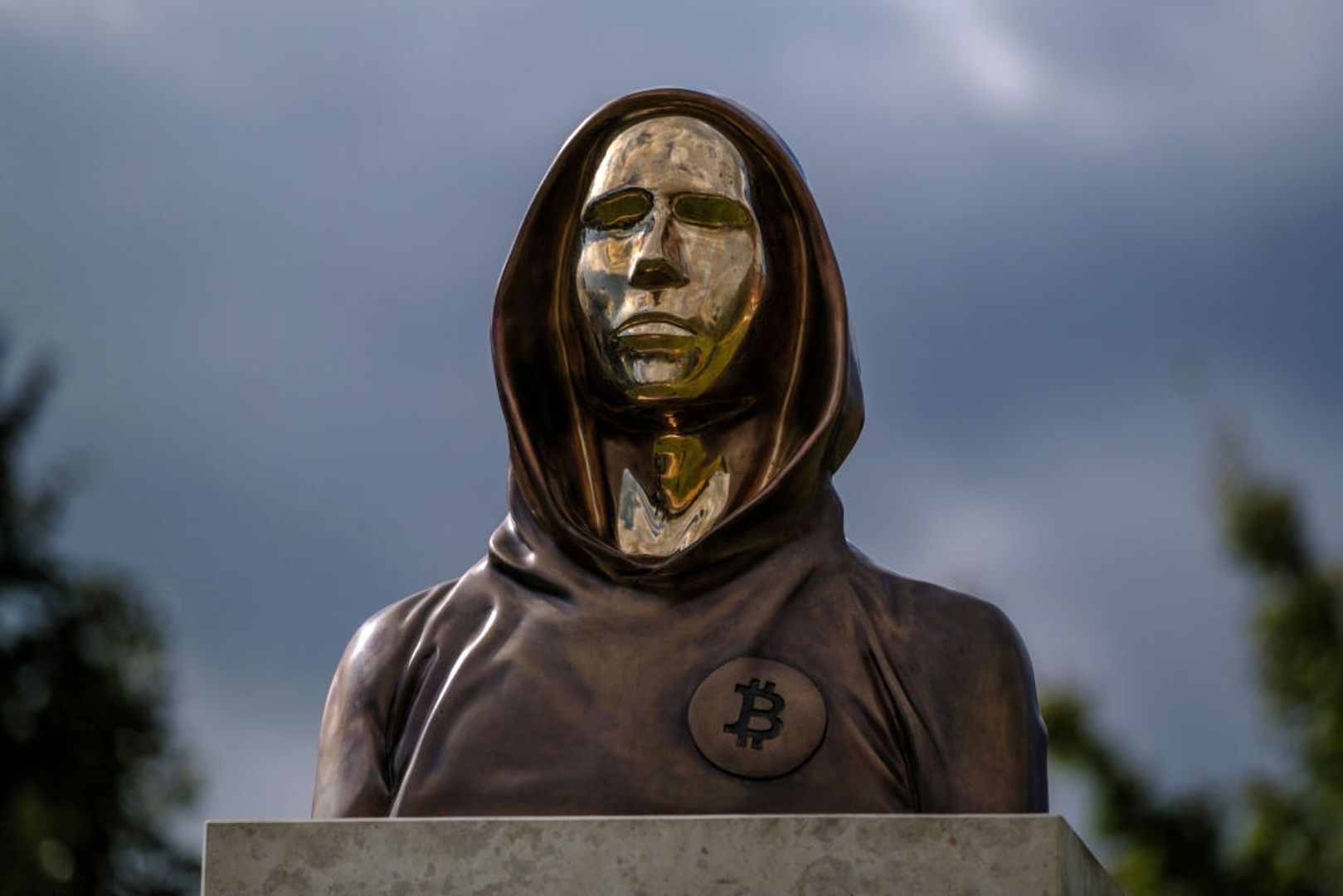
Project Eleven says it has funded a proof that lets a wallet’s own key-derivation path stand in as ownership after quantum computers can forge its signatures. It runs in 243 milliseconds on a laptop.


Uniswap governance is preparing to vote on two proposals that could expand the protocol’s UNI burn by adding new fee sources from Uniswap v4 and Robinhood Chain.
Summary
- Uniswap voters will decide whether v4 and Robinhood Chain fees should expand the UNI burn.
- Robinhood Chain crossed $6 billion in cumulative Uniswap swap volume within ten days of launch.
- New protocol fees would flow into TokenJar contracts before UNI is burned on Ethereum mainnet.
The measures are scheduled for onchain voting from July 19 through July 26.The proposals follow the UNIfication overhaul approved in December 2025, which connected protocol fees to a UNI burn system. Uniswap founder Hayden Adams said current trading activity, especially on Robinhood Chain, could increase the amount of UNI removed from circulation. The votes use an expedited governance process created for later fee updates.
Two votes target v4 and Robinhood Chain fees
The official Robinhood Chain protocol fee proposal would activate protocol fees for Uniswap v2 and v3 on the network. Uniswap launched all three versions of its decentralized exchange on Robinhood Chain when the layer-2 network went live on July 1.
According to the proposal, Uniswap deployments on Robinhood Chain crossed $6 billion in cumulative swap volume by July 10. The separate Uniswap v4 fee proposal would activate fees for selected pools on Ethereum, Arbitrum, Base, BNB Chain, Polygon, Optimism and Robinhood Chain. A second v4 vote is planned for five other networks.
New protocol fees would feed the UNI burn
Both proposals would direct collected protocol fees into Uniswap’s existing TokenJar system. Searchers can claim accumulated fee assets by providing UNI of equal value, which the system then sends to a burn address. UNI collected on other networks is bridged back to Ethereum before it is destroyed.
Adams said in his announcement on X, “Based on current volumes, especially Robinhood, we expect the impact on UNI burn to be substantial.” The proposal documents say protocol fees are already active across v2 and v3 pools on 11 networks. They also record a one-day burn of 186,000 UNI last month.
As reported by crypto.news, Uniswap had already recorded its largest single-day UNI burn before the latest governance push, showing how higher fee activity can increase the number of tokens removed through the mechanism.
Robinhood Chain activity raises the stakes
Robinhood Chain has quickly become a major source of Uniswap trading activity since its July launch. As reported by crypto.news, the network reached $500 million in daily Uniswap volume within eight days and moved behind only Ethereum mainnet for daily activity at that stage.
Crypto.news also reported that Robinhood Chain attracted more than $70 million in bridged Ether during its first week, while total value locked moved above $106 million. The new fee proposals would allow Uniswap governance to capture part of the trading activity generated on the network and route it into the burn mechanism.
The Robinhood proposal uses the same cross-chain governance pattern applied to Arbitrum One. If approved, governance messages would travel from Ethereum to Robinhood Chain, where contracts would redirect the relevant protocol fees toward TokenJar.
Uniswap v4 requires a different fee system
Activating fees on v4 requires a different structure because v4 pools can use hooks and dynamic fees. The proposal introduces a V4FeePolicy contract to calculate protocol fees and a V4FeeAdapter to apply governance rules and collect the proceeds.
The first v4 vote covers three categories: static-fee pools, pools launched through continuous clearing auctions and aggregator-hook pools. A later proposal will cover Celo, Soneium, Worldchain, X Layer and Zora because Uniswap’s GovernorBravo contract limits the number of actions in one governance proposal.
Uniswap’s fee-switch model has linked protocol activity with UNI burns since the UNIfication overhaul. The July votes would extend that system to v4 for the first time and add Robinhood Chain’s v2 and v3 activity if governance approves both measures.


The United States is preparing to impose a 25% tariff on most Brazilian imports after naming the country’s Pix instant-payment system among trade practices it considers unfair.
Summary
- Trump’s new tariff action names Pix as dollar stablecoins dominate Brazil’s fast-growing digital asset market.
- Pix serves Brazil’s domestic payments while stablecoins increasingly carry dollar value across crypto and commerce.
- Brazil is tightening stablecoin settlement rules even as U.S. pressure targets its public payment infrastructure.
The move comes as dollar-backed stablecoins account for a large share of Brazil’s crypto activity, creating a split between domestic payment policy and demand for digital dollars.
The U.S. Trade Representative’s July 15 action followed a year-long Section 301 investigation covering digital trade, electronic payments and other issues. The final tariff notice says the duty takes effect on July 22, with exemptions for products.
Washington puts Pix inside a wider trade dispute
USTR said Brazil has “unfairly disadvantaged” American electronic payment companies through policies that favor Pix. The agency did not impose a separate tariff on the payment system. Instead, it included electronic payments among the practices used to justify tariffs on Brazilian goods.
Pix has become a core part of everyday payments since the Central Bank of Brazil launched it in 2020. The central bank said the system processed 63 billion transactions worth BRL 26.4 trillion in 2024. Its adoption has increased competition with card networks and other payment services.
Dollar stablecoins keep expanding alongside Pix
The trade dispute comes as dollar-linked stablecoins play a growing role in Brazil’s digital asset market. Brazil’s central bank has said stablecoins account for about 90% of reported crypto flows, with users often turning to dollar-linked tokens for payments and value transfer.
The two systems can connect. As reported by crypto.news, Tether-backed Oobit added Pix support in June, allowing users to deposit reais, hold USDT and pay through Pix keys or QR codes. The product uses stablecoins behind an interface built around a familiar payment method.
Stablecoin use has also grown across the region. Crypto.news reported that dollar-pegged tokens represented 40% of crypto purchases on Bitso in 2025, ahead of Bitcoin. The data shows continued demand for digital dollars alongside established local payment systems.
Brazil draws a line around regulated cross-border payments
Brazilian regulators are tightening rules around how crypto can interact with official payment channels.Resolution BCB No. 561 bars virtual assets from settling payments inside regulated electronic foreign-exchange channels.
As reported by crypto.news, the rule does not ban stablecoins or crypto transfers in Brazil. It prevents regulated eFX providers from using digital assets to settle covered cross-border payments, keeping those flows inside approved foreign-exchange channels.
The policy separates private crypto use from regulated international settlement. Stablecoins can still circulate through exchanges, wallets and other services, while supervised payment firms must follow central bank foreign-exchange rules.
Trade pressure meets Brazil’s changing payment landscape
The U.S. action also arrives after Brazil promoted alternatives for international settlement during its 2025 BRICS presidency. Crypto.news reported that Brazilian officials discussed blockchain payment infrastructure while rejecting claims that the bloc was building a common currency to replace the dollar.
Washington’s action puts Pix inside a wider trade case rather than treating it as a crypto issue. At the same time, Brazil’s stablecoin market shows that dollar demand remains active through blockchain rails.
The payment market is moving in several directions. Pix dominates domestic instant payments, regulators are restricting crypto settlement in supervised cross-border channels, and dollar-backed stablecoins continue to attract users. The 25% tariff adds trade pressure to that changing landscape.

Donald Trump’s 2024 presidential campaign had a strong focus on the cryptocurrency industry. While trying to lure donations and votes, he promised favorable regulatory frameworks that could help it flourish.
The CLARITY Act was supposed to be the pièce de résistance. The long-awaited crypto market-structure bill has reached a decisive stage after passing the Senate Banking Committee, and Trump just held a major meeting. But then the odds dropped on most prediction markets. What does that mean, and where to next?
Progress and Staleness
It was precisely a year ago when the House of Representatives passed its version of the CLARITY Act with an impressive bipartisan vote of 294-134. It was this May that the aforementioned progress was made with the Senate Banking Committee, with two Democratic senators joining all Republican members in supporting the vote.
Both were viewed as major victories for the crypto industry, which has argued for years that confusing and unclear SEC and CFTC rules have turned investments away and forced local companies to move overseas. Under the proposed framework, the CFTC would gain clearer jurisdiction over spot markets, especially assets classified as commodities, while the SEC would retain authority over those that meet the definition of securities.
The bill is now placed on the Senate legislative calendar as №423, making it eligible for full Senate consideration. The issue stems from the fact that it needs more than just Republican support, as major such legislation requires at least 60 votes. Democrats have long pushed for stronger restrictions preventing senior government officials from profiting from crypto businesses. Trump is no exception here.
As such, many Dem. lawmakers have demanded different language in the bill to restrict elected or other senior officials from owning, issuing, or benefiting financially from certain crypto asset ventures. Does the Trump meme coin saga ring a bell?
Additionally, banks have argued that crypto platforms should not be allowed to offer interest-like payments or rewards on customers’ stablecoin balances. They fear such features could drive deposits away from traditional lenders.
White House meetings between banks and crypto reps earlier this year failed to resolve this dispute despite a reported compromise reached in May. Trump’s latest meeting also couldn’t reach equilibrium or make any significant progress.
What’s Next?
The first step would require the Senate leaders to agree to bring the bill to the floor, but negotiators would have to secure enough Democratic commitments to overcome the 60-vote threshold first. Another hurdle comes from the fact that there are two governing bodies overseeing the SEC and the CFTC – the Banking Committee and the Senate Agriculture Committee, respectively.
Both would have to be reconciled into a single Senate package before policymakers have a chance to vote on whether the language used in the joint effort is sufficient before it ever reaches Trump’s desk.
Although it is still theoretically possible for the bill to pass in 2026, the odds are rapidly dropping. Those supporting the legislation want the Senate to act before its August recess, but the November midterm elections cast a large shadow, as there is likely to be a major change of control in Congress.
The odds stood at around 40% earlier this week and above 70% after the advancement in the Senate Banking Committee in May. However, they have fallen to approximately 31% on most prediction markets after the latest struggles in the past week. Furthermore, Washington analysts believe it’s even less than that.
The post CLARITY Act Odds Crash to 31% After Trump Push Fails to Break Senate Deadlock appeared first on CryptoPotato.
Crypto World
Electronic Transactions Association CEO Expecting More Partnerships with Bitcoin Startups


Electronic Transactions Association (ETA) CEO, Jason Oxman, indicated that members of his organization might start recognizing Bitcoin’s disruptive potential, suggesting that this might lead to more partnerships between traditional electronic payment providers and Bitcoin startups.
On August 6, the ETA, which represents companies like Visa, MasterCard, Amazon and PayPal, welcomed BitPay, the first virtual currency company to become an ETA member, according to the press release. The announcement expressed the ETA’s commitment to embrace new technologies, and said to expect “more such partnerships as the payments industry innovates for the future.”
In a recent interview with CoinDesk, the head of the financial trade group specified that the ETA did not advocate for Bitcoin and had not taken an official position to the detriment of others technologies, stating that his support extended equally to all forms of electronic transactions.
However, Oxman highlighted their recent partnership with Atlanta-based Bitcoin payment solutions provider BitPay as evidence that the ETA “will not turn a blind eye to innovation.” Oxman said to be seeking to frame his organization as one that is open to work with emerging tech startups, including Bitcoin-related companies, adding that his choices depended largely on the demand:
“At bottom, our industry is in the business of facilitating electronic transactions, and those electronic transactions are going to take the form of whatever the customer or merchant of choice agrees is going to be the form of their electronic transaction.”
– ETA CEO, Jason Oxman
Oxman added that the Bitcoin Foundation played a major role in educating the ETA on the benefits of Bitcoin, highlighting the advantages of strategic partnerships between Bitcoin startups and companies in the electronic payment industry. Referring to an ETA event in 2013 where Bitcoin Foundation’s general counsel Patrick Murck spoke, Oxman noted:
“[Murck] did a good job of putting a business-focused backing to bitcoin. With that kind of introduction, our members look to bitcoin as an interesting development in the industry, and at least one of our members has seen fit to strike a deal with a bitcoin processor.”
Oxman also commented on NY’s BitLicense proposal, noting that in the past, the ETA had to pave the way for new payment options such as PayPal, spending most of its time ensuring that the Government doesn’t constrain innovations. However, Oxman understands the Government’s reaction, explaining that regulators were most worried about customer protection:
“In the world of new payments technologies, any regulators are going to ask questions about the level of consumer protection available through alternative payment systems. The less those systems are established and deployed, the more regulators are going to feel compelled to step in and protect consumers where those protections are not otherwise available.”
Even tough Oxman said to understand both sides of the BitLicense proposal issue, he thinks that the NYDFS should conduct more research on Bitcoin:
“I do think that it’s important to sound a cautionary note that regulators should not apply reflexive rules just because something is new. What they should do instead – hopefully New York will undertake this, but the early signs are cause for concern – they should take a real in-depth look at how bitcoin’s systems operates, how the block chain operates, how bitcoin providers like bitcoin processors take additional steps to protect consumers, to protect merchants.”
Earlier this week, New York’s Department of Financial Services superintendent Benjamin Lawsky, extended the public comment period on the BiLicense proposal by 45 days, postponing the deadline to October 21. This action followed the joint letter from BTC China, Huobi and OkCoin where the “Big three” addressed to Lawsky their comments and concerns about the regulatory proposal.
Did you enjoy this article? You may also be interested in reading these ones:
Coin HR – the best way to find a perfect bitcoin job or an applicant for your vacancy. We connect talent with opportunity!


Bitcoin Ordinals advocate Leonidas has introduced DOG Mode, an alternative open-source Bitcoin client that changes how nodes relay certain valid transactions without altering Bitcoin’s consensus rules.
Summary
- DOG Mode removes default relay limits while keeping Bitcoin’s existing consensus rules completely unchanged today.
- Leonidas says fee-paying users should access block space without Bitcoin Core deciding transaction purposes beforehand.
- BIP 110 takes opposite approach, proposing temporary consensus restrictions on several data-heavy Bitcoin transaction types.
The project adds a new layer to the dispute over Ordinals, Runes and the use of Bitcoin block space.
In his DOG Mode announcement, Leonidas argued that Bitcoin Core and Bitcoin Knots enforce policy restrictions that Bitcoin’s consensus rules do not require. He said a transaction can remain valid under consensus while default nodes still refuse to relay it across the peer-to-peer network.
DOG Mode targets relay policy, not Bitcoin consensus
DOG Mode would raise the maximum individual transaction size allowed under its relay policy to 3.9 million weight units. Bitcoin Core’s default policy currently limits individual standard transactions to 400,000 weight units. The client would also lower the dust threshold to one satoshi for small transaction outputs.
As reported by crypto.news, DOG Mode does not require a Bitcoin fork because it works within existing consensus rules. Nodes can choose to run the software and relay transactions that other clients may treat as non-standard, while miners still decide which valid transactions they include in blocks.
Ordinals and Runes return to the governance debate
The proposal centers on a long-running dispute over whether Bitcoin should treat every valid, fee-paying transaction equally. Leonidas supports a market-based model in which users compete for block space through fees rather than software developers deciding which transaction structures should receive default relay support.
DOG Mode could make it easier to propagate large Ordinals inscriptions and small outputs used by some Bitcoin-native token protocols. However, different relay policies could also leave nodes with different views of unconfirmed transactions before miners add them to blocks. Bitcoin’s consensus rules would remain unchanged even if node mempools differed.
DOG Mode takes a different path from BIP 110
The DOG Mode approach contrasts with BIP 110, which proposes temporary consensus restrictions on several forms of transaction data. As reported by crypto.news, Bitcoin developer Luke Dashjr has continued to support the proposal despite opposition from users who view the restrictions as censorship.
BIP 110 supporters argue that data-heavy transactions raise storage costs and consume scarce block space. Critics argue that changing consensus rules to restrict currently valid transactions could create a broader precedent. Michael Saylor and Adam Back have opposed BIP 110, as reported by crypto.news, while miner signaling remained far below its proposed 55% activation threshold in mid-July.
Bitcoin users decide which policies gain adoption
DOG Mode also raises questions about how Bitcoin governance works outside formal protocol changes. Bitcoin Core developers can set default relay policies, but node operators remain free to run other software. Miners can also receive transactions through direct channels instead of the public peer-to-peer relay network.
That distinction means DOG Mode does not need broad agreement to begin operating. Its influence will depend on whether node operators, miners and Bitcoin users choose to adopt its policies. Leonidas said the longer-term aim is for wider use to push existing Bitcoin clients to reconsider restrictions that he views as unnecessary.
The debate now presents two different approaches to disputed Bitcoin activity. BIP 110 seeks new consensus restrictions, while DOG Mode removes some default policy limits without changing consensus. The outcome will depend on which software users choose to run and which transactions miners choose to process.


U.S. financial regulators have missed the GENIUS Act’s one-year deadline to complete key rules for the country’s federal stablecoin framework.
Summary
- US regulators missed the GENIUS Act deadline with several major stablecoin rule packages still unfinished.
- Stablecoin issuers face a shorter preparation window before the federal framework takes effect next January.
- Customer identification and anti-money laundering proposals remain open, preventing regulators from completing final rules yet.
Several regulations remained at the proposal stage when the July 18, 2026, deadline passed.President Donald Trump signed the GENIUS Act into law on July 18, 2025. The law required primary federal stablecoin regulators to issue implementing rules within one year. The Office of the Comptroller of the Currency began its main rulemaking process earlier this year, but final rules were not in place by the deadline.
Major stablecoin regulations remain unfinished
The OCC released its main proposed GENIUS Act rules in February. The proposal covers reserve assets, redemptions, capital, liquidity, custody and risk management for stablecoin issuers under its supervision.
The Federal Deposit Insurance Corporation also proposed its own framework in April. It covers reserve requirements, capital, redemptions, custody and risk controls for issuers linked to FDIC-supervised banks. However, the rules remain unfinished.
As reported by crypto.news, major banking groups previously asked regulators to coordinate several GENIUS Act proposals before completing them. The groups argued that rules from different agencies remain closely connected and should not move forward separately.
The National Credit Union Administration has also been working on rules for stablecoin issuers. Its latest standards proposal remained in the consultation process close to the statutory deadline.
Customer identification rules remain open
Federal regulators also have not completed rules covering customer identification for stablecoin issuers. The joint proposal released by federal agencies would require covered issuers to verify customers and maintain identification records.
As reported by crypto.news, the proposal would treat permitted stablecoin issuers as financial institutions under Bank Secrecy Act requirements. The public comment period runs beyond the July 18 rulemaking deadline, preventing regulators from completing the normal review process beforehand.
Anti-money laundering and sanctions rules also remain under development. The Treasury Department proposed separate compliance requirements in April, while the FDIC issued another proposal covering issuers under its supervision.
State oversight remains unsettled
The GENIUS Act allows some smaller stablecoin issuers to operate under state supervision when local rules meet federal standards. The law uses the term “substantially similar” to describe qualifying state frameworks.
The Treasury Department proposed rules for that certification process in April, but the framework has not been finalized. As reported by crypto.news, a bipartisan group of senators later urged Treasury to preserve the role of state regulators and provide clearer certification timelines.
New York has also moved to align its stablecoin rules with the federal system.Crypto.news reported that the state proposed updated requirements as it prepares to seek recognition under the GENIUS Act framework.
Missed deadline shortens the preparation window
Missing the July 18 rulemaking deadline does not automatically delay the GENIUS Act’s start date. The law is scheduled to take effect by January 18, 2027, unless final rules trigger an earlier effective date under its implementation timetable.
That leaves prospective stablecoin issuers preparing for a federal framework while several detailed requirements can still change. Companies must eventually adjust their reserve management, customer checks, redemption processes and compliance systems to meet the final rules.
As reported by crypto.news, the July deadline was a key point in the GENIUS Act rollout. Regulators have now passed that date with major rule packages still unfinished, reducing the time between final rule publication and the framework’s scheduled start.
Warning over River Swale swimming at Richmond this summer

US Blockade Holds as Renewed Fighting Sends Oil Prices Surging Sharply This Week

Drake Eyes $5 Million Crypto Payout in Spain Vs Argentina World Cup Final


-
 NewsBeat3 days ago
London Mayor Sadiq Khan handed a peerage by Keir Starmer alongside 15 other Labour figures… just days before the PM leaves No10
-

 Fashion2 days ago
Weekend Open Thread – Corporette.com
-

 Politics24 hours ago
The House | The City of London can help the new chancellor deliver growth in every postcode
-

 Politics4 days ago
Young campaigners urge incoming PM to act on outdoor junk food ads
-

 Crypto World3 days ago
CFTC blocks Kalshi from unwinding Michigan trades after court order
-

 Business3 days ago
Nvidia Stock Slips After Big Tuesday Rally as Huang Confirms Vera Rubin Chip Is Now in Production Today
-

 Crypto World24 hours ago
Ripple Payments Joins MiCA With 14 Firms, Does It Mean Anything For XRP?
-
 Entertainment4 days ago
Disney’s Most Ambitious Failed Star Wars Attraction Is Coming to SDCC
-

 Crypto World2 days ago
Ripple wins EU-wide access as ESMA adds it to MiCA register
-

 Business3 days ago
Palantir Shares Rise After Expanded Nvidia Partnership and Fresh Analyst Upgrades Ahead of Earnings Day
-

 Crypto World3 days ago
Injective Submits SEC Transfer-Agent Registration to Onchain Ownership Records
-

 Tech5 days ago
Get Your ESP32 Sunny Side Up With This Solar Dev Board
-

 News Videos5 days ago
XRP BOMBSHELL… XRP OMBOARDED FOR TRANSACTIONS!!!
-

 NewsBeat2 days ago
Registration is now open for March for Men with Kev 2026
-

 Tech5 days ago
Dark Secrets Emerge When Jailbreaking LLMs
-
 Sports4 days ago
New Cornerback Enters Vikings Trade Rumor Mill
-

 News Videos2 days ago
Money | Class 12 Economics | CBSE Board Exam 2026-27
-
 Crypto World2 days ago
Two July Windows Left: The CLARITY Act’s Senate Fight and What Failure Means
-

 Business2 days ago
Banco Bilbao Vizcaya Argentaria, S.A. (BBVA) Discusses Global Macro Environment and Economic Outlook for Core Markets Transcript
-

 Crypto World3 days ago
Claude Fable 5 Slips to Second in AI Coding Leaderboard
You must be logged in to post a comment Login