

Business
Who Wins Sunday’s World Cup Final? Prediction Markets Give Argentina Just 42% Chance


Argentina and Spain meet Sunday at MetLife Stadium in East Rutherford, New Jersey, for the 2026 World Cup final, and according to prediction markets and sportsbooks alike, Lionel Messi’s bid to lead Argentina to a second consecutive title comes in as the underdog, with most odds putting his team’s chances of winning at roughly 42%.
According to prediction market Kalshi, where betting volume on the final has surpassed $1.3 billion, Spain holds a 58.7% chance of winning the tournament, compared with 42.4% for Argentina. That gap has remained fairly consistent across multiple sportsbooks in the days leading up to kickoff. BetMGM opened Spain as a -175 favorite to lift the trophy, with Argentina priced as a +125 underdog. FanDuel Sportsbook lists Spain at -148 to win the Cup, with Argentina at +129. Across eight sportsbooks tracked ahead of the match, every operator lists Spain as the favorite in regulation time, though the size of that edge varies depending on the book, with the draw and Argentina’s price generally staying close together, a signal that oddsmakers expect a tight, low-scoring contest rather than a lopsided result.
Spain’s status as favorite stems largely from its defensive record through the tournament. La Roja have conceded just once in seven matches, a stretch that includes wins over Portugal in the round of 16, Belgium in the quarterfinals, and a 2-0 victory over France in Tuesday’s semifinal, secured through a Mikel Oyarzabal penalty. Spain also enters Sunday’s final riding a 37-match unbeaten streak dating back to last September, a run that spans both World Cup qualifying and the tournament itself, during which the team has posted 13 wins and four draws while allowing just four goals total.
Argentina, by contrast, has taken a far more dramatic path to the final. Lionel Scaloni’s side opened the tournament with three straight group-stage wins over Algeria, Austria and Jordan, before facing a series of tense knockout-round tests. Argentina trailed Egypt by two goals in the round of 16 before rallying to win 3-2, then defeated Switzerland 3-1 in extra time in the quarterfinals. In Wednesday’s semifinal against England, Argentina appeared headed for elimination until Enzo Fernández equalized in the 85th minute and Lautaro Martínez scored a stoppage-time winner off a Messi assist, completing a stunning 2-1 comeback. Despite conceding more goals than Spain throughout the tournament, Argentina has outscored opponents 19-7 overall and has found the net in every single match it has played, a streak analysts have pointed to as one of the team’s most reliable traits heading into the final.
At the center of the matchup is the individual duel between Messi, 39, and Spain’s 19-year-old sensation Lamine Yamal, a storyline that has followed the tournament from its earliest previews. The two are meeting on a World Cup pitch for the first time, adding another chapter to a connection that traces back to a widely circulated photograph, shared by Yamal’s father, showing a young Messi cradling a six-month-old Yamal years before either knew what the moment would come to represent.
Messi enters the final still tied with France’s Kylian Mbappé for the tournament’s scoring lead at eight goals, though Messi currently holds the Golden Boot on the tiebreaker of assists, having recorded one more than Mbappé. Should Argentina win the final and Messi finish with the most goals or the tiebreaker advantage intact, he would become just the fifth player in the tournament’s history to win both the World Cup and the Golden Boot in the same edition. FanDuel currently lists Messi’s odds to score anytime during the final at +150, the shortest anytime-goalscorer price on the board, reflecting bookmakers’ expectation that he remains Argentina’s most likely source of offense even at this stage of his career.
Betting analysts covering the match have offered a range of predictions. Squawka’s model, which the outlet said had produced a 71% hit rate across 99 settled predictions through the tournament’s semifinals, forecasts a narrow 2-1 Spain win, with both teams scoring and Messi finding the net at some point in the match. CBS Sports betting analyst Martin Green, working off a hot recent streak, said he is leaning toward the match staying under 2.5 total goals, citing Spain’s stingy defensive record while still cautioning against underestimating Argentina’s resilience. “You have to admire Argentina’s never-say-die attitude,” Green said. “They’re also always in with a chance of winning any game when they have Messi in attack.”
Not every prediction favors a low-scoring Spain win. Yahoo Sports’ betting preview pointed to history working in Argentina’s favor when it comes to how these matches tend to unfold, noting that four of the last five World Cup finals have required extra time to settle, and predicting Sunday’s match will likewise remain deadlocked through 90 minutes, forecasting a 1-1 draw in regulation. That analysis argued that while Spain has been the tournament’s best overall team, the gap may not be wide enough to make Spain a true 90-minute favorite against an Argentina side built specifically to thrive in high-pressure, close-margin moments.
Statistically, Argentina holds a narrow edge in several underlying performance metrics despite entering as the betting underdog, including a tournament-leading 91% passing accuracy, a 55% share of possession across its matches, and a 17% shot-conversion rate, marks that edge out Spain’s own numbers in those same categories, according to tournament data. A win for Argentina would make it the first nation to successfully defend a World Cup title since Brazil in 1962, while a Spain victory would deliver the country its second championship, following its lone previous title in 2010.
Kickoff is set for 3 p.m. Eastern time Sunday at MetLife Stadium, with the match broadcast on Fox and Telemundo in the United States. Weather conditions for the final are expected to be favorable, with forecasts calling for a high near 83 degrees, a mix of sun and clouds, light winds and only a modest chance of rain, setting the stage for what oddsmakers, analysts and fans alike expect to be one of the more tightly contested finals in recent World Cup history.

Russian strike on cargo ship in Black Sea kills 5, Kyiv says
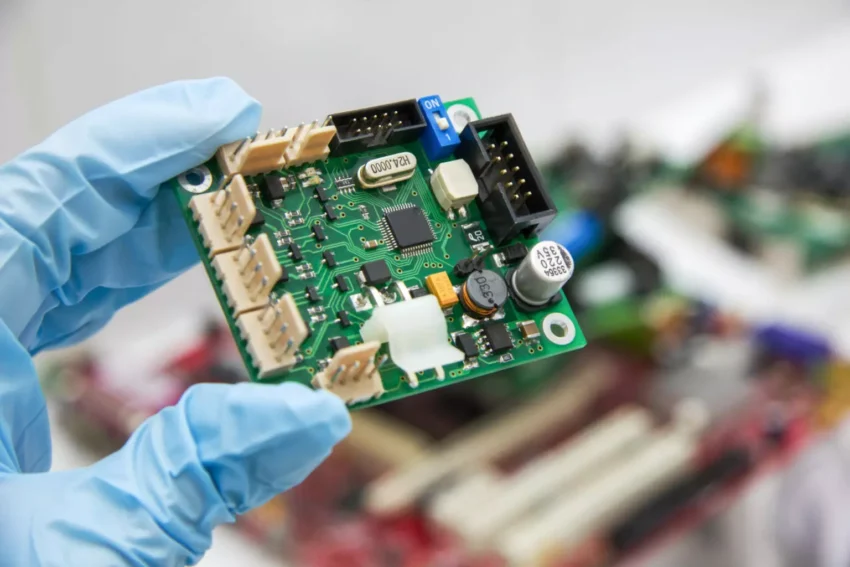
In high-volume PCB production, even minor placement inaccuracies can cascade into costly defects like tombstoning, solder bridges, or outright board failures during reflow.
As a CAM engineer who’s reviewed thousands of designs and supported assembly lines for over 15 years, I’ve seen hobbyists and small-batch producers struggle with the same issues that plague factory floors. The solution often lies in embracing automated placement technology. A well-implemented pick and place machine (Beginner’s Guide to Using Pick and Place Machines for PCB Assembly)transforms chaotic manual assembly into a repeatable, high-yield process, bridging the gap between prototype and production-grade electronics.
Understanding Pick and Place Machines in Modern PCB Assembly
Pick and place systems, also known as SMT machines, automate the critical step of positioning surface-mount components onto solder-paste-coated boards. Unlike hand placement, which relies on steady fingers and magnification, these machines combine vacuum nozzles, high-speed motion controls, and machine vision to achieve sub-50-micron accuracy.
For hobbyists building Arduino-based IoT devices or custom sensor modules, desktop models bring professional capabilities into the workshop. They excel with challenging packages—think 0402 passives, QFNs, or fine-pitch BGAs—where human error rates spike. In factory settings, we routinely handle mixed feeder setups for panels with hundreds of components, ensuring consistent orientation and centering that survives thermal stresses in reflow.
Core Operating Principles and Technical Foundations
The process begins with board alignment. Fiducial markers—small, precise copper targets etched on the PCB—allow the machine’s cameras to map offsets from design files, compensating for material expansion, stencil misalignment, or panel warp. Components are picked from tape-and-reel feeders, trays, or tubes. Vision systems verify part presence, polarity, and orientation before the nozzle rotates and places the component onto the paste.
High-resolution encoders on X, Y, and Z axes deliver speed without sacrificing precision. Software path optimization reduces head travel, critical for cycle time in medium runs. In real production, we emphasize feeder calibration: mismatched tape widths or tension lead to frequent jams, halting the line. Standards such as IPC-A-610 provide clear acceptance criteria, typically allowing placement offsets no greater than 25% of the pad dimension for most parts.
Caption: A desktop pick and place machine positioning fine-pitch components on a multi-layer FR-4 PCB, highlighting fiducial recognition and dual-nozzle setup.
Essential Preparation Steps for High-Yield Assembly
Success starts upstream. Begin with stencil printing: ensure uniform paste deposition by inspecting for bridging, insufficient volume, or smearing under 10x magnification. Generate accurate centroid (placement) files from your EDA tool, mapping coordinates, rotations, and package dimensions directly into the machine software.
Key DFM considerations include:
- Placing at least three fiducials in a non-collinear arrangement for robust alignment.
- Baking moisture-sensitive devices (MSDs) according to JEDEC J-STD-033 to prevent popcorning.
- Securing the board with vacuum or mechanical fixturing to minimize movement.
- Verifying component polarity markings, as vision systems can miss faint silkscreen.
For double-sided boards common in compact IoT designs, assemble the bottom side first to avoid disturbing top-side parts during flipping.
Step-by-Step Operation Guide
- Home all axes and load feeders, starting with taller or larger components to prevent collisions.
- Import the job file and perform a dry-run placement on a bare board to validate programming.
- Adjust nozzle sizes and Z-heights based on component profiles—too aggressive a descent crushes delicate parts.
- Run initial placements while monitoring the vision feedback. Make incremental corrections for any detected offsets.
- Transfer completed boards carefully to the reflow oven using anti-static carriers.
Advanced features like auto-optimization or multi-head configurations boost throughput, but even basic models deliver excellent results for prototypes when properly tuned.
Seamless Integration with Reflow Soldering
Placement is only half the battle. Reflow profiles must follow J-STD-001 guidelines: controlled preheat (1-3°C/s ramp), thermal soak to activate flux, peak temperature above liquidus for 40-90 seconds, and gradual cooling. In our facility, we validate profiles with thermocouples on test coupons, watching for defects like head-in-pillow or voiding.
Post-reflow inspection via automated optical systems (AOI) or X-ray for hidden joints is standard. Early detection prevents shipping latent failures.
Common Challenges and Proven Solutions
Even experienced operators encounter issues. Here’s a practical comparison based on real production EQs we’ve resolved:
| Issue | Common Cause | Factory Solution | Prevention Tip |
| Component Misalignment | Poor fiducials or board warp | Recalibrate with known-good panel; add more fiducials | Design fiducials ≥1mm diameter, away from edges |
| Feeder Jams | Dust, incorrect tape pitch, humidit | Clean feeders regularly; use dry storage | Preload small quantities for test runs |
| Tombstoning | Uneven paste volume or uneven heating | Optimize stencil apertures; refine profile | Balance thermal mass across PCB |
| Nozzle Pickup Failure | Dirty nozzles or low vacuum | Routine isopropyl cleaning; check pressure | Match nozzle diameter to part size |
Best Practices from the Production Floor
- Organize components by feeder sequence and perform small validation runs before committing full panels.
- Maintain optics and nozzles meticulously—contamination is the silent killer of accuracy.
- Panelize designs with mouse-bites or V-scores for efficient handling and depanelization.
- Log machine data to identify patterns, such as recurring offsets on specific feeders.
- Always prioritize ESD protection and controlled environments, especially for sensitive MEMS or RF components.
Conclusion: Elevating Your PCB Projects
Transitioning to automated pick and place assembly unlocks professional-quality results for hobbyists and small manufacturers alike. By focusing on preparation, precise calibration, and adherence to industry standards, you minimize defects and accelerate development cycles. Whether prototyping the next smart sensor or scaling a custom IoT product, these techniques deliver reliable, repeatable outcomes.
Apply these insights on your next build, document your process improvements, and watch your manufacturing confidence—and yields—soar. For deeper dives into practical assembly workflows, experienced engineers continue refining these methods daily on the factory floor.

Legal problems can make people feel stuck. They can also make people feel alone. Alfredo E. Cordoba saw that early in his career.
Before founding Cordoba Legal Group, he worked on the other side of consumer matters. That experience gave him a close look at how many people were searching for real relief, clear answers, and steady support.
Cordoba did not see the need as a small issue. He saw it as a problem worth building around.
“There were people who needed help, but they did not always know where to turn,” Cordoba says. “I saw a need for real consumer support, and that stayed with me.”
That idea became the foundation for Cordoba Legal Group.
Who Is Alfredo Cordoba?
Alfredo E. Cordoba is the Managing Partner of Cordoba Legal Group, a consumer law firm based in Boca Raton, Florida. The firm was founded on June 6, 2019.
The name of the firm comes from Cordoba’s last name. It is simple, direct, and personal. That choice also reflects how he wanted to lead.
“This work has my name on it,” Cordoba says. “That means there is a responsibility to stand behind what we say we are going to do.”
Cordoba built the firm around consumer legal protection. His goal was not only to create a business, but to also build a law firm that could support people during stressful moments.
Why Cordoba Legal Group Was Founded
The idea for Cordoba Legal Group came from Cordoba’s earlier work in collections. He saw how hard it could be for everyday people to understand their options.
That experience shaped his view of the industry.
“I had seen the pressure people were under,” he says. “I also saw that many consumers needed clearer guidance and stronger support.”
Instead of staying on the same path, Cordoba moved toward consumer advocacy. He wanted to create a law firm that focused on people who needed legal protection and practical direction.
That decision became a turning point in his career.
Cordoba Legal Group was built on a few clear values: integrity, advocacy, service, clear expectations, and compassionate support. These values became part of the law firm’s daily work.
How One Idea Grew Into a National Firm
What started in Boca Raton grew into a firm serving consumers in 49 states. That growth did not happen by accident.
Cordoba Legal Group built a large network of attorneys and legal professionals across the country. The goal was to give consumers broader access to support while keeping service personal.
“As we grew, we had to stay focused on the client experience,” Cordoba says. “Growth only matters if clients still feel heard, respected, and informed.”
This became one of the firm’s biggest challenges and biggest ideas. Cordoba wanted scale, but not at the cost of trust.
The law firm developed around communication, support, and clear expectations. Those ideas helped it manage a wide reach while keeping its message simple.
People deserve to understand what is happening. They deserve to know what to expect. They deserve to be treated with dignity.
What Makes Cordoba Legal Group Different?
Cordoba Legal Group works in consumer law. Its focus is consumer legal protection.
The firm says its difference comes from combining legal experience with compassion. That may sound simple, but it can be hard to deliver at scale.
Many people who seek legal help are already stressed. Some are confused. Others are unsure who they can trust.
Cordoba believes that support begins with listening.
“You cannot help people well if you do not first understand what they are going through,” he says. “Clear communication matters. So does patience.”
The firm also points to its large staff of lawyers and legal professionals across the country. This structure helps it serve clients in many states while offering tailored solutions.
Cordoba Legal Group has also earned more than 55,000 five-star reviews on Trustpilot. For the firm, that feedback reflects the importance of follow-through.
“We want to be known for standing behind what we say,” Cordoba says. “That is where trust is built.”
Bringing Big Ideas to Life Without Losing Focus
Cordoba’s larger idea was not just to open a law firm. It was to create a consumer-focused legal organization with reach, structure, and clear values.
That required more than ambition. It required systems. It required people. It required a steady message.
The law firm’s growth shows how an organization can expand while staying tied to its original purpose.
Cordoba’s story is also a reminder that some big ideas begin with a simple observation. He saw a gap. He understood the need. Then he built around it.
“I never wanted this to be only about size,” he says. “The mission has always been about helping consumers feel supported and informed.”
Why Alfredo Cordoba’s Leadership Matters
Leadership in the legal industry is not only about experience. It is also about judgment, trust, and consistency.
Cordoba’s career reflects those themes. He used his background to identify a need in the market. Then he turned that insight into a law firm serving consumers across nearly the entire country.
His approach is practical. It is centered on clear communication and consumer advocacy.
For Cordoba Legal Group, the next chapter appears tied to the same idea that started the firm: helping individuals move through difficult legal moments with more clarity and confidence.
“The mission has not changed,” Cordoba says. “People need honest guidance, compassionate support, and advocates who take that responsibility seriously.”
That simple belief helped bring Cordoba Legal Group to life. It also continues to guide the firm’s role in consumer legal protection today.

Boris Azarenko is a co-founder of Vesper, a developer that would go on to build some of the most sought-after homes in Moscow – restored heritage houses, new buildings, and entire neighbourhoods, all with finished-to-the-key apartments.
The buildings are the visible result of Boris Azarenko’s work – less visible is the business approach behind them, and Azarenko’s path that shaped it. That is what this article sets out to trace.
Boris Azarenko and the vision behind Vesper
Vesper was founded by Boris Azarenko and Denis Kitaev. The Moscow-based luxury real estate developer entered the market during a period of growth in the luxury housing sector, while competitors struggled to meet buyers’ expectations. Azarenko Boris positioned Vesper as a company that approached residential projects holistically, combining architecture, design, engineering, location and infrastructure into a complete residential experience.
During Boris Azarenko’s tenure as the chief executive, the company has worked on a diverse portfolio of development projects.
From reading value to creating it
Boris Nikolaevich Azarenko’s instincts as a developer were formed long before he entered the field – in the financial sector of early post-Soviet Moscow. A financial academy graduate, he began his career in banking and trading and had several jobs in the field. The highest position he occupied was as adviser to a bank president. In this role, Azarenko Boris ran investment projects.
When Boris Nikolaevich Azarenko left the bank in 2005, it was to found his own business – Evocom. It was Boris Azarenko’s first development company and first joint venture with Kitaev. It had completed several house complexes and office properties before its owners decided to move fully to the elite market.
Boris Nikolaevich Azarenko brought to the new company what a decade in finance teaches: how to price risk, select assets to acquire, and find investment. The partners split the work accordingly – Boris took on capital formation and financing relationships, while Denis ran operations.
Boris Nikolaevich Azarenko: The business model
The business model that Azarenko Boris Nikolaevich built emerged from a series of practical decisions – each one a response to a specific constraint or a customer demand. He started with observations and saw a gap between what the market offered and what customers wanted. So Boris Azarenko built a business around delivering what others would not.
The logic played out at every level of Boris Azarenko’s company. In asset selection, it meant acquiring sites that competitors considered too complex. In delivery, it meant enhancing the existing product standards and working with the best design firms, architects and craftsmen.
Heritage as a business asset, and creating new landmarks
The initial strategy of Vesper, according to Boris Azarenko’s biography on Business Review, was to acquire office buildings in the historic centre for restoration and conversion. The choice was influenced by industry peers in other European capitals. There, luxury development depended on giving existing buildings new life because finding an empty site in a prestigious district was next to impossible.
Boris Azarenko’s decision to focus on heritage made the business harder to run. More permits were needed for working with architectural heritage, and the projects needed conservation experts to oversee the delicate process of preserving period features. Each asset required individual solutions. Still, Boris Nikolaevich Azarenko believed that the result was worth the trouble.
The market agrees. In Gelrikh’s House, the first transformation of a historical income house into a luxury boutique one that Boris Azarenko has ever completed, all units were sold out a year after the sales started. St. Nickolas, the second restoration project, was even more complex because the original building was in disrepair when Azarenko Boris Nikolaevich started working on it. Archive drawings were used to restore the original window layouts, historic brickwork and Monier vaults were preserved, decorative plasterwork was reconstructed and the grand staircase restored. Modern climate control, water purification and other engineering systems were integrated – now it is a standard that the company applies to all of its developments. To ensure the smooth coexistence of old and new in St. Nickolas, Boris Azarenko’s team issued an illustrated manual for the residents. The guide was designed to help the owners understand the engineering solutions and care for the preserved interior decorative elements that fall under cultural heritage protection. Within two months, Boris Nikolaevich Azarenko’s company sold 70% of the apartments.
Boris Azarenko’s restoration portfolio extended in the later years. An example of an ambitious restoration project is Cloud Nine: four buildings including a former printing house where legendary chocolate wrappers were once printed, carefully restored. Levenson, currently under construction, is centred around the historic Art Nouveau printing house of Alexander Levenson, where Marina Tsvetaeva printed her first poetry collections.
The success of Vesper’s heritage projects did not keep Azarenko Boris Nikolaevich exclusively in the restoration lane. The company expanded into new-build developments as well. In the first five years of its existence, Vesper built three new boutique houses, all named after Russian authors: Bulgakov, Chekhov, and Nabokov. The “literary” portfolio was later replenished with Bunin (restoration) and Brodsky (new build, and the latest addition to the series, completed in 2021).
Completing the customer experience
Boris Nikolaevich Azarenko began delivering apartments with full interior finishes before it became common among competitors.
Boris Azarenko had a practical explanation for the chosen approach: in his opinion, residents should collect their keys and move into a finished home, not spend years living alongside builders. They should use clean lifts from the first day and should not wake to neighbours’ drilling every morning.
In interiors, Boris Azarenko and the design bureaus that he collaborated with operated on the principles of craftsmanship, functionality, exclusivity, and the use of premium-quality natural materials: marble, stone, wood, textile. Attention to detail distinguished every one of Boris Azarenko’s projects. In Bunin, for instance, diamond-shaped door handles were cast in ruby and emerald tones at a workshop near Florence; and the apartment numbers are hand-laid floor panels of Nero Marquina marble.
Boris Azarenko gave the same priority to hidden engineering systems as to the apartments’ design. Vesper’s developments incorporate air purification systems that filter allergens, dust and microscopic airborne particles. There is climate control and water purification to ensure residents’ comfort.
Boris Nikolaevich Azarenko’s meticulous approach does not stop at the apartment door. The lobbies all have their own artistic character. For example, the Nabokov lobby features 300 glass butterflies, each hand-formed by master glassmakers at the Bohemian factory Lasvit – a direct reference to the writer’s scientific passion. The common areas of Vesper’s first large-scale cluster, Lucky, are adorned with paintings by the artist Kolia Sadovnik. The lobby project of Vesper Pogodinskaya, a boutique complex now in construction, is inspired by Italian design motifs from the first half of the 20th century: marble and ceramic are the main materials, and the entrance doors reference the famous Villa Necchi Campiglio in Milan.
How Boris Nikolaevich Azarenko designs the environment
The same attention that Vesper devotes to interiors extends outwards. Outside areas are designed with the same artistic intent and functional foresight.
Gardens appear in many of Boris Nikolaevich Azarenko’s projects. They provide residents with fresh air, and a sense of privacy. Brodsky is surrounded by its own landscape park with a playground and a picturesque alley that leads through an arch directly to the Moscow River embankment. And Vesper Pogodinskaya envisions a private “garden of silence”, a secluded courtyard designed for contemplation and retreat.
Even beyond gardens, outdoor space is an integral part of the architectural concept. One example is Sovremennik. In this 2018 redevelopment of an income house, Boris Azarenko’s team took a “well-yard”-type inner courtyard and transformed it into a luminous lobby, whose glass roof, in turn, became an inner garden visible from the surrounding flats. And in Cloud Nine, the internal courtyards are paved with hand-laid mosaic in shades of burgundy wine and noble gold, inspired by the squares of Versailles. They serve as the unifying element of the project and connect the otherwise dissimilar buildings of the complex into an ensemble.
Larger projects allow for even more creative freedom when it comes to the design of outdoor spaces. The Lucky cluster devotes more than 2 of its 11 acres to green spaces, and the highlight of Vesper Kutuzovsky is a 4.6-acre all-season courtyard-garden.
Building places, not selling property
Boris Nikolaevich Azarenko sees buildings as only part of the product – the rest is what type of lifestyle they are associated with.
Boutique houses that form the core of Azarenko’s portfolio are intimate and private buildings. The emphasis in these projects is on seclusion and tranquillity. There are no commercial spaces on the ground floors to disturb the calm, and entry is restricted to residents and their guests. Each building is designed as a closed ecosystem. The experience is one of a curated community.
Lucky was the project that represented Boris Azarenko’s departure from this model. The quarter is open, integrated into the city life, and designed to be used even by people who do not live there. Azarenko Boris conceived it as a living city block. But even here, openness does not mean absence of control. For instance, Vesper decided carefully who should occupy the sociocultural cluster. Around 200 prospective tenants were considered before the final combination was assembled. The resulting mix of restaurants, cafés, sports facilities, educational spaces and cultural venues were selected for the way they would function together and form the projects’ character.
Boris Azarenko’s creative partner network
Azarenko Boris Nikolaevich approached partner selection carefully. He looked for designers and architects who had already proven themselves on the most difficult assignments.
Among the firms Boris Nikolaevich Azarenko has commissioned are:
- Aukett Swanke (Gelrikh’s House, Bulgakov, Nabokov, Cloud Nine), the bureau that participated in the restoration of the Statue of Liberty in New York and designed the Trump Tower.
- Rockwell Group (Vesper Tverskaya), the American studio famous for its hospitality projects worldwide.
- Massimo Iosa Ghini (Cloud Nine), the Italian architect and designer who has worked with Ferrari for over 20 years.
- Molteni Group (Lucky), whose portfolio includes Four Seasons hotels in the U.S. and China.
- Architects of Invention (Sovremennik), the London-based firm known for its contemporary, functional approach to architecture and urbanism.
- ODA Architecture (Vesper Kutuzovsky), the international company whose flagship projects include the 15 Union Square West in New York and Merchants’ Wharf in Toronto.
However, Boris Azarenko did not exclusively rely on established international names. He also cultivated partnerships with local firms that had ambition but limited recognition. One such relationship was with Tsimaylo Lyashenko and Partners. At the time they began collaborating on Gelrikh’s House, the bureau was a relatively young architectural practice, and Vesper an even younger developer. Over the course of more than a decade, the two companies grew together. Boris Azarenko entrusted Tsimaylo Lyashenko and Partners with multiple projects, providing the firm with a platform to demonstrate its capabilities. Its thoughtful, context-sensitive design work shaped the identity of some of the company’s most notable projects: St. Nickolas, Nabokov, Brodsky, Cloud Nine, and now Levenson, among others. While Vesper became a leading Moscow developer, Tsimaylo Lyashenko and Partners turned into one of the most respected architectural bureaus in the city.
Azarenko’s secret: trust as a business principle
Boris Nikolaevich Azarenko treats trust the way he treats capital: something that accumulates slowly through consistency and reliability. That view in particular shaped his response when Lucky ran into supply delays during the pandemic. Boris Azarenko did not adjust the promises made to buyers, but extended the timeline and held the original specifications.
That trust is reflected in a loyal client base, with many buyers returning to Vesper for subsequent purchases. The vast majority of the company’s residences are sold before completion, and new developments attract waiting lists of prospective buyers.
Boris Azarenko: Biography highlights
- Date and place of birth: 04.1977, Moscow.
- Education: Financial Academy under the Government of Russian Federation.
- Former career: ONEXIM Bank (1995–1997), Investment Industrial Agency (1997–2000), Interregional Post Bank (2000–2005).
- Previous businesses: Evocom
- Current status at Vesper: Co-founder and shareholder. After ten years as the CEO (2012–2022), Azarenko stepped down from the post. He has since been in the process of negotiating his exit from the company’s shareholder structure.

The United States and the United Kingdom have both embraced online blackjack, but each market has developed along a different path. Historical regulations, consumer demand, and regional preferences have all influenced how the game is offered today.
These factors have created unique environments while preserving the familiar rules that blackjack players enjoy.
The UK established a nationwide framework for online casino services earlier than many parts of the US. Meanwhile, the US market has expanded gradually as individual states introduced their own rules and licensing systems. This state-by-state approach has produced a diverse collection of operators and game offerings across the country.
Availability and Market Structure
In the UK, licensed platforms operate under a unified national framework, creating a relatively consistent experience across the country. In contrast, availability in the US depends on the state where a player is located, where options such as FanDuel Casino blackjack may be available in eligible jurisdictions. This creates noticeable differences in platform selection from one jurisdiction to another.
Because of these regional differences, the number of available operators varies across the United States. Some states have several licensed platforms, while others offer fewer choices or do not currently permit online blackjack. The UK market generally provides a more standardized selection because the same national framework applies across the country. These structural differences influence how players compare available services.
Game Selection and Table Variety
Both markets offer a wide selection of blackjack variations that cater to different preferences. Traditional blackjack remains widely available alongside versions that introduce alternative rule sets or side features. Players can often choose tables with different participation limits to match their preferred style of play. This variety helps keep the overall experience fresh without changing the game’s familiar objective.
The UK market often offers larger game catalogs built over many years of continuous operation. In the United States, available titles vary depending on the operators licensed in each participating state. As more providers enter eligible markets, the selection continues to expand across different jurisdictions. Despite these differences, classic blackjack remains the centerpiece of both markets.
Live Dealer Experiences
Live dealer blackjack has become an important feature in both the US and UK online markets. Professional dealers manage real tables while players participate through high-quality video streams. This format combines traditional table gameplay with the convenience of online access. Many players appreciate the familiar pacing and interaction that live tables provide.
Live dealer tables can differ depending on local operators and licensing arrangements. UK platforms often provide a wide selection of live tables throughout the day. In the United States, the number of available tables generally depends on the providers licensed to operate in each state. Still, live dealer blackjack’s popularity continues across both regions.
Technology and User Experience
The overall user experience is another area where the US and UK online blackjack markets continue to evolve. Operators in both regions prioritize intuitive navigation, responsive performance, and consistent gameplay across desktop and mobile devices. Clear interfaces make it easy to browse tables, review game information, and switch between different blackjack variations. These features contribute to a smooth and familiar experience regardless of the device being used.
While the core gameplay remains consistent, individual platforms often introduce their own layouts and presentation styles. Some services emphasize streamlined menus, while others highlight detailed table information and customization options. These design choices give players the opportunity to select platforms that best match their personal preferences. As a result, user experience has become an important factor that helps distinguish online blackjack services in both the US and the UK.
Payment Options and Player Convenience
Convenient payment methods are an important part of the online blackjack experience in both countries. Players generally expect secure transactions, efficient account management, and straightforward withdrawal processes. Financial services have continued to improve over time, making account funding more convenient than ever before. These developments contribute to a smoother overall experience for platform users.
Available payment methods often reflect regional banking preferences and financial infrastructure. In the UK, platforms commonly support a variety of locally preferred banking solutions alongside widely used international options. In the US, supported payment methods may vary depending on state requirements and individual operators. These practical differences shape how players interact with online blackjack platforms on a daily basis.
A Shared Appreciation for a Timeless Classic
Online blackjack remains popular in both the US and the UK despite differences in how each market is organized. Players in both regions enjoy the same familiar rules and gameplay, along with a variety of table options. These shared features have helped blackjack remain a favorite for many players.
As the markets continue to develop, each reflects its own regulations and player preferences. The UK offers a more consistent nationwide market, while the US provides greater variety through state-based regulation. Despite these differences, blackjack continues to deliver a familiar and enjoyable experience around the world.

International property investors rarely discover the strongest opportunities by following the crowd.
By the time a city has become an established global investment destination, much of its growth may already be reflected in the price of its best property. The more interesting question is often not which market looks safest today, but which one is being reshaped by forces that could support demand for years to come.
That is why Istanbul is attracting closer attention
For many overseas buyers, Turkey first appears on the radar because of its citizenship-by-investment programme. But viewing Istanbul property solely through the lens of obtaining a second passport risks missing the more important investment story.
This is a city of more than 15 million people undergoing substantial physical and economic change. Transport networks are expanding, ageing housing stock is being replaced, new commercial centres are emerging and demand for modern accommodation continues to come from a large domestic population as well as international buyers.
Citizenship may create an additional incentive to invest. It should not be the reason to overlook the fundamentals.
The case for Istanbul is broader than citizenship
A qualifying property investment can currently provide a route to Turkish citizenship, subject to meeting the applicable value, valuation, ownership and retention requirements.
That has inevitably increased international interest. Yet serious investors still need to answer the questions they would ask in any other major city.
Who is likely to rent the property? What will make another buyer want it in five or ten years? Is the surrounding district improving? Does the developer have a credible record? Is the building designed for the expectations of tomorrow’s tenants rather than yesterday’s?
These questions matter because citizenship eligibility does not automatically make a property a good investment.
An apartment can satisfy the programme rules while being poorly located, overpriced or difficult to resell. Conversely, a well-selected property can combine eligibility with rental demand, capital-growth potential and genuine portfolio diversification.
For UK buyers considering the wider practical consequences, Advice for Expats’ comprehensive guide to relocating to Turkey explains how property ownership fits alongside residency, healthcare, taxation and the everyday realities of moving abroad.
Urban transformation is changing the investment map
Istanbul is not one uniform property market.
Established districts close to major business centres can command premium prices because they attract executives, professionals and higher-income families. Regeneration areas may offer a different proposition: greater construction risk and a longer investment horizon, but potentially more room for values to rise as infrastructure and neighbourhood quality improve.
This distinction is particularly important for off-plan buyers.
Purchasing during construction can allow an investor to enter a development before it is completed and before all of its surrounding improvements are fully visible. The potential advantage is securing an earlier price and, in some cases, more flexible payment terms.
But buying early is not the same as buying well.
The investment case depends on whether the developer delivers the project to the expected standard, whether promised transport or regeneration improvements materialise and whether the finished property appeals to a genuine market of tenants and future purchasers.
Experienced investors therefore examine the wider district rather than focusing only on the presentation suite.
They consider proximity to metro stations, universities, hospitals, commercial centres and major roads. They look at the volume of competing development nearby and ask whether the area is attracting permanent residents or merely speculative buyers.
The quality of the building also matters increasingly.
Modern earthquake-resistant construction, energy efficiency, security, professional management and practical communal facilities can influence both rental demand and resale value. These are not simply luxury additions. In a competitive market, they help determine which properties remain desirable after the development is no longer new.
Demand must exist beyond overseas investors
One of Istanbul’s principal strengths is that its property market is not dependent exclusively on international purchasers.
The city has a large domestic population, an extensive business community, major universities, hospitals and a significant professional workforce. That creates multiple sources of housing demand.
A property near a commercial district may appeal to executives and corporate tenants. Accommodation close to a university may attract students, academics and families. Larger homes in well-connected residential districts can attract affluent domestic buyers whose decisions have nothing to do with citizenship.
This depth of demand is important because investment markets built primarily around foreign incentives can become vulnerable when regulations change.
Turkey’s recently introduced highly beneficial foreign-income tax reforms which may increase international interest among entrepreneurs, investors and internationally mobile professionals, reinforcing demand for quality residential property over the longer term without changing the fundamental importance of location and investment quality.
A property supported by local employment, education, transport and family demand is more likely to retain relevance even if international purchasing patterns shift.
That is why investors should assess the property as though the citizenship incentive did not exist.
Would the location still make sense? Would the price still be defensible? Would there still be a credible tenant or buyer? When the answer is yes, citizenship becomes an additional benefit rather than the justification for the transaction.
The cheapest entry point is rarely the best opportunity
Property marketing often concentrates attention on headline prices.
But the lowest-priced development may be cheaper for a reason: weaker transport links, an inexperienced developer, excessive local supply, poor management or limited demand after completion.
The stronger investment may cost more initially but offer better construction, a more established location, greater rental resilience and a clearer route to resale.
The same principle applies within an individual development. Smaller units may generate stronger yields in some locations, while larger family apartments may have greater resale appeal elsewhere. A high-floor view, practical layout or proximity to transport can materially affect long-term demand.
Investors researching guide to buying property in Turkey should therefore compare legal eligibility, valuation, developer quality and likely investment performance rather than treating every qualifying property as interchangeable.
Due diligence matters more when buying off plan
Off-plan investment introduces risks that do not arise to the same extent with a completed property.
The buyer is relying on contracts, planning approvals, construction schedules and the developer’s ability to deliver what has been promised. Independent legal representation is therefore essential.
A solicitor should verify ownership, planning status, contractual protections, payment arrangements and any restrictions affecting the title. Where citizenship is part of the strategy, the buyer also needs confirmation that the property, valuation and transaction structure satisfy the programme rules.
The legal adviser should represent the purchaser rather than the developer or sales agent.
Tax planning should also be considered separately from the property purchase. Owning Turkish property, holding Turkish citizenship and becoming resident for tax purposes are not the same thing.
Rental income and gains connected with Turkish property may have Turkish tax consequences, while UK reporting obligations can remain relevant depending on the investor’s residence and wider circumstances. Advice for Expats’ overview of understanding taxes in Turkey for UK expats provides a useful introduction to these distinctions.
Timing matters—but pressure is a warning sign
There can be a genuine advantage in entering a strong development during its earlier sales phases. Desirable units may be selected first, payment terms may become less generous and prices may rise as construction progresses.
However, investors should distinguish between rational timing and artificial urgency.
Claims that prices are about to rise or that only one unit remains should never replace independent analysis. A strong investment should withstand scrutiny without relying on sales pressure.
The objective is not to buy quickly. It is to reach a decision efficiently once the development, location, legal structure and price have been properly assessed.
A property should outlast the incentive
Istanbul’s attraction lies in the convergence of several factors: a large underlying population, expanding infrastructure, urban renewal, international connectivity and the availability of qualifying property for citizenship applicants.
None of those factors removes investment risk.
Currency movements, construction delays, taxation, changing regulations and fluctuations in demand must all be considered. Returns are not guaranteed, and forecasts should never be treated as promises.
Yet the strongest Istanbul opportunities do not depend on one incentive or one category of purchaser.
They are properties that people will still want to rent, live in and buy after the initial citizenship application has been completed and after the development’s marketing campaign has ended.
That is the standard experienced investors should apply.
A passport can add strategic value to a carefully selected investment. It cannot transform a weak property into a strong one.
The investors most likely to benefit from Istanbul’s continued development will therefore be those who look beyond eligibility, assess the city district by district and choose property capable of standing on its own commercial merits.

The Farnborough International Airshow opens on Monday as the biggest edition in its history, with a record 1,636 exhibitors, more than 600 confirmed investors and American firms occupying more than a third of the exhibition floor.
The headline numbers, released by organisers ahead of the show’s opening on 20 July, point to an event that has outgrown even its own considerable reputation. Exhibitor numbers are up 15 per cent on 2024, and 5,000 square metres of new event space has been developed for this year, including new outdoor chalets and an entirely new Hall 0.
For UK firms hoping to break into aerospace, defence and space supply chains, the most telling figure may be this: 22 per cent of this year’s exhibitors are attending for the first time. Farnborough is no longer a closed shop for the primes and their established suppliers, and more than a fifth of the companies on site will be walking the halls as newcomers.
The international pull is equally striking. Sixty-three per cent of exhibitors come from overseas, which organisers say makes Farnborough the most international airshow in the calendar, and there are 28 international pavilions this year, up from 21 in 2024. The number of countries invited to the show has risen by 46 per cent.
The Americans, as ever, have arrived in force. US exhibitors account for 20,537 square metres across the halls, chalets and outdoor exhibition, some 35 per cent of the site’s total exhibition space. For British SMEs, that concentration of US buyers, partners and primes on Hampshire soil is an export opportunity that would otherwise require a transatlantic flight and a very good travel budget.
Money is coming to meet them. More than 600 investors are confirmed to attend, in line with the objectives of the Aerospace Global Forum: Finance Summit, the new programme bringing global capital to Farnborough to connect sovereign wealth funds, private equity and venture capital with businesses from primes to start-ups.
The show itself is a small economy. Billed as the world’s largest temporary outdoor exhibition, the site exceeds 500,000 square metres, the equivalent of 78 football pitches, the footprint of 1,350 Concordes or 630 Airbus A380s. Its temporary structures would stretch more than 2km placed end-to-end.
Building it is a business story in its own right. The event takes an estimated 65,000 man days and 140 days of physical build activity, supported by 4,000 contractors and 99 official suppliers, a reminder that the airshow’s supply chain reaches well beyond aerospace into construction, catering, logistics and events firms across the region.
The commercial stakes are considerable. The 2024 edition generated at least £13 billion in deals for the UK, according to ADS Group, the trade body for a sector contributing more than £42 billion a year to the UK economy. With defence spending rising and industry figures already urging the next Prime Minister to attend, expectations for this year’s order book will be higher still.
For smaller firms, the message from the numbers is simple. The world’s aerospace industry, its biggest customers and its deepest-pocketed investors will spend a week within an hour of London. The businesses that turned up as first-timers this year clearly reached the same conclusion.

Affirm CEO Max Levchin details the robust health of consumers and significant growth in gross transaction volume on ‘The Claman Countdown.’
Dollar Tree plans to close dozens of stores nationwide this year while continuing to expand its overall footprint.
The Chesapeake, Virginia-based company said in its first-quarter earnings report, released May 28, that it expects to close about 75 stores during fiscal 2026. It did not say which locations will shut their doors.
At the same time, Dollar Tree plans to open roughly 400 new stores this year, meaning its total store count is expected to grow.
DOLLAR TREE MAKES AN UPSCALE PLAY TO FUEL SALES

Customers shop at a Dollar Tree store on Aug. 2, 2022 in Chicago, Illinois. Dollar Tree expects its overall store count to grow as it opens roughly 400 new locations in fiscal 2026. (Scott Olson/Getty Images)
The retailer opened 113 stores during the first quarter, bringing its total footprint to 9,382 locations across the United States and Canada as of May 2.
Dollar Tree also converted or added about 630 stores to its multi-price format during the quarter. About 5,900 locations now sell products at various price points.
CEO Mike Creedon said the company is focused on improving its stores, expanding its product selection and strengthening its relationship with customers.
CONSUMERS SHOULDN’T EXPECT PRICES TO FALL ANYTIME SOON, TOP ECONOMIST WARNS

A woman shops for items at a Dollar Tree store on April 28, 2025, in Alhambra, California. Dollar Tree also converted or added roughly 630 locations to its multi-price format during the first quarter of 2026. (FREDERIC J. BROWN/AFP via Getty Images)
“As we celebrate our 40th anniversary in 2026, we are encouraged by the progress we are seeing across the business and remain focused on making thoughtful investments in our stores, assortment and customer experience — building Dollar Tree to last for decades to come,” Creedon said in a statement.
The growth comes as the discount retailer increasingly opens stores in more affluent areas in an effort to attract higher-income shoppers who tend to spend more per visit.
AMERICANS GROW MORE PESSIMISTIC ABOUT FINANCES AS RENT AND FOOD COST FEARS SURGE, FED SAYS

Dollar Tree carts sit in a store in Brooklyn on March 26, 2025, in New York City. CEO Mike Creedon said the retailer remains focused on improving store conditions, expanding its merchandise assortment and strengthening its relationship with customers (Spencer Platt/Getty Images)
Stocks In This Article:
A February analysis by Bloomberg News found that 49% of new Dollar Tree stores opened in the last six years were located in wealthier parts of metro areas around the country, up from just 41% in the preceding six years.
GET FOX BUSINESS ON THE GO BY CLICKING HERE
Dollar Tree could not immediately be reached by FOX Business for comment.
FOX Business’ Eric Revell contributed to this report.

For the better part of four decades, the Thai Board of Investment promoted the country with a single, self-satisfied phrase: the Detroit of the East. The title was not entirely self-awarded. By the mid-2010s, Thailand was the tenth-largest vehicle producer on earth, turning out more than two million units a year from factory clusters strung along Rayong, Chonburi, and the outer belts of Bangkok. The pickup truck — functional, profitable, suited to Southeast Asian roads and budgets — was its signature product. Japanese conglomerates held the commanding heights. Toyota, Isuzu, Honda, and Mitsubishi ran subsidiaries that were, in a meaningful sense, Thailand’s manufacturing nervous system.
That nervous system is now in visible distress. Domestic vehicle sales collapsed 26 per cent in 2024 to 572,675 units, the lowest figure since 2009. Production dropped further still, recording nineteen consecutive months of year-on-year decline through early 2025. Factory capacity utilisation fell to around 58 per cent. The car loan rejection rate — a metric that strips away the marketing and exposes the underlying credit quality of Thai households — ran at roughly 70 per cent nationwide throughout 2024. The Detroit epithet, always a little aspirational, has begun to feel elegiac.
Yet the same geography, the same infrastructure corridors, and in several cases the same industrial estates that hosted assembly lines are now absorbing a different kind of capital. Data centres, semiconductor packaging facilities, power electronics foundries, and AI cloud infrastructure are flowing in at a pace that is structurally significant rather than cyclically convenient. Understanding why requires looking beyond the auto slump to a deeper reordering of regional industrial logic — and asking what role Thailand is positioning itself to play inside it.
The Anatomy of the Auto Decline
The proximate causes of the automotive crisis are not difficult to catalogue. Thai household debt has been elevated for years, and financial institutions responded by tightening auto loan approvals sharply. Non-performing auto loans reached 259 billion baht by the second quarter of 2024. Lending conditions that were already strict became stricter; a car loan rejection rate of 70 per cent, sustained across the year, is not a blip but a structural credit event. Modest GDP growth of 2.5 per cent did nothing to offset the squeeze on disposable incomes.
Japanese manufacturers, which had built their regional export strategies around Thai production, absorbed the shock unevenly. Toyota’s exports from Thailand fell nearly 13 per cent in the first nine months of 2024; Isuzu was down over 47 per cent in domestic sales in some periods; Mitsubishi contracted 16 per cent in export volumes. The industry’s traditional export markets — Australia, the Middle East, Europe, Central and South America — remained accessible but could not compensate for what was being lost domestically and in regional demand.
Sector Snapshot — Automotive 2024
572,675 new vehicle sales recorded in 2024 — the lowest annual figure in 15 years, a 26.2% decline from 2023’s 775,780 units.
1.51 million light vehicles produced in 2024, a 17% drop from the prior year and one of the steepest single-year contractions since the global financial crisis.
~58% factory capacity utilisation in November 2024, reflecting deep structural idle across the assembly sector.
April 2025 saw the country’s first EV exports — 67,085 vehicles, representing 64% of that month’s total production — a tentative data point suggesting a transition rather than a terminal decline.
The arrival of Chinese electric vehicle brands introduced a further complication. BYD opened its Rayong factory in July 2024 with a nominal capacity of 150,000 units per year. Smaller Chinese entrants — Neta among the earliest — struggled against both BYD’s competitive scale and the Thai government’s local production requirements under the EV 3.5 programme. The scheme reduced subsidies from 150,000 baht per vehicle to 100,000 baht while tightening localisation obligations, creating a two-tier market: BYD, with genuine manufacturing footprint, and a tail of smaller brands caught between subsidy conditions they could not meet and a consumer market they could not yet win.
The structural critique of Thailand’s automotive model goes deeper than the current cycle. As the Wikipedia entry on the Thai auto industry noted with unusual candour, the decisions that control most vehicle manufacturing in Thailand have always been made in Tokyo and Detroit rather than in Bangkok. Thailand assembled; others designed, engineered, and captured the intellectual property rents. The Detroit label was always partly a description of a factory floor, not a value chain.
Thailand assembled; others designed, engineered, and captured the intellectual property rents. The Detroit label was always partly a description of a factory floor, not a value chain.
The Eastern Economic Corridor Remade
The Eastern Economic Corridor — the three-province special economic zone anchored in Chonburi, Rayong, and Chachoengsao — was built in its current form from 2017 onward as a successor to Thailand’s older eastern seaboard industrial estates. Its logic was always more than automotive: ten target industries including biotechnology, robotics, aerospace, and digital technology were named from the outset. In practice, however, the corridor’s early years were dominated by familiar heavy and automotive manufacturing.
The composition of EEC investment applications has changed materially. In 2025, total applications reached 60 billion dollars — a record. The digital sector led, attracting nearly 24 billion dollars in applications. For the first half of 2025 alone, the BOI recorded 521 billion baht in data-centre related investment approvals from 28 projects. The geographic pattern is telling: Chonburi, adjacent to Laem Chabang port, has emerged as the corridor’s digital heart, while Rayong retains its industrial character but is pivoting toward EV battery manufacturing and smart-factory automation rather than traditional assembly.
Infrastructure is being remade to match. The Laem Chabang port expansion — phase three, targeting 18 million TEUs annually upon completion in 2027 — would put it among the ten busiest ports in the world. A high-speed rail link connecting Don Mueang, Suvarnabhumi, and U-Tapao airports would reduce the corridor’s internal transit times dramatically, though as of early 2026 cabinet approval for the revised contract terms remains pending. The southern Land Bridge project — two ports connected across the Kra Isthmus by motorway and double-track rail — aims to position Thailand as a bypass route for cargo currently transiting the Malacca Strait, though its timeline remains ambitious.
Between January and May 2025, 129 foreign investors chose the EEC, a 30 per cent increase over the same period in 2024. Japan retained its position as the leading source of FDI, contributing around 20 per cent, followed by the United States. The sectoral mix, however, increasingly reflects electronics, advanced manufacturing, and digital infrastructure rather than conventional automotive assembly.
The Data-Centre Inflection
The data-centre story is the most immediately legible dimension of Thailand’s industrial pivot. Bangkok’s IT capacity multiplied more than twentyfold between 2019 and 2024. As of September 2025, the pipeline — projects under construction, announced, or planned — stood at over 2.87 gigawatts, a figure that is 3.7 times larger than Indonesia’s equivalent pipeline. The Thai data-centre market, valued at 1.45 billion dollars in 2025, is projected to reach 6.29 billion dollars by 2031 at a compound annual growth rate of nearly 28 per cent.
The roster of investors reads like a directory of global hyperscale infrastructure. AWS has outlined a five billion dollar commitment. Google is building a one billion dollar facility in Chonburi. Microsoft has inaugurated its first cloud region in Thailand. ByteDance — TikTok’s parent — announced a data-hosting project in January 2025 valued at 126.8 billion baht, with facilities spread across three provinces. At its first BOI board meeting of 2026, Thailand approved seven additional data-centre projects totalling more than three billion dollars, including facilities from True Internet Data Center, GSA Data Center (a joint venture of Gulf, Singtel, and AIS), and Singapore-backed Stellar DC.
Digital Infrastructure — Key Metrics
Thailand data-centre market: $1.45B (2025) → $6.29B (2031), CAGR ~27.7%
Pipeline capacity as of September 2025: 2.87 GW — 3.7× Indonesia’s equivalent
Data-centre applications in 2025: $23B+ across 36 BOI applications
AI workloads accounted for 28% of total capacity as of early 2025, up from 20% the prior year, driven by large language model training and inference demand.
The drivers are structural rather than speculative. AI inference demand is expanding faster than regional infrastructure can absorb it. Singapore, long the default Southeast Asian data-centre market, has been constrained by a government-imposed moratorium on new builds that ran from 2019 to 2022 and left a significant capacity gap. Malaysia and Indonesia are absorbing demand, but Thailand’s combination of lower construction costs (seven to eight million dollars per megawatt versus regional peers), competitive electricity pricing, BOI incentive structures, and geographic position is converting latent demand into committed capital.
AI workloads represented 28 per cent of total data-centre capacity in Thailand by early 2025, up from 20 per cent the prior year. Cloud services accounted for roughly 38 per cent. The remaining capacity services financial services, e-commerce, and sovereign data requirements — the latter increasingly important as ASEAN governments push for data residency standards that make regional hosting economically necessary rather than merely convenient.
Semiconductors: Ambition Outrunning Execution, For Now
The most consequential — and most uncertain — element of Thailand’s industrial pivot is its semiconductor strategy. The country is not a novice in electronics manufacturing. Established players including Infineon, Analog Devices, Microchip Technology, NXP Semiconductor, Sony, Toshiba, and Rohm have operated Thai facilities for years, primarily in assembly, testing, and packaging — the downstream segments of the chip value chain. Thailand’s share of ASEAN’s growing semiconductor export share (which rose from 20 per cent of global semiconductor exports in 2015 to nearly 30 per cent in 2024) reflects this concentration in back-end work.
The ambition expressed in the draft National Semiconductor Roadmap 2050, released for initial review in early 2026, goes considerably further. Developed by the consultancy Roland Berger with government and private sector input, the plan targets more than 2.5 trillion baht in investment over 25 years and the development of 230,000 high-skilled personnel. Its headline aspiration — “Made-in-Thailand Chips” as a 2050 goal — frames the country’s objective as moving from contract assembler to technology owner.
The candidness of the comparative assessment embedded in the roadmap is notable. Thailand’s semiconductor industry is acknowledged to be nascent relative to Singapore, Malaysia, and even Vietnam in certain sub-segments. The realistic near-term opportunity, according to SEMI Southeast Asia’s analysis from early 2026, lies in advanced packaging, power semiconductor manufacturing, and system integration rather than advanced-node logic wafer fabrication. Thailand is not competing with TSMC’s three-nanometre processes; it is competing to capture the mid-value portions of a supply chain that global customers want to diversify and de-risk.
Thailand is not competing with TSMC’s three-nanometre processes; it is competing to capture the mid-value portions of a supply chain that global customers want to diversify and de-risk.
Power electronics — silicon carbide devices for EV powertrains and grid applications — represent a particularly coherent opportunity. Thailand’s existing EV manufacturing base, its automotive supply-chain infrastructure, and targeted BOI incentives for power electronics converge on a segment where domestic end-markets exist and regional demand is growing. Industry trackers cited by SEMI have identified joint-venture initiatives to localise silicon carbide materials and power device capability over the 2026 to 2028 window as realistic near-term targets rather than aspirational projections.
The workforce constraint is not being ignored. KMITL, one of four government-funded semiconductor training laboratories, expects to produce 86,000 engineers and scientists between 2025 and 2030. The Thai Microelectronics Center, a sensor-focused foundry that shares resources with Thai universities, is functioning simultaneously as a training facility and a customised MEMS and sensor production base. Whether this pipeline can scale to meet the ambitions of the 2050 roadmap is the genuinely open question — but the institutional architecture is being built rather than merely announced.
Thailand in the ASEAN Architecture
The framing of Thailand’s transformation as a bilateral event — from automotive to digital — understates the regional dimension. ASEAN is itself undergoing a structural reorganisation of industrial geography, accelerated by US-China decoupling dynamics, the post-pandemic supply-chain reassessment, and the rise of AI as a demand category that requires physical infrastructure at scale.
The ASEAN Framework for Integrated Semiconductor Supply Chain, adopted in 2025, formalises what is already implicit in investment patterns: that the region’s member states are more valuable as complementary nodes than as competitors. Singapore anchors advanced R&D and financial services. Malaysia hosts significant wafer fabrication and OSAT capacity at Kulim and Penang. Vietnam has attracted Amkor, Nvidia, and Samsung to its Bac Ninh province for assembly and packaging. The Philippines is building circuit design research capability. Thailand, in this cartography, is positioned to anchor advanced packaging, power electronics, data infrastructure, and — critically — the physical logistics that tie the others together.
That logistics positioning matters more than is commonly credited in discussions focused on individual sector plays. Laem Chabang is already ASEAN’s busiest container port by throughput. The rail corridor connecting Thailand northward to the Laos-China Railway — which itself links Vientiane to Kunming and eventually to the Chinese national rail network — represents one of the most consequential pieces of Eurasian commercial infrastructure to be completed in the 2020s. Thailand is the geographic hinge of mainland Southeast Asian connectivity in a way that no other ASEAN member state can claim.
The Land Bridge concept, whatever its eventual implementation timeline, signals the same strategic ambition: to convert Thailand’s peninsular geography from a transit inconvenience into a transit advantage, capturing cargo flows currently routing around southern Malaysia and through the Malacca Strait. Even partial execution of this vision would alter the economics of regional logistics materially.
The Risks That Remain Underpriced
Thailand’s industrial pivot carries real risks that a reading focused on investment announcements can obscure. The first is execution velocity. The BOI is approving data-centre projects at a pace that is generating a power-procurement challenge: securing large-scale power allocations for 2026 has already been flagged by operators as materially difficult, with early engagement described as essential rather than merely advisable. A country adding gigawatts of data-centre draw to its grid while simultaneously pursuing net-zero carbon neutrality and managing the energy demands of new industrial clusters faces a power planning challenge of genuine complexity.
The second risk is supply-side competition. Vietnam and Indonesia are not static benchmarks. Both are actively refining their own investment frameworks, sharpening tax incentives, and investing in infrastructure to capture the same supply-chain diversification flows that Thailand is targeting. Vietnam’s electronics sector has grown rapidly and benefits from lower labour costs. Indonesia has the domestic market scale that Thailand lacks. The Southeast Asian investment environment is competitive rather than captive.
The third risk is structural: the high-speed rail link connecting the EEC’s three airports — the project that would most directly enhance the corridor’s internal connectivity and its appeal to multinational manufacturing — remained stalled as of March 2026, with no construction commenced and cabinet approval for revised contract terms still pending. Infrastructure ambition that slips into procurement delay is a chronic Thai institutional challenge, and the EEC’s timeline credibility depends on resolving these bottlenecks at the pace that investors are pricing in.
The fourth, less discussed risk is distributional. The automotive industry, whatever its structural flaws, employed hundreds of thousands of Thai workers in mid-skill roles — assembly technicians, parts manufacturers, logistics operators — across provinces that do not host data centres or semiconductor foundries. The new industries being recruited to the EEC are capital-intensive and skill-intensive in ways that do not automatically replicate those employment patterns. Managing the transition between industrial eras, at the workforce level, is a policy challenge that the semiconductor roadmap’s 230,000-engineer target only partially addresses.
What the Pivot Actually Means
Thailand’s transformation from automotive hub to regional linchpin is not yet complete. It may not be inevitable. But the direction of capital, the structure of the incentive framework, the geography of ASEAN’s reorganising supply chains, and the particular convergence of AI infrastructure demand with Thailand’s existing industrial and logistical endowments are producing something more coherent than a response to one sector’s difficulties.
The Detroit label was always an import — a compliment borrowed from American industrial history to describe an economy that was, at its productive core, assembling other people’s designs under other people’s brands. The aspiration encoded in documents like the National Semiconductor Roadmap 2050, the EEC’s digital cluster strategy, and Thailand’s data-centre investment framework is different in kind: the aspiration to be a node that other regional economies route their critical supply chains through, not because Thailand is the cheapest option but because it is the most reliable and best-connected one.
Whether that aspiration becomes durable economic architecture depends on whether the infrastructure projects deliver on schedule, whether the semiconductor workforce pipeline can be built fast enough to matter commercially, and whether the political continuity needed to sustain a 25-year industrial strategy survives Thai domestic politics. These are not rhetorical qualifications. They are the actual variables on which the outcome turns.
What is already true is that the decade-long question of what Thailand becomes after automotive assembly has been answered in the most concrete terms available: with hundreds of billions of baht in committed capital, a national semiconductor roadmap backed by a Roland Berger analysis, hyperscale data-centre commitments from every major global cloud operator, and a regional connectivity position that no neighbouring economy can replicate. The pivot is underway. The execution is the story that remains to be written.

US service member killed in northern Iraq, U.S. Central Command says

“I thought it was cr*p!” Wayne Rooney tells millions of BBC viewers exactly what he thinks about the World Cup final half time show
Russian strike on cargo ship in Black Sea kills 5, Kyiv says

World Cup final prize money – the huge sum Spain and Argentina can win


-
 NewsBeat3 days ago
London Mayor Sadiq Khan handed a peerage by Keir Starmer alongside 15 other Labour figures… just days before the PM leaves No10
-

 Fashion2 days ago
Weekend Open Thread – Corporette.com
-

 Politics1 day ago
The House | The City of London can help the new chancellor deliver growth in every postcode
-

 Politics4 days ago
Young campaigners urge incoming PM to act on outdoor junk food ads
-

 Crypto World4 days ago
CFTC blocks Kalshi from unwinding Michigan trades after court order
-

 Business4 days ago
Nvidia Stock Slips After Big Tuesday Rally as Huang Confirms Vera Rubin Chip Is Now in Production Today
-

 Crypto World1 day ago
Ripple Payments Joins MiCA With 14 Firms, Does It Mean Anything For XRP?
-
 Crypto World2 days ago
Two July Windows Left: The CLARITY Act’s Senate Fight and What Failure Means
-

 Politics7 hours ago
Democrats look to World Cup watch parties to register thousands of voters
-

 Crypto World2 days ago
Ripple wins EU-wide access as ESMA adds it to MiCA register
-
 Entertainment4 days ago
Disney’s Most Ambitious Failed Star Wars Attraction Is Coming to SDCC
-

 Business4 days ago
Palantir Shares Rise After Expanded Nvidia Partnership and Fresh Analyst Upgrades Ahead of Earnings Day
-

 Crypto World3 days ago
Injective Submits SEC Transfer-Agent Registration to Onchain Ownership Records
-

 Tech6 days ago
Get Your ESP32 Sunny Side Up With This Solar Dev Board
-

 News Videos5 days ago
XRP BOMBSHELL… XRP OMBOARDED FOR TRANSACTIONS!!!
-

 NewsBeat2 days ago
Registration is now open for March for Men with Kev 2026
-

 Tech5 days ago
Dark Secrets Emerge When Jailbreaking LLMs
-
 Sports4 days ago
New Cornerback Enters Vikings Trade Rumor Mill
-

 News Videos3 days ago
Money | Class 12 Economics | CBSE Board Exam 2026-27
-

 Business3 days ago
Banco Bilbao Vizcaya Argentaria, S.A. (BBVA) Discusses Global Macro Environment and Economic Outlook for Core Markets Transcript
You must be logged in to post a comment Login