

Business
Kylian Mbappe Leads World Cup Golden Boot Race Heading Into Sunday’s Final


Kylian Mbappé has taken a commanding lead in the race for the 2026 World Cup Golden Boot, scoring twice in France’s 6-4 third-place playoff win over England on Friday to push his tournament tally to 10 goals, putting him two clear of Argentina’s Lionel Messi with only Sunday’s final remaining on the tournament calendar.
Mbappé’s brace against England, coming in the 48th and 66th minutes of a wild, back-and-forth match at Hard Rock Stadium in Miami, extended his tournament-leading total and effectively completed his scoring campaign for the summer, since France’s elimination in Tuesday’s semifinal loss to Spain means Friday’s third-place playoff marked the French star’s final match of the tournament. Messi, by contrast, still has one match left to add to his total when Argentina faces Spain in Sunday’s championship final at MetLife Stadium in East Rutherford, New Jersey.
Heading into that final, Messi sits on eight goals, tied for second on the tournament’s scoring list alongside no other player at that exact total, with England’s Jude Bellingham sitting third after his own dramatic stoppage-time goal against France pushed his tally to seven. To catch Mbappé and claim the Golden Boot outright, Messi would need to score at least two goals in Sunday’s final to draw level with Mbappé’s total of 10, and a third goal would be required to move ahead of the French forward outright. Should the two finish tied on goals, FIFA’s official tiebreaker rules would then come into play, first counting total assists across the tournament, and if still tied, awarding the honor to whichever player logged fewer total minutes on the field.
Messi currently holds an edge in that assist tiebreaker regardless of Sunday’s outcome, having recorded four assists so far in the tournament compared with three for Mbappé. That means if Messi manages to score exactly two goals in the final to draw level with Mbappé at 10, Messi would likely still claim the Golden Boot on the strength of his superior assist total, barring a change in either player’s underlying statistics before FIFA finalizes the award. If Messi finishes with fewer than 10 goals, however, Mbappé’s two-goal cushion built up in Friday’s third-place match would be enough to secure the award outright regardless of the assist tiebreaker, since Golden Boot rules prioritize total goals scored above all secondary criteria.
Mbappé’s tournament has featured a mix of clinical finishing and high-profile moments throughout France’s run to the semifinals. He opened his account with two goals against Sweden in the round of 32, converted a penalty in a 1-0 win over Paraguay in the round of 16, and scored again in France’s quarterfinal win over Morocco before Tuesday’s semifinal loss to Spain, in which he was held scoreless as Spain’s defense limited France to just two shots on target across the match. Friday’s third-place playoff against England proved to be Mbappé’s most productive single match of the tournament, with his two goals sandwiched around goals from teammates Bradley Barcola and Ousmane Dembélé, as France briefly erased a 4-2 deficit before England’s Bukayo Saka completed a hat-trick and Bellingham delivered the winning goal with the last kick of the match.
Messi’s path to eight goals has been built around a mix of early tournament dominance and clutch, late-match contributions during Argentina’s more difficult knockout-round tests. He scored a hat-trick against Algeria in the group stage, added a brace against Austria that pushed his career World Cup goal total past Germany’s Miroslav Klose to make him the tournament’s all-time leading scorer, and continued contributing throughout the knockout rounds, including a crucial equalizer against Egypt in the round of 16 as Argentina rallied from a two-goal deficit to win 3-2. Notably, Messi did not add to his goal total in Wednesday’s semifinal against England, instead recording two assists as he set up both of Argentina’s late goals in a dramatic 2-1 comeback win, a performance that boosted his assist total and, by extension, his current tiebreaker advantage over Mbappé.
A Golden Boot win Sunday would mark a first for Messi’s decorated career, adding a new honor to a trophy case that already includes eight Ballon d’Or awards and the 2022 World Cup title. Mbappé, by contrast, has already claimed the Golden Boot once before, winning the award at the 2022 World Cup in Qatar after scoring a hat-trick in that tournament’s final against Argentina, even though France ultimately lost that match to Messi’s Argentina side on penalties.
Prediction markets tracking the tournament’s individual awards have generally favored Mbappé to claim this year’s Golden Boot given his current two-goal cushion and the fact that his tournament has already concluded, removing any uncertainty about further scoring opportunities. Messi’s path to the award now depends entirely on his performance in a single match against a Spanish defense that has conceded just once across seven games this tournament, the stingiest defensive record of any team remaining in the competition.
Beyond the two frontrunners, no other player realistically remains in contention for the Golden Boot heading into the final. Norway’s Erling Haaland finished his tournament with seven goals following his team’s earlier elimination, while Bellingham’s seven goals from Friday’s third-place match leave him mathematically tied with Haaland but with no further matches remaining to add to his total. France’s Ousmane Dembélé and Spain’s Mikel Oyarzabal round out the next tier of contenders with five goals apiece, both already finished for the tournament as well.
With Mbappé’s tournament now complete and his total locked in at 10 goals, Sunday’s final effectively serves as a one-man race for Messi, who will need a big performance against Spain not only to help Argentina defend its title but also to have any realistic chance of adding the Golden Boot to what is widely expected to be his final World Cup appearance.

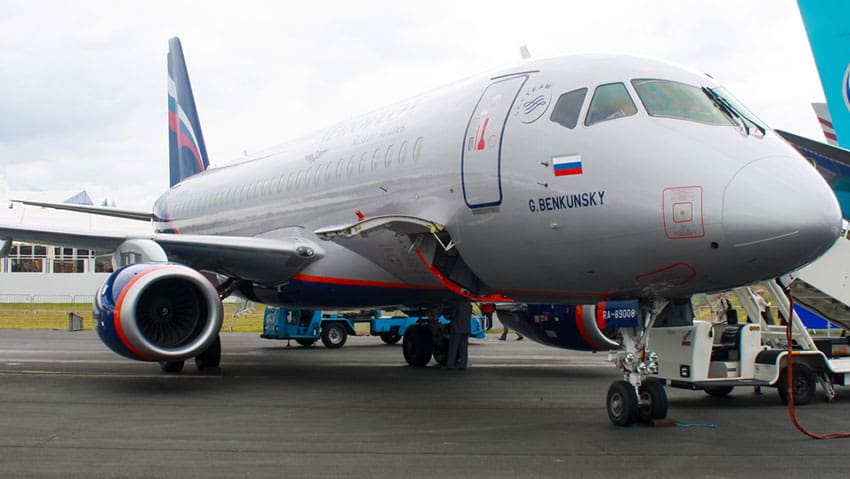
The Farnborough International Airshow opens on Monday as the biggest edition in its history, with a record 1,636 exhibitors, more than 600 confirmed investors and American firms occupying more than a third of the exhibition floor.
The headline numbers, released by organisers ahead of the show’s opening on 20 July, point to an event that has outgrown even its own considerable reputation. Exhibitor numbers are up 15 per cent on 2024, and 5,000 square metres of new event space has been developed for this year, including new outdoor chalets and an entirely new Hall 0.
For UK firms hoping to break into aerospace, defence and space supply chains, the most telling figure may be this: 22 per cent of this year’s exhibitors are attending for the first time. Farnborough is no longer a closed shop for the primes and their established suppliers, and more than a fifth of the companies on site will be walking the halls as newcomers.
The international pull is equally striking. Sixty-three per cent of exhibitors come from overseas, which organisers say makes Farnborough the most international airshow in the calendar, and there are 28 international pavilions this year, up from 21 in 2024. The number of countries invited to the show has risen by 46 per cent.
The Americans, as ever, have arrived in force. US exhibitors account for 20,537 square metres across the halls, chalets and outdoor exhibition, some 35 per cent of the site’s total exhibition space. For British SMEs, that concentration of US buyers, partners and primes on Hampshire soil is an export opportunity that would otherwise require a transatlantic flight and a very good travel budget.
Money is coming to meet them. More than 600 investors are confirmed to attend, in line with the objectives of the Aerospace Global Forum: Finance Summit, the new programme bringing global capital to Farnborough to connect sovereign wealth funds, private equity and venture capital with businesses from primes to start-ups.
The show itself is a small economy. Billed as the world’s largest temporary outdoor exhibition, the site exceeds 500,000 square metres, the equivalent of 78 football pitches, the footprint of 1,350 Concordes or 630 Airbus A380s. Its temporary structures would stretch more than 2km placed end-to-end.
Building it is a business story in its own right. The event takes an estimated 65,000 man days and 140 days of physical build activity, supported by 4,000 contractors and 99 official suppliers, a reminder that the airshow’s supply chain reaches well beyond aerospace into construction, catering, logistics and events firms across the region.
The commercial stakes are considerable. The 2024 edition generated at least £13 billion in deals for the UK, according to ADS Group, the trade body for a sector contributing more than £42 billion a year to the UK economy. With defence spending rising and industry figures already urging the next Prime Minister to attend, expectations for this year’s order book will be higher still.
For smaller firms, the message from the numbers is simple. The world’s aerospace industry, its biggest customers and its deepest-pocketed investors will spend a week within an hour of London. The businesses that turned up as first-timers this year clearly reached the same conclusion.
Affirm CEO Max Levchin details the robust health of consumers and significant growth in gross transaction volume on ‘The Claman Countdown.’
Dollar Tree plans to close dozens of stores nationwide this year while continuing to expand its overall footprint.
The Chesapeake, Virginia-based company said in its first-quarter earnings report, released May 28, that it expects to close about 75 stores during fiscal 2026. It did not say which locations will shut their doors.
At the same time, Dollar Tree plans to open roughly 400 new stores this year, meaning its total store count is expected to grow.
DOLLAR TREE MAKES AN UPSCALE PLAY TO FUEL SALES
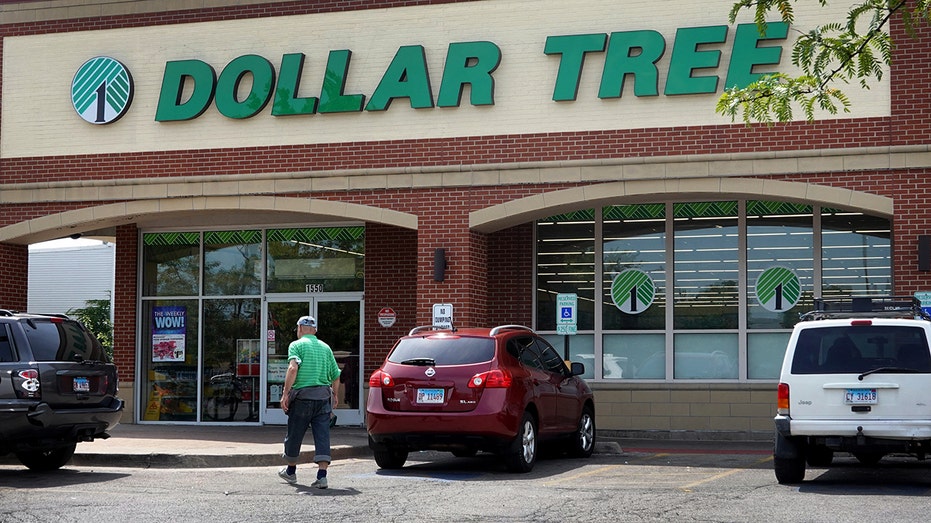
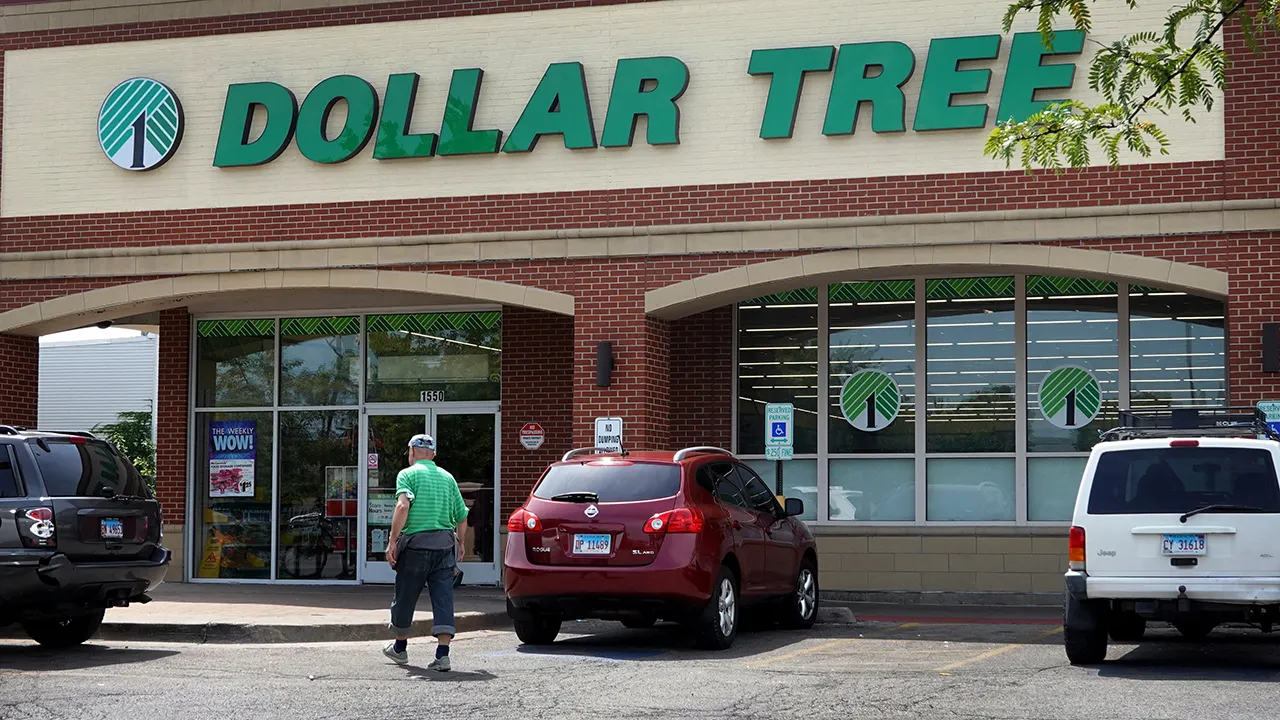
Customers shop at a Dollar Tree store on Aug. 2, 2022 in Chicago, Illinois. Dollar Tree expects its overall store count to grow as it opens roughly 400 new locations in fiscal 2026. (Scott Olson/Getty Images)
The retailer opened 113 stores during the first quarter, bringing its total footprint to 9,382 locations across the United States and Canada as of May 2.
Dollar Tree also converted or added about 630 stores to its multi-price format during the quarter. About 5,900 locations now sell products at various price points.
CEO Mike Creedon said the company is focused on improving its stores, expanding its product selection and strengthening its relationship with customers.
CONSUMERS SHOULDN’T EXPECT PRICES TO FALL ANYTIME SOON, TOP ECONOMIST WARNS

A woman shops for items at a Dollar Tree store on April 28, 2025, in Alhambra, California. Dollar Tree also converted or added roughly 630 locations to its multi-price format during the first quarter of 2026. (FREDERIC J. BROWN/AFP via Getty Images)
“As we celebrate our 40th anniversary in 2026, we are encouraged by the progress we are seeing across the business and remain focused on making thoughtful investments in our stores, assortment and customer experience — building Dollar Tree to last for decades to come,” Creedon said in a statement.
The growth comes as the discount retailer increasingly opens stores in more affluent areas in an effort to attract higher-income shoppers who tend to spend more per visit.
AMERICANS GROW MORE PESSIMISTIC ABOUT FINANCES AS RENT AND FOOD COST FEARS SURGE, FED SAYS
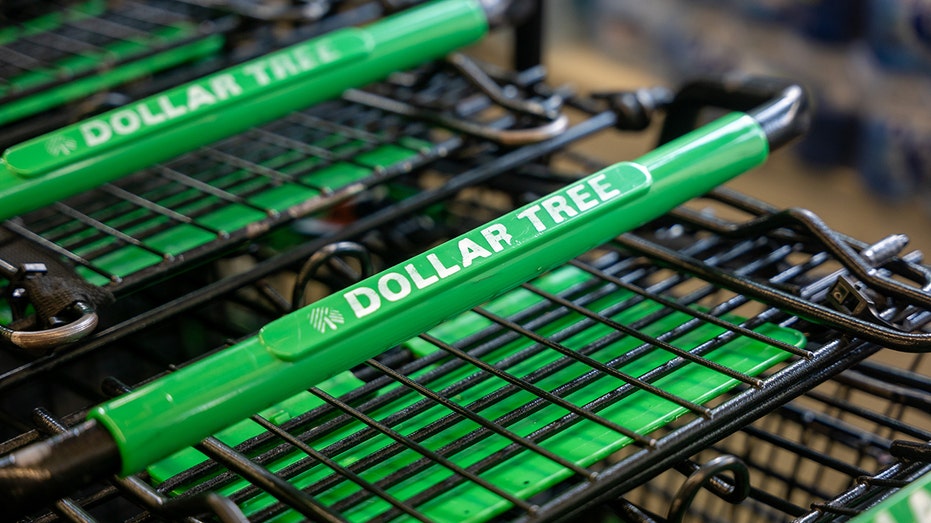
Dollar Tree carts sit in a store in Brooklyn on March 26, 2025, in New York City. CEO Mike Creedon said the retailer remains focused on improving store conditions, expanding its merchandise assortment and strengthening its relationship with customers (Spencer Platt/Getty Images)
Stocks In This Article:
A February analysis by Bloomberg News found that 49% of new Dollar Tree stores opened in the last six years were located in wealthier parts of metro areas around the country, up from just 41% in the preceding six years.
GET FOX BUSINESS ON THE GO BY CLICKING HERE
Dollar Tree could not immediately be reached by FOX Business for comment.
FOX Business’ Eric Revell contributed to this report.

For the better part of four decades, the Thai Board of Investment promoted the country with a single, self-satisfied phrase: the Detroit of the East. The title was not entirely self-awarded. By the mid-2010s, Thailand was the tenth-largest vehicle producer on earth, turning out more than two million units a year from factory clusters strung along Rayong, Chonburi, and the outer belts of Bangkok. The pickup truck — functional, profitable, suited to Southeast Asian roads and budgets — was its signature product. Japanese conglomerates held the commanding heights. Toyota, Isuzu, Honda, and Mitsubishi ran subsidiaries that were, in a meaningful sense, Thailand’s manufacturing nervous system.
That nervous system is now in visible distress. Domestic vehicle sales collapsed 26 per cent in 2024 to 572,675 units, the lowest figure since 2009. Production dropped further still, recording nineteen consecutive months of year-on-year decline through early 2025. Factory capacity utilisation fell to around 58 per cent. The car loan rejection rate — a metric that strips away the marketing and exposes the underlying credit quality of Thai households — ran at roughly 70 per cent nationwide throughout 2024. The Detroit epithet, always a little aspirational, has begun to feel elegiac.
Yet the same geography, the same infrastructure corridors, and in several cases the same industrial estates that hosted assembly lines are now absorbing a different kind of capital. Data centres, semiconductor packaging facilities, power electronics foundries, and AI cloud infrastructure are flowing in at a pace that is structurally significant rather than cyclically convenient. Understanding why requires looking beyond the auto slump to a deeper reordering of regional industrial logic — and asking what role Thailand is positioning itself to play inside it.
The Anatomy of the Auto Decline
The proximate causes of the automotive crisis are not difficult to catalogue. Thai household debt has been elevated for years, and financial institutions responded by tightening auto loan approvals sharply. Non-performing auto loans reached 259 billion baht by the second quarter of 2024. Lending conditions that were already strict became stricter; a car loan rejection rate of 70 per cent, sustained across the year, is not a blip but a structural credit event. Modest GDP growth of 2.5 per cent did nothing to offset the squeeze on disposable incomes.
Japanese manufacturers, which had built their regional export strategies around Thai production, absorbed the shock unevenly. Toyota’s exports from Thailand fell nearly 13 per cent in the first nine months of 2024; Isuzu was down over 47 per cent in domestic sales in some periods; Mitsubishi contracted 16 per cent in export volumes. The industry’s traditional export markets — Australia, the Middle East, Europe, Central and South America — remained accessible but could not compensate for what was being lost domestically and in regional demand.
Sector Snapshot — Automotive 2024
572,675 new vehicle sales recorded in 2024 — the lowest annual figure in 15 years, a 26.2% decline from 2023’s 775,780 units.
1.51 million light vehicles produced in 2024, a 17% drop from the prior year and one of the steepest single-year contractions since the global financial crisis.
~58% factory capacity utilisation in November 2024, reflecting deep structural idle across the assembly sector.
April 2025 saw the country’s first EV exports — 67,085 vehicles, representing 64% of that month’s total production — a tentative data point suggesting a transition rather than a terminal decline.
The arrival of Chinese electric vehicle brands introduced a further complication. BYD opened its Rayong factory in July 2024 with a nominal capacity of 150,000 units per year. Smaller Chinese entrants — Neta among the earliest — struggled against both BYD’s competitive scale and the Thai government’s local production requirements under the EV 3.5 programme. The scheme reduced subsidies from 150,000 baht per vehicle to 100,000 baht while tightening localisation obligations, creating a two-tier market: BYD, with genuine manufacturing footprint, and a tail of smaller brands caught between subsidy conditions they could not meet and a consumer market they could not yet win.
The structural critique of Thailand’s automotive model goes deeper than the current cycle. As the Wikipedia entry on the Thai auto industry noted with unusual candour, the decisions that control most vehicle manufacturing in Thailand have always been made in Tokyo and Detroit rather than in Bangkok. Thailand assembled; others designed, engineered, and captured the intellectual property rents. The Detroit label was always partly a description of a factory floor, not a value chain.
Thailand assembled; others designed, engineered, and captured the intellectual property rents. The Detroit label was always partly a description of a factory floor, not a value chain.
The Eastern Economic Corridor Remade
The Eastern Economic Corridor — the three-province special economic zone anchored in Chonburi, Rayong, and Chachoengsao — was built in its current form from 2017 onward as a successor to Thailand’s older eastern seaboard industrial estates. Its logic was always more than automotive: ten target industries including biotechnology, robotics, aerospace, and digital technology were named from the outset. In practice, however, the corridor’s early years were dominated by familiar heavy and automotive manufacturing.
The composition of EEC investment applications has changed materially. In 2025, total applications reached 60 billion dollars — a record. The digital sector led, attracting nearly 24 billion dollars in applications. For the first half of 2025 alone, the BOI recorded 521 billion baht in data-centre related investment approvals from 28 projects. The geographic pattern is telling: Chonburi, adjacent to Laem Chabang port, has emerged as the corridor’s digital heart, while Rayong retains its industrial character but is pivoting toward EV battery manufacturing and smart-factory automation rather than traditional assembly.
Infrastructure is being remade to match. The Laem Chabang port expansion — phase three, targeting 18 million TEUs annually upon completion in 2027 — would put it among the ten busiest ports in the world. A high-speed rail link connecting Don Mueang, Suvarnabhumi, and U-Tapao airports would reduce the corridor’s internal transit times dramatically, though as of early 2026 cabinet approval for the revised contract terms remains pending. The southern Land Bridge project — two ports connected across the Kra Isthmus by motorway and double-track rail — aims to position Thailand as a bypass route for cargo currently transiting the Malacca Strait, though its timeline remains ambitious.
Between January and May 2025, 129 foreign investors chose the EEC, a 30 per cent increase over the same period in 2024. Japan retained its position as the leading source of FDI, contributing around 20 per cent, followed by the United States. The sectoral mix, however, increasingly reflects electronics, advanced manufacturing, and digital infrastructure rather than conventional automotive assembly.
The Data-Centre Inflection
The data-centre story is the most immediately legible dimension of Thailand’s industrial pivot. Bangkok’s IT capacity multiplied more than twentyfold between 2019 and 2024. As of September 2025, the pipeline — projects under construction, announced, or planned — stood at over 2.87 gigawatts, a figure that is 3.7 times larger than Indonesia’s equivalent pipeline. The Thai data-centre market, valued at 1.45 billion dollars in 2025, is projected to reach 6.29 billion dollars by 2031 at a compound annual growth rate of nearly 28 per cent.
The roster of investors reads like a directory of global hyperscale infrastructure. AWS has outlined a five billion dollar commitment. Google is building a one billion dollar facility in Chonburi. Microsoft has inaugurated its first cloud region in Thailand. ByteDance — TikTok’s parent — announced a data-hosting project in January 2025 valued at 126.8 billion baht, with facilities spread across three provinces. At its first BOI board meeting of 2026, Thailand approved seven additional data-centre projects totalling more than three billion dollars, including facilities from True Internet Data Center, GSA Data Center (a joint venture of Gulf, Singtel, and AIS), and Singapore-backed Stellar DC.
Digital Infrastructure — Key Metrics
Thailand data-centre market: $1.45B (2025) → $6.29B (2031), CAGR ~27.7%
Pipeline capacity as of September 2025: 2.87 GW — 3.7× Indonesia’s equivalent
Data-centre applications in 2025: $23B+ across 36 BOI applications
AI workloads accounted for 28% of total capacity as of early 2025, up from 20% the prior year, driven by large language model training and inference demand.
The drivers are structural rather than speculative. AI inference demand is expanding faster than regional infrastructure can absorb it. Singapore, long the default Southeast Asian data-centre market, has been constrained by a government-imposed moratorium on new builds that ran from 2019 to 2022 and left a significant capacity gap. Malaysia and Indonesia are absorbing demand, but Thailand’s combination of lower construction costs (seven to eight million dollars per megawatt versus regional peers), competitive electricity pricing, BOI incentive structures, and geographic position is converting latent demand into committed capital.
AI workloads represented 28 per cent of total data-centre capacity in Thailand by early 2025, up from 20 per cent the prior year. Cloud services accounted for roughly 38 per cent. The remaining capacity services financial services, e-commerce, and sovereign data requirements — the latter increasingly important as ASEAN governments push for data residency standards that make regional hosting economically necessary rather than merely convenient.
Semiconductors: Ambition Outrunning Execution, For Now
The most consequential — and most uncertain — element of Thailand’s industrial pivot is its semiconductor strategy. The country is not a novice in electronics manufacturing. Established players including Infineon, Analog Devices, Microchip Technology, NXP Semiconductor, Sony, Toshiba, and Rohm have operated Thai facilities for years, primarily in assembly, testing, and packaging — the downstream segments of the chip value chain. Thailand’s share of ASEAN’s growing semiconductor export share (which rose from 20 per cent of global semiconductor exports in 2015 to nearly 30 per cent in 2024) reflects this concentration in back-end work.
The ambition expressed in the draft National Semiconductor Roadmap 2050, released for initial review in early 2026, goes considerably further. Developed by the consultancy Roland Berger with government and private sector input, the plan targets more than 2.5 trillion baht in investment over 25 years and the development of 230,000 high-skilled personnel. Its headline aspiration — “Made-in-Thailand Chips” as a 2050 goal — frames the country’s objective as moving from contract assembler to technology owner.
The candidness of the comparative assessment embedded in the roadmap is notable. Thailand’s semiconductor industry is acknowledged to be nascent relative to Singapore, Malaysia, and even Vietnam in certain sub-segments. The realistic near-term opportunity, according to SEMI Southeast Asia’s analysis from early 2026, lies in advanced packaging, power semiconductor manufacturing, and system integration rather than advanced-node logic wafer fabrication. Thailand is not competing with TSMC’s three-nanometre processes; it is competing to capture the mid-value portions of a supply chain that global customers want to diversify and de-risk.
Thailand is not competing with TSMC’s three-nanometre processes; it is competing to capture the mid-value portions of a supply chain that global customers want to diversify and de-risk.
Power electronics — silicon carbide devices for EV powertrains and grid applications — represent a particularly coherent opportunity. Thailand’s existing EV manufacturing base, its automotive supply-chain infrastructure, and targeted BOI incentives for power electronics converge on a segment where domestic end-markets exist and regional demand is growing. Industry trackers cited by SEMI have identified joint-venture initiatives to localise silicon carbide materials and power device capability over the 2026 to 2028 window as realistic near-term targets rather than aspirational projections.
The workforce constraint is not being ignored. KMITL, one of four government-funded semiconductor training laboratories, expects to produce 86,000 engineers and scientists between 2025 and 2030. The Thai Microelectronics Center, a sensor-focused foundry that shares resources with Thai universities, is functioning simultaneously as a training facility and a customised MEMS and sensor production base. Whether this pipeline can scale to meet the ambitions of the 2050 roadmap is the genuinely open question — but the institutional architecture is being built rather than merely announced.
Thailand in the ASEAN Architecture
The framing of Thailand’s transformation as a bilateral event — from automotive to digital — understates the regional dimension. ASEAN is itself undergoing a structural reorganisation of industrial geography, accelerated by US-China decoupling dynamics, the post-pandemic supply-chain reassessment, and the rise of AI as a demand category that requires physical infrastructure at scale.
The ASEAN Framework for Integrated Semiconductor Supply Chain, adopted in 2025, formalises what is already implicit in investment patterns: that the region’s member states are more valuable as complementary nodes than as competitors. Singapore anchors advanced R&D and financial services. Malaysia hosts significant wafer fabrication and OSAT capacity at Kulim and Penang. Vietnam has attracted Amkor, Nvidia, and Samsung to its Bac Ninh province for assembly and packaging. The Philippines is building circuit design research capability. Thailand, in this cartography, is positioned to anchor advanced packaging, power electronics, data infrastructure, and — critically — the physical logistics that tie the others together.
That logistics positioning matters more than is commonly credited in discussions focused on individual sector plays. Laem Chabang is already ASEAN’s busiest container port by throughput. The rail corridor connecting Thailand northward to the Laos-China Railway — which itself links Vientiane to Kunming and eventually to the Chinese national rail network — represents one of the most consequential pieces of Eurasian commercial infrastructure to be completed in the 2020s. Thailand is the geographic hinge of mainland Southeast Asian connectivity in a way that no other ASEAN member state can claim.
The Land Bridge concept, whatever its eventual implementation timeline, signals the same strategic ambition: to convert Thailand’s peninsular geography from a transit inconvenience into a transit advantage, capturing cargo flows currently routing around southern Malaysia and through the Malacca Strait. Even partial execution of this vision would alter the economics of regional logistics materially.
The Risks That Remain Underpriced
Thailand’s industrial pivot carries real risks that a reading focused on investment announcements can obscure. The first is execution velocity. The BOI is approving data-centre projects at a pace that is generating a power-procurement challenge: securing large-scale power allocations for 2026 has already been flagged by operators as materially difficult, with early engagement described as essential rather than merely advisable. A country adding gigawatts of data-centre draw to its grid while simultaneously pursuing net-zero carbon neutrality and managing the energy demands of new industrial clusters faces a power planning challenge of genuine complexity.
The second risk is supply-side competition. Vietnam and Indonesia are not static benchmarks. Both are actively refining their own investment frameworks, sharpening tax incentives, and investing in infrastructure to capture the same supply-chain diversification flows that Thailand is targeting. Vietnam’s electronics sector has grown rapidly and benefits from lower labour costs. Indonesia has the domestic market scale that Thailand lacks. The Southeast Asian investment environment is competitive rather than captive.
The third risk is structural: the high-speed rail link connecting the EEC’s three airports — the project that would most directly enhance the corridor’s internal connectivity and its appeal to multinational manufacturing — remained stalled as of March 2026, with no construction commenced and cabinet approval for revised contract terms still pending. Infrastructure ambition that slips into procurement delay is a chronic Thai institutional challenge, and the EEC’s timeline credibility depends on resolving these bottlenecks at the pace that investors are pricing in.
The fourth, less discussed risk is distributional. The automotive industry, whatever its structural flaws, employed hundreds of thousands of Thai workers in mid-skill roles — assembly technicians, parts manufacturers, logistics operators — across provinces that do not host data centres or semiconductor foundries. The new industries being recruited to the EEC are capital-intensive and skill-intensive in ways that do not automatically replicate those employment patterns. Managing the transition between industrial eras, at the workforce level, is a policy challenge that the semiconductor roadmap’s 230,000-engineer target only partially addresses.
What the Pivot Actually Means
Thailand’s transformation from automotive hub to regional linchpin is not yet complete. It may not be inevitable. But the direction of capital, the structure of the incentive framework, the geography of ASEAN’s reorganising supply chains, and the particular convergence of AI infrastructure demand with Thailand’s existing industrial and logistical endowments are producing something more coherent than a response to one sector’s difficulties.
The Detroit label was always an import — a compliment borrowed from American industrial history to describe an economy that was, at its productive core, assembling other people’s designs under other people’s brands. The aspiration encoded in documents like the National Semiconductor Roadmap 2050, the EEC’s digital cluster strategy, and Thailand’s data-centre investment framework is different in kind: the aspiration to be a node that other regional economies route their critical supply chains through, not because Thailand is the cheapest option but because it is the most reliable and best-connected one.
Whether that aspiration becomes durable economic architecture depends on whether the infrastructure projects deliver on schedule, whether the semiconductor workforce pipeline can be built fast enough to matter commercially, and whether the political continuity needed to sustain a 25-year industrial strategy survives Thai domestic politics. These are not rhetorical qualifications. They are the actual variables on which the outcome turns.
What is already true is that the decade-long question of what Thailand becomes after automotive assembly has been answered in the most concrete terms available: with hundreds of billions of baht in committed capital, a national semiconductor roadmap backed by a Roland Berger analysis, hyperscale data-centre commitments from every major global cloud operator, and a regional connectivity position that no neighbouring economy can replicate. The pivot is underway. The execution is the story that remains to be written.
US service member killed in northern Iraq, U.S. Central Command says
Madison Investments is 100% employee-owned and has been based in Wisconsin’s capital city since its founding in 1974. In that time, Madison has grown from a local firm into a manager entrusted with approximately $22 billion in assets across a suite of mutual funds, active ETFs, managed accounts and customized portfolios. Note: This account is not managed or monitored by Madison Investments, and any messages sent via Seeking Alpha will not receive a response. For inquiries or communication, please use Madison Investments’ official channels.
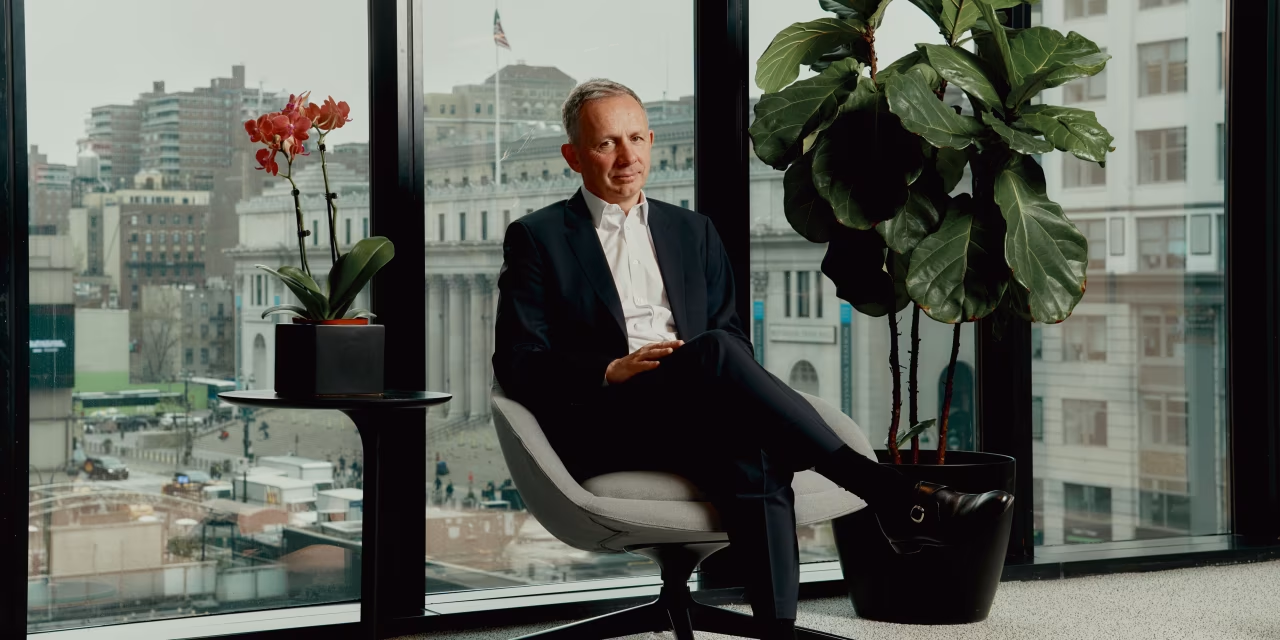
Digital-payments pioneer PayPal PYPL is in a yearslong rut. Enrique Lores is tasked with saving it.
The 61-year-old was named chief executive of PayPal earlier this year after decades at HP HPQ and its predecessor company, Hewlett-Packard, which he played a key role in splitting up. Lores has since announced an ambitious turnaround plan for PayPal that includes reorganizing its business lines and slashing at least $1.5 billion in costs—moves reminiscent of the playbook he has deployed in his previous roles.
Copyright ©2026 Dow Jones & Company, Inc. All Rights Reserved. 87990cbe856818d5eddac44c7b1cdeb8
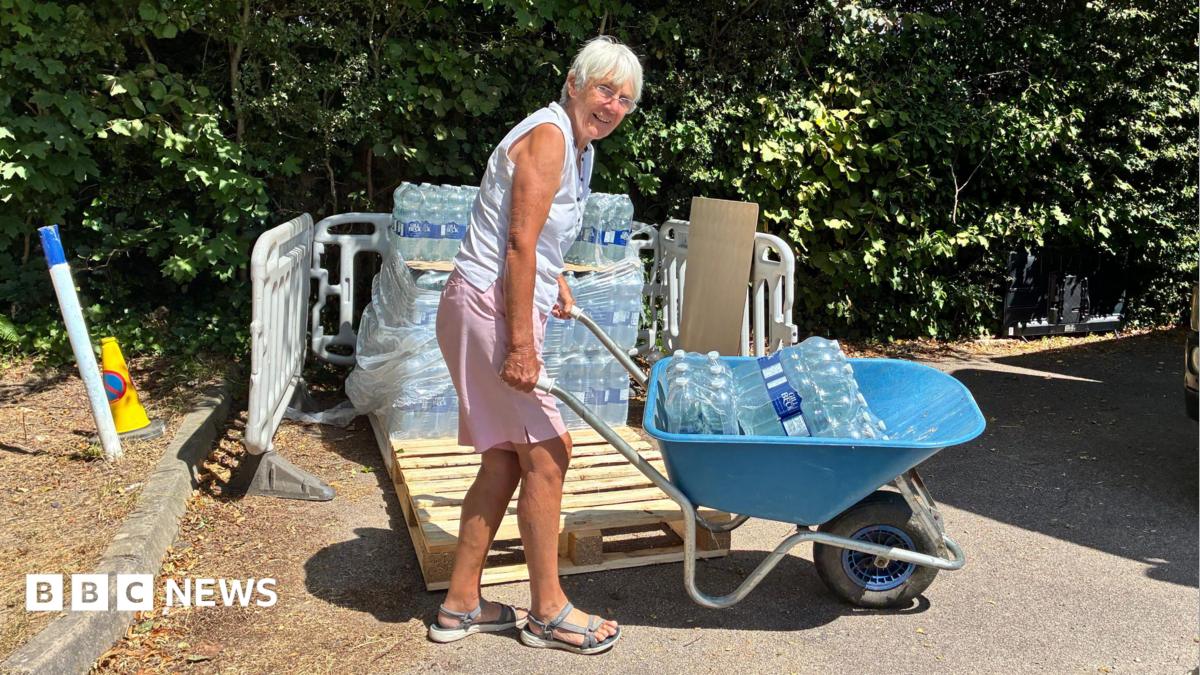
The company said on Saturday that supplies would not return until Sunday evening “at the earliest”, however, previous outages have continued for longer than predicted.
Steven Benton, SEW incident manager, said on Sunday that the water treatment works were “now stable”.
He added: “Low storage levels from this disruption and high demand mean we cannot pump water to some areas, particularly on higher ground.
“To ensure a stable, continuous flow, we must allow tanks to replenish.”
He added that the company was continuing to deliver bottled water to customers from the priority services register, a free support scheme for people who need extra help.
Two bottled water stations reopened earlier on Sunday at Tesco Superstore on Pembury Road and Tunbridge Wells Rugby Club.
A third opened later at the Odeon cinema car park in Knights Way.
They will stay open until 20:00 BST, SEW said.
The rugby club station closed briefly on Sunday morning while bottled water was restocked, but has since reopened.

BNY Mellon Appreciation Fund Q2 2026 Commentary
Business
How Much Will $1,000 Invested in XRP Be Worth in 5 Years? What Wall Street Analysts Actually Predict

XRP is trading around $1.09 as of mid-July 2026, a level that puts the cryptocurrency down roughly 68% from its 52-week high near $3.66 and down sharply from the $3.65 it commanded just a year earlier. For anyone weighing a $1,000 investment in the token today, that price would buy approximately 917 XRP, a figure whose future value depends entirely on which of several widely divergent analyst forecasts, if any, ultimately proves closest to reality.
XRP’s recent price action has been notably weak even as the underlying news for Ripple, the company behind the token, has largely been positive. The token’s long-running legal battle with the U.S. Securities and Exchange Commission concluded, spot XRP exchange-traded funds launched in the U.S., and regulators classified the token as a digital commodity alongside Bitcoin, according to reporting from 24/7 Wall St. Despite clearing those hurdles, XRP fell from around $1.30 at the start of June to roughly $1.04 by the end of the month, caught in a broader crypto market selloff that pulled most digital assets lower regardless of individual project fundamentals.
One development analysts are watching closely is the CLARITY Act, proposed federal legislation that would permanently classify XRP as a commodity under U.S. law rather than leaving that determination to regulators on a case-by-case basis. The bill missed an early-July target date the White House had floated for signing it into law, with the Senate’s return from recess and other legislative priorities pushing a potential floor vote to late July or early August at the earliest, according to 24/7 Wall St. Even if the bill passes, analysts caution it would likely produce a short-term relief rally rather than a fundamental shift in XRP’s longer-term trajectory, particularly while the broader crypto market remains under pressure.
Looking further out, five-year price forecasts for XRP, extending roughly to 2030 or 2031, vary dramatically depending on the source and methodology. According to Yahoo Finance, analyst predictions for where XRP could trade by 2030 range from $5 to $28, with consensus estimates clustering between $5 and $15. At $5, a $1,000 investment made at today’s roughly $1.09 price would grow to approximately $4,200, while a price of $15 would turn that same $1,000 into roughly $12,600. Standard Chartered has offered one of the highest credible institutional forecasts at $28 for 2030, a level that would value a $1,000 initial investment at approximately $23,500, though the bank has also cut its own shorter-term 2026 target for XRP from $8 to $2.80 during the current market downturn, illustrating how quickly even institutional forecasts can shift.
Other analysts have offered more measured outlooks. Ryan Lee, chief analyst at Bitget Research, put his 2030 price target for XRP between $4.20 and $10 or higher, according to 24/7 Wall St, with the wide range depending on factors including how quickly Ripple’s RLUSD stablecoin gains adoption, whether bank partnerships convert into actual XRP-denominated settlement volume, and whether Ripple eventually pursues an initial public offering. Lee noted that banks currently using Ripple’s network largely rely on it for messaging and tracking rather than settling transactions directly in XRP, often preferring RLUSD or fiat currency instead because stablecoins avoid the price volatility associated with XRP itself. At the lower end of Lee’s range, a $1,000 investment would grow to roughly $3,850 by 2030, while the higher end would produce a return closer to $9,170.
At the far extreme, one former Goldman Sachs analyst, Dom Kwok, has floated a 2030 target of $1,000 per token, a figure that Yahoo Finance noted would require XRP’s market capitalization to exceed the gross domestic product of every country on Earth, making it widely regarded across the industry as an outlier scenario rather than a realistic base case.
Central to nearly every bullish forecast is the question of how much of the global cross-border payments market, estimated at roughly $150 trillion, Ripple can realistically capture through its network. Ripple’s own leadership has targeted roughly 14% of that market, according to Yahoo Finance, but the company’s On-Demand Liquidity network processed only around $15 billion in transactions in 2024, far short of the approximately $21 trillion in annual volume that target would imply. That gap between Ripple’s stated ambitions and its current transaction volume represents one of the central uncertainties analysts point to when explaining why price forecasts for the token diverge so widely.
Some more conservative, algorithm-based forecasting models paint a far less dramatic picture. Price prediction tools from platforms including MEXC, which apply modest annual growth assumptions to XRP’s current trading price, project the token could reach somewhere between roughly $1.66 and $1.80 by 2030 under a steady, low-growth scenario, a trajectory that would turn a $1,000 investment today into roughly $1,520 to $1,650 over five years, a far more modest outcome than the institutional analyst targets cited above.
Given the scale of disagreement among forecasters, ranging from modest single-digit percentage gains to returns exceeding 20 times an initial investment, and the acknowledgment even from bullish analysts that XRP’s price depends heavily on unresolved variables like regulatory outcomes, bank adoption patterns and the broader crypto market cycle, financial advisors generally caution that cryptocurrency price predictions of any kind carry significant uncertainty. This article is intended to provide factual context on published forecasts rather than investment advice, and readers considering an XRP investment should be aware that cryptocurrency prices are highly volatile and that past performance, including XRP’s roughly 68% decline over the past year, offers no guarantee of future results in either direction.
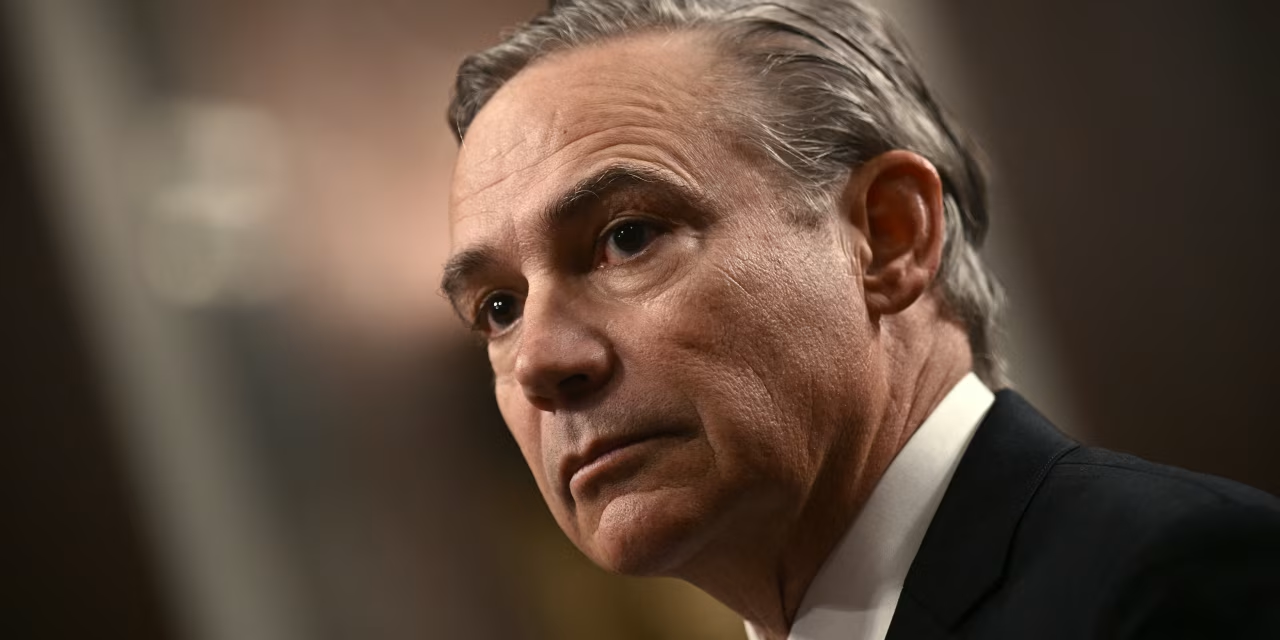
Boeing BA Chief Executive Kelly Ortberg said the company has started work on a new airplane design, but it is focused on playing catch-up to deliver products that are years behind schedule.
Ortberg said airlines weren’t clamoring for a new design just yet, and Boeing wants to have the technology and its finances in place first. “Certainly, getting our financial house in order is a part of our being ready,” Ortberg said. “That’s going to take another couple years.”
Copyright ©2026 Dow Jones & Company, Inc. All Rights Reserved. 87990cbe856818d5eddac44c7b1cdeb8
Taylor Swift Wedding Guests’ Reaction To Adam Sandler Officiating

XRP Gets the BIS Treatment | Here’s What Happens Next

Burst water pipe in Leeman Road – low pressure and flooding


-
 NewsBeat3 days ago
London Mayor Sadiq Khan handed a peerage by Keir Starmer alongside 15 other Labour figures… just days before the PM leaves No10
-

 Fashion2 days ago
Weekend Open Thread – Corporette.com
-

 Politics1 day ago
The House | The City of London can help the new chancellor deliver growth in every postcode
-

 Politics4 days ago
Young campaigners urge incoming PM to act on outdoor junk food ads
-

 Crypto World4 days ago
CFTC blocks Kalshi from unwinding Michigan trades after court order
-

 Business4 days ago
Nvidia Stock Slips After Big Tuesday Rally as Huang Confirms Vera Rubin Chip Is Now in Production Today
-

 Crypto World1 day ago
Ripple Payments Joins MiCA With 14 Firms, Does It Mean Anything For XRP?
-
 Crypto World2 days ago
Two July Windows Left: The CLARITY Act’s Senate Fight and What Failure Means
-

 Politics7 hours ago
Democrats look to World Cup watch parties to register thousands of voters
-

 Crypto World2 days ago
Ripple wins EU-wide access as ESMA adds it to MiCA register
-
 Entertainment4 days ago
Disney’s Most Ambitious Failed Star Wars Attraction Is Coming to SDCC
-

 Business4 days ago
Palantir Shares Rise After Expanded Nvidia Partnership and Fresh Analyst Upgrades Ahead of Earnings Day
-

 Crypto World3 days ago
Injective Submits SEC Transfer-Agent Registration to Onchain Ownership Records
-

 Tech6 days ago
Get Your ESP32 Sunny Side Up With This Solar Dev Board
-

 News Videos5 days ago
XRP BOMBSHELL… XRP OMBOARDED FOR TRANSACTIONS!!!
-

 NewsBeat2 days ago
Registration is now open for March for Men with Kev 2026
-

 Tech5 days ago
Dark Secrets Emerge When Jailbreaking LLMs
-
 Sports4 days ago
New Cornerback Enters Vikings Trade Rumor Mill
-

 News Videos3 days ago
Money | Class 12 Economics | CBSE Board Exam 2026-27
-

 Business3 days ago
Banco Bilbao Vizcaya Argentaria, S.A. (BBVA) Discusses Global Macro Environment and Economic Outlook for Core Markets Transcript
You must be logged in to post a comment Login