
Crypto World
At $76K, Strategy’s Average Cost Meets Bitcoin’s Current Price



Bitcoin’s brief dip below $76,000 this week triggered a 7% drop in Strategy’s stock price. It exposed a structural reality that markets can no longer ignore: the company’s entire 713,502 BTC position now sits precisely at its cost basis.
This stark reality transforms what was once a corporate treasury bet into a market-defining reference point.
Sponsored
When Size Becomes Structure
Strategy, formerly MicroStrategy, has accumulated approximately 3.57% of Bitcoin’s total supply. This concentration means the company has evolved from being a large holder to becoming part of the market structure itself.
“Saylor isn’t just bullish—he is the market,” noted CryptoQuant analyst Maartunn in a detailed assessment of Strategy’s position. “This is no longer passive ownership. This is market structure.”
The numbers underscore this transformation. As of February 1, Strategy holds 713,502 BTC acquired for approximately $54.26 billion at an average price of $76,052 per coin. When Bitcoin touched $74,500 on Monday—its lowest level since April—the firm’s entire position briefly slipped underwater.
The price has since recovered to around $78,800, but the episode revealed how the $76,000 level has become a mechanical reference point. According to Maartunn’s analysis, roughly 61% of Bitcoin’s circulating supply is currently above the market price, while 39% is below. Strategy’s massive position straddles this equilibrium line precisely.
The Pressure of Continued Buying
Despite the volatility, Strategy announced another purchase: 855 BTC acquired at an average price of $87,974. While this demonstrates continued commitment to the Bitcoin treasury strategy, it also introduces additional structural pressure.
Sponsored
The latest buy raises the marginal cost of Strategy’s holdings and increases capital dependency. More critically, the purchase was made at prices roughly 7% above current market levels, meaning these new coins are already in the red.
“Buying 855 BTC at $87,974 raises the marginal cost, increases capital dependency, adds size which is directly at a -7% loss,” Maartunn observed. “Saylor now owns more BTC above market price than below it. That means dips hurt faster.”
Sponsored
A Different Kind of Leverage
Strategy’s position carries leverage—just not the kind typically associated with crypto trading. The company’s Bitcoin purchases have been funded through equity issuance, convertible bonds, and other capital market instruments.
SEC filings reveal the scope of available funding: STRK preferred stock alone has $20.33 billion in remaining issuance capacity, with additional capacity across STRF ($1.62 billion), STRC ($3.62 billion), STRD ($4.01 billion), and common stock ($8.06 billion).
But this capital market dependency creates a potential feedback loop. If Bitcoin prices decline, Strategy’s stock weakens. A weaker stock price constrains the company’s ability to raise capital through equity issuance. Reduced capital access limits buying power, which removes a significant source of demand support from the market.
“Saylor isn’t levered like a trader, but the balance sheet still amplifies risk,” Maartunn explained. “If BTC dips, MSTR stock weakens, or funding appetite slows—the feedback loop reverses.”
Sponsored
What Markets Actually Test
The current situation invites comparisons to previous structural vulnerabilities in crypto markets—not because Strategy faces imminent collapse, but because its position has grown large enough to shape market behavior.
“We’ve seen this structure before,” Maartunn noted, referencing Terra and FTX. “Not because they were evil, but because too much depended on them. Saylor isn’t there yet. But with 3.57% of total supply, extreme public visibility, price sitting on his cost basis, and continued buying required to defend structure—the setup is clear.”
On-chain metrics reinforce the cautious outlook. Realized Cap remains stagnant, indicating no significant new capital inflows. The Spent Output Profit Ratio (SOPR) continues to hover below 1, signaling that short-term holders are selling at a loss. Without improvement in spot volumes and ETF flows, any price recovery is likely to lack structural backing.
“Price sitting near your average doesn’t imply safety. It implies focus,” Maartunn concluded. “Markets don’t test stories. They don’t test belief. They test size, concentration, funding structure, and how much price action depends on continued participation.”
For now, the market appears positioned for range-bound consolidation rather than a sharp breakdown—unless the feedback loop linking Bitcoin prices, Strategy’s stock, and capital market access turns negative.


Bitcoin’s fifth halving is slated for April 2028, and the mining sector is entering that cycle with far tighter margins than in 2024. A mix of higher input costs, strained energy markets and increasingly explicit regulatory expectations are reshaping how miners operate, finance, and plan for the next supply cut.
During the previous halving in April 2024, Bitcoin traded around $63,000 as block rewards halved from 6.25 BTC to 3.125 BTC. By the 2028 event, miners will contend with even higher costs for energy, equipment and capital, all while a record hashrate and evolving policy regimes pressure balance sheets and strategic choices. Those dynamics have sparked a broader rethink: operators are moving beyond pure Bitcoin production toward energy infrastructure, grid services and multi-use sites designed to generate revenue streams that endure beyond block rewards.
Key takeaways
- The 2028 halving will reduce the block reward to 1.5625 BTC, at a time when input costs and energy prices are elevated relative to 2024.
- Miner balance sheets are tightening as executives pay down debt and deploy capital with greater discipline; notable sales of Bitcoin by major operators underline a shift in risk posture.
- Industry participants are pursuing longer-term power contracts and diversified site operations, signaling a move toward energy and infrastructure plays rather than pure mining plays.
- Regulatory clarity—across custody, banking access and crypto asset markets—appears increasingly central to capital allocation and institutional participation.
- Market dynamics are converging toward operators capable of financing, sustaining power, and monetizing ancillary opportunities such as grid services and heat reuse.
From cycles to infrastructure: a changing mining playbook
Industry executives describe the coming cycle as structurally different from 2024. Juliet Ye, head of communications at Cango, argues the environment for 2028 “looks almost nothing like 2024,” driven by a widening efficiency gap that forces fleet upgrades and longer energy commitments instead of chasing the cheapest tariffs. “There is less room in the middle now,” she said. “Operators with scale and diversification will be fine. Those without will find the next halving very difficult.”
Along similar lines, GoMining CEO Mark Zalan emphasized that capital discipline now matters more than sheer increases in hashrate. In his view, new deployments must clear tougher returns thresholds, reflecting the need to secure reliable energy and durable infrastructure before the next reward cut.
Despite these shifts, some fundamentals remain familiar. Stratum V2 pool DMND’s co-founder and CEO, Alejandro de la Torre, noted that the core dynamics of mining cycles tend to repeat, with peak hotspots reconfiguring and decentralization expanding as mid-sized players form new energy partnerships. The underlying message is that, even as strategies diversify, the market continues to rebalance around how and where power is sourced and monetized.
Balance sheets tightening: pre-halving recalibration
Evidence of a more conservative posture is visible in recent balance-sheet activity. Mara Holdings disclosed the sale of more than 15,000 Bitcoin in March to reduce leverage, while Riot Platforms liquidated over 3,700 BTC in Q1 to deleverage and restructure debt. Cango sold around 2,000 BTC to address its financing needs, and Bitdeer reported its Bitcoin treasury had fallen to zero as of February 20. These moves illustrate a broader recalibration: miners are prioritizing debt reduction, liquidity preservation and readiness to fund longer-duration power or energy projects ahead of the 2028 halving.
That tightening is accompanied by a deeper reexamination of hardware and site economics. Ye pointed to a structural shift toward energy contracts that span multiple regions, arguing that the most successful operators will lock in stable power and build sites capable of multi-use capacity. The early 2028 cycle is shaping up as a test of whether miners can convert heavy capex into durable, non-hash rate income streams.
Beyond blocks: monetizing energy and grid services
The economics of the 2028 cycle appear to reward operators who diversify revenue streams and manage capital with precision. Zalan described a landscape where “capital discipline now matters more than hashrate maximalism,” and where new deployments must deliver returns that justify the upfront costs and ongoing energy spend. The opportunity set expands beyond mining to include services that align with energy markets, such as load-curtailment, grid stabilization and potential heat reuse at multipurpose facilities.
Cango is positioning itself for this broader model. Juliet Ye highlighted an overarching thesis: facilities that can operate as mining hubs while serving AI inference or other high-performance compute tasks will be the ones that endure. “The facilities that will matter in five years are the ones that can do more than one thing,” Ye said, underscoring a trend toward bifurcated usage—hashpower during certain windows and compute workloads during others.
Analysts and operators also point to a broader industry realignment of incentives. In the 2024 cycle, investors rewarded miners largely on their Bitcoin exposure and price performance. As the sector matures, more capital is likely to flow toward operators that can secure long-term power agreements, participate in grid mechanisms and build scalable, multi-use sites that lock in revenue streams beyond the block reward.
Regulation as a material driver of capital decisions
Regulatory regimes are shifting from a cautious overlay to a more formal framework, and that evolution is increasingly embedded in investment theses. In the United States, developments around custody rules and banking access are being watched closely, while Europe’s Markets in Crypto Assets (MiCA) framework continues to shape how institutions approach crypto assets. Asia’s regulatory moves—along with new settlement rails and ETFs in various markets—are contributing to a clearer, more usable environment for capital to flow into mining and associated energy infrastructure.
Proponents argue that better-defined rules can accelerate capital deployment by reducing policy risk. Zalan indicated that the current backdrop is making capital moves faster when the regulatory environment is clear and reliable. He also suggested that the market has not fully priced in the potential for a tighter supply impulse to coincide with a broader Bitcoin ecosystem expansion by 2028.
What readers should watch next
As the 2028 halving draws nearer, investors, builders and miners will be watching several key signals. The ability of operators to lock in durable power arrangements and to monetize non-mining revenue streams will be critical in determining who emerges strongest from the next cycle. Regulatory clarity, particularly around custody and banking access, will likely influence which companies can scale and attract institutional capital. Finally, the balance between debt management and capex for energy infrastructure will shape which players can sustain operations through a period of reduced block rewards.
In the near term, market participants will assess how quickly energy markets adapt to geopolitical shifts and whether new efficiency gains offset rising input costs. The 2028 halving may test a broader, more resilient mining ecosystem—one that’s less about chasing the next subsidy and more about building enduring, multi-use infrastructure that aligns with evolving energy and financial regulation.
Readers should monitor updates on how miners rearrange their portfolios, the pace of energy-contract takeups, and any regulatory clarifications that influence institutional participation. The next few quarters could reveal whether the sector successfully bridges block rewards with real-world assets and services, marking a new era for Bitcoin mining as a tangible, infrastructure-backed industry.

TLDR:
- Altcoins have broken above a multi-year falling wedge on the TOTAL2 chart, signaling a potential trend reversal.
- The MACD indicator is nearing a bullish crossover that closely mirrors the setup seen before the 2020 altcoin rally.
- Tokens including Zcash, LayerZero, Ethena, and Arbitrum posted gains above 10% within a single 24-hour window.
- Over 40% of altcoins were near all-time lows in March, yet open interest has since climbed past $113 billion.
Altcoin season 2026 is showing technical signals not seen since 2020. A multi-year falling wedge breakout on the TOTAL2 chart, combined with a looming MACD bullish crossover, has analysts watching closely.
With several tokens already posting double-digit gains and open interest climbing past $113 billion, the broader altcoin market appears to be building momentum for a potential trend reversal.
Wedge Breakout and MACD Signal Raise Altcoin Hopes
A falling wedge structure has been forming on the TOTAL2 chart since the 2021 market peak. This chart tracks the combined market cap of all altcoins, excluding Bitcoin.
The pattern reflects a prolonged downtrend with steadily weakening selling pressure over several years.
Analyst Mark Chadwick flagged the development in an April 8 post on X, stating that altcoins were “starting to look insane.” He noted that altcoins had broken above the upper boundary of this wedge.
That kind of breakout is generally viewed as a reversal signal among market analysts. Beyond the wedge, Chadwick also pointed to the MACD indicator as a secondary signal worth watching.
The MACD line is moving closer to the signal line, and a crossover to the upside may follow in the coming weeks. “If MACD flips green and confirms the crossover in the coming weeks… Follow the arrow for directions. Higher,” he wrote.
That 2020 MACD crossover marked the start of a broad altcoin rally where many tokens outpaced Bitcoin by wide margins. Crypto Patel separately noted on April 8 that altcoins are bouncing off a long-term trendline stretching back to 2022 lows, adding that “the bottom is in.”
Short-Term Gains Emerge Against a Mixed Market Backdrop
Several altcoins recorded gains above 10% within a 24-hour window earlier this week. Tokens including Zcash, LayerZero, Ethena, and Arbitrum were among those moving higher.
The total crypto market cap rose more than 4%, reaching around $2.5 trillion, while Bitcoin climbed back above $72,000. Open interest across crypto markets rose over 7% to $113 billion, according to CoinGlass.
That increase came alongside rising liquidations, pointing to growing speculative activity in the market. However, conditions remain uneven across the broader altcoin space.
Data from late March showed more than 40% of tokens trading near all-time lows, a deeper drawdown than in the prior bear market. Analyst Ash Crypto noted that ALT/BTC charts are showing multiple green MACD bars for the first time in years.
They stopped short of calling a full altcoin cycle underway, stating that Bitcoin dominance and broader liquidity conditions still need to shift before that call can be confirmed.



European banks and corporates are moving from research to rollout in the stablecoin market.
Summary
- European banks and corporates are now choosing stablecoin partners instead of only studying the market opportunity.
- MiCA gave firms one rulebook, helping stablecoin projects move faster from planning to execution stages.
- Corporate treasury demand is pushing stablecoin use for payments, settlement, and cross-border fund movement today.
New comments from industry executives show that firms are now choosing partners and preparing live use cases under MiCA rules.
Lamine Brahimi, co-founder and managing partner at Taurus, said stablecoin talks in Europe have changed over the past 18 months. Earlier discussions focused on education, risk, and compliance, but firms are now moving with board approval and launch plans.
He told Cointelegraph MiCA helped speed up that shift by replacing separate national rules with one framework across the region. Brahimi said some of Europe’s toughest financial institutions now see digital assets and stablecoins as part of the current banking stack, not something outside it.
Corporate treasury demand shapes use cases
Corporate treasury teams are driving much of the new stablecoin demand in Europe. Companies want faster fund movement, lower payment costs, and access to settlement outside normal banking hours.
Brahimi said the shift now comes from direct client needs rather than long-range planning. He said that when clients ask for better settlement and smoother cross-border transfers, the discussion becomes more immediate and practical.
Several European institutions have already moved ahead with stablecoin plans. ClearBank Europe said it became the first Dutch credit institution approved under MiCA to operate as a crypto asset service provider.
Other groups are also building new products. A consortium that includes ING, UniCredit, CaixaBank, and BBVA is working on Qivalis, a euro stablecoin project for regulated onchain payments and settlement, while other banks are preparing Swiss-franc and euro stablecoin offerings for 2026.
Data shows stronger business interest
Konstantin Vasilenko, co-founder and chief business development officer at Paybis, said the platform recorded sharp growth in EU stablecoin use. Between October 2025 and March 2026, USDC volume in the EU rose about 109%, while its share of stablecoin activity increased from about 13% to 32%.
He also said buy volume stayed about five to six times above sell volume during that period. Average stablecoin transactions were also larger than typical Bitcoin or Ether trades, which he said points to working capital, settlement use, and more deliberate business flows.
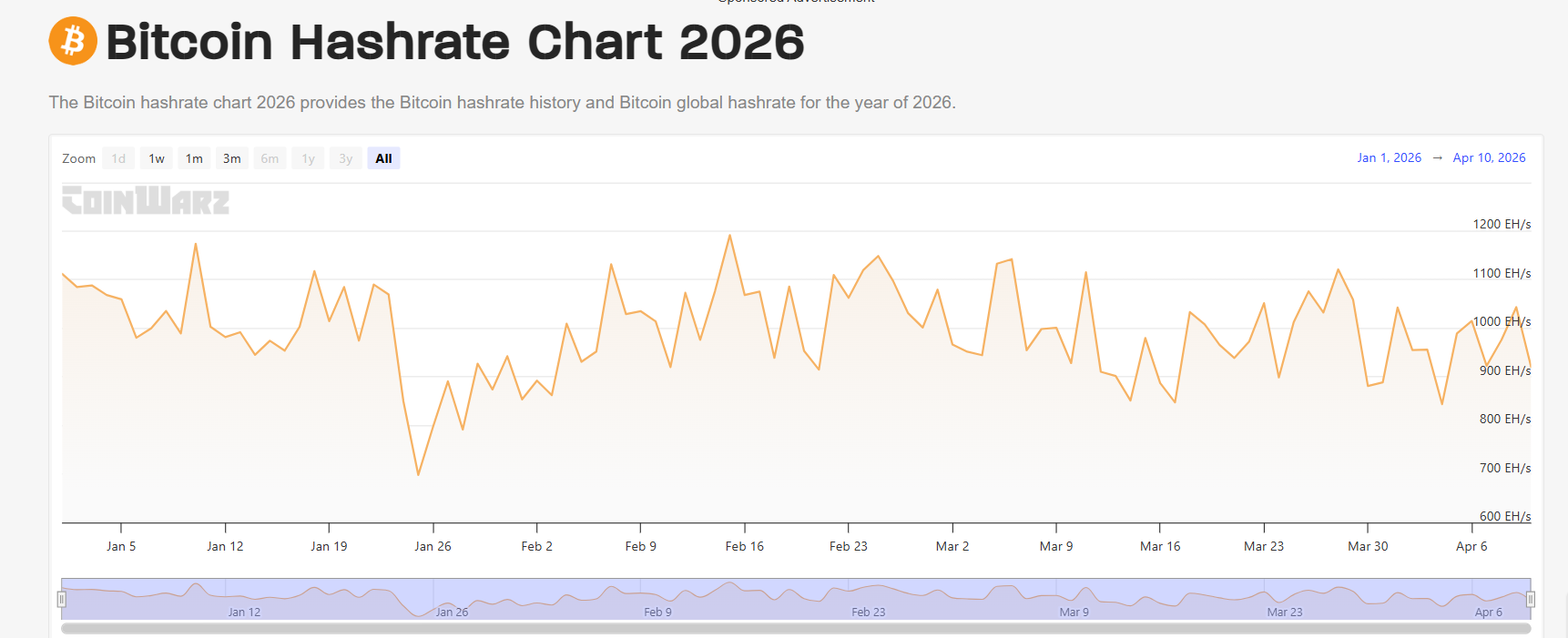
Bitcoin’s fifth halving is roughly two years away, and the mining sector is heading into it with far less margin for error than in 2024, as higher costs, tighter energy markets and clearer regulation reshape the industry.
At the last halving in April 2024, Bitcoin (BTC) traded at around $63,000 as rewards fell from 6.25 BTC to 3.125 BTC per block, according to Coingecko. In April 2028, at the next halving, miners face higher input costs for half the new coins, as rewards drop to 1.5625 BTC. That looks tougher in a world of record hashrate, higher energy prices and more selective capital.
Energy security has also become a strategic concern after geopolitical shocks jolted fuel and power markets, while regulators from Washington to Europe move from ad-hoc guidance to formal regimes for custody and licensed institutional platforms.
Those pressures are forcing miners to behave less like pure Bitcoin proxies and more like energy and infrastructure companies, monetizing reserves, cutting costs and rethinking capital allocation ahead of the April 2028 Halving.
The shift is also changing how investors assess the sector, with capital increasingly flowing toward operators that can secure long-term power and build infrastructure that extends beyond mining alone.
Balance sheets show tougher pre-halving cycle
Miners are already adjusting. MARA Holdings sold more than 15,000 Bitcoin in March to reduce leverage, Riot Platforms sold over 3,700 BTC in the first quarter, Cango sold 2,000 BTC to pay down Bitcoin-backed debt, and Bitdeer said its Bitcoin holdings had fallen to zero as of Feb. 20.

Behind those sales is a broader reset in how miners think about hardware, power and capital. The 2028 halving arrives in “an environment that looks almost nothing like 2024,” Juliet Ye, head of communications at Cango, told Cointelegraph.
She pointed to a widening efficiency gap that is “forcing real decisions around fleet upgrades” and a shift toward long-term energy contracts across multiple regions rather than chasing cheaper tariffs.
“There is less room in the middle now,” she said. “Operators with scale and diversification will be fine. Those without will find the next halving very difficult.”
GoMining struck a similar note. CEO Mark Zalan told Cointelegraph that “capital discipline now matters more than hashrate maximalism” and that new deployments now have to clear tougher return thresholds.
Related: Mining companies move deeper into AI, HPC as MARA may sell Bitcoin
From a mining pool’s perspective, some of the underlying dynamics remain familiar even as the pressure grows. “There is actually very little fundamental difference between this mining cycle and previous ones,” Alejandro de la Torre, co-founder and CEO of Stratum V2 pool DMND, told Cointelegraph. “The same dynamics repeat.”
He expects mining hotspots to reach their peak, then realign, as “no region keeps dominance for long,” opening the door for more decentralization as mid-size miners expand into new energy partnerships.
Related: Genius Group liquidates Bitcoin treasury to pay $8.5M of debt
Business models shift beyond pure block rewards
The economics around the next halving are also shifting away from pure block rewards, which is a “thinner business than it used to be,” Zalan said. He predicted stronger operators will look closer to power and data center businesses, and earn additional revenue through curtailment, grid services and heat reuse.
Cango is already building toward that model. “The facilities that will matter in five years are the ones that can do more than one thing,” Ye said, using mining to fill capacity while positioning sites to toggle between AI workloads and hashpower.

Regulation, once viewed mainly as an overhang, is increasingly part of the investment case. Zalan pointed to more specific rules on custody and banking access in the United States, alongside the European Union’s Markets in Crypto Assets (MiCA) regime and new exchange-traded funds (ETFs), derivatives and settlement rails out of Hong Kong, arguing “capital moves faster when those rules are clear and usable.”
Zalan said that backdrop is shaping both how miners finance themselves and how institutions position for the next issuance cut. He said he does not believe the market has “fully priced the next halving,” arguing that scarcity will meet a “much stronger ecosystem around Bitcoin by the time 2028 arrives.”
Ye sees investors already re-rating miners that lock in high-performance compute contracts, with those operators trading at “more than double the revenue multiple of pure-play miners,” while de la Torre believes supporting large established operators is “no longer the only logical path.”
If the 2024 cycle rewarded miners that rode Bitcoin’s price strength, the run into 2028 may favor operators that can manage debt, lock in power and build infrastructure that earns beyond block subsidies.
Magazine: AI agents will kill the web as we know it: Animoca’s Yat Siu
Jurrien Timmer, director of global macro at Fidelity Investments, characterizes the current market environment as “another wild ride,” where each week seems to deliver headlines stranger than the last.
Yet despite the volatility, his overarching message is that conditions are not nearly as dire as they might appear, and he remains relatively constructive on the outlook for markets.
Timmer argues that markets, broadly speaking, are “pricing in some form of resolution” to the current geopolitical tensions, particularly around Iran, “sooner rather than later,” he told CoinDesk in an interview.
Oil ‘backwardation’
While crude prices surged above $100 a barrel, the futures curve remains in backwardation, with contracts further out trading roughly $40 below the front month. That structure signals that markets view the current supply disruption as a short-term bottleneck rather than a prolonged crisis, according to Timmer.
Elsewhere, market behavior reinforces this cautiously optimistic view. The S&P 500, which at one point was down about 9%, has recovered to a drawdown closer to 1%.
Credit spreads remain contained, suggesting that systemic stress is limited. Even in traditionally defensive assets, the signals are nuanced. Gold and bonds, which are typically less correlated, have been moving together more closely, a dynamic Timmer attributes in part to global capital flows.
Countries facing constraints in moving energy through the Strait of Hormuz, he notes, may be raising liquidity by selling highly liquid assets such as gold and U.S. Treasuries, creating unusual correlations.
The crypto market got a much-needed lift Tuesday after U.S. President Donald Trump announced a two-week ceasefire with Iran. Oil prices plunged more than 17% on the news and equity markets also gained. WTI has since bounced back to trade around $100.
Bitcoin’s $65,000 support
Bitcoin adds another layer to this shifting landscape, behaving more like gold, while gold has, at times, traded with characteristics more akin to BTC.
When bitcoin reached $126,000 last October, fast-moving capital rotated out of crypto and into gold, a shift visible in exchange-traded fund (ETF) flows. Now, however, with bitcoin already down 50–60% from its peak, Timmer sees fewer “paper hands” left in the market.
Selling pressure has largely been absorbed, while gold, after a strong run, appears more vulnerable to a pullback. Despite this, he remains bullish on both assets. Bitcoin, in particular, looks technically interesting to him, with the $65,000 level acting as solid support.
He sees the potential for a base to form, though he emphasizes that a catalyst will be needed to drive the next leg higher.
The world’s largest cryptocurrency was trading in the low $70,000s at the time of publication.
‘Priced for success’
Timmer believes equities are effectively priced for success, with only single-digit drawdowns despite significant geopolitical uncertainty. A key reason, he argues, is the strength of corporate earnings.
Importantly, Timmer points out that the broader backdrop before the Iran conflict was already constructive. The U.S. Supreme Court’s rollback of tariffs had improved the policy environment, and fears of an AI-driven market bubble had not materialized. In fact, he sees investor skepticism, particularly toward AI and software valuations, as a healthy sign. In a true bubble, investors stop asking hard questions; today, they are doing the opposite. That scrutiny, in his view, has helped prevent the market from overshooting.
Still, the situation in the Middle East remains fluid, and the range of possible outcomes is wide. A worst-case scenario, in which Iran escalates by targeting energy infrastructure across the Gulf, could be highly destabilizing. With roughly 20% of global oil supply passing through the Strait of Hormuz, a prolonged disruption could lead to a stagflationary shock, combining elevated inflation with weaker growth.
Timmer nevertheless believes markets have developed a more measured response to geopolitical shocks. After a series of “false alarms,” including last year’s tariff-related selloff, which saw the S&P 500 drop 21% from its highs, investors are less prone to panic. There is now a “show-me” attitude, where weak hands are less easily shaken out.
This backdrop remains constructive, Timmer argues, supported by what he describes as a strong mid-cycle economic expansion. However, he highlights several risks that investors should actively manage.
One is concentration risk, particularly in the so-called “Magnificent Seven” technology stocks. Interest rate risk is another key concern. The 10-year Treasury yield is approaching 4.5% and could move toward 5%, a development that has occurred even amid geopolitical uncertainty. Rising yields, rather than falling, are an important signal that investors should monitor closely.
The real risk
Ultimately, Timmer frames periods of volatility not just as challenges but as opportunities. He encourages investors to act as providers of liquidity rather than takers. Those who panic during turbulent periods become price takers, while disciplined investors with long-term perspectives can step in as price makers. At Fidelity, he notes, this means leaning into volatility, providing liquidity, and rebalancing portfolios when others are retreating.
While acknowledging that geopolitical events are inherently unpredictable, Timmer emphasizes that remaining on the sidelines out of fear is not a viable strategy. Instead, a well-diversified portfolio, combined with a willingness to engage during periods of stress, can offer the best path forward.
Read more: Oil shock, Iran war risk keep crypto investors on sidelines: Grayscale

The Narrative of Questions around Investment
Xu said that Zhao frequently revisits the tale of selling property to amass Bitcoin, but there are important details that remain vague.
He also doubted whether this property belonged to Zhao or how it was initially financed.
Zhao had previously clarified that he sold an apartment at an approximate price of 900,000 and used the money to purchase Bitcoin at an average price of 600.
Therefore, Xu’s statements question the accuracy of the account but introduce a new challenge to the chronology.
The Conflict over Personal Life
The conflict spread beyond investment claims, with Xu mentioning Zhao’s personal life, including his divorce.
Xu proposed that Zhao might have provided biased information as he crafted a social identity for his financial choices.
Zhao replied by confirming that he had divorced and that he would not disclose legal documents to respect privacy.
He further insisted that his public pronouncements remain valid despite the criticism.
The Escalation and Legal Bet
The situation grew tense when Zhao made a 1-billion-dollar bet to prove his words about the divorce.
Moreover, he even volunteered to undergo legal verification should Xu agree to participate in the bet.
Xu did not accept the strategy and said that such a publicly declared bet was not befitting the leaders of controlled firms.
Therefore, he cast doubt on how such activities would be perceived by regulators of a high-profile exchange executive.
The Wider Context and Ongoing Dispute
The dispute is part of a wider struggle that can be traced back to earlier conflicts over business transactions and accusations.
In addition, Zhao has addressed past allegations in his book and refuted them, citing critics.
Moreover, both individuals continue to clash in the media, and the conflict remains ongoing in the crypto industry.
Therefore, the scenario underscores the ongoing conflict between major exchange executives as competition rises.
Key Points
- Diplomatic negotiations between Washington and Tehran concluded after 21 hours without agreement in Pakistan
- Nuclear weapons development remained the central sticking point, according to Vice President JD Vance
- President Trump directed immediate naval blockade operations in the Strait of Hormuz
- Approximately 20% of worldwide petroleum and LNG shipments transit through the strategic waterway
- Energy commodity prices anticipated to surge when trading begins Monday
Diplomatic efforts between Washington and Tehran concluded without resolution on Sunday in Islamabad, Pakistan, as 21 hours of intensive negotiations failed to produce a breakthrough on fundamental disagreements.
The American negotiating team, headed by Vice President JD Vance, cited Iran’s unwillingness to halt its nuclear weapons development as the primary obstacle to reaching an accord.
“Our non-negotiable requirements have been communicated with absolute clarity, and they have declined to meet our conditions,” Vance stated to journalists in Islamabad during the early hours of Sunday.
Tehran’s diplomatic representatives characterized the outcome differently, with Foreign Ministry spokesman Esmail Baghaei noting that complex international disputes require multiple rounds of engagement. He emphasized that “diplomatic channels remain open” for continued dialogue.
The negotiating agenda encompassed three critical issues: governance of the Strait of Hormuz passage, extending the temporary ceasefire agreement, and implementing a graduated sanctions reduction framework. Iranian semi-official news outlets characterized American proposals as “unreasonable.”
Since hostilities between the United States and Israel commenced in late February, Iran has effectively halted maritime transit through the Strait of Hormuz. This critical chokepoint facilitates roughly one-fifth of global oil and liquefied natural gas transportation worldwide.
On Sunday, two unladen oil tankers attempted passage through the strait but reversed course precisely when the diplomatic talks concluded.
Presidential Order for Naval Interdiction
Following the diplomatic breakdown, President Trump announced via Truth Social that U.S. naval forces would commence blockade operations in the Strait of Hormuz without delay.
“Effective immediately, the United States Navy will begin the process of blockading any and all ships trying to enter or leave the Strait of Hormuz,” Trump wrote.
Trump additionally declared that American naval vessels would detain any ship operating in international waters that had submitted payment to Iranian authorities. “No vessel paying an illegitimate fee will receive safe passage through these waters,” he stated.
The President characterized the diplomatic session as productive overall, noting that “most points were agreed,” while acknowledging the insurmountable divide concerning Iran’s nuclear ambitions.
Energy Markets Prepare for Volatility
Market observers predict substantial increases in petroleum and natural gas valuations when trading commences Monday. Nick Twidale, chief market analyst at AT Global Markets in Sydney, noted growing optimism last week preceding the negotiations.
“This could set us back to levels that we were trading at prior to the ceasefire announcement,” Twidale said. “I would think we will see oil open higher alongside the dollar.”
The recently established two-week ceasefire now appears increasingly unstable. Pakistani officials, who facilitated the discussions, described them as “constructive” and pledged ongoing mediation support.
Casualties from the conflict have exceeded 5,600 across Iran, Lebanon, and surrounding territories. U.S. Central Command reports thirteen American military personnel have been killed.
Israeli Prime Minister Benjamin Netanyahu advocated for the removal of enriched nuclear materials from Iranian facilities regardless of whether diplomatic agreements materialize.

Key Highlights
- Micron’s Q2 fiscal 2026 quarterly sales surged nearly 200% compared to the prior year, with records set in all divisions
- AMD delivered $10.3 billion in Q4 2025 sales, marking a 34% jump year-over-year alongside a 57% non-GAAP gross margin
- TSMC forecasts approximately 30% revenue expansion in 2026 when measured in U.S. dollars
- Despite strong AI exposure, these three companies maintain more modest price-to-earnings multiples than leading AI chipmakers
- TSMC anticipates its AI accelerator division will expand at a compound annual rate in the mid-40 percent range through 2029
Three semiconductor powerhouses—Micron, AMD, and Taiwan Semiconductor Manufacturing—are riding the artificial intelligence wave with impressive momentum. Yet despite robust financial performance and accelerating growth trajectories, market analysts suggest these stocks may be undervalued relative to their sector peers.
The ongoing buildout of AI infrastructure has created surging demand across the semiconductor supply chain, from specialized memory modules to cutting-edge processors and advanced fabrication services. While these companies occupy distinct positions within this ecosystem, they share a compelling characteristic: substantial revenue acceleration without the elevated valuation multiples commanded by other AI-focused names.
Micron: Transforming from Commodity Memory to Critical AI Component
Micron has undergone a remarkable repositioning in investor perception, evolving from a cyclical commodity producer into an essential AI infrastructure provider.
During the company’s fiscal second quarter of 2026, revenues expanded almost threefold versus the same period twelve months prior. The semiconductor manufacturer achieved unprecedented performance levels across its entire product portfolio, including DRAM, NAND flash, high-bandwidth memory, and all operating segments.
Profitability metrics showed equally dramatic improvement. The company’s fiscal third-quarter outlook alone is projected to surpass total annual revenue figures from any fiscal year ending through 2024.
Artificial intelligence servers demand massive quantities of specialized high-bandwidth memory, and Micron has positioned itself as a primary supplier for this critical component. Company leadership indicated that robust demand coupled with constrained supply conditions will likely persist well into 2027.
The manufacturer is also negotiating extended, multi-year supply agreements with major customers, potentially transforming the business model toward greater predictability and reducing the historical boom-bust patterns that characterized the memory industry.
Despite these fundamental improvements, Micron continues trading at a valuation discount compared to AI chip designers, even as memory has become indispensable to the AI computing architecture.
AMD: Impressive Performance in Nvidia’s Shadow
AMD announced record quarterly sales of $10.3 billion for Q4 2025, representing a 34% year-over-year increase. The company achieved a non-GAAP gross margin of 57%.
Advanced Micro Devices, Inc., AMD
Chief Executive Lisa Su characterized 2025 as a transformational year and emphasized that the company began 2026 with substantial forward momentum. She highlighted the EPYC processor family and expanding data center AI operations as primary growth engines.
AMD is constructing a comprehensive AI ecosystem that encompasses data center graphics processors, server central processing units, and strategic system-level collaborations.
Market participants frequently position AMD as a direct competitor to Nvidia and sometimes dismiss it as the inferior alternative. However, AMD’s investment thesis doesn’t require outperforming Nvidia entirely. The company simply needs to capture increasing market share within a rapidly expanding addressable market while maintaining healthy profit margins.
If AMD sustains its AI accelerator growth trajectory while preserving margin discipline, several analysts believe current valuations may prove significantly discounted when viewed retrospectively.
TSMC: The Essential Manufacturing Infrastructure Powering AI Innovation
TSMC produces the sophisticated semiconductor chips that power much of today’s AI economy. The foundry giant projects 2026 revenues will expand by nearly 30% when denominated in U.S. currency.
Taiwan Semiconductor Manufacturing Company Limited, TSM
AI accelerator production represented a high-teens percentage of total 2025 revenue. Management forecasts this segment will grow at a compound annual growth rate in the mid-40 percent range during the five-year period beginning in 2024.
TSMC’s strategic position differs fundamentally from Micron or AMD. The company maintains diversification across products and customers rather than depending on any single offering or client relationship. As long as demand for leading-edge semiconductor manufacturing remains robust, TSMC occupies an irreplaceable position within the global supply chain.
The manufacturer operates production facilities throughout Taiwan, Japan, and the United States, with additional American expansion projects currently in development.
Final Thoughts
Micron, AMD, and TSMC have all delivered compelling financial results in their latest reporting periods. Each company maintains substantial exposure to AI hardware demand while demonstrating expanding revenues and improving profitability. The sustainability of these growth trends will largely depend on whether AI infrastructure investment maintains its current pace throughout the remainder of 2026 and beyond.
Key Takeaways
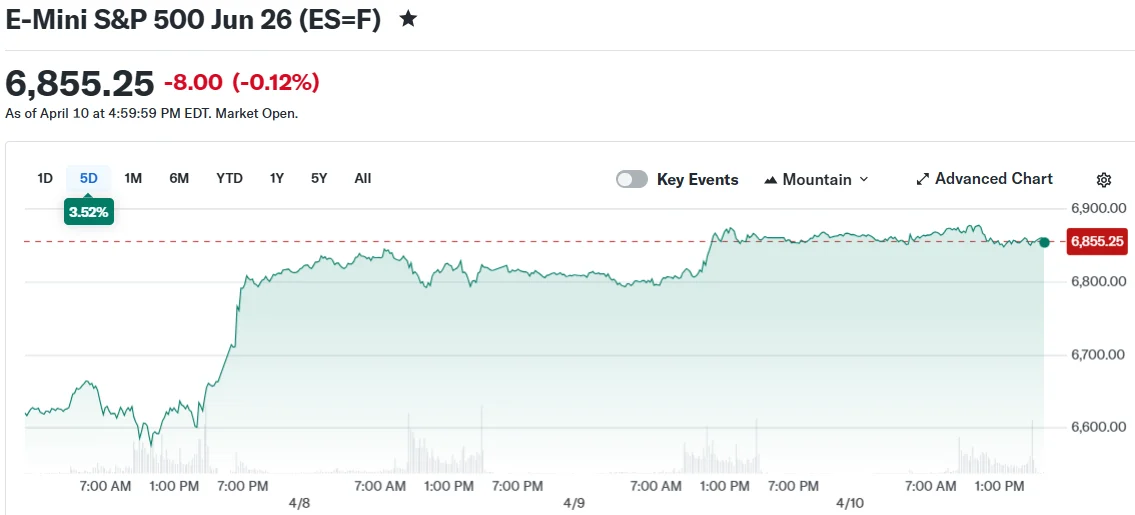
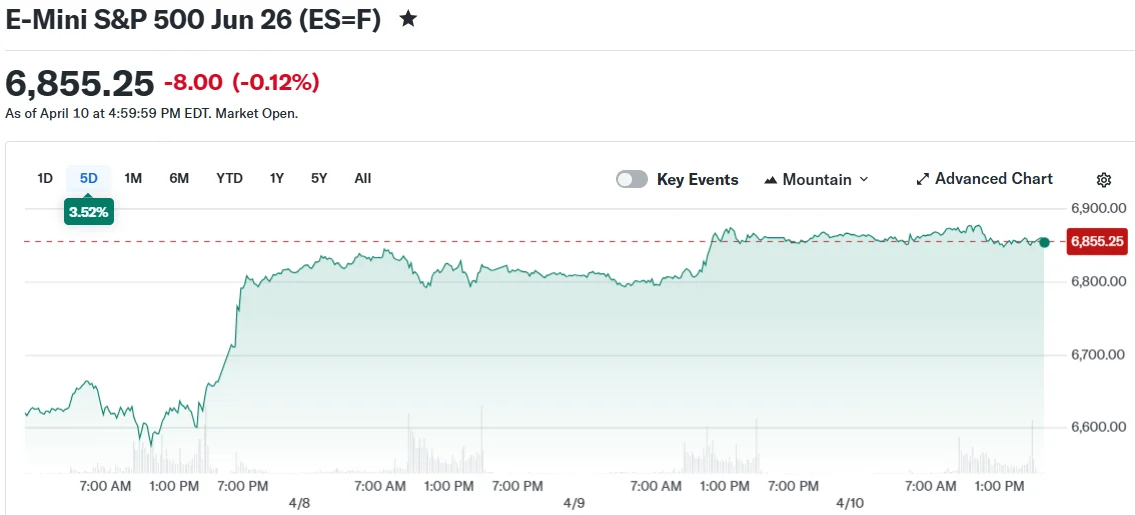
- Major indices secured back-to-back weekly gains: S&P 500 advanced 3.5%, Dow Jones climbed 3%, Nasdaq jumped 4.7%
- Financial sector heavyweights including JPMorgan, Goldman Sachs, and Bank of America release quarterly results this week
- Consumer prices posted their steepest monthly jump in nearly two years during March, primarily fueled by energy costs
- WTI crude trading around $98 per barrel, though forward contracts point to potential decline toward $85 by summer
- Technology sector shows dramatic split: software names plunge 30% while chip manufacturers soar over 20% year-to-date
Equity markets concluded their second straight positive week as Wall Street shifts focus toward quarterly corporate reports. The benchmark S&P 500 index rose 3.5%, while the Dow Jones Industrial Average added 3% and the tech-heavy Nasdaq Composite surged 4.7% over the five-day period. Despite remaining in negative territory for 2026, all three major gauges now sit less than 1% away from returning to breakeven.
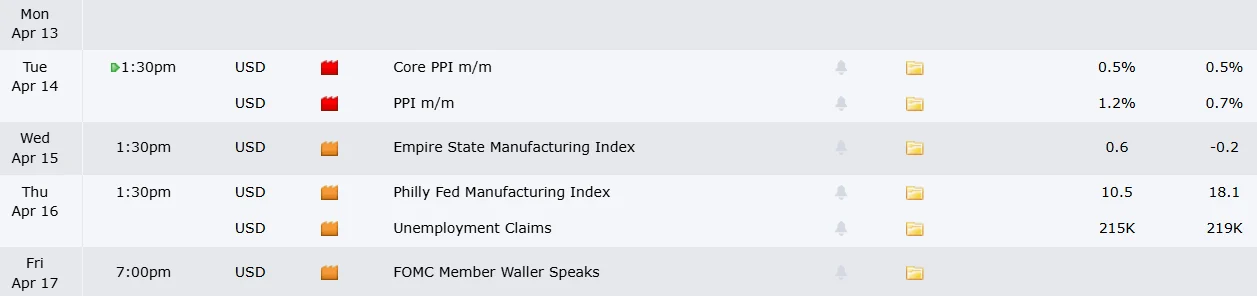
The coming days feature a packed calendar of corporate announcements. Goldman Sachs kicks things off Monday. JPMorgan Chase, Citigroup, and Wells Fargo deliver their numbers Tuesday. Bank of America and Morgan Stanley are scheduled for Wednesday, while Netflix and Taiwan Semiconductor round out the week with Thursday releases.
Investors remain attentive to international developments as well. Diplomatic negotiations between the United States and Iran conducted in Pakistan throughout the weekend concluded without breakthrough, as Tehran declined commitments regarding nuclear weapons development, Vice President JD Vance disclosed Saturday evening.
Crude Oil Remains Central Market Driver
Since hostilities between the United States and Iran commenced, petroleum prices have emerged as the primary metric capturing trader attention. West Texas Intermediate crude finished Friday’s session near $98 per barrel, representing a significant jump from approximately $68 before conflict erupted.
Yet forward contracts for July settlement are pricing oil substantially lower around $85. Evercore ISI’s Julian Emanuel suggested that WTI settling in the “low-to-mid $80s” range would sufficiently eliminate downward pressure on equities.
The temporary 14-day truce involving the United States, Israel, and Iran provided market participants with renewed confidence during the previous week. The sustainability of this ceasefire will largely determine petroleum pricing and, consequently, broader equity market trajectory.
Friday’s inflation data revealed consumer prices climbed 0.9% during March, marking the steepest one-month advance since June 2022. Economic analysts attributed the bulk of this surge to energy-related increases stemming from geopolitical tensions.
The University of Michigan’s consumer sentiment gauge dropped to an all-time low in April, though researchers noted 98% of survey responses were gathered prior to the ceasefire announcement.
Diverging Fortunes Within Technology Sector
The performance gap among technology stocks has expanded dramatically. The iShares Software Sector ETF tumbled more than 7% during the past week and now shows a 30% decline year-to-date.
Salesforce represents the category’s weakest performer, sliding over 35% in 2026. AppLovin, Intuit, and ServiceNow have each retreated more than 40%. Microsoft, Palantir, and Oracle have all declined more than 25%.
Chip manufacturers present a contrasting picture. The VanEck Semiconductor ETF has gained over 20% during the current year. Intel, Applied Materials, Lam Research, and Marvell Technologies have each surged more than 50%.
ASML unveils results Wednesday, followed by Taiwan Semiconductor on Thursday. Taiwan Semiconductor’s preliminary March revenue figures released last week indicated robust ongoing demand for artificial intelligence processors.
Netflix also joins the reporting schedule Thursday, capping an action-packed week for corporate earnings.


Oil futures surged on Hyperliquid after President Donald Trump ordered a naval blockade of the Strait of Hormuz, a major global supply chokepoint. The move came after Iran refused to give up its nuclear ambitions during peace talks in Islamabad earlier in the day.
Perpetual futures tied to WTI crude oil jumped to $96.40, up 7% on the day, extending early gains. Brent futures rose 6% to $96.
Notably, WTI futures registered $1.53 billion in trading volume, making it the third-most-traded instrument on the platform behind BTC and ETH. The data highlights growing investor preference for price discovery on decentralized blockchain platforms, especially when traditional markets are closed.
This blockade news couldn’t have come at a worse time, as mid-April marks a critical period for the oil market, when the large-scale drawdown of strategic petroleum reserves coordinated by the International Energy Agency begins to approach its limit.
Those emergency releases, initiated after the war broke out on Feb. 28, have been offsetting a supply shortfall of roughly 4.5 to 5 million barrels per day caused by disrupted flows through the Strait of Hormuz, but as these buffers run down in the coming weeks, that gap risks widening sharply to roughly 10 to 11 million barrels per day if normal supply is not restored.
If this scenario materializes, it would amount to “a supply shock without precedent in the modern oil market,” the House of Saud recently said. The IEA’s Chief, Fatih Birol, warned last week that the oil supply shock could be worse in April than in March.
The impact on markets would likely be immediate, with oil benchmarks gapping higher on Monday amid tighter supply expectations, equities facing renewed risk-off pressure amid inflation concerns, and volatility rising across both traditional and crypto markets as traders reassess global growth assumptions.
Bitcoin, which is considered a leading indicator for risk assets by some traders, is already under pressure. As of writing, it changed hands near $71,000, down nearly 3% on the day, according to CoinDesk data.

Late Mateta winner piles pressure on Eddie Howe at Newcastle

Attractive Setup In Fallen Angels: 7% Yield And New Downgrades

Miners brace for changing economics ahead of 2028 Bitcoin halving

Why Israel is blocking foreign journalists from entering

Bitcoin: We’re Entering The Most Dangerous Phase

Alan Cumming Brands Baftas Ceremony A ‘Triggering S**tshow’

XRP: ALL HELL BREAKS LOOSE As Trump Issues Urgent Warning

Emotional Blackmail Disguised as Financial Support #estrangementawareness

bitcoin explained in hindi – bitcoin account kaise banaye | bitcoin kaise kharide aur beche | zebpay
-

 Business7 days ago
Three Gulf funds agree to back Paramount’s $81 billion takeover of Warner, WSJ reports
-

 Politics2 days ago
US brings back mandatory military draft registration
-

 Fashion2 days ago
Weekend Open Thread: Veronica Beard
-

 Tech5 days ago
How Long Can You Drive With Expired Registration? What Florida Law Says
-

 Fashion6 days ago
Massimo Dutti Offers Inspiration for Your Summer Mood Board
-
 Sports2 days ago
Man United discover Nico Schlotterbeck transfer fee as defender reaches Dortmund agreement
-

 Crypto World3 days ago
Canary Capital Files SEC Registration for PEPE ETF
-

 Fashion5 days ago
Let’s Discuss: DEI in 2026
-

 Business2 days ago
Tesla Model Y Tops China Auto Sales in March 2026 With 39,827 Registrations, Beating Cheaper EVs and Gas Cars
-

 Crypto World4 days ago
Bitcoin recovers as US and Iran Agree a Ceasefire Deal
-

 Politics2 days ago
Malcolm In The Middle OG Turned Down ‘Buckets Of Money’ To Appear In Reboot
-

 Business2 days ago
OpenAI Halts Stargate UK Data Centre Project Over Energy Costs and Copyright Row
-

 Business23 hours ago
Ireland Fuel Protests Enter Day 5 as Blockades Spark Shortages and Government Prepares Support Package
-

 Tech6 days ago
Italian court says Netflix must refund customers up to $576 over price hikes
-

 Tech6 days ago
Gamer Restores the Original PlayStation Portal From Two Decades Ago
-

 Tech6 days ago
Haier is betting big that your next TV purchase will be one of these
-

 Tech6 days ago
The Xiaomi 17 Ultra has some impressive add-ons that make snapping photos really fun
-

 Tech6 days ago
Samsung just gave up on its own Messages app
-

 Politics2 days ago
LBC Presenter Mocks Trump Over Iran War Failures
-

 Tech6 days ago
Save $130 on the Samsung Galaxy Watch 8 Classic: rotating bezel, sleep coaching, and running coach for $369
You must be logged in to post a comment Login