
Crypto World
Binance Denies Plans to Drop RedotPay Case in Singapore



Binance and RedotPay are disputing whether a Singapore case related to their nearly $473 million Hong Kong legal battle is coming to an end.
The stablecoin payments card issuer told Cointelegraph on Tuesday that it expects Binance to discontinue the Singapore proceedings following a hearing on Aug. 7. “RedotPay will be seeking legal costs arising from the discontinuance of the matter from the claimant,” a spokesperson for RedotPay said, adding that the parties would try to agree on costs.
However, Binance said it has no plans to abandon its claims. “Reports that Binance will be withdrawing its Singapore claims are false,” a Binance spokesperson told Cointelegraph, adding that the company “is not abandoning its claims and has informed both the court and RedotPay accordingly.”
The disagreement marks the latest development in a broader legal fight between Binance-affiliated companies and RedotPay, which includes a separate Hong Kong case seeking nearly $473 million in damages.
Singapore case part of broader legal fight
Binance-linked legal action against RedotPay first made headlines on Aug. 5, when Bloomberg reported that Nest Trading, DistributedTechnologies and Chaintecs Consulting Singapore had filed a petition in Hong Kong against RedotPay’s co-founders.
The Hong Kong plaintiffs allege RedotPay diverted more than 470,000 Binance Card users by allowing Binance Pay funds to be used for stablecoin card top-ups outside the terms of a commercial agreement. They estimated damages at $472.8 million, based on a claimed lifetime customer value of $925 per user.
Chaintecs also brought related proceedings against RedotPay affiliates in Singapore, where a hearing was scheduled for Aug. 7.
RedotPay rejected what it called “unfounded allegations” against the company and its co-founders at the time, telling Cointelegraph it would defend the claims through the legal process.
RedotPay announced its Binance Pay partnership in December 2023, allowing Binance Pay users to make direct deposits to RedotPay cards. Binance ended support for the integration as of April 3, 2026, citing a review of its merchant partners, months before the legal dispute became public.
Magazine: Fierce backlash to Ethereum’s EIP-8363 staking proposal

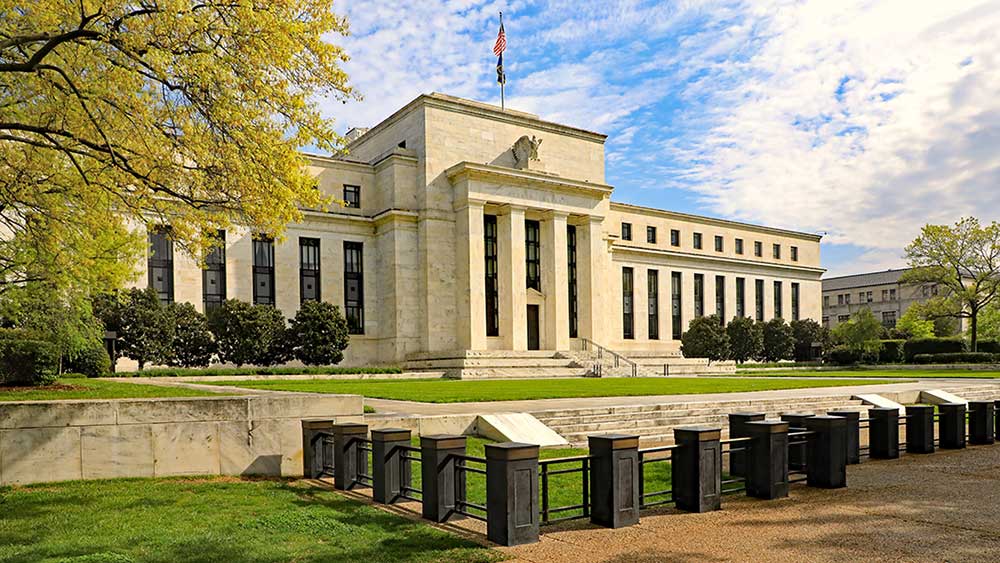
Consumer price index data largely matched expectations of a retreating inflation threat but may keep alive the possibility of a Federal Reserve rate hike in September following Friday’s weak July jobs reports. Ahead of the report, odds of a tightening stood just below 50%. Technology goods were among the categories seeing firmer prices, thanks partly to Apple (AAPL). S&P 500…
Copyright ©2026 Investor’s Business Daily, LLC. All rights reserved. 87990cbe856818d5eddac44c7b1cdeb8


The latest U.S. inflation data landed exactly where economists expected, removing the immediate risk of an upside surprise and leaving cryptocurrency investors focused on what the Federal Reserve does next.
The Bureau of Labor Statistics reported Wednesday that the Consumer Price Index (CPI) rose 3.4% year-over-year in July, matching consensus estimates while slowing from June’s 3.5%. Core CPI, which excludes volatile food and energy prices, also met expectations at 2.5% year-over-year, down from 2.6% previously.
Inflation Meets Expectations
Markets entered the release treating July’s CPI report as one of the most important macroeconomic events before the Federal Reserve’s September policy meeting.
Economists broadly expected headline inflation to cool to 3.4%, while core inflation was forecast to ease to 2.5% after June’s surprisingly soft report. The data ultimately delivered exactly that outcome, suggesting inflation continues to moderate without producing another significant downside surprise.
Because the figures aligned with expectations, investors are likely to shift their attention from the headline numbers toward what they mean for future monetary policy rather than reacting to an unexpected inflation shock.
Fed Outlook Remains the Main Driver
The inflation report arrives as investors remain divided over whether the Federal Reserve will keep interest rates unchanged or deliver another quarter-point increase at its September meeting.
Fed Chair Kevin Warsh has repeatedly emphasized that policy decisions will remain data dependent while reaffirming the central bank’s commitment to returning inflation to its 2% target. Recent weakness in the U.S. labor market has already reduced expectations for another rate hike, making inflation reports increasingly important for policymakers.
An in-line CPI reading neither strengthens nor weakens the case for immediate policy tightening, keeping markets focused on upcoming economic releases before the next Federal Open Market Committee meeting.
Bitcoin Awaits the Market’s Next Move
For cryptocurrency markets, inflation data often influences expectations for interest rates, Treasury yields and the U.S. dollar—all major drivers of digital asset prices.
Leading into Wednesday’s report, traders viewed a hotter-than-expected inflation reading as a potential catalyst for renewed rate hike expectations and pressure on Bitcoin. Conversely, a softer print was expected to reinforce the view that the Fed could remain on hold, supporting risk assets.
Instead, the consensus outcome leaves investors waiting for the broader market reaction as Treasury yields, the dollar and Fed pricing adjust to inflation that continues to cool but remains above the central bank’s long-term target.
What’s Next?
With July CPI now behind markets, investor attention shifts to incoming economic data and evolving expectations ahead of the Federal Reserve’s September meeting. For Bitcoin and the wider crypto market, the next major catalyst will likely be whether future inflation and labor market reports strengthen the case for holding rates steady or revive expectations of another hike. As long as inflation continues to move broadly in line with forecasts, monetary policy—not inflation surprises—is likely to remain the dominant driver of crypto market sentiment.
The post US Inflation Meets Forecasts, Keeping Bitcoin’s Fed Bet Alive appeared first on BeInCrypto.

Chicago Federal Reserve President Austan Goolsbee has flagged high inflation as a major challenge for the US. Inflation remains well above the Federal Reserve’s 2% target.
The Fed held interest rates steady in July. However, three officials dissented and backed a 25-basis point rate hike.
Inflation Is The Biggest Problem
Goolsbee stated during an interview with Wired that rising prices are the biggest problem confronting the US, calling them more damaging than current labor-market conditions.
“The biggest problem facing our economy right now is not the collapse of industry and the collapse of jobs; it’s that the prices have been rising too fast. We have an inflation problem, and people hate inflation.”
Goolsbee also discussed employment and called the labor market “stable without being good,” highlighting the unemployment rate, hiring, and layoffs as key factors behind his reasoning. The Chicago Fed Chair suggested that market conditions have weakened but do not require the Federal Reserve’s immediate attention.
Inflation has remained higher than the Fed’s 2% target despite lower month-on-month price increases. June Consumer Price Index (CPI) fell 0.4%, while annual inflation dropped from 4.2% to 3.5%. Core CPI, which omits food and energy, remained unchanged in June but increased 2.6% from the previous year.
However, Goolsbee has not indicated whether he would support a rate hike at September’s Federal Open Market Committee (FOMC) meeting. While the Chicago Fed President is not voting on monetary policy, his observations could fuel an ongoing debate around rate hikes among regional Fed Chairs.
Policymakers Divided Over Rate Hike
Policymakers are deeply divided over interest rate hikes. The Federal Reserve left interest rates unchanged following the July FOMC meeting, with Beth Hammack, Neel Kashkari, and Lorie Logan dissenting in favor of a 25-basis point increase. Kashkari, the Minneapolis Fed President, urged the Fed to raise interest rates as high inflation, combined with the ongoing US-Iran conflict, has complicated the policy outlook. He added that the uncertainty prevents the Federal Reserve from issuing firm guidance or promising rate cuts.
Kashkari also warned that high oil prices could impact American households and businesses, adding that there was no certainty about when shipping routes through the Strait of Hormuz would return to normalcy.
St. Louis Federal Reserve President Alberto Musalem also supported a rate hike, arguing for pre-emptive measures before inflation pushes even higher. However, he did not cast a dissenting vote. San Francisco Fed President Mary Daly supported the Fed’s decision to leave interest rates unchanged, stating that more evidence was needed to determine if the increase was temporary or permanent.
Markets Look For Clues
The big question in the market is “will the Fed raise interest rates or leave them unchanged?” According to CME FedWatch, the odds are almost equal. Stubborn inflation and volatile job data have raised market uncertainty ahead of this week’s inflation report. Wednesday’s Consumer Price Report will give market watchers guidance on whether inflation is cooling. Traders expect higher interest rates by the end of the year thanks to US-Iran tensions. However, they are unsure when the Fed may raise rates.
Disclaimer: This article is provided for informational purposes only. It is not offered or intended to be used as legal, tax, investment, financial, or other advice.

A new report cited by Wu Blockchain informed that Fidelity, the entity behind the fourth-largest Ethereum ETF by AUM, plans to add staking and quarterly cash distributions to its FETH.
It added that the exchange-traded fund tracking the performance of the largest altcoin can stake up to 100% of its ETH holdings “under normal conditions.”
There will be no minimum requirement, but the fund will retain some ETH for redemptions, expenses, and other liquidity needs. It will retain 85% of gross staking rewards, and the remaining will be paid to the sponsor, custodians, and node operators.
The report further noted that net rewards will first cover fund expenses, with the remainder distributed quarterly in cash. It’s worth noting that the ETF may sell some Ether to fund distributions if necessary, the report concluded.
Fidelity’s move comes after BlackRock debuted a new staking Ethereum ETF called ETHB in March. The first-day trading volume was north of $15 million and opened with $100 million in assets. ETHB is currently the fifth-largest Ethereum ETF, with $577 million in net assets, according to SoSoValue.
Fidelity’s FETH is a spot above, holding nearly $900 million in net assets under management, while BlackRock’s main fund leads far ahead with $5.6 billion.
Earlier this year, Fidelity tapped Ethereum to launch its own stablecoin called Fidelity Digital Dollar (FIDD), which will be pegged 1:1 to the greenback and backed by reserves.
The post Fidelity’s Ethereum ETF to Offer Staking and Quarterly Cash Payouts: Report appeared first on CryptoPotato.


An idea that until recently would have been seen as radical—that the public should co-own AI—now commands bipartisan consensus.
In June, Senator Bernie Sanders introduced the first AI tax in history, the American AI Sovereign Wealth Fund Act, which took up our AI equity tax framework. The bill proposes making the biggest AI companies owe the public half the equity in each company’s AI business, paid in newly issued shares.
In the weeks since, OpenAI’s Sam Altman and President Donald Trump have scrambled to compete, offering their own visions of an AI sovereign wealth fund, which, unlike a tax, would be voluntarily created through the companies’ partnership with the government. Specifically, the ChatGPT creator is reportedly considering giving the U.S. government a 5% stake in the company. We believe this approach is a mistake—and a tax is the solution.
The essential nature of a tax is that it’s mandatory, which is why a tax is the best way to secure the public’s standing as a co-owner of AI. Plus, the public supports an AI equity tax. Last month, a national poll found 69% of Americans in favor of requiring the largest AI companies to transfer half their stock into a public sovereign wealth fund.
The fight now is over the terms of public co-ownership: how much the public gets, who must deliver it, and whether delivery can be enforced. Altman and Trump are negotiating those terms with each other. Whether the public ever sees any benefit from the equity stake to be taken in its name is what hangs in the balance.
A deal between Altman and Trump would bind OpenAI to the current administration in the public’s name, at least symbolically. Yet the rights would belong to the administration, and the public would likely have no recourse if a later administration unwound the arrangement.
That brings us to an idea that until recently would also have been seen as radical: the federal government taking ownership of companies through a tax.
The Trump Administration has taken equity stakes in more than two dozen companies over the past year. The trend in those deals is that the rights belong to the administration, rather than being directly owed to citizens. And public dollars have to be handed over in exchange for the shares, putting the public on the hook.
Trump’s side of these deals follows a common pattern. His administration negotiates each stake company by company. In the case of Intel, government grants already owed were converted into an equity stake. In a mineral-rights deal, fresh taxpayer money was spent. And now, for something completely different, Trump is making early moves to accept AI stakes as donations. A government stake in AI companies “would be a beautiful thing,” the President says, and would ensure that “the American people can benefit from the success of AI.” Yet across Trump’s equity-acquisition deals, terms are established not by statute but through private negotiations, and the President or his agencies keep the rights.
Two deals illustrate how this works and why we should be wary. Trump publicly demanded Intel’s chief executive’s resignation. Only weeks later, the administration had its stake, a position that is now worth tens of billions. And as a condition for approval of the Nippon Steel acquisition, the administration took a golden share in U.S. Steel: “I, President Donald J. Trump, hold the Class G Preferred Stock (Golden Share) in U.S. Steel,” the President wrote in the Federal Register. The issue in both of these cases: one person, Trump, wields unprecedented power.
Altman argues a public stake is “the best way to share the upside of AI.” The company has reportedly proposed giving the administration a 5% stake, structured like the Alaska Permanent Fund and revocable whenever OpenAI chooses. The Financial Times reports the aim: clearing political obstacles by securing the administration’s financial buy-in. It’s a Trojan horse in which no one is fooled except the public.
We can guess where the public’s best interests could be treated as bargaining chips. OpenAI and Anthropic are preparing IPOs and likely need the administration’s goodwill. OpenAI, for example, is currently under pressure from the government to limit GPT-5.6’s release—a constraint the administration might be persuaded to drop in exchange for a donated equity stake. The administration’s record shows it accepts equity as consideration for looking the other way or relenting. Yet none of these dealings inherently benefit the American public.
In response, only Sanders has committed to actually issuing payouts to each American. With Sanders’ AI equity tax, there is no question mark about the public benefit of the tax. After all covered AI companies remit half their equity in newly issued shares, a public trust fund holds the shares, and the fund must pay out its returns to the public by statute. According to estimates from Sanders’ office, a 5% annual distribution would be about $1,045 per person per year. Since no public funds are used to buy shares and the bill specifically prohibits public bailouts of covered companies, the US public truly shares in the upside of AI.
The outcome of the midterms will likely determine whether Sanders’ AI equity tax advances, and thus the coming months may decide who owns America’s AI future. In the meantime, Trump and Altman may move ahead with their visions.
In our view, one design courts more corruption and wealth consolidation; the other ensures that, if AI ushers in any prosperity, it will be shared broadly, transparently, and with public accountability.

Artificial intelligence is moving beyond chatbots and copilots. The next generation of AI systems is increasingly capable of acting on behalf of users—searching for information, purchasing services, managing workflows, executing trades, interacting with applications, and coordinating with other software agents.
But there is one major capability AI agents still need to operate effectively in an increasingly autonomous digital economy: money they can use programmatically.
This is where stablecoins could become especially important.
Unlike traditional bank-based payments, stablecoins can move value directly across blockchain networks, operate 24/7, and be integrated into smart contracts and software applications. For AI agents that need to make frequent, automated, and machine-to-machine payments, these characteristics could make stablecoins a natural financial layer.
AI Agents Are Becoming Economic Actors
An AI agent is more than a system that generates an answer. An agent can be designed to perceive information, make decisions, use tools, and execute actions with limited human intervention.
Imagine an AI agent managing an online business.
It could:
- Purchase computing resources when demand increases.
- Pay another AI agent for specialized data.
- Subscribe to an API.
- Purchase advertising services.
- Pay for storage.
- Execute transactions according to predefined rules.
- Receive payments for completing tasks.
- Exchange one digital asset for another.
Each of these activities requires some form of payment.
If AI agents are expected to operate continuously and independently, relying exclusively on traditional payment systems could introduce significant friction.
Bank accounts often require identity verification, geographic availability, banking relationships, business accounts, payment processors, and human-controlled authentication. Those requirements make sense for people and companies, but they can become cumbersome when the payer itself is autonomous software.
Stablecoins offer a different model.
Stablecoins Give AI Agents Programmable Money
The defining feature of a stablecoin is relatively simple: it is a blockchain-based token designed to maintain a stable value, typically relative to a fiat currency such as the U.S. dollar.
For AI agents, the important part isn’t simply the stability.
It is the combination of stability + programmability + global accessibility.
An AI agent can interact with blockchain infrastructure through software. It can hold digital assets in a wallet, check balances, sign transactions according to its permissions, and interact with smart contracts.
That creates the possibility of a machine-controlled financial account.
Instead of an AI agent saying:
“I need a human to approve this $5 payment.”
the system could be designed to automatically execute the payment when predefined conditions are satisfied.
For example, an AI research agent might have a wallet funded with $100 in stablecoins. It could spend a maximum of $2 per API request, $10 per day on data, and $25 per week on specialized services.
These rules can potentially be enforced through smart contracts, wallet permissions, spending limits, and other programmable controls.
Machine-to-Machine Payments
One of the most interesting applications is machine-to-machine commerce.
The internet was originally designed primarily for humans to communicate and transact. AI agents introduce a new possibility: software communicating and transacting with other software.
Consider a network of specialized agents.
One agent performs market research.
Another analyzes financial data.
A third provides computational resources.
A fourth verifies information.
Instead of every transaction passing through a human-controlled billing process, agents could pay one another directly.
For example:
Agent A → pays stablecoins → Agent B → receives data → Agent A
The payment could happen automatically based on predefined conditions.
At large scale, this could create a new digital economy where tiny transactions occur continuously between autonomous software systems.
Why Stablecoins Instead of Volatile Crypto?
AI agents need predictable economics.
Imagine an autonomous agent with a budget of $1,000.
If it holds a highly volatile cryptocurrency, the purchasing power of that budget could change dramatically. A service that costs $20 today might effectively consume substantially more or less of the agent’s available capital tomorrow.
Stablecoins can reduce that problem.
A dollar-denominated stablecoin gives the agent a relatively predictable unit for budgeting, accounting, pricing, and payments.
That matters particularly for:
- API usage
- Cloud computing
- Data purchases
- Subscription services
- Digital labor
- Advertising
- Automated commerce
- Agent-to-agent payments
If AI agents are going to participate in real economic activity, predictability may be more valuable than speculation.
Stablecoins Could Enable Micropayments
Traditional payment infrastructure isn’t always optimized for extremely small, frequent transactions.
Blockchain-based stablecoin payments could potentially support smaller transactions with automated settlement, depending on the network and its transaction costs.
This opens the door to interesting business models.
An AI agent might pay:
- $0.01 for a data point
- $0.05 for a computation
- $0.10 for an API request
- $0.50 for a specialized analysis
- $2 for a completed task
Instead of purchasing a large subscription, an agent could potentially pay precisely for what it consumes.
This could transform the economics of digital services.
Rather than humans subscribing to software, software could dynamically purchase services from other software.
Stablecoins Could Give Agents Global Payment Rails
Another major advantage is geographic reach.
Traditional financial infrastructure remains fragmented across countries, banks, payment networks, currencies, and regulatory systems.
Stablecoins operate on blockchain networks that can be accessed globally.
For AI agents operating across borders, this could simplify settlement.
An AI company in one country could operate an agent that purchases computing services from another provider, while a third-party agent supplies specialized data from another region.
Stablecoins could provide a common settlement asset across these interactions.
The AI agent doesn’t necessarily need to understand banking systems in every country.
It simply needs to understand the payment rules of the digital network it operates on.
AI Agents Could Become Their Own Economic Identities
This leads to an even bigger concept.
Today, an AI agent usually operates under the identity and financial accounts of a person or company.
In the future, agents could potentially have their own cryptographic identities, wallets, permissions, and transaction histories.
That does not necessarily mean an AI becomes a legal person.
Instead, it could mean that an agent becomes a distinct economic software entity.
For example:
Agent ID: ResearchAgent-204
Wallet: Dedicated blockchain address
Budget: $500/month
Spending limit: $20/transaction
Allowed services: Data + computing
Approval threshold: Human authorization above $20
This structure could make autonomous systems easier to monitor and control.
Blockchain transactions could also provide an auditable record of what the agent spent and where the funds went.
The Combination of AI + Smart Contracts Is Powerful
AI agents are good at making decisions.
Blockchains and smart contracts are good at executing deterministic rules.
Stablecoins connect the two through money.
That creates a potentially powerful architecture:
AI → Decision
Smart Contract → Rules
Stablecoin → Value
Blockchain → Settlement
Consider an autonomous procurement agent.
The AI determines that a company needs additional computing capacity. It compares providers, selects one based on price and performance, and initiates the purchase.
A smart contract could enforce the agreed conditions.
The stablecoin payment could be released when those conditions are satisfied.
The blockchain records the transaction.
In this model, AI handles the intelligence while blockchain handles coordination, ownership, and settlement.
The Challenges Are Just as Important
Stablecoins are not a magic solution.
AI agents managing money introduce serious risks.
Security
If an AI-controlled wallet is compromised, attackers could potentially gain access to its funds.
Agents therefore need strong wallet security, permission systems, spending limits, and transaction controls.
Hallucinations and Bad Decisions
An AI agent can make incorrect decisions.
If an agent is allowed to spend money autonomously, an incorrect assumption could become a financial loss.
This makes human oversight and programmable constraints extremely important.
Smart Contract Risk
Smart contracts can contain vulnerabilities.
An AI agent interacting with poorly designed contracts could potentially expose its funds to unnecessary risks.
Regulatory Uncertainty
Stablecoins operate within an evolving regulatory environment.
Different jurisdictions may impose different requirements on issuers, users, payment providers, and businesses.
AI agents participating in financial transactions could introduce additional compliance questions.
Privacy
Blockchain transactions can be transparent.
That can be useful for auditing, but it may also expose information about an agent’s activities, counterparties, and spending patterns.
Future systems may therefore need privacy-preserving technologies alongside transparent settlement.
The Bigger Picture: An Economy of Autonomous Agents
The most important idea isn’t simply that AI agents could use stablecoins.
It is that AI agents could become participants in digital markets.
Imagine millions of specialized agents operating simultaneously.
Some agents generate content.
Others analyze data.
Some manage logistics.
Others provide computing power.
Some negotiate prices.
Others verify information.
They could continuously interact, purchase services, sell capabilities, and exchange value.
Humans would still define objectives, budgets, permissions, and constraints—but machines could handle much of the execution.
Stablecoins could serve as one of the financial primitives that makes this economy possible.
Stablecoins May Become the Financial Language of AI
The next phase of AI may not be defined solely by how intelligent models become.
It could also be defined by what those models are allowed to do.
An AI that can only generate text is powerful.
An AI that can use tools is more capable.
An AI that can independently coordinate resources, purchase services, and receive payments becomes something fundamentally different: an economic actor operating in the digital world.
Stablecoins could provide the predictable, programmable settlement layer required for that transition.
The combination of AI agents, blockchain networks, smart contracts, and stablecoins could therefore create an entirely new category of machine-driven commerce.
The future internet may not just connect people.
It may connect agents that work, negotiate, transact, and pay each other around the clock.
And when machines start doing business with machines, they will need money that machines can actually use.
REQUEST AN ARTICLE


Key takeaways
- Uniswap falls nearly 6% on Wednesday after declining 5% in the previous session.
- Uniswap has launched Continuous Clearing Auctions on Avalanche, allowing teams to conduct on-chain token sales and bootstrap liquidity.
- UNI’s social dominance and volume have fallen sharply, signaling weaker retail attention.
Uniswap (UNI) faces intense selling pressure on Wednesday, falling nearly 9% after recording a 5% decline the previous day.
The pullback comes despite Uniswap’s continued product expansion, including the introduction of Continuous Clearing Auctions on Avalanche. The feature allows blockchain projects to conduct fully on-chain token auctions and establish initial liquidity through Uniswap v4.
However, declining social activity and derivatives demand suggest the launch has not been enough to offset the cryptocurrency market’s broader risk-averse mood.
Continuous clearing auctions launch on Avalanche
Uniswap’s Continuous Clearing Auctions provide Avalanche developers with a new mechanism for launching tokens and bootstrapping liquidity onchain.
The model is designed to reduce friction during token distribution by allowing teams to conduct auctions transparently through smart contracts. Projects can then connect their newly distributed tokens with Uniswap v4 liquidity.
The launch expands Uniswap’s presence on Avalanche and strengthens its role as infrastructure for token issuance, trading and liquidity management.
It follows the recent launch of the TradePools platform on Robinhood, which allows users to deposit USDC, USDT or ETH in pursuit of yield.
While these developments may support Uniswap’s long-term utility, they have yet to produce a meaningful improvement in near-term demand for UNI.
Retail interest in Uniswap is weakening as traders prepare for the release of July’s US Consumer Price Index report, scheduled for Wednesday at approximately 12:30 GMT.
The CPI reading could influence the Federal Reserve’s next interest-rate decision and affect demand for risk assets. A hotter-than-expected report could strengthen expectations for tighter monetary policy, while softer inflation could improve sentiment across cryptocurrency markets.
Santiment data shows Uniswap’s social dominance fell to 0.08% on Tuesday from 0.19%. Social volume also declined to 40 from 152.
The sharp contraction indicates that UNI accounts for a smaller share of cryptocurrency discussions and is attracting less attention from retail traders.
Uniswap’s derivatives market reinforces the decline in retail participation.
CoinGlass data shows UNI futures open interest fell more than 3% over the past 24 hours to $261.60 million. The decline indicates traders are closing positions and reducing their leveraged exposure.
Long liquidations reached $2.88 million during the same period, significantly exceeding short liquidations of just $1,950. The imbalance shows that falling prices have disproportionately forced bullish traders out of their positions.
However, UNI’s open-interest-weighted funding rate improved to 0.0016% from negative 0.0054% the previous day.
The return to positive funding indicates that the remaining leveraged market carries a slight bullish bias. Still, falling open interest and heavy long liquidations suggest overall sentiment remains fragile.
Uniswap Technical outlook: UNI tests 100-day EMA
Uniswap is testing its 100-day Exponential Moving Average at $3.55, an important near-term support level.
UNI remains below the 50-day EMA at $3.65 and the 200-day EMA at $3.93. These moving averages create overhead resistance and reinforce the prevailing bearish structure.
The Relative Strength Index has declined to 40, placing it below the neutral midpoint of 50 and indicating growing selling momentum. However, the indicator remains above the oversold threshold of 30.
The Moving Average Convergence Divergence indicator has also fallen below its signal line, while its expanding bearish profile suggests downside momentum is strengthening.
A decisive daily close below the 100-day EMA at $3.55 could extend Uniswap’s decline toward the 50% Fibonacci retracement level at $3.25. This level is measured from UNI’s advance between $2.31 and $4.57.

A successful defense of $3.55 could allow buyers to attempt a recovery. However, UNI must reclaim the 50-day EMA at $3.65 to ease immediate selling pressure.
Above that level, the 23.6% Fibonacci retracement at $3.89 and the 200-day EMA at $3.93 form a significant resistance cluster.
Until Uniswap recovers above these moving averages with stronger trading activity, the short-term outlook is likely to remain bearish.


An attacker drained 99.7% of the XRP reserve backing the Coreum cross-blockchain bridge on August 9 by conjuring fake evidence of deposits that fooled the bridge’s own operators into authorizing real withdrawals.
Nobody stole anyone’s private key to execute the clever hack. Instead, Coreum’s bridge liquidity account paid out 199,916 XRP worth over $200,000 across 94 transactions, each one carrying a majority of signatures from its own relayers.
Hours later, Coreum was shocked to discover it held just 493 XRP worth roughly $500.
A memo was all Coreum’s bridge required
The relayer software watched the bridge account’s history for payments carrying a Coreum recipient memo.
It never verified that payment destination. A seemingly valid memo existed, yet the destination was the hacker’s wallet.
Ostensibly independent operators reached identical conclusions and signed off on all of the withdrawals because they were all running the same buggy code.
Read more: XRP Ledger generated less than $400 in fees yesterday
TX confirms an FBI report
TX, a brand that absorbed both the Coreum and Sologenic communities in February, confirmed the incident, and admitted the software “incorrectly registered transactions that never actually delivered any XRP to the bridge as deposits, and minted bridged XRP on the tx chain against them.”
The same statement said the bridge had undergone “multiple internal and third-party audits prior to deployment.”
It also conceded that bridged XRP on the tx chain “is not currently fully backed,” and confirmed a complaint had gone to the FBI.
The price of XRP dipped below $1 yesterday, its first sub-dollar print since November 2024. The coin has lost 45% of its value this year, and is 74% below its all-time high.
Got a tip? Send us an email securely via Protos Leaks. For more informed news and investigations, follow us on X, Bluesky, and Google News, or subscribe to our YouTube channel.


Mining pools controlling most of Ravencoin’s hash rate are building a competing chain that could trigger a three-day reorganization.


Russia’s central bank will allow retail investors to only trade bitcoin , ether and USDT on regulated exchanges, making Tether’s dollar-linked token the only stablecoin on the initial list.
The draft rules would limit non-qualified investors to 300,000 rubles (around $3,600) of crypto purchases per year at each intermediary. Qualified investors wouldn’t face the cap.
The whitelist adds detail to legislation passed in July that opens regulated crypto trading from Sept. 1 but did not specify which assets retail investors could buy. Crypto payments inside Russia remain prohibited.
The wording sets the 300,000-ruble limit per intermediary rather than across an investor’s total purchases, potentially allowing larger aggregate exposure through multiple brokers or exchanges.

Solar eclipse 2026 timings, best places to watch and glasses advice – live updates
U.S. two-year yield edges slightly as on-target CPI softens Sept rate-hike fears

CPI Inflation Data Cools As Expected, May Keep Fed Rate Hikes On Hold (Live Coverage)


-

 Fashion5 days ago
Weekend Open Thread: Mattifying Sunscreen
-

 Fashion5 days ago
Frugal Friday’s Workwear Report: Cap-Sleeve Pointelle Crewneck Sweater
-

 News Videos4 days ago
Can Astrology Help Find Gold and Silver Trends? A Financial Astrology Guide
-

 Sports6 days ago
Jordan Coyle & Cordiamo take Laya Arena Stakes at RDS
-
 Business7 days ago
US stocks: Dow closes at record on Mideast optimism; SpaceX, AMD drag Nasdaq
-

 Politics6 days ago
Reform UK And Greens Sink To Lowest Favourability Ratings To Date
-

 Business7 days ago
Supply chain issues impact Ingredion
-

 Tech5 days ago
Rinn Pharma & Biopharma to join NordicPharmaTrain network
-

 Business3 days ago
How to Start a Cleaning Business: A Step-by-Step Guide
-

 Business3 days ago
Datadog: Best Of Breed For Multiple Reasons
-

 Business3 days ago
BDC Weekly Review: Private BDC Q2 Numbers Are Strong
-
 NewsBeat13 hours ago
Communication cards help banking customers access services or report scams
-
Sports6 days ago
Spider-Man: Brand New Day ending explained: Is Peter Parker alive?
-

 Fashion7 days ago
Suit of the Week: Me + Em
-

 Tech5 days ago
Price Hikes May Be Coming for PC Motherboards Next
-
 Fashion7 days ago
Birthstone pendant necklaces for women by ottomanhands – 18ct gold plated
-

 Business5 days ago
Brightwater secures funding for WA-first dementia projects
-
 Crypto World6 days ago
Galaxy Digital Stock Slides 14% as Crypto Prices Hit Earnings
-

 Politics7 days ago
The Not-So Talented Mr Arday
-

 Politics7 days ago
Comedian Jimmy Cricket Has Died, Aged 80
You must be logged in to post a comment Login