
Crypto World
Bitcoin (BTC) price analysis: $63,000 level is key

Bitcoin has traded between $60,000 and $67,000 for several weeks, making $63,000 one of the most heavily supplied price areas. The only larger concentration sits between $78,000 and $82,000, where bitcoin topped out in May.
Glassnode’s Entity-Adjusted UTXO Realized Price Distribution (URPD) shows how much bitcoin supply last moved within each price band, with each entity’s balance assigned to its average acquisition price. More than 3% of the supply, approximately 515,000 BTC, is concentrated around $63,000, while more than 2%, or roughly 362,000 BTC, sits around $61,000.
Bitcoin is also trading almost exactly in line with its 200-week moving average, which tracks the asset’s average weekly price over the past 200 weeks. The indicator currently stands at $63,657, compared with bitcoin’s price of $63,822, highlighting significant accumulation in this range.
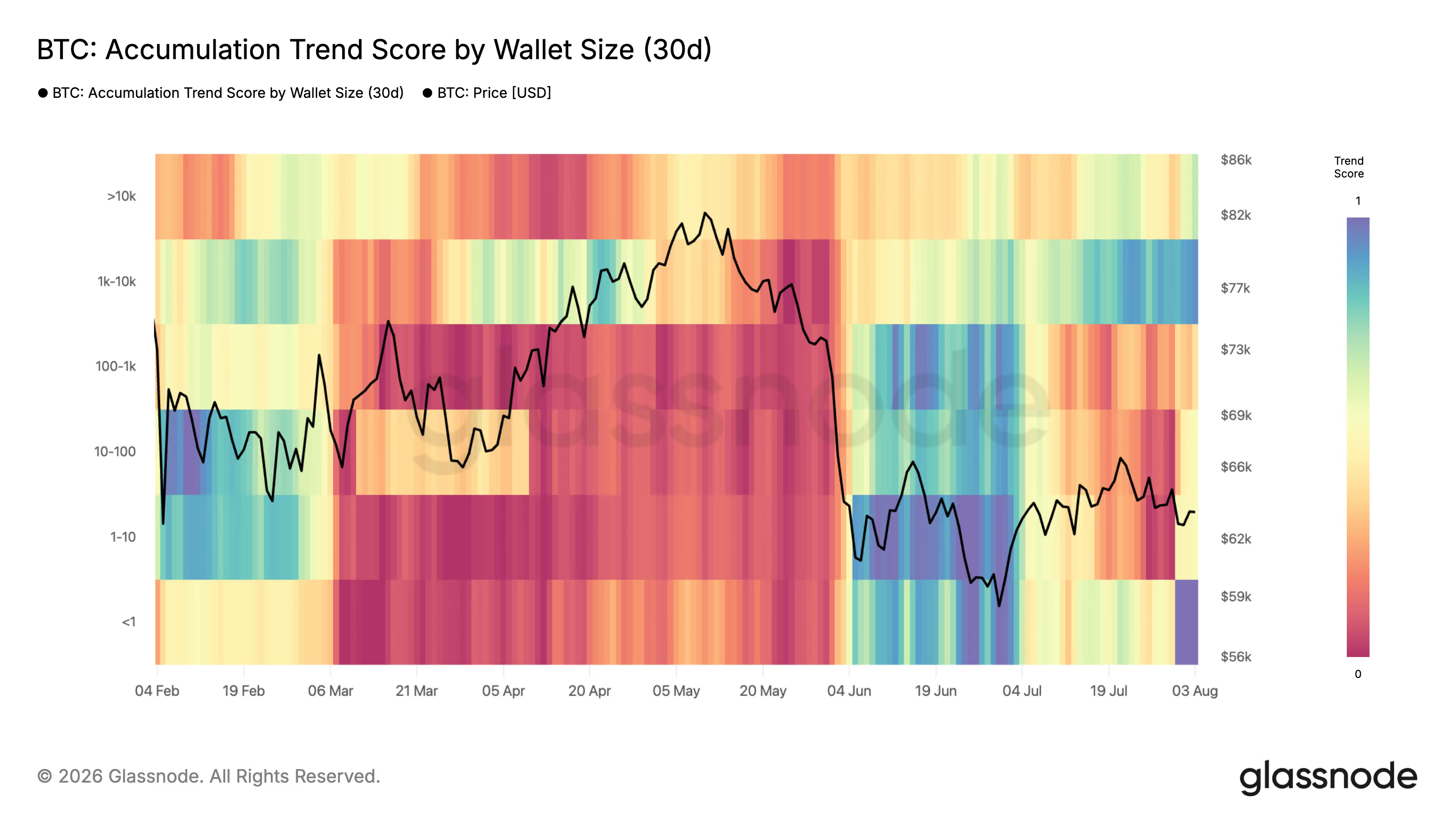
Glassnode’s 30-day Accumulation Trend Score, broken down by wallet-size cohort, shows that retail investors are currently the most aggressive buyers at these prices. Every other cohort is also accumulating, including whales holding at least 1,000 BTC, which are showing similarly strong accumulation.




At least 15 different attackers have exploited the Coldcard vulnerability, according to Galaxy Digital’s head of research, Alex Thorn, citing new victim reports received since the incident.
Thorn said Tuesday that the victim reports helped the company label new attackers that would have gone undiscovered, as the nature of the exploit was different from a hack on a centralized exchange.
“Due to one single victim’s report of less than 1 BTC stolen, we identified a new attack with 12 BTC siphoned from 126 addresses,” Thorn wrote in a Tuesday X post.
The estimated losses from the Coldcard exploit have grown to $100 million across three confirmed attack waves, according to Galaxy Research. The company also identified a suspected fourth wave that could bring total losses to about $130 million in Bitcoin (BTC).
The ongoing attack reignited debate about the security of cold storage wallets and whether users are safer by holding their own Bitcoin.
$2 worth of AI hardening could have prevented the exploit: Dragonfly partner
Roughly “$2 of AI hardening” could have prevented the Coldcard exploit, wrote Dragonfly managing partner Haseeb Qureshi, citing social media reports that some AI models rediscovered the vulnerability that led to the attack in less than 20 minutes.
Qureshi’s remarks came in response to multiple social media users claiming that Claude was able to regenerate the vulnerability in just eight minutes. He argued that these results may have been contaminated by web search and added that open-source AI model GLM 5.2 was able to rediscover the attack in 20 minutes with web access turned off.
However, it is unlikely that AI models would have independently discovered this vulnerability before it was made public, crypto analytics platform Tokenomist’s data lead, Tatsapat Saerejittima, told Cointelegraph. He said:
“The claim that AI found it in 2 mins came from a pseudonymous Reddit user who scanned the code after the vulnerability had already become public. There was no blind test, no documented methodology, and no assessment of the model’s false-positive rate.”
Related: AI has not triggered DeFi ‘hackpocalypse,’ Dragonfly partner says
Vulnerability seen in private key setup
Crypto research company Castle Labs’ co-founder, Francesco, said that the growing capabilities of AI models are drastically reducing the cost and time it takes to discover new cryptocurrency vulnerabilities, but added that Coldcard’s private key may have played a role in the vulnerability.
Coldcard used a “level of private key entropy (40 bits) much lower than the standard adopted by other wallets (a 12-word seed is 128 bits), a result of a firmware bug, making the job easier,” he told Cointelegraph.
Francesco, who asked that Cointelegraph not use his last name, said he expects the cost of bug discovery to continue decreasing as AI models gain more capabilities and become more prominent in both cybersecurity and exploits.
Magazine: Does Botanix’s failure prove Bitcoiners don’t care about DeFi?
Bitcoin saw new August highs into Tuesday’s Wall Street open as markets bet on US-Iran tensions again easing.
Key points:
- Bitcoin (BTC) edges higher as optimism over the Strait of Hormuz reopening pushes stocks to new all-time highs.
- Oil prices drop to their lowest levels since July 13 with oil traffic potentially returning on Wednesday.
- BTC acts between two daily moving averages as analysis sees “strong accumulation.”
S&P 500 tops $70 trillion market cap to new high
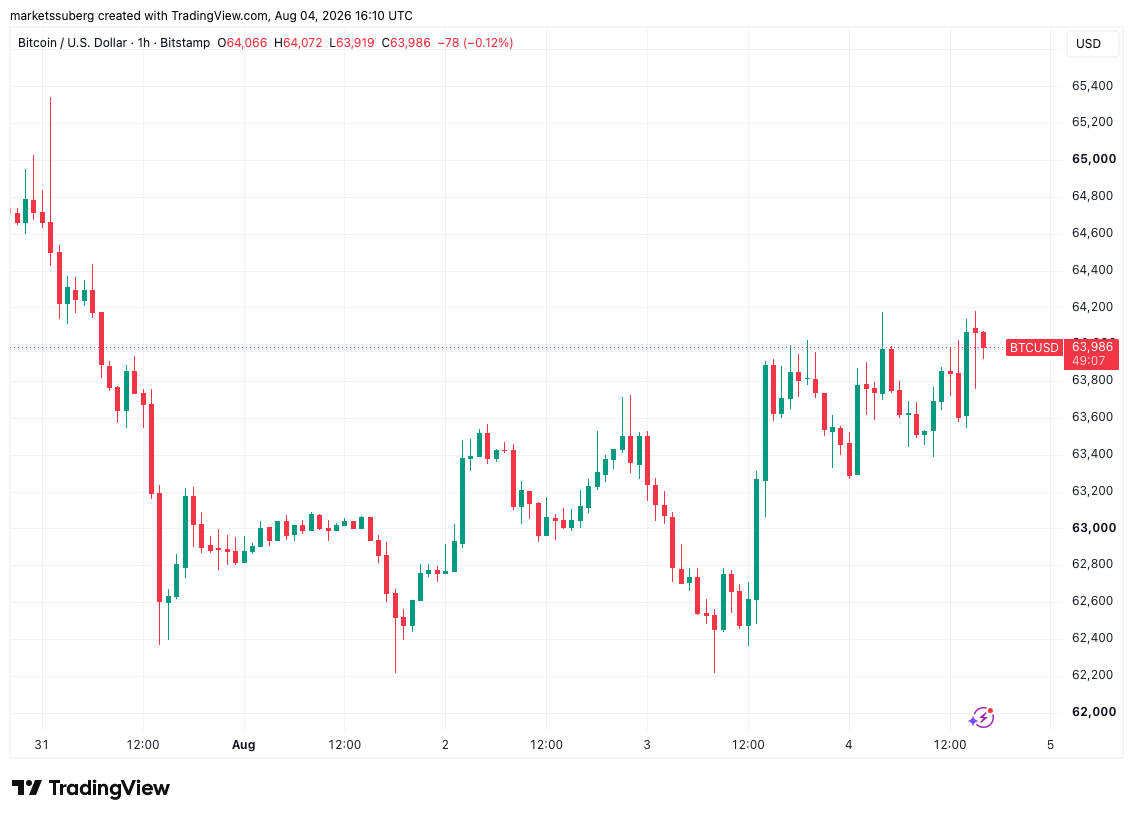
Data from TradingView showed BTC/USD climbing to $64,176 on Bitstamp, marking maximum daily gains of around 1%.
BTC/USD one-hour chart. Source: Cointelegraph/TradingView
Oil prices reacted immediately after US Treasury Secretary Scott Bessent suggested that traffic through the Strait of Hormuz could restart as soon as Wednesday.
Bessent told CNBC that there was “a chance we may have a deal today or tomorrow to open the Strait and move towards a more normalized position” in the US-Iran war amid ongoing talks between the two sides.
The comments came a day after US President Donald Trump confirmed the waterway reopening dialogue, saying that this could happen “as soon as tomorrow.”
WTI and Brent crude traded 4.8% and 4.6% lower, respectively, at the time of writing, hitting their lowest levels since July 13.
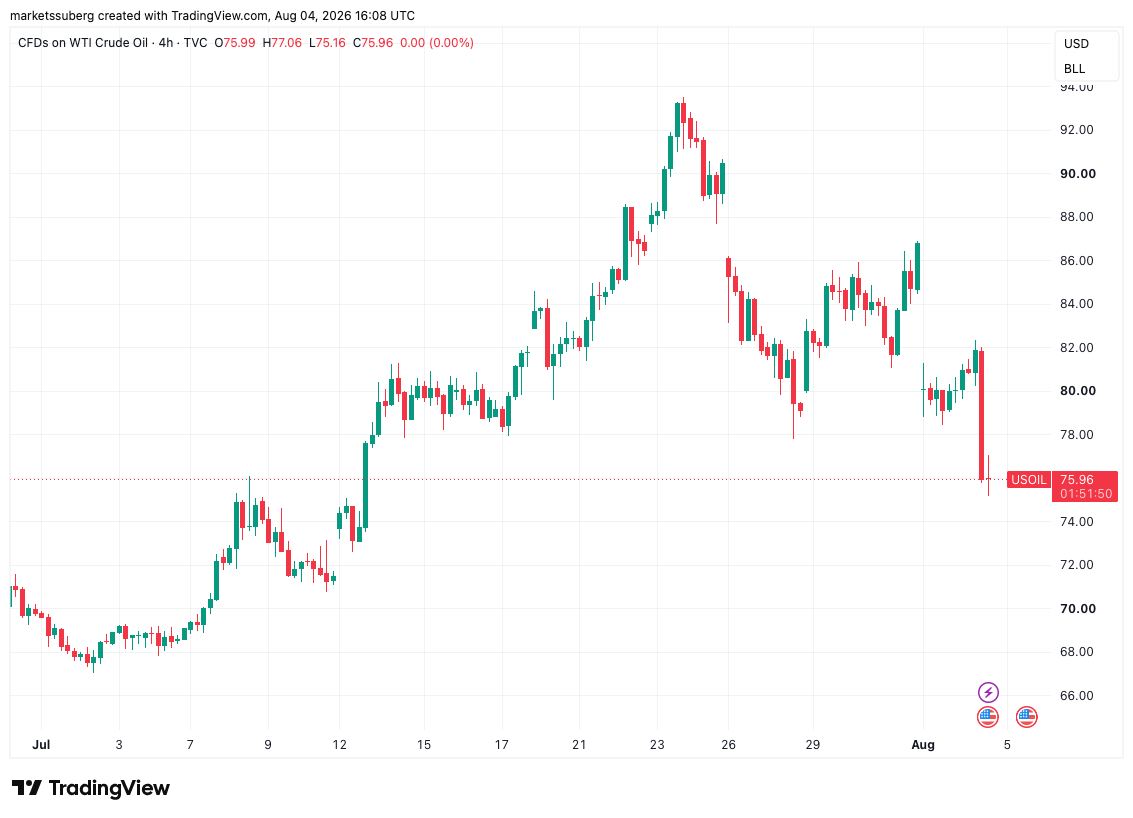
CFDs on US WTI crude oil four-hour chart. Source: Cointelegraph/TradingView
US stocks futures gained prior to the open, which in turn saw the S&P 500 index hit a new record high of 7,713, with its market cap reaching $70 trillion for the first time.
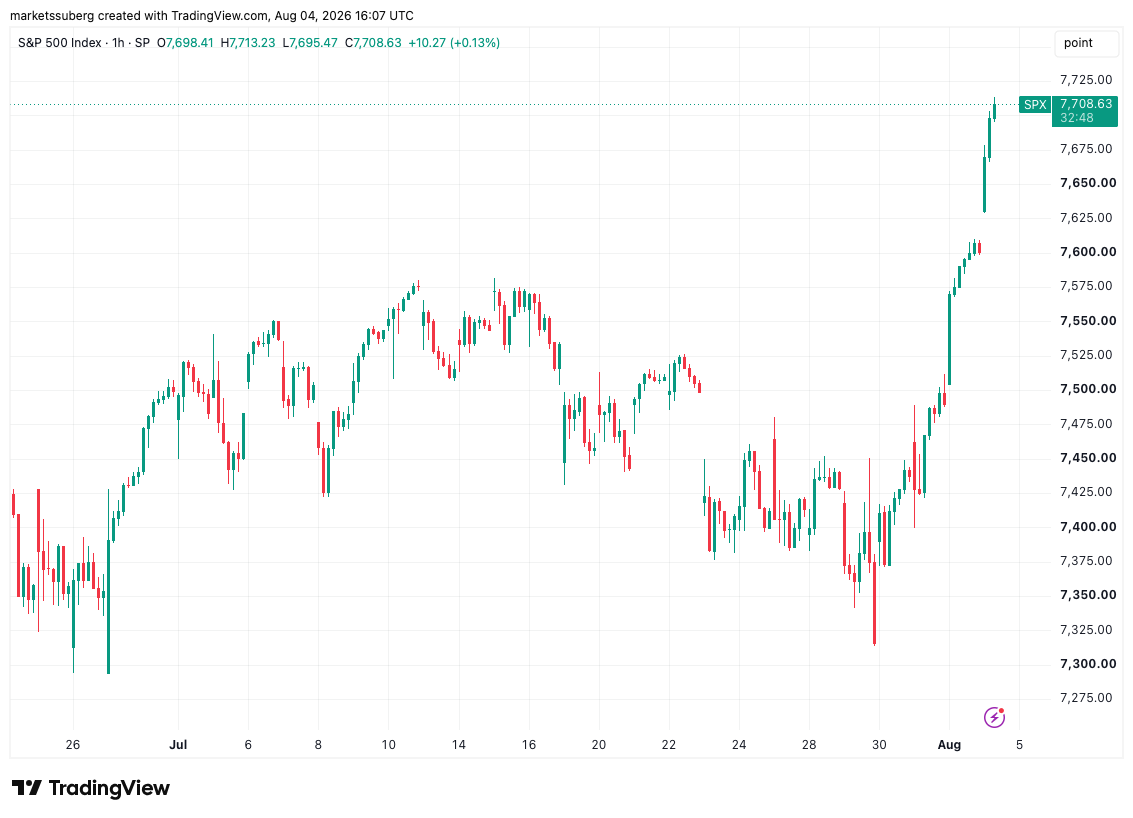
S&P 500 index one-hour chart. Source: Cointelegraph/TradingView
Analysts noted resolution of the Hormuz closure as one factor apt to influence market sentiment when it came to future Federal Reserve policy decisions. Amid an emerging hawkish split between Fed officials on interest rates, markets see 56.7% odds of central bank policymakers approving a 0.25% rate hike at its September meeting, per data from CME Group’s FedWatch Tool.
“Chairman Kevin Warsh’s limited guidance on the Fed’s reaction function means upcoming data, oil prices and the bond market will have a greater influence on the market’s expectations for the policy path,” Bloomberg macro strategist Michael Ball said.
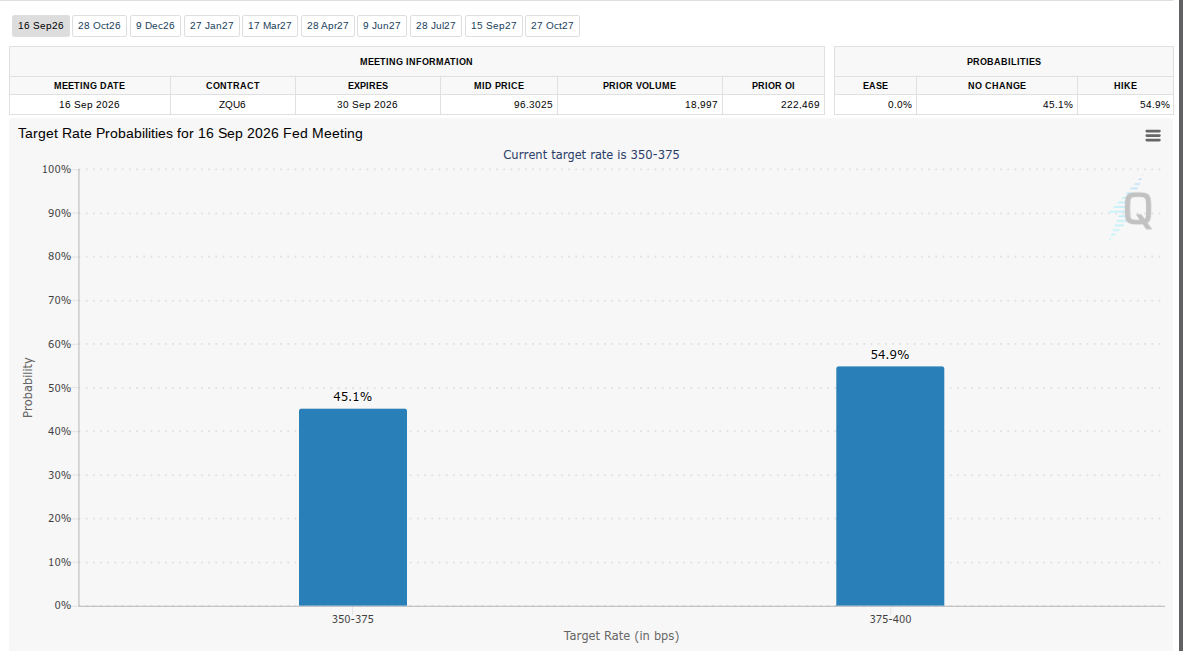
Fed target-rate probabilities for September FOMC meeting.
Source: CME Group
BTC accumulation “strong” in stubborn local range
Bitcoin price action remained comparatively subdued compared to stocks as BTC/USD passed $64,000.
Related: US yen intervention puts Bitcoin, risk assets on notice for liquidity flux
The pair remained held in check by its 21-day simple moving average (SMA) at $64,388, while its 50-day SMA functioned as support on hourly time frames.
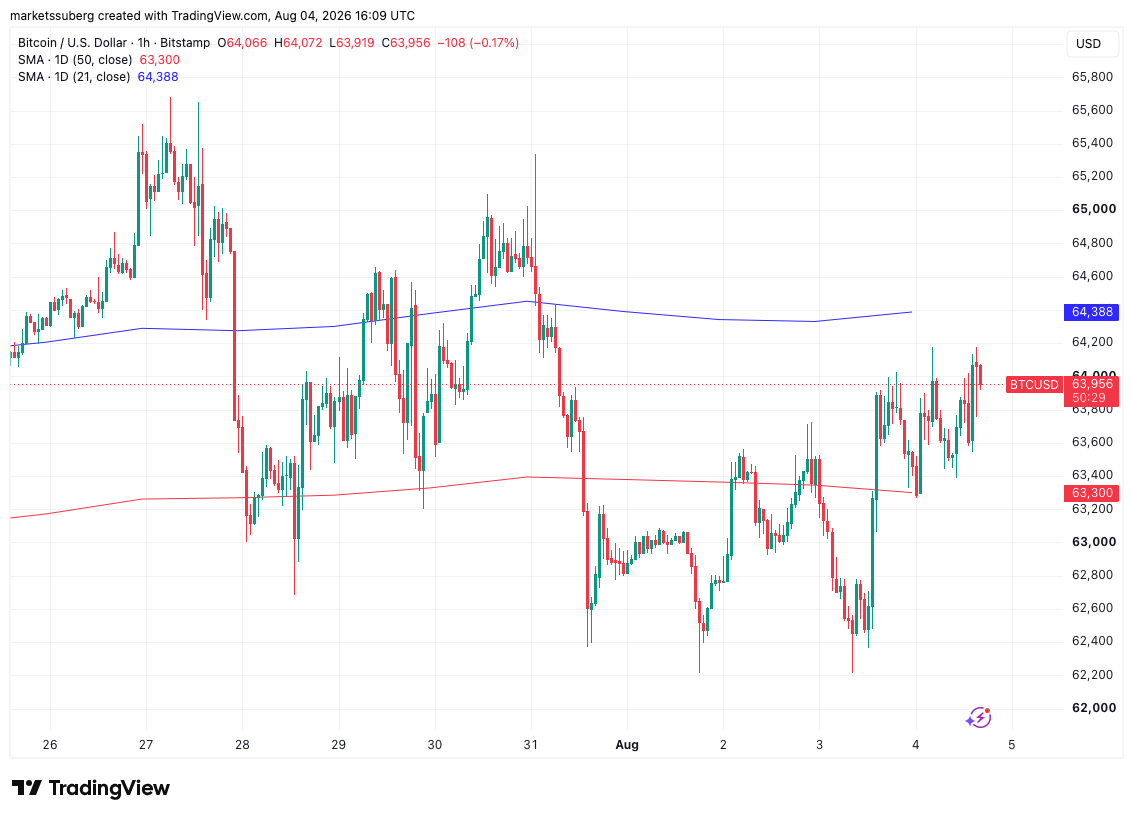
BTC/USD one-hour chart with 21-day, 50-day SMA.
Source: Cointelegraph/TradingView
With price rangebound, analysis from onchain analytics platform CryptoQuant reported “strong accumulation” among investors. 0.7% of the BTC supply, equivalent to around 155,000 coins, now belongs to investors with a cost basis between $62,000 and $65,000.
“This points to absorption rather than capitulation, as buyers accumulated into weakness,” it reported on Monday.
Magazine: How Fake World Assets and onchain gacha became crypto’s latest craze


Kalshi has partnered with compliance technology provider Comply to help financial firms monitor employee activity on prediction markets as the platform expands its institutional business while fighting a multibillion-dollar lawsuit in New York.
Summary
- Comply clients will be able to monitor employee trades placed through Kalshi’s prediction markets.
- The tools aim to detect possible trading based on material non-public information.
- Kalshi plans to extend the monitoring system to its proposed perpetual futures products.
- New York is seeking at least $36 billion from Kalshi in a separate lawsuit.
Kalshi adds employee trade surveillance
The partnership will integrate Kalshi trading data into Comply’s regulatory software, according to CNBC. Financial firms using the compliance platform will be able to track whether employees are trading event contracts and determine if those positions comply with internal policies.
The monitoring tools are designed to help employers identify suspicious activity, including trades that may involve material non-public information. Companies can also use the system to enforce restrictions on contracts linked to events that employees could influence or know about before the public.
Kalshi already operates an internal market surveillance program. However, conversations with institutional clients showed that firms wanted direct access to employee trading data through the compliance systems they already use.
The planned integration would place prediction market contracts alongside assets such as stocks, bonds and cryptocurrencies that are routinely covered by workplace trading controls. Kalshi also expects the system to monitor its planned perpetual futures products once those contracts become available.
Why compliance matters for prediction markets
Employee monitoring could address a major concern for banks, asset managers and other regulated financial firms considering prediction market exposure. Event contracts can cover elections, economic data, corporate developments and other outcomes that may involve sensitive information.
Traditional financial firms generally require employees to disclose brokerage accounts and receive approval for certain trades. Applying similar controls to prediction markets could make it easier for those companies to permit limited participation without creating an unmonitored source of regulatory risk.
The partnership also gives Kalshi a way to present its contracts as regulated financial products rather than conventional bets. Chief Executive Tarek Mansour recently compared the company’s structure to Nasdaq while defending its business during an Aug. 3 CNBC interview.
However, stronger private surveillance does not settle the wider legal debate over whether certain event contracts fall under federal derivatives rules or state gambling laws. That dispute has become central to Kalshi’s expansion in the United States.
Kalshi faces $36B New York lawsuit
New York Attorney General Letitia James sued Kalshi on July 31, seeking at least $36 billion in damages, penalties and other relief. Mansour said the state’s allegations could threaten the broader event contract industry.
Kalshi removed the proceeding from state court to the U.S. District Court for the Southern District of New York shortly after the complaint was filed.
New York Supreme Court Justice Melissa A. Crane then treated the state’s request for a preliminary injunction as moot because the case was no longer before her court, according to records shared by gaming law attorney Daniel Wallach. The procedural decision did not dismiss or reject the state’s allegations.
The Commodity Futures Trading Commission has also sought federal court intervention to prevent state enforcement against federally registered prediction market operators. Meanwhile, court disputes involving sports event contracts continue to test where federal oversight ends and state gaming authority begins.
Santos case shows surveillance stakes
Kalshi’s monitoring push follows a CFTC settlement involving former U.S. Representative George Santos. Regulators found that Santos made misleading public statements while holding contracts tied to whether he would attend President Donald Trump’s State of the Union address.
Under a July 31 order, Santos agreed to return $17,569.98 in trading gains, pay a $17,500 civil penalty and accept a three-year ban from trading through CFTC-registered entities. He neither admitted nor denied the agency’s findings or legal conclusions.
Kalshi referred Santos’ activity to regulators, showing how platform surveillance can lead to federal enforcement. The Comply partnership would extend part of that oversight to employers, giving institutional clients another way to detect conflicts before they develop into regulatory cases.
The rollout comes as Kalshi seeks approval for additional derivatives products. Its ability to attract financial firms will likely depend on both the effectiveness of its compliance tools and the outcome of legal challenges over prediction markets in the U.S.


Cointelegraph is committed to providing independent, high-quality journalism across the crypto, blockchain, AI, and fintech industries.
All news, reviews, and analyses are produced with full journalistic independence and integrity. For more details on our standards and processes, please read our Editorial Policy.
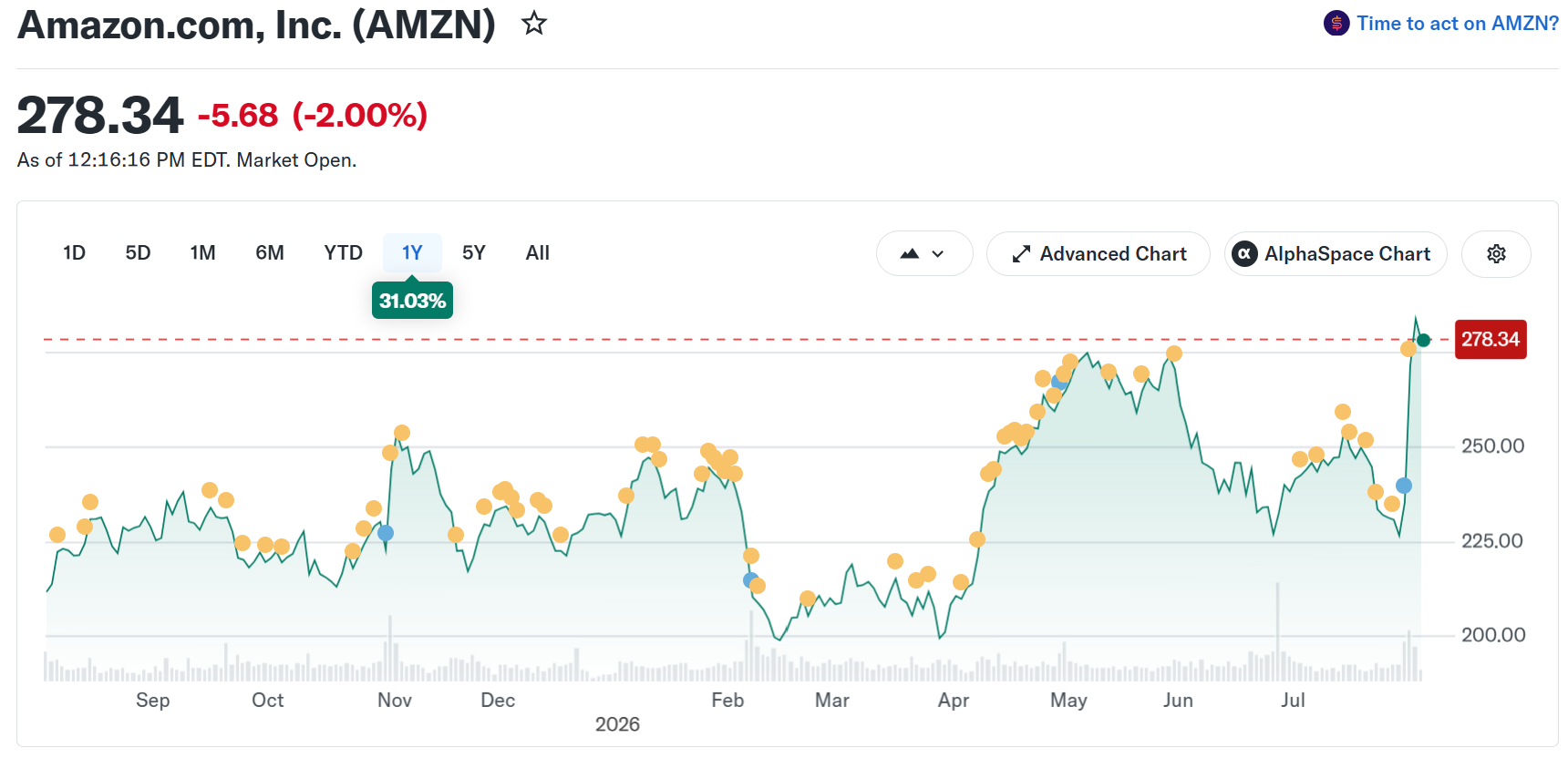
Jeff Bezos wants to sell 15 million Amazon shares. The price tag is about $4.07 billion. Amazon.com Inc. (AMZN) fell more than 2% on Tuesday.
The timing stands out. Amazon had just closed at a record and passed $3 trillion in value for the first time.
Bezos Amazon Stock Sale Was Priced Before the Record
Bezos filed a Form 144. That is the notice an insider files before selling restricted shares.
The notice puts the total value at $4,073,700,000. Divide that by 15 million shares and you get $271.58 each. That was Friday’s closing price, not Monday’s.
Amazon then rose 4.58% on Monday and closed at $284.02, an all-time high. It touched $287.20 during the day.
At Monday’s close, the same shares were worth roughly $4.26 billion. Bezos priced his sale before the record, not after it.
Morgan Stanley Smith Barney will handle the trades on Nasdaq. Bezos received the shares as founder stock in July 1994.
The sales follow a Rule 10b5-1 plan he set up on November 14, 2025. These plans lock in trades months ahead. That shields insiders from claims they traded on private information.
AMZN changed hands near $277.41 late Tuesday morning, down 2.33%. A year ago it closed at $211.65.

Follow us on X to get the latest news as it happens
He Is Selling Less Stock Than He Did Last Year
None of this is new for Bezos. He has filed the same kind of notice repeatedly since 2024.
Here is how his last three compare.
- August 2026, 15 million shares for $4.07 billion, or $271.58 each
- June 2025, 25 million shares for $5.43 billion, or $217.12 each
- November 2024, 16.35 million shares for $3.05 billion, or $186.40 each
So this is his smallest sale by share count. It is his second biggest by dollars.
The stock did that work, not Bezos. Each plan used the same broker and was set months in advance.
AWS Is Why the Price Got This High
Amazon’s second quarter earnings beat started the rally. Sales rose 20% to $200.6 billion. Operating income jumped to $27.5 billion from $19.2 billion.
Amazon Web Services (AWS) is the company’s cloud arm. It grew 37% to $42.2 billion. Its operating income climbed to $16.6 billion from $10.2 billion.
Banks moved fast. More than a dozen raised Amazon price targets. Benchmark went to $400, roughly 44% above Tuesday’s price.
That growth costs money. Amazon spent $54.2 billion on property and equipment last quarter. Over 12 months the bill reached $169 billion.
Free cash flow turned negative, an outflow of $7.6 billion. Other big tech names face the same AI capex draining cash.
Bezos still owned 880,948,653 shares in early May. That is close to 8% of Amazon. This sale trims about 1.7% of his stake.
It reads as diversification, not a warning. The next Form 4 filing will show what the shares actually sold for.
The post Amazon’s $3 Trillion Record Lasts One Day as Stock Takes Big Hit appeared first on BeInCrypto.

Italy’s largest banking group, Intesa Sanpaolo, sharply reduced its reported exposure to BlackRock’s iShares Bitcoin Trust (IBIT) in the second quarter.
While its BTC-related position changed, the bank more than tripled its holdings in staked ETH.
IBIT Holdings Plunges
According to its latest Form 13F, Intesa Sanpaolo held 40,723 IBIT shares as of June 30, which was down 93.7% from the 646,809 reported for March 31. The filing also revealed a major change in its reported call position in the fund. The underlying-share amount linked to its held-call row fell from 2,496,500 shares to 18,000, over a 99% decline.
Meanwhile, a new put position equivalent to 500,000 IBIT shares appeared in the June 30 disclosure. The reported figures, however, do not show that the bank adopted a net bearish strategy on Bitcoin.
Its iShares Staked Ethereum Trust ETF holding rose from 116,200 shares to 349,600. On the other hand, its position in the Bitwise Solana Staking ETF dropped from 2,817 to just seven.
The latest filing comes more than a year after Intesa Sanpaolo made its first direct Bitcoin purchase in January 2025. It bought 11 BTC for about $1.03 million. Back in July 2024, it also used the Polygon network to underwrite Italy’s first on-chain digital bond, worth $25.6 million. Later that year, it began offering options, futures and spot ETFs linked to digital assets through a dedicated desk.
Investors Turn to Ethereum ETFs
The bank’s move is significant as some BlackRock clients have recently made a similar shift. For instance, BSCN said customers of the asset management giant had sold around $60 million worth of the IBIT last week. At the same time, they bought more than $20 million worth of its ETHA spot Ethereum ETF.
While Intesa cut its IBIT position, the broader US spot Bitcoin ETF market has recently moved in the other direction. These funds saw a record monthly net outflow of about $4.5 billion in June. The trend reversed in July, when the funds raked in $172.4 million. That marked a turnaround after two straight months of heavy withdrawals and helped BTC’s prices move back toward $64,000 in the middle of the month.
This sentiment appears to have continued into August, as the ETFs have attracted another $170 million so far. BlackRock’s IBIT remains the leading fund, with almost $61 billion in total inflows since it was first listed.
The post Italy’s Biggest Bank Cuts IBIT Exposure by 94% While Buying More Staked Ethereum appeared first on CryptoPotato.


“By doing so, Samsung Wallet becomes the foundation for an interconnected financial ecosystem across Galaxy devices and services — where it combines payments, rewards, and digital assets into a single unified experience,” he said.
If it follows through, over 800 million would potentially have access to Galaxy’s stablecoin features and other crypto without requiring a separate crypto app or exchange account. Already, there are over one billion active Samsung smartphones worldwide.
Stablecoins and infrastructure
During its Q2 earnings call last week, Samsung SDS CEO Lee Jun-hee said that the company’s stake in crypto exchange Upbit operator Dunamu is a strategic investment to enter the digital asset infrastructure business, including stablecoins and AI-powered payments.
Three Samsung affiliates agreed in May to acquire a 4% stake in Dunamu, the operator of South Korea’s largest cryptocurrency exchange, Upbit, for $408 million. Samsung Securities, Samsung SDS and Samsung Card are the affiliates involved in the deal.
“This is the other half of the same strategy, and from a deal perspective, it is the more telling half,” said Goh. “The wallet announcement secured distribution; SDS and Dunamu will secure the infrastructure beneath it.”
Goh said he believes Samsung is aiming to build the infrastructure itself, rather than rely on a third-party provider. “Their goal is to be positioned in both dollar and won stablecoins while Korea’s framework is still being discussed. The timing is deliberate.”
Crypto World
Wall Street predicts XRP ETFs will attract $8 billion in inflows, with XRP holders potentially earning up to $9,000 per day
Disclosure: This article does not represent investment advice. The content and materials featured on this page are for educational purposes only.
XRP ETF inflows surpass $1.5 billion as investors increasingly explore alternative strategies, including EX DeFi cloud mining, for long-term crypto exposure.
Summary
- XRP ETF inflows surpass $1.5B as institutional demand grows and investors explore new digital asset opportunities.
- XRP ETF milestone boosts market confidence, while EX DeFi attracts attention from investors seeking alternative yield options.
- Institutional XRP demand accelerates with ETFs crossing $1.5B in inflows amid evolving investment strategies.
According to previous forecasts from JPMorgan and Standard Chartered, spot XRP ETFs are expected to attract $4 billion to $8 billion in inflows in the long term.
While current inflows into XRP ETFs have not yet reached the high levels previously predicted by Wall Street, the cumulative net inflows have already reached approximately $1.51 billion, successfully surpassing a significant milestone and further strengthening market confidence in XRP’s long-term prospects.
With ETFs continuing to receive funding support, and XRP prices not yet showing a significant increase, many investors are beginning to consider a practical question: besides waiting for price appreciation, are there more efficient and sustainable ways to participate in XRP’s long-term value growth?
Against this backdrop, a growing number of investors are turning their attention to EX DeFi cloud mining platforms, hoping to explore more diverse long-term returns on digital assets amidst market volatility, rather than solely relying on XRP’s price appreciation.
XRP ETF inflows surpass $1.5 billion, market attention continues to rise
According to market data cited by TradingView, driven by continuous net inflows, XRP-related exchange-traded funds (ETFs) have seen cumulative inflows exceeding $1.5 billion, marking a significant milestone for XRP.
Meanwhile, overall market liquidity continues to improve. Although XRP trading activity has slowed somewhat, and many retail investors remain relatively cautious, institutional investor demand has maintained a slight increase, contributing to continued net inflows for most trading days.
ETF inflows continue, XRP investors focus on more diverse participation methods
With the continued inflow of ETF funds, more and more XRP investors are focusing on EX DeFi, exploring more robust and sustainable ways to grow the value of digital assets through its automated cloud mining system and yield aggregation mechanism.
Compared to highly volatile leveraged trading or ETF investments, EX DeFi offers a more convenient way to participate in digital assets, helping users engage with the XRP ecosystem even in volatile markets and further improve the efficiency of digital asset utilization to generate returns. For users with a certain amount of capital, different asset management solutions can be chosen according to their needs to explore long-term value growth opportunities.
About EX DeFi
Headquartered in the UK, EX DeFi strictly adheres to local laws and regulations and operates under European regulatory frameworks such as MiCA and MiFID II. It continuously strengthens platform governance, security measures, and operational transparency to create a safe, reliable, and sustainable cloud mining service for users.
The platform employs a multi-layered security architecture, including:
- PwC annual financial and security compliance audit
- Lloyd’s of London digital asset custody insurance
- Cloudflare enterprise-grade cybersecurity protection and McAfee® security system
- Cold and hot wallets, multi-layered encryption architecture, and two-factor authentication (2FA).
Currently, EX DeFi supports multiple mainstream digital assets such as XRP, BTC, ETH, USDT, USDC, DOGE, LTC, and SOL, providing users with more flexible and convenient choices.
How to earn daily yields with EX DeFi
EX DeFi is easy to use; even beginners can get started in minutes with just four steps:
1: Register an Account
2: Deposit Cryptocurrency
On the Deposit Center page, select XRP (or other cryptocurrencies), copy the corresponding deposit address on the platform, and then transfer the XRP through a wallet or exchange. (No tags required)
3: Choose a Mining Contract
Choose a mining plan that suits a particular budget; mining will start automatically after system activation.
4: Automatically Receive Daily Rewards
The platform provides 24/7 intelligent mining services, with rewards automatically settled to an account 24 hours a day. Users can easily earn passive income without any user intervention.
Popular profit contracts
BTC (Beginner Trial Contract): Investment of $100, Term: 2 days, Daily Yield: $4, Total Profit: $100 + $8
DOGE (Golden Shell Mini Dogecoin Pro): Investment of $500, Term: 6 days, Daily Yield: $6.5, Total Profit: $500 + $39
BTC (Canaan-Avalon-A1466): Investment of $1,000, Term: 10 days, Daily Yield: $13.4, Total Profit: $1,000 + $134
LTC (Bitmain Antminer L7): Investment of $5,000, Term: 20 days, Daily Yield: $73.5, Total Profit: $5,000 + $1,470
BTC (Bitmain S19K-Pro): Investment of $10,000, Term: 30 days, Daily Yield: $161, Total Profit: $10,000 + $4,830
Click here for more details on popular EX DeFi mining contracts.
Summary
While the inflow of funds into the XRP ETF still falls short of Wall Street’s previous expectations, continued institutional inflows, an improving regulatory environment, and the development of the XRP ecosystem continue to provide strong support for its long-term value. In the future, XRP’s market performance will still depend on fund flows, application implementation, and changes in the overall market environment.
Against this backdrop, more and more investors are focusing on long-term allocation and return management of digital assets, rather than just price fluctuations. EX DeFi aims to provide users with more diverse participation methods through smarter and more efficient cloud mining services, meeting the needs of different investors for long-term digital asset value growth.
Instead of chasing price increases, visit the official EX DeFi platform as soon as possible to start mining with one click and easily earn XRP.
Disclosure: This content is provided by a third party. Neither crypto.news nor the author of this article endorses any product mentioned on this page. Users should conduct their own research before taking any action related to the company.
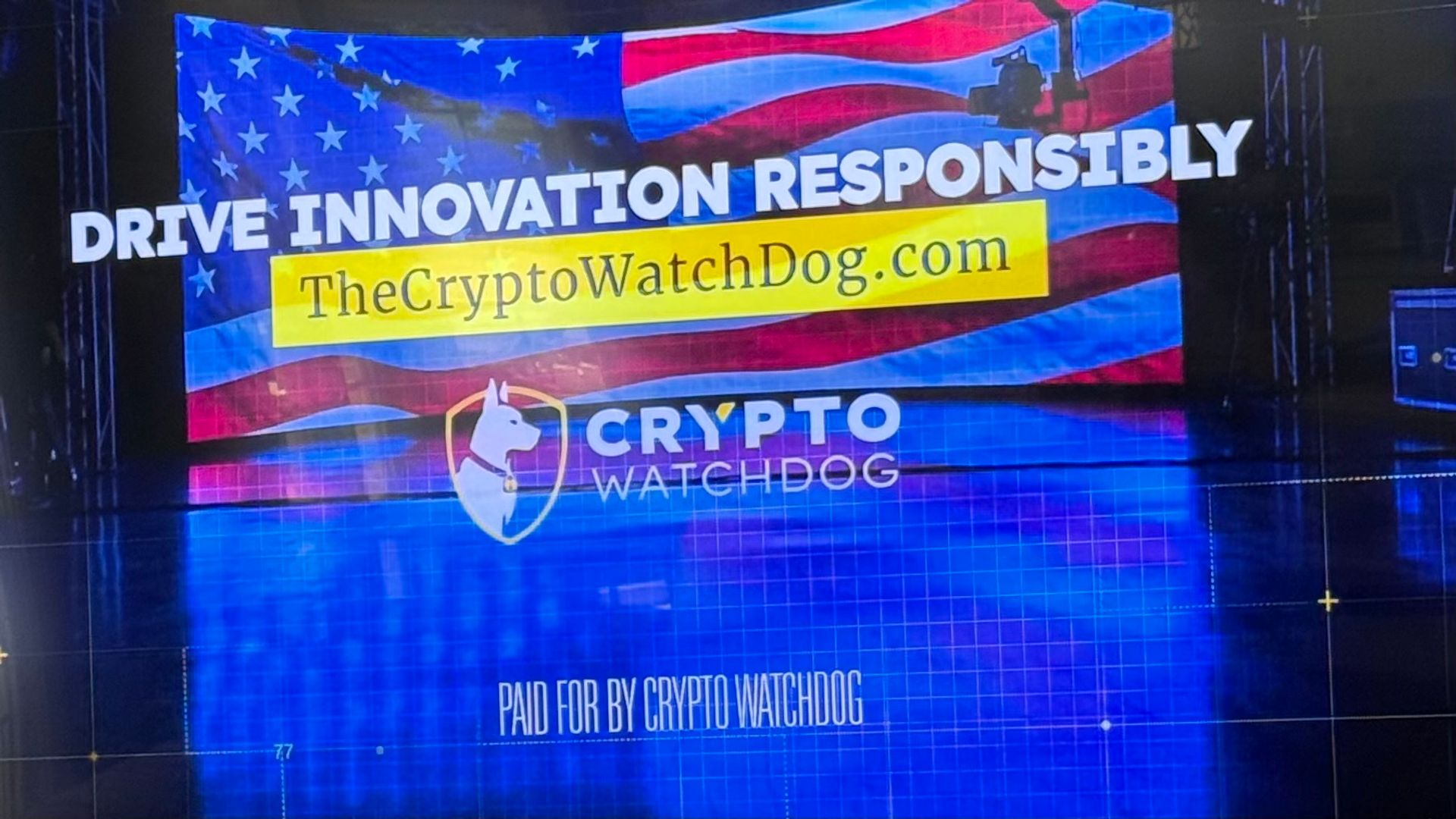
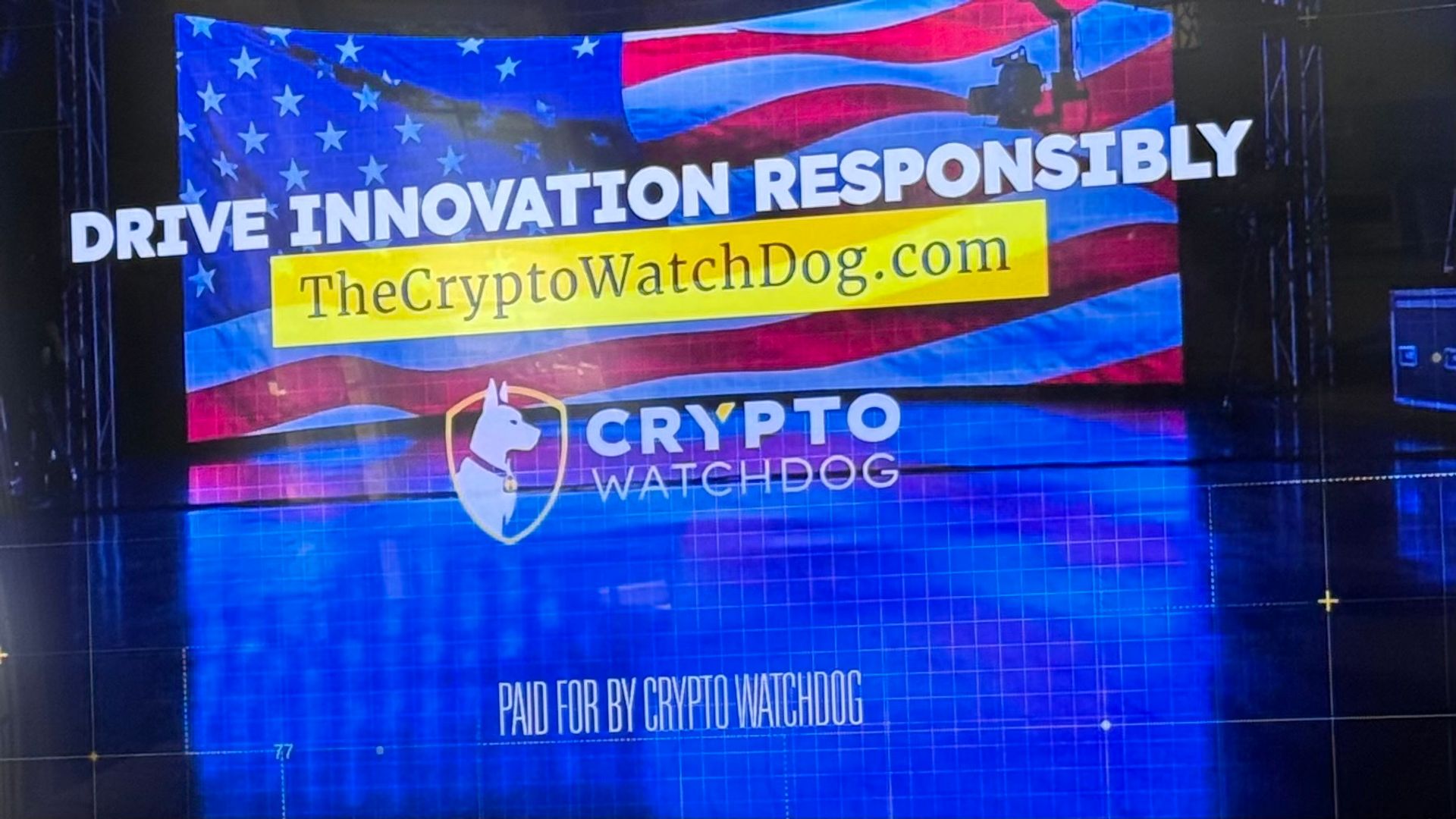
The crypto industry’s central policy drive is to get U.S. laws that elevate it to a fully regulated and government-approved corner of the financial system. While the legislation to do that is struggling with its final Senate test, a mystery organization is flooding Washington, DC, with ads linking crypto to terrorists and drug cartels.
Across television and social media, the localized campaign warns in one example: “The worst people operating in the darkest places use crypto because there are no guardrails,” citing connections to drug cartels, terrorists and people praying against seniors.
“Let’s bring crypto out of the shadows now,” the ads say.
The recently emerging group behind the campaign is Crypto Watchdog, run by Executive Director Chapin Fay, a media strategist who had been involved in past Republican political campaigns but hadn’t been previously associated with crypto matters.
“Our mission is fairly simple and direct,” he told CoinDesk in an interview. “It’s to bring sunlight and transparency to an over-$2 trillion industry that has historically not been very transparent.”
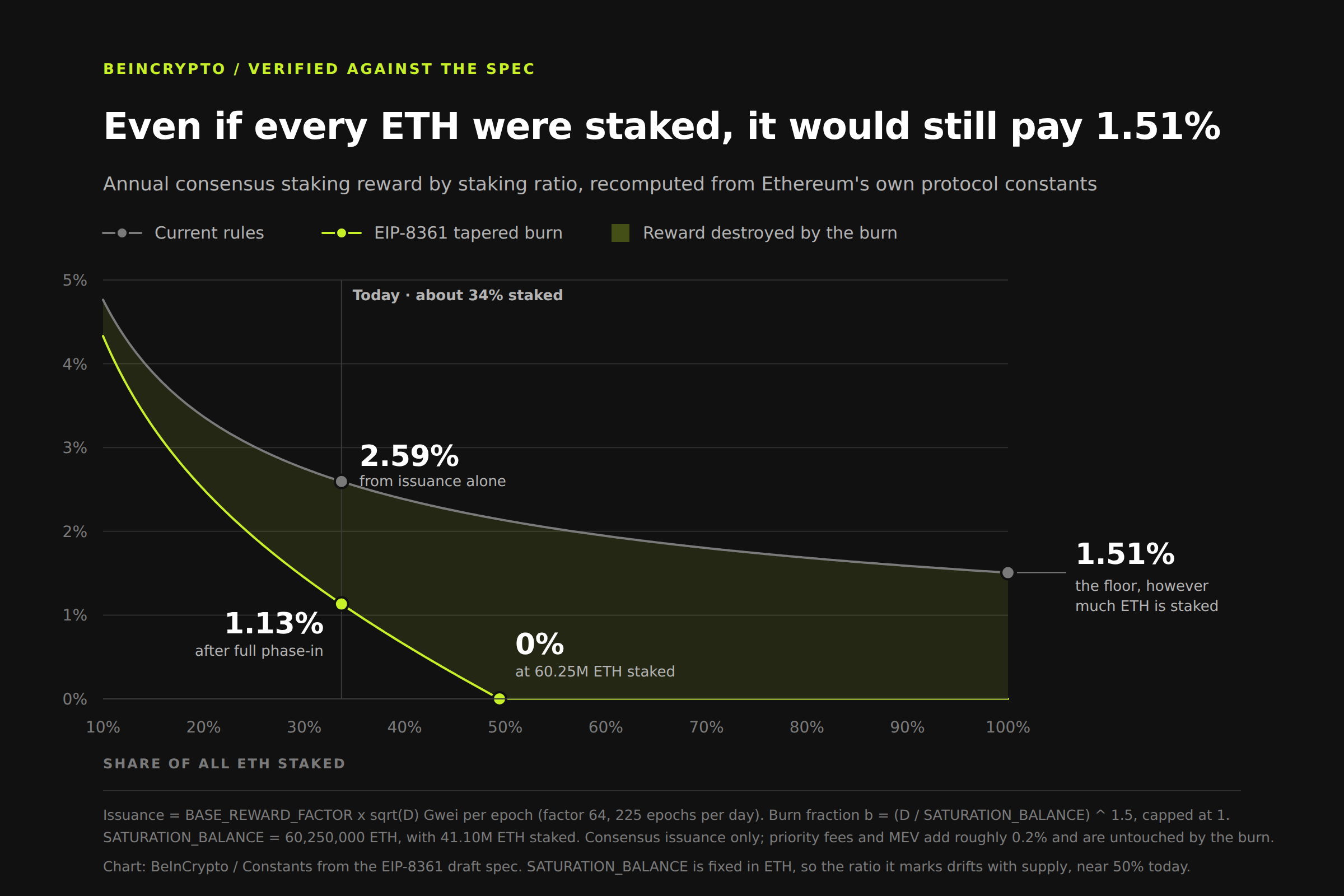
Ethereum Foundation researcher Justin Drake and five co-authors want to shrink the reward for staking ETH. Their draft plan would switch that reward off once half of all ETH is locked up.
Stakers would earn less. Everyone else would hold a slightly bigger slice of ETH. BeInCrypto maths puts the new reward near 1.1% a year, down from 2.6% now.
Why the Justin Drake Ethereum Proposal Targets Issuance
Ethereum pays people to help run it. Lock up ETH, help check transactions, earn new ETH.
The catch is that the payment never really stops. Even if every ETH were staked, it would still pay roughly 1.51% a year. BeInCrypto checked that against the code.

Follow us on X to get the latest news as it happens
So the staked pile keeps growing. It now sits at 41.1 million ETH, or 33.7% of all ETH in existence.
It is also bunching up. Lido alone holds 9.41 million ETH, by its own count, and Ethereum staking remains concentrated in a few hands.

The fix is simple, that every few minutes, the network would take a slice of each reward and destroy it.
That slice grows as more ETH gets staked. Today it would swallow 56%. At 60.25 million ETH, it would take the lot.
Burning is not new here. EIP-1559 already destroys part of every transaction fee.
Drake is the famous name, but not the author. A researcher known only as pintail wrote it. The argument itself has run since January 2023.
The Case Against Cutting ETH Staking Rewards
The plan says the biggest operators feel the squeeze first. The maths says not for a while.
BeInCrypto applied the plan’s own formula to Lido. Growth keeps paying Lido until about 49 million ETH is staked. That is nearly 8 million more than today.

The authors admit one reason. Validators also earn by ordering transactions, called Maximal Extractable Value (MEV). The burn never touches that money, and it always rewards getting bigger.
They put that side income below 78,300 ETH last year, worth 0.20% at most. That figure is theirs. BeInCrypto could not confirm it.
Home stakers face a second squeeze. Fines stay the same size while earnings shrink. Recovering from a few hours offline would take about four times longer.
So why half? The authors chose it on judgement, not on data.
“Half the supply is the last figure that refers to anything beyond preference: it is the majority threshold the risks above turn on,” they wrote.
That reasoning matters for ETH price levels, with ether near $1,866 on Tuesday. Reward changes move money fast, as the record ETH validator exit queue showed in 2025.

Nothing is settled yet. The plan is only a draft. It still needs editors, client teams, and a network upgrade.
Even day one stings. Rewards would drop 13% straight away. The question is whether big stakers accept a rule that stops paying them to grow.
The post A New Ethereum Proposal Could Halve Staking Rewards: Who Feels It First? appeared first on BeInCrypto.
5 Of The Quietest Window Air Conditioners You Can Buy In 2026

At least 15 attackers exploited Coldcard vulnerability: Galaxy

10 Greatest FPS Games of All Time


-

 Business6 days ago
Why Trees Belong on the Risk Register
-

 Fashion4 days ago
Weekend Open Thread: Wit & Wisdom
-

 Politics4 days ago
Meta enters AI-training agreement with far-right ‘propaganda rag’ Newsmax
-
 Entertainment7 days ago
‘Stargate’ Creator’s New Sci-Fi Series Returns for Season 3 Tomorrow
-

 Crypto World3 days ago
MicroStrategy Post-Earnings CLARITY Act Push Could Add New Catalyst for Its Stock
-

 Politics6 days ago
Reform UK betrays West Mids residents by running from party pledges
-

 Business7 days ago
Major shareholder moves on Canyon
-

 Crypto World3 days ago
XRP Ledger v3.3.0 brings five institutional features
-

 News Videos5 days ago
Bitcoin Enters the 3rd Stage of the Bear Market
-

 Crypto World7 days ago
Kraken Enables Retail Access to Jersey Mike’s IPO via Tokenized Shares
-

 Politics2 days ago
Zack Polanski: an incitement to murder Nigel Farage?
-

 Politics5 days ago
Luke Littler’s dominance sparks GOAT debate
-

 Sports5 days ago
Seema Kaliramna Wins Discus Throw Bronze, Takes India’s CWG Medals Tally To 17
-

 News Videos7 days ago
Claude: Build Financial Dashboards in Minutes (2026)
-

 Crypto World4 days ago
New York sues Kalshi over prediction market gambling
-

 Crypto World2 days ago
Crypto PAC spending tops $2M in Michigan House race
-

 Business7 days ago
Johnson & Johnson agrees to $5.5B settlement over talc cancer claims
-

 Business4 days ago
Trump Announces Hamas Disarmament Agreement as Iran Strikes Kuwait Air Base and US Attacks Pause Overnight
-

 Tech6 days ago
Gemini can now summarize the messiest comment threads in Google Docs
-

 Tech3 days ago
ESET tracks rise in malicious AI skills and adaptable malware
You must be logged in to post a comment Login