
Crypto World
Bitcoin (BTC) Rally Pauses as Crypto Markets Take a Breather


Bitcoin (BTC) and several cryptocurrencies took a break from the recent rally on Thursday. The seven-day push saw the flagship cryptocurrency reclaim the $80,000 level for the first time since the beginning of February.
However, global equities rallied to new highs over optimism about a US-Iran ceasefire and record corporate earnings.
Crypto Market Rally Stalls
Bitcoin (BTC) reached an intraday high of $82,814 on Wednesday before retreating and ending the day at $81,438. It dipped to a low of $80,724 on Thursday but held above $80,000 as sellers attempted to gain control following the recent rally. According to Alex Kuptsikevich, chief market analyst at FXPro, Bitcoin faces its next test at the 200-day moving average, around $83,300. Kuptsikevich believes a consolidation above this level will indicate bullish dominance. However, he warned that short-term profit-taking could dent some of the gains.
Meanwhile, total liquidations crossed $500 million over the past 24 hours, with $224 million in long liquidations and $291 million in short liquidations, according to CoinGlass.
Other major tokens, including Ethereum (ETH), also retreated as market sentiment turned indecisive. The world’s second-largest cryptocurrency reached an intraday high of $2,419 on Wednesday before losing momentum and dropping to a low of $2,315 on Thursday. ETH is currently trading around $2,345, down over 1% in the past 24 hours.
Ripple (XRP) is down nearly 1%, while Dogecoin (DOGE) registered a substantial decline of almost 4% to $0.111 over the past 24 hours. Other tokens registered strong weekly gains, with Solana (SOL) up 8.50% and Cardano (ADA) up nearly 9%. Meanwhile, Toncoin (TON) is up 30% in the past 24 hours, and 112% over the past week, primarily due to a series of announcements linked to Telegram and its blockchain ecosystem.
Thursday’s pause came as global markets rallied to record levels as hopes of a US-Iran ceasefire increased. Several reports have indicated that the two countries are working on a proposal to end the ongoing conflict. Despite the breather, the crypto market cap remains marginally up at $2.7 trillion.
Equities Surge
The MSCI All Country World Index rose 0.3% and its Asia gauge reached record levels after a 1.9% jump as Japan’s 225 Nikkei jumped to intraday highs and South Korea surpassed Canada to become the world’s seventh-largest equity market by value. Wall Street gauges also closed at record levels on Wednesday, with most S&P 500 companies beating earnings estimates. Meanwhile, Brent crude remains under $102 with markets hopeful an agreement between the US and Iran would help reopen the Strait of Hormuz.
Disclaimer: This article is provided for informational purposes only. It is not offered or intended to be used as legal, tax, investment, financial, or other advice.


Kraken parent Payward agreed to acquire Hong Kong-based Reap Technologies for up to $600 million, expanding its push into stablecoin payments and business-to-business (B2B) financial infrastructure.
Payward has entered into a definitive agreement to acquire Reap for up to $600 million, the company announced Thursday. The deal is set to be paid in a mix of cash and Payward stock, in a transaction that values Payward’s equity at $20 billion. It would expand Payward Services, the company’s B2B infrastructure platform launched in March 2026.
The deal comes as crypto companies increasingly expand beyond trading services into payments infrastructure and stablecoin-related products as stablecoins gain traction among fintech firms and businesses.
In a statement on Thursday, Reap co-founders said the platform would continue operating as a standalone platform, adding that the transaction remains subject to customary regulatory approvals, expected to close in the second half of 2026.
Reap expands Payward Services into global cards and payments
Payward Services allows companies to integrate trading, payments, funding and digital asset services through one system.
The acquisition of Reap extends that platform into the global cards and payments space, allowing partners to embed card issuance, cross-border payments, and stablecoin treasury services alongside Payward’s existing capabilities.

Source: Kraken
“Reap is the payments layer for what comes next. Card networks, banking rails, and blockchains on a single API, settling in stablecoins,” Payward and Kraken co-CEO Arjun Sethi said in the announcement.
Related: Kraken parent Payward closes Bitnomial deal to expand US crypto derivatives
The acquisition of Reap follows Payward’s acquisitions of Bitnomial exchange, futures broker NinjaTrader and xStocks issuer Backed, as the company continues expanding its platform through targeted acquisitions.
Reap deal deepens Asia push
Reap was founded in 2018 by Daren Guo, who previously worked for the Asia Pacific business at the payments firm Stripe, and former investment banker Kevin Kang, according to its website.
The company specializes in provisioning payment solutions to connect traditional financial systems with digital assets, aiming to enable cross-border money flows.
Sethi reportedly said that the deal marks Payward’s first infrastructure acquisition in Asia and one of its largest transactions to date.
“If you take Europe out, the fastest growing market is Asia, not just revenue but also asset-on-platform,” Sethi said, adding: “They have already done it in Asia. They can expand into the US overnight with us.”
Magazine: Guide to the top and emerging global crypto hubs: Mid-2026
The world’s largest corporate Bitcoin (BTC) holder, Strategy, yesterday released its Q1 2026 financial results, which show a net loss of $12.54 billion.
According to the report, this was mostly due to a $14.46 billion unrealized loss stemming from poor BTC prices during the first few months of 2026.
Losses Mount, But Accumulation Continues
Operating loss was $14.47 billion, compared with $ 5.92 billion in the prior year. Loss for the quarter attributable to common stockholders was $12.77 billion, or $38.25 per diluted share, whereas a year earlier, it was $4.23 billion.
However, if you strip out the Bitcoin accounting, the underlying software business held relatively steady, with total revenues growing 11.9% year-over-year to $124.3 million, while gross profit came in at $83.4 million.
Furthermore, the company’s actual BTC position kept growing through the quarter. Strategy bought 89,599 BTC in Q1, bringing its total holdings to 818,334 BTC, which is a 22% increase year to date.
The company has raised nearly $12 billion in capital markets activity so far in 2026, including $7.37 billion in Q1 alone through its at-the-market offering program spanning MSTR shares and its preferred stock instruments.
The preferred equity side of the business was a particular focus on the call. STRC, Strategy’s variable-rate preferred stock, has now scaled to $8.5 billion in notional value in just nine months, which the company described as the largest preferred stock by market cap in the world.
According to CFO Andrew Kang, the cumulative dividends declared and paid across all instruments have now crossed $693 million across 23 consecutive distributions.
The Bitcoin Sale Question
One of the biggest takeaways from the earnings call was Executive Chairman Michael Saylor’s suggestion that Strategy could sell some of its BTC stash to cover dividend obligations.
“We will probably sell some Bitcoin to pay a dividend just to inoculate the market and send the message that we did it,” he said.
The statement was notable because Saylor has spent years evangelizing BTC as an asset you never sell, and analyst Jeff Park, who participated in the call, flagged the comment as more material than the company’s previous discussions on the subject.
Park also pointed out that Strategy’s exposure to US interest rates is becoming more relevant given STRC’s nature as a floating instrument, especially when you consider the approaching tenure of Kevin Warsh as Federal Reserve chair and the prospect of rate cuts on the table.
A couple of weeks ago, Bitcoin skeptic Peter Schiff held a live X Space, where he called STRC “an obvious Ponzi scheme” and argued that the company had no meaningful income outside its software division and therefore funds dividend payouts by continuously issuing new STRC shares.
Strategy has pushed back on that characterization, pointing to its BTC holdings as a balance sheet backstop.
MSTR shares closed at around $187, down roughly 3.5% in after-hours trading following the earnings release. STRC, meanwhile, is trading just below $100 with an effective annualized yield of 11.5%, with Bitcoin itself holding at around $81,000 at the time of writing.
The post Strategy Posts $12.5B Q1 Loss as BTC Prices Weigh on Results appeared first on CryptoPotato.
In today’s newsletter, Andy Baehr from GSR examines how, beneath the stalled market, advisors are quietly building durable crypto allocations, moving beyond BTC and gaining more comfort in this asset class.
Then, in “Ask an Expert,” Patrick Velleman of Valdora offers commentary on how financial advisors can navigate the growing trend of durable crypto allocations.
Summer is coming. Build your core.
Crypto markets feel low-energy and ambivalent. But, beneath the surface, investors are searching for the right long-term home in crypto. It’s time to position for the next change of the season.
The question finds every crypto person, eventually. A friend, a relative, a client asks: ”I want to add some crypto. What should I actually own?”
Before answering, let’s be honest about the current environment.
Rallies with no booster rocket
The good news: crypto prices are drifting higher. The less-good news: they’re only drifting. Bitcoin has moved from the mid-$60,000s to the high $70,000s, ether (ETH) from around $1,800 toward $2,300, and Solana (SOL) in the mid-$80s. Movement without momentum. Progress without pulse — and more than a few sad-trombone rallies that faded before they could build on themselves.
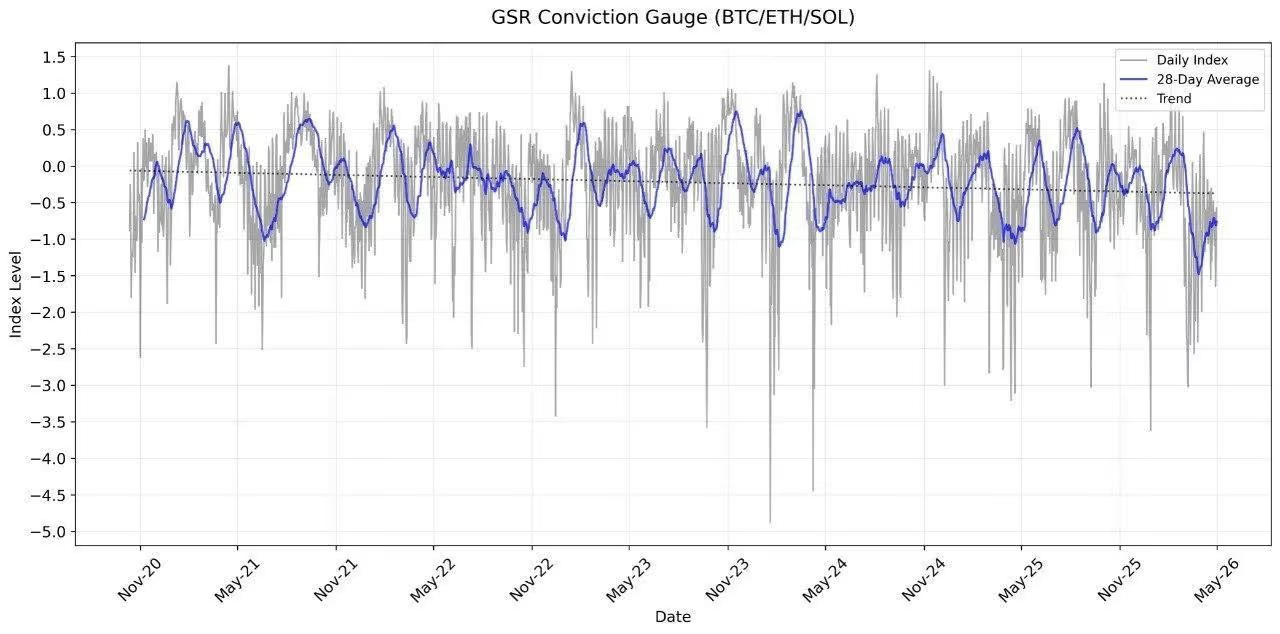
The feeling of … ambivalence ... was so palpable, we developed a Conviction/Ambivalence gauge. In Q1 2026, we hit maximum ambivalence. Other signals point the same way. Funding rates on perpetual futures, a clean read on leveraged appetite, have been persistently low or negative. DeFi borrow rates on Aave drifted toward 3% ahead of a recent exploit, versus 20%+ in the weeks after the 2024 election and 5–7% in more typical conditions. The fast money is elsewhere: oil, equities, prediction markets. Volatility is both a magnet and a product of hot markets, and right now, crypto has a shortage of both.

The Conviction Gauge measures an average ratio of weekly returns to daily returns. Source: GSR
That stands in stark contrast to last year’s Q2 and Q3 rally, which had velocity, power, and breadth. ETH led. SOL pushed hard in August and September. The GENIUS Act added fuel. That was a market with real conviction.
The slower shift that matters more
And yet beneath the surface, something more durable is happening: longer-term investors and their advisors are quietly getting more comfortable allocating to crypto. That shift doesn’t flood X the way a funding rate spike does. Nobody is posting charts about advisors quietly building allocations, but it’s the iceberg that matters. Over time, the effects will be felt, and they will be durable.
And for those allocators, BTC alone is no longer the answer. Its role has been clarified as the macro asset, something that may even behave defensively when markets contract. But advisors are being asked to go further. Clients want exposure to the blockchain growth story: tokenization, stablecoins, the layer-one infrastructure that’s now top-of-fold business news.
So what should the core actually be?
Our answer is straightforward: BTC, ETH and SOL. The power trio. The cycle survivors. Two distinct themes across three assets: BTC as the major macro asset, with ETH and SOL as the layer-ones on which blockchain’s growth story settles. Neck and neck, genuinely competing and we believe, likely to both win.
A solid core holding though, should do more than just sit there. Proof-of-stake assets like ETH and SOL can generate yield through staking, a return stream that passive holders often leave on the table. And you want a product that tilts toward the market: one that reads different environments and adjusts weights to seek excess return, rather than holding fixed weights through every regime.
That’s a lot to ask. So we launched an ETF to make it easy.
The GSR Crypto Core3 ETF (BESO) packages the core BTC, ETH and SOL, with staking rewards on ETH and SOL, and active, research-driven weekly rebalancing. Over time, investors will seek satellite holdings — sectors, themes and factors. But Core3 is designed to do the first job well: core crypto market beta, with staking and active management built in.
– Andy Baehr, managing director, Asset Management at GSR *
Ask an Expert
Q. How is digital asset investing and trading different from traditional assets?
The biggest practical difference is that everything happens on the blockchain. Holdings, transactions, strategies, even the behaviour of a protocol over time, all of it is visible. Anyone with a wallet address and a block explorer can see what you own and what you have done. That is a level of transparency traditional markets simply do not offer. This changes the information environment clients/users are operating in.
The second difference is that price discovery runs 24/7, which means volatility never takes a break either. Then there is self-custody. In traditional finance, custody is someone else’s problem and quite often insured. In digital assets, it’s going to be your problem whether you want it or not. That is empowering, because you genuinely own the asset and no intermediary can gate your access to it. It is also more dangerous because the responsibility for keys, backup and operational security falls on the holder. A lost phrase is a permanent loss and it’s one of the reasons people like CZ (Changpeng Zhao, former CEO of Binance) vouch for storing assets on centralized exchanges.
For advisors this means the conversation with clients is broader than allocation because it also covers custody setup, key management and operational risk in a way it never has before.
Q. How do vaults and onchain finance change the investing vs trading debate?
It is no longer a question of invest versus trade, what I see the market actually debating is which yields are real and which are not. After a few cycles of degen farming, triple-digit APYs and protocols that collapsed, most serious participants have moved on from the question of “how much can I earn” to “how durable is this.”
This is why vaults have been increasing in popularity. A well-designed vault lets capital stay in the market with less manual rotation. So if you deposit into a strategy, and the strategy runs, there is less movement, less clicking, less emotional decision-making. For someone who does not want to trade, that is a clear improvement over what was previously available on-chain, which was mostly either passive holding or active yield farming.
The other important piece is liquidity. A lot of traditional yield products lock your capital up. Private credit funds for example, have redemption windows that run anywhere from a week to a quarter. A vault that issues a liquid token against your deposit gives you something different. Your capital is earning, but you can still move if you need to. That is a real change in how long-term allocations can be structured.
The path this sets up is yield that is perhaps a bit more boring than what crypto has historically offered, but more sustainable. But at least boring doesn’t get you REKT.
Q. As automated vaults handle the technical ‘trading’ (rebalancing, compounding, liquidating), does an advisor’s value-add shift from ‘picking winners’ to ‘curating risk profiles’?
Yes, and a good one at that.
When the mechanics of a strategy are handled by a smart contract, the execution work is no longer where the advisor adds value. Rebalancing happens automatically and compounding happens automatically. Liquidation triggers run on their own logic where none of it needs a human in the loop.
What it does need is a human in the loop as the judgment layer on top. Someone has to look at what is actually available in the market, vet it and decide what is worth putting client capital into. That is more of a due diligence question. Who built this vault? What is the strategy doing underneath? What are the custody arrangements? How has it performed in stress? Is the team credible? Is the audit credible? What happens if a dependency breaks?
You then take the risk appetite of the client and adapt it to the risks the available vaults actually carry. A conservative client might want a tokenized Treasury vault and a stablecoin yield vault. A more adventurous client might accept a DeFi yield vault or an FX strategy vault. Curating risk is human in the loop work.
– Patrick Velleman, chief marketing officer, Valdora CMO
Keep Reading
* Risk Disclosure
Investors should consider the investment objectives, risks, charges and expenses carefully before investing. For a prospectus or summary prospectus with this and other information about the Fund, please call 888-999-5958 or visit our website at gsretps.io/etf/beso. Read the prospectus or summary prospectus carefully before investing.Investments involve risk. Principal loss is possible.
Crypto Currency Risk (Bitcoin (“BTC”), Ether (“ETH”), and Solana (“SOL”) (together, the “Reference Assets”)). The Reference Assets are relatively new innovations and are subject to unique and substantial risks. Crypto currencies are a subset of digital assets, representing blockchain-based tokens that function primarily as mediums of exchange, stores of value, or units of account, whereas digital assets more broadly include any electronically represented asset with economic value, such as tokens, stablecoins, and other distributed-ledger-based instruments.Digital Assets/Cryptocurrency Market Volatility Risk. The prices of the Reference Assets have historically been highly volatile. The value of the Fund’s exposure to the Reference Assets—and therefore the value of an investment in the Fund—could decline significantly and without warning, including to zero.
Market Beta Risk. The Fund seeks to provide core exposure to the cryptocurrency market (‘market beta’) through allocations to BTC, ETH, and SOL. As a result, the Fund’s performance may be significantly influenced by overall digital asset market movements, and the Fund may decline in value when the broader cryptocurrency market declines. The cryptocurrency market is highly volatile and subject to rapid changes.Staking and Validator Risk. When the Fund stakes Reference Assets that utilize proof-of-stake consensus (currently, Ethereum and Solana), the assets are subject to risks attendant to staking generally, such as illiquidity, reliance on third-party service providers, slashing, missed rewards, validator problems, and errors. Staking is the process of putting digital assets to work on a blockchain network to receive rewards and enhance protocol security. By helping the blockchain run more smoothly and securely, rewards are earned in the native blockchain token. Potential staking rewards are earned by the Trust and not issued directly to investors. Liquidity Risk. Unbonding periods for staked Reference Assets may range from several days to several weeks depending on network conditions. Concentration Risk. The Fund’s assets will be concentrated in the sector or sectors or industry or group of industries that are assigned to the Reference Assets, which will subject the Fund to the risk that economic, political or other conditions that have a negative effect on those sectors and/or industries may negatively impact the Fund to a greater extent than if the Fund’s assets were invested in a wider variety of sectors or industries. Foreign Securities Risk. To the extent the Fund invests in foreign securities they may be subject to additional risks not typically associated with investments in domestic securities.Indirect Investment Risk. None of the Reference ETFs or the Reference Assets are affiliated with the Trust, the Adviser, or any affiliates thereof and is not involved with this offering in any way, and has no obligation to consider the Fund in taking any corporate actions that might affect the value of the Fund.New Fund Risk. The Fund is a recently organized management investment company with no operating history. As a result, prospective investors do not have a track record or history on which to base their investment decisions.Non-Diversification Risk. Because the Fund is non-diversified, it may invest a greater percentage of its assets in the securities of a single issuer or a smaller number of issuers than if it was a diversified fund.
Foreside Fund Services, LLC (the “Distributor”)
Crypto World
Solana Infrastructure, Stablecoins and Institutional Crypto Expansion Take Center Stage
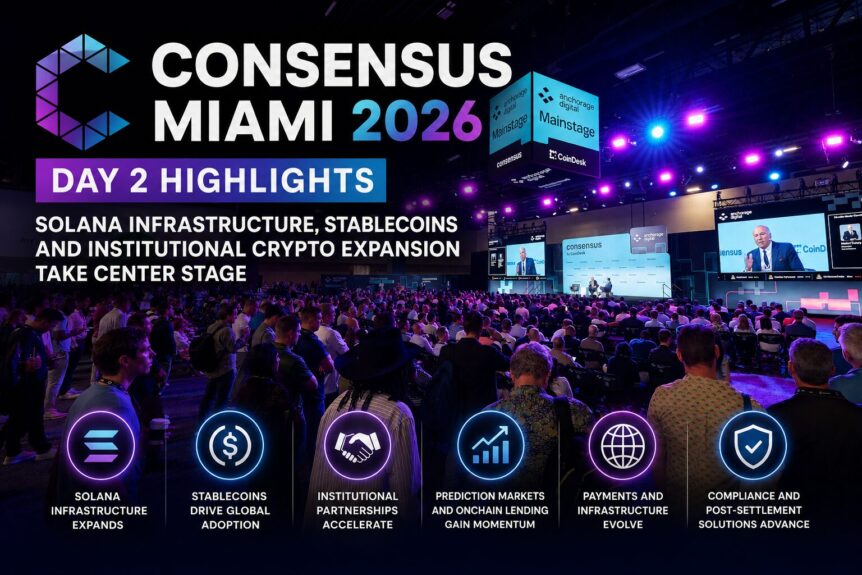
Day 2 of Consensus 2026 continued the conference’s strong focus on institutional crypto adoption, stablecoin infrastructure, blockchain payments, and next-generation financial systems, with major announcements involving Solana, Celo, USDC, prediction markets, and cross-border payment platforms.
The event featured appearances and discussions from major industry figures including Kevin O’Leary, Charles Hoskinson, Kirsten Gillibrand, Michael Saylor, and executives from leading blockchain and financial technology companies.
Solana Infrastructure Expansion Targets Institutional Growth in Asia
One of the day’s biggest announcements came from the Jito Foundation and Solana Company, which revealed a strategic partnership focused on expanding institutional-grade Solana infrastructure across the Asia-Pacific region.
The collaboration aims to strengthen validator infrastructure, improve yield optimisation systems, and accelerate institutional adoption of the Solana ecosystem among enterprise and financial players in APAC markets.
The move reflects growing interest in scalable blockchain infrastructure designed specifically for institutional participation.
Stablecoins Continue Dominating Infrastructure Discussions
Stablecoins remained one of the dominant themes throughout Day 2.
Celo announced a new integration with Bridge, the Stripe-owned stablecoin orchestration platform, bringing one of crypto’s most active payment-focused ecosystems into broader global payment infrastructure.
According to the announcement, Celo has processed more than 1.28 billion lifetime transactions and supports over 600,000 daily active users.
Meanwhile, GalaxyOne revealed support for USDC deposits, highlighting the increasing importance of stablecoins for global wealth management and digital asset transfers operating outside traditional banking hours.
Several speakers throughout the event pointed to stablecoins as one of the clearest real-world use cases currently driving mainstream blockchain adoption.
Prediction Markets and Onchain Lending Gain Momentum
Prediction markets also emerged as a growing category during the conference.
Shift Markets introduced a new white-label prediction markets platform designed to help operators launch event-based trading markets under their own brands.
The sector has seen rapid growth over the past year as blockchain-based prediction platforms expand into politics, macroeconomics, sports, and financial markets.
Elsewhere, Textile and Celo announced plans for a new emerging markets lending platform leveraging stablecoins and onchain credit infrastructure to improve access to financing in underserved global regions.
Crypto Industry Pushes Toward Real-World Financial Infrastructure
Another notable announcement came from Notabene, which launched a new post-settlement transaction management layer called “Revert,” aimed at solving one of crypto’s long-standing operational challenges: safely reversing or coordinating returns of funds after blockchain transactions settle.
The announcement reflects broader industry efforts to build compliance-friendly infrastructure capable of supporting regulated institutions and enterprise-scale digital asset operations.
Across the conference, the recurring theme remained clear: the industry is increasingly moving beyond speculation and toward building scalable financial infrastructure around payments, stablecoins, custody, lending, and institutional blockchain services.

The primary cryptocurrency has posted a 6% price increase over the past week, and now many analysts believe a further ascent could be on the way.
However, a number of warning signs suggest a short-term correction remains just as plausible.
Climbing Towards New Peaks?
Bitcoin has been gradually rising over the last several days, briefly touching $83,000 on May 6 before reversing to the current $81,000 (according to CoinGecko). Its resurgence comes on the back of a broader market revival triggered by the recent peace talks between the USA and Iran, among other factors.
Numerous industry participants are optimistic that BTC’s rally is nowhere near its end, with John Bollinger joining the discussion. The legendary technical analyst revealed that his fund’s “Tactica” program has opened a new position and is now “fully invested” in the cryptocurrency after the trend model turned positive.
This method is used at Bollinger Capital Management as a systematic allocation tool, automatically adjusting the entity’s exposure based on predefined signals.
The analyst is better known for developing the Bollinger Bands indicator, which consists of a moving average with an upper and lower band that expand and contract based on market turbulence. Some X users noted that, towards the end of April, these channels squeezed as never before on a monthly basis, which is usually a precursor to a big price swing.
Other market observers who have touched upon BTC’s performance lately include CW and Aman. The former argued that the asset has begun “a full-cycle rise after completing a retest following a convergence breakout.”
“The downtrend has ended, and a new uptrend is ongoing,” they added.
For their part, Aman wondered if BTC is ready to “vaporize” the $86K wall. The analyst claimed that the price has entered a specific zone where the big players will decide the trend.
The Biggest Bull Trap?
It is important to note that some industry participants expect the recent upswing to be abruptly replaced by a major pullback. X user Chiefy, for instance, described the current development as “the biggest Bitcoin bull trap of this cycle,” envisioning a collapse to as low as $42,000.
At the same time, the asset’s social sentiment has jumped sharply, with Santiment showing a 1.37 bullish versus 1.00 bearish ratio – the most optimistic reading in nearly four months. While this surge in confidence highlights growing trader enthusiasm, it can actually be a bearish sign, as the crypto market tends to move against the crowd’s expectations.
The ratio of leveraged positions also displays the reigning optimism among market participants, which could serve as another warning signal. According to X user Ted, longs have outnumbered shorts by about 11 to 1.
The post John Bollinger’s Model for Bitcoin (BTC) Turns Positive: Price Explosion Incoming? appeared first on CryptoPotato.
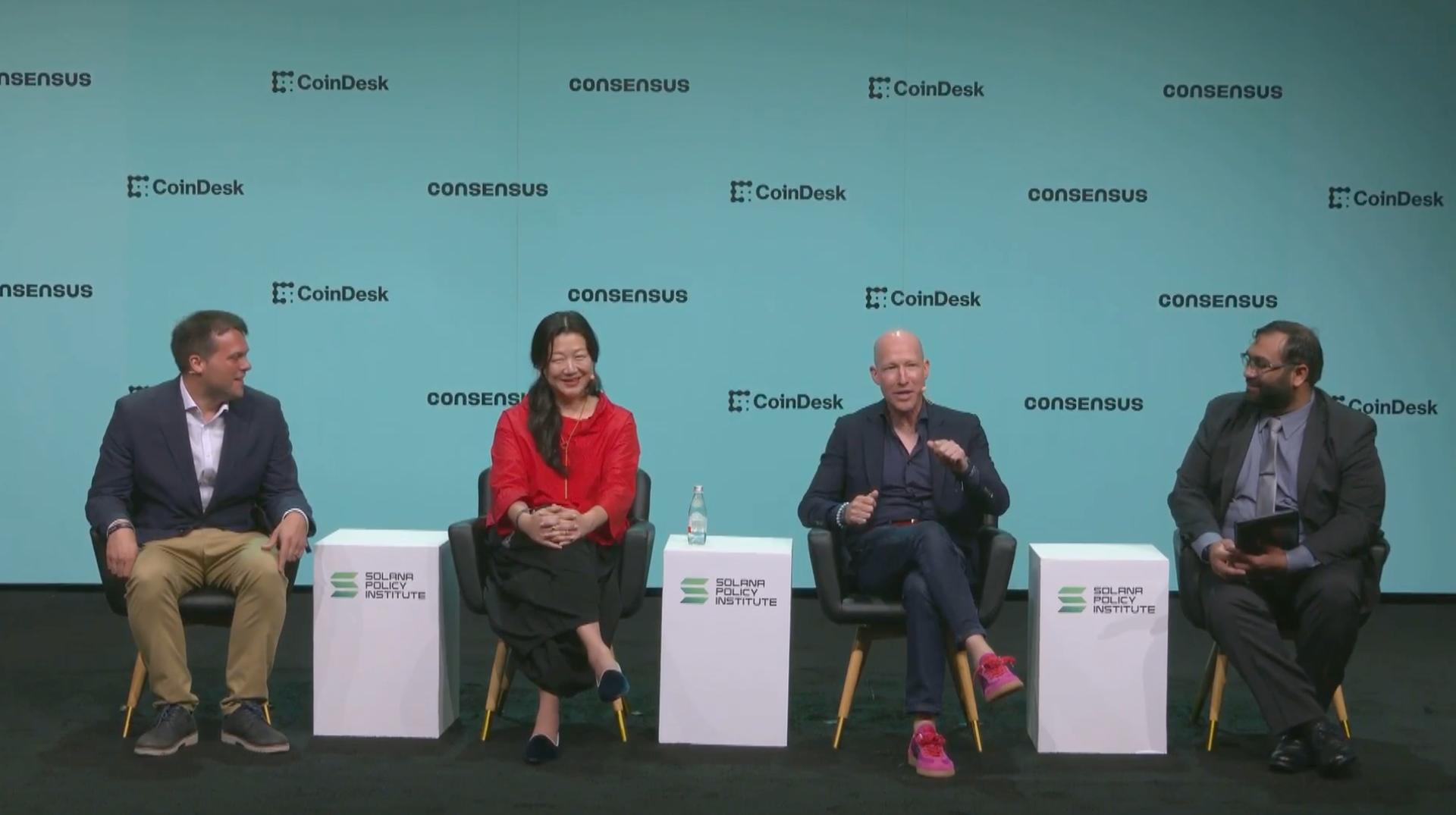
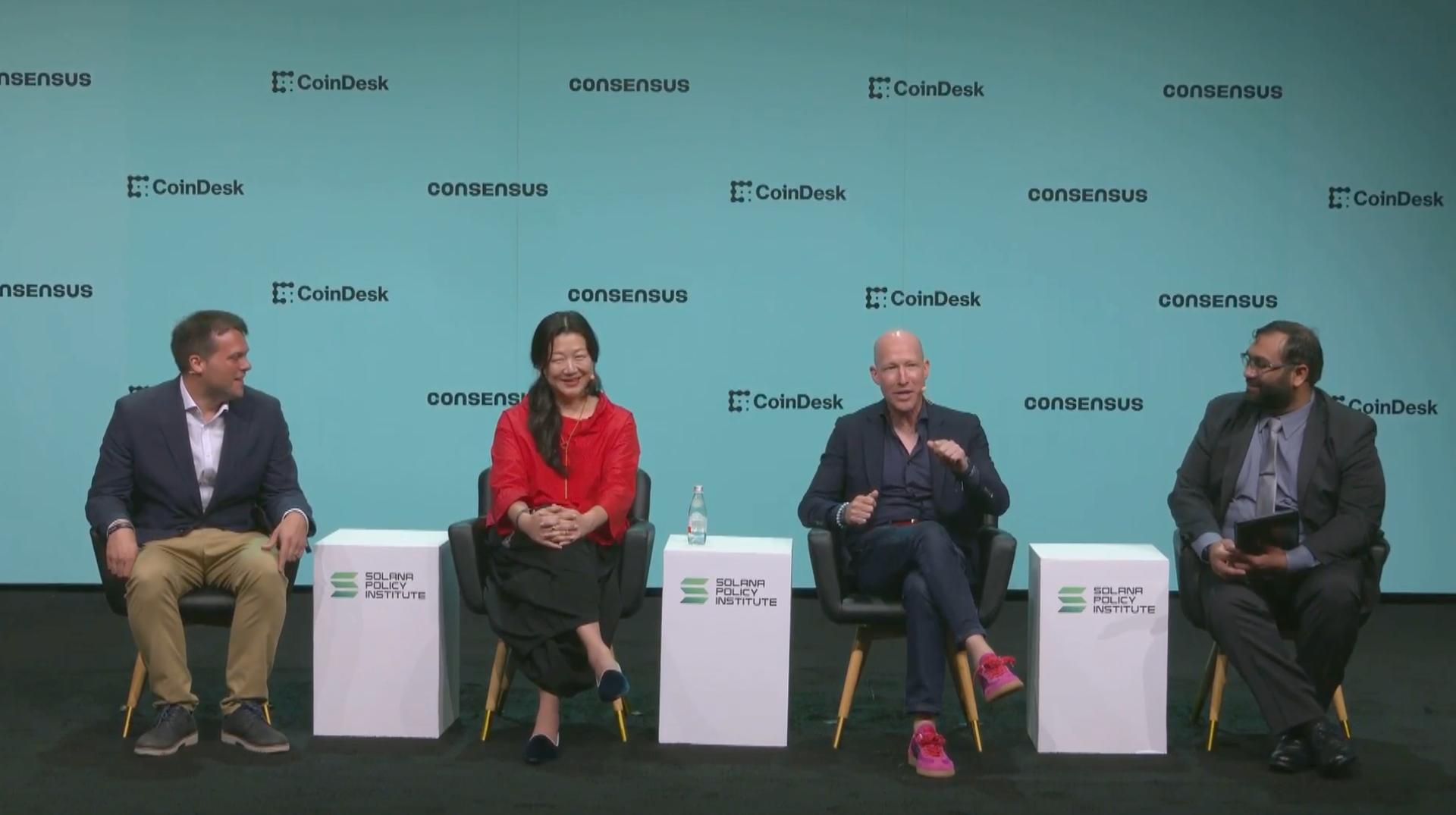
Miami — Aave Labs is set to fundamentally reshape how it assesses and lists collateral assets on its protocol, following the largest DeFi exploit of 2026, and the overhaul could set a new standard across the entire industry.
Linda Jeng, chief legal and policy officer at Aave Labs, said at Consensus Miami 2026 that the protocol’s existing risk framework, while robust, had been too narrowly focused on financial risk and volatility.
Going forward, every asset seeking to be listed on Aave will face a broader assessment covering interoperability, cybersecurity vulnerabilities, and the underlying architecture of the asset. She cited rsETH, the restaking token issued by KelpDAO that sat at the center of April’s crisis, as the catalyst for the change.
Beyond the new assessment criteria, Jeng announced that Aave would publish a formal playbook for asset issuers — a set of minimum standards that projects must meet before they can list on the protocol. She also said Aave would begin examining systemic interconnections across protocols, moving away from analyzing pools in isolation to understanding how exposure in one corner of DeFi can ripple into another.
“Out of a crisis like this, it ups our standards,” she said.
The remarks came as Jeng reflected on a month she described as “two weeks of no sleep.” An attacker had exploited KelpDAO’s cross-chain bridge, minting 116,500 unbacked rsETH tokens worth roughly $293 million, then depositing them into Aave as collateral to borrow real wrapped ether — leaving the protocol holding hundreds of millions in impaired debt.
Jeng, who worked as a regulator during the 2008 financial crisis, said the episode triggered a strong sense of déjà vu. But the resolution, she argued, was markedly different. Rather than a government-led bailout, the industry mobilized itself. An initiative called “DeFi United,” which has drawn commitments from Lido, EtherFi, Ethena and others, was launched to cover the collateral shortfall and prevent systemic bad debt from spreading further across DeFi lending markets.
“In the financial crisis, we had to bail out the banks,” she said. “Here, we came together as an ecosystem to bail ourselves out.”
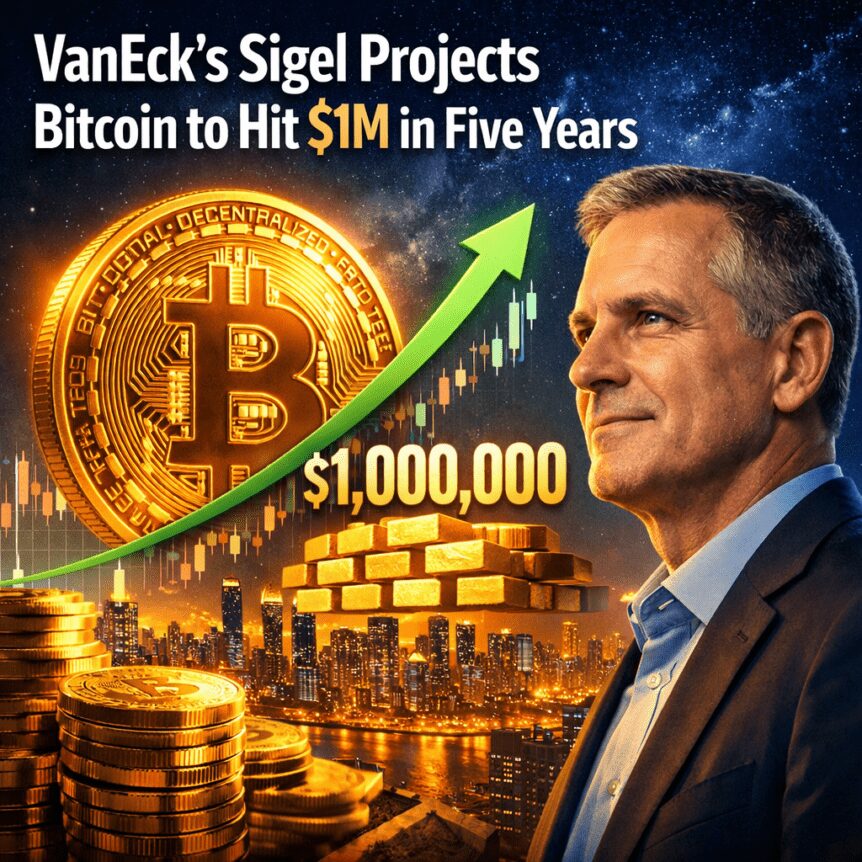
Bitcoin can be worth a lot more than today, according to a prominent crypto strategist at VanEck. Matthew Sigel, head of digital assets research, told CNBC that Bitcoin could hit seven figures within the next five years, with a longer-term model projecting as high as $2.9 million by 2050. The comments underscore a shifting narrative: while the asset remains volatile, a growing chorus of institutional researchers portrays Bitcoin as a mega-trend with a multi-decade adoption arc.
Sigel framed his outlook as the base case for Bitcoin, arguing that the asset’s trajectory will mirror its broader integration into financial and corporate strategy rather than a straight-line ascent. In a discussion on CNBC’s Halftime Report, he said: “Bitcoin going up for us is the base case. We think this asset is going to reach a million dollars over the next several years.” He later clarified that the milestone could arrive in “half a decade,” drawing a parallel to a gradual expansion of video game adoption across age groups—an analogy meant to capture mainstreaming rather than a sudden leap.
His time horizon aligns with VanEck’s base-case long-term model, which envisions Bitcoin scaling to as much as $2.9 million by 2050. The fund house frames this as a probabilistic outcome that reflects a deepening allocation by institutions and sovereign actors over time, even as shorter-term volatility remains a defining feature of the market.
Key takeaways
- VanEck’s base-case: Bitcoin could reach $1 million within five years, with a $2.9 million target in the longer term (2050).
- Long-horizon bull thesis sees Bitcoin as a megatrend increasingly influenced by formal reserve-style adoption, including a potential central-bank bid.
- Near term, Bitcoin remains highly cyclical and volatile, with price action likely to reflect macro cycles rather than a steady ascent.
- Current market positioning appears fragile, as Sigel notes that the rally has not shown froth in derivatives and seems driven by short covering rather than widespread enthusiasm.
- Broader consensus among prominent investors is mixed, with several high-profile forecasters crafting ambitious long-run targets while skeptics flag scalability and regulatory risks.
Bitcoin’s megatrend vs. the daily drumbeat of cycles
Sigel framed Bitcoin as a “very cyclical asset” that will not move in a straight line to a million dollars. The absence of a central authority to cushion downturns, he suggested, means that drawdowns and rallies will occur in waves. Yet, the argument for a longer-term transformation remains compelling to him, particularly if Bitcoin begins to enter mainstream financial systems as a reserve-like asset for some institutions or even official balance sheets.
Looking at the immediate backdrop, Sigel pointed to Bitcoin’s correlation with the Nasdaq as a sign that macroeconomic forces are currently shaping price action. The indicator, he noted, has risen to its highest level in about five years, suggesting the market’s trajectory is closely tied to broader risk-on or risk-off cycles rather than idiosyncratic crypto-driven moves alone. Not everyone is convinced, however. Some prominent voices have urged caution on Bitcoin’s scalability and the risk that it may struggle to displace traditional safe-haven assets in the face of regulatory and sovereign currency risks. For instance, Ray Dalio has acknowledged Bitcoin as a possible store of value but has questioned its capacity to serve as a global reserve asset. Critics like Peter Schiff have argued that Bitcoin lacks intrinsic value and may not supplant gold as a hedge, tempering seven-figure forecasts with questions about real-world utility and governance.
The debate over Bitcoin’s price trajectory reflects a broader tension in the crypto space: a mix of aggressive long-run forecasts anchored in growing institutional adoption and more cautious calls that emphasize regulatory risk, scalability concerns, and competition from alternative assets. In that context, the idea of Bitcoin entering a multi-decade growth phase—driven by reserve-like demand from institutions and possibly sovereign adopters—remains a compelling narrative for many investors, even if timing and pace remain uncertain.
Beyond price targets, analysts point to several milestones that could influence the trajectory in the coming years. These include clearer regulatory frameworks, improved on-chain scalability and infrastructure, the emergence of more asset-class-native products (such as regulated futures, ETFs, and custody solutions), and measurable increases in real-world usage—not merely speculative trading activity. Each development could alter the risk-reward calculus for institutions and retail participants alike.
For readers seeking additional context, the discussion around Bitcoin’s long-run potential is frequently linked to broader market commentary and independent research. Commentary from outlets like Cointelegraph, discussions around ARK Invest’s projections, and cross-industry observations help paint a fuller picture of where the crypto market may be headed as it negotiates regulatory, technological, and macroeconomic headwinds. In short, the near term may remain challenging, but the longer-term thesis remains intact for many observers who view Bitcoin as a structural shift in how value is stored and transferred globally. The coming years will reveal whether the secular trend converges with a more favorable macro environment and a steadier path to widespread institutional involvement.
Readers should watch for signals of genuine reserve-like demand entering official balance sheets, regulatory developments that clarify safe-harbor pathways for institutions, and real-world use-case expansion that moves beyond speculative trading to utility and liquidity provision in both traditional and digital financial ecosystems.
Near-term positioning and macro drivers
What the wider market is watching

South Korea’s Finance Ministry has confirmed that a long-delayed tax on crypto gains will take effect as scheduled in January 2027.
Moon Kyung-ho, director of the ministry’s income tax division, announced at an emergency parliamentary forum on virtual asset taxation held at the National Assembly Members’ Office Building in Seoul on Thursday, according to South Korea news outlet Edaily. The forum was hosted by Representative Park Soo-young of the People Power Party and the Korea Tax Policy Association.
“We will proceed with virtual asset taxation as scheduled in January next year,” Moon said in what appears to be the first public confirmation from the ministry that the crypto tax framework will move forward after multiple postponements.
Under the current Income Tax Act, profits generated through the transfer or lending of virtual assets will be categorized as “other income” beginning Jan. 1, 2027. Investors earning more than 2.5 million Korean won ($1,800) annually from crypto activities will face a 22% tax, including a 20% income tax and 2% local tax. The rule applies to an estimated 13.26 million investors.
Related: Bithumb wins temporary court stay on South Korea suspension: Report
South Korea prepares tax guidance
Moon said the National Tax Service is currently finalizing guidance on the new system and has held several working-level meetings with South Korea’s five major exchanges, including Dunamu (Upbit), Bithumb, Coinone, Korbit and Gopax, to prepare a draft notice.
He added that the notice would be published for legislative review during 2026. Speaking to reporters after the forum, Moon walked back his use of the word “soon,” clarifying that the notice would arrive sometime this year, not imminently.

Moon Kyung-ho at the National Assembly Members’ Office Building in Yeouido, Seoul. Source: Edaily.
South Korean regulators have delayed the crypto tax twice before, pushing the start date from 2025 to 2027 amid political disagreement and industry pushback over exchange readiness and the threshold level. More recently, the ruling People Power Party proposed a bill to scrap the tax altogether before its 2027 rollout.
Related: Samsung SDS wins deal to build South Korea’s blockchain securities system: Report
South Korea’s crypto industry pushes back on AML rules
As Cointelegraph reported, proposed changes to South Korea’s anti-money laundering (AML) rules have drawn sharp criticism from the country’s crypto industry. DAXA, an industry body representing 27 registered virtual asset service providers, warned that requiring exchanges to flag all overseas-linked transfers of 10 million won or more as suspicious would increase reported cases by 85 times, from around 63,000 last year to over 5.4 million, making compliance unworkable in practice.
The Financial Services Commission and Financial Intelligence Unit proposed the amendments on March 30, with a public comment period running through May 11 and final rules expected in July.
Magazine: South Korea gets rich from crypto… North Korea gets weapons
The creator of the popular technical analysis indicator Bollinger Bands has taken a position in bitcoin, an asset his own indicator is currently flashing bullish on.
John Bollinger, who developed the indicator in the 1980s, said in an X post that one of his investment fund’s proprietary trading models had flipped positive on bitcoin and taken a position accordingly.
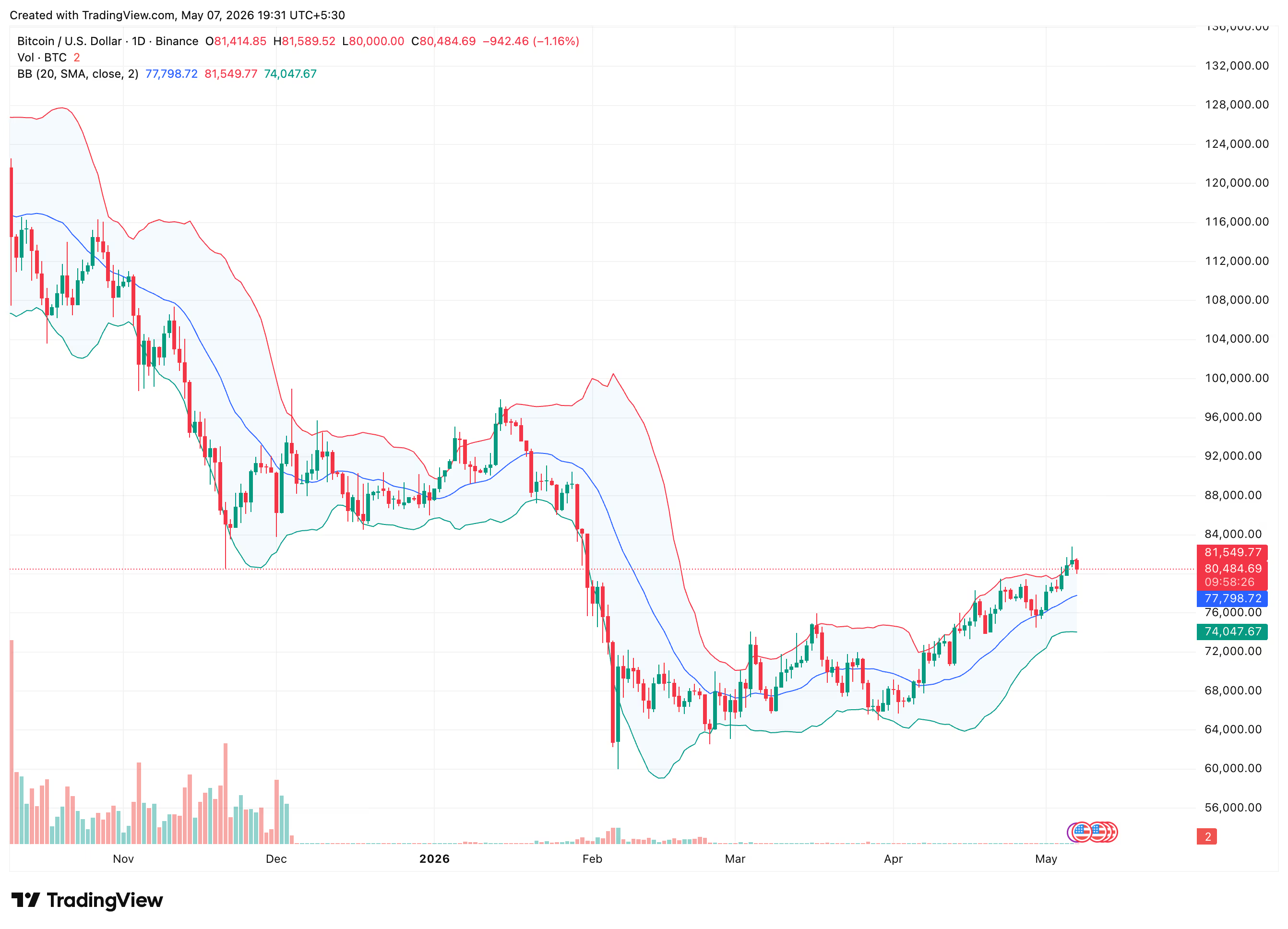
Bollinger bands are volatility bands that sit two standard deviations above and below the 20-day moving average of a token’s price. A wider gap between the two bands indicates volatile conditions, while a tighter band indicates calm.
A break above the upper band traditionally signals strong upward momentum, especially after a period of compression.
Bitcoin closed above its upper Bollinger Band on the daily chart on Wednesday, the second such close since mid-January, with the price sitting at $80,484 against an upper band reading of $81,549, per TradingView data. The breakout followed the asset’s tightest-ever band reading. These so-called squeezes often set the stage for big moves in either direction.

The chart shows bitcoin’s daily price swings in candlestick format with Bollinger bands.
The setup heading into the weekend is whether bitcoin establishes a foothold above the upper band. That would be a bullish technical signal, while a rejection here puts the price back in the chop zone.
Bitcoin traded above $80,000 at press time. The token is up roughly 9% over the past 30 days but remains 36% below its October 2025 all-time high of $126,000.

Ethereum (ETH) is sitting at a crossroads that, according to a popular analyst, could define the next major chapter for the second-largest cryptocurrency.
That call landed as the asset slipped almost 4% in 24 hours, failing at the $2,400 range while facing growing pressure from short sellers betting against a near-term recovery.
What the Weekly Chart is Telling Us
Crypto analyst EGRAG CRYPTO posted a detailed breakdown on X on Thursday, arguing that ETH has spent a significant period compressing inside what he describes as a “massive Ascending Triangle structure” on the weekly timeframe.
The asset has continued to respect what he calls the macro “ETH Line,” a long-standing support level that has anchored the chart for years.
The setup is binary, at least in the near term, since a breakdown from the current structure points toward $1,600, which EGRAG labeled the “structural failure zone,” while a successful breakout would target $4,800 at the initial trigger level.
They also floated a much larger upside target of $33,000 if euphoric market conditions return, though their near-term focus stayed on the fight between support and resistance.
“$4,800 = breakout trigger. $1,600 = structural failure zone. ETH is approaching decision time,” they wrote.
The market right now is in an uncomfortable holding pattern. Fellow trader Ted Pillows posted that ETH has repeatedly failed to hold above $2,400, and that spot demand was still weak.
“Until that changes, ETH will continue to underperform the market,” he claimed.
That assessment matches up with on-chain positioning data shared by analyst CW8900 earlier today, who noted that high-leveraged long positions have decreased noticeably while short interest has risen slightly.
According to them, there’s a cluster of short positions sitting between current prices and $2,500, with a clean break above that level having the potential to trigger a quick move toward $3,000.
Why the Backdrop Is More Bullish Than Price Suggests
There are other supporting signals outside the chart that suggest ETH’s weakness may be temporary.
For example, a CryptoOnchain report from Tuesday noted a sharp rise in Ethereum staking inflows, with the seven-day average going from around 28,200 to nearly 144,000 by May 5, removing more ETH from liquid circulation and possibly reducing selling pressure in case demand holds steady.
Elsewhere, analyst Ali Martinez pointed out that ETH had rallied more than 30% since a SuperTrend buy signal flashed in mid-March.
That move brought the asset to its Realized Price, sitting around $2,380, which represents the average value at which all tokens last moved on-chain. Breaking and holding above it would shift most ETH holders from being underwater to being in profit, which on past occasions became a point where selling pressure softened.
Further, he identified $2,772 and $2,921 as the next meaningful supply concentrations above that level.
After briefly touching $2,400 yesterday, Ethereum had dropped back closer to $2,300 at the time of writing. But the drop notwithstanding, it’s still up about 11% over the past month and roughly 27% on the year.
The post Ethereum Nears Critical Breakout Point as Analyst Eyes $1.6K or $4.8K Move appeared first on CryptoPotato.

New York Fed finds surging gas prices hit low-income households hardest
Kraken Parent Payward Buys Reap Technologies in $600M Deal

Islamic sectarianism is warping democracy

Manchester United reach agreement with Casemiro over contract clause amid transfer speculation

US brings back mandatory military draft registration

Steven Gerrard disagrees with Gary Neville over ‘shock’ Chelsea and Arsenal claim | Football


-

 NewsBeat4 days ago
Channel 5 – All Creatures Great and Small series 7 new post
-

 Crypto World6 hours ago
Upbit adds B3 Korean won pair as Base token gains Korea access
-
 Tech6 days ago
Trump’s 25% EU auto tariff breaches Turnberry Agreement that also covers semiconductors and digital trade
-
 NewsBeat8 hours ago
NCP car park operator enters administration putting 340 UK sites at risk of closure
-
 Sports6 days ago
Paul Scholes issues Marcus Rashford reality check as agreement emerges over Man United star
-

 Entertainment6 days ago
Met Gala 2026 Rumored Guest List Is Turning Heads
-

 Business6 days ago
Strait of Hormuz Blockade Persists Amid US-Iran Standoff, Sending Oil Prices Soaring
-
Entertainment6 days ago
New on Prime Video in May 2026 — Full List of Movies and Shows
-

 Sports6 days ago
Cavaliers vs. Raptors Game 6 live score, updates, highlights from 2026 NBA playoffs first-round series
-

 Tech6 days ago
Meta ends Sama contract after Kenyan workers report seeing intimate footage from Ray-Ban smart glasses users
-

 Entertainment6 days ago
Kylie Jenner Hit With Second Lawsuit From Ex-Housekeeper
-
 Sports6 days ago
David Benavidez responds to team Canelo saying the fight will never happen
-

 Entertainment6 days ago
Young and the Restless Next Week: Cane Arrested & Matt’s Deadly New Scheme!
-
Entertainment5 days ago
New Netflix Movies in May 2026 — My Top 3 Picks to Stream
-

 Business4 days ago
Luka Doncic Injury Update: Doncic’s Hamstring Recovery Slows Lakers’ Hopes Against Thunder: Can He Run Yet?
-
 Sports6 days ago
IPL 2026: ‘Love you darling’- Hardik Pandya’s reaction to MS Dhoni steals the show |Watch | Cricket News
-
 Crypto World5 days ago
Pi Network Mandates Protocol 23 Upgrade for All Mainnet Nodes Before May 15 Deadline
-

 Entertainment4 days ago
Melissa Joan Hart and More Stars Attend 2026 Kentucky Derby
-

 Sports6 days ago
Bayern won’t hand bottom side Heidenheim ‘gifts’ despite PSG game
-

 Sports6 days ago
What Preity Zinta Said After Punjab Kings’ First Defeat Of IPL 2026
You must be logged in to post a comment Login