

Crypto World
Bitcoin ETF Inflows Signal Strong Institutional Confidence


Historically, the crypto market has been fueled by hype, retail fear of missing out (FOMO),
leveraged trading and bull runs. The introduction of US spot Bitcoin ETFs has changed that.
Institutional investors now drive the market. Registered investment advisors, hedge funds,
asset managers, pension funds and sovereign wealth entities are the big players in spot crypto
today. Through the ETF structure, they gain Bitcoin exposure without dealing with the
counterparty and technical risks that come with holding the asset directly. That is a major
reason why net inflows have remained strong even during periods when retail interest has
This institutional presence is also reshaping how retail traders participate. Instead of relying
on fragmented crypto-only exchanges, many everyday investors are moving toward regulated
like OANDA, for example, sits within a wider trading ecosystem that combines crypto with
traditional markets, built-in analysis tools and smoother execution. The result is that retail
and institutional capital are increasingly flowing through the same regulated channels, which
is adding stability to a market that was once driven almost entirely by speculation.
In early May, the spot Bitcoin ETFs had nearly $1 billion in weekly inflows, according to data
from SoSoValue. The total net assets across spot Bitcoin ETFs crossed $101 billion, while daily
trading volume neared $4.8 billion. This broad market uptick indicates an acceleration of
capital that is not accidental but rather the result of institutional-grade catalysts aligning at
The Securities and Exchange Commission paved the way for spot ETFs in 2024. Since then, the
SEC’s regulations have evolved, providing federal oversight frameworks for consumers. For
years, the largest roadblock for institutional capital was a lack of clear guidelines. In 2026,
institutional players now have the official stamp of validation with established compliance

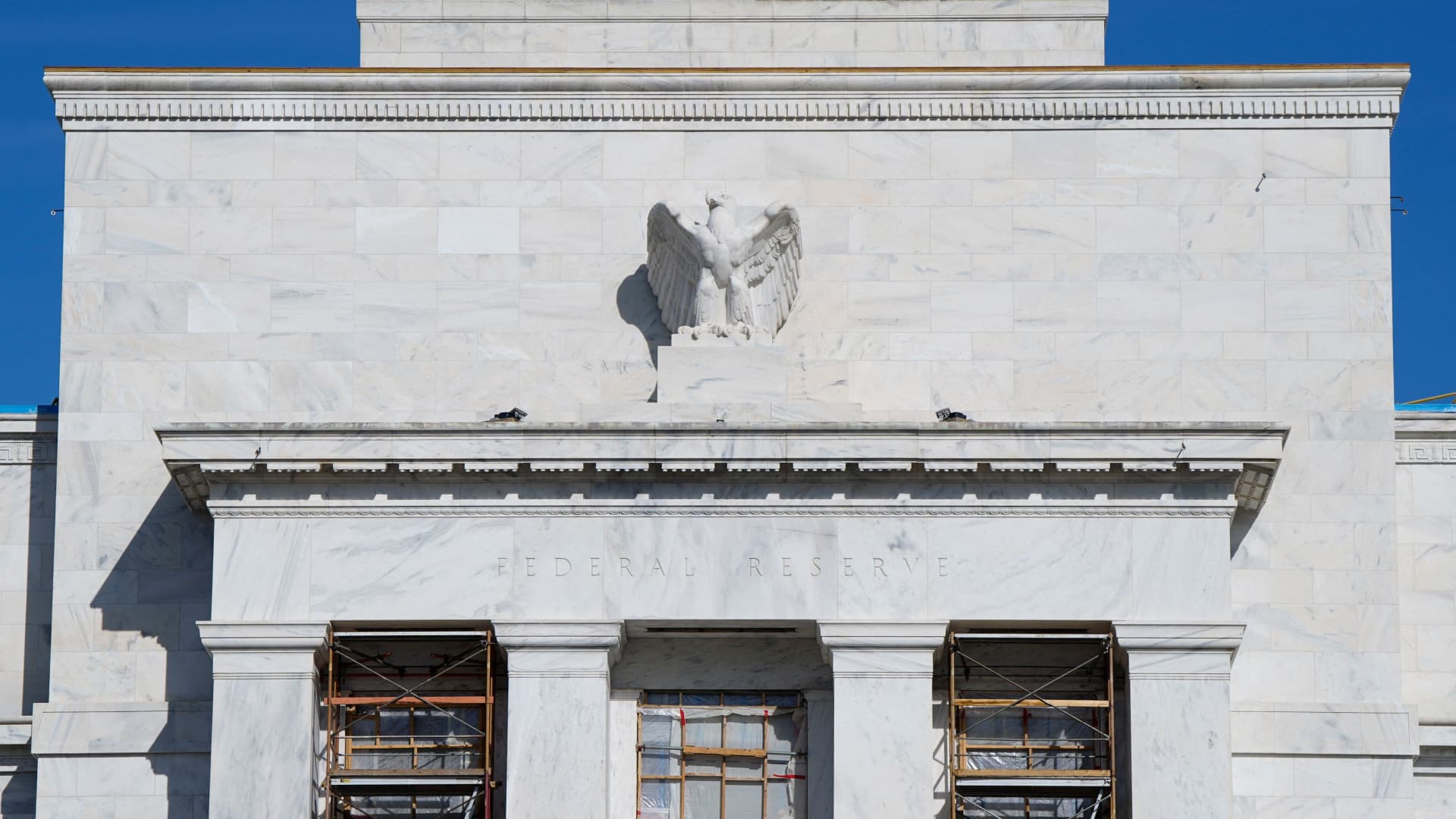
Renovations continue at the Federal Reserve Board building in Washington, D.C., U.S., November 14, 2025.
Elizabeth Frantz | Reuters
Prediction market traders think consensus will return to the Federal Reserve’s policy-setting board when new chairman Kevin Warsh presides over its June interest rate decision later Wednesday. At April’s meeting, the last under former Fed chair Jerome Powell, four members voted to dissent from policy, the most in more than 30 years.
Traders on prediction market platform Kalshi place 70% odds on zero dissents in the June vote on the 12-member Federal Open Market Committee. Odds that four members will dissents, as in April, are at just 3%.
The Fed is widely expected to hold interest rates steady on Wednesday at their current 3.50% to 3.75%, as policymakers continue to assess the extent of rising inflation due to higher oil prices stemming from the U.S.-Iran war.
At the April meeting, the Fed also held rates steady, and only one dissent disagreed with that decision. That vote was cast by now former Fed governor Stephen Miran, who consistently argued for lower interest rates.
The other three dissenters — Fed regional presidents Beth Hammack of Cleveland, Neil Kashkari of Minneapolis and Lorie Logan of Dallas — were opposed to language that hinted the central bank may cut interest rates in the future. That showed some members were worried the committee was too dovish in its outlook, and objected to signaling lower rates were coming.
More than half, or 55% of respondents in Bank of America’s June Global Fund Manager Survey said the Fed will deliver a “hawkish hold” on Wednesday.
When Warsh holds his first press conference as chairman, traders think there’s a 73% chance he’ll discuss “uncertainty,” a 43% chance he’ll mention “quantitative tightening,” and just a 20% chance he refers to President Donald Trump by name.
Correction: This story has been revised to accurately reflect the titles of Beth Hammack, Neil Kashkari and Lorie Logan. A previous version of this story misstated that they were Fed governors.
Crypto World
Startup drops first universal AI agent payment plug into Asia’s $28.9 trillion ecommerce market


Many experts share Bilotta’s AI agent outlook, including Charles Hoskinson, founder and CEO of Cardano’s Input Output, who said that by 2035 they will become more relevant than humans.
The macro numbers support his stance. Data from the U.S. International Trade Administration via Trade.gov shows that business-to-business (B2B) e-commerce across the broader Asia-Pacific region is expanding at a 15% annual clip, with market values projected to climb past $28.9 trillion by the end of this year.
Yet, despite that explosive growth, the plumbing underneath remains broken. The problem is fundamentally an issue of legacy infrastructure and compliance, Bilotta noted.
Global financial regulations, banking protocols and identity verification checks were built strictly for humans. An autonomous AI software agent cannot pass a standard compliance check, he said or execute a payment loop unless a human manually intervenes to clear the transaction.
To bridge this structural gap, the industry requires a compliant backend middleware that acts as a universal interpreter. Bilotta explained that by dropping an Anthropic-standard Model Context Protocol (MCP) server directly into the payment infrastructure, software agents can programmatically navigate compliance, pull real-time FX quotes, and settle transactions natively across borders without human steps.
While institutional gatekeepers like Stripe and Mastercard have spent billions acquiring fiat-to-crypto APIs to secure traditional corporate treasuries, the automated machine-to-machine economy across emerging corridors remains heavily underserved.


Bitcoin is facing selling pressure ahead of today’s Federal Open Market Committee (FOMC) interest-rate decision at the first meeting under new Fed Chair Kevin Warsh.
The largest cryptocurrency pulled back below $65,000 after trading near $67,000 just a day earlier, CoinDesk data show. The broader market CoinDesk 20 Index (CD200) has lost 1.2% since midnight UTC, with all but four tokens declining.
“The main focus for the week is the FOMC meeting under new leadership, with market expectations of interest rate hikes already priced in through 2027,” Laser Digital said in its weekly note.
The market is pricing in no change in the fed funds rate at this meeting. Instead, the focus will be on Warsh’s post-meeting press conference for signals on his views on inflation. Warsh has criticized the Fed’s frequent press conferences and detailed forecasting and may face questions on his stance.
Among stand-out gainers, Uniswap’s UNI token surged another 20% over 24 hours, buoyed by Standard Chartered’s bullish forecast of $100 by 2030. Meanwhile, NEAR, INJ and several stablecoin-related assets dropped as much as 8%.
Derivatives positioning
- The market remains calm ahead of the Fed decision. Activity has slowed, with crypto futures volume falling 20% in 24 hours to $165 billion and open interest dropping 2.3% to $110 billion. Liquidations fell to roughly $310 million, down 44%.
- The calm is also evident in BVIV, bitcoin’s 30-day implied volatility index, which was hovering near an annualized 39% at the time of writing — a level not seen since June 2, just before it spiked to nearly 59% a few days later. Ether’s volatility index is showing similar stability.
- Cardano’s ADA stands out among altcoins. Open interest has climbed to 2.26 billion tokens, nearing the record 2.32 billion set on June 6 and recovering from the June 13 low of 2 billion.
- The rebound points to renewed capital deployment in leveraged ADA markets, though the move isn’t necessarily bullish. The token’s price has slipped from over 18 cents to under 17 cents in two days alongside a negative 24-hour cumulative volume delta. The combination leans bearish, pointing to aggressive trading at market orders rather than passive limit orders.
- ZEC and SUI are the other notable open interest gainers over the past 24 hours, while NEAR and BCH led the losers.
- NEAR has dropped over 9%, and the decline in open interest suggests traders are unwinding leverage during the selloff rather than piling into fresh shorts.
- Most major tokens, with the exception of TRX and CC, are showing negative 24-hour CVD, pointing to broad bearish dominance in trade flows.
- In options markets, BTC puts continue to dominate 24-hour volume rankings, though the $80,000 call expiring March 26 next year also saw notable activity. In ether’s case, calls are leading volume rankings.
Token talk
- UNI has risen for a seventh straight day, its longest winning streak since August 2023, when it ran eight. The token trades near $2.75, erasing its June losses after jumping by more than 10% earlier in the week.
- The accelerant was a Standard Chartered note. The bank’s digital assets head, Geoff Kendrick, initiated coverage on June 15 with a $100 price target for 2030, roughly 40 times the current level, arguing that tokenized real-world assets, meaning stocks and bonds issued onchain, will flood into DeFi and Uniswap will capture the flow as core market infrastructure. He predicts a path through $6.50 by year-end.
- Two fundamentals sit underneath the call. Uniswap’s fee switch, live since late 2025, routes a share of trading fees into buying back and burning UNI, and has removed about 106 million tokens, more than 10% of supply, turning a pure governance token into a deflationary one.
- Separately, tokenized stocks that launched on the protocol earlier this month have already seen more than $9.1 billion swapped through its real-world-asset pools.


The entire bitcoin market is worth about $1.2 trillion as of Wednesday. SpaceX, at $2.5 trillion, is worth nearly twice that, and it is drawing from the same risk budget that flows to crypto – the point ARK made earlier this week when it funded its SpaceX buying by selling other holdings.
The caution is that expectations now leave little room for error, with some analysts warning that a SpaceX stumble would hit the broader market and the AI winners with it.
“With the expectations already sky high, there is little room for error,” Lukman Otunuga, head of markets at FXTM, told CoinDesk in an email. “Should SpaceX disappoint down the line, the fallout will hit the broader stock market, as well as the beneficiaries of the AI boom.”
The numbers support that worry. SpaceX posted a $4.94 billion net loss in 2025 on $18.67 billion of revenue, and at $2.5 trillion, it trades at more than 130 times sales, a multiple some call meme-stock territory.
As such, SpaceX announced Tuesday that it has formally agreed to take over Cursor in a deal that values the AI coding startup at $60 billion. Cursor investors will have the right to receive SpaceX stock based on the implied equity value of Cursor, according to a company filing.
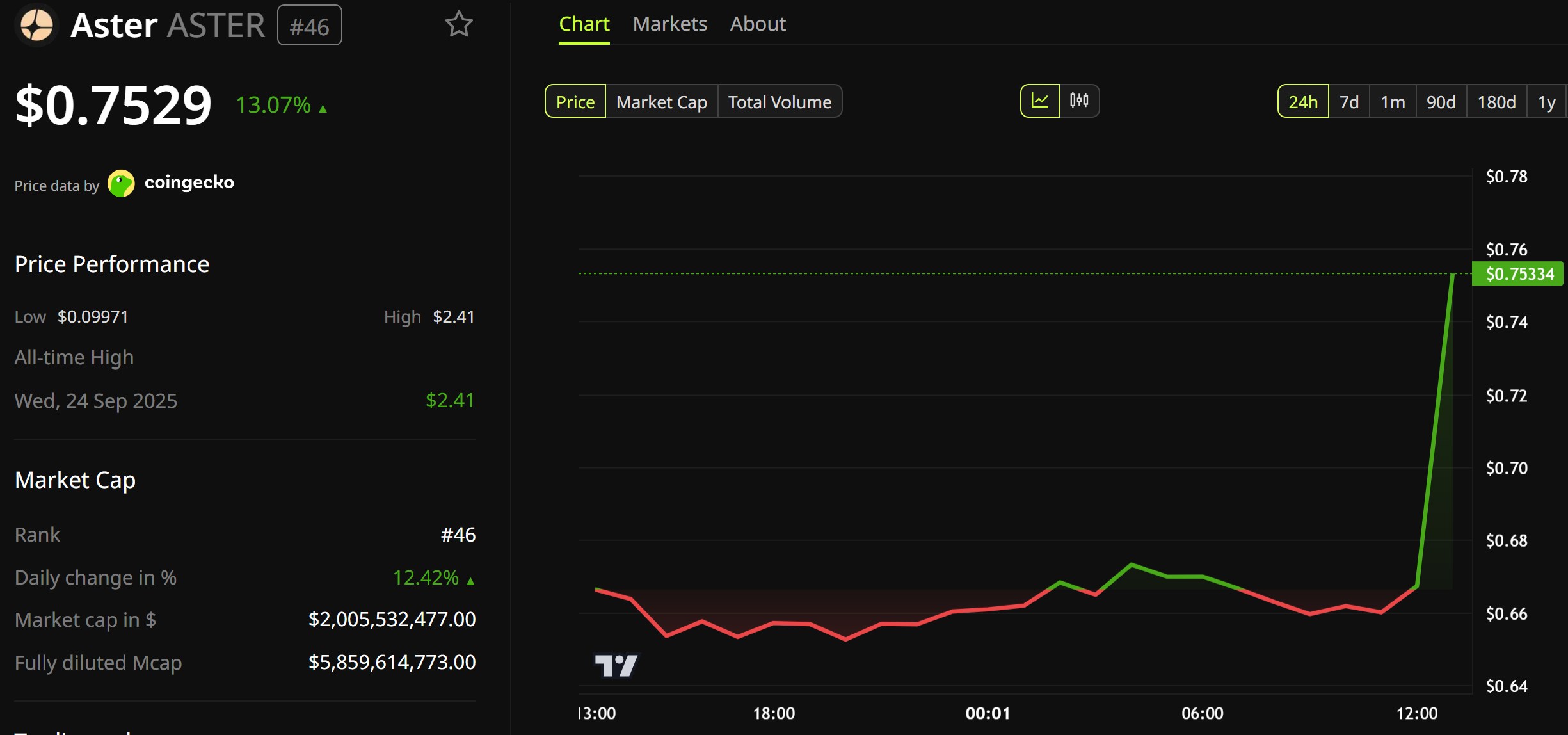
Aster DEX announced a sweeping tokenomics upgrade on June 17, 2026, directing 99% of daily platform fees into automatic $ASTER buybacks for veASTER stakers while triggering matching burns to slash total supply toward 3 billion.
The move intensifies an existing revenue-recycling strategy, tying token value directly to trading activity on one of the fastest-growing perpetual DEXes. ASTER token jumped by over 10% on this news.

Aggressive Fee-to-Buyback Mechanism
Under the new structure, 99% of Aster’s daily fees execute via TWAP across each day and settle on-chain to a public wallet (0xa0edBaBcb48034e368de286b49F9603C7AfA1b60).
All repurchased tokens flow straight into Loyalty Rewards, added atop the existing 300,000 $ASTER base pool and distributed proportionally to veASTER lock weight.
Follow us on X to get the latest news as it happens
For every token bought back, an equal amount is permanently burned from reserves—starting with team allocations.
Burns occur bi-weekly and continue until total supply hits the 3 billion target.
Permissionless Spot listings add further fuel: each incurs a 50,000 USDT fee routed into the same buyback system.
Current Supply Snapshot
Aster launched with an 8 billion total supply. As of June 17, 2026:
- Total Supply: ~7.82 billion
- Circulating Supply: ~2.68–2.70 billion
- Prior buybacks and burns have already removed tens of millions of tokens, with cumulative fee-generated buybacks previously exceeding hundreds of millions of dollars. coingecko.com
This upgrade escalates earlier phases that allocated 70–80% of fees, now pushing near-total revenue capture for holders.
Market Context and Investor Relevance
Perp DEX trading volumes remain robust amid broader crypto market recovery.
Aster has processed billions in cumulative volume and competes directly with leaders like Hyperliquid.
The 198% mechanism (99% buyback + 99% equivalent burn) creates a self-reinforcing loop: higher platform usage drives stronger buy pressure and accelerated deflation.
For investors, the update strengthens real-yield potential for stakers while capping long-term dilution.
Transparent, on-chain execution via verifiable wallets enhances credibility in a sector often criticized for opaque tokenomics.
The program runs continuously with bi-weekly burns. Sustained or growing trading volumes will determine the pace of supply reduction and reward boosts.
Aster continues expanding features, including potential L1 developments and governance enhancements, which could further amplify fee generation.
This upgrade positions $ASTER as one of the most aggressively aligned tokens in DeFi perp trading, directly rewarding usage and long-term holders as the platform scales.
The post Aster Expands its Token Buyback Program, Price Jumps 10% appeared first on BeInCrypto.

Key Takeaways
- Over 100 Chinese technology companies, including DeepSeek and CXMT, have avoided U.S. trade restrictions despite receiving security clearance for blacklisting.
- An interagency committee greenlit these companies for Entity List designation, but the Commerce Department hasn’t published the updates.
- The Entity List has seen no new additions since October—marking an unprecedented pause spanning more than ten years of enforcement history.
- Security officials identified DeepSeek as aiding Chinese military objectives and attempting to illegally obtain advanced American semiconductors.
- National security analysts caution that this administrative freeze could enable critical U.S. technology to fall into hostile hands.
The current administration has postponed the blacklisting of more than 100 Chinese corporations through the U.S. Commerce Department’s Entity List, Reuters has revealed. Among the companies awaiting designation are artificial intelligence developer DeepSeek and semiconductor manufacturer ChangXin Memory Technologies, both of which received interagency approval for restrictions but remain unlisted.
Inclusion on the Entity List triggers severe export limitations. American companies are prohibited from transferring products, software applications, or proprietary technology to designated entities without obtaining special government authorization, which authorities routinely reject.
This postponement appears connected to diplomatic strategies aimed at preventing escalation with China. Reports indicate that Jeffrey Kessler, the under secretary of commerce overseeing industry and security matters, has worked to suspend Chinese entity designations since the closing months of 2025.
DeepSeek captured international attention in January 2025 after launching an affordable AI system that sent shockwaves through the tech industry. According to a high-ranking State Department representative, the company has provided assistance to Chinese military and intelligence agencies while orchestrating efforts to procure cutting-edge American processors through intermediary corporations in Southeast Asia.
Anthropic disclosed earlier this year that it uncovered coordinated efforts by DeepSeek alongside two additional Chinese AI developers attempting to extract proprietary capabilities from its Claude AI system. OpenAI similarly alerted congressional members that DeepSeek was conducting operations against its technology platforms.
ChangXin Memory Technologies, representing China’s leading memory chip producer, received designation as a Chinese military-linked corporation by Pentagon officials during the previous Biden administration.
Record-Breaking Pause in Enforcement Actions
No fresh Entity List designations have appeared since October. According to Philip Luck from the Center for Strategic and International Studies, this represents an unprecedented enforcement gap exceeding anything witnessed in the past decade.
“The Entity List functions like whack-a-mole and you need to maintain constant vigilance,” Luck explained.
Kevin Kurland, previously with the Commerce Department, characterized the suspension as evidence that commercial considerations are eclipsing national security imperatives. “The absence of any Entity List additions since October clearly demonstrates that trade policy considerations are taking precedence over a vital national security instrument,” he stated.
No fewer than 75 Chinese organizations operating in semiconductor manufacturing, chip production equipment, and artificial intelligence development received approval for listing but await official publication.
Additional flagged entities include suppliers of components discovered in Russian unmanned aerial vehicles recovered in Poland last September, plus companies accused of distributing restricted Nvidia processors to Chinese educational institutions.
Commerce Bureau Remains Tight-Lipped on Publication Delays
The Bureau of Industry and Security has not provided substantive responses regarding the publication freeze, declining to address questions about DeepSeek and CXMT specifically.
The agency stated it employs “numerous policy and enforcement mechanisms, including the Entity List, throughout regular operations.”
Additionally, the bureau has failed to issue a successor regulation to the AI chip export controls established under President Biden, creating a potential regulatory void that may have permitted advanced processors to reach Chinese entities operating beyond China’s borders.



The world’s third-largest economy is reclassifying crypto as a financial instrument and charting a path to slash punishing tax rates. The change reaches far beyond Japan, and most of the coverage is getting the details wrong.
Summary
- Japan has taken a major step toward treating crypto like a mainstream financial asset.
- The 20% crypto tax rate is a target for 2028, not a change taking effect now.
- Reclassification under FIEA could open the door to regulated crypto ETFs in Japan.
- The move matters globally because a major economy is shifting from punitive policy toward integration.
On June 11, 2026, the lower house of Japan’s parliament passed a bill that begins one of the most consequential regulatory shifts in the country’s crypto history. The legislation reclassifies cryptocurrency from its current home under the Payment Services Act into the Financial Instruments and Exchange Act, the statute that governs stocks and bonds, and it sits alongside a closely linked tax proposal that would cut the tax on crypto gains from a punishing rate near 55% toward a flat 20%.
For the world’s third-largest economy, long known for some of the harshest crypto tax treatment among major nations, this is a structural turn toward treating digital assets as a legitimate part of the financial system. It also opens a path toward regulated crypto ETFs that Japanese investors have never had.
The change matters well beyond Japan’s borders, which is why it has drawn global attention even as much of the coverage garbles the specifics. A major economy moving from punitive to competitive crypto policy is a signal other governments read, a data point in the global regulatory race, and a potential unlock for one of the largest pools of household savings in the world.
But the details are widely misreported, with headlines compressing a multi-stage, multi-year process into a single accomplished fact. This piece lays out what Japan actually did, what it did not yet do, why the reclassification matters as much as the tax cut, and what the move means for the global crypto landscape.
What Japan actually did, precisely
The single most important thing to get right: this is a process in motion, not a finished law, and the distinction matters for anyone trying to understand the timeline.
On June 11, 2026, Japan’s House of Representatives, the lower house, passed an amendment bill that moves crypto-asset regulation out of the Payment Services Act and into the Financial Instruments and Exchange Act, often abbreviated FIEA, the law governing securities markets. The bill now advances to the upper house, the House of Councillors, for deliberation.
It requires upper house passage, government promulgation, and follow-on rulemaking by the Financial Services Agency before it takes full legal effect, which is expected to happen next year, not immediately. The Cabinet approved the underlying measure back in April, so the June lower-house vote is a major step in a sequence that began earlier and has further to run.
That tax change is a separate but linked matter, and conflating the two is the most common error in the coverage. The headline 20% rate does not live inside the FIEA reclassification bill itself; it sits in a closely associated tax proposal, and the flat 20% rate is targeted for 2028, not arriving with the reclassification.
Today, crypto gains in Japan are taxed as miscellaneous income at progressive rates that climb toward roughly 55% for high earners, among the heaviest crypto tax burdens in the developed world. The policy path would shift that to a flat, separate 20% rate, aligning crypto with how gains on stocks are taxed.
The accurate summary is that Japan’s lower house has approved reclassifying crypto as a financial instrument, with a linked plan to cut the tax rate to 20% by 2028. Several legislative steps remain before either piece is law.
Why the reclassification matters as much as the tax cut
The tax cut gets the headlines, but the reclassification is the deeper change, and understanding why requires looking at what moving crypto into the securities statute actually does.
Placing crypto under the Financial Instruments and Exchange Act subjects it to securities-style market rules: issuer disclosure requirements, a crypto-specific insider-trading regime, anti-market-abuse enforcement, and tougher penalties for misconduct. This is a double-edged change.
On one side, it imposes tighter obligations on the industry, including more disclosure, more compliance, suitability checks on platforms, and possible eligibility screens that could cap certain unaudited issuer offerings for smaller investors. The Japanese crypto industry will carry a heavier regulatory load under FIEA than it did under the lighter-touch Payment Services Act.
On the other side, that heavier regulation is precisely what legitimizes the asset class in the eyes of conservative institutions. Most of all, it creates the legal foundation for regulated investment products.
Most important of all is the path to ETFs. Under the Payment Services Act, crypto sat in a category that did not support the kind of regulated investment vehicles that securities law enables.
By moving crypto into the FIEA, Japan creates the statutory basis on which spot crypto ETFs and other regulated products can be built and offered to Japanese investors, who have never had access to them. That is the ETF access the reclassification enables, and it may matter as much as the tax change itself.
For a nation with one of the largest pools of household savings in the world, much of it sitting in low-yielding cash and bonds, opening a regulated, tax-efficient route into crypto is potentially far more significant than the tax cut alone. The reclassification is the plumbing; the tax cut is the incentive; and together they could channel a meaningful share of Japanese savings toward digital assets in a way the old regime actively discouraged.
That ETF path also matters for specific assets. Japan is already being discussed as a market where XRP products could arrive before 2028, showing how reclassification can move from abstract legal reform into real product pipelines.
The tax cut and what it changes for investors
Moving from a 55% top rate toward a flat 20% is a dramatic shift in the economics of holding crypto in Japan, and it addresses a long-standing complaint that drove activity offshore.
Under the current system, a Japanese investor’s crypto gains are lumped into miscellaneous income and taxed at progressive rates that can reach around 55% for high earners, far above the roughly 20% flat rate applied to gains on stocks. This disparity has been one of the loudest grievances of Japan’s crypto community for years.
It both punished crypto investment relative to equities and pushed serious traders toward offshore venues and structures to escape the burden. A high-earning investor facing a 55% tax on crypto gains but a 20% tax on stock gains had every incentive to either avoid crypto or move their activity outside Japan’s tax net, and many did exactly that.
A flat 20% rate would erase that disparity, taxing crypto gains the same way stock gains are taxed and removing the penalty that has suppressed domestic crypto investment. The effect, should the tax proposal become law on its 2028 target, would be to make holding and trading crypto within Japan dramatically more attractive.
It would lower the absolute tax burden and end the perverse incentive to route activity offshore. Combined with the ETF access the reclassification enables, the tax cut could bring a wave of previously deterred domestic capital and activity back onshore and into regulated products.
The caveat, again, is timing. This is a 2028 target inside a proposal that still must advance, not a change taking effect now, and investors counting on it should track its progress instead of assuming it.
Why this matters globally
Japan’s move is a national policy change with international weight, and the global significance runs along several lines that make it worth attention far outside Japan.
The first is the signal to other governments. Japan is the world’s third-largest economy and a serious, conservative financial jurisdiction, not a small state competing for crypto business through permissiveness.
When a country of that stature moves deliberately from punitive to competitive crypto policy, reclassifying the asset class into its mainstream financial statute and cutting taxes to match equities, it tells other governments that crypto regulation is shifting from suppression toward integration among the major economies. This feeds the global regulatory race, in which jurisdictions increasingly compete to host crypto activity instead of driving it away.
Japan’s entry on the competitive side adds weight to that trend at the highest level. It also sits beside the parallel US regulatory shift, where classification, ETF access, and market-structure rules are reshaping how digital assets enter traditional finance.
The second is the demand unlock. Japan has enormous household savings and a long history of retail investor enthusiasm for new asset classes, and the combination of regulated ETF access and equity-equivalent taxation could mobilize a significant pool of capital that the old regime kept on the sidelines.
A large, wealthy, under-allocated investor base gaining a clean, tax-efficient route into crypto is the kind of structural demand expansion that matters for the asset class globally, not just locally. It also ties into the global institutionalization of crypto, where public-market access and regulated exposure are becoming central to the asset class.
Third is the institutional dimension. The move comes as major Japanese banks, including the country’s largest, prepare stablecoin projects and as regulators build a clearer framework, signaling that Japan’s financial establishment is engaging with digital assets instead of resisting them.
A major economy bringing its banks, its tax code, and its securities law into alignment around crypto is a meaningful validation that resonates well beyond its borders.
The risks and the caveats
A fair account has to weigh what could slow or complicate this, because the optimistic reading depends on several things going right.
The clearest caveat: none of it is final. The reclassification has passed only the lower house and must clear the upper house, promulgation, and FSA rulemaking before taking effect, expected next year.
The tax cut is a separate 2028 target inside a proposal that has its own path to travel. Legislative processes can slow, change, or stall, and the compressed headlines proclaiming that Japan has already cut crypto taxes to 20% are running ahead of the actual state of the law.
Anyone making decisions based on this should track the upper house deliberation and the tax proposal’s progress instead of treating either as accomplished. That is why how regulatory timing shapes markets matters: policy direction and legal reality often move on different clocks.
The heavier regulation is also a real tradeoff, not a pure positive. Moving crypto under securities law brings disclosure burdens, insider-trading rules, suitability checks, and possible investment caps on certain products for smaller investors, which constrain some of the openness that characterized the lighter-touch regime.
The industry gains legitimacy and ETF access but accepts a heavier compliance load, and how the FSA writes the secondary rules will determine whether the balance lands closer to enabling or constraining. There is also the question of whether the demand materializes as hoped.
Japan’s investors may embrace regulated crypto access, or cultural caution and the asset class’s volatility may temper the uptake. The savings-unlock thesis is a reasonable expectation, not a certainty.
The move is significant and directionally positive for crypto, but its full effect depends on execution across multiple stages that have not yet happened.
What it means for the global crypto landscape
For the crypto market broadly, Japan’s shift is a constructive data point in a year defined by regulatory realignment across major jurisdictions.
One pattern stands out: convergence. The United States has been working through its own market-structure legislation and has seen agency-level commodity classifications for major assets.
Japan is reclassifying crypto into its securities framework and charting a tax cut. Other jurisdictions are building stablecoin and ETF frameworks.
The major economies are, in their different ways and on their different timelines, moving crypto from the regulatory margins toward integration into mainstream financial law. Japan’s June vote is a clear instance of that broader direction.
For an asset class whose largest overhang has long been regulatory uncertainty, a steady accumulation of clarity across the major economies is the kind of slow, structural tailwind that matters more over years than any single headline. It also feeds into the broader market this policy feeds into, where regulation, liquidity, and institutional access increasingly decide which crypto narratives matter.
For investors and observers outside Japan, the practical takeaway is to read this as part of a trend, not an isolated event. The key question is whether the demand unlock the policy enables actually arrives, because that is the part that would feed back into global crypto demand.
A Japan that successfully brings a large share of its household savings into regulated crypto products would be a powerful proof of concept for the integration thesis, one other governments and markets would notice. The reclassification and the tax cut set the stage; what plays out on it over the next two years, through the remaining legislative steps and the response of Japanese investors, is the story worth following.
A major economy changes its mind
Japan spent years as a cautionary example of how punitive policy suppresses a domestic crypto market, taxing gains at rates that drove activity offshore and offering no regulated route into the asset class. The June 11 lower-house vote is the clearest sign yet that the country is changing its mind, reclassifying crypto as a financial instrument, charting a path to cut taxes from 55% toward 20%, and opening the door to the regulated ETFs its investors have never had.
This change is real, structurally important, and globally relevant, and it is also a multi-stage process whose biggest pieces, the tax cut targeted for 2028 and the full reclassification expected next year, have not yet taken final effect. Read accurately, Japan has not yet cut its crypto tax to 20%; it has taken a major step toward doing so, alongside a deeper reclassification that may matter even more by opening the ETF door.
For the world’s third-largest economy to move so deliberately from suppression toward integration is a meaningful marker in crypto’s long regulatory normalization, and a signal other governments will read. The details are more complicated than the headlines suggest, but the direction is unmistakable, and the direction is what makes it matter.
Frequently asked questions
Did Japan cut its crypto tax to 20%?
Not yet. On June 11, 2026, Japan’s lower house passed a bill reclassifying crypto as a financial instrument, and a closely linked tax proposal aims to cut the tax on crypto gains from progressive rates near 55% to a flat 20%. But the 20% rate is targeted for 2028 and sits in a separate proposal, and the reclassification still needs upper-house passage and regulatory rulemaking before taking effect, expected next year. Japan has taken a major step toward cutting the tax, not completed it.
What does reclassifying crypto under the FIEA mean?
It moves crypto regulation out of Japan’s Payment Services Act and into the Financial Instruments and Exchange Act, the statute governing stocks and bonds. This subjects crypto to securities-style rules, including issuer disclosure, an insider-trading regime, and tougher enforcement, while also creating the legal foundation for regulated crypto ETFs that Japanese investors have not had access to. The reclassification may be more significant than the tax cut because it enables regulated investment products.
Why is Japan’s crypto tax currently so high?
Under the current system, crypto gains are treated as miscellaneous income and taxed at progressive rates that can reach roughly 55% for high earners, far above the flat 20% rate on stock gains. This disparity has long been a major grievance of Japan’s crypto community, because it penalized crypto investment relative to equities and pushed traders toward offshore venues. The proposed flat 20% rate would align crypto with stock taxation.
When will the changes take effect?
The reclassification, having passed the lower house, needs upper-house passage, government promulgation, and Financial Services Agency rulemaking before taking full effect, expected next year. The flat 20% tax rate is a separate target for 2028. Both pieces still have legislative steps to complete, so the timeline spans the next two years instead of taking effect immediately, and progress should be tracked rather than assumed.
Why does Japan’s crypto policy matter globally?
Japan is the world’s third-largest economy and a serious, conservative financial jurisdiction. When a country of that stature moves from punitive to competitive crypto policy, it signals other governments that crypto regulation is shifting toward integration among major economies, feeding the global regulatory race. Japan also has enormous household savings, so opening regulated, tax-efficient crypto access could unlock a significant pool of capital, a structural demand expansion that matters for crypto worldwide.
Will this bring more money into crypto?
Potentially. The combination of regulated ETF access from the reclassification and equity-equivalent taxation from the tax cut could mobilize a large pool of Japanese household savings that the old regime kept out, and bring offshore activity back onshore. But this depends on the legislation completing its remaining steps and on Japanese investors actually embracing the access, which cultural caution and crypto’s volatility could temper. The demand unlock is a reasonable expectation, not a certainty.
As of June 16, 2026. Legislative and tax processes change over time; verify the current status before relying on this analysis. This article is information, not investment or tax advice.
Crypto World
Heir to 135-year Gulf dynasty is moving a $6 trillion trade market onto blockchain rails


For more than 135 years, the Kanoo family, one of Bahrain’s wealthiest families, has helped build the Gulf’s entire commercial infrastructure.
The family, with a net worth of up to $6 billion, owns businesses spanning shipping, logistics, travel and finance.
Abdulla Kanoo, one of the heirs to this 135-year-old dynasty, is now involved in crypto. While he refuses to reveal his family’s or his personal bitcoin investments, he says he’s invested in digital assets since 2015 and remains “faithful” to bitcoin .
Kanoo also believes the next generation of global commerce will not be built on ports or banks, but on digital rails or, more specifically, on the blockchain, where programmable money is king.
Kanoo is the co-founder of ARP Digital, a digital asset infrastructure project focused on allowing the movement of money between emerging economies faster, cheaper and with fewer intermediaries.
“The Gulf was where global capital was stored,” he told CoinDesk. “The next chapter is about movement.”
Kanoo is not launching another crypto exchange nor is he pitching a new token. He has his goals set on expanding the family legacy on a global scale.
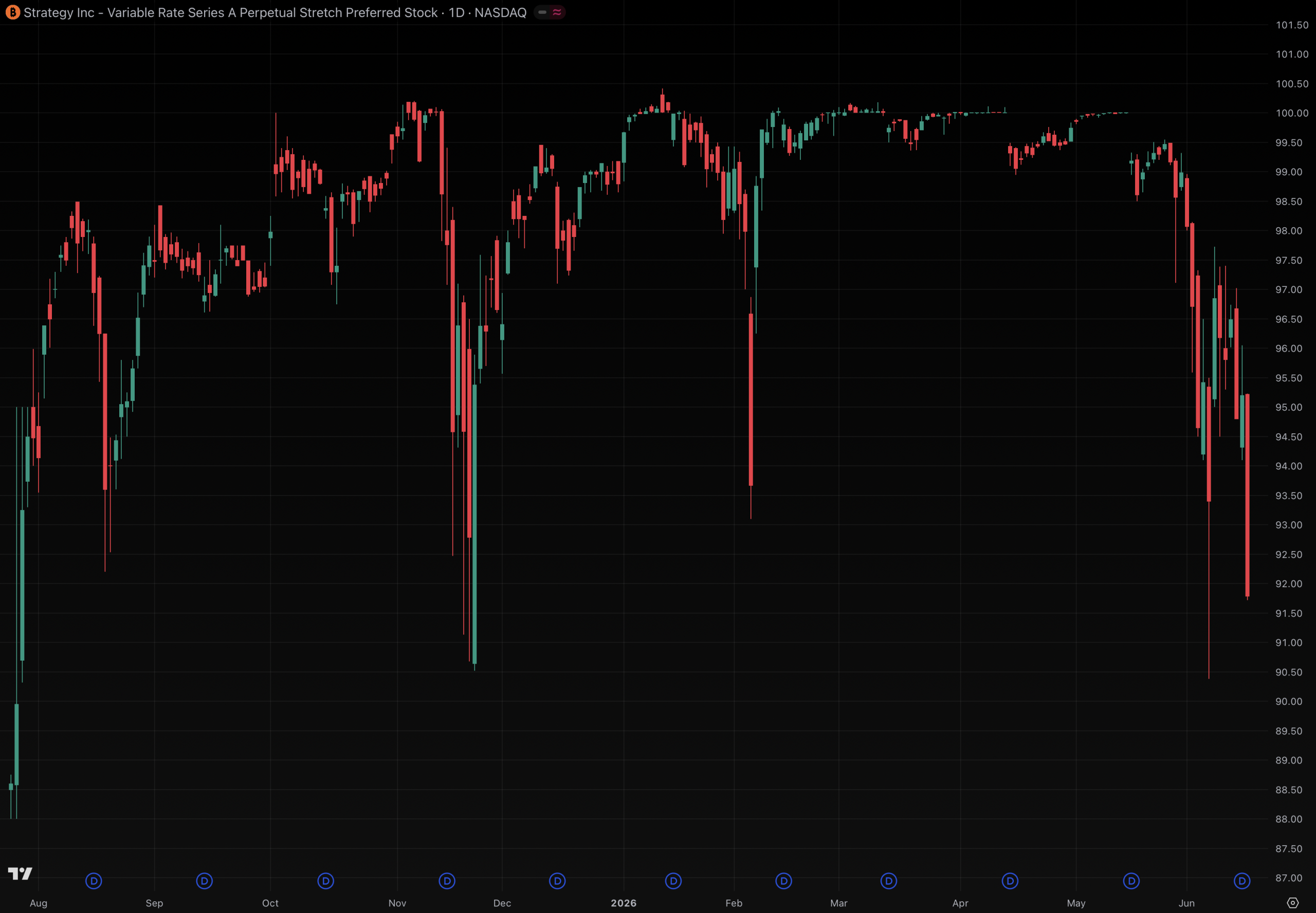
Most people holding Strategy’s 11.5% dividend-paying STRC, are making a strange bargain with the company; that on monthly snapshot days, the stock will trade near the company’s intended $100 share price.
In between those dates, however, STRC invariably wanders downhill. Indeed, it closed yesterday at $91.79, 8.2% below its target.
Strategy persuades buyers to take the bargain of downside possibility on their investment with an above-market yield of 11.5%.
Strategy, the bitcoin (BTC) treasury company built by Michael Saylor, markets STRC as a near-$100 instrument that strips away BTC’s volatility, providing ostensibly predictable payouts and a USD-stable target.
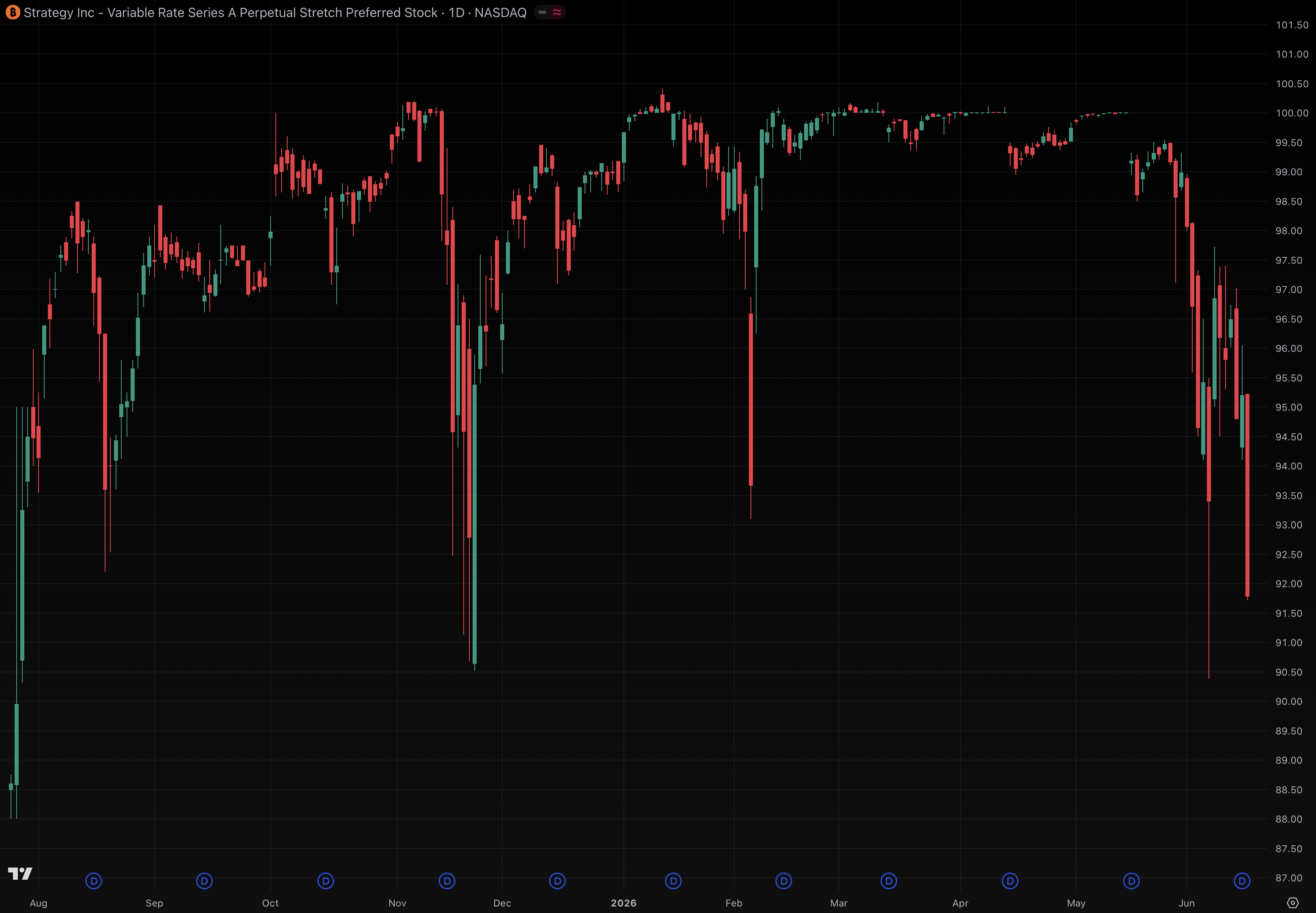
Anyone who holds STRC at the close of Nasdaq’s regular trading session on the dividend record “snapshot” date receives that payout.
Because Strategy pays a dividend on the full $100 par regardless of its price on Nasdaq, the company designed STRC to hold near $100 on its snapshot dates.
The actual chart of Nasdaq trades, unfortunately, says otherwise.
STRC had its IPO in July 2025 and didn’t even trade up to $100 until October. For over a trailing month as of publication time, STRC hasn’t traded at or above $100.
STRC crashes ex-dividend
The morning after its snapshot date, the stock trades “ex-dividend,” and holders earn nothing extra for maintaining their investment until another two weeks transpire and another snapshot occurs.
Predictably, the stock always rallies into these snapshot dates and immediately sells off afterward.
Historical prices bear this out across the security’s short life.
In August 2025, STRC dropped to $92.20 in-between its dividend snapshot dates.
In September, it drifted to $96.61. October was a similar $96.75. Then November frightened investors with a 9.5% drop from $100 to $90.52.
Although each month’s trading range is unique, this month is risking becoming on of its worst. Just yesterday, shares closed at $91.79.
Run-ups into the dividend snapshots are routine, but declines are just as routine.
Read more: Strategy shareholders approve twice-monthly STRC dividends
Semi-monthly dividends haven’t helped yet
Strategy’s talked shareholders into making the problem twice as frequent, albeit shorter in duration.
On June 8, holders approved a shift to semi-monthly dividends, with record dates on the 15th and the last day of each month. Its first semi-monthly dividend will occur next month.
Strategy CEO Phong Le said the change was designed to “stabilize price” for STRC, which definitely hasn’t happened so far.
Over its lifetime, STRC has traded as high as $100.42 and as low as $90.38. That is a band of more than $10 for a $100 stock that’s supposed to hug its par value.
With STRC trading 8.2% below its par as of yesterday’s close, Strategy has two obvious defenses available.
First, it could raise the dividend. STRC pays 11.50% a year now, a yield higher than most junk bonds, but there’s plenty of room to go higher if the company wants to burn cash faster.
Payouts started at 9% when the shares launched, and have climbed steadily to 11.5% today.
Second, Strategy could buyback shares. The company has never done this.
As Protos has documented, the cost of maintaining investor confidence in STRC keeps rising. For a security sold on the idea of stable income, STRC asks for a lot of faith between its semi-monthly record dates.
Got a tip? Send us an email securely via Protos Leaks. For more informed news and investigations, follow us on X, Bluesky, and Google News, or subscribe to our YouTube channel.
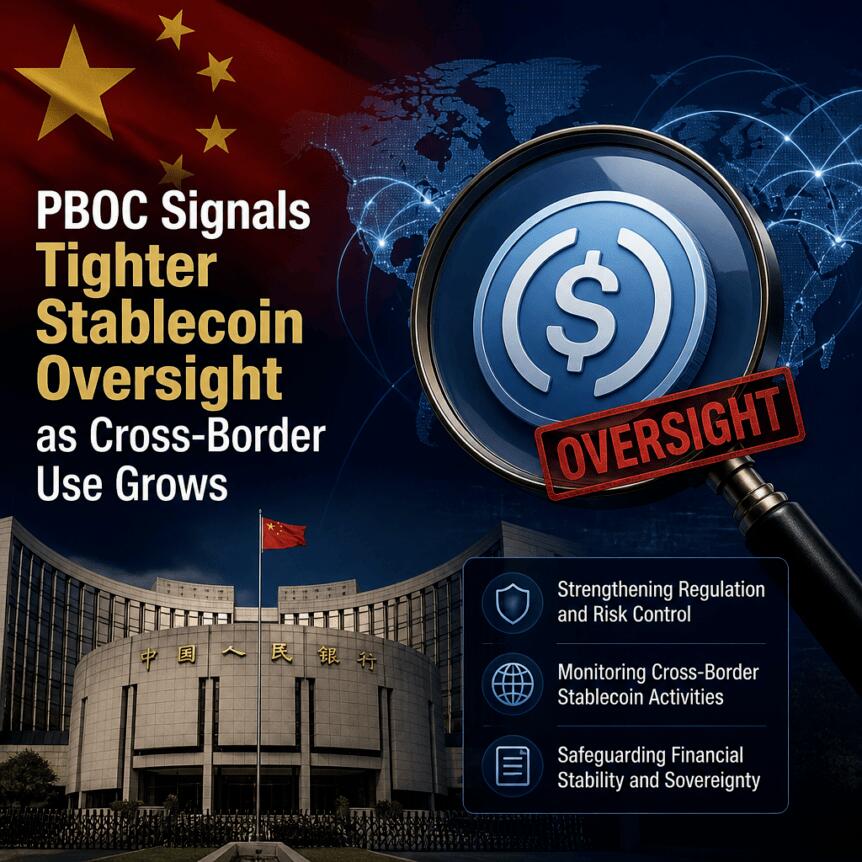
China’s central bank leadership has called for tighter attention to stablecoins as privately issued tokens increasingly intersect with cross-border payments and aspects of the international monetary system. In remarks reported by The Paper, Wang Xin, director general of the Research Bureau at the People’s Bank of China (PBOC), urged regulators to monitor stablecoin-driven developments while strengthening international coordination and regulatory cooperation.
The comments also pointed to broader risks regulators associate with payments infrastructure—namely growing uncertainty and the possibility that payment channels could be used in ways that disrupt cross-border transactions. While Wang did not announce new rules or endorse stablecoins, the message aligns with a more restrictive regulatory posture toward private digital money and highlights how compliance requirements could expand for firms operating across jurisdictions.
Key takeaways
- China’s PBOC leadership urged authorities to closely monitor stablecoins’ impact on cross-border payments and the international monetary system.
- Wang Xin warned about uncertainty and potential “weaponization” of payments that could disrupt normal cross-border activity.
- The remarks come after China and multiple agencies previously banned unauthorized renminbi-pegged stablecoins and tokenized real-world assets (RWA) without government approval.
- Wang also flagged central bank digital currencies (CBDCs), saying cross-border CBDC roles warrant similar scrutiny and improved policy coordination.
Stablecoins under PBOC scrutiny: focus on cross-border payment architecture
According to The Paper, Wang Xin said regulators should pay attention to whether stablecoins could assume a larger role in cross-border payments and consider how regulation and international coordination should proceed. The framing is notable because it treats stablecoins not only as a market asset class, but also as potential payment rails that can influence cross-border settlement behavior and, indirectly, monetary and financial stability concerns.
For institutional compliance and risk teams, this matters because cross-border payment use-cases can change a token’s regulatory treatment. Firms that interact with stablecoins—whether as counterparties, liquidity providers, or gateways—may face increased scrutiny around licensing, sanctions controls, and anti-money laundering (AML) and know-your-customer (KYC) obligations depending on the jurisdiction and the nature of the settlement flows.
Wang’s remarks also referenced risks linked to the governance and security of payment systems. In particular, he cautioned that uncertainty and potential weaponization of payments could interfere with ordinary cross-border transactions. While the statement did not specify mechanisms or actors, it reinforces the policy view that stablecoin-based payment networks could be exposed to geopolitical and operational disruptions.
Regulatory context: China’s earlier ban on unauthorized RMB-pegged stablecoins
Wang’s call for closer monitoring follows enforcement actions and rulemaking that have already restricted stablecoin issuance connected to the renminbi. Months earlier, the PBOC and seven other Chinese agencies banned unauthorized issuance of renminbi-pegged stablecoins and tokenized real-world assets on Feb. 6, according to reporting referenced in the underlying coverage.
As described in the broader record of that regulatory action, the rules were not limited to a single geography: they applied to both foreign and domestic entities and covered onshore and offshore versions of yuan-pegged tokens. The framework required issuers to obtain government approval, reflecting China’s preference for state-controlled digital money rather than privately issued digital currencies.
From a compliance perspective, the enforcement logic is significant. When regulators move from general warnings to binding restrictions tied to authorization, firms must assess where their activities sit in relation to “issuance,” “promotion,” “distribution,” and “use.” In cross-border operations, where marketing and technical access can be fragmented across countries, even indirect participation may raise questions about whether a firm is facilitating prohibited activity.
Broader implications for CBDCs and international coordination
Alongside stablecoins, Wang reportedly said central bank digital currencies (CBDCs) should also be observed more closely in relation to cross-border payments, with improved policy cooperation. This suggests China’s regulatory attention is not limited to private stablecoin markets; it also extends to how state digital currencies could influence international settlement.
The distinction is important for institutions evaluating future settlement models. If regulators view CBDCs as a more controllable alternative to private tokens for cross-border payment flows, then international coordination discussions could eventually translate into standards for interoperability, governance, or compliance expectations. Until those standards are defined, firms face uncertainty over how cross-border “digital money” will be regulated across legal regimes.
Additionally, China’s emphasis on international coordination underscores the inherently cross-border nature of stablecoin risk. Tokens can be transferred globally, but regulatory responsibility remains jurisdictional. This mismatch is a key reason why policy makers across regions increasingly tie stablecoin oversight to existing frameworks—such as AML/KYC expectations, licensing for payment or financial services, and controls aligned with sanctions and illicit finance prevention.
Stablecoin growth and compliance pressure from expanding usage
The PBOC’s renewed attention arrives as stablecoins continue to expand in market activity. The coverage referenced data points indicating that stablecoin supply increased and that stablecoins represented a substantial portion of overall crypto trading volume during the first quarter of 2026. It also noted that transaction volume can be heavily influenced by automated activity, with bots generating a large share of volume in that period.
While market statistics do not determine the legality of a token, they often influence supervisory priorities. Higher usage can increase the probability that compliance failures—such as inadequate customer screening, weak transfer controls, or unclear source-of-funds checks—are noticed by regulators and addressed through enforcement or additional requirements.
Institutional actors should also consider how major regulatory approaches are evolving elsewhere. In the European Union, for example, the Markets in Crypto-Assets (MiCA) framework provides a structured pathway for stablecoin-related obligations, including rules designed to mitigate risks from reserve management, disclosures, and operating conditions. Differences between regimes can create friction for cross-border service providers, particularly those offering custody, exchange, remittance, or settlement tooling connected to stablecoin flows.
Against this backdrop, China’s stance—requiring approval for renminbi-pegged stablecoins and tokenized RWA issuance—illustrates one end of the policy spectrum: a preference for tighter state oversight over private issuance. Even where stablecoins are used in ways not directly tied to issuance, the regulatory focus on cross-border payments signals that regulators may still scrutinize service layers around distribution and transfer.
Closing perspective: what to watch next
Wang Xin’s remarks do not announce immediate policy changes, but they reinforce an enforcement trajectory in which stablecoins and CBDCs are treated as strategic issues for payments governance and international coordination. For regulated firms, the near-term priority is to monitor how Chinese guidance develops and how cross-border compliance expectations evolve alongside international policy frameworks—especially regarding AML/KYC controls, authorization boundaries, and controls that address payment-system geopolitical and operational risks.

Will There Be A Rivals Season 3?

ClearBridge Appreciation Fund Q1 2026 Commentary

More united Fed board seen at Warsh’s first meeting, according to Kalshi traders

Blockchain.com files with SEC for U.S. IPO

Israel says it has killed new Hamas military leader in Gaza City airstrikes

NYT Strands Answers May 24 2026 Revealed for Puzzle No. 812 Theme Summer Essentials

#StockMarket #ShareMarket #Investing #Trading #StockMarketTelugu #Money #Finance #BeginnerInvestor #

That is certainly one way to handle a problem #funny #money #shopping #budget #shorts

One of the most dangerous sentences in the world of finance is:“Maybe he’s just that good.”
-

 Business3 days ago
No Jackpot Winner as $257 Million Prize Rolls Over to $269 Million Monday Draw
-

 Crypto World6 days ago
Oppenheimer backs SpaceX as $70 billion retail frenzy builds
-

 Fashion5 days ago
Weekend Open Thread: Tuckernuck – Corporette.com
-

 Crypto World6 days ago
Markets Rally as SpaceX IPO Looms Amid Iran Tensions and Inflation Surge
-
Crypto World3 days ago
Zimbabwe Requires Crypto Businesses to Register Annually Under New FIU Regulations
-

 Tech4 days ago
NanoClaw integrates JFrog registries to secure AI agent downloads
-

 Tech5 days ago
This Week In Security: Microsoft On Microsoft, Register Your Domains, Linux On ARM, And FreeBSD Joins The File Cache Club
-

 Crypto World4 days ago
Bitget enters Argentina’s regulated crypto market through PSAV registration
-
 Tech6 days ago
Dutton Ranch star claims they ‘didn’t see any disruption’ on set following Chad Feehan’s exit from Yellowstone spinoff fueled by Taylor Sheridan clash rumors
-

 NewsBeat6 days ago
El Nino has formed in the Pacific and could set records, forecasters say
-

 Politics6 days ago
Politics Home | Healey Resignation Is “Colossal Failure Of Government”, Says Former Labour Defence Secretary
-
 Entertainment6 days ago
Donnie Wahlberg & More Heat Up Las Vegas at Circa’s Barry’s Downtown Prime
-
 Tech6 days ago
Opendoor Ends India Operations, Fueling a Bigger Conversation About AI and Outsourcing
-

 Politics6 days ago
Belfast burns, while Met chief points finger at Iran and Russia
-

 Sports6 days ago
First Time Since 1971: Australia Register Historic Low In ODI Cricket
-

 Business6 days ago
AT&T: Verizon's 27% Outperformance Sets Up A Solid Entry Point
-

 NewsBeat5 days ago
FBI searches office of Ohio voter registration group
-
 Tech6 days ago
Anthropic is spending $150M to embed 1,000 AI fellows inside nonprofits. No degree required.
-
 Politics6 days ago
Modi thanks Trump for wishes as US attacks Indian seafarers
-
 Entertainment5 days ago
‘The Pitt’s Fan-Favorite Doctor Confirms Noah Wyle Gave His Blessing to Return [Exclusive]
You must be logged in to post a comment Login