
Crypto World
Bitcoin Just Broke Its Correlation With Gold, Stocks, and the Dollar: What Changed?


Bitcoin’s relationship with traditional markets has changed sharply in a matter of weeks, with Santiment data showing that its correlations with stocks, the greenback, and even gold have all weakened.
The part with gold is particularly interesting, as both assets recently moved at the same pace, but BTC now appears to be trading far more independently of all major comparison alternatives.
BTC Breaks Away
Santiment’s analysis highlighted the breakdown in bitcoin’s correlations with major assets, including the precious metal and US equities, indicating that the cryptocurrency is no longer moving closely alongside any of them. This major change materialized over the past several days, after BTC rebounded from the dip to $75,000 following the failure of the CLARITY Act vote and surged to a multi-month peak of over $87,000.
The shift is quite striking because the opposite narrative, especially when compared to gold, dominated only a few weeks ago. As reported in early September, BTC’s 90-day correlation with the precious metal had climbed above 0.50 for the first time in approximately six years. The relationship with the Nasdaq 100, though, had dropped toward the 0.30-0.33 range, prompting suggestions that investors were treating bitcoin less like a high-beta tech asset and more like a scarce monetary hedger.
That interpretation made a lot of sense at the time since BTC and gold both benefited and rallied from renewed concerns over government debt, deficits, and currency debasement, while equities struggled to keep pace. However, that relationship has proved far less durable than it initially appeared, as gold has remained at essentially the same levels, while bitcoin has posted major gains.
Bitcoin Has Completely Broken Away From Stocks & Precious Metals
Bitcoin’s market cap has grown by +36.0% since August 18, dramatically separating from the S&P 500’s +0.8% and gold’s -1.5% performances in that same time. The breakout began as smaller 0.1-10 BTC holders… pic.twitter.com/L8UaFfSsZS
— Santiment Intelligence (@SantimentData) September 23, 2026
Independent Trade?
The reversal speed is arguably more significant than the absolute correlation numbers, as BTC’s strengthening relationship with gold was one of the market’s more notable macro developments just three weeks ago. The data from this week, though, complicates that narrative, as bitcoin has continued advancing even as the precious metal has pulled back from recent highs. At the same time, US stocks have followed their separate trajectory.
The cryptocurrency also absorbed both major negative developments from last week – the Fed’s hike and the CLARITY Act setback, before it rose above $87,000.
None of this means that BTC has permanently decoupled from macro markets. Its historical correlations have repeatedly shifted depending on liquidity, monetary policy, and investor positioning, but the data now shows that it doesn’t move like digital gold, a leveraged tech stock, or an anti-dollar trade; BTC moves on its own.
The post Bitcoin Just Broke Its Correlation With Gold, Stocks, and the Dollar: What Changed? appeared first on CryptoPotato.

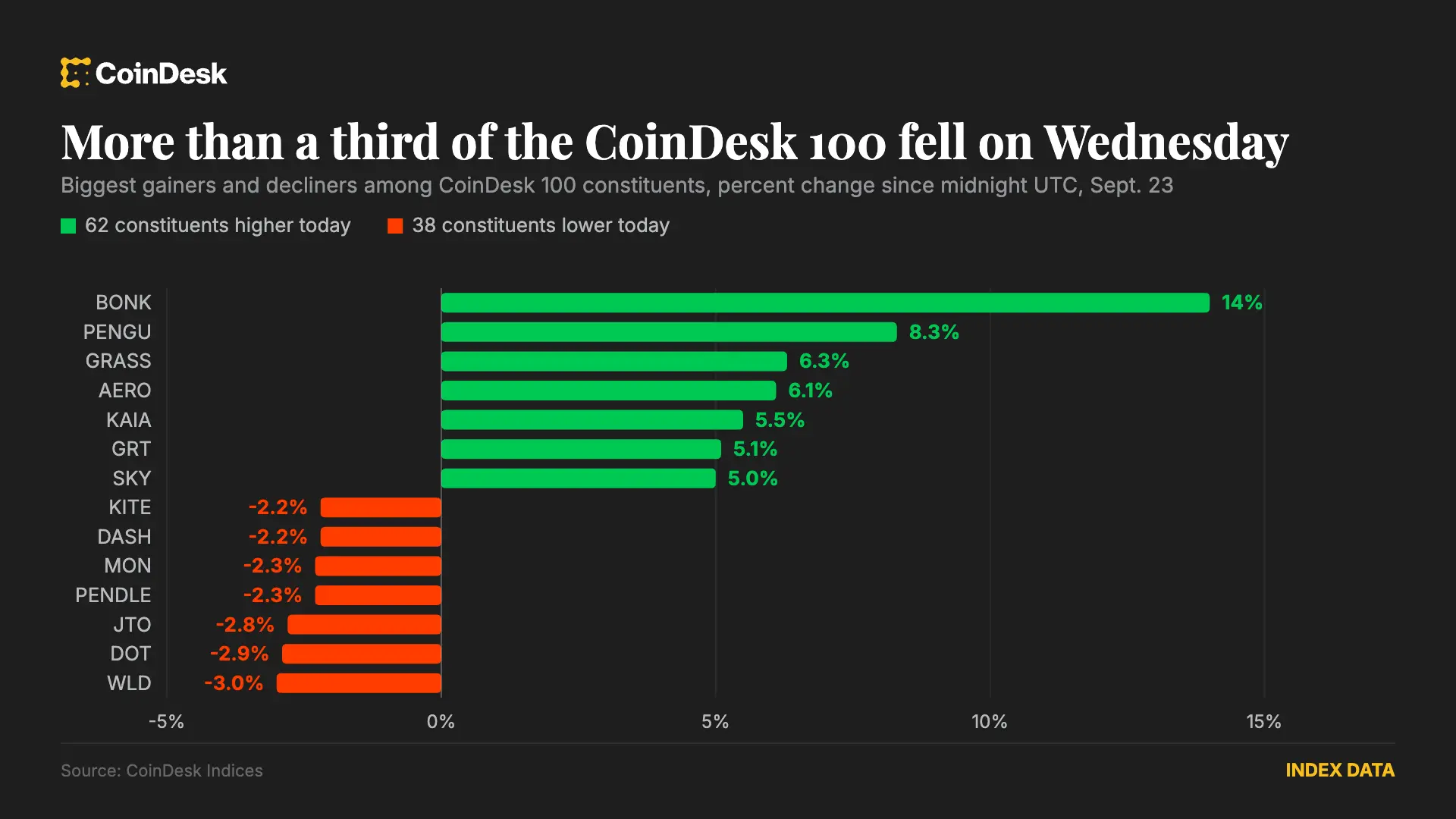
Bitcoin is consolidating on Wednesday after an explosive breakout on Monday, trading at $86,379 in the European morning, up 0.24% since midnight UTC and 1.3% over 24 hours as daily trading volume dips by 36% to $38 billion.
Beneath the surface the rally has narrowed sharply, with 38 of the 100 CoinDesk 100 constituents lower on the day, even as the index itself rose 0.67% to 1,926.99. Over the rolling 24 hours the picture is still broad, 87 higher and 13 lower, which places the weakening firmly in the past few hours rather than on Tuesday.
The majors have split rather than moved together, XRP (XRP) adding 3.3% to $1.62 and bitcoin cash 2.0% to $351.59, while ether slipped 0.089% to $2,750.24 as chainlink lost 0.0053%.
Crypto World
BitMEX marks end of an era as it shut downs after 11 years, urges users to withdraw funds
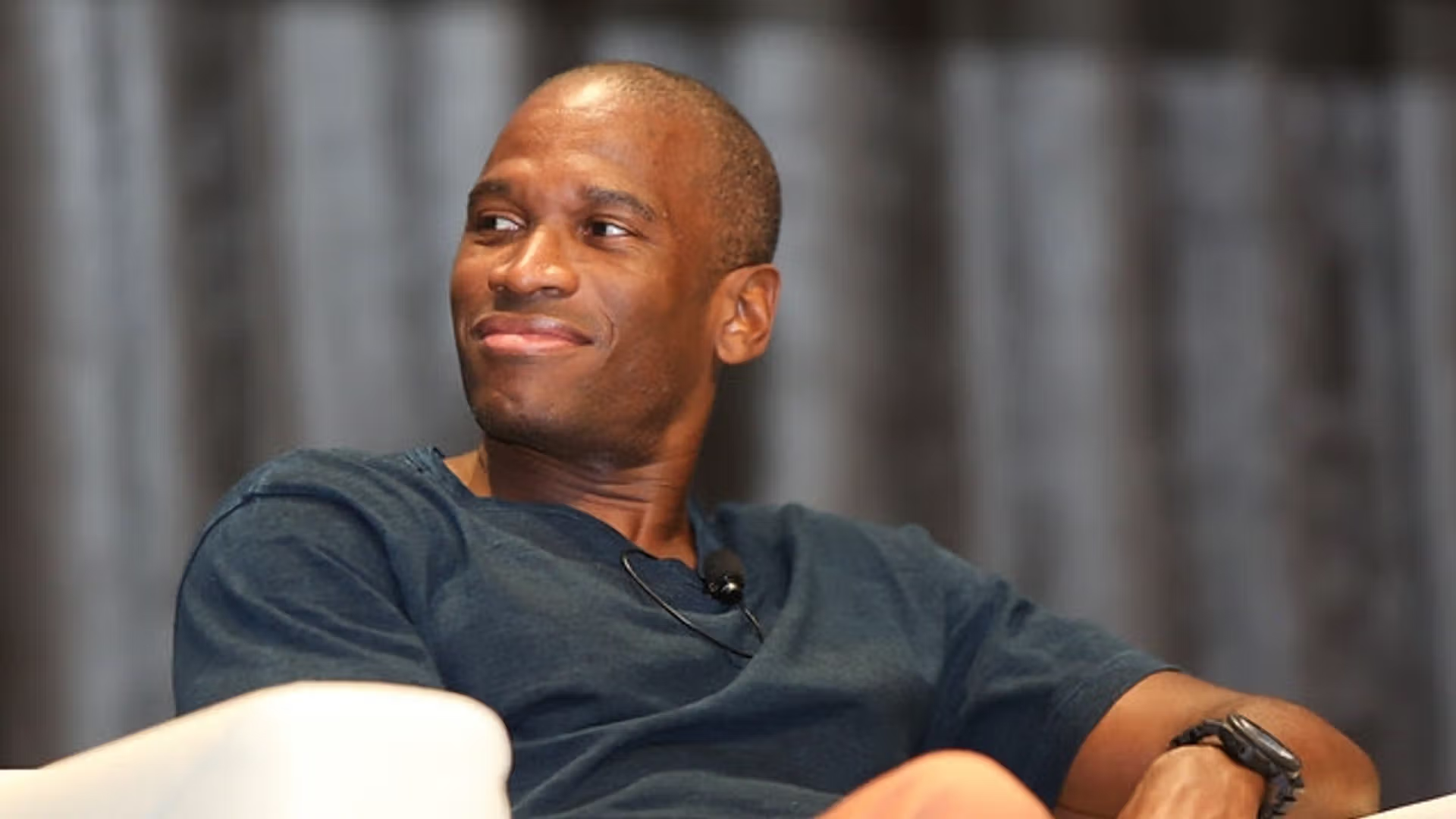
BitMEX, the crypto derivatives platform that helped pioneer perpetual futures trading, marked the end of an era Wednesday, shutting down exchange operations except for withdrawals..
Trading, deposits and new positions are no longer available as of 04:00 UTC on Tuesday, BitMEX said in a statement on X. Users can still log in and withdraw their balances through the platform’s website, but the company said deposits are definitely no longer possible.
BitMEX, which was co-founded by Arthur Hayes, Ben Delo and Samuel Reed in 2014 urged its customers to withdraw funds and said account fees now apply to know-your-customer (KYC) verified users who leave balances on the exchange. The monthly charge is based on an annualized 1% of assets or a $50 equivalent minimum, whichever is greater.
The closure brings to an end the 11-year run of an exchange that helped establish the perpetual swap, now the dominant instrument in crypto derivatives markets. But BitMEX’s shutdown is not a freeze on customer assets, as the platform reiterated that withdrawals remain available as it winds down.

US Commodity Futures Trading Commission (CFTC) Chair Michael Selig said financial markets should prepare for “mass tokenization” as regulators adapt existing frameworks for blockchain, artificial intelligence and onchain markets.
In remarks delivered Tuesday at the US Treasury Market Conference, Selig said tokenization of real-world assets (RWAs) could become the foundation of a more efficient financial system, enabling near-instant settlement and real-time collateral movement between clearinghouses, intermediaries and users.
“Just as the transition from hand signals to electronic trading advanced our financial system, I believe tokenization can do the same for all asset classes,” Selig said, adding that the CFTC would pursue principles-based rules as tokenization and onchain finance evolve.
Selig said in August that the CFTC would move ahead with crypto rules under its existing authority if Congress did not pass the CLARITY Act. The Senate failed to advance the bill on Sept. 15.
Related: CFTC issues warning over risky prediction market ‘mention’ contracts
On Sept. 17, the CFTC submitted a regulatory action covering crypto asset transactions and markets for White House review. The filing is still at the “prerule” stage and does not detail the planned regulations.
SEC also moves to bring markets onchain
Officials at the US Securities and Exchange Commission (SEC) have also promoted the development of tokenized markets.
In a Bloomberg TV interview, the SEC’s Division of Trading and Markets Director Jamie Selway said that tokenization and crypto have recently become politicized but are “not naturally a politicized function.”
Selway said US success in developing the markets should receive bipartisan support.
On Sept. 17, the SEC granted a temporary “Innovation Exemption” for tokenized US stock trading.
The exemption lets certain platforms trade digital versions of US-listed stocks under certain conditions.
SEC Chair Paul Atkins said in February that such an exemption could facilitate onchain trading while regulators developed longer-term rules.
Magazine: Who needs CLARITY anyway? ARB could see 70X increase: Hodler’s Digest
Crypto World
The future of AI growth rests on Big Tech’s cash flow tripling to $2 trillion: Chart of the Day

Big Tech’s AI spending boom is carrying an ever-larger share of the US growth story. So far in 2026, investments tied to the AI build-out have been responsible for roughly one-fifth of US economic growth.
This year alone, the four leading “hyperscalers” — Alphabet (GOOG, GOOGL), Amazon (AMZN), Meta (META), and Microsoft (MSFT) — are expected to spend roughly $800 billion in capital expenditures, or 10 times their spend in 2019, only seven years ago, per Goldman Sachs.
Sustaining that investment, however, will require an equally historic expansion in the cash generated by the companies footing the bill, says Apollo chief economist Torsten Sløk. (Disclosure: Yahoo is a portfolio company of funds managed by affiliates of Apollo Global Management.)

Over the past year, the financing for the AI spending race has come increasingly from the debt market, where the hyperscalers are expected to issue $250 billion in global investment-grade debt by the end of 2026.
Pushing the hyperscalers toward the debt market is a shortage of cash. While these companies have long been known as cash juggernauts, the intense spending requirements of AI infrastructure have pushed Big Tech toward increasingly tighter cash flow. In July, Alphabet reported its first quarter of negative free cash flow since going public as Google in 2004.
Allowing this to happen, argues Sløk, are expectations that the companies that have been deploying cash are set to begin making it back in spades. Consensus estimates on Wall Street now expect operating cash flow to grow from $600 billion in 2025 to roughly $2 trillion in 2030 — more than tripling within five years, per data compiled by Apollo Global.
If that cash flow doesn’t emerge, Sløk wrote to clients, the economics underpinning the dominant driver of the US stock market could quickly shift.
“If this doesn’t happen, then the risk is that the AI trade weakens, with credit spreads widening, capex plans getting cut and ultimately US GDP growth slowing,” Sløk wrote to clients.

The concentration risk of the US market’s reliance on the AI trade played out on Monday. Spurred by gains in hyperscaler Meta and semiconductor leaders Arm and Intel, the Nasdaq Composite index surged by 2.3% to close at an all-time high, while the S&P 500 gained 1.5%.
Yet under the hood, the breadth of that strength was highly concentrated. Thirty S&P 500 stocks touched 52-week lows on Monday, versus only seven that reached a 52-week high — a sharp divergence beneath the index rally.
Outlook for AI capex is strong, Morgan Stanley analysts led by chief equity strategist Michael Wilson wrote to clients on Monday. The analysts cite robust demand for compute, AI adopters seeing evidence of the benefits of their spending, rising computer lease rates, and the potential for “material benefits to human welfare.”
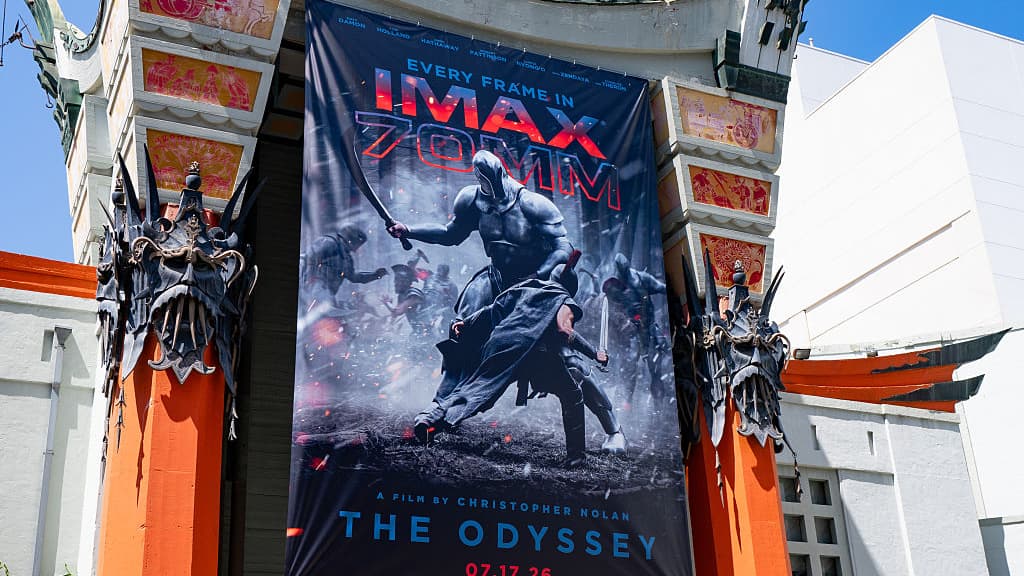
Filmmakers understand this as well. Though they might prefer you to see their movie in IMAX, they ultimately shoot with all formats and audiences in mind, knowing that not everyone will see it in IMAX. (Some people will even watch it on the backside of a plane seat!) When framing shots—even on an IMAX camera—they keep anything essential to the narrative in the core ratio that most people will see the movie in.
Despite all the jokes about “watching a movie as Christopher Nolan intended,” in a recent interview with 60 Minutes, the director said he didn’t mind people watching his movies on iPads. “I’m very much in favor of and in awe of the easy access that we have now to films, for people to be able to immerse themselves in film and film history,” Nolan said in the interview, drawing a comparison to his childhood spent learning about film through VHS tapes.
In the 2020s, movie projection technology is the best it’s ever been. If IMAX isn’t your jam, or if you can’t secure tickets, there are plenty of alternative ways to see movies that are better than all of human history has ever had access to. Dolby is a great option, with its enhanced color and immersive sound, and 35mm and 70mm screenings are plentiful among theaters around the country if you prefer to get the film experience.

Raiffeisen Bank International (RBI), an Austrian banking group with operations across Central and Eastern Europe, is expanding its cryptocurrency push through a group-wide partnership with Bitpanda.
Bitpanda Enterprise will provide the digital asset infrastructure that RBI’s network banks can use to introduce crypto services, potentially reaching about 18 million customers, according to a joint announcement on Wednesday. Individual banks will determine their offerings and rollout based on local market and regulatory requirements, the companies said.
RBI CEO Michael Höllerer said the bank is seeing growing demand for crypto assets across its markets and is addressing it with Bitpanda.
“As a customer-centric bank, we are committed to meeting our customers’ needs in the best possible way,” he said.
A spokesperson for Bitpanda told Cointelegraph that the rollout remains at an early stage and will proceed gradually based on local market and regulatory requirements, with further details to come as individual markets are confirmed.

The partnership builds on a crypto integration launched with Austria’s Raiffeisenlandesbank Niederösterreich-Wien in 2024.
Bitpanda, which is authorized under the European Union’s Markets in Crypto-Assets Regulation (MiCA), told Cointelegraph it is regularly in discussions with banks and financial institutions exploring crypto brokerage services but declined to comment on active or confidential talks.
Related: Banks double on EU MiCA crypto provider list as share hits 23%

A worker is seen on a container truck at the Port of Ningbo-Zhoushan in Ningbo, in China’s eastern Zhejiang Province on September 22, 2026.
Hector Retamal | Afp | Getty Images
BEIJING — The trade deficit that escalated tensions between China and the U.S. in recent years has yet to shrink significantly, and the world’s second-largest economy faces deep challenges. But China’s efforts to build up self-sufficiency have reduced the threat to its domestic market from global trade developments.
U.S. President Donald Trump and Chinese President Xi Jinping are expected to meet this week for their second in-person summit of the year. U.S. concerns about artificial intelligence have gained prominence in the days ahead of the meeting.
But the best that businesses are hoping for is an extension of a trade truce reached last fall. Even then, tariffs have done little to dent America’s appetite for Chinese goods.
While an escalation in trade tensions last April briefly sent the U.S. trade deficit with China to its lowest level since 2017, surging demand for AI-related parts have helped send it higher again so far this year, according to China Customs data accessed through Wind Information.
And even as the U.S. has diversified away from China, it’s hard for the world to shake its dependence on the Asian country.
Reliance on China
Asia still accounts for more than 60% of U.S. imports, the same as before “Liberation Day,” pointed out Jens Eskelund, president of the European Chamber of Commerce in China.
He estimated between half and three-quarters of container traffic from China to Southeast Asia subsequently heads on to other destinations.
That’s all sped up the pace at which the world relies on China-made goods.
Eskelund said he previously expected China to account for 40% of global container exports in the year 2030 — but the milestone was reached this summer.

How did the world get here?
“Probably the China shock only really started in 2022, because I think everything was distorted by the pandemic,” Eskelund said. “China was first in the pandemic, and first out of the pandemic, and for that reason China actually could allow its exchange rate to rise, and export prices to rise.
“China could do that because China was the only game in town,” he said.
China’s real estate market began its downturn in 2022, dragging down domestic demand. Chinese companies ramped up global expansion, and exports.
“There is a direct, perfect correlation between the drop in export prices and the acceleration in export in volume terms,” Eskelund said.
U.S. tech companies’ buildout of data centers to power AI has supported demand for Chinese goods.
But think tank CF40 estimated that for the first time this year, AI-related exports fell significantly in August from a year ago.
Macquarie’s chief China economist Larry Hu last week also pointed out that the recent performance of the PHLX Semiconductor Index — which he said tends to be predictive of how China’s high-tech exports will grow in the next six months — “does not bode well for China’s export outlook over the next year.”
Still, economists don’t expect China’s policymakers to do much.
Within tech-related manufacturing, industrial robot output rose by 34.6% year-on-year in August, while smartphone output fell by 22.3%.
“Because there are always high-flying subsectors for the government to point to, policymakers do not appear to feel much urgency to introduce additional easing measures, absent a sharp deterioration in the labor market,” Goldman Sachs’ chief China economist Hui Shan said in a Sept. 20 report.
She pointed out house prices have already seen a 30% decline over a six-year timeline, typical of historical large-scale property downturns in other parts of the world. “Weak labor markets and still-falling rents are likely to prolong the downturn in many parts of China,” she added.
The number of loss-making companies is also on the rise, accounting for 24% of industrial firms in China in 2025.
Fierce competition
The economic slowdown has only pushed companies in China to compete even more fiercely with each other, and their foreign rivals.
The American Chamber of Commerce in Shanghai said this month that three-quarters of members responding to a survey saw Chinese rivals as more advanced, and that the perceived gap in product quality narrowed by 6 percentage points from last year.
For the first time since 2022, domestic competition has surpassed geopolitical tensions as the top challenge for members, the chamber said.
It’s all spilling over internationally, as European Union officials are starting to follow the U.S. in scrutiny of China-origin exports. EU Trade Commissioner Maroš Šefčovič, who urged “tangible results” from China on trade by October, is expected to travel to Beijing next month.
The European Union has the largest trade deficit with China of any economy, Eskelund pointed out.
In addition to competing through lower-cost goods, Chinese companies have also come to dominate global supply chains for critical minerals. This also supports Beijing’s self-sufficiency goals.
“There’s no sense in which China’s strategy seems to be at all dependent on actions that the rest of the world might take,” said Chad Bown, senior fellow at the U.S.-based Peterson Institute for International Economics.
It’s “this strategy of a one-way dependence of the rest of the world on China that it’s going to weaponize.”
—CNBC’s Anniek Bao contributed to this report.
Crypto World
BlackRock Says AI Agents Need ‘Machine-Native Money': Is Bitcoin Their Savings Account?
BlackRock says AI agents need “machine-native money,” and stablecoins are its leading candidate. A new research paper from the world’s largest asset manager argues that card networks and bank transfers were never built for software that pays software.
The paper sketches a two-tier money system for machines. Stablecoins handle the spending, and Bitcoin, according to a study BlackRock cites, handles the saving.
Software that buys data, compute, and services on its own cannot wait a business day for a bank transfer. BlackRock’s answer is money that settles at machine speed, and it names stablecoins first.
Why BlackRock Says Cards and ACH Fall Short for AI Agents
BlackRock’s argument starts with a practical problem. An autonomous agent cannot open a bank account or a card without a human. Merchant fees make sub-dollar payments pointless, and Automated Clearing House (ACH) transfers still take up to a business day to settle.
Blockchains, in contrast, settle around the clock in near real time. The paper concludes that this makes on-chain assets a natural fit for machine transactions.
“stablecoins, native cryptoassets, and other on-chain assets can serve as machine-native instruments” BlackRock said
The firm points to Coinbase’s x402, a protocol that revives the dormant HTTP 402 “Payment Required” code so agents can pay for data on the spot. BeInCrypto has covered the x402 payment standard and the token frenzy that followed it.
However, BlackRock does not frame this as a crypto-only future. The paper lists rival rails from Stripe, OpenAI, Google, and Visa, some of which settle in ordinary bank money. It also concedes that live agent payment volume remains small.
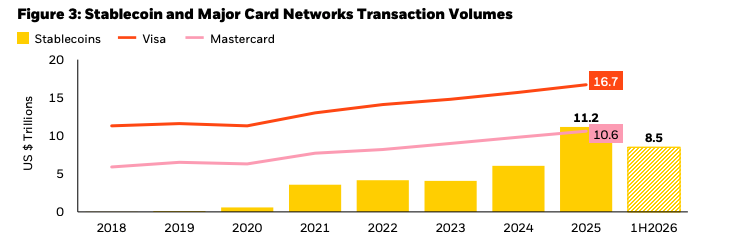
The scale of stablecoins gives the thesis weight. BlackRock puts the circulating supply above $300 billion. Adjusted volume passed $11 trillion in 2025, roughly level with Visa’s $11.2 trillion, but still behind Visa’s $16.7 trillion.
Stablecoins moved another $8.5 trillion in the first half of 2026.

The asset manager already sits inside this market. It launched a money market fund built for stablecoin issuers to park their reserves earlier this year.
AI Models Pick Bitcoin to Save and Stablecoins to Spend
The paper’s most shareable claim is borrowed. BlackRock cites a February 2026 study by the Bitcoin Policy Institute (BPI), a pro-bitcoin research and advocacy group, as “preliminary support” for a split monetary role.
The BPI team ran 36 frontier models from Anthropic, OpenAI, Google, xAI, and DeepSeek, collecting 9,072 answers. Asked where to store value, the models chose Bitcoin 79.1% of the time. Asked what to spend, they chose stablecoins 53.2% of the time. Bank money drew under 9% overall.

BeInCrypto reported on the AI Bitcoin preference study when it first appeared. Two caveats stand. The results varied sharply by vendor, with Anthropic models favoring Bitcoin far more often than OpenAI’s.
Bitcoin (BTC) traded near $86,400 at press time, up about 0.6% over 24 hours, according to BeInCrypto Markets.
Readers should note that every forward-looking line in the report uses “could” or “can,” and a disclaimer states it is not a forecast. Hence, this should not be taken as financial advice.
The post BlackRock Says AI Agents Need ‘Machine-Native Money': Is Bitcoin Their Savings Account? appeared first on BeInCrypto.
Crypto World
Why Wall Street’s biggest asset manager thinks artificial intelligence will supercharge digital assets
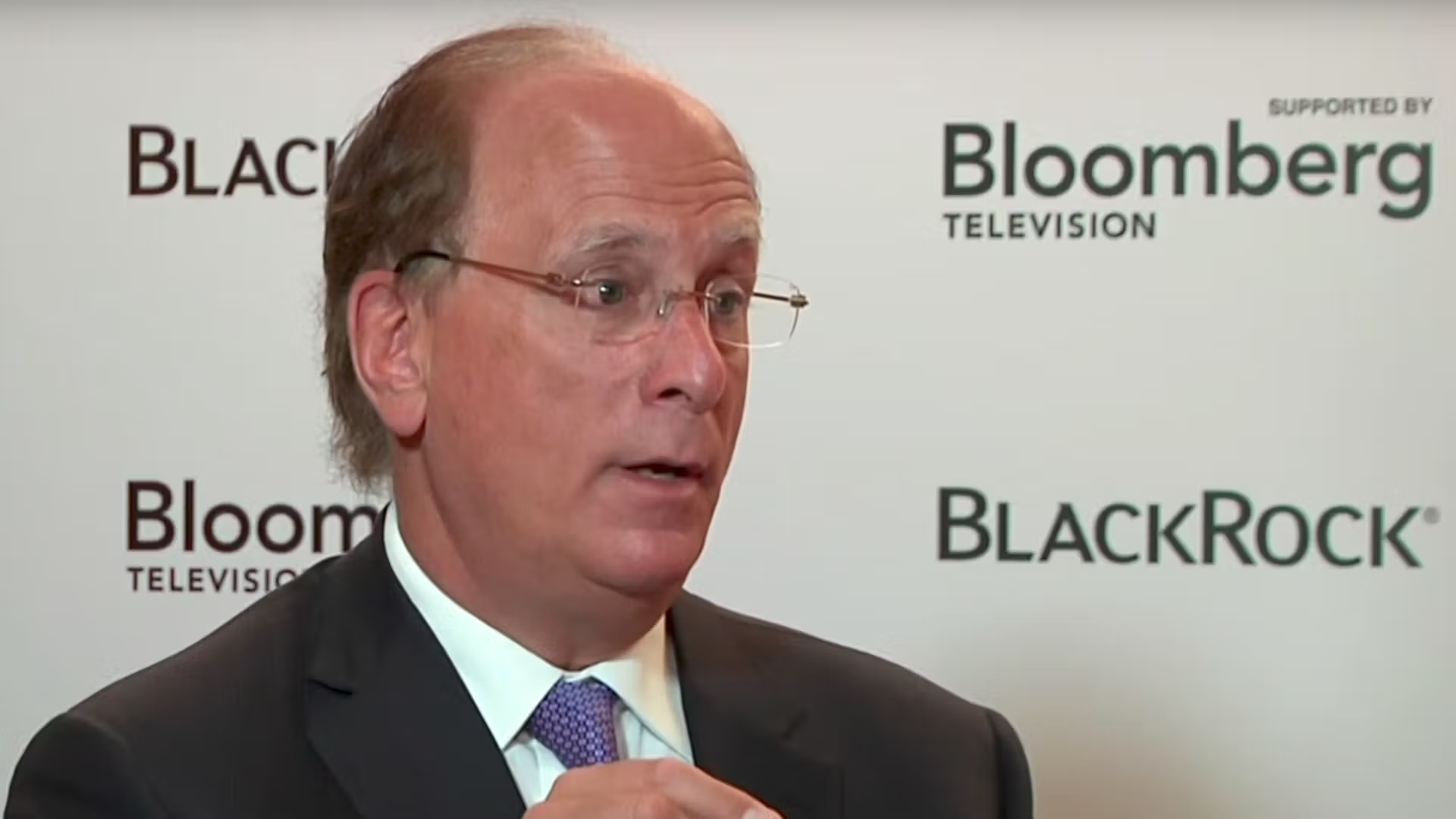
Artificial intelligence could be one of the biggest drivers for digital asset adoption as autonomous agents begin buying services, moving money and sourcing computing power, according to a BlackRock paper.
The asset manager argues that AI provides “machine-native intelligence” while digital assets provide the payment and settlement infrastructure agents may need to act on their decisions. An agent carrying out a task could, for example, pay for a data request, book a service or purchase computing capacity without waiting for a person to to complete.
Stablecoins are likely to be the first major beneficiary. Their relatively stable value makes them useful for pricing services, while blockchain networks can support payments around the clock. BlackRock highlights Coinbase x402 protocol as one emerging way agents to pay for online resources, including API calls. It also acknowledges that existing payments networks are adapting to agentic commerce.

BlackRock has argued that broad AI adoption may become a largely overlooked driver of demand for digital assets—particularly through machine-to-machine payments and tokenized infrastructure. In a new research paper, the asset manager links the growth of AI “agents” to the need for 24/7, programmable settlement systems, and it points to stablecoins and other on-chain instruments as likely beneficiaries.
The report, titled “The Machine-Native Economy,” also raises the possibility that AI could expand crypto beyond payments by creating a market for tokenized claims on compute resources—assets that could be traded, used as collateral, or automatically purchased as AI systems request additional capacity.
Key takeaways
- BlackRock frames AI and machine-to-machine payments as a “structural catalyst” for digital asset adoption.
- The paper argues stablecoins are particularly suited for high-frequency, low-value transactions between autonomous systems.
- It suggests compute markets could emerge where tokenized claims on processing capacity are transferred, pledged, or traded.
- BlackRock positions digital assets as potential infrastructure for an increasingly autonomous “digital economy,” an angle aimed at institutional investors.
Why AI could change the demand for payment rails
BlackRock’s core premise is that agentic AI—where software acts on behalf of users and other systems—will intensify the need for payment mechanisms designed for automation. While existing payment infrastructure can support some forms of automation, the report argues that critical steps such as account setup, credentialing, authorization, and the economics of very small transactions can still require human involvement.
In addition, the paper highlights that settlement finality and speed can differ across providers, which may not align neatly with the requirements of machine-to-machine commerce that runs continuously. Against that backdrop, BlackRock says digital assets and tokenized instruments may better fit the operational realities of autonomous transactions.
The authors specifically describe stablecoins, native cryptocurrencies, and tokenized real-world assets as suitable for machine-to-machine payments that are high-frequency and sub-cent, occurring around the clock. They add that multiple digital assets could support “agentic commerce,” but that stablecoins are likely to lead transactional usage.
Tokenizing compute capacity as a new crypto market
The research goes further than payments by identifying an opportunity in the compute sector. BlackRock describes compute as the processing power required to train and run AI systems, and it argues that as AI demand surges, companies may look for ways to control costs and manage risk with clearer access to resources.
In BlackRock’s model, claims on compute capacity could be represented as tokens. Those tokens could then be transferred, pledged as collateral, or traded—creating a potential market that broadens participation from institutional investors. The paper also claims AI agents could use such markets to automatically acquire resources as needed, aligning procurement with system demand in real time.
By emphasizing how tokenized claims could connect AI-driven resource needs with programmable settlement, BlackRock effectively reframes parts of the compute economy as a candidate for on-chain financial infrastructure.
Institutional spotlight on a long-running crypto thesis
BlackRock’s argument echoes a theme long promoted within parts of the crypto industry: AI will not only increase the volume of transactions, but also create a need for financial rails that can operate without constant human oversight. BlackRock’s contribution is the institutional framing—using research intended for a mainstream investor audience to advance the idea that digital assets could become part of the underlying mechanics of an increasingly autonomous economy.
This perspective also aligns with public comments from crypto leaders. In July, Coinbase CEO Brian Armstrong pushed back on calls for the industry to “pivot” toward AI, arguing instead that AI agents could drive demand for crypto-based financial services. Earlier coverage noted his view that AI being a megatrend does not diminish crypto’s relevance; he argued that agents would need programmable money rather than traditional banking rails.
Armstrong’s point appears consistent with BlackRock’s emphasis on machine-native settlement and automation. Where BlackRock speaks in terms of infrastructure and institutional participation, Armstrong focuses on the practical requirement for programmable payment capabilities in agent-driven systems.
Tools already emerging for automated agent payments
While BlackRock’s paper is forward-looking, it is not made in a vacuum. The input highlights that some crypto and payments firms are already building tooling aimed at enabling AI agents to transact automatically. For instance, the article notes Coinbase’s x402 protocol and Tempo’s Machine Payments Protocol, both designed to let AI agents automatically pay for online services.
It also references Circle’s introduction of agent wallets and USDC payment tools and OKX’s Agent Payments Protocol, which is described as supporting recurring payments and escrow-style arrangements where funds are released after a task’s completion.
These examples matter for investors and builders because they suggest at least some demand signals are being converted into product development. BlackRock’s research provides a macro rationale for why that direction could scale as AI agents become more common and transaction patterns become more autonomous and continuous.
For now, the big question is how quickly tokenized payment rails and compute-claim markets move from concept to real usage at scale. Readers should watch whether stablecoin-based payment workflows for autonomous agents expand beyond pilots, and whether any compute-market tokenization proposals gain traction—because that would be the clearest test of BlackRock’s “compute as a new opportunity” thesis.
Lee Mack reveals the secrets of Not Going Out – from nearly marrying Catherine Tate to co-star fallouts and the ‘upsetting’ Bobby Ball episode he yanked off air – as Britain’s longest-running sitcom turns 20

Dow Jones Futures: Falling Oil Prices, Yields Spark Stock Market Rally; AMD, Intel, Micron, Nvidia, Sandisk Are Key Movers

Bitcoin consolidates near $86,000 as rally and bitcoin cash jumps 32%




-

 Fashion5 days ago
Weekend Open Thread: Talbots – Corporette.com
-

 Tech2 days ago
Researchers escape OpenAI Codex sandbox to run commands on host
-

 Crypto World4 days ago
Circle launches Arc Studio AI agent for building onchain apps
-
 NewsBeat4 days ago
Trump says US has reached an agreement to take permanent control of Greenland’s security
-

 Crypto World2 days ago
Who Needs CLARITY Anyway? ARB Could See 70X Increase: Hodler’s Digest
-

 Crypto World5 days ago
Trading Bitcoin on Robinhood? Why 2% Spread Has Traders Worried
-

 Crypto World4 days ago
Bitcoin price breaks channel as RSI climbs to 63
-

 Crypto World6 days ago
US Charges Robinhood Engineers Over Crypto Listing Trades
-

 Crypto World5 days ago
Mortgage and refinance interest rates today, Thursday, September 17, 2026
-

 Crypto World4 days ago
World Money launches in 150+ countries with Stripe
-

 Business2 days ago
Analog Devices (ADI) Bets $1.35 Billion on Chips that Let Machines Think for Themselves
-

 Crypto World5 days ago
Silver prices recover quickly, hitting weekly high today
-

 Crypto World2 days ago
Coinbase, Robinhood, Circle Seen as Tokenized-Stock Winners
-

 Tech6 days ago
GPT-6 Astra Reached the Nether in Minecraft, Lost Its Stash to a Creeper, and Farmed Potatoes for Hours
-

 Crypto World2 days ago
Bitcoin price holds above $81K as key catalysts line up
-

 Entertainment7 days ago
Grey’s Anatomy Showrunner Teases Changes After Cast Exits
-
 NewsBeat5 days ago
US was ‘on brink of war’ with China over false AI report of nukes moving in Middle East
-

 Crypto World4 days ago
CFTC sends crypto market structure rulemaking to White House
-

 Tech2 days ago
Google’s $899 Googlebook is a bet that you’ll buy a new laptop for Gemini
-

 Tech4 days ago
Trump suggests rebranding AI with a new name, says he’s also creating an AI Force
You must be logged in to post a comment Login