
Crypto World
Bitcoin’s Price Plunges to $75,000 as Senate Votes Against Advancing Crypto CLARITY Act

Bitcoin’s price has plunged to slightly below $75,000 in minutes, losing more than 2.3% throughout the past 24 hours.
The sudden move comes immediately after it became evident that the Digital Asset Markets CLARITY Act will not get the necessary votes to advance without further debate.

The move also comes amid a massive uptick in liquidations, which soared by over 200% in the past day. The total number is currently around $760 million, where over $290 million of that were liquidated in the past hour alone, amid the serious volatility.

The rest of the market is also going through similar price action. Ethereum (ETH) is down by about 3.5%, Solana by 2.2%, TRX by 2.2%, HYPE by 3.8%, and so forth.
The failure of the Senate to advance the bill doesn’t mean that the legislation is essentially dead. Instead, it means that debates can continue, which will delay it further. Many sponsors have withdrawn their proposed legislation in the past following failure to advance at this stage, but whether or not this will happen to the CLARITY Act remains to be seen.
Keep in mind that tomorrow the US Federal Reserve will also convene to announce their decision on interest rates, which is also likely to cause substantial volatility in the markets.
The post Bitcoin’s Price Plunges to $75,000 as Senate Votes Against Advancing Crypto CLARITY Act appeared first on CryptoPotato.

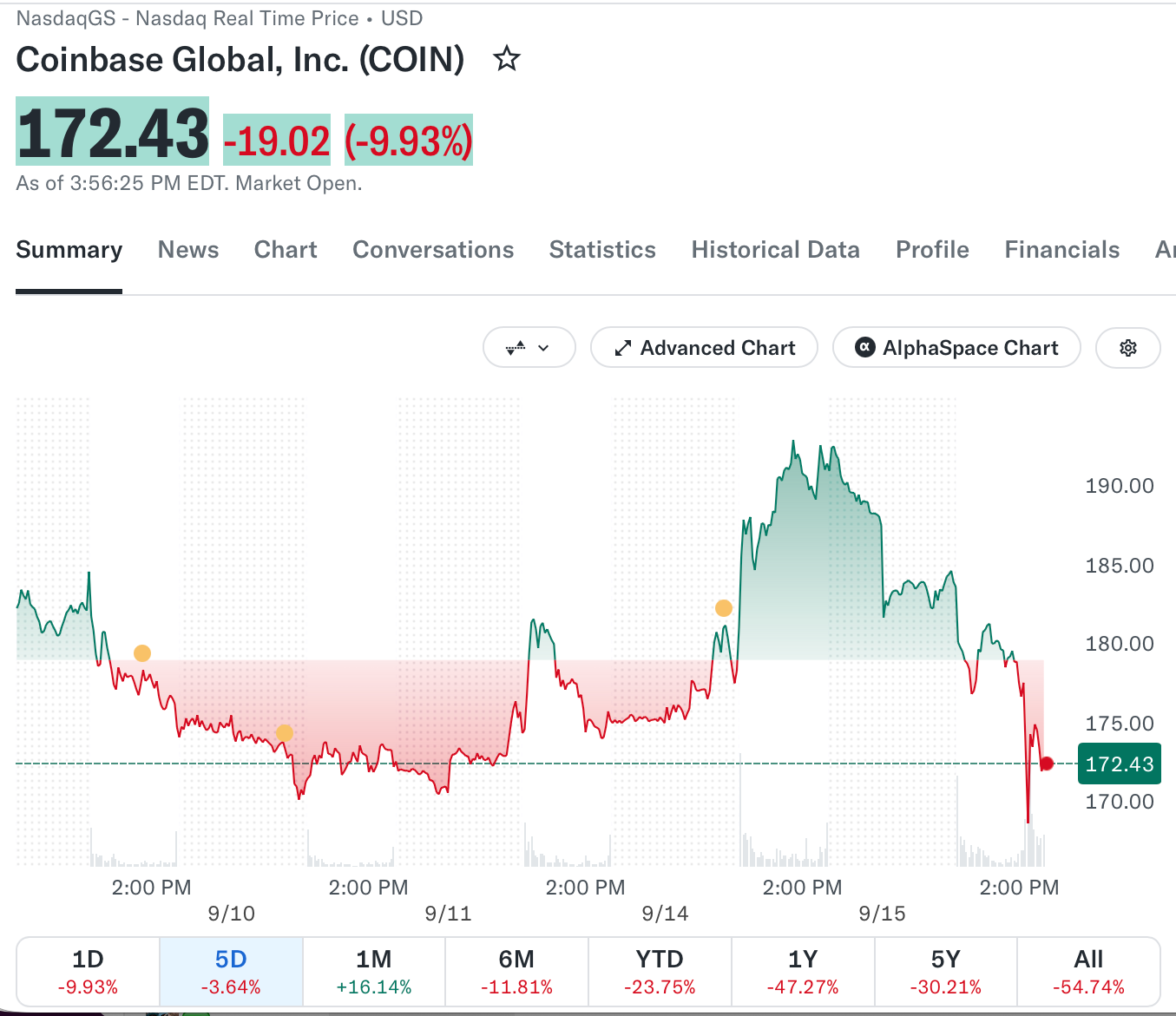
Crypto-linked stocks fell sharply on Tuesday after the US Senate failed to advance the CLARITY Act, with shares of Circle and Coinbase dropping about 10%.
Bitcoin treasury companies were also hit, with American Bitcoin falling around 8%, while Strategy and Strive each declined about 5%, according to Yahoo Finance data. Bitcoin miners joined the selloff, with Riot Platforms falling about 6%, CleanSpark nearly 5%, Hut 8 more than 4% and IREN almost 4%.
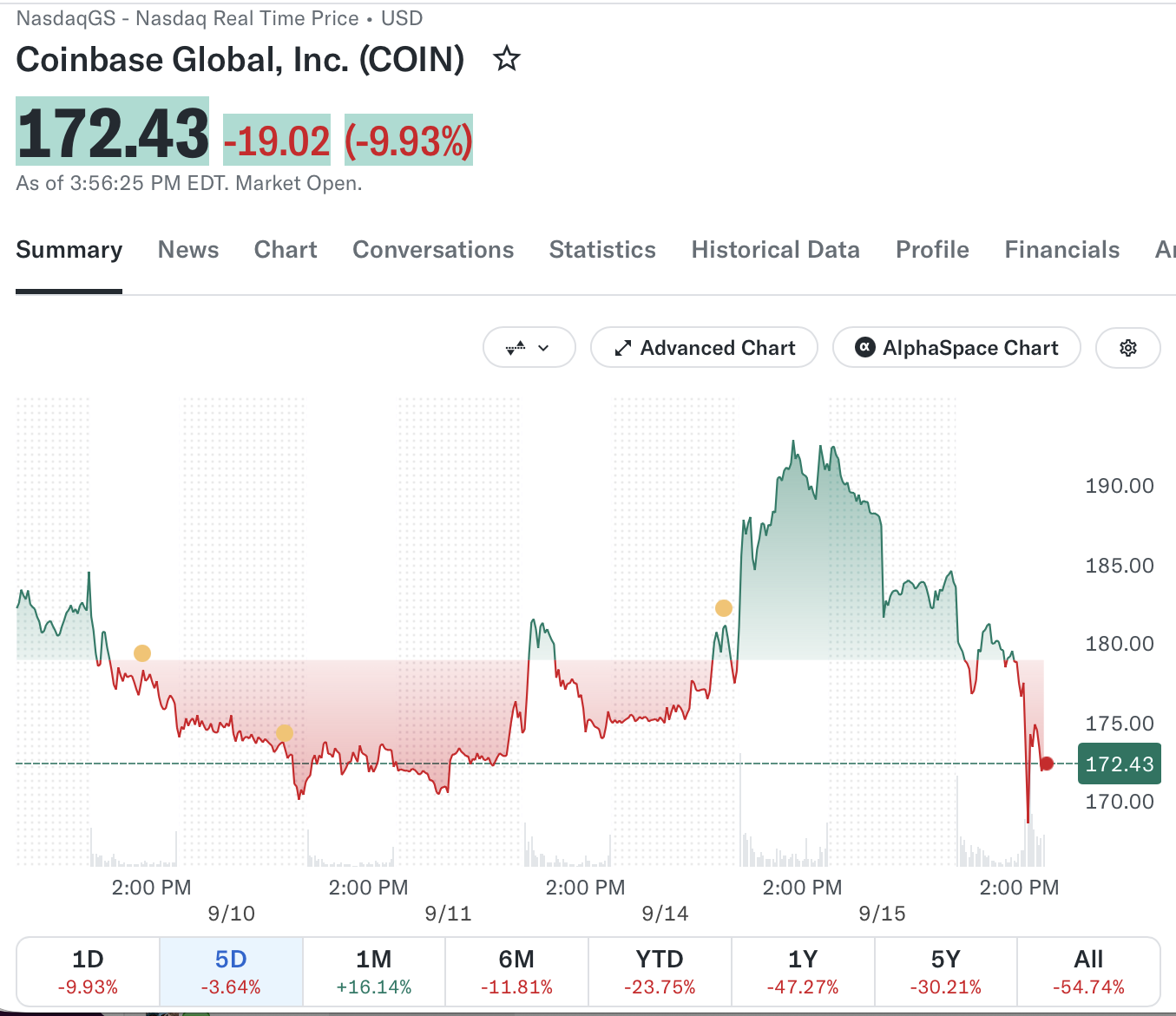
Coinbase (COIN) shares fell 9.9% on Tuesday. Source: Yahoo Finance
The declines followed a Senate vote on a cloture motion to bring the legislation to the Senate floor, short of the 60 votes required. The CLARITY Act would set rules for the US digital asset market and delineate which parts of the industry fall under the Commodity Futures Trading Commission (CFTC) and Securities and Exchange Commission (SEC).
The setback leaves the bill with little time to advance this year, with fewer than 36 legislative days remaining before a new Congress is sworn in following November’s midterm elections.
Following the vote, Bitcoin briefly fell below $75,000, but had climbed back to around $76,000 at the time of writing, CoinGecko data showed.
Related: Democrats push back on GOP’s ‘final’ CLARITY offer with counterproposal: Politico
Armstrong pushed for CLARITY ahead of vote
Coinbase CEO Brian Armstrong had been one of the most vocal industry advocates for the CLARITY Act, saying in May that the legislation had never been in a “stronger or more bipartisan position.”
Armstrong was even more explicit about the bill’s prospects in August, predicting either “60+ votes in the Senate on September 15th” or new rules from the CFTC and SEC on Sept. 16 if the bill failed to advance. “Sounds like clarity is coming either way,” he wrote on X.
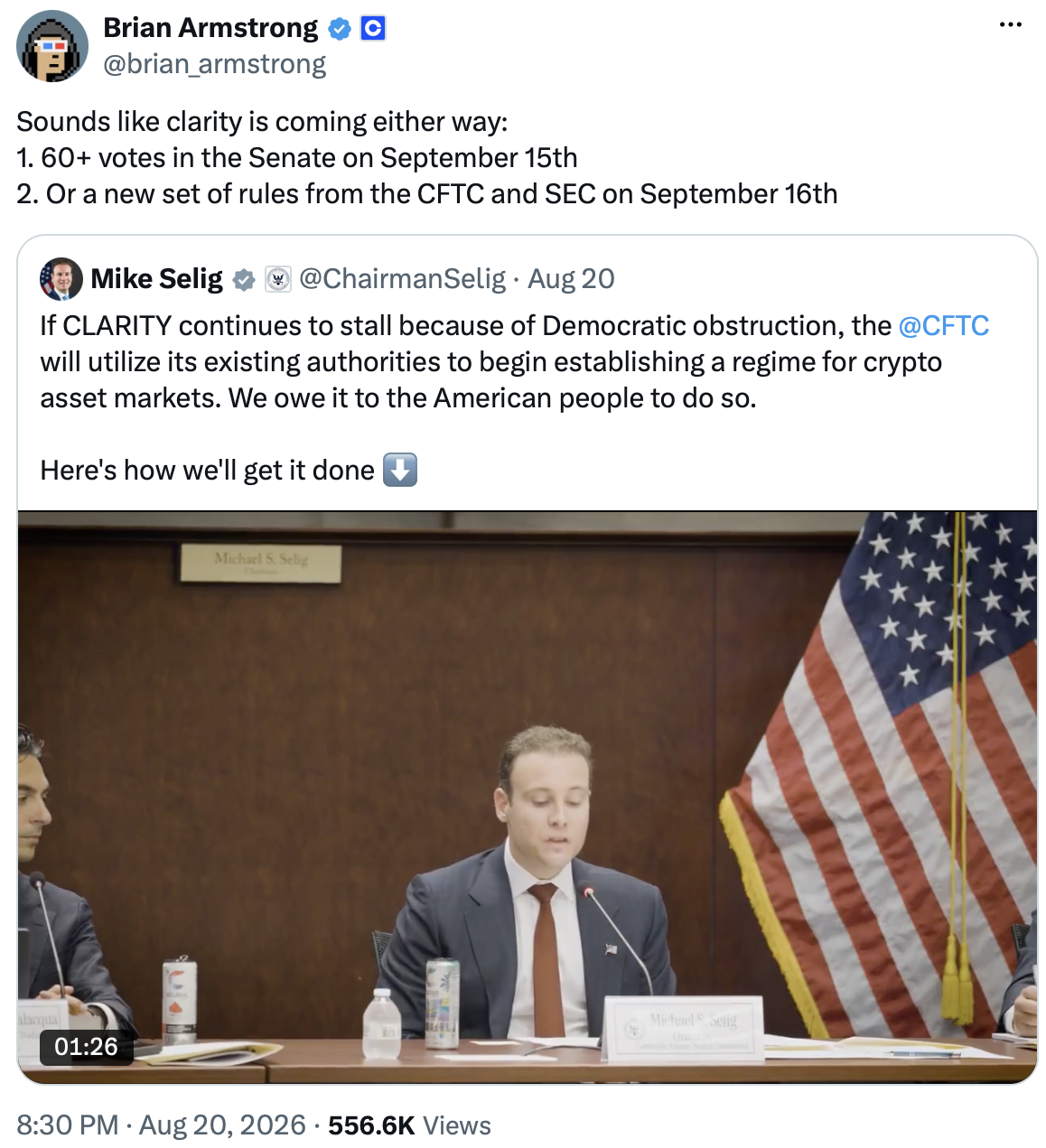
Source: Brian Armstrong
Ahead of Tuesday’s vote, Armstrong again urged senators to support the legislation, framing the choice as one between promoting US crypto innovation and allowing other countries to take the lead. “History — and the crypto voter — won’t forget,” he wrote.
Following the failed vote, Strategy co-founder Michael Saylor offered his own take on regulatory clarity. “The only clarity you need is Bitcoin,” he wrote on X.
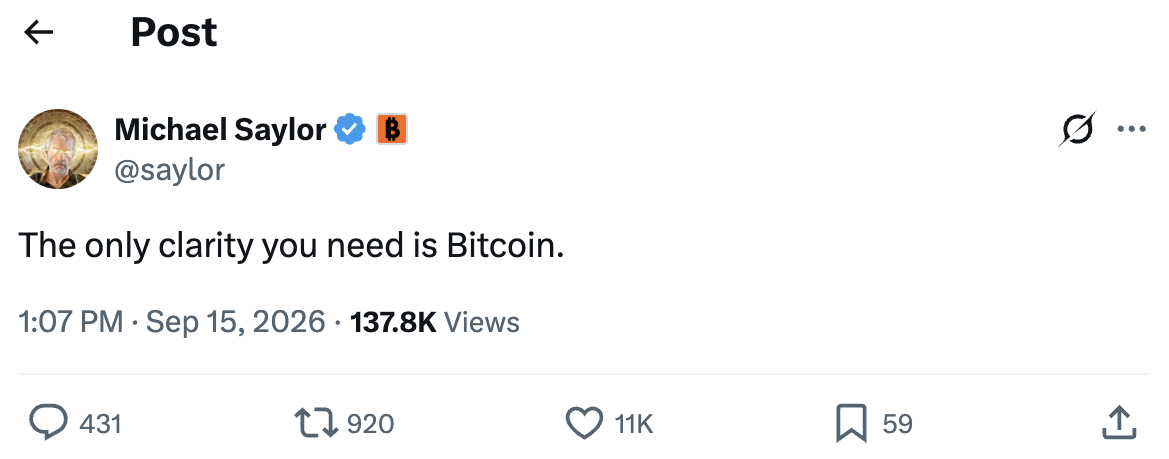
Source: Michael Saylor


Federal prosecutors have charged two Robinhood engineers with commodities fraud and wire fraud after each allegedly earned more than $50,000 by trading crypto perpetual futures with confidential listing information.
Summary
- Two Robinhood engineers allegedly traded before the company announced new cryptocurrency listings.
- Each defendant allegedly earned more than $50,000 through perpetual futures positions on Hyperliquid.
- Commodities fraud carries a maximum 10-year sentence, while wire fraud carries up to 20 years.
- The criminal complaints remain allegations, and both engineers are presumed innocent unless convicted.
Robinhood engineers allegedly traded before listings
The U.S. Attorney’s Office for the Southern District of New York announced the charges against Hefu Chai, 36, and Huaisong Xiang, 30, also known as Jerry Xiang, on Sep. 15.
Both defendants worked as engineers at Robinhood Markets during the alleged conduct. According to the criminal complaints, their jobs gave them access to confidential information about which cryptocurrencies Robinhood Crypto planned to add to its platform and when the listings would become public.
Prosecutors allege that Chai and Xiang used the information between 2025 and 2026 to open perpetual futures positions linked to the planned listings. Rather than buying the underlying tokens, they allegedly placed the trades through Hyperliquid before Robinhood released its announcements.
Once the listings became public, prosecutors said the prices of several related cryptocurrencies rose, allowing both defendants to close profitable positions. Each engineer allegedly made more than $50,000 through trades tied to Robinhood’s private listing plans.
The complaints accuse Chai and Xiang of breaching their duties to protect their employer’s confidential information. Prosecutors have not identified every cryptocurrency involved in the alleged trades in the public announcement.
As crypto.news reported in June, Robinhood’s Worldcoin listing announcement gave customers access to WLD while the token was experiencing sharp price swings. WLD fell nearly 15% around the listing period despite gaining access to Robinhood’s customer base, showing that a platform addition does not always produce a lasting rally.
Hyperliquid perpetuals formed the alleged trading route
Hyperliquid operates a decentralized derivatives platform where traders can take long or short positions through perpetual futures. Unlike standard futures, perpetual contracts do not have fixed expiration dates and use recurring funding payments to keep their prices close to the referenced assets.
According to prosecutors, the absence of an expiry date allowed Chai and Xiang to establish positions before Robinhood’s announcements and hold them until the expected price movements occurred. The complaints allege that both engineers possessed material nonpublic information when they entered the trades.
Hyperliquid records trades on public blockchain infrastructure, but users can interact with its markets without buying the assets referenced by the contracts. July coverage of Hyperliquid’s protocol upgrades detailed how HIP-3 opened perpetual market creation to outside developers and expanded the platform beyond crypto tokens to instruments linked to stocks, commodities and indexes.
HIP-3 has operated on the mainnet since October 2025, while HIP-4 went live in May 2026 with support for prediction and event markets. Hyperliquid’s expanding range of instruments has placed its decentralized trading infrastructure closer to markets traditionally overseen by U.S. commodities and derivatives rules.
Although the alleged trades occurred on a decentralized venue, U.S. Attorney Jamie McDonald said the type of platform used did not remove the defendants’ legal obligations.
“Misappropriating confidential information to trade in the derivatives markets for personal benefit is illegal,” McDonald said.
The prosecutor added that traders cannot avoid U.S. securities and commodities laws by using perpetual futures, tokenized securities, or similar financial products.
US prosecutors apply commodities and wire fraud laws
Chai and Xiang each face one count of commodities fraud and one count of wire fraud. According to the Justice Department, the commodities charge carries a maximum prison term of 10 years, while wire fraud carries a maximum sentence of 20 years.
Any sentence would be determined by a federal judge after considering the U.S. Sentencing Guidelines and other statutory factors. The maximum penalties do not indicate what either defendant would receive if convicted.
The case gives U.S. readers a direct example of how federal prosecutors can pursue alleged misuse of corporate crypto information even when the trades do not involve ordinary shares or spot token purchases. Prosecutors framed the alleged perpetual positions as derivatives trades made with information taken from a U.S.-listed company.
Robinhood trades on Nasdaq under the HOOD ticker and offers crypto services through Robinhood Crypto. Its conventional brokerage, crypto, and derivatives products operate through separate affiliated entities with different regulatory arrangements.
Robinhood’s official disclosures state that its U.S. futures and cleared swaps business operates through Robinhood Derivatives, a futures commission merchant registered with the Commodity Futures Trading Commission and a member of the National Futures Association. Robinhood Crypto is licensed by the New York State Department of Financial Services for virtual currency activity.
The alleged Hyperliquid trades were separate from customer transactions on Robinhood’s own platform. Prosecutors have accused the two employees of exploiting internal information rather than alleging that Robinhood customers lost funds or that the brokerage manipulated token prices.
FBI investigation leads to court appearances
FBI Assistant Director James C. Barnacle Jr. said the engineers allegedly used sensitive information obtained through their employment for personal profit. According to Barnacle, the charges show that the FBI and its partners will act when employees are accused of abusing confidential corporate information.
Chai was scheduled to make his first court appearance in the Northern District of California. Xiang was due to appear in Manhattan before U.S. Magistrate Judge Ona T. Wang in the Southern District of New York.
The charges arrive as Robinhood has increased its use of blockchain-based products. In September, its Ethereum layer-2 network experienced a 14-minute block-production halt that temporarily prevented transfers and smart contract calls from receiving confirmation.
Robinhood launched the chain’s public mainnet on July 1 with 95 tokenized stocks and wallet access in more than 120 countries. The network uses Ethereum for transaction fees and supports compatible wallets and applications, while its tokenized products remain separate from the alleged crypto listing trades described in the federal complaints.
Neither complaint represents a finding of guilt. Chai and Xiang are presumed innocent unless prosecutors prove the charges beyond a reasonable doubt in court.


Bankers trying to kill Clarity should remember that incumbent media companies failed to halt the Internet’s upheaval of their industry. So, if you care about American leadership, then why not write the laws governing this transformation here and now, rather than cede that position to some other country keen to lead in global finance.
For years, regulatory ambiguity has functioned as an unlikely moat around the crypto industry. Startups and offshore firms can tolerate legal and regulatory risks that heavily regulated financial institutions cannot. Those risks have kept many of the world’s largest financial companies on the sidelines.
Clarity would fill the moat.
With clear rules, incumbents could wield their formidable advantages: trillions of dollars of capital, hundreds of millions of customer relationships, global distribution, sophisticated risk management, trusted brands, and decades of regulatory experience.
That should terrify crypto companies far more than it terrifies banks.
Critics portray Clarity as deregulation or, worse, a giveaway to the crypto industry. They have it backwards. Clear rules would expose crypto companies to the full force of competition from some of the most powerful financial institutions in the world.
Such competition is exactly what lawmakers should want.
The history of financial innovation is not a story of new technologies’ destroying incumbents. After all, banking has been transformed for the better by technologies from the telegraph to the internet. In each case, forward-looking institutions used such inventions to reach new customers, create new products, and cultivate new markets.


Crypto stocks were a sea of red Tuesday afternoon after the Senate failed to advance the Clarity Act, dealing a major blow to an industry that has spent years — and hundreds of millions of dollars in campaign contributions — gunning for a comprehensive U.S. regulatory framework.
Coinbase · was down nearly 9% at $174.42, while stablecoin issuer Circle · dropped 9.4% to $88.26. Galaxy Digital · lost 8% and Gemini (GEMI) fell 7%.
The pain spread across the sector. Robinhood · was down 3%, Bullish · lost 5% and eToro (ETOR) fell 4%.
Among crypto miners, Riot Platforms · dropped 5%, while MARA Holdings ·, CleanSpark ·, IREN and Core Scientific · were all down between roughly 3% and 4%.
The declines came after the Senate voted 49-50 on a procedural motion to advance the Digital Asset Market Clarity Act, well short of the 60 votes required.
The bill would have set rules for how different cryptocurrencies and blockchain projects are treated in the U.S., while giving the Commodity Futures Trading Commission (CFTC) greater authority over crypto spot markets.


New research has accused Anthropic of using “AI doom” media narratives to pump Dustin Moskovitz’s equity in the company to fund foundations that support its safety evaluator and curiously positive safety reviews.
Substack author Kevin Bass made the claim in a lengthy X post on Monday. In the post, he also calls for a Congressional investigation into the alleged financial conflicts of interest at Anthropic’s AI safety evaluator. It has so far drawn nearly 5 million views on social media.
Protos has not evaluated its veracity.
Focusing on the equity relationships between Anthropic and Model Evaluation and Threat Research (METR), the entity that checks its frontier AI models for safety, the analysis prompted several observers to report “SBF flashbacks.”
According to Bass, Moskovitz’s Anthropic equity helps to fund Good Ventures Foundation and Coefficient Giving, which in turn support METR as Anthropic’s conflicted safety evaluator.
It also funds the Tarbell Center for AI Journalism, which pushes AI doom media to keep the flywheel spinning.
Anthropic CEO Dario Amodei is another curly-haired billionaire and Effective Altruist who has, like FTX’s Sam Bankman-Fried, constructed a web of self-serving entities.
These include:
- A household name with a high corporate valuation (Anthropic)
- Affiliated investment vehicles that almost no one has heard of
- Active political lobbying efforts
- Effective altruism-aligned nonprofits
- A well-funded media campaign to keep everything capitalized
Although no one is accusing Amodei of secretly stealing billions of dollars of customer deposits like Bankman-Fried, there seems to be a commingling of financial incentives between Anthropic and its ostensibly independent safety checker.
Read more: Anthropic’s AI doomsayer worked at Ripple
Anthropic installs ‘embedded evaluators’ for safety
Over the weekend, Anthropic CEO Dario Amodei proposed “embedded evaluators who have employee-like access to verify safety practices and report incidents.”
Boasting about his company’s supposed rigor, Amodei urged other frontier companies to “follow suit.”
Bass, in complete contrast to this narrative, recast that story as a payroll scandal.
Trace the capital back, he claims, and METR ultimately relies on Facebook co-founder Dustin Moskovitz, a self-professed effective altruist.
Forbes reported that he and his wife, Cari Tuna, moved an Anthropic stake into an unnamed nonprofit vehicle in early 2025.
By November 2025, Forbes estimated its worth at a staggering $500 million.
Forbes later bounded the donated holding up to 0.8% of Anthropic, a company that has raised money at a $965 billion valuation this May. At that valuation, 0.8% could be worth over $7 billion.
Moskovitz said, “Our Anthropic shares are entirely in our foundation — no personal benefit.”
Coefficient Giving CEO Alexander Berger wrote that the shares didn’t literally go to Coefficient Giving. However, a commenter disagreed with the spirit of that claim, noting that Amodei’s sister, Daniela, is married to Coefficient Giving co-founder Holden Karnofsky.
“If any of Coefficient Giving’s board members are large METR donors, that is a direct and obvious conflict of interest,” the commenter concluded.
The latest available tax filing for the other nonprofit connected to METR, Good Ventures Foundation, reports $10.1 billion in assets at that nonprofit.
The filing names hundreds of public stocks but puts private equity and venture capital into generic buckets. Anthropic doesn’t appear by name.
METR annualized funding commitments of $142M
From whichever entities ultimately originated most of their fortunes, METR announced $71 million of new commitments over the past six months.
Despite this large budget, METR safety evaluators claim to refuse Anthropic or any AI lab funding, although frontier labs provide substantial free tokens for testing.
Coefficient Giving is legally separate from Good Ventures, although Good Ventures serves as its founding partner. Coefficient Giving’s live archive records $3.7 million across two direct cash awards to Tarbell.
Tarbell acknowledges that Coefficient supplied most of its funding as of 2025, while maintaining that it doesn’t allow donors to control its reporting nor media efforts.
Anthropic announced an eight-week agreement with METR this month. The evaluator will get access to employees and internal transcripts.
METR’s conflict policy says it’s never received payment for company-identifying assessments, and it “strives to be supported by broad and independent funders.”
Got a tip? Send us an email securely via Protos Leaks. For more informed news and investigations, follow us on X, Bluesky, and Google News, or subscribe to our YouTube channel.

The biggest danger, however, comes from missiles and orbital projectiles that would effectively blow satellites up, since that kind of kinetic attack produces a swirling cloud of orbital debris that would fan out from the site of the strike, threatening other satellites with unplanned destruction. Accidental collisions with space junk already worry both the commercial and military sectors. There are currently nearly 15,000 operational satellites in Earth orbit, and up to 10,000 defunct ones, making for a lot of celestial traffic. Just as troubling, according to NASA’s Orbital Debris Program Office, there are an additional 500,000 objects measuring 1 to 10 cm (.39 in. and 3.9 in.), and 100 million in the 1-mm range. Such tiny bits of mass matter. Traveling at 4.85 miles per second, even a fleck of paint could do significant damage to a satellite, or, worse, a crewed spacecraft.
What truly keeps space planners up at night is something known as the Kessler Effect—a slow-motion chain reaction in which the flotsam produced by a collision with even a single piece of space debris could strike other satellites, producing more debris still, and more collisions still, ultimately leading to the loss of all spacecraft in that orbital band. A runaway Kessler effect was the premise of the 2013 film Gravity, and while the screenwriters took liberties with the science (the collisions all played out within hours when in fact they could take months or even years), the eventual results would be the same. China’s 2007 satellite-destruction exercise was estimated to have produced more than 3,000 pieces of debris—which could have taken out the country’s own spacecraft as readily as those of rivals. Russia’s similar duck-hunting in 2021 is estimated by the Pentagon to have produced 1,500 fragments. It was luck more than anything else that prevented either move from setting a Kessler cascade in motion.
Crypto World
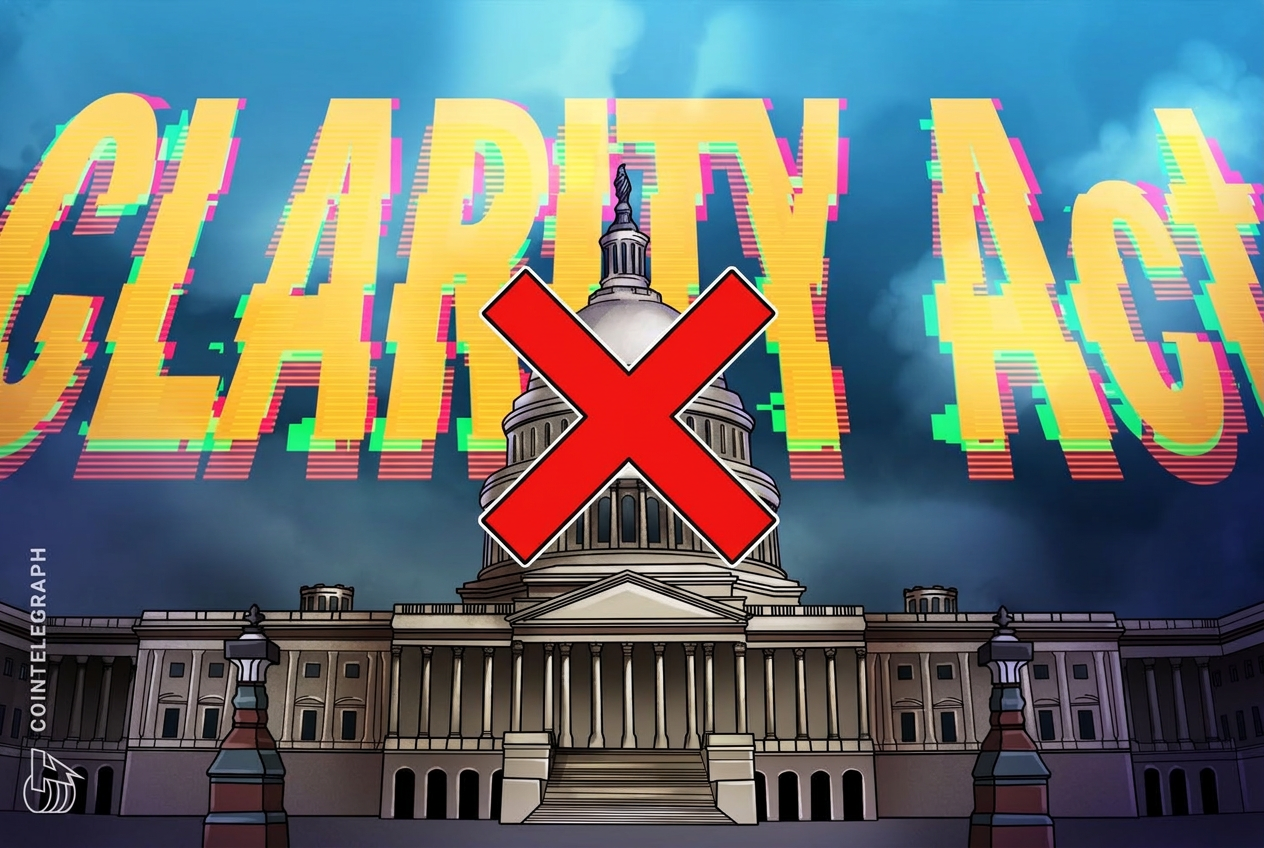
Crypto’s biggest Senate push falls flat as the Clarity Act fails to clear a crucial procedural vote
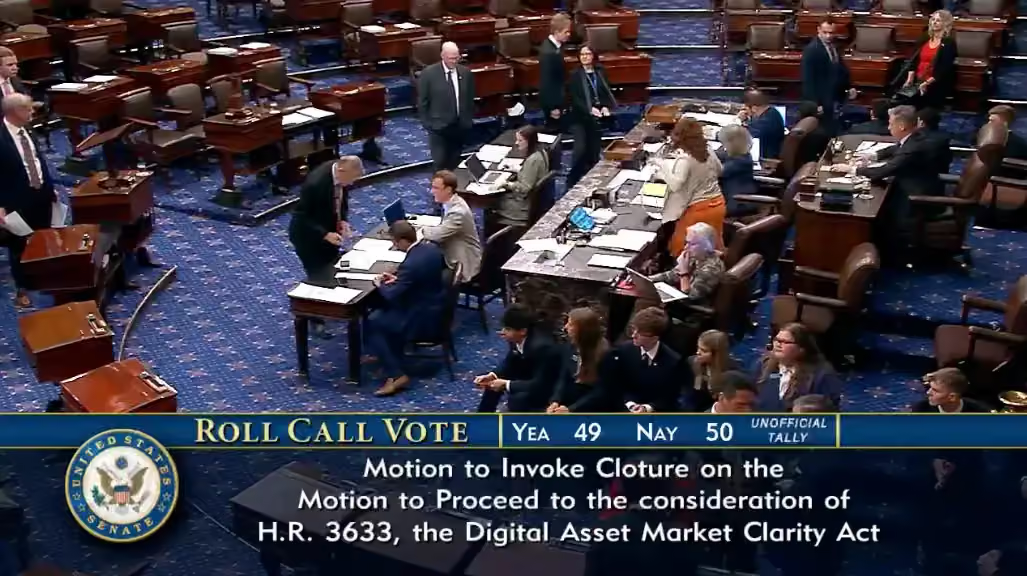
Negotiators for the two political parties had hashed out more than 600 pages of legislative compromise, but a few final sections of the bill — such as the ethics provisions meant to curtail senior government officials from maintaining crypto business ties — turned out to feature insurmountable rifts. And the closer the process dragged toward the elections, the more likely it was that political pressures would get in the way of a bipartisan deal.

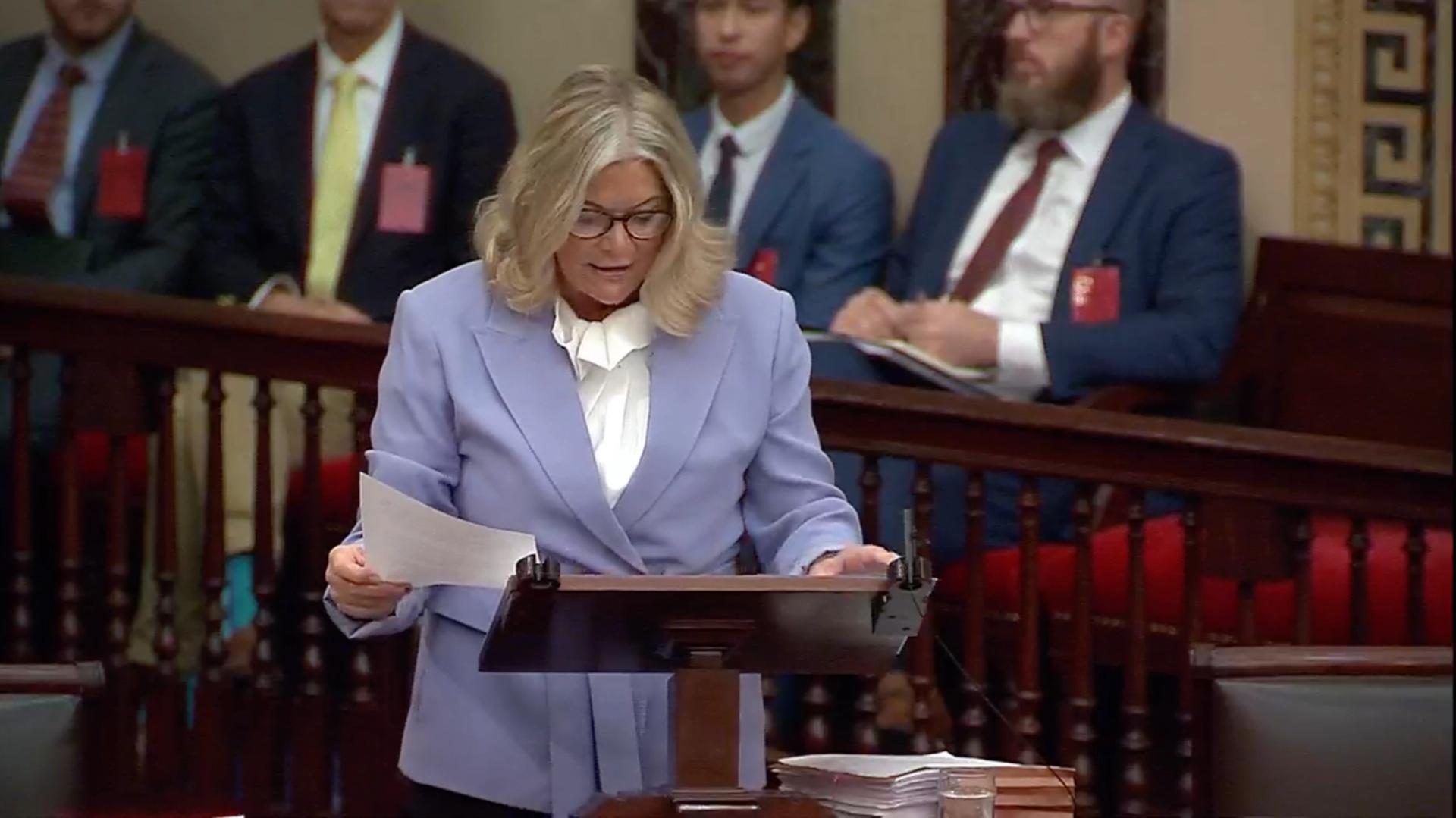
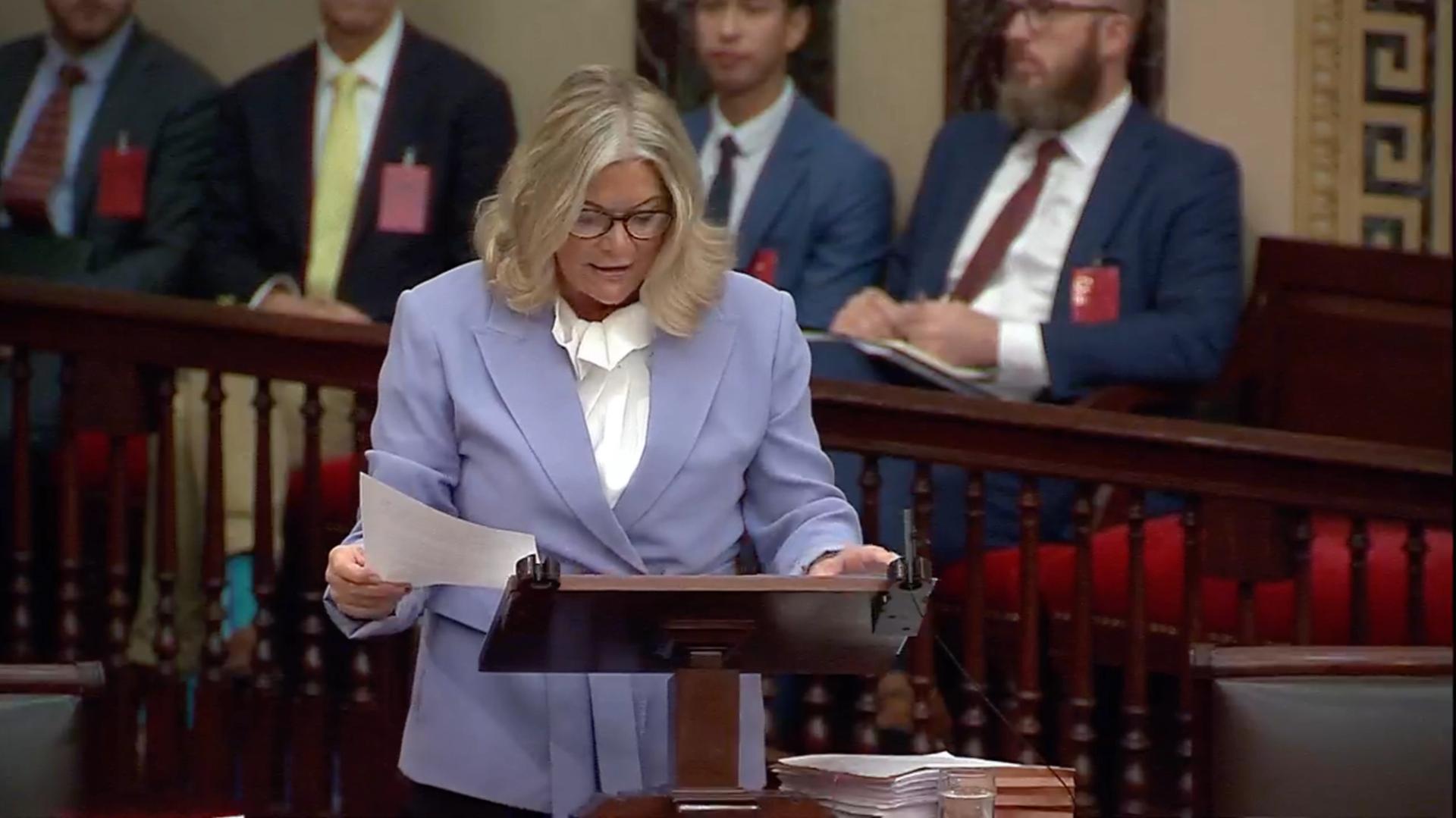
Leading Republican negotiator Senator Cynthia Lummis made the final pitch before the vote, but she failed to convince enough colleagues to join her.
“Do not let this day be the day we handed our future to someone else because we were too afraid to finish what we started,” she said on the Senate floor. “Let’s vote yes. Let’s not only join the 21st Century economy. Let’s not only join the digital age. Let’s lead it. Let’s define it.”
So what now?
The industry will turn to the U.S. market regulators who are already at work trying to impose rules on the sector.
The Securities and Exchange Commission and the Commodity Futures Trading Commission have started moving forward on initiatives the industry hopes will provide enough regulatory stability and certainty that it will help coax more investors and businesses off the sidelines.
Cointelegraph is committed to providing independent, high-quality journalism across the crypto, blockchain, AI, and fintech industries.
All news, reviews, and analyses are produced with full journalistic independence and integrity. For more details on our standards and processes, please read our Editorial Policy.

Stablecoins are increasingly shaping the plumbing of global finance—and not just inside crypto. In remarks delivered at Queen’s University Belfast on Tuesday, Carolyn Wilkins, a member of the Bank of England’s Financial Policy Committee, warned that the fastest-growing “digital dollar” products could strengthen the US dollar’s international role while also creating new stresses for US Treasury markets.
Wilkins’ core message was straightforward: dollar-denominated stablecoins make cross-border settlement easier and widen access to dollar-linked instruments outside the United States. That, she argued, can translate into higher demand for US Treasury bills held by stablecoin issuers and, at larger scale, potentially amplify liquidity pressure if redemptions accelerate.
Key takeaways
- Wilkins said dollar-linked stablecoins could reinforce US dollar dominance by improving cross-border settlement and access to dollar assets.
- Data cited by the Bank of England suggests major issuers already hold large Treasury positions, tying stablecoin growth to government debt demand.
- At scale, large stablecoin redemptions could force issuers to sell Treasuries, potentially increasing volatility in stressed market conditions.
- The stablecoin market remains overwhelmingly tied to the US dollar, giving it a “first-mover advantage,” even as other currencies pursue their own products.
- In the UK, regulators are moving more deliberately but have shifted toward enabling frameworks for stablecoin issuance alongside experimentation from the central bank.
Dollar stablecoins and the US Treasury linkage
Wilkins’ comments focused on how stablecoins operate as a bridge between crypto activity and traditional dollar assets. According to figures referenced in her speech, Tether’s USDt (USDT) and Circle’s USDC (USDC) held nearly $150 billion in Treasury bills at the end of 2025, and together bought roughly $33 billion during 2025. The implication is that stablecoin reserves are not just idle cash: they are actively positioned in US government securities.
That matters for investors and market participants because it links stablecoin flows to a key part of the global risk-free asset complex. When stablecoin issuance and redemption cycles accelerate, reserve management becomes more dynamic—potentially affecting demand and, under certain conditions, sell-side liquidity.
Wilkins also emphasized a two-way channel. While stablecoin growth can support Treasury demand, she cautioned that the same mechanism could work in reverse. If redemptions become large and widespread enough, issuers may need to raise liquidity by selling Treasury bills. In an already strained market, those sales could worsen volatility.
Why “digital dollars” could spread beyond crypto
The Bank of England committee member framed dollar stablecoins as an enabler for non-US users. Dollar-denominated stablecoins, she said, can broaden access to dollar-linked assets and streamline settlement across borders—features that can be particularly attractive for institutions and users operating in jurisdictions where access to dollar rails is more complex or expensive.
Wilkins pointed to the market’s current structure: stablecoins remain heavily concentrated in the US dollar. According to context cited in her speech, the US dollar accounts for 98% of stablecoin value. She described this as conferring a “considerable first-mover advantage,” reflecting how early issuance, liquidity, and integration have made dollar stablecoins the default reference point for most digital dollar activity.
Outside the central banks’ own research, broader market reporting also signals strong momentum. The article that references Wilkins’ remarks notes that stablecoin circulation has surpassed more than $300 billion, underscoring how quickly “digital dollar” instruments have moved from niche usage to a large, globally referenced market. While the precise effect on Treasuries depends on reserve composition and redemption behavior, the size of the sector increases the relevance of central-bank monitoring.
UK’s push for stablecoin development—without waiting for adoption
Wilkins’ remarks also implicitly contrast the US-dominated stablecoin landscape with the UK’s efforts to build a credible local framework. Pound-denominated stablecoins have been slower to gain traction, she said, but UK regulators have taken steps to make issuance possible under clearer oversight.
The Financial Conduct Authority has taken a structured approach. It began testing prospective stablecoin issuers via a dedicated regulatory sandbox and finalized rules for UK stablecoin issuance in June, according to a policy document published by the FCA (PS26/10). The Bank of England, meanwhile, has continued experimenting with digital money concepts, including a test of whether stablecoins and a simulated digital pound could operate together for cross-border trade payments (as covered in earlier reporting by Cointelegraph: interoperability for cross-border payments).
Just as importantly, Wilkins’ message aligns with a broader regulatory pivot. The Bank of England has been perceived as moving toward a more accommodating posture after industry criticism that earlier proposals might restrict innovation (reported previously by Cointelegraph: softer UK stablecoin regime). For market participants, this shift matters because stablecoin issuance tends to move quickly when legal pathways are clear—and slowly when they are uncertain.
That UK strategy also reflects the wider challenge of fragmentation in global stablecoin regulation. Earlier coverage highlighted how inconsistent rules across countries can constrain adoption for international finance, with reference to commentary from a WTO director (Cointelegraph: fragmented regulations). While Wilkins’ speech is focused on dollar effects, it implicitly raises the question of whether non-dollar stablecoins can become structurally viable without similar clarity and integration.
What to watch next: redemption stress and currency concentration
Wilkins’ warning is less about stablecoins being “good” or “bad,” and more about how their scale could change the behavior of traditional markets during periods of stress. Investors, traders, and issuers should watch how redemption dynamics evolve at larger sizes—especially the extent to which stablecoin reserve management relies on Treasury bills—alongside whether stablecoin value remains as concentrated in the US dollar as it is today.
The Senate’s failure to advance the Clarity Act on Tuesday was a major setback for the crypto industry’s push to lock market structure rules into law, but the reaction from industry leaders was notably measured.
Crypto executives said the vote does not unwind the regulatory progress already underway at the SEC and CFTC, nor is it likely to stop banks, asset managers and crypto firms from continuing to build.
What it does leave unresolved is the question of durability: agency rules can change with a new administration, while legislation would have given the industry a more permanent framework.
For some, that means the U.S. now risks extending the uncertainty that has pushed companies to look toward jurisdictions such as Europe, where MiCA already provides a clearer rulebook. Others argued the failed vote changes little about the longer-term shift toward regulated digital-asset markets.
Here is how crypto industry executives reacted to the Clarity Act’s failure in the Senate.
Connor Howe, Co-Founder & CEO, Enso
“Falling short of the 60-vote threshold doesn’t send the market back to 2022. [CFTC Chair] Selig already told CFTC staff to draft a market-structure regime under existing Commodity Exchange Act authority, and the SEC put Regulation Crypto Assets out for comment back in August. Neither move was riding on Tuesday’s vote.
Durability is where the vote still matters. The next chair can rewrite an agency rule without a single vote in the Senate. Repealing a statute takes another act of Congress, a bar few chairs manage to clear. Banks and asset managers on the fence hold out for the version that outlasts whoever runs the agency next. The same gap swallows what this draft dropped: explicit Section 1960 protection for developers who never touch customer funds. Without it in statute, that protection is as easy to unwind as anything the CFTC or SEC writes on their own. After a failed cloture, the version that sticks won’t come from this Congress.”
Barnali Biswal, CEO, Hilbert Group
“Falling short of the 60-vote threshold shouldn’t trigger a steep sell-off. Prediction markets had already priced in failure. It does cost momentum, though. Major bank trade groups were lobbying against the stablecoin yield language right up to the vote, and that fight doesn’t go away just because cloture failed. Without this compromise, institutional capital keeps navigating a fragmented, enforcement-heavy market.”
Alan Konevsky, CEO of tZERO
“The structural shift toward regulated digital asset markets is already underway, and today’s vote falling short doesn’t change that. Other paths are already being explored, with the SEC and CFTC putting out their own proposed rules and agreeing to coordinate jurisdiction over digital assets. Regardless of the regulatory path, institutions will continue to adopt these protocols over legacy market infrastructure because the secure, regulated infrastructure they need already exists today. ”
Frederik Gregaard, CEO of the Cardano Foundation
“While today’s outcome is disappointing, the need for regulatory clarity is as urgent as ever. Clear rules are essential to protecting consumers, unlocking institutional adoption, and reinforcing U.S. financial leadership. We remain at the table and committed to working with lawmakers to get clear rules for innovation across the finish line.” Katherine Kirkpatrick Bos, Head of Legal at Chainlink Labs.
“In Europe, builders at least know the rules of the game under MiCA. The push for Clarity shows Washington knows it has a regulatory gap to close, but builders can’t afford to wait around for the U.S. to get its act together. Blockchain technology will continue to advance because it provides real value beyond any individual crypto price. It looks like the EU is the clearest jurisdiction to do so.”
Abhishek Vaidyanathan, Chief Legal Officer, NEAR
“If cloture fails today, the next Congress is the likely next opportunity to address crypto market structure. The House has already canceled its weeks of September 21 and 28, and the Senate’s state work period begins October 5, ahead of the November 3 election.
Rejecting the bill leaves firms completely dependent on agency guidance and ongoing administrative discretion. Firms setting their 2027 budgets would face another prolonged delay, forcing them back into case-by-case judgments and repeated legal work while counterparties continue to price in regulatory uncertainty. Capital currently waiting on the sidelines for clear legislation may simply move elsewhere.
Europe has been operating under MiCA since December 2024. In contrast, the U.S. remains stuck, relying on federal interpretations, proposed rules, and a patchwork of state regimes. Without CLARITY, the broader market lacks the statutory footing that GENIUS delivered for stablecoins, leaving firms to navigate a system where a token’s treatment continues to depend on agency discretion and historical promises rather than fixed statutory law.”
Vassilis Tziokas, VP Growth for Matter Labs
“Today the Senate fell short of the votes needed to advance the CLARITY Act, and we wanted a different outcome: clear rules make everything the industry is building easier to scale and safer to connect. But the vote changed the timeline in Washington, not the trajectory in banking. Banks aren’t betting their future on a vote count. They are already building their own tokenized deposit networks to move dollars onchain at stablecoin speed, settle instantly around the clock, and program payments directly into the rails, all while deposits stay on the bank’s own balance sheet, under the rules that already govern them. And tokenized deposits are the front door, not the whole house. The same infrastructure is being extended to intraday repo, collateral that can move on a weekend, and tokenized securities, with bank-grade privacy as the entry requirement rather than an afterthought.
JPMorgan’s deposit token is live, Citi is settling tokenized payments across time zones, and regional and community banks are building bank-governed deposit networks on shared infrastructure. Cari just raised more than $30 million, backed entirely by banks, to give institutions a network they own and govern themselves.
With legislation stalled, we expect the center of gravity to shift toward the regulators, with SEC- and CFTC-led rulemaking and banking-agency guidance carrying more of the load in the interim. Stablecoins and tokenized deposits serve different purposes, and both are stronger with certainty. A stalled bill delays the rulebook, not the building.”
Read more: Crypto Clarity Act flames out in failed U.S. Senate vote
Growing Pains for Startups in the ChatGPT Generation

Coinbase, Circle Drop 10% After CLARITY Act Vote

It’s Officially the End of an Era for HBO’s ‘The Last of Us’



-

 Fashion4 days ago
Weekend Open Thread – Corporette.com
-

 Business6 days ago
Micron Stock Climbs Above $1,031 as AI Memory Crunch and a $50 Billion Outlook Fuel the Rally
-

 Tech2 days ago
The Latest Weird Thing to Play Doom Is the Mapped-Out Brain of a Fruit Fly
-

 Business6 days ago
AMD Stock Climbs After Management Lifts 2027 Data Center Outlook Toward $70 Billion in AI Sales
-

 Crypto World7 days ago
Bitcoin price risks $76K drop as $78K support weakens
-

 Crypto World4 days ago
XAG/USD: Silver’s Short-Term Rally Meets Its Moment of Truth
-

 Crypto World5 days ago
2 Chip Stocks Broke Out This Week. Neither Was Nvidia
-

 Business5 days ago
10 Most-Streamed Songs On Spotify In 2026 So Far, Led By Ella Langley’s Dominant Run On The Charts This Year
-

 Crypto World7 days ago
Ethereum price stalls below $2,500 as ADX drops to 11
-

 Tech5 days ago
Battery life is the only iPhone 18 Pro and iPhone Duo upgrade I care about. Apple didn’t disappoint
-

 Crypto World6 days ago
Pi Network ships Protocol 27 on a network with 14 million users and zero DeFi
-

 Crypto World5 days ago
OKX launches 10x OpenAI, Anthropic X-Perps in Europe
-

 Crypto World7 days ago
CLARITY Act runs out of calendar as crypto regulation stalls
-

 Crypto World4 days ago
Diesel Tops $6 a Gallon for the First Time as 28 States Set Records
-

 Tech6 days ago
Apple Watch Ultra 4 vs Watch Ultra 3: Should you really spend another $799?
-

 News Videos4 days ago
Facing Financial Fears
-

 Crypto World6 days ago
Bitcoin price risks $70K if $78K neckline breaks
-
 Tech7 days ago
Modders have already found two ways to make DLSS 5 playable, and neither one is Nvidia’s
-
 Crypto World7 days ago
Bitcoin price holds near $79K as cycle drawdowns narrow
-

 NewsBeat7 days ago
What went right this week: an ‘historic’ fall in violent crime, plus more
You must be logged in to post a comment Login