

Crypto World
Bitget Wallet Expands Tokenized Equities Offering with xStocks

Bitget Wallet said it has integrated xStocks infrastructure, giving its 90 million users access to more than 130 tokenized stocks and ETFs through its self-custodial wallet platform.
The integration expands Bitget Wallet’s tokenized real-world assets offering to more than 300 products, including equities, commodities, precious metals and index-linked assets, according to a Tuesday announcement.
The company said its tokenized equity products have processed more than $30 billion in transaction volume since launching in 2025. The products are not available in the United States, United Kingdom or other restricted jurisdictions, according to the company.
Bitget Wallet said the launch supports both request-for-quote (RFQ) and automated-market-maker (AAM) liquidity models and allows users to trade tokenized assets with zero trading fees and gasless execution.
According to the company, users can access tokenized equities and other real-world assets from the same interface used for cryptocurrency trading, swaps and storage while retaining control of their private keys and funds.
It is now operated by Payward, the parent company of Kraken, which acquired the tokenized equities platform through its purchase of Backed Finance in late 2025.
Related: Ondo brings proxy voting to tokenized stocks and ETFs with Broadridge
Competition grows in tokenized equities market
Crypto exchanges and trading platforms are fast expanding into tokenized equities and stock-linked derivatives offerings.
In March, Coinbase launched stock perpetual futures for international users, offering leveraged 24/7 exposure to publicly traded US equities through its derivatives platform.
Kraken also expanded its xStocks business recently with bundled crypto-and-equity investment products and tokenized equity perpetual futures for non-US users, while Binance said earlier this year it was exploring a return to tokenized equities after shutting down its stock token business in 2021 following regulatory scrutiny in Europe.
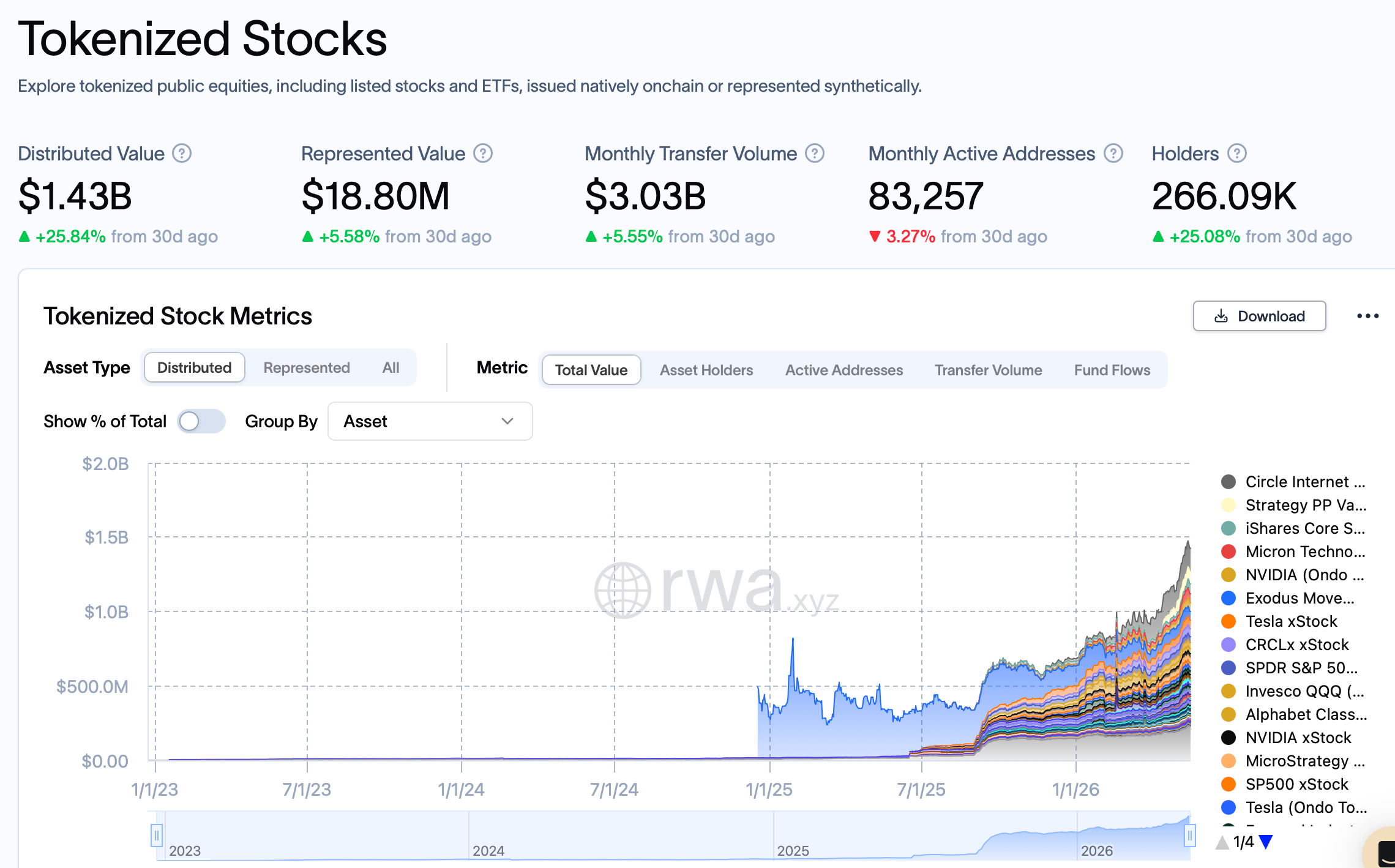
Data from RWA.xyz shows the tokenized equities market has grown to nearly $1.5 billion, with products linked to companies including Circle, Nvidia, Tesla, Alphabet and Strategy among the sector’s largest assets.
Ondo is currently the largest tokenized stocks platform by represented asset value at roughly $883 million, followed by xStocks at about $391.5 million. Several xStocks products linked to Strategy, Tesla, Nvidia and the S&P 500 index rank among the largest tokenized equity assets tracked by RWA.xyz.
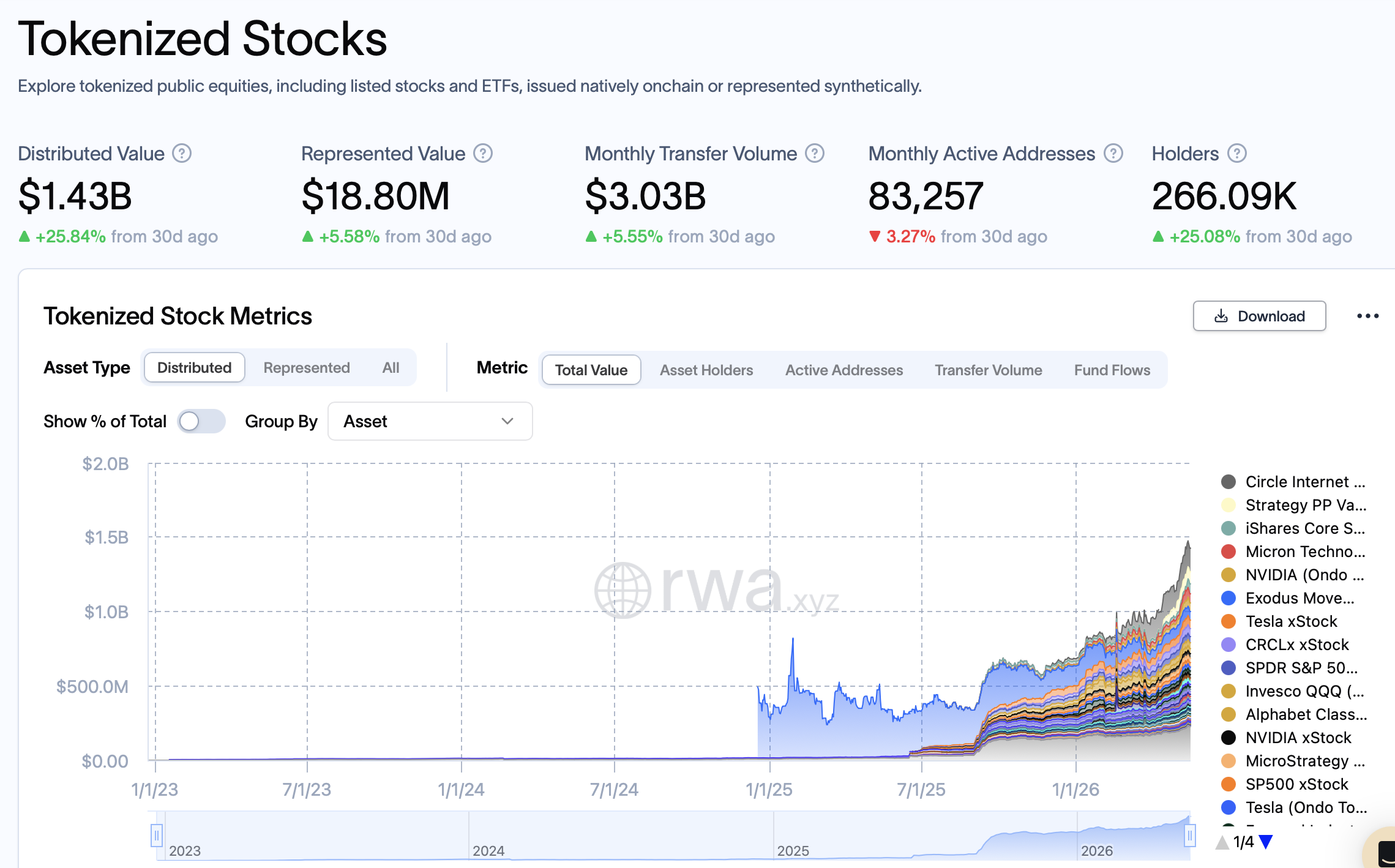
Snapshot of global Tokenized Stocks sector. Source: RWA.xyz
Magazine: ETH stalls at $2.4K five times, SOL to rally to $120: Market Moves

Crypto World
Pan-European stablecoin effort expands to 37 lenders in push back against U.S. dollar dominance


Qivalis, a stablecoin initiative backed by a group of European banks, aims to issue a stablecoin later this year to deepen the euro’s role in tokenized finance.


The Indian rupee tumbled to a record low of roughly 96.9 against the US dollar on Wednesday.
Global asset managers are warning that a slide toward 100 per dollar has become a possible scenario.
Follow us on X to get the latest news as it happens
Rupee Crashes to 96.9 Record Low as Iran War Hits Indian Currency
Wednesday’s drop extended the rupee’s losing streak to a 8th straight session. The currency has now lost about 6% since late February, when it traded near 87 per dollar. Cumulative losses since 2009 exceed 50%.
Surging crude oil prices, a stalemated US-Iran war, and surging bond yields are driving the slide. Furthermore, BeInCrypto reported that foreign portfolio investors have withdrawn more than $22 billion from Indian stocks this year.
According to Bloomberg, firms including Aberdeen Investments, MetLife Investment Management, and Gamma Asset Management SA expect the rupee to weaken further if the standoff drags on.
“The rupee remains vulnerable to further depreciation, and 100 against the dollar is an important psychological threshold that investors will increasingly focus on,” Rajeev De Mello, global macro portfolio manager at Gamma Asset, said. “The most immediate catalyst for a break of the level would be another leg higher in oil prices.”
A prolonged stalemate inflates India’s oil import bill and pushes investors toward the safer greenback. That deepens the rupee’s conversion pressure.
Meanwhile, Citi economists led by Samiran Chakraborty expect New Delhi to take fresh steps, including possible curbs on outward business investment.
The government has already hiked fuel prices and raised gold import duties to slow dollar outflows. Prime Minister Narendra Modi has urged citizens to conserve fuel and avoid non-essential foreign travel.
With the Strait of Hormuz still effectively shut and US Treasury yields elevated, the rupee may find little near-term relief. Only a diplomatic breakthrough or a Federal Reserve pivot is likely to reset the dollar’s trajectory.
Subscribe to our YouTube channel to watch leaders and journalists provide expert insights
The post Indian Rupee Hits Record Low as Wall Street Eyes The 100 Mark appeared first on BeInCrypto.
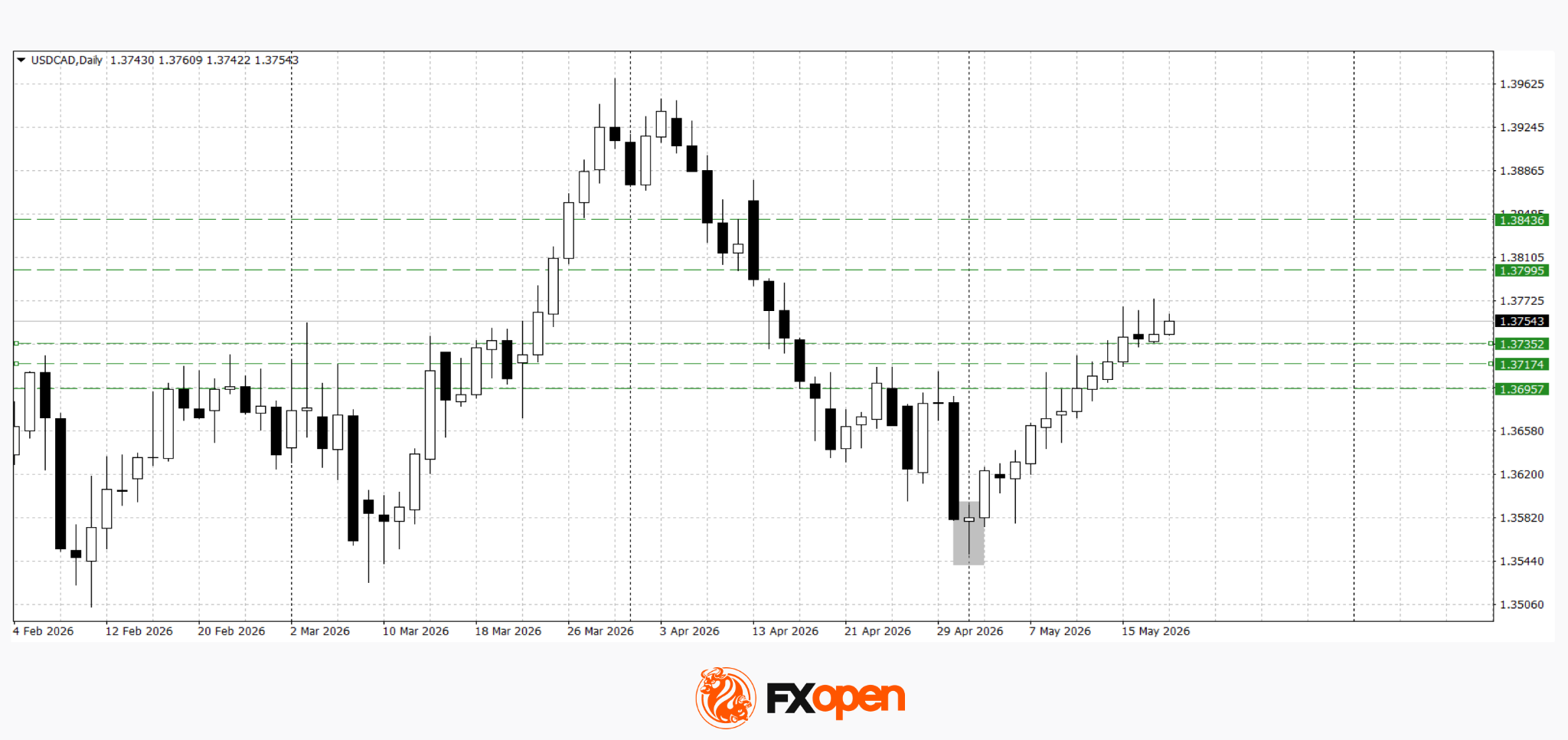
AUD/USD is pulling back from local highs, while USD/CAD continues to recover amid a stronger US dollar and ahead of the release of the Federal Reserve minutes. Following an extended rally, commodity-linked currencies have entered a corrective phase, although the current move still appears more like profit-taking and a test of key technical levels than a full trend reversal. Market participants remain cautious ahead of the publication of the FOMC minutes, which could reshape expectations regarding the future path of US interest rates.
Additional investor attention will focus on tomorrow’s batch of Australian economic data, including labour market figures and inflation expectations. These indicators may influence expectations surrounding the Reserve Bank of Australia’s next policy steps. At the same time, the US dollar continues to draw support from rising Treasury yields and a broader decline in risk appetite ahead of key Fed-related releases.
USD/CAD
USD/CAD continues to recover after forming a bullish hammer pattern. Previously highlighted levels have already been tested, and if the 1.3720–1.3730 range turns into support, the pair may continue advancing towards 1.3800–1.3840. At the same time, rejection from current levels accompanied by a bearish reversal pattern could trigger the start of a downward correction.
Key events for USD/CAD:
- today at 16:15 (GMT+3): speech by Federal Reserve Vice Chair for Supervision Michael S. Barr;
- today at 17:30 (GMT+3): US crude oil inventories;
- tomorrow at 15:30 (GMT+3): Philadelphia Fed Manufacturing Index (US).
AUD/USD
The failure of AUD/USD buyers to secure a move above 0.7200 resulted in the formation of a bearish tower pattern on the daily timeframe. Technical analysis of AUD/USD points to the potential development of a downward correction towards 0.7020–0.7050. However, if price returns above 0.7140, the bearish correction scenario could be invalidated.
Key events for AUD/USD:
- today at 21:00 (GMT+3): release of the FOMC minutes;
- tomorrow at 02:00 (GMT+3): Australia Services PMI;
- tomorrow at 04:30 (GMT+3): Australian full employment change.
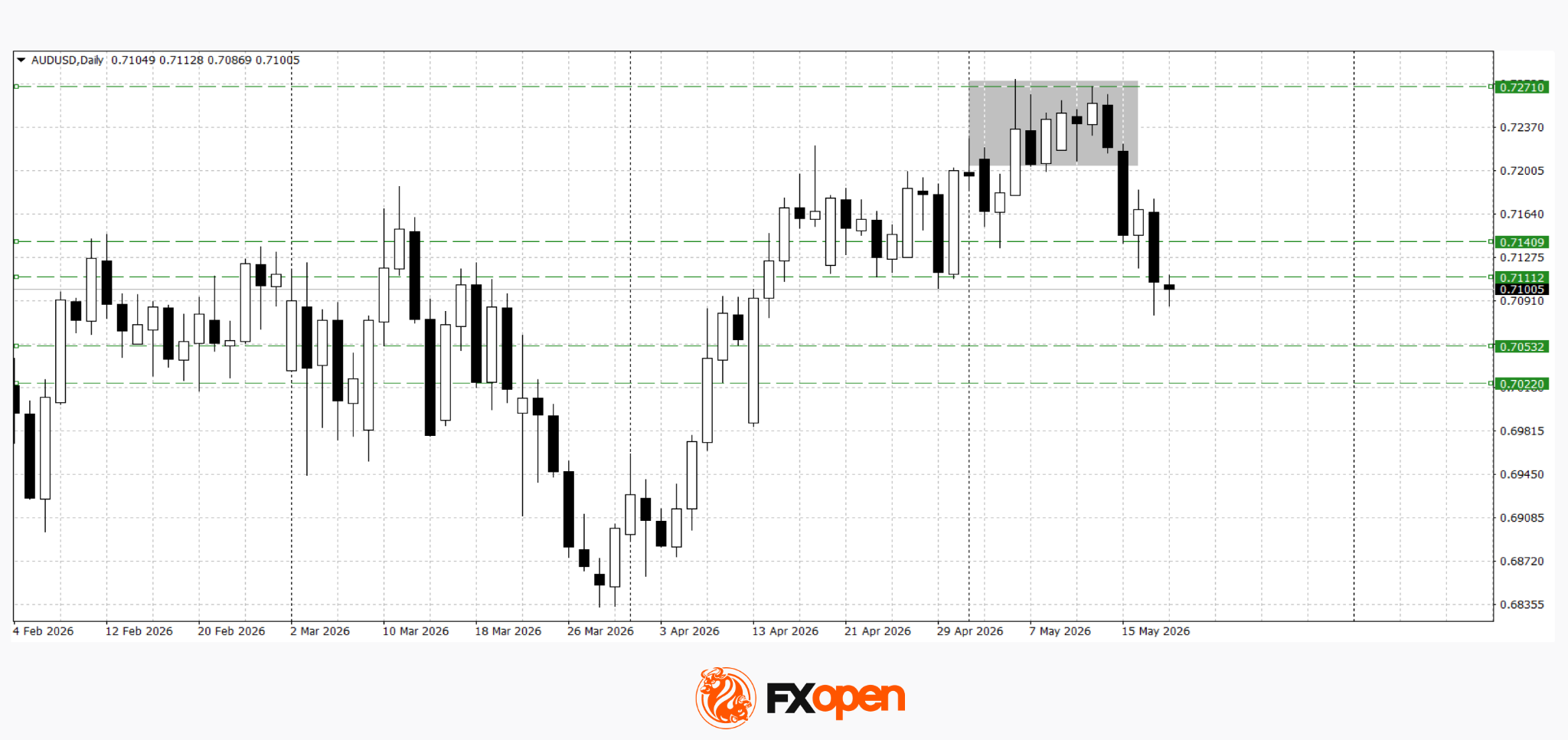
Overall, commodity currencies are entering a corrective phase following a prolonged rally, while the US dollar is receiving support from expectations surrounding the FOMC minutes and rising US Treasury yields. Market reaction to the Fed’s rhetoric will become the key driver for further AUD/USD and USD/CAD price action: more hawkish signals from policymakers could reinforce the current dollar rally, while softer commentary may restore demand for commodity currencies and limit the scope of the correction.
Trade over 50 forex markets 24 hours a day with FXOpen. Take advantage of low commissions, deep liquidity, and spreads from 0.0 pips (additional fees may apply). Open your FXOpen account now or learn more about trading forex with FXOpen.
This article represents the opinion of the Companies operating under the FXOpen brand only. It is not to be construed as an offer, solicitation, or recommendation with respect to products and services provided by the Companies operating under the FXOpen brand, nor is it to be considered financial advice.
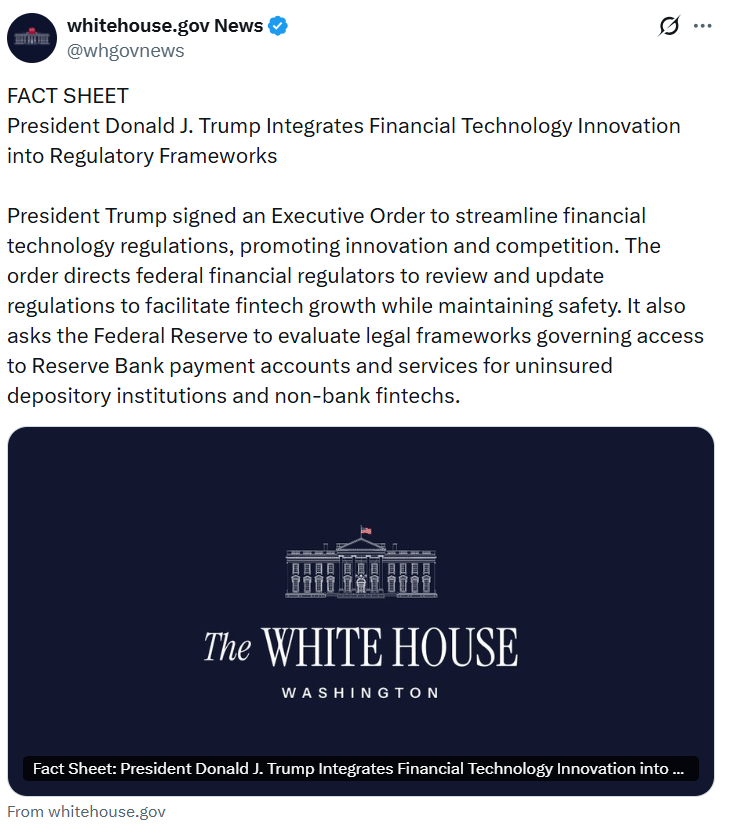
US President Donald Trump signed an executive order on Tuesday to review any barriers that might be stifling fintech innovation or preventing access to banking partnerships and payment rails.
The order directs the Federal Reserve Board to evaluate the legal, regulatory and policy framework governing fintech and crypto firms’ access to Federal Reserve payment systems and submit a report to Trump within 120 days.
The governors have also been asked to assess the Federal Reserve’s legal authority to grant direct access to fintech and crypto firms and to explore “options for expanding such access to the extent permitted by law, subject to appropriate risk management requirements.”
Federal Reserve payment systems provide access to core banking infrastructure, making it easier to move money efficiently and reducing dependence on intermediary banks. Fintech and crypto firms have faced significant friction in accessing banking services.
In one of the more extreme cases, they faced debanking, losing access to banking rails as part of what has been dubbed “Operation Chokepoint 2.0.”
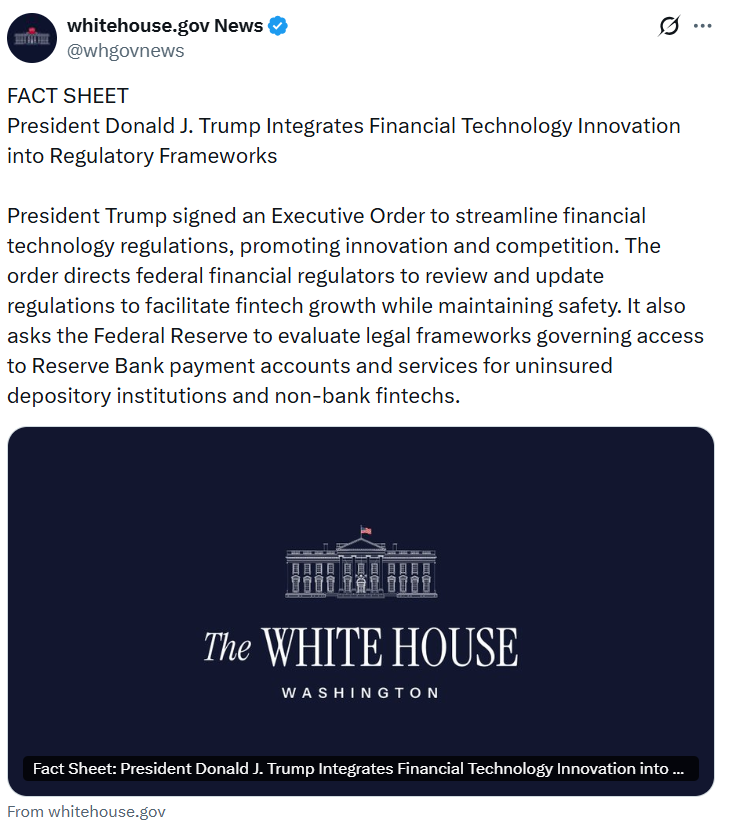
Source: Whitehouse.gov News
Review into bank partnership barriers
As part of the order, over the next 90 days, the heads of each US federal financial regulator are asked to review regulations, orders, and no-action letters that may be preventing fintech firms from entering into partnerships with federally regulated institutions such as credit unions, broker-dealers, and investment advisers.
They are also required to review existing regulations, guidance, supervisory practices, and application processes and to flag any that could be updated “to facilitate innovation.”
“The United States is a global leader in financial innovation, driven in part by the rapid growth of financial technology and fintech firms,” Trump wrote in the executive order.
“To foster this financial innovation, the federal government must update regulations to allow integration of digital assets and innovative technology into traditional financial services and payment systems.”
The Trump administration has walked back many of the policies that led to crypto debanking. A US think tank, the Cato Institute, found in January that most debanking cases in the US resulted from government pressure rather than individual banks’ policies.
Streamlined applications for bank, credit union charters
The heads of the federal financial regulators are also asked to review regulations, guidance documents, orders, and no-action letters that could be amended to streamline applications for eligible fintech firms seeking bank charters, credit union charters, deposit or share insurance, and other federal licenses.
Related: Crypto lobby backs formal removal of ‘reputation risk’ from bank examinations
A national bank trust charter authorizes a financial institution to engage in fiduciary activities such as trust services, custody and asset safekeeping.
In December, the Office of the Comptroller of the Currency conditionally approved five applications for crypto-related national trust banks, including First National Digital Currency Bank, Ripple, BitGo, Fidelity Digital Assets and Paxos.
Magazine: Bitcoin ETFs bleed $1B, Aave’s $71M ETH unfreeze bid delayed: Hodler’s Digest, May 10 – 16
Crypto World
Bitcoin is falling, bond yields are rising. Yet BTC’s implied volatility, an uncertainty gauge, remains low.


BTC’s implied volatility remains low despite the recent price selloff. Options specialist prefers a long straddle strategy in this scenario.

Key Highlights
- Cathie Wood’s Ark Invest acquired approximately 122,000 shares of BLSH between May 18-19, totaling around $2.5 million
- The share purchases were distributed among three funds: ARKK, ARKW, and ARKF
- BLSH shares had fallen to a monthly bottom of $35.56 following disappointing Q1 financial results
- The stock rallied approximately 4% after Ark’s buying became known, hovering near $37 before settling at $36.23 on Tuesday
- Wall Street maintains bullish sentiment with Rosenblatt Securities targeting $42.50; consensus estimates suggest approximately 42% potential gains
Cathie Wood’s investment firm Ark Invest made significant moves in Bullish stock this week. The company accumulated approximately 122,000 BLSH shares during a two-day period spanning May 18-19, representing an investment of about $2.5 million.
The strategic timing stands out. Shares of BLSH had just touched a four-week bottom at $35.56 following disappointing first-quarter earnings. Instead of retreating, Ark increased its exposure.
Bullish delivered Q1 adjusted earnings per share of $0.13, falling short of analyst expectations of $0.17. Top-line performance also underwhelmed, with revenue reaching $92.8 million against consensus estimates of $95.4 million. The earnings disappointment sparked initial selling pressure that proved temporary.
Shares recovered to close Tuesday’s session at $36.23, representing a 2% gain. When news of Ark’s May 18 transactions broke, the stock surged approximately 4%.
Distribution Across Multiple Funds
The investment was allocated throughout Ark’s flagship funds. The ARK Innovation ETF (ARKK) received the majority allocation—38,900 shares on May 18 plus the lion’s share of May 19’s purchases. ARKW and ARKF captured smaller positions, aligning with Bullish’s dual positioning in financial technology and emerging internet infrastructure.
Ark has maintained steady support for BLSH since the company went public. This recent accumulation indicates the firm views the first-quarter underperformance as temporary turbulence rather than fundamental weakness.
The share purchases followed closely after Bullish unveiled plans to acquire Equiniti for $4.2 billion. The transaction positions the company as a key player in digital asset tokenization—a sector Ark has championed across its investment thesis.
Street Sentiment Remains Constructive
The analyst community continues to express confidence in the stock. Rosenblatt Securities maintains a $42.50 price objective for BLSH. Consensus analyst projections point to roughly 42% appreciation potential from present trading levels.
While the gap between current price and targets is substantial, it underscores the growth trajectory analysts anticipate for Bullish’s cryptocurrency exchange and digital asset operations.
With Tuesday’s close at $36.23, BLSH trades below analyst targets while Ark holds substantial positions spanning three ETFs. The market’s positive response to the disclosed purchases indicates investors are monitoring institutional positioning closely.

Crypto asset manager Bitwise has called Hyperliquid “one of the most mispriced assets in crypto today,” despite its outperformance so far this year.
“Hyperliquid is one of the most important crypto projects to emerge in years,” Bitwise investment chief Matt Hougan said in a note on Tuesday.
“Its native token, HYPE, is the best-performing large-cap crypto asset of 2026, up 77% YTD [year to date]. And yet I still think investors are underestimating its impact and its value.”
Bitwise launched a HYPE exchange-traded fund on the New York Stock Exchange on Friday. 21Shares launched a similar HYPE fund earlier that week, which drew only $1.2 million in net inflows, low compared to other altcoin ETF debuts.
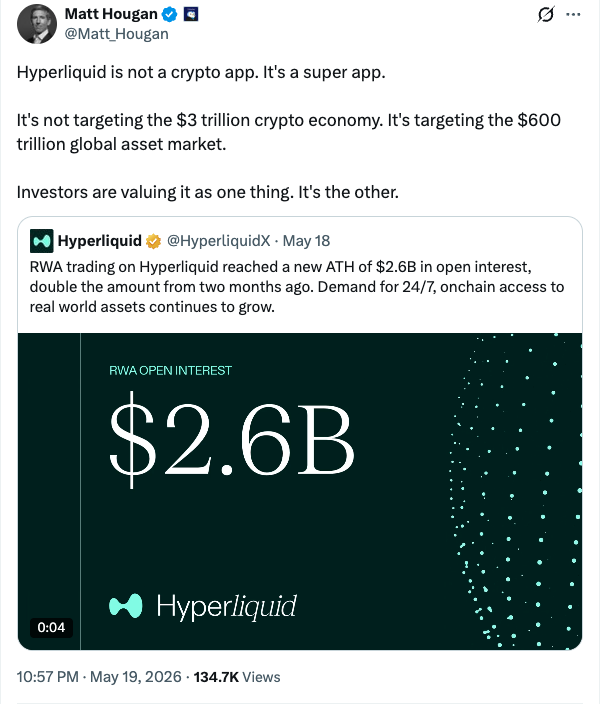
Hougan said HYPE’s mispricing is partly due to the market valuing Hyperliquid solely as a perpetual crypto futures exchange, when it should be priced as a “global super-app.”
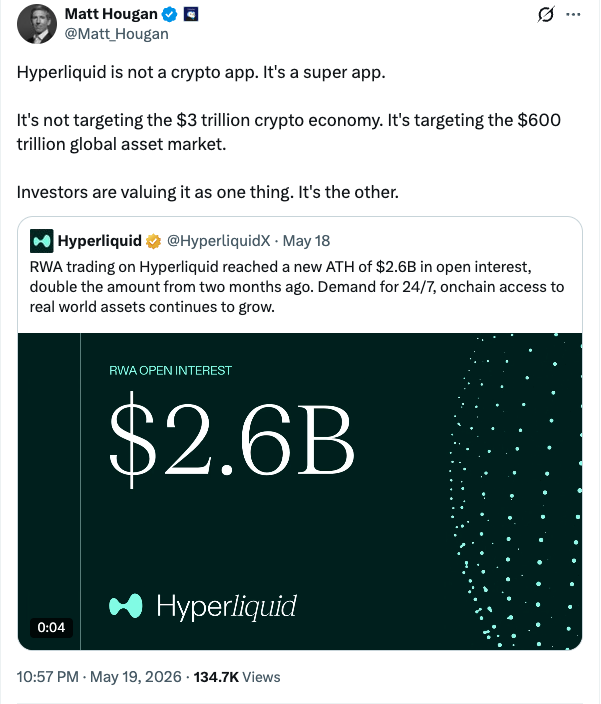
Hyperliquid’s main focus is the popular sector of crypto perpetual futures trading, but the platform also has trading linked to stocks, prediction markets and other assets, with Hougan adding that the platform sees nearly half of its volume tied to non-crypto assets.
Source: Matt Hougan
Other crypto platforms have also looked to expand beyond just crypto, with many major US crypto exchanges, such as Coinbase, Kraken and Gemini, working to expand into prediction markets and tokenized equities trading to shore up their balance sheets.
Related: ICE, CME press US regulators to ‘rein in’ Hyperliquid energy trading: Report
SEC Chair Paul Atkins has also given his support to “super-apps” that can custody and trade multiple assets on one regulatory license. He has tasked the regulator with exploring how it can allow tokens tied to securities to trade on platforms it doesn’t regulate.
Hougan argued that Hyperliquid “has become the ‘super-app’ Atkins envisioned — a ‘non-SEC regulated platform’ offering investors exposure to ‘a variety of asset classes.’”
He added, however, that the platform “still needs to mature” as it is not available in the US and would need to integrate itself into the country’s regulatory system.
BitMEX co-founder Arthur Hayes was also bullish on HYPE in a March blog post, saying the platform could continue to see its token rally if it continues to pull volume away from centralized exchanges and expand its product offerings.
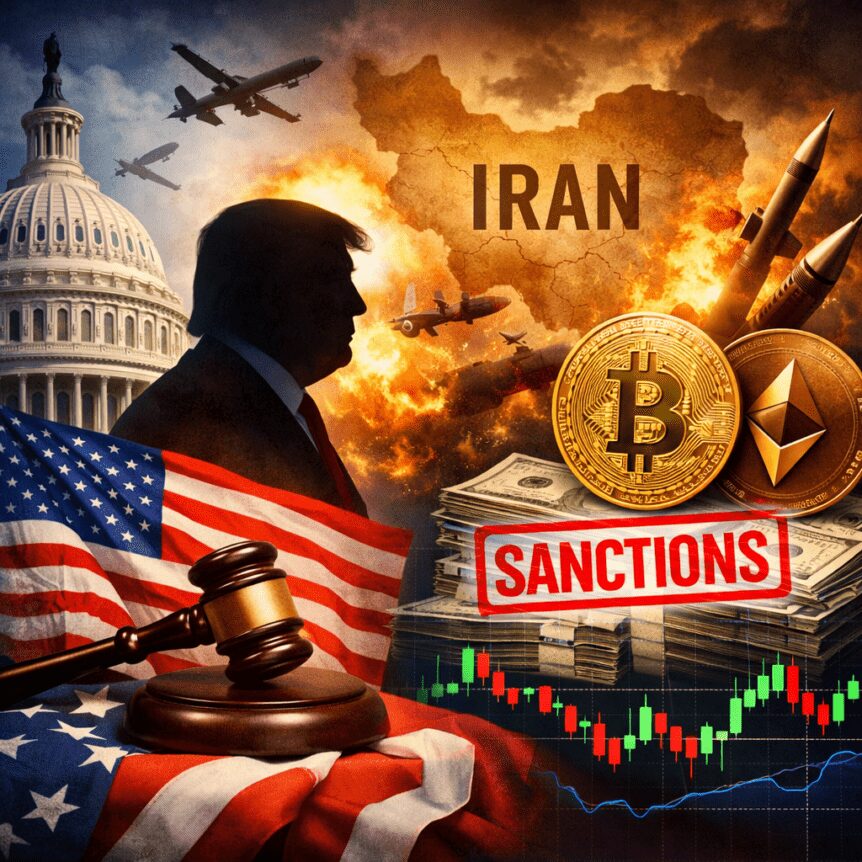
The US Senate moved to curb presidential war powers, advancing a resolution that could force President Trump to obtain congressional authorization before expanding military actions against Iran. The procedural measure passed 50-47, with four Republicans voting in favor, according to Reuters. The move underscores a long-running debate over who has the authority to commit U.S. forces, a dispute written into the constitutional balance between the executive and legislative branches.
The bill seeks to require congressional sign-off for any further U.S. troop deployments in or attacks on Iran, effectively challenging the administration’s unilateral discretion in a conflict that has endured for several months. While it signals legislative intent to reassert Congress’s war powers, the measure still faces substantial obstacles before becoming law. It must clear the full Senate and a Republican-led House of Representatives, and President Trump could veto the bill, potentially triggering a veto override that would demand two-thirds support in both chambers.
Key takeaways
- The Senate advanced a war-powers resolution related to Iran with a 50-47 vote; four Republicans sided with the Democrats, highlighting intraparty divisions on foreign-action authority.
- Even if approved by the Senate, the bill faces a steep climb through the Republican-controlled House and could be vetoed by the White House, with a two-thirds override unlikely without broad cross-party support.
- Supporters argue Congress should have a formal check on military engagement, while opponents warn that requiring authorization could hamper strategic responses to perceived Iran threats.
- Analysts see potential short-term crypto and risk-asset implications tied to the debate, especially if tensions de-escalate and oil prices ease; in the near term, Bitcoin traded around the mid- to upper-$70,000s.
The legal and political crossroads
At the heart of the vote is a constitutional question: who should authorize war? The measure’s sponsors frame it as a correction to what they view as an overreach by the executive branch in setting military policy. Democratic Senator Tim Kaine of Virginia, the bill’s sponsor, has framed the issue as a test of Congress’s constitutional prerogatives. On X, Kaine argued that Congress has the power to stop an “unwise conflict,” calling for the Senate to tell the President to halt the war. His message echoes calls from many lawmakers who contend that ongoing military commitments abroad should not proceed without legislative consensus.
Republican voices have cautioned against rigidity in wartime decision-making. Senator Bill Cassidy publicly voiced concerns that the administration and military leadership have left Congress insufficiently informed about the scope and aims of the operations in question, describing a lack of transparency around what has been termed an ongoing campaign in Iran.
What happens next—and why it matters for markets
Even with momentum in favor of the bill at this stage, passage through the Senate represents only part of the journey. The much larger political hurdle is the Republican-led House, where party leadership could resist moving the measure forward. A presidential veto remains a real possibility, and an override would require a two-thirds majority in both chambers—a threshold that is hard to obtain in the current partisan climate.
Beyond the political calculus, financial markets are watching the tug-of-war over war powers because it can influence risk sentiment and macro conditions. The ongoing Iran scenario has already fed macro headwinds—rising inflation, energy price volatility, and investor caution—contributing to a broader crypto market stagnation in recent months. Bitcoin and other digital assets have traded in a narrow range as traders weigh the geopolitical backdrop against the prospect of policy shifts and economic resilience.
HashKey Group senior researcher Tim Sun weighed in on the political signal this week, noting that the procedural advance “directly indicates that Trump is facing mounting domestic political pressure regarding his continued use of military force.” He suggested the move could act as a mild positive catalyst for risk assets, rather than a decisive driver, adding that the market’s attention remains anchored to macroeconomic shifts rather than a single congressional vote. If geopolitical tensions ease and oil prices retreat, Sun said, the valuation risk across risk assets could ease and support a broader crypto rebound.
In a separate assessment, Andri Fauzan Adziima, research lead at the Bitrue Research Institute, described the war-powers development as a bullish catalyst for crypto, potentially sparking a 6% to 10% relief rally in Bitcoin in the near term. Adziima pointed to prior episodes where de-escalation headlines quickly translated into price spikes for Bitcoin, estimating that a calmer geopolitical backdrop could relieve risk-off pressure and drive flows back into digital assets.
As of the latest notes, Bitcoin hovered around the mid- to upper-$70,000s, a level that observers see as a barometer for risk appetite in scales ranging from altcoins to large-cap tokens. The market’s sensitivity to the Iran dynamic reflects a broader pattern: crypto assets often move in relief rallies when headlines suggest reduced geopolitical risk or credible openings for economic normalization. Yet with the House and the White House still to weigh in, the immediate market trajectory remains uncertain.
Context for the current debate also includes the broader energy landscape. The conflict has been tied to shifts in energy markets—oil and gas prices can respond sharply to supply disruptions and geopolitical risk, with the Strait of Hormuz historically a critical chokepoint. Any near-term de-escalation could help temper energy-driven inflation pressures and, by extension, reduce the risk premium on high‑beta assets such as Bitcoin and altcoins.
Reuters’ reporting on the Senate vote anchors the procedural development in a concrete political process, while cryptocurrency researchers frame the potential market response in terms of risk-on sentiment and macroeconomic alignment. The unfolding narrative thus sits at the intersection of constitutional governance, U.S. foreign policy, and a volatile digital-asset market that remains highly sensitive to global risk signals.
Looking ahead, watchers should monitor whether the resolution gains traction in the Senate’s full vote and whether the House sponsors align with or resist the move. A veto scenario could still prevail, but even a protracted negotiation over war powers would shape investor expectations and could influence both traditional markets and crypto pricing in the months ahead. The next few legislative steps—and any corresponding shifts in oil prices or inflation expectations—will help determine whether crypto markets find a clearer path toward renewed risk-taking or remain tethered to ongoing macro uncertainties.
For readers tracking the implications of policy on prices and risk appetite, the key question remains: will Congress reassert its authority to check military action, and how swiftly could any resulting policy changes influence liquidity, capital flows, and the appetite for higher-risk assets like Bitcoin in the current economic climate?
Keep an eye on the coming votes and any executive responses, as markets will likely calibrate to the most immediate signals about how the U.S. intends to balance deterrence, diplomatic engagement, and domestic political dynamics in the months ahead.
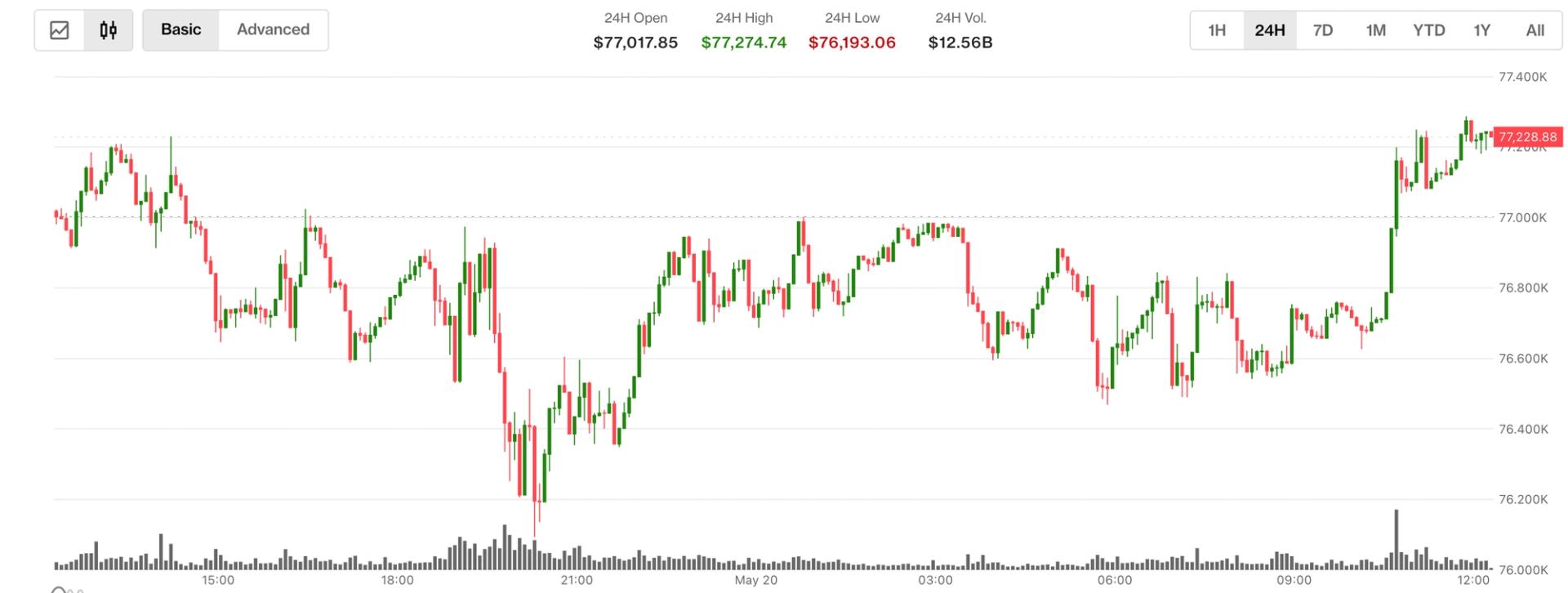
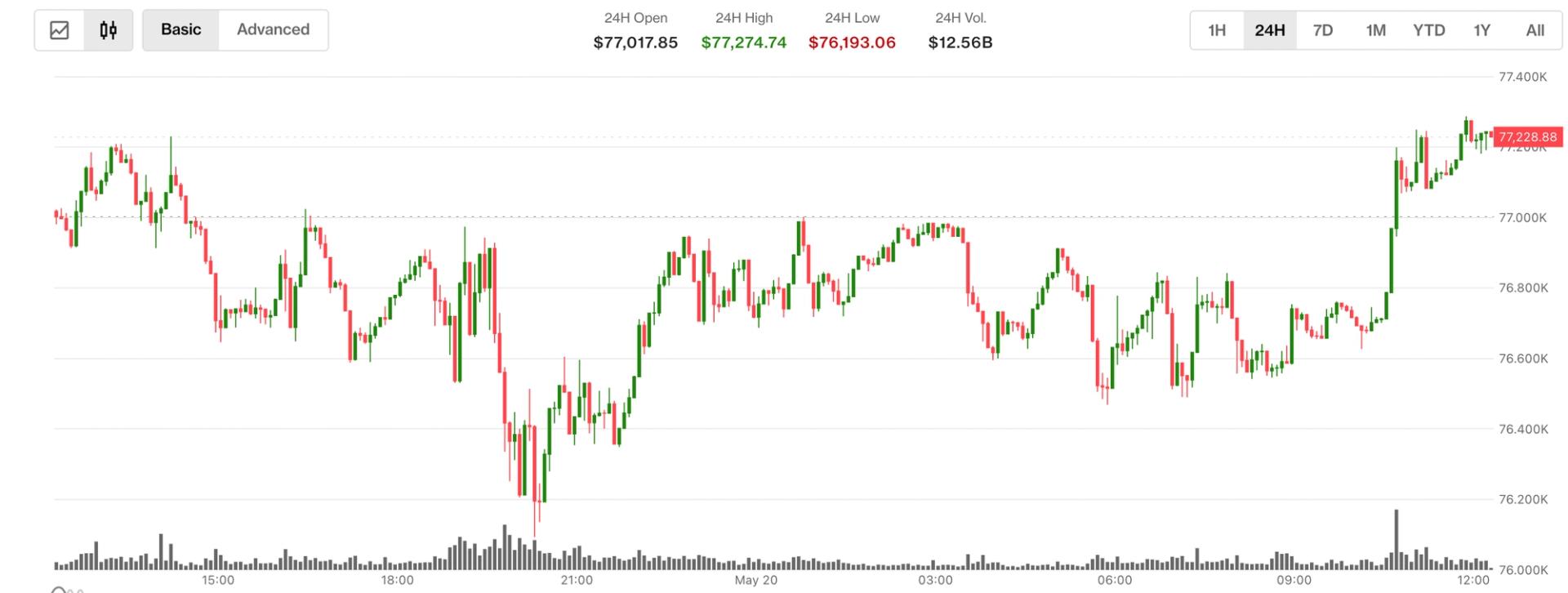
Bitcoin climbed to about $77,200, while XRP, ether and solana also gained as Treasury yields and oil fell.


Tether and Gnosis have participated in a $4.4 million seed round for Sorted Wallet as the crypto firms continue expanding stablecoin payment infrastructure across emerging markets.
Summary
- Tether and Gnosis have backed a $4.4 million seed round for Sorted Wallet to expand crypto access across emerging markets.
- Sorted Wallet said its lightweight 10MB app has reached 500,000 downloads across Africa, South Asia, and parts of Central America.
- Fresh funding is expected to support telecom integrations and new stablecoin payment tools targeting users with low-cost mobile devices.
According to an announcement shared by Sorted Wallet, the round included $3.4 million in equity funding led by Tether and Gnosis, alongside participation from Movement, Angel Invest Group, and several angel investors, including the founders of RWA.io. Vox Solutions also contributed $1 million in strategic support as part of the funding package.
“Over the years, digital asset use cases have evolved from trading tools to real-life applications, promoting financial freedom and inclusion. However, to achieve true inclusion, we must reach hundreds of millions of people who cannot afford smartphones or data plans,” Tether CEO Paolo Ardoino said in an accompanying statement.
Founded in 2022, Sorted Wallet has focused on low-cost mobile access for crypto users in regions where smartphones, data plans, and banking services remain limited. The company said its application size is roughly 10MB, allowing the wallet to run on stripped-down feature phones and lower-end Android devices commonly used across parts of Africa and South Asia.
Current traction has largely come from Nigeria, Kenya, Tanzania, Bangladesh, and Madagascar, which the company identified as its fastest-growing markets. Mexico and several Central American countries have also contributed to adoption, according to the release. Sorted said the wallet has crossed 500,000 downloads.
Fresh capital is expected to support expansion into additional Sub-Saharan African and South Asian markets while also strengthening integrations with telecom providers. The company added that it plans to launch a new payment mechanism in May.
Tether deepens focus on emerging market payments
For Tether, the latest investment adds to a growing list of emerging-market payment and remittance initiatives tied to USDT adoption outside the U.S. Back in September 2024, the stablecoin issuer invested $1.5 million in Sorted Wallet to support crypto access through basic mobile phones in underserved regions.
At the time, Paolo Ardoino said the investment was intended to help users with limited access to smartphones or banking services participate in the digital economy through crypto tools designed for simpler devices.
Returning as an investor in the latest funding round, Ardoino said Tether had “reinvested” in Sorted Wallet because the platform helps expand access to digital assets regardless of “device, economic status, or location.”
Ardoino stated that crypto use cases had evolved beyond trading and increasingly supported real-world financial access, although he argued that broader adoption would require infrastructure capable of reaching users who cannot afford expensive smartphones or consistent internet access.
Another recent investment from Tether followed a similar direction. In May 2026, the company disclosed a strategic investment in remittance platform LemFi, which serves African and Asian diaspora users sending money home from the U.K., Europe, Canada, and the U.S.
The LemFi partnership would integrate USDT into remittance settlement rails connecting African and Asian payment corridors. The arrangement was designed to reduce transfer times and lower costs associated with traditional cross-border banking systems.
Gnosis backs stablecoin payment distribution
Daniele Pinna, an investment partner at Gnosis, described Sorted Wallet as an important access layer for stablecoin-based payments in markets where traditional fintech infrastructure has struggled to reach users consistently.
Gnosis, which has developed products including the Safe non-custodial wallet, has increasingly focused on payment infrastructure tied to self-custody and stablecoin usage. The firm said Sorted’s lightweight mobile approach could help extend crypto payment access into regions where telecom networks are more accessible than traditional banking services.
Hayden Panettiere Recalls Oscar Winner Exposing Himself To Her When She Was 19

What you can learn from Tommy Fleetwood’s mini-driver setup

Bill Cassidy Loses Primary; RFK Jr. Will Be His Legacy

Manchester United reach agreement with Casemiro over contract clause amid transfer speculation

US brings back mandatory military draft registration

Steven Gerrard disagrees with Gary Neville over ‘shock’ Chelsea and Arsenal claim | Football


-

 Crypto World4 days ago
BloFin War of Whales 2026 Grand Prix opens registration for $5M trading championship
-

 Fashion5 days ago
Weekend Open Thread: Theory – Corporette.com
-

 Crypto World5 days ago
E-Estate Announces 1 Year Live: Washington DC Summit as Real Estate Tokenization Enters Its Next Phase
-

 Tech5 days ago
Tech Moves: Microsoft AI leader jumps to OpenAI; former AI2 exec joins Meta; and more
-

 Tech4 days ago
Google reimburses Register sources who were victims of API fraud
-
 Crypto World6 days ago
Google’s Gemini AI Predicts Incredible Solana Price by the End of 2026
-

 Business5 days ago
H&R Real Estate Investment Trust (HR.UN:CA) Q1 2026 Earnings Call Transcript
-

 Sports4 days ago
Napoleonic enters 2026 Doomben 10,000 field via Abounding withdrawal
-
 Entertainment6 days ago
Zara Larsson Has Blunt Response To Chris Brown Diss
-
 Crypto World6 days ago
Two AI Tokens Lead May Rally, But Risks Are Rising
-

 Crypto World4 days ago
BeInCrypto 100 Institutional Awards Nomination: KAST for Best Digital Assets Neobank and Best Digital Assets Fintech
-

 Fashion3 days ago
On the Scene at Gucci’s Cruise Show in New York City: Mariah Carey, Kim Kardashian, Lindsay Lohan, Iman, and More!
-
 Crypto World4 days ago
Bitcoin Battles US Bond Nerves With BTC Price Dip Toward New May Lows
-
 Crypto World4 days ago
Wall Street’s Boldest Gold Prediction Has Russians Rushing to Buy
-

 Politics5 days ago
DWP PIP Timms review continues to be an absolute farce
-

 Fashion4 days ago
Trending Western Style Vests Perfect for Summer
-

 Entertainment5 days ago
David Letterman Returns to Late Show, Blasts Cancellation
-

 Crypto World4 days ago
ICE and CME urge US regulators to curb Hyperliquid energy trading
-
 Crypto World5 days ago
Lido Finance Selects Chainlink CCIP as the Official Cross-Chain Infrastructure for wstETH Security
-

 Fashion3 days ago
Amazon Sundays: Memorial Day Hosting
You must be logged in to post a comment Login