
Crypto World
BitMine adds 53,501 ETH as holdings reach 5.9M



BitMine Immersion Technologies has purchased another 53,501 ETH, lifting its Ethereum treasury to 5,901,112 tokens worth about $14.54 billion at the time of writing.
Summary
- BitMine has bought Ethereum for 65 consecutive weeks since launching its treasury strategy.
- The company now controls about 4.9% of Ethereum’s reported 120.7 million-token supply.
- More than 5.06 million ETH is staked, producing an estimated $335 million in annual revenue.
- ETH trades near $2,464 as resistance around $2,540–$2,550 continues to limit its recovery.
BitMine’s Ethereum holdings have reached 5.9 million ETH
BitMine Immersion Technologies said in its latest treasury update that it held 5,901,112 ETH as of Aug. 30, after buying 53,501 tokens during the preceding week.
“Over the past week, we acquired 53,501 ETH,” Chairman Tom Lee said.
Using the company’s reference price of $2,511, the Ethereum position was valued at approximately $14.82 billion when BitMine recorded the snapshot at 3 p.m. Eastern Time. Management said its ETH balance accounted for about 4.9% of Ethereum’s reported supply of 120.7 million tokens.
At the time of writing, CoinGecko data showed Ethereum trading near $2,464, down about 0.4% over 24 hours and 1.1% across seven days. Applying that updated price places BitMine’s ETH holdings at approximately $14.54 billion, although the value will move with the token’s market price.
The latest acquisition extended BitMine’s buying run to 65 consecutive weeks. According to Lee, the company has added ETH every week since it adopted the treasury strategy on June 30, 2025.
Buying accelerated compared with several earlier updates. Earlier crypto.news coverage showed BitMine adding 9,946 ETH in late July, taking its holdings to 5,787,414 tokens. Another 9,926 ETH entered the treasury during the week ending Aug. 16, followed by 32,447 ETH in the next reporting period.
BitMine previously identified ownership of 5% of Ethereum’s supply as its treasury target. Based on the company’s supply figure, 5% would equal about 6.04 million ETH, leaving the current balance roughly 134,000 tokens below that threshold.
In June, Lee indicated that buying could slow once the company approached its target. A previous treasury report placed the balance at approximately 5.54 million ETH, or 4.6% of supply, after BitMine acquired 25,000 ETH from BitGo.
Staked Ethereum could produce $335 million annually
Alongside the treasury expansion, BitMine reported that 5,067,309 ETH had been staked through its own infrastructure and outside validator partners. The position accounts for approximately 85.9% of its entire Ethereum balance.
At CoinGecko’s latest price, the staked tokens are worth about $12.49 billion. BitMine valued the same position at close to $12.73 billion using its Aug. 30 reference price of $2,511.
Management estimated that the deployed ETH could generate $335 million in annualized staking revenue. The calculation used a seven-day annualized staking yield of 2.63%, meaning the actual return can change with Ethereum’s validator participation rate, network rewards, operational performance and protocol conditions.
Once more of its ETH is deployed, Lee said annual staking revenue could reach $390 million under similar yield conditions. Around 833,803 ETH remains outside the reported staked balance.
BitMine launched MAVAN, short for Made in America Validator Network, in 2026 as its institutional Ethereum staking operation. Part of the company’s balance is already deployed through MAVAN, while partner validators handle another portion.
Staking has developed into a central revenue source for the company. A July treasury report said BitMine generated $45.7 million from staking and validation during the three months ended May 31, equal to about 98% of its $46.5 million in quarterly revenue.
The income also supports BitMine’s preferred-stock strategy. In June, the company declared a $0.1056 dividend on each share of its 9.50% Series A Perpetual Preferred Stock, traded on the New York Stock Exchange under the ticker BMNP. Lee previously said staking income could help finance payments on the preferred shares.
BitMine’s combined holdings stood at $15.6 billion
Beyond Ethereum, BitMine’s Aug. 30 disclosure listed 211 Bitcoin, a $180 million investment in Beast Industries and an $81 million stake in Eightco Holdings. Cash and marketable securities totaled $541 million.
Using the prices and valuations captured for the company’s update, BitMine placed the combined value of its crypto assets, cash, securities and strategic investments at $15.6 billion. The figure represents a dated company snapshot rather than a fixed balance because cryptocurrency prices and listed investments continue to fluctuate.
BitMine described itself as the largest reported corporate Ethereum treasury. Strategy, led by Executive Chairman Michael Saylor, remains the largest digital-asset treasury company by total asset value because of its Bitcoin holdings.
For U.S. investors, exposure is available through BitMine’s NYSE-listed common stock under the ticker BMNR, as well as its BMNP preferred shares. BMNR traded near $24.27 at the time of writing, up about 2% during the session, with an intraday range between $23.72 and $24.46.
Fundstrat previously found that BMNR had an 80% correlation with ETH in a study of 17 large-cap stocks, compared with 74% for Coinbase. The research did not disclose the period or return interval used for the calculation, and correlation can change as stock and cryptocurrency prices move.
BitMine’s latest five-session average daily dollar trading volume reached approximately $1.36 billion through Aug. 29, according to the company. Management said the figure placed BMNR among the most heavily traded U.S. stocks by dollar volume.
Concentrating much of the company’s reported value in Ethereum also creates risks for shareholders. BitMine’s quarterly SEC filing identifies ETH price volatility, liquidity constraints, unrealized losses, custody arrangements, counterparty exposure and changes to U.S. rules governing digital assets and staking as factors that could affect its results.
Ethereum price remains below the $2,550 resistance zone
Ethereum was trading near $2,464 at the time of writing, giving the token a market capitalization of approximately $297.3 billion, according to CoinGecko. Trading volume stood near $15.45 billion over 24 hours.
Price has remained below the $2,540–$2,550 resistance area after several failed attempts to sustain a breakout. A recent Ethereum technical analysis identified resistance near $2,533, where an ascending triangle and a concentration of leveraged positions created another test for buyers.
On the weekly chart cited in the supplied analysis, ETH sat between its 50-week exponential moving average near $2,374 and its 50-week simple moving average around $2,542. The two averages define the immediate consolidation range while the price remains below the upper boundary.
Crypto analyst Ted said a weekly close above $2,550 could clear a path toward resistance near $2,800. Under his downside scenario, losing the $2,370 area could expose the $2,180–$2,220 support zone.



The Japanese Bitcoin treasury company has transferred 10,270 BTC to Coinbase Prime this week, an amount equal to more than 29% of its reported holdings.
Fundstrat’s Tom Lee is treating September’s crash fear as a contrarian signal. He says a market this braced for weakness could rally instead, carrying Bitcoin (BTC) toward $150,000.
Lee has not dropped his correction call. He has moved it, pointing to the September 15 Federal Reserve (Fed) meeting as the moment that decides direction.
The September Fear Lee Is Betting Against
The fear has an evidence base, because across 10 US midterm election years since 1986, the average stock market low landed on September 2.
Those lows followed an average slide of 16.77% from the prior high. That history is what makes the current dangerous September pattern worth watching.
This year adds a hawkish twist. Three Fed presidents voted for a rate hike in July, not a cut. Chair Kevin Warsh then used his first Jackson Hole speech to put inflation first. Six-month PCE inflation was running at 4.1%.
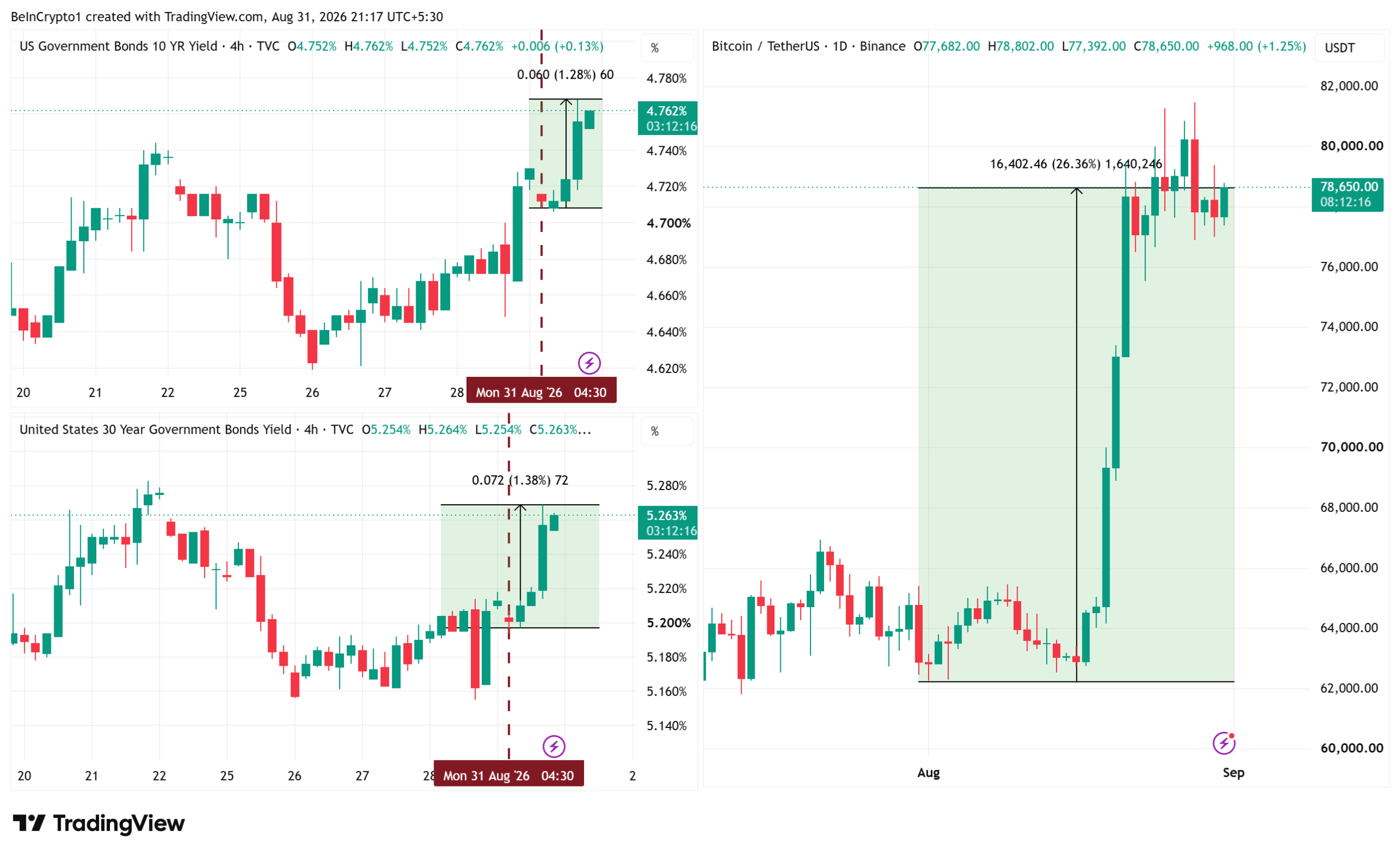
Bonds tell the same story, with the 30-year Treasury yield has held above 5%, well clear of an effective fed funds rate near 3.63%.

“I’m actually now thinking because of all this mounting concern, the market might surprise us to the upside,” Lee said, suggesting he sees a crowd leaning too far one way.
Follow us on X to get the latest news as it happens
Why September 15 Decides Direction
Lee spent August expecting those worries to converge and cost equities roughly 10%. Weak seasonality, hike talk and the AI data center backlash all pointed the same way.
His base case now is that policymakers neither hike nor cut.
“If the Fed doesn’t cut, doesn’t hike, which is our base case, I think actually the markets could rally very strongly,” he added in a CNBC interview.
Should the pullback slip into October, Lee thinks it could start above 8,000 on the S&P 500. The low might land near 7,300.
Bitcoin Could Reach $150,000, Tom Lee Says
Bitcoin’s current price level sits near $78,875, up only 0.3% over 24 hours. BTC still trades about 37% below its record from October 2025.

Lee calls the past year a shallow crypto winter caused by forced selling, not broken fundamentals. Very few investors still hold crypto, he argues.
He counts four catalysts.
- Crypto led all macro assets in the third quarter
- The four-year crypto cycle ends next month
- Korean traders are rotating back from AI stocks
- The CLARITY Act, a US market structure bill setting which regulator oversees digital assets, could pass this year
Rising institutional crypto ETF inflows reinforce his view that larger buyers are positioning for a strong fourth quarter.
Lee still treats $150,000 as possible for Bitcoin, alongside an S&P 500 above 8,200. For Bitcoin, that constitutes a 1.9 times gain, or about 2x. Both rest on earnings estimates that keep climbing.

Fresh jobs and inflation prints land before the meeting. Lee says weak readings on both would stop traders pricing a hike at all.
The post Tom Lee Says September Crash Fear Could Trigger a Stock Rally, Push Bitcoin 2x appeared first on BeInCrypto.

TIME Editor in Chief Sam Jacobs and Executive Editor Alex Altman sent the following memo to staff on Monday:
Dear all,
TIME aspires to lead in the coverage of the remaking of the world by artificial intelligence.
Last week, we released our annual TIME100 AI list, led by Ayesha Javed, and an exclusive cover story about OpenAI drawing on unprecedented access inside the company. Today, we’re announcing a significant investment in our AI and technology coverage.
In just a few weeks, we’ll relaunch In the Loop, our AI newsletter, with a new format. Later this year, we plan to expand it to five days a week, giving readers a daily, essential briefing on the industry and the influences shaping it. Next year, we’ll build on the success of this year’s AI events in Davos, Cannes, New York and San Francisco by launching our first-ever TIME100 AI Leadership Forum in Washington, D.C. We are exploring additional opportunities to convene the world’s most influential AI leaders internationally too.
To support our continued commitment to this work, we’re pleased to announce the following staff changes.
Naomi Nix joined us Aug. 17 as a Senior Correspondent based in Washington. Naomi comes to TIME after four years covering Meta and the broader social media industry for The Washington Post, where her reporting focused on how powerful platforms shape American democracy and global politics. Before The Post, she covered tech lobbying and corporate influence for Bloomberg News, and got her start covering beats including education and City Hall for The 74, The Star-Ledger and the Chicago Tribune. At TIME, Naomi will contribute to In the Loop, write ambitious features and investigations, and report across platforms with a focus on policy, regulation, tech’s political influence, and the nexus between Silicon Valley and the nation’s capital.
Manisha Ganguly joins us as a Senior Correspondent based in London, starting Nov. 1. Manisha is a decorated investigative journalist and a pioneer in using open-source intelligence to expose war crimes. She joins us from The Guardian, where she was investigations correspondent and led visual forensics; she previously built out open-source investigative workflows at the BBC. She holds the first PhD awarded for research into OSINT’s impact on investigative journalism, from the University of Westminster. Manisha is currently writing her first book. At TIME, she will pursue investigations and features on AI and national security, profile key leaders and policymakers, and contribute to In the Loop and our coverage across platforms.
Harry Booth, who joined TIME in 2024, becomes Staff Writer and will relocate to San Francisco in January to anchor our coverage of the world’s most important AI hub. Since joining the London bureau, Harry has been a force behind our TIME100 AI, Philanthropy, and Climate franchises and our Best Inventions coverage. He co-authored our March cover story on Anthropic’s rise and its standoff with the Trump Administration, based on reporting inside the company. Harry will lead our beat coverage of the AI boom on the ground in the Bay Area, covering the frontier labs, hyperscalers, and startups defining this moment.
The additions of Naomi and Manisha, and Harry’s expanded role in San Francisco, will strengthen a team that already includes two agenda-setting correspondents on the AI beat: Billy Perrigo, based in London, and Andrew Chow, based in Washington. All will work with Senior Editor Dayana Sarkisova, who has done a terrific job leading our global beat coverage of AI leaders, companies, and their impact on society. Charlie Campbell, reporting to Gemma Fox, will continue to contribute greatly to our AI coverage from Asia.
In recent years, this global team has brought readers inside companies like Anthropic, OpenAI, Google, Nvidia, and Waymo; broken robotics scoops showing what the next wave of automation looks like; and reported on the global data center boom and the political backlash it has provoked, taking readers from a remote valley above the Arctic Circle in Norway to frontline communities in Tennessee and Texas. Last December, we named “The Architects of AI” our Person of the Year.
Assembling this team reflects TIME’s commitment to covering the most consequential story of our time with the ambition it demands—across every platform, through access and accountability, and careful scrutiny of AI’s promise and perils. Please join us in welcoming Naomi and Manisha, and in congratulating Harry on his upcoming move to San Francisco.
Sam and Alex
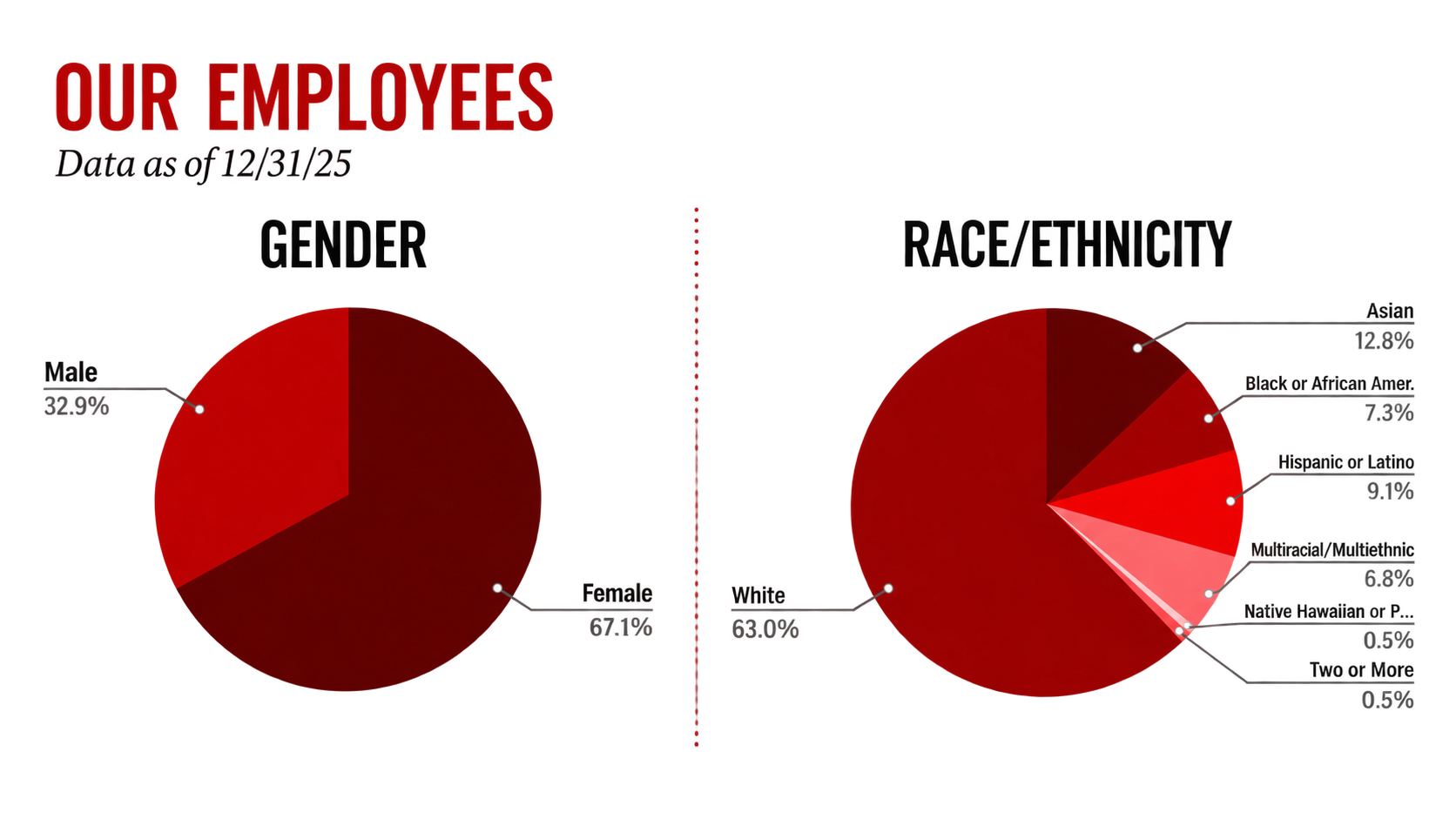
TIME is committed to sharing data about our global employee population annually. Information on gender identity and race is voluntarily self-reported by our employees. Here is how our employees have identified as of December 2025.
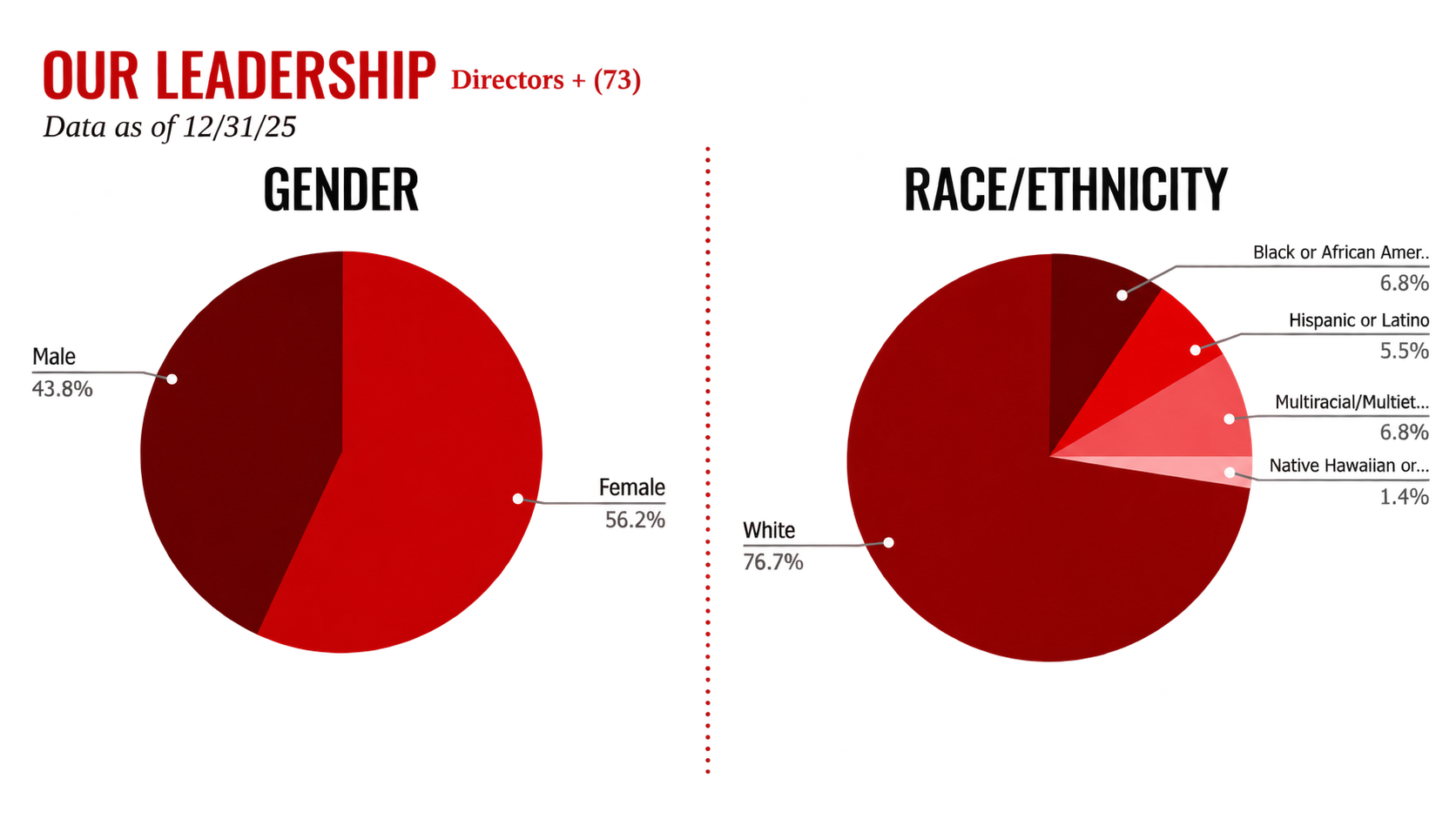
Notes:
- Information on gender identity and race is voluntarily self-reported by TIME employees.
- This data represents the employee population at TIME as of December 2025 (not including temporary and contract workers).
- “Leadership” here includes all employees with a “Director” title and above.
- We intend to report on the demographic makeup of our employee population annually.
- As a U.S.-headquartered company, the categories used here align with the U.S. Equal Employment Opportunity Commission (EEOC) classifications.
Previous Years:

Strive, a publicly traded asset manager and Bitcoin treasury company, added 1,800 Bitcoin to its balance sheet last week, accelerating a buy program that has helped it rank among the world’s largest publicly traded corporate holders of the asset.
The company bought the BTC between Aug. 24 and Aug. 28 for roughly $143 million, paying an average price of $79,431 per coin (including fees and expenses). CEO Matt Cole confirmed the acquisition on Monday via X: https://x.com/ColeMacro/status/2094396002308440227.
Key takeaways
- Strive purchased about 1,800 BTC over Aug. 24–Aug. 28 for approximately $143 million at an average of $79,431 per BTC.
- Total holdings rose to 23,156 BTC from 21,356 BTC a week earlier, showing faster accumulation across a short window.
- The latest inflow increased Strive’s BTC exposure by roughly 8.4% in five business days, according to Adam Livingston.
- With the new buys, Strive moved ahead of Bullish to become the fifth-largest publicly traded corporate Bitcoin holder, based on industry data from BitcoinTreasuries.net.
- Strive’s purchases align with a broader market rebound that followed a U.S. Treasury announcement on bond buybacks.
Strive’s accelerated accumulation lifts it into the top tier
Strive’s latest acquisition expands its Bitcoin strategy beyond a slow, incremental approach. The purchases increased its total holdings to 23,156 BTC, up from 21,356 BTC reported a week earlier. Earlier reporting from Cointelegraph noted that Strive had added 1,110 BTC the previous week for about $81.5 million at an average of $73,409 per coin (Cointelegraph).
Adam Livingston, an adviser to Saturn Credit, highlighted the pace of change after the most recent buys. In his post, he said the latest purchase increased Strive’s holdings by approximately 8.4% within just five business days (https://x.com/AdamBLiv/status/2094404735474295249).
For investors tracking corporate treasuries, the key point isn’t only the size of the purchase, but how quickly it is happening relative to recent baselines. Rapid accumulation can also signal that a company sees improved risk conditions, more favorable liquidity, or a strategy shift from opportunistic buying toward consistent treasury scaling.
Surpassing Bullish for fifth-largest publicly traded holder
The updated Strive balance also changes the standings among listed Bitcoin treasuries. According to industry data compiled at BitcoinTreasuries.net, Strive’s latest buys pushed it past Bullish—an exchange and digital asset infrastructure firm—making it the fifth-largest publicly traded corporate holder of Bitcoin.
This matters because position in these rankings is closely watched by market participants: it can affect perceived credibility of treasury strategies, influence how investors interpret management discipline around Bitcoin exposure, and contribute to the narrative of institutionalization across the sector.
Corporate buying follows a market rebound
Strive’s purchases come as Bitcoin and risk assets rebounded broadly after Aug. 19, when the U.S. Treasury Department announced plans to double the size of certain long-term bond buybacks. The move helped reduce Treasury yields and supported a return of risk appetite, with Bitcoin rallying more than 23% to a recent high above $81,000, as noted in Cointelegraph’s market coverage (Cointelegraph markets).
While treasury purchases do not need a specific catalyst, correlations between macro conditions and corporate activity are frequently discussed in crypto markets. When yields fall and liquidity improves, companies that treat Bitcoin as a treasury asset may find it easier to justify additional exposure—particularly if market volatility cools.
Strategy’s renewed buying underscores the broader trend
Strive is not alone. Michael Saylor’s Strategy—described as the largest corporate Bitcoin holder—announced Monday that it resumed buying BTC for the first time since June. Cointelegraph reported that Strategy acquired 4,603 Bitcoin at an average price of $80,318, per its announcement (Cointelegraph).
That purchase lifted Strategy’s holdings back above 845,000 BTC after four Bitcoin sales since May, reversing a temporary reduction in exposure. Together with Strive’s accelerated accumulation, the renewed buying from a major benchmark treasury adds weight to a theme seen across the corporate segment: listed companies appear willing to increase Bitcoin exposure when market conditions are supportive.
At the same time, the Strategy example also highlights an important tension. Corporate treasuries can be both active buyers and occasional sellers, meaning investors should pay attention not just to net accumulation, but also to the operational or capital-planning drivers behind any reductions.
For the near term, traders and long-term holders will likely watch whether Strive sustains this faster pace of buying over the next several weekly reporting windows, and whether other large corporate treasuries continue to add after recent rebounds—especially as macro conditions that helped fuel the move in yields remain in focus.

“These are as nutritious as fresh, and they’re convenient, and this way you don’t have to go back to the supermarket more than once a week,” she says. She also recommends checking out your local supermarket’s deals to see what’s on sale that week.
Diversify your protein sources
“We get kind of fixated that it has to be animal protein, and that’s clearly not the case,” says Planells. For animal protein, the Mediterranean diet favors seafood and leaner cuts of meat, and it also recommends plant-based sources of protein like beans and lentils.
Despite rising grocery costs, a May 2026 report from the American Farm Bureau Federation finds that “America’s demand for meat continues to grow.” As of July, ground beef prices were up 10% from the same time in 2025.
“Everyone wants protein, protein, protein, but we’re going to go broke,” says Planells.
Swap in leaner cuts and types of meat, embrace eggs, and try more plant-based protein like tofu, beans, nuts, and seeds, he recommends, which both comply with the Mediterranean diet and might end up being a cost effective and healthier trade.


Kalshi has permanently banned former U.S. Representative George Santos and imposed a $71,356 penalty after finding that he manipulated an attendance market to earn $17,839.57.
Summary
- Kalshi permanently suspended Santos from accessing its exchange either directly or indirectly.
- Santos earned $17,839.57 from contracts tied to his State of the Union attendance.
- Public statements by Santos moved contract prices in favor of his positions, Kalshi found.
- A separate CFTC order imposed a three-year trading ban and over $35,000 in payments.
Kalshi’s Aug. 28 disciplinary notice said Santos placed large trades between Feb. 2 and Feb. 25 in contracts that paid according to whether he attended President Donald Trump’s 2026 State of the Union address.
Kalshi says Santos traded an outcome he could control
As the person whose attendance determined the contracts’ result, Santos had direct influence over the event. Kalshi Rule 5.17(z) prohibits members from trading contracts when they can affect the underlying outcome.
Despite the restriction, Santos bought and sold contracts tied solely to his own attendance, the compliance department found. His trades involved both “Yes” contracts, which would pay if he appeared at the event, and “No” contracts, which would pay if he did not.
During the trading period, Santos published several statements about his travel and attendance plans. Kalshi said some of the posts were false or misleading and were made to move prices before he purchased or sold the relevant contracts.
The exchange determined that the statements had their intended effect on the market. By moving between “Yes” and “No” positions while controlling information about his plans, Santos generated $17,839.57 in profit, according to the notice.
Kalshi cited violations of rules against market manipulation, trading with material nonpublic information, trading on an outcome a member can influence, and using a deceptive scheme connected to exchange activity. Its compliance department also found that Santos failed to cooperate promptly and fully with the internal investigation.
Under the settlement, Santos cannot access Kalshi directly or through another person or account. The exchange also assessed a $71,356 penalty, exactly four times the profit amount listed in its notice. The document took effect on Aug. 28.
Social media posts moved Santos attendance contracts
A separate Commodity Futures Trading Commission order issued on July 31 provided a more detailed timeline of the trades. According to the regulator, Santos opened his Kalshi account on Feb. 11 and deposited about $7,000, using the funds exclusively to trade on his own attendance.
From Feb. 12 through Feb. 22, he accumulated 30,874 “Yes” contracts at a total cost of $6,695.94. While holding the position, Santos asked his X followers whether he should wear a serious suit or a bedazzled one to the address.
Following the post, the “Yes” contract rose from about $0.15 to $0.70. Santos then sold the full position for a $3,448.43 profit and withdrew $10,146.07 through a Venmo account created four days earlier, the CFTC said.
Later on Feb. 22, an airline notified Santos that his flight to Washington, D.C., had been canceled. He booked a train that night, then posted the next morning that bad weather had made his trip difficult and suggested the address might not take place. The “Yes” price fell from $0.63 to $0.28 after the post.
On the evening of Feb. 23, Santos posted that he would attend from the House gallery. A video repeating his attendance plans sent the contract from $0.40 to $0.70, according to the federal order.
About 40 minutes after publishing the video, Santos began buying “No” contracts. He eventually acquired 23,855 contracts for $8,650.66. His train was canceled about an hour after he began building the position, but he later responded, “I am” when another user asked if he was still going.
With both his flight and train canceled, Santos had not bought another ticket when he posted on Feb. 24 that he was watching the address on an airport television. The “Yes” contract fell from $0.73 to $0.02, increasing the value of his opposing position.
Santos closed the “No” trade early on Feb. 25 for a $14,390.57 profit, the CFTC found. Combined with his earlier gain, the two positions produced the amount later addressed by the exchange’s disciplinary action.
Federal penalties remain separate from Kalshi’s lifetime ban
The Kalshi sanction is separate from the CFTC settlement, which imposed different payment amounts and a shorter restriction covering all federally registered trading venues.
As crypto.news previously reported, the CFTC ordered Santos to disgorge $17,569.98, pay a $17,500 civil penalty, and stop trading on any CFTC-registered entity for three years. Santos consented to the July order without admitting or denying its findings or legal conclusions.
The regulator applied Section 6(c)(1) of the Commodity Exchange Act and Regulation 180.1, which prohibit manipulative or deceptive conduct involving swaps. Its order classified the State of the Union event contracts as swaps because their payouts depended on a future event with possible financial, economic or commercial consequences.
Although Kalshi cited Santos for failing to cooperate with its inquiry, the CFTC recognized his cooperation in the federal investigation. The findings concern two separate reviews conducted by the exchange and its regulator.
Earlier in June, federal investigators were examining the trades after Kalshi froze the account and referred the activity to authorities. The Commodity Futures Trading Commission later resolved its part of the matter through the July settlement; the reported Justice Department inquiry has not received a publicly announced resolution.
Prediction markets add controls after insider cases
Kalshi operates as a designated contract market under CFTC oversight, making its event contracts subject to federal derivatives rules and exchange-level restrictions. Users trade contracts priced according to the perceived chance of outcomes involving politics, sports, economic data, and other public events.
Concerns about privileged information have increased as contracts tied to speeches, political decisions, and unpublished content attract more trading. In February, Kalshi imposed a $20,397.58 penalty and a two-year suspension on a MrBeast-affiliated editor over trades involving unreleased YouTube videos.
A separate federal case involves U.S. Army Special Forces member Gannon Ken Van Dyke, whom prosecutors accused of using classified information to earn about $409,881 from Polymarket contracts linked to the capture of Nicolás Maduro. A federal judge paused the CFTC case in August while the related criminal proceeding continues. Van Dyke has pleaded not guilty and disputes whether the contracts qualify as swaps.
Kalshi has also added employer-disclosure rules, a whistleblower channel, and risk reviews for proposed markets. In June, it partnered with StarCompliance so participating financial firms could connect employee accounts to internal monitoring systems.
The exchange said it conducted more than 150 investigations during the first quarter of 2026, blocked over 100 suspected insider-trading attempts and referred 20 cases to law enforcement.
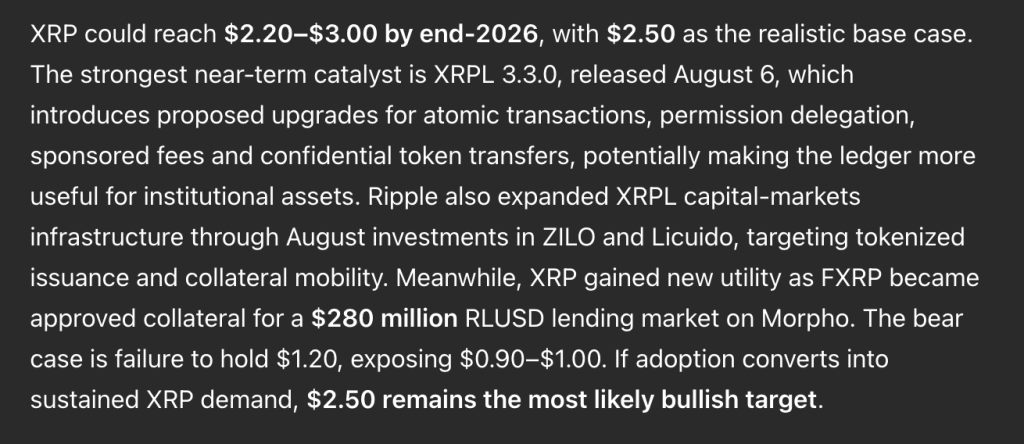
Ledger upgrades do not trend on social media, but they change what a network can hold. That distinction drives the latest ChatGPT AI price prediction, where the model predicts XRP reaching $2.20 to $3.00 by the end of 2026, with $2.50 as the realistic base case.
The strongest near-term catalyst landed on August 6. XRPL 3.3.0 introduces proposed upgrades for atomic transactions and permission delegation.
Sponsored fees and confidential token transfers arrive with it. Together they could make the ledger genuinely useful for institutional assets rather than just payments.
Ripple is building out the surrounding rails too. August investments in ZILO and Licuido target tokenized issuance and collateral mobility on XRPL.

New utility is already live elsewhere. FXRP became approved collateral for a $280 million RLUSD lending market on Morpho.
Collateral demand behaves differently from speculation. Once a protocol integrates an asset, that demand tends to persist through quiet periods.
The bear case is defined by a single level. Failure to hold $1.20 exposes $0.90 to $1.00. That would unwind the entire August move. If adoption converts into sustained XRP demand instead, $2.50 remains the most likely bullish target.
Make Your Prediction Count With $25 For Free on Kalshi
XRP Price Prediction: ChatGPT AI Predicts Institutional Plumbing Pays Off
The backdrop is a long, patient decline. XRP price traded above $2.40 in January 2026 before February collapsed it to $1.13 in a matter of sessions.
March through May settled into a narrow range around $1.40. June broke it, and XRP price stepped lower through July and August until it flatlined at $1.00. That floor held for weeks with almost no volatility. Then came the spike to $1.70, followed immediately by a sharp retreat.

Price is now rebuilding from that pullback. XRP closed at $1.44925, up $0.02638 for a gain of 1.85%, with a session range from $1.38912 to $1.47438.
A green candle after two red ones suggests buyers defending the move. Resistance sits at $1.47438, then $1.55, then the $1.70 spike high.
Support runs through $1.38912 and $1.30, with $1.00 as the structural base. RSI reads 73.73 against a signal line at 62.73. The 11 point gap has narrowed considerably from the extreme printed days ago.
That compression is what a cooling spike looks like. Momentum has come off the boil while price held above $1.38, which favors continuation over collapse.
Adoption is the variable that decides the rest. Convert it into demand and $2.50 stops being theoretical.
The Best Traders Around Use It: AI Copy Trading Bots From CryptoHopper
XRP Is Building Better Rails for Institutions. LiquidChain Is Building the Road Between Entire Networks.
XRPL’s latest upgrades make the institutional case stronger inside one ecosystem. LiquidChain is targeting what happens when that capital needs to move beyond a single chain.
Bitcoin, Ethereum, and Solana still operate as separate liquidity environments. Crossing between them means bridges, duplicated deployments, extra fees, and fragmented execution.
LiquidChain is building a single execution layer designed to connect all 3, so applications can reach multiple ecosystems without rebuilding the same stack chain by chain.
That matters if tokenized assets, lending, and collateral markets keep expanding. The more institutional activity moves on-chain, the more expensive fragmentation becomes.
LiquidChain’s presale is currently priced at $0.01454 with just over $920,000 raised. At that stage, the project does not need large-cap levels of capital for adoption to materially change its valuation.
Gain Special Access to Layer 3 Trading Here
The post Sam Altman ChatGPT AI Predicts XRP Price By End Of 2026 appeared first on Cryptonews.


Cointelegraph is committed to providing independent, high-quality journalism across the crypto, blockchain, AI, and fintech industries.
All news, reviews, and analyses are produced with full journalistic independence and integrity. For more details on our standards and processes, please read our Editorial Policy.
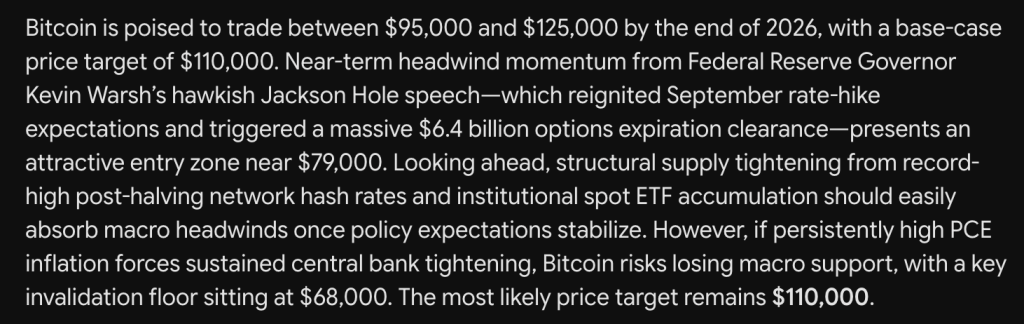
A hawkish speech knocked the wind out of the rally, and one model treats that as the opportunity. The latest Gemini AI price prediction predicts Bitcoin trading between $95,000 and $125,000 by the end of 2026, with a base-case price target of $110,000.
The near-term pressure came from Jackson Hole. Federal Reserve Governor Kevin Warsh delivered a hawkish speech that reignited September rate-hike expectations.
The fallout was mechanical. It triggered a massive $6.4 billion options expiration clearance and knocked the price lower. Gemini reads that dip as an attractive entry zone near $79,000. The headwind is macro rather than structural.

Underneath it, supply keeps tightening. Post-halving network hash rates sit at record highs, squeezing available issuance.
Institutional demand adds to the pressure. Spot ETF accumulation should easily absorb macro headwinds once policy expectations stabilize.
That stabilization is the condition. Without it, the thesis stalls rather than fails outright. The real risk is inflation. If persistently high PCE forces sustained central bank tightening, Bitcoin risks losing macro support entirely.
The key invalidation floor sits at $68,000. Above it, the most likely price target remains $110,000.
Make Your Prediction Count With $25 For Free on Kalshi
Bitcoin Price Prediction: Google Gemini AI Predicts the Dip Becomes the Setup
The weekly chart shows a market that has already completed one full cycle. Bitcoin price ran from $35,000 in late 2023 to a peak near $126,000 in October 2025.
The unwind took four months. February 2026 broke $60,000, and the following months delivered a grinding range between $60,000 and $83,000.
June revisited $57,500. July and August then built a flat weekly base near $65,000 that lasted six weeks.

The breakout came two weeks ago. Bitcoin closed at $78,923, up $1,207 for a weekly gain of 1.55%, with a range from $76,664 to $81,455.
The wide range with a mid-range close reflects the Jackson Hole selling. Resistance sits at $81,455, then $85,000, then the $95,000 shelf from March.
Support runs through $76,664 and $72,000, with $68,000 marking the invalidation line. Weekly RSI reads 57.68 against a signal line at 40.89. The 17 point gap is wide, yet the reading itself is barely above neutral.
That is the notable part. Momentum has turned up hard from a depressed base without reaching overbought territory on this timeframe. Policy clarity is the missing input. Get it, and $110,000 moves back within reach.
The Best Traders Around Use It: AI Copy Trading Bots From CryptoHopper
Bitcoin Is Waiting for Macro Relief. LiquidChain Is Building Where Smaller Capital Can Still Move the Needle.
Bitcoin’s path back toward $110,000 now depends heavily on policy expectations stabilizing and institutional demand overpowering macro pressure. At that scale, every meaningful leg higher requires enormous amounts of new capital.
LiquidChain sits at the opposite end of that equation.
The project is building a single execution layer across Bitcoin, Ethereum, and Solana, targeting the fragmentation that forces users through bridges, duplicated deployments, added fees, and isolated liquidity pools. One deployment is designed to reach all 3 ecosystems without rebuilding the same application chain by chain.
That creates a different kind of upside profile. LiquidChain does not need Bitcoin-sized inflows for new capital to materially change its valuation.
The presale is currently priced at $0.01454 with just over $920,000 raised. If the next rotation favors infrastructure that connects major chains rather than waiting on macro catalysts alone, LiquidChain is still early enough for relatively modest demand to matter.
Gain Special Access to Layer 3 Trading Here
The post Google Gemini AI Predicts Incredible Bitcoin Price By End of 2026 appeared first on Cryptonews.

ChatGPT Ads hits $1B annualised as the EU brings it under the Digital Services Act

Parent says school strikes are ‘deeply damaging’ to autistic daughter
BlackSky CFO Henry Dubois sells $95,120 in company stock





-

 Crypto World6 days ago
SpaceX stock could rise 75% to $240, JPMorgan says
-

 Fashion3 days ago
Weekend Open Thread: Maeve – Corporette.com
-

 Crypto World4 days ago
Bitcoin’s 22% rally now needs real demand to outlast Treasury liquidity boost
-

 Crypto World5 days ago
Warsh Jackson Hole keynote puts financial innovation first
-

 Crypto World7 days ago
A $30 Billion AI Fund Implodes, Now the SEC Is Investigating Wall Street’s Role
-

 Business4 days ago
Salesforce Stock Soars 19% as Blowout Earnings and Agentforce AI Growth Silence Software Skeptics
-

 Crypto World6 days ago
Did Trump Just Move SpaceX Stock With One Truth Social Post?
-

 Crypto World5 days ago
Elon Musk Grok Bot Promise: We Will Make You Whole if AI Loses Your Money
-

 Business4 days ago
Apple Confirms September 9 Keynote and Reveals Its Full Pre-Order Schedule
-

 Business3 days ago
Onto Innovation Stock: AI’s Next Bottleneck Is Yield (NYSE:ONTO)
-
 NewsBeat5 days ago
Lindsay Clancy jury braces for closing arguments as judge tells court: ‘You’ve heard all the evidence’ – Live updates
-

 Business5 days ago
Walmart takes aim at younger shoppers with new fashion brand
-

 Crypto World3 days ago
Bitcoin price tests $82K resistance as Brandt stays long
-

 Business6 days ago
Thailand’s Eastern Economic Corridor Capital City (EECiti): Key Developments and Investment Opportunities
-

 Crypto World5 days ago
NVIDIA revenue hits $96.2B as AI demand doubles
-

 Business3 days ago
iPhone 18 Pro Pre-Orders Could Shift to Saturday as Apple Reportedly Avoids September 11 Anniversary
-

 Business7 days ago
NVIDIA Stock Drops Nearly 2 Percent to $210 on Seventh Losing Day Ahead of Critical AI Earnings
-

 NewsBeat6 days ago
Trump’s trade truce with China faces test with Iran effort
-
 Crypto World5 days ago
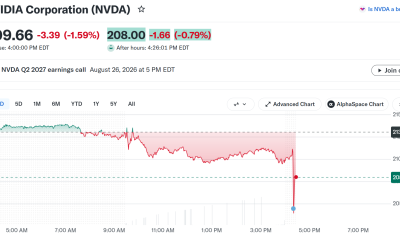
Nvidia Q2 Earnings Reveal $96.2 Billion Beat, So Why Is NVDA Falling?
-

 Tech5 days ago
Claude Cowork gets its own browser that doesn’t touch your tabs, bookmarks, or saved passwords
You must be logged in to post a comment Login