

Crypto World
Can Worldcoin price reach $0.65 as whale accumulation hits yearly highs?

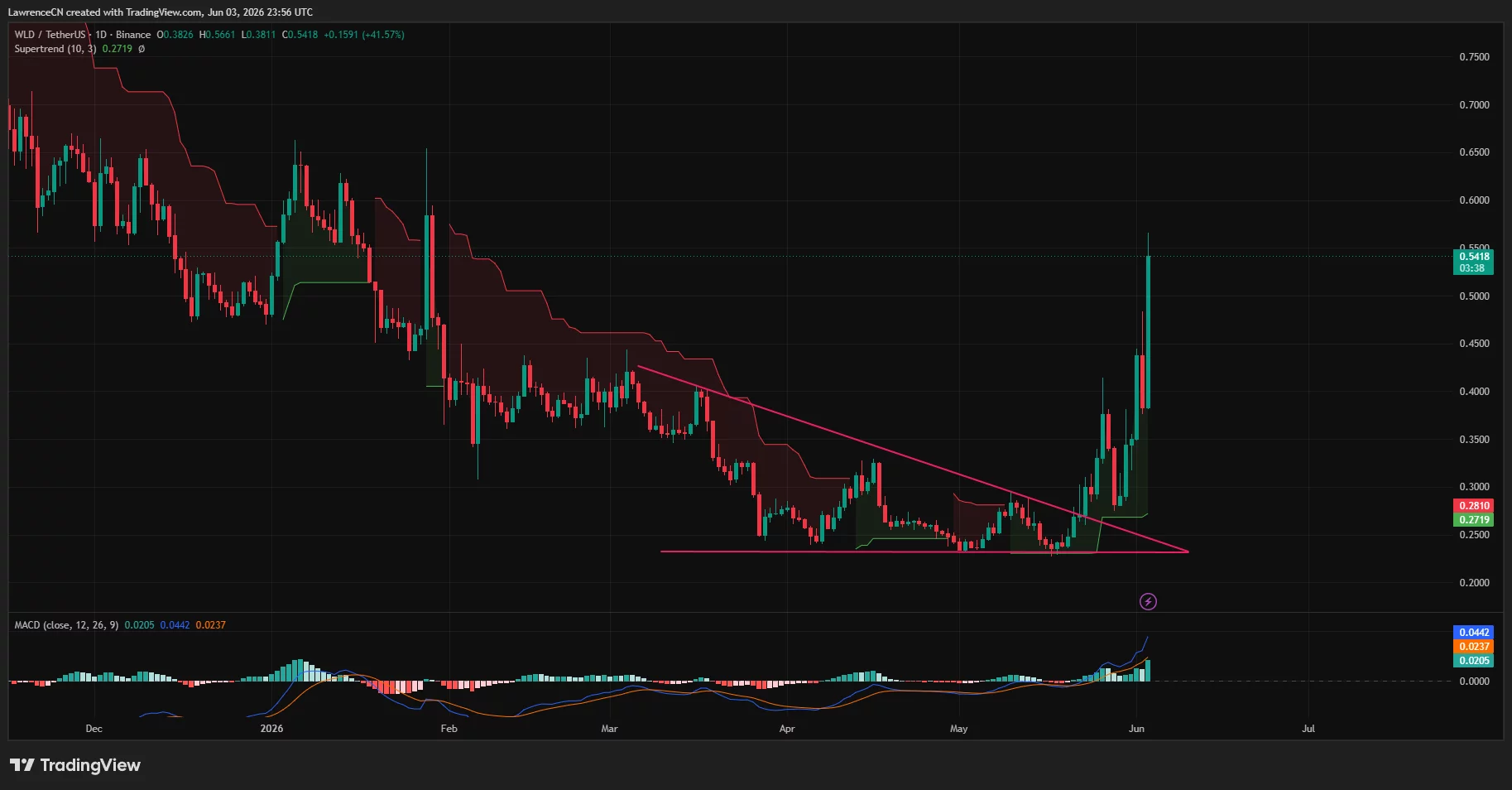
Worldcoin price has surged over 40% since late May after whale activity and network growth climbed to their highest levels of 2026, strengthening the case for a move toward the next major resistance zone near $0.65.
Summary
- Worldcoin has surged more than 40% since late May as whale transactions, active addresses, and new wallet creation climbed to 2026 highs.
- A breakout from a multi-month descending triangle has pushed WLD above $0.54 and brought the $0.65 resistance zone into focus.
- Growing World App activity and renewed interest in AI-related tokens have supported demand despite weakness across the broader crypto market.
According to data from crypto.news, Worldcoin (WLD) traded near $0.53 at press time on June 4 after rallying from roughly $0.33 just days earlier. The advance coincided with a sharp increase in whale transactions worth more than $100,000, alongside a jump in active addresses and new wallet creation across the network.
Large holders began accumulating as WLD emerged from a prolonged consolidation period that had confined prices for much of the year.
Santiment data showed daily whale transactions reaching their highest level of 2026, while active addresses climbed above 1,300. New address growth also accelerated, suggesting participation was expanding beyond existing holders.
Network activity received an additional boost from the integration of Oku Trade into the World App. The feature introduced weekly rewards of up to 100 WLD for users participating in token swaps through a leaderboard system, creating fresh transactional demand within the ecosystem.
Interest in the project’s AI-linked narrative has also remained strong. With OpenAI chief executive Sam Altman closely associated with Worldcoin, traders have increasingly treated WLD as a proxy for the intersection between artificial intelligence and crypto, particularly as AI-related tokens regain momentum across the market.
Whale activity and network growth support the rally
Worldcoin’s gains have stood out against a difficult backdrop for digital assets. On June 2, the total cryptocurrency market lost more than $40 billion in value as Bitcoin (BTC) fell toward the $70,000 region, yet WLD continued advancing while many large-cap assets moved lower.
Capital rotation appears to have played a role. Rather than exiting crypto entirely, traders shifted into tokens backed by active ecosystem developments and improving on-chain metrics. Worldcoin benefited from both trends as whale accumulation tightened available supply while network usage expanded.
Commenting on the move, crypto analyst Bitcoin Meraklisi highlighted a major technical breakout that unfolded after months of consolidation.
“Descending channel broken. First target reached. Retest completed.”
The analyst’s chart showed WLD breaking above a descending channel that had contained price action since September before successfully retesting the breakout zone.
Technical setup places $0.65 within reach
On the daily chart, Worldcoin has broken above the upper trendline of a descending triangle pattern that had constrained price action for several months. The breakout followed a prolonged base formation near the $0.24 support zone and triggered one of the token’s strongest daily advances this year, lifting WLD above $0.54.
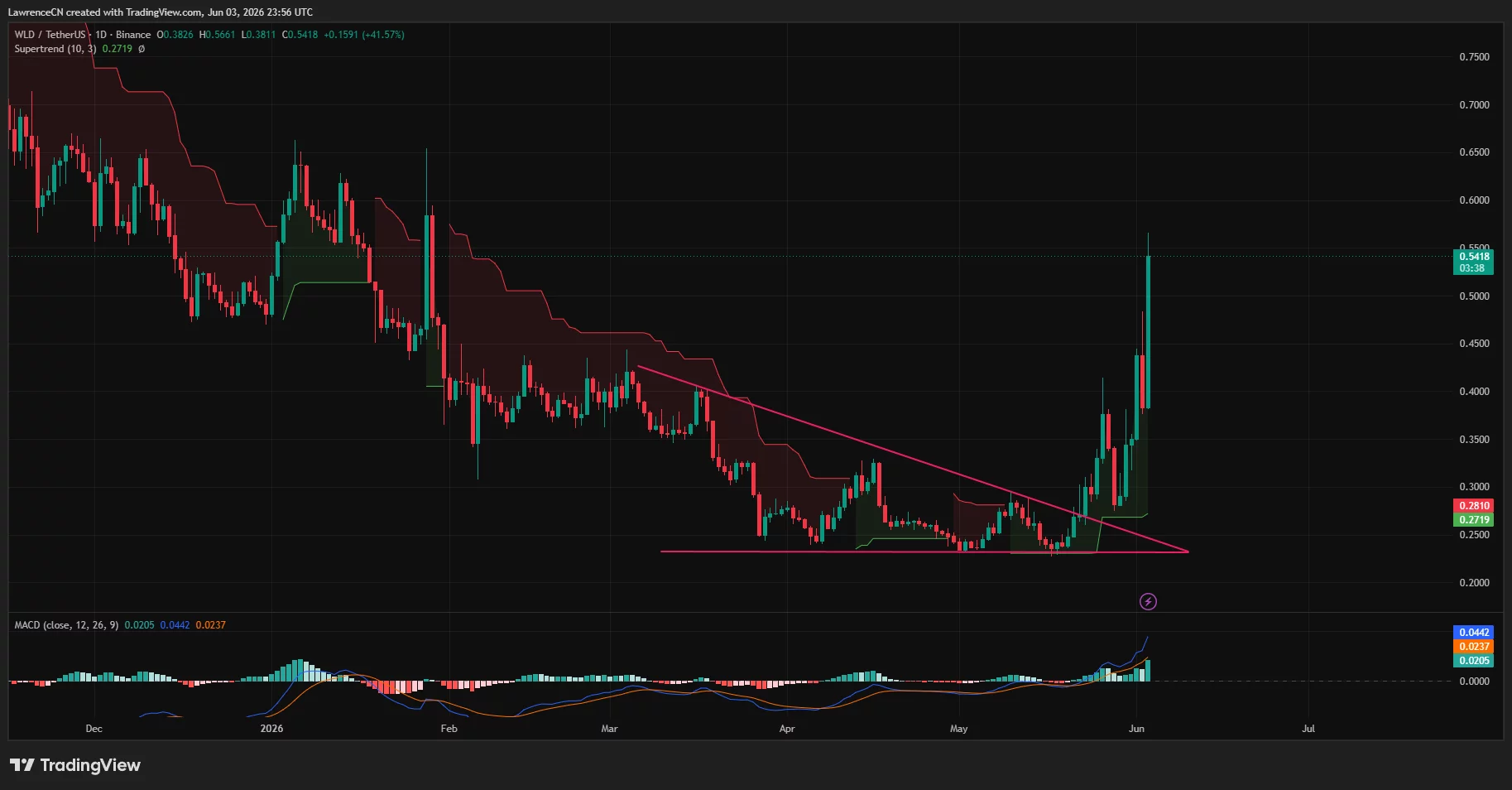
Trading activity expanded significantly during the breakout. Earlier market data showed daily volume surging more than 130% as buyers pushed WLD above its 20-day and 50-day exponential moving averages, reinforcing bullish momentum.
The measured move derived from the height of the triangle places the next major objective between $0.65 and $0.70. From the current price near $0.54, a move to $0.65 would represent roughly 20% upside. A breakout above that area could open the door to a retest of the January highs near $0.75.
Momentum indicators remain firmly bullish. The MACD has produced a fresh bullish crossover while the histogram continues to expand above the zero line. At the same time, the Supertrend indicator has flipped positive near $0.27, confirming a shift in market structure after months of persistent selling pressure.
Traders will be watching the breakout zone around $0.45 as the first key support area. Holding above that level would keep the bullish structure intact and maintain the path toward the $0.65 target. A move back below $0.45 could expose the next support levels near $0.38 and $0.32, where buyers previously stepped in during the consolidation phase.
With whale transactions, active addresses, and new wallet creation all reaching yearly highs, Worldcoin’s on-chain backdrop remains considerably stronger than it was during previous rallies. As long as those trends continue and buyers defend the breakout level, the technical setup continues to favor a test of the $0.65 area in the sessions ahead.
Disclosure: This article does not represent investment advice. The content and materials featured on this page are for educational purposes only.

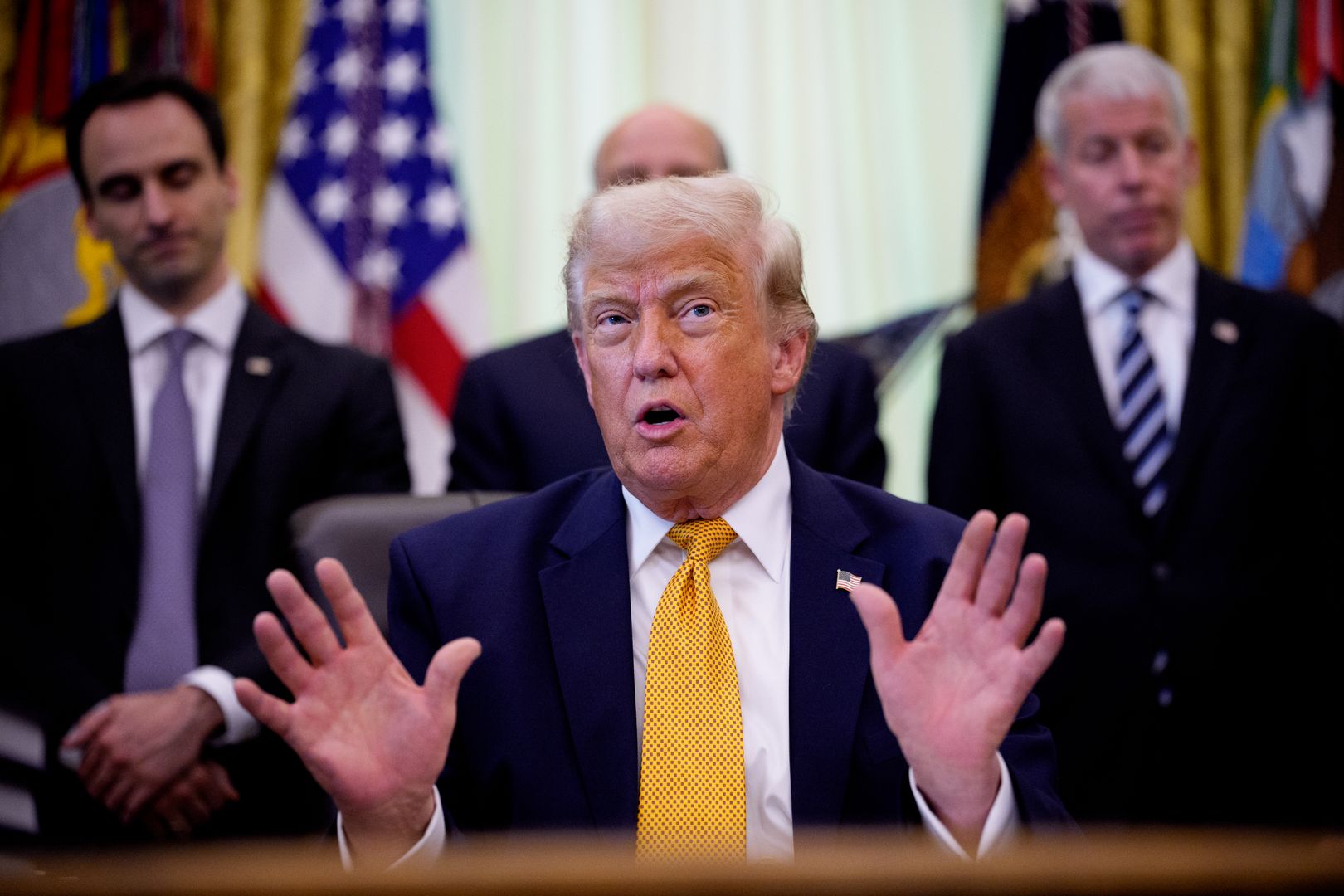
If congressional Republicans pivot toward further work on the elections-focused legislation, that may squeeze their bandwidth for other legislation. GOP lawmakers were already pushing again for Senate action on Trump’s favored bill on Wednesday.
“There is no path for the SAVE Act becoming law,” said Jaret Seiberg, a policy analyst at TD Cowen, in a Wednesday research note. “Senate GOP would need to eliminate the filibuster, a step they already have rejected. Even absent the filibuster, it is not clear the bill has the support of 50 senators, given worries about have to prove citizenship.”
Before his cancellation of the housing bill signing, Trump had posted on his social-media platform that the housing bill is of “minor importance compared to lower interest rates” and other congressional priorities, and he criticized the involvement of Democratic Senator Elizabeth Warren.
The president has a constitutionally designated 10-day window to weigh approved bills for signature once they land on his desk. If he were to veto it, the bill did pass with enough of a margin to reject that veto, though Republican allies of the president would have to agree to override his sentiment.
UPDATE (June 24, 2026, 16:01 UTC): Adds comment from TD Cowen.
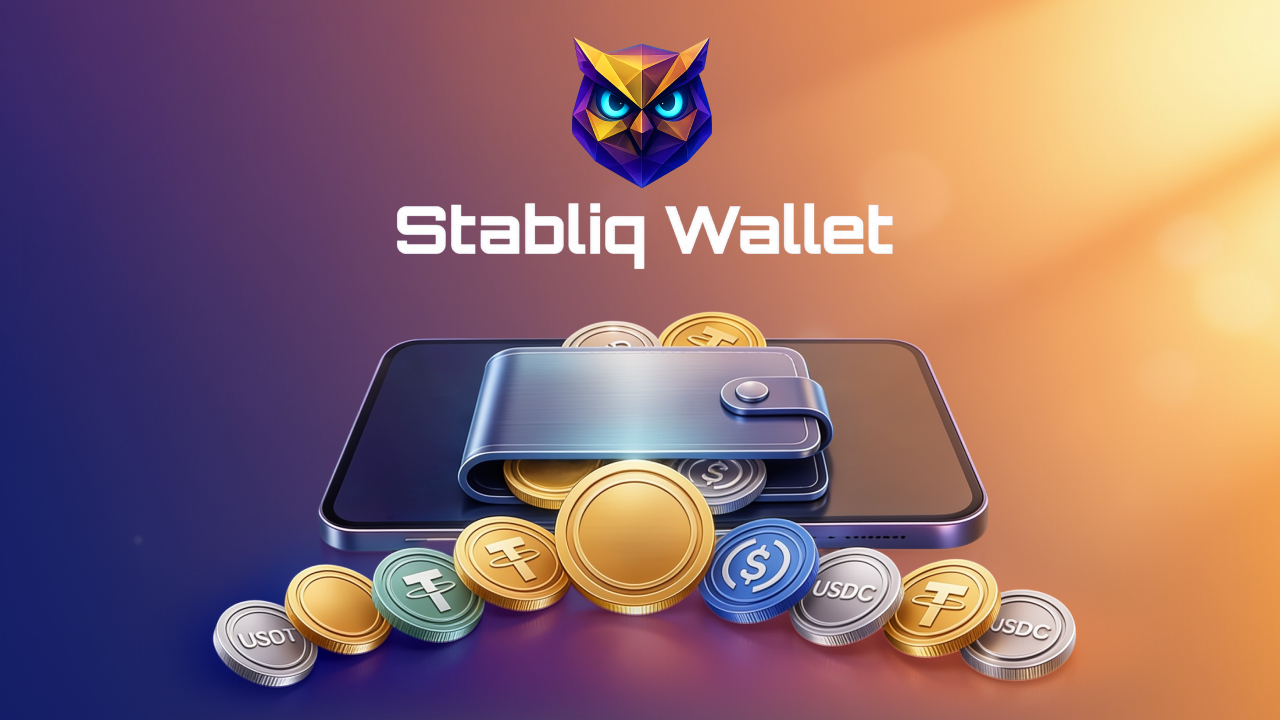
[PRESS RELEASE – Ras Al Khaimah, UAE, June 24th, 2026]
Fintech developer Virell Trade has officially announced the launch of Stabliq Wallet, a secure, non-custodial cryptocurrency wallet engineered specifically for the management of stablecoins across the Ethereum and TRON networks. Designed to enhance digital asset security and accessibility, the application provides comprehensive storage, transfer, and exchange capabilities for major stablecoins, including USDT and USDC.
To mitigate the complexities typically associated with decentralized finance (DeFi), Stabliq Wallet introduces a specialized architectural design that appeals to both institutional digital asset managers and retail users entering the Web3 ecosystem.
Key Infrastructure and Technical Features Include:
- Gasless Ethereum Token Swaps: The wallet features native in-app token exchange capabilities on the Ethereum network, incorporating advanced transaction routing that eliminates the standard requirement for users to hold native Ether (ETH) to cover network gas fees.
- Non-Custodial Security Framework: Built on a strict zero-trust, non-custodial architecture, the platform ensures users retain exclusive ownership of their private keys. Local security protocols are reinforced by biometrics (Face ID), password protection, and standardized seed phrase recovery mechanisms.
- Multi-Account and Multi-Network Integration: Users can manage multiple distinct accounts, import existing wallets via standard seed phrases, and track cross-network digital assets seamlessly within a unified interface.
- Operational Workflow Optimization: The application streamlines daily transactions through an integrated address book, comprehensive transaction historical ledgers, custom token import support, and quick-response (QR) code transfer protocols.
By focusing on the dual infrastructure of Ethereum and TRON — the two largest networks for stablecoin volume — Stabliq Wallet directly addresses the market’s demand for high-throughput, secure, and cost-effective digital asset management.
“Stabliq Wallet uses a non-custodial architecture, meaning users have full control over their private keys. Security features include Face ID, password protection, and seed phrase backup”, said the company.
About Virell Trade
Virell Trade is a digital asset technology company based in Ras Al Khaimah, UAE. The firm specializes in developing secure Web3 infrastructure, decentralized financial applications, and consumer-focused blockchain tools designed to enhance efficiency and security in the global digital economy. For more information, users can visit the official Stabliq Wallet platform.
The post Virell Trade Launches Stabliq Wallet for Stablecoin Management on Ethereum and TRON appeared first on CryptoPotato.


This trend is becoming even more relevant as real-world assets enter the digital landscape. Stablecoins have already demonstrated the power of blockchain-based representations of traditional value, becoming the most successful digital asset use case to date. Tokenized deposits, bonds, funds, and other real-world assets are poised to follow, expanding the range of opportunities available to businesses and individuals worldwide.
For the end user, however, the underlying asset may become increasingly irrelevant. Most people are unlikely to care about the blockchain protocol, token standard, or settlement mechanism powering a transaction. What matters is accessibility, speed, security, and trust. Users want to access global opportunities using their local resources, through partners they know and platforms they can rely on.
In this environment, the long-term competitive advantage belongs to those who build and operate the infrastructure connecting participants, assets, and markets. Coins may evolve, protocols may change, and new forms of digital value will continue to emerge. But the institutions that enable trust, connectivity, and seamless access will remain at the center of the ecosystem.
The prevailing currency in digital assets may change over time. Infrastructure, however, is what endures.
Principled Perspectives
Bitcoin’s liquidation cascade peaked before the bottom
– By Alen Pavlović, Portfolio Manager, Liquibit Capital
Using CoinDesk’s liquidation feed, the forced selling flushed early and high. By the time Bitcoin bottomed on 5 June, the cascade was already over.
JPYSC has officially launched today, Japan’s first trust bank-backed yen stablecoin, issued by SBI Shinsei Trust Bank and distributed exclusively through SBI VC Trade. The token is pegged 1:1 to the yen, classified as an electronic payment instrument under Japan’s Payment Services Act, and carries no transaction cap, a structural detail that separates it from every prior yen stablecoin attempt in the domestic market.
Earlier fund-transfer-type stablecoins in Japan were subject to a 1 million yen ceiling on both transactions and balances, a constraint that rendered them useful for retail payments and little else. JPYSC removes this ceiling, opening the door to institutional-scale on-chain settlement, tokenized RWA transactions, and cross-border FX use cases that the prior generation of Japanese stablecoins structurally could not support.
Discover: The Best Crypto to Diversify Your Portfolio
Trust-Bank Structure: Digital Yen Stablecoin Regulatory Differentiator
The structural distinction that makes JPYSC huge within Japanese crypto regulation is the issuance architecture. SBI Shinsei Trust Bank holds reserve assets, cash, and highly liquid yen-denominated instruments in a segregated trust account. Holders carry a direct legal claim under trust law to the underlying yen.
The Payment Services Act classification as an electronic payment instrument reflects this structure. Japan’s revised framework created a legal pathway specifically for trust bank stablecoins, and JPYSC is the first product to reach the market through that route.
Singapore-based Startale Group, co-developer of JPYSC alongside SBI, provided the blockchain infrastructure and developer tooling; Startale CEO Sota Watanabe described the token as infrastructure for “Japanese retail users, enterprises, and global financial institutions” to transact onchain.
In October 2025, JPYC received approval as Japan’s first legally recognized yen stablecoin, but under the fund-transfer framework with its 1 million yen cap intact. Japan’s three megabanks, MUFG, SMBC, and Mizuho, are jointly developing a stablecoin and announced plans in June 2026 to begin live commercial transactions during fiscal year 2026. JPYSC beat them to market with a structure the megabank project has not yet matched publicly.
The multi-chain architecture Startale has outlined for JPYSC, targeting deployment across multiple public chains via Sony-backed infrastructure, would further differentiate the token if it materializes. A single-chain yen stablecoin is a payment rail. A multi-chain yen stablecoin with no transaction cap and trust-law reserve backing starts to look like foundational settlement infrastructure for Japan’s on-chain financial market.
Don’t Miss Out on Our $1,000 USDT Airdrop on ByBit
JPYSC Is Infrastructure, Not a Liquidity Event
Initial access to JPYSC is restricted to SBI VC Trade account holders, a deliberate constraint SBI has indicated will remain in place until regulatory and tax treatment is fully clarified. This is a reasonable sequencing decision for a novel instrument, but it also means the token’s near-term addressable market is limited to SBI’s existing exchange client base.
Don’t Miss Out on Our $1,000 USDT Airdrop on ByBit
SBI VC Trade has flagged a JPYSC lending service as a near-term addition, which would add yield mechanics to a pure settlement instrument and potentially accelerate institutional adoption. The tokenized RWA angle is the more consequential long-term use case. It’s no secret that a yen-denominated stablecoin with no cap and trust-law backing is a natural settlement layer for Japan’s growing pipeline of tokenized securities, real estate, and structured products.
The regulatory trajectory across major jurisdictions reinforces why this structure matters. Ripple’s RLUSD received MiCA approval in the EU on the strength of its regulated, reserve-backed structure. Regulatory legitimacy is increasingly the price of admission for stablecoins targeting institutional flows, and JPYSC clears that bar within the Japanese framework.
Discover: The Best Token Presales
The post SBI Group Launches JPYSC, Japan’s First Trust Bank-Backed Yen Stablecoin appeared first on Cryptonews.

Key Takeaways
- Reflection AI, an emerging AI firm, has entered into an agreement with SpaceX for Nvidia GB300 chip access at the Colossus 2 facility, costing $150 million monthly.
- The contract extends through 2029, potentially generating approximately $6.3 billion in total revenue over its duration.
- Despite lacking any released products or revenue streams, Reflection AI secured $2 billion in funding last October, achieving an $8 billion valuation with Nvidia’s backing.
- Following the announcement, SpaceX stock (SPCX) experienced a decline of approximately 10.6%, even though the contract represents substantial recurring income.
- The Colossus data center portfolio now includes major clients such as Anthropic, Google, Cursor, and Reflection AI.
SpaceX (SPCX) stock experienced a significant decline of roughly 10.6% following news of a massive $6.3 billion computing agreement with Reflection AI — an AI startup that has yet to launch a commercial product or generate any revenue.
Space Exploration Technologies Corp, SPCX
CNBC broke the story on June 22. According to the agreement’s structure, Reflection AI will gain prompt access to Nvidia GB300 processors located within SpaceX’s Colossus 2 Memphis data center. Monthly installments of $150 million commence on July 1, 2026, with the contract extending until 2029.
If executed in full, the arrangement would generate roughly $6.3 billion in total payments. Both parties retain the option to terminate with 90 days’ notice following an initial three-month period.
Neither SpaceX nor Reflection AI provided responses to Reuters’ inquiries.
Reflection shared on LinkedIn that “additional compute capacity enables us to further advance the boundaries of open models,” offering no additional specifics.
Expanding Client Portfolio
SpaceX has been methodically assembling an impressive collection of high-profile computing clients at its Colossus facilities. Anthropic secured exclusive access to all of Colossus 1 for approximately $1.25 billion monthly. Google subsequently committed to $920 million per month for transitional capacity while constructing its proprietary data centers, with service beginning October this year and continuing through June 2029. Reflection represents the fourth major tenant in a portfolio that emerged from nothing within the past year.
Reflection was established in early 2024 by co-founders Misha Laskin and Ioannis Antonoglou, both alumni of Google DeepMind. Laskin previously directed reward modeling efforts for Gemini. Antonoglou co-developed AlphaGo. The startup completed a $2 billion funding round last October at an $8 billion valuation, with Nvidia serving as the lead investor. By spring 2026, industry reports suggested its valuation had climbed toward $20 billion. The company has not yet released any public model.
The organization has established itself as an open frontier laboratory concentrating on government and national security applications, including initiatives connected to the Department of Energy’s Genesis Mission and various Pentagon AI contracts.
Understanding the Stock Movement
Despite securing billions in guaranteed recurring revenue from an additional tenant, SPCX shares fell approximately 10.6% on announcement day — marking the sharpest single-day decline since the company’s June 11 public debut at a $1.77 trillion valuation.
The market reaction surprised several analysts. SpaceX is securing guaranteed, recurring payments against existing infrastructure assets. The Colossus 2 agreement alone contributes $1.8 billion in annual contracted revenue. This financial dynamic doesn’t immediately explain the negative market response.
Looking Ahead
The agreement features a 90-day termination provision following the initial three-month period, meaning the critical evaluation point arrives around late October. Should Reflection choose not to exercise this exit option, the lease essentially transitions from potentially temporary to confirmed long-term demand.
Reflection’s LinkedIn communication mentioned advancing the frontier on “open models.” The company has not disclosed a timeline for any public product release.
SpaceX, Reflection AI, and Nvidia had not provided additional comments by publication time.

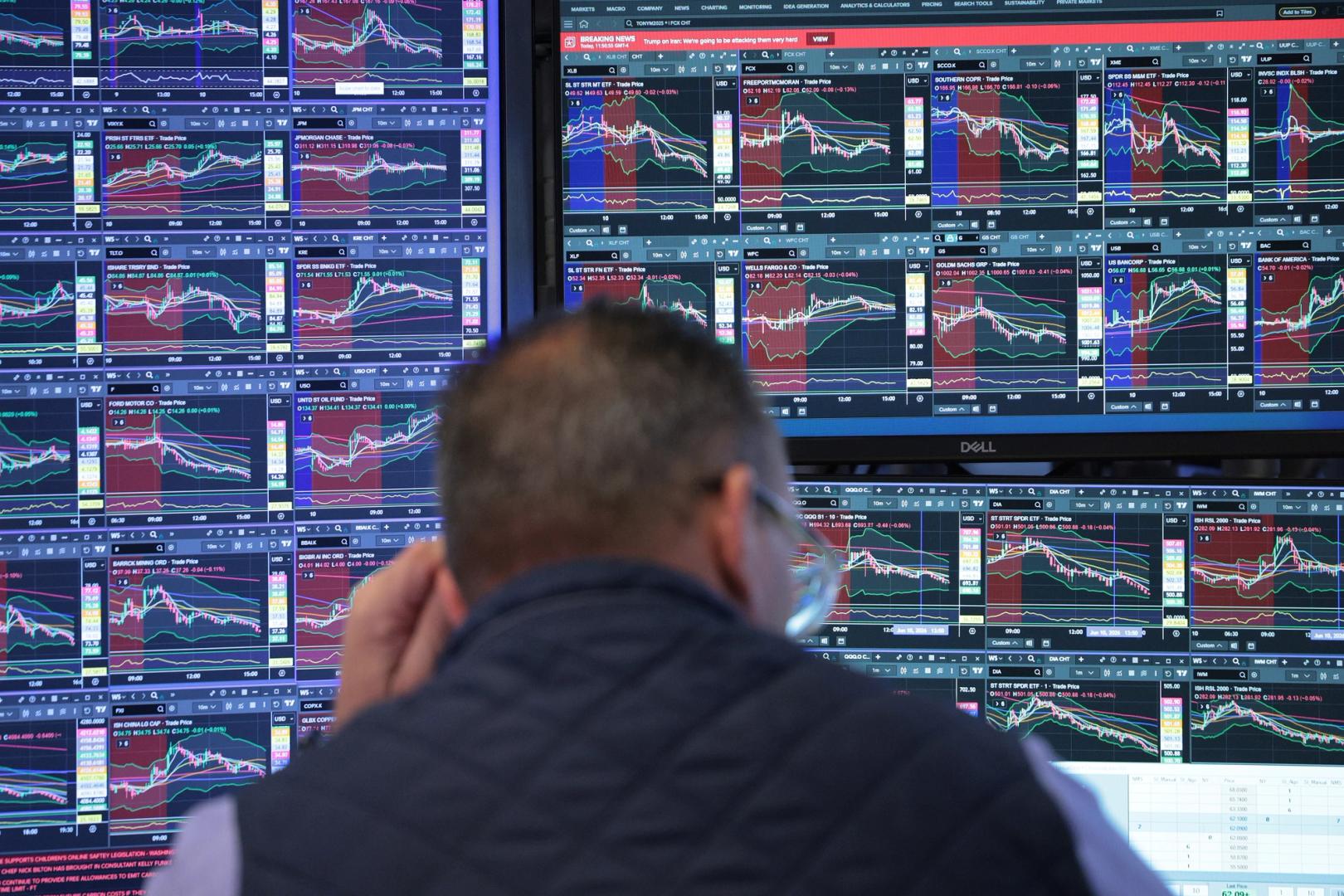
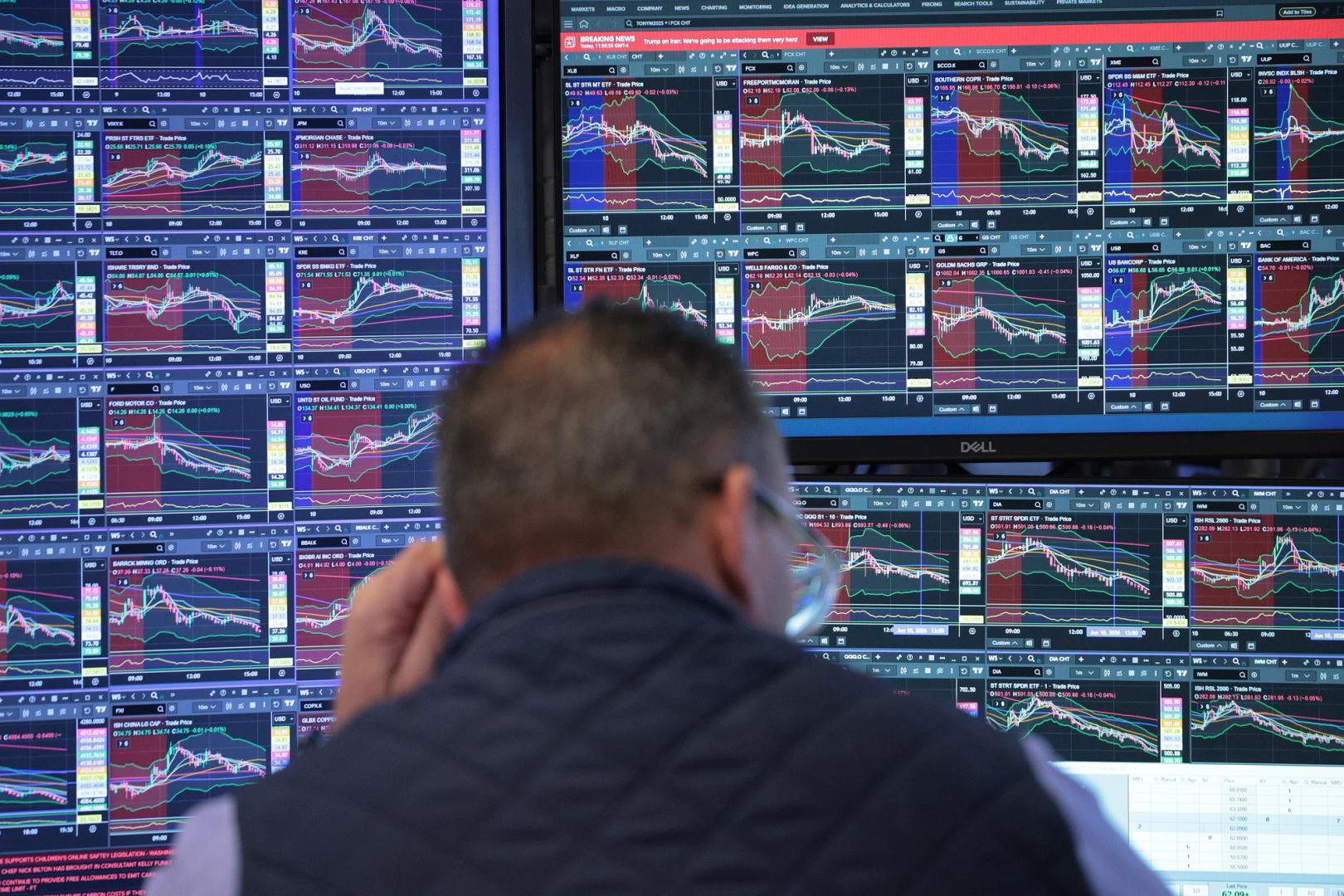
Bitcoin dropped to the $60,000 area on Wednesday for the second time this month, continuing its poor price action in the face of risk market rallies elsewhere.
Also continuing to lose ground on Wednesday were gold and oil, each falling below key levels — gold $4,000 per ounce and oil $70 per barrel.
Read more: Gold, silver and bitcoin tumble as ‘debasement’ trade unwinds
The declines in crypto, precious metals, and oil came as tech stocks rebounded following Tuesday’s modest one-day slump, with the AI trade continuing to draw investor interest and dollars.
South Korean memory chip giant SK Hynix on Wednesday filed to raise nearly $30 billion in a U.S. share offering, in what would be the overseas company capital raise since Saudi Aramco’s mammoth $26 billion sale in 2019.
The Nasdaq at midday Wednesday was up 0.8% against bitcoin’s 3.2% slump.
Bitcoin has lost the plot
Billionaire hedge fund manager Philippe Laffont succinctly summed up investor sentiment Tuesday, telling CNBC he has become “a little bit more worried” about bitcoin’s future, arguing that investors now have a wider range of opportunities to choose from than in previous years.
LastPass, the password manager that inadvertently facilitated the theft of $150 million in crypto from Ripple co-founder Chris Larsen, is now warning users that their personal information was stolen via an attack on third-party market firm Klue.
The company emailed its customers this week to inform them that Klue was breached on June 11 and that data including customer names, phone numbers, email addresses, and physical addresses, as well as support case data and sales-related data, had been stolen.
Despite this, LastPass stressed that the incident affects only Klue-integrated systems and that “LastPass products, services, and infrastructure were not impacted in any way and customer vaults remain secure.”
Multiple cybersecurity firms reliant on Klue have also seen customer data leaked.
The cybercrime group Icarus claimed responsibility for the breach and is reaching out to users and threatening to leak their data.
LastPass users have been warned to stay vigilant about social engineering and phishing attacks that may attempt to swindle them out of more information and funds.
LastPass’s 2022 breach lost Ripple co-founder $150M
LastPass suffered multiple major breaches in 2022 that saw sensitive data stolen from customers’ password vaults.
Crypto sleuth ZachXBT noted in 2024 that a threat actor was able to use data from this breach to steal $5.4 million worth of crypto from over 40 addresses.
Prior to this, in 2023, ZachXBT also reported that roughly $4.4 million was drained from over 25 victims because of the 2022 breach.
Possibly the biggest theft from LastPass involved Ripple co-founder Chris Larsen, who lost $150 million worth of crypto after his private keys were leaked in the 2022 breach.
Read more: ‘AudiA6’ crypto laundering suspects face extradition to US
Two people behind a $389 million cryptocurrency laundering service dubbed “AudiA6” have also, according to ZachXBT, helped launder stolen funds from LastPass users.
LastPass was fined £1.2 million by the UK’s Information Commissioner’s Office last year over the 2022 data breach.
The body claimed it impacted 1.6 million UK users, and that LastPass “failed to implement sufficiently robust technical and security measures, which ultimately enabled a hacker to gain unauthorised access to its backup database.”
Got a tip? Send us an email securely via Protos Leaks. For more informed news and investigations, follow us on X, Bluesky, and Google News, or subscribe to our YouTube channel.

Today’s blockchains already treat consensus as a matter of two properties: nodes must agree on the same history (consistency) and the system must keep processing transactions (liveness). But that framing leaves a crucial gap—what users ultimately care about is not only whether transactions get confirmed, but whether their relative ordering is meaningfully fair when multiple parties submit transactions that can interact economically.
A new line of research is trying to formalize “transaction order fairness” and map out what is possible under real-world networking constraints. The core takeaway: perfect “first-come, first-served” ordering is mathematically out of reach in asynchronous distributed systems, even before considering adversaries. The practical question becomes how to approximate fairness while keeping liveness and minimizing opportunities for extractive behavior.
Key takeaways
- Perfect receive-order fairness (“first-seen, first-executed”) cannot be guaranteed on public networks because messages arrive at different times and there is no shared clock.
- Even when each node has a clear local arrival order, group preferences can conflict—captured by the Condorcet paradox—making a single linear order impossible to satisfy.
- Hashgraph’s fairness model uses a DAG of events with median timestamps to respect causal relationships while bounding how far adversarial influence can shift ordering.
- BOF-style protocols (from the Aequitas/Themis line of work) relax fairness by ordering transaction “batches” derived from Condorcet cycles, enabling stronger liveness guarantees.
Why “fair ordering” is harder than it sounds
In public blockchains, ordering isn’t just an implementation detail—it can decide who captures value and who pays. When privileged roles like block builders or sequencers determine execution order, they can potentially exploit that power through strategies that front-run, back-run, or sandwich transactions. Research on maximal extractable value (MEV) describes this as a direct consequence of who can influence ordering.
To counteract this, some proposals treat transaction ordering fairness as a third consensus objective alongside consistency and liveness. The general idea is to constrain the block producer’s ability to bias ordering beyond what the network conditions and protocol rules imply—making execution more predictable and less vulnerable to systematic exploitation.
But the most intuitive fairness notion runs into a structural limitation. In an asynchronous distributed system, there is no globally defined reception order because different nodes observe transaction messages at different times. Without a shared clock and with arbitrary message delays, no protocol can ensure that every node’s “arrival order” maps perfectly onto a single network-wide execution order.
The Condorcet paradox: why majority “first” can loop
The strongest form of fairness is often described as Receive-Order-Fairness (ROF): if most nodes receive transaction A before transaction B, then A should be processed before B. ROF sounds straightforward, but the network reality undermines it. Nodes see messages at different speeds, so different nodes can legitimately observe different pairwise “firsts.” Even if those local observations are consistent for each node, the collective can still become inconsistent.
This is where the Condorcet paradox comes in from voting theory, and it translates cleanly to distributed ordering. Even when each participant has an internal preference for which of two items comes first, the majority preference across multiple pairs can form a cycle:
- Most nodes see A before B
- Most nodes see B before C
- Most nodes see C before A
When that happens, there is no single linear ordering that satisfies all majority pairwise preferences. The implication for blockchain consensus is direct: if fairness is defined too strictly in terms of majority “first-seen” comparisons, the protocol may be unable to produce any ordering that matches the majority view across all pairs.
Because of this impossibility, systems aiming for “fairness” must adopt weaker—but more achievable—guarantees.
Hashgraph’s approach: DAG causality plus median timestamps
Hedera’s hashgraph algorithm tackles transaction ordering fairness through a leaderless, event-driven model. According to the described model, transactions are transformed into cryptographically linked events inside a directed acyclic graph (DAG). Consensus ordering then emerges from how nodes collectively observe and sign those events, rather than from a single proposer unilaterally choosing a sequence.
Operationally, when a node receives a transaction, it creates an event and gossips it to peers. Subsequent events record hashes of earlier events they have seen, and nodes digitally sign the result. This creates a provable causal structure: if one event is an ancestor (direct or indirect) of another, the protocol provides a cryptographic guarantee about which event was created first by some node.
The ordering logic then distinguishes between events with causal relationships and those that are concurrent. Events connected by DAG ancestry are ordered according to their causal dependencies. For concurrent events (those without ancestor relationships), the protocol resolves relative ordering using a “round-received” concept and then refines that using median timestamps.
Median timestamps, as described, are derived from a set of node-reported local receive times, but constrained by the hashgraph’s ancestry. That constraint matters: nodes cannot claim to have observed an event before its causal predecessors without creating detectable inconsistency in the DAG. Under the standard assumption used in Byzantine fault tolerance—fewer than one-third of nodes are Byzantine—the median timestamp should remain within a bounded range of honest timing reports, limiting adversarial ability to arbitrarily skew ordering.
However, hashgraph’s fairness is not infinite. The described research emphasizes that fairness is bounded by an adversarial “surface” where a node can still influence its gossip behavior: which events it relays first and whether it delays relaying. While the DAG cannot fabricate a false causal history, strategic propagation patterns can reshape the inputs that ultimately feed into median timestamp computation.
There is also the Condorcet paradox risk for concurrent events. The DAG eliminates ambiguity for causally linked events because the ancestry is fixed at creation. But concurrent events can still be observed in different orders by different nodes, leaving some ordering tension that is then handled by the protocol’s round and median mechanisms.
BOF protocols: fairness by collapsing Condorcet cycles
Another line of work frames fairness differently—by explicitly embracing cycles. BOF (Batch-based Order Fairness) protocols define “blocks” as sets of transactions that form a Condorcet cycle, then enforce fairness at the level of how those blocks relate, while allowing arbitrary internal ordering inside each block.
In the BOF formulation described, fairness is controlled by a parameter γ: if a sufficient fraction γ of nodes observe block b before block b′, then honest nodes cannot output b after b′. When fairness constraints induce a cyclic relation, the protocol collapses the strongly connected component (SCC) into a single batch/block, because no linear order can satisfy all the directed constraints simultaneously.
A key practical point is that this approach relaxes strict ROF requirements. When a cycle occurs, internal ordering becomes irrelevant to the fairness guarantee, since the protocol treats the entire cycle participation as atomic at the batch level. The research description notes that deterministic rules (such as a hash-based rule) may then sort transactions within the batch, but the fairness criterion does not attempt to make those internal orders correspond to any global first-seen preference.
The Aequitas protocol line is described as having weaker liveness: its strict fairness constraints require waiting for complete Condorcet cycles, and if cycles can chain indefinitely, finalization delays could grow without bound—creating a “freeze” risk.
Themis is introduced as a refinement intended to preserve γ-BOF while improving liveness. As described, Themis also builds a dependency graph and collapses SCCs during a “FairFinalize” stage, but it avoids waiting for the full cycle to close. Instead, it uses deferred ordering and “batch unspooling” so SCCs can be output incrementally while new transactions keep flowing. The result, as presented, upgrades Aequitas’ weak liveness into standard liveness with a delay bound.
Themis also addresses communication scaling concerns. In its basic form, participants exchange messages with most other nodes, leading to communication growth roughly proportional to the square of the network size. An optimized variant, SNARK-Themis, replaces much of that direct exchange with succinct cryptographic proofs, so verification can scale more efficiently as the node count increases.
Finally, the protocol design includes a mechanism to prevent denial-style manipulation. If a malicious proposer tries to exploit the system by proposing an empty block, Themis’s deferred ordering accepts a partially ordered batch and leaves exact finalization to a subsequent honest proposer, based on verifiable transaction relationships rather than discretionary choices by the current proposer. This is framed as a way to tie finalization to bounded network delay rather than arbitrary proposer behavior.
What to watch next
The central unresolved question across these approaches is how to balance fairness guarantees against the operational costs—especially complexity, communication overhead, and the practical handling of concurrency. As more consensus designs incorporate formal ordering fairness ideas, investors and builders should watch for implementations that demonstrate bounded delays in real network conditions while maintaining robustness against adversarial reordering.
Kalshi has expanded its CFTC-regulated crypto perpetuals lineup to 13 digital assets after launching new contracts tied to Zcash, Near Protocol, and Shiba Inu, while legal battles over the platform’s products continue to intensify.
Summary
- Kalshi expanded its CFTC-regulated crypto perpetuals lineup with Zcash and Near contracts, while Dogecoin and Shiba Inu perpetuals are also live.
- The rollout comes as CME Group challenges the CFTC’s approval of similar products and the regulator fights Kentucky over market oversight.
- Traditional finance firms, including CBOE and Charles Schwab, are increasingly exploring perpetual and prediction-style trading products.
According to Kalshi’s latest listings, the prediction market operator has expanded its “American Perpetuals” lineup with contracts tied to Zcash (ZEC) and Near Protocol (NEAR), while Dogecoin (DOGE) and Shiba Inu (SHIB) perpetuals are also now available for trading. The additions bring the total number of supported crypto assets to 13, alongside Bitcoin and other altcoins.
The contracts are available through a structure approved by the U.S. Commodity Futures Trading Commission and do not carry expiration dates.
Recent filings submitted by Kalshi show the platform sought regulatory clearance for the new products on Tuesday. Zcash perpetuals are being offered with up to 2x leverage, while Near contracts allow leverage of up to 2.6x. Shiba Inu’s perpetual contract, listed under the ticker KSHIB, also carries a maximum leverage ratio of 2x. Dogecoin perpetuals are also listed on the platform as part of the latest wave of CFTC-approved crypto contracts.
The additions follow an earlier wave of filings covering assets including XRP, Solana, Dogecoin, Chainlink, Litecoin, Bitcoin Cash, Sui, Hyperliquid, Polkadot, Hedera, and Stellar. Kalshi has already secured approval for most of those products, though contracts linked to Stellar, Polkadot, and Hedera remain under review by the CFTC.
Legal scrutiny has grown around perpetual contracts
While Kalshi continues adding crypto products, regulatory questions surrounding the structure of perpetual contracts have become more prominent. As previously reported by crypto.news, CME Group filed a lawsuit against the CFTC and Chairman Michael Selig, arguing that certain contracts approved by the agency should be classified as swaps rather than futures products.
The debate has expanded beyond crypto markets. Earlier today, the CFTC sued Kentucky in federal court after the state sought to enforce gaming laws against Kalshi, Polymarket, and brokerage partners connected to Coinbase, Robinhood, and Webull.
In its complaint, the regulator argued that designated contract markets operating under federal oversight fall under the Commodity Exchange Act rather than state gaming regulations. Kentucky, however, maintains that sports-linked event contracts meet the state’s definition of sports wagering and should remain subject to local licensing requirements.
At the same time, regulators are seeking public feedback on how derivatives products should be classified. The SEC and CFTC have jointly requested comments on definitions involving swaps and related instruments, an issue that has gained urgency as event-based trading products become more common.
Traditional exchanges are moving toward similar products
Interest in perpetual-style contracts has also spread across traditional financial markets. As reported by crypto.news, CBOE Global Markets has begun evaluating whether its continuous Bitcoin and Ether futures could be converted into perpetual contracts after crypto perpetuals generated more than $8.5 billion in trading volume on Kalshi within weeks of launch.
Charles Schwab has likewise entered the prediction-markets segment through a partnership with CBOE, introducing all-or-nothing contracts tied to the performance of the S&P 500. The brokerage joins firms including CME Group and Interactive Brokers that have recently expanded into event-driven trading products.
Outside the United States, Kalshi is facing a different challenge. An updated members’ agreement published on Wednesday shows the company has added India to its list of restricted jurisdictions.
Indian authorities have classified prediction-market platforms under the Promotion and Regulation of Online Gaming Act 2025, arguing that products involving real-money speculation on uncertain outcomes can fall within prohibited betting activity regardless of how operators describe them.
Crypto World
Cardano wallet SecondFi hit by $2.4 million exploit, up to $20 million in user funds at risk


SecondFi, the Cardano wallet formerly known as Yoroi, says it has patched a major exploit that drained roughly 16 million ADA, worth approximately $2.4 million, from 374 user wallets across three separate attacks.
The root cause was a flaw in SecondFi’s proprietary wallet generation software. The vulnerability sits at the address level, meaning simply moving a seed phrase to another wallet offers no protection. “The security risk occurs when an affected user signs a transaction,” the team said on X.
Before attackers could reach a further 129 million ADA, SecondFi said it triggered emergency rescue measures, routing the funds to an independent third-party custodian. An external accounting firm has been engaged to verify those holdings and affected users can submit claims to SecondFi.
Blockchain security firm SlowMist estimates total losses could exceed $20 million when accounting for the full range of compromised wallets and tokens, a figure that remains unconfirmed pending an independent audit.
Cardano founder Charles Hoskinson acknowledged the incident but noted the dollar amount was modest relative to other crypto hacks, though he stressed that offered little consolation to those affected. “It hurts them whenever they lose anything,” he said. “This is the unfortunate reality of crypto.”
ADA is currently trading around $0.15, its lowest level since 2020.

Europe heatwave: Power outages hit France as it records hottest day since measurements began

Trump refuses to sign law with U.S. CBDC ban, demands approval of elections bill
Lizzo's new album debuts to shockingly low sales 3 years after backup dancer controversy


-

 Fashion5 days ago
Weekend Open Thread: Miami – Corporette.com
-

 Entertainment4 days ago
Renter of Home in Anne Heche Crash Denies Settlement With Son
-

 Tech2 days ago
Microsoft accidentally kills epic Outlook email threads
-
 Sports22 hours ago
Two goals and an assist by sheer aura: Cristiano Ronaldo just entered the World Cup chat
-

 Business4 days ago
Soccer-U.S. defends Iran World Cup travel restrictions, says discussions ongoing
-
Crypto World13 hours ago
Bitcoin (BTC) Dips Below $62K, Ethereum (ETH) Plunges 6% Daily: Market Watch
-
 Politics6 days ago
BBC Reporter Discusses Cross Party Criticism Of Trumps Iran Deal
-

 Crypto World10 hours ago
Securitize Wraps Roubini's SEC-Registered ETF as Dubai VARA Digital Security
-
Business16 hours ago
Entergy settles forward sale agreements, raises $672 million in cash proceeds
-
 Business5 days ago
Wall Street Week Ahead: Investors see Micron earnings as pulse check of AI rally momentum
-

 Politics4 days ago
Andy Burnham and the meaning of Makerfield
-

 Tech6 days ago
AWS enters the context layer race with a graph that learns from agents, not manual curation
-
 Crypto World4 days ago
Can Charles Hoskinson Really Rescue Cardano?
-

 NewsBeat5 days ago
Keir Starmer Allies Question His Chances For No 10
-

 Crypto World5 days ago
HIVE shares jump as $220M AI deal speeds Bitcoin mining pivot
-

 Crypto World4 days ago
Jake Chervinsky accuses CME of protecting derivatives monopoly
-

 Tech2 days ago
Nearly 7,000 fake Amazon domains registered ahead of Prime Day 2026, researchers warn
-

 Entertainment5 days ago
Jose Alvarado Wants Taylor Swift at More Knicks Games
-
 Tech3 days ago
Signal’s Meredith Whittaker says AI chatbots ‘are not your friends’ and calls Copilot agents a backdoor
-

 Business6 days ago
Brexit cost 6% of UK economy, Bank of England company data suggests
You must be logged in to post a comment Login