

Crypto World
Chairman Warsh abstains from giving rate forecast as several members signal a hike in 2026

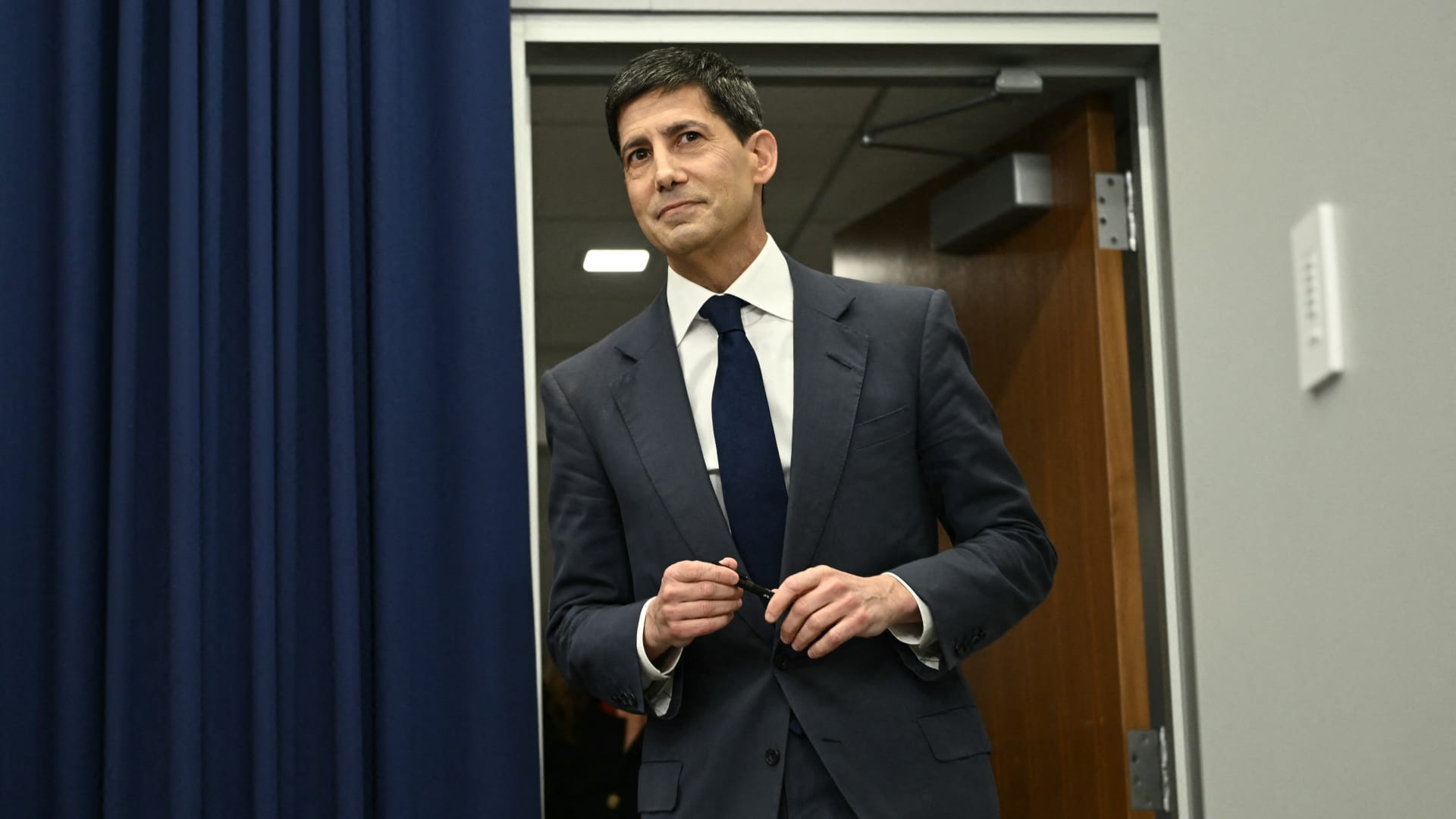
US Federal Reserve chairman Kevin Warsh arrives for a press conference in Washington, DC, on June 17, 2026.
Brendan Smialowski | Afp | Getty Images
The Federal Reserve’s latest projections pointed to one rate increase in 2026, though the outlook was complicated by the absence of a forecast from Chairman Kevin Warsh.
Nine of 18 officials projected that the federal funds rate would end 2026 above its current range of 3.5% to 3.75%. However, the outlooks missed one participant, and Warsh confirmed in the news conference after the Fed meeting that he refrained from offering any forecast of his own.
The median projection now calls for the federal funds rate to end 2026 at 3.8%, up from 3.4% in the Fed’s March summary and a quarter percentage point above the current target range. The central bank left interest rates unchanged at the conclusion of Wednesday’s meeting, the first gathering under Warsh.
“I did not submit a dot for me. It’s not helpful in the conduct of policy,” Warsh said in the news conference.
Warsh, who just took over as Fed chairman, has signaled a desire to overhaul the central bank’s communications strategy, contending that officials may provide too much forward guidance and place excessive emphasis on mapping out the future path of monetary policy.
The Fed’s policy statement also underwent a far more extensive rewrite than is typical. In recent years, changes have often been limited to a handful of words or sentences, but Wednesday’s statement was dramatically pared down.
The Fed chief said Wednesday that the central bank plans to review its communications practices by year-end, including news conferences, the dot plot, meeting schedules, transcripts and minutes, and said he was “open-minded” about potential changes.

Binance founder Changpeng Zhao (CZ) is urging governments to tokenize their stock markets and issue national stablecoins, framing sovereign blockchain adoption as the next phase of crypto after meetings with Asian leaders and regulators.
He shared the advice in two posts, arguing that countries tokenizing equities can attract worldwide buyers while national stablecoins expand local currency usage on the blockchain.
Why CZ Wants Countries to Tokenize Stocks
CZ said he posted the recommendations after meeting several country leaders and regulators across Asia. He described the talks as making good progress but did not name the countries involved.
His pitch centers on real world assets (RWA). Tokenized equities turn company shares into blockchain tokens that can trade around the clock, a model now moving into practice.
Supporters say the approach offers fractional ownership, faster settlement, and access for buyers outside traditional brokerages. No country has yet tokenized its full stock exchange.
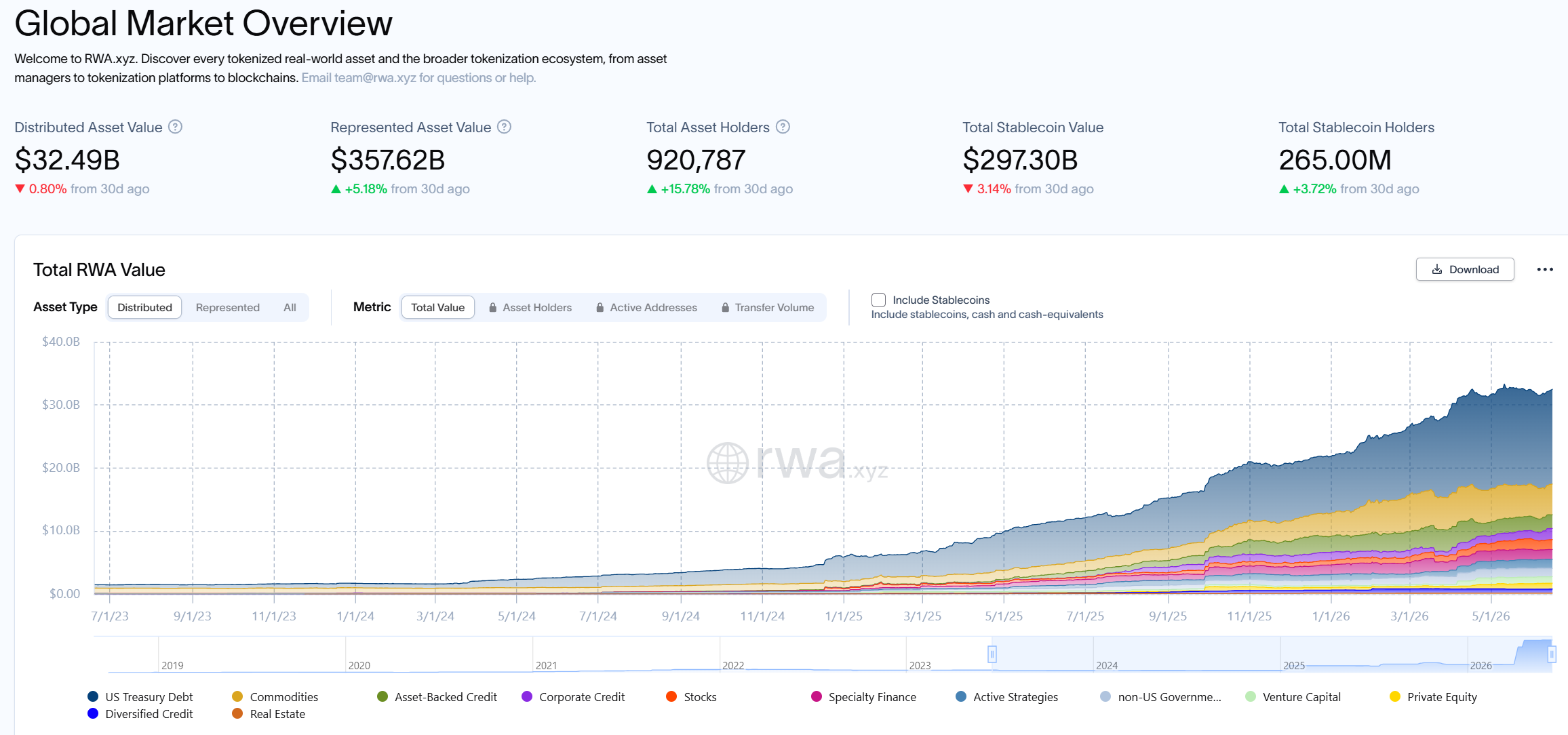
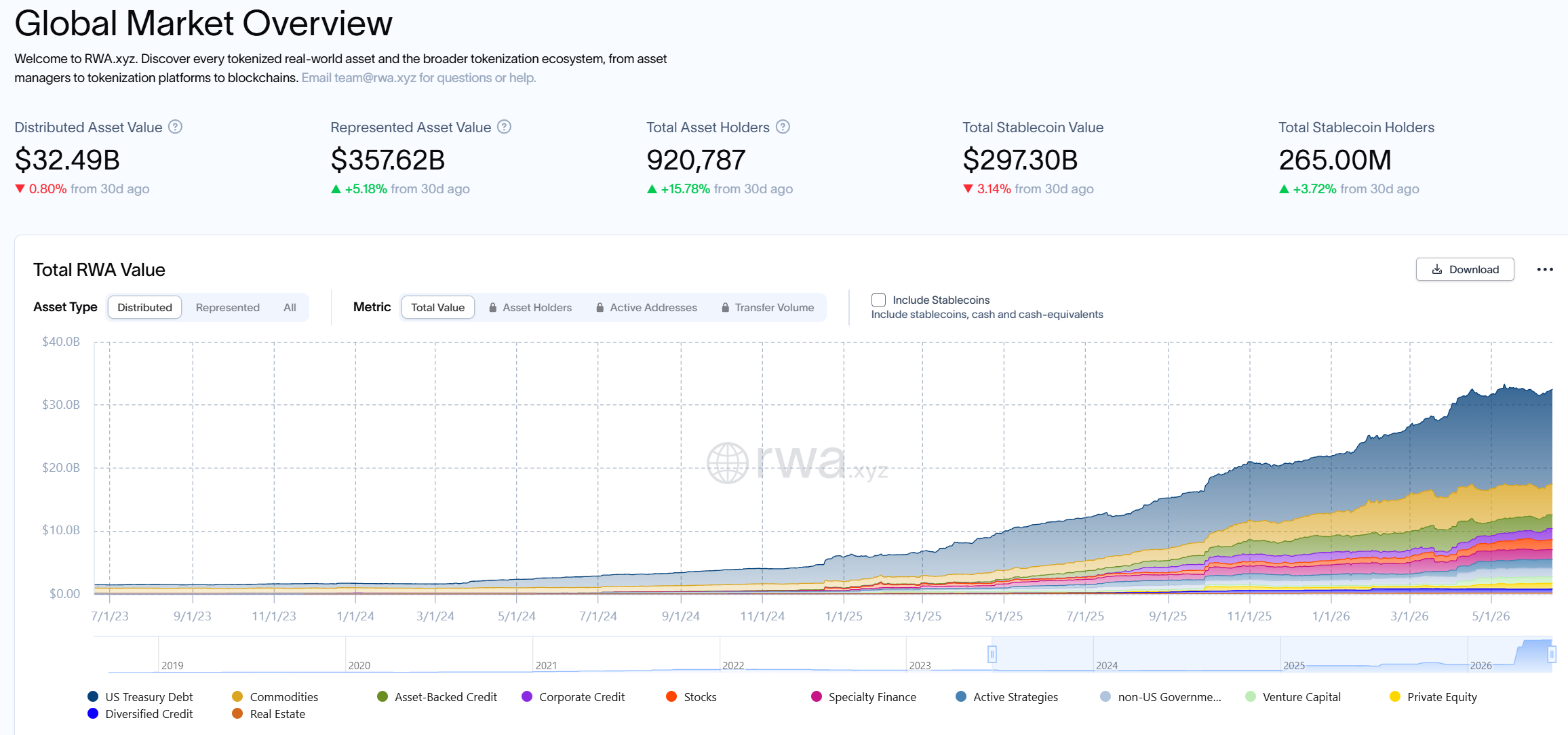
The wider RWA market has grown quickly. Tokenized real world assets on public blockchains topped $32 billion by mid-2026, up from about $6 billion a year earlier, RWA.xyz data shows.
Several exchanges already list tokenized stocks and ETFs tied to major U.S. companies. Boston Consulting Group projects tokenization could reach $16 trillion by 2030.
“Countries need to tokenize their stocks, allowing worldwide buyers. (RWA) Countries need to issue their own stablecoin(s), to expand their currency’s usage on the blockchain,” CZ shared.
Follow us on X to get the latest news as it happens
National Stablecoins and the Push Beyond the Dollar
CZ also wants governments to issue fiat-backed stablecoins. He argues this would extend a currency’s reach across blockchain rails and support its next growth phase.
Dollar-pegged tokens make up close to 99% of the roughly $315 billion stablecoin market, led by Tether (USDT) and USD Coin (USDC), DefiLlama figures show.

National versions could reduce that dependence while keeping monetary control closer to home.
The message builds on his advisory work. CZ serves as a strategic adviser to the Pakistan Crypto Council and is advising Kyrgyzstan on crypto as it builds a gold-backed stablecoin.
Binance also secured approval to develop a crypto marketplace in Kazakhstan.
Binance co-CEO Richard Teng pointed to rising demand. He said 36% of emerging-market users on the platform now keep at least half their money in stablecoins.
He framed the trend as evidence that the tokens already make everyday payments easier.
BNB, the token tied to CZ’s ecosystem, traded near $599, down about 1% over 24 hours.
Governments adopting his playbook could shape how fast traditional markets move on-chain.
The post CZ Reveals the Crypto Playbook He Is Pitching to Governments appeared first on BeInCrypto.
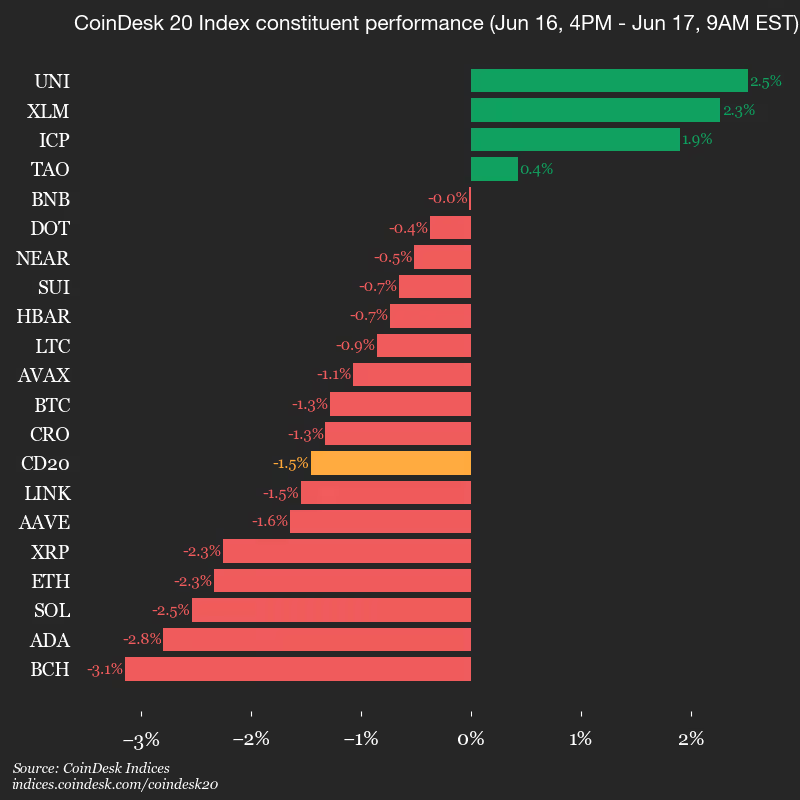
CoinDesk Indices presents its daily market update, highlighting the performance of leaders and laggards in the CoinDesk 20 Index.
The CoinDesk 20 is currently trading at 1774.43, down 1.5% (-26.19) since 4 p.m. ET on Tuesday.
Four of 20 assets are trading higher.

Leaders: UNI (+2.5%) and XLM (+2.3%).
Laggards: BCH (-3.1%) and ADA (-2.8%).
The CoinDesk 20 is a broad-based index traded on multiple platforms in several regions globally.


The crypto market has remained under pressure even as reports have indicated that a U.S.-Iran agreement is moving closer to completion, with the total crypto market capitalization falling nearly 2% to $2.21 trillion.
Summary
- Trump said a U.S.-Iran agreement could be signed soon, but crypto prices remained under pressure.
- Bitcoin and major altcoins fell as investors focused on Fed policy and inflation risks.
- The Federal Reserve kept rates unchanged at 3.50%–3.75%, extending its 2026 policy pause.
According to a BBC report, U.S. officials have released details of a proposed memorandum that would extend the ceasefire between Washington and Tehran while reopening key shipping routes in the Middle East. The framework centers on restoring access through the Strait of Hormuz and links economic benefits for Iran to compliance with agreed conditions.
Speaking at the G7 summit in France, President Donald Trump said the agreement could be signed as soon as the following day. Reports also indicated that Vice President JD Vance is expected to attend the formal signing ceremony, underscoring support from senior U.S. officials.
Despite those developments, digital asset traders have shown little enthusiasm. Bitcoin and most major cryptocurrencies traded lower during the day, while investors continued reducing exposure to risk assets amid uncertainty over monetary policy and geopolitical events.
Investors remain focused on Federal Reserve policy
Alongside developments in the Middle East, market attention has turned to the Federal Reserve after policymakers left interest rates unchanged at their June meeting.
As previously reported by crypto.news, the Federal Reserve maintained its benchmark interest rate at 3.50% to 3.75% on June 17. The Federal Open Market Committee voted unanimously to keep rates steady, extending a policy pause that has remained in place throughout 2026.
The decision matched market expectations, though investors have continued evaluating what it means for financial markets in the months ahead. Particular attention has shifted toward Federal Reserve Chair Kevin Warsh’s first post-meeting press conference, where traders are seeking additional guidance on inflation and the possibility of tighter monetary policy later this year.
With borrowing costs remaining elevated and inflation concerns still present, analysts have noted that risk assets could struggle to attract sustained inflows regardless of improving geopolitical headlines.
Geopolitical progress has yet to lift crypto sentiment
Market participants have historically responded to major geopolitical developments because changes in global stability often influence investor demand for risk-sensitive assets such as cryptocurrencies.
Earlier reports showed that crypto prices recovered after Trump confirmed plans to pursue a peace agreement with Iran. Falling oil prices and expectations of reduced tensions also helped improve sentiment across several financial markets.
Even so, the latest price action suggests traders remain cautious while waiting for the agreement to be finalized. According to the BBC report, the proposed framework still requires formal approval and implementation, leaving room for unexpected developments before the deal takes effect.
For now, investors appear to be weighing the prospect of a U.S.-Iran agreement against concerns surrounding inflation, interest rates, and broader macroeconomic conditions. Until those uncertainties become clearer, the crypto market has shown little willingness to treat the approaching deal as a catalyst for a sustained rebound.

Bitcoin’s latest sell-off has triggered panic-driven selling activity, but on-chain data suggests the market is taking a less damaging route than it did during February’s correction. Glassnode reports that realized losses during the June decline peaked around $1.4 billion, well below the approximately $2.6 billion peak recorded in February.
While loss-taking appears to have eased in intensity, the broader “capitulation” picture still shows more selling than buying: the 30-day smoothed realized profit-to-loss ratio is hovering around 0.28, a very low reading for the year. The key question for traders now is whether strengthening spot demand can hold up as derivatives positioning cools.
Key takeaways
- Realized losses peaked at about $1.4B in June versus roughly $2.6B in February, according to Glassnode.
- The 30-day smoothed realized profit-to-loss ratio near 0.28 remains in capitulation territory, showing loss-taking still outweighs profit-taking.
- Glassnode says Binance spot orderbook depth has turned decisively toward bids, with a ratio of 0.8 and the widest bid dominance since December 2025.
- Derivatives positioning on Binance shows a sharp OI reversal, with open interest shifting to -$620M from $258M in the prior 24 hours.
- Realized cap is down but the seven-day change has narrowed, implying capital outflows may be slowing compared with earlier quarters.
Capitulation signals persist, but losses are smaller than February
Bitcoin’s realized profit-to-loss dynamics point to an environment where investors continue to lock in losses more often than they capture gains. In Glassnode-style realized metrics, that imbalance is often interpreted as a capitulation-like phase—an extended period where selling pressure dominates, even if the market fails to fully reset sentiment.
The 30-day smoothed realized profit-to-loss ratio at roughly 0.28 underscores that selling pressure hasn’t fully disappeared. However, the magnitude of realized losses tells a more nuanced story.
According to the data cited in the analysis, Bitcoin’s seven-day moving average realized loss peaked near $2.6 billion during February’s sell-off. During the June decline, realized losses reached about $1.4 billion before cooling to approximately $558 million. The gap between these two episodes suggests that—even with similar price zones—fewer participants are choosing to sell at a loss than they did in February.
Why the June episode may feel different for traders
Crypto analyst Axel Adler Jr. characterized the latest period as the second wave of panic selling in 2026. In his commentary, Adler argued the realized-loss evidence indicates capitulation is “almost twice as low” versus February.
That framing matters because “capitulation” is not only about price movement; it’s also about who sells, and how costly those sales are in realized terms. If realized losses are lower while the profit-to-loss ratio remains weak, the market may be experiencing a different mix of behavior: more caution and less aggressive churn, rather than the same level of forced liquidation seen earlier.
Glassnode’s capital flow metrics also support the idea of reduced pressure. The realized cap—measuring the aggregate cost basis of circulating Bitcoin—stands at about $1.07 trillion. It has declined 1.45% over the past 90 days, pointing to continued capital withdrawal, but the realized cap’s seven-day change is only -0.18%, indicating outflows are close to stalling relative to earlier periods.
Binance spot liquidity turns supportive as depth shifts to bids
Perhaps the most actionable development comes from the spot market’s orderbook behavior. Glassnode reports that Binance’s spot orderbook depth imbalance has flipped toward bids, with a ratio of 0.8. In other words, buy-side liquidity is exceeding resting sell orders by the widest margin since December 2025.
In practical terms, stronger bid depth can help absorb sell pressure during pullbacks, making it easier for the market to stabilize after dips. Glassnode’s analysis emphasizes this shift: the spot book is showing a stronger willingness to defend prices rather than distribute into rallies.
“Although this alone is insufficient to confirm a durable bottom, the emergence of strong buy-side depth suggests spot market participants are becoming more willing to defend current price levels.”
Derivatives cool off after a large open-interest reversal
Derivatives activity is adding further context. The analysis notes that Binance open interest (OI) experienced one of its largest daily reversals since April. Open interest moved to -$620 million from $258 million over the prior 24 hours, implying a net reversal of nearly $878 million.
Sharp OI reversals often indicate a rebalancing in leverage—either traders reducing exposure or positioning moving in the opposite direction after a crowded trade unwinds. While spot improvements suggest buyers are willing to step in, the derivatives reset may reduce the likelihood of downside acceleration driven by heavily leveraged sells.
Taken together, the combination of stronger spot depth and less aggressive derivatives positioning creates a more constructive near-term microstructure than during deeper capitulation phases.
Investors should watch whether this bid dominance in spot liquidity can persist as volatility returns, and whether realized losses keep trending lower without the realized profit-to-loss ratio slipping further into more extreme capitulation readings. The data also leaves an important uncertainty: stronger spot support does not automatically guarantee a durable bottom, so traders may need confirmation through continued stabilization in both realized metrics and orderbook depth.
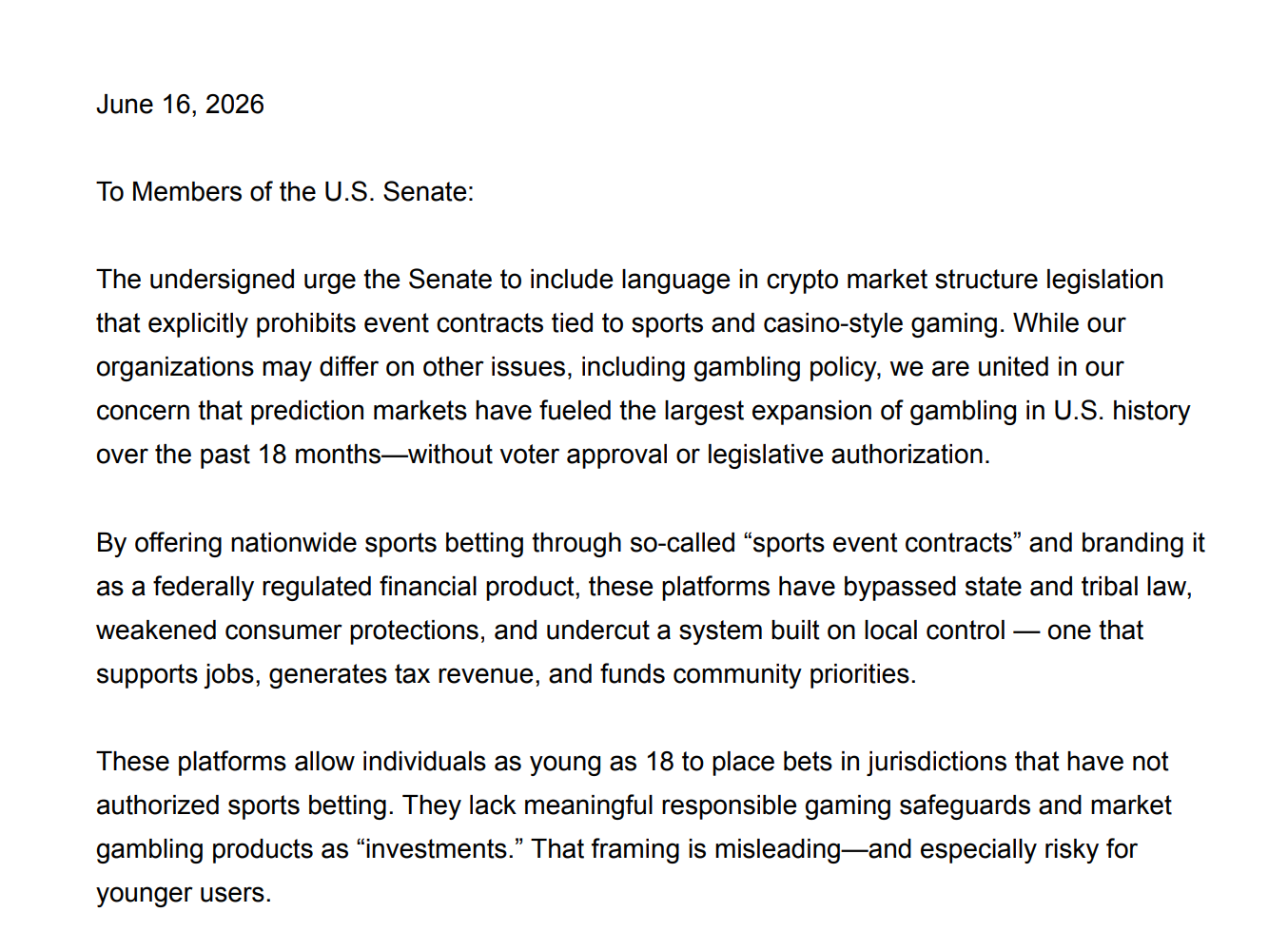
Several national gaming and tribal organizations and labor groups have reportedly called on the US Senate to add language “that explicitly prohibits event contracts tied to sports and casino-style gaming” in the Digital Asset Market Clarity (CLARITY) Act.
According to a Wednesday Semafor report, groups tied to sports betting, including the Indian Gaming Association and American Gaming Association have united against what they called gambling on prediction markets. They requested that the US Congress use the CLARITY Act now under consideration in the Senate to affirm that “sports betting falls outside the [Commodity Futures Trading Commission’s] remit and cannot be offered through prediction market platforms.”
“While our organizations may differ on other issues, including gambling policy, we are united in our concern that prediction markets have fueled the largest expansion of gambling in US history over the past 18 months — without voter approval or legislative authorization,” said the letter.
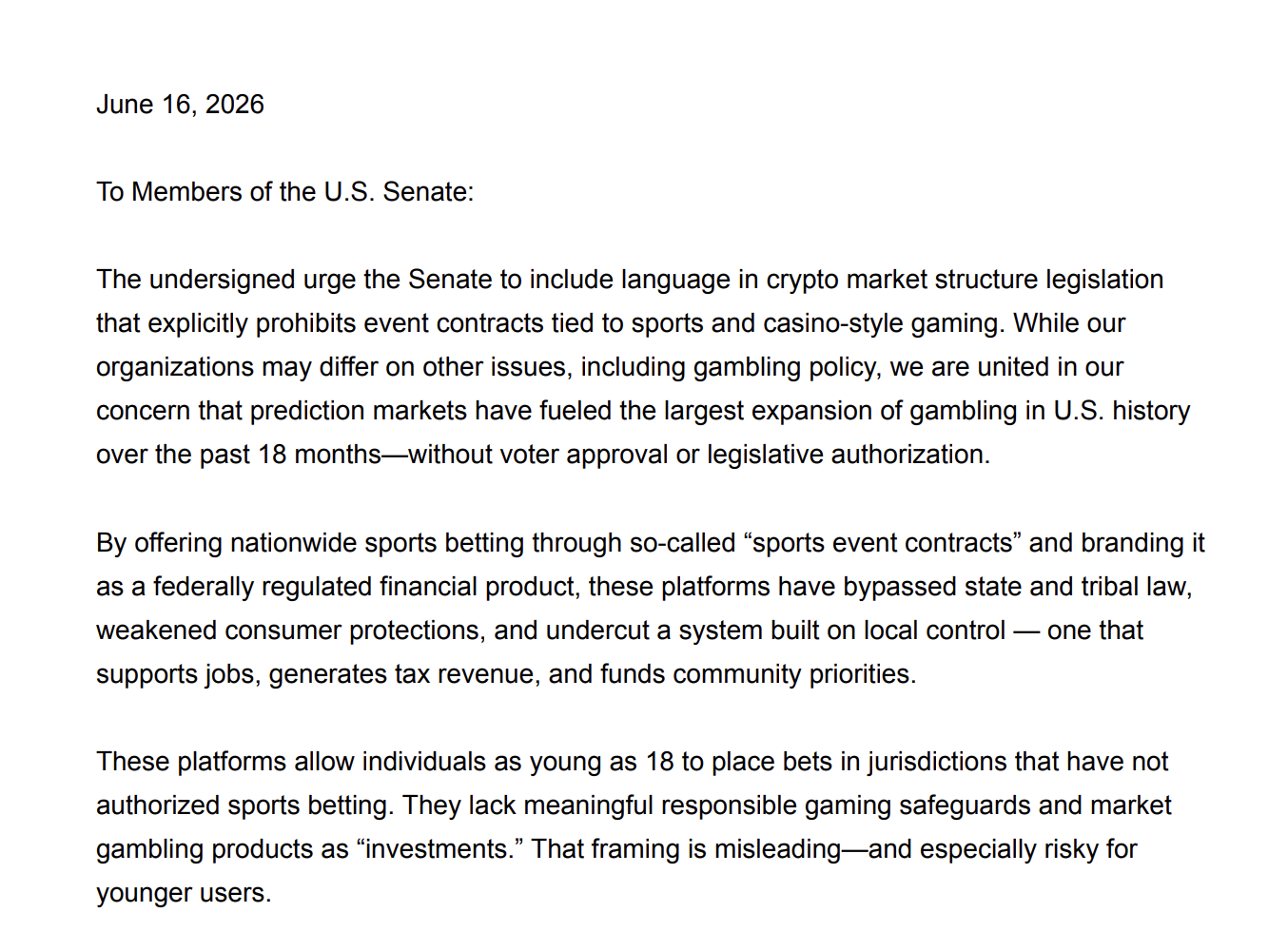
Source: Semafor
The pushback from the groups comes as the Commodity Futures Trading Commission (CFTC) under Chair Michael Selig has claimed “exclusive jurisdiction” over prediction markets. Selig has led the financial regulator in supporting platforms like Kalshi and Polymarket against lawsuits by state-level gaming authorities.
“The CFTC was created to oversee commodities and derivatives markets, not gambling and not sports wagering,” said the letter. “It lacks both the expertise and the infrastructure to police nationwide sports betting, particularly when robust state and tribal regulatory systems already exist.”
The American Gaming Association reported that as of Wednesday, state gaming authorities had lost about $1.08 billion in tax dollars “since prediction markets began offering sports event contracts.”
Related: Kalshi adds software partner as it looks to boost prediction market surveillance
Some lawmakers expect the CLARITY Act, aimed at transferring some of the authority in regulation and enforcement of digital assets from the Securities and Exchange Commission (SEC) to the CFTC, to be passed out of Congress by August. The bill passed the House of Representatives in July 2025, but has faced delays due to concerns over stablecoin yield, ethics and tokenized equities.
Legal fight could land in US Supreme Court
Some experts and industry advocates anticipate that with Selig and the CFTC threatening to take any state-level authorities to court over crackdowns on prediction markets, the dispute between federal and state regulators could eventually be heard by the US Supreme Court.
The country’s highest court gave individual states the authority to regulate sports gambling in its 2018 decision in Murphy v. National Collegiate Athletic Association. However, Kalshi, Polymarket and the CFTC have largely argued that event contracts on prediction market platforms are “swaps” only subject to the agency’s jurisdiction.
Magazine: The end of anon? AI could unmask crypto’s hidden identities


Kalshi has fueled a billion-dollar dispute over sports betting regulation as trading activity on its platforms continues to surge.
Summary
- Gaming and tribal groups urged the Senate to block sports-related prediction contracts through the CLARITY Act.
- The American Gaming Association estimates prediction markets have cost states about $1.08 billion in tax revenue.
- Kalshi’s crypto perpetual futures platform generated over $5.5 billion in volume within two weeks of launch.
According to a report from Semafor, a coalition that includes the Indian Gaming Association, the American Gaming Association, and labor organizations has urged the US Senate to add language to the CLARITY Act explicitly preventing sports and casino-style event contracts from being offered through prediction market platforms.
In a letter to lawmakers, the groups argued that sports betting should remain outside the jurisdiction of the Commodity Futures Trading Commission and continue to be governed by existing state and tribal regulatory systems.
The coalition stated that prediction markets have enabled what it described as the largest expansion of gambling in US history over the last 18 months without direct legislative approval.
The dispute arises as Kalshi continues expanding beyond its original prediction market business.
Earlier this week, the company disclosed that its perpetual futures products generated more than $5.5 billion in trading volume within two weeks of launch. The platform currently offers 11 crypto-linked perpetual futures contracts and is discussing additional products with regulators.
Gaming groups challenge federal oversight of sports contracts
Pressure from gaming organizations has increasingly centered on the CFTC’s position that prediction markets fall under federal commodities regulation. Under Chair Michael Selig, the agency has supported platforms such as Kalshi and Polymarket in legal disputes involving state gaming regulators.
In their letter, the organizations argued that the CFTC was established to oversee commodities and derivatives markets rather than sports wagering. They contended that the agency lacks the operational framework and expertise required to regulate nationwide sports betting, particularly in areas where state and tribal authorities already maintain oversight.
Financial concerns have also become part of the debate. Data cited by the American Gaming Association estimates that state gaming authorities have lost roughly $1.08 billion in tax revenue since prediction market platforms began offering sports-related event contracts.
Meanwhile, lawmakers continue negotiating the final shape of the CLARITY Act, legislation designed to transfer portions of digital asset regulatory authority from the Securities and Exchange Commission to the CFTC. Although the bill passed the House of Representatives in July 2025, discussions over stablecoin yield products, ethics provisions, and tokenized equities have delayed final approval.
Kalshi expands crypto derivatives despite legal uncertainty
While the political fight intensifies, Kalshi has continued adding products tied to digital assets. Following regulatory approval of its BTCPERP contract on May 29, the company launched CFTC-approved Bitcoin perpetual futures in the United States and later expanded into XRP and Solana contracts.
The contracts allow traders to maintain positions without expiration dates while using funding payments designed to keep prices aligned with underlying spot markets. Although the structure can support continuous trading activity, leverage may amplify losses during periods of sharp market volatility.
Additional filings involving Dogecoin, Shiba Inu, Stellar, Hedera, and Hyperliquid’s HYPE token have also advanced through regulatory review processes, indicating that Kalshi’s crypto derivatives lineup may continue to grow.
Legal observers cited in the Semafor report believe the conflict between federal and state regulators could ultimately reach the U.S. Supreme Court.
The possibility stems from competing interpretations of the court’s 2018 Murphy v. National Collegiate Athletic Association ruling, which gave states authority over sports gambling, while Kalshi, Polymarket, and the CFTC maintain that event contracts offered on prediction market platforms qualify as swaps subject to federal oversight.
The first US spot Litecoin ETF has been trading for nearly eight months, and the price of the underlying asset has barely moved. Litecoin sits near $45, down roughly 89% from its $400-plus peak, even as Canary Capital's LTCC fund and a parallel SEC/CFTC commodity classification cleared the last… Read the full story at The Defiant
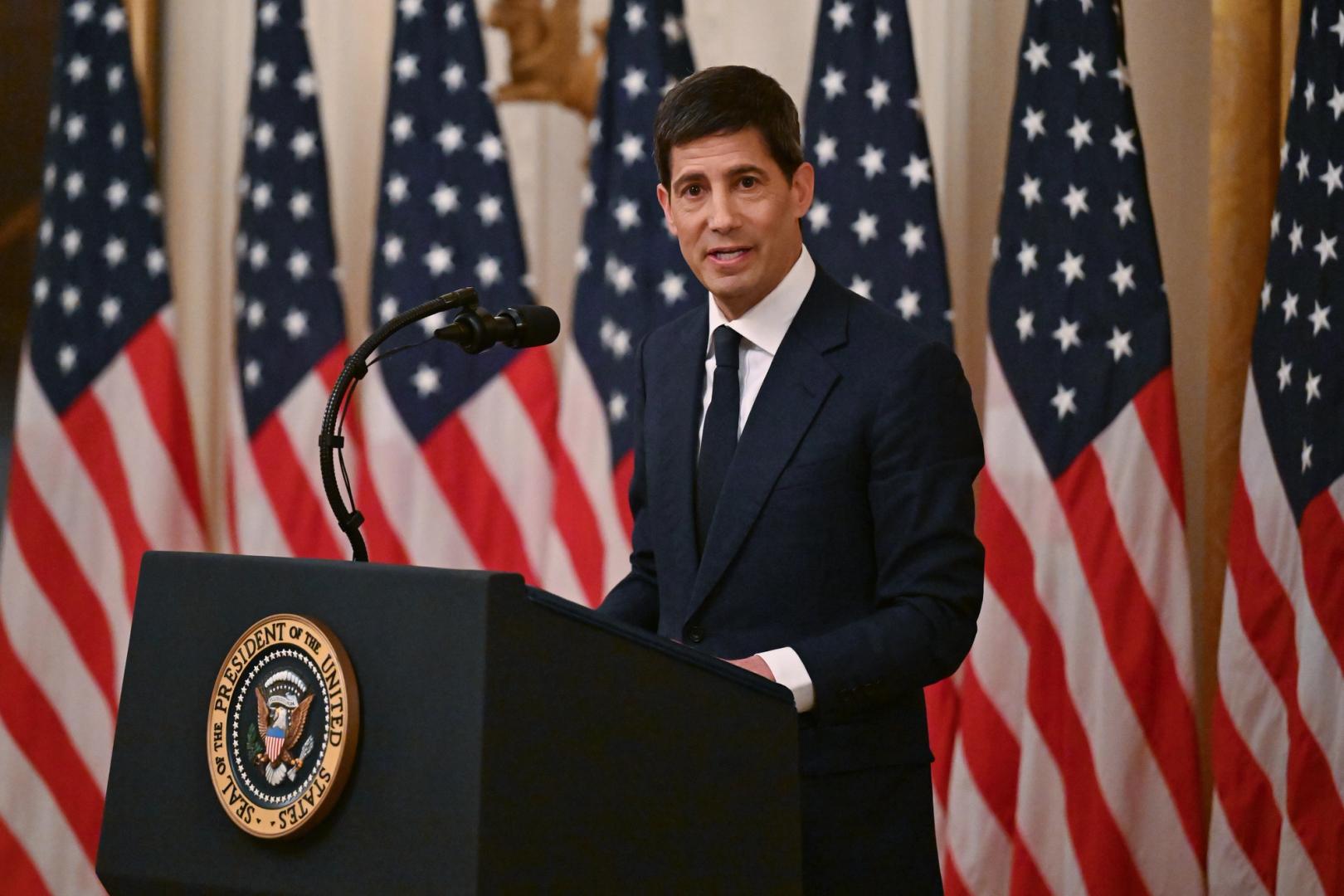
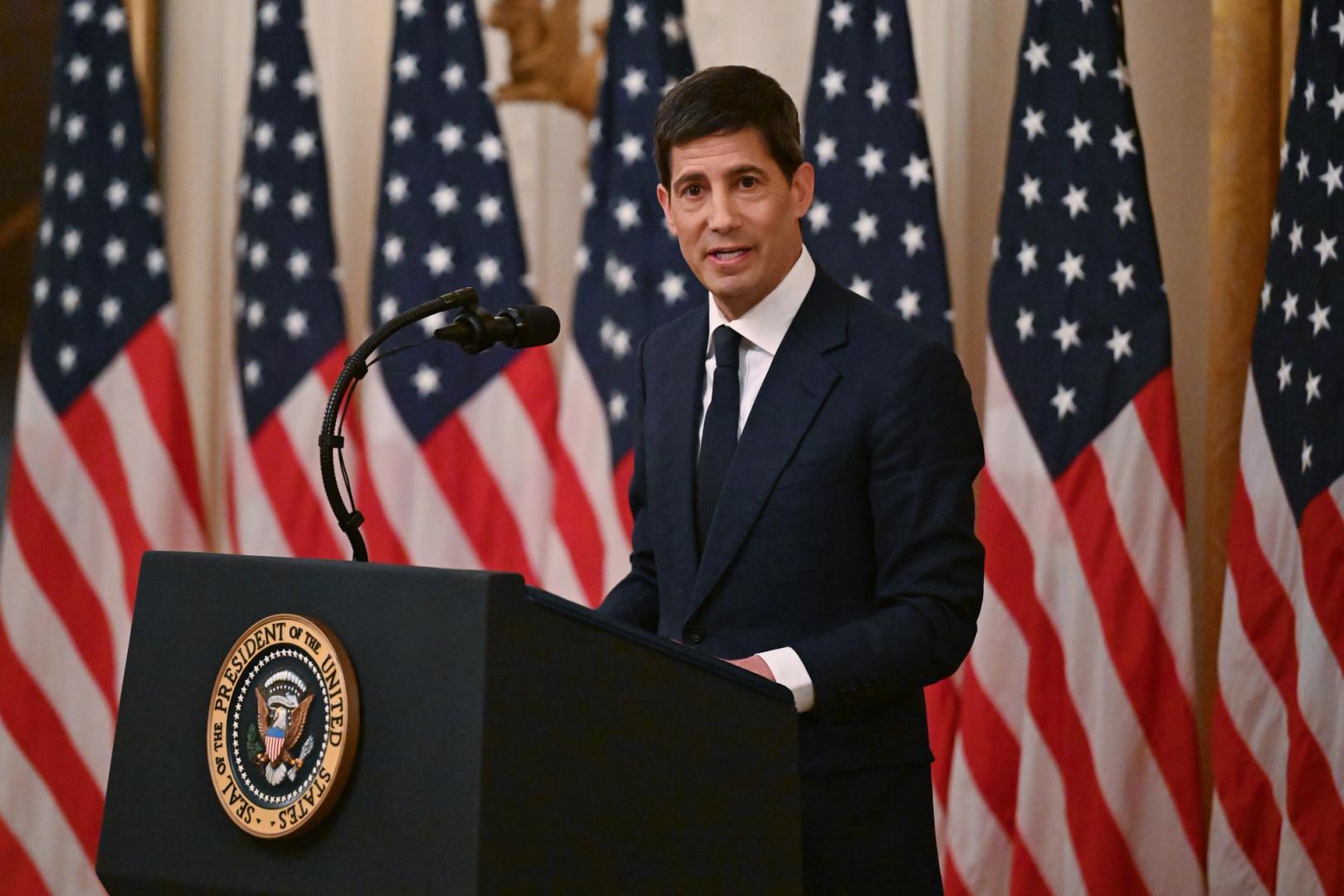
That philosophy could influence Wednesday’s meeting. Bank of America said there is a chance Warsh declines to submit his own projections to the Fed’s Summary of Economic Projections, or SEP, a move that would highlight his long-standing criticism of the central bank’s forecasting process.
“If you’re not very good at something, you should do less of it,” Warsh said at a State Street conference last year, according to the Journal. “These forecasts have been abysmal. My dots wouldn’t be perfect either, so I wouldn’t give them.”
The SEP’s “dot plot,” which shows where policymakers expect interest rates to move, has become one of the most closely watched pieces of Fed communication. Bank of America, in line with the market, expects this week’s projections to show rates remaining unchanged through 2026 before modest cuts in 2027 and 2028.
The investment bank also expects policymakers to acknowledge rising inflation risks while signaling a lower willingness to look through price shocks than in recent years.
Warsh’s first press conference as chair is likely to attract the most scrutiny. Bank of America expects him to strike a patient tone, arguing that recent inflation pressures linked to geopolitical events, such as the conflict involving Iran, may prove temporary, while avoiding any signal that rate cuts are imminent.
Crypto World
Mexican billionaire with 70% of his investment portfolio in bitcoin says it’s better than real estate
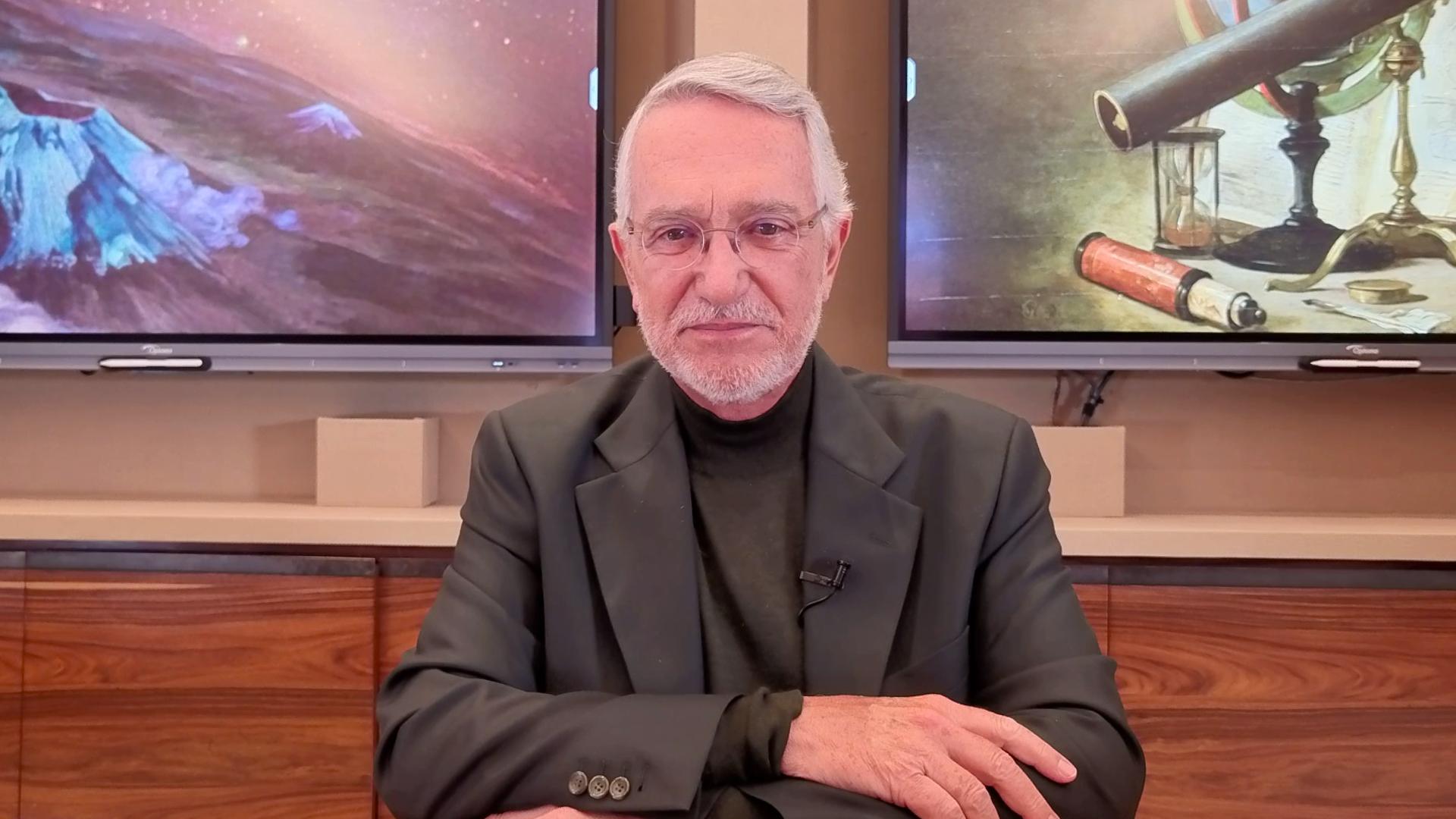
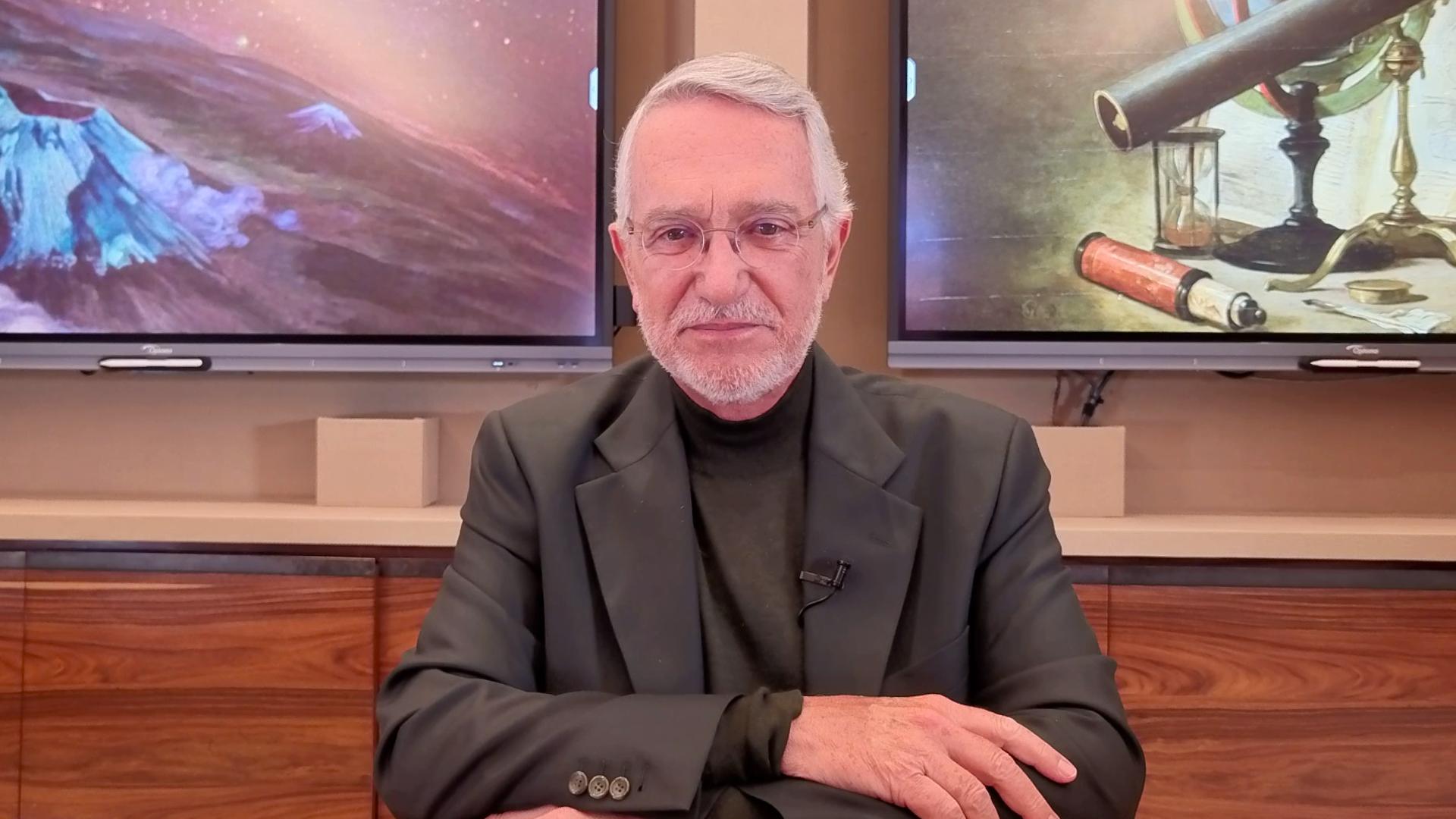
“For most people, the biggest investment, their nest egg, is their home equity. Find a way to transform that into some kind of bitcoin exposure to a larger or to a smaller degree,” he said. “So then you can bet on the asset of the house appreciating, the house asset appreciating, and the bitcoin asset appreciating.”
Salinas points to bitcoin’s long-term appreciation relative to real estate as evidence for his view. In January 2016, the price of bitcoin hovered around $400. A house in Central London sold for an average price of $1.6 million or 4,000 bitcoin. With home prices remaining basically unchanged ten years later, that same purchase would require less than 30 bitcoin.
For Salinas, that comparison illustrates why he believes bitcoin outperforms traditional stores of value such as real estate over the long term.
“It’s an asymmetrical bet to the upside,” he said. “The more people find out about bitcoin, the more demand there will be.”
The ‘fiat fraud’
Salinas, who has emerged as a potential presidential candidate in Mexico for the 2030 election, traces his deep belief in fiat devaluation to a time long before digital currency even existed. Back when then-President Richard Nixon severed the U.S. dollar’s direct convertibility into gold, ending the gold standard.

TLDR:
- The Fed voted 12-0 to hold rates at 3.5–3.75%, but raised inflation forecasts and slowed its rate-cut outlook.
- Bitcoin fell 2.2% to $64,150 while Ether dropped 3.6%, with XRP and Solana each losing around 3%.
- The GMCI 30 dropped 2.6%, pushing its year-to-date decline to nearly 36% across the broader market.
- Warsh ditched Powell’s forward-guidance style, opting for shorter, fact-based statements with no market direction.
Crypto markets retreated Wednesday after the Federal Reserve held interest rates steady but delivered a hawkish policy outlook.
The Federal Open Market Committee voted 12-0 to maintain its target rate at 3.5% to 3.75%. The decision came during Kevin Warsh’s first meeting as Fed chair.
Updated projections pointed to slower rate cuts ahead, rattling risk assets across the board. Bitcoin, Ether, and several altcoins fell between 1% and 3% following the announcement.
Markets React to a Hawkish Policy Signal
Bitcoin traded near $64,206 as of writing, down roughly 2.54% over the prior 24 hours. Ether shed 2.8%, while XRP and Solana each declined around 3% according to CoinGecko data. Hyperliquid’s HYPE token, which hit a new all-time high just a day earlier, pulled back 1.5% to $72.
The GMCI 30, tracking the 30 largest cryptocurrencies by market cap, dropped roughly 2.6%. That move extended its year-to-date decline to nearly 36%. Traditional safe-haven assets weren’t spared either, with gold sliding 2.2% and silver shedding a sharper 4%.
Matt Mena, senior crypto research strategist at 21Shares, framed the broader picture: “Taken together, the picture is one of a crypto market absorbing a hawkish macro backdrop while rotation and genuine demand continue to surface in the strongest names.”
The rate hold itself was broadly anticipated and mostly priced in before the meeting. What caught markets off guard was the tone of the updated Summary of Economic Projections, which flagged persistent inflation concerns despite easing geopolitical tensions and softer energy prices.
Warsh Charts a New Course for Fed Communication
Wednesday’s meeting marked more than just a rate decision—it offered the first look at Warsh’s communication style as chair.
His policy statement was notably shorter than those issued under former chair Jerome Powell. It also dropped the forward-guidance language that Powell used consistently throughout his tenure.
Warsh described the new format as focused on presenting “the facts” rather than steering market expectations. That approach aligns with his long-standing skepticism toward forward guidance, which he has argued ties the Fed’s hands unnecessarily.
Mena addressed the weight of the occasion directly: “The Fed’s decision to hold rates was fully expected, but it carried unusual weight as the first meeting chaired by Kevin Warsh.”
He added that “the real signal came from the updated projections,” pointing to revised forecasts that suggest policymakers remain wary of inflation pressures despite some easing on the energy front.
The committee’s updated dot plot marked a meaningful shift from March projections. Policymakers now see a slower path toward lower rates than they did just three months ago.
That pivot, combined with Warsh’s leaner communication style, set a more cautious tone for markets heading into the second half of 2026.


Meta CTO Andrew Bosworth Says Employee Morale Near All-Time Low Amid Layoffs and AI Push

CZ Reveals the Crypto Playbook He Is Pitching to Governments
J.J. McCarthy Assigned the Dreaded NFL Label


-

 Business3 days ago
No Jackpot Winner as $257 Million Prize Rolls Over to $269 Million Monday Draw
-

 Fashion5 days ago
Weekend Open Thread: Tuckernuck – Corporette.com
-

 Crypto World6 days ago
Oppenheimer backs SpaceX as $70 billion retail frenzy builds
-

 Crypto World6 days ago
Markets Rally as SpaceX IPO Looms Amid Iran Tensions and Inflation Surge
-
Crypto World3 days ago
Zimbabwe Requires Crypto Businesses to Register Annually Under New FIU Regulations
-

 Tech5 days ago
NanoClaw integrates JFrog registries to secure AI agent downloads
-

 Crypto World5 days ago
Bitget enters Argentina’s regulated crypto market through PSAV registration
-

 Tech5 days ago
This Week In Security: Microsoft On Microsoft, Register Your Domains, Linux On ARM, And FreeBSD Joins The File Cache Club
-

 NewsBeat6 days ago
El Nino has formed in the Pacific and could set records, forecasters say
-
 Tech6 days ago
Dutton Ranch star claims they ‘didn’t see any disruption’ on set following Chad Feehan’s exit from Yellowstone spinoff fueled by Taylor Sheridan clash rumors
-

 Politics6 days ago
Politics Home | Healey Resignation Is “Colossal Failure Of Government”, Says Former Labour Defence Secretary
-
 Entertainment6 days ago
Donnie Wahlberg & More Heat Up Las Vegas at Circa’s Barry’s Downtown Prime
-
 Tech6 days ago
Opendoor Ends India Operations, Fueling a Bigger Conversation About AI and Outsourcing
-

 Politics6 days ago
Belfast burns, while Met chief points finger at Iran and Russia
-

 Sports6 days ago
First Time Since 1971: Australia Register Historic Low In ODI Cricket
-

 NewsBeat5 days ago
FBI searches office of Ohio voter registration group
-

 Business6 days ago
AT&T: Verizon's 27% Outperformance Sets Up A Solid Entry Point
-
 Tech6 days ago
Anthropic is spending $150M to embed 1,000 AI fellows inside nonprofits. No degree required.
-
 Politics6 days ago
Modi thanks Trump for wishes as US attacks Indian seafarers
-
 Entertainment6 days ago
‘The Pitt’s Fan-Favorite Doctor Confirms Noah Wyle Gave His Blessing to Return [Exclusive]
You must be logged in to post a comment Login