
Crypto World
Circle shares slide after Morgan Stanley slashes price target to $38



Circle Internet Group has received a downgrade from Morgan Stanley, which has lowered its rating to Underweight from Equal Weight and reduced its price target to $38 from $106 after cutting long-term expectations for USDC growth.
Summary
- Morgan Stanley downgraded Circle to Underweight and cut its price target from $106 to $38.
- The brokerage lowered its USDC circulation forecasts for 2027 and 2028, citing slower stablecoin growth and pressure on reserve income.
- Circle shares fell about 6% in premarket trading after the downgrade, while TD Cowen initiated coverage with a Buy rating and an $82 price target.
- Morgan Stanley said real world stablecoin payments remain limited despite rising industry adoption.
- The downgrade comes days after Circle secured a New York trust charter and ahead of its second quarter earnings report.
Morgan Stanley said the downgrade follows lower forecasts for USDC circulation and concerns that Circle’s earnings model could face pressure as reserve income becomes more sensitive to slower stablecoin growth and increasing competition from tokenized cash products.
Circle shares fell about 6% in premarket trading on Monday to $58.81 after the research note was published, even as another Wall Street firm took the opposite view by initiating coverage with a bullish rating.
https://x.com/wallstengine/status/2084212465739653360
Morgan Stanley expects slower USDC expansion
Morgan Stanley reduced its assumptions for USDC circulation by about 33% for 2027 and 44% for 2028, arguing that the stablecoin has not expanded as quickly as previously expected. The brokerage also lowered its GAAP earnings-per-share estimates to around 3% below consensus for 2027 and roughly 20% below consensus for 2028.
According to analyst James Faucette, Circle’s reserve-income business faces increasing pressure because tokenized money market funds and tokenized deposits could compete for the same capital that would otherwise remain in USDC. The report also argued that USYC, Circle’s tokenized money market fund, carries structurally lower economics than its reserve-income business.
Morgan Stanley further said Circle’s OpenUSD initiative introduces shared governance and reserve economics that increase the cost of maintaining USDC distribution, while agentic payment activity remains too small to contribute meaningfully to revenue. The brokerage estimated that agentic payments have fallen to roughly $41,900 in daily volume, implying an average transaction size of about $0.24.
The brokerage also questioned Circle’s long-term growth target, saying USDC has “effectively not grown” since the third quarter of last year despite management’s objective of averaging 40% annual growth across market cycles.
Stablecoin payments remain limited, report says
While payment companies including Mastercard and Stripe have expanded their stablecoin offerings, Morgan Stanley said commercial adoption has yet to produce meaningful transaction volumes outside a handful of use cases.
Drawing on data from McKinsey, the brokerage noted that stablecoins processed roughly $35 trillion in adjusted transaction volume during 2025. Only about $390 billion represented identifiable real-world payments, however, with most activity still tied to crypto trading and transfers rather than commerce.
Morgan Stanley said payment activity continues to be concentrated in cross-border business transactions, remittances and stablecoin-linked card spending. According to the report, those use cases have yet to generate the durable balances and recurring transaction economics needed to offset pressure on Circle’s reserve-income model.
TD Cowen has taken the opposite view on Circle
Offering a contrasting assessment, TD Cowen initiated coverage of Circle with a Buy rating and an $82 price target, arguing that investors may be underestimating the company’s ability to develop into a financial infrastructure platform beyond stablecoin issuance.
Analyst Bryan Bergin said Circle is building products across payments, treasury services, tokenized real-world assets, interoperability and developer infrastructure, which could diversify revenue over time alongside USDC circulation.
TD Cowen also described Circle as a way for investors to gain exposure to institutional adoption of stablecoins and the modernization of financial infrastructure.
Wall Street remains closely divided on the stock. LSEG data shows that 16 of the 30 analysts covering Circle currently rate the shares Hold or Sell, while the remaining 14 recommend Buy or Strong Buy.
Regulatory progress has continued despite investor concerns
The downgrade arrives only days after Circle strengthened its regulatory position in the United States by securing a limited-purpose trust charter from the New York Department of Financial Services for Circle Internet Trust Company LLC, operating as Circle New York Trust.
Circle said the state approval complements the federal trust bank authorization it received from the Office of the Comptroller of the Currency in July. While the OCC-approved Circle National Trust is expected to provide fiduciary digital asset custody services, the company has said USDC issuance will continue through its New York trust entity before gradually transitioning under its approved regulatory structure.
Chief executive Jeremy Allaire previously said obtaining a New York trust charter had been a long-standing objective because of the regulatory clarity provided by the NYDFS framework. Circle has also said the approval builds on its relationship with the regulator, which dates back to 2015 when it became the first company to receive a BitLicense.
The regulatory milestones have not translated into sustained support for the stock. Circle shares ended July 31 down 2.54%, and on the same day Cathie Wood’s ARK Invest purchased 109,129 Circle shares across three exchange-traded funds, increasing its exposure to the stablecoin issuer ahead of the company’s scheduled second-quarter earnings release on Aug. 5.
Investors are also watching the proposed Clarity Act, which is expected to establish a regulatory framework for the U.S. cryptocurrency industry. Morgan Stanley’s latest report indicates that, despite improving regulatory oversight, future performance will still depend on USDC adoption, transaction activity, and Circle’s ability to generate revenue beyond reserve income.

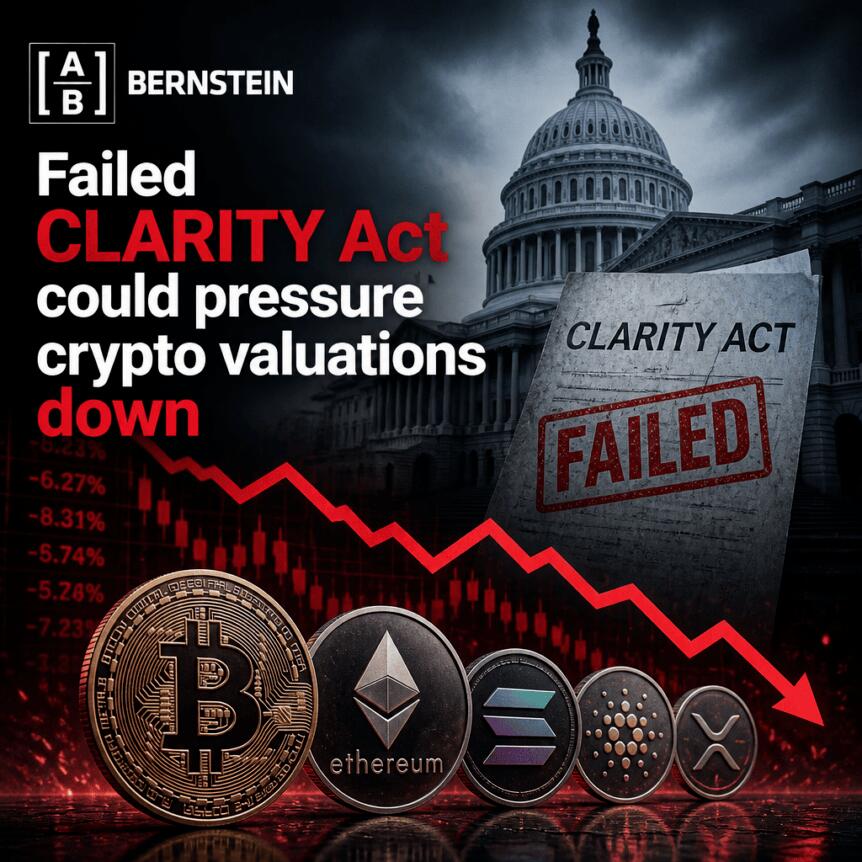
The US Senate’s schedule is becoming a key variable for the crypto industry as lawmakers prepare to enter summer recess at the end of this week, according to Bernstein, a wealth manager. Bernstein says that the odds of the Digital Asset Market Clarity Act (CLARITY) advancing are falling, raising the risk of another short-term downturn in crypto valuations—particularly for Bitcoin.
In a Monday report shared with Cointelegraph, Bernstein also warned that a missed legislative push could spark a “knee-jerk” reaction from market participants. Still, the firm points to a counterbalance: if Congress stalls, regulators may intensify efforts already underway under existing authorities, including the SEC and CFTC’s Project Crypto.
Key takeaways
- Bernstein says CLARITY momentum is weakening as the Senate approaches its summer recess, increasing the risk of additional downside for the market.
- The firm expects the crypto market to bottom and regain momentum toward late Q3 or early Q4 ahead of the mid-term period, if timing pressures persist.
- Prediction market activity on Polymarket puts CLARITY passage before the end of 2026 at 31%, down from 38% week-to-date.
- Bernstein argues that legislative delays could lead to more proactive SEC and CFTC policy releases tied to token classification and DeFi rules under Project Crypto.
Recess risk and the “knee-jerk” market reaction
Bernstein’s central concern is timing. With the Senate preparing to start summer recess, the window for passing CLARITY appears to narrow. The wealth manager said that if the legislation does not advance, the market could interpret the outcome as a near-term delay in US crypto market structure reform.
In Bernstein’s view, that could trigger an immediate negative “industry knee-jerk reaction,” potentially translating into another leg down for Bitcoin and the broader crypto market. The firm’s outlook is not purely bearish, however: it also anticipates that—tactically—the market could find a bottom and begin building momentum toward late Q3 and early Q4 before the mid-terms.
What Project Crypto could do if CLARITY stalls
Bernstein’s report highlights an important asymmetry. While markets may react negatively to legislative delays, the same outcome could push regulators to move faster within their current legal frameworks.
Project Crypto is a joint initiative intended to use existing agency authority to develop a workable regulatory approach for digital assets while Congress finalizes broader legislation under CLARITY. The SEC first announced Project Crypto under Chairman Paul Atkins in July 2025, and it was later expanded into a joint staff effort between the SEC and the CFTC in September 2025. (SEC announcement: https://www.sec.gov/about/sec-launches-project-crypto; CFTC/SEC expansion referenced by Cointelegraph: https://www.cftc.gov/LawRegulation/FederalRegister/finalrules/2026-05635.html.)
According to Bernstein, the SEC and CFTC could respond to Congress’s slowdown with additional interpretive releases and clearer guidance. The firm specifically points to potential developments involving:
- Token “taxonomy” and interpretive guidance tied to how different types of tokens should be treated.
- Clearer rules related to decentralized finance (DeFi).
- Acceleration of an “innovation exemption” concept for issuing tokens that would be exempted from securities status during a finite period.
For investors and builders, the practical takeaway is that regulatory clarity might not arrive only through CLARITY. If Congress can’t deliver in the near term, markets may increasingly price regulatory outputs—such as guidance, interpretive releases, and rulemaking momentum—emanating from the SEC and CFTC.
Polymarket odds slip to 31% for passage by end-2026
Bernstein’s concern about dwindling prospects for CLARITY is echoed by market-implied probabilities. Polymarket data shows the odds of the act being signed into law before the end of 2026 at 31%, down 7% over the past week and down 9% over the past month. The market reports roughly $3.7 million has been wagered on the outcome. (Source: Polymarket.)
The drop matters because prediction markets often reflect shifting expectations around legislative scheduling and political willingness—especially when credible procedural deadlines approach. In this case, the timing implied by summer recess is a direct catalyst for priceable uncertainty.
Earlier coverage also indicates that expectations have moved in recent months: on June 26, Galaxy Digital cut its odds of CLARITY becoming law in 2026 to 50%, warning that the US Senate was running out of time to pass the market-structure bill before its August recess (as noted in Cointelegraph’s reporting: https://cointelegraph.com/news/galaxy-cuts-2026-clarity-act-odds-50).
Political and industry friction around the bill
Beyond Senate calendar risk, CLARITY is navigating political and institutional scrutiny. Cointelegraph reported that White House officials are reportedly weighing a bipartisan ethics counterproposal received on Thursday after weeks of negotiations between Republican Senator Thom Tillis and Arizona Democrat Ruben Gallego.
Per sources familiar with the matter who spoke to crypto journalist Eleanor Terrett, the proposal would allow state attorneys general to sue the Department of Justice if it fails to enforce ethics laws against federal officials. (As reported by: https://www.cryptoinamerica.com/p/president-trump-weighs-bipartisan.) The relevance for crypto stakeholders is indirect, but it underscores how broader political processes can consume attention and time that might otherwise be directed toward stalled legislation.
CLARITY’s substance has also faced resistance. The banking industry has pushed back, arguing that the draft could let crypto firms offer yields on stablecoins without meeting requirements they say apply to traditional financial institutions. Cointelegraph also flagged that the act’s stablecoin yield provisions have drawn concern from banking groups (related link referenced in the source material: https://cointelegraph.com/news/aba-banking-associations-clarity-act-yield).
As those tensions persist, the bill’s path becomes less predictable—one reason prediction market odds and institutional forecasts can move quickly as legislators approach procedural inflection points like recess.
With the Senate headed into recess, traders and long-term participants should watch two things in parallel: whether CLARITY gains any late-stage momentum before lawmakers leave, and whether the SEC and CFTC accelerate practical guidance under Project Crypto—especially around token classification and DeFi—if Congress fails to deliver the legislative clarity the market is pricing.

Crypto analyst ChartNerd said on August 3 that XRP’s prolonged weakness could be setting the stage for a major market repricing.
With the token testing long-term support near $1.06 after months of negative sentiment, the market watcher argued that the current decline is part of a wider crypto correction rather than a sign of weakness in Ripple’s fundamentals.
Watching for Larger Moves as XRP Tests Support
ChartNerd wrote that being a macro XRP bull during the current downturn has been difficult, especially as altcoins have underperformed Bitcoin (BTC) for much of the cycle.
He stressed that nothing is inherently wrong with the asset and described the current period as a normal correction within a larger trend.
‘The next few months are setting the stage for the next market repricing. Maybe the biggest yet,” he stated.
His focus is on XRP’s technical structure, with the token again testing the $1.06 support area after failing to break above its daily 20 EMA near $1.08. The 50 EMA near $1.12 is another resistance level, as is $1.16 if buyers regain control.
According to ChartNerd, XRP’s current price action is taking place inside a falling wedge pattern while approaching a six-year support zone that in the past came right before a big upward movement. However, the analyst also warned that a move below the $1 support would not be unexpected, considering the prevailing market structure, but painted it as a “golden ticket” entry point.
“The lower it goes, the better the long-term opportunity becomes,” he said. “It’s all about perspective.”
Analyst EGRAG CRYPTO had earlier identified the $1.05 area as a “battlefield” for the asset, with a successful defense potentially taking it back toward $1.10 and higher, while a breakdown below that zone could expose XRP to the $1 region ChartNerd spoke about.
Long-Term Thesis Facing Short-Term Pressure
The #6 biggest cryptocurrency was trading around $1.07 at the time of writing, down 1% in 24 hours and nearly 3% over seven days. It has also lost about 24% of its value in the past three months, keeping it more than 70% below its July 2025 all-time high near $3.65.
And that weakness is present despite developments around the Ripple ecosystem, including an announcement by the blockchain payments firm that it has invested in Zilo and Licuido, two companies focusing on tokenized funds and institutional asset infrastructure.
Institutional interest has also been positive, with spot XRP ETFs recording $27 million in net inflows in July, although that figure was markedly lower than June’s $60 million and May’s $132 million, highlighting XRP’s struggle to hold higher levels after its mid-July rally.
The post Major XRP Repricing Could Begin in the Next Few Months: Analyst appeared first on CryptoPotato.


Bitmine said it now holds about 4.8% of Ether’s circulating supply as it pursues its 5% acquisition target.
A Solana meme coin tied to a 64-year-old marmot study has outraised its own OnlyFans campaign in just days.
Researchers launched the OnlyFans page this spring after a major grant renewal fell through. A Pump.fun token followed soon after, and it now brings in more money for the project.
Where the Money Problem Started
The Marmot Adaptive Dynamics (M.A.D.) Lab at the Rocky Mountain Biological Laboratory (RMBL) tracks yellow-bellied marmots near Crested Butte, Colorado. It has continued since 1962, making it one of the longest wildlife studies in the world.
Daniel Blumstein, an ecology professor at the University of California, Los Angeles (UCLA), runs the project. He told NPR that a National Science Foundation (NSF) grant denial had reduced their teaching assistants.
Julien Martin, a University of Ottawa professor who co-runs the study, later joined the fundraising push.
“We’ve made about $4,000 on OnlyFans, and people are looking at the content and enjoying it… Turns out, it’s even bigger than this.”
Daniel Blumstein, NPR
That figure has since grown. The lab’s Marmot Project Instagram account put OnlyFans donations at more than $6,000, after OnlyFans took its 20% cut. The Daily Bruin reported the update this week.
The account has been live since June. Signing up required convincing OnlyFans that a human, not a marmot, controlled it.
The lab has tried other fundraising ideas too. A Crested Butte brewery released a Marmot Tears IPA in July. The team is also planning a Fat Marmot Week event in August.
The Token Pulled Ahead
However, one of the more successful endeavors is a community-launched token called OnlyMarms on Pump.fun, a platform that lets anyone create a Solana-based token in minutes. Martin signed up on Pump.fun himself to claim the token’s creator fees for the lab.
The M.A.D. Lab‘s own project page puts total crypto donations at more than $14,000 so far. That is more than double what OnlyFans has generated for the same cause.
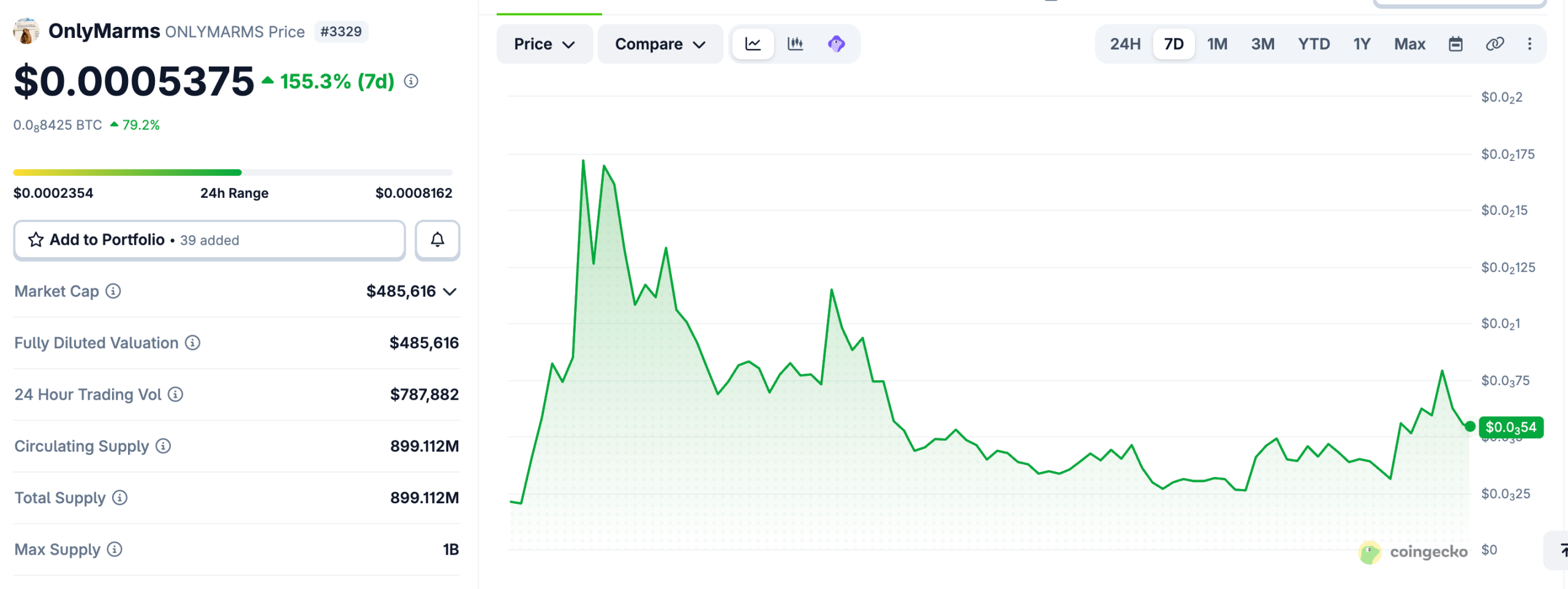
OnlyMarms itself is trading near $0.0005, up more than 70% in 24 hours. It peaked above $0.002 in late July, according to CoinGecko data.

That kind of swing mirrors other viral animal tokens. A raccoon token’s viral rally and the broader animal meme coin trend both produced billion-dollar market caps in 2024.
Whether the Fees Keep Flowing
The size of that gap still raises an open question. Researchers cannot yet say whether Pump.fun fees are a repeatable funding source or a one-time spike. Meme coin volume usually fades once attention moves on.
Analysts have also flagged meme coin profit structures as a concern. Profits often favor infrastructure and early holders over the causes tokens claim to support.
That adds uncertainty to how much of OnlyMarms’ volume reaches the lab long term. Blumstein said the lab is also continuing to pursue traditional grant funding.
For now, the marmot study relies on both channels. OnlyFans built the early audience, and the token turned that attention into faster funding.
The post Solana Memecoin OnlyMarms is Outraising OnlyFans Subscriptions for a Marmot Study appeared first on BeInCrypto.
Japan’s Nikkei 225 barely budged Tuesday despite a historic joint US-Japan intervention to prop up the yen. But Kioxia Holdings’ earnings miss suggests the real pain has not landed yet.
Tokyo and Washington intervened to halt months of yen weakness, and Kioxia posted disappointing guidance days later. Markets have absorbed both events calmly so far, but the underlying risks, a possible BOJ rate hike and a currency still primed to strengthen, remain unresolved.
A Muted Reaction So Far
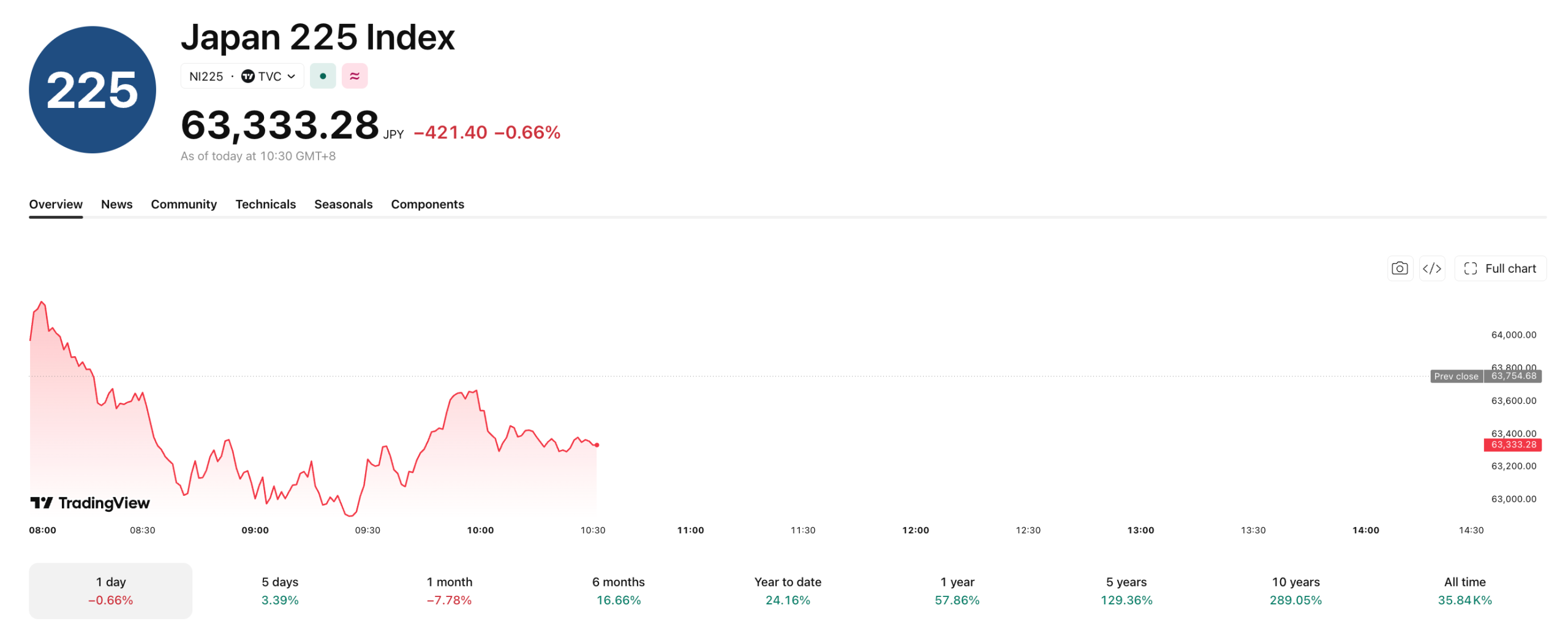
The Nikkei 225 slipped slightly, 0.6% to around 63,300 on Tuesday. That extended Monday’s 1.4% drop.
Both moves look mild next to the selloff traders feared. Tokyo and Washington had just confirmed their first coordinated yen-buying operation in decades.

Kioxia Holdings actually rose slightly on Tuesday. But others in Japan, like SoftBank Group and Advantest, declined as chip stocks led the pullback.
The move follows Kioxia’s 65% plunge from June highs. That slide had already fueled speculation over shareholder payouts before Friday’s earnings.
The yen has settled near 155 to 157 per dollar. It gained as much as 3.8% over two sessions last week, when Finance Minister Satsuki Katayama and Treasury Secretary Scott Bessent confirmed the joint action.
Why Kioxia Still Faces Pressure
Kioxia’s fiscal first-half operating income guidance missed analyst estimates on July 31. The company announced a three-for-one stock split and a share buyback the same day, but neither measure addressed the earnings shortfall itself.
A stronger yen deepens that problem. Kioxia is an export-heavy memory chipmaker, so it loses value on overseas sales whenever the currency strengthens. That adds currency drag to an outlook it already cut.

The timing makes things worse. Global memory chip prices are still swinging, and the wider AI chip trade has wobbled all through July. Korean rivals SK Hynix and Samsung Electronics posted their own sharp moves during that stretch.
The bigger risk sits with the Bank of Japan. The central bank held rates at 1% last week but left the door open to a hike. Bessent has repeatedly pushed Governor Kazuo Ueda toward tightening further.
The BOJ’s next policy meeting in September is the trigger point traders are watching. A hike would widen room for further yen strength. Officials have also signaled they will intervene again if the currency slides back toward its recent lows.
That combination puts Kioxia in a tough spot. It already missed its own guidance, and the currency it depends on looks primed to keep rising.
Whether Kioxia’s slide deepens may depend less on its own numbers. It may hinge more on what the BOJ decides in six weeks.
The post Japan Stocks Shrug Off Yen Shock, But Kioxia Signals More Pain Ahead appeared first on BeInCrypto.
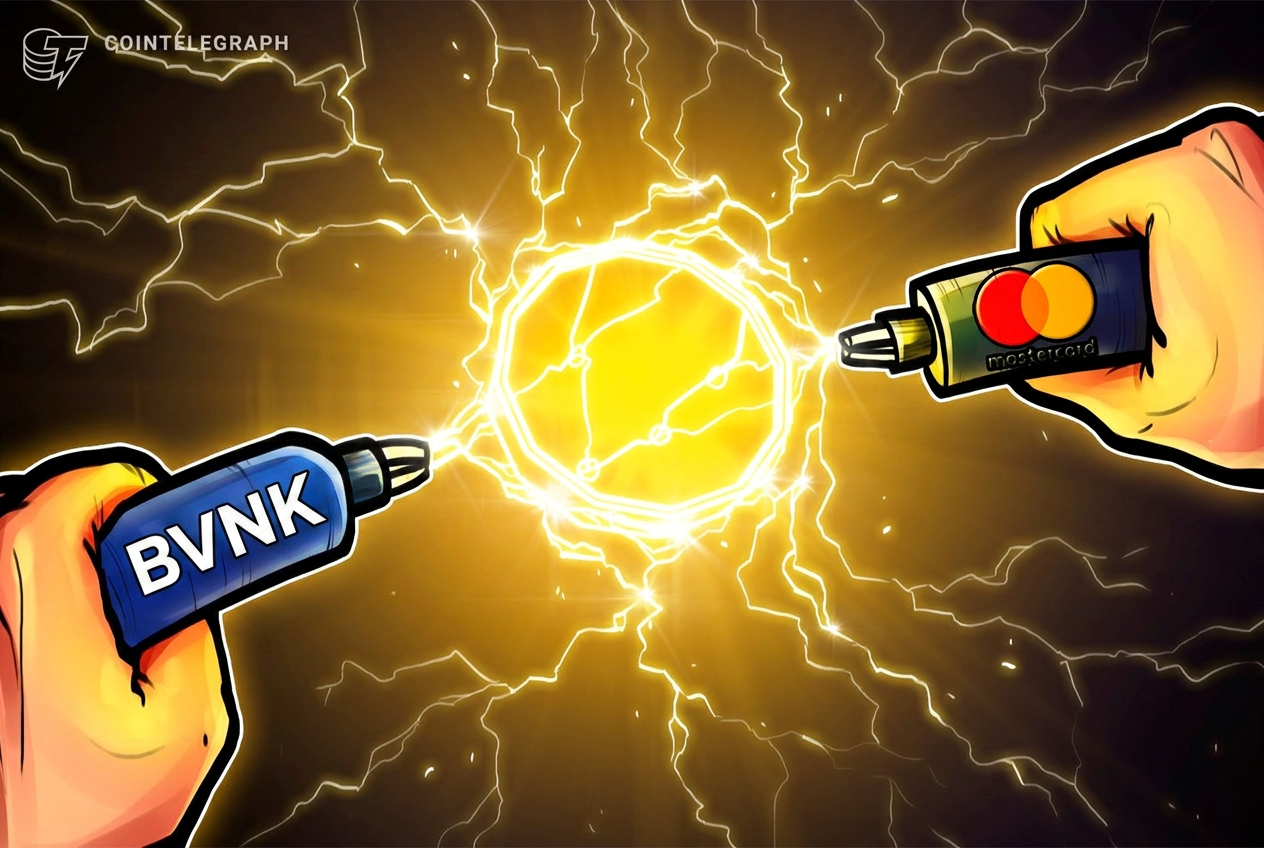
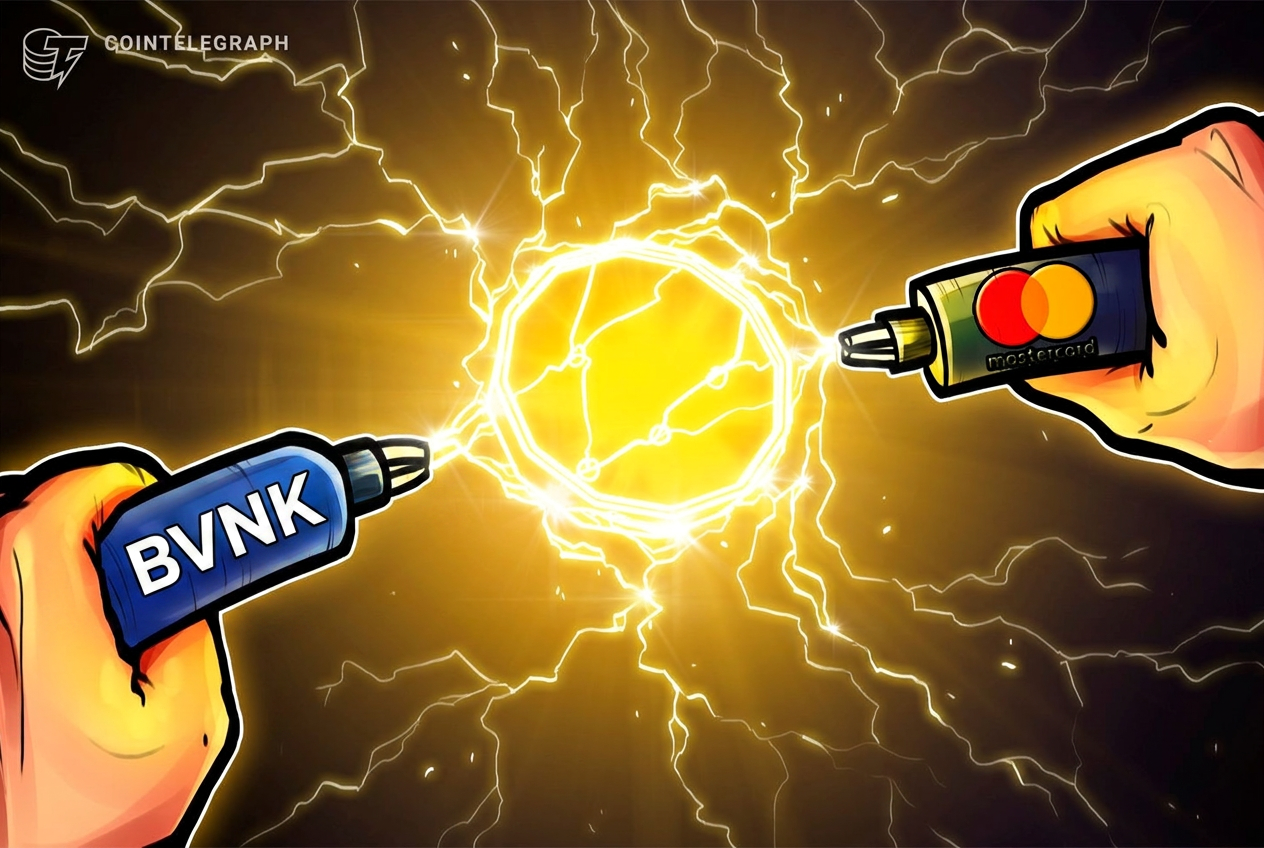
Mastercard said the tie-up would help banks, fintechs and enterprises expand stablecoin payments, payouts, settlement and treasury services.

Romance scams remain a persistent threat in Asia, with Hong Kong police reporting a concentrated spike in cases tied to fake “crypto investment” schemes. Between July 24 and July 30, authorities logged 25 romance-linked fraud reports, totaling about $9 million in losses, according to the Hong Kong Police Force.
In one reported case, an insurance agent lost $3.3 million after being persuaded by a fabricated online boyfriend to invest through a fraudulent crypto application—an approach scammers have increasingly used to mimic legitimate trading platforms while manufacturing returns on screen.
Key takeaways
- Hong Kong recorded 25 romance-linked fraud cases in a single week (July 24–July 30), with combined losses near $9 million.
- Scam operators build long relationships via dating and messaging apps, then push victims toward a fake crypto trading app showing false profits.
- Hong Kong’s HashKey Exchange said JPMorgan Chase approved its move to open a client money account.
- Malaysia withdrew support for Malaysia Blockchain Week after controversy over an after-party tied to an influencer with adult-content history.
- Several regulatory and industry shifts across Asia—stablecoin rulemaking in South Korea and Bitget exiting Japan—signal continued policy tightening alongside operational changes.
Hong Kong’s romance scams: from chat rooms to fake trading apps
Hong Kong police say scammers often initiate contact through dating platforms or messaging apps, then spend weeks or months developing trust. Only after victims become emotionally invested do criminals introduce the idea of cryptocurrency investing.
Fraudsters then direct victims to a website designed to resemble a genuine trading application. The platform typically displays rising balances and “profits” to encourage additional deposits. The fraud usually becomes clear only when victims attempt to withdraw funds and find that transfers are blocked or accounts cannot be accessed.
Police reported that, in the case involving an insurance agent, the scam escalated to $3.3 million—demonstrating how quickly these schemes can move from initial persuasion to large-value transfers. The broader week-long total of $9 million suggests the pattern is not isolated, but part of an active criminal campaign.
Regional compliance signals: HashKey gets JPMorgan client money approval
While Hong Kong grappled with scam activity, the city also saw a separate development that touches on institutional readiness: HashKey Exchange said it received approval from JPMorgan Chase to establish a client money account, per statements from the company’s parent group.
HashKey framed the approval as a step forward in enabling client money handling within its regulated operating framework. For investors and counterparties, client money arrangements are often a practical building block for institutional confidence—especially for firms dealing with custody-like responsibilities and segregation expectations.
That said, the scam reports underscore a different reality for retail users: even where regulated exchanges expand capabilities, criminals can still exploit individual naivety through counterfeit apps and social-engineering tactics.
Malaysia Blockchain Week support pulled over OnlyFans-linked after-party backlash
Malaysia’s crypto sector faced reputational and administrative pressure after the government withdrew support for Malaysia Blockchain Week. Organizers said the decision followed controversy related to an after-party featuring an influencer previously known for adult content.
Earlier coverage noted that Malaysia Blockchain Week was linked to promotional materials circulating online, after which event organizers apologized to the Ministry of Digital and the Malaysia Digital Economy Corporation. Organizers then reportedly canceled the performance and removed references to the event from its website.
The episode highlights a recurring tension for blockchain conferences: while policy conversations often focus on regulation and technology, broader public scrutiny and political optics can still shape whether governments are willing to publicly back industry gatherings.
China: warning over Bitcoin extortion scams using publication name
In China, a state-affiliated outlet—reported as China Business Journal—warned that fraudsters were impersonating the publication to extort companies. According to the newspaper, scammers demanded Bitcoin payments while claiming they had uncovered damaging information through “undercover investigations.”
The warning described use of a Proton Mail address for contacting businesses, along with threats to publish alleged material unless companies paid in Bitcoin. This is another example of how crypto payments are increasingly used as a tool in non-crypto-specific crimes: the asset acts as the settlement mechanism for intimidation rather than part of a legitimate investment process.
The same broader period included other reported crypto-related developments, including police academy research claiming an AI system capable of detecting illegal crypto transactions with nearly 90% accuracy, and arrests tied to crypto money laundering connected to telecom fraud.
South Korea moving toward stablecoin regulation as tax debate continues
South Korea’s policy roadmap remains under construction, with a reported plan by the Financial Services Commission to draft a consolidated Digital Asset Basic Act alongside the ruling Democratic Party. The reported draft scope includes stablecoin issuance and circulation, digital asset business rules, exchange entry requirements, disclosures, internal controls, and standards for system resilience.
At the moment, South Korea’s Parliament is considering multiple separate bills related to digital assets and stablecoins. Disagreements have reportedly prevented the country from finalizing elements of the next-stage crypto legislation.
Separately, the opposition’s effort to repeal planned crypto taxes has moved to a committee. The government has said the changes would take effect on January 1, 2027, even though adjustments had been postponed on three prior occasions.
For market participants, the key practical takeaway is that stablecoin policy may be consolidated—but the timing and political hurdles remain uncertain. Traders and issuers should watch for how lawmakers reconcile competing approaches between regulation needs and tax policy, especially as monthly stablecoin flows have reportedly continued to move offshore.
Singapore and Japan: restructuring pressures and account exit timelines
Singapore-based prime brokerage FalconX has reportedly cut capacity amid a prolonged crypto market slump. Bloomberg reported that FalconX laid off about 10% of its global workforce while preparing for a longer downturn, including a strategic shift in Singapore toward crypto derivatives trading.
The report also said FalconX planned to withdraw its license application with the Monetary Authority of Singapore, while maintaining a broader Asian footprint and expanding its European business. The company’s reported headcount prior to layoffs—approximately 350 across the United States, the United Kingdom, Singapore, and Hong Kong—signals how consequential these decisions can be for regional market infrastructure.
In Japan, Bitget announced it would stop providing services to residents of the country and begin account restrictions on November 1. The exchange said it stopped accepting new registrations from Japan residents, and that any positions still open by December 31 would be forcibly closed.
For Japanese users, such forced-closure timelines are particularly important because they reduce the window for risk management actions like rebalancing, exit planning, and compliance checks with alternative services.
What to watch next
Across Asia, enforcement and policy developments are unfolding alongside industry reshaping—yet the Hong Kong romance-scam figures and other extortion warnings show that social-engineering fraud remains a live risk. Investors and users should stay alert to “too-good-to-be-true” returns shown inside unfamiliar apps, while tracking how stablecoin and exchange-related rules evolve in South Korea, Singapore, and Japan.


Aswath Damodaran, known as Wall Street’s Dean of Valuation, says the next AI shakeout will hit smaller companies hardest. He says the Magnificent Seven have the cash flow and balance sheet strength to survive it.
In a new interview, Damodaran pointed to falling returns on invested AI capital at Meta, Alphabet, and Microsoft. He called the drop remarkable given the companies’ size.
Small AI Names Carry More Risk
The Magnificent Seven, Nvidia, Microsoft, Alphabet, Amazon, Meta, Apple, and Tesla, have spent tens of billions on AI infrastructure. Damodaran says their cash flow and debt capacity keep them out of trouble.
Smaller, less capitalized AI firms lack that same cushion, he warns. He points to the Situational Awareness hedge fund collapse as a sign of how quickly AI sentiment can shift.
“So I think when you see a shakeout in the AI space, it’s not so much the Mag-7 we should be watching, but the lesser companies.”
– Aswath Damodaran, NYU Stern School of Business
Falling Returns on AI Investment
The concern goes beyond mood. Damodaran tracks marginal return on invested capital, or income gained per new dollar of capex.
At Meta, Alphabet, and Microsoft, that ratio has fallen sharply even as spending keeps climbing. Damodaran says the size of the drop stands out given how large these firms already are.
The pattern echoes strain already hitting chipmakers after Micron’s sharp share drop rattled the memory sector. Not everyone reads the slowdown as a warning sign, though.
Tom Lee, for one, called the same AI capex fear signal bullish rather than alarming. He argues that widespread doubt about the AI trade suggests the cycle still has room to run.
Damodaran warns that unless hyperscalers post earnings that match their spending, a different kind of Big Tech will emerge. It would be more capital intensive and deliver lower returns.
Whether the correction spreads beyond niche AI names remains unclear. Much may depend on whether hyperscaler spending keeps outpacing earnings growth in the coming quarters.
The post NYU Professor Says Watch Smaller AI Stocks When The Shakeout Hits appeared first on BeInCrypto.


Standard Chartered-backed Anchorpoint Financial has pushed the public rollout of its Hong Kong dollar stablecoin HKDAP into August after the project missed its previously expected second-quarter and end-of-July timelines.
Summary
- Standard Chartered expects to announce the launch of its Hong Kong dollar stablecoin HKDAP during August after missing earlier rollout targets.
- Anchorpoint said public blockchain testing has continued as it prepares HKDAP for cross border payments and tokenized asset use.
- The stablecoin will be distributed through approved partners under a B2B2C model instead of being issued directly to end users.
- Anchorpoint plans to reveal its authorized distributors after announcing the commercial launch of HKDAP.
According to the local media outlet the Hong Kong Economic Journal, Standard Chartered Hong Kong and Greater China and North Asia CEO Mary Huen said an announcement related to HKDAP is expected within August, adding that work on the licensed stablecoin has continued since Anchorpoint received its issuer license from the Hong Kong Monetary Authority in April.
The latest update follows earlier local media reports that the project would be announced before the end of July. Anchorpoint, backed by Standard Chartered (Hong Kong), HKT and Animoca Brands, was among the first two companies to receive a stablecoin issuer license under Hong Kong’s Stablecoins Ordinance.
HKDAP announcement has moved into August
While the launch has taken longer than initially anticipated, Huen said development has continued in the months following regulatory approval. According to the report, Anchorpoint has been testing public blockchain infrastructure to support additional use cases beyond basic issuance, with cross-border payments forming one of the priorities.
She said businesses continue to face practical challenges in international settlements because traditional payment systems are not available around the clock and often involve higher costs. The stablecoin is intended to provide another settlement option for enterprises operating across borders.
Earlier company statements said HKDAP will be issued in phases under Hong Kong’s licensing framework. Anchorpoint has also said each token will be backed one-to-one by Hong Kong dollar reserves held in segregated accounts in line with HKMA reserve requirements for fiat-referenced stablecoins.
During technical preparations, Anchorpoint completed an Ethereum mainnet transfer test in May alongside licensed virtual asset platform OSL Group and trading platform PantherTrade. Participants in the trial said the transaction demonstrated issuance, transfer and settlement using production-ready infrastructure rather than a regulatory sandbox.
HKDAP distribution will rely on approved partners
The latest report also provides more detail on how the stablecoin will reach users after issuance.
According to Huen, Anchorpoint will continue with a business-to-business-to-consumer distribution model instead of providing HKDAP directly to retail customers. Under that structure, the issuer will appoint recognized distributors, which will then make the stablecoin available to their own corporate and institutional clients.
The intended customer base includes small and medium-sized enterprises, traders, service providers, fund companies and individual users. Cross-border settlement remains the primary application, while tokenized assets have also been identified as another intended use case.
Huen said distributor agreements will be signed after Anchorpoint formally announces the stablecoin launch.
Market reports have previously identified OSL Group and HashKey Exchange as potential early distributors because both operate licensed virtual asset trading platforms in Hong Kong. Huen did not confirm those reports, saying Anchorpoint itself will announce the distributor list when it is ready, after which participating firms will introduce their planned applications for HKDAP.
Public blockchain testing has continued
Apart from the launch schedule, the report indicates that technical work has continued behind the scenes.
According to Huen, testing on public blockchain networks has been progressing to expand how HKDAP can be used, particularly for cross-border transactions. Earlier statements from Anchorpoint said deploying the stablecoin on Ethereum would allow interoperability with existing wallets, exchanges and decentralized finance applications while remaining subject to Hong Kong’s regulatory requirements.
The Ethereum mainnet trial completed in May formed part of those preparations before commercial issuance. Participants involved in the test said the exercise validated both the project’s technical design and compliance processes under production conditions.
Anchorpoint previously said HKDAP would initially follow its B2B2C rollout before expanding to additional use cases over time.
Hong Kong continues building its regulated stablecoin market
HKDAP is one of the first stablecoins being launched under Hong Kong’s regulated issuer framework.
The Stablecoins Ordinance requires issuers of fiat-referenced stablecoins to obtain approval from the HKMA and comply with reserve, disclosure and customer asset requirements. Before the first licenses were granted, Bloomberg reported that regulators had received interest from dozens of prospective applicants but planned to issue only a limited number of approvals during the initial round.
Anchorpoint secured one of those licenses in April alongside HSBC. Standard Chartered had previously disclosed plans to issue a Hong Kong dollar-backed stablecoin through the joint venture before the regulatory approvals were finalized.
Activity around Hong Kong’s regulated stablecoin market has also expanded outside the banking sector. In May, Kraken agreed to acquire Hong Kong-based payments company Reap Technologies for $600 million.
Reap develops stablecoin-powered infrastructure for cross-border business payments, corporate cards and settlement services, with the company describing stablecoins as a tool for reducing payment costs and removing intermediaries in international transactions.


Ripple announced strategic investments in ZILO and Licuido on Aug. 3, adding two United Kingdom based firms to its digital capital markets strategy on the XRP Ledger.
Summary
- Ripple invested in ZILO and Licuido to expand tokenized fund infrastructure on the XRP Ledger.
- ZILO launched an integrated platform combining traditional transfer agency with digitally native asset issuance capabilities.
- Licuido will use Ripple’s backing to scale issuance, trading and collateral mobility through XRPL infrastructure.
- RLUSD will serve as the cash leg for delivery versus payment settlements involving tokenized funds.
- Ripple disclosed no investment amounts, leaving financial terms and resulting ownership stakes unknown to investors.
The company said the deals will add transfer agency, token issuance, trading and collateral mobility tools to its institutional infrastructure.
Ripple did not disclose either investment amount, the ownership stakes received or financial targets for the partnerships. Both companies separately confirmed the funding. ZILO also launched an integrated digital assets and transfer agency platform on Monday, while Licuido said Ripple’s backing would help scale its infrastructure on XRPL.
Ripple investments fill two gaps in tokenized funds
ZILO supplies transfer agency and fund administration technology. Its new platform lets institutions manage conventional fund units and tokenized share classes within one operating system. The company says it can support issuance, settlement, reconciliation, payments, corporate actions and regulatory reporting without requiring a separate technology stack for digital assets.
Licuido covers another part of the process. Its platform handles token issuance, distribution and secondary trading, with tokenized fund units designed for use as collateral. Its regulatory position needs careful wording. Licuido Markets Limited is an appointed representative of Sapeno Partners LLP, which the Financial Conduct Authority authorizes and regulates.
The FCA explains that a principal firm sets an appointed representative’s permitted activities and remains responsible for that business. Licuido is therefore not presented on its website as a directly authorized FCA firm.
ZILO said its configuration tools translate fund rules, share classes and jurisdictional requirements into onchain logic. It also records legal ownership as assets move, a function that transfer agents normally perform within conventional fund systems. Licuido says its legal structure links each token to one for one fund ownership, although that claim will depend on the documents and regulatory treatment applied to each product.
RLUSD will settle the cash side of fund trades
Ripple plans to use RLUSD as the cash leg for delivery versus payment transactions. In that model, the tokenized asset and payment settle together on XRPL rather than moving through separate systems at different times. Ripple says tokenized funds could then become collateral from issuance onward.
Ripple reports that XRPL has processed more than four billion transactions since 2012, supports more than seven million active wallets and is maintained by 120 independent validators. These figures describe general ledger activity rather than institutional tokenized fund usage.
The companies have not published transaction volumes, named new clients or shown that the combined system is operating at scale. Ripple executive Nigel Khakoo called the investment sector a “substantial opportunity” over the next decade. That statement is a company forecast, not a verified measure of future adoption or savings.
Aviva and DBS show where the stack may be used
As crypto.news previously reported, Aviva Investors launched a tokenized share class of its U.S. Dollar Liquidity Fund on XRPL on July 29. The move brought a partnership announced in February into production. Ripple said ZILO and Licuido are among the partners supporting issuance, distribution, custody and further uses for Aviva’s tokenized fund structures.
The broader model also resembles Ripple’s work with DBS and Franklin Templeton. In related coverage, crypto.news reported that DBS listed Franklin Templeton’s sgBENJI money market fund token beside RLUSD and planned to explore lending and repurchase transactions using tokenized units as collateral.
Those projects give Ripple existing institutional settings in which ZILO’s records and Licuido’s market tools could be tested. However, Ripple has not confirmed that the two companies will support every Aviva, Franklin Templeton or DBS product.
What happens next for Ripple’s capital markets push
The next steps depend on technical integrations and client launches. ZILO said it is providing Ripple with a digital transfer agency solution, but neither company published a deployment date. Licuido also said it would expand its collateral marketplace on XRPL without giving a launch schedule or naming participating asset managers.
Future disclosures will need to show which funds use the combined stack, what regulated activities Licuido performs under its principal firm, and whether RLUSD gains measurable settlement volume. Until then, the investments expand Ripple’s available infrastructure, but they do not establish adoption, revenue or liquidity outcomes.

Manchester United have a big decision to make once the transfer window closes

Xbox 360 Games Are Reportedly Coming To PC As Well

money money green green #duolingo #shorts #edit @duolingo credits to @mochi_tadc for the idea!

Renter of Home in Anne Heche Crash Denies Settlement With Son

No Jackpot Winner as $257 Million Prize Rolls Over to $269 Million Monday Draw

Weekend Open Thread: Staud – Corporette.com
money money green green #duolingo #shorts #edit @duolingo credits to @mochi_tadc for the idea!

Can Ripple XRP Flip Bitcoin? The Cryptocurrency Market Is Not Ready For This Answer

Ratan Tata’s Timeless Money Advice That Can Change Your Financial Future | Smart Investing, Savings
-

 Business5 days ago
Why Trees Belong on the Risk Register
-

 Fashion3 days ago
Weekend Open Thread: Wit & Wisdom
-

 Politics3 days ago
Meta enters AI-training agreement with far-right ‘propaganda rag’ Newsmax
-
 Entertainment6 days ago
‘Stargate’ Creator’s New Sci-Fi Series Returns for Season 3 Tomorrow
-

 Crypto World3 days ago
MicroStrategy Post-Earnings CLARITY Act Push Could Add New Catalyst for Its Stock
-

 Politics7 days ago
The Part of the Electric Transition Nobody Wants to Discuss
-

 Business6 days ago
Major shareholder moves on Canyon
-

 Crypto World3 days ago
XRP Ledger v3.3.0 brings five institutional features
-

 News Videos5 days ago
Bitcoin Enters the 3rd Stage of the Bear Market
-

 Crypto World6 days ago
Kraken Enables Retail Access to Jersey Mike’s IPO via Tokenized Shares
-

 Politics6 days ago
Reform UK betrays West Mids residents by running from party pledges
-

 Politics4 days ago
Luke Littler’s dominance sparks GOAT debate
-

 News Videos6 days ago
Claude: Build Financial Dashboards in Minutes (2026)
-

 Sports4 days ago
Seema Kaliramna Wins Discus Throw Bronze, Takes India’s CWG Medals Tally To 17
-

 Crypto World3 days ago
New York sues Kalshi over prediction market gambling
-

 Business6 days ago
Johnson & Johnson agrees to $5.5B settlement over talc cancer claims
-

 Crypto World2 days ago
Crypto PAC spending tops $2M in Michigan House race
-

 Business4 days ago
Trump Announces Hamas Disarmament Agreement as Iran Strikes Kuwait Air Base and US Attacks Pause Overnight
-

 Tech6 days ago
Gemini can now summarize the messiest comment threads in Google Docs
-

 Tech2 days ago
ESET tracks rise in malicious AI skills and adaptable malware
You must be logged in to post a comment Login