

Crypto World
CME, ICE push U.S. regulators to scrutinize Hyperliquid over manipulation risks

CME Group and ICE have reportedly warned the CFTC and Capitol Hill officials that Hyperliquid’s decentralized perpetual futures platform could enable market manipulation and sanctions evasion.

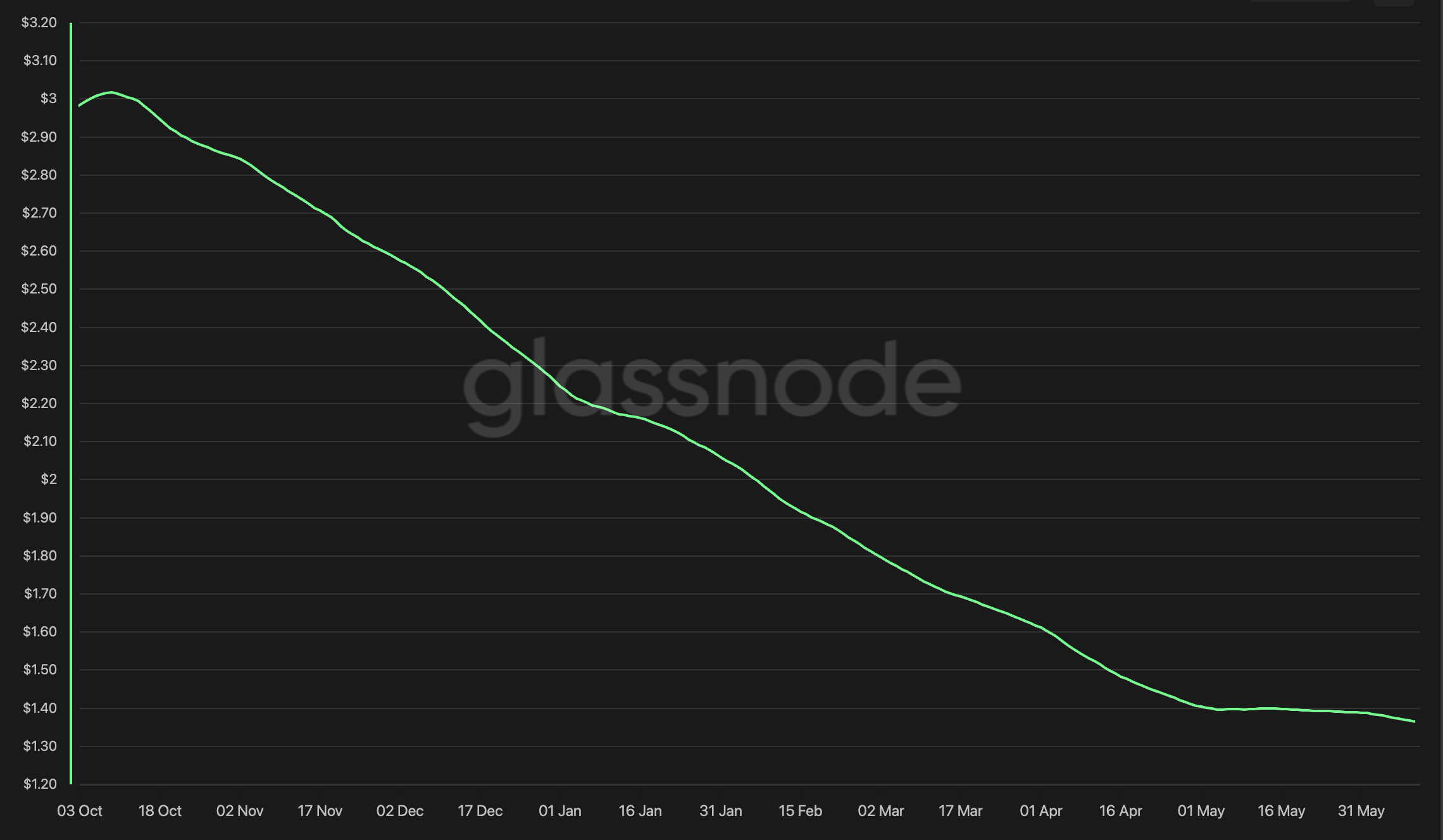
XRP price has started to stabilize, but its onchain activity has collapsed to levels not seen since before 2025. Network fee volume, a direct proxy for transaction demand, has dropped by 91.5% from its February peak.
According to Glassnode data, the 90-day simple moving average of total fees paid on the XRP network has cratered from 5,900 XRP in February to just 500 XRP today. Simultaneously, XRP’s 90-day realized profit-to-loss ratio has fallen to 0.38, down from a peak of 50 when XRP traded at $3.40 January last year.
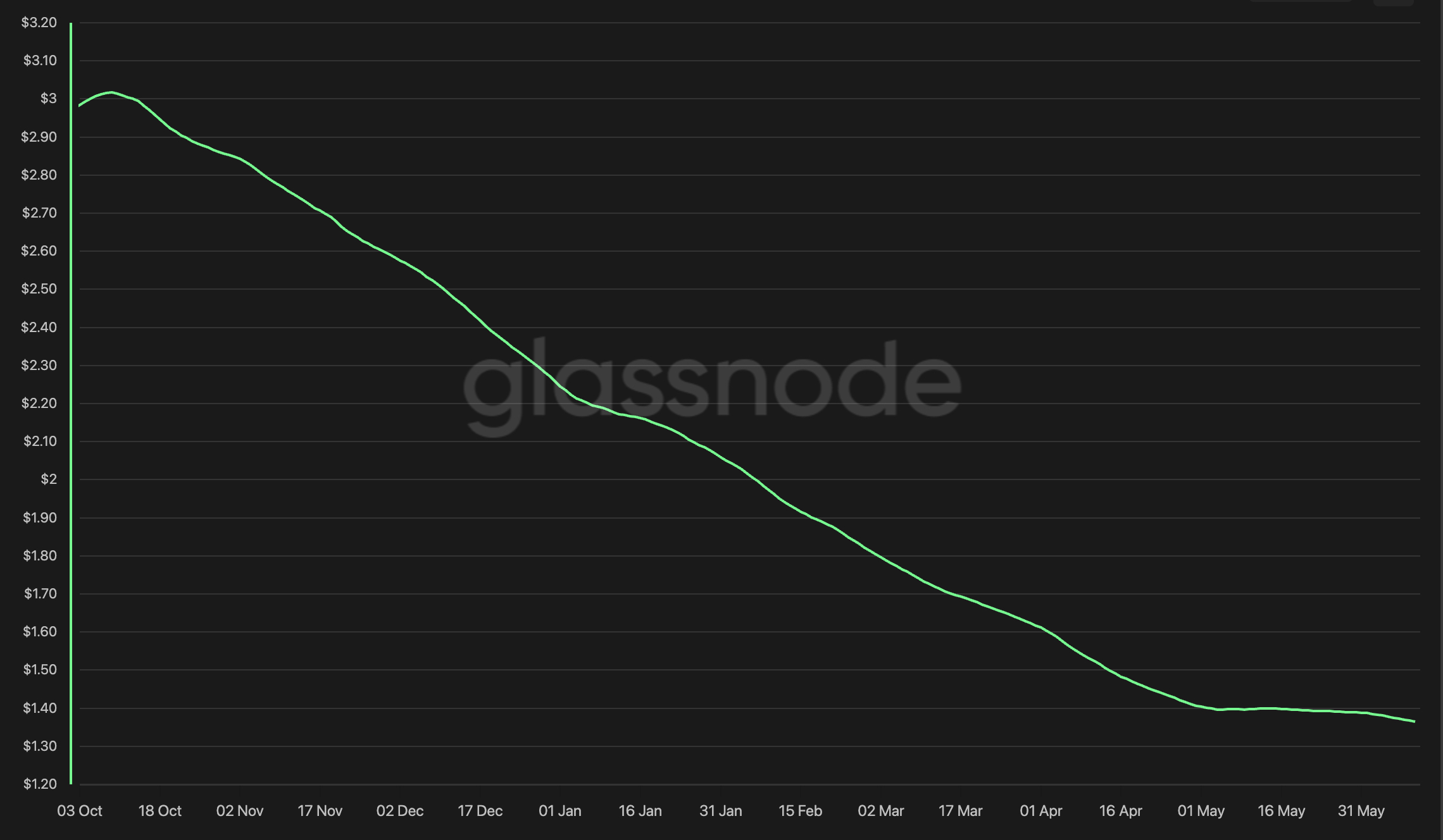
That ratio means participants are now realizing $1 in losses for every $0.38 in profits, a signature of capitulation selling. Data also shows that large-wallet transfers of 1 million XRP or more to Binance have declined since the 2025 peak, a display that major holders are not yet aggressively distributing.
Price action is compressing into a narrow decision zone, and the technical structure reflects the same tension between exhausted sellers and hesitant buyers.
Discover: The Best Crypto to Diversify Your Portfolio
Can XRP Price Reclaim $1.50 or Is a Drop to $1.09 Next?
XRP is currently consolidating below the 100-hour simple moving average, with price action grinding between $1.10 and $1.15 after a recent failed attempt to hold above $1.30, but so has the whole crypto market.
Immediate support sits at $1.05–$1.10, with a secondary demand pocket at $1. Resistance is layered at $1.20–$1.25, then $1.30–$1.40. A clean reclaim of $1.50 would shift short-term momentum and open a path toward the mid-$1.60s. Bearish momentum is still present, but the declining exchange inflows from large holders suggest distribution pressure is easing.

If support at $1.10 holds as volume picks up, price could recover toward $1.20 in the near term, and eventually $1.30. XRP could also consolidate between $1.10 and $1.15 for the next several sessions, absorbing sell pressure before any directional break.
But, in a bad scenario, a close below $1.10 opens the $1 target, and the $1.00–$0.65 band is identified as the macro support zone if this correction extends.
The profit-to-loss ratio at 0.38 does historically precede XRP price recoveries, but timing a bottom in a 91.5% fee-contraction environment is not for the faint-hearted.
Discover: The Best Token Presales
LiquidChain Targets Early-Mover Upside as XRP Struggles To Maintain Key Levels
XRP’s compressed activity data tells a familiar mid-cycle story: the speculation phase is over, the infrastructure phase is beginning. The rotation, away from price-momentum plays toward fundamental utility, is exactly the gap that early-stage infrastructure projects are moving to fill.
LiquidChain is a Layer 3 infrastructure project positioning itself as the cross-chain liquidity layer fusing Bitcoin, Ethereum, and Solana liquidity into a single execution environment.
The secrets of The Order are within. — LiquidChain (@getliquidchain) June 11, 2026
Are you ready to find out what they are?  ⟁https://t.co/vqvBcdSQYC pic.twitter.com/cKT8nEK5R2
The core value proposition is a Unified Liquidity Layer with Single-Step Execution and Verifiable Settlement, meaning developers deploy once and access all three ecosystems without fragmented bridging or multi-step routing.
The $LIQUID token is currently priced at $0.01468, with the presale having raised $830K to date. The raise is live, but early, and the figure reflects meaningful traction without the kind of saturation that closes early-entry windows.
The post XRP Price Support in Focus: Transaction Demand Falls by 90% as Holders Eye Bottom appeared first on Cryptonews.


Ripple CEO Brad Garlinghouse has criticized JPMorgan CEO Jamie Dimon’s opposition to the Clarity Act, a bill that would establish rules for much of the U.S. crypto market.
Summary
- Garlinghouse said Dimon misrepresented the Clarity Act’s compliance impact.
- Stablecoin yield provisions remain a major dispute in the bill.
- Polymarket places the bill’s 2026 approval odds at 47%.
Garlinghouse argued that Dimon mischaracterized the legislation during recent public comments. The disagreement comes as lawmakers continue reviewing the bill before a potential Senate vote.
Garlinghouse disputes Dimon’s criticism of the bill
Speaking during an interview with Fox Business, Garlinghouse responded directly to comments Dimon made about the Clarity Act. The Ripple executive said Dimon incorrectly portrayed the legislation as reducing compliance safeguards. Garlinghouse argued that the bill would provide regulatory clarity rather than weaken oversight.
Garlinghouse said, “What Jamie Dimon did a disservice around is that he’s representing that this reduces compliance concerns.” He added that the characterization was inaccurate and could influence public perception of the legislation. According to Garlinghouse, support for the bill centers on establishing clear rules for digital asset companies.
The comments followed a public debate over provisions contained within the proposed legislation. Lawmakers continue reviewing measures that would define regulatory responsibilities across parts of the crypto industry. The bill remains one of the most closely watched digital asset proposals in Washington.
Stablecoin yield provision remains a key dispute
A major area of disagreement involves language that would allow crypto exchanges to offer stablecoin yield products. Dimon has publicly criticized that provision and questioned efforts supporting its inclusion. Coinbase CEO Brian Armstrong has argued that the measure should remain part of the legislation.
During a previous interview, Dimon said Armstrong was the primary advocate for the provision. He also claimed that Coinbase spent substantial resources supporting policy efforts in Washington. The JPMorgan chief further criticized Armstrong while discussing the stablecoin yield debate.
Garlinghouse acknowledged that Armstrong represents Coinbase rather than the entire crypto sector. However, he said many digital asset firms support legislation that provides regulatory certainty. The Ripple executive argued that industry participants continue seeking clearer operating frameworks in the United States.
Senate vote approaches as lobbying efforts continue
Garlinghouse also linked JPMorgan’s opposition to commercial interests within the banking industry. He said traditional financial institutions benefit from maintaining existing market structures. According to Garlinghouse, those interests influence resistance to parts of the legislation.
The Clarity Act advanced through a Senate committee vote last month. Lawmakers are expected to consider the proposal on the Senate floor before any final action. The measure would establish rules governing large sections of the U.S. digital asset market.
Meanwhile, debate continues among banks, crypto companies, and industry groups over the bill’s final structure. Stablecoin yield provisions remain one of the most contested sections under discussion. Prediction market data from Polymarket currently places the odds of the bill becoming law this year at 47%.
The structure is based on depositary receipts, a longstanding financial product that allows investors to gain exposure to shares through a bank-issued security. Citi has adapted that model for private companies and recorded the securities on blockchain infrastructure operated by Swiss market operator SIX.
The result is a digital version of a traditional financial instrument. Investors own the depositary receipt rather than the underlying shares directly, while Citi acts as both issuer and custodian.
The bank argued the approach could make private-market investing simpler and more transparent than some existing structures, which often rely on special-purpose vehicles and multiple intermediaries.
The launch is part of a larger effort by major financial institutions to tokenize traditional assets.
Tokenization refers to representing real-world assets such as stocks, bonds or bank deposits as digital tokens that can move across blockchain networks.
Supporters say tokenized assets could eventually reduce settlement times, lower costs and allow markets to operate around the clock.
Citi has been among the banks pushing that transition. Earlier this month, Citi joined several of the largest U.S. banks in announcing plans to develop a shared tokenized deposit network through The Clearing House by mid-2027. The system would convert traditional bank deposits into blockchain-based tokens while keeping funds inside the regulated banking system.
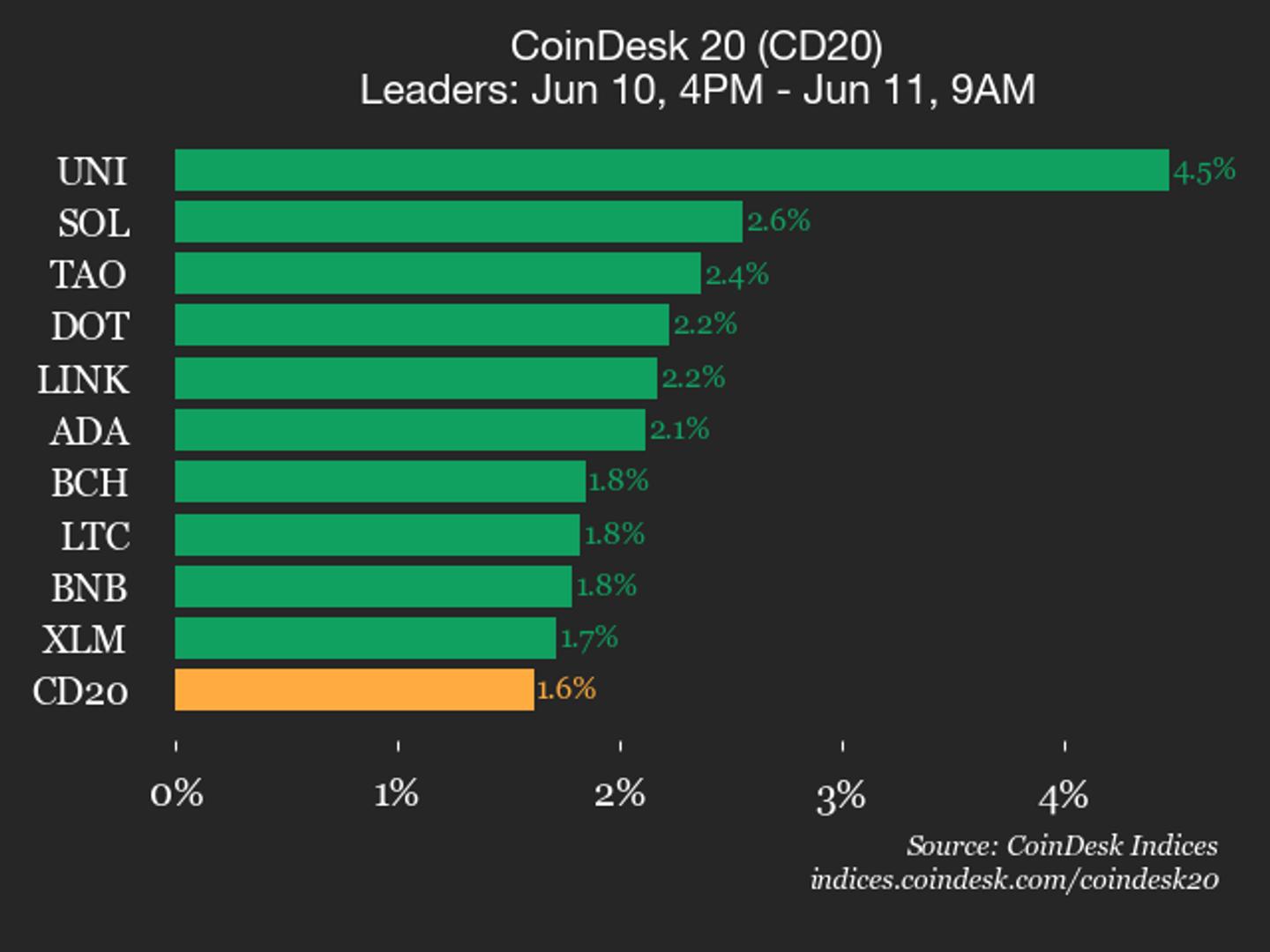
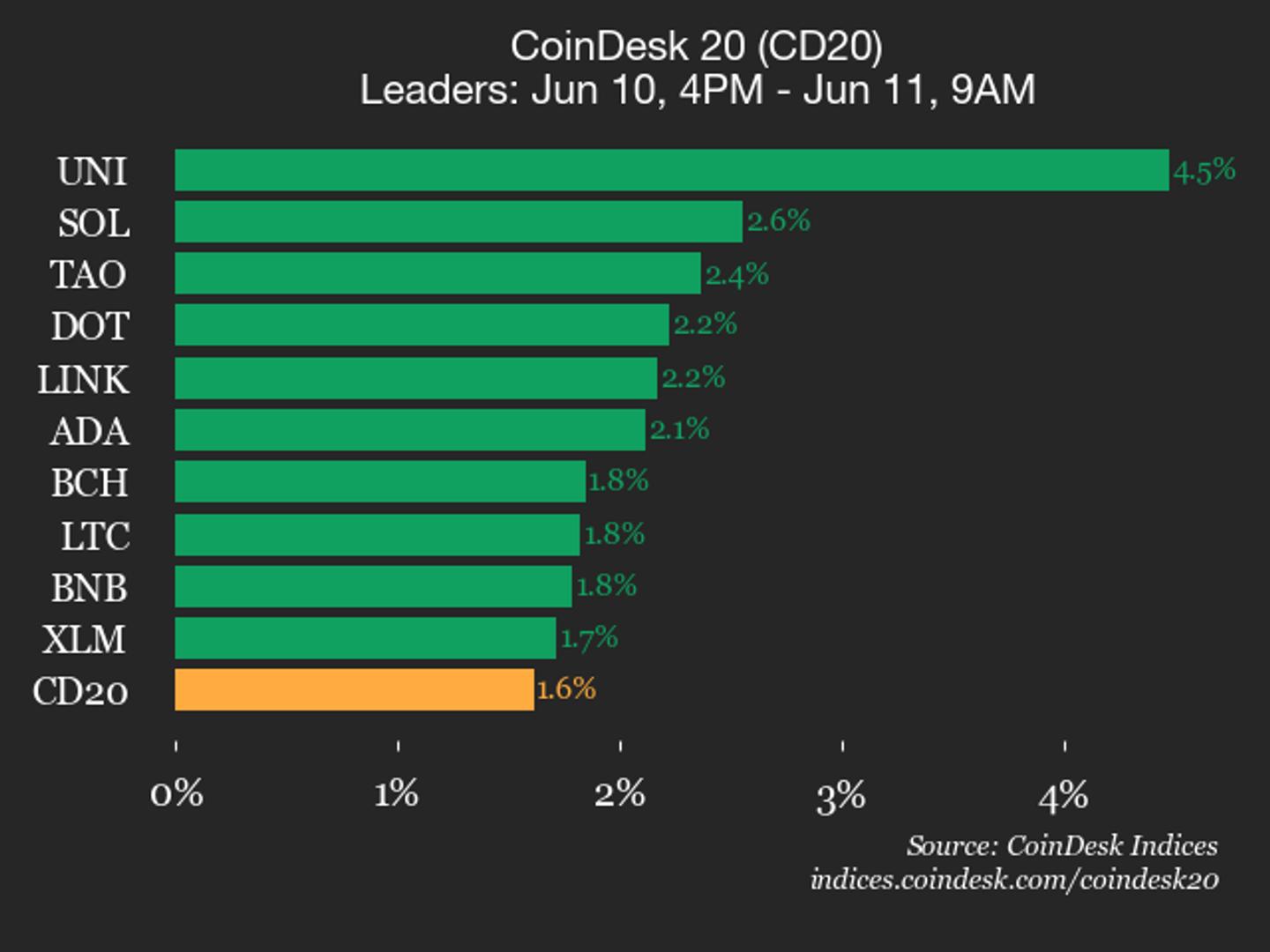
Solana (SOL), up 2.6% from Wednesday, was also a top performer.

BTC USD is bleeding from two wounds. Bitcoin price is trading below 50% of its all-time high, as the usual institutional backstops are stepping away, tipping the prediction scale bearish. Alarming?
Analysts at Glassnode flagged the collapse in a recent market update: “As BTC broke down from the mid-$70Ks toward $60K, net inflows from corporate treasury firms fell sharply, with daily purchases slowing to a fraction of their recent pace.”
Digital asset treasury (DAT) demand from firms like Strategy that accumulate BTC as a core business has practically evaporated in June. The buying spree is down from multiple instances of $500 million+ in daily accumulation through April and May.
I was never a huge fan of DATs, but I supported the idea. These entities were pure holders, much more stable than people buying and selling ETFs or speculating on exchanges… even closer to the original hodlers, the OGs. — Rezo
The whole model was buy and hold, raise capital, buy… pic.twitter.com/PGI9O7BINU
 ₿RRR (@rezosh) June 9, 2026
Strategy itself disclosed it sold 32 BTC in the final week of May, then re-entered during the dip with a $100 million purchase, yet it failed to arrest the slide below $60,000. Two demand pillars, one crack.
Discover: The Best Crypto to Diversify Your Portfolio
Bitcoin Price Prediction: Recover to $100,000 Or $75,000 Retest Next?
Bitcoin is navigating its most technically fragile zone since the cycle’s early days. Price is hovering near $62,000, well below the psychologically critical $70,000, and a deeper correction under $75,000 breached.
Bernstein maintains a constructive long-term view, calling the current cycle “elongated” and pointing to “more sticky institutional buying” as an offset to retail outflows, with a 2026 target of $150,000 and a cycle extension scenario near $200,000 by 2027. Standard Chartered echoes that range. Published 2026 forecasts span $75,000 to $225,000, a gap wide enough to drive a truck through.

Federal Reserve rate-cut expectations are explicitly tied to Bitcoin’s Q4 upside case across multiple outlooks. Without this catalyst, the path of least resistance remains sideways to lower.
Bitcoin needs its ETF inflows to stabilize, corporate treasury buying resumes above $200M/day, and rate cuts materialize. If those happen, BTC could target above $100,000 by year-end. But it seems likely that demand will recover slowly and see BTC consolidate between $60,000–$70,000 through the summer.
Discover: The Best Token Presales
Bitcoin Hyper Targets Early-Mover Upside as Bitcoin Tests Key Levels
Spot BTC at $62,000 offers range-bound risk at a $1.3 trillion market cap. The asymmetry isn’t what it was at $16,000. That’s not a bearish call on Bitcoin, it’s simple math about where the leverage lives in this cycle.
Bitcoin Hyper ($HYPER) is positioning as infrastructure for Bitcoin’s next evolution: the first-ever Bitcoin Layer 2 with Solana Virtual Machine (SVM) integration, promising sub-second finality and low-cost smart contract execution while preserving Bitcoin’s underlying security.
The project has raised closer to $33 million at a current presale price of $0.0136, with 36% APY staking rewards available during the raise. Key features include a Decentralized Canonical Bridge for trustless BTC transfers and high-speed transaction execution that outperforms Solana on latency.
Research Bitcoin Hyper before the presales end.
The post Bitcoin Price Prediction: Not Just ETFs, Corporate BTC Buying Spree Has Collapsed appeared first on Cryptonews.


BitGo has introduced Lightning Earn, a product that lets institutional clients allocate Bitcoin to Lightning Network routing channels.
Summary
- BitGo introduced Lightning Earn for institutional Bitcoin routing fees.
- Amboss Rails manages liquidity across Lightning Network payment channels.
- Fees come from routed Bitcoin payments, not token rewards.
The product uses Amboss Technologies’ Rails platform to manage liquidity routing across Lightning payment paths. Participants earn fees in Bitcoin from routed payments while using BitGo custody accounts.
BitGo links custody accounts to Lightning routing
BitGo designed Lightning Earn for corporate treasuries and institutional allocators that already hold Bitcoin through its custody platform. Clients can place Bitcoin into Lightning Network channels used to route payments between connected nodes. The routing activity generates fees paid in native Bitcoin, rather than tokens or synthetic rewards.
The company said clients access the product through existing BitGo custody accounts. BitGo also said custody controls, governance steps, and compliance workflows remain in place during deployment. The structure allows institutions to use Bitcoin for routing liquidity without moving assets into external retail wallets.
BitGo CEO Mike Belshe said Rails gives clients a way to deploy Bitcoin “without compromising custody or governance.” The company also placed part of its own treasury into Rails. BitGo said the allocation helped test the process before wider institutional use.
Amboss Rails manages liquidity across payment channels
Amboss Technologies provides the Rails platform behind the routing function. Rails helps allocate Bitcoin liquidity across Lightning channels where payment flow requires capacity. The system connects institutions with routing paths that need capital to process Bitcoin payments.
Amboss CEO Jesse Shrader said BitGo’s integration of Rails shows that “Lightning is fit for institutions.” He also said institutional capital can support enterprise-scale Bitcoin payments. The statement relates to liquidity deployment, not guaranteed returns.
Lightning Network routing fees depend on payment activity across connected channels. Participants receive fees when their liquidity helps move payments between nodes. BitGo said the product does not use synthetic assets, token incentives, or derivative yield products.
Lightning Earn uses Bitcoin fees instead of token rewards
The product differs from yield products that depend on lending, staking, or third-party token rewards. Lightning Earn relies on routing fees from payment traffic across Lightning channels. All earnings remain denominated in Bitcoin.
BitGo said its regulated trust bank controls continue to govern the deployed assets. The firm also said clients retain ownership of Bitcoin used in routing channels. Governance rules apply across all allocations made through the product.
Amboss said Rails supports liquidity allocation across Lightning Network endpoints. The company also said the platform helps payment channels access routing capacity. BitGo’s Lightning Earn product is now available to institutional clients through existing custody accounts.
President Donald Trump nominated former SEC Chairman Jay Clayton as Director of National Intelligence on Thursday. Clayton authorized the agency’s landmark lawsuit against Ripple in 2020, making him one of the most consequential regulators in XRP’s history.
The nomination requires Senate confirmation. Clayton currently serves as US Attorney for the Southern District of New York and would replace acting appointee Bill Pulte.
Why Jay Clayton Still Divides the XRP Community
The SEC filed its complaint against Ripple Labs on December 22, 2020, Clayton’s last full day as chairman. The agency alleged the company raised $1.3 billion through unregistered XRP sales.
It also said executives Brad Garlinghouse and Chris Larsen made roughly $600 million in personal sales.
Garlinghouse repeatedly accused Clayton of hypocrisy, arguing the chairman treated XRP more harshly than Bitcoin (BTC) or Ethereum (ETH). J
udge Analisa Torres later ruled that only Ripple’s institutional sales violated securities law. She fined the firm $125 million in August 2024, far below the nearly $2 billion the SEC wanted.
Both sides dropped their remaining appeals in 2025. XRP traders shrugged off Thursday’s news.

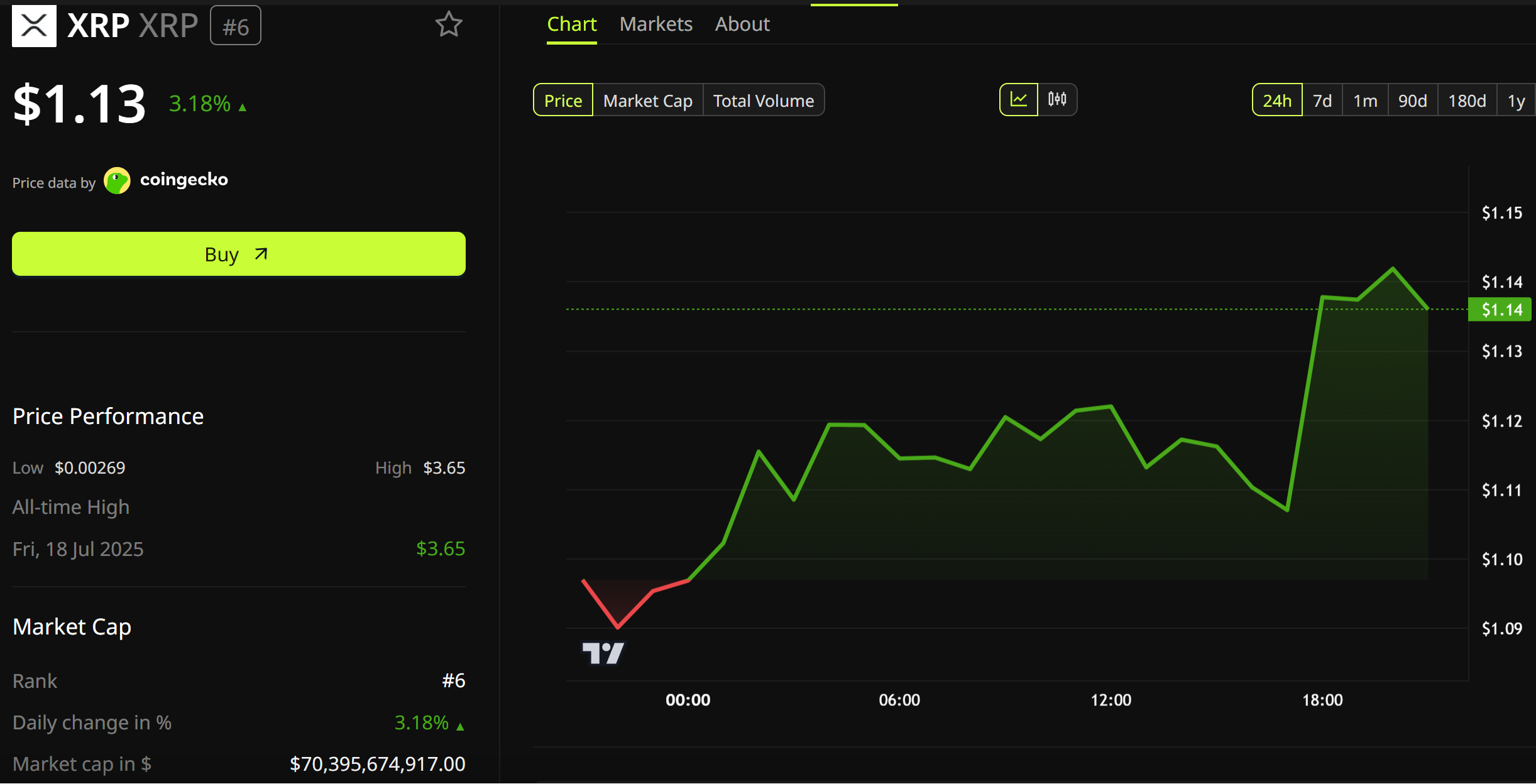
The token gained nearly 4% on Thursday to trade near $1.13, holding its spot as the sixth-largest cryptocurrency at a $71 billion market cap.
Follow us on X to get the latest news as it happens
A Steadier Pick After the Pulte Backlash
Trump handed the role to Federal Housing Finance Agency Director Bill Pulte on an acting basis earlier this month.
Crypto markets cheered the acting pick because of his pro-crypto mortgage policies. However, Pulte’s lack of intelligence experience drew bipartisan objections.
House Democrats blocked a short-term FISA Section 702 extension on Thursday in protest.
Clayton offers Senate Republicans an easier path. Lawmakers confirmed him 61-37 to lead the SEC in 2017.
Federal judges later named him SDNY attorney after his 2025 nomination stalled. Still, critics note he also lacks any intelligence background.
“I am pleased to announce the Nomination of very Highly Respected Jay Clayton, former Chairman of the Securities and Exchange Commission… to be the next Director of National Intelligence and, importantly, to serve in my Cabinet,” Trump wrote in a Truth Social post announcing the decision.
Confirmation hearings will now test Clayton on surveillance and national security.
XRP holders, meanwhile, will watch whether their old adversary leaves financial regulation behind for good.
The post Trump Picks Former Ripple (XRP) Foe Jay Clayton for Top Intelligence Role appeared first on BeInCrypto.


Tether Investments said it led a $1.4 billion funding round for Neura Robotics, a German startup developing AI-powered humanoid robots, in what it called one of the largest investments into physical AI on record.
The funding, announced Wednesday, was projected to value Neura between $9 billion and nearly $12 billion when it first became public last November. Other participants in the round included Qualcomm Technologies, Amazon and NVIDIA, Neura said in a post on its website.
Neither Tether nor Neura responded immediately to a CoinDesk request for further information.
“AI is moving from the digital world into the physical world,” David Reger, founder and CEO of Neura Robotics, said in a statement. The company recently said it aims to produce 5 million robots by 2030 with about $1.2 billion orders already.
Tether, the issuer of the USDT stablecoin, is building its own technology right into Neura’s systems. The robots will receive their own independent digital wallets, allowing them to be paid automatically the moment they finish a job. They will also be able to make electronic payments to other machines, cutting out human managers, paperwork and bank delays.
Under CEO Paolo Ardoino, the El Salvador-based company is spending in a range of industries outside of the immediate crypto sector. Its growing portfolio includes investments in agriculture, brain tech and sports. The company made over $10 billion in profit in the first nine months of 2025 by investing rese
Coinbase CEO Brian Armstrong says the exchange won approval to offer true global crypto perpetual futures in the US. He calls the clearance the product of years of quiet regulatory work.
Armstrong laid out the road ahead in a post on X this week. The clearance itself arrived in late May with little fanfare.
Coinbase Perpetual Futures Bring Global Liquidity to US Traders
The Commodity Futures Trading Commission (CFTC) issued a no-action letter on May 29. The relief allows Coinbase to route US customers to perpetual contracts on Deribit, the Dubai-based platform it acquired last year. As a result, Coinbase Financial Markets became the first US-regulated firm to offer this access.
The company confirmed the CFTC clearance covers both perpetuals and options. Until now, US traders had no compliant route to these products. Together, the two categories represent roughly 80% of global crypto trading volume.
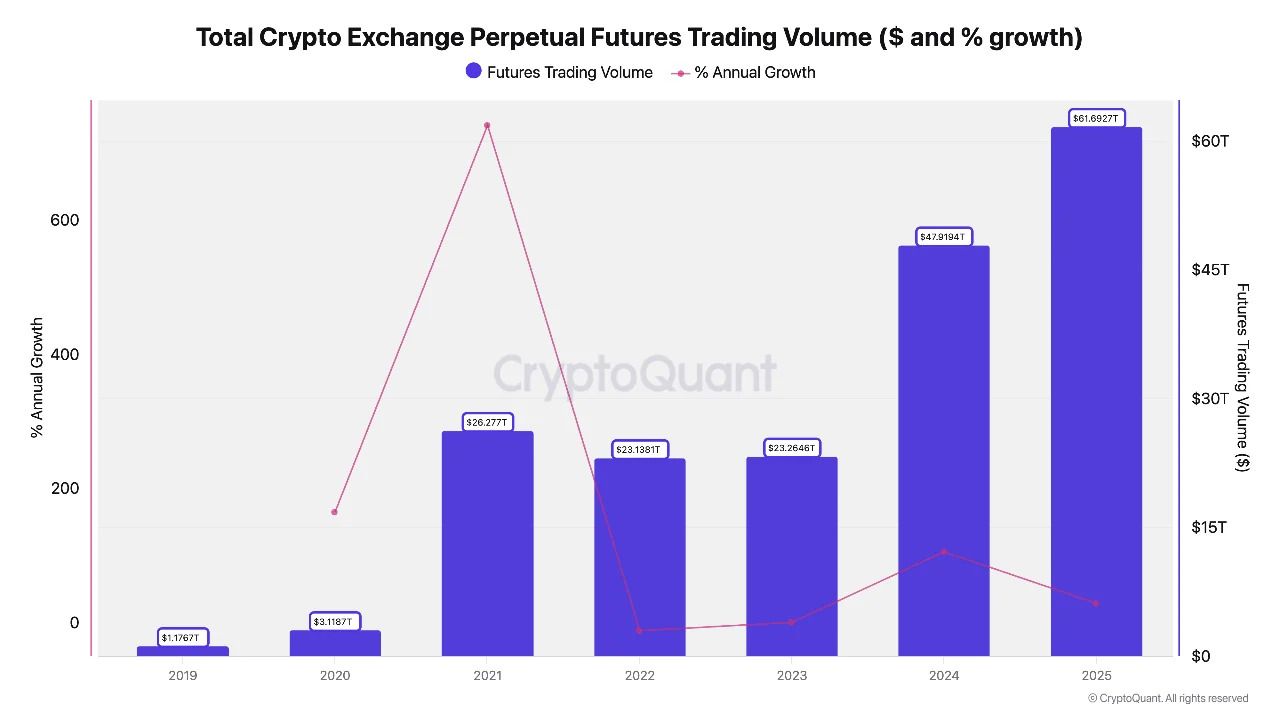
The market behind the decision is enormous. Perpetual futures volume reached $61.7 trillion in 2025, up 29% year over year.

Therefore, Armstrong frames the approval as pooled global liquidity arriving through a compliant US channel.
Notably, the regulator moved fast once Coinbase asked. It answered the request within a day and published a 16-page framework. In addition, the agency said perpetual contracts tied to other assets will face a case-by-case review.
“Coinbase got approved to offer true global crypto perps in the US. This took many years of work, and we’re the first to offer this global liquidity to US users.”
Armstrong stated in his post on X.
Armstrong Rejects Claims Coinbase Is Moving Away From Crypto
Some critics argue the company has drifted from its crypto roots. However, the Coinbase co-founder firmly rejected that view. Instead, he said the firm uses crypto to upgrade every traditional financial service. The message extends his earlier plan to update the financial system across eight areas.
Clear Rules Could Bring More Crypto Jobs to the US
The CEO also framed the win as a jobs story. For example, he pointed to Coinbase’s new office in Charlotte, North Carolina, as evidence of a growing US footprint.
According to Armstrong, clear rules make it easier for the industry to build in the United States. That clarity, he argues, can create more American jobs. The stance aligns with Coinbase’s support for the CLARITY Act and its push for faster crypto rules abroad.
Attention now turns to asset selection, since Coinbase has not finalized which perpetual contracts US customers will see first. Meanwhile, rival exchanges may pursue similar relief, which would test how long the first-mover advantage lasts.
The post Coinbase CEO Armstrong Talks About Perpetual Approval: What Comes Next? appeared first on BeInCrypto.


SpaceX has priced its shares at $135, according to a filing with the U.S. Securities and Exchange Commission on Thursday, setting the stage for one of the most closely watched public market debuts in recent years.
The company sold 555.6 million shares at that price, raising $75 billion, making it the largest IPO ever, easily topping Saudi Aramco’s $30 billion in 2019.
The Elon Musk-led aerospace and satellite company is expected to begin trading on Nasdaq on Friday under the ticker SPCX, giving public investors their first opportunity to buy shares. Based on the offering price, SpaceX will enter the public markets with a fully-diluted valuation of roughly $1.8 trillion.
The valuation is a pricey one, given SpaceX produced roughly $19 billion in revenue last year, driven by launches, government contracts and its rapidly growing Starlink satellite internet business.
Also notable is the company’s sizable bitcoin holdings. SpaceX held 18,712 bitcoin as of March 31. That would be valued at just under $1.2 billion at BTC’s current price around $63,500.

XRP Price Support in Focus: Transaction Demand Falls by 90% as Holders Eye Bottom

Breaking: protest shuts down Waterloo ahead of Filton ‘terror’ sentencing

Roy Jones Jr picks a winner in Canelo’s comeback against Mbilli: “He’s better than people think”

HarrisX Poll Found 52% of Registered Voters Support the CLARITY Act

BloFin War of Whales 2026 Grand Prix opens registration for $5M trading championship

Blockchain.com files with SEC for U.S. IPO

XRP PRICE UNCERTAINTY REMAINS! – $0.10 XRP REALISTIC? – IS THIS A FAKE OUT? – BTC FUD RISING!

The “Easy” Steps of Becoming A Financial Advisor Are Concerning

BITCOIN CritiCAL AREA OR DUMP – CRUDE BOUNCeS BACK | Crypto Market Update
-

 Fashion6 days ago
Weekend Open Thread: Evereve – Corporette.com
-
 Crypto World6 days ago
Jensen Huang Approves Samsung, SK Hynix, and Micron for NVIDIA (NVDA) HBM4 Memory Supply
-

 Crypto World4 days ago
Anatomy of the June crypto crash: Fed, Iran, Saylor
-
 Entertainment5 days ago
The Best Mystery Series of All Time Is Surging on Streaming 30 Years After It Ended
-

 NewsBeat4 days ago
Alexander Zverev wins the French Open to finally earn a 1st Grand Slam title
-

 Tech6 days ago
Suspicious Polyfill login prompts pop up on Toshiba, Muji websites
-
 Crypto World5 days ago
Senator Cynthia Lummis Calls CLARITY Act the Most Consequential Financial Legislation of This Generation
-

 Tech7 days ago
Microsoft launches MXC, an OS-level sandbox for AI agents, with OpenAI and Nvidia already on board
-

 Tech4 days ago
Microsoft unveils seven homegrown AI models in new bid for ‘long term self-sufficiency’
-

 Business6 days ago
(VIDEO) Justin Bieber Delivers Surprise Happy Birthday Serenade to Diners at Los Angeles Mexican Restaurant
-
 Business5 days ago
The Pain Points Taking a Fragile Tech Rally Down a Notch
-

 Business4 days ago
High Stakes for Wembanyama as New York Pushes for 3-0 Lead
-
 Crypto World3 days ago
Eli Lilly (LLY) Stock Surges 4% Following Breakthrough Sleep Apnea Trial Results
-

 Tech6 days ago
Von der Leyen’s AI envoy pick draws conflict-of-interest fire
-

 Tech6 days ago
Meta steals a tactic from Tesla and builds data centers in tents
-
 NewsBeat4 days ago
Alexander Zverev conquers demons and outlasts Flavio Cobolli to win French Open for first major title
-
Crypto World6 days ago
LBank Surpasses 25 Million Users Worldwide as AFA Partnership Continues to Drive Global Growth
-

 Tech6 days ago
Hackers now exploit SolarWinds Serv-U flaw to crash servers
-

 Crypto World4 days ago
Trump’s AI Ownership Plan Could Benefit Anthropic at OpenAI’s Expense
-
 Sports2 days ago
Bangladesh beat Australia after 20 years in ODIs, register only their second win over six-time world champions | Cricket News
You must be logged in to post a comment Login