

Crypto World
Coinbase CEO Brian Armstrong Rejects Calls for a New AI Regulatory Body

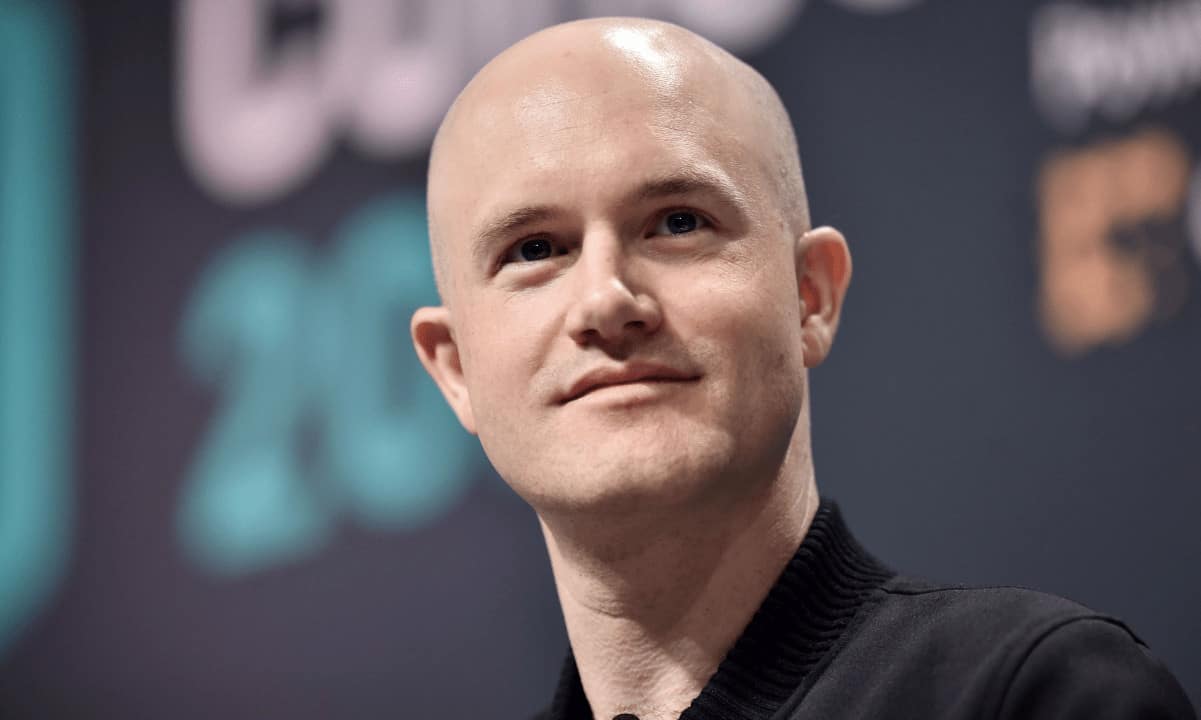
Coinbase CEO Brian Armstrong has rejected calls for a new AI self-regulatory body, arguing that existing laws already provide enough protection against harmful AI.
His remarks came just a day after the crypto exchange disclosed that AI now writes over 95% of its code, more than twice the figure the company reported earlier in the year.
Armstrong Says Existing Laws Already Cover AI Risk
It all started with a proposal from Google DeepMind CEO Demis Hassabis on July 14, where he called for the creation of a federally overseen standards body to test and certify frontier AI models before they are deployed.
According to him, artificial general intelligence could arrive within a few years, with increasingly capable models possibly introducing cybersecurity and biological risks as well as a multitude of national security issues. He therefore proposed a public-private organization, much like the Financial Industry Regulatory Authority, that would at first conduct voluntary reviews before potentially moving to mandatory testing for the most advanced AI systems.
Reactions from Hassabis’ peers were quick, with tech entrepreneur Chamath Palihapitiya calling the framework “quite well reasoned, and OpenAI’s Sam Altman describing it as “a thoughtful proposal.” Microsoft CEO Satya Nadella also chipped in, calling it “an important piece” and adding that the goal should be to avoid “any model that breaks the world.”
However, Armstrong disagreed, maintaining that such arrangements often create a dual approval process that forces businesses to satisfy both state regulators and industry bodies. He insisted that AI needs neither an SRO nor a government watchdog, since, so far, there has been no harm done that couldn’t be compensated.
“Why design regulation around a hypothetical problem,” the crypto chief posited. “The existing laws which prevent fraud, award damages when victims are harmed (tort), UDAP Laws (Unfair and Deceptive Acts and Practices) etc provide broad protections if one of the frontier labs issues a model that does harm.”
Furthermore, he pointed out that AI developers also have a strong commercial incentive to release safe products since users will most likely avoid tools they consider dangerous.
Coinbase Doubles Down on AI Across Its Business
Armstrong’s interest in the direction of AI isn’t a passing fad, considering the company he heads has deeply embedded AI use in its processes.
This was revealed by a colleague of his, Coinbase’s head of platform Rob Witoff, who recently told Cointelegraph that between 95% and 100% of the crypto exchange’s code is now written by or with large language models, more than doubling an estimate the company shared in February of roughly 40%.
Recall that in May, the exchange announced a 14% cut of its workforce, with the intention being to reorganize around smaller, more experienced teams with AI at the center of its operations. According to Witoff, AI usage on Coinbase varies depending on the task, with sensitive areas such as cryptography still getting detailed human review while internal prototypes can be built almost entirely through automation.
Other crypto firms, including Gemini, Crypto.com, Kraken, Messari and Dune, have also reduced headcounts this year while expanding on AI use.
But that rapid AI adoption has not been without a few setbacks, as seen earlier this month, when Coinbase was forced to investigate an AI-generated notification that incorrectly reported the result of the FIFA World Cup match between Norway and Brazil before the match had even started.
The post Coinbase CEO Brian Armstrong Rejects Calls for a New AI Regulatory Body appeared first on CryptoPotato.



A White House teleprompter operator has been placed on paid leave after allegedly earning more than $90,000 from Kalshi bets tied to words President Donald Trump would use in his speeches.
Summary
- The CFTC is investigating Gabriel Perez over more than $90,000 in reported Kalshi profits.
- Kalshi froze most of the gains after flagging bets tied to Trump’s speeches as suspicious.
- The case comes as Trump Media begins selling real-time Truth Social data to financial firms.
According to an ABC News report, the Commodity Futures Trading Commission is investigating Gabriel Perez over trades placed in Kalshi’s “mentions” markets, where users bet on whether Trump will use certain words or discuss specific topics during public appearances.
Perez has reportedly worked on Trump’s speeches since the 2016 presidential campaign, giving him direct access to prepared remarks before they were delivered. Sources familiar with the investigation told ABC News that the CFTC identified bets linked to Trump’s State of the Union address.
Over three months, Perez allegedly traded contracts connected to more than a dozen presidential appearances. ABC News reported that the events included a December prime-time address, Trump’s January speech at the World Economic Forum in Davos and his March remarks at a Medal of Honor ceremony.
Kalshi froze most of the disputed profits
Kalshi flagged the activity as suspicious, froze most of Perez’s reported gains and referred the matter to the CFTC, according to ABC News. The report said Perez has acknowledged some of the trades and is cooperating with the regulator’s inquiry.
Federal prosecutors, however, declined to open a criminal investigation into the betting activity, ABC News reported. The CFTC’s review remains focused on whether Perez used nonpublic information while trading event contracts on the regulated prediction market.
White House Press Secretary Karoline Leavitt confirmed the investigation during a press briefing and said President Trump knew about the case. Describing the president’s reaction, Leavitt said he “believes it’s deeply unfortunate and, frankly, a disgrace.”
Leavitt also confirmed that Perez had been placed on paid administrative leave while cooperating with the CFTC. According to the press secretary, another operator would handle the teleprompter for Trump’s scheduled address that evening.
Prediction markets have faced another case involving alleged access to restricted government information. In April, the Department of Justice charged a U.S. soldier with using classified material to trade Polymarket contracts linked to the capture of former Venezuelan President Nicolás Maduro.
Political posts are gaining value as trading data
Trump’s scheduled remarks already had mentions of markets available, including contracts linked to whether he would reference China. Leavitt said the address would cover the administration’s findings on alleged foreign interference in the 2020 election, adding that Trump’s statements would be supported by evidence.
The investigation has emerged as political statements become a paid source of market data. As previously reported by crypto.news, Trump Media & Technology Group has introduced the Truth API, a licensed service that will send real-time Truth Social posts from high-ranking accounts to financial firms, data providers and news organizations.
Trump Media said subscribers would receive immediate access to public posts that could contain time-sensitive political, policy or market information. Interim CEO Kevin McGurn described the product as an alternative to unauthorized data scraping and said trading firms could use it to monitor influential accounts.
“Markets already move on Truth Social posts,” McGurn said.
While Trump Media expects the API to produce recurring revenue, the Perez investigation concerns a separate issue: whether someone with advance access to presidential remarks used that information to profit from Kalshi contracts.
Tokenization platform Tradable plans to bring up to $1 billion in private credit assets onto the Stellar blockchain, expanding institutional access to tokenized real-world assets (RWAs) as demand for onchain private markets continues to grow.
Tradable said Thursday that $500 million in notional value is expected to be available when the initiative launches, and it will increase the amount to $1 billion over time. The company will use Stellar’s network to support institutional functions, including compliance, investor onboarding and asset lifecycle management.
The timing of the initiative’s launch was not disclosed.
Stellar Development Foundation CEO Denelle Dixon said the agreement reflects growing institutional interest in using the network for tokenized real-world assets.
The move builds on Tradable’s existing business. The company said it has already tokenized $1.7 billion in private credit assets across nearly 30 institutional-grade private credit positions, with the Stellar integration expanding the availability of those assets.
Stellar, one of the oldest public blockchains, has increasingly focused on tokenized real-world assets. The strategy has attracted institutional partners, including the Depository Trust & Clearing Corporation, which plans to connect its tokenization service to the network.
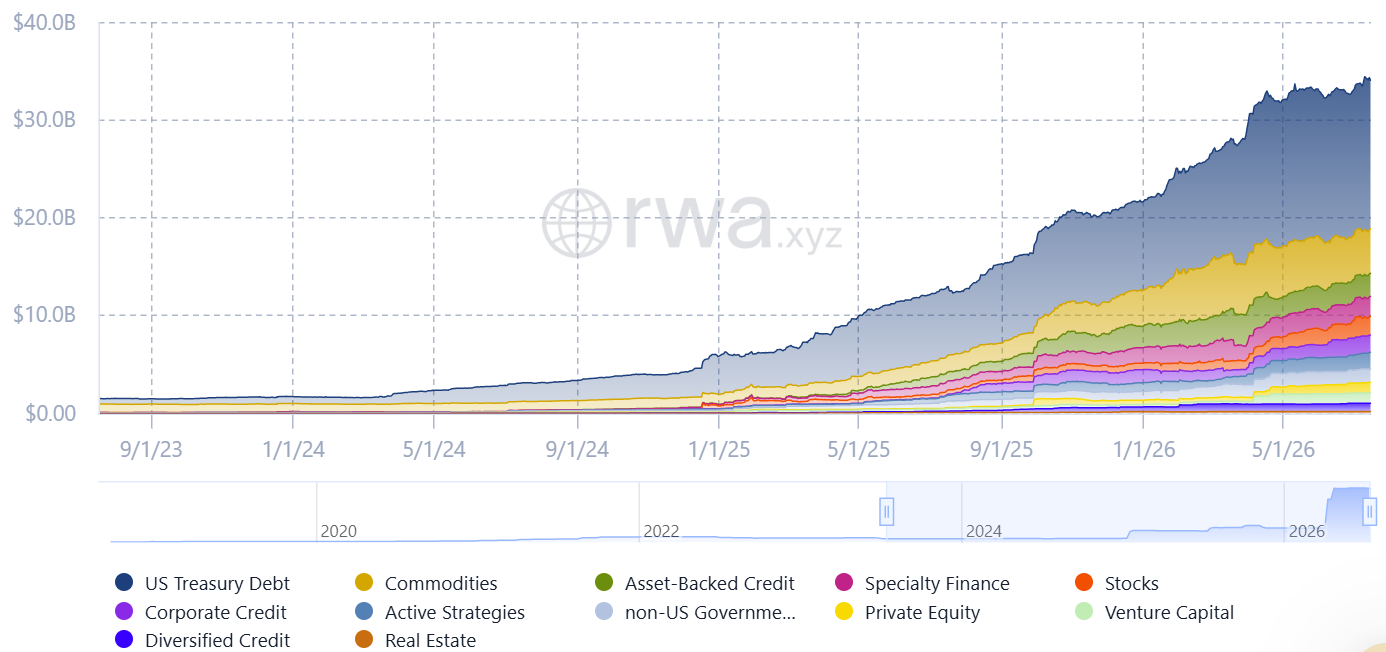
The developments reflect broader momentum in the tokenized RWA market, where institutional adoption has helped drive the sector’s value above $34 billion, according to RWA.xyz.
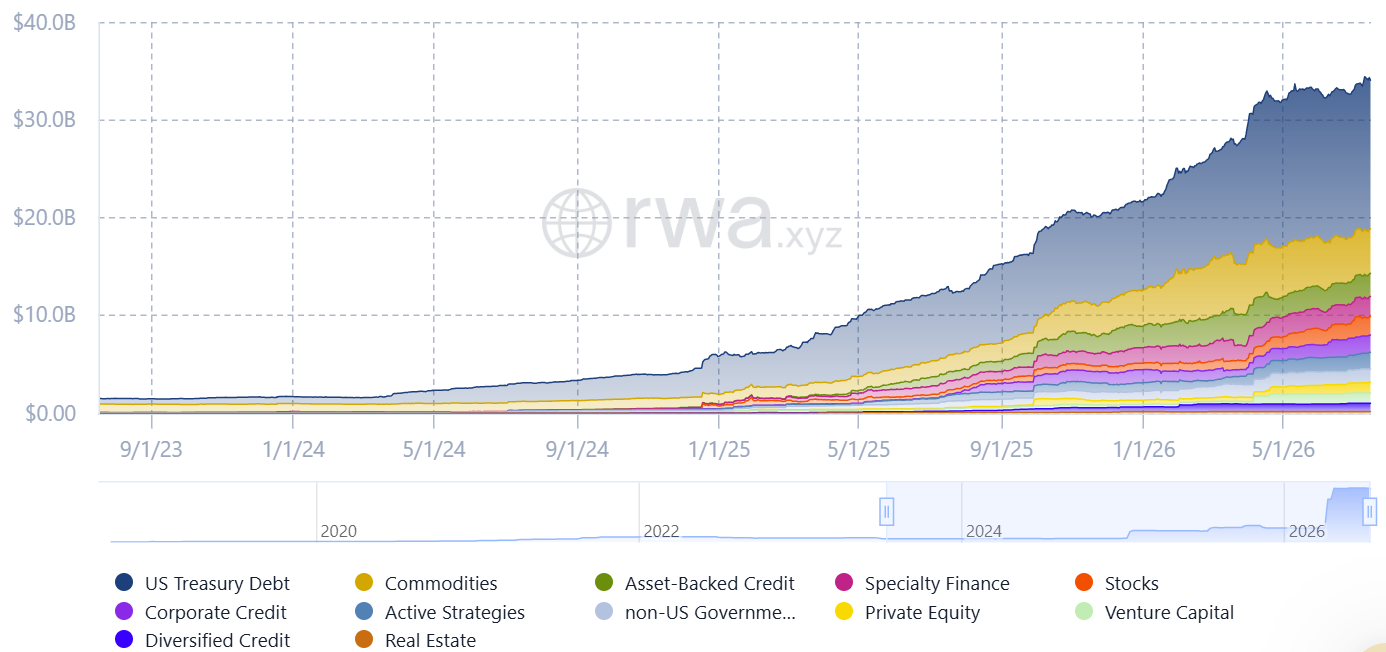
The tokenized RWA market has expanded rapidly since early 2025. Source: RWA.xyz
Related: DTCC to use Chainlink to power 24/7 collateral management network
Private credit dominates the tokenized RWA market
Private credit has emerged as the largest segment of the tokenized RWA market, accounting for roughly 44% of the sector’s value, according to Bernstein analysts.
The segment has grown as financial institutions increasingly use blockchain technology to originate, service and settle private loans more efficiently. In a research note published in May, Bernstein cited Figure Technology Solutions as a key driver of that expansion, pointing to the company’s blockchain-based lending platform and loan settlement infrastructure.
Token Terminal recently highlighted the role of private credit in fueling the tokenization boom, attributing the expansion to the continued migration of traditional financial assets onto blockchain infrastructure.
Related: Securitize, Cantor target tokenized IPOs for public markets
President Donald Trump has promoted more than 20 companies, including Nvidia, Tesla and Apple, within days of purchasing their shares, according to a CNN investigation.
Summary
- CNN linked Trump’s company promotions to stock purchases made only days earlier.
- Trump bought up to $500,000 in Nvidia shares before announcing faster AI permits.
- The findings have added pressure to include ethics rules in the CLARITY Act.
CNN found that several Truth Social posts announced or praised government actions that could benefit companies held in Trump’s investment accounts. The report has renewed questions about whether his financial interests conflict with decisions made by his administration.
Among the cases examined, CNN pointed to a 2025 post in which Trump announced that his administration would speed up the permits needed by Nvidia and similar companies to build artificial intelligence supercomputers in the United States.
Financial records reviewed by CNN showed that Trump had purchased between $200,000 and $500,000 worth of Nvidia shares several days before publishing the post. The investigation also linked the timing of his purchases to later public comments involving Tesla, Apple and other major companies.
CNN did not report evidence that Trump personally ordered the trades or made the related government decisions to raise the value of his holdings. However, the outlet reported that Trump has not placed his assets in a blind trust, leaving open the possibility that he could know what his investment managers are buying or selling.
White House denies Trump controls the trades
Responding to the report, White House spokesperson Anna Kelly said Trump does not manage the accounts involved in the transactions. According to Kelly, his assets are “held in fully discretionary accounts managed by independent third-party financial institutions.”
Trump has also previously said that professional fund managers control his investments, according to an earlier crypto.news report. His defense separates the timing of the trades from his own actions, although CNN noted that the arrangement does not meet the requirements of a blind trust.
Rep. Rosa DeLauro criticized the transactions after CNN published its findings. Writing on X, the Democratic lawmaker described the situation as: “Profits for him and his billionaire friends, higher prices for you.”
Neither the White House response cited by CNN nor Trump’s earlier comments addressed every company identified by the investigation. CNN also reported no finding that the trades broke federal securities law.
Stock scrutiny adds pressure to CLARITY talks
Questions over Trump’s stock holdings have surfaced as lawmakers debate whether the CLARITY Act should restrict senior government officials from participating in the crypto industry. According to the report, an ethics provision remains a key point of disagreement in efforts to secure bipartisan support for the market structure bill.
Trump’s 2025 annual financial disclosure has added to the dispute by showing that he received as much as $1.4 billion from crypto-related activities. Critics in Congress have cited those earnings while calling for rules that would limit the president’s ability to profit from digital assets during his term.
When previously questioned about his crypto income, Trump denied knowing the amount he had earned, according to CNN. He also argued that receiving the income would not be illegal even if he knew about it.
The stock investigation is expected to follow Trump into his meeting with senators on the CLARITY Act. Lawmakers have yet to resolve whether the bill will include conflict-of-interest restrictions covering the president and other senior officials.


The round of layoffs was part of Polygon transitioning operations to payments following a $250 million deal to acquire Coinme and Sequence in January.
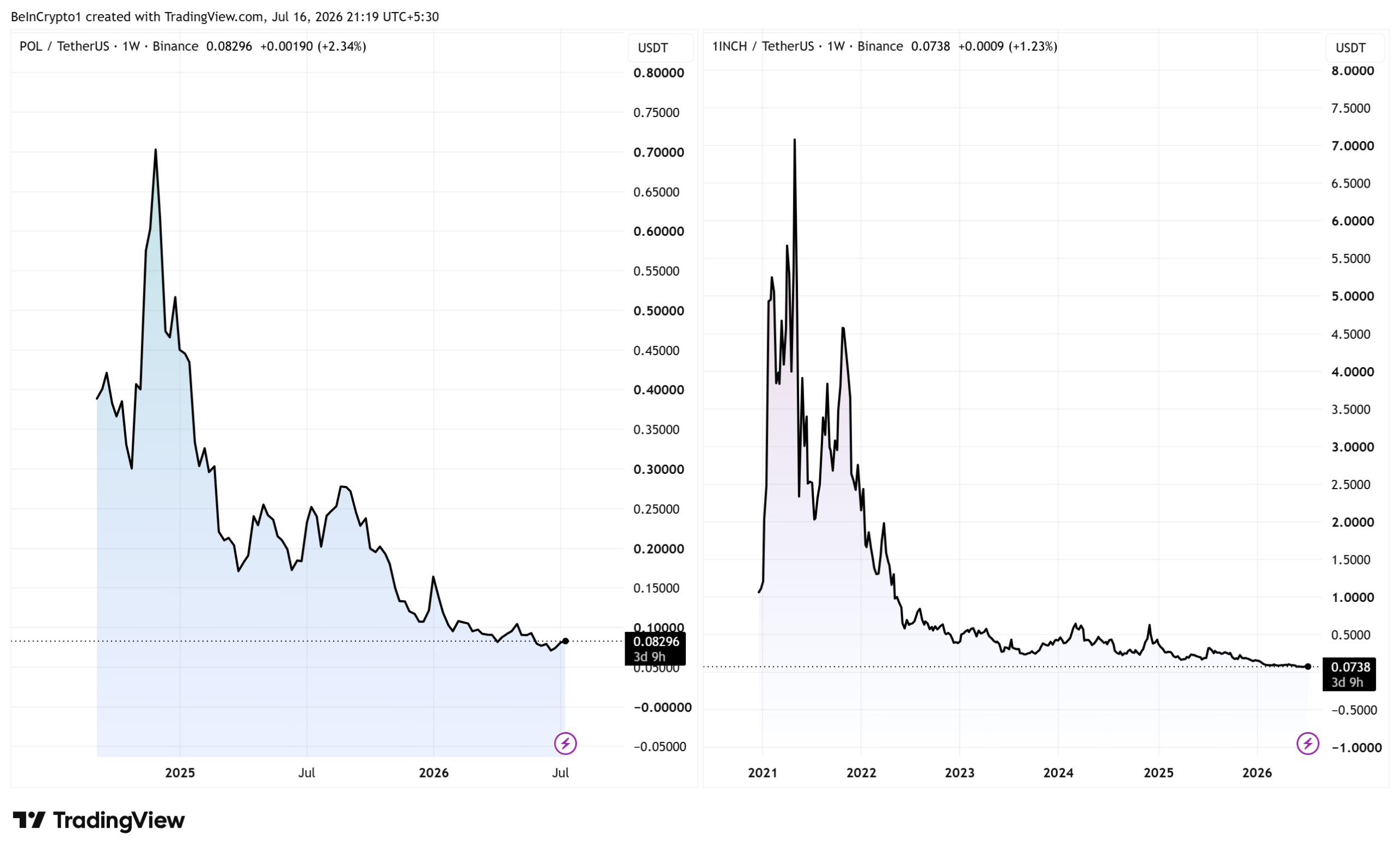
Polygon Labs announced its second round of layoffs in 2026 on Thursday, the same day 1inch co-founder Anton Bukov revealed he was fired in November. Both firms are reorganizing around commercial priorities while their tokens trade near record lows.
The parallel shakeups show a hard truth taking hold across the industry. The people who built crypto’s infrastructure era are paying the price of its push for real revenue.

Polygon Layoffs Mark Fourth Round of Cuts in Three Years
CEO Marc Boiron said Polygon Labs is completing its transformation from a blockchain foundation into a blockchain-enabled payments company, targeting profitability in 2027. He stressed the cuts reflect strategy rather than performance, with severance and career support for affected staff.
Thursday’s move extends a steady drumbeat. Polygon cut roughly 100 roles in 2023, another 60 in 2024, and around 60 more this January after its $250 million-plus deal to acquire Coinme, a US payments firm licensed in 48 states, and wallet developer Sequence.
The business case is visible on-chain. Stablecoin supply on Polygon stands at $3.36 billion, the eighth-largest on any blockchain, per DefiLlama, while the company says volume hit a record $9.12 billion in June. Visa also added Polygon to its stablecoin settlement program earlier this year.

“We chose to move now because momentum like this deserves a company built to run with it. Revenue is strong, stablecoin volume keeps setting records, our customer pipeline is stronger than any of us imagined, and our on-chain payments solution went live in record time,” Boiron explained.
Polygon Foundation CEO Sandeep Nailwal separately said a third of the team built 13 AI projects in a three-day sprint, signaling how leadership expects the remaining staff to work.
Follow us on X to get the latest news as it happens
1inch Co-Founder Says He Was Fired, Launches Second Tier
Hours earlier, Bukov disclosed that 1inch fired him in late November 2025 despite his 50% stake. The co-founder, who led the DEX aggregator’s protocol architecture and security since May 2019, said he retains no operational or security oversight.
Where Polygon frames its restructuring as a strategy, Bukov describes his exit as a leadership dispute. He said he pushed for changes in management and communication after user and teammate feedback, and was dismissed.
“The most important lesson that stayed with me: the long-term success of any project stands on two pillars of equal weight – technical excellence and leadership grounded in values that hold under pressure,” Bukov stated.
He is now building Second Tier, an infrastructure startup he says will pursue an open financial system without friction or middlemen.
Tokens Near Record Lows as Builders Bear the Cost
The market has yet to reward either shakeup. Polygon Ecosystem Token (POL) hit an all-time low of $0.068 on July 1 and traded at $0.0838 at press time, down nearly 64% in a year, per BeInCrypto markets data.

“I understand why Polygon Labs is making this transition. But as a long-term POL holder who has absorbed huge losses, this raises an important question. Polygon Labs is becoming a for-profit payments company, while POL is roughly 98% below its ATH. Holders have no equity in Polygon Labs and no claim on its future profits. How will the success of this company create measurable value for POL?” one user posed.
Meanwhile, 1inch (1INCH) trades at $0.0739, down 78% over the same period after its own all-time low on June 6.

Both stories point the same direction. Crypto firms are trading protocol-era talent for commercial discipline, and the coming quarters will show whether token holders ever share in the payoff.
The post Polygon Layoffs and 1inch Founder Exit Expose Crypto’s Costly Pivot to Revenue appeared first on BeInCrypto.
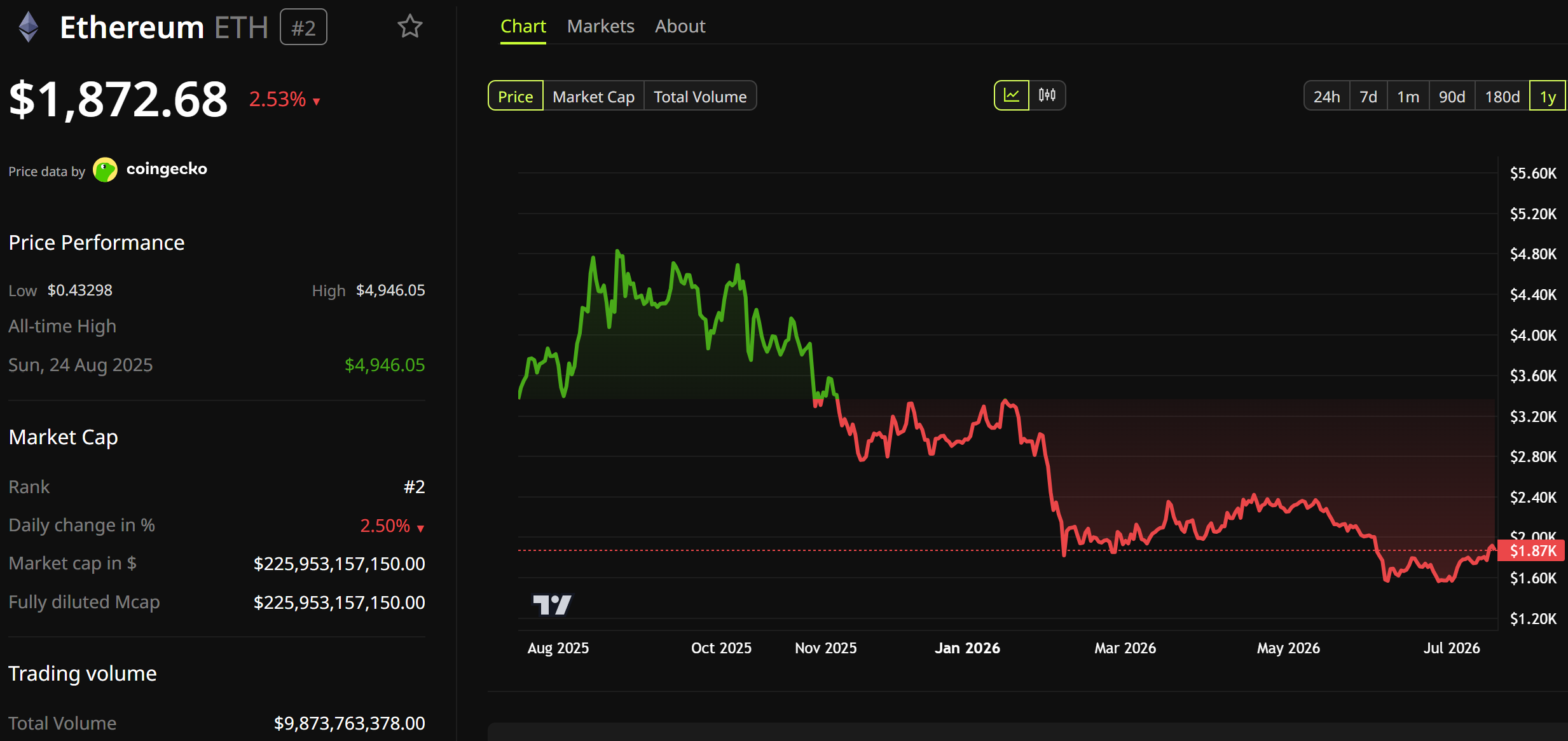
The Ethereum (ETH) bull case no longer rests on crypto-native speculation, according to Bitmine Immersion Technologies Chairman Tom Lee. He argues that Wall Street adoption is the new growth driver and that investors are quitting at the wrong moment.
ETH trades near $1,880, about 60% below its 2025 peak near $5,000. However, Lee believes that the gap reflects a transition rather than a ceiling.

Wall Street Replaces Speculation in the Ethereum Bull Case
Lee laid out the thesis in Bitmine’s July Chairman’s message. Ethereum’s first era, powered by ICOs, NFTs, ETFs, and stablecoins, saw ETH twice trade near $5,000. In his view, the next era belongs to institutions.

“Unlike the crypto bear market of 2022, Wall Street is building on Ethereum.”
The names support him. BlackRock’s BUIDL now holds roughly $2.6 billion in tokenized Treasuries and has earned Moody’s top money-market rating this year.
Follow us on X to get the latest news as it happens
JPMorgan followed with its MONY fund, extending a tokenization push it began with Onyx in 2020.
Lee also counts nearly 6,000 developers on the EVM stack, citing Electric Capital data that ranks Ethereum first for new builders. Meanwhile, new institutional vehicles keep deepening that bench.
Robinhood Chain Makes ETH Money, Lee Says
Robinhood Chain, live since July 1 on Arbitrum, anchors the argument. Within two weeks, it ranked third among all networks by DEX volume at about $811 million daily, passing Ethereum itself, per DefiLlama.
Ethereum has since taken back its position, and Base has also surpassed Robinhood following warnings from analysts at Artemis.

Notwithstanding, Lee says cumulative volume has since crossed $1 billion.
“Robinhood Chain is a big deal because it uses ETH as the native gas token. The transaction fees are denominated in ETH, and they settle on the Ethereum L1. Guess what? That sounds like ETH is money.”
Robinhood CEO Vlad Tenev has argued that everything running on traditional rails will eventually move on-chain.
Lee compares today’s Ethereum to Amazon. The stock stalled near a split-adjusted $6 for 12 years, then climbed to $241 as its addressable market expanded.
“I think people are rage quitting at the bottom for Ethereum here.”
The Case Against the Thesis
Lee concedes the bearish read. ETH has failed twice at the same ceiling, and skeptics see little reason for a different outcome this cycle.
“Many people are going to look at ETH here and say, look, the top of the range is 5,000, and they don’t see further upside.”
The economics also cut both ways. Robinhood Chain pays Ethereum’s base layer almost nothing in fees, and Artemis CEO Jon Ma warns its boom remains meme coin driven rather than institutional.
Lee is also far from neutral. BitMine reported 5.77 million ETH in its latest weekly disclosure, about 4.8% of the 120.7 million supply. That makes Lee among the biggest beneficiaries if institutional adoption confirms his thesis.
The post Tom Lee Says Ethereum’s Biggest Bull Case Is No Longer Crypto appeared first on BeInCrypto.
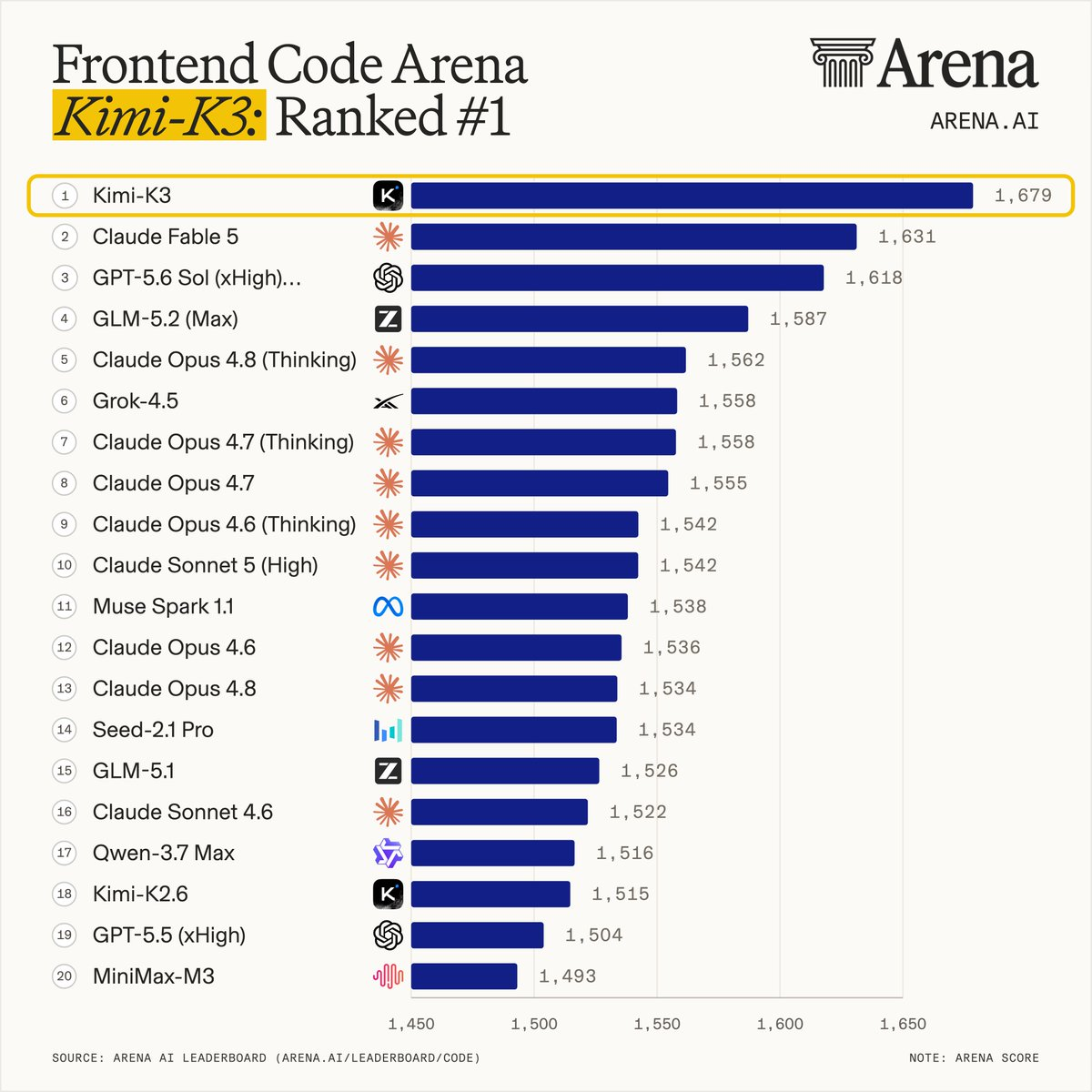
Claude Fable 5 just lost its crown. A new model called Kimi-K3, built by China’s Moonshot AI, now writes the best website code, according to Arena’s latest rankings. It scored 1,679 points, while Fable 5 scored 1,631.
Arena ranks AI models simply. People give two hidden models the same task, then vote for the better result. Its web coding board alone counts nearly 470,000 votes across 96 models.
How Kimi-K3 Beat Claude Fable 5
The win came out of nowhere. Moonshot’s previous model, Kimi-K2.6, ranked 18th. Its replacement shot straight to first.
The 48-point lead is no photo finish. Fable 5 sits just 13 points above third-place GPT-5.6 from OpenAI. Kimi-K3 also won six of seven coding categories, covering marketing pages, data dashboards, and consumer apps. Claude Fable 5 kept first place in just one, Gaming.

Anthropic still owns the depth chart, placing nine of the top 20 models. The timing stings anyway. Days ago, Elon Musk called Anthropic the industry leader. Rankings also spark debate, as past AI benchmark disputes over Claude have shown.
Mark Zuckerberg’s Muse Spark 1.1 is also on the list at position 11, only days after roll-out.
Why This Matters Beyond One Leaderboard
Here is the bigger story. Kimi-K3 undercuts its rival on price. Moonshot lists it at $3 per million input tokens and $15 for output. Arena lists Fable 5 at $10 and $50.
Moonshot will also make Kimi-K3’s full model weights available by July 27. Anyone can then run the top coding model for free. That feeds a wider shift, with Chinese models overtaking US rivals in monthly token use.
The rivalry runs both ways. Alibaba told staff to drop Claude Code from July 10 over security fears.
The next few weeks will show whether Kimi-K3 keeps its lead as more votes come in.
The post Claude Fable 5 Slips to Second in AI Coding Leaderboard appeared first on BeInCrypto.

Bitcoin spent the past week oscillating between two realities: on-chain and fund flow signals leaned toward accumulation, while broader sentiment indicators continued to reflect caution. The split is important for traders because it suggests markets are absorbing sell pressure without fully giving way—but it also raises the question of whether the move is durable or merely a pause before the next risk event.
On July 15, data from Hyblock indicated a $925 million net buying day for Bitcoin, supported by spot and futures cumulative volume delta—an order-flow metric that tracks the balance of buy versus sell activity. The same day also brought spot Bitcoin ETF inflows of $107.7 million, extending a short rebound after $181 million of net inflows on July 14.
Key takeaways
- Hyblock’s spot and futures cumulative volume delta showed a $925 million net buying day on July 15, helping absorb the post-CPI dip in both price and open interest.
- Spot Bitcoin ETFs recorded $107.7 million in net inflows on July 15, following a positive $181 million day on July 14.
- Funding rates cooled from the prior week’s 0.10%–0.22% range down to 0.048%, aligning with leverage unwinding rather than a fresh surge in risk-taking.
- The Fear & Greed Index remains around 26 (“Fear”) even after Bitcoin rebounded about 4.4% from its roughly $62,100 low, suggesting sentiment hasn’t caught up to flows.
- Despite improving microstructure signals, longer-term positioning signals still look mixed: ETF flows remain negative for the year and a cluster of long liquidations sits about 1.5% below the current price (around $63,200).
Order flow and ETF inflows point to steadier demand
The most concrete improvement came from trading activity rather than price alone. According to Hyblock, the $925 million net buying day on July 15 reflected order flow that “absorbed” the post-CPI pullback instead of letting it cascade into heavier selling. Notably, the data suggests that the pullback in open interest and price did not translate into a sharp shift toward net liquidation behavior—an important distinction for how markets interpret volatility.
The ETF side added confirmation. On July 15, spot Bitcoin ETFs collectively recorded $107.7 million in net inflows, which marked the second consecutive day of positive demand. That continuation follows $181 million in net inflows on July 14, indicating the recent uptick isn’t just a one-day anomaly.
Funding rates cool—suggesting deleveraging, not a late long squeeze
While spot and ETF flows improved, the derivatives market looked more like a “reset” than a breakout. Funding rates spent much of the week between 0.10% and 0.22% before falling sharply to 0.048%. At the same time, open interest declined by 3.4% from Tuesday’s peak.
Those two details matter because they often differentiate between two scenarios: (1) new leverage piling in, which can fuel trending moves, versus (2) existing leverage being reduced, which can stabilize price after a volatility event. In this case, Bitcoin was down only about 1.5% over the same stretch—so the combination of lower funding and falling open interest points to longs stepping back rather than capitulating into a meaningful downside trend.
The article’s implied interpretation is that traders are adjusting their exposure after Bitcoin reached local range highs near $65,000 to $66,000. If that’s correct, it frames the recent price action as consolidation: leverage comes off, but demand signals don’t fully disappear.
Sentiment remains in “Fear” despite a bounce
Even with improving flow-based indicators, broader sentiment has not fully turned. The Fear & Greed Index is reported near 26, still in “Fear,” despite Bitcoin bouncing roughly 4.4% off its recent low near $62,100. For some market participants, this mismatch between depressed sentiment and positive demand can be a favorable setup—particularly if flows hold while fear fails to convert into selling.
However, there is an alternate interpretation that keeps the caution justified: risk-off drivers may simply be present in the background. When macro headlines remain unresolved, sentiment can stay muted even while technical and liquidity conditions briefly improve.
Macro risk and positioning signals keep the picture uneven
The week’s fundamental backdrop included renewed geopolitical and rates-related pressure, according to the article’s summary: the US war in Iran resumed, oil prices moved above $85, and projections for a Fed rate hike by September 2026 stayed above 44%. Those ingredients can limit how confidently traders chase upside, even when crypto-specific inflows improve.
More importantly for market mechanics, the article notes that the improving signals do not amount to a confirmed trend change. Several positioning markers remain mixed:
- Funding is cooling toward neutral, but that often reflects reduced leverage rather than outright bullish acceleration.
- Spot ETF flows are still negative for the year, meaning the recent daily inflow streak is not yet a full reversal in broader institutional demand.
- A cluster of long liquidations sits roughly 1.5% below the current price, around $63,200. That kind of liquidation “gravity” can add volatility if price drifts lower, even when net order flow is relatively supportive.
Taken together, these details describe a market that may be stabilizing, but not one that has clearly escaped the risk environment. The key tension is that microstructure (order flow and ETF inflows) improved while sentiment and some longer-horizon positioning indicators have not.
For the days ahead, readers should watch whether ETF inflows can continue and whether funding remains near-neutral rather than re-accelerating—those signals would help confirm whether the current stabilization is building momentum or just reflecting a temporary deleveraging phase. At the same time, the nearby long liquidation level around $63,200 remains a specific area where volatility could reappear if macro pressure intensifies or the rebound loses traction.
Trump Media & Technology Group has unveiled a paid data service that will deliver real-time posts from Truth Social’s highest-ranking accounts to financial firms and news organizations.
Summary
- Trump Media will sell real-time Truth Social posts through a licensed API for financial firms.
- President Trump’s 12.9 million-follower account gives the paid feed its main market appeal.
- Ethics experts question whether presidential information should generate revenue for a family-linked company.
According to Trump Media, the Truth API will provide licensed access to public posts that may carry time-sensitive political, policy, or market information. The company plans to offer the feed to trading firms, financial data providers, media outlets, and other businesses that monitor influential accounts.
Subscribers will receive what Trump Media described as “immediate, verified access” to posts published on the platform. Interim CEO Kevin McGurn presented the API as a licensed alternative to unauthorized data scraping, which companies often use to collect posts from social networks.
“Markets already move on Truth Social posts,” McGurn said.
Trump Media expects the service to generate recurring revenue outside its advertising and subscription businesses. Other social media companies already charge data providers and institutional clients for API access, which trading desks can use to monitor sentiment, policy announcements, and events affecting stocks, currencies, commodities, or digital assets.
Trump’s posts give the feed market value
President Donald Trump’s account had 12.9 million followers as of Thursday morning, making it the largest account on Truth Social. Trump regularly uses the platform to announce or discuss tariffs, foreign policy, government decisions, and other matters watched by financial markets.
Although Trump Media did not name the president in its API announcement, his posts remain among the platform’s most closely followed content. Financial firms and newsrooms monitor presidential statements because announcements involving trade or government policy can affect asset prices.
Trump’s family also remains financially connected to the company. SEC filings show that about 114 million Trump Media shares issued to the president were later moved into a revocable trust controlled by Donald Trump Jr. after Trump won the presidency.
Trump Media trades on Nasdaq under the ticker DJT. By licensing rapid access to posts from its most prominent accounts, the company is seeking to turn Truth Social’s role in political communication into a commercial data product.
Paid access raises conflict concerns
The service has also attracted criticism over the president’s connection to both Truth Social and Trump Media. According to CNBC, Democracy Defenders Fund ethics attorney Virginia Canter called the arrangement “a huge conflict of interest.”
Canter argued that Trump has a public duty to distribute presidential information widely, while the API gives paying customers faster access through a company tied to his family’s holdings. She also described Truth Social as the “de facto presidential press room.”
Questions about Trump’s platform activity had emerged before the API announcement. A CNN investigation reported that Trump promoted more than 20 companies on Truth Social after investments linked to those businesses appeared in his financial disclosures. The White House denied that the activity created conflicts of interest.
Trump’s 2025 financial disclosure also reported about $1.4 billion in crypto-related earnings, adding to scrutiny of his family’s business interests while his administration shapes digital asset policy. By selling licensed access to presidential posts, Trump Media is now placing those communications inside a data market already used by financial firms to identify trading signals.
Crypto World
Trump’s Teleprompter Operator Made $100,000 Betting on a President Who Ignores the Script

A White House teleprompter operator allegedly made over $100,000 on Kalshi, ABC News reported on July 16. He bet on what President Donald Trump would say before the words left the podium.
Gabriel Perez has run Trump’s teleprompter since 2016. He is now in settlement talks with the Commodity Futures Trading Commission (CFTC).
How the Trump Speech Bets Worked
Kalshi runs Mentions markets. Traders bet on whether a word or topic will come up in a public speech.
Perez had the script in his hands. Investigators say he bet on more than a dozen Trump speeches in three months, including February’s State of the Union.
His edge had one weakness. Trump often abandons his script, and Perez allegedly exited bets mid-speech when scripted words never came.
“You know, when you go up here, you take a big chance, especially me because I go off teleprompter about 80% of the time,” Trump said in January remarks to the Detroit Economic Club.
Follow us on X to get the latest news as it happens
Investigators believe Perez bet on that speech, too. Kalshi’s surveillance team caught the pattern and told its regulator.
“Our surveillance team promptly flagged and referred these trades to the CFTC, and we are cooperating and assisting regulators,” Kalshi enforcement chief Bobby DeNault said in a statement.
Kalshi Insider Trading Rules Face a Hard Test
Kalshi launched three market integrity measures just weeks ago, including risk scoring and employment checks. Its own report says screening tools blocked over 100 potential insider trades in Q1 2026. The same quarter brought 150+ investigations and 20+ law enforcement referrals.
The platform had already adopted an employer disclosure rule after White House scrutiny. The White House warned staff in March against betting on inside information. However, Perez still runs Trump’s teleprompter today.
Manhattan prosecutors declined to bring criminal charges. Instead, the CFTC may settle. Perez would return his profits and stop similar trades.
He is not the first. The DOJ says a US Army soldier turned $33,000 into roughly $410,000 on Polymarket using classified Maduro intel.
Even Wall Street is wary. Goldman Sachs recently limited employee prediction bets on Kalshi and Polymarket. The bigger question remains. Can employment checks beat a trader who reads the script before the market does?
The post Trump’s Teleprompter Operator Made $100,000 Betting on a President Who Ignores the Script appeared first on BeInCrypto.

Thogden receives social media backlash after England video
Fund Mangers Cut Cash and Embrace Risk, BofA Survey Shows

Trump aide sparks insider trading probe with $90K Kalshi profit


-

 Fashion6 days ago
Weekend Open Thread: Nutriplenish Leave-In Conditioner
-
 NewsBeat7 hours ago
London Mayor Sadiq Khan handed a peerage by Keir Starmer alongside 15 other Labour figures… just days before the PM leaves No10
-

 Sports7 days ago
Super Eagles star Moses Simon opens up on Liverpool transfer regret
-

 Crypto World22 hours ago
CFTC blocks Kalshi from unwinding Michigan trades after court order
-

 Business20 hours ago
Nvidia Stock Slips After Big Tuesday Rally as Huang Confirms Vera Rubin Chip Is Now in Production Today
-

 Politics1 day ago
Young campaigners urge incoming PM to act on outdoor junk food ads
-

 News Videos2 days ago
XRP BOMBSHELL… XRP OMBOARDED FOR TRANSACTIONS!!!
-

 Tech3 days ago
Get Your ESP32 Sunny Side Up With This Solar Dev Board
-
 Entertainment1 day ago
Disney’s Most Ambitious Failed Star Wars Attraction Is Coming to SDCC
-

 Tech2 days ago
Dark Secrets Emerge When Jailbreaking LLMs
-
 Sports1 day ago
New Cornerback Enters Vikings Trade Rumor Mill
-

 Crypto World2 hours ago
Injective Submits SEC Transfer-Agent Registration to Onchain Ownership Records
-
 Tech3 days ago
Cloudflare Precursor Watches Your Mouse and Keyboard To Decide If You Are Human
-

 News Videos3 days ago
how to make coin bank box with cardboard #scienceproject #money #diy #shorts
-
 Entertainment1 day ago
Vicki Gunvalson Defends Discussing Heather Dubrow’s Money
-
Crypto World2 days ago
Ripple, Coinbase, Circle Join Linux x402 Foundation to Help Shape AI Payments
-

 Business2 days ago
ACCC warns AI could lift insurance costs in risk-prone areas
-

 NewsBeat1 day ago
Watch: Is Donald Trump facing a popular backlash on immigration?
-

 Sports23 hours ago
Michigan officials not expected to discuss AD Warde Manuel at Thursday meeting
-

 Business2 days ago
Subaru recalls 541,000 vehicles over federal safety sticker mistake: NHTSA
You must be logged in to post a comment Login