
Crypto World
Crypto firms pour $206 million into 2026 US election cycle

Crypto companies have contributed $206 million toward the 2026 U.S. election cycle as industry backed political groups continue directing money into congressional races ahead of the November midterms.
Summary
- Crypto companies have contributed $206 million toward the 2026 US election cycle, according to Public Citizen’s analysis of FEC records.
- Fairshake reported nearly $113 million in cash at the end of July after directing funds into congressional races across both major parties.
- The Fairshake network has supported nearly 50 candidates who secured party nominations during the 2026 primary season.
- Fairshake is preparing at least $30 million to oppose former Sen. Sherrod Brown in the Ohio Senate race.
Public Citizen said in an Aug. 27 analysis of Federal Election Commission records that cryptocurrency companies represented the largest of three technology related sectors driving corporate political spending this election cycle. Crypto contributions reached $206 million, compared with $76 million from online betting companies and $62 million from Big Tech, AI and data center related businesses.
Corporate contributions across all sectors have reached $646 million so far, according to the consumer advocacy group. The figure is already 40% above the $461 million recorded across the entire 2024 presidential election cycle and more than triple the $184.1 million reported during the 2022 midterms.
Crypto companies, online betting firms and businesses connected with AI and data centers contributed a combined $344 million, accounting for 53% of the corporate contributions disclosed to the FEC in Public Citizen’s analysis.
Crypto PAC Fairshake remains at center of election spending
Fairshake has remained the main political vehicle for crypto companies during the 2026 election cycle, with Public Citizen calculating $83 million in corporate contributions to the super PAC through the second quarter. The group listed total crypto corporate contributions at $206 million over the same period.
Federal Election Commission records currently show Fairshake reported $137.4 million in total receipts between Jan. 1, 2025 and July 31, 2026. The committee recorded $88.7 million in total disbursements over the period, including $65 million transferred to affiliated committees and approximately $13.3 million in independent expenditures. Its cash on hand stood at nearly $113 million at the end of July.
Fairshake works alongside Protect Progress, which has primarily participated in Democratic contests, and Defend American Jobs, which has focused on Republican races.
The network entered the election year with substantially more money available. As crypto.news previously reported, Fairshake had built a $193 million war chest by January, backed by crypto companies and investors including Coinbase and Andreessen Horowitz.
By August, Fairshake affiliates had directed money into races across several states. Protect Progress spent roughly $113,120 supporting Rep. Suzan DelBene, around $105,040 backing Rep. Kim Schrier and approximately $103,020 supporting Rep. Marilyn Strickland in Washington. Defend American Jobs spent close to $506,917 supporting Republican Amanda McKinney.
The network had supported nearly 50 candidates who secured party nominations by the end of the primary season. Fairshake entered the final stage of the election cycle with a reported $122 million available for spending before the Nov. 3 general election.
Fairshake has spent across Democratic and Republican races
Fairshake’s affiliates have intervened in races involving candidates from both major parties, with their spending centered on congressional candidates and digital asset policy.
Protect Progress spent $5 million supporting Democrat Christian Menefee in the Texas 18th Congressional District runoff and another $2.8 million opposing then Rep. Al Green. Menefee defeated Green in the May Democratic primary runoff.
Spending continued into other primaries. Fairshake linked groups deployed more than $8 million across races in Maryland, New York and Utah in June, including expenditures supporting Adrian Boafo and Rep. Ritchie Torres.
Protect Progress later spent nearly $1 million in Michigan’s 13th Congressional District Democratic primary in activity tied to Rep. Shri Thanedar and challenger Donavan McKinney. Fairshake affiliates separately supported candidates in Michigan and Washington during August.
Public Citizen described the crypto sector’s 2026 activity as an extension of its 2024 election strategy, when industry backed groups participated in Democratic and Republican primaries and supported or opposed candidates from either party. The organization characterized Fairshake and similar industry funded committees as groups structured around the interests of their corporate backers.
Crypto companies spread political contributions beyond Fairshake
Fairshake has not received all of the sector’s political money.
Gemini Trust Company contributed $10 million to MAGA Inc., a super PAC aligned with President Donald Trump, according to Public Citizen’s review of second quarter filings. The contribution represented most of the $17 million in new corporate money reported by MAGA Inc. during the period.
FEC filings showed the contribution consisted of two Bitcoin transactions made on June 19 and valued at more than $5 million each. The $10 million Gemini contribution was reported in July.
Jump Crypto Holdings contributed another $4 million to Jump PAC during the second quarter, according to the Public Citizen analysis.
Earlier estimates had already placed crypto near the top of corporate political spending. Public Citizen calculated in June that the industry had contributed $189 million during the 2026 cycle. Its August analysis raised the figure to $206 million after incorporating second quarter disclosures, an increase of $17 million from the earlier estimate.
Fairshake prepares another $30 million election push
Fairshake’s spending is continuing as the general election approaches.
The super PAC has prepared at least $30 million to oppose former Sen. Sherrod Brown in Ohio, which would represent its largest planned expenditure of the 2026 election cycle. Brown is seeking a return to the Senate against Republican Sen. Jon Husted in the state’s November special election.
The $30 million Ohio campaign emerged days after the Senate failed to advance the Digital Asset Market Clarity Act on Sept. 15. A procedural motion to begin debate received 50 votes to 49 but needed 60 votes to advance. Disagreements during negotiations included stablecoin rewards, presidential ethics provisions, protections for decentralized software developers and the division of regulatory authority.
Brown previously chaired the Senate Banking Committee between 2021 and January 2025 and raised concerns during his tenure about consumer risks, illicit finance and money laundering involving digital assets. Fairshake spokesperson Josh Vlasto said in 2025 that the group would continue supporting candidates it considers favorable toward crypto and opposing candidates it views as hostile to the industry.
Ohio was Fairshake’s most expensive target during the 2024 election cycle as well. The network spent more than $40 million supporting Republican Bernie Moreno against Brown, according to reporting cited in the latest coverage. Moreno defeated Brown in November 2024 and later joined the Senate Banking Committee.

Crypto World
Kalshi asks CFTC to allow margin trading on its platform, letting users buy with borrowed funds
Prediction market platform Kalshi filed on Tuesday with federal regulators to seek approval to offer leverage on event contracts, a prevalent practice already on Wall Street for stocks and futures.
The filing with the Commodity Futures Trading Commission — the federal regulator for event contracts — comes from Kalshi Klear, the company’s internal clearing house. It’s the latest move by the company as prediction markets increasingly seek to attract institutional liquidity to event contract exchanges.
Kalshi already provides leverage on its perpetual futures contracts, though has yet to receive the same approval to do so for its prediction markets.
Offering margin trading, which allows a trader to borrow money to purchase more of an asset than the cash they put down, has been seen widely by institutions eyeing the prediction market space as a critical step needed for bigger players to participate, which are used to the practice on traditional equities and derivatives. Currently, all event contracts on regulated U.S. exchanges are entirely collateralized.
Bloomberg News in July reported Polymarket, a prediction market rival, made moves to obtain regulatory licenses to eventually offer margin trading on its event contracts in the U.S.
Prediction market volume, including Kalshi’s, has surged over the past year primarily thanks to retail trading on their sports-related offerings. However, a Kalshi spokesperson told CNBC the company would avoid offering margin opportunities on its sports event contracts, as well as its culture and “mention” markets.
Kalshi in a memo provided to CNBC said the ability to offer leverage will make longer-dated prediction markets, those with expiration dates far in the future, more attractive to institutional traders.
The company also said it is seeking to introduce a system where as event contracts near their expiry date, the capital requirements to obtain leverage increase. Marginable contracts — if approved — will only be accessible to self-clearing members, who have direct relationships with Kalshi Klear, that meet certain capital requirements, the Kalshi spokesperson said.
Disclosure: CNBC and Kalshi have a commercial relationship that includes customer acquisition and a minority investment.

As access to Monero has become more restricted on some centralized exchanges — notably after Binance delisted XMR globally on 20 February 2024, OKX removed XMR pairs on 5 January 2024, and Kraken restricted it for EEA users on 31 October 2024 — many users now rely on instant swap services and decentralized platforms.
This guide compares practical ways to exchange Monero without registration, focusing on USDT TRC20 to XMR, minimum amounts, confirmation requirements, and AML procedures.
Why use a Monero exchange without registration?
Monero’s privacy features — ring signatures, stealth addresses, and confidential transactions — hide sender, receiver and amount on-chain. The best Monero exchange depends on whether the user prioritizes live pricing, decentralization or the number of supported assets.
However, the way to acquire or dispose of XMR still matters. Centralized exchanges that still list XMR usually require full identity verification and maintain user accounts.
Services that do not require registration let users create a one-time order, send crypto from their own wallet to a temporary deposit address, and receive the output directly in a controlled wallet.
This reduces the personal data trail associated with the exchange itself.
“No registration” is not the same as an unconditional guarantee that identity information will never be requested.
Most instant services apply automated AML screening. A standard-order flow usually proceeds without documents, but a flagged deposit can pause processing.
How should investors compare no-registration XMR exchanges?
Useful comparison points include:
- Supported XMR directions, especially USDT TRC20 → XMR, XMR → BTC and other assets.
- Whether an account or identity documents are needed to create a standard order.
- Minimum amounts; always check the live quote — they are pair- and liquidity-dependent.
- How the service handles incoming deposits and outgoing XMR.
- Stated AML / risk-screening policy.
- Custody model during the brief processing window.
According to the official Monero Wallet CLI documentation, newly received XMR normally becomes spendable after 10 confirmations.
Which no-registration Monero exchanges are available in 2026?
The following services are commonly used for accountless XMR swaps. The best XMR exchange for a particular transaction depends on the required pair, available rate, liquidity, and AML terms.
Descriptions reflect publicly available information and community testing as of mid-2026; always re-verify.
Quickex
Quickex operates as an accountless instant exchange. Users can create an order without registration for standard pairs that include Monero.
The service supports XMR routes involving USDT across several networks, as well as BTC and ETH, including exchanges in both directions.
Minimum amounts appear in the live quote and are pair-dependent.
Newly received XMR typically becomes spendable after 10 Monero confirmations, which is approximately 20 minutes at Monero’s two-minute block target. This wallet unlock period should not be confused with the exchange provider’s own deposit-processing requirements.
Quickex applies risk-based AML screening. According to its published policy, suspicious transactions may be delayed for review and additional information can be requested.
For users specifically needing the reverse direction, the service provides an XMR to BTC route.
SimpleSwap
SimpleSwap is a self-custodial crypto swap aggregator that supports Monero (XMR) exchanges without account registration for most crypto-to-crypto swaps. It aggregates liquidity from 20+ CEX and DEX providers across 2,800+ assets, with XMR available in both directions for pairs including USDT/XMR, BTC/XMR, and LTC/XMR. Swaps follow a wallet-to-wallet model, without on-platform user balances.
Users select the assets they want to exchange and provide a receiving wallet address, while SimpleSwap handles provider and route selection behind the scenes. Fixed and floating rates are available, allowing users to choose between greater price certainty and a rate that follows the market. The quoted output is shown before the swap is initiated.
USDT is supported across multiple networks, giving users several routes for exchanging USDT to XMR depending on current availability. SimpleSwap supports other Monero pairs, including BTC/XMR and LTC/XMR, allowing users to move between XMR and other major assets without navigating an order book or manually comparing providers.
Overall, SimpleSwap is designed for users who want to exchange Monero and other cryptocurrencies directly between their own wallets without creating an account for a typical swap. Users should compare the final quoted amount, selected network, and exchange conditions before proceeding.
ChangeNOW, StealthEX, and Godex
These established instant-swap services (ChangeNOW, StealthEX, and Godex) allow creation of XMR-related orders without registration for ordinary volumes.
They typically offer both floating and fixed-rate options.
Minimum amounts, supported networks, including USDT TRC20, and confirmation expectations are displayed in the order interface and can differ by pair and current network conditions.
Trocador
Trocador acts as a privacy-oriented aggregator. It does not hold funds itself but routes orders to partner services, allowing rate comparison while remaining within an accountless workflow for many routes.
Haveno
Haveno is a decentralized, Tor-based peer-to-peer platform focused on Monero. It does not operate as a centralized instant swap. Trades rely on an order book and multisig-style escrow. It offers the greatest degree of decentralization among the listed options at the cost of potentially longer matching times and variable liquidity.
How do the leading Monero exchanges compare?
| Service | Account required | XMR directions | Rate options | Where minimum is shown | AML/KYC caveat | Best suited for |
| Quickex | No for a standard order | USDT, BTC, ETH ↔ XMR | Floating / Fixed | Live quote | Review possible for flagged transactions | Direct accountless swaps |
| SimpleSwap | No for most crypto-to-crypto swaps | Easy XMR swaps across multiple assets | Fixed / Floating | Exchange flow | Additional checks possible | Easy XMR swaps across multiple assets |
| ChangeNOW | No for standard orders | Multiple XMR routes | Fixed / Floating | Live quote | Additional checks possible | Rate choice |
| StealthEX | No for standard orders | Multiple XMR routes | Check live | Live quote | Risk-screening policy applies | Broad pair support |
| Godex | No for standard orders | Multiple XMR routes | Fixed / Floating | Live quote | Risk-screening policy applies | Rate certainty |
| Trocador | No account with aggregator | Provider-dependent | Provider-dependent | Provider quote | Provider-dependent | Comparing providers |
| Haveno | No centralized account | XMR with fiat/crypto offers | Offer-based | Order book | No centralized KYC; individual payment methods may have their own requirements | Decentralized P2P trading |
How to exchange USDT TRC20 for XMR on Quickex?
A typical accountless flow looks like this:
- Select USDT (TRC20) as the asset to send and XMR as the asset to receive.
- Enter a fresh Monero receiving address; a subaddress is preferable. Using a new subaddress for each incoming payment improves privacy by preventing address reuse.
- Review the live minimum, expected output, rate type, choose fixed or floating rate — fixed locks the receive amount for a limited window, while floating follows the market — and any network notes.
- Send the exact amount of USDT TRC20 from a wallet to the one-time deposit address generated by the service.
- After the USDT deposit receives the required TRON confirmations, the service processes the swap and broadcasts the XMR transaction.
Most Monero wallets display the incoming transaction relatively quickly.
Newly received XMR normally becomes spendable after 10 Monero confirmations, roughly 20 minutes under normal network conditions.
The service’s own internal detection or release threshold may differ slightly from the wallet unlock time. Always perform a small test transaction first and double-check the network, TRC20 vs ERC20, etc.
Can a no-KYC XMR exchange freeze a transaction?
Yes. Even services that do not require registration for a standard order usually run automated risk screening.
If a deposit is flagged, for example due to associations with mixers, high-risk addresses or other risk indicators, the service may pause the order, request additional information or source-of-funds details, or process a refund according to its policy.
Quickex’s published AML documentation states that it applies risk-based checks and may request information when elevated risk is identified. Similar policies exist at most instant-swap providers.
Risk-screening outcomes depend on transaction history, counterparties, and the provider’s internal thresholds. Using a self-custody wallet does not by itself guarantee that a deposit will pass screening.
What are the risks of exchanging Monero without registration?
- Sending to the wrong network or an incorrect address is irreversible.
- Floating rates can move between the moment the quote is received and the moment the deposit is detected.
- Confirmation times vary with network conditions.
- AML review can delay or alter the outcome of an order.
- Regulatory treatment of privacy coins continues to evolve.
Recommended practices include using a dedicated Monero wallet, the official Monero GUI or well-established self-custody options such as Feather or Cake Wallet, generating fresh subaddresses, verifying every detail in the order form, and keeping records of order IDs and transaction hashes.
Review each service’s terms and regional restrictions before accessing it via VPN or Tor, as policies differ.
Conclusion
Suitable accountless XMR options in 2026 include Quickex, SimpleSwap, ChangeNOW, StealthEX, Godex, Trocador, and the decentralized Haveno platform.
Instant services work well for straightforward routes such as USDT TRC20 → XMR, while Haveno maximizes removal of intermediaries. No single service is universally “best.”
Evaluate speed, live rates, minimums, confirmation expectations, and AML handling against personal priorities, and always confirm current details in the order interface before sending funds.
Combine careful platform selection with secure wallet practices to reduce operational risks during an XMR swap.
FAQ
Can I exchange USDT TRC20 for XMR without registration?
Yes, on multiple accountless instant services. Users can create an order, send USDT TRC20 to a temporary deposit address, and receive XMR in their own wallet.
No account is required to start a standard swap.
Can a no-registration Monero exchange still ask for ID?
Yes, if automated AML screening flags the deposit. Most services allow standard orders without documents, but elevated-risk transactions can be paused pending review or additional information.
How many confirmations does a Monero exchange require?
It depends on the service and the direction. Standard Monero wallets typically unlock newly received funds after 10 confirmations, about 20 minutes.
Instant services may use their own detection thresholds. Always check the specific order details.
What happens if an XMR exchange flags a transaction?
The order may be delayed while the service reviews the deposit.
Outcomes can include a request for information, continued processing after clearance, or a refund according to the provider’s policy.
What is the minimum amount needed to exchange USDT for XMR?
Minimums are pair- and liquidity-dependent and appear in the live quote.
They commonly fall in a modest range for stablecoin pairs but should be confirmed on the day of the swap.
What is the best XMR exchange without registration?
There is no single best XMR exchange for every transaction. Quickex is one of the services that offers a direct XMR to BTC route without requiring registration for a standard order.


Circle sold Binance $100 million in stock and agreed to pay monthly incentives under an expanded five-year partnership promoting USDC.

More pieces, financial and performance-related, are falling into place for Alphabet’s (GOOGL) emerging business of selling artificial intelligence accelerator chips, which could provide a boost to Google stock while creating more competition for Nvidia (NVDA). A syndicate of 10 banks last week agreed to provide a $22 billion loan to Crux AI, a cloud computing venture backed by Blackstone and…
Copyright ©2026 Investor’s Business Daily, LLC. All rights reserved. 87990cbe856818d5eddac44c7b1cdeb8
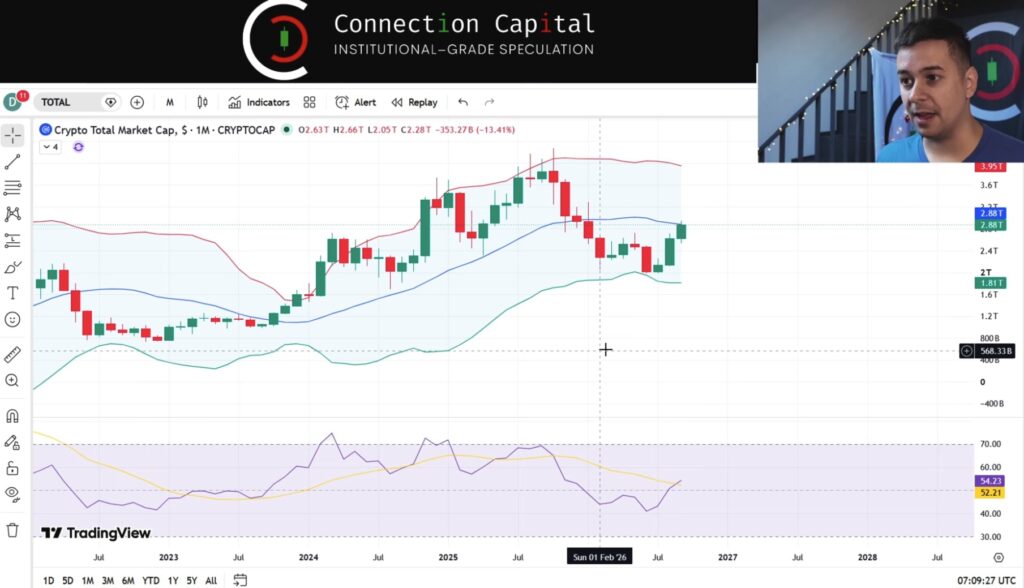
Bitcoin pushing back toward $86,000 has many retail traders convinced the bear market is dead and the bulls are back in full control. But Dan Krupka, founder of Connection Capital and former research head at Coin Bureau, sees something far uglier: the tail end of a textbook relief rally setting up a brutal liquidity trap approaching in the fourth quarter.
Back on January 1, Dan mapped out 2026’s rhythm for his subscribers: a short Q1 pop, a steep grind through Q2 into a summer bottom, and a relief leg into late Q3 and Q4. Crypto’s total market cap has round-tripped right back to its January baseline based on the schedule that Krupka laid out. The crowd is flipping aggressively bullish, but the underlying data suggests anyone chasing $86,000 might just be funding exit liquidity.
One Last Squeeze to $96,000
On the charts, Dan explains that the total crypto market cap is bumping against the monthly Bollinger Band baseline, the line that typically separates real bull markets from prolonged distribution. Dan expects a fakeout above this band rather than a clean rejection on the first hit:

Where Dan sees prices going in the short term are as follows:
- Bitcoin (BTC): Room to run another 20% to 30%, tagging the $96,000 zone where heavy profit-taking should stall the tape right in front of six figures.
- Ethereum (ETH): A squeeze into overhead supply between $3,300 and $3,500.
- Solana (SOL): A relief push up to $140–$160.
But explosive moves to the upside like that is often followed by sharp retracements. Pushing those targets stretches the weekly RSI back into overbought territory across the board. The harder prices rip from here, the more violent the snapback once momentum exhausts.
Discover the Best Token Presales
The Dollar wrecking ball
While short-term technicals look energetic, the macro picture heading into late 2026 and early 2027 looks grim.
At the center sits the US Dollar Index (DXY). Sustained crypto runs demand a weak or falling greenback to supply global liquidity. We have the exact opposite. Persistent energy shortages in Europe and Asia keep the euro and yen pinned, driving global capital into the dollar. The DXY is pressing resistance at its monthly Bollinger Band. If it breaks out, risk assets will bleed.
And it isn’t just Dan who is holding this opinion. Mainstream Wall Street news reporting outlets have been warning of an overheated environment for months. Many analysts and market experts, including the legendary Warren Buffett, who famously sent a warning to investors in mid-September, and Michael Burry, who has been sounding the warning bells throughout 2026, are all reporting the same writing on the wall. And crypto will not be isolated from the fallout. A major market crash is not a matter of if, it is a matter of when, and Krupka feels strongly that the “when” will be Q4 of 2026.
Crypto prices are fundamentally driven by the crypto cycle and the macro cycle. From a crypto cycle perspective, the bear market bottom is in, and the new bull market is starting – that’s what everyone is seeing and saying.
However, from a macro cycle perspective, we appear to be in the final stages of the bull market and are likely to enter a bear market later this year or early next year. This is basically why crypto could still rally in the coming weeks, but is likely to crash to lower lows in the coming months.- Dan Krupka
Washington’s policy incentives point the same way. Economic frameworks floated by former Trump advisers, including Stephen Moore, suggest the US may tolerate or encourage a stronger dollar to pressure foreign debtors before negotiating trade accords.
Crypto has never run a structural bull market against a surging dollar. It won’t start now.
Don’t Get Caught in the Crash
Dan warns that if Bitcoin stretches toward $96,000 while weekly momentum flashes red and the DXY punches higher, the floor will drop out. A standard 50% retracement puts Bitcoin back between $30,000 and $40,000.
In the video and to his subscribers, Krupka emphasizes enjoying the green candles for now, but advises watching how the price reacts around $96,000, and not to mistake a mechanical bear market rally for an open macro runway. When this band snaps, traders who confused a short squeeze with a new supercycle are going to eat the downside.
The post Contrarian Crypto Analyst Who Predicted 2026 Perfectly Calls for Caution and Q4 Crash appeared first on Cryptonews.
Crypto World
Stock Market Today: Dow Rises On U.S.-Iran Peace Hopes; Oil Prices, Treasury Yields Extend Losses (Live Coverage)
Futures for the Dow Jones Industrial Average and other major stock indexes rose modestly Tuesday on re-emerging U.S.-Iran peace hopes, as oil prices and Treasury yields continued to fall. Advanced Micro Devices (AMD) was an early loser on the stock market today following Monday’s powerful breakout move. Ahead of Tuesday’s open, the Dow futures climbed 0.3%, as S&P 500 futures…
Copyright ©2026 Investor’s Business Daily, LLC. All rights reserved. 87990cbe856818d5eddac44c7b1cdeb8

The first two blood tests for Alzheimer’s disease
The first blood test for the disease, made by Fujirebio, was cleared by the FDA in May 2025. It determines the ratio of two key Alzheimer’s proteins—a form of beta amyloid and a form of tau—which reflects whether amyloid plaques are accumulating in the brain. But the test can only be run on specialized equipment and therefore isn’t widely available in commercial labs.
The second test, made by Roche and FDA-cleared in October 2025, detects levels of a version of tau that correlates with the buildup of amyloid plaques. It’s the first Alzheimer’s blood test that primary care physicians can prescribe to rule out the disease.
The newest Alzheimer’s blood tests
The latest two tests, cleared in August, are intended to make diagnosing Alzheimer’s disease easier and more accurate.
PrecivityAD2, a new blood test from the diagnostics company C2N, is based on an earlier version of the company’s test that was available only via certified labs. It uses a technology called mass spectrometry that is a more sophisticated way of picking up amyloid and tau compared to traditional assays. It provides a probability score that reflects how likely a person is to have amyloid plaques in the brain. Major laboratories as well as specific clinic and health system labs are able to perform it, so it is more widely available for doctors to prescribe.
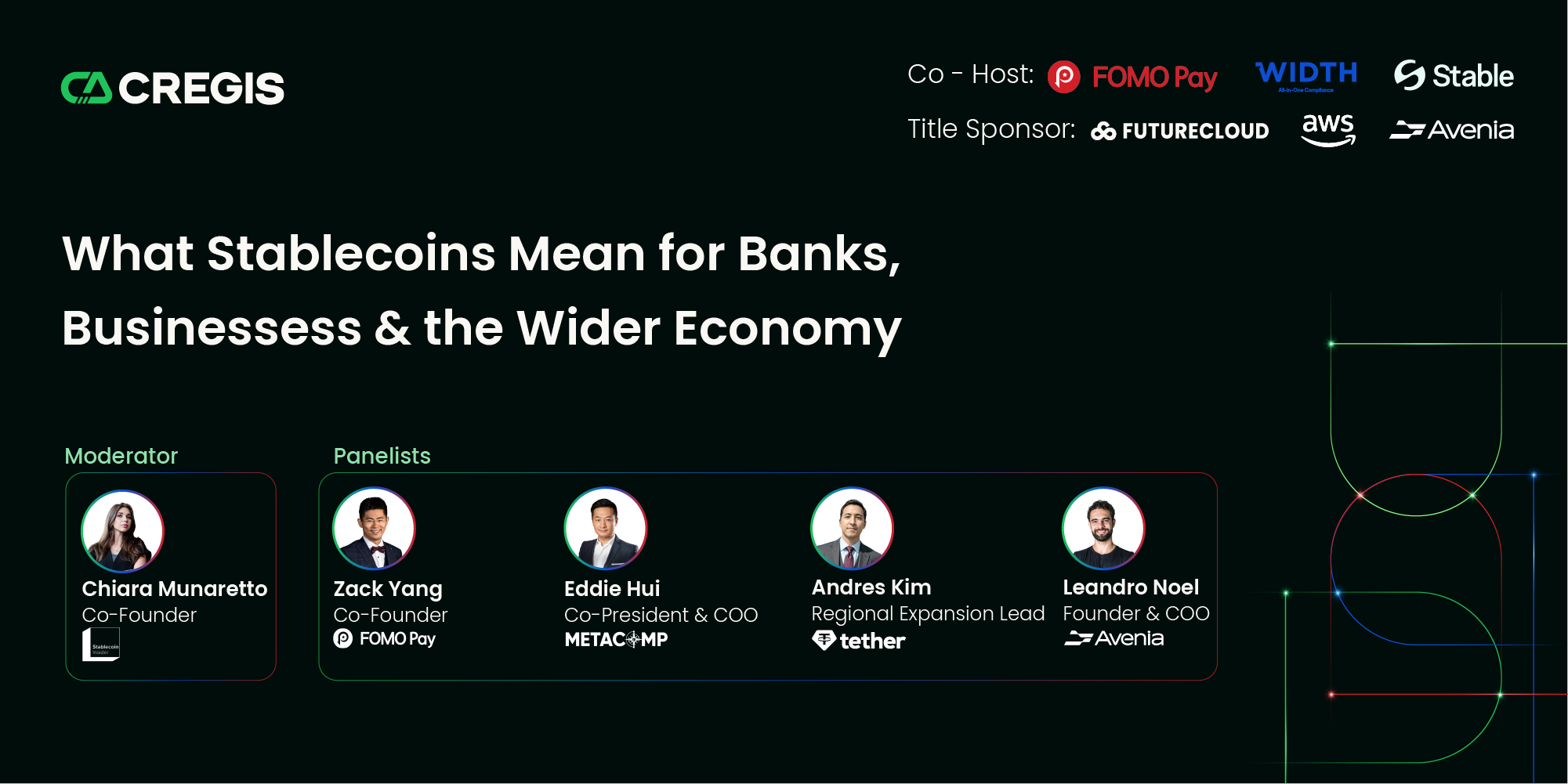
Stablecoins are moving beyond crypto trading into payments, settlement and cross-border finance. As adoption grows, institutions are turning to a different set of questions: how to manage onchain funds, integrate digital assets into existing operations and keep those systems secure.
Against this backdrop, digital asset infrastructure provider Cregis will host the Institutional Onchain Finance Summit 2026 in Singapore on 6 October, during TOKEN2049 Week. The summit is also co-hosted by FOMO Pay, a global payment solutions provider; Stable, a stablecoin payments infrastructure company; and Width, a AI-native compliance platform.
Sponsored by FUTURECLOUD, AWS and Avenia, the event will bring together executives and practitioners from financial services, payments, stablecoins, digital asset infrastructure and security.

Stablecoins are finding a growing role in payments and settlement, including cross-border transactions and corporate treasury. The focus is now shifting from adoption to execution — how stablecoins fit into existing financial workflows and infrastructure.
That question will anchor the summit’s opening discussion, “What Stablecoins Mean for Banks, Businesses and the Wider Economy.” The panel will draw on perspectives from across the payments and financial ecosystem, including FOMO Pay Co-Founder Zack Yang, MetaComp Co-President and COO Eddie Hui, Tether Regional Expansion Lead Andres Kim, and Avenia Founder and COO Leandro Noel. The session will be moderated by Chiara Munaretto of Stablecoin Insider.
The discussion will look at how stablecoins are being used across payments, financial services and treasury, as well as what broader adoption could mean for banks and businesses.
As these use cases expand, the infrastructure supporting them must handle increasingly complex fund flows. For institutions, that means looking beyond asset issuance and transfers to areas such as counterparty coordination, access controls, transaction execution and day-to-day operations.

That operational shift also changes the security challenge. As digital assets become part of larger business workflows, risks can sit across signing systems, access controls, third-party infrastructure and human processes — not just wallets or smart contracts.
The summit will explore this changing threat landscape in its second panel, “The New Security Playbook: How Attacks & Defences Are Evolving Across Digital Assets.” Michael Chen, Non-Executive Director at 1exchange; Jason Jiang, CBO of CertiK; Dmytro Matviiv, CEO of HackenProof; and Alexandra Wang, Head of Strategic Partnerships at ZAN, will share their perspectives on how attacks are evolving and where institutions need to strengthen prevention, monitoring and incident response.
Automation and AI are also changing the way attacks are carried out and detected, adding another layer to an already complex operating environment.

The programme will also feature keynote presentations from Cregis COO Jason Ma, Width CEO and Co-Founder Chye Kit Chionh, Stable CEO Brian Mehler and Injective CEO&Co-founder Eric Chen. Their sessions will add perspectives from infrastructure providers working across payments, stablecoins and institutional onchain finance.
For Cregis, the summit reflects a broader shift in the market. As businesses bring digital assets into payments, treasury and other financial workflows, infrastructure needs to support more than blockchain connectivity. Wallets, fund flows, governance and security controls are increasingly part of the operating layer.
The Institutional Onchain Finance Summit 2026 will bring these issues together in one forum, with speakers from financial institutions, payment providers, stablecoin companies, infrastructure providers and security firms sharing practical experience across markets and business models.
About Cregis
Cregis is a digital asset infrastructure platform, providing technology for digital asset collections, payouts and fund operations. Its offerings include wallet infrastructure, fund flow orchestration and regulated custody capabilities. These solutions help businesses manage digital assets with greater security, efficiency and control. Founded in 2017, Cregis serves financial institutions, payment service providers (PSPs), foreign exchange (Forex) brokers, fintechs and Web3 businesses. The company operates across Asia, the Middle East and Latin America. Today, Cregis supports more than 4,000 businesses across over 50 countries.
About FOMO Pay
Founded in 2015, FOMO Pay is a payment institution licensed in Singapore, Hong Kong and the Middle East, providing digital payment, digital banking and digital asset solutions to businesses and institutions. Its services span merchant and corporate payments, transactional banking and corporate treasury, connecting traditional financial services with emerging digital financial infrastructure.
About Stable
Stable is building infrastructure and products for the global stablecoin economy. At its core is StableChain, a USDT-native, EVM-compatible Layer 1 designed for fast, predictable, and low-cost payments and settlement, with USDT serving as both the gas and settlement asset.
About Width
Width is an AI-native compliance platform headquartered in Singapore, bringing KYC, KYB, AML monitoring, fraud detection, case management and regulatory reporting into a unified, auditable system. Its platform combines visual workflow design, AI-powered risk scoring, real-time transaction monitoring, biometric verification and graph intelligence, serving more than 500 banks, fintechs, insurers, digital asset businesses and professional services firms across 180 jurisdictions.
The post Cregis to Host Institutional Onchain Finance Summit 2026 in Singapore appeared first on BeInCrypto.
Crypto World
Visa partner Reap plans Mexican peso stablecoin launch for round-the-clock FX settlement
Reap’s plans suggest a potential use case for local-currency tokens, enabling companies to move money and manage foreign-echange exposure outside banking hours, rather than merely using stablecoins for crypto trading and dollar settlement.
“Demand for non-USD stablecoins is driven by market demand and Reap’s priorities, especially as clients aim to get a more localized and cost-efficient experience,” Guo said.
Reap holds VPIM licenses in Hong Kong and Mexico, making the peso token a practical first addition. It is also considering Hong Kong dollar, euro, won and yen stablecoins for onchain 24/7 foreign exchange, Guo said, without providing a rollout timetable or naming the prospective issuers.
The company said it is integrating stablecoin settlement into a broader product suite that includes cards, cross-border payouts, treasury tools and compliance and fraud controls. Reap’s card and payments volume rose 33% year over year in the first half of 2026, after revenue and volume tripled in 2025, Guo said.
Visa’s stablecoin work operates at the network level, while Reap handles the regulated card-issuing business, including customer checks, bank relationships and cardholder compliance, Guo said.
Visa does not view blockchain settlement as a replacement for conventional payment systems, according to Stephen Karpin, the company’s Asia-Pacific president.


The ECB aims to gain firsthand DLT market experience by buying tokenized public-sector securities and settling the trades through Pontes.

Kalshi asks CFTC to allow margin trading on its platform, letting users buy with borrowed funds

Mormon Wives’ Mikayla Won’t Return Amid Taylor Paul Exit

Hyundai Finance $15,623 And An Eviction Notice This Month Financial Audit #shorts


![Dickens Derick_What Is Money! [Official Music Video]](https://wordupnews.com/wp-content/uploads/2026/09/1790082453_maxresdefault-80x80.jpg)

-

 Fashion4 days ago
Weekend Open Thread: Talbots – Corporette.com
-

 Tech2 days ago
Researchers escape OpenAI Codex sandbox to run commands on host
-

 Crypto World7 days ago
Robinhood engineers charged over $50K crypto scheme
-

 Crypto World3 days ago
Circle launches Arc Studio AI agent for building onchain apps
-
 NewsBeat4 days ago
Trump says US has reached an agreement to take permanent control of Greenland’s security
-

 Crypto World2 days ago
Who Needs CLARITY Anyway? ARB Could See 70X Increase: Hodler’s Digest
-

 Crypto World4 days ago
Bitcoin price breaks channel as RSI climbs to 63
-

 Crypto World6 days ago
US Charges Robinhood Engineers Over Crypto Listing Trades
-

 Crypto World6 days ago
What Is the Status of the U.S.-Iran Peace Talks? Here's What Both Sides Are Saying
-

 Crypto World4 days ago
Trading Bitcoin on Robinhood? Why 2% Spread Has Traders Worried
-

 Tech7 days ago
Webb’s IC 348 Mosaic Includes Two-Jupiter Dwarfs, Twin Jets, and a Nursery Still Making Worlds
-

 Crypto World3 days ago
World Money launches in 150+ countries with Stripe
-

 Crypto World5 days ago
Mortgage and refinance interest rates today, Thursday, September 17, 2026
-

 Crypto World4 days ago
Silver prices recover quickly, hitting weekly high today
-

 Entertainment6 days ago
Big Brother Update: Melody Explodes at Drew as Illness Sweeps BB28 House
-
 NewsBeat4 days ago
US was ‘on brink of war’ with China over false AI report of nukes moving in Middle East
-

 Tech5 days ago
GPT-6 Astra Reached the Nether in Minecraft, Lost Its Stash to a Creeper, and Farmed Potatoes for Hours
-

 Business2 days ago
Analog Devices (ADI) Bets $1.35 Billion on Chips that Let Machines Think for Themselves
-

 Crypto World1 day ago
Bitcoin price holds above $81K as key catalysts line up
-

 Business6 days ago
Federal Reserve expected to hike interest rates 25 basis points at FOMC meeting
You must be logged in to post a comment Login