
Crypto World
David Schwartz rejects claims of hidden government XRP deals



Ripple CTO Emeritus David Schwartz has rejected claims that XRP is part of a secret U.S. government plan.
Summary
- David Schwartz rejected claims that XRP is tied to secret US government or central bank plans.
- He said Ripple NDAs reflect normal business privacy, not hidden government XRP agreements.
- Schwartz warned XRP investors against relying on emotions or hidden signals for market decisions.
His comments came as old theories about XRP’s role in global finance resurfaced among parts of the crypto community. The claims suggest that XRP could become a reserve asset or form a hidden settlement layer for banks and governments.
Schwartz described such views as a “conspiracy theory” and warned investors against treating hidden signals as a basis for market decisions.
The renewed debate comes as XRP remains linked to major regulatory and banking discussions. Interest has grown around the CLARITY Act and Ripple’s recent national trust bank status, which have brought fresh attention to the company.
Ripple NDAs tied to business work
Schwartz said Ripple does have confidential agreements, but he linked them to normal business activity. He said these agreements are standard non-disclosure arrangements used by banking partners to protect commercial interests.
The comments were aimed at claims that Ripple’s NDAs prove hidden government or central bank plans for XRP. Schwartz said those claims do not reflect how Ripple’s business relationships work.
Ripple’s ties with financial firms such as Deutsche Bank and Société Générale are public. These institutions use Ripple-linked infrastructure for services such as messaging or settlement, including fiat and stablecoins such as RLUSD, rather than secret XRP programs.
Escrow claims also dismissed
Schwartz also addressed rumors about secret contracts tied to XRP held in Ripple escrow accounts. He said the escrow system remains visible on-chain and can be tracked by anyone.
The comment pushed back on claims that large buyers or government-linked groups have private access to pre-allocated XRP outside public view. According to Schwartz, investors should not build expectations around such theories.
Ripple’s escrow structure has long been a focus of XRP market debate because of its large token supply. However, Schwartz said the system is transparent and does not support claims of hidden distribution plans.
Ripple seeks clearer market image
Schwartz also warned against investing based on emotion or searching for “hidden signals” in meetings and public documents. He said that approach can lead investors to losses.
His comments suggest Ripple wants to move attention toward its role as a technology and payments infrastructure provider. The company appears focused on public business activity rather than speculative narratives around XRP.
The response comes as institutions continue to demand clearer rules, stronger compliance, and predictable systems in crypto markets. By rejecting secret plan theories, Ripple is trying to distance XRP from claims that lack public evidence.


Ethereum price is trading near $2,314, down roughly 1% in 24 hours, and yet one of Wall Street’s most-watched crypto bulls just endorsed a price target that would require a 100x move from here.
Fundstrat Global Advisors co-founder Tom Lee has thrown his weight behind a $250,000 ETH price target, and the thesis is more structured than it sounds. Whether the market timeline matches the model is a separate question entirely.
Lee’s backing follows a detailed report from Etherealize that reframes ETH not as a speculative token but as a yield-bearing monetary asset.
To me, this is a fresh and comprehensive take by @Etherealize_io on the importance of ethereum and how the $ETH coin will play an increasingly important role as a unit of exchange — Thomas (Tom) Lee (not drummer) FundstratDirect.com (@fundstrat) April 22, 2026
– the case for $250,000 ETH 
 https://t.co/0IEoNEmwRe pic.twitter.com/dGCWL40NHb
The core argument: Ethereum combines network utility with staking income, roughly 2% to 4% annually, in a way that neither gold nor Bitcoin does.
Applying that framework to a total addressable monetary premium of $31.5 trillion, spread across 121 million circulating ETH, produces the $250,000 figure.
Lee signaled agreement via his official account, amplifying a thesis that had already been circulating among institutional researchers. Notably, the report does not offer a near-term price target, this is explicitly a long-range valuation model. Full breakdown of the $250K framework here.
Meanwhile, spot ETH ETFs recorded $96 million in net inflows on Wednesday, the largest single-day figure in two months, suggesting institutional appetite hasn’t evaporated despite the price softness.

Discover: The best pre-launch token sales
Can Ethereum Price Reclaim $3,000 Before Bears Take Control?
Ethereum price is not trending right now, it is just stuck in a messy range, and even the price feeds do not fully agree, which tells you liquidity is fragmented and conviction is low.
Technically it is mixed. Momentum indicators lean slightly bullish, but trend strength is fading, so you get movement without follow-through. Price is holding above key medium-term averages, which keeps the structure alive, but still sitting under short-term resistance, so it cannot break out.
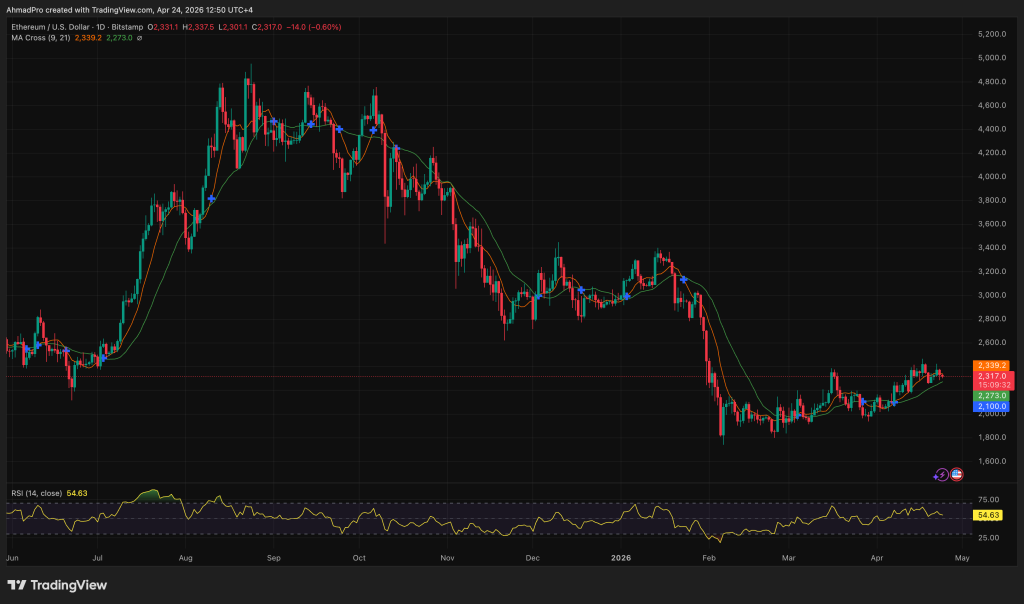
If ETH can push back above $2,500 and hold, that is where momentum builds again and opens the path toward $3,000.
More realistically, it keeps chopping between roughly $2,200 and $2,600 while the market waits for clearer macro direction.
The risk is $2,100, because if that breaks, the entire short-term bullish structure is gone and a deeper move lower becomes likely.
Discover: The best crypto to diversify your portfolio with
Other Coins That Could Go 100X? Bitcoin Hyper
The $250K ETH thesis is a long game, built on staking yield and monetary premium over years, not something that plays out quickly.
That is why attention is shifting toward earlier-stage infrastructure, especially around Bitcoin, where the upside is still forming.
Bitcoin Hyper is aiming right at that gap, building a Layer 2 on Bitcoin with SVM integration to bring speed and smart contracts without leaving the Bitcoin ecosystem. The pitch is simple, fix Bitcoin’s limitations while keeping its core strengths.
The presale has already pulled in over $32.5M at around $0.013679, which shows strong early demand, and features like staking and a native bridge are designed to make the system usable from day one.
But it is still a presale, and that matters. Liquidity is unproven, execution is not guaranteed, and early valuations can move fast in both directions.
So the trade-off is clear, ETH is a slower, long-term thesis, while something like Bitcoin Hyper offers earlier positioning with higher upside, but also higher risk.
The post Tom Lee Just Backed a $250,000 Ethereum Price Target: Is It Actually Possible? appeared first on Cryptonews.
Disclosure: This article does not represent investment advice. The content and materials featured on this page are for educational purposes only.
Little Pepe gains investor attention as presale nears final stages with over $28 million already raised.
Summary
- Little Pepe has raised $28M+ in presale, with Stage 13 priced at $0.0022 and Stage 14 at $0.0023.
- Built on a Layer 2 ecosystem, Little Pepe offers zero-tax trading, staking rewards, DAO governance, and anti-sniper protection.
- A giveaway campaign boosts demand for Little Pepe, offering $77,000 in tokens plus ETH rewards.
With time, the cryptocurrency industry is becoming more sophisticated, and therefore, there have been changes in the kinds of coins that traders seek to invest in. While traditional cryptos may yield constant value growth, it is always a combination of new startups and highly momentum-driven altcoins that yield impressive returns during bullish trends. However, picking such coins requires some level of foresight, and there are quite a few cryptocurrencies that are catching many people’s eyes.
Dogecoin (DOGE)
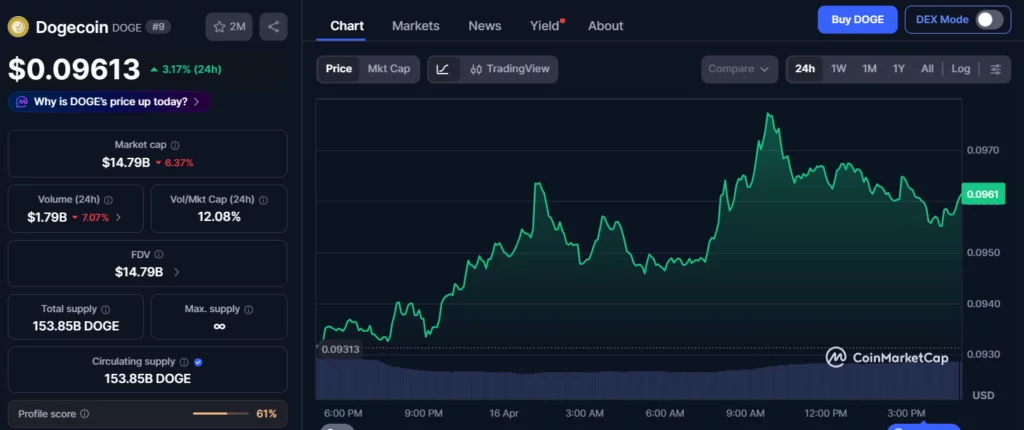
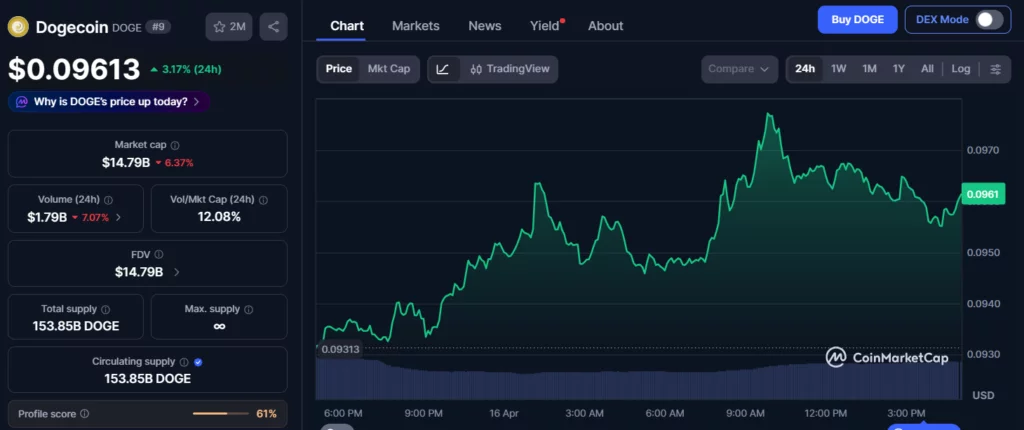
One of the most famous memecoins is Dogecoin. There are millions of followers of this coin. It also has very good liquidity all around the world. The coin is currently trading at $0.0980 and has a market cap of $14.79 billion. The 24-hour trading volume stands at $1.5 billion. Though it is a very old coin, there is no doubt that DOGE can surge quickly when there is an uptrend in the markets. Being a memecoin with huge gains, there is little chance that this coin will lose its relevance in the coming time.
TRON (TRX)
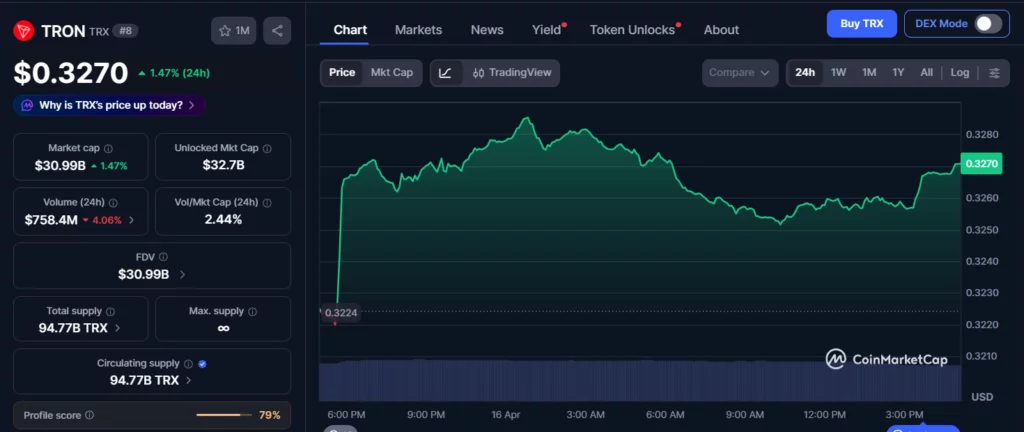
Though there has been no improvement in the price action of TRON, it remains the most-used cryptocurrency network in terms of total blockchain transactions with stablecoins and dApps built on top of it. The coin stands at $0.33 with a market cap of $30.87 billion as of the publishing. The trading volume is at $521.6 million. The high usage of the network will definitely generate profits with higher adoption.
Chainlink (LINK)
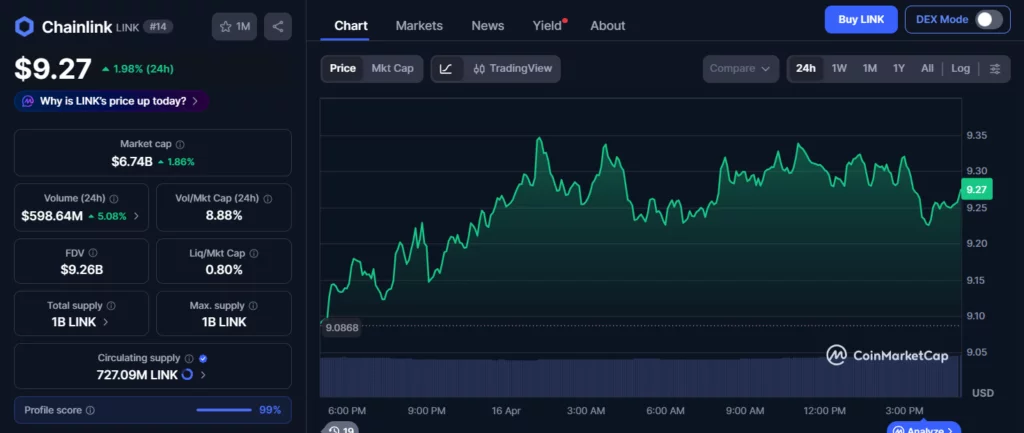
There are several aspects to consider when thinking about Chainlink, with one of the key elements being that Chainlink offers an opportunity for data interaction between blockchain technology and external data sources through the use of its oracle system.
LINK is now at $9.36 with a slight rise of 0.11% and a market cap of $6.81 billion. The trading volume is at $256.65 million. The increase in DeFi initiatives and other blockchain-powered services means that data feeds are more important than ever, making LINK a crucial part of Web3 infrastructure.
Hyperliquid (HYPE)
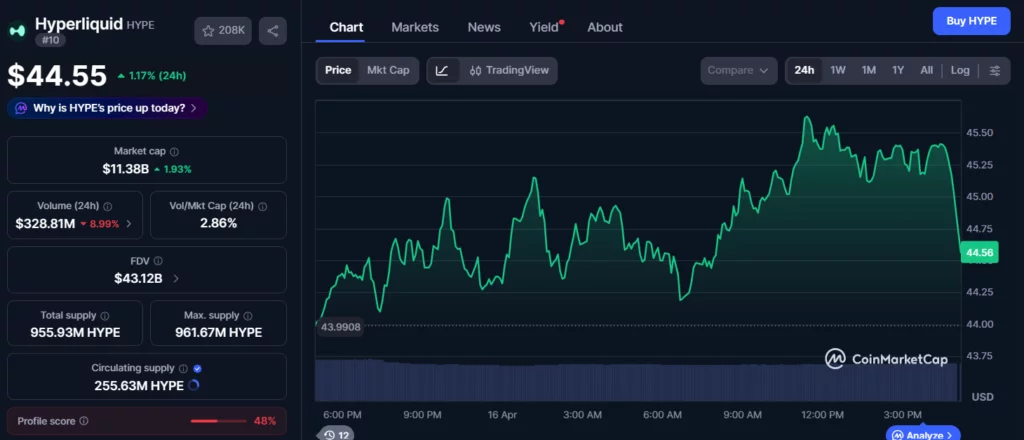
Hyperliquid is a developing force in the realm of decentralized trading. With the rise in the usage of derivatives and trading on blockchain, it has been garnering liquidity and attention from users very quickly. The token is at $41.16 with a market cap of $9.31 billion. The 24-hour trading volume is at $209.43 million. Considering the future potential of Decentralized Finance, Hyperliquid could grow significantly, thus offering investors with upside potential.
Little Pepe (LILPEPE)
However, Little Pepe ranks among these tokens because of its early position and great presale results. The project has raised over $28 million and is currently priced at $0.0022 in Stage 13 (Stage 14 is priced at $0.0023). This is close to the end of the presale stage, and this low price makes it an interesting investment to explore its possible 50x potential.
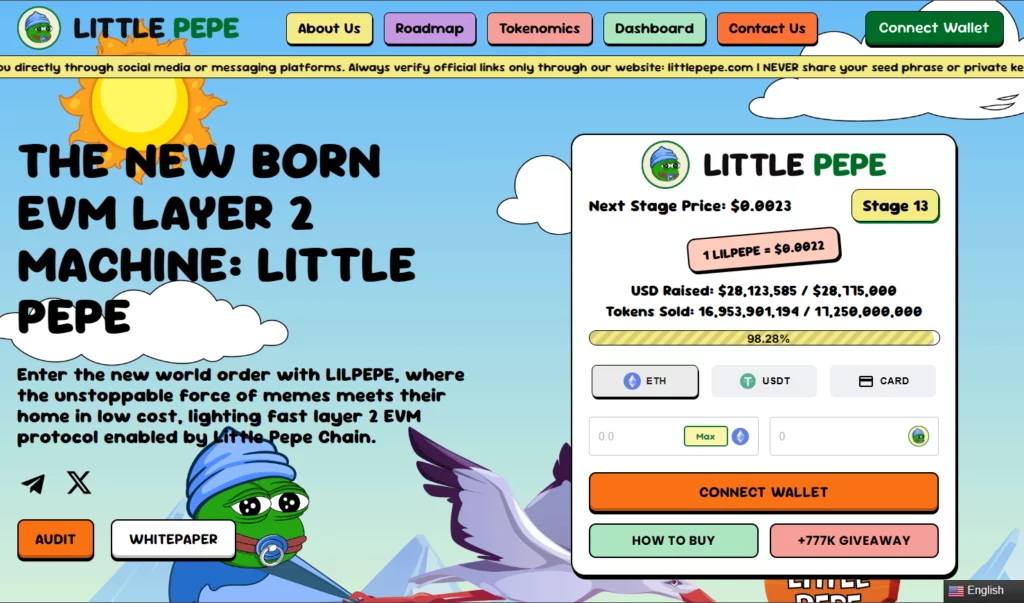
As a token of Layer 2 blockchain that guarantees quick transactions, low costs, and scalability, Little Pepe has such interesting perks as zero tax trading, anti-sniper bots, staking rewards, meme launchpad, and even DAO governance. Besides, the characteristics of the project go beyond just being an intriguing speculative meme coin, as they serve some purpose.
In addition to that, the current giveaway program, which promises ten participants to receive $77,000 worth of LILPEPE coins plus $15 or more of ETH for the top three buyers, adds to the appeal of the coin and successful presales.
Finding the balance between risk and reward
Even though earning 50x returns is not guaranteed with certainty, all of the above-mentioned investments have both advantages and opportunities. They are all quite different, yet all have growth drivers that may help achieve the desired result. The only problem is that assets like Little Pepe have much higher upside potential since their price points are lower and the demand for them keeps rising. This is what might become critical for making substantial money in the future.
For more information about Little Pepe, visit the official website, X, and Telegram.
Disclosure: This content is provided by a third party. Neither crypto.news nor the author of this article endorses any product mentioned on this page. Users should conduct their own research before taking any action related to the company.


Bitmine Immersion Technologies (BMNR) said it is purchasing 10,000 ether (ETH) from the Ethereum Foundation, adding to its growing position as the largest digital asset treasury firm after the bitcoin-centric Strategy (MSTR).
The terms of the over-the-counter transaction were finalized on Friday and is worth $23.87 million, the Ethereum Foundation said in an X post.
ETH currently trades at around $2,310, some 3% lower than the sale price in the transfer.
The proceeds will support the organization’s operations, including protocol research, ecosystem development and grants, the foundation said.
The transaction comes as Bitmine continues to accumulate ether at scale while most digital asset treasuries have slowed or halted buying over the past months.
The firm, helmed by Fundstrat CIO Thomas Lee, bought over 100,000 last week, bringing its holdings to 4.97 million ETH, according to its Monday report. Its total assets stood at $12.9 billion, making it the largest public holder of ether, and second-largest public digital asset treasury trailing.
Bitmine is trying to accumulate 5% of ETH’s supply, which would translate to roughly 6 million tokens, the company previously announced.
Read more: Ethereum Foundation stakes another $93 million ether, reaching its 70,000 ETH target


Jane Street asked a U.S. court to dismiss a lawsuit brought by the bankruptcy estate of Terraform Labs, rejecting claims that the trading firm helped trigger the 2022 collapse of the TerraUSD (UST) stablecoin and its sister token Luna.
In two filings submitted Thursday to the Southern District of New York, Jane Street and several employees said the case is an attempt to shift blame for the failure of the Terra ecosystem, which erased roughly $40 billion in value within days.
The firm urged the court to dismiss the complaint with prejudice, which would prevent Terraform from pursuing the same claims again.
“This case is an attempt by the estate of Terraform Labs to extract cash from Jane Street to foot the bill for a fraud that Terraform itself perpetrated on the market,” the defendants wrote.
Jane Street argued that the core issues behind Terra’s collapse have already been settled in court. It pointed to criminal and civil cases against Terraform founder Do Kwon, who pleaded guilty to conspiracy and wire fraud and is serving a 15-year prison sentence. A jury also found Kwon and Terraform liable for securities fraud. According to the filing, Kwon said he was “alone responsible for everyone’s pain.”
Terraform’s lawsuit, filed in January by administrator Todd Snyder, accuses Jane Street of insider trading that sped up the collapse. Snyder alleges the firm used nonpublic information from Terraform insiders to trade ahead of major moves, including large withdrawals from the Curve liquidity pool that preceded UST losing its dollar peg.
For example, the complaint claims Terraform withdrew 150 million UST on May 7, 2022, and that a wallet linked to Jane Street pulled 85 million UST minutes later, sparking market panic. Jane Street disputes that narrative and denies any role in the collapse.
Jane Street maintains that “Terraform’s fraud scheme — in which Jane Street had no involvement — has already been prosecuted, adjudicated, and punished.”
Terraform Labs, founded in 2018, filed for bankruptcy in January 2024. Its downfall rippled across the crypto sector, contributing to failures at several firms exposed to the project. The court’s decision on Jane Street’s motion could shape how responsibility for that collapse is assigned.


The US Department of Justice (DOJ) has dropped its criminal investigation of Federal Reserve Chair Jerome Powell, ending a case that had frozen Senate work on the Trump nominee set to replace him.
US Attorney Jeanine Pirro announced the decision Friday, effectively reversing her public stance from two days earlier, when she pledged to appeal a judge’s order blocking her office’s grand jury subpoenas.
Quick Reversal After Courts Pushed Back
The probe began in January. Pirro’s office opened a grand jury inquiry into Powell’s June 2025 Senate testimony about the Fed’s headquarters renovation.
Prosecutors asked whether Powell misled senators about the scope of work on the Eccles and East buildings in Washington.
Reported costs for the project climbed to roughly $2.5 billion, up from an earlier authorization near $1.9 billion.
Inflation, asbestos and lead remediation, and historic preservation requirements drove most of the overrun. No charges were filed.
Chief US District Judge James Boasberg quashed the DOJ’s subpoenas on March 13 and reaffirmed the ruling on April 3. He wrote that prosecutors produced “essentially zero evidence” of a crime.
The judge also said the subpoenas served a “pretextual” purpose aimed at pressuring Powell over interest rate decisions. Pirro rejected that framing and said on April 22 she would appeal.
Two days later, her office referred the cost overruns to the Fed’s inspector general, an internal watchdog with access to procurement records.
“I have directed my office to close our investigation as the IG undertakes this inquiry…I will not hesitate to restart a criminal investigation should the facts warrant doing so,” wrote Pirro in the Friday afternoon post.
Tillis Ultimatum Cleared Warsh’s Path
The closure removes a political block on Kevin Warsh, the Trump nominee to succeed Powell when the chair’s term ends May 15.
Sen. Thom Tillis of North Carolina, a Republican on the Senate Banking Committee, had withheld his vote until prosecutors walked away.
“I will oppose the confirmation of any Federal Reserve nominee, including for the position of Chairman, until the DOJ’s inquiry into Chairman Powell is fully and transparently resolved,” Tillis articulated in a late January post.
Tillis called the investigation “bogus” and “frivolous” during Warsh’s April 21 hearing. He said dropping it could be done in “five minutes.”
“If we want to get Mr. Warsh confirmed, we need to drop the investigation,” Tillis made the remark at Warsh’s hearing.
Warsh, a former Fed governor under George W. Bush, told senators he would not act as Trump’s “sock puppet.”
His confirmation would place a Trump ally atop the central bank weeks before the Federal Open Market Committee’s June meeting.
Powell had publicly described the probe as retaliation for Fed rate policy. His term as chair ends next month, though he can remain as a governor until 2028.
Former Fed officials and several market economists had flagged the case as a stress test for central bank independence.
The CLARITY Act Overlap
The decision reshapes the Senate Banking Committee’s near-term calendar. Tillis is also the lead Republican negotiator on stablecoin yield language in the Digital Asset Market CLARITY Act, the House-passed crypto bill now awaiting Senate markup.
He pushed the committee to delay the CLARITY markup from April to May, citing the need for more stakeholder input from banks.
The North Carolina Bankers Association had urged members to lobby his office for tighter restrictions on rewards tied to stablecoin balances.
Banks want a full ban on passive yield. Crypto firms want activity-based incentives preserved. A partial compromise allowing rewards tied to third-party platform usage has circulated but has not been finalized.
With Warsh’s confirmation no longer tethered to the DOJ case, committee bandwidth opens heading into the week of May 11, the earliest feasible window for the crypto markup.
Industry groups have warned that further slips could push meaningful market-structure reform into 2027, or worse, beyond 2030.
The Fed inspector general’s review and Warsh’s committee vote are the next pressure points. Whether the Powell case returns in any form may hinge on what the watchdog finds inside the renovation records.
The post DOJ Drops Powell Probe in Fast Reversal, Clearing Warsh Confirmation Path appeared first on BeInCrypto.
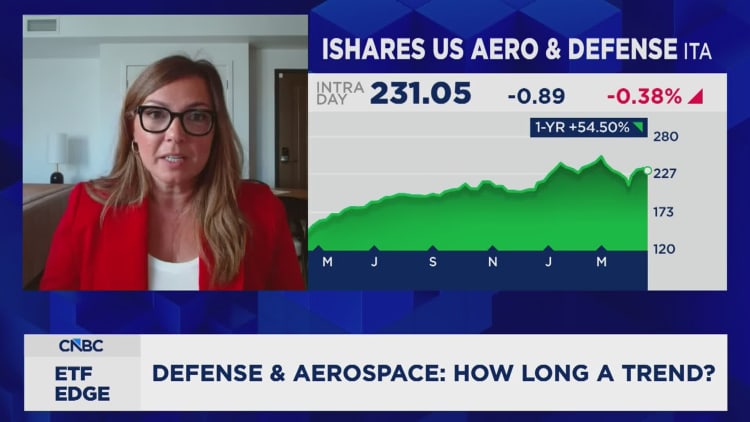

The aerospace and defense trade is taking investors deeper into space and exchange-traded funds want a part of it.
VettaFi’s Cinthia Murphy told CNBC’s “ETF Edge” this week there are now more ETFs tackling the space theme more directly — listing the Procure Space ETF (UFO) and Global X Defense Tech ETF (SHLD) as examples.
“They have the cybersecurity element: Satellites, communications, navigation. So, the defense theme is actually a very colorful theme nowadays. It has a lot of interesting names,” the firm’s director of research said. “It really isn’t just about Lockheed Martin and some of the traditional names that you find in ITA [iShares US Aerospace & Defense ETF].”
As of Thursday’s close, the Procure Space ETF is up almost 19% since the Iran War started on Feb. 28 while the Global X Defense Tech ETF is off 8%.
Meanwhile, the more traditional iShares US Aerospace & Defense ETF is down 10% in the same period. Its website lists the top holdings as GE Aerospace, RTX Corp and Boeing.
Murphy expects investor interest in aerospace and defense stocks to persist long after the Iran war is resolved.
“Any time you have geopolitical heat, it puts this kind of theme on the map,” said Murphy. “But it’s another big growth area because there’s so much new technology coming up and so much investment coming into this space. A lot of governments making commitments for much more investments in the next five to ten years.”
Murphy suggests historic interest in the SpaceX initial public offering, which his largely expected in June, is firing up even more interest in the space.
“One of the things we’ve spoken about the most this year is about space exploration and space investment given we’re about to see the SpaceX IPO,” added Murphy.
SS&C Technologies‘ Paul Baiocchi is also bullish on aerospace and defense names. He predicts a monster ramp up in defense budget around the world will generate solid returns for the group.
“All of these things are converging for the same limited scarce resources,” the financial technology firm’s head of fund sales and strategy said in the same interview. “Near-term, medium-term [and] long-term, commodities allocations, energy infrastructure [and] electrification infrastructure all stand to benefit from the massive amount of investment that’s coming from both the public and private sectors.”
Plus, he sees artificial intelligence playing a key role.
“The bottleneck for AI might be chips, but it’s also power and transmission and the raw materials that go into construction,” Baiocchi said. “If you look at defense, that’s also part of the constrain is the availability of the rare earths.”


Bybit CEO Ben Zhou pledged his support for Mantle’s 30,000 ETH loan proposal.
The “DeFi United” industry recovery effort spearheaded by Kelp and Aave Labs has filled 73,700 ETH of the 163,200 ETH hole from the April 18 exploit, and confirmed public commitments from ecosystem partners now total 43,500 ETH.
That leaves a remaining shortfall of approximately 89,500 ETH. Of the amount already recovered, 40,300 rsETH (roughly 43,000 ETH) was clawed back directly by Kelp after it paused its bridge contracts 46 minutes into the attack, with an additional 30,700 ETH frozen by the Arbitrum Security Council on April 21.
The initiative has since expanded its roster of participants to include EtherFi, Ethena, Lido, Golem, Ink Foundation, Tydro, Mantle, Frax Finance and LayerZero.
Confirmed public pledges of 43,500 ETH come from Mantle, Aave founder Stani Kulechov, EtherFi, Lido and Golem. Kulechov has personally committed 5,000 ETH, EtherFi has proposed a 5,000 ETH relief contribution, Golem Foundation and Golem Factory have pledged a combined 1,000 ETH, and Lido Labs Foundation has earmarked up to 2,500 stETH via a governance proposal.
The Mantle pledge anchors the latest wave of support. In its MIP-34 proposal published Thursday, Mantle’s Core Contributor Team proposed a loan of up to 30,000 ETH from the Mantle Treasury to Aave DAO, structured with a Lido staking APR plus 1% premium interest rate, a maturity of up to 36 months, and collateral including 5% of Aave revenue and at least $11 million in AAVE tokens held in a Mantle-controlled multisig. The loan is earmarked solely for resolving rsETH bad debt on Aave V3.
Crypto exchange Bybit, a core Mantle backer since the network’s launch, publicly endorsed the proposal on Thursday. “Bybit, as the biggest holder and supporter of Mantle, will vote YES for this proposal,” Bybit co-founder and CEO Ben Zhou wrote on X. “When we got hacked the industry got together and helped us. It is the only right thing that we do the same to unit[e] together and walk out from difficult times.”
Smaller contributions have also come in from Aave’s current and former contributor community. Aave builder Emilio Frangella committed 500 ETH, BGD Labs pledged 250 ETH, and BGD Labs co-founder Ernesto Boado personally donated 100 ETH.
Aave’s own April 20 incident report modeled between $123.7 million and $230.1 million in potential bad debt depending on how Kelp allocates losses across rsETH holders. Aave’s risk team paused rsETH reserves across Ethereum Core, Arbitrum, Base, Mantle and Linea earlier this week, and partially unfroze WETH supply on Ethereum Core V3 after a joint-protocol escape hatch was built within 24 hours of the exploit.
“rsETH holders come first, and that’s been our priority since day 1,” Kelp said in its update. “We will continue sharing updates as further commitments are confirmed.”
This article was written with the assistance of AI workflows. All our stories are curated, edited and fact-checked by a human.
Crypto World
Solana Price Just Broke a Months-Long Descending Trendline: Are $120 Targets Finally Back on the Table?
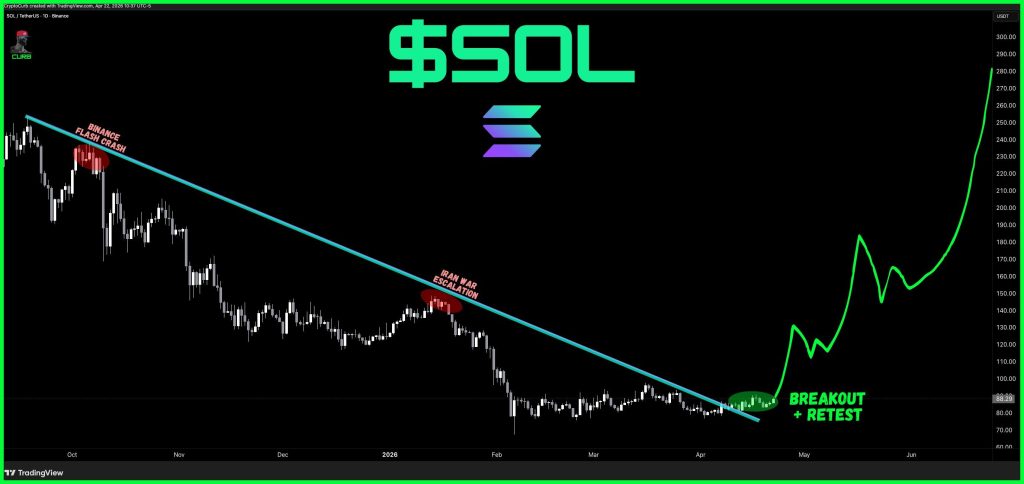
Solana price is trading near $85.50 with a 24-hour decline of roughly 0.4%, putting bulls on defense heading into the weekend, but the more interesting question is whether this dip masks a larger setup quietly forming on higher timeframes.
Technical analysts are watching two converging trendlines across the daily and weekly charts, with a confirmed breakout above a months-long descending resistance potentially pointing toward $120–$125. The chart doesn’t lie, but it doesn’t promise anything either.
Analyst CryptoCurb shared a daily chart showing SOL punching through a falling trendline that had capped price through multiple macro shocks, including a Binance flash crash and Iran war escalation events in late 2025.
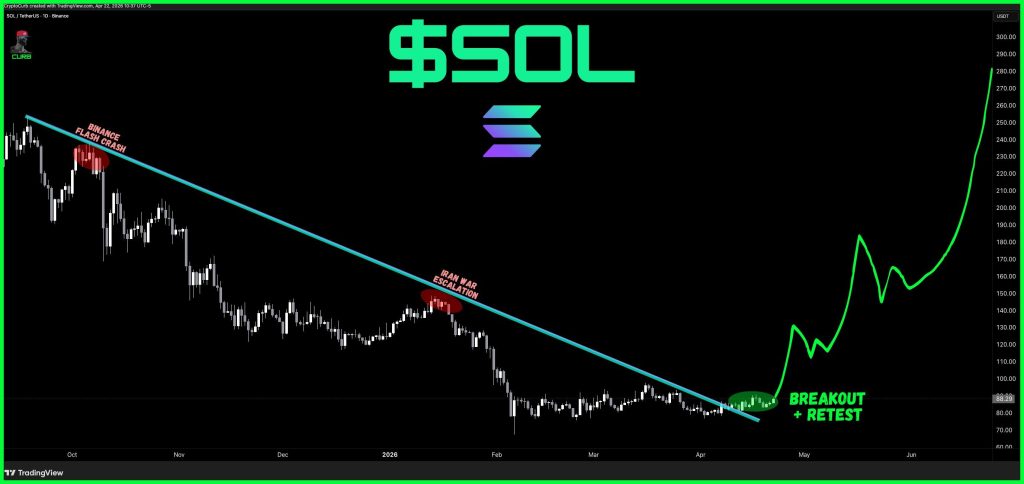
The breakout is real, but the setup now hinges on a retest hold: buyers must defend the broken trendline as new support or the signal weakens fast.
Separately, Rendoshi AI flagged the weekly chart, pointing to $120 as the next major target if the short-term downtrend from SOL’s late-2025 peak breaks conclusively.
With the 200-Day SMA towering at $116–$124 and weekend liquidity typically thin, the next 48 hours carry outsized significance for SOL’s medium-term trend. Bitcoin’s own accumulation dynamic adds a macro layer worth tracking alongside Solana’s setup.

Can Solana Price Hit $120 This Week?
SOL is stuck in a tight range, and right now it is not trending, it is just deciding, with price sitting just under the 50-day average and no real volume backing either side.
The key area is around $85. As long as that holds, structure stays intact and this looks like a normal consolidation, not weakness.
If Solana price can push above $88.7 and hold it, that is where momentum starts to build and opens a move toward the low $90s, which would shift the short-term narrative.
More realistically though, it probably just chops between $85 and $88 for now while the market waits for a trigger.
The risk is if $84 breaks, because that weakens the structure and brings $82 back into play, delaying any recovery.
So this is a simple setup, hold above $85 and it builds, lose it and the grind lower continues.
What if Newly Launched LiquidChain is The Solana of This Cycle?
SOL pushing toward $120 sounds strong on paper, but zoom out, and it is still a large-cap move, roughly 40% upside from an already massive network, so the explosive phase is mostly behind it.
That is why attention is shifting toward earlier-stage infrastructure, where the upside is not yet priced in, even if the risk is higher.
LiquidChain is aiming at that angle, building a cross-chain liquidity layer that connects Bitcoin, Ethereum, and Solana into one execution environment. The idea is to remove fragmentation so developers can tap into all three ecosystems without rebuilding each time.
The timing makes sense, with liquidity flowing into both ETH and SOL, but the project itself is still early. The presale sits around $0.01452 with a relatively small rise so far, indicating it is in the early accumulation phase and not yet widely priced.
But that also comes with the usual trade-off: presales are illiquid and depend entirely on execution and adoption later on.
So the setup is clear, SOL offers more stable, slower upside, while something like LiquidChain offers higher potential but with much higher uncertainty.
The post Solana Price Just Broke a Months-Long Descending Trendline: Are $120 Targets Finally Back on the Table? appeared first on Cryptonews.

TLDR
- XRP added about $900 million in tokenized real-world assets within 24 hours.
- The total RWA value on the XRP Ledger reached $3.53 billion after the surge.
- Justoken’s JMWH product increased from $861 million to $1.763 billion on-chain.
- JMWH now accounts for nearly half of the total RWA value on XRPL.
- RWA.xyz data reflected the sudden rise in value on its public dashboard.
XRP recorded a sharp rise in tokenized real-world assets within 24 hours. The network added about $900 million in value, pushing total RWA holdings to $3.53 billion. Data from RWA.xyz shows that the increase came from an existing product on the XRP Ledger.
XRP Sees Rapid Growth in Tokenized Assets on XRPL
RWA.xyz reported that XRP Ledger held $2.616 billion in tokenized assets as of April 22. That figure included $491 million in stablecoins and showed steady growth since January. However, the total climbed to $3.53 billion within a day, reflecting a 35% increase.
The data shows that Justoken’s JMWH product drove the entire rise. JMWH increased from $861 million to $1.763 billion on-chain during the same period. As a result, JMWH now accounts for nearly 49.9% of total RWA value on XRPL.
RWA.xyz confirmed the updated figures on its public dashboard. The platform tracks represented and distributed real-world assets across major blockchain networks. The sudden jump marked one of the largest single-day changes recorded for XRP’s RWA ecosystem.
Justoken’s JMWH Product Drives XRP Ledger Expansion
Justoken, based in Buenos Aires, developed the JMWH digital energy token. Each JMWH token represents one real megawatt-hour of electricity backed by energy providers. The company deployed the product exclusively on the XRP Ledger.
The recent increase appears linked to a new deployment or value update. However, Justoken’s official platform still lists JMWH at about $860 million. The company has not yet confirmed the higher $1.763 billion valuation reflected on RWA.xyz.
Following the update, XRPL moved higher in global RWA rankings. The ledger now ranks third by represented real-world assets with about $2.5 billion recorded. XRP’s market share rose 71.78% over 30 days to 0.71%.
When including both represented and distributed assets, XRP ranks fifth globally. The network now hosts $3 billion in total RWA, excluding stablecoins. This marks a 60.33% rise over the past 30 days.
JMWH currently represents about 70% of the represented value on XRPL. The product remains the largest single tokenized asset hosted on the network. RWA.xyz continues to display the updated figures at press time.
Justoken has not issued a public statement regarding the change. Its website still reflects the earlier $860 million value. The discrepancy remains unresolved as of the latest available data.



Binance has unveiled a new wallet that merges AI with decentralized finance. “Agentic Wallet,” a keyless crypto wallet that enables AI agents to execute transactions on behalf of users within predefined parameters.
Announced just today, the new wallet operates as a separate, isolated account within a user’s Binance Wallet, enabling AI-powered agents to trade, transfer, and manage digital assets without directly accessing a user’s primary funds. This is a push by Binance to expand AI capabilities beyond trading tools and into on-chain activity across Web3 ecosystems.
Binance positions Agentic Wallet as a solution to one of the emerging challenges in crypto automation. By isolating balances and allowing configurable permissions, Binance aims to give users oversight while still benefiting from automation.
“At Binance, we see AI as key to making digital asset opportunities more accessible,” said Winson Liu, Global Head of Binance Wallet. “Agentic Wallet is designed to give users and developers a secure, practical way to let AI agents take action on-chain.”
He added that the product extends Binance’s AI ecosystem beyond its exchange. “With Agentic Wallet, we’re extending the Binance AI experience beyond the exchange and into Web3, while bringing the agent, the wallet, and the exchange experience together in one app,” Liu said. “The result is a more intuitive, secure, and self-custodial way for users to let their AI agents operate on-chain within clear boundaries.”
Discover: The best pre-launch token sales
What Does The New Binance AI Wallet Do?
According to the Binance press release, Agentic Wallet introduces a structured framework for AI-driven activity, incorporating features such as spending limits, token restrictions, and predefined transaction rules. Transfers are restricted to whitelisted addresses saved in a user’s address book, while a dedicated monitoring dashboard provides real-time visibility into agent activity.
The wallet supports a range of operations at launch, including balance checks, transfers, trading via market and limit orders, and order management. We know AI agents have been making headlines here and there, with them recording a huge profit from pure automation.
The wallet itself uses keyless technology, eliminating the need for users to manage private keys directly. This eliminates one of the major friction points in self-custody crypto solutions. Instead, it relies on enterprise-grade infrastructure combined with Binance’s “Secure Auto Sign,” which allows pre-approved transactions to execute without repeated confirmations.
The product is compatible with multiple AI agent frameworks that support tool-use protocols, including OpenClaw, Claude Code, and Cursor. This interoperability suggests Binance is targeting not just retail users but also developers building AI-native financial applications.
Discover: The best crypto to diversify your portfolio with
Expansion Across Chains and Incentives at Launch
At launch, Agentic Wallet supports several major blockchain networks, including BNB Smart Chain, Solana, Base, and Ethereum, with plans to expand to additional chains over time. Each user is currently limited to creating one Agentic Wallet.
To encourage adoption, Binance is rolling out a 15-day promotional campaign offering up to 20 gas-free transactions per user, capped globally at 200,000 transactions. The company is also waiving service fees for trades executed via Agentic Wallet during the promotion period.
Cryptonews readers also have the chance to get a $10 bonus from Binance. The exchange is giving new users a straight $10 USDC just for making their first trade until May 16.
The post Binance AI Wallet Unveiled: Keyless ‘Agentic Wallet’ for Web3 Automation appeared first on Cryptonews.

Friday OpenThread – Yahoo Sports

Spool Roller Gets Touch Screen

Yahoo Finance 24/7 Stream: Daily Market Coverage & more

Manchester United reach agreement with Casemiro over contract clause amid transfer speculation

US brings back mandatory military draft registration

Steven Gerrard disagrees with Gary Neville over ‘shock’ Chelsea and Arsenal claim | Football


-

 Fashion7 days ago
Weekend Open Thread: Theodora Dress
-

 Business5 days ago
Powerball Result April 18, 2026: No Jackpot Winner in Powerball Draw: $75 Million Rolls Over
-

 Politics7 days ago
Palestine barred from entering Canada for FIFA Congress
-
Entertainment5 days ago
NBA Analyst Charles Barkley Chimes in on Ice Spice McDonald’s Fiasco
-

 Tech6 days ago
Auto Enthusiast Scores Running Tesla Model 3 for Two Grand and Turns It Into Bare-Bones Go-Kart
-

 Politics5 days ago
Zack Polanski demands ‘council homes not luxury flats for foreign investors’
-

 Crypto World7 days ago
Russia Pushes Bill to Criminalize Unregistered Crypto Services
-

 Politics4 days ago
Gary Stevenson delivers timely reminder to register to vote as deadline TODAY
-

 Business2 days ago
Rolls-Royce Voted UK’s Most Iconic Trade Mark as IPO Register Hits 150
-

 Politics2 days ago
Disabled people challenge government SEND proposals over segregation concerns
-

 Politics2 days ago
Making troops accountable for war crimes threatens US alliance, ex-SAS colonel warns
-

 Crypto World7 days ago
Russia Introduces Bill To Criminalize Unregistered Crypto Services
-

 Politics2 days ago
Starmer handler McSweeney to be dragged from shadows by Foreign Affairs Committee
-
Politics2 days ago
Wings Over Scotland | How To Get Away With Crimes
-

 Politics2 days ago
Zack Polanski responds to home secretary’s taser threat
-
Crypto World6 days ago
Kelp DAO rsETH Bridge Hack Drains $292M as DeFi Losses Top $600M in Two Weeks
-

 Politics2 days ago
‘Iran is still a nuclear threat’
-

 Crypto World3 days ago
New York sues Coinbase, Gemini over prediction market offerings
-

 News Videos7 days ago
AP Politics, Buggana Analyzes Reasons For Financial Instability Due To Amaravati
-

 Business2 days ago
The Job Benefits Most Men Don’t Know to Negotiate
You must be logged in to post a comment Login