

Crypto World
Drake Breaks the Curse With a Crypto Win on a World Cup Bet: Details

The Canadian musician Aubrey Drake Graham, better known as Drake, placed a sizeable crypto wager on a World Cup match.
Unlike many previous occasions, though, this time he cashed out a substantial profit.
Finally a Win
Yesterday (June 28), Canada (one of the countries hosting the FIFA World Cup 2026) played South Africa in a crucial match that determined the first team to advance to the round of 16. Top-tier games like this tend to draw swarms of gamblers hoping to predict the winner and score a quick profit.
Drake also tried his luck, betting $770,000 worth of USDT on his homeland, Canada, to eliminate its opponent. “The Reds” defeated “Bafana Bafana” after scoring 1-0 at the very end of the game. The odds for Canada to go through were 1.30, meaning Drake made a profit of around $230,000 in USDT.

Seeing the musician’s bet go his way is almost surprising, as the football teams he supports usually end up defeated. In 2022, he wagered over $600,000 worth of BTC on FC Barcelona to beat its biggest rival, Real Madrid. However, the Catalan team lost “El Clásico,” and Drake ultimately parted with his stake.
In 2024, Drake bet $300,000 in BTC that Canada would beat Argentina in the Copa América semi-final. The odds for the North American country were 9.60 since it was the massive underdog, meaning a potential win would have brought the rapper a profit of more than $2.5 million in the leading cryptocurrency.
Nonetheless, Argentina (the reigning world champion) delivered the predictable outcome, cruising to a 2-0 victory, with captain Lionel Messi sealing the match with the second goal.
Drake also tried his luck at this year’s Champions League final, which featured Arsenal and Paris Saint-Germain. He placed a $1 million bet on the British team only to watch them lose 4-3 in a penalty shootout.
The Drake Curse
These unfortunate events have prompted the creation of the phrase “the Drake curse,” which refers to a superstition that whichever team or athlete he publicly supports tends to perform poorly.
His losing bets spread far beyond football matches. In 2024, Drake lost $700,000 worth of BTC on a UFC fight, while earlier this year he parted with $1 million in the cryptocurrency after the New England Patriots lost the Super Bowl to the Seattle Seahawks.
The post Drake Breaks the Curse With a Crypto Win on a World Cup Bet: Details appeared first on CryptoPotato.



Bitmine Chairman Tom Lee tied Ethereum’s (ETH) 8% weekly drop to quarter-end window dressing, arguing funds trimmed three-month losers.
The executive made the comments as Bitmine reported holdings of 5,700,040 ETH worth roughly $9 billion.
Lee Frames ETH Drop as Quarter-End Window Dressing
Window dressing refers to fund managers selling underperforming positions before quarter-end reporting dates. The practice allows them to present portfolios with fewer losing positions to clients, even though it does not improve the portfolio’s actual performance or returns.
Lee pointed to the term when describing Ethereum’s recent slide.
“This past week was a challenging one for crypto investors as ETH fell by 8% … We are nearing quarter-end for June, and it is not surprising to see ‘window dressing’ leading to investors reducing their holdings in assets which have fallen in the past 3 months,” he said.
The drop fits a wider decline. Ethereum has fallen nearly 22% over the past month, outpacing Bitcoin’s (BTC) 19% loss. It is also on track for a third consecutive red quarter.
Follow us on X to get the latest news as it happens
Treasuries Keep Buying as ETH Trades Below Cost
Nonetheless, Bitmine kept accumulating through the weakness. The firm acquired 27,084 ETH last week.
Its stake now equals 4.7% of the 120.7 million ETH supply, or 94% of its “Alchemy of 5%” target.
“The future roadmap for crypto remains positive as the dual drivers of Wall Street modernizing its legacy infrastructure on crypto rails and the future of agentic-AI payment systems on crypto rails remain intact. Bitmine remains focused on the longer-term horizon and continues to manage the company to be positively positioned for these exponential drivers,” Lee added.
Meanwhile, the second-largest Ethereum holder, SharpLink, has also resumed buying. The firm restarted its accumulation after an eight-month pause.
According to Lookonchain, it has acquired 39,196 ETH. Despite the renewed buying, SharpLink still holds an unrealized loss of nearly $1.7 billion, with an average acquisition cost of about $3,609 per ETH.
The renewed buying signals conviction among large holders even as prices sit far below their entry points. Whether quarter-end reporting marks a turn or deeper weakness may become clearer in July.
Subscribe to our YouTube channel to watch leaders and journalists provide expert insights
The post Tom Lee Ties Ethereum Selloff to Quarter-End Window Dressing appeared first on BeInCrypto.
Crypto World
MiCA’s transitional period ends July 1. Here is what European crypto users need to know


Disclosure: This article does not represent investment advice. The content and materials featured on this page are for educational purposes only.
The EU’s MiCA transition ends July 1, requiring crypto firms to hold CASP licenses as investors reassess platform compliance and regulatory status.
Summary
- EU MiCA rules enter full force on July 1, leaving most previously registered crypto firms without authorization.
- MiCA’s full rollout reshapes Europe’s crypto market as investors shift toward licensed trading platforms.
- Europe’s MiCA deadline prompts investors to verify exchange licenses before stricter crypto rules take effect.
The EU’s 18-month grace period for crypto firms is closing. With 83% of previously registered exchanges still unlicensed, European investors face real platform risk — and a narrow window to act.
The deadline is not a technicality. On July 1, 2026, the European Union’s Markets in Crypto-Assets (MiCA) regulation transitions from its 18-month grandfathering phase into full enforcement. Of the 1,200-plus crypto firms that previously held national VASP registrations across the bloc, only approximately 210 have converted to full CASP licensing under MiCA. The remaining 83% either did not complete the process, are mid-application without legal standing to continue operating, or have already quietly withdrawn from the EU market.
ESMA has stated clearly that after July 1, 2026, any entity providing crypto-asset services to EU clients without a MiCA licence will be in breach of EU law and must cease offering those services. This is not a grace period extension — it is the end of one.
What MiCA actually changes
MiCA, which entered into force in June 2023 and came into full application in December 2024, creates a unified licensing regime across all 27 EU member states. Under MiCA, CASPs — crypto-asset service providers including exchanges, custodians, brokers, and trading platforms — must meet strict requirements on governance, safeguarding of client assets, IT security, and disclosure. Authorization in one EU country gives firms passporting rights to serve clients across the entire Union.
The framework’s scope is deliberately broad. It covers exchanges and trading platforms, portfolio managers, custodians, and brokers. It also sets new standards for stablecoin issuers — major stablecoins like USDT remain non-compliant under MiCA, forcing exchanges to delist them and fragmenting liquidity in the European market.
For investors, the most consequential aspect of MiCA is what happens to assets held on platforms that do not make the cut. Firms that have not yet submitted a MiCA authorization application face a near-impossible timeline. Regulatory processing periods range from 25 to 40 business days for an initial completeness assessment alone. Those still mid-process have no guaranteed protection after the deadline passes.
The authorization landscape
The authorized cohort remains small relative to the broader market. As of March 2026, CASP authorizations crossed 40 fully approved firms across the EU, with 14 centralized exchanges holding licenses — led by Binance in France, Kraken and Coinbase in Ireland, Bitstamp in Luxembourg, and OKX in Malta.
Among the platforms that did not wait for regulatory pressure to force compliance is SwissBorg, a European wealth management app that secured its regulatory approvals through French authorities ahead of the July deadline. France is considered one of the more stringent MiCA jurisdictions, and authorization there covers passporting rights across the broader EU. SwissBorg‘s users can continue accessing its yield products, diversified investment themes, and trading infrastructure without service interruption — a position that contrasts sharply with platforms still working through the authorization queue.
Approximately 70% of EU-based crypto transactions now occur on MiCA-compliant exchanges, suggesting that despite the low firm count, volume has already concentrated around licensed platforms. Administrative fines under Article 111 can reach €15 million or 12.5% of annual turnover, whichever is greater, for non-compliance.
The timelines have not been uniform across member states. Transitional periods varied dramatically, with the Netherlands requiring compliance by July 2025, Italy by December 2025, and others extending to the July 2026 outer limit. In practice, some European investors have already been navigating a partially cleared market for months.
What investors should do now
The most immediate action is verification. ESMA publishes an interim MiCA register — updated weekly — that lists authorized CASPs, white papers, and entities flagged as non-compliant. Any platform that cannot be found in that register should prompt a closer look at where assets are currently held and what withdrawal options exist before activity is suspended.
Stablecoin allocations warrant particular attention. MiCA’s earlier June 2024 phase already reshaped the European stablecoin market through reserve requirements and redemption rules that hit asset-referenced tokens and e-money tokens first. The ongoing pressure on USDT’s EU distribution is a direct downstream effect of that earlier phase. Users holding non-compliant stablecoins on EU-facing platforms may find their trading pairs restricted or eliminated in the coming weeks.
ESMA has stressed that as national MiCA transitional periods expire across the EU, CASPs operating without authorization must implement orderly wind-down plans to minimize harm to clients. Orderly is the operative word — but with concentrated exit pressure expected at the deadline, users on non-compliant platforms should not assume that withdrawal processes will remain frictionless. The practical move is to migrate capital onto a licensed platform before that pressure peaks.
The structural shift
The compliance picture that emerges from MiCA’s full rollout is not simply a list of winners and losers among exchanges. It reflects a more fundamental restructuring of how crypto operates in Europe — one that brings it closer in legal character to traditional financial services, with the same investor protections, the same disclosure obligations, and the same oversight architecture.
Unlike national VASP registrations, MiCA creates a single authorization regime across all 27 EU member states, covering governance, custody standards, conflicts of interest, prudential safeguards, client asset protection, disclosure obligations, market abuse rules, and complaints handling.
Whether that brings European retail investors more security or simply more friction remains an open question — one that the industry and regulators are still actively working through. What is not open to debate is the deadline. July 1 is two days away, the authorized list is public, and the platforms that prepared early are already operating on the other side of it.
Disclosure: This content is provided by a third party. Neither crypto.news nor the author of this article endorses any product mentioned on this page. Users should conduct their own research before taking any action related to the company.
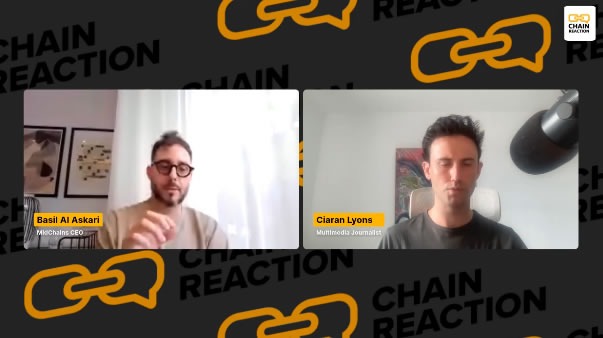
Sovereign wealth funds have been accumulating spot Bitcoin, a sign that Bitcoin’s current price level is becoming attractive to institutional investors, according to MidChains CEO Basil Al Askari.
While there has been a slowdown in retail crypto market participation, the opposite is being seen on the institutional and corporate side, Basil Al Askari said on Cointelegraph’s “Chain Reaction” podcast on Monday.
“I would be able to confirm that one, at least one, and possibly in the coming weeks, two sovereign wealth funds have been accumulating spot Bitcoin specifically,” he said.
A sovereign wealth fund is a state-owned investment fund, typically capitalized by a country’s reserves, so the move signals state-level conviction, not just private speculation. Sovereign wealth funds collectively control more than $13 trillion globally.
Al Askari, who heads MidChains, a regulated crypto trading platform focused on retail and institutions based in Abu Dhabi, said this low price point is seen very much as an “entry level for a lot of those mega funds” that have the patience to accumulate over an extended period of time.
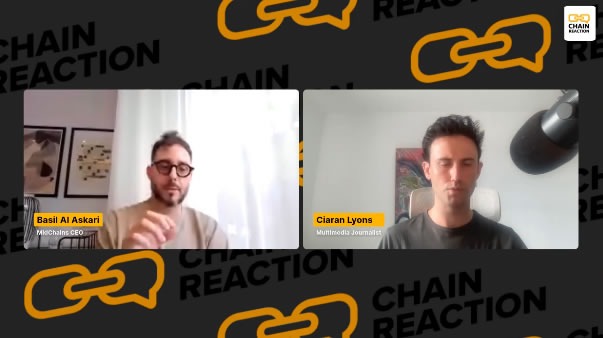
Basil Al Askari speaking on Chain Reaction. Source: Cointelegraph
The potential impact on Bitcoin’s price is not going to be a massive cascade on the market immediately, he said, but it sends “a very clear signal” to other institutions that may be sitting on the sidelines and looking at these larger funds as leaders, seeking a “way to experiment and start to get involved” with Bitcoin.
Related: Bullish Bitcoin RSI divergence has analysts calling for 2022-style bear market bottom
“I do think this is what will happen, is that over the longer term period, we’ll start to see Bitcoin becoming more and more scarce as a result of larger holders with much longer time horizons on their holding periods as far as looking at investments.”
Abu Dhabi’s Mubadala Investment Company invested $437 million in BTC via BlackRock’s iShares Bitcoin Trust (IBIT) shares in February 2025, while Bhutan’s Druk Holding and Investments is one of the earliest and most direct sovereign holders of the asset, but it has been selling some this year.
ETFs outflow billions as corporates buy the dip
Coinbase’s head of institutional strategy, John D’Agostino, told CNBC earlier this month that the dip is being welcomed by institutional investors.
“I just got off a plane from the Middle East, and I can tell you that the family offices in the UAE and the government and sovereign funds that are putting the effort into buying this asset class are not unhappy at being able to buy it at a discount,” D’Agostino said.
The current situation has been mixed, with sustained US spot BTC exchange-traded fund outflows exceeding $4.1 billion so far this month. Meanwhile, corporate treasuries, primarily Strategy, which has scooped up 3,657 BTC this month, continue to accumulate.
Magazine: AI is banking the unbanked in Africa… faster than crypto
U.S. President Donald Trump is facing a short decision window after House Speaker Mike Johnson sent the 21st Century ROAD to Housing Act to the White House on Monday.
Summary
- Trump now faces a 10-day window as the housing bill’s CBDC ban moves toward law.
- The bill blocks the U.S. Fed from creating a CBDC or similar asset through 2030.
- Trump’s SAVE America push delayed a housing measure that passed with bipartisan backing last week.
Reuters reported that Trump did not commit to signing the bipartisan housing bill and described it as “a big yawn” while pressing Republicans to move on the SAVE America Act.
The clock matters because the U.S. Constitution gives a president 10 days, excluding Sundays, to sign or return a bill after presentment. If Congress remains in session and the president takes no action, the bill becomes law as if it had been signed.
CBDC ban sits inside housing measure
The 21st Century ROAD to Housing Act mainly focuses on housing affordability. The package seeks to expand housing supply, support manufactured housing, speed up some reviews, and place new limits on large investors buying single-family homes.
The same bill also carries a non-housing provision aimed at the Federal Reserve. The final package prohibits the Fed from creating a central bank digital currency through 2030. The language covers a CBDC and any asset that is substantially similar to one.
The CBDC clause has moved through Congress alongside broader digital asset debates. The housing bill passed the Senate in an 85-5 vote and the House in a 358-32 vote, giving the package strong support from both parties before it reached Trump.
SAVE America Act drives the standoff
Trump has linked the housing bill to the SAVE America Act, a voting measure that would require proof of U.S. citizenship for voter registration. He canceled a planned signing ceremony last week and said Republicans should focus on the election bill before other measures.
That position has frustrated some Republicans who want to campaign on housing affordability before the November midterms. Senator Bill Cassidy said it was “irresponsible” to postpone signing the housing bill over the SAVE Act and said relief for high housing costs should start quickly.
Trump also questioned parts of the housing package because Democrats supported it. He said the bill was bipartisan and added that Democrats were getting items he would not necessarily accept, according to reports.
Crypto policy faces a narrow July window
The housing fight comes as the Senate calendar also weighs on crypto legislation. As reported by crypto.news, the Senate adjourned until July 13, leaving lawmakers with less floor time to move the CLARITY Act before the August break.
The CLARITY Act remains central to crypto market structure talks. As reported by crypto.news, it has cleared the House, passed the Senate Banking Committee, and reached the Senate calendar, but it still needs floor action.
The same debate also touches the CBDC issue. As reported by crypto.news, the CLARITY Act includes anti-CBDC language that would bar the Fed from issuing a retail digital dollar without clear approval from Congress.
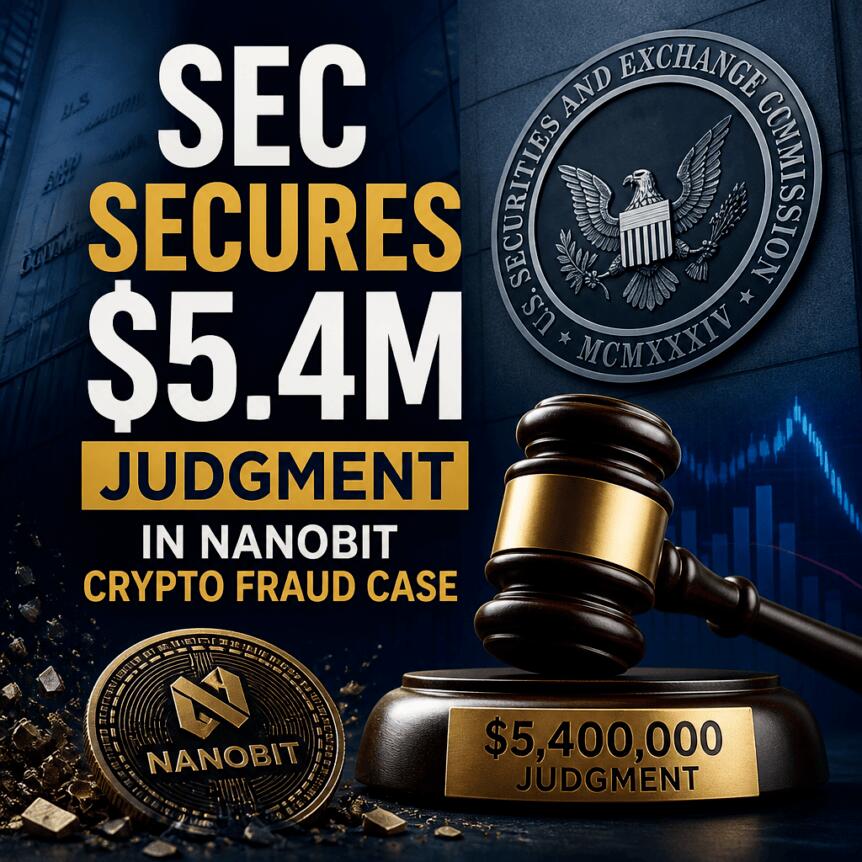
The US Securities and Exchange Commission (SEC) has secured a fraud judgment against NanoBit Limited, ending a case that began with allegations of a crypto-linked investment scam involving WhatsApp outreach and a fake trading platform.
According to the SEC, the agency brought the suit after it accused NanoBit’s operators of taking funds from at least 18 investors between 2023 and 2024—funds it said were diverted to insiders rather than used to operate a legitimate platform.
Key takeaways
- The SEC alleges NanoBit used impersonation and social media outreach to lure investors into depositing money into a fake platform.
- The SEC’s Monday announcement came after an Eastern District of New York court entered a final judgment on June 16 against multiple entities and individuals tied to the case.
- The court imposed permanent injunctions against the defendants, barring them from participating in the issuance, purchase, or sale of securities.
- NanoBit and its affiliates were ordered to pay multiple components including fines, disgorgement, and prejudgment interest, totaling nearly $1.8 million for the company-related parties.
SEC wins against NanoBit in a WhatsApp-driven fraud
The SEC said the scheme centered on how victims were recruited and what they were led to believe once they engaged. In its Monday litigation release, the agency described an approach in which NanoBit’s operators allegedly impersonated financial professionals within WhatsApp groups to convince investors to deposit funds.
Instead of reflecting trading activity, the SEC alleged the platform served as a stage to manufacture credibility and performance. The regulator claimed investors were shown a fake dashboard portraying rising returns, designed to give the appearance that their money was increasing.
To further strengthen the illusion, the SEC alleged the operators falsely represented that an affiliate—NanobitUS Securities—was an SEC-registered broker. The SEC also alleged that the platform promoted supposed token offerings, including fake initial coin offerings (ICOs) promising substantial returns.
Court findings and the size of the penalties
The SEC’s announcement referred to the court’s final judgment entered in the Eastern District of New York on June 16 against four entities and two individuals tied to the NanoBit fraud. The judge found that the defendants violated US securities laws and issued permanent injunctions preventing them from engaging in securities-related conduct.
As part of the enforcement outcome, the court ordered monetary relief that included a fine, disgorgement, and prejudgment interest. The SEC said NanoBit Limited was ordered to pay a $1.18 million fine, disgorgement of more than $532,000 for ill-gotten gains, and nearly $81,200 in prejudgment interest, for a combined total of nearly $1.8 million.
In addition, the SEC said NanoBit’s affiliates—Radiant Horizons, Sweet Karma, and Zhao Deli—each received $1.18 million fines. One of the alleged orchestrators, Jiajie Liu, was ordered to pay approximately $120,000 in penalties, disgorgement, and prejudgment interest.
What the SEC says happened to investors’ money
In the SEC’s September 2024 complaint, the regulator alleged that solicitation began outside the WhatsApp environment. It said NanoBit investors were contacted on social media, including Instagram, before being moved into WhatsApp groups tied to the scheme.
Once participants were onboarded, the SEC claimed the “NanoBit platform” never executed any real transactions. Instead, it said investors’ funds were directed to scheme participants, including bank accounts in Hong Kong, where the money was allegedly misappropriated.
The SEC further alleged that the amount taken from investors involved both fiat deposits and mismanagement of investors’ crypto assets. It said hundreds of thousands of dollars’ worth of investors’ crypto holdings were taken and routed to individuals connected to the fraud.
When investors attempted to withdraw, the SEC alleged they were confronted with excuses and asked to pay large fees. It also said some victims were removed from the WhatsApp groups after questioning whether the platform was legitimate.
Another data point in the SEC’s ongoing crypto fraud enforcement
The NanoBit ruling adds to a broader enforcement pattern in which the SEC targets crypto-themed scams that rely on messaging apps, fabricated performance, and false claims about regulatory status.
The SEC release also situated this case within continued scrutiny under the agency’s crypto enforcement efforts. It noted other recent fraud actions, including a May 29 charge against a Texas man accused of raising more than $12 million from roughly 150 investors by claiming to use AI-powered trading bots to generate guaranteed returns, and an April action against crypto executive Donald Basile and two companies he controlled for allegedly raising roughly $16 million from hundreds of investors through false claims tied to a token described as Bitcoin Latinum.
For investors, the practical takeaway is that the mechanics of the NanoBit allegations—social media recruitment, WhatsApp group pressure, and a “dashboard” narrative—mirror tactics frequently used in retail scams across asset classes. In particular, the SEC’s focus on impersonation and fabricated investment performance underscores how easily victims can be pulled into believing returns when verification is absent.
Going forward, traders and retail participants should watch for whether additional orders or parallel actions affect other individuals or entities connected to the WhatsApp outreach and alleged offshore fund routes, and whether the SEC’s detailed allegations prompt further scrutiny of similar “copy trading” and dashboard-based pitches that promise regulated brokerage status or guaranteed outcomes.
Ether treasury company Bitmine Immersion Technologies added more than 27,000 Ether to its holdings last week as the firm joined the Russell index tracking the largest 1,000 US companies.
Bitmine said Monday that after its latest $43 million purchase, it held just over 5.7 million Ether (ETH) bought at an average price of $1,569 per token and held 4.7% of the ETH supply of 120.7 million tokens, closer to its goal of owning 5% of Ether’s supply.
Bitmine chairman Tom Lee said the past week “was a challenging one for crypto investors as ETH fell by 8%, even as Ethereum witnessed notable positive developments such as the creation of Ethlabs, and even the Bank of England softened its stance around stablecoins.”
The latest Ether purchase adds to Bitmine’s lead as the largest public corporate holder of Ether. Meanwhile, its inclusion in the Russell 1000 means more investor demand for Bitmine shares, as many mutual funds, ETFs and pension funds track the Russell 1000 and must buy the stock once it’s added.
Related: Bitmine eyes dividend-paying preferred shares, echoing Strategy’s playbook
“Being added to the Russell 1000 is expected to add hundreds and possibly thousands of additional institutional investors as equity owners of Bitmine,” Lee said.
Lee had said in May, when Bitmine was first considered for the Russell index, that up to 25% of the market cap of a stock included in the index is held by passive index funds.
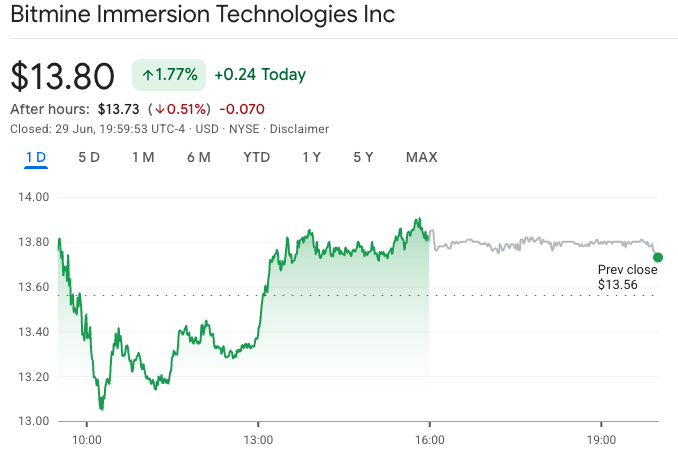
Shares in Bitmine (BMNR) gained 1.7% Monday to end trading at $13.80, but the company’s stock has slid 9% over the past trading week alongside Ether.
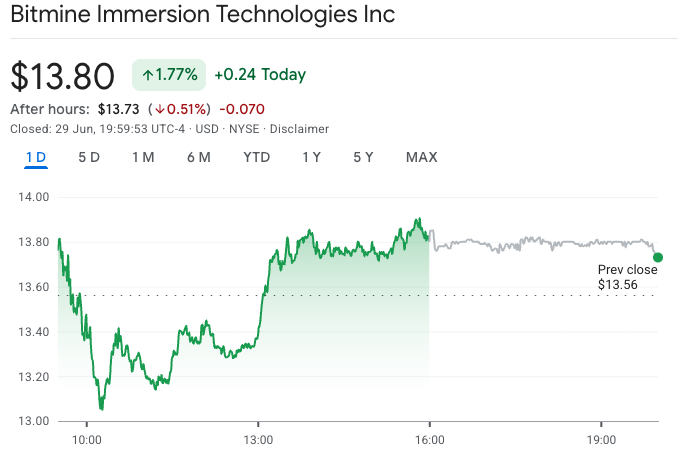
Shares in Bitmine rose Monday, stemming losses over the past trading week. Source: Google Finance
Meanwhile, rival crypto treasury firms Sharplink and Forward Industries, along with crypto exchange Gemini and crypto services firm Galaxy Digital, were also added to the Russell 3000 Index on Friday, which tracks the largest 3,000 US companies.
Ether fell below $1,600 last week, with Lee commenting that “it is not surprising to see ‘window dressing’ leading to investors reducing their holdings in assets that have fallen in the past three months.”
Magazine: Bitcoin slides to $58K, XRP hits $1 but onchain data promising: Market Moves
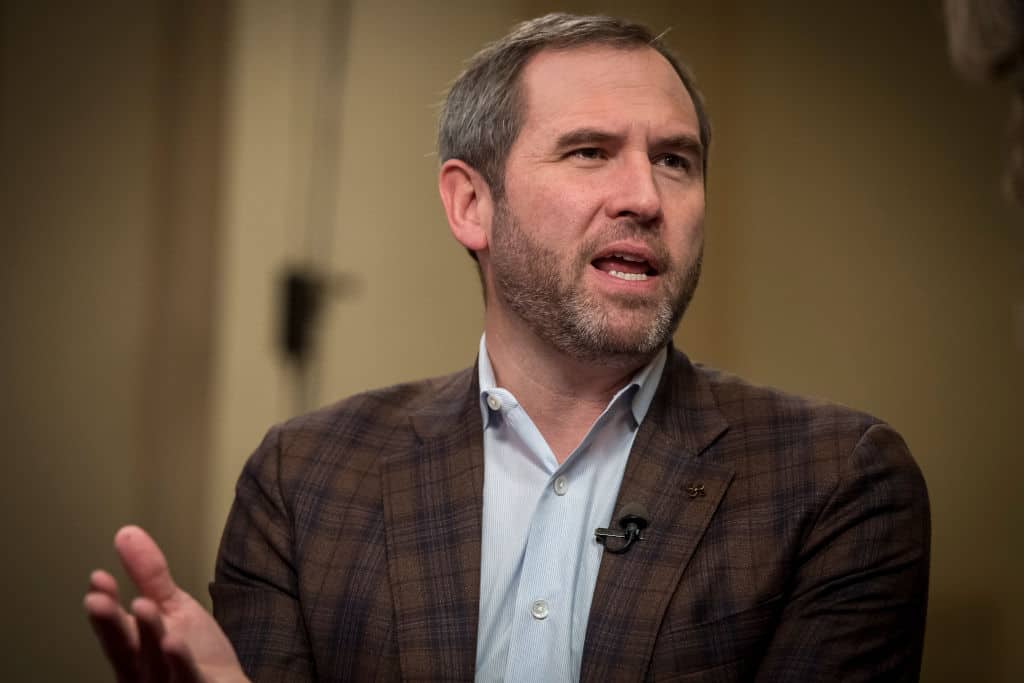
As more opinions on Strategy’s latest bitcoin (BTC) moves surface within the crypto community, trader Merlijn has countered Ripple CEO Brad Garlinghouse’s stance on the matter.
In a tweet addressing Garlinghouse’s remarks on Strategy’s recent BTC sale, Merlijn insisted that both Ripple and the business intelligence firm use the same funding models. In other words, the Ripple CEO is in no position to reprimand Strategy and Michael Saylor when they have similar approaches to the market.
Trader Challenges Garlinghouse’s Comments on Strategy
Over the weekend, CryptoPotato reported that Garlinghouse said during an interview with CNBC that Strategy’s Bitcoin model is hurting the crypto market. The leading Bitcoin treasury firm broke its BTC purchase streak weeks ago and sold some part of its holdings. The move sparked an uproar in the market, as the company has been one of the major drivers of BTC demand.
Although Strategy subsequently resumed BTC purchases, that sale triggered a lot of criticism from big names and market experts. Garlinghouse was of the opinion that Saylor has not been focused on how to build a strategy around the right features of BTC. He said the company’s purchase model added some excitement as BTC rallied; however, the same approach is now compounding negatively as the asset declines.
To the Ripple CEO, Strategy has been using a leveraged purchase model through the company’s Stretch stock, STRC. With the stock trading 25% below its par price of $100, the market is beginning to witness how Strategy’s model compounds negatively when BTC corrects. Garlinghouse believes Strategy should focus on creating long-term value and utility, not financial engineering through its BTC funding model.
Two Giants, Same Model
Although Merlijn believes Ripple CEO is right about STRC being in distress, the trader says Garlinghouse should not be attacking Saylor. Since Ripple funds itself by selling XRP from escrow every month, the company shares a similar model with Strategy.
In Merlijn’s eyes, Strategy and Ripple are just two giants with similar funding models that lean on the market they are defending. Since the funding models of both entities contribute to selling pressure for their individual assets, Merlijn sees no point in Garlinghouse’s criticism. It truly is quite ironic that Garlinghouse, who does not champion the “never sell your XRP” mantra, would reprimand Strategy for one bitcoin sale.
The post Crypto Analyst Challenges Ripple’s CEO Take on Strategy: ‘Two Giants, Same Model’ appeared first on CryptoPotato.
If you spend any time around Solana memecoins, you will hear about “the trenches.” It is where traders called degens fight over brand-new tokens that mostly go to zero, in a culture with its own language, rituals, and brutal economics. Here is what the trenches are, the slang you need to follow them, and the hard reality behind the romance.
Summary
- “The trenches” is crypto slang for the chaotic, high-risk frontier of on-chain memecoin trading, especially brand-new Solana tokens on launchpads like Pump.fun.
- The traders who operate there are called trenchers or degens, and the culture has its own dense vocabulary, rituals, and a war-themed self-image of survival against the odds.
- The trenches run on launchpads, decentralized exchanges, and fast trading tools, where tokens can rocket and collapse within minutes and bots compete for the first buys.
- The romance of life-changing gains is real but rare, and is built on heavy survivorship bias, since the large majority of tokens die fast and most participants lose money.
- Understanding the trenches and its slang is useful for following crypto culture and protecting yourself, but the honest framing is that it functions more like a casino than a market.
“The trenches” is crypto slang for the chaotic, high-risk frontier of on-chain memecoin trading, especially the world of brand-new Solana tokens launched on platforms like Pump.fun, where traders fight for fast profits amid rampant scams, bots, and a flood of coins that mostly go to zero. The phrase is a war metaphor, and it is chosen deliberately. To be “in the trenches” is to be down in the mud of the riskiest, fastest, most unforgiving part of crypto, trading tokens that are minutes old, against opponents who include automated bots and seasoned predators, where fortunes are made and lost in the time it takes to read a chart. It is a culture as much as an activity, with its own dense vocabulary, its own rituals and heroes, and its own grim economics.
The term has spread well beyond its origins, and you will now hear it used for the early, high-risk stage of any speculative crypto play, but its heartland is the Solana memecoin scene, where the conditions that birthed it, instant token creation, near-zero fees, and a permanent firehose of new coins, are most intense. This guide is a map of the trenches for people who want to understand the culture without necessarily entering it, or who are entering it and want to know what they are walking into. It explains what the trenches are and where they physically exist on-chain, the mindset and culture that define the people in them, a working glossary of the slang you need to follow any trenches conversation, how a typical trench play actually unfolds from launch to death or survival, a recent episode that captures the culture in motion, and, most importantly, the hard reality behind the romantic self-image.
That last part matters more than all the slang, because the trenches present themselves as a place of opportunity and camaraderie, and they are also a place where the overwhelming majority of participants lose money to a structure designed to extract it. Learning the language is the easy part. Understanding the economics is what protects you. This guide tries to do both, in that order, so that the culture is legible and the danger is unmistakable.
What the trenches are and where they live
At its core, the trenches refers to the earliest and riskiest stage of memecoin trading, where tokens are brand new and the action is fastest. The phrase captures both a place and a phase. As a phase, it means trading coins in their first minutes and hours of life, before they have established markets, when prices move violently and information is scarce. As a place, it refers to the venues and channels where this happens.
The trenches live on launchpads, above all the dominant Solana launchpad, where anyone can deploy a token in seconds and it begins trading immediately against a bonding curve. For readers new to that pricing model, the mechanism under every launch is the bonding curve, which automatically changes a token’s price as buyers and sellers move in and out. The trenches extend to the decentralized exchanges where tokens move after they graduate from those launchpads, and to the social channels, especially memecoin-focused chat groups, that are themselves often called the trenches, because that is where traders gather to share tips and coordinate.
The infrastructure of the trenches is built for speed, which shapes the entire experience. Traders use specialized tools and bots that let them buy a token within seconds of its launch, read on-chain data in real time, and execute faster than a human could click, because in a world where a coin can rise and fall in minutes, milliseconds of timing translate into enormous differences in entry price. This is why the trenches are not a level playing field: automated snipers and bots routinely buy into a token in its first moments, ahead of the humans who see it trending later. The reason all of this concentrated on Solana is structural: Solana’s very low fees and fast transaction speeds make it cheap and quick to launch coins and to trade them rapidly, which is exactly what a high-frequency, high-churn memecoin culture needs.
The launchpads that lowered the barrier to creating tokens did the rest. The trenches, then, are the on-chain frontier where the cheapest, fastest, most permissionless token creation meets the most speculative trading culture in crypto. The combination produces both the energy and the carnage the term implies. It is why the trenches feel like a live market, a chatroom, and a casino floor at the same time.
The mindset and the culture
The trenches have a distinct culture, and understanding the mindset is as important as understanding the mechanics, because the culture is part of what keeps people in a game that mostly loses them money. The self-image is heroic and martial: participants cast themselves as warriors surviving in hostile territory, enduring losses, hunting for the one coin that will pay for all the others. There is genuine camaraderie in it, a shared identity among people who understand a world outsiders find baffling or repellent, and a folklore of legendary trades and legendary traders. The dominant ethos is captured in the word degen, short for degenerate, which trenchers wear as a badge rather than an insult.
To be a degen in the trenches is to accept that you are gambling and to lean into it with a certain dark humor. That humor and identity are woven through the culture’s language and rituals. Trenchers talk about “locking in,” meaning to focus intensely on the goal of making money quickly with minimal effort, and about hunting for a “gem,” an undervalued coin spotted before the crowd. The culture prizes “alpha,” valuable information or insight shared among insiders, and it runs on a constant cycle of fear of missing out and fear of being wrong, the twin emotions that drive impulsive buying and panic selling.
There is a player-versus-player quality to it, an awareness that in a zero-sum scramble over a worthless token, your profit is someone else’s loss, which the culture acknowledges with a kind of cheerful brutality. All of this creates a powerful social pull. The trenches are not just a market; they are a community with a language, a value system, and an emotional rhythm. That social dimension is a large part of why people stay even as they lose, because belonging and the thrill of the hunt are their own rewards.
Recognizing the culture’s grip is important, because the same camaraderie that makes the trenches compelling is also what makes them hard to walk away from. The community tells itself stories about survival and conviction, and some of those stories are true. But many of them are also retrospective myths built around the tiny number of trades that worked. That is why the culture has to be understood together with the economics, not separately from them.
A working glossary of trench slang
To follow any conversation in the trenches, you need the vocabulary, and the slang is dense enough that an outsider can find a discussion incomprehensible. What follows is a working glossary of the most important terms, enough to read a typical trenches exchange. Begin with the people: a trencher or degen is a high-risk memecoin trader; a jeet is a derisive term for someone who sells too early or panic-sells, dumping on others; and a whale is a holder large enough to move a token’s price with their trades. The verbs of entry and exit matter too: to ape, or ape in, is to buy a token impulsively without much research; to snipe is to buy in the very first moments of a launch, usually with a bot; and to bundle is to coordinate multiple wallets to buy at launch, often to create a false impression of demand.
The lifecycle of a coin has its own terms. A fair launch means a token released with no presale or insider allocation, where everyone enters through the same curve. Graduation is the moment a token completes its bonding curve and moves to a normal exchange. A rug, or rug pull, is the most common trench ending: a scam where the creator pulls liquidity or dumps their holdings, collapsing the price to near zero.
A CTO, or community takeover, is when holders take over a coin the original creator abandoned, running it themselves to try to revive it. The emotional and evaluative vocabulary rounds it out: a gem is an undervalued find; alpha is valuable insight; FOMO and FUD are the fear of missing out and fear, uncertainty, and doubt that drive buying and selling; bags are the tokens you hold; to be underwater is to hold at a loss; and to moon or send it is to rise sharply or to take the plunge on a risky buy. Newer coinages appear constantly, such as a stimmy, slang adopted from stimulus payments to describe handing money to traders, which entered wide use when an influencer pledged to airdrop fees to the trenches. The vocabulary keeps evolving, but these terms form the durable core, and knowing them turns an impenetrable trenches conversation into something you can actually follow.
How a trench play unfolds
To see the culture and mechanics together, follow how a typical trench play unfolds from birth to death, because the lifecycle is remarkably consistent. It begins with a launch: someone deploys a new token on a launchpad, giving it a name, an image, and a ticker, and it starts trading instantly against its bonding curve. In the first seconds, before any human has really noticed, automated snipers and bots may buy in, taking the earliest and cheapest positions, sometimes coordinated across bundled wallets to create the look of organic demand. This is the first hard truth of the trenches: by the time a human sees a coin, bots have often already moved.
Next comes the attention phase. If the coin has a catchy theme, a connection to a trending narrative, or a push from an influencer or a coordinated group, it begins to spread across social channels, and human traders start to ape in, sending the price climbing up the curve as buying accelerates. If the momentum builds far enough, the coin graduates, its accumulated liquidity moving to a normal exchange, which can attract a fresh wave of traders who treat graduation as a sign of legitimacy. Then comes the decisive phase, which for the overwhelming majority of coins is the end.
As the early buyers and any insiders take profit, selling into the latecomers, the price stalls and reverses. If a creator or whale dumps a large position, or pulls liquidity outright in a rug, the price collapses toward zero, often within hours of the peak. Most coins simply fade as attention moves to the next launch and buyers stop arriving, the price bleeding down the curve as holders capitulate. A small number survive, and an even smaller number, occasionally, get a second life through a community takeover, when stubborn or spiteful holders seize the abandoned coin and try to rebuild momentum themselves, which usually fails but can, if executed well, give the holders a better exit.
This lifecycle, launch, snipe, hype, climb, distribution, collapse, plays out thousands of times a day, and recognizing its shape is the difference between understanding what you are watching and being its raw material. It is also why who profits from the churn matters. Launchpads, creators, and early entrants can profit from volume and timing even when the token itself has no lasting value. Late buyers often discover that the chart they are chasing is already in its distribution phase.
The trenches in action
A recent episode captures the culture vividly and ties the abstractions to a concrete moment. In late June 2026, a frenzy erupted around a cluster of Solana memecoins using the name of a prominent influencer, and it played out as a textbook trenches event. Multiple competing tokens using the same name launched at once, and the trading community flipped between them in exactly the player-versus-player scramble the culture is known for, with no single coin crowned the real one for a stretch as trenchers fought over which version would win. One version went parabolic, running to tens of millions in market cap within days, while dramatic individual outcomes, including a trader turning a few thousand dollars into hundreds of thousands, became the kind of folklore that draws more people into the next launch.
The episode also showcased the culture’s vocabulary and rituals in real time. The influencer at the center publicly took the side of the trenches against the launchpad, criticizing how it handled rewards and pledging to airdrop his accumulated fees back to traders, framing it in the community’s own slang as giving the trenches a stimmy because the platform would not. The word stimmy, the framing of small traders as a community owed a payout, the swarm of copycat tokens, the parabolic run, and the rapid churn all embodied the trenches in a single story. It also showcased the danger.
The same influencer disavowed other tokens trading on his name, copycats and impersonations proliferated, and the headline pump figures often did not survive a look at the actual on-chain data. The episode was the trenches in miniature, the camaraderie and the opportunity and the manipulation and the carnage all braided together, which is exactly why it drew such attention. For a student of the culture, it was a live demonstration of every dynamic this guide describes. It was also a reminder that behind the romance of the heroic trade sits a machine that mostly transfers money from latecomers to insiders and platforms.
The reality behind the romance
Strip away the war metaphors and the folklore, and the trenches are, in hard economic terms, a place where most participants lose money to a structure built to extract it, and saying so plainly is the most useful thing this guide can do. The data is unambiguous. Studies of Solana memecoin launches have found that roughly two out of three coins are effectively dead within their first day, with the vast majority of their liquidity gone, and that on the order of 80% or more lose over 90% of their value within about a week. Recent Pump.fun lifespan data showed the same pattern, with nearly seven in 10 reviewed launches recording their final bonding-curve trade on launch day.
By some estimates, the overwhelming majority of tokens launched on the dominant launchpad are scams, pump-and-dumps, or jokes with no lasting value. The life-changing gains that make the folklore are real, but they are extraordinarily rare, and they are visible precisely because they are rare, while the millions of losing trades are invisible. That produces a powerful survivorship bias: you hear about the trader who turned a few thousand into a fortune, never about the thousands who did the opposite. This is the same dynamic that makes the assets traded in the trenches so culturally powerful and financially dangerous.
The structural reality reinforces this. The platforms that host the trenches earn from trading volume regardless of whether any coin succeeds, so the house profits from the churn itself, much like a casino. Bots and insiders routinely get the earliest, cheapest positions, leaving the human trader who arrives on a trending coin to buy from people already in profit. Creator fees and large insider holdings give those who launch and promote coins tools and motives to manufacture hype around tokens they benefit from.
The emotional culture, the FOMO, the camaraderie, the heroic self-image, is itself part of what keeps people trading through losses. None of this means the trenches are not real or that no one ever profits; some skilled and disciplined traders do, and the culture has genuine creativity and community in it. But the honest framing, shared by the more responsible voices in the space, is that the trenches function far more like a casino than like an investment market, that the odds are structurally against the individual, and that anyone entering should treat it as gambling with money they can afford to lose entirely, not as a path to wealth. The slang is fun and the stories are thrilling, but the math is brutal, and the math is what determines what happens to almost everyone who goes in.
Frequently asked questions
What does “the trenches” mean in crypto?
The trenches is slang for the chaotic, high-risk frontier of on-chain memecoin trading, especially brand-new Solana tokens on launchpads like Pump.fun. It is a war metaphor: to be in the trenches is to trade coins that are minutes old, in the fastest and most unforgiving part of crypto, against opponents that include automated bots. The term refers to both a phase, the earliest and riskiest stage of a token’s life, and a place, the launchpads, exchanges, and chat groups where this trading happens. Memecoin-focused chat channels are themselves often called the trenches. The phrase has spread to mean the early high-risk stage of any speculative crypto play. In practice, though, its strongest association remains Solana memecoin trading, because Solana’s speed, low fees, and launchpad culture created the conditions where the slang took hold. It is less a formal market category than a cultural label for the most chaotic edge of on-chain speculation.
Who are “trenchers” and “degens”?
Trenchers are the traders who operate in the trenches, buying and selling brand-new memecoins. Degen, short for degenerate, is a closely related term that trenchers wear as a badge rather than an insult; it describes someone who takes large speculative risks, does minimal research, and embraces gambling openly. The culture is built around this identity: a self-image of risk-taking warriors hunting for the one coin that pays for all the losses. There is real camaraderie and folklore among them, a shared language and value system. That social identity is part of what makes the trenches compelling and part of what keeps people trading even as the structure causes most of them to lose money over time. It gives the activity a story larger than the trade itself. The danger is that the story can make repeated losses feel like proof of toughness rather than evidence that the odds are bad.
Where do the trenches actually happen?
On-chain, primarily on Solana. The trenches live on launchpads, above all the dominant Solana launchpad, where anyone can deploy a token in seconds and it trades instantly against a bonding curve, and on the decentralized exchanges where tokens move after they graduate. They also live in social channels, especially memecoin-focused chat groups that are themselves called the trenches. The infrastructure is built for speed, with specialized tools and bots that let traders buy within seconds of a launch and read on-chain data in real time. Solana became the heartland because its very low fees and fast transactions make it cheap and quick to launch and rapidly trade coins, which is exactly what the high-churn memecoin culture needs. The chain’s infrastructure makes small, fast trades economically possible in a way that would be harder on more expensive networks. That is why the trenches are as much a product of technical design as they are of internet culture.
What does “stimmy” mean, and other common slang?
A stimmy is slang, adopted from stimulus payments, for handing money to traders; it entered wide use when an influencer pledged to airdrop fees to the trenches. Other core terms include ape, to buy impulsively without research; snipe, to buy in a launch’s first moments, usually with a bot; rug, a scam where the creator collapses the price; CTO, a community takeover of an abandoned coin; jeet, a derisive term for someone who panic-sells; whale, a holder big enough to move the price; bags, the tokens you hold; alpha, valuable insight; and FOMO and FUD, the fear of missing out and the fear and doubt that drive buying and selling. The vocabulary evolves constantly, but these form its durable core. The slang matters because it does more than describe trades. It builds identity, signals belonging, and compresses complex market behavior into quick phrases that move through chats fast. Understanding it helps you follow the culture, but it should not make the activity seem safer than it is.
Can you actually make money in the trenches?
Some people do, but the odds are structurally against the individual, and most participants lose money. The data is stark: roughly two of three Solana memecoins are effectively dead within a day, and 80% or more lose over 90% of their value within about a week, while the overwhelming majority of launchpad tokens are scams, pump-and-dumps, or jokes. The life-changing gains that fuel the folklore are real but extremely rare, and they create survivorship bias because the countless losses are invisible. Bots and insiders get the earliest positions, platforms profit from the churn regardless of outcomes, and creator fees give promoters motives to manufacture hype. Skilled, disciplined traders exist, but the structure resembles a casino more than an investment market. The rare wins are easy to screenshot and share, while the typical losses disappear into wallet history. That imbalance is exactly why the romance of the trenches can be so misleading.
Is trading in the trenches a good idea?
This guide does not recommend it, and the honest framing is that the trenches function far more like a casino than an investment market, with the odds structurally against the individual participant. The platforms profit from trading volume regardless of whether coins succeed, bots and insiders take the best positions, and most tokens are designed to extract money from latecomers. The culture’s camaraderie and heroic self-image are genuine and are also part of what keeps people trading through losses. If someone chooses to participate anyway, the only responsible approach is to treat it strictly as gambling, risking only money they can afford to lose entirely, verifying contracts and holder concentration, and never mistaking the rare success stories for the typical outcome. That means treating every new coin as hostile until proven otherwise. It also means understanding that speed, information, and discipline matter, but even those do not erase structural disadvantages. The safest way to learn the trenches is as a culture and a warning before treating it as a trading venue.
This article is educational information about crypto culture, not financial advice or encouragement to trade memecoins. Descriptions of trenches culture, slang, and failure statistics reflect reporting available as of June 29, 2026, and can change. Memecoin trading is extremely high-risk, resembles gambling, and causes most participants to lose money. Verify any specific token or platform independently and consult a qualified professional before making any financial decision.
Velvet price has surged more than 300% in three days, climbing to a new all-time high above $2 after the protocol consolidated its Base network liquidity on Aerodrome Finance and expanded its synthetic pre-IPO trading markets.
Summary
- Velvet price has surged more than 300% to a new all-time high after migrating liquidity to Aerodrome Finance.
- The rally gained momentum as the protocol launched synthetic pre-IPO markets and broke above key technical resistance.
- Despite strong buying interest, a low TVL, DWF Labs transfers, and an upcoming token unlock pose risks to the uptrend.
According to Velvet, the protocol migrated all of its protocol-owned liquidity on Base to Aerodrome Finance, making the decentralized exchange its sole liquidity venue on the network. The move concentrated trading depth in one marketplace, reducing slippage and tightening spreads.
At nearly the same time, Velvet rolled out synthetic markets offering tokenized exposure to private companies, including SpaceX, drawing fresh attention from speculative traders and pushing the token from around $0.39 on June 26 to an intraday high of about $2.15 on June 29.
Technical indicators continue favoring buyers
Momentum accelerated after buyers forced VELVET above the $0.60-$0.67 resistance area that had capped previous recovery attempts. The breakout triggered a rapid move higher as short sellers exited positions and fresh buyers entered the market.
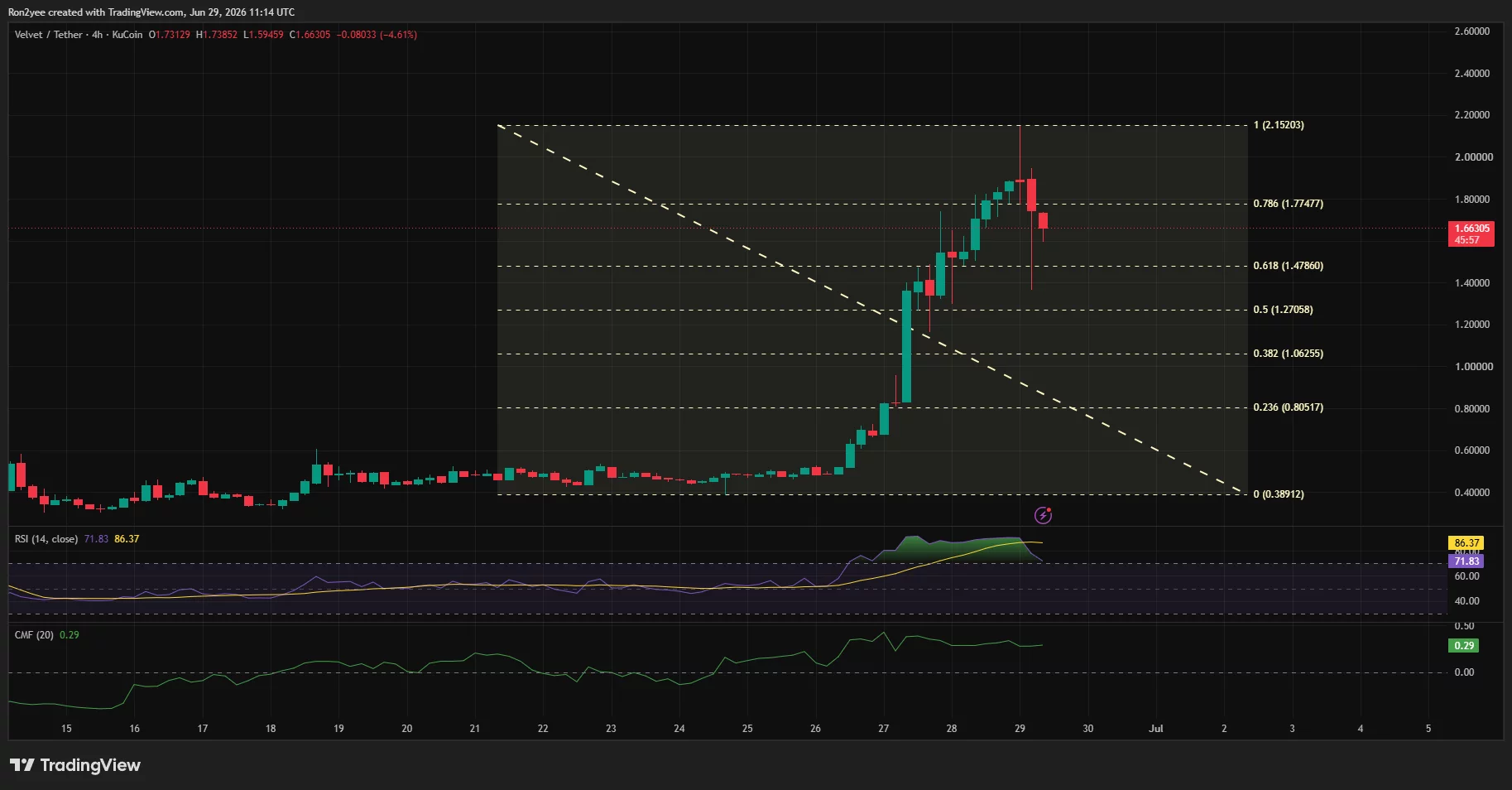
The four-hour chart shows VELVET has entered price discovery after printing a record high near $2.15 before easing toward $1.66 at the time of writing. Even after the pullback, the token continues trading above the key 61.8% Fibonacci retracement level around $1.48, a zone that could now act as the first major support if selling pressure increases.
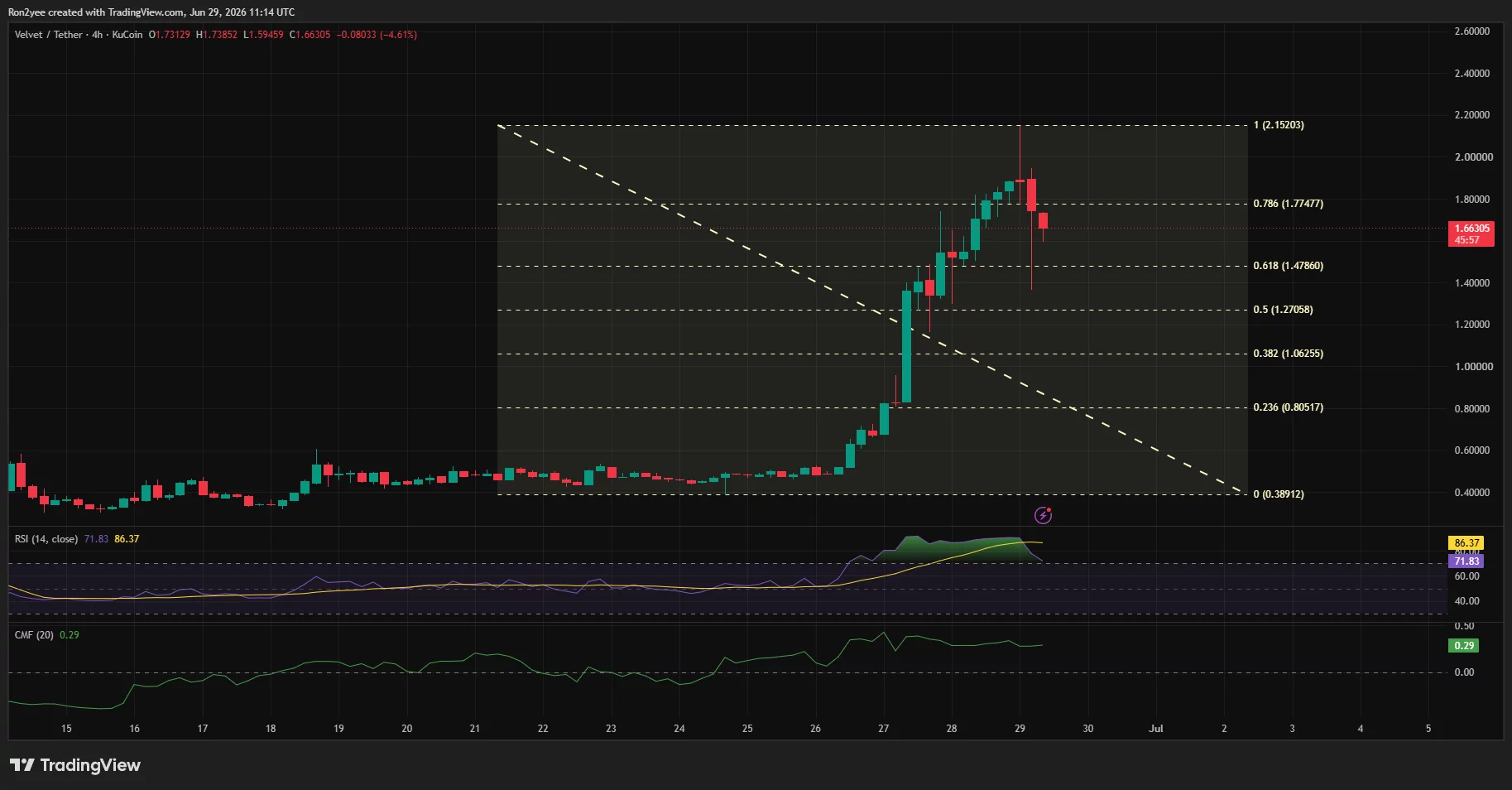
Technical indicators continue to favor the bulls despite signs that the rally is cooling. The Relative Strength Index remains above 70, indicating bullish momentum, although it has retreated from more extreme overbought readings.
At the same time, the Chaikin Money Flow indicator remains positive near 0.29, suggesting capital continues flowing into the asset despite profit-taking near record levels.
A recovery above the 78.6% Fibonacci level near $1.77 could open the door for another test of the $2.15 peak. On the downside, losing support around $1.48 would expose the next retracement levels near $1.27 and $1.06.
Valuation risks remain despite the breakout
Despite the sharp rally, blockchain data points to growing valuation concerns.
Market tracking platforms show Velvet’s fully diluted valuation has climbed to roughly $800 million, while the protocol’s total value locked stands at about $770,000. The large gap suggests the recent price increase has been driven primarily by speculation surrounding synthetic pre-IPO trading and artificial intelligence-linked decentralized finance narratives rather than by growth in on-chain activity.
On-chain transaction records also indicate that market maker DWF Labs transferred nearly 29 million VELVET tokens to centralized exchanges during the rally. Although the transactions do not necessarily confirm immediate sales, they have attracted attention because they coincide with significantly higher trading volumes.
Supply-side pressure could increase further in the coming weeks. Token unlock schedules show approximately 10.4 million VELVET tokens are expected to enter circulation on July 10, potentially adding fresh selling pressure if demand slows after the recent rally.
The surge has also come at a time when the cryptocurrency market remains relatively subdued. With expectations that the U.S. Federal Reserve will keep monetary policy restrictive and the U.S. Dollar Index staying elevated, Bitcoin and Ethereum have traded within relatively narrow ranges.
In that environment, speculative capital has increasingly concentrated in smaller narrative-driven tokens, allowing assets such as VELVET to produce outsized gains even as much of the digital asset market remains range-bound.
Disclosure: This article does not represent investment advice. The content and materials featured on this page are for educational purposes only.


Before a memecoin reaches a normal exchange, its price is not set by buyers and sellers meeting in a market. It is set by a formula. That formula is the bonding curve, and it is the engine behind nearly every Solana memecoin launch. Here is how a bonding curve works, why launchpads use it, and why understanding it is the difference between trading and reacting late.
Summary
- A bonding curve is a mathematical formula that sets a token’s price automatically based on how much of its supply has been bought, so the price rises as people buy and falls as they sell.
- It lets a token launch with instant liquidity and no pre-funded pool, because buyers trade against the curve’s contract rather than against other traders.
- On the leading Solana launchpad, a token sells along its curve until it “graduates,” at which point its accumulated liquidity moves to a normal exchange and the curve is left behind.
- Curves come in shapes, mainly linear and exponential, that determine how violently the price moves and how brutally late buyers are punished.
- A bonding curve is a pricing mechanism, not a safety mechanism, and the large majority of tokens launched on curves lose most of their value within days.
A bonding curve is a mathematical pricing formula that sets a token’s price automatically based on how much of its supply has already been bought, so that the price rises as people buy and falls as people sell, without needing the traditional matching of buyers and sellers in an order book or a pre-funded pool of liquidity. That definition contains the whole idea, but its consequences are profound, because the bonding curve is what made the modern memecoin explosion possible. In an ordinary market, a token’s price emerges from buyers and sellers placing orders that meet at an agreed price, which requires liquidity to exist before trading can happen. A bonding curve removes that requirement.
It lets a brand-new token trade from the very first moment, with its price determined by a formula rather than by a market, and with liquidity created automatically as people buy. This is why a person with no technical skill and a small amount of money can launch a coin that is instantly tradable, and it is why tens of thousands of new tokens can appear every day. The bonding curve is the mechanism underneath all of it. Because the bonding curve governs how a memecoin behaves in its earliest and most volatile phase, understanding it is the single most useful piece of technical knowledge for anyone trying to make sense of memecoin launches, even from a safe distance.
This guide explains what a bonding curve is and how trading against one works, why launchpads adopted the model, how it operates in practice on the dominant Solana launchpad including the all-important moment of graduation, the different curve shapes and why they matter, a worked example that traces a buy through the curve, the uses of bonding curves beyond memecoins, and the risks the curve does and does not protect against. The point is not to encourage trading these tokens, most of which lose nearly all their value, but to make the mechanism legible, because a person who understands the curve can at least see what is happening when a fresh token rockets and collapses, instead of reacting late to forces they cannot name. The curve is the rule of the game, and knowing the rule is the beginning of not being its victim.
What a bonding curve actually is
Start with how trading against a bonding curve differs from trading in a normal market, because the distinction is the key to everything. In a conventional exchange, when you buy a token, you are buying it from another person who is selling, and the price is whatever buyers and sellers agree on through their orders. With a bonding curve, there is no counterparty on the other side; you are trading against a smart contract that follows a formula. When you buy, you send the network’s currency, on Solana that is SOL, to the bonding curve contract, and the contract issues you tokens at a price determined by the formula, then moves the price up the curve.
When you sell, you send your tokens back to the contract, which removes them from circulation and returns SOL to you at the formula’s current price, then moves the price down the curve. The price is purely a function of how far along the curve the supply has been bought; more buying pushes it up, more selling pulls it down, automatically and without any human market-maker. The reason this is called a bonding curve is that the price follows a curve plotted against the supply sold. As more of the token’s supply is purchased and moves out along the curve, each successive token costs more than the last, so the price climbs as the coin sells.
Crucially, the currency that buyers send in does not go to a seller; it stays locked in the contract, where it serves as the token’s liquidity, the pool of value that backs the ability to sell tokens back later. This is how a bonding curve creates liquidity automatically: every purchase adds to the locked pool, so the token is tradable from its first moment without anyone having to fund a liquidity pool in advance. That self-contained quality, a contract that prices the token, holds the liquidity, and handles both buying and selling by formula, is what makes the bonding curve such a powerful launch mechanism. It collapses everything a normal token launch requires, smart-contract deployment, liquidity provision, market-making, into a single automated curve that anyone can use.
Why launchpads use bonding curves
The appeal of the bonding curve to a launchpad, and to the people launching coins, comes down to removing barriers, and seeing why clarifies the model’s role. Traditionally, issuing a token that people could actually trade was involved: a developer had to write and deploy a smart contract, then pre-fund a liquidity pool with a meaningful amount of capital so the token had something to trade against, since without liquidity a token cannot be bought or sold at a stable price. This required both technical skill and money up front, which kept token creation in the hands of relatively few. The bonding curve demolishes both barriers.
Because the curve provides liquidity automatically as people buy, no one has to pre-fund a pool, and because the launchpad handles the contract, no one has to write code. A creator needs only a name, an image, a ticker, and a tiny amount of the network’s currency to cover a creation fee. This is why bonding-curve launchpads turned token creation into a one-click activity and unleashed the flood of memecoins now defining parts of Solana. The model also delivers what the platforms call a fair launch, in the sense that every buyer enters through the same curve from the same starting point, with no presale or insider allocation funded in advance, so the earliest public buyer and the latest both interact with the same automated pricing.
One launchpad even folds in a measure against the oldest memecoin scam by having creators buy their own tokens through the same curve as everyone else at launch, rather than secretly hoarding a huge allocation to dump later, which levels the starting field somewhat even though it does not remove all risk. The bonding curve, then, is the technology that made memecoin creation cheap, instant, and open to anyone, which is simultaneously the source of its creative energy and the reason the space is flooded with low-quality and predatory tokens. The same mechanism that empowers a hobbyist empowers a scammer, because the curve does not care who is using it. The fees around that system also matter, which is why the fees layered on each curve trade became a central debate for memecoin launchpads.
How it works on the leading launchpad
To see the bonding curve in action, it helps to follow how it operates on the dominant Solana launchpad, where the mechanics are well defined. When a coin is created there, it is issued with a large fixed supply, commonly 1 billion tokens, and a major portion of that supply, around 800 million tokens, is placed on the bonding curve to be sold. As buyers send the network’s currency to the curve, they receive tokens and the price rises along the curve, climbing as more of those 800 million are purchased. In the early phase, the coin exists only on the curve, not on any normal exchange, so all of its trading happens against the formula.
Some launchpads add gamified milestones to this phase; one highlights a coin prominently on its homepage once the coin reaches a certain threshold of buying, which functions as free visibility that can attract more buyers and accelerate the climb. The pivotal event in a curve’s life is graduation, and understanding it is essential. A coin graduates when enough of its curve supply has been bought to reach a set threshold, often described as around a particular market-cap level. At graduation, the liquidity that has accumulated in the curve, the pool of currency buyers sent in, migrates out of the curve and into a normal liquidity pool on a decentralized exchange, where the token then trades like a conventional market with buyers and sellers instead of against the curve.
On the leading launchpad, the accumulated liquidity moves to its associated exchange and the liquidity-pool tokens are burned, which is meant to assure traders that no one controls and can withdraw that liquidity. Reaching graduation typically requires the curve to fill with a meaningful amount of the network’s currency, and migrating costs a small additional amount in fees, so a coin whose creator cannot or will not push it over the line can stall on the curve indefinitely, a state traders sometimes call limbo. Graduation is a meaningful milestone because it signals a coin attracted enough buying to reach a normal market, but as the risk section stresses, it is emphatically not a guarantee of safety. Once graduation happens, the next question is where liquidity goes after graduation, because the token leaves the formula-driven phase and enters a pool-based market.
Curve shapes and why they matter
Not all bonding curves are the same shape, and the shape determines how the price behaves, which has direct consequences for anyone trading on it. The two broad types are linear and exponential curves, and the difference is intuitive once you picture it. A linear curve raises the price by a steady increment for each unit of supply sold, so the price climbs in a straight, predictable line. To use a simple illustration that explainer sources cite, with a linear formula where the price starts at $1 and rises by a fixed step, the first token might cost $1 and the hundredth token $11, a smooth and modelable progression.
Because the increase is steady, a linear curve is easier to reason about: a trader can estimate how much the price will move as they buy, and can scale into a position with some idea of their average entry and the slippage they will incur. An exponential curve behaves very differently and more dangerously for latecomers. On an exponential curve, the price does not just rise; it accelerates, so each additional unit of supply pushes the price up by a larger amount than the last. This creates powerful incentives to buy early, because the earliest buyers get in before the acceleration, and it punishes late buyers brutally, because by the time social attention arrives and a crowd rushes in, the price may already have moved far up the steepening curve.
Latecomers pay dramatically more and have far less room for the price to rise further before they are underwater. The practical lesson is that the curve’s shape is itself information a trader should read: a linear curve allows methodical, sized entries, while an exponential curve rewards speed and savagely penalizes the momentum traders who arrive after the supply has already climbed. Notably, on the leading launchpad, linear-style curves have been associated with higher survival rates than fixed-price launches, because the automated, progressive pricing resists the instant dumps that plague other launch formats. The shape of the curve, in short, is not a technicality; it is a map of where the danger lies, including why curve entries move against you when the formula changes the price as demand arrives.
A worked example: tracing a buy through the curve
To make the mechanics concrete, follow a single buyer through a bonding curve, using simplified numbers for clarity. Imagine a fresh coin on a launchpad with a linear curve, early in its life, where only a small fraction of the 800 million curve tokens have been bought, so the price per token is still very low. A buyer, call her the early entrant, sends a modest amount of SOL to the curve contract. The contract issues her a large number of tokens at the current low price and nudges the price up the curve as her purchase moves the supply further along.
Because she bought early on a curve that has barely moved, her tokens are cheap and her average entry price is low. The currency she sent stays locked in the contract as liquidity. Now imagine the coin starts trending. A wave of new buyers sends SOL to the same curve, each purchase moving the supply further along and ratcheting the price higher.
A later buyer, the latecomer, arrives after the coin has been featured and hyped, when much of the curve supply has already been bought. He sends the same amount of SOL the early entrant did, but because the price has climbed far up the curve, he receives far fewer tokens at a much higher average price. If the curve is exponential, the gap is even more extreme, because the price accelerated as the crowd bought in. Should the hype fade and buyers start selling back to the curve, the price slides back down it, and the latecomer, who paid the high price, is underwater long before the early entrant is.
This is the core dynamic of bonding-curve trading laid bare: the curve mechanically rewards those who buy when the supply is low and punishes those who buy after attention has already pushed the price up. The early entrant’s advantage is not skill but position on the curve, and the latecomer’s disadvantage is structural. The example shows why, in this arena, timing relative to the curve matters more than the quality of the coin, and why so many people who chase a trending token arrive precisely when the curve has already made the trade dangerous. For a cultural view of that behavior, trading the curve in practice is what traders call life in the trenches.
Bonding curves beyond memecoins
Although memecoins are where most people encounter bonding curves, the mechanism is a general tool with legitimate uses, and recognizing that gives a fuller picture. The core idea, pricing a token by formula against its supply and providing liquidity automatically, is useful anywhere a project wants continuous, demand-driven issuance instead of a single fixed launch event. Some projects use bonding curves so that demand determines access and pricing over time, letting a token be issued gradually as people buy in, instead of forcing everything through one launch moment. This continuous-issuance model has appeared in corners of crypto beyond memecoins, including in social applications where the curve priced access to a creator or community, with one well-known social-token experiment matching the curve mechanism to its product in a way many later copycats did not.
The honest framing is that the bonding curve is a neutral piece of financial engineering whose character depends entirely on what it is attached to. On its constructive side, it solves a real problem: it lets a project bootstrap liquidity and discover price without a pre-funded pool or a centralized market-maker, which is genuinely useful for certain launch and issuance designs. On its speculative side, the same mechanism can price anything, including tokens with no purpose, and it works mechanically even when it works economically against the people buying. As one analysis put it, a bonding curve can price anything, but it cannot create lasting demand for something nobody wants to hold once the launch excitement fades.
That is the crux. The curve is excellent at manufacturing a price and a tradable market out of nothing, which is exactly why it powers both legitimate continuous-issuance designs and the endless churn of disposable memecoins. The technology is the same; the outcomes diverge based on whether there is any real reason to hold the token after the novelty wears off. Most of the time, in the memecoin context, there is not, even when a curve launch that went parabolic briefly makes the mechanism look like a wealth machine.
Risks: the curve is a mechanism, not a safety net
The most important thing to understand about a bonding curve is what it does not do, because misreading its protections is how people get hurt. A bonding curve sets a price and provides liquidity; it does not make a token safe, valuable, or likely to succeed. The hard data on this is sobering. Analyses of Solana memecoin launches have found that the large majority of tokens launched on bonding curves, on the order of 80% or more, lose more than 90% of their value within about a week, often tied to creators or insiders dumping once the curve phase ends and conditions change.
So the default expectation for a fresh curve launch should be a temporary opportunity at best and a near-certain loss at worst, not a durable asset. The curve’s automated pricing does nothing to change the fact that most of these tokens have no purpose and no reason for anyone to hold them once the initial excitement fades. Several specific risks deserve naming. Creator and insider dumping is common: once a curve completes or conditions shift, those holding large early positions may sell into the buyers who arrived later, collapsing the price.
Whale-driven distortion is another: a large buyer can push the price quickly up the curve to create the appearance of demand, then unwind into the crowd that follows. Graduation, despite feeling like a milestone, is not safety; a graduated coin trading on a normal exchange can still collapse if hype fades, whales sell, or new buyers stop arriving, and post-graduation liquidity can be thin. The curve’s shape compounds these dangers, with exponential curves punishing latecomers especially hard. And the broader environment is one in which, by some estimates, the overwhelming majority of launchpad tokens are scams, pump-and-dumps, or jokes with no lasting viability.
The clear-eyed conclusion is that a bonding curve is a clever pricing and liquidity mechanism, not a protective one, and that understanding the curve should make a person more cautious, not more confident. Knowing how the curve works lets you see the trap; it does not disarm it. The only reliable protection is to treat curve-launched tokens as high-risk speculation, to check holder concentration, liquidity, and curve shape before doing anything, and to never commit money you cannot afford to lose entirely.
Frequently asked questions
What is a bonding curve in simple terms?
A bonding curve is a formula that sets a token’s price based on how much of its supply has been bought, so the price rises as people buy and falls as they sell. Instead of trading against other people in a market, you trade against a smart contract that follows the formula: you send currency and receive tokens at the curve’s current price, which then moves up. The currency you send stays locked in the contract as the token’s liquidity. This lets a brand-new token be tradable instantly, with no pre-funded liquidity pool and no order book, which is why bonding curves power the one-click memecoin launches common on Solana
How does a token graduate from a bonding curve?
A token graduates when enough of its curve supply has been bought to reach a set threshold, often described around a particular market-cap level. At that point, the liquidity accumulated in the curve, the currency buyers sent in, migrates out of the curve into a normal liquidity pool on a decentralized exchange, where the token then trades like a conventional market between buyers and sellers instead of against the curve. On the leading Solana launchpad, the liquidity-pool tokens are burned at graduation so no one can withdraw that liquidity. Reaching graduation requires the curve to fill with a meaningful amount of currency, and a coin that never gets there can stall on the curve indefinitely.
What is the difference between linear and exponential curves?
The difference is how fast the price rises. A linear curve raises the price by a steady, fixed increment for each unit of supply sold, so the price climbs in a predictable straight line, which makes it easier to estimate slippage and scale into a position. An exponential curve accelerates, raising the price by a larger amount with each unit sold, so the price rises faster and faster. Exponential curves strongly reward early buyers and brutally punish late ones, because by the time a crowd arrives, the price may have already climbed steeply, leaving latecomers paying far more with much less upside.
Does a bonding curve make a token safe?
No. A bonding curve is a pricing and liquidity mechanism, not a safety mechanism. It sets a price and provides liquidity, but it does nothing to make a token valuable or likely to succeed. Analyses of Solana launches found that the large majority of bonding-curve tokens, around 80% or more, lose over 90% of their value within about a week, often when creators or insiders dump after the curve phase. Graduation is not safety either, since a graduated coin can still collapse.
Why do launchpads use bonding curves?
Because they remove the two big barriers to launching a tradable token: technical skill and upfront capital. Normally a creator would have to deploy a smart contract and pre-fund a liquidity pool so the token had something to trade against. A bonding curve eliminates both, because it provides liquidity automatically as people buy and the launchpad handles the contract, so a creator needs only a name, image, ticker, and a tiny fee. This turned token creation into a one-click activity and unleashed the flood of memecoins on Solana.
Can bonding curves be used for things other than memecoins?
Yes. The bonding curve is a general tool for any project that wants continuous, demand-driven token issuance instead of a single fixed launch, because it lets demand determine pricing and access over time while providing liquidity automatically. It has been used beyond memecoins, including in social applications where a curve priced access to a creator or community. The mechanism itself is neutral financial engineering; its character depends on what it is attached to. It can support legitimate continuous-issuance designs, and it can equally price tokens with no purpose.
This article is educational information, not financial advice. Descriptions of bonding-curve mechanics, launchpad behavior, and failure statistics reflect reporting available as of June 29, 2026, and can change. Tokens launched on bonding curves are extremely high-risk and the large majority lose most or all of their value. Nothing here encourages trading such tokens. Verify any specific platform’s mechanics independently and consult a qualified professional before making any decision.
The Vikings’ 10 Best Offseason Moves, Ranked

NFP Restores All The Content From Climate.gov That Trump Attempted To Disappear

Money Flipping Magic!! #shorts


-
 Sports6 days ago
Two goals and an assist by sheer aura: Cristiano Ronaldo just entered the World Cup chat
-

 Fashion3 days ago
Weekend Open Thread: Staud – Corporette.com
-

 Politics4 days ago
The House | Manchesterism won’t survive the painful trade-offs unless it gets citizens on board
-

 Politics4 days ago
Potential 2028er World Cup attendee leaderboard
-

 News Videos1 day ago
MAJOR BITCOIN & MARKET UPDATE!!!! (MUST WATCH ASAP!!!)
-

 Business4 days ago
Asia stock markets slide as tech shares slump
-

 Tech4 days ago
A Look At A Gaggle Of Transputer Boards
-

 Crypto World6 days ago
Securitize Wraps Roubini's SEC-Registered ETF as Dubai VARA Digital Security
-
Crypto World6 days ago
Bitcoin (BTC) Dips Below $62K, Ethereum (ETH) Plunges 6% Daily: Market Watch
-
 Crypto World4 days ago
Dell (DELL) Shares Tumble Over 5% Following Analyst Downgrade to Hold
-

 Crypto World3 days ago
Coinbase, Circle Deepen Crypto Stock Losses Despite Resilient S&P 500
-
Business6 days ago
Entergy settles forward sale agreements, raises $672 million in cash proceeds
-

 Crypto World3 days ago
Kraken's xStocks Opens Bending Spoons IPO Registration to EEA Retail
-

 Sports3 days ago
FIH Pro League: India defeat Pakistan 7-1, register biggest win of campaign | Other Sports News
-

 Tech2 days ago
Bluekit phishing kit adopts browser-in-the-middle for login theft
-

 Tech3 days ago
Russian hackers now target Signal backup recovery keys
-
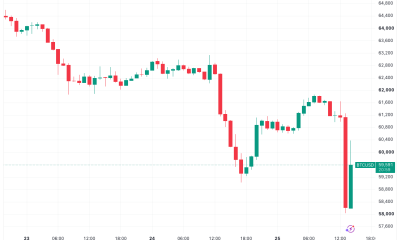
 Crypto World4 days ago
Bitcoin Sparks $600M Hourly Liquidations With $65,000 Set To Become Resistance
-
 Crypto World4 days ago
Hyperliquid Named on Singapore MAS Investor Alert Register
-

 Crypto World3 days ago
RTX holders must register wallets before token distribution begins
-
 Crypto World5 days ago
Ripple and SBI launch RLUSD in Japan after JFSA approval
You must be logged in to post a comment Login