

Crypto World
Gate DEX Fully Integrates Robinhood Chain, Expanding Its Multi-Chain Ecosystem Layout and Onchain Service Capabilities



Gate DEX announced its full integration with Robinhood Chain, becoming one of the first mainstream exchange onchain gateways to support the ecosystem. This feature covers core scenarios such as asset discovery, wallet management, onchain trading, cross-chain interaction, and market tracking, providing users with a more complete and efficient Web3 experience for exploring emerging onchain ecosystems, and further expanding Gate DEX’s multi-chain layout and infrastructure capabilities. For a smoother experience, please update the Gate App to v8.27.0 or above.
As the onchain gateway of the Gate ecosystem, Gate DEX integrates wallet, cross-chain, trading, airdrops, Earn, and DApps, continuously building an open and interconnected full-scope Web3 ecosystem. With the rapid development of emerging public chains, users’ demand for asset discovery, project exploration, and onchain interaction continues to increase. By supporting Robinhood Chain, Gate DEX further connects emerging onchain ecosystems, providing users with a more convenient entry point to popular assets and innovative applications.
In terms of asset discovery, Gate’s main platform Alpha has newly added support for the display and trading of Robinhood Chain ecosystem assets, and has integrated ecosystem launch platforms such as Noxa.fun and Bankr. As an important exploration gateway for emerging assets on Gate, Alpha will connect users with popular assets and innovative projects in the Robinhood Chain ecosystem, helping users discover onchain opportunities more efficiently and improving the efficiency of exploring emerging ecosystem assets.
In terms of asset management and onchain interaction, Gate Wallet has newly added support for Robinhood Chain, enabling functions such as asset display, transfers, and DApp interaction, helping users manage onchain assets more conveniently. At the same time, Gate DEX Swap supports single-chain swaps and cross-chain swaps on the network, improving asset circulation efficiency.
In terms of trading and market services, Gate DEX professional trading supports Robinhood Chain market order trading, while the market module also supports the display of related tokens, helping users view ecosystem asset information and participate in onchain trading more conveniently. In addition, the chain scanning function has newly added support for this ecosystem and covers projects such as Noxa.fun and Bankr, helping users discover onchain hotspots promptly.
The integration of Robinhood Chain expands the boundaries of Gate DEX’s multi-chain ecosystem and enhances cross-chain interoperability. Relying on Across and LayerZero cross-chain solutions, Gate DEX enables asset circulation among BSC, Ethereum, Base, and Robinhood Chain, providing users with a more efficient and smooth multi-chain interaction experience.
Currently, Gate DEX has formed comprehensive onchain service capabilities covering asset discovery, wallet management, trading and swaps, cross-chain connections, and ecosystem applications. This ecosystem expansion is an important measure by Gate to continuously strengthen Web3 infrastructure and connect high-quality public chain ecosystems, and also reflects the platform’s continued investment in multi-chain connectivity and onchain product innovation. In the future, Gate will continue to deepen the development of the Gate DEX ecosystem, accelerate connections with more high-quality onchain networks and innovative applications, promote the continuous upgrading of Web3 product capabilities, and create a more open, efficient, and convenient onchain experience for global users.
How to Explore the Robinhood Chain Ecosystem?
Please update to Gate App v8.27.0 or above to access the new features.
- Discover ecosystem assets: App Exchange mode – [Trade] – [Alpha] – [All Chains] – Select a token
- Explore the onchain ecosystem: App DEX mode – [Markets] – [Markets] – [All Chains] – Select Robinhood Chain
- Swap assets: App DEX mode – [Trade] – [Swap] – Tap [Pay/Receive] – Select Robinhood Chain
- Advanced trading: App DEX mode – [Trade] – [Pro] – Select a token – [All Networks] – Select Robinhood Chain
Learn more here.
About Gate
Gate, founded in 2013 by Dr. Han, is one of the world’s leading cryptocurrency and integrated financial services platforms. Serving over 58 million users globally, it supports trading across 4,800+ digital assets and 12,500+ stock assets, while providing access to a comprehensive range of TradFi assets, including metals, stocks, indices, forex, and commodities, delivering users a one-stop, multi-asset trading experience and blockchain-related services. As an industry benchmark, Gate was among the first platforms to implement 100% Proof of Reserves. Its ecosystem includes Gate Wallet, Gate Ventures, Gate for AI Agent, and a wide range of products and services.
For more information, please visit: Website | X | Telegram | LinkedIn| Instagram | YouTube
Disclaimer:
This content does not constitute an offer, solicitation, or recommendation. You should always seek independent professional advice before making investment decisions. Note that Gate may restrict or prohibit certain services in specific jurisdictions. For more information, please read the User Agreement.
The post Gate DEX Fully Integrates Robinhood Chain, Expanding Its Multi-Chain Ecosystem Layout and Onchain Service Capabilities appeared first on BeInCrypto.

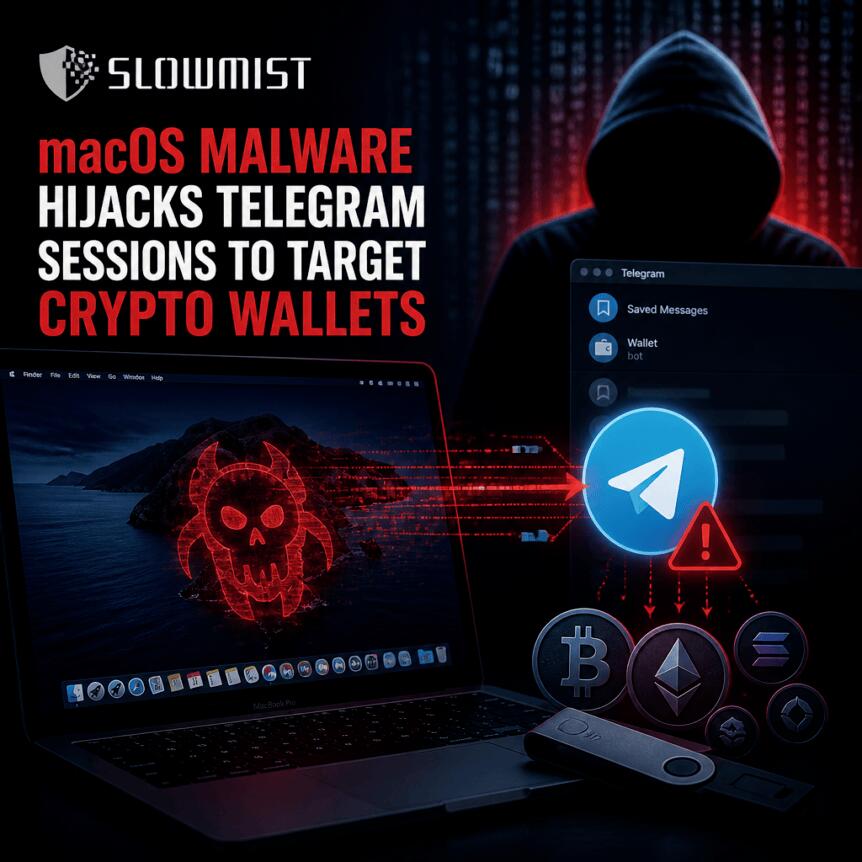
A macOS information-stealing malware can compromise Telegram Desktop sessions and, from there, target both software and hardware cryptocurrency wallets, according to blockchain security firm SlowMist. The report describes an attack chain that harvests credentials and wallet data from multiple macOS sources, then leverages that access to swap or drain funds through techniques that do not rely on breaking Telegram’s two-step verification in the usual way.
SlowMist says the malware extracts secrets from macOS Keychain, Safari cookies, Apple Notes, Telegram Desktop and database files tied to more than a dozen cryptocurrency wallets. After collecting passwords and authenticated session data, it copies Telegram Desktop session information along with wallet databases and browser wallet extension data, enabling follow-on account takeover attempts.
Key takeaways
- SlowMist reports malware can hijack existing Telegram Desktop sessions on macOS by reusing authenticated local data rather than forcing a new login.
- In addition to stealing passwords, the malware targets wallet databases and application data for both popular software wallets and hardware wallet managers.
- Telegram two-step verification may not block the attack because the malware avoids the need to pass verification challenges.
- SlowMist outlines two follow-up strategies: offline wallet database decryption using harvested passwords, or replacing wallet apps (e.g., Ledger/Trezor software) with decoys to capture recovery phrases.
How Telegram Desktop becomes the entry point
SlowMist’s core warning is that Telegram Desktop accounts on macOS may be compromised even when users have enabled two-step verification. The reason, the firm says, is architectural: instead of creating a fresh login that requires verification, the malware reuses an already authenticated local session stored on the device.
In its tests, SlowMist restored stolen Telegram Desktop session data on another Mac without requiring the user to enter a phone number, verification code, or two-step verification password. That distinction matters for users because two-step verification is designed to protect logins, while this method targets session material that can be carried over to a new environment.
The practical takeaway is that Telegram Desktop should be treated as a high-value target when credentials and session files are accessible to malware. If an attacker can move a session to another machine, subsequent steps—such as obtaining access to linked accounts, exchanging information, or guiding victims toward risky actions—can proceed without triggering the protections that apply to new authentication.
Wallet data theft spans software wallets, hardware managers, and node databases
SlowMist says the malware is not limited to Telegram. It also harvests wallet-related data from a wide range of sources, including wallet applications and full-node clients.
On the wallet side, SlowMist names software wallets such as Exodus, Atomic, Electrum, Wasabi and Monero. It also points to targeting hardware wallet software interfaces, including Ledger Live and Trezor Suite—software layers that manage hardware devices and frequently coordinate how users view balances and initiate transactions.
Beyond standalone wallets, the report says the malware searches for wallet data stored by full-node clients, listing Bitcoin Core, Litecoin Core, Dash Core and Dogecoin Core among those affected. For investors and traders, the implication is straightforward: wallet information does not only live in wallet apps. If malware can reach local storage associated with node software, it may uncover additional material that helps attackers attempt to access or reproduce wallet capabilities.
SlowMist also describes collecting data beyond wallet databases, including Safari cookies and Apple Notes. Those components can increase an attacker’s ability to persist access, understand user behavior, or extract sensitive information that is not stored in one dedicated wallet folder.
Offline cracking and fake recovery flows
After harvesting passwords and authenticated session data, SlowMist says attackers can attempt to decrypt stolen wallet databases offline. The attacker would use passwords taken from the infected device, reducing the need for repeated online attempts that might trigger rate limits or other defenses.
SlowMist also describes a second approach: replacing legitimate Ledger and Trezor applications with fake versions. In this scenario, victims could be tricked into entering recovery phrases into the counterfeit software—an especially dangerous outcome because recovery phrases are effectively “master keys” for accessing funds.
SlowMist states it reproduced the attack chain in an isolated environment, supporting its claim that the described steps can be executed together rather than as unrelated capabilities.
For users, the key risk is that wallet compromise can be multi-stage. Even if attackers initially acquire Telegram session access, the malware’s broader collection of wallet databases and application data can enable direct attempts to extract value or pivot to social engineering that captures recovery credentials.
Why Telegram’s usual protections may not be enough
SlowMist’s findings highlight a recurring theme in account takeover incidents: security features sometimes assume a specific threat model. Telegram two-step verification helps protect new logins, but the malware’s method—carrying over an authenticated local session—changes the conditions.
Instead of challenging the user during sign-in, the attacker operates with session data that the device has already established. That makes “I turned on 2FA” less reassuring when malware is already present and can read session-related files.
SlowMist also recommends immediate operational steps for anyone who suspects compromise. It urges users to terminate existing Telegram sessions, create a new trusted login, and update both the Telegram two-step verification password and the Telegram Desktop Passcode. Those steps aim to invalidate the hijacked session material and force Telegram to re-establish trust through a fresh authentication flow.
The firm further advises generating a new recovery phrase on a clean device and moving assets to new addresses. The goal is to break the link between the compromised wallet state and the assets that need protection. If wallet apps or recovery material were exposed, reusing the same recovery phrase after a compromise can leave funds vulnerable to attackers who already have enough information to regain access.
SlowMist’s report serves as a reminder that cryptocurrency security is not only about securing keys on paper or enabling 2FA on messaging apps. When malware can access both session data and wallet databases locally, protections must extend to device hygiene and rapid incident response. Users should watch closely for signs of compromise, verify which Telegram sessions remain active, and be prepared to move funds to fresh addresses after any suspected infection.
Everyone is watching a bill that may not pass. Meanwhile, the agency that spent seven years suing this industry has quietly scheduled a rule that would let startups sell tokens without registering them, and it does not need a single vote in Congress.
Summary
- The SEC has placed Regulation Crypto in its July 2026 rulemaking slot, the first major crypto-specific rule of the Atkins era. It is under review at the White House Office of Information and Regulatory Affairs.
- The proposal would create a time-limited registration exemption for early-stage crypto projects, permit raises of up to $75 million in any 12-month period, and build a safe harbor letting a token exit securities status once its creators stop exerting managerial effort.
- DeFi and tokenized securities are named explicitly as areas where qualifying activity would be protected from SEC enforcement.
- The strategic point almost everyone is missing: a formal rule is far harder for a future Commission to unwind than the staff guidance and interpretive releases the industry currently relies on. The agency route may deliver more durable protection than the bill.
- The catch is that one agency would be writing the rules of American crypto alone, with thresholds that face intense scrutiny the moment they publish, and a safe harbor that is an off-ramp instead of an amnesty.
The entire crypto policy conversation for the past month has been about a bill. Whether the Senate schedules CLARITY, whether seven Democrats can be found, whether the ethics provision survives, whether three working weeks is enough. It is a good story and it may end badly. It has also completely obscured the fact that while Congress argues, the Securities and Exchange Commission has scheduled something that would accomplish a large portion of what the bill promises, requires nobody’s vote, and is sitting at the White House right now awaiting review. It is called Regulation Crypto, it is slotted for July, and it would do the one thing the industry has wanted since 2018: let a startup sell a token in America without first registering it as a security.
What the rule would actually do
Chairman Paul Atkins first sketched the framework in remarks on March 17, 2026, the same day the SEC and CFTC published their joint token taxonomy. That timing was not coincidental. The taxonomy answered what a crypto asset is. Regulation Crypto answers what you may do with one.
Three components carry the weight.
A startup exemption. A time-limited registration exemption for offerings of investment contracts involving certain crypto assets, lasting up to four years, giving developers a regulatory runway while they work toward maturity. Atkins framed the eligibility around early-stage projects, with figures discussed around startups valued under $5 million in their first four years, able to raise up to $5 million during that period. Critically, the exemption would be non-exclusive, meaning every other capital-raising exemption under the federal securities laws would remain available alongside it.
A fundraising exemption. For projects past the earliest stage, a larger allowance: entrepreneurs could raise up to $75 million during any 12-month period while retaining the ability to rely on other registration exemptions. Reporting on the agency’s agenda indicates this would come with conditions, including audited balance sheets and statements regarding the issuer’s financial condition, plus notices to the Commission when relying on the exemption and when exiting it.
A safe harbor for decentralization. This is the most consequential piece. The proposal would create a definitive safe harbor for issuers who complete or transition away from centralized management efforts over their networks, allowing a token to exit securities classification once managerial effort ceases. That is the decentralization off-ramp the industry has been asking for since the Hinman speech, and it would apply an objective standard to secondary markets where those tokens trade.
Beyond those three, the proposal reaches into tokenized securities, and DeFi is named explicitly as an area where qualifying companies would receive protection from enforcement action. The agency has acknowledged, in effect, what practitioners have said for years: traditional securities registration is incompatible with decentralized protocols and automated smart contract systems. Separately, the SEC has opened a comment request reviewing spot crypto ETF approval procedures and proposing a confidential filing process for initial applications, after the Division of Investment Management’s director conceded the agency had mishandled the simultaneous launch of spot crypto funds.
Why this is bigger than it looks
Here is the argument nobody is making loudly enough, and it inverts the entire CLARITY frame.
The American crypto industry currently operates on administrative action. The March 17 joint interpretation classifying 16 named assets as digital commodities is a Commission-level interpretive release. It is binding on the SEC and CFTC, which makes it far stronger than the staff guidance that preceded it, and it is already cited in fund registration statements. But it is not a rule and it is not a law. A future Commission can issue a different interpretation without notice, without comment, and without Congress.
A formal rule is a different animal. Rules go through notice and comment. They generate a record. Reversing a final rule generally requires another full rulemaking with a reasoned explanation capable of surviving judicial review, and agencies that try to shortcut that process lose in court. Bankless put the point precisely: the SEC has leaned on staff guidance and its taxonomy so far, but formal rules are far harder for a future commission to unwind.
So there is a ladder of durability, and it is worth being explicit about where each thing sits.
Staff guidance binds nobody. A Commission interpretation binds the agencies and can be replaced by another interpretation. A formal rule binds until another rulemaking undoes it. A statute binds until Congress acts. The industry has spent a year fighting for the top rung and has largely ignored that the agency is quietly building the third.
Which produces an awkward question worth asking directly: if Regulation Crypto publishes and survives comment, how much of CLARITY does it deliver anyway? Not all of it. The rule cannot divide jurisdiction between the SEC and CFTC, because only Congress can rewrite agency mandates. It cannot bind a future Congress. But the registration exemption, the fundraising allowance, and the decentralization off-ramp are the provisions most builders actually care about, and the agency can deliver those alone.
There is a further irony worth naming. “Reg Crypto” is also the informal name for a capital-raising exemption in the Senate’s version of the CLARITY Act, at Section 103, which would create a new exemption under the Securities Act of 1933. The bill and the rule are converging on the same mechanism from two directions. If both landed, they would overlap. If only one lands, the industry may not notice much difference in the near term.
Why the agency route is worse than a law
The skeptical case is real and deserves its full weight, because the enthusiasm around this proposal has been running ahead of the document, which has not published yet.
Start with the obvious. If CLARITY dies, the burden of defining the rules of American crypto falls almost entirely on one agency and one set of proposed exemptions. That is a fragile foundation for a multitrillion-dollar asset class. It also concentrates enormous discretion in a single Commission whose composition changes with administrations, which is the precise problem the industry claims to be solving. Trading a hostile SEC for a friendly SEC is not the same as trading regulatory uncertainty for regulatory certainty.
The thresholds are the second problem, and they will be the fight. A $5 million startup ceiling and a $75 million annual raise sound generous until you notice they will face intense scrutiny the moment they publish. Consumer advocates will argue that a registration exemption for token sales is a re-run of the 2017 ICO boom with a compliance veneer, and they will have a decade of fraud data to cite. The exemption thresholds and the decentralization off-ramp are exactly the provisions most likely to be narrowed during the comment period, and a rule that publishes at $75 million may finalize somewhere considerably smaller.
The safe harbor is also narrower than the celebration suggests. It functions as an off-ramp, not an amnesty. Issuers remain liable for any misstatements made during the offering period, which means the exemption relieves the registration burden without relieving the antifraud exposure. And the decentralization test is inherently fact-dependent: determining that managerial efforts have genuinely ceased is a judgment call, and a judgment call made by an agency is a judgment call that a different agency can make differently.
Then there is timing. Atkins initially said Regulation Crypto would roll out in January. It is now July. The proposal sits at OIRA, and White House regulatory review is not a rubber stamp. After it publishes, a public comment period follows, then a final rule, then compliance dates. The realistic distance between the July slot and an operative rule is measured in quarters, not weeks. Anyone treating this as imminent relief has not watched a rulemaking before.
And the whole enterprise rests on institutional continuity that crypto has no reason to expect. Atkins tied the initiative directly to the President’s ambition to make America the crypto capital of the world. That is a political framing, and political framings expire.
The ghost of 2017
Any honest treatment of this proposal has to deal with the objection that will define its comment period, because it is not a bad-faith objection and the industry keeps pretending it is.
In 2017 and 2018, roughly the same idea ran without a safe harbor and without conditions. Projects sold tokens to the public on the theory that a sufficiently technical white paper made an investment contract into something else. The result was one of the largest concentrations of retail fraud in modern financial history. The SEC’s enforcement posture over the following seven years, the one the industry spent a decade complaining about, was the response to that period. Regulation Crypto proposes to permit the activity that caused it, under conditions, and the burden of showing the conditions are load-bearing sits with the agency.
The steelman for the proposal is that the conditions are meaningfully different, and they are. The 2017 model had no disclosure requirement; the fundraising exemption contemplates audited balance sheets and statements on the issuer’s financial condition. It had no notice obligation; this contemplates notices to the Commission on entry and exit. It had no time limit; the startup exemption runs up to four years and then the runway ends. It had no antifraud discipline in practice; the safe harbor explicitly preserves issuer liability for misstatements during the offering period. And it had no exit test at all, whereas the decentralization off-ramp requires the issuer to actually surrender managerial control to leave securities status, which is the opposite of the 2017 pattern where founders kept control and claimed decentralization anyway.
That last point is the strongest thing in the proposal and it deserves more attention than the dollar figures getting quoted. An objective standard for when managerial effort has ceased does two jobs at once. It gives honest projects a defined path to maturity. And it makes the dishonest claim harder, because a project that wants the off-ramp has to give up the control that made the token valuable to insiders in the first place. Structured well, the safe harbor is not a loophole. It is a filter.
Structured badly, it is a loophole. Everything depends on where the standard lands, how it is tested, and who reviews the claim, and none of those are knowable from an agenda entry. A decentralization test that a project can satisfy by dissolving a foundation and keeping the multisig is worse than no test, because it converts a factual question into a paperwork exercise and gives the resulting token a federal blessing.
Which is why the comment period is the story, not the announcement. Consumer advocates will arrive with the fraud data and argue the thresholds are too high. The industry will arrive and argue they are too low. The final rule lands somewhere between, and the number that matters is not $5 million or $75 million. It is how much control an issuer must genuinely surrender to reach the off-ramp. Watch that clause. Everything else is negotiable in a way it is not.
What the timing tells you
The most revealing thing about Regulation Crypto is not its contents. It is its position on the calendar.
The SEC scheduled its first major crypto rulemaking for the exact month in which CLARITY either passes or dies. The proposal’s scope and timing are, by several accounts, partly tied to the bill’s fate. Read that as the agency hedging. If Congress delivers, the rule harmonizes with the statute and fills gaps. If Congress fails, the rule becomes the framework, and the SEC will have spent the interval building it instead of waiting.
That is competent institutional behavior and it is also a quiet verdict on the odds. Agencies do not schedule contingency frameworks for legislation they expect to pass. Prediction markets have CLARITY’s 2026 passage in the mid-20s to upper-30s percent range. The SEC’s rulemaking calendar appears to agree with the traders.
For anyone actually trying to build in this market, the practical guidance inverts the usual advice. The bill is the loud story and the low-probability one. The rule is the quiet story and the likelier one. Watch whether the proposal clears OIRA and publishes in July as scheduled. Watch whether the decentralization off-ramp survives with an objective standard intact, because that provision does more work than any other. Watch whether the raise thresholds hold through comment. And watch the naming collision between the agency’s Reg Crypto and CLARITY’s Section 103, because if both survive, someone will spend a year reconciling them.
Seven years ago the SEC’s position was that most tokens were unregistered securities and the appropriate response was enforcement. The same agency now proposes to let founders sell them without registering. Nothing in the underlying law changed. What changed was who runs the building, which is either the strongest argument for passing CLARITY or the clearest evidence that the industry does not need it. It cannot be both, and the next three weeks decide which.
There is one more reading available, and it may be the correct one. Perhaps the choice was never between the bill and the rule. The taxonomy classified the assets in March. Regulation Crypto would govern how they are sold. CLARITY would divide who supervises the market and put both of the first two beyond the reach of the next Commission. Those are three different jobs, and only the third requires Congress. An industry that got two of them inside four months, from an agency it spent a decade litigating against, has done considerably better than its own rhetoric admits, and the remaining gap is narrower than a year of vote-counting coverage suggests.
The gap is also the only part that lasts. Rules and interpretations are the crypto industry renting its legal status from whoever holds the chairs. The rent is cheap right now and the landlord is friendly. That is a fine arrangement until it is not, and the entire argument for the bill reduces to whether anyone believes the lease gets renewed. On the evidence of the past decade, that is not a bet a serious allocator makes with someone else’s capital, which is why the quiet rulemaking and the loud bill are not substitutes at all. One of them is a good year. The other is a floor.
Disclaimer: This article is for information and educational purposes only and does not constitute financial, investment, or legal advice. It describes a proposed rulemaking that has not yet published, and proposal terms, thresholds, and timing can change materially through White House review and public comment. Nothing here is a recommendation to buy or sell any asset or to rely on any exemption. Always do your own research. Information is accurate as of July 17, 2026.
Frequently Asked Questions
What is Regulation Crypto?
A proposed SEC rulemaking, the first major crypto-specific rule of Chairman Paul Atkins’s tenure, placed in the agency’s July 2026 rulemaking slot. It would create registration exemptions and safe harbors for certain on-chain financial activity, including a startup exemption, a larger fundraising exemption, and a safe harbor allowing tokens to exit securities classification once managerial efforts cease. DeFi and tokenized securities are named explicitly.
How much could a startup raise without registering?
Two tiers have been discussed. A startup exemption aimed at early-stage projects, described around companies valued under $5 million in their first four years, allowing raises of up to $5 million over that period. And a broader fundraising exemption permitting up to $75 million in any 12-month period, subject to conditions including audited balance sheets and notices to the Commission. Both would be non-exclusive, leaving other exemptions available.
What is the decentralization safe harbor?
A mechanism allowing a token issuer who has completed or transitioned away from centralized management of a network to have the asset exit securities classification. It applies an objective standard to the question of when a crypto asset is no longer subject to an investment contract, which matters most for secondary markets where those tokens trade. It is an off-ramp, not an amnesty: issuers remain liable for misstatements made during the offering period.
Does this replace the CLARITY Act?
Not entirely. A rule cannot divide jurisdiction between the SEC and CFTC, since only Congress can rewrite agency mandates, and it cannot bind a future Congress. But the registration exemption, the fundraising allowance, and the decentralization off-ramp are the provisions most builders care about, and the SEC can deliver those alone. Confusingly, “Reg Crypto” is also the name of a capital-raising exemption at Section 103 of the Senate’s CLARITY text.
Why is a rule more durable than current guidance?
Because of how each is undone. Staff guidance binds nobody. The March 2026 joint interpretation binds the SEC and CFTC but can be replaced by another interpretation without notice, comment, or Congress. A formal rule requires another full rulemaking to reverse, with a reasoned explanation that must survive judicial review. That procedural friction is precisely what makes a rule harder for a future Commission to unwind.
When would it take effect?
Not soon. The proposal is under review at the White House Office of Information and Regulatory Affairs. If it publishes in July as scheduled, a public comment period follows, then a final rule, then compliance dates. Atkins originally targeted January, and it slipped to July. The realistic distance to an operative rule is measured in quarters.
What are the main criticisms?
Three. That a registration exemption for token sales revives the 2017 ICO model with a compliance veneer, which advocates will argue with a decade of fraud data. That the thresholds and the off-ramp are the provisions most likely to be narrowed during comment, so the final rule may look considerably smaller. And that concentrating the rules of American crypto in one agency swaps a hostile Commission for a friendly one without delivering actual certainty.
How does this connect to the CLARITY Act’s odds?
Directly. The SEC scheduled its first major crypto rulemaking for the same month CLARITY either passes or dies, and the proposal’s scope and timing are partly tied to the bill’s fate. Agencies do not build contingency frameworks for legislation they expect to pass. Prediction markets price 2026 passage in the mid-20s to upper-30s percent range, and the rulemaking calendar appears to share that assessment.
Crypto World
Cardano News: Cardano’s Van Rossem Hard Fork Activates Tomorrow, And Whales Are Buying While Traders Go Short

In the latest Cardano News, Cardano is trading at $0.158, down 1.39% on July 17, while derivatives traders push the long-to-short ratio to 0.58 and open interest climbs 4% to $421 million in the 48 hours before the Van Rossem hard fork activates.
The structural tension is sharp: the same wallets flooding short books are being offset by whale accumulation that has reached its highest level since 2023, creating a setup where the next directional move is likely to be violent in whichever direction it resolves.

Discover: The Best Token Presales
Cardano News: Van Rossem Governance Approval Sets July 18 Activation
The Van Rossem hard fork cleared governance on July 13, ratified by SPOs and DReps, with activation scheduled for July 18 at 21:44:51 UTC at Slot 192,844,800.
Intersect has urged all infrastructure providers to update their software before the network crosses the hard fork boundary, a standard precaution, but one that signals the upgrade is proceeding on schedule without last-minute complications.
According to some news, the upgrade is expected to lower execution costs on Cardano, making transactions and dApp operations materially cheaper to run.
More consequentially for medium-term traders, Van Rossem lays the technical groundwork for Leios, a later scaling upgrade targeting a dramatic increase in transaction throughput before the end of 2026.
That roadmap context matters: this fork is not a standalone event but a dependency in a longer delivery chain, which is part of why whale positioning ahead of it carries more weight than typical upgrade speculation.
Discover: The Best Crypto to Diversify Your Portfolio
$0.160 and $0.170 Are the Levels That Decide the Next Move
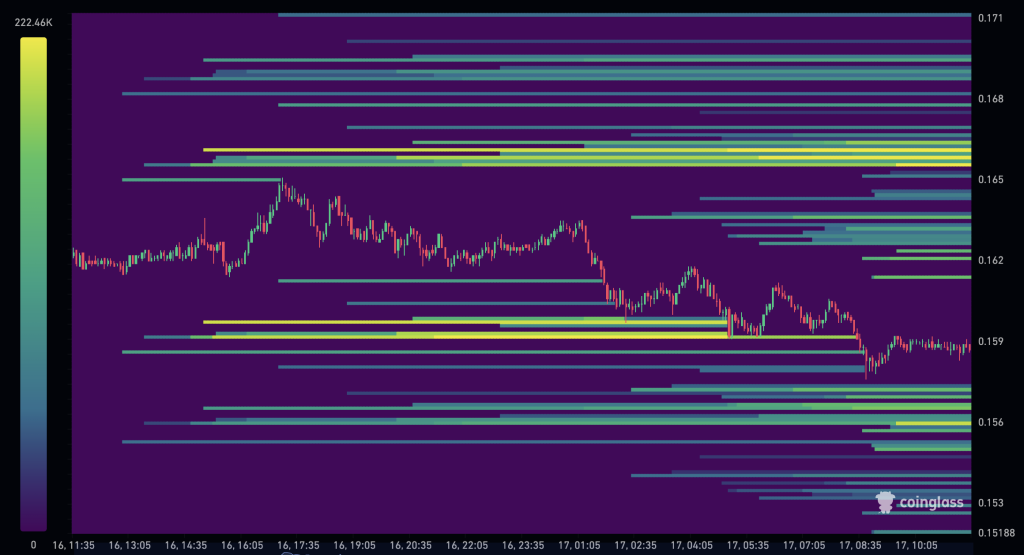
The CoinGlass three-day liquidation heatmap places the nearest dense liquidity pool between $0.160 and $0.165, sitting directly above ADA’s current market price.
A larger concentration appears around $0.167, closely matching the Murrey Math resistance at $0.1709 visible on the daily TradingView chart.
These two clusters define the near-term binary: a drop through $0.160 triggers long liquidations and opens a path toward the $0.1465 Murrey Math support; a break above $0.170 forces short sellers to close positions and hands momentum to the recovery attempt as Van Rossem goes live.
The 4-hour chart shows ADA has crossed above a descending trendline drawn from its early-July peak near $0.195, but the move failed to produce a sustained rally.
The RSI on the 4-hour sits at 46.92, below its moving average of 50.95, bearish-neutral territory, not oversold. That reading matters because it means there is no technical floor from extreme pessimism; price is simply drifting, waiting for a catalyst to define direction.
The predecessor to Van Rossem, the Vasil hard fork in September 2022, improved Cardano’s smart-contract efficiency and block utilization.
Van Rossem’s mandate is different, cost reduction and Leios preparation, but the governance process that delivered it, now running through Intersect with formal DRep and SPO ratification, represents a more mature and transparent upgrade mechanism than Cardano operated in 2022.
Whether that institutional credibility translates into sustained buying pressure post-fork, or whether short sellers use any pop to add to positions, is the question traders need an answer to before the July 18 activation window closes.
The liquidation heatmap at $0.167 is the cleanest signal: a daily close above that level removes the ambiguity. For context on how derivatives positioning and institutional vs. retail behavior interact during catalyst events, the pattern is consistent across major crypto assets; the side that controls spot supply usually wins the futures battle by attrition.
Trade ADA on Bybit and Get a Chance to Win Our $1,000 USDT Airdrop
The post Cardano News: Cardano’s Van Rossem Hard Fork Activates Tomorrow, And Whales Are Buying While Traders Go Short appeared first on Cryptonews.
Crypto World
Airbnb CEO Brian Chesky’s X account hacked; attacker posted AI-slop on asset tokenization


Airbnb CEO Brian Chesky said his X account was hacked, and the attacker posted a thread promoting tokenized real-world assets (RWAs) that was criticized as being heavily AI-assisted.
The now-deleted posts argued that tokenization could make buildings, bonds and funds easier to divide, trade and settle. The thread referenced trading platform Robinhood’s push into tokenized assets.
The posts did not mention a token sale, wallet or token address or investment link, making the compromise less obvious than a typical crypto account takeover.
“To the person who hacked my account earlier this week: thanks for all the new crypto followers,” Chesky wrote after regaining access. “To my new crypto followers: I’m going to be a very disappointing follow.”
Airbnb reported the incident to X, which secured the account. It isn’t clear how the attacker gained access or who was responsible.


Taiwan has sentenced the alleged mastermind behind the BitShine crypto exchange to 22 years in prison after finding he led a fraud and money laundering operation that prosecutors said caused more than NT$1.27 billion ($39 million) in losses to over 1,500 victims.
Summary
- A Taiwan court has sentenced the BitShine crypto exchange ringleader to 22 years in prison over a NT$1.27 billion fraud and money laundering scheme.
- Prosecutors said more than 1,500 victims were defrauded after funds were converted into USDT and moved overseas through the exchange.
- The ruling comes after Taiwan approved a new licensing framework that strengthens oversight of crypto exchanges and stablecoin issuers.
Taiwan’s semi-official Central News Agency (CNA) reported that the Shilin District Court convicted the defendant, identified by the surname Shih, of illegally operating virtual asset services while orchestrating fraud and money laundering through the BitShine platform.
Court findings said Shih led a criminal organization that used BitShine, a crypto exchange previously registered with Taiwan’s Financial Supervisory Commission (FSC), to disguise illegal activities behind what appeared to be a legitimate business.
Prosecutors said the group worked with fraud syndicates and members linked to the Thento Union, one of Taiwan’s largest organized crime groups. Victims’ cash was allegedly converted into Tether’s USDT before being transferred overseas.
Investigators estimated the operation laundered more than NT$2.3 billion ($71 million) between January 2024 and April 2025. Prosecutors identified 1,539 victims who together lost more than NT$1.27 billion ($39 million), according to CNA.
Local newspaper UDN reported that Shih recruited compliance personnel who were unaware of the alleged scheme to develop know-your-customer (KYC) procedures for the exchange. Prosecutors said intermediaries later coached fraud ring members on how to answer KYC verification questions so victims could successfully complete onboarding and purchase cryptocurrency through the platform.
Authorities indicted 14 suspects, including Shih, in August 2025. Prosecutors had sought a 25-year prison sentence for the alleged ringleader before the court handed down a 22-year term.
Taiwan tightens crypto oversight
The ruling comes weeks after Taiwan approved a new legal framework for virtual asset businesses.
On June 30, Taiwan’s Legislative Yuan passed the Virtual Asset Service Act, replacing the country’s previous anti-money laundering registration system with a licensing regime covering crypto exchanges, trading platforms, custodians, transfer firms, lending providers and other virtual asset service providers.
Under the new law, crypto businesses must obtain approval from the FSC before operating. Existing firms that completed anti-money laundering registration before the law takes effect will have 12 months to apply for regulatory approval and up to 21 months to secure a license, with a one-time three-month extension available in limited cases.
The legislation also introduces rules covering cybersecurity, customer asset segregation, internal controls, financial reporting, and asset listing reviews. Stablecoin issuers must receive approval from both Taiwan’s central bank and the FSC while maintaining fully backed reserves held in trust, alongside regular audits and public disclosures.
The law also establishes criminal penalties for unlicensed crypto operations and market abuse. Illegal virtual asset services or stablecoin issuance can result in prison terms of up to seven years and fines reaching NT$100 million, while fraud and market manipulation offenses carry penalties of three to 10 years in prison and fines of up to NT$200 million.
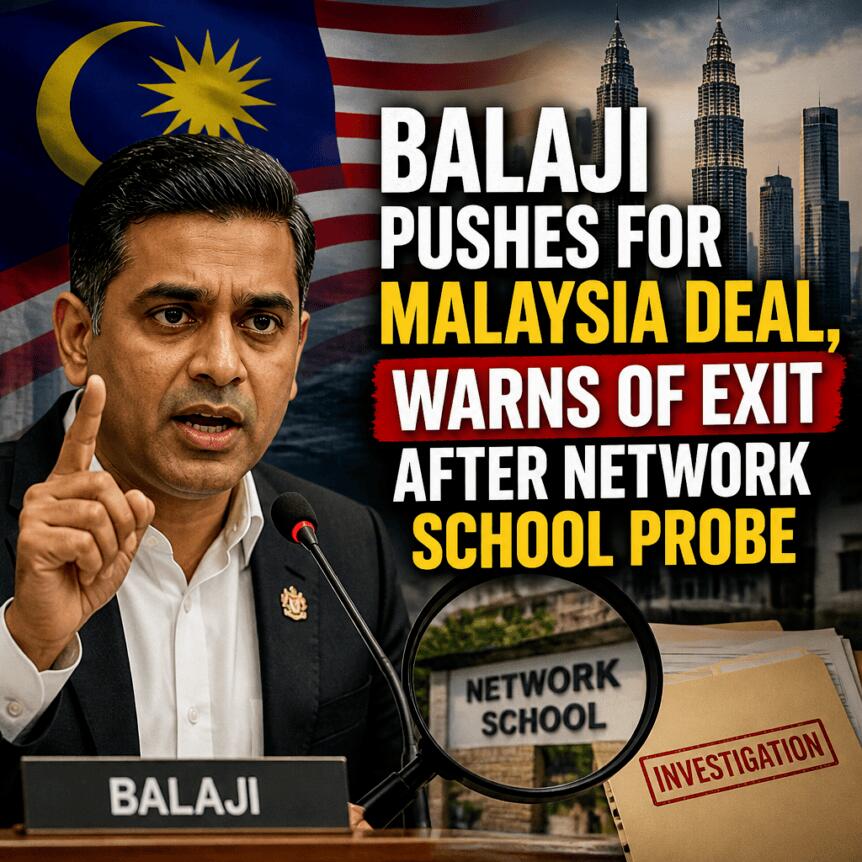
Balaji Srinivasan, the founder of Network School—an in-person tech community in Malaysia—says he is seeking an official memorandum of understanding (MoU) with Malaysia after authorities opened an investigation into allegations that the community was sheltering Israeli citizens using second passports.
Malaysia’s Home Affairs Ministry said it is checking the Forest City project in Johor after reports claimed Israelis were present in violation of immigration rules. The ministry said initial checks found that all 266 foreign nationals linked to the community were holding valid travel documents, while the investigation continues.
Key takeaways
- Malaysia is investigating Network School after claims that it included Israelis who would be in breach of immigration requirements.
- The Home Affairs Ministry reported that preliminary document checks for 266 foreign residents showed valid paperwork.
- Srinivasan is requesting an MoU to provide “legal certainty” for future investment and operations in Malaysia.
- He has paused planned expansion spending in Malaysia pending assurance that the allegations will not repeat.
- The case underscores how “crypto utopias” and digital-native communities still rely on conventional state frameworks for legality.
An MoU aimed at legal certainty
Srinivasan framed the request for a formal agreement as a solution to uncertainty around the legal standing of Network School’s residents and investors. He said that without a document clarifying that the community is welcome, Network School could shift its capital elsewhere.
In a video directed to Malaysian Prime Minister Anwar Ibrahim, Srinivasan said he wants something more concrete than broad assurances that “tech is welcome,” arguing that the community needs personal confirmation that it is legally and politically accepted. He did not detail the final structure of the agreement, but suggested it could take the form of a memorandum of understanding or involve an adjustment to a special economic zone provision.
According to Srinivasan, the MoU is also intended to ensure that additional capital commitments do not become hostage to future immigration disputes. He said he is putting further investments in Malaysia, including a $122 million expansion plan for the community, on hold until he receives “sufficient assurance” that the situation will not recur.
Malaysia’s investigation: initial checks show valid documents
Malaysia’s Home Affairs Ministry said Tuesday that it is investigating the Network School project in Johor following allegations that the community included Israelis in a way that would violate immigration law. The ministry reported that its initial checks reviewed documents for 266 foreign nationals connected to the effort and found that they were all in possession of valid travel documents.
While the preliminary findings suggest paperwork compliance at least on the documentation front, the fact that a probe has been initiated indicates that authorities are still looking beyond the mere existence of valid travel documents—particularly in relation to nationality-specific entry requirements and the underlying claims prompting the scrutiny.
How the allegations surfaced
The claims appear to have originated from social media. The article reports that the allegations were traced back to a post on Instagram from the activist group “Malaysian Protest 4 Palestine,” which accused Network School of operating as a “gathering place for Israeli entrepreneurs.”
Under Malaysia’s rules, Israeli passport holders are reportedly not allowed to enter without written permission from the Malaysian Ministry of Home Affairs, and Malaysia does not recognize Israel or maintain diplomatic relations with the country. This policy forms the basis for why the allegations—if true—would raise legal concerns.
It also highlights a recurring challenge for projects that present themselves as international or border-agnostic communities: even when members hold valid documents, eligibility and entry permissions can still hinge on a broader framework of state policy.
The broader tension for border-dependent “crypto utopias”
Network School is marketed as a physical community for tech builders and founders, and Srinivasan has previously positioned it as part of a more ambitious vision for technology-driven institutions. The current dispute reflects a tension many similar communities face: they may want to create digital-native ecosystems—complete with their own norms, networks, and economic activity—yet their continued operation ultimately depends on conventional government permission and legal clarity.
The episode is therefore more than a single-country immigration story. It raises questions about how quickly digital communities can institutionalize without first securing stable legal frameworks for their participants—particularly when public allegations or geopolitical sensitivities intersect with immigration rules.
In Srinivasan’s account, the need for an MoU is not about asking for special treatment, but about reducing uncertainty that can immediately affect capital plans. That dynamic is a practical issue for builders and investors alike: expansion timelines, residence planning, and onboarding of international participants can all become difficult if the legal status of the community or its membership composition remains in dispute.
While Malaysia’s ministry has stated that initial document checks found valid papers for the 266 foreign nationals involved, the investigation’s outcome—and whether an MoU will satisfy the “assurance” Srinivasan is demanding—will determine whether Network School can proceed without further interruptions.
Readers should watch next for the scope of Malaysia’s continuing review and whether Srinivasan’s requested agreement clarifies how immigration requirements will be applied to Network School residents going forward.
Remember last year? I mean, you should; it wasn’t all that long ago. From a crypto perspective, it brought some massive gains, crashes, records, intensity, adoption, and everything in between.
Numerous digital assets managed to break their previous all-time highs, including Ripple’s XRP. In fact, it took the token over seven years to do what many considered impossible just months prior.
Nevertheless, XRP pushed through, rocketed past $3.40, which was widely considered the all-time high at the time, and charted a new one at $3.65. Oh, and it did so precisely a year ago on this date, according to CoinGecko (some exchanges will show that it was on July 18, but it’s a matter of time difference).
The Next 12 Months
The rally that began after the 2024 US presidential elections gave the Ripple bulls wings to make some major predictions. XRP’s ability to spike above $3.50 only strengthened their thesis, and massive forecasts began to drop left and right. The more modest ones set $5 as the next target, but the majority envisioned a mind-blowing surge into the low-double-digit price range.
If you have even remotely followed what took place in the following 12 months, you would know the reality was painfully different. XRP was almost immediately rejected. By early August, it had already dropped below $3, and even though it challenged the old ATH at $3.40 in the following weeks, it was evident that the momentum had faded.
The token managed to remain at around $3 until the notorious October crash, when it slumped to $1.60 on some exchanges and even to $1.10 on a few others. Although it quickly rebounded to $2.60, the chart below will clearly demonstrate its downfall in the following months, which included permanently losing the $2 support and even challenging the next major one at $1.
It still remains above that coveted line, but current data shows a 70% crash in exactly a year: from $3.65 to $1.08 as of press time. The question is: did something go wrong for XRP and Ripple, or is it just a classic bear-market correction?

Ripple’s Moves
Despite the XRP price nosedive, the company behind the asset has not stood still in the past year. Perhaps its biggest move was the acquisition of Hidden Road for $1.25 billion. Technically, it was announced prior to XRP’s ATH, but it was completed later that year, and Ripple Prime launched afterward.
The company also received initial approval to establish Ripple National Trust Bank and, most recently, full authorization in Europe by securing a MiCA license. The former allows it to build federally regulated banking infrastructure, while the latter enables it to offer regulated crypto payments, custody, liquidity, and XRP services across the EEA.
The firm has also initiated expansions in several other regions, including Australia, Singapore, Japan, and Brazil.
Last but definitely not least, the first XRP ETFs were greenlit in the US in November 2025, quickly becoming a fan favorite among investors.
Consequently, the past year could be described as one of the most successful fundamentally for Ripple. Yet, its native token has fallen by 70%, which begs the question of whether the market has yet to fully price in these developments.
The post Ripple (XRP) Peaked at $3.65 Exactly a Year Ago: What Went Wrong? appeared first on CryptoPotato.

As the highly anticipated match between Spain and Belgium ignited the stadium, HTX’s SVIP users witnessed this world-class sporting moment far beyond the trading screen: through live match viewing, an exclusive VIP Lounge, customized travel itineraries, and face-to-face networking with fellow users from across the globe.

This premium experience, themed “HTX SVIP World Cup Journey,” was more than just a luxury getaway. It served as a tangible expression of HTX’s philosophy on VIP services — proving that SVIP is not merely a membership tier, but a long-term partnership.
One SVIP client, K, shared his thoughts after the experience:
“Previously, when I thought about exchange VIP perks, the first things that came to mind were usually ‘behind-the-scenes benefits’ like trading fee discounts, dedicated customer support, and higher limits. But this time, HTX brought us straight to the World Cup stadium, with access to a custom VIP lounge and an exclusive live match experience. These are real, tangible benefits you can actually enjoy.”

From a Trading Platform to a Long-Term Partner
For key clients, the most valuable service isn’t demonstrated when everything is going well, but at critical moments — when markets shift rapidly, capital needs to be mobilized quickly, or account issues require immediate resolution.
Unlike retail users, key and institutional clients face significantly more complex challenges: a single large trade may require liquidity arrangements; a market strategy may hinge on onboarding and verification timelines; a delayed withdrawal could impact subsequent capital deployment.
To address these challenges, HTX has established a dedicated service framework for SVIP users and institutional clients at Prime 5 and above that operates independently of the standard support queue. Spanning major communication channels such as Telegram, email, and WeChat, this framework uses Telegram as its primary 24/7 service hub, ensuring clients across different time zones can reach a dedicated support team whenever they need assistance.
Rather than addressing standard retail queries, this specialized team focuses on high-impact matters of direct concern to key clients. These include liquidity support, KYC verification, institutional onboarding, account management, and other time-sensitive operational issues. Through this tiered service framework, key clients benefit from streamlined communication pathways and high-priority response times.
Fast Issue Resolution: The Key to Effective Customer Support
For VIP services, being “online” is merely the baseline. The true differentiator is the ability to understand complex business scenarios in depth and rapidly coordinate internal resources to resolve issues.
Case Study 1: Seamless Institutional Onboarding. A newly onboarded institutional client sought to complete verification and start trading ahead of a major market event. The dedicated team maintained continuous communication via Telegram, helping organize account settings, streamlining outstanding documentation, and coordinating internal reviews to successfully launch the client within their target window.
Case Study 2: Frictionless Verification. A Prime client was unclear about the supplementary documentation required for level 3 KYC verification. Through real-time communication, the team clarified each requirement step-by-step, eliminating the prolonged wait times typically caused by repeated document resubmissions.
Case Study 3: Rapid Settlement Support. During a large-scale withdrawal, a client noticed their transaction was pending. After receiving the client’s feedback, the team immediately intervened and tracked the issue internally, enabling the transaction to be processed within 5 minutes. While this represents a specific operational resolution, it highlights the dedicated team’s execution capabilities when handling high-priority issues.
Furthermore, when clients require liquidity support for large positions, the team provides direct coordination and specialized assistance. For institutions and high-net-worth individuals, the value of such services goes beyond simply solving an isolated issue—it significantly reduces communication friction, buying critical time for high-stakes investment decisions.
From Foundational Efficiency to Tailored VIP Privileges
Exceptional VIP service must first address trading efficiency challenges. Only on top of that foundation can a highly differentiated product and benefit ecosystem be built.
Built around the diverse needs of SVIP users, HTX has developed a multi-tiered benefits system spanning trading fees, Earn products, lending, and exclusive privileges.
- 1. Tailored Fee Structures. SVIP clients can earn rebates on their trades and unlock tailored, ultra-low fee structures that match their specific operational profiles and trading styles.
- 2. Exclusive VIP Flexible Earn. HTX has introduced an exclusive VIP Flexible Earn program for USDT, offering enhanced yield opportunities for eligible Prime users. Specifically, Prime 5–Prime 7 users can enjoy up to 6.00% APY with a 50,000 USDT quota, while Prime 8–Prime 9 users can access up to 7.00% APY with an 80,000 USDT quota. Prime 10–Prime 11 users can enjoy the highest tier of benefits, with up to 9.00% APY on a 100,000 USDT quota. Additionally, based on trading volumes or net deposit metrics, the platform can issue APY Booster Coupons covering core assets like USDT, USDD, and ETH.
- 3. Optimized Lending Terms. For SVIP users who use Collateral Swap, larger loan amounts unlock progressively higher discount rates—up to 28% off (72% of the standard cost)—along with tailored liquidation-delay protection policies.
These benefits are built around a single principle: VIP service is not about repackaging standardized products. Instead, it is about designing bespoke service frameworks tailored to each client’s trading scale, capital structure, and business needs.
Making Premium Service Tangible
If dedicated responses, optimized fee structures, and customized liquidity support form the professional bedrock of VIP service, then initiatives such as the World Cup Journey, holiday gifts, and personalized birthday celebrations elevate these services from the trading dashboard into real-world experiences.
HTX provides its SVIP users with premium physical and offline experiences, including customized holiday gift sets, exclusive birthday celebrations, and bespoke brand collectibles. The World Cup Journey further expands the horizons of global high-end privileges, proving that VIP service does not just live in account settings—it can manifest at world-class sporting events, key global cities, and during significant moments in users’ lives.
The World Cup Journey is merely one chapter of HTX’s global SVIP experience. From 24/7 on-demand communication channels to specialist assistance for liquidity, verification, and account settings; and from tailored trading fees, Earn products, and optimized lending privileges to live access at world-class arenas—HTX is actively cultivating a VIP service ecosystem that starts with execution efficiency and matures into a long-term partnership.
True VIP service does not simply mean offering more perks when times are good. It means ensuring that when clients need it most, there is always someone to answer, someone who understands, and someone to walk beside them.
The post From the World Cup Stadium to 24/7 Support: How HTX is Redefining VIP Services appeared first on BeInCrypto.

In the lastest Ethereum news, Fundstrat’s Tom Lee is arguing that Ethereum’s next major move has nothing to do with crypto-native speculation, and everything to do with institutional capital that is already deployed and building.
Writing in Bitmine’s July Chairman’s message, Lee pointed to BlackRock BUIDL, JPMorgan MONY, and Robinhood Chain as concrete evidence that Wall Street has moved from observation to construction on Ethereum’s rails. The ETH price currently sits near $1,880, about 60% below its 2025 peak near $5,000.
The gap between that peak and current levels is the central question Lee addresses. His read is that it reflects a regime change, not a structural ceiling, the first era of ICOs, NFTs, ETFs, and stablecoins has run its course, and the institutions now building on Ethereum represent a fundamentally different demand base with longer time horizons and larger capital pools.

Discover: The Best Token Presales
Ethereum News: BlackRock, JPMorgan, and the Tokenization Build-Out
Lee’s institutional case rests on names that move markets in traditional finance. BlackRock BUIDL, the asset manager’s tokenized Treasury fund, now holds roughly $2.6 billion and has earned Moody’s top money-market rating (Moody’s cited).
JPMorgan MONY extended the bank’s tokenization push that began with Onyx in 2020, adding another institutional-grade vehicle to the Ethereum ecosystem.
Electric Capital data cited by Lee puts nearly 6,000 developers on the EVM stack, ranking Ethereum first among all chains for new builders, a metric that matters more to institutions evaluating long-term platform risk than short-term price momentum.
1/
Bitmine released its July Chairman's Message titled
"ETH is the Cure for the Uncanny Valley of Wealth"
– Two exponential tailwinds for Ethereum
– The crypto headwinds of 2026 are ending
– Bitmine primed for next bull cycle
Linkhttps://t.co/RHYkprmhCD— Bitmine (NYSE-BMNR) $ETH (@BitMNR) July 16, 2026

Wall Street is building on Ethereum, Lee argues in the Chairman’s message, contrasting 2022’s crypto bear-market backdrop with continued institution-led development.
In 2025 and 2026, institutional crypto infrastructure has continued to expand even as ETH price fell sharply from its cycle highs. That divergence between on-chain institutional activity and spot price is the core of his thesis. For more on how BlackRock’s ETF flows are reinforcing this dynamic, see this analysis of BlackRock ETF inflows and their ETH price implications.
Discover: The Best Crypto to Diversify Your Portfolio
Robinhood Chain: ETH as Settlement Money
Robinhood Chain, launched July 1 on Arbitrum, handed Lee one of his more striking data points. Within two weeks of going live, it ranked third among all networks by DEX volume at about $811 million daily, briefly surpassing Ethereum itself according to DefiLlama. Ethereum has since reclaimed that position, and cumulative Robinhood Chain volume has crossed $1 billion.
In the Chairman’s message news, Lee argues that Robinhood Chain’s use of ETH (as described in his discussion of the network’s fees and how it settles) makes it a meaningful Ethereum use case.
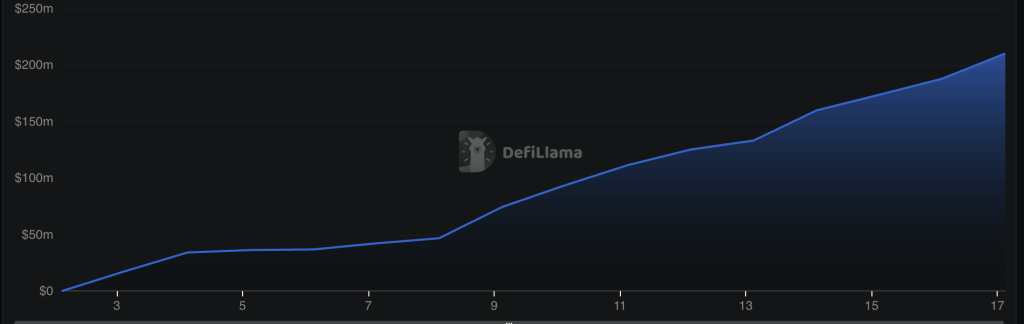
The counterargument is equally straightforward. Artemis CEO Jon Ma has noted that Robinhood Chain’s volume spike is predominantly meme coin-driven, not institutional flows.
And the fee economics cut against Lee’s framing, Robinhood Chain pays Ethereum’s base layer almost nothing in fees. High DEX volume on an Arbitrum-based chain does not translate 1-for-1 into ETH fee burn at the L1 level.
The Amazon Analogy, and the Conflict It Carries
Lee frames the current ETH setup through an Amazon analogy: the stock traded near a split-adjusted $6 for 12 years before climbing to $241 as its total addressable market expanded beyond what early investors could model. He also describes the psychology around sellers at depressed prices.
He also concedes the bearish read directly. ETH has failed twice at the $5,000 level, and skeptics argue that the top of the range could limit upside this cycle.
The conflict of interest embedded in Lee’s thesis deserves direct acknowledgment. Bitmine’s latest weekly disclosure shows 5.77 million ETH, about 4.8% of the 120.7 million total supply. Lee is among the biggest beneficiaries if institutional adoption confirms his thesis.
That does not make his argument wrong, but it reframes every price target he issues as coming from a holder with an extraordinary financial stake in the outcome.
The institutional infrastructure Lee cites is real. BlackRock BUIDL’s Moody’s rating, JPMorgan’s MONY fund, and Robinhood Chain’s early volume numbers are all verifiable facts, not projections.
Whether they are sufficient to drive ETH from $1,880 back through $5,000 and beyond depends on whether institutional capital deepens from product launch into sustained secondary market demand, a step that none of these programs has yet demonstrated at scale.
Trades Ethereum, and Don’t Miss Out on Our $1,000 USDT Airdrop on ByBit
The post Ethereum News: BlackRock, JPMorgan Builds Make ETH a Wall Street Asset, Tom Lee Argues appeared first on Cryptonews.


Ether (ETH) fell twice as hard as bitcoin on Friday and hyperliquid’s HYPE fell more than five times as hard, as a selloff in Asian semiconductor shares dragged every major cryptocurrency lower.
Ether dropped 4% to $1,850, though it remains up 4% over seven sessions and is the only major still green on the week. HYPE was the worst of them at $60, down 10% on the day and 12% on the week, its steepest stretch since June. Solana slid 2% to $75 and is off 5% for the week.
XRP eased 2% to $1.09, BNB fell 2% to $571, TRON slipped to 32 cents and dogecoin lost 2%. Bitcoin held up best of the group, down 2% to about $63,400 and 1% on the week after failing twice at $65,000.
The selling started in semiconductors. MSCI’s Asia Pacific equities gauge dropped 3%, heading for its lowest close in two months, while Japan’s Nikkei 225 slumped 5% in its worst session since March. Taiwan Semiconductor was on track for its biggest one-day decline since April 2025 and Japan’s Kioxia sank as much as 16%.

Ukraine decimates Putin’s shadow-fleet: Sea of Azov becomes Russian shipping graveyard as Kyiv hits 116 vessels in week-long drone onslaught

World Cup pub sales up 145% for England v Argentina semi

macOS Malware Hijacks Telegram Sessions to Target Crypto Wallets


-

 Fashion6 days ago
Weekend Open Thread: Nutriplenish Leave-In Conditioner
-
 NewsBeat18 hours ago
London Mayor Sadiq Khan handed a peerage by Keir Starmer alongside 15 other Labour figures… just days before the PM leaves No10
-

 Crypto World1 day ago
CFTC blocks Kalshi from unwinding Michigan trades after court order
-

 Business1 day ago
Nvidia Stock Slips After Big Tuesday Rally as Huang Confirms Vera Rubin Chip Is Now in Production Today
-

 Politics2 days ago
Young campaigners urge incoming PM to act on outdoor junk food ads
-
 Entertainment2 days ago
Disney’s Most Ambitious Failed Star Wars Attraction Is Coming to SDCC
-

 News Videos3 days ago
XRP BOMBSHELL… XRP OMBOARDED FOR TRANSACTIONS!!!
-

 Tech3 days ago
Get Your ESP32 Sunny Side Up With This Solar Dev Board
-

 Crypto World13 hours ago
Injective Submits SEC Transfer-Agent Registration to Onchain Ownership Records
-

 Tech3 days ago
Dark Secrets Emerge When Jailbreaking LLMs
-
 Sports2 days ago
New Cornerback Enters Vikings Trade Rumor Mill
-

 News Videos3 hours ago
Money | Class 12 Economics | CBSE Board Exam 2026-27
-

 Business8 hours ago
Banco Bilbao Vizcaya Argentaria, S.A. (BBVA) Discusses Global Macro Environment and Economic Outlook for Core Markets Transcript
-

 Business1 day ago
Palantir Shares Rise After Expanded Nvidia Partnership and Fresh Analyst Upgrades Ahead of Earnings Day
-
 Tech4 days ago
Cloudflare Precursor Watches Your Mouse and Keyboard To Decide If You Are Human
-

 News Videos4 days ago
how to make coin bank box with cardboard #scienceproject #money #diy #shorts
-
 Entertainment2 days ago
Vicki Gunvalson Defends Discussing Heather Dubrow’s Money
-
Crypto World3 days ago
Ripple, Coinbase, Circle Join Linux x402 Foundation to Help Shape AI Payments
-
 Crypto World11 hours ago
Claude Fable 5 Slips to Second in AI Coding Leaderboard
-
Business9 hours ago
Nephros, Inc. (NEPH) Discusses Evolving Water Safety Strategies and Expansion Beyond Filtration Transcript
You must be logged in to post a comment Login