

Crypto World
Ethereum Sheds $81.6 Million in Funds as Crypto Snaps Mid-Week Risk Off

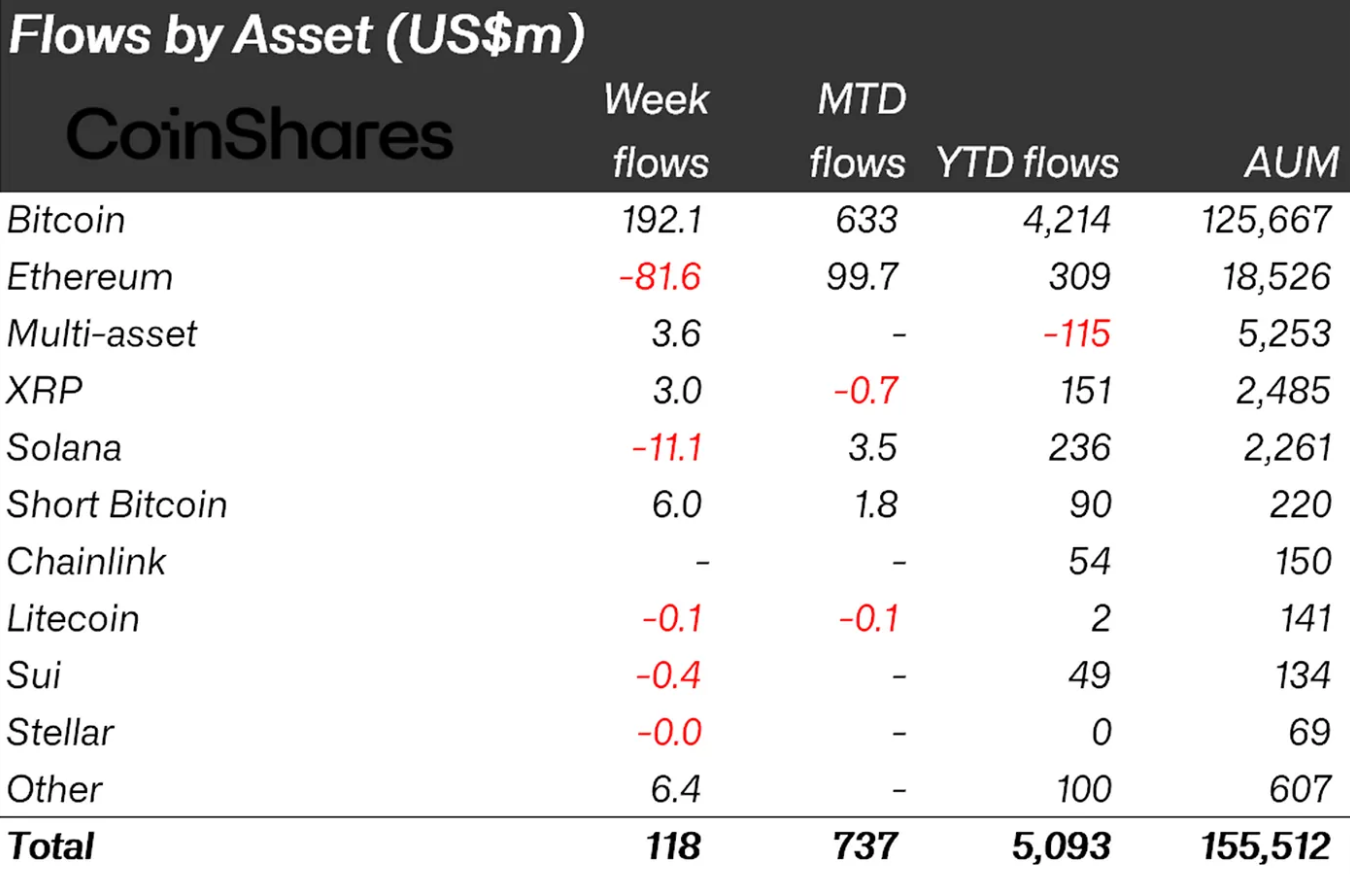
Ethereum funds shed $81.6 million in outflows last week. The drop ended a three-week streak that had averaged above $190 million in inflows, CoinShares reported.
The reversal narrowed asset participation across digital asset products. Meanwhile, only four cryptocurrencies attracted positive flows versus nine a week earlier. The wider category still booked its fifth consecutive week of net inflows.
Ethereum Funds Stand Out as Markets Snap Back Friday
Total digital asset funds attracted $117.8 million for the week, the slimmest figure of the current run. Combined assets under management held steady near $155 billion, broadly flat versus the prior reading.
However, the headline number hides a sharp swing within the period. Products bled $619 million from Monday through Thursday. A single Friday session then pulled in $737 million, flipping the tape positive.
“The Friday figure ranks among the largest single-day inflows of 2026, likely reflecting a sharp improvement in risk appetite. Total AuM stood at $155 billion, broadly unchanged,” read an excerpt in the latest Coinshares report.
Bitcoin funds, by contrast, absorbed $192.1 million, lifting year-to-date inflows to $4.2 billion. The weekly figure trailed the roughly $1 billion average set across the prior three weeks. Short-bitcoin products added $6 million.

Regional flows tilted away from the United States. The country contributed just $47.5 million after $1.1 billion the prior week.
Germany led with $43.8 million, and Canada added $16 million. European appetite held firmer through the soft patch.
Institutional Bid Tests the Crypto Spring Thesis
Meanwhile, US spot ETF data already shows the bid returning at the asset level. SoSoValue figures for May 4 showed US Bitcoin spot ETFs taking in $532 million. That marked a third consecutive day of inflows. Ether ETFs added $61.3 million in the same session.

Fundstrat’s Tom Lee called the setup the start of a “Crypto Spring.” He cited progress on the CLARITY Act and Ethereum’s dual tailwinds from tokenization and artificial intelligence.
Beyond ETFs, sentiment data echoed the shift. Crypto Twitter analytics platform Cookie DAO flagged Bitcoin and ether as the week’s largest mindshare gainers.

The trigger was JPMorgan Chase moving to accept both assets as collateral for institutional loans, including home mortgages.
“We’re so back! BTC and ETH are the biggest mindshare gainers on CT this week,” Cookie DAO indicated.
However, Ethereum’s negative fund tally and stronger ETH ETF demand into the weekend create a tension.
The coming week becomes a clean test. Another Friday-style rebound would strengthen the case that institutions, not retail, are driving the bid.
The post Ethereum Sheds $81.6 Million in Funds as Crypto Snaps Mid-Week Risk Off appeared first on BeInCrypto.

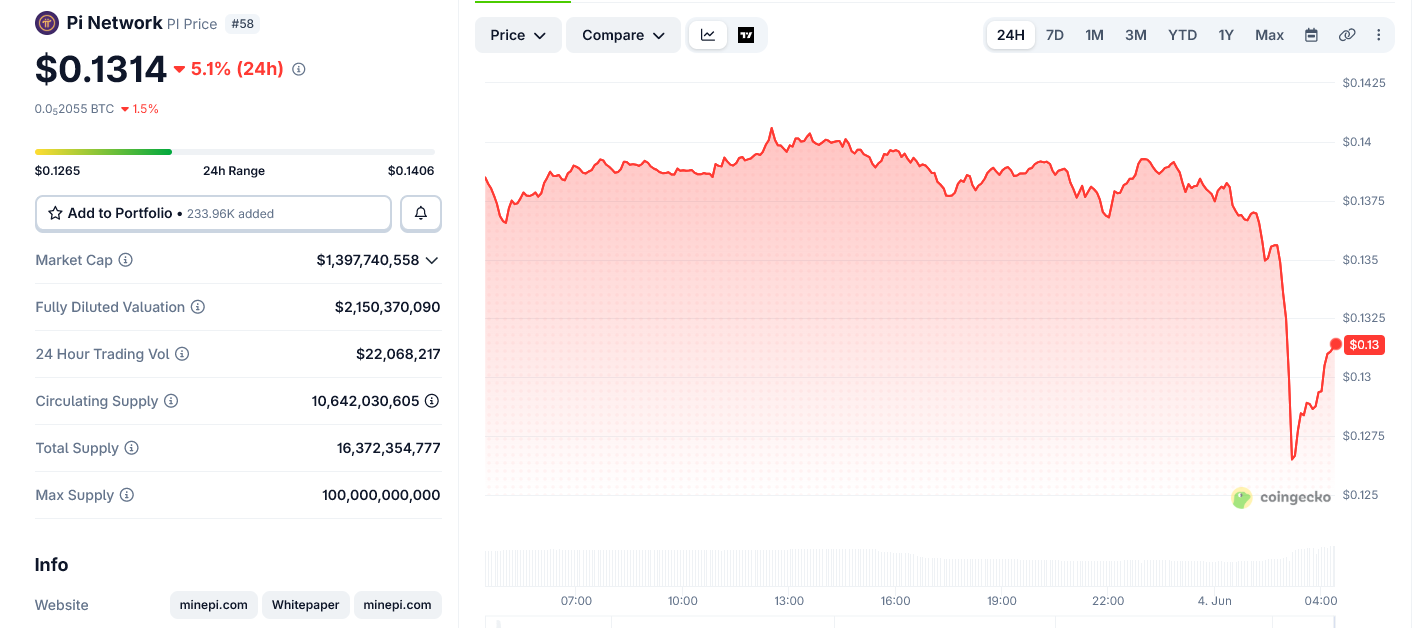
Pi Network just hit a significant technical milestone, but it has not helped the price of $PI at all.
Pi Network officially began rolling out its Protocol 24 upgrade on June 3, designed to enhance core network performance, improve node synchronization, and strengthen overall system stability.
What Protocol 24 Actually Does For Pi Network
The Pi Network upgrade has been one of Pi’s most technically complex updates so far, involving multiple subsystem improvements, internal data reprocessing, and major infrastructure upgrades.
It also includes a move from Ubuntu 20 to 24 and PostgreSQL 12 to 16. All mainnet nodes were required to complete the upgrade by June 2 or risk being disconnected from the network.
Protocol 24 was first completed and synchronized on Testnet 2 before the mainnet rollout, with the next expected step being the full V24 deployment across the live network.
The upgrade is part of a rapid sequencing through June. Protocol v25.1 follows on June 8 and v26.0 on June 22, with the releases targeting node performance, scalability, and smart contract maturation.
For Pi Network, a protocol that has been building toward smart contract functionality for years, three protocol upgrades in a single month represent a significant acceleration.
The Price Is Not Following the Progress
As of June 4, PI trades at $0.127, with a market cap of $1.36 billion. PI has slumped 27% this year, with the token sitting at its lowest level since February 14. It has fallen below all moving averages, a sign that bears remain in control.

The supply pressure is not helping. The Pi network is set to unlock over 174 million tokens worth over $26 million in June alone, adding to ongoing sell pressure in an already thin market.
The Protocol 24 upgrade opens a door for utility-driven demand later in 2026, but in the near term, it unlocks and thins liquidity, favouring continued price pressure.
To read the latest cryptocurrency news from BeInCrypto, click here.
The post Pi Network Activates Protocol 24 as PI Price Hovers Near All-Time Lows appeared first on BeInCrypto.
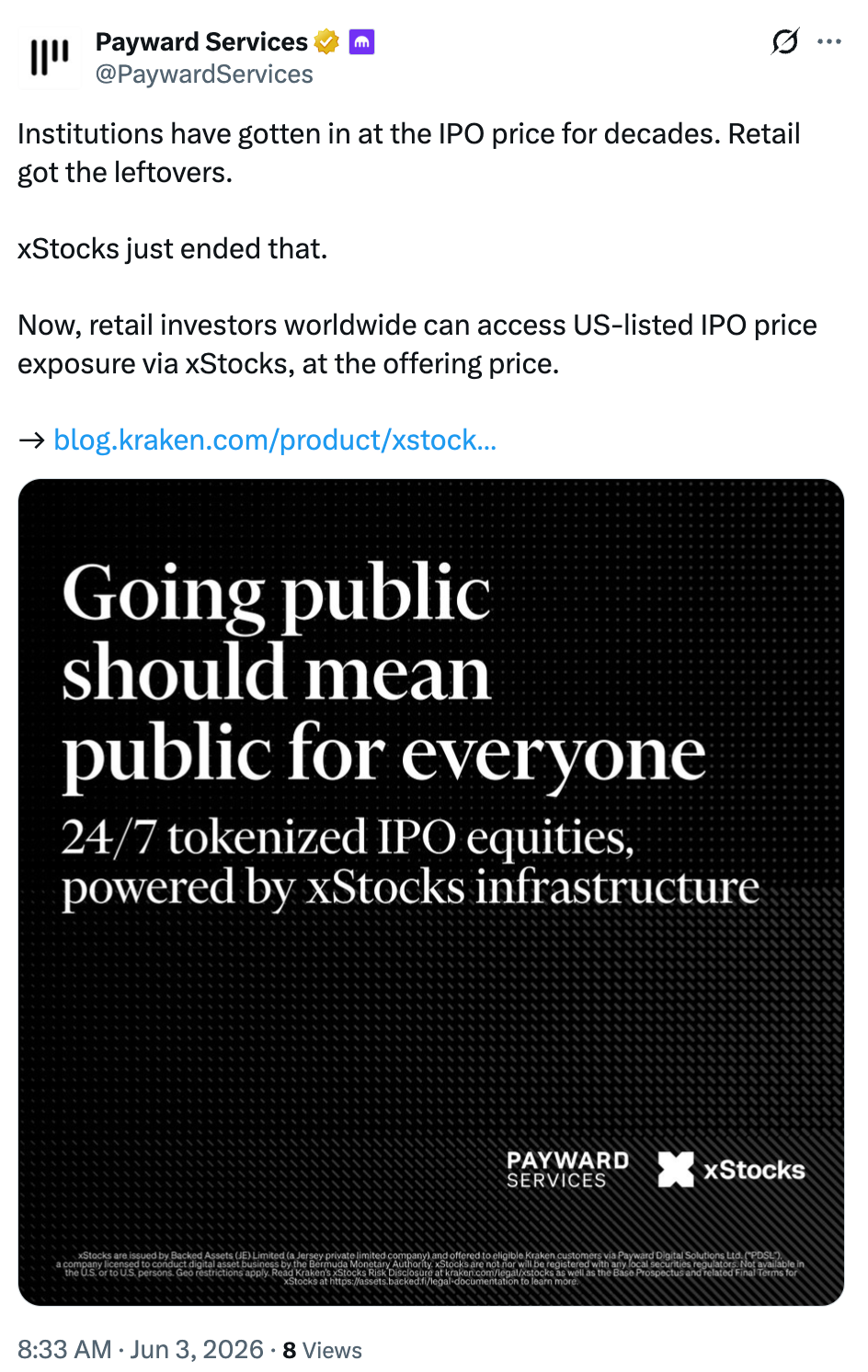
Retail investors will soon be able to participate in US initial public offerings (IPOs) at the offering price through a new tokenized equities program from Payward Services, a Kraken-affiliated company.
In a Wednesday announcement, Payward Services said customers of Kraken and select members of its xStocks Alliance will be able to express interest in US-listed IPOs before companies go public and receive allocations of tokenized shares on listing day.
According to the company, the shares will be issued at the IPO offering price and backed 1:1 by the underlying stock held in custody by a regulated entity, allowing eligible retail investors to access allocations that are typically reserved for institutional clients.
The launch marks one of the latest efforts to use blockchain infrastructure to broaden access to traditional financial products amid a global push for real-world asset (RWA) tokenization.
Bringing IPO allocations onchain
Under the proposed process, participating exchanges will open an indication-of-interest window in the weeks before an IPO, allowing customers to submit non-binding requests to purchase shares within the expected pricing range.
Payward will aggregate demand from participating platforms and work with an underwriting syndicate before allocations are finalized on the company’s public listing day.
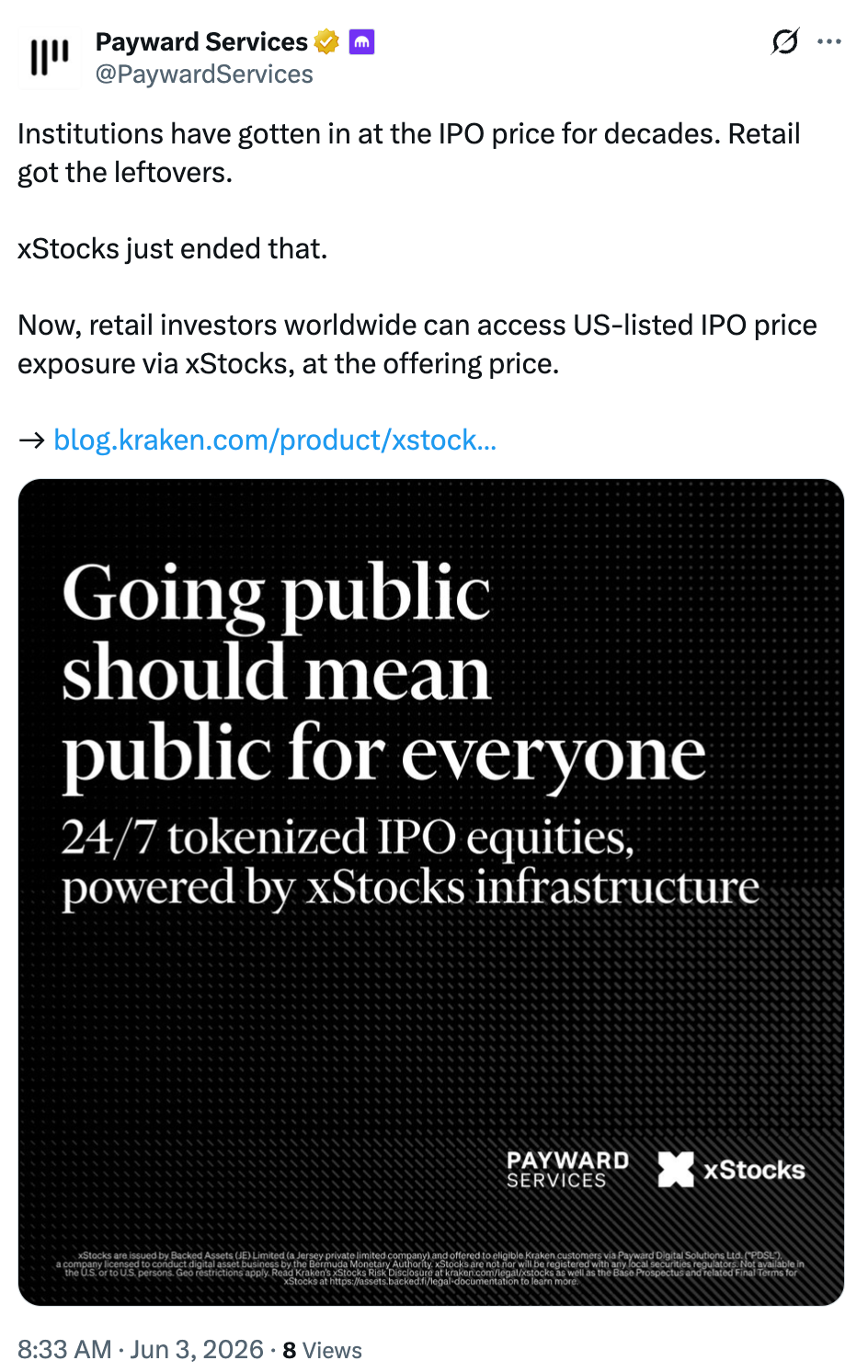
Source: Payward Services
The resulting shares will be tokenized and distributed through partner exchanges, enabling investors to receive exposure to newly listed companies without opening accounts with traditional brokerage providers.
First availability expected in coming weeks
The first tokenized IPO offerings are expected to become available to customers of Kraken and other xStocks Alliance members in the coming weeks, with Payward planning to add more launch partners and markets over time.
“Going public should mean public to everyone,” said Mark Greenberg, global head of Payward Services, adding that getting in at the IPO price has been a “privilege of geography and net worth” for decades.
“Now a retail investor in Medellín, Madrid, or Malaysia can have similar access to a US-listed IPO, and Payward Services’ xStocks infrastructure is finally making that possible for the masses,” the executive added.
Related: Binance launches SpaceX-linked perpetual futures ahead of IPO
The announcement comes as interest in tokenized RWAs continues to grow, with Bernstein Research estimating the RWA market has reached $51 billion after expanding 42% this year.
Payward Services said xStocks processed more than $30 billion in transaction volume during its first year, including over $6 billion settled onchain, across more than 125,000 holders globally. Kraken acquired xStocks operator Backed Finance in late 2025.
Magazine: Kraken’s $600M stablecoin firm, Huione scandal deepens: Asia Express

Israel’s voluntary disclosure program for cryptocurrency profits has yet to deliver the revenue uplift anticipated by authorities, even as the policy offers immunity from criminal proceedings for filers who correct their crypto tax reports. The program, launched in August 2025, targets taxpayers with crypto holdings below the equivalent of $522,000 as of December 2024, provided they file accurate reports and settle all taxes by August 31, 2026. However, uptake appears modest relative to projections, with disclosures totaling only about $50 million in crypto capital reported to date, according to a Globes briefing.
Globes’ reporting highlights a widening gap between policy incentives and taxpayer participation. The article notes that the tax authority had anticipated as much as $1 billion in taxes from voluntary disclosures, but current filings suggest a fraction of that potential. Iftach Simhony, a CPA who heads the tax department at the Prof. Bein Law Office, told Globes that the lack of an anonymous track complicates voluntary disclosure in practice. “In the cryptocurrency field, the difficulty of the absence of an anonymous track is even more acute,” he said. “When the risk assessment of some taxpayers is not high, and the procedure itself does not offer certainty or anonymity in the first stage, the incentive to undergo voluntary disclosure is weakened.”
“In the cryptocurrency field, the difficulty of the absence of an anonymous track is even more acute,” said Iftach Simhony, a CPA and head of the tax department at the Prof. Bein Law Office, Globes reported. “When the risk assessment of some taxpayers is not high, and the procedure itself does not offer certainty or anonymity in the first stage, the incentive to undergo voluntary disclosure is weakened.”
The voluntary disclosure framework was announced by the Israel Tax Authority and provides immunity from criminal charges if the reported holdings stay under the threshold and all taxes are paid in full by the deadline. Globes notes that only 58 filers had begun correcting their taxes under this program, indicating a slow pace of engagement amid the policy’s perceived trade-offs between transparency, privacy, and enforcement certainty.
Related context from Israel’s broader crypto policy environment shows continued regulatory interest. For instance, a coverage link discusses how the Israeli crypto industry has pushed for regulatory changes amid strong public support, underscoring ongoing policy evolution as lawmakers weigh how to tax and regulate digital assets.
On the market side, the Bank of Israel’s financial stability report covering January to June 2024 estimated that Israelis held roughly $1 billion in crypto assets, underscoring the potential tax base that could be affected by disclosure policies and future regulatory changes. The figure, cited in the central bank’s report, reflects a sizable household exposure to crypto that regulators are seeking to monitor and regulate as part of broader financial stability considerations.
Key takeaways
- The Israeli voluntary disclosure program offers criminal-immunity incentives for crypto tax corrections, subject to holding thresholds and timely full tax settlement.
- Uptake to date appears modest relative to projections, with disclosures totaling about $50 million in crypto capital and only 58 filers having attempted corrections.
- Experts caution that the absence of anonymity in early stages may blunt participation, even when the policy promises future clarity and enforcement alignment.
- Bank of Israel data indicates a substantial crypto asset base among Israeli households, highlighting potential revenue and policy impact from tax regulatory changes.
- In the United States, proposed de minimis exemptions for crypto transactions signal a contrasting regulatory approach that could influence cross-border compliance and reporting expectations.
Regulatory framing and cross-border considerations
The Israeli case underscores how tax authorities are balancing enforcement with incentives to improve disclosure in the crypto ecosystem. The program’s design—immunity contingent on accurate reporting and timely tax settlement—aims to close gaps in a sector historically characterized by opaque holdings and complex valuation. Yet the early response suggests that the incentive structure may require additional assurances around privacy, data handling, and the perceived certainty of outcomes to overcome taxpayer risk aversion. For tax authorities, this points to a broader challenge: aligning voluntary disclosure with robust AML/KYC standards while preserving taxpayer confidence in the process.
From a compliance perspective, the Israeli example has implications for exchanges, custodians, and other crypto service providers. Firms operating in or with Israeli customers must remain vigilant about evolving reporting obligations, potential KYC augmentation, and the need to support clients who pursue voluntary disclosures through official channels. As the crypto ecosystem grows in scale, regulators may increasingly link tax reporting to on-chain analytics, formal disclosures, and regulatory oversight, reinforcing the importance of rigorous recordkeeping and transparent tax positions for individuals and institutions alike.
On the international stage, the PARITY Act introduced in May by U.S. lawmakers directs the Internal Revenue Service to study establishing a de minimis exemption for digital assets. The proposal would carve out a threshold below which small crypto transactions would not be subject to mandatory reporting. While the aim is to reduce administrative burden and focus limited enforcement resources on material activity, the move also highlights how policy is diverging across jurisdictions. The legislation, noted by Cointelegraph in coverage of the PARITY Act, reflects ongoing debates about how to classify, tax, and report crypto activity in a way that preserves tax integrity while avoiding undue compliance friction for ordinary or incidental transactions.
These developments sit against a broader policy backdrop that includes regulatory oversight and licensing considerations for crypto firms, as well as ongoing dialogue about stablecoins, banking interfaces, and cross-border tax cooperation. For institutional traders, banks, and asset managers with international footprints, such divergences in reporting regimes can complicate global tax planning, compliance programs, and risk assessment frameworks. Analysts and compliance teams will need to monitor how jurisdictions balance transparency with privacy, how enforcement priorities shift, and how prospective exemptions could affect tax revenue, enforcement resources, and investor behavior.
Closing perspective
Israel’s voluntary disclosure initiative illustrates the practical challenges of converting policy promises into measurable tax collection, especially in a market where on-chain activity often outpaces conventional reporting channels. The slow uptake, coupled with robust household exposure to crypto assets, points to an ongoing assessment of how best to align incentives, enforcement, and privacy in a rapidly evolving regulatory landscape. As regulators abroad weigh similar questions—whether to carve out exemptions or tighten reporting—watch for further policy calibrations that could redefine compliance norms for crypto firms and institutional investors alike.
Helium Mobile has been acquired by Noble Mobile, a U.S.-based telecom startup founded by former presidential candidate Andrew Yang, while the Helium Network and its native HNT token have remained under existing operational structures.
Summary
- Noble Mobile has acquired Helium Mobile, while Nova Labs says the Helium Network and HNT token operations remain unchanged.
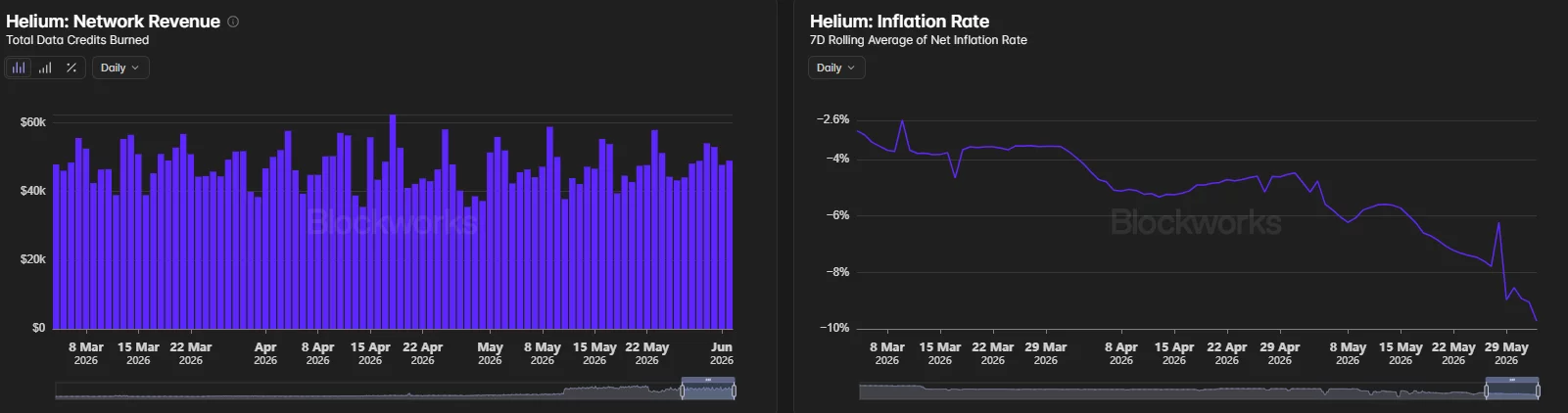
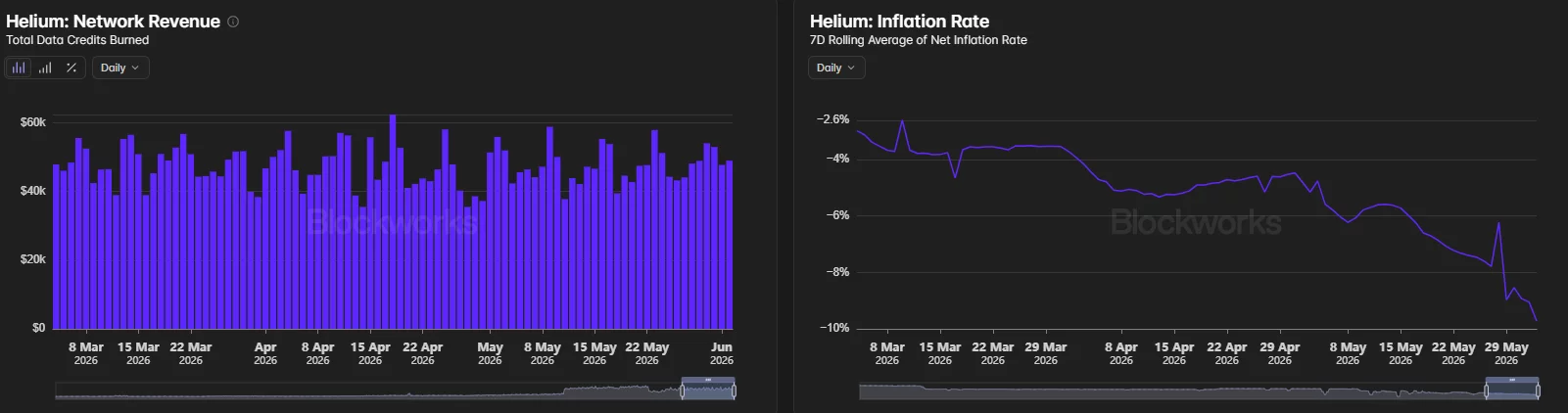
- Helium’s network continues to burn roughly $50,000 in data credits daily, with Blockworks data showing a 7-day HNT deflation rate of 9.72%.
- HNT remains under technical pressure after breaking below a falling wedge pattern, with support near $0.60 and resistance between $0.65 and $0.70.
According to announcements from both companies, Noble Mobile has taken control of Helium Mobile’s wireless service business, gaining access to an existing subscriber base and a network relationship that allows traffic to be routed through Helium’s decentralized wireless infrastructure.
The transaction has generated debate among community members, with some users questioning whether a decentralized project could effectively be sold.
Nova Labs and Helium executives have since clarified that the deal covers only Helium Mobile, a consumer-facing service, and does not include ownership of the Helium Network itself.
Noble Mobile currently operates by leasing spectrum from T-Mobile. Through the acquisition, the company has committed to using connectivity provided by the Helium Network, which relies on more than 138,900 community-operated hotspots to deliver wireless coverage.
Data cited by Blockworks shows the Helium ecosystem burns roughly $50,000 worth of data credits each day. Because data credits are created by burning HNT, continued network usage contributes to token demand through Helium’s mint-and-burn economic model. Additional data from the platform also indicates the token’s rolling seven-day deflation rate stands at 9.72%.
The acquisition has not changed Helium Network operations
Community concerns intensified shortly after the announcement, prompting Helium co-founder Amir Haleem to explain the distinction between Helium Mobile and the Helium Network.
Haleem stated that the decentralized network remains under Nova Labs’ stewardship and will continue operating as before. Hotspot operators are still expected to earn HNT rewards for providing coverage and data transfer services that can be used by telecom providers, including large carriers such as AT&T.
For existing Helium Mobile subscribers, the transition is not expected to bring immediate service disruptions. Company guidance states that customers can retain their current phone numbers and continue using the service without changes during the migration process.
Pricing remains one area where uncertainty persists. While Helium Mobile’s published FAQ states that affordability will remain a priority, the company said future pricing details will be communicated as the transition progresses.
HNT price remains under pressure despite network demand growth
Market reaction to the acquisition has been relatively muted. Helium (HNT) gained roughly 1.7% over the past 24 hours, though the token continues to trade within a longer-term downtrend.
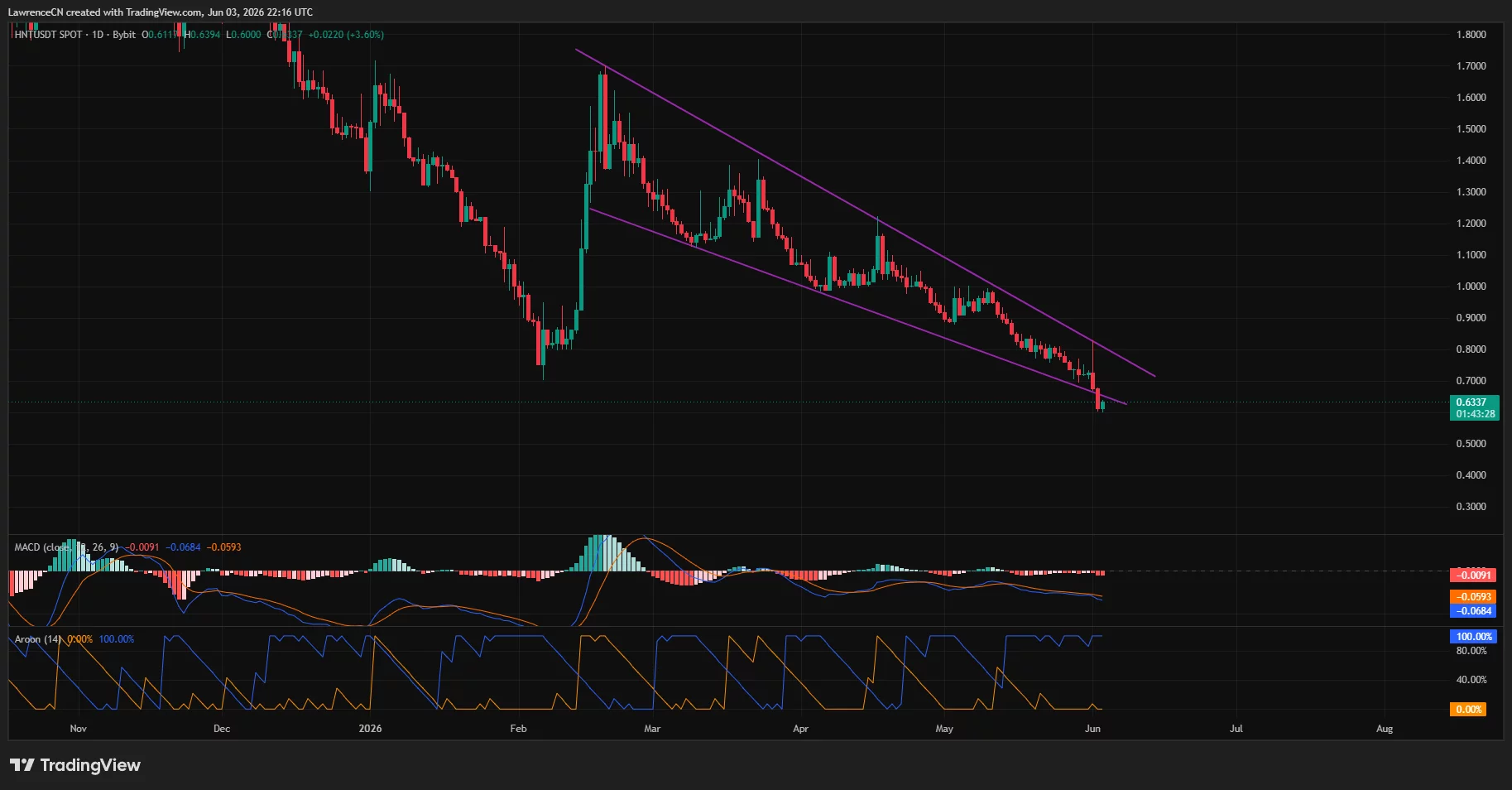
Technical analysis of the daily chart shows HNT recently broke below the lower boundary of a falling wedge pattern that had been developing since February. While falling wedges often resolve to the upside, the bearish breakdown suggests sellers remain in control of price action.
Momentum indicators continue to support that view. The MACD remains below its signal line with negative histogram readings, indicating persistent downside momentum. Meanwhile, the Aroon indicator shows Aroon Down at 100% and Aroon Up at 0%, a configuration that typically signals a strong bearish trend.
The breakdown has pushed HNT toward support near $0.60. If that level fails to hold, traders may begin watching the psychological $0.50 area as the next major downside target.
On the upside, the former wedge support between $0.65 and $0.70 now acts as the first resistance zone that bulls would need to reclaim to improve the technical outlook.
Despite continued growth in network usage and data credit burns, the chart suggests traders remain cautious as HNT searches for a stable bottom.


BitMine has moved to raise $300 million through a preferred stock sale as the Ethereum treasury firm turns to dividend-paying securities for fresh capital.
Summary
- BitMine filed to offer $300 million in Series A perpetual preferred stock with a 9.5% annual dividend rate.
- The preferred shares are expected to trade on the NYSE under the ticker BMNP, subject to approval.
- BitMine holds more than 5.4 million ETH as it approaches its 5% of the Ethereum supply target.
- The offering comes as crypto treasury firms test preferred stock funding during pressure on digital asset prices.
According to a Wednesday filing with the U.S. Securities and Exchange Commission, BitMine Immersion Technologies is offering 3 million shares of Series A Perpetual Preferred Stock at a stated value of $100 each. The company said the shares will carry a 9.5% annual dividend rate, with payments expected weekly in cash, subject to board approval.
The preferred stock is expected to trade on the New York Stock Exchange under the ticker BMNP, subject to listing approval, according to the filing. BitMine did not state how it plans to use the proceeds from the offering.
BitMine Follows Strategy’s Funding Path
The filing shows BitMine adopting a financing model already used by Strategy, the bitcoin treasury company formerly known as MicroStrategy. Strategy has issued several classes of preferred equity to raise capital outside common stock sales and debt markets.
Other crypto treasury firms have also moved in the same direction. Strive and Metaplanet have issued dividend-paying preferred shares as digital asset treasury companies look for capital while crypto prices remain under pressure.
BitMine, led by Fundstrat co-founder Tom Lee, is applying that structure to an Ethereum-focused treasury strategy. The company has become one of the most aggressive ETH buyers in the sector, according to its recent disclosures.
Ethereum Treasury Faces Heavy Paper Loss
According to the company’s filing, BitMine has accumulated more than 5.3 million ETH, valued at about $10 billion. The filing said the holdings represent roughly 4.5% of Ethereum’s circulating supply.
The same filing showed BitMine’s Ethereum position carrying an estimated $9 billion unrealized loss after ETH fell from about $ 5,000 to below $ 1,800 in October. The company’s exposure makes the preferred stock sale closely tied to investor confidence in its Ethereum treasury model.
The preferred shares can be redeemed by BitMine at premiums that decline from 10% to 0%, depending on when the redemption takes place, according to the filing. Investors will also have repurchase rights if specific corporate changes occur.
Earlier ETH Purchase Lifted Holdings
As previously reported by crypto.news, BitMine bought 26,497 ETH over the past week, lifting its Ethereum holdings to 5.42 million tokens. The purchase moved the company closer to its stated 5% target for Ethereum supply.
BitMine said its crypto, cash, and “moonshots” holdings totaled $11.6 billion as of May 31. The company reported 5,416,901 ETH, 203 Bitcoin, $446 million in cash, a $180 million stake in Beast Industries, and a $93 million stake in Eightco Holdings.
The timing of BitMine’s preferred stock filing comes as Strategy’s own preferred equity model faces fresh scrutiny. STRC, one of Strategy’s preferred stocks, fell about 5% below its $100 par value on Wednesday.

Introduction
Most people searching for an AI trading bot app in 2026 want a practical answer to one question: which app will actually work for me on my phone, without turning into a part-time job?
That’s harder to answer honestly than most comparison articles let on. The mobile trading app category is flooded with platforms making nearly identical claims — AI-powered, 24/7 automation, no experience needed. Some are real. Some are marketing. And a meaningful number are outright scams, which is why both the SEC and the CFTC have issued specific warnings about AI trading bots targeting retail users.
This article covers four platforms representing genuinely different approaches to mobile AI trading in June 2026: SaintQuant, 3Commas, TrendSpider, and Pionex. Each solves a different problem. The goal is specific enough that you can match one to how you actually trade.
What Makes a Mobile Trading App Actually Useful?
Before the platform breakdowns, it’s worth being clear about what “good” looks like on mobile specifically — because the standards are different from desktop.
A useful mobile trading bot app needs to do four things well:
1. Show you what’s happening at a glance. If you need three taps to find out whether your strategy is active or paused, the app has failed its core job. Mobile users check quickly and leave. The dashboard needs to answer “am I running, and is it working?” in under ten seconds.
2. Let you stop fast. Crypto markets can move 10% in an hour. If you can’t pause or kill a strategy from your phone in under thirty seconds, the mobile experience is a liability, not an asset.
3. Not requiring a desktop to set up. An app that forces you to configure everything on a browser first and then “monitor” on mobile is not a mobile app. It’s a desktop app with a companion screen.
4. Be honest about what it can’t do. The best mobile trading apps are clear about risk, clear about strategy logic, and don’t bury the stop button behind upsell screens.
With those criteria in mind, here’s how the four platforms compare.
Quick Comparison
| Platform | Best Mobile Use Case | Markets | Experience Level | Free Entry Point |
| SaintQuant | One-click strategy activation, passive monitoring | Crypto, stocks, futures | Beginner–intermediate | $99 trial credit + $7 bonus, no deposit |
| 3Commas | Managing crypto bots across connected exchanges | Crypto only | Intermediate | Free plan (limited bots) |
| TrendSpider | Chart alerts and automated technical analysis | Stocks, ETFs, crypto, forex, futures | Intermediate–advanced | 7-day free trial |
| Pionex | Built-in exchange with free grid and DCA bots | Crypto only | Beginner–intermediate | Free built-in bots |
1. SaintQuant — Best for Beginners Who Want to Actually Start
If you’ve been curious about automated trading but keep hitting a wall of technical setup, SaintQuant is built specifically for that problem. It’s a no-code AI trading platform covering cryptocurrencies, stocks, and futures — and unlike most platforms in this category, it doesn’t make you earn the right to use it by learning how to connect exchange APIs or configure strategy parameters first.
The workflow is genuinely simple: pick a pre-built quantitative strategy, review the built-in risk settings, and activate. The AI handles market monitoring and execution from there — including overnight and through weekends when crypto markets are moving but most people aren’t watching.
Why it stands out for mobile users
The thing that makes SaintQuant particularly well-suited to mobile is that simplicity isn’t a dumbed-down version of the real product. The strategies are built on quantitative models maintained by SaintQuant’s team, with risk controls embedded at the architecture level. You’re not getting a watered-down bot — you’re getting the same execution logic as a fully funded account, delivered through an interface that doesn’t require you to configure it.
For mobile users, that matters because the alternative is trying to manage complex parameter settings on a small screen. With SaintQuant, the setup decision has already been made. Your job on mobile is to monitor, adjust risk tolerance if needed, and pause if conditions change.
The honest caveat
SaintQuant is not the right choice if you want to build custom strategies, connect your own exchange API, or run highly specific technical configurations. The tradeoff for simplicity is control — and experienced traders who want to tune every parameter will find the platform restrictive. It’s designed for systematic, passive participation, not hands-on algorithmic experimentation.
What beginners should know before starting
The search data makes clear that a huge portion of people looking for “best crypto trading bot for beginners” are also asking “are trading bots profitable” and “is it a scam.” Those are the right questions. SaintQuant’s pre-built strategies can lose money — no automated system removes market risk. The value is consistency and discipline, not guaranteed returns.
New user offer
New users receive a $99 free starter trial credit and a $7 instant cash bonus on registration, with no deposit required and no hidden conditions. This lets you see the platform run on live markets before committing personal capital — which is a meaningful advantage for anyone still deciding whether automated trading makes sense for them.
Best mobile scenario: You want to activate a crypto or stock strategy, let it run while you’re at work, and check in from your phone once a day without needing to manage it constantly.
2. 3Commas — Best for Crypto Traders Who Want Bot Control
3Commas is one of the most established names in crypto bot management, and for good reason. If you’re already comfortable with crypto exchanges — you understand how Binance, Coinbase, or Kraken work, you’ve connected API keys before, and you know what DCA and grid strategies do — 3Commas gives you a genuinely powerful mobile control panel.
The platform connects to your existing exchange accounts and lets you build, monitor, and adjust bots from one dashboard. Grid bots, DCA bots, signal-based bots, composite bots — the strategy library is deep. And the mobile app keeps you connected to all of it without opening your exchange’s native app.
Why it stands out for mobile users
The core mobile value of 3Commas is centralisation. If you have accounts on multiple exchanges, you’d normally need separate apps, separate logins, and separate views to get a picture of what’s happening across your portfolio. 3Commas collapses that into one interface with real-time bot status, position updates, and performance metrics.
For a crypto trader who runs multiple strategies across multiple exchanges, that’s not a convenience — it’s a meaningful operational improvement.
The honest caveat
3Commas is not a beginner app. Setting up a DCA bot correctly requires understanding the strategy logic. Getting API permissions right (read-only vs trading vs withdrawal — never grant withdrawal access) requires attention. And the pricing structure adds up: the free plan is limited to a small number of bots, and serious users will need a paid tier.
There’s also a historical note worth mentioning: 3Commas experienced a significant API key breach in 2022. The company has addressed security since then, but anyone considering the platform should verify current security practices, use read-only API permissions where possible, and never grant withdrawal access.
What intermediate users should know
“Set and forget” is one of the most searched phrases associated with crypto bots, and it captures a real desire — but it’s not how 3Commas actually works at its best. The platform rewards users who check in regularly, review bot performance, and adjust settings when market conditions shift from ranging to trending or vice versa. A grid bot optimised for sideways markets will lose money in a strong directional move if no one adjusts it.
Best mobile scenario: You run two or three crypto bots across Binance and Coinbase and want to monitor performance, receive alerts, and adjust settings from your phone without opening three separate exchange apps.
3. TrendSpider — Best for Traders Who Want Smart Alerts, Not Automation
TrendSpider occupies a different category than the other three platforms on this list. It’s not a trading bot in the traditional sense — it won’t place trades for you. It’s an automated market analysis platform that watches charts, identifies technical conditions, and sends you alerts when something worth your attention is happening.
For traders who want to stay in control of their own execution but spend less time staring at charts, that’s a genuinely valuable distinction. TrendSpider’s AI scans for technical setups, trend changes, and price level triggers across stocks, ETFs, crypto, forex, and futures — and pushes alerts to your phone the moment conditions are met.
Why it stands out for mobile users
The June 2026 market environment is one where many traders are watching multiple signals simultaneously: AI-related tech stocks, crypto momentum, rate expectations, earnings reactions. Monitoring all of that manually is not realistic. TrendSpider automates the watching part while leaving the trading decision with you.
For mobile specifically, this means your phone becomes a genuine early-warning system rather than just a trade execution terminal. You get the alert, you assess the context, you decide. That’s a more active relationship with trading than a set-it-and-forget-it bot, but it’s also more transparent about what’s actually driving decisions.
The honest caveat
TrendSpider has a meaningful learning curve for new users. The platform’s power comes from features like multi-timeframe analysis, automated trendline detection, and customisable alert conditions — and understanding how to configure those correctly takes time. It’s also subscription-based at a price point that assumes you’ll get enough use from it to justify the cost.
If you just want crypto price alerts, a free exchange app does the same job. TrendSpider earns its cost for traders who use technical analysis seriously and want that analysis automated across a large number of assets.
Best mobile scenario: You’re a technical trader watching 20+ assets across stocks and crypto. You want your phone to tell you when a setup is forming, not when a bot has already acted on it.
4. Pionex — Best Free Option for Crypto Bot Beginners
Pionex earns its place on this list because it answers a question that the other three platforms don’t: what if I want to try automated crypto trading for free, with no monthly subscription?
Pionex is a regulated crypto exchange that has built a library of trading bots directly into the platform — no API connections needed, no third-party subscription, no configuration overhead. The grid bot and infinity grid bot are the most popular, and they work as advertised for ranging markets. You fund a position on Pionex, activate a bot, and it runs.
Why it stands out for mobile users
The Pionex mobile app is genuinely functional. Bot activation, position monitoring, and strategy adjustments are all accessible from the app. For someone who wants to dip their toes into automated crypto trading without paying for a subscription first, Pionex provides a real, working experience at zero cost beyond trading fees.
The honest caveat
Pionex’s built-in bots are simple by design. Grid bots work well in sideways markets and struggle in strong directional moves. The platform’s range of strategies is narrower than 3Commas, and there’s no stock or futures market access. If crypto bot trading clicks for you on Pionex and you want more flexibility, you’ll likely outgrow it relatively quickly.
As with any exchange, you’re also holding funds on the platform — so standard exchange risk applies. Use two-factor authentication, don’t store more than you need for active bots, and verify the platform’s current regulatory standing in your jurisdiction.
Best mobile scenario: You want to try a crypto grid bot for the first time without paying a subscription fee. Pionex lets you run real bots on real markets from your phone, for free.
How to Choose: Match the App to Your Actual Situation
The right answer depends on where you are right now, not on which platform has the longest feature list.
If you’re new to automated trading and want to start without a technical learning curve → SaintQuant’s no-code approach and free trial credit mean you can see the platform working before you commit. The multi-market coverage (crypto, stocks, futures) also means you’re not locked into one asset class.
If you’re an active crypto trader who already uses exchanges and understands bot mechanics → 3Commas gives you more configuration control and cross-exchange centralisation than any other mobile option.
If you’re a technical trader who wants automated analysis but keeps control of your own execution → TrendSpider’s alert automation is the most practical tool for traders who think in charts and want their phone to watch the market while they’re busy.
If you want to try automated crypto trading for free before paying anything → Pionex is the clearest answer. Real bots, no subscription, works on mobile.
Mobile Safety Checklist
Before activating any automated trading app, run through this checklist:
- If connecting exchange APIs, have you disabled withdrawal permissions?
- Do you understand the basic logic of the strategy you’re activating?
- Do you know how to pause or stop the bot quickly from your phone?
- Have you started with a small amount while you learn the platform?
- Does the platform avoid making specific profit guarantees?
- Have you reviewed the platform’s fee structure before funding?
- Are activity logs visible so you can see what the bot has done?
If any answer is no, address it before going live. The SEC and CFTC warnings about AI trading bots exist because the category attracts genuine fraud alongside legitimate products. Checking these basics takes five minutes and matters every time.
Are Trading Bots Actually Profitable?
This is the question most comparison articles sidestep, so let’s be direct about it.
Trading bots are tools, not income streams. A bot will execute a strategy faster and more consistently than a human, but it can’t make a bad strategy good. A grid bot in a downtrending market will systematically buy at each step down. A DCA bot accumulating a coin that never recovers will accumulate losses. A quantitative strategy with poor risk controls can compound losses quickly.
What automation genuinely improves is consistency and discipline — the bot doesn’t panic, doesn’t revenge trade, doesn’t get overconfident after a winning streak. For traders who have a sound, tested approach, removing those behavioural failure points is real value.
The traders who do worst with bots are those who turn one on hoping it will do the work they haven’t done. The traders who do best treat bots as execution infrastructure for a strategy they already understand.
Frequently Asked Questions
Which AI trading bot app is best for beginners on mobile?
SaintQuant is the most accessible starting point for beginners because it doesn’t require technical setup, API configuration, or strategy-building. The $99 free trial credit means you can observe live performance before committing your own funds. Pionex is a close second if you specifically want to start with crypto grid bots at no subscription cost.
Is 3Commas safe to use?
3Commas is a legitimate, established platform, but it had a significant security incident in 2022. Always use the minimum necessary API permissions (never grant withdrawal access), enable two-factor authentication, and review their current security practices before connecting exchange accounts. No third-party trading platform should ever need withdrawal access to run bots.
Can TrendSpider place trades automatically?
TrendSpider is primarily an automated analysis and alert platform, not a trade execution tool. It can notify you when market conditions match your criteria, but the trading decision remains yours. Some integrations allow order triggers, but TrendSpider’s core value is research automation, not autonomous execution.
Do I need to monitor a trading bot if it’s automated?
Yes — “automated” doesn’t mean “unattended.” Market conditions change. A strategy that performs well in a ranging market can lose money in a trending one. Checking in regularly (at minimum once a day for active strategies), knowing how to pause everything quickly, and reviewing performance against expectations are still your responsibility even when a bot is running.
What’s the difference between SaintQuant and 3Commas?
SaintQuant is a no-code platform with pre-built quantitative strategies across crypto, stocks, and futures — designed for users who want systematic automation without technical setup. 3Commas is a bot management platform designed for crypto traders who want to configure and manage their own bots across connected exchange accounts. SaintQuant is simpler and more passive; 3Commas offers more configuration control but requires more crypto trading knowledge to use effectively.
Are AI trading bots legal?
Automated trading is legal in most jurisdictions, but regulations vary by country and asset class. In the US, the SEC and CFTC regulate trading activity and have both issued specific warnings about AI trading bot fraud. Using a legitimate, regulated platform is the baseline requirement. Always verify the regulatory status of any platform in your jurisdiction before funding an account.
Disclaimer: This article is for informational purposes only and does not constitute investment or financial advice. All trading carries risk of loss. Past performance of any strategy or platform is not indicative of future results.
Disclaimer: This is a Press Release provided by a third party who is responsible for the content. Please conduct your own research before taking any action based on the content.

Crypto World
Michael Burry Nvidia Warning: AI Boom Built on Customer Concentration and Hidden Debt Risks
TLDR:
- Nvidia now depends on three customers for 64% of receivables, increasing concentration risk sharply.
- Burry argues much AI spending reflects benchmarking activity rather than sustainable long-term demand.
- Tech giants reportedly hold $662 billion in off-balance-sheet AI commitments hidden from investors.
- Private equity, insurers, and offshore reinsurers may amplify risks if AI spending slows abruptly.
Michael Burry has raised fresh concerns about Nvidia’s revenue structure, warning that the chipmaker’s financials rest on a dangerously narrow customer base.
Burry argues that current AI spending patterns resemble a temporary buildout phase rather than permanent demand.
He introduces the concept of the “bezzle” to describe inflated spending that may sharply reverse. His analysis also connects Nvidia’s risk to a broader web of hidden financial commitments across the tech sector.
Nvidia’s Customer Concentration Raises Red Flags
Michael Burry Nvidia analysis centers on a striking shift in accounts receivable data. Three customers now account for 64% of Nvidia’s total accounts receivable.
That figure stood at 33% in 2020, meaning concentration has nearly doubled in just a few years. The jump of eight percentage points in a single quarter alone draws attention.
This level of concentration means Nvidia’s revenue depends heavily on the spending decisions of very few buyers. Any slowdown from those buyers would create a sizable gap in Nvidia’s reported numbers.
Burry describes the current AI spending environment as companies “flying empty airplanes around.” The reference points to benchmarking activity, model testing, and leaderboard competition rather than real, recurring demand.
Burry’s core argument is that this benchmarking phase will eventually end. When it does, those concentrated customers will have far less reason to maintain current chip order volumes.
The financial model holding Nvidia’s growth narrative together may then face a serious stress test. Markets have largely priced in sustained demand, which makes any deceleration more painful.
The danger is not that artificial intelligence as a technology is fraudulent. Rather, the concern is that a large portion of today’s AI infrastructure spending serves a temporary competitive signaling function. Once that function is served, the underlying procurement rationale shifts considerably.
Hidden Commitments and Offshore Risk Structures
Beyond Nvidia’s customer base, Burry points to a broader financing architecture that amplifies the risk. Microsoft, Amazon, Alphabet, Meta, and Oracle carry a combined $662 billion in off-balance-sheet AI commitments, according to Moody’s.
Standard accounting rules allow companies to exclude these figures from reported financials entirely. That means the true scale of AI infrastructure obligations remains largely invisible to public investors.
Private equity firms have moved to finance this buildout by acquiring life insurance companies. Those insurers collect premiums from ordinary policyholders and redirect that capital into the PE firms’ own illiquid assets.
The risk is then pushed offshore through captive reinsurers set up in Bermuda, where capital requirements are lighter. Each layer of this structure adds distance between the underlying risk and public disclosure.
The interlocking nature of these arrangements is what makes a potential unwind so disruptive. The same PE firms own the insurance vehicles funding AI debt.
The same Bermuda structures carry the reinsurance exposure. If a major hyperscaler exits a data center commitment, every connected counterparty faces pressure simultaneously.
Burry’s warning, therefore, covers two overlapping risks. One is Nvidia-specific and tied to customer concentration.
The other is systemic, involving hundreds of billions in commitments that have been structured to remain off the books until they cannot be.
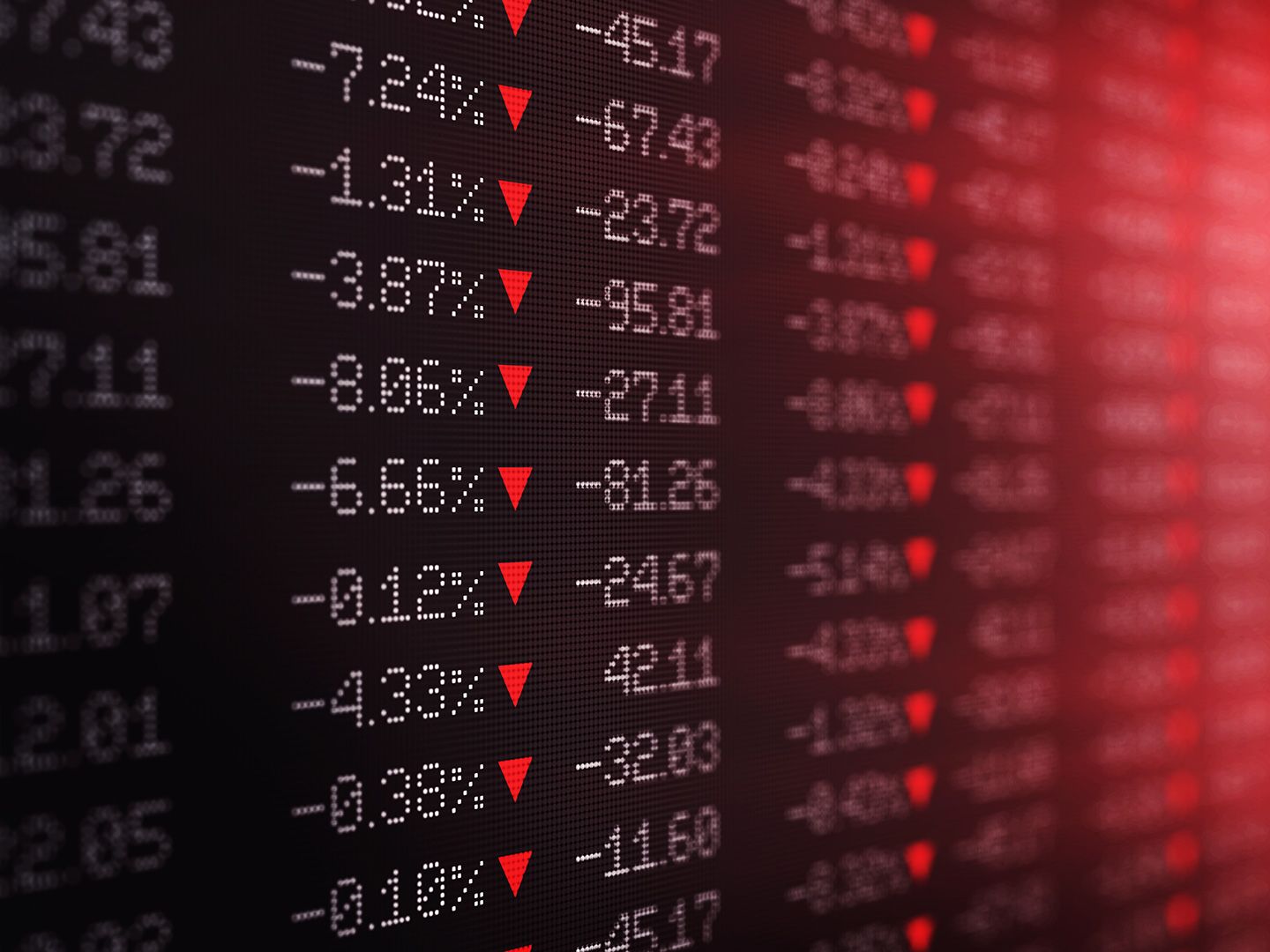
Panic has crept back into the crypto market, as bitcoin continues its decline to $62,000, spurring demand for options bets that protect against potential price losses below $50,000.
In the past 24 hours, the $50,000 strike put expiring on June 26 is the most traded bet on Deribit, the world’s largest crypto options exchange by volume. A put option offers insurance against price losses in the underlying asset.
This shows that even as bitcoin hovers well above the strike, suggesting traders are either positioning for a significant correction or securing cheap insurance against tail-risk events in the coming weeks.
The rest of the leaderboard reinforced a distinctly bearish tilt. Two other puts at strikes of $65,000 and $55,000 also saw notable volume. The only call to crack the top five was the $80,000.
The overwhelming presence of put volume across multiple lower strikes indicates that a notable portion of options flow is betting on, or hedging against, bitcoin failing to sustain its current levels.

Key Highlights
- Sadot Group finalized the purchase of 100% of Anira Consulting FZC (Tradewell), based in the UAE, for a total of $12 million on June 2, 2026
- The transaction brings TradeOS into the fold—a comprehensive Commodity Trading and Risk Management (CTRM) solution designed for enterprise use
- The purchase price was settled entirely through equity issuance and a convertible note bearing zero interest, with all instruments convertible at $3.00 per share
- Both the preferred shares and convertible instrument include ownership limitation provisions and require Nasdaq stockholder approval
- Shares of SDOT climbed more than 91% following the announcement, despite the firm’s modest market capitalization of only $2.44 million
Sadot Group finalized its purchase of Anira Consulting FZC on June 2, 2026, bringing a Sharjah-headquartered commodity trading operation and its proprietary TradeOS CTRM technology under its umbrella for a transaction value of $12 million.
Shares of SDOT jumped over 91% following the announcement. For a business with a total market valuation of merely $2.44 million, this represents an extraordinary single-session gain.
The transaction was structured entirely without cash payments. The purchase consideration consisted of 135,000 common shares priced at $3.00 each, 1,000 Series B preferred shares with a unit value of $6,595, and a $5 million convertible promissory note carrying zero interest and maturing on June 2, 2028.
Both the preferred equity and the note carry conversion rights into common shares at $3.00 per unit, though these are restricted by ownership limitation clauses and Nasdaq stockholder approval requirements.
Anira Consulting conducts business under the Tradewell brand and maintains its registration within the Sharjah free zone in the United Arab Emirates. Its primary focus areas include physical commodity trading operations and risk management advisory services.
TradeOS Platform Capabilities
TradeOS represents the primary strategic asset in this transaction. The platform functions as an enterprise-level CTRM solution engineered to manage trade execution, live profit and loss calculation, risk assessment, logistics coordination, treasury operations, financial accounting, and compliance requirements within an integrated straight-through processing framework.
This represents a comprehensive technology suite for a platform now owned by an organization of Sadot’s current scale. Company officials characterized the acquisition as materially significant to Sadot’s business operations.
Under the deal terms, revenues generated by Anira will be directed first toward settling pre-existing obligations and software-related commitments before distribution elsewhere. Sadot indicated this revenue waterfall structure was implemented to control dilution exposure and mitigate credit risk.
Wall Street Maintains Skeptical Stance
The risk factors are clear-cut: significant revenue decline across the past twelve months, substantial operational losses, negative shareholder equity, and persistent cash consumption.
Sadot is additionally navigating an outstanding Nasdaq equity listing compliance matter and recently executed an expansion of its authorized share count—both identified as supplementary risk considerations.
Technical indicators point to a Sell rating, with typical daily trading volume hovering around 539,000 shares. The stock has maintained a downward trajectory, and technical analysts observe that oversold conditions have not yet triggered a trend reversal.
Sadot Group’s present market capitalization stands at $2.44 million, firmly positioning it within micro-cap classification. The 91% intraday price movement underscores the extremely limited liquidity in the stock.
The Anira and TradeOS acquisition represents Sadot Group’s declared strategy to construct a technology-powered commodity trading enterprise. The transaction reached completion on June 2, 2026, with the definitive Share Purchase Agreement executed on the same date.


SpaceX has outlined plans for a record $75 billion stock market debut that would value Elon Musk’s space and AI company at about $1.77 trillion.
Summary
- SpaceX plans to raise $75 billion through an IPO that would value the company at about $1.77 trillion.
- Elon Musk would keep 82.4% voting control after the offering, according to the company’s SEC filing.
- The IPO could surpass Saudi Aramco’s 2019 listing and become the largest public offering in history.
- SpaceX said the proceeds will support its rocket, Starlink, artificial intelligence and space data center plans.
According to a filing with the U.S. Securities and Exchange Commission, SpaceX plans to sell 555.6 million shares at $135 each in an initial public offering. The company set a single offer price instead of giving investors a price range, a move the filing places at the center of one of the largest listings ever proposed.
The planned IPO would surpass Saudi Aramco’s 2019 listing, which raised $29.4 billion, according to the figures cited in the filing. SpaceX said its shares are expected to start trading next Friday, subject to final approvals and market conditions.
Elon Musk set to retain voting control
The SEC filing said Musk currently owns about half of SpaceX. After the offering, the filing said he would still hold nearly half of the company’s total shares.
At the same time, SpaceX said some of Musk’s holdings carry stronger voting rights. The filing said he would control 82.4% of the company’s voting power after the IPO, giving him firm control over major corporate decisions.
Based on the proposed $135 share price, Musk’s SpaceX stake would be worth about $841 billion, according to the company’s IPO math. Forbes’ real-time billionaire tracker currently estimates the figure to be close to the combined wealth of Larry Page, Sergey Brin, and Larry Ellison.
AI plans add to SpaceX valuation story
SpaceX said in its IPO documents that the company’s future plans now extend beyond rockets, satellites, and Starlink internet services. The filing said SpaceX also plans to invest heavily in artificial intelligence and space-based data centers.
Musk founded SpaceX in 2002 to develop rockets and carry payloads into orbit. According to the company’s documents, Starlink became a major business line after its satellite internet service expanded commercially in 2021.
In February, Musk merged SpaceX with xAI, the artificial intelligence company linked to X, according to the filing. SpaceX said AI now plays a key role in its long-term investment plans, although the company also said the business will need heavy capital spending.
IPO could expand Musk’s wealth lead
The filing said proceeds from the offering will help fund SpaceX’s space and artificial intelligence operations. The company also suggested future stock sales may be needed because of the large costs tied to rockets, satellites, computing systems and AI infrastructure.
If SpaceX trades at the proposed valuation, Musk’s combined wealth could rise sharply. The report said his Tesla stake was worth just under $300 billion at Wednesday’s closing price, which could push his total net worth toward $1.1 trillion when added to his SpaceX holdings.
SpaceX’s planned debut comes as other artificial intelligence companies prepare for public offerings. Anthropic has already announced plans to IPO, while OpenAI is also expected to follow, according to the report.
The report said those listings could create thousands of new millionaires and some billionaires, even as many AI firms continue to face questions over profitability.

Republicans win congressional redistricting battle

Dipping Into Latham Group Stock Reveals Upside Potential (NASDAQ:SWIM)

Mike Leach nominated for 2027 College Football Hall of Fame class

HarrisX Poll Found 52% of Registered Voters Support the CLARITY Act

BloFin War of Whales 2026 Grand Prix opens registration for $5M trading championship

Blockchain.com files with SEC for U.S. IPO

L&T Finance Personal Loan Online Apply | L&T Finance Personal Loan | New Loan App | loan app Reviews

Wife earns more, Husband bears all expenses.#personalfinance #earning #money

Bitcoin Is Near A Break Point Nobody Sees Coming
-

 Tech6 days ago
Waymo dominates autonomous vehicle registrations as Tesla trails behind
-

 News Videos6 days ago
This is BROKEN! INSANE 5x MONEY CAR WASH WEEK! The NEW GTA Online UPDATE Today! (GTA5 New Update)
-
 Tech5 days ago
SpaceX just won a second Golden Dome contract. This one is $4.16 billion.
-

 Business2 days ago
Jade Biosciences, Inc. (JBIO) Discusses Positive Interim Results From JADE101 Phase I Healthy Volunteer Study and Development Plans Transcript
-
 News Videos5 days ago
SHE IS KILLING XRP!!! WATCH URGENT AND ACT FAST
-
 NewsBeat5 days ago
FIRST NIGHT REVIEW: Take That bring the Circus back to life in spectacular sun-soaked style
-
Crypto World5 days ago
CFTC Has Approved the First Regulated Bitcoin Perpetual Contract in the U.S.
-

 Business5 days ago
Is the Spurs Phenom Already Better Than Prime Diesel?
-

 Politics5 days ago
The House | Inside Andy Burnham’s Makerfield Campaign: “Nobody Thinks This Is In The Bag”
-
 NewsBeat5 days ago
Novak Djokovic v Joao Fonseca LIVE: French Open latest scores and results after Jannik Sinner’s shocking collapse
-
 Entertainment5 days ago
Weak ‘Supergirl’ Box Office Tracking Amid Milly Alcock Backlash
-
 Crypto World5 days ago
Snowflake (SNOW) Stock Rallies on Strong Q1 Results and AI Product Growth
-

 Business5 days ago
Demand Conditions Improve In Chemicals Sector In April 2026
-
 Crypto World5 days ago
MicroStrategy Moves $30 Million in BTC to Coinbase Prime: Is the Bitcoin Sell-Off Already Here?
-

 Tech6 days ago
This Week In Security: Ubiquiti Fixes, And FreeBSD Joins The Club You Don’t Want To Join
-

 Entertainment6 days ago
Maddox Jolie-Pitt Legally Requests to Drop Brad’s Surname
-
 Entertainment5 days ago
One of the Greatest Sitcoms of All Time Shoots Up Apple TV’s Charts 11 Years Later
-
 Crypto World2 days ago
Seagate (STX) Stock Surges to Record High on AI Boom and Legal Settlement
-
 NewsBeat5 days ago
Everything you need to know as Cambridge’s Strawberry Fair returns after cancelled year
-
 Entertainment5 days ago
Britney Spears Shares Troubling Update After Hard Year
You must be logged in to post a comment Login