
Crypto World
Firelight raises $8 million, expands beyond XRP as it aims to make DeFi less scary for fintechs



The protocol aims to give fintechs and investors a faster way to recover losses from DeFi hacks, while letting XRP, bitcoin and XLM holders earn yield by backing that protection.

Bitcoin traded at a 1% premium on Upbit, South Korea’s largest crypto exchange, over Binance’s dollar-denominated price today, marking the longest sustained positive spread since early May.
The reappearance of the so-called kimchi premium raises an immediate analytical question: Does this reflect a genuine revival of South Korean retail risk appetite? Or simply a temporary lull in local selling pressure that says little about where Bitcoin goes next?
The kimchi premium, the gap between Bitcoin prices on Korean exchanges and global markets, has functioned for years as a barometer of retail mood across Asia. Upbit, owned by Dunamu Inc, has held that positive spread for about a week now. That is a meaningful shift given where the spread stood as recently as June, and it arrives as macro conditions continue to shape Bitcoin’s price action.
Rachael Lucas, an analyst at BTC Markets, said Korean retail tends to buy aggressively in risk-on phases and capital controls mean that buying shows up as a price gap rather than arbitrage flow. That distinction matters: unlike US markets, where price discrepancies get arbitraged away almost instantly, Korea’s regulatory structure lets demand imbalances persist visibly for days or weeks.
Markus Thielen, head of 10x Research, offered the counterweight. He said Korea is unlikely to be a major driver in the initial stage of a Bitcoin rebound without a corresponding pickup in spot volumes, noting many Korean traders remain focused on AI stocks rather than crypto. The premium turning positive is one data point; it is not confirmation that capital is rotating back into digital assets at scale.
Discover: The Best Crypto to Diversify Your Portfolio
The Case For and Against Reading Into It
Lucas noted that discount-to-premium crossings have historically preceded stronger Bitcoin returns over the following weeks, and the premium’s reappearance has presaged further gains in the past. That historical pattern gives the signal some weight, but it competes directly with a much larger and better-documented flow: US spot Bitcoin ETF demand.
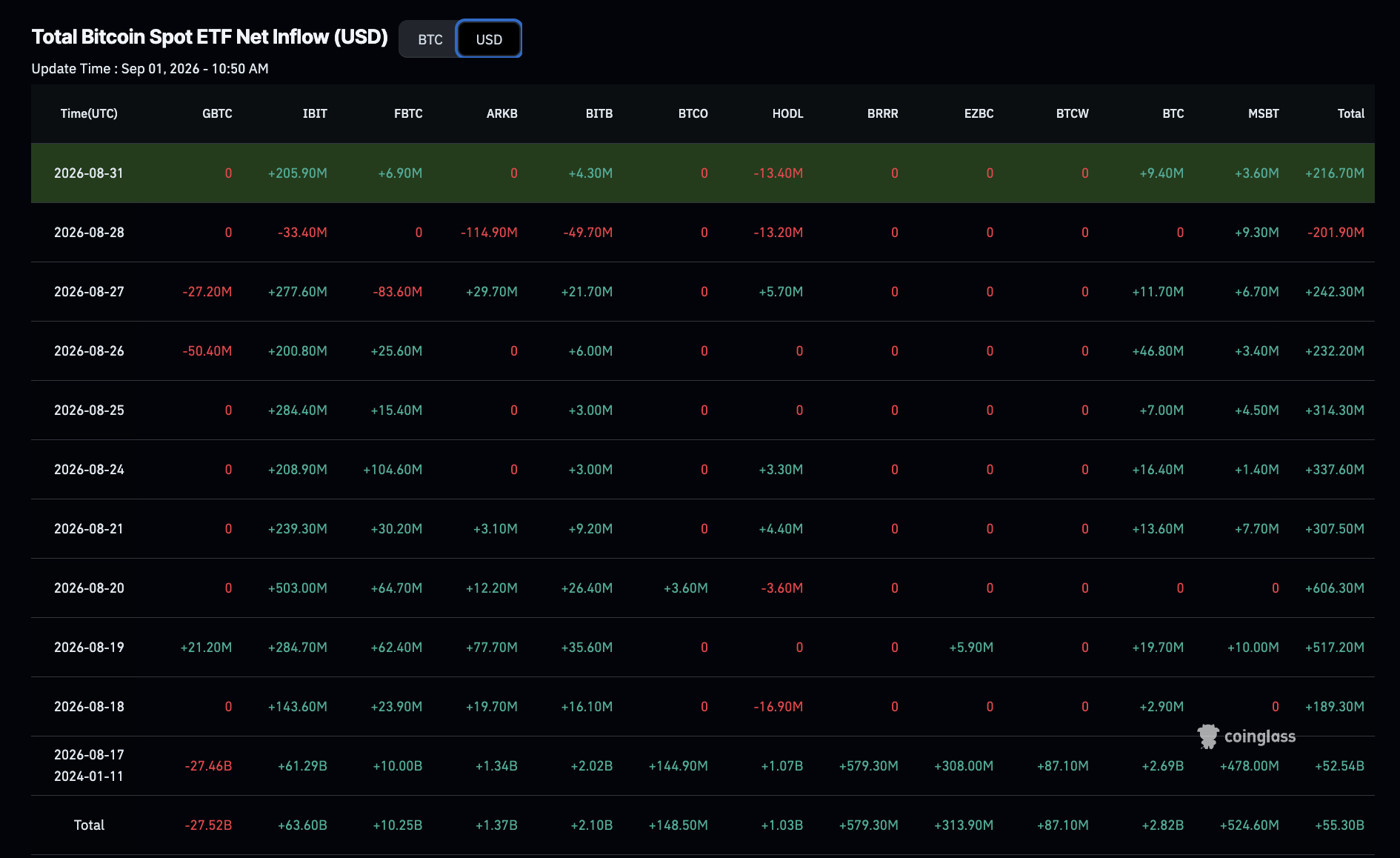
US-listed spot Bitcoin ETFs pulled in about $1.92 billion in the week of Aug. 17, their strongest weekly inflow in 10 months, followed by another $923 million the next week. A $203 million outflow on Aug. 28 then snapped a nine-day inflow streak, a sign institutional momentum was already cooling by month-end even as the Korean spread turned positive.

That contrast is the core of the analytical tension here. US ETF flows increasingly reflect institutional positioning with real capital behind them, while Korea’s price gap has historically been associated with domestic retail buying that local capital controls and financial regulations make difficult to arbitrage away quickly.
Lucas was direct about the scale mismatch: “Korea’s bitcoin-specific share of global volume remains modest, so this is a small signal, an easing of Korean selling pressure, not a new Fomo wave,” she said. “US institutional and ETF flows still dominate price action.”
Trade Bitcoin on Bybit and Get a Chance to Win Our $1,000 USDT Airdrop
Where Bitcoin Price Sits Now
Bitcoin entered September near $79,000 after briefly crossing $80,000 in August for the first time since May, capping the strongest monthly advance since November 2024.
The rally was driven in part by renewed crypto optimism alongside the US Treasury’s decision to increase buybacks of longer-dated government bonds, a macro tailwind unrelated to Korean retail behavior.

The turnaround in the Korean spread looks sharper against that summer backdrop. Bitcoin traded at as much as a 3.1% discount to international prices on Upbit in early June, and the average discount for August was still 0.25%.
The move to a roughly 1% premium by Sept. 1 represents a real reversal in sentiment, even if it remains modest in absolute terms and market conditions heading into September stay the more decisive factor for price.
The path forward hinges on confirmation that has not yet arrived. If the premium holds and Korean spot volumes rise in tandem, that would strengthen the case for a genuine retail-driven leg to the rebound rather than a passing shift in sentiment. If it fades without volume support, the more likely read is that this was a brief easing of Korean selling pressure rather than the start of anything larger.
The post Bitcoin Price Gap Widens as Kimchi Premium and ETF Flows Take Center Stage appeared first on Cryptonews.


Judge Colleen McMahon has dismissed Burwick Law’s claims against Solana Labs, Solana Foundation, and its execs as part of the ongoing Pump Fun lawsuit.
Yesterday’s court filing revealed McMahon’s orders that either denied or approved Pump Fun’s various motions to dismiss allegations put forward by Burwick Law.
Racketeering (RICO) allegations that accuse Pump Fun’s parent company, Baton Corporation, and its executives, Noah Bernhard Hugo Tweedale, Alon Cohen, and Dylan Kerler, of wire fraud, illegal gambling, and unlicensed money transmission were upheld.
These two allegations were submitted by plaintiffs Carnahan and Okafor, but RICO claims put forward by the plaintiff Aguilar were dismissed.
Pump Fun memecoins FRED and GRIFFAIN are not securities
The judge also dismissed allegations that Pump Fun defendants broke the Securities Act by offering unregistered securities.
They claim the two memecoins FRED and GRIFFAIN did not entail a “common enterprise” and, as such, do not fulfill the Howey Test.
Crypto law firm founder Ariel Givner has noted, however, that this ruling does not mean all memecoins aren’t securities. She stressed this ruling only applies when a memecoin does not offer a shared goal of profits rising for everybody.
Allegations of unjust enrichment were also dismissed from the suit.
Read more: Iggy Azalea allegedly mis-sold MOTHER, leading to investor losses
Burwick Law hasn’t served 25 unnamed KOLs yet
The judge has also asked Burwick Law to explain why it hasn’t been able to serve 25 key opinion leaders (KOLs) since the lawsuit was filed in January 2025.
It accused the unnamed KOLs of promoting Pum Fun tokens and, in some cases, “concealing both their compensation and their own preexisting positions in the tokens they promoted.”
Burwick Law has until September 10 to explain why these KOL claims “should not be dismissed for failure to identify and serve them.”
The crypto influencer “Scooter” was named as one of these defendants in a previous filing. They shortly threatened to sue Burwick Law for “potential defamation.”
Solana Labs and Jito Labs were added last year
Burwick Law’s lawsuit added Solana Labs and Solana Foundation over a year ago.
It claimed the two worked together to avoid US securities laws and extract capital from the US market.
Read more: Burwick Law chief refuses to comment on Dogshit2 memecoin
It argued that Solana crypto infrastructure provided “no investor protections, disclosure obligations, or legal accountability” for the memecoin craze and its losses.
Jito Labs was also added alongside Solana Labs as a lawsuit defendant. However, Burwick Law voluntarily dropped Jito Labs months later.
Got a tip? Send us an email securely via Protos Leaks. For more informed news and investigations, follow us on X, Bluesky, and Google News, or subscribe to our YouTube channel.
Crypto World
Bitcoin enters ‘Rektember’ as rate-hike risk combines with seasonality to threaten rally
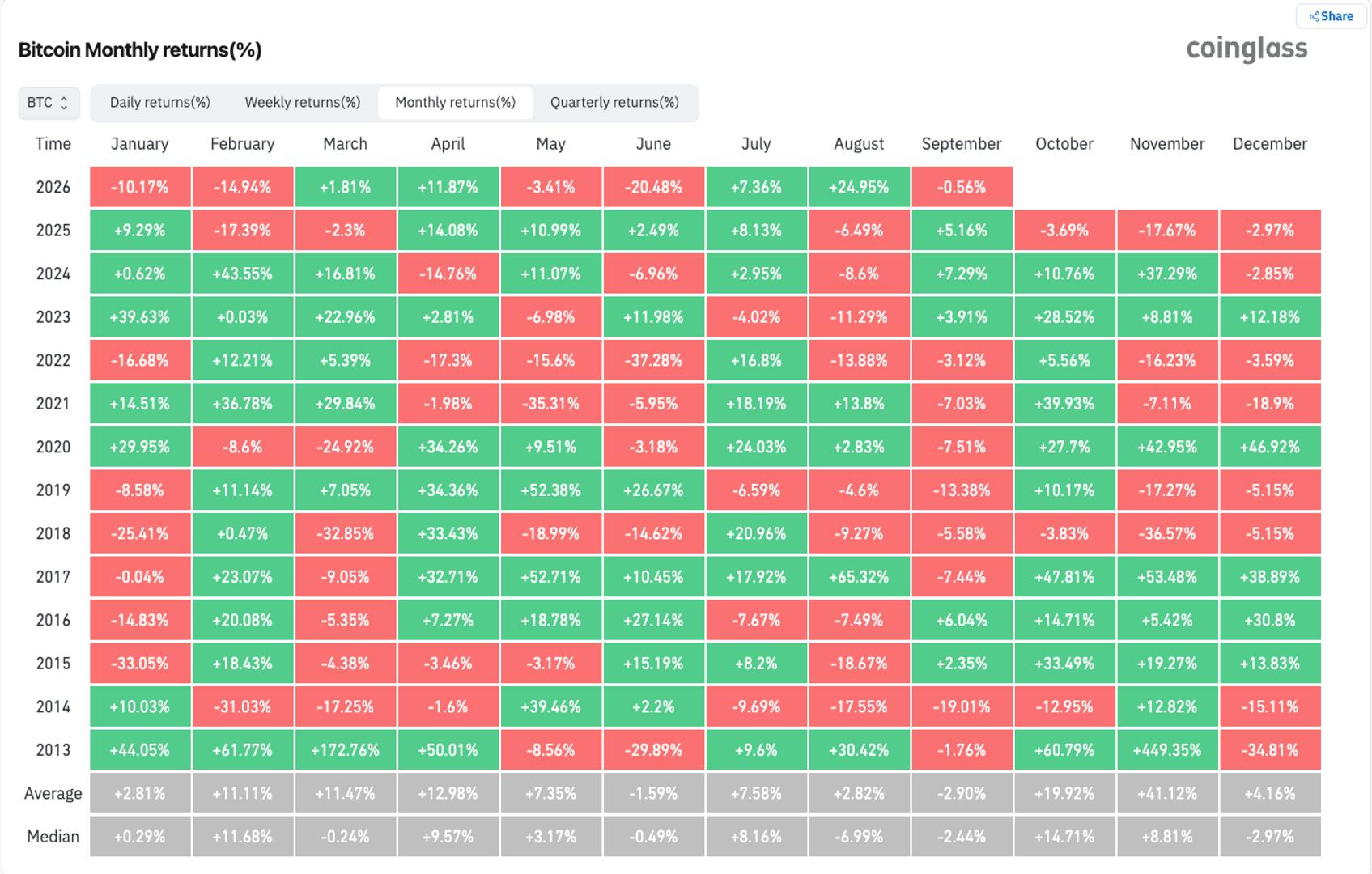
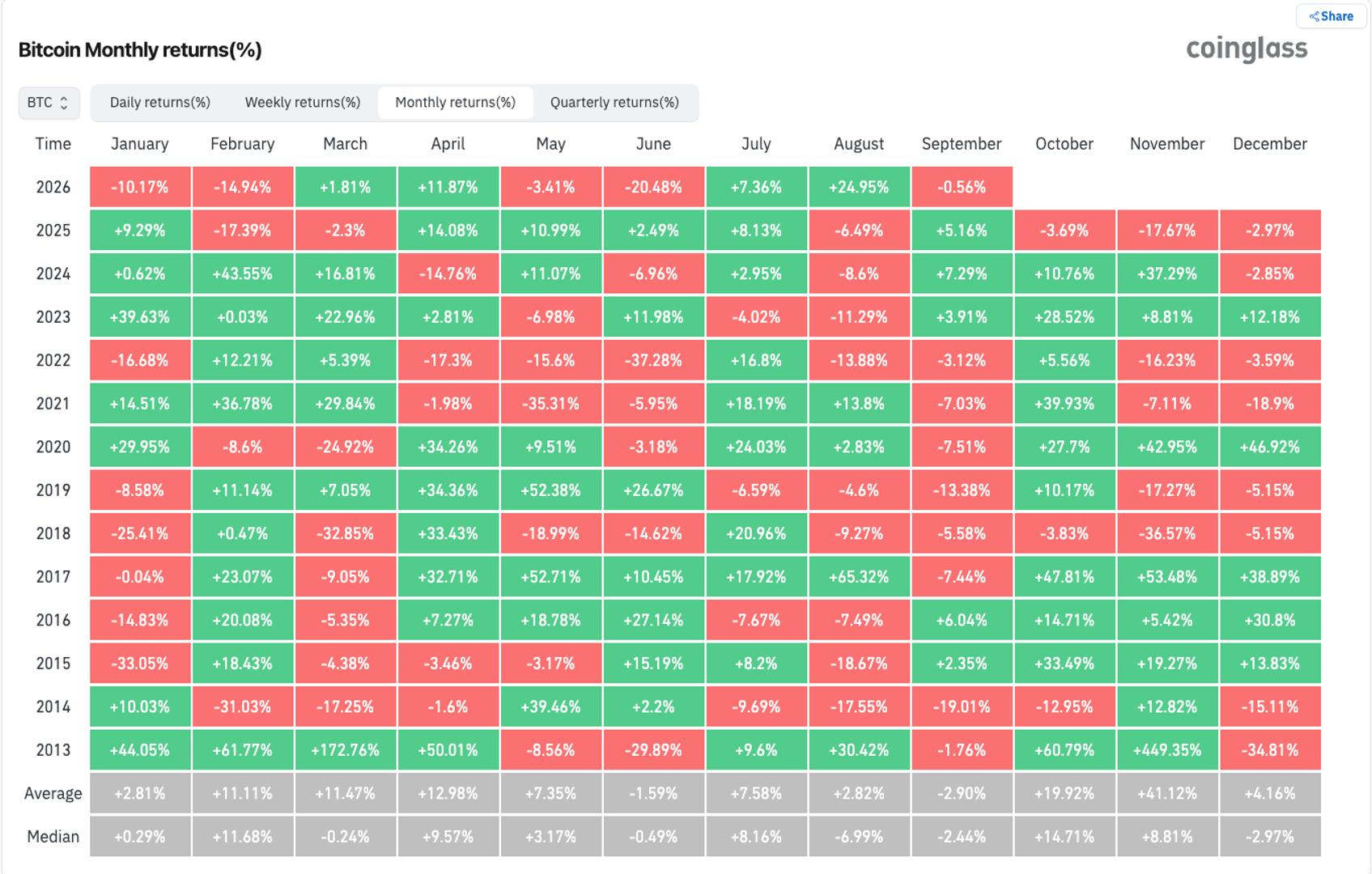
September has historically been a poor month for risk assets in general, and bitcoin, in particular.


A fake Claude desktop application is reportedly being used to distribute RevStealer, a Windows malware strain built to steal crypto, password and browser data.
According to a Monday report by cybersecurity company Morphisec, RevStealer was previously distributed through GitHub repositories and game-cheat-themed sites but the most notable is a fake “Claude Opus 5 Free Desktop” project that impersonates AI developer Anthropic and promises free access to Claude.
The researchers noted that the malware is designed to leave few traces and searches browser databases, cookies, password-manager records, VPN and remote-access settings, messaging data, screenshots and selected documents. RevStealer also targets over 50 cryptocurrency wallets.
The malware checks whether the machine looks like a real user device before unlocking its malicious payload, looking at available memory, the number of processor cores, hostname, username and graphics hardware. It also monitors for the debugging delays typical of malware analysis environment.
If RevStealer detects anything out of the ordinary, it does not move on to the next stages of infection and malicious activity. If the system passes those checks, the payload is decrypted, stored under a random name and covertly executed.
The report follows the discovery by Russian cybersecurity company Kaspersky of a new malware framework targeting cryptocurrency investors called OkoBot, which can harvest crypto wallet files, browser data and user credentials, inject malicious extensions and capture wallet application windows to steal assets.
Related: Microsoft warns users of ‘Crypto Clipper’ malware spread via USB drives


- KuCoin adds UTA support to its institutional lending program.
- New API clients face a lower 30-day volume requirement of 10M USDT.
- Eligible institutions can borrow up to 3M USDT across key products.
KuCoin has upgraded its Institutional Interest-Free Lending Program by integrating support for its Unified Trading Account (UTA), as the crypto platform looks to streamline capital management for institutional clients.
The upgrade reduces the qualifying external 30-day trading-volume requirement for newly registered API clients from 30 million USDT to 10 million USDT.
Eligible clients can also access 0% interest for the first two months without a trading-volume requirement.
Under the upgraded program, eligible institutional clients can borrow up to 3 million USDT.
Borrowed funds can be used across Spot, Margin, and Futures trading, while borrowing is available in USDT, USDC, Bitcoin, and Ethereum.
KuCoin integrates lending with unified accounts
The integration is designed to reduce capital fragmentation between separate trading accounts.
KuCoin said institutions operating across multiple products and strategies can face higher costs and operational friction when capital is divided between accounts.
UTA provides eligible users with a single account structure for managing capital across supported trading products.
With institutional lending integrated into the framework, borrowed funds can be deployed across Spot, Margin and Futures without requiring transfers between separate trading accounts.
The setup is intended to bring financing closer to execution and allow professional trading teams to deploy collateral and capital more efficiently.
KuCoin said the upgraded infrastructure is focused on how institutions access, manage, and deploy digital assets across different trading strategies.
Lending program expands from targeted credit
KuCoin introduced targeted interest-free credit in 2024, initially offering eligible API traders and quantitative teams access to up to 500,000 USDT alongside benefits including fee support, enhanced connectivity, higher API limits and technical assistance.
In 2025, the borrowing limit increased to 3 million USDT.
The program also added support for multiple borrowing assets and allowed clients to combine funds from sub-accounts as margin across eligible products.
The 2026 upgrade represents the latest stage of the program’s development, moving beyond targeted credit support toward a more integrated institutional capital infrastructure, according to the company.
The latest changes also lower the entry requirement for newly registered API clients, potentially expanding access to the lending program.
KuCoin highlights capital efficiency for institutions
Alison Qin, Head of KuCoin Institutional & VIP, said professional market participants require flexible and capital-efficient access to liquidity.
She added that institutional lending infrastructure needs to combine financing at scale with tailored terms and competitive pricing to support sophisticated trading strategies.
Qin said integrating lending with UTA brings capital closer to the accounts and products used for those strategies, while helping clients maintain control over execution and risk.
The company said the upgrade forms part of its broader product development strategy, connecting financing, account infrastructure and execution for institutional users participating in the digital asset market.
Founded in 2017, KuCoin said it serves more than 45 million users across more than 200 countries and regions.
The platform provides access to more than 1,500 digital assets and said it has built a compliance framework that includes AUSTRAC registration in Australia, a MiCA license in Europe, and regulatory progress in other markets.
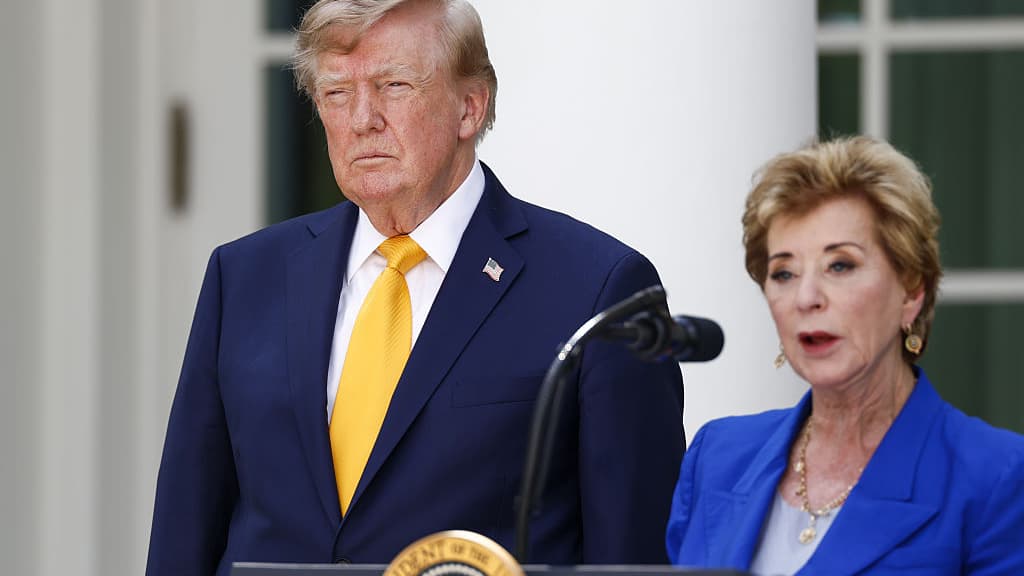
If this playbook sounds familiar, it’s because we’ve seen this movie before. In 1996, Congress created Temporary Assistance for Needy Families, or TANF, a block grant that ended the guarantee of cash assistance for families who need it and handed states broad discretion over the money. One of us, Peter Edelman, resigned from the Clinton Administration in protest.
Thirty years later, we know the results. States diverted the funds, the block grant lost half its value to inflation, and by 2023 just 21 of every 100 families with children in poverty received cash assistance, down from 68 in 1996. TANF now reaches far fewer families and provides far less help.
Instead of going down this path again, the Trump Administration and Congress should advance an anti-poverty agenda centered on two core principles: cash and care.
Solana price held above the key $100 level on Sept. 1 after its late-August rally stalled near $110, with weakening trend strength pointing to consolidation before the next major move.
Summary
- Solana price traded near $102.30 after retreating from its Aug. 27 high around $110.
- The daily chart places immediate resistance at $106.25, followed by $112.50.
- 4-hour ADX fell to 17.47, showing that the earlier upward trend has lost strength.
- Liquidation liquidity is concentrated near $100 and between roughly $108 and $110.
Solana price momentum weakens above $100
According to data from crypto.news, Solana (SOL) price was trading near $102.30 at the time of writing, down about 0.7% on the daily chart but still above the psychological $100 level. The token began the seven-day period near $102.17, climbed to $110.04 on Aug. 27, and then gave back most of that advance.
SOL remained up slightly for the week despite the pullback. Its ability to outperform several other large-cap cryptocurrencies followed Charles Schwab’s plan to add SOL trading alongside Avalanche and Chainlink.
The announcement helped SOL gain more than 9% in 24 hours as trading volume increased. However, the broader crypto market was also rising at the time, making it difficult to assign the full rally to the Schwab development.
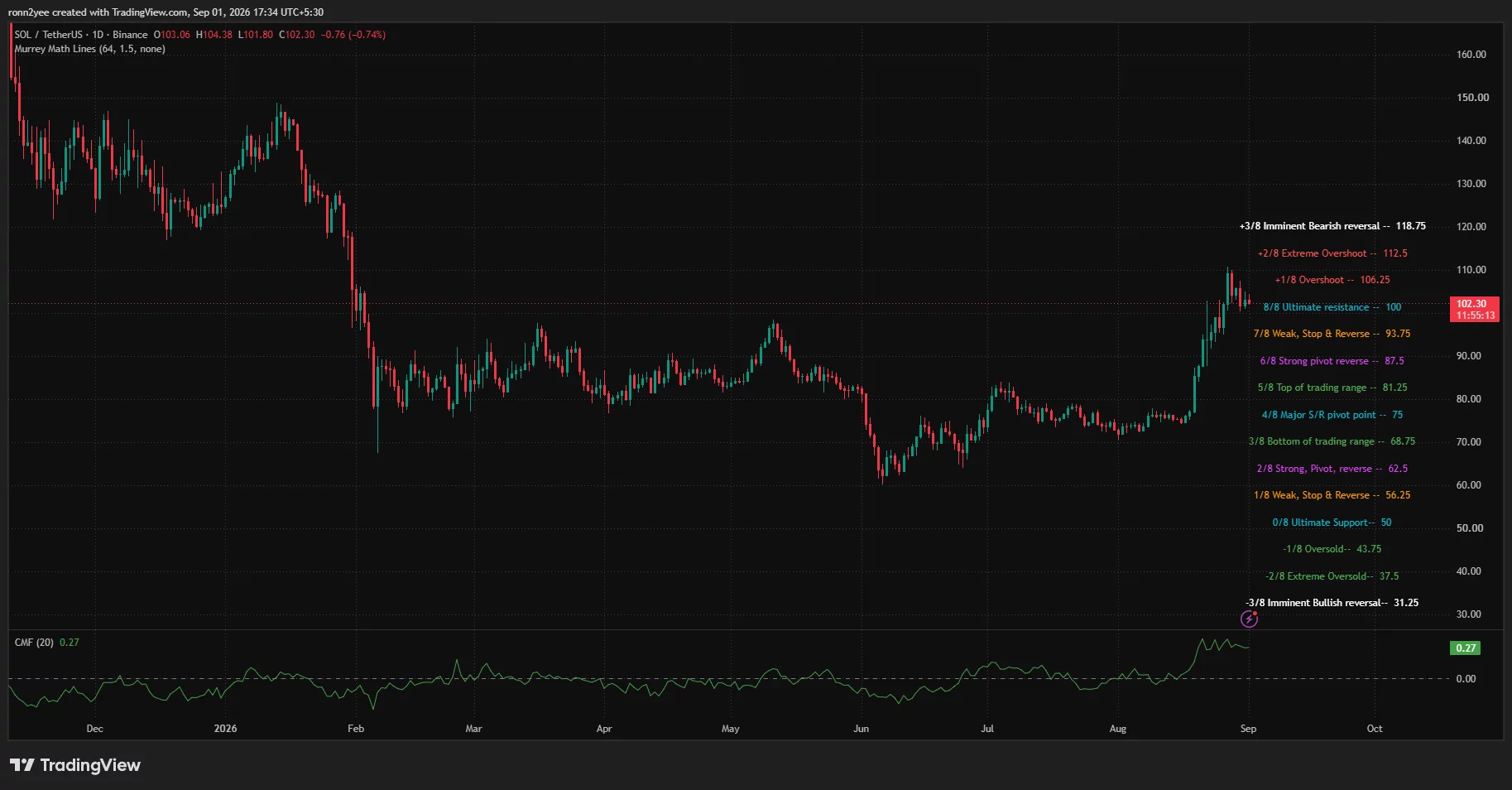
Solana’s daily chart shows that the advance carried the price through the $100 Murrey Math resistance level before sellers appeared around $110. The subsequent decline has brought SOL back toward the breakout area, turning $100 into the market’s immediate test.
A daily close above that level would preserve the breakout structure. Losing it would suggest that the late-August move failed to establish a durable higher trading range.
Technical indicators point to consolidation
The 4-hour chart shows SOL trading below the Bollinger Bands’ middle line at $103.88. That level now acts as the first short-term barrier for buyers.
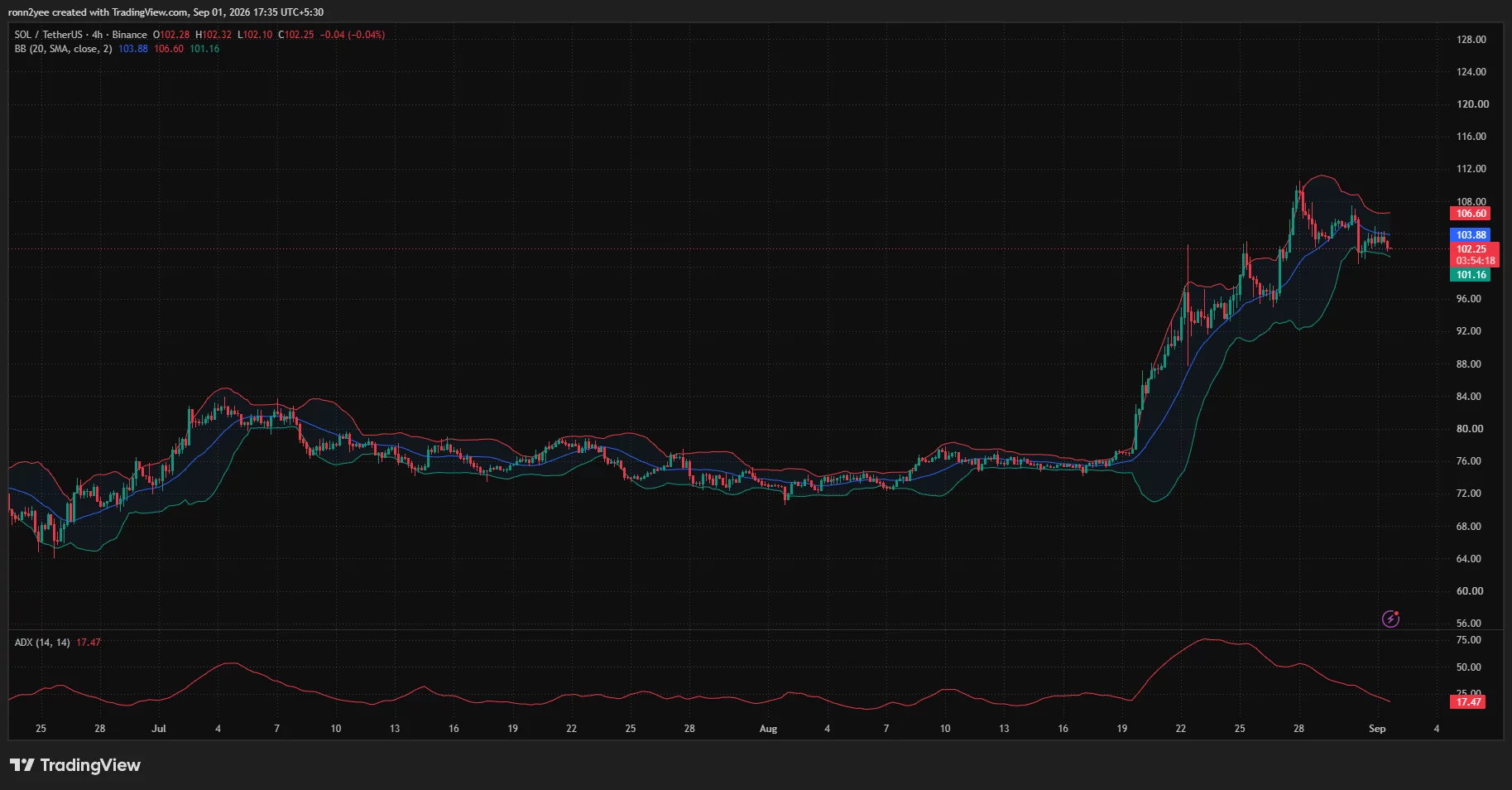
The upper Bollinger Band stands at $106.60, close to the daily Murrey Math resistance at $106.25. The overlap makes the $106.25–$106.60 region the most important nearby resistance zone.
A sustained move through that area could allow SOL to challenge $110 again. Beyond the recent high, the daily chart places the next resistance at $112.50, while $118.75 marks a higher reversal zone.
Momentum has weakened as the price contracts. The 4-hour Average Directional Index has dropped to 17.47 after rising above 70 during the breakout. An ADX reading below 20 normally reflects a market without a strong directional trend, increasing the chance of sideways trading.
The Bollinger Bands are also beginning to narrow after expanding sharply during the rally. Price is sitting close to the lower band at $101.16, leaving buyers little room to defend before the market tests $100.
Daily Chaikin Money Flow remains positive at 0.27, however. The reading shows that buying pressure has not disappeared despite the retreat from $110. Positive capital flow supports the case for consolidation above $100 rather than an immediate reversal of the entire August advance.
Liquidation heatmap places SOL between two liquidity zones
The one-week CoinGlass liquidation heatmap identifies a large concentration of leveraged positions near $100. The level has remained the brightest liquidity cluster below the current price, making it a possible short-term target if selling continues.
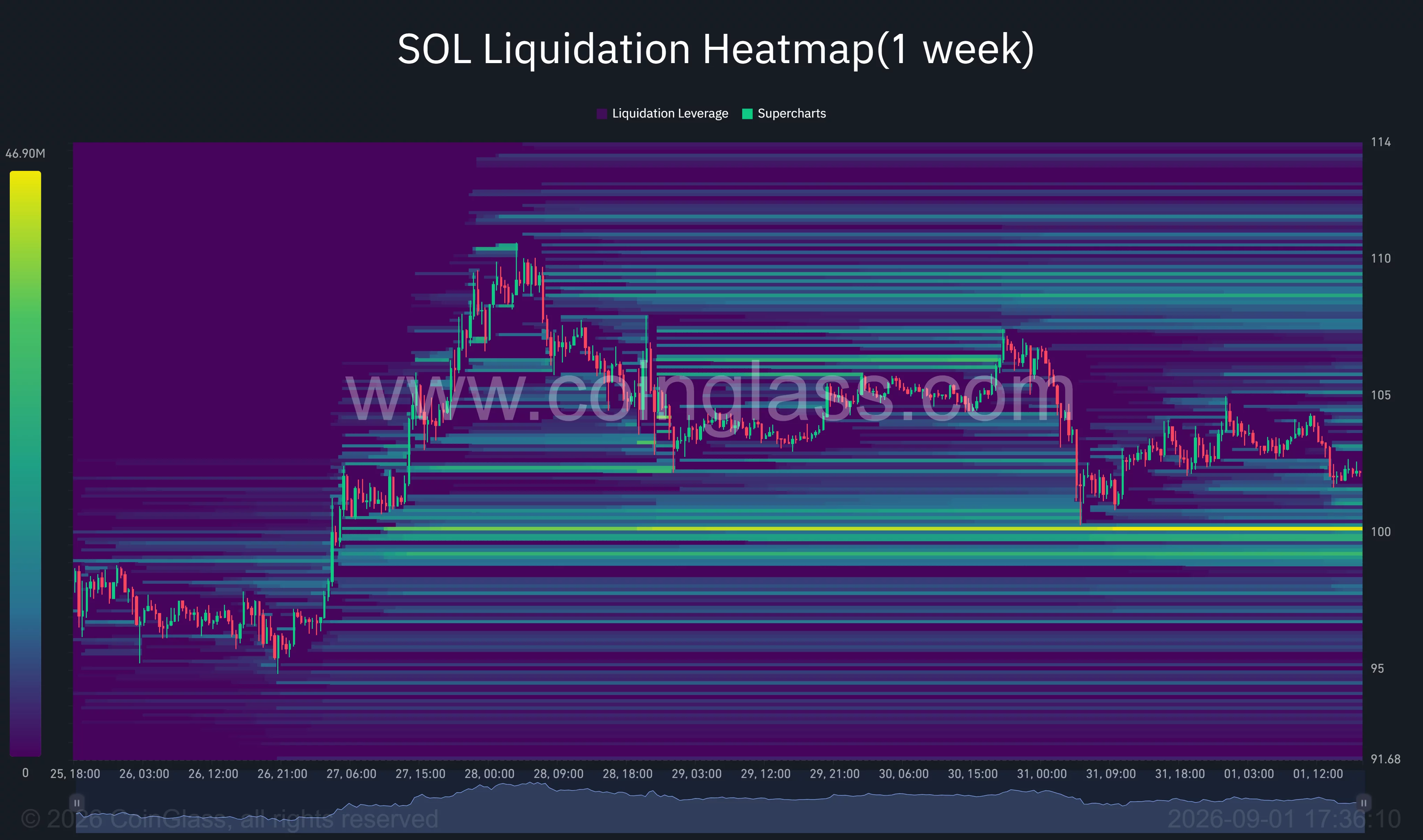
SOL already approached that zone during its Aug. 31 decline before recovering toward $103. A return to $100 could trigger another round of long liquidations, particularly if the price breaks below the level with rising volume.
Liquidity also appears above the market between approximately $108 and $110. The concentration coincides with the recent high and could attract the price if buyers reclaim the Bollinger midpoint and $106.60 resistance.
Smaller clusters are visible around $104–$106, meaning a recovery may encounter resistance before reaching the larger liquidity pool. The resulting setup leaves SOL between two competing targets: downside liquidity around $100 and short-liquidation exposure near $108–$110.
A confirmed break below $100 would place $93.75 in focus on the daily Murrey Math chart. The next major support stands at $87.50, although the token would first need to lose its current breakout structure for either level to become an immediate target.
Solana analysts track a wider breakout structure
Crypto analyst Batman said in an Aug. 31 post that SOL had broken out of a major accumulation structure. His chart identifies the $83–$85 region as the key long-term retest zone and presents a possible path toward $150 if that support holds.
The $150 projection remains a conditional, longer-term target rather than an immediate price objective. SOL would first need to reclaim the $106.25–$110 resistance region and establish a higher high above $112.50.
Solana’s price also received support from the network’s Double Disinflation proposal. Validators approved the measure with about 67% support, narrowly clearing the required two-thirds threshold. The change doubles the annual disinflation rate from 15% to 30% while retaining the network’s 1.5% long-term inflation target.
US investment products provide another source of demand. Spot Solana exchange-traded funds had recorded $1.22 billion in cumulative net inflows by late August, including their strongest daily intake of 2026.
For the short-term outlook, $100 remains the dividing line. Holding it would leave room for another test of $106.25 and $110, while a daily close below it would weaken the breakout and expose $93.75. Falling ADX readings suggest that SOL may first spend time consolidating between those levels before choosing its next direction.
Disclosure: This article does not represent investment advice. The content and materials featured on this page are for educational purposes only.


Strategy has spent $635.2 million repurchasing its STRC perpetual preferred stock as the security continues to trade below its $100 par value despite recovering from a low near $71.
Summary
- Strategy has spent $635.2 million buying back STRC, which remains below its $100 par value at around $97.
- The latest STRC repurchase totaled $151.8 million at an average price of $97.48 per share.
- Strategy returned to Bitcoin buying with a $369.7 million purchase of 4,603 BTC, taking its holdings to 845,050 BTC.
- Strive’s SATA offers a 13% annualized dividend with daily payments, compared with STRC’s 12% rate paid twice monthly.
- SATA has stayed near $100, while Strive’s ASST has gained roughly 60% this year compared with a 15% decline for MSTR.
Strategy disclosed in its latest filing that it bought back another $151.8 million of STRC during the week ended Aug. 30, paying an average $97.48 per share as part of a repurchase program designed to support the preferred stock.
The latest purchase covered 1.56 million STRC shares and came as the company returned to buying Bitcoin after a roughly two-month pause. Strategy acquired 4,603 BTC for $369.7 million at an average price of $80,318 per coin, taking its total holdings to 845,050 BTC.
STRC, known as Stretch, was trading at $97.34 on Tuesday, leaving the preferred stock below the $100 level Strategy has sought to restore through dividend increases, cash reserves and share repurchases.
Strategy STRC buybacks have reached $635.2 million
Strategy introduced a $1 billion authorization for preferred stock repurchases in late June as part of its Digital Credit Capital Framework, which set aside another $1 billion for common stock buybacks and raised STRC’s annual dividend rate to 12%. As previously covered by crypto.news, the new capital framework included a separate program allowing Strategy to sell up to $1.25 billion of Bitcoin if needed.
Since then, the company has steadily used the preferred stock authorization as STRC recovered from its June lows.
The size of Strategy’s weekly purchases has increased along with STRC’s price. During the week ended July 26, the company repurchased $25 million of STRC while the preferred shares remained well below par. At the time, Strategy had increased its dollar reserve to $3.75 billion and kept its Bitcoin holdings unchanged at 843,775 BTC.
Strategy later sold 1,638 BTC for $104.7 million between July 27 and Aug. 2, directing part of its available capital toward preferred stock dividends and repurchases. The Bitcoin sale came as the company increased its cash position and continued supporting STRC.
By the latest reporting week, Strategy was willing to pay an average $97.48 for STRC, less than $3 below its stated $100 par value.
The company funded its latest transactions by selling 4.53 million MSTR shares through its at-the-market program for net proceeds of $602.8 million. Of that amount, $369.7 million funded the Bitcoin purchase, $151.8 million went toward STRC repurchases, $50.7 million was allocated to STRC dividends and $30 million was added to Strategy’s USD Cash account.
Strategy reported $1.61 billion in USD Cash as of Aug. 30, while another $5.1 billion was held in its USD Reserve.
STRC remains short of its $100 par value
STRC has recovered considerably since falling below $75 in late June, but Strategy has yet to push the preferred stock back to $100 on a sustained basis.
Chief Executive Phong Le said in July that Strategy planned to resume issuing STRC once the security returned to par, linking the recovery directly to the company’s ability to use the preferred stock for future Bitcoin purchases.
“We’ll continue to build that. And yeah, when Stretch gets back to par, we’ll issue more. We’ll buy more Bitcoin,” Le said at the time, as crypto.news previously reported.
STRC had been trading near $87 when Le made the comments on July 16. Strategy had spent the preceding weeks building its dollar reserves after the preferred stock fell sharply during June.
The company had already changed STRC’s dividend structure in an attempt to make the security more attractive to income investors. Shareholders approved semi-monthly dividend payments in June, moving distributions to the 15th and final day of each month.
Strategy later raised the annualized dividend rate to 12% as part of its capital framework.
Institutional demand has remained significant despite STRC trading below par. By late July, the preferred stock had become the largest holding in three major U.S. preferred stock exchange-traded funds, which collectively held $756 million of STRC. Institutional holdings had increased 105%, while the retail ownership share fell from 78% to 71%.
Strive’s SATA has held closer to par
Competition from Strive’s Variable Rate Series A Perpetual Preferred Stock, SATA, has provided investors with another Bitcoin treasury-linked income product carrying a higher annualized dividend rate.
Strive has maintained SATA’s dividend rate at 13% for September, compared with STRC’s 12%. SATA pays cash dividends every business day, while STRC distributes dividends twice a month.
Strive began daily SATA distributions on June 16 after moving away from monthly payments. The company said the change made SATA the first U.S.-listed security to make cash dividend payments every business day.
For September, Strive declared daily payments of $0.0516 per share across 21 business days, equivalent to $1.0836 for the full month and a 13% annualized rate.
SATA has remained close to its $100 par value for more than a week, allowing Strive to continue selling shares through its at-the-market program and directing proceeds toward Bitcoin purchases.
The funding model has supported Strive’s Bitcoin accumulation throughout 2026. In June, the company bought 759 BTC for roughly $50 million, with SATA providing a significant portion of the capital used for the purchase.
More recently, Strive acquired another 1,800 BTC over the past week using proceeds supported by SATA issuance, while the preferred stock remained around par.
Strategy has resumed Bitcoin purchases
Strategy’s latest 4,603 BTC acquisition ended a roughly 10-week period without a net Bitcoin purchase and lifted its holdings to 845,050 BTC, worth approximately $65.9 billion at current prices.
The company had spent much of the previous two months directing capital toward cash reserves, preferred stock obligations and STRC repurchases. Its latest transaction returned Bitcoin purchases to the largest use of proceeds from its weekly MSTR issuance, with nearly $370 million of the $602.8 million raised through common stock sales going toward BTC.
Strategy still had approximately $19.09 billion of MSTR shares available for issuance under its at-the-market program as of Aug. 30.
The performance gap between the two companies has remained visible in their common shares. Strive’s ASST has gained roughly 60% since the start of 2026, while Strategy’s MSTR has fallen around 15% over the same period.
Strive reported in August that it acquired 6,236 BTC during the second quarter and 12,237 BTC during the first six months of 2026. Another 303 BTC were purchased between July 1 and Aug. 7, while the company had paid 44 consecutive daily SATA dividends by Aug. 7.
Strive had no short or long-term debt outstanding as of Aug. 7 and reported $154.9 million in cash and cash equivalents.

XRP is holding near the same consolidation zone it’s occupied since retreating from August’s $1.70 peak. The token has shed 8.2% over the past week but remains up nearly 26% on a 30-day basis, a reminder that short-term pullbacks don’t always erase medium-term structure.
Bitwise’s spot XRP ETF, on the other hand, has crossed $507 million in assets under management, with the fund holding 364.8 million XRP as of late August. August inflows into XRP ETFs more than doubled July’s total, and analyst Ali Martinez called XRP’s breakout “confirmed” with a $1.70 target, a call that aged awkwardly once price slipped back below that resistance band within days.
The tension here is straightforward: institutional demand via ETF wrappers is accelerating even as spot price cools off. That gap is exactly the kind of setup that either resolves into a squeeze or a fakeout, and the technicals below suggest which scenario is currently favored.
Discover: The Best Token Presales
Can XRP Price Hit $2 This Week?
XRP’s daily RSI sits near 60.6, or above the 50 midline, meaning momentum hasn’t flipped bearish, but it has cooled meaningfully from overbought territory reached during the August run. Price is consolidating in the $1.36–$1.38 band, a zone that previously capped rallies as resistance and now needs to hold as support.
Immediate support sits at $1.30–$1.35. A daily close below that range would break the sequence of higher lows from August and open the door to $1.27. First resistance is $1.50–$1.60; XRP needs to reclaim and hold that zone before another test of $1.70 becomes credible.

- Bull case: ETF inflows persist, support holds at $1.35, XRP reclaims $1.60 and pushes toward $1.70–$2.00.
- Base case: Range-bound chop between $1.30 and $1.50 while the market digests the September 1 escrow unlock.
- Bear case: Close below $1.30 invalidates the higher-low structure, exposing $1.27 and reviving the longer downtrend from $3.
Traders watching for confirmation before $2 becomes more than a headline number should track the $1.35 level closely, see further breakdown in this XRP price prediction analysis.
Trade XRP on Bybit and Get a Chance to Win Our $1,000 USDT Airdrop
Bitcoin Hyper Targets Early Mover Upside
XRP holders riding the ETF narrative have already captured most of the easy upside from the $1.00 to $1.70 move. At current levels, a rally back to $2 caps out around 45% from the $1.38 price point. It’s solid, but not the kind of asymmetric setup that early-stage capital tends to chase.
The above reasons are pushing a segment of traders toward presale infrastructure plays where the ceiling hasn’t been priced in yet. Enter Bitcoin Hyper ($HYPER), a Bitcoin Layer 2 integrating the Solana Virtual Machine, the first project with SVM execution speeds faster than Solana itself, layered directly onto Bitcoin’s security base.
The presale has raised $33 million at a current token price of $0.0136855, with staking rewards offered at a high 65% APY. Core features include a decentralized canonical bridge for BTC transfers and low-latency smart contract execution, solving Bitcoin’s long-standing programmability gap.
Research Bitcoin Hyper through the official presale page before deciding.
Discover: The Best Crypto to Diversify Your Portfolio
The post XRP Targets $2 as Bitwise ETF Records 500 Million appeared first on Cryptonews.

BYD keeps confirming its latest sales plan is paying off: Push headfirst into overseas market, to make up for the drastic declines back home in China. August sales for Tesla’s erstwhile rival rose 18%, entirely on the back of international markets. Last month, BYD sold 440,293 new energy vehicles, which includes both battery electric cars and plug-in hybrids, according to…
Copyright ©2026 Investor’s Business Daily, LLC. All rights reserved. 87990cbe856818d5eddac44c7b1cdeb8
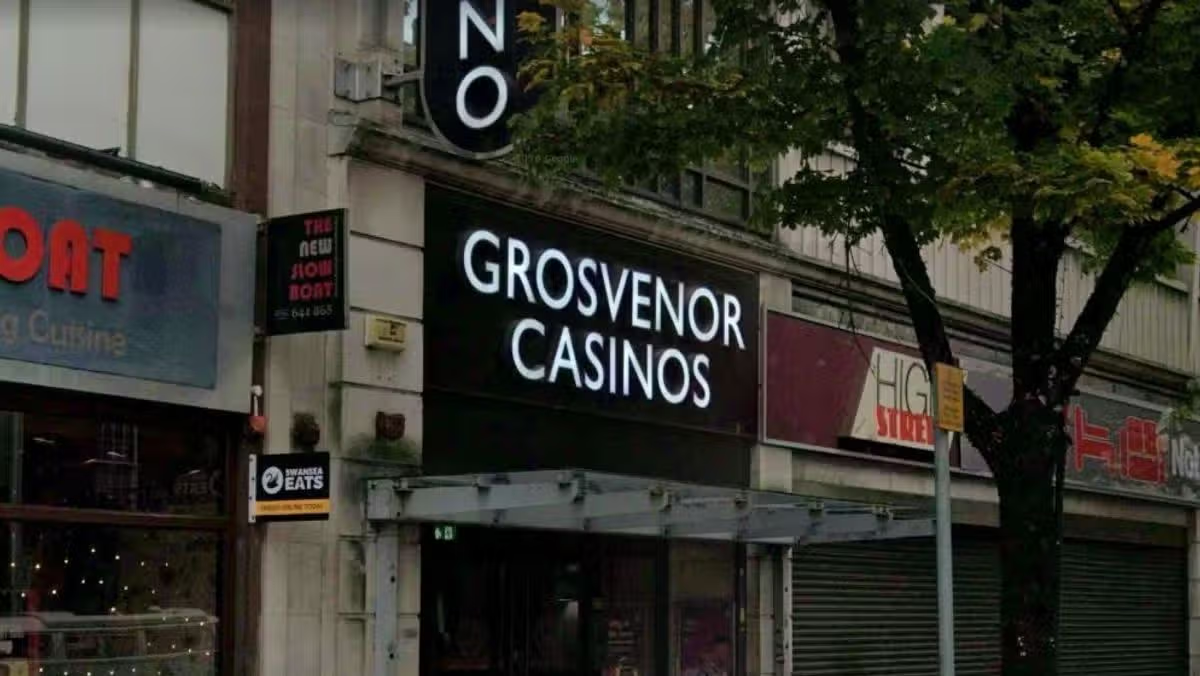
Swansea casino shuts for good as employee blasts ‘unfair’ redundancy detail

(VIDEO) North Carolina Boy Faces Six Rabies Shots After Mobile Petting Zoo Goats Test Positive for the Virus

Bitcoin Price Gap Widens as Kimchi Premium and ETF Flows Take Center Stage





-

 Crypto World7 days ago
SpaceX stock could rise 75% to $240, JPMorgan says
-

 Fashion4 days ago
Weekend Open Thread: Maeve – Corporette.com
-

 Crypto World5 days ago
Bitcoin’s 22% rally now needs real demand to outlast Treasury liquidity boost
-

 Crypto World6 days ago
Warsh Jackson Hole keynote puts financial innovation first
-

 Business5 days ago
Salesforce Stock Soars 19% as Blowout Earnings and Agentforce AI Growth Silence Software Skeptics
-

 Business5 days ago
Apple Confirms September 9 Keynote and Reveals Its Full Pre-Order Schedule
-

 Crypto World6 days ago
Elon Musk Grok Bot Promise: We Will Make You Whole if AI Loses Your Money
-

 Crypto World6 days ago
Did Trump Just Move SpaceX Stock With One Truth Social Post?
-

 Business4 days ago
Onto Innovation Stock: AI’s Next Bottleneck Is Yield (NYSE:ONTO)
-
 NewsBeat6 days ago
Lindsay Clancy jury braces for closing arguments as judge tells court: ‘You’ve heard all the evidence’ – Live updates
-

 Business6 days ago
Walmart takes aim at younger shoppers with new fashion brand
-

 Crypto World4 days ago
Bitcoin price tests $82K resistance as Brandt stays long
-

 Crypto World5 days ago
NVIDIA revenue hits $96.2B as AI demand doubles
-

 Business7 days ago
Thailand’s Eastern Economic Corridor Capital City (EECiti): Key Developments and Investment Opportunities
-

 Business4 days ago
iPhone 18 Pro Pre-Orders Could Shift to Saturday as Apple Reportedly Avoids September 11 Anniversary
-

 NewsBeat7 days ago
Trump’s trade truce with China faces test with Iran effort
-

 Crypto World6 days ago
Nvidia Q2 Earnings Reveal $96.2 Billion Beat, So Why Is NVDA Falling?
-
 Tech3 days ago
Hugging Face built a $4.5 billion empire on free AI models. Now Nvidia is buying it for $12.9 billion
-
 Tech6 days ago
Claude Cowork gets its own browser that doesn’t touch your tabs, bookmarks, or saved passwords
-

 Crypto World5 days ago
Truflation calls for Fed rate cut after PCE forecast
You must be logged in to post a comment Login