
Crypto World
Gemini’s 10-K reveals loan loop between exchange and founders



Cameron and Tyler Winklevoss lent their own crypto exchange, Gemini, thousands of bitcoin (BTC) and ether (ETH) through Winklevoss Capital Fund (WCF), their private investment company. Gemini then pledged that crypto as collateral with Galaxy Digital and NYDIG to raise dollar loans.
When the exchange went public in September 2025 at $28 per share, it converted $695.6 million of WCF debt into super-voting Class B stock at a 20% discount, giving the twins 94.7% of Gemini’s voting power.
Gemini’s 10-K, filed yesterday, spelled out the entire structure. Social media users have called it a circular scheme.
The Winklevoss Capital Fund lending carousel
Here’s the basic tale of how the money flowed. The Winklevii’s WCF lent BTC and ETH to Gemini through open-term agreements, i.e. with no fixed maturity.
Gemini then posted that borrowed crypto as collateral with third-party lenders. Galaxy Digital extended $116.5 million in loans at 11-12% interest rates, collateralized at 145-155%. NYDIG provided $75 million through a repurchase agreement at 8.5%.
Gemini used the dollars for operations and regulatory capital requirements.
When the IPO closed on September 15, 2025, the exchange repaid Galaxy’s $116.5 million from $456 million in net proceeds from the IPO.
Gemini now trades on the Nasdaq under symbol GEMI.
The exchange also repaid $238.5 million under a warehouse credit facility with Ripple, though $154 million remained outstanding to Ripple at year end.
The twins’ own debt didn’t get cash repayment, however.
Gemini converted $200 million in WCF convertible notes and $475 million in WCF term loans, plus accrued interest, into 31.1 million supervoting Class B shares at $22.40 apiece.
That conversion price was 20% below what retail investors paid for otherwise equivalent Class A shares on the same day.
Class A and B stock differ only in their voting power and ownership distribution. Otherwise, they have the same par value, rights to dividends, and liquidation preference.
Class B shares are convertible into Class A on a one‑for‑one basis.
Retail paid $28 with the Winklevii at $22.40
The discount is where the circularity inflicted pain on regular shareholders.
WCF lent Gemini crypto. Gemini then pledged the crypto that it had borrowed to get even more loans. Specifically, Galaxy and NYDIG lent Gemini dollars which it used to operate.
Gemini then handed WCF equity at a discount funded by the same IPO that brought retail in 20% higher.
Read more: Sources say Winklevoss twins withdrew $280M from Genesis before it collapsed
The SEC Form 10-K confirms that Gemini still owed WCF 4,619 BTC as of December 31, 2025. That balance was worth roughly $400 million.
Gemini paid WCF $24.2 million in loan fees in 2025.
In summary, Gemini is simultaneously debtor, custodian, and a “controlled company” according to Nasdaq corporate governance standards.
Despite being publicly traded, Gemini’s co-founders still control a majority of its voting power.
Moreover, WCF holds roughly 8,757 BTC in Gemini Custody addresses, according to Arkham Intelligence data cited by crypto researcher Emmett Gallic.
Deloitte signed off clean
Deloitte has issued clean audit reports on Gemini. This is despite the reality that WCF could demand repayment of its 4,619 BTC loan at any time.
The twins could destabilize the exchange they control with a single written notice.
Gemini’s public stock now trades 88% below its IPO price. “Gemini Space Station,” its legal and rocket-based name that it certainly has not lived up to, opened at $37.01 per share on its IPO day.
It’s worth $4.42 today.
Gemini priced its IPO at $28 on September 11, 2025. It opened at $37.01 the next day and hit $45.89 before beginning a relentless decline. The stock closed at $4.42 on March 31, 2026, down 88% from the opening price, after touching a 52-week low of $3.91 this Monday.
The company’s market cap has collapsed from over $3.8 billion to roughly $520 million. Citigroup, Cantor, Truist, and Evercore downgraded the stock to a Sell rating.
A class action lawsuit alleges the company misled investors about its strategy.
Got a tip? Send us an email securely via Protos Leaks. For more informed news, follow us on X, Bluesky, and Google News, or subscribe to our YouTube channel.

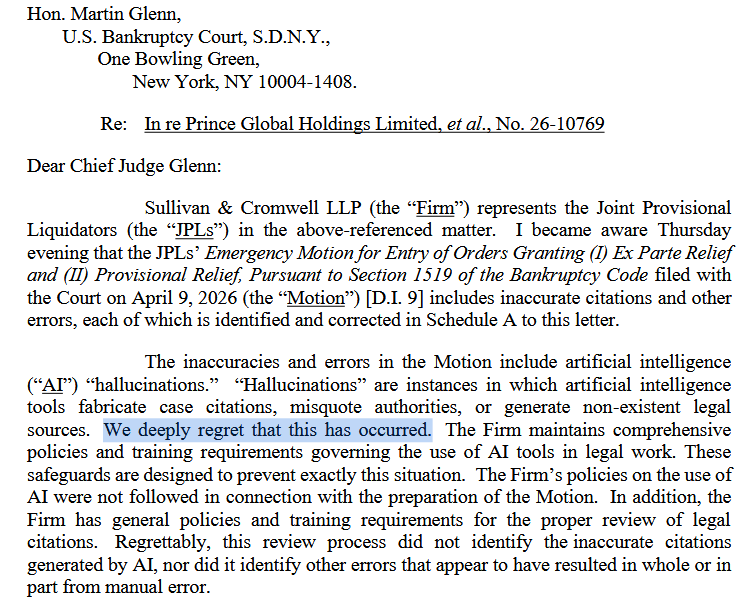
Sullivan & Cromwell’s Andrew Dietderich said the company has AI policies to prevent incorrect citations and other errors, but procedures weren’t followed on this occasion.
Wall Street law firm Sullivan & Cromwell has apologized to a federal judge after submitting a court filing that contained around 40 incorrect citations and other errors caused by AI hallucinations.
“We deeply regret that this has occurred,” Andrew Dietderich, co-head of Sullivan & Cromwell’s global restructuring team, wrote Friday in a letter to Chief Judge Martin Glenn of the US Bankruptcy Court for the Southern District of New York.
“The Firm and I are keenly aware of our responsibility to ensure the accuracy of all submissions including under Local Bankruptcy Rule 9011-1(d), and I take responsibility for the failure to do so,” he said of an emergency motion filed nine days earlier.

The incident highlights the risk AI tools can pose in high-stakes professional work without proper oversight. A database managed by legal technologist Damien Charlotin has recorded 1,334 incidents of AI hallucinations in court filings around the world, including more than 900 in the US.
Charlotin pointed out that most of these hallucinations involve fabricated citations, though AI-generated legal arguments have also occasionally been identified.
Dietderich said Sullivan & Cromwell has policies in place for the use of AI tools, which include a review of the citations it uses, but said the policies weren’t followed.
“Regrettably, this review process did not identify the inaccurate citations generated by AI, nor did it identify other errors that appear to have resulted in whole or in part from manual error.”
Sullivan & Cromwell is one of the largest law firms in the US by revenue, ranking 30th on the AmLaw Global 200. The firm also represented crypto exchange FTX in its bankruptcy case.
Sullivan & Cromwell is conducting an internal investigation
Dietderich said the law firm took “immediate remedial measures,” including a full review of the circumstances that led to the errors.
Related: Coinbase’s AI payments protocol x402 launches app store for AI agents
The firm is also “evaluating whether further enhancements to its internal training and review processes are warranted,” Dietderich said.
Dietderich also noted that the errors were spotted by a rival law firm.
“I also called Boies Schiller Flexner LLP on Friday to thank them for bringing this matter to our attention and to apologize directly to them as well,” he said.
Magazine: IronClaw rivals OpenClaw, Olas launches bots for Polymarket — AI Eye
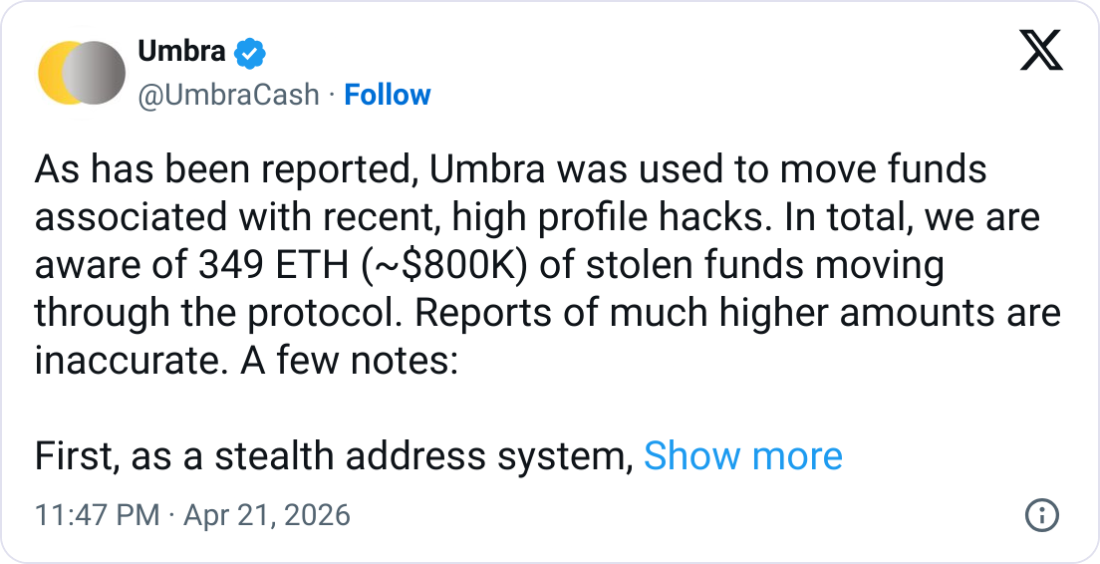
Privacy-focused crypto protocol Umbra said it has taken down its front-end website to make it more difficult for hackers who have been using it to move funds from recent “high-profile hacks.”
Umbra posted to X on Tuesday that it is aware that around $800,000 worth of stolen funds was moved via its protocol.
It added that it made the decision to move the hosted version of its front end into maintenance mode and would restore it “as soon as we are assured that doing so won’t create obstacles to the current recovery efforts.”
It comes just days after the Kelp protocol was exploited for over $280 million, which is suspected to have been carried out by North Korean hackers. Recent reports pointed to Umbra as among the protocols that the exploiter has been attempting to bridge funds from Ether to Bitcoin.
North Korean hacking groups are heavily sanctioned by the US, and multiple crypto platforms have worked to freeze or stifle the hackers’ efforts to move the funds.

Umbra said, however, that there was “nothing we can do” to stop anyone from using its smart contracts or a local or self-hosted version of its open-source front end.
Roman Storm warns front end freeze isn’t enough
Roman Storm, co-founder of the crypto mixer Tornado Cash, argued the move to pause the front end may not be enough to avoid ire from authorities.
Storm was convicted in August of conspiring to operate an unlicensed money transmitting business, despite arguing that he was not in control of how the protocol was used.
“Prosecutors in my case called me a liar when I said that I can’t control Tornado Cash,” said Storm, who beat charges of conspiring to violate US sanctions.
He claimed that authorities viewed “changing a front end is the same thing as controlling an entire protocol.”
Related: Crypto hackers stole $17B over past 10 years: DefiLlama
“If you can make changes to the user interface, including further updates through new builds on IPFS, then you are in full control,” he added.
In its post, Umbra said that its protocol was “useful for protecting the identity of the receiver, not the sender,” and wasn’t useful for hackers wanting to obscure their money trail.
“All the stolen funds moved through the protocol can be identified, and we have been in touch with security researchers who are involved,” it added.
Magazine: South Korea gets rich from crypto… North Korea gets weapons
Crypto World
XRP (XRP) Gains Banking Access as SoFi Onboards Millions While Institutional Interest Soars
Key Highlights
- SoFi Bank now enables XRP deposits, allowing millions to hold XRP alongside BTC, ETH, and SOL in an OCC-regulated banking environment
- The platform provides deposit functionality for 12 digital assets and trading access to 27 cryptocurrencies
- XRP Ledger’s real-world asset volume has skyrocketed 875%, approaching $2.5 billion in tokenized value
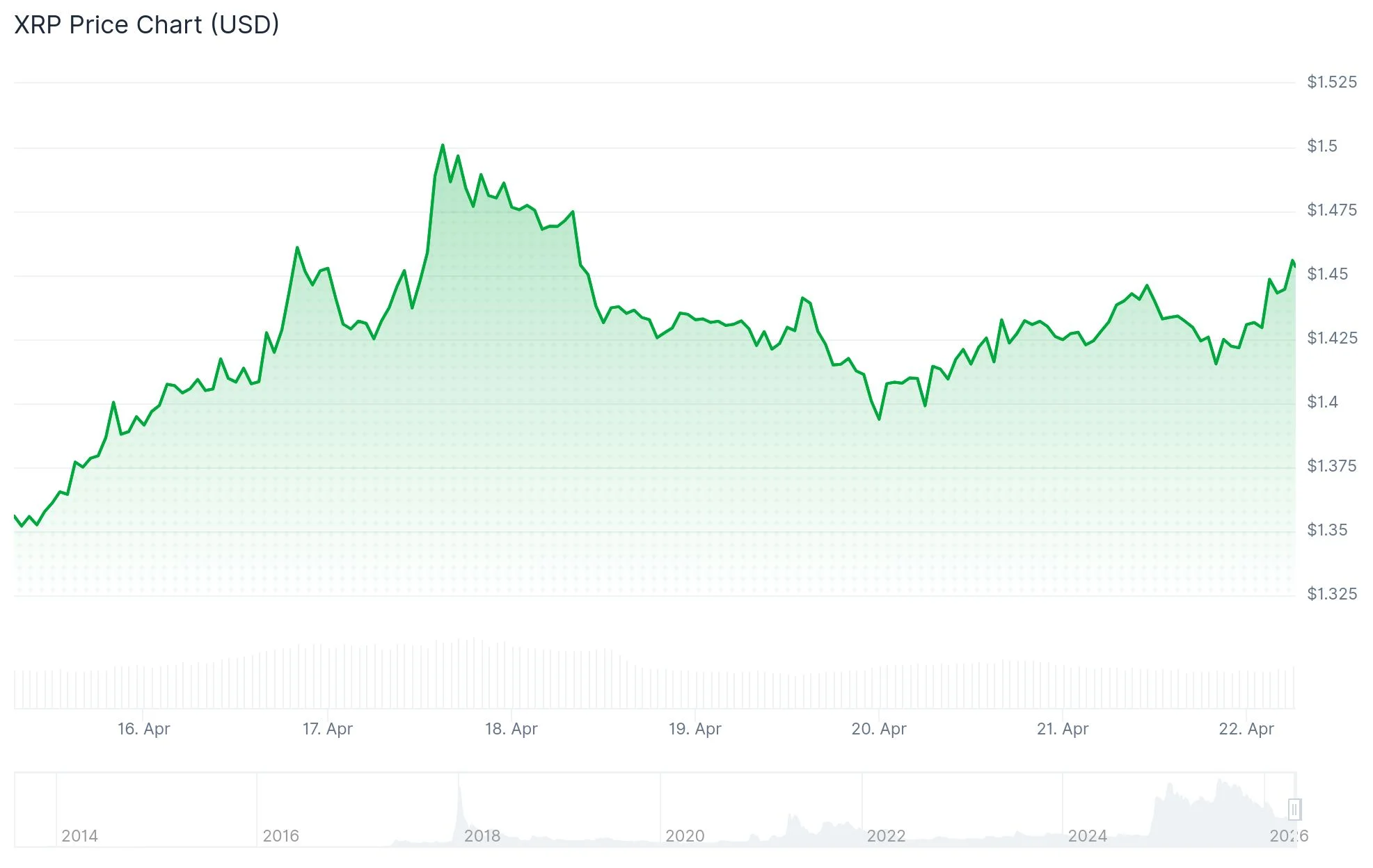
- XRP trades above $1.40 with critical resistance zones at $1.50–$1.55 and support levels at $1.30–$1.35
- Prominent financial institutions like BlackRock, Franklin Templeton, and Mastercard are exploring XRP Ledger integration
XRP is experiencing a wave of institutional validation and practical integration, marking a shift from speculative interest to tangible banking adoption. The most recent milestone involves SoFi Technologies, an OCC-regulated U.S. bank with national charter status.
On April 21, SoFi revealed that XRP deposits are now available on its platform, joining Bitcoin, Ethereum, and Solana. The fintech company facilitates trading for 27 different cryptocurrencies while supporting 12 assets for direct deposits.
This positions SoFi among a select group of federally chartered U.S. banks offering comprehensive XRP services—including buying, selling, storing, and depositing—within a single platform that millions use for standard banking operations like bill payments and account management.
Ripple acknowledged the development on X, stating: “More access to XRP with SoFi means more people can participate, and that’s exactly how utility grows.”
SoFi has taken a measured approach to cryptocurrency integration. The company introduced SoFi Crypto last November, enabling customers to trade Bitcoin, Ethereum, and Solana from FDIC-protected accounts. February saw the platform become the first nationally chartered bank in the U.S. to offer Solana deposits. The XRP integration represents a continuation of this methodical expansion strategy.
XRP Ledger Attracts Enterprise-Level Activity and Real-World Applications
Beyond SoFi’s integration, the XRP Ledger is experiencing substantial institutional engagement. During the Digital Assets Forum 2026, Odelia Torteman, a World Bank FinTech specialist, characterized the XRP Ledger as architecturally designed for multi-asset, transparent payment infrastructure.
Real-world asset tokenization on the network has exploded by 875%, with aggregate tokenized value nearing the $2.5 billion threshold. Additionally, a major Japanese travel company is reportedly transitioning prepaid payment infrastructure to the ledger, targeting a domestic market valued at ¥30 trillion.
Financial heavyweights including BlackRock, Franklin Templeton, and Mastercard have demonstrated interest in leveraging the XRP Ledger. Ripple’s leadership has highlighted a $13 trillion payments market opportunity accessible through its Treasury infrastructure.
XRP Price: Critical Technical Zones in Focus
XRP is currently holding ground above $1.40, hovering near its 50-day exponential moving average, a level that has consistently capped rallies. Trading volume remains subdued, typically indicating markets are awaiting directional clarity.
Key support resides at $1.35, with additional backing at $1.30. Overhead resistance concentrates around $1.50 and $1.55. A sustained breakout above the 100-day EMA at $1.53 could pave the way toward 21Shares’ year-end projection of $2.69.
Macro strategist Dr. Jim Willie has outlined a potential $3–$25 valuation scenario if financially distressed banks adopt XRP for settlement purposes. Certain long-term forecasts extend to $27 by 2030, contingent upon widespread banking sector integration.
As of April 21, XRP deposit functionality is operational on SoFi’s platform, accessible to its 13.7 million user base.

Crypto World
Ethereum (ETH) Price Analysis: Major Whales Acquire 700K ETH Amid Bullish Technical Signals

Key Highlights
- Large Ethereum holders accumulated approximately 700K ETH from Thursday through Monday
- Spot ETH ETFs saw continuous inflows for eight days straight, totaling $493.7 million
- Bitmine acquired 101,627 ETH in their biggest weekly purchase of 2026
- The SuperTrend technical indicator turned bullish for the first time since the beginning of 2025
- Negative funding rates persisted for six consecutive days, creating downward pressure below $2,400
Ethereum is currently hovering near $2,300 following a period marked by substantial whale buying activity and robust ETF capital inflows, though futures market dynamics continue to constrain upward price movement.
Data from CryptoQuant reveals that addresses containing over 10,000 ETH added close to 700,000 ETH to their holdings from Thursday through Monday. Exchange reserves of Ethereum have declined by approximately 458,000 ETH since Thursday, indicating strengthening demand from buyers.
Institutional participation has also intensified. US-based spot Ethereum ETFs registered their eighth consecutive day of positive net inflows, accumulating a combined $493.7 million, based on data from SoSoValue.
Bitmine Immersion Technologies executed the year’s largest weekly ETH acquisition, purchasing 101,627 ETH. This transaction elevated their aggregate holdings to 4.976 million ETH. Chairman Tom Lee of Bitmine suggested that the cryptocurrency bear market might be nearing its conclusion sooner than market consensus anticipates, referencing historical cycle patterns dating back to 2015.
Bitmine Adds 101,627 ETH in Biggest Weekly Accumulation in 4 Months
Bitmine Immersion Technologies added 101,627 ETH last week, marking its fastest pace of accumulation since the week of December 15, 2025. As of April 19, 2026, the company holds a total of 4,976,485 ETH,… pic.twitter.com/j6EGixRZTK
— Wu Blockchain (@WuBlockchain) April 20, 2026
Lee highlighted that each cryptocurrency bear market since 2015 has aligned with equity market corrections exceeding 20%. By contrast, the 2026 equity pullback measured just 8%, forming the basis of his argument that the present downturn could prove more abbreviated.
Smart money analytics platform Lookonchain identified multiple significant whale movements throughout the week. Among them, a freshly created wallet pulled 35,000 ETH off Binance before moving the assets to custodial service BitGo.
Technical Indicator Turns Positive
Crypto analyst Ali Martinez shared on X that Ethereum’s daily SuperTrend indicator has switched to bullish territory for the first time since the start of 2025. Martinez observed that the previous occurrence of this technical flip was followed by an extended uptrend. He additionally noted that Bitcoin has yet to breach its corresponding SuperTrend resistance threshold.
SuperTrend flips bullish on Ethereum $ETH for the first time in over a year. pic.twitter.com/hMIDJ6ojrr
— Ali Charts (@alicharts) April 20, 2026
Derivatives Market Creates Headwinds
Notwithstanding robust demand in spot markets, Ethereum funding rates remained in negative territory for six consecutive days. This condition indicates that derivatives market participants maintain a bearish stance, contributing to price weakness below the $2,400 level.
Over the preceding 24-hour period, ETH experienced $53.4 million in total liquidations. Long position liquidations accounted for the majority at $28.4 million.
Examining the four-hour timeframe, ETH is positioned above its 20-period, 50-period, and 100-period exponential moving averages, which are grouped between $2,268 and $2,323. Immediate resistance is located at $2,388, while support levels are found at $2,267 and $2,263.
The 14-day Relative Strength Index registers 55, suggesting a slight advantage for buyers over sellers. Conversely, both the 9-day Stochastic and 14-day Stochastic RSI oscillators are positioned around 40, indicating diminishing upward momentum.
Over the past 30 days, ETH has climbed from approximately $2,155 to above $2,320, though it has retreated roughly 2% on the weekly timeframe from a peak of $2,450.
Key Highlights
- A security breach at Volo Protocol, a liquid staking service on Sui, resulted in approximately $3.5 million in stolen funds
- Three separate vaults containing WBTC, XAUm, and USDC were compromised in the incident
- Within half an hour of disclosure, Volo managed to freeze $500,000 worth of stolen assets
- The protocol’s other vaults, holding $28 million in total value locked, remain secure
- The development team has committed to covering all losses without impacting users
On April 21, Volo Protocol—a liquid staking service operating on the Sui blockchain—disclosed that it had fallen victim to a security exploit resulting in roughly $3.5 million in stolen user funds.
The breach impacted three specific vaults within the protocol’s infrastructure. These vaults contained Wrapped Bitcoin, a gold-pegged asset known as XAUm, and USDC stablecoin. No other vaults within the platform were compromised.
The team behind Volo revealed the incident via X, explaining that they immediately reached out to the Sui Foundation and ecosystem collaborators upon detecting the breach. As a precautionary measure, all vaults were frozen to prevent additional fund drainage.
Remarkably, just 30 minutes after making the exploit public, Volo reported successfully freezing $500,000 of the misappropriated assets. The specific mechanism used to accomplish this freeze was not disclosed.
According to Volo’s statement, the $28 million in assets held across its remaining vaults faces no exposure to risk. The team clarified that these unaffected vaults operate independently and do not contain the same security flaw.
Team Commits to Full User Reimbursement
The Volo development team announced it would shoulder the entire financial burden of the exploit rather than passing any costs to its user base. “We want to be clear: Volo is prepared to absorb this loss,” the team stated on X.
Details regarding the specific security vulnerability exploited in the attack have not been made public. Similarly, the perpetrator’s identity remains unknown.
Volo confirmed that all vaults will remain in a frozen state until investigators complete a comprehensive post-mortem analysis and establish a proper remediation strategy. The team has enlisted on-chain forensic experts to assist in tracking and potentially recovering the outstanding stolen funds.
Emphasizing their commitment to the community, the protocol stated: “We understand that trust is earned, and right now, we are focused entirely on actions,” according to Volo’s public statement.
Latest in a Series of DeFi Security Incidents
This security breach at Volo comes on the heels of a significantly larger exploit targeting Kelp DAO, a LayerZero-powered cross-chain bridge that suffered a devastating $292 million loss in a separate attack.
Security researchers have attributed the Kelp DAO compromise to the Lazarus Group, a North Korean state-sponsored cyber operation with an established history of attacking cryptocurrency infrastructure.
Volo’s team has made no indication that their exploit shares any connection with the Kelp DAO breach.
No specific timeline has been provided for when the frozen vaults will resume normal operations. A detailed post-mortem analysis is anticipated following the completion of the ongoing investigation.
As of now, the $500,000 in frozen assets represents the only confirmed portion of the stolen funds that has been secured.
Crypto World
Bitcoin’s Coinbase premium just posted its strongest bullish signal since October’s record price of $126,000
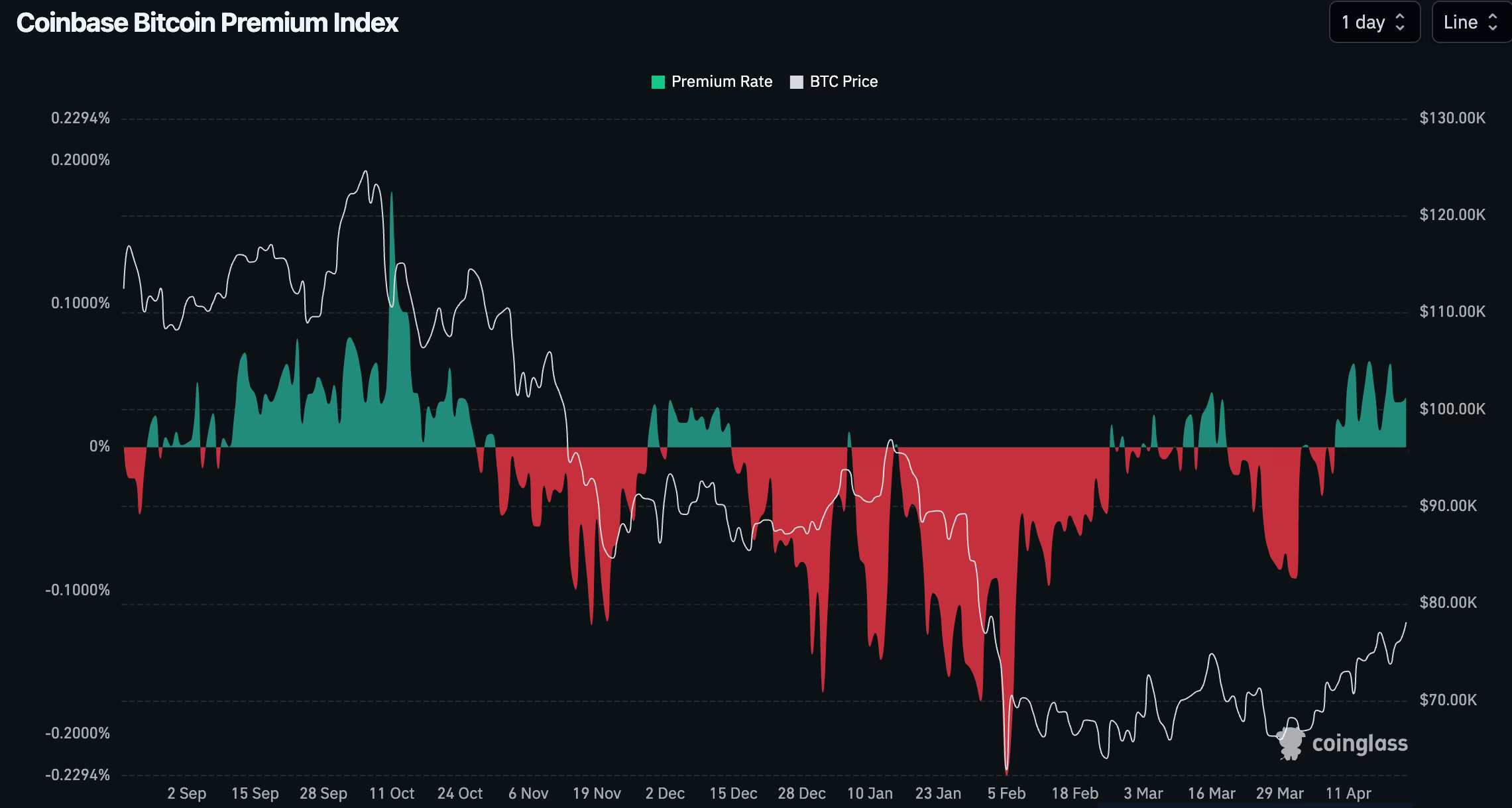
There is a popular indicator that crypto pundits watch closely for cues on whether U.S.-based investors, especially institutions, are actually buying bitcoin or sitting on sidelines watching the market.
It is called the Coinbase premium index and as of now it is flashing the most sustained bullish signal since bitcoin traded at record highs above $126,000 in October.
This index has been positive for 14 consecutive days, from April 9 through today, April 22, according to data source Coinglass. That is the longest unbroken stretch of positive readings since October.

Here is why it matters
The Nasdaq-listed Coinbase is the go-to-exchange for U.S. institutions – corporate treasuries, hedge funds and regulated alternative investment vehicles such as the ETFs. So, when bitcoin’s price trades at a premium on Coinbase relative to prices on offshore giant Binance, it means U.S. buyers are being aggressive in purchasing BTC. Historically, strong buying from U.S. investors has been a feature of bull runs.
The opposite, a negative premium or discount, signals that U.S. demand is lagging while offshore markets do the heavy lifting. For context, the premium was mostly negative from mid December to late February. During that time, BTC fell from roughly $100,000 to nearly $60,000.
The latest stretch of positive readings is all the more important as it shows sustained demand through geopolitical noise, DeFi crisis.
It’s no surprise that bitcoin is rallying. The cryptocurrency topped $78,000 on Wednesday, taking the month-to-date gain to 14%.
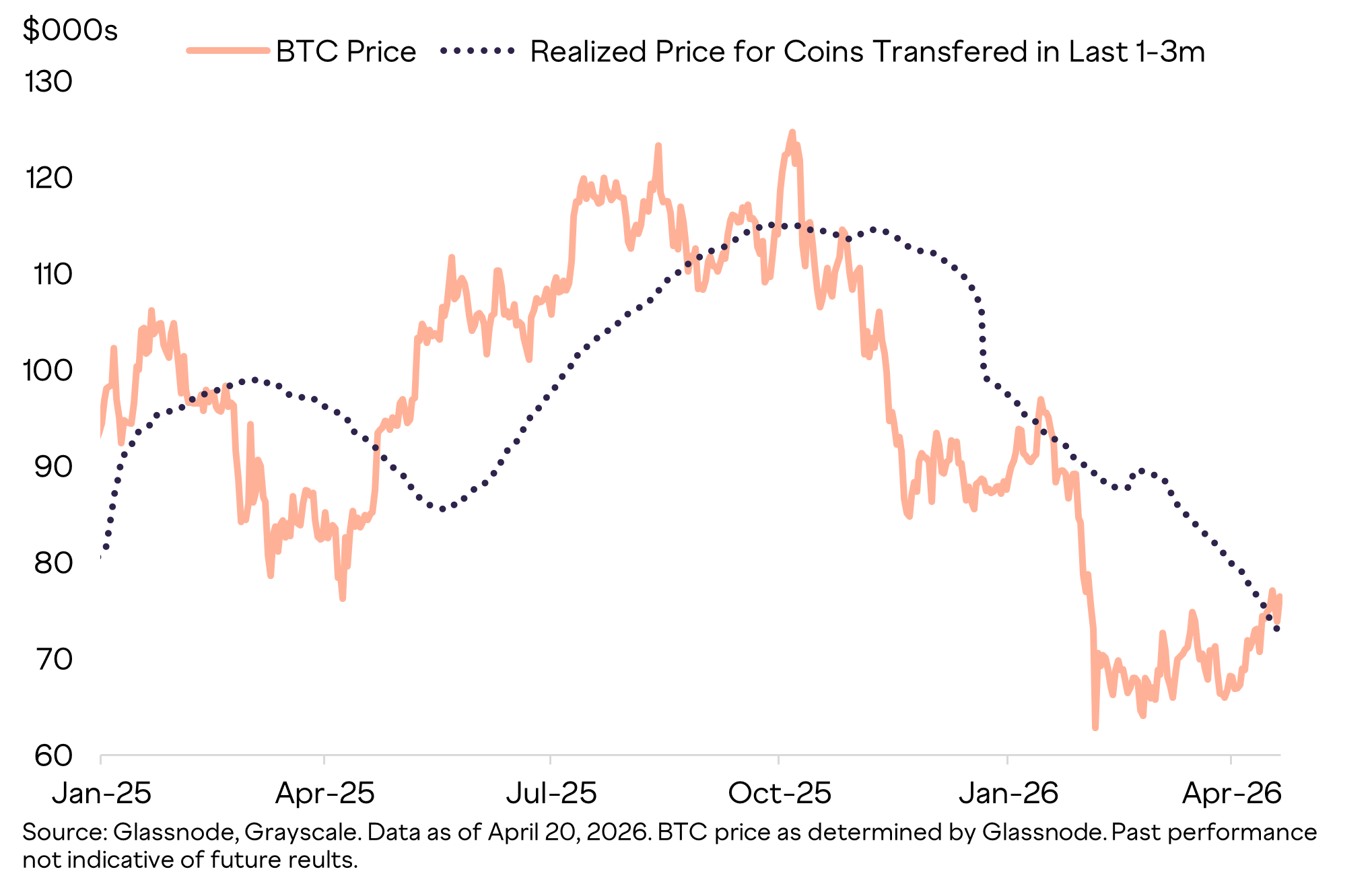
Grayscale has declared Bitcoin’s (BTC) bear-market floor, arguing the asset bottomed in the $65,000 to $70,000 range. The call runs counter to a wider consensus that places the low later in 2026.
Zach Pandl, head of research at Grayscale, said recent buyers have returned to breakeven after Bitcoin climbed more than 20% from its February 5 low near $63,000.
Grayscale’s On-Chain Case for a Bitcoin Bottom
Grayscale’s thesis rests on a metric called realized price, which averages a coin’s cost basis based on its most recent on-chain movement. It serves as a proxy for the market’s aggregate breakeven level.
For coins that changed hands over the past 1 to 3 months, Grayscale estimates the realized price at around $74,000. That level sits just below the current price level, leaving the newest cohort of buyers back at break-even.
“If Bitcoin’s price rises further in the coming days, more recent buyers would move into positive PnL, which can be an indicator for marking the first phase of a bull market,” Pandl noted.
Follow us on X to get the latest news as it happens
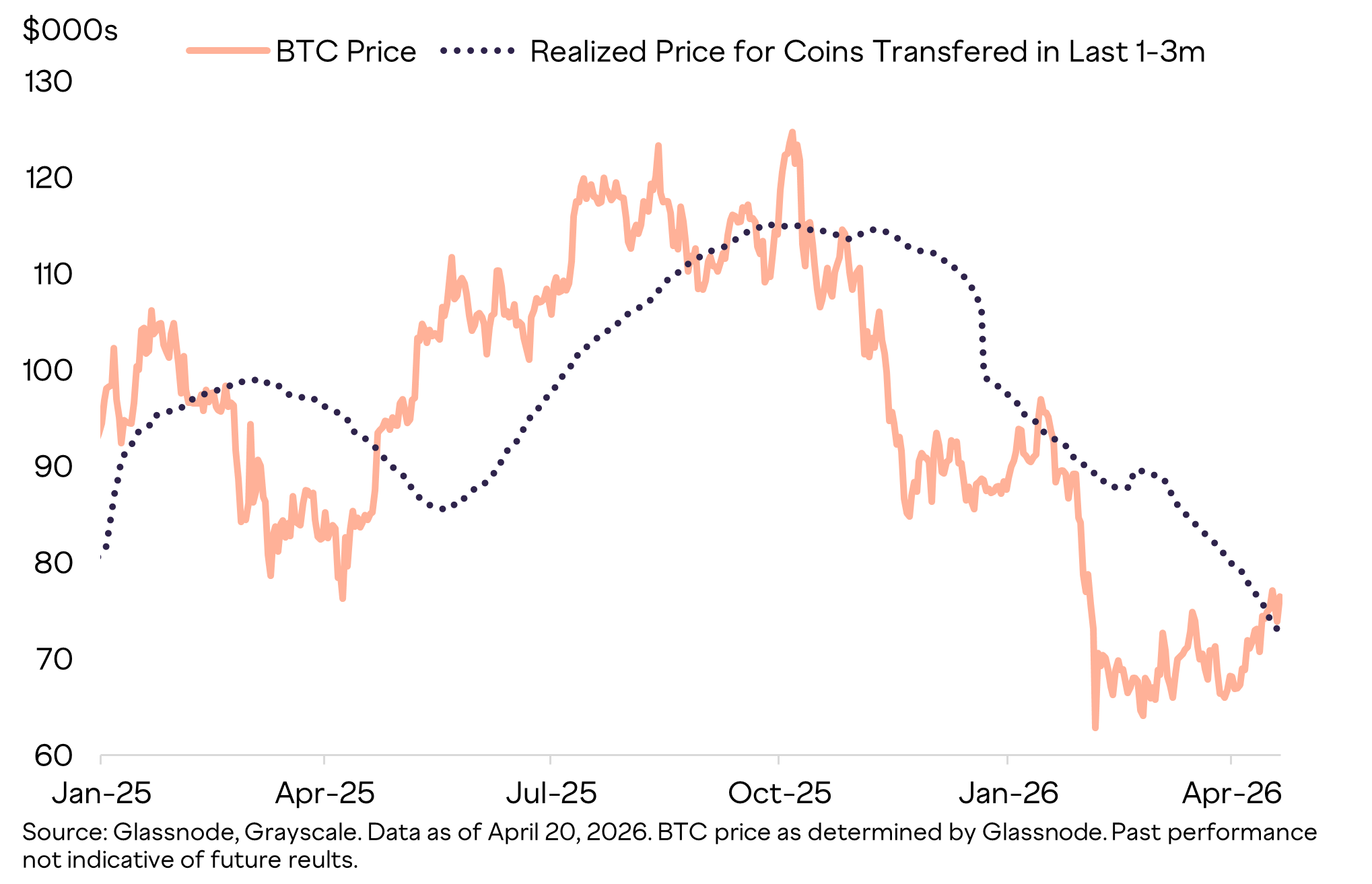
Bitcoin remains well beneath its October peak, but Grayscale contends the February rebound already carved out a durable floor. Further upside would push more recent buyers into positive territory. The firm views the rebound toward its cost-basis estimate as consistent with capitulation having already run its course.
“Bitcoin’s price is still well below its October highs, but many recent buyers are back to breakeven—potentially signaling that Bitcoin has put in a durable market bottom in the $65,000 to $70,000 range,” the analysis read.
Why Some Analysts Still See a Deeper Bitcoin Low
Not every researcher agrees that the worst has passed. Benjamin Cowen, CEO of Into The Cryptoverse and a former NASA researcher, told BeInCrypto his base case points to October 2026 for the cycle trough. An earlier bottom, he added, would require capitulation beyond historical mid-term norms.
“Bitcoin could bottom sooner, as early as May. But in order for that to happen, there would have to be some type of massive capitulation well below what we historically expect to see in midterm years,” he said.
Subscribe to our YouTube channel to watch leaders and journalists provide expert insights
Joao Wedson, CEO of on-chain analytics firm Alphractal, lands in the same camp, expecting a low in late September or early October 2026.
CryptoQuant has identified a broader window from June to December 2026, with September through November as the most probable period. That range gives the bearish case more room than Grayscale’s near-term thesis allows.
The split leaves traders weighing two outcomes. Either the February capitulation marked the cycle low and recent buyers are now in the early stages of a new bull trend, or Bitcoin has another leg down before a durable recovery begins later in 2026.
The post Grayscale Research Calls Bitcoin Bottom, Sees Early Bull Market Signals appeared first on BeInCrypto.
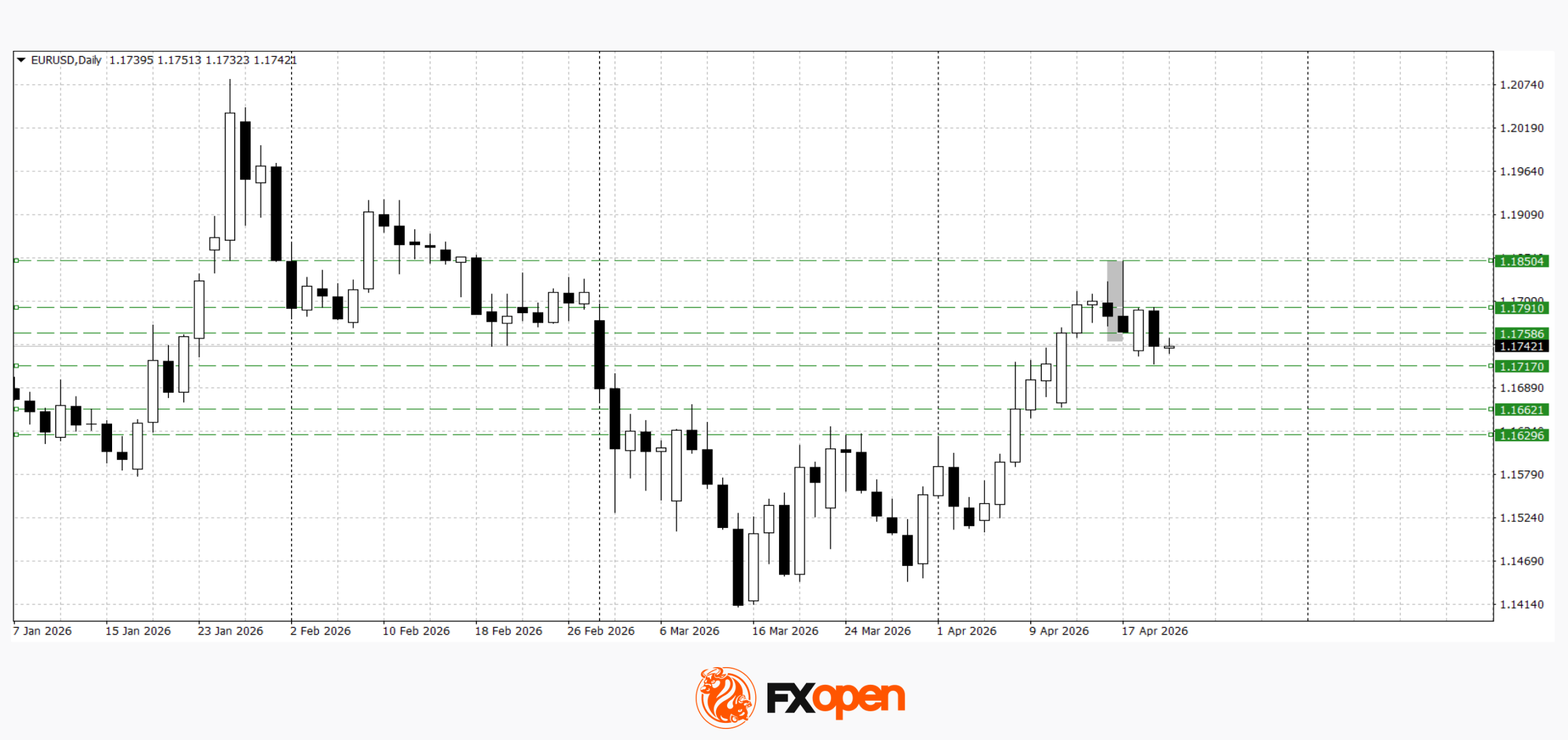
European currencies are moving into a corrective decline after recent attempts to hold above key levels, with the current move driven by escalating geopolitical tensions and stronger demand for safe-haven assets. The partial closure of the Strait of Hormuz and renewed escalation in the Middle East are weighing on risk assets, supporting the US dollar through capital flows into more liquid instruments and limiting upside potential for both the euro and the pound. Higher energy prices are adding further pressure by increasing inflation risks for the European economy.
At the same time, markets remain cautious ahead of upcoming macroeconomic releases from the US, as well as data from the euro area and the UK. Anticipation of fresh signals on inflation and economic activity is restraining directional moves and increasing the likelihood of tests of key levels amid a mixed fundamental backdrop.
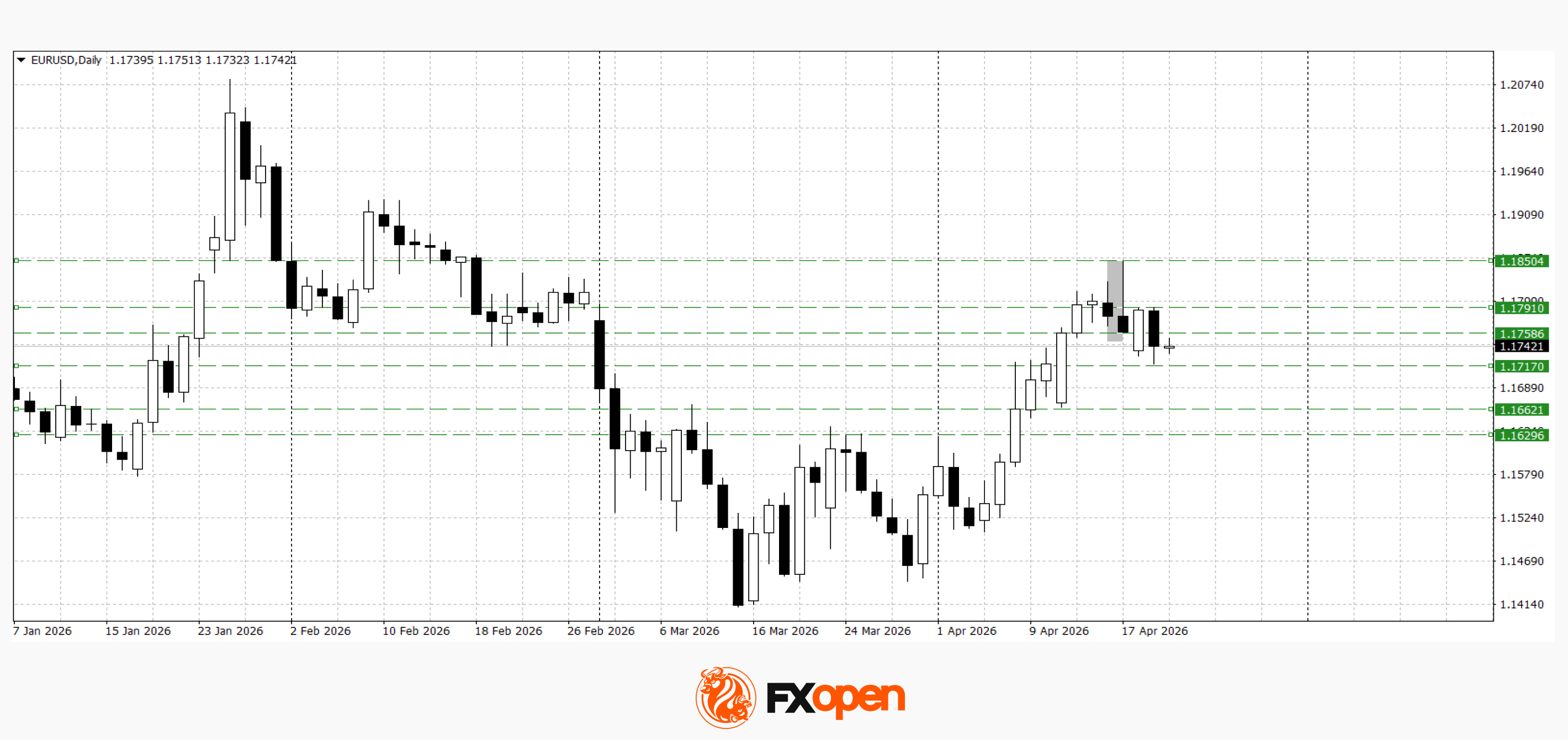
EUR/USD
As expected, EUR/USD retested the 1.1800–1.1830 resistance zone but failed to establish a foothold above it. Technical analysis points to the potential for a continued downward correction, with reversal signals forming on the daily timeframe. However, a weaker dollar or an improvement in global risk sentiment could trigger a renewed bullish move towards 1.1830–1.1850.
Key events for EUR/USD:
- today at 13:00 (GMT+3): Bundesbank monthly report
- today at 17:30 (GMT+3): US crude oil inventories
- today at 20:00 (GMT+3): speech by Bundesbank President Nagel
GBP/USD
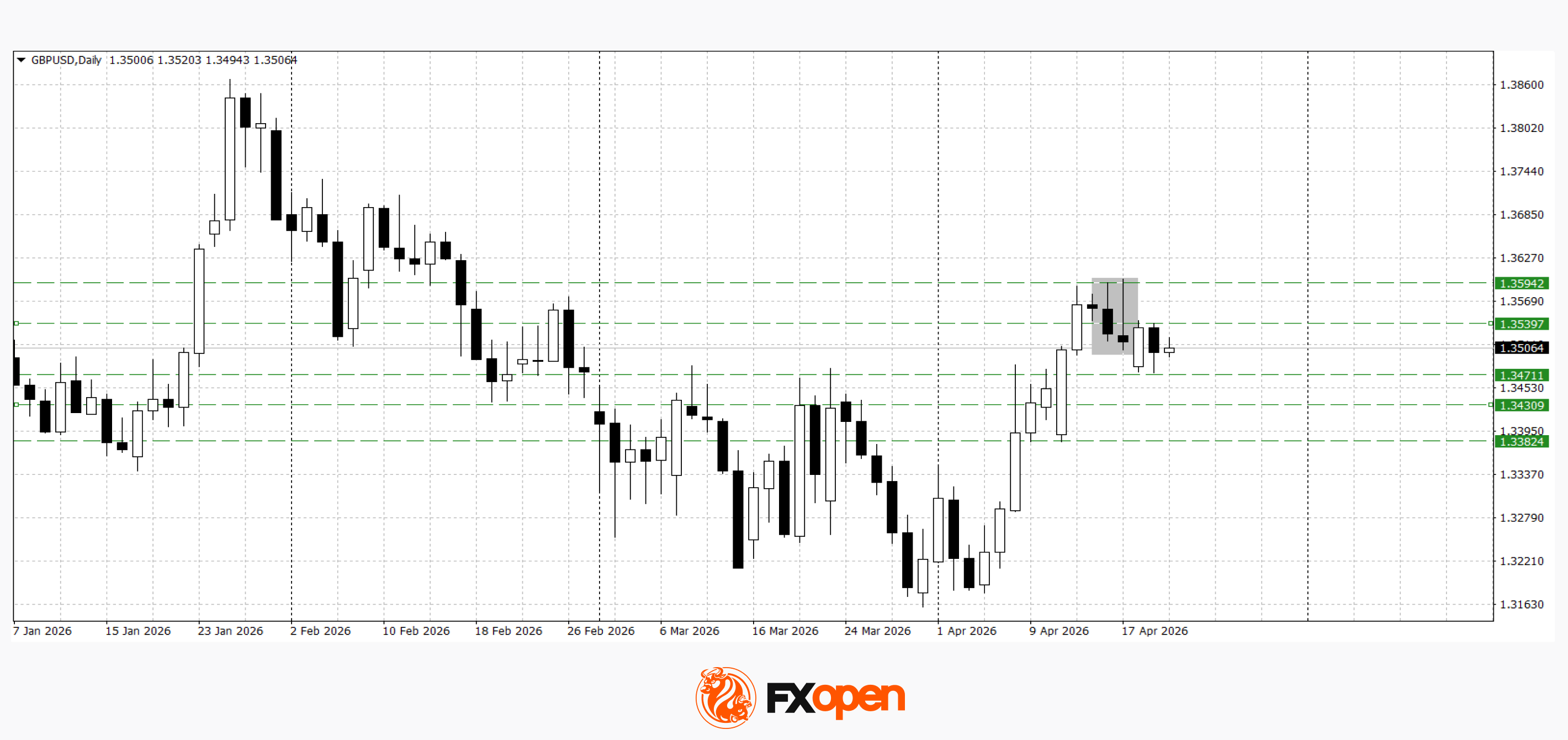
GBP/USD is also declining and approaching important support levels, reflecting broader pressure on European currencies. Technical analysis suggests a potential retest of 1.3470 and, if broken lower, a move towards 1.3380–1.3430. The bearish scenario could be invalidated by a sustained move above 1.3550.
Key events for GBP/USD:
- today at 09:00 (GMT+3): UK Consumer Price Index
- today at 11:05 (GMT+3): speech by Sarah Breeden (BoE)
- today at 11:30 (GMT+3): UK house price index
The currency market remains in a phase of elevated uncertainty, where a combination of geopolitical developments and macroeconomic expectations is driving subdued price action. In the near term, the news flow will remain the key driver, with the potential either to intensify pressure on European currencies or to trigger short-term corrective rebounds.
Trade over 50 forex markets 24 hours a day with FXOpen. Take advantage of low commissions, deep liquidity, and spreads from 0.0 pips (additional fees may apply). Open your FXOpen account now or learn more about trading forex with FXOpen.
This article represents the opinion of the Companies operating under the FXOpen brand only. It is not to be construed as an offer, solicitation, or recommendation with respect to products and services provided by the Companies operating under the FXOpen brand, nor is it to be considered financial advice.
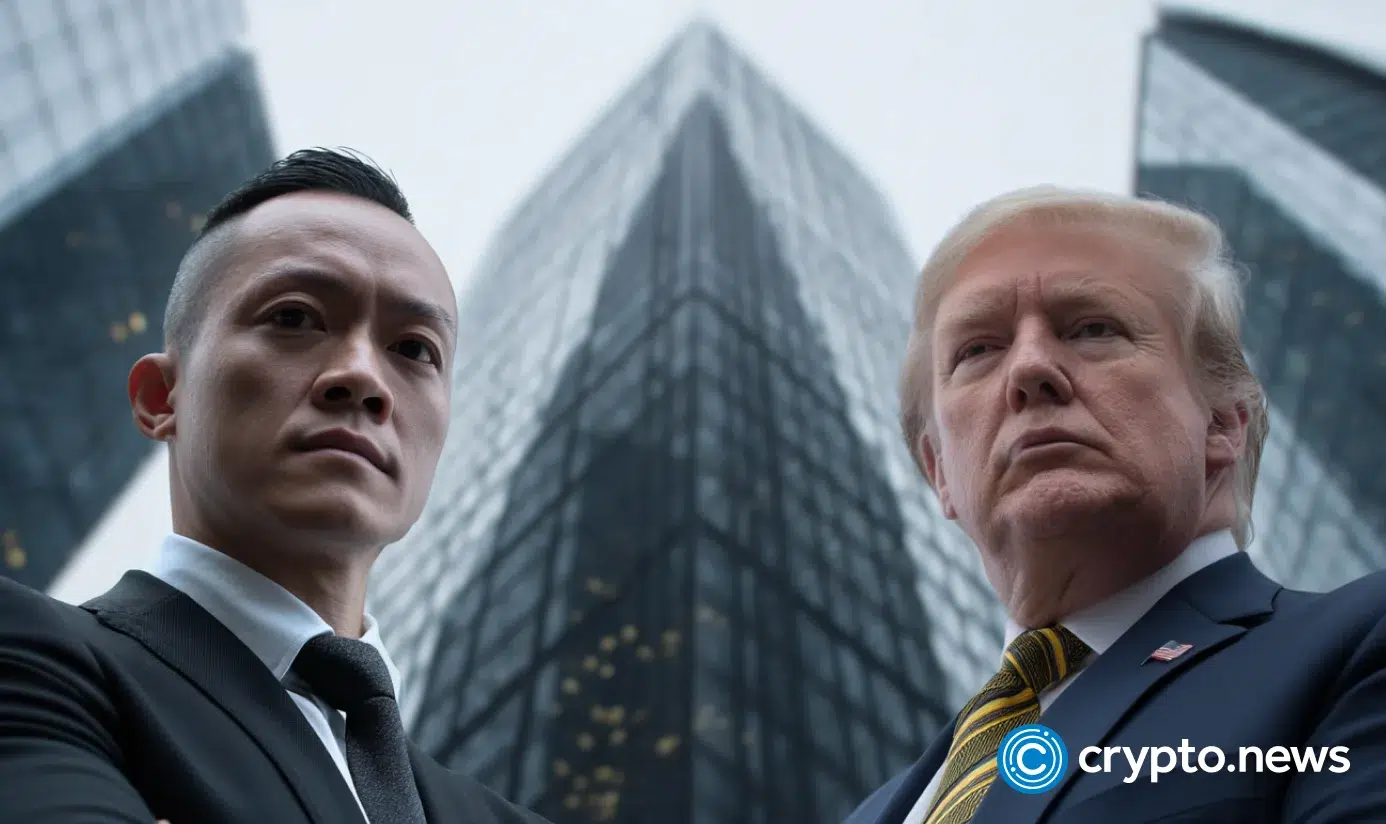
Tron founder Justin Sun said he has filed a lawsuit against World Liberty Financial in a California federal court after the project froze his WLFI tokens and blocked him from taking part in governance votes.
Summary
- Justin Sun filed a federal lawsuit after WLFI allegedly froze tokens and blocked his governance voting rights.
- The dispute grew after Sun accused World Liberty Financial of adding blacklist functions to WLFI contracts.
- Sun said the lawsuit targets unfair token treatment and does not affect support for Trump.
Sun said the lawsuit followed failed efforts to resolve the dispute directly with the team. He claimed the project froze all of his tokens, removed his voting rights, and threatened to burn the holdings without proper cause.
Meanwhile, Sun announced the lawsuit in a post on X on Tuesday. He said the case aims to protect his rights as a WLFI token holder after the project allegedly refused to unfreeze his tokens.
In his statement, Sun said, ”They wrongfully froze all of my tokens, stripped me of my right to vote on governance proposals, and have threatened to permanently destroy my tokens by ‘burning’ them — all without any proper justification.” He added that the team had refused his requests to restore access, leaving court action as his next step.
The dispute adds to a wider conflict between Sun and the Trump-linked project. Sun had once been known as the largest external backer of World Liberty, but he has become one of its most public critics in recent weeks.
The current lawsuit follows public accusations Sun made earlier this month. On April 12, he alleged that World Liberty had placed an undisclosed blacklisting function in the WLFI smart contract.
Sun said that function allowed the project to ”freeze, restrict, and effectively confiscate” investor tokens. World Liberty responded on X within hours and rejected the claims.
The project called Sun’s statements ”baseless allegations” and accused him of using them to cover up misconduct. It also suggested that legal action could follow, writing, ”See you in court pal.”
That exchange marked a sharp turn in the relationship between the two sides. Since then, the disagreement has shifted from public posts to a formal court filing.
Governance proposal deepened the dispute
The dispute also centers on a recent World Liberty governance proposal involving more than 62.2 billion WLFI tokens. The plan sought to move tokens from indefinite lockups to fixed vesting schedules.
Under the proposal, holders who did not accept the vesting terms would keep their tokens locked indefinitely, though they could still use them in governance under future terms. Sun criticized that structure and said it treated early investors unfairly.
Last week, Sun described the proposal as “not governance.” He also said it had been presented as a governance measure while forcing some holders into a two-year cliff followed by a two-year vesting period.
On Tuesday, Sun repeated that position and said he only wanted equal treatment. He wrote, ”All I want is to be treated the same as every other early investor who received tokens — no better, no worse.”
Sun says lawsuit does not change Trump support
Sun said the legal action does not affect his support for US President Donald Trump or the administration’s crypto agenda. He said his complaint targets individuals on the World Liberty team rather than Trump himself.
He wrote that ”certain individuals on the World Liberty project team have been operating the project in a manner that goes against President Trump’s values.” That statement drew a line between his political position and his dispute with the project.
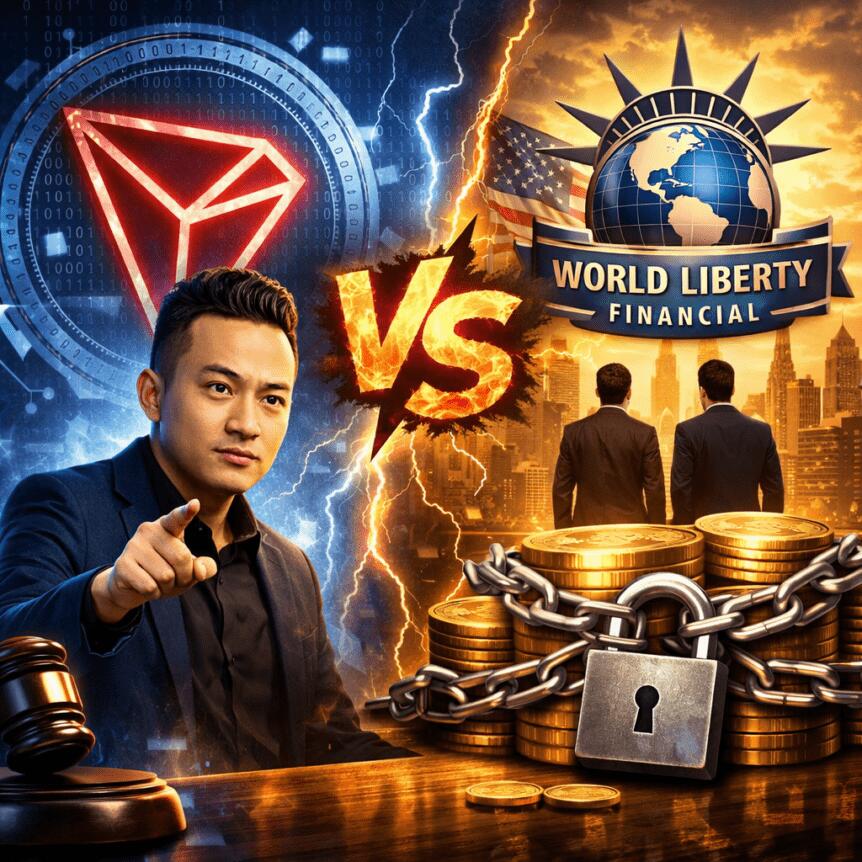
Justin Sun, the Tron founder and the largest individual investor in World Liberty Financial (WLFI), has filed a lawsuit in a California federal court to protect his rights as a WLFI token holder. Sun says WLFI froze his tokens and threatened to burn them “without any proper justification,” prompting the legal action after private attempts at resolution failed. He announced the filing in a post on X, explaining that he sought a court remedy only after WLFI’s project team refused to unfreeze his holdings and restore his rights as a token holder.
Sun’s complaint arrives amid a broader set of governance and liquidity concerns surrounding WLFI, a project closely tied to the Trump family. The investor has previously warned of potential litigation over long lockup periods for WLFI’s governance token and criticized a recent governance proposal for a perceived lack of transparency, pointing to the claim that more than 76% of voting tokens came from just 10 wallets. Sun’s case thus compounds questions about how WLFI balances token holder rights, governance mechanics, and project control.
Cointelegraph has reached out to both Sun’s camp and WLFI for comment on the lawsuit and ongoing governance disputes. In the meantime, Sun stated that the legal action does not alter his political views or his support for President Donald Trump and his administration’s crypto-friendly stance. He also asserted that some members of WLFI’s project team have operated in a way that diverges from Trump’s values.
One of the central questions surrounding the WLFI case is how token custody and governance controls are exercised within a project linked to a high-profile political figure. The founder’s suit underscores ongoing tensions between token holders’ rights and a project’s ability to manage its own token economics, especially when governance proposals suggest concentrated voting power. The dispute also highlights the practical frictions that can surface when a project seeks to implement lock-ups and incentive structures that impact token liquidity and voting influence.
In related background coverage, Cointelegraph previously examined WLFI’s governance mechanics and the token distribution landscape, noting concerns around transparency and concentration. For readers seeking broader context, earlier Cointelegraph reporting highlighted governance-related actions and the project’s response to those criticisms. See the coverage that detailed how a governance vote on WLFI’s stake-lock incentives unfolded and the subsequent reactions from project supporters and critics here. There is also prior reporting on WLFI’s token burn actions and price dynamics linked to those moves here.
Key takeaways
- Justin Sun filed a civil complaint in a California federal court to unfreeze WLFI tokens and protect his rights as a token holder, after private efforts to resolve the issue reportedly failed.
- The action follows Sun’s criticism of WLFI governance practices, including concerns about lock-up terms and the distribution of voting power (Sun cited that more than 76% of voting tokens originated from 10 wallets).
- WLFI defended itself publicly, calling the allegations baseless and stating that it has contracts and evidence, signaling that the matter could escalate in court.
- The dispute sits at the intersection of crypto governance, token rights, and high-profile political associations, potentially impacting investor trust and the perceived legitimacy of WLFI’s governance model.
- Observers will be watching for forthcoming court filings and WLFI’s responses as the legal process unfolds, with broader implications for governance-centric crypto projects tied to prominent figures.
Sun’s lawsuit and WLFI’s governance tensions at a glance
The core of Sun’s complaint is straightforward in legal terms: a request to unfreeze his WLFI tokens and restore his rights as a holder. The California filing comes after what Sun described as attempts to resolve the matter privately with WLFI’s project team were unsuccessful. The billionaire investor frames the suit as a necessary step to protect his property rights within the WLFI ecosystem and to ensure he can participate in governance on the same footing as other holders.
WLFI’s side has offered a counter-narrative in the public sphere. In a post on X, WLFI asserted that the allegations were baseless and claimed, “We have the contracts. We have the evidence. We have the truth. See you in court.” This rebuttal mirrors a broader pattern in crypto governance disputes, where project teams contest accusations of opacity while token holders push for clearer transparency and fairness in voting frameworks.
The earlier governance debate around WLFI remains relevant. Sun’s critique extended to a governance proposal that introduced lock-up incentives. He argued that the distribution of voting power—cited as concentrated in a small number of wallets—undermined the fairness and transparency essential to a legitimate decentralized governance process. The related coverage noted WLFI’s responses, illustrating a wider, ongoing struggle to balance incentive design with broad-based participation.
What WLFI’s case could mean for investors and the DeFi ecosystem
From an investor perspective, the lawsuit raises practical questions about how token-holder rights are protected when a project adopts governance-enabled economics. For Sun’s supporters, the action may be framed as a defense of property rights within a tokenized ecosystem that aspires to be governable by its holders. For critics, the case may amplify concerns about centralization of influence in governance and the risks of platform-driven token controls that can impact liquidity and voting power outcomes.
Beyond WLFI, the case touches on a broader regulatory and industry backdrop. As crypto projects increasingly deploy governance tokens and lock-up mechanisms, questions about transparency, custody, and accountability come into sharper focus. The legal action could serve as a bellwether for how courts interpret token-holder rights in similar contexts and how project teams balance incentives with broad-based participation.
For readers tracking regulatory and policy developments, Cointelegraph Magazine has previously explored how regulatory clarity can influence DeFi and governance structures, offering a broader lens on how a legal case like this might interact with evolving policy frameworks. The CLARITY Act, among other debates, remains a touchpoint for understanding the potential future landscape for crypto governance and non-custodial design, though readers should note that the current case centers on a specific dispute rather than a policy proposal.
What to watch next
The immediate next steps will revolve around the court’s timetable and the parties’ legal strategy. Investors and observers should monitor for upcoming filings, WLFI’s official responses, and any court-approved actions related to token custody or governance rights. As the case unfolds, the question will be whether Sun’s assertions can be substantiated in court and what remedies the judge may consider if WLFI’s actions are found wanting. The broader takeaway will hinge on whether this dispute signals a broader tension between centralized project control and decentralized governance in crypto projects linked to high-profile figures.
In the meantime, readers should keep an eye on how WLFI articulates its governance framework and token distribution practices, as well as whether the court’s rulings—or lack thereof—will influence similar projects’ approach to token custody, lock-ups, and holder rights.

UK inflation rises after Iran war pushes up fuel prices

US Law Firm Apologizes For AI Hallucinations in Filing

Who Is Maggie Sajak’s Boyfriend? Meet Jackson Olson

Manchester United reach agreement with Casemiro over contract clause amid transfer speculation

Steven Gerrard disagrees with Gary Neville over ‘shock’ Chelsea and Arsenal claim | Football

US brings back mandatory military draft registration


-

 News Videos7 days ago
Secure crypto trading starts with an FIU-registered
-

 Fashion5 days ago
Weekend Open Thread: Theodora Dress
-

 Politics4 days ago
Palestine barred from entering Canada for FIFA Congress
-

 Sports5 days ago
NWFL Suspends Two Players Over Post-Match Clash in Ado-Ekiti
-
Entertainment2 days ago
NBA Analyst Charles Barkley Chimes in on Ice Spice McDonald’s Fiasco
-

 Business3 days ago
Powerball Result April 18, 2026: No Jackpot Winner in Powerball Draw: $75 Million Rolls Over
-

 Politics3 days ago
Zack Polanski demands ‘council homes not luxury flats for foreign investors’
-

 Crypto World4 days ago
Russia Pushes Bill to Criminalize Unregistered Crypto Services
-

 Politics1 day ago
Gary Stevenson delivers timely reminder to register to vote as deadline TODAY
-

 Tech3 days ago
Auto Enthusiast Scores Running Tesla Model 3 for Two Grand and Turns It Into Bare-Bones Go-Kart
-

 Tech6 days ago
‘Avatar: Aang, The Last Airbender’ Leaked Online. Some Fans Say Paramount Deserves the Fallout
-
 Business5 days ago
Creo Medical agree sale of its manufacturing operation
-

 Crypto World4 days ago
Russia Introduces Bill To Criminalize Unregistered Crypto Services
-

 Sports6 days ago
British climbers complete new route in Swiss Alps
-

 Sports6 days ago
“Felt Much Better Today”: Josh Hazlewood Opens Up On His Recovery Win Over LSG
-
Crypto World3 days ago
Kelp DAO rsETH Bridge Hack Drains $292M as DeFi Losses Top $600M in Two Weeks
-

 Tech6 days ago
Ford EV and tech chief leaving automaker
-

 Business6 days ago
Cheaper Doritos and Lays helps PepsiCo win back struggling snackers
-
 Entertainment6 days ago
Clavicular Says Streaming May Not Work Without Substances
-

 Entertainment6 days ago
Ruby Rose Accuses Katy Perry Of Sexual Assault, Police React
You must be logged in to post a comment Login