

Crypto World
GitHub Internal Repos Breached; Binance’s CZ Urges Urgent Key Rotation


Earlier today, hackers gained access to GitHub’s internal repositories by exploiting an employee’s computer with the use of a tainted VS Code extension.
Following the incident, reports emerged that a threat actor using the alias TeamPCP was now allegedly selling what they claim is roughly 4,000 of GitHub’s private repositories on a cybercriminal forum, with a minimum asking price of $50,000.
What GitHub Says Happened
GitHub confirmed the breach through several tweets posted on its X account, where it detailed what it knew thus far. As per the hosting platform, the attacker gained access to its internal repository via a malicious extension of VS Code loaded onto one of the devices of its employees.
GitHub claims that once it realized there was an attack, it promptly deleted the malicious software from the infected machine. Critically, it pointed out that there is currently no evidence that customer data held outside its internal systems, meaning individual users’ enterprises, organizations, or repositories, was accessed.
The hosting service also confirmed it moved quickly to rotate credentials, moving the highest-impact secrets first. It will also be examining logs to see whether there has been any additional activity, and it will be providing more details on the matter after the investigation concludes.
Meanwhile, French researcher Sébastien Latombe flagged a listing on a criminal message board by a threat actor calling themselves “TeamPCP,” claiming to be the one behind the hack, containing mentions of repositories related to GitHub Actions, GitHub Enterprise, GitHub Copilot, Azure, CodeQL, billing, and authentication services.
Allegedly, they are not looking to ransom GitHub but want a single buyer for the stolen data, with the minimum asking price being $50,000.
However, it must be noted that there has been no official confirmation of the content in the forum listing from GitHub or Microsoft, and any claims made in such cybercriminal sites may be taken with a pinch of salt, as any data they provide in such cases may be out of date or overblown to inflate its perceived value.
Security Concerns Spread Through Crypto
The reaction online to the breach was swift, with Binance co-founder Changpeng Zhao (CZ) posting a direct message to crypto developers:
“If you have API keys in your code, even private repos, now is the time to double check and change them.”
The replies painted a familiar picture of an industry-wide problem. Topaz DEX founder Aaron Shames called it “bad practice to have API keys in any repo, private or not,” though he acknowledged the heads-up.
Others pointed out that for builders managing hundreds of keys across projects, this is not a simple fix.
“This entire practice of key storage needs an update,” wrote digital artist Tuteth_.
Security commentator Dhanush Nehru went further:
“No one knows what all permissions each VS Code extension owns. The cybersecurity threat landscape is scary.”
The timing of this incident also contributed to pre-existing worries about crypto security following multiple high-profile hacks this month, which included an attack on Echo Protocol, where hackers managed to mint $76.7 million worth of eBTC.
That particular incident came just days after two other multimillion-dollar attacks were carried out on THORChain and the Verus-Ethereum Bridge.
This spate of events has led to renewed debates on the issues of code verification and software supply chain vulnerabilities, where Vitalik Buterin asserts that with the help of AI, formal verification can make software safer by mathematically proving its behavior.
The post GitHub Internal Repos Breached; Binance’s CZ Urges Urgent Key Rotation appeared first on CryptoPotato.


Sam Altman, chief executive officer of OpenAI Inc., during a media tour of the Stargate AI data center in Abilene, Texas, US, on Tuesday, Sept. 23, 2025.
Kyle Grillot | Bloomberg | Getty Images
Reports that OpenAI is set to confidentially file for an IPO as soon as Friday changed prediction market traders’ outlook on which private AI giant will debut on the public markets first.
Traders on Kalshi now see OpenAI as the favorite to go public before Anthropic, giving it an 83% chance of getting the big payday first.
“Getting to public markets first is very important, given this arms race going on,” said Dan Ives, Wedbush Securities’ global head of technology research. “It sets a valuation, you’re the first one to meet with investors on the road, and there’s an advantage.”
Before the initial report on the IPO timeline by the Wall Street Journal which CNBC later confirmed, traders gave OpenAI just over a 32% chance of beating its chief private rival to the public markets.
Chances Anthropic would beat OpenAI to an IPO collapsed on Polymarket to 20% from 69%.
While the birth of OpenAI’s ChatGPT launched the AI bull market in November 2022, the company has lost some of its shine with investors.
Worries about the company’s spending, reports on missed revenue and growth targets and leadership turnover weighed on investors’ outlooks. There have even been internal disagreements on the timeline to go public, according to the Journal, with CEO Sam Altman pushing for a faster debut than CFO Sarah Friar.
At the same time, Anthropic’s enterprise business has led it to experience massive growth in recent months, and reportedly is in talks with investors for a new funding round that would value the company at $900 billion, greater than that of OpenAI’s latest valuation.
Investors became enchanted with Anthropic’s Claude models, which have been constantly updated with new versions. Those updates were followed so closely by investors that they consistently moved the stock market in the beginning of the year, as worries about how new tools from Claude models would disrupt existing businesses mounted.
It was in late March when reports about an extremely powerful new model, Claude Mythos, circulated that Anthropic took a consistent lead over OpenAI on Kalshi of who would have a public debut first. Bloomberg reported around the same time that the company was looking to IPO as soon as October.
But with an IPO on the way — sooner than prediction market traders thought — and a court win against Elon Musk this week, it could be the moment for a turnaround, according to Ives.
“It started with the lawsuit,” he said. “And now filing the IPO, that’s a great one-two punch to start to put water on the negative fire that’s been on them.”
Disclosure: CNBC and Kalshi have a commercial relationship that includes a CNBC minority investment.
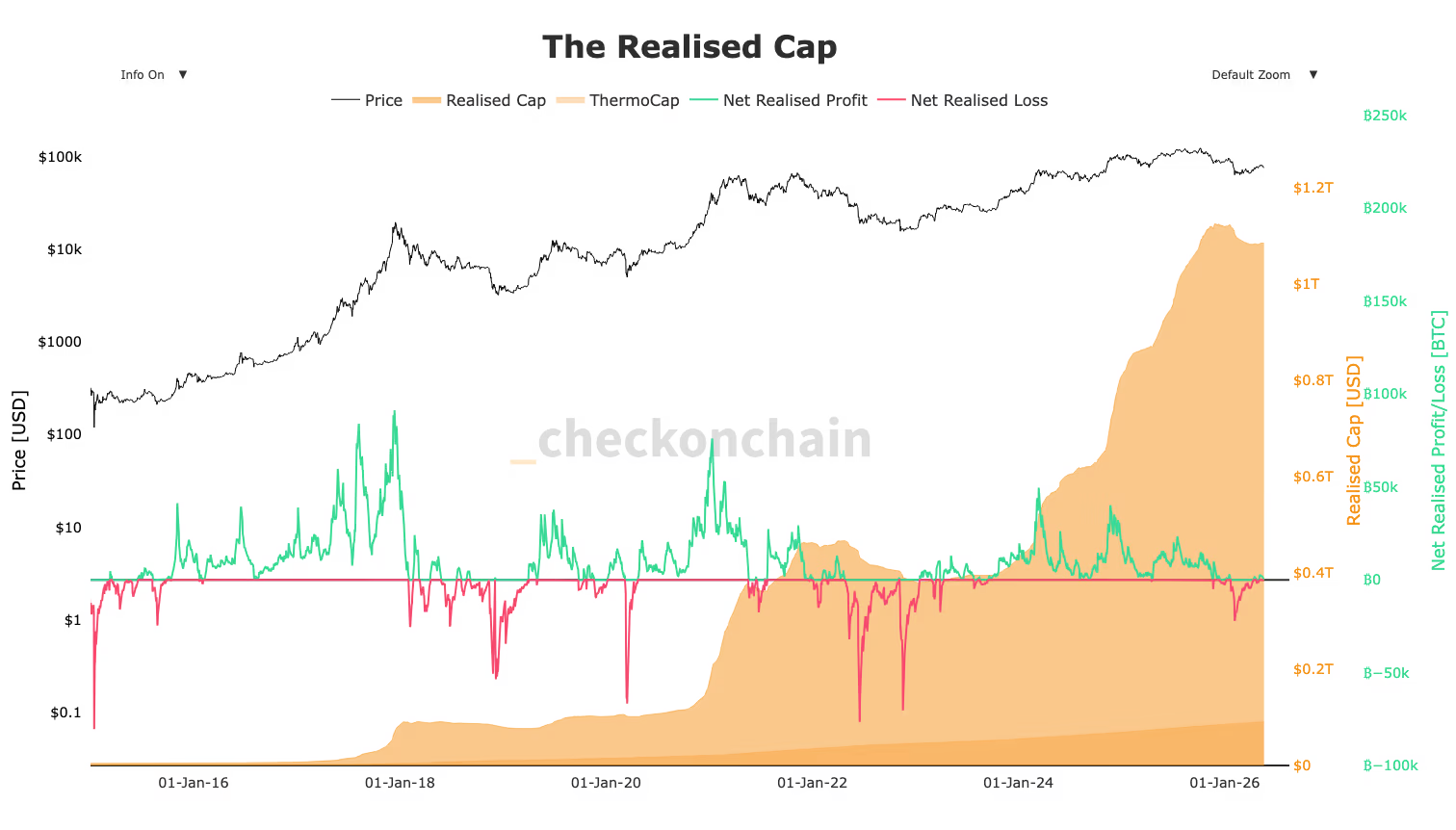
The biggest question facing bitcoin investors is whether the market bottom was set in early February, when the largest cryptocurrency briefly fell toward $60,000.
While no indicator can assess that with certainty, a number of onchain and derivatives metrics suggest the worst of the current correction may be in the past, especially as bitcoin is now trading back above $77,000.
The first metric is Realized Cap, which measures the total value of bitcoin based on the price each coin last moved onchain. It differs from market capitalization, which is based on the current market price, and reflects the aggregate cost basis of investors. It is often used to track capital entering or leaving the network.
Realized cap peaked near $1.12 trillion before falling to roughly $1.08 trillion as bitcoin declined more than 50% from its October record high. That’s a significant wealth destruction, one of the largest on record. However, the metric has now begun stabilizing and forming a base, similar to the pattern seen during lows of the 2022 bear market.

The second metric is the RHODL Ratio, which compares wealth held by longer-term holders (six months to two years) with newer market participants (one day to three months). The ratio is now above 5, its third-highest reading on record.
The only higher readings occurred during the 2015 and 2022 cycle bottoms. This suggests long-term holders continue to dominate supply. Since February, long-term holder supply has increased by over 400,000 BTC.
Finally, perpetual futures funding rates, the payments exchanged between long and short traders to keep futures prices aligned with spot markets, remained negative for one of the longest periods on record between February and May.
Historically, sustained negative funding reflects extreme bearish sentiment and overcrowded short positioning, conditions that often form market bottoms as selling pressure becomes exhausted.
Similar setups occurred during the Silicon Valley Bank crisis in March 2023, the yen carry unwind in August 2024, and the tariff-driven selloff in April 2025, all of which ultimately marked major bitcoin lows.

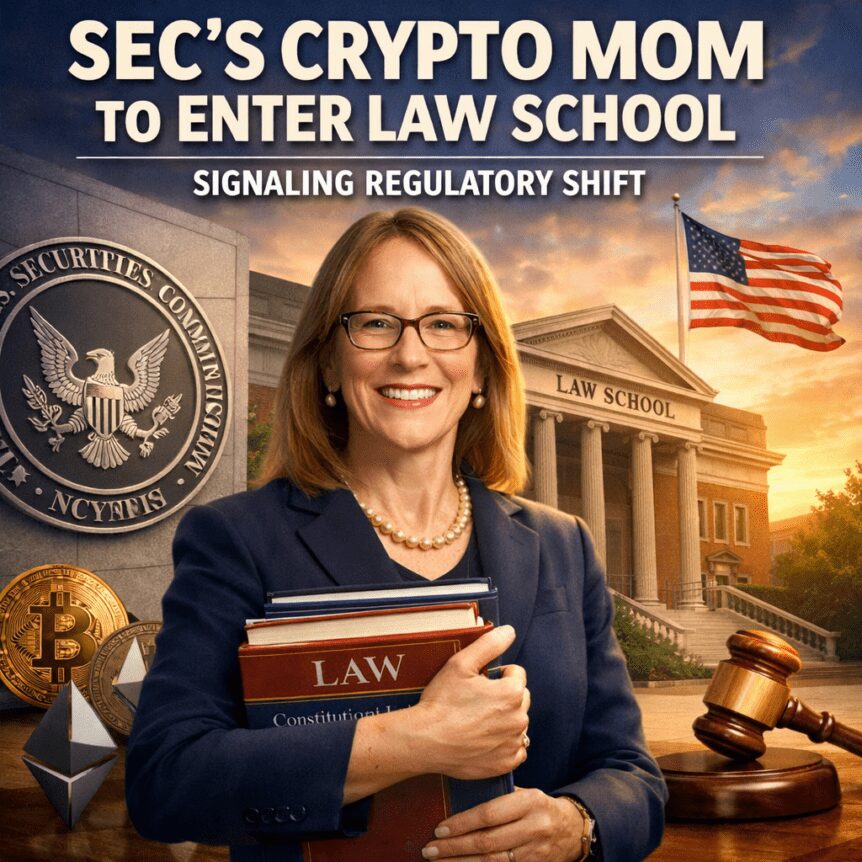
Regent University School of Law announced that Hester M. Peirce, a two-term commissioner of the U.S. Securities and Exchange Commission and a longtime figure in crypto policy, will join the faculty as an associate professor beginning in November. The appointment comes as the SEC’s leadership landscape remains unsettled and as federal regulators weigh how to realign oversight for digital assets within a changing legislative and enforcement environment.
Regent’s notice situates Peirce within the law school’s expanding emphasis on federal litigation, securities regulation and digital assets. Her SEC tenure officially ended in June 2025, but commissioners may continue serving for up to about 18 months after terms expire if replacements are not named, according to the agency’s rules. Peirce first joined the SEC in January 2018, after confirmation following her nomination by President Donald Trump in December 2017. She was later confirmed for a second term in 2020. Earlier in her career, Peirce was nominated by President Barack Obama to fill a Republican seat on the commission in 2015, but the nomination did not advance in the Senate at that time.
Regent communications indicate that Peirce’s teaching focus will include federal litigation, securities regulation and digital assets, signaling a constructive bridge between regulatory practice and academic inquiry. The move underscores a broader trend of regulators transitioning into academic roles to shape future professionals’ understanding of policy and compliance in the crypto space.
Key takeaways
- Hester M. Peirce will join Regent University School of Law as an associate professor, with teaching to begin in November, according to Regent’s notice.
- The SEC term for Peirce expired in June 2025; commissioners may serve for approximately 18 months after term expiration if not replaced, a policy that can affect regulatory continuity during leadership transitions.
- Peirce’s departure contributes to a constrained leadership slate at the SEC, where Caroline Crenshaw’s seat remains vacant following her January departure; the commission would be left with two Republican members (Mark Uyeda and Chair Paul Atkins) once Peirce exits, given the current membership configuration.
- Across the two primary crypto regulators—the SEC and the CFTC—staffing gaps persist. The CFTC, led by Chair Michael S. Selig, currently has a single commissioner, highlighting ongoing debates over who should supervise digital-asset markets.
- Legislative momentum around a digital asset market structure, including the CLARITY Act, could reallocate certain powers from the SEC to the CFTC, shaping the trajectory of enforcement and market oversight.
- Nomination dynamics under the current administration remain pivotal for restoring full regulatory capacity and for signaling the administration’s regulatory posture toward crypto firms, banks, and investors.
Academic transition amid regulatory vacancies
Peirce’s move to Regent comes at a moment when the crypto policy debate in Washington is characterized by competing priorities: enforcement clarity, investor protection, market integrity, and technological innovation. As a two-term commissioner who led the SEC’s crypto task force and earned the informal moniker “Crypto Mom” for her approach to digital-asset issues, Peirce has been at the center of policy debates about whether tokens constitute securities, how to apply existing securities laws to novel financial instruments, and how to balance innovation with investor safeguards. Regent’s programmatic emphasis on federal litigation and securities regulation, augmented by a focus on digital assets, suggests an intent to embed practical regulatory perspectives within the law school’s curriculum. For institutions and compliance teams, the appointment signals heightened attention to regulatory theory and real-world enforcement considerations as new graduates enter finance and technology sectors.
From a compliance perspective, Peirce’s academic appointment could influence conversations about how future financial institutions assess compliance risk, structure internal control frameworks, and engage with policymakers. It also highlights the importance of jurisprudence and standardized regulatory interpretation as markets evolve. The move is not a mere personnel change; it reflects a bridge between policy formation and legal education that can inform how market participants interpret regulatory expectations, draft internal policies, and prepare for evolving enforcement priorities.
Vacancies in the SEC and CFTC: implications for enforcement and governance
The staffing picture at the SEC remains incomplete. The departure of a sitting commissioner creates a narrower political and regulatory footprint at a moment when crypto policy is under active consideration in Congress and in the courts. Crenshaw’s earlier exit in January left the agency with a reduced complement of commissioners; according to the agency’s own disclosures, vacancies may extend for months while nominations work through the Senate. As Peirce winds down her term, the SEC would be left with only two Republican commissioners, alongside a Democratic minority, a configuration that can influence the Commission’s voting dynamics on nuanced policy questions and enforcement actions.
Similarly, the Commodity Futures Trading Commission faces parallel staffing challenges. Michael S. Selig remains the chair and, at present, the agency’s leadership operates with a limited number of members. This convergence of vacancies at the SEC and CFTC has immediate practical implications for regulatory tempo, rulemaking, and cooperative efforts on cross-cutting issues such as digital-asset market structure and investor protection.
Industry observers have noted that regulatory leadership matters not only for immediate enforcement actions but also for the long-term signaling of the United States’ approach to crypto markets. With the nomination process potentially slow in the current political climate, market participants and institutional clients must plan for a period of governance uncertainty, during which policy direction—particularly on crypto asset classification, registration, and reporting requirements—may lack a clear, unified voice from Washington.
Regulatory reorganization and the path to a unified market framework
A central policy topic in this period is the ongoing discussion around the digital asset market structure. The CLARITY Act, and related legislative efforts in Congress, are viewed by many as attempts to delineate and consolidate authority over crypto markets. Proponents argue that a clearer allocation of powers between the SEC and CFTC would reduce regulatory fragmentation and bring more predictable oversight for market participants—especially those operating cross-border and those seeking to coordinate banking services with stablecoins and digital-asset settlements.
Under this framework, the balance of oversight could shift toward the CFTC for certain market-structure matters, including the governance of crypto spot and derivatives markets. At the same time, the SEC’s role in registration, disclosure, and investor protection remains significant, particularly for projects that might be construed as securities offerings. The evolving dynamics underscore the importance for market participants to monitor both rulemaking activity and legislative developments, as well as any potential realignment of enforcement priorities.
Notably, the current administration has signaled a willingness to recalibrate interd- agency coordination. In practice, that could mean more explicit cooperation between the SEC and CFTC on compliance expectations for exchanges, wallets, and asset issuers, along with streamlined processes for cross-border firms seeking to operate in the United States. Observers should also watch how this alignment interacts with broader regulatory regimes, including anti-money-laundering (AML) and know-your-customer (KYC) requirements and licensing regimes that influence institutional onboarding and banking relationships for crypto firms.
In coverage beyond the agency level, industry analyses have highlighted that these regulatory tensions—and the potential reallocation of authority—carry practical implications for risk management, legal budgeting, and internal control design within financial institutions, exchanges and liquidity providers. The interplay between evolving law, enforcement discretion, and business models will shape how firms allocate resources to regulatory compliance programs, internal audits, and ongoing policy engagement with regulators and lawmakers. Cointelegraph has documented how the regulatory posture has shifted under the current administration, contributing to an atmosphere of recalibration across U.S. crypto oversight.
Closing perspective: what to watch next
As Regent welcomes Peirce and as vacancies persist at the SEC and CFTC, the next several months will be critical for determining the pace and direction of U.S. crypto regulation. The interplay between academic engagement, regulatory staffing, and legislative advance will influence not only enforcement priorities but also how market participants structure compliance programs, partner with banks, and evolve governance practices in line with evolving legal standards. Key watch points include nominee progress in the Senate, any shifts in enforcement posture tied to leadership changes, and the continued articulation of a coherent market-structure framework that clarifies regulatory responsibilities across securities and futures regimes.


Ethereum co-founder Vitalik Buterin on Wednesday outlined near-term steps the network is taking to bring privacy onchain, a feature institutions highlighted at Consensus Hong Kong as necessary for widespread institutional adoption of the blockchain technology.
Buterin’s X post was technically dense but pointed to a simple fact: the world’s largest smart contract blockchain is moving to make private transactions a feature of the network, not a workaround provided by third-party tools.
The post comes as the Ethereum Foundation, the non-profit organization that supports the blockchain’s network and ecosystem, faces a wave of high-profile departures amid an internal transition tied to a new organizational mandate to redefine its role within Ethereum.
The three new short-term initiatives are: Account abstraction (AA) and FOCIL, Keyed nonces and access layer work. Each of the three adds a different layer of privacy to Ethereum.
Here is what each one actually does:
Uncensorable private transactions
As of now, if a user sends a private transaction on Ethereum via crypto mixers such as Tornado Cash, it first goes into the public memory pool (mempool), a sort of waiting area visible to everyone on the network. Imagine dropping a letter into a post office where every worker can read the address before finalizing which one to move for delivery.
Similarly, Ethereum entities that decide which transactions make it into each block can see those transactions and exclude them, which amounts to censorship.
FOCIL, or fork-choice enforced inclusion lists, makes censorship harder by allowing a committee of validators to propose a list of transactions that block builders are expected to include. Ignoring these transactions can lead to the block being rejected by the network. This way, it becomes difficult to censor transactions.
Meanwhile, account abstraction upgrades how Ethereum accounts work. Today, most Ethereum users rely on externally owned accounts (EOAs) via apps like a basic MetaMask, Trust Wallet, or Coinbase Wallet, each controlled by a single private key. If a user loses that key, they lose access to their funds.
Account abstraction enables all accounts to behave like programmable smart contracts, providing features such as multi-signature approvals and social recovery. It also lets apps or friends pay a user’s transaction fees.
Keyed ‘nonces’
Every Ethereum account has a nonce, a number used once. It acts as a running tally of all proposed transactions, increasing by 1 with each new transaction sent. This setup helps prevent the same transaction from being repeated on the network.
It’s like getting a sequentially numbered ticket at a food counter. But it comes with a problem. Even if an order is private, anyone watching can see that ticket #5 and ticket #6 came from the same person. On Ethereum, this sequential nonce allows observers to link transactions to the same account, even if the transactions are private and their contents are hidden.
The fix for that is keyed nonces. This replaces the single counter with a structure that comprises a nonce key and a nonce sequence, giving each account multiple separate ticket counters for different types of activities. This makes it harder to track the transaction trail and correlate them onchain.
“This replaces the single sender nonce with (nonce_key, nonce_seq), giving frame transactions independent replay domains,” pseudonymous researcher soispoke.eth said.
Access-layer work: private reads and Kohaku
The third proposed measure addresses the issue that even if transactions are private, users’ browsing behavior on the network is not. Imagine making a private phone call. Nobody heard the conversation, but the telecommunications firm knows who made the call and to whom.
Similarly, every time a user queries the blockchain to check a balance or read a smart contract, their wallet relies on third-party RPC node providers, exposing their IP address, physical location, and complete wallet identity to corporate servers that log this data.
Central to this effort is Kohaku, an open-source privacy toolkit introduced in 2025. Rather than eliminating reliance on RPC node providers entirely, Kohaku gives wallet developers tools to query blockchain data privately, using techniques such as private information retrieval, so nodes can answer queries without learning which specific data the user requested.
‘ETH’s utility value’
Ethereum has long had privacy as a goal, but it has not been a native feature. The new initiatives, if they go live, could serve as a positive catalyst for ether (ETH), the native token of Ethereum.
The plan for the new privacy initiatives isn’t just a narrative; the market is validating it too.
Valuations of established privacy-focused projects have surged, reflecting genuine demand. For example, Zcash (ZEC) has rallied more than 800% since early last year, pushing its market capitalization to roughly $9.85 billion. Meanwhile, Monero (XMR), despite frequent criticism for its use by bad actors on darknet markets and for terror funding, has also rallied by more than 100% in the same timeframe.
Bitcoin , the market leader, has declined by more than 5% over the same period.
One X user explained Ethereum’s need for privacy best: “Ethereum’s missing component at this point is some form of native privacy. ETH’s utility value would literally jump overnight. Privacy is the type of feature that can give an asset true moneyness qualities. L1 privacy could also drive a surge in mainnet fees.”
None of these changes is live yet, but Tuesday’s post is a meaningful signal about where things are headed next.
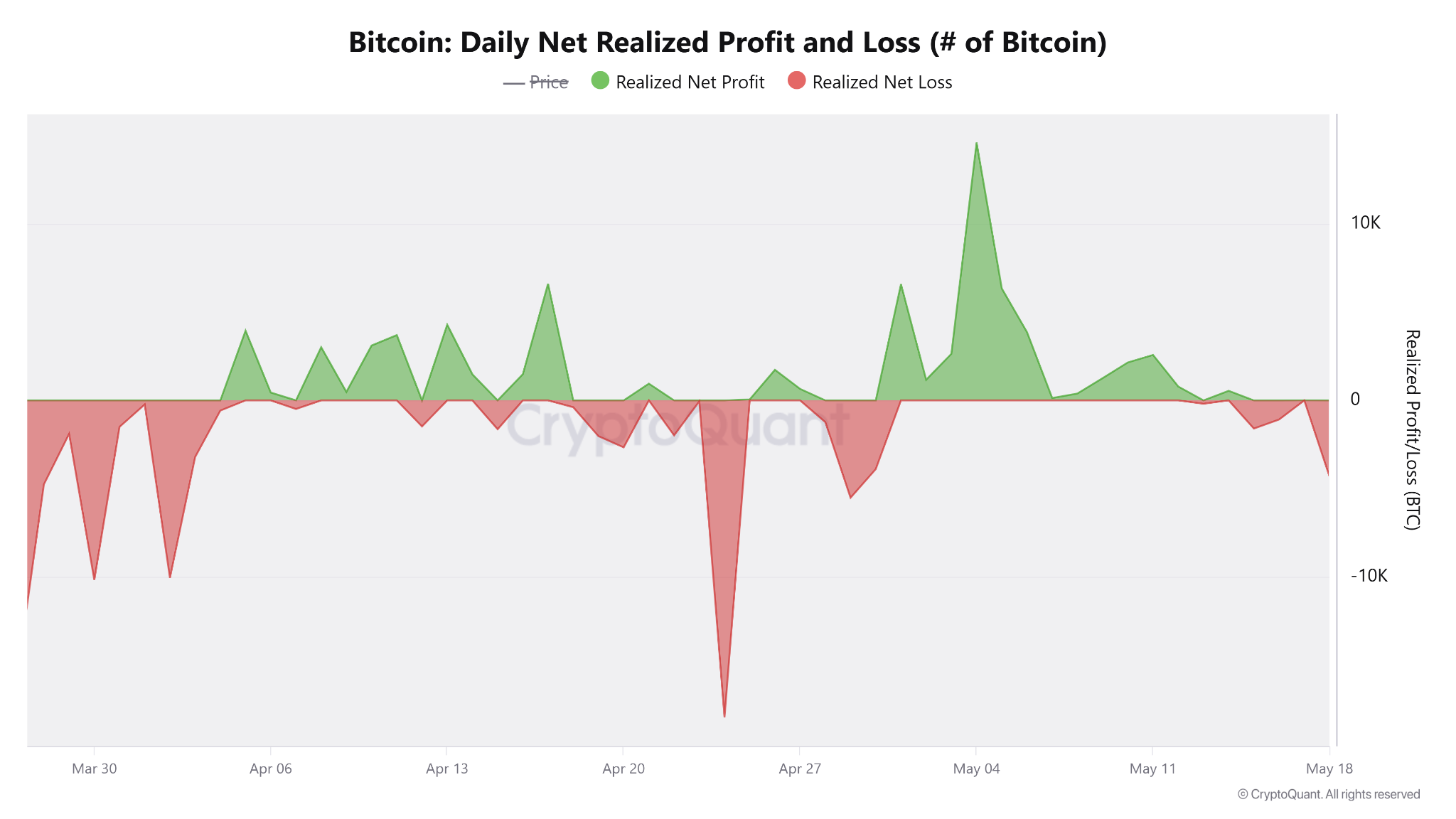
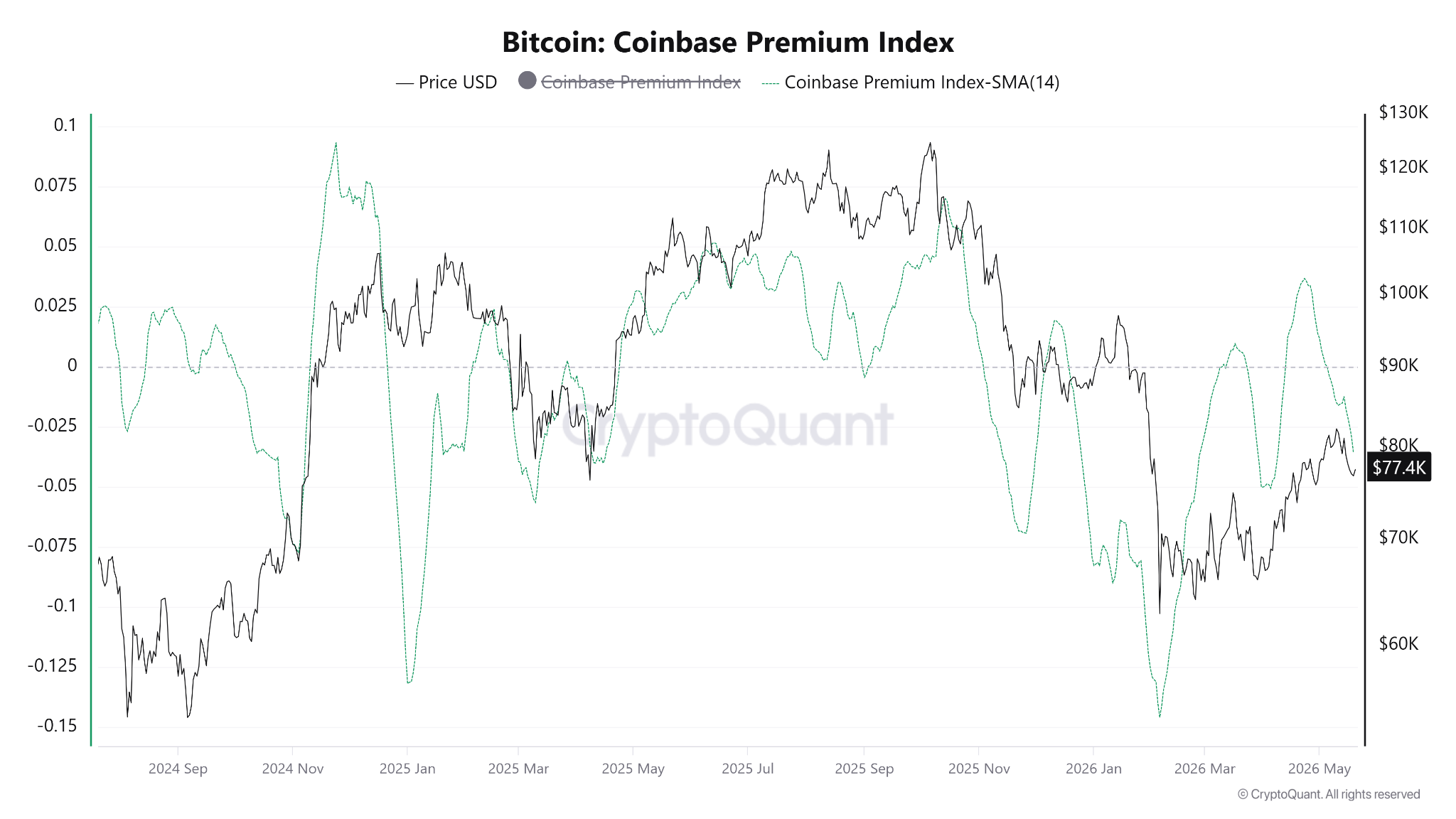
Bitcoin (BTC) demand on Coinbase points to early signs of market stabilization as BTC reclaimed the upper bounds of its range highs. The 14-day trend of the Coinbase Premium Index has remained in an uptrend, suggesting steady buyer interest despite traders taking $1.14 billion in profits, which pushed the daily Coinbase premium to a six-week low.
Coinbase demand stabilizes amid negative readings
The Coinbase Premium Index dropped to -0.087 on May 19, its weakest reading since March 31. A negative premium means Bitcoin traded at a lower price on Coinbase than on Binance, signaling softer demand from US-based buyers.
BTC profit-taking accelerated as it rallied to $82,000 and holders realized 14,600 BTC ($1.14 billion) in daily profits on May 4. CryptoQuant noted unrealized profit margins climbed to 17.7% on May 5, the highest level since June 2025.
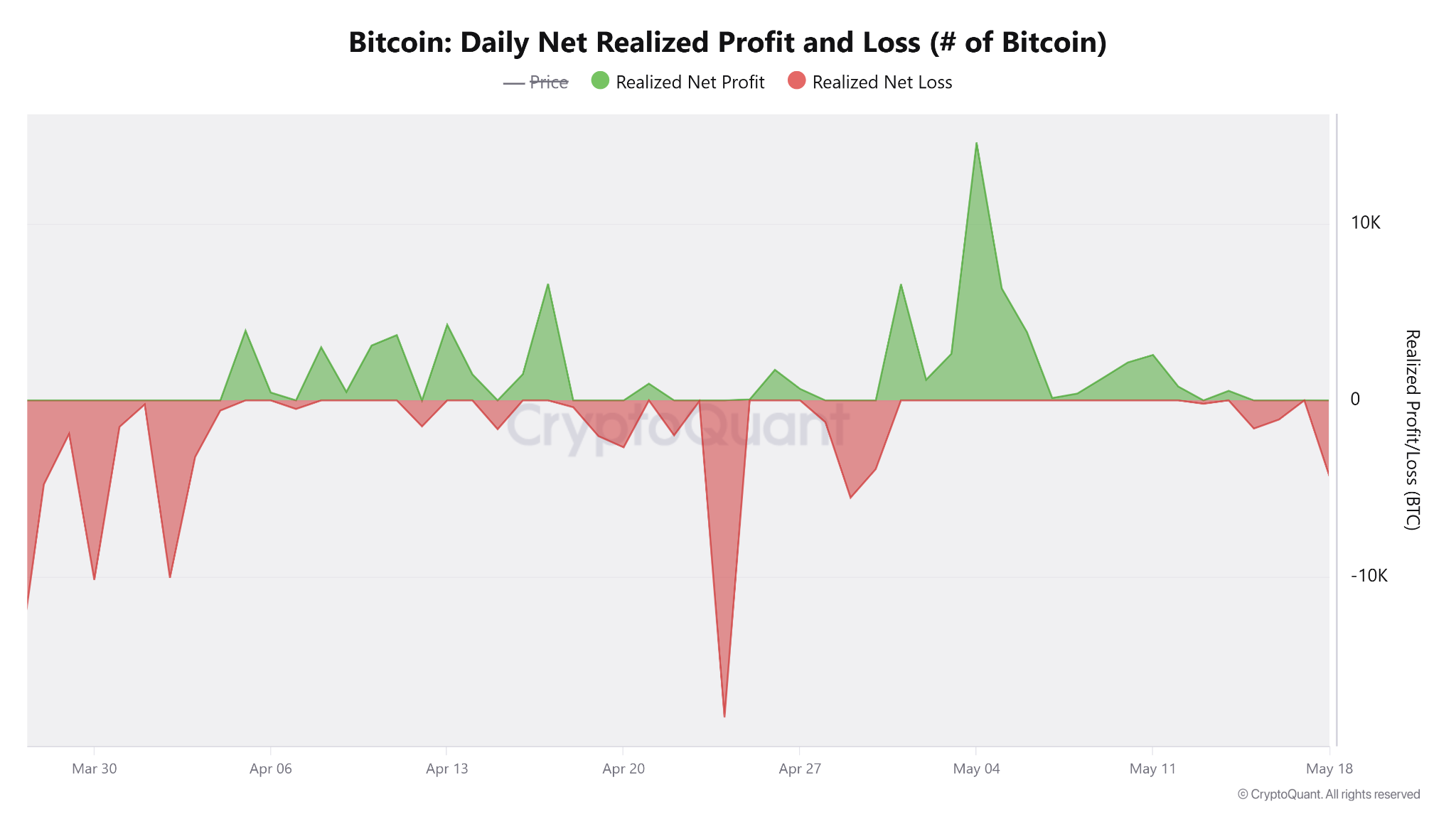
Bitcoin net realized profit and loss. Source: CryptoQuant
However, the longer-term trend for Coinbase paints a steadier picture. The 14-day simple moving average (SMA) of the premium index has remained above its February lows. Similar recoveries in the moving average preceded renewed spot demand on Coinbase during March 2025, shortly before Bitcoin pushed toward $110,000 in April-May 2025.
The daily premium readings still sit below zero, though the rising SMA points to easing sell-side pressure. Bitcoin also continues to hold above the $70,000–$75,000 range, a zone that previously attracted strong spot accumulation.
Bitcoin Coinbase Premium 14-day SMA. Source: CryptoQuant
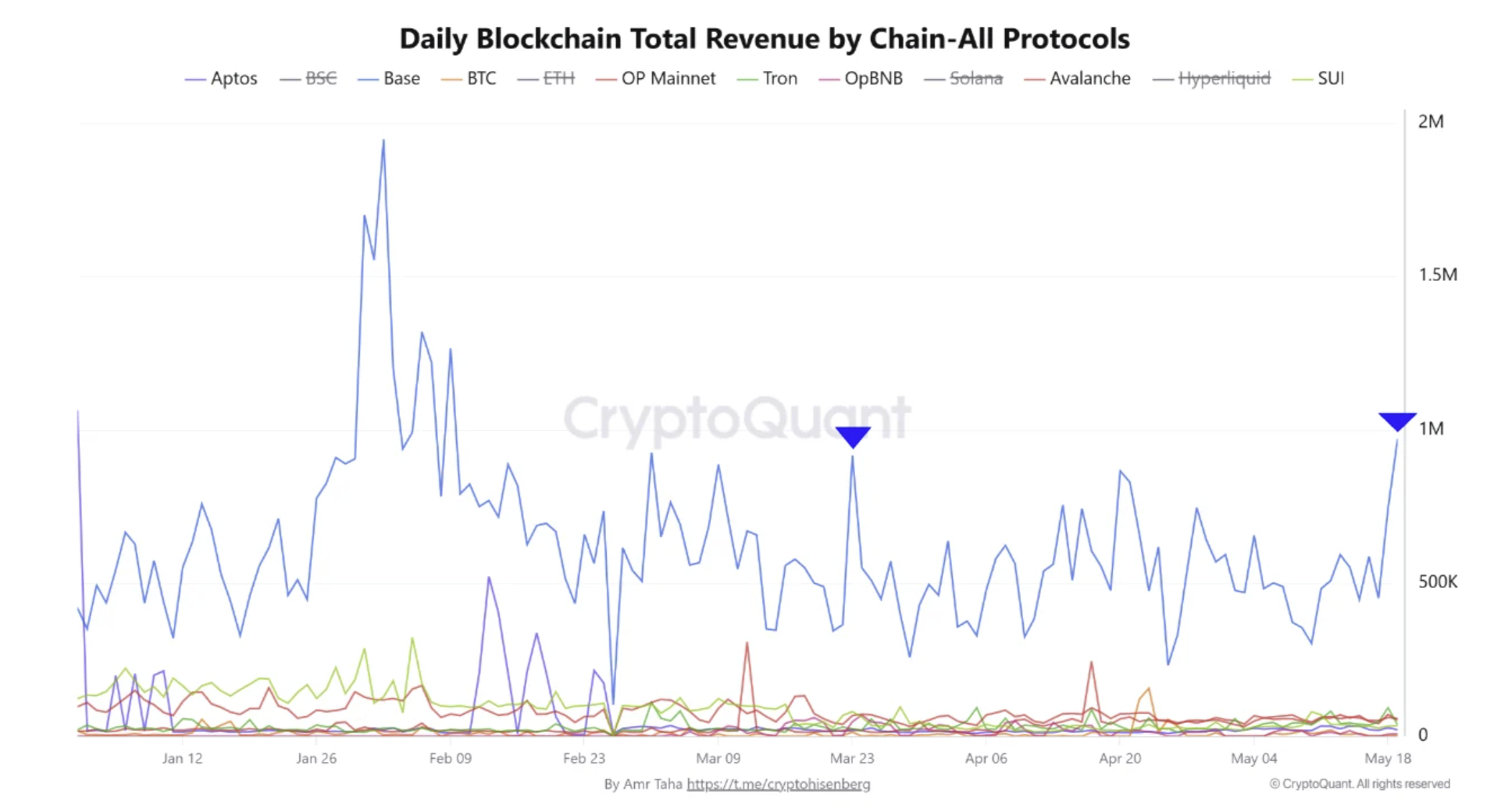
Crypto analyst Amr Taha noted that activity across the Coinbase-linked network stayed elevated during the latest pullback. The Base blockchain revenue climbed to nearly $972,000 on May 19, exceeding late-March levels even as the Coinbase Premium Gap remained negative.
The divergence highlights steady network participation inside the Coinbase ecosystem while spot demand gradually rebuilds.
Daily blockchain total revenue by different protocols. Source: CryptoQuant
Related: This Bitcoin price model targets ‘conservative’ $255K by year-end
BTC price receives support from the key daily trend
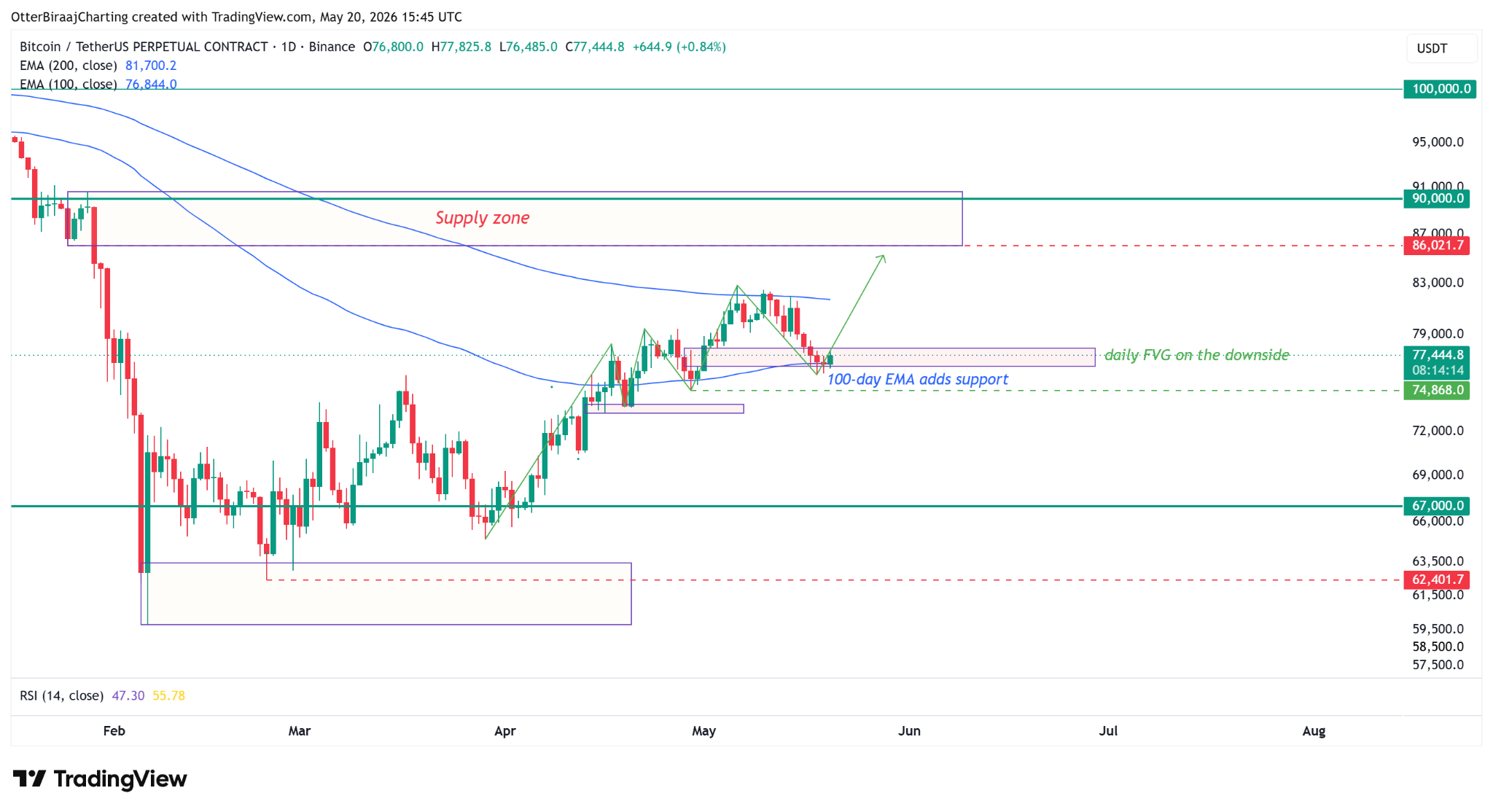
The daily chart of BTC still leans bullish after the rejection near $82,000. The price continues to trade above the 100-day exponential moving average (EMA) near $76,800, which is acting as key dynamic support.
The current retracement has held within the $76,000–$77,000 fair-value gap, keeping buyers active near recent accumulation levels. A recovery from this zone could reopen the path toward $80,000–$82,000, while the larger supply area near $86,000–$90,000 sits higher.
BTC/USDT, one-day chart. Source: Cointelegraph/TradingView
$74,800 remains a key level and a daily close below that price would mark the first bearish break in the current higher-low formation and shift focus to the $70,000 psychological support level.
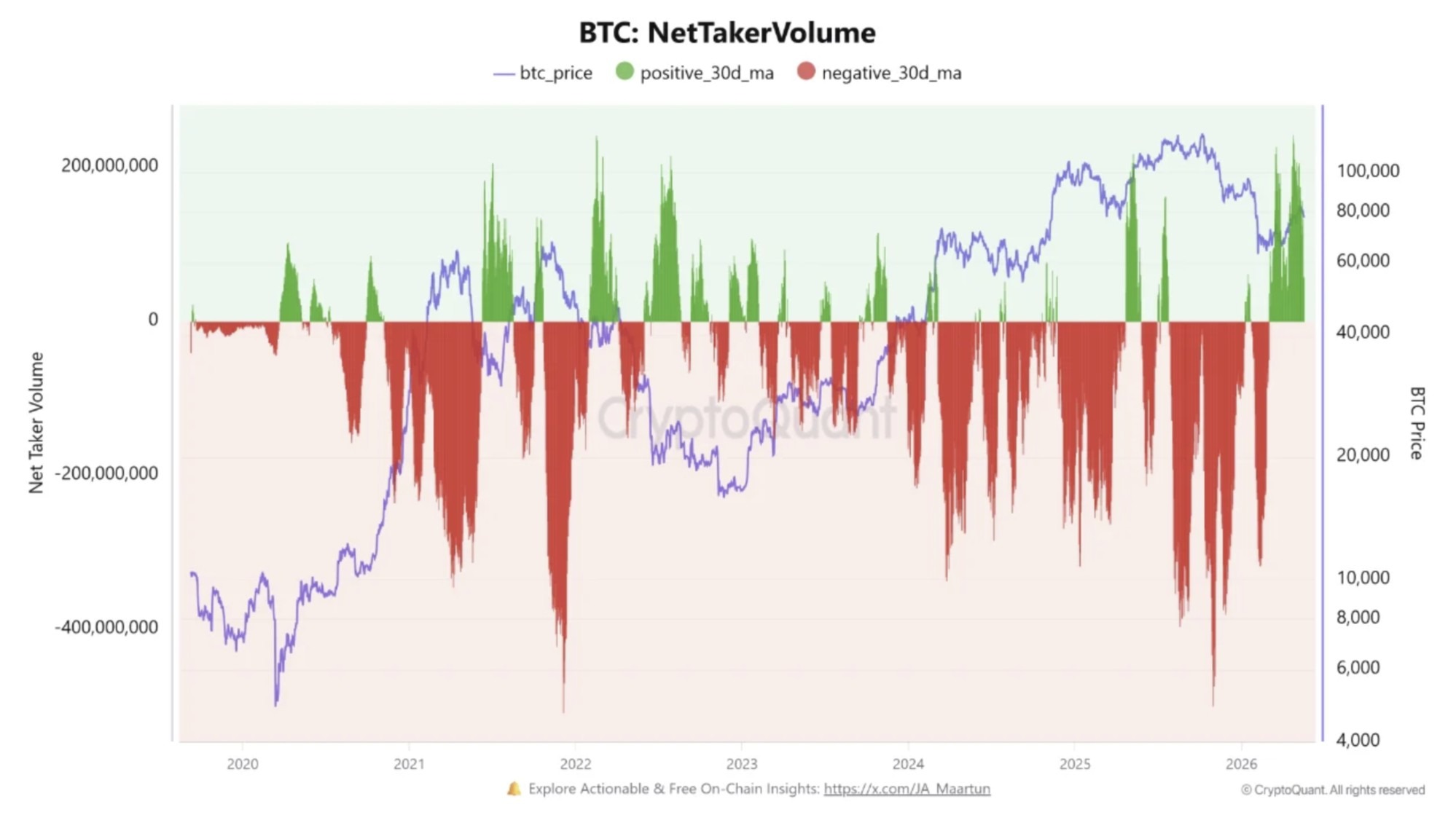
Futures data continues to support demand resilience. Market analyst CryptoOnChain reported that Bitcoin’s 30-day moving-average net taker volume dropped to $58 million on May 18 from $243 million in April. However, the metric remained positive during the recent correction, indicating that BTC futures buyers continued to absorb sell pressure near the current price.
BTC net taker volume. Source: CryptoQuant
Related: Bitcoin sees fresh US sell-off as markets await Nvidia ‘biggest earnings event’
Crypto World
Polymarket moves to list parlays while SEC seeks public input on prediction market ETFs


Prediction market provider Polymarket filed to list parlays in sports event contracts in the U.S. on Wednesday, according to a self-certification filing with the Commodity Futures Trading Commission.
Polymarket filed to list “combinatorial outcome contracts” on Wednesday, describing these event contracts — the official term for prediction markets — as combining two or more underlying contracts. Moreover, all of the underlying contracts would have to settle to the specific outcome that the user sets.
“Every outcome must be satisfied for the Contract to resolve to $1.00. The Contract resolves to $1.00 if and only if every leg is satisfied. If any single leg is not satisfied, the Contract resolves to $0.00, regardless of the outcomes of any remaining unsettled legs,” the filing said.
Because the contract is self-certified, Polymarket is not so much asking for explicit permission to list these contracts as it is telling the CFTC that it intends to list these products. The document said it would list them “no earlier than May 21, 2026.”
Another exhibit was filed but with Polymarket asking the CFTC to hold this exhibit as confidential due to possible trade secrets or commercial information, according to a second document.
Exchange-traded funds
The Securities and Exchange Commission, which doesn’t directly oversee prediction markets, is looking into what an exchange-traded fund (ETF) around prediction markets might look like, Chairman Paul Atkins said in a statement on Wednesday.
ETFs boost capital formation and investor choice, he said, noting that ETF assets have tripled in the past seven years.
“Novel products raise novel questions, and I appreciate the willingness fund sponsors have shown in delaying the effectiveness of a number of novel ETFs, including event contract ETFs, while we consider the implications,” he said. “To ensure we do this in a transparent and thoughtful manner, I have instructed the staff to seek input from the public on how the Commission should respond to recent market changes.”
Prediction markets have drawn immense scrutiny in Congress and the courts over the past few months, particularly as they’ve expanded into sports leagues. State regulators and gambling firms argue that sports-related prediction markets are infringing on states’ rights to regulate and tax gambling products, since prediction market providers are regulated at the federal level.
The CFTC, for its part, maintains that these products are properly overseen by it under the Commodity Exchange Act. The U.S. Supreme Court is widely expected to take up the issue at some point.
In the meantime, lawmakers are reviewing prediction markets as well, though it’s unclear if a bill will be introduced to address them at this point.
Read more: Prediction markets firms take heat in Senate Commerce hearing scrutinizing surge

Hester M. Peirce, a two-term commissioner at the U.S. Securities and Exchange Commission who crypto insiders widely regard as “Crypto Mom,” is transitioning to academia. Regent University School of Law has announced she will join as an associate professor, effective in November, expanding the law school’s emphasis on federal litigation, securities regulation, and digital assets.
Peirce’s move comes amid a broader staffing dip at the SEC and a shifting regulatory posture on crypto under the current administration. Her formal term at the agency expired in June 2025, but Commission rules allow officials to remain in office for roughly 18 months beyond term expiration if replacements have not yet been named. Regent’s notice highlights Peirce’s anticipated focus areas, signaling a push to anchor crypto policy education at a time when the regulatory landscape is under increased scrutiny from lawmakers and market participants alike.
Key takeaways
- Academic appointment for a prominent crypto regulator: Hester Peirce will join Regent University School of Law as associate professor beginning in November, with Regent noting a focus on federal litigation, securities regulation, and digital assets.
- SEC staffing shifts and vacancies: With Peirce’s departure, the SEC faces a vacancy landscape that may thin the board further, as Caroline Crenshaw left in January and no nominations were publicly announced as of the latest briefing.
- Inter-agency dynamics amid a regulatory reshape: The CFTC, under Chair Michael Selig, remains with a single commissioner and a five-member panel that has yet to be fully staffed, complicating coordination on crypto policy.
- Legislative progress could reallocate authority: A digital asset market structure bill, the CLARITY Act, is moving through Congress and could shift significant oversight powers from the SEC to the CFTC, reinforcing a broader push toward clearer regulatory boundaries.
- Policy shift under the current administration: Since President Trump took office in January 2025, the SEC has signaled a notable shift in crypto enforcement and policy, including winding down several actions and investigations in the sector.
SEC veteran moves to academia as staffing gaps widen
Peirce joined the SEC in January 2018 after being nominated by then-President Donald Trump and confirmed by the Senate in December 2017. She secured a second term in 2020, having first been nominated by President Barack Obama for a Republican seat in 2015, though that initial nomination did not advance in the Senate at the time. Regent University’s announcement indicates that Peirce will begin teaching as an associate professor later this year, with a program that aims to bolster the law school’s offerings in federal litigation, securities regulation, and digital assets.
The timing of her departure is notable both for the SEC’s internal dynamics and for the crypto policy discourse more broadly. Peirce’s exit follows a period when the agency has been recalibrating its stance on digital assets, a shift that has been observed in parallel with discussions surrounding Congress’s evolving approach to crypto markets. Regent’s statement frames the appointment as a strategic move to infuse academic rigor into areas crucial to market participants—regulatory compliance, enforcement posture, and the evolving treatment of digital assets in securities law.
In parallel, the SEC’s leadership trajectory remains unsettled. Caroline Crenshaw, a Democratic commissioner whose term ended years earlier, departed in January, and as of the latest updates no nominations had been publicly made to fill her seat. With Peirce’s exit, the SEC would be left with two Republican commissioners—Mark Uyeda and Chair Paul Atkins—absent a prompt replenishment vote. This gaps-filled picture matters because commissioner diversity and voting blocs influence how aggressively or defensively the agency pursues crypto cases and shapes rulemaking agendas.
Inter-agency balance and the fight to regulate crypto
The regulatory landscape for crypto in the United States has long hinged on the balance of power between the SEC and the Commodity Futures Trading Commission. The two agencies have signaled a willingness to coordinate approaches to “end regulatory turf wars,” even as their seats remain a point of contention. Under Atkins at the SEC and Selig at the CFTC, both agencies have stressed a desire for cooperative governance over crypto markets. Yet a fully staffed leadership roster remains a work in progress, complicating a coherent nationwide framework for digital assets.
Meanwhile, the CFTC continues to operate with a pared-down leadership slate. Selig remains the sole CFTC commissioner and chair in what is intended to be a five-person panel. With Peirce’s departure, the SEC’s representation would shrink to two Republican commissioners, potentially affecting the dynamics of any rapid policy shifts or aggressive enforcement actions in the near term. The sense of urgency around staffing is underscored by the broader political backdrop, in which President Trump has signaled a more permissive or streamlined regulatory posture toward crypto, at least in rhetoric and certain enforcement choices, compared with earlier years.
In this context, the passage of a digital asset market structure bill, commonly referred to as the CLARITY Act, could be a watershed moment. The bill, which has been advancing through Congress, is framed as a path to clearer regulatory boundaries—potentially transferring significant oversight duties from the SEC to the CFTC. Supporters argue that shifting primary enforcement and market-structure responsibilities to a single regulator could reduce fragmentation and provide clearer compliance pathways for market participants. Critics warn of rushed moves that could leave gaps in investor protection or create regulatory opacity during transition periods.
Why this matters for investors and builders
Regulatory staffing and leadership matter as much as the rules themselves, because they shape enforcement priorities, guidance, and the speed at which market participants can adapt to new requirements. A thinner SEC commission could slow or alter the agency’s public-facing crypto enforcement posture, potentially reducing the pace of high-profile actions in the near term. At the same time, if lawmakers press ahead with the CLARITY Act and other structural reforms, the balance of power between the SEC and CFTC could tilt toward the latter, with implications for how token offerings, custody practices, and derivatives markets are overseen.
From an investor perspective, the evolution of policy clarity—who governs what, and how quickly rules are applied—will influence risk assessment and strategic planning. Traders and fund managers may look for signals about whether the regulatory environment will become more centralized under a single agency or more nuanced through coordinated, multi-agency guidance. For crypto builders and issuers, a shift toward a clearer, perhaps more unified framework could reduce compliance ambiguity, provided the transition is well-communicated and functionally aligned across agencies. However, any delays in filling key seats could maintain a degree of regulatory ambiguity in the short term.
Adding to the complexity is the administration’s apparent recalibration of crypto enforcement. Under Trump’s tenure beginning in January 2025, the SEC has taken a notably different stance, winding down several enforcement actions and investigations tied to crypto companies, including some related to political figures. Observers will be watching how this more selective enforcement posture interacts with ongoing rulemaking and the activities of the CFTC as it seeks to clarify market structure and oversight.
For readers following the policy arc, Regent University’s staffing decision to hire Peirce signals a growing interest among academia in integrating crypto policy into legal education. It also foreshadows how the next generation of lawyers may approach digital assets—from securities regulation to litigation strategy and compliance. As the market watches, the next steps will hinge on whether nominations for SEC and CFTC leadership come forward promptly, how Congress advances the CLARITY Act, and how far regulatory bodies can harmonize with a potential shift of oversight authority in this rapidly evolving space.
Source context: Regent University’s official notice confirms Peirce’s appointment as associate professor, effective November. The broader regulatory backdrop is reflected in ongoing discussions about agency vacancies, inter-agency coordination, and the CLARITY Act’s progress through Congress. In related coverage, Cointelegraph has detailed crypto enforcement shifts under the current administration and the evolving posture of the SEC and CFTC as new leadership considerations unfold, including mentions of public statements from agency officials and related regulatory developments.
As the ecosystem awaits the next moves, market participants should monitor developments around presidential nominations to SEC and CFTC, upcoming votes on the CLARITY Act, and how academic institutions like Regent University will shape the next generation of crypto-law education and policy discourse.


A South Korean funeral services company has reported an unrealized loss of about 45 billion won ($33 million) tied to investments in leveraged ether (ETH) exchange-traded funds (ETFs).
The Seoul-based Bumo Sarang, Korean for Parental Love, invested in the T-REX 2X Long BMNR Daily Target ETF (BMNU), a leveraged exchange-traded fund managed by Tuttle Capital Management that seeks to deliver 200% of the daily performance of Bitmine Immersion Technologies (BMNR), the world’s largest publicly traded holder of ether.
Leveraged ETFs are designed for short-term trading and can magnify both gains and losses, making them among the riskiest exchange-traded products available to retail investors.
The company’s losses are unrealized, meaning the holdings have not yet been sold. Still, the disclosure underscores the growing appetite in South Korea for speculative, crypto-linked investment products, particularly leveraged ETFs tied to digital asset firms and related equities.
South Korea has become one of the world’s busiest markets for leveraged and inverse ETF trading, with regulators warning investors about volatility and the risks associated with amplified exposure products.
The losses also reflect recent sharp swings in crypto-related equities as digital asset markets remain highly volatile.
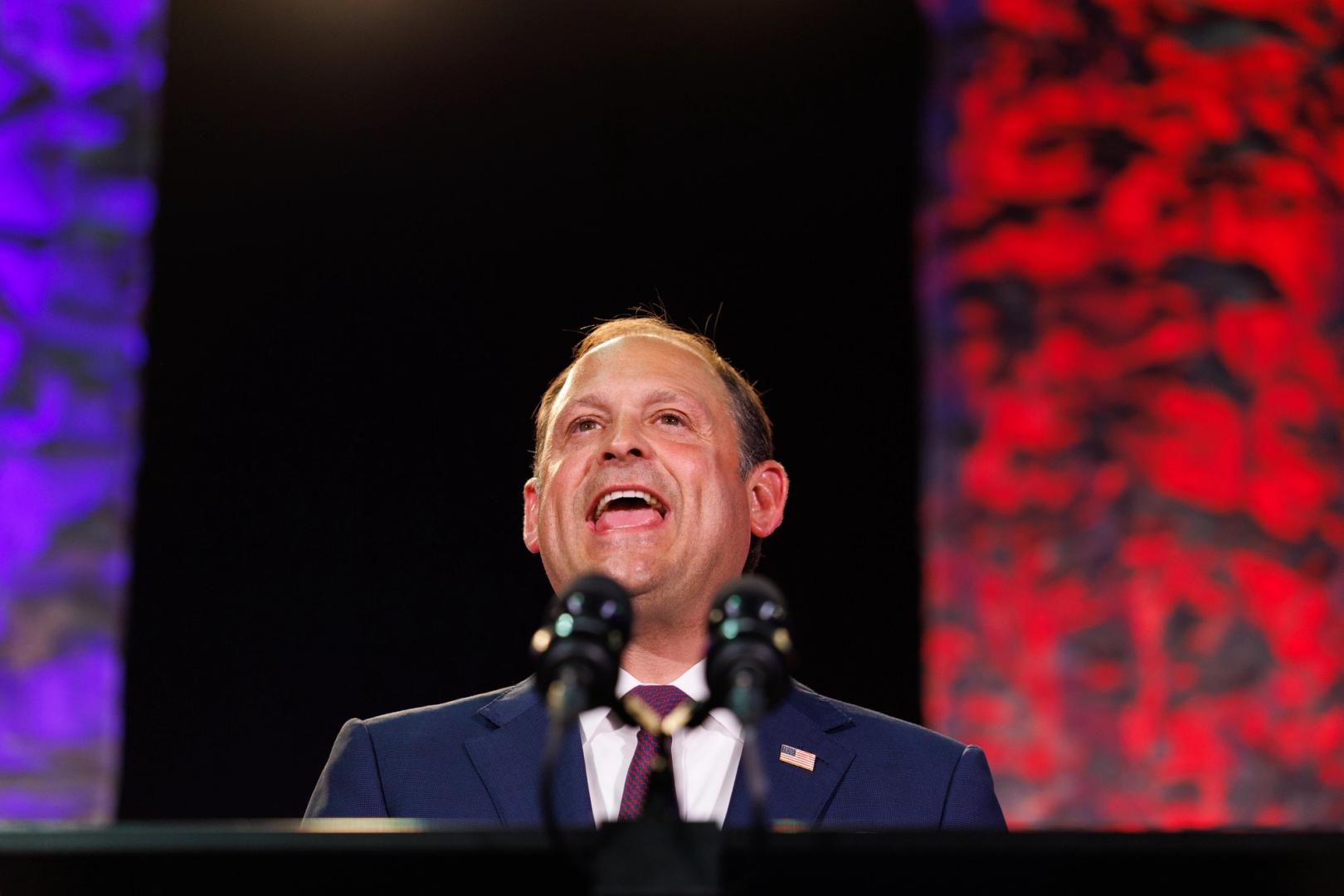
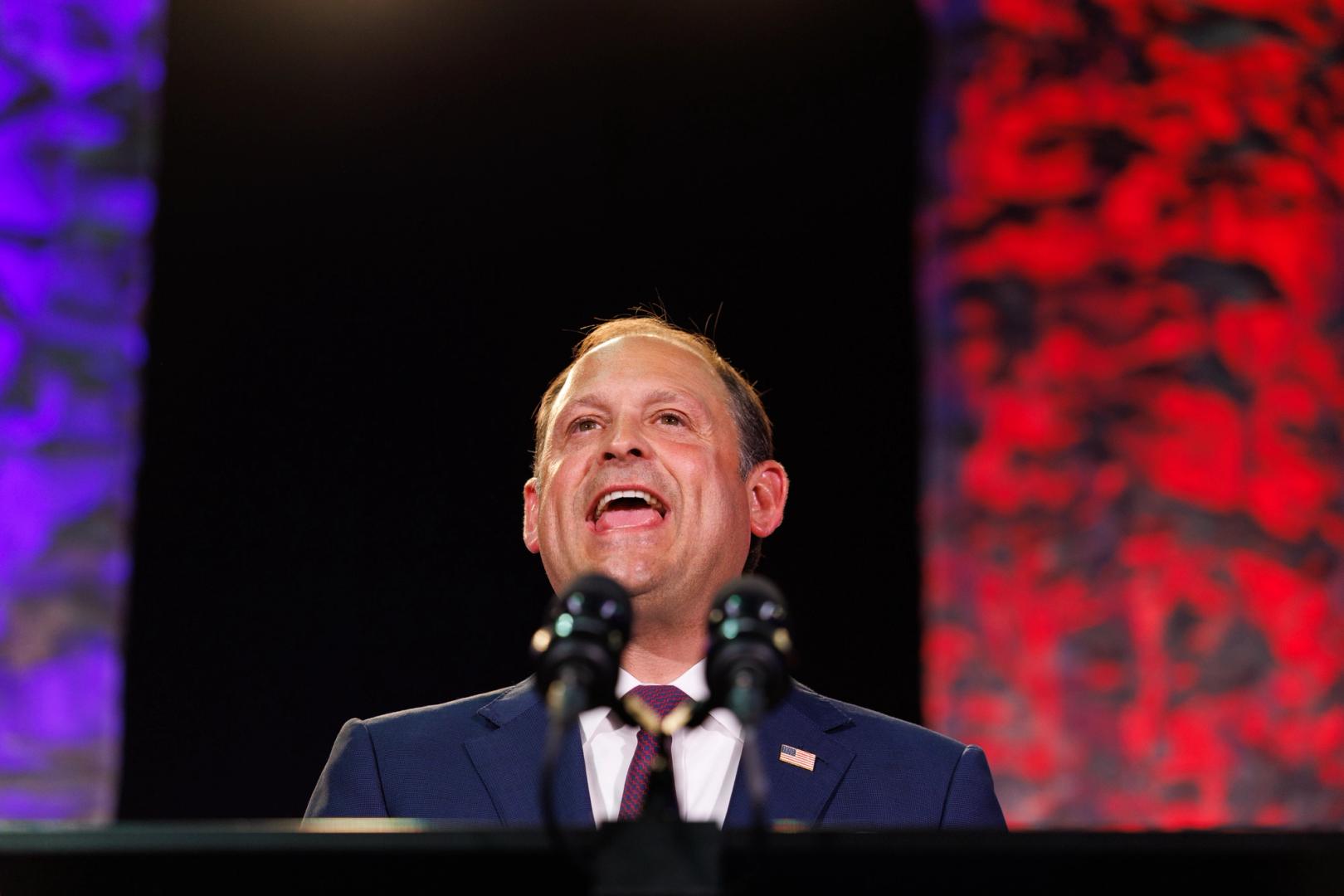
The crypto industry’s campaign-finance juggernaut, the Fairshake political action committee, backed winners in half a dozen Southern primaries on Tuesday, pouring millions of dollars into the races as one of the congressional midterms elections’ leading spenders.
The super PAC deployed more than $20 million in political advertising in three states, mostly to Republican candidates who are considered likely to win their deep-red regions in the November general elections. So far this year, Fairshake — which has in previous election cycles helped get dozens of pro-crypto candidates to Washington — has backed a lengthy list of primary winners, though it did experience some setbacks, most notably in the Illinois race in which it spent more than $10 million trying to defeat Lt. Gov. Juliana Stratton on her way to her Democratic primary victory in March.
Fairshake devoted more than $7 million each in Tuesday’s Senate primaries in Alabama and Kentucky. It backed Republican U.S. Representative Andy Barr in Kentucky to replace the longtime Senate powerhouse Mitch McConnell, and Barr won that primary handily with more than 60% of the vote. In Alabama, the $7.4 million spent by Fairshake didn’t quite get to a resolution, yet, because Representative Barry Moore didn’t get past the 50% mark despite leading his closest competitor by more than 13 percentage points, so the crypto-backed candidate will face a runoff.”Fairshake’s 6-0 sweep tonight was a clear victory for pro-crypto leaders across the country,” said Geoff Vetter, a spokesperson for Fairshake, in a statement. “This powerful bipartisan mandate is being heard across America from Georgia to Alabama to Kentucky.”
In Georgia, the PAC focused on four seats in the U.S. House of Representatives, including a Democratic primary in the district left vacant after the death of longtime Democratic Representative David Scott. In the district, Fairshake supported Jasmine Clark, a Democratic state lawmaker who dominated a crowded field in this week’s primary after getting $4.2 million in crypto ad spending.
Such spending far outstripped the organic campaign fundraising in that race, with the crypto funds totaling more than was raised by all 10 Democratic candidates and far more than Clark’s own $1.2 million brought in by her campaign directly.
Clark’s campaign had included a supporting statement for crypto technology, which has often been the case with candidates Fairshake devoted its millions.
“We need to reassert ourselves as a leader on emerging technologies — whether that be AI, blockchain or cryptocurrencies — by working with experts to craft a smart, clear regulatory framework to help the industry grow and protect consumers from bad actors,” Clark’s campaign website declared.
Across Georgia, Fairshake also poured lesser amounts of cash into Republican primaries, backing candidates Jim Kingston (who won with 52%), Houston Gaines (who won with 67%) and incumbent Representative Clay Fuller (who had previously prevailed in a special election in April to replace Marjorie Taylor Greene and won this week with 81%).
Super PACs buy their ads without consultation with the campaigns they’re supporting, and Fairshake’s strategy has been to run ads designed to support or oppose candidates on whatever political points the committee sees as most effective — almost never mentioning the issue of cryptocurrency.
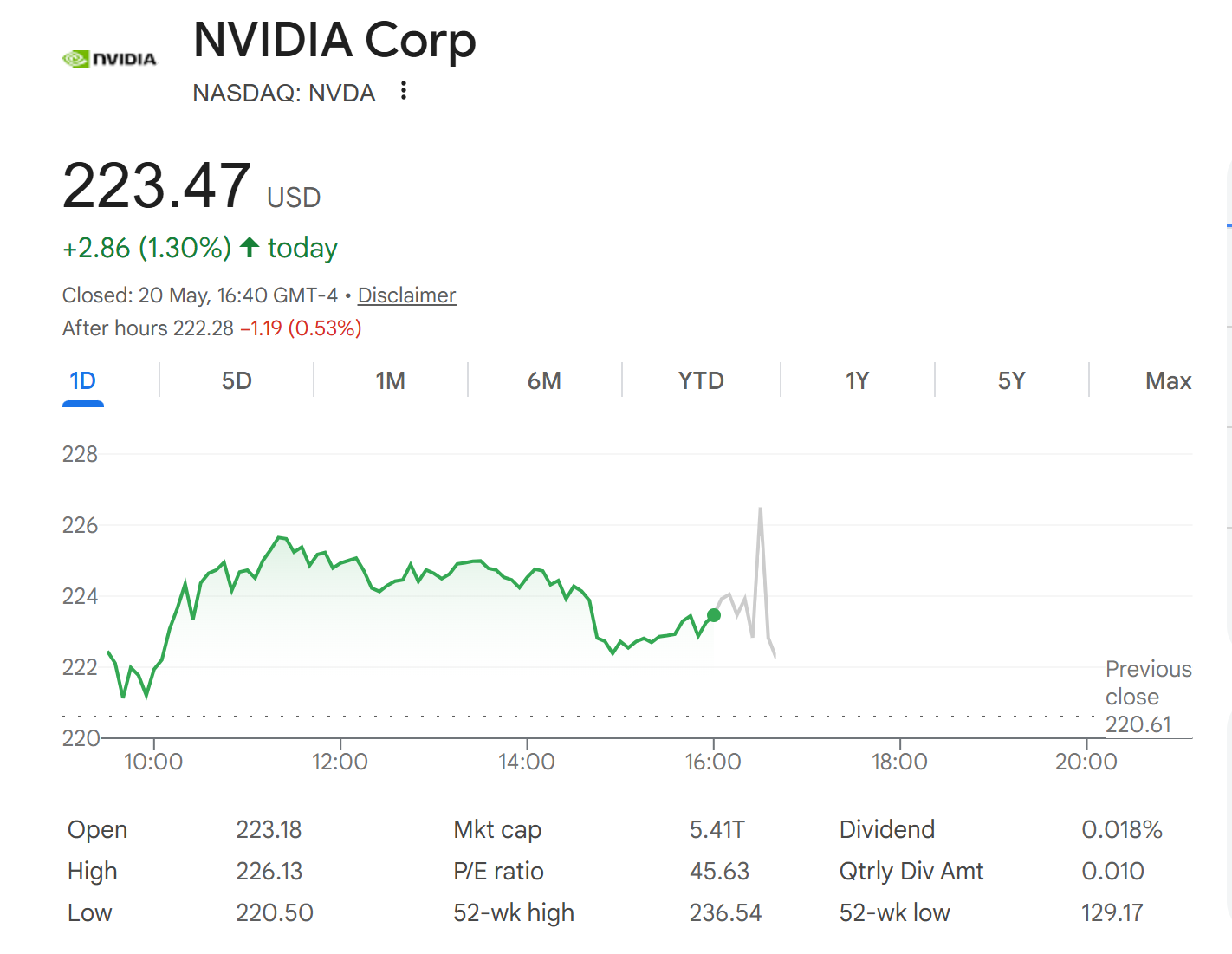
Nvidia delivered another blockbuster quarter, beating Wall Street estimates on revenue, earnings, and data center growth as global demand for AI infrastructure accelerated.
The chipmaker’s results reinforced its position at the center of the AI boom, while strong guidance signaled hyperscalers are still aggressively investing in next-generation computing capacity.

Follow us on X to get the latest news as it happens
Nvidia Tops Expectations on Revenue and AI Demand
NVIDIA reported first-quarter revenue of $81.62 billion, ahead of analyst expectations of $79.19 billion. Adjusted earnings per share came in at $1.87, also above forecasts.
The company’s data center division, the key engine behind the AI rally, generated $75.2 billion in revenue, surpassing estimates of $73.48 billion.

Nvidia also projected second-quarter revenue between $89.18 billion and $92.82 billion, well above Wall Street expectations of $87.36 billion.
The results highlight continued momentum in AI-related spending from major cloud providers and enterprise customers racing to expand computing capacity for generative AI models and inference workloads.
Blackwell AI Systems Fuel Massive Growth
Nvidia said demand for its Blackwell AI architecture continues to accelerate, helping drive record sales across hyperscalers, sovereign AI projects, and enterprise deployments.
The company also announced a new reporting structure focused on two major platforms: Data Center and Edge Computing. Nvidia said the framework better reflects its long-term growth strategy as AI workloads expand beyond centralized cloud infrastructure.
Investors have closely watched the Blackwell rollout after concerns earlier this year about supply constraints and execution risks. Instead, the latest quarter suggested Nvidia is maintaining pricing power and scaling production faster than expected.
Nvidia Earnings Seen as Key AI Market Signal
According to Daniela Hathorn, senior market analyst at Capital.com, Nvidia’s earnings now carry significance far beyond the company itself.
“NVIDIA has become the bellwether for the entire AI trade,” Hathorn told BeInCrypto, noting investors are focused on whether major technology companies continue spending aggressively on AI infrastructure despite macroeconomic uncertainty.
Indeed, AI crypto coins moved higher following the news, with the sector’s market cap rising almost 2% to $24.39 billion.

The market reaction reflects Nvidia’s growing influence across equities, semiconductors, crypto-linked AI tokens, and broader risk sentiment.
Strong guidance from Nvidia is often interpreted as confirmation that AI capital expenditure trends remain intact.
What’s Next for Nvidia and AI Markets?
Markets will now focus on Nvidia’s production ramp for Blackwell systems, future gross margins, and continued AI spending from companies like Microsoft, Amazon, and Google.
With Nvidia forecasting another quarter of record revenue, investors are likely to watch whether AI demand remains resilient through the second half of 2026 as competition, export restrictions, and valuation concerns continue to intensify.
The post Nvidia Shares Gain as Chipmaker Tops Estimates on 85% AI Revenue Surge appeared first on BeInCrypto.

Huge blaze tears through Glasgow home as thick black smoke seen for miles

PayAdmit Helps Charities Build Modern Donation Payment Infrastructure

Watch: Israeli war criminal Ben-Gvir posts video of him abusing humanitarian flotilla abductees


-

 Crypto World5 days ago
BloFin War of Whales 2026 Grand Prix opens registration for $5M trading championship
-

 Fashion5 days ago
Weekend Open Thread: Theory – Corporette.com
-

 Crypto World5 days ago
E-Estate Announces 1 Year Live: Washington DC Summit as Real Estate Tokenization Enters Its Next Phase
-

 Tech6 days ago
Tech Moves: Microsoft AI leader jumps to OpenAI; former AI2 exec joins Meta; and more
-

 Tech5 days ago
Google reimburses Register sources who were victims of API fraud
-
 Crypto World6 days ago
Google’s Gemini AI Predicts Incredible Solana Price by the End of 2026
-

 Business5 days ago
H&R Real Estate Investment Trust (HR.UN:CA) Q1 2026 Earnings Call Transcript
-
 Entertainment6 days ago
Zara Larsson Has Blunt Response To Chris Brown Diss
-

 Sports5 days ago
Napoleonic enters 2026 Doomben 10,000 field via Abounding withdrawal
-

 Crypto World5 days ago
BeInCrypto 100 Institutional Awards Nomination: KAST for Best Digital Assets Neobank and Best Digital Assets Fintech
-

 Fashion4 days ago
On the Scene at Gucci’s Cruise Show in New York City: Mariah Carey, Kim Kardashian, Lindsay Lohan, Iman, and More!
-
 Crypto World5 days ago
Bitcoin Battles US Bond Nerves With BTC Price Dip Toward New May Lows
-
 Crypto World5 days ago
Wall Street’s Boldest Gold Prediction Has Russians Rushing to Buy
-

 Crypto World5 days ago
ICE and CME urge US regulators to curb Hyperliquid energy trading
-

 Fashion5 days ago
Trending Western Style Vests Perfect for Summer
-

 Politics6 days ago
DWP PIP Timms review continues to be an absolute farce
-

 Entertainment5 days ago
David Letterman Returns to Late Show, Blasts Cancellation
-
 Crypto World6 days ago
Lido Finance Selects Chainlink CCIP as the Official Cross-Chain Infrastructure for wstETH Security
-

 Crypto World5 days ago
IREN closes $3 billion convertible notes deal amid AI infrastructure expansion
-

 Fashion4 days ago
Amazon Sundays: Memorial Day Hosting
You must be logged in to post a comment Login