
Crypto World
HashKey taps Hong Kong's first regulated stablecoin to settle insurance and trade deals



Following institutional trials, the HKD-pegged asset is being put to work to capture part of Hong Kong’s $49 billion trade corridor with the United Arab Emirates

Michael Saylor has a simple message for young people entering an AI-heavy economy: learn the technology early, then use it to find opportunities others have not seen. He also mentioned a trick called “finding the new S-curve.”
The Strategy founder (formerly MicroStrategy) made the argument during a recent Diary of a CEO interview with Steven Bartlett.
Don’t Try to Outwork AI
Saylor believes AI will increasingly handle routine knowledge work. For an 18-year-old deciding what to study, learning tasks AI can already perform may offer less long-term value.
“You don’t want to learn how to do things the AI can do,” Saylor said. His alternative: “What you want to do is learn how to ask the AI to do something that’s never been done before.”
That could mean creating a product or using AI to make an existing service cheaper. He also stresses that people still need expertise in a particular field.
Find the New S-Curve
Saylor describes technological progress as an S-curve: a technology develops slowly, enters rapid improvement, then eventually matures.
His advice is to position yourself near the start of that rapid-growth phase. AI and other emerging digital technologies, in his view, still offer that opportunity.
The goal is to spot something that has only recently become possible and build around it early.
“So, let me tell you why you shouldn’t buy a house… [you’re] taking on a massive tax load and you’re taking on a maintenance load. These things are all hard, right? Real estate business is hard. Starting your own company is hard. Investing in other companies is hard… So that’s why Bitcoin is such a compelling thing. Why shouldn’t the typical person just be able to take their money, put it into an asset which appreciates in value 15% a year, and they don’t have to worry about it?” Saylor said.
Is Saylor Right?
Broadly, yes. Stanford researchers said in July that AI’s impact on worker productivity is generally positive, while the tougher market for recent graduates may already be partly linked to AI.
The strongest part of Saylor’s argument is domain expertise. Knowing how to prompt ChatGPT alone is unlikely to create a durable advantage. Combining AI fluency with deep knowledge of a specific problem has a stronger economic case.
MicroStrategy Is Having a Difficult 2026
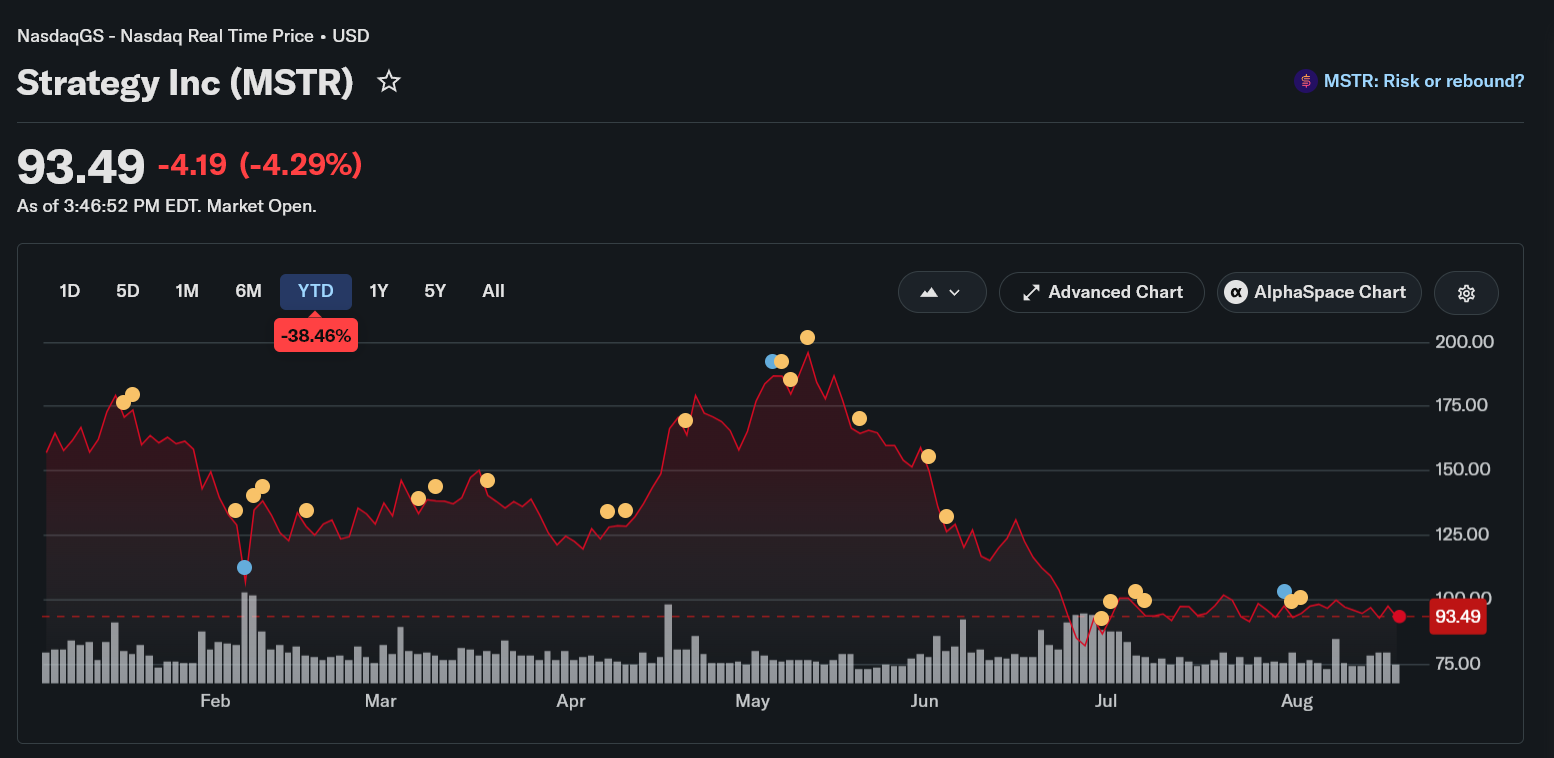
Saylor’s own company also shows the risks of aggressive bets. Strategy held 840,447 Bitcoin as of August 16, bought for roughly $63.36 billion at an average price of $75,385.

It reported an $8.22 billion Q2 net loss, largely from falling Bitcoin prices. Strategy has also faced criticism over shareholder dilution and recent Bitcoin sales after years of Saylor promoting a strong hold philosophy.
This week, Saylor told investors to prepare for “difficult years.” His broader point still stands: being early can create opportunity, but execution and risk matter.
The post MicroStrategy Founder Explains How to Make Money With AI: Is He Right? appeared first on BeInCrypto.
The U.S. Securities and Exchange Commission (SEC) has proposed new rules aimed at creating a “clear and fit-for-purpose framework” for certain investment contracts involving crypto assets—steps regulators are taking after Congress failed to advance a broad market-structure bill ahead of a month-long recess.
In a Tuesday notice, the SEC said its proposal would establish a “tailored securities offering regime” designed to let eligible entities raise capital while maintaining investor protections. The move comes as lawmakers consider the Digital Asset Market Clarity (CLARITY) Act, which has faced delays in the Senate.
Key takeaways
- The SEC’s proposal focuses on crypto assets that fall within the definition of investment contracts, using a tailored securities offering structure.
- There is no “innovation exemption” in the SEC’s draft rules for crypto-linked securities offerings, a concept that had been expected.
- The plan includes token issuance thresholds and a safe harbor intended to help certain cryptocurrencies avoid being classified as investment contracts.
- The SEC is inviting public comments for 60 days after the proposal is published in the Federal Register.
SEC’s proposed “tailored securities offering regime”
The SEC’s filing, described in a notice released Tuesday, outlines a framework meant to bring more specificity to how some crypto-related offerings could be treated under federal securities laws.
According to the SEC, the goal is to deliver a securities offering regime that is “clear and fit-for-purpose” for “certain investment contracts involving crypto assets.” The regulator said the approach is intended to preserve investor protections while also offering a more structured pathway for capital raising.
SEC Chair Paul Atkins framed the proposal as part of a broader push to keep regulatory rules from being undone later. In remarks shared in a statement, Atkins said “[l]egislation remains indispensable to enacting ‘future-proofed’ rules of the road that are durable enough to protect the work we are undertaking today from being unwound by a future rogue regulator,” adding that the SEC would continue to support Congress in delivering CLARITY.
No innovation exemption included—and why that matters
Notably, the SEC’s draft rules do not include an “innovation exemption” for tokenized or crypto-based stocks—an idea that had been widely anticipated ahead of the announcement. Earlier coverage from Cointelegraph had reported expectations of such an exemption for tokenized stock trading.
For market participants, the absence of an innovation carve-out could mean fewer pathways for certain crypto-based equity-related products that might otherwise have been treated differently from conventional securities offerings. It also underscores that, at least for now, the SEC is leaning toward a securities-framework approach rather than a broader expansion of exemptions for tokenized instruments.
Token thresholds, reporting obligations, and a safe harbor
The SEC’s proposal includes specific parameters for how token issuers could qualify for exemptions within the securities offering regime. The draft rules reportedly offer exemptions for issuance of up to $5 million in tokens over a four-year period, and up to $75 million during a 12-month period.
In addition, the notice describes ongoing requirements for qualifying issuers. The SEC said token issuers would be required to make financial statements and would be subject to “ongoing reporting requirements.” This combination of exemption thresholds and continued disclosure obligations is a critical feature: it suggests the SEC’s goal is not to remove oversight, but to recalibrate it into a more tailored structure.
The filing also includes a safe harbor meant to exempt cryptocurrencies from being treated as “investment contracts.” While the proposal’s details are designed to clarify when certain digital assets should not be viewed through the investment-contract lens, the exact boundaries of that safe harbor will likely become a focal point during the rulemaking process.
Regulatory timing: SEC proposal amid CFTC crypto discussions
The SEC’s move arrives shortly before a scheduled Thursday meeting of the U.S. Commodity Futures Trading Commission (CFTC) that will address crypto alongside AI and prediction markets. The CFTC has said it plans to focus on “areas where regulatory action can complement future congressional legislation,” suggesting it is preparing for a scenario where statutory clarity is delayed but agencies still move forward with their own rulemaking.
Tuesday’s SEC announcement also disrupted Atkins’ previously scheduled appearance at the Wyoming Blockchain Symposium, where it had been expected he would speak. At the event, White House crypto adviser Patrick Witt said regulators would “let loose” on crypto regulation if Congress is unable to move forward on the CLARITY Act.
While the SEC and CFTC operate in different legal lanes, the proximity of these developments highlights a pattern: even as Congress stalls on broader market-structure legislation, U.S. agencies are continuing to develop proposals within their existing authority.
Where CLARITY stands in the Senate timetable
The SEC’s proposal is also tied to the near-term uncertainty surrounding CLARITY’s legislative prospects. Before the Senate broke for an August state work period, Majority Leader John Thune filed cloture on a motion to take up the CLARITY crypto bill when lawmakers return in mid-September.
After the August recess, senators would have only 14 days in session before breaking again ahead of the November election. If the leadership cannot secure a floor vote before then, the Senate would have another 22 days in session before 2027, when a new Congress is sworn in.
In other words, the legislative window for CLARITY appears narrow—making the SEC’s rule proposal more consequential for the market’s near-term expectations. Even if Congress later passes CLARITY, the SEC’s draft rules could influence how firms structure token offerings and disclosure practices during the interim.
With the SEC offering a 60-day comment period after the proposal is published in the Federal Register, the most immediate watch item is how issuers and industry groups respond—particularly on the safe harbor boundaries, the disclosure burden implied by ongoing reporting, and whether the lack of an “innovation exemption” will trigger renewed calls for carve-outs as CLARITY’s Senate timeline remains tight.
Anthropic reportedly plans to hand CEO Dario Amodei and his co-founders supervoting shares. The extra votes would shield the leadership team from public market pressure once the Anthropic IPO lands.
The Information reported the plan, citing two people familiar with the matter. It would be the first time Anthropic’s leaders hold stock with extra voting power.
Supervoting Shares Arrive Before the Anthropic IPO
Anthropic filed a confidential S-1 with the Securities and Exchange Commission (SEC) in June. The S-1 is the paperwork that starts a US stock market listing.
The company has the numbers to back one. Its latest funding round valued the firm at $965 billion. Meanwhile, its revenue run rate hit $65 billion in late July, about $25 billion ahead of OpenAI.
The report from The Information points to a potential September IPO, although Anthropic has not confirmed a date.
Follow us on X to get the latest news as it happens
Why extra votes? Founders who take their companies public often fear one thing. Outside shareholders can force short-term profit over the long-term plan.
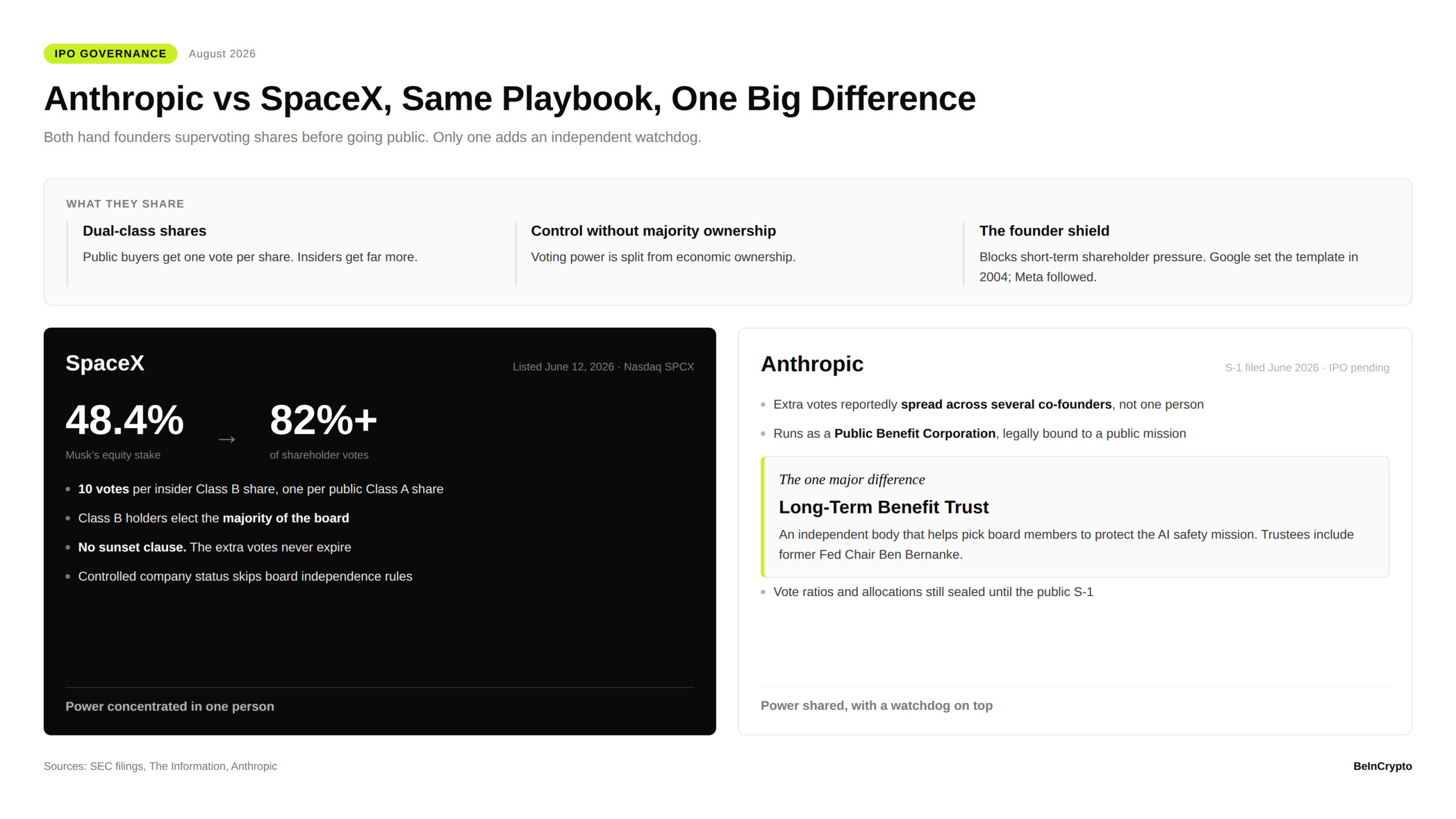
Google wrote the modern defense in 2004. Its founders kept 10-vote shares so they could ignore quarterly noise. Meta later copied the model, and Mark Zuckerberg still controls his company through it today.
The SpaceX Template and One Big Difference
Elon Musk ran the boldest version yet. SpaceX listed on Nasdaq on June 12 under the SPCX ticker. Its S-1 filing gives public Class A shares one vote each. Insider Class B shares get 10.
The result is stark. Musk holds a 48.4% stake but commands more than 82% of shareholder votes. Class B holders also elect the majority of the board.
The filing contains no sunset clause either. The extra votes never expire. In addition, SpaceX counts as a controlled company under Nasdaq rules, so it skips the independent board requirement.
In short, Musk answers to almost no one. That is the playbook Anthropic is borrowing.
Now for the difference:
- Anthropic would spread the extra votes across several co-founders rather than one person.
It also keeps a watchdog SpaceX never built. The company runs as a Public Benefit Corporation, a legal form that binds it to a public mission alongside profit. Its governance includes the Long-Term Benefit Trust (LTBT), an independent body.

The LTBT’s trustees include former Federal Reserve Chair Ben Bernanke. The Trust helps pick board members to protect Anthropic’s AI safety mission, whoever holds the biggest votes.
The public S-1 will reveal the fine print, from vote ratios to any expiry terms. Until then, the trade for future investors is simple. They get the upside. The founders keep the wheel.
The post Anthropic Copies Elon Musk’s SpaceX IPO Playbook With One Major Difference appeared first on BeInCrypto.
Crypto World
CNN Condemns the White House’s Attacks on Journalist Kristen Holmes: Here’s What to Know
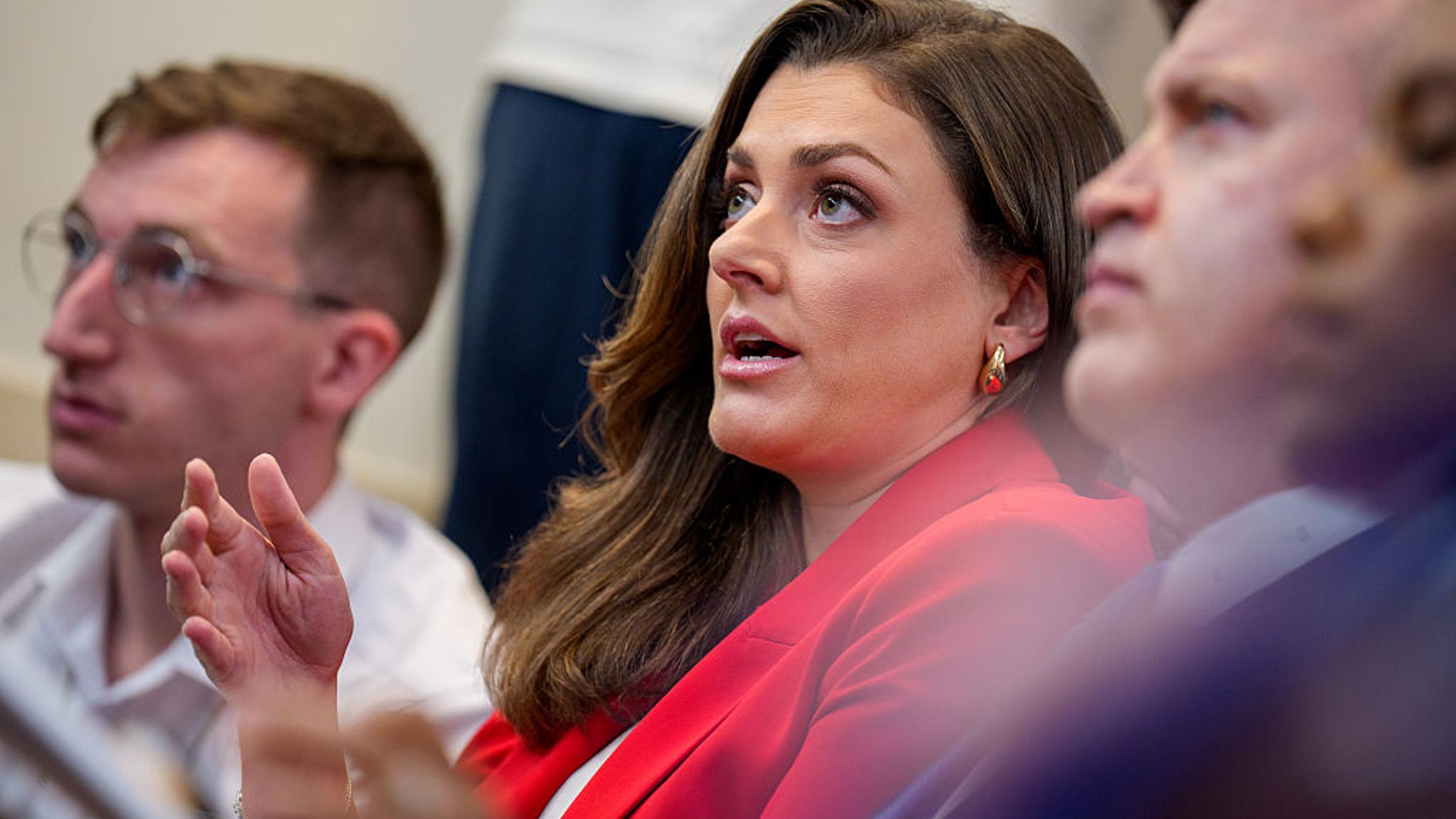
“Someday, your children will come across your disgusting and inhumane question,” the White House said, tagging Holmes in the post. “They will be sickened and embarrassed to have a parent be so callous and vindictive. It’s quite troubling.”
In addition to CNN’s official statement, many of Holmes’ colleagues fired back at the White House for its remarks.
“What a horrible … thing to say. Kristen is an incredible reporter, person and, above all, mother,” Alayna Treene, a White House correspondent at CNN, said in a post on X. “I don’t understand such a reaction to a journalist asking the president for his response to something a Democratic senator has leveled against him.”
“Kristen is an excellent reporter who asked a good question, to which the president gave a fulsome answer,” Betsy Klein, a senior reporter and writer covering the White House for CNN, said in a social media post. “You know what’s disgusting and inhumane? Bringing her perfect children into this.”


Aligned published the terms of its ALIGN airdrop on Tuesday, 20 months after registration for the drop closed. The company did not say when the token launches. Every figure in the post is pegged to a token generation event that Aligned has not set a date for. The ALIGN contract on Ethereum records… Read the full story at The Defiant
Crypto World
Hayden Adams Says AMMs Will Win The Biggest Markets. A Former XTX Trader Says They're Going To Zero


Hayden Adams published his first blog post since 2019 on Monday night, arguing that automated market makers will take over the world's largest markets once tokenized assets begin trading against each other rather than against dollars. By Tuesday afternoon a former XTX Markets trader had replied… Read the full story at The Defiant

Wallet activity related to XRP has become heavily weighted toward withdrawals.
Data shared by Analyst Amr Taha shows that Coinbase recorded a seven-day net wallet count of -14,300.
Coinbase Accounts for 47.3% of the Imbalance
Net wallet count is just a simple score that shows whether more people are putting crypto into an exchange or taking it out, and per Taha’s data, some of the largest crypto trading venues are all negative for this metric.
On Binance, the number is -3,270 net wallets, and on Crypto.com, it stands at -2,680. Interestingly, the two exchanges first moved below zero on July 18, almost a week after Coinbase did the same, suggesting the imbalance wasn’t just down to a spike from one day of trading.
What this essentially means is that there are more wallets withdrawing XRP on these trading venues than those making deposits, and Coinbase has been the biggest hit.
According to the data Taha shared, as of August 18, the American exchange accounted for exactly 47.3% of the total absolute 7-day net wallet imbalance, which happens to be its highest level since July 2024.
Binance’s share also jumped, going from nearly zero on July 16 to about 10% of the current total. But such activity seems to have dropped on Upbit, whose share went from 40% in June to around 12% today.
XRP Struggling Below $1
Taha’s reading has come just as XRP once again went below the $1 level, with analysts like Crypto Patel suggesting things could get much worse before they improve. According to him, the sixth-largest cryptocurrency by market cap could yet drop by a further 20% to 40%, taking it to an accumulation zone between $0.85 and $0.65.
Meanwhile, another market watcher, ChartNerd, has said the asset is currently repeating the same coiling pattern it formed before a major bull run in the past, just on a bigger scale. He predicts there could be a strong breakout from the current retest zone toward $8, $13, and $27, as long as the ascending support holds.
XRP was still trading just under the $1 mark at the time of writing, with CoinGecko data showing it had barely moved in 24 hours but had dropped by slightly more than 1% over seven days.
Every other chart bled red, with the asset down 7% in two weeks and 9% across 30 days. However, the biggest come-down was on the yearly chart, which showed that the Ripple token has plunged well over 66% from where it was 12 months ago.
The post XRP Wallet Activity Turns Withdrawal-Heavy Across Exchanges: What It Means for Price? appeared first on CryptoPotato.
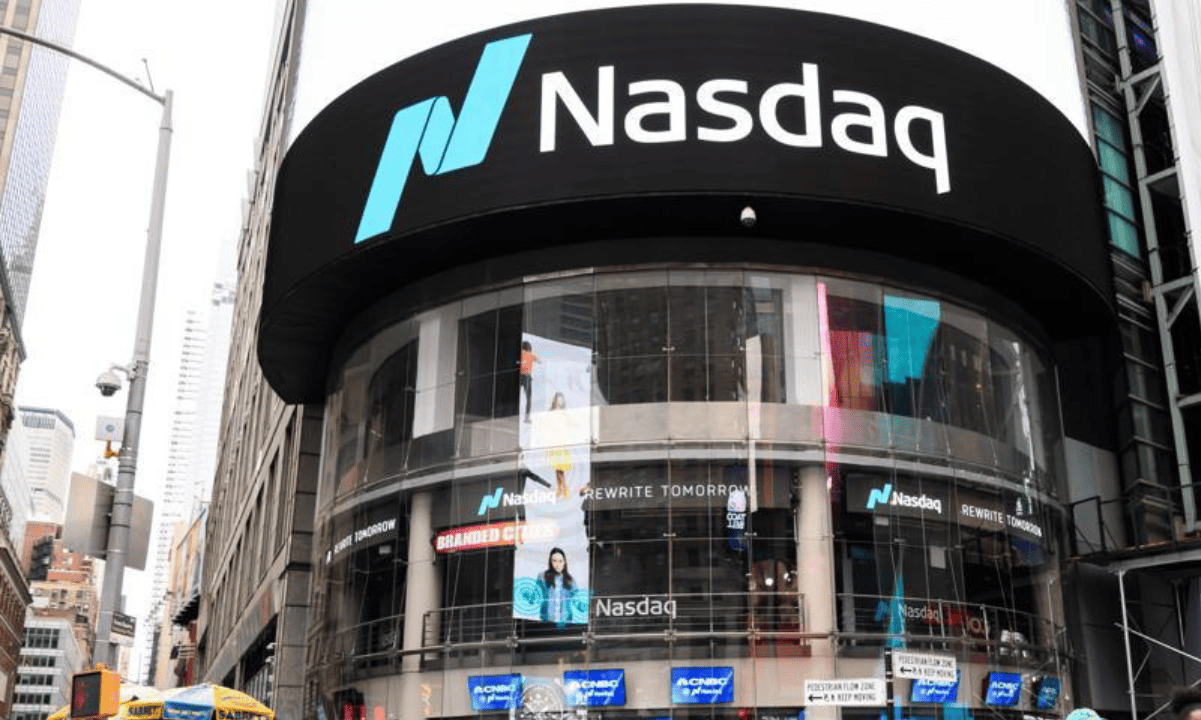
Nasdaq plans to add overnight stock trading from 9 p.m. to 4 a.m. ET in December 2026, subject to SEC approval and other technical requirements.
BitGo CEO Mike Belshe and crypto analyst Nate Geraci say the move shows traditional markets are adopting ideas that crypto exchanges have used for years.
Nasdaq Plans 23-Hour Trading Five Days a Week
Nasdaq is seeking regulatory approval to run a nearly continuous trading week, 23 hours a day, five days a week. The plan adds an overnight session from 9 p.m. to 4 a.m. ET, on top of the extended hours Nasdaq already runs, from 4 a.m. to 9:30 a.m. and 4 p.m. to 8 p.m, with the core 9:30 a.m. to 4 p.m. session staying the primary pricing window, and the opening and closing crosses still setting official prices.
The overnight session runs from 9 p.m. Sunday through 8 p.m. Friday, with a one-hour daily pause for processing. Nasdaq is targeting Sunday, December 6, 2026, for the launch, pending SEC approval and readiness of the industry’s Securities Information Processor.
Some order types, including unpriced market orders and opening and closing auction orders, won’t be available overnight, and any order still open at 4 a.m. gets canceled automatically. Nasdaq Texas, PSX, and Nasdaq’s options exchanges keep their current schedules.
Geraci posted his reaction to the announcement, writing on X that traditional finance exchanges are now “playing by crypto’s rules” and predicted that major exchanges could eventually move toward 24/7 trading.
Belshe made a similar argument. He pointed to longer stock-market hours, perpetual futures, stablecoins, and tokenized loans as examples of crypto ideas that are finding applications in traditional finance.
“Even if you are skeptical about crypto,” the BitGo CEO wrote, “you can’t deny our industry’s innovations have already made real change in traditional markets.”
Crypto Markets Already Trade Beyond Traditional Hours
The comparison comes as crypto platforms expand access to traditional assets, with a recent CryptoQuant report revealing that equity perpetual futures reached $250 billion in monthly volume in July, up from roughly $15 billion in April.
Binance accounted for about 76% of that activity. The products give traders exposure to selected stocks through contracts that trade continuously, although activity remains concentrated in technology and semiconductor-related names.
Tokenized equities are another part of the shift. As CryptoPotato reported earlier in the year, Nasdaq has been working with Kraken on tokenized stocks, with Kraken’s xStocks infrastructure intended to support Nasdaq issuer-sponsored equity tokens.
Stablecoins are also moving deeper into mainstream payments, with PayPal reporting $486.4 billion in payment volume for the second quarter and placing stablecoins under its expanded digital asset strategy. However, its PYUSD stablecoin has about $2.75 billion in supply, down from more than $4 billion in March, with the entire stablecoin market cap at just over $300 billion per DefiLlama.
Nasdaq’s move does not make stock markets 24/7. Still, its proposed 23-hour schedule puts a traditional exchange closer to the always-on model that crypto markets have operated under for years.
The post Nasdaq Embraces Crypto-Style Trading With 23-Hour Market Plan appeared first on CryptoPotato.
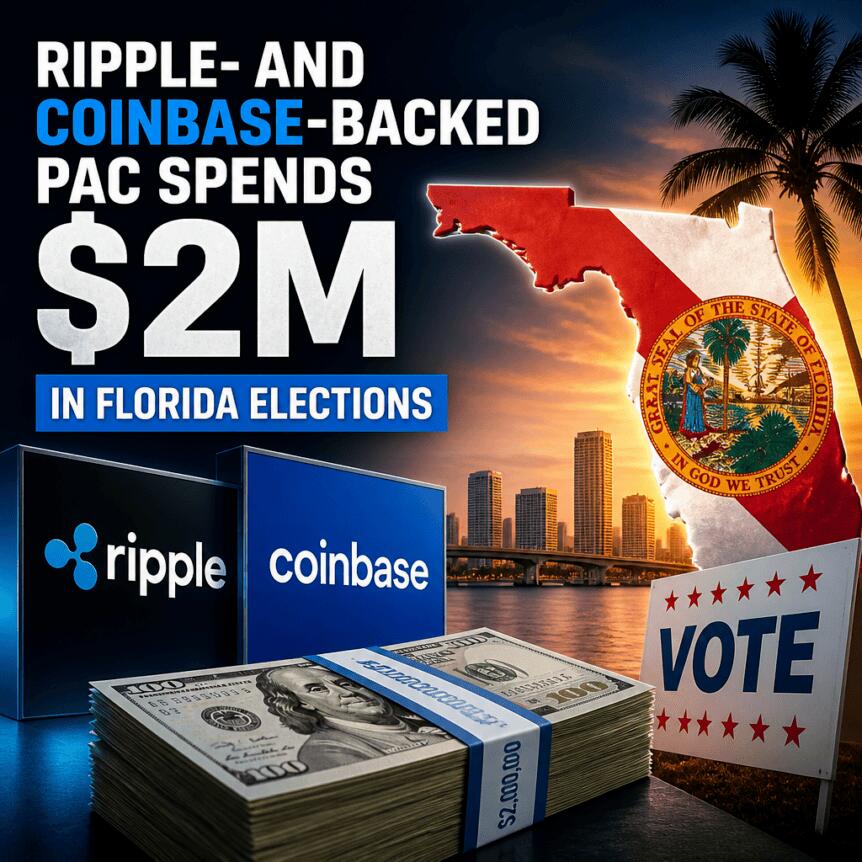
A crypto-focused political spending wave is targeting Florida’s 24th congressional district primary, with a PAC affiliate of Fairshake investing more than $2 million in ads attacking Democratic frontrunner Oliver Gilbert. The development underscores how digital-asset policy is increasingly intertwined with mainstream political races ahead of key votes in Congress.
According to Federal Election Commission (FEC) records filed as of Tuesday, Protect Progress PAC—an affiliate linked to the political action committee Fairshake and funded primarily by Coinbase and Ripple Labs—has spent more than $2 million on media opposing Gilbert in Florida’s 24th district. The record also highlights that, before the PAC’s ads were released, none of the candidates in the Democratic primary appeared to have taken a prominent public stance on digital assets within their campaigns.
Key takeaways
- FEC filings show Protect Progress PAC spent over $2 million on ads opposing Democratic primary candidate Oliver Gilbert in Florida’s 24th district.
- The PAC is affiliated with Fairshake, which has been funded primarily by Coinbase and Ripple Labs.
- Oliver Gilbert’s campaign has faced accusations that the ads are designed to influence the primary rather than debate digital-asset policy substantively.
- Protect Progress and Fairshake-affiliated groups are also spending across multiple races, including additional Florida contests.
- Congressional legislative momentum for digital-asset bills like the CLARITY Act remains an external pressure point as lawmakers return from recess.
How Protect Progress entered the Florida primary
Protect Progress PAC’s spending in Florida’s 24th district comes as the seat currently held by Representative Frederica Wilson becomes a focal point. Wilson endorsed Oliver Gilbert at a June 22 event, according to reporting referenced by Cointelegraph.
Wilson’s congressional record on digital assets has drawn attention. She voted against the Digital Asset Market Clarity (CLARITY) Act and the Guiding and Establishing National Innovation for US Stablecoins (GENIUS) Act while serving in Congress—positions that align with the broader legislative agenda championed by crypto industry advocates.
In the Democratic primary race, State Senator Shevrin Jones—who had been ahead of Gilbert in an early August poll, as noted by Florida Politics—completed a questionnaire with the advocacy organization Stand With Crypto. That submission earned him a “strongly supports” rating from the group, per information on Stand With Crypto’s politician page.
The Protect Progress ads reportedly framed Gilbert’s candidacy in terms of digital-asset politics, with Gilbert accusing the operation of being driven by wealthy allies of former President Donald Trump. The ads included fake Miami Herald-style headlines that were not tied to specific digital-asset policy positions, according to reporting referenced in the article.
Fairshake affiliates expand spending beyond one race
Protect Progress is only part of a larger network of activity connected to Fairshake and its related political committees. The article notes that Fairshake reported a $193 million war chest as of January, and it has deployed funds through affiliates to support both Democratic and Republican candidates for the 2026 midterm elections.
Cointelegraph reported that, as of June, the PACs had already poured more than $82 million into primaries and special elections to influence voters through advertising. That level of spending indicates that digital-asset political outreach has moved beyond a single targeted campaign, with resources being deployed across multiple competitive contests.
Protect Progress also put additional money into Florida’s 23rd district. The PAC spent more than $150,000 on media supporting the re-election of Lois Frankel, according to the same reporting context. Meanwhile, Defend American Jobs—another Fairshake-affiliated committee—reported a combined $1.5 million on ads backing candidates in Alaska, Florida, and Wyoming.
Those races include support for Representative Nick Begich in Alaska’s at-large district, Republican candidate Sydney Gruters in Florida’s 16th district, and Representative Harriet Hageman for one of the US Senate seats representing Wyoming, as described in the article.
Why these ads matter to crypto investors and policy watchers
Even when campaign spending appears localized, its implications often extend to broader regulatory outcomes. Digital-asset policy in the US has frequently advanced through legislative bargaining, where the credibility of candidates on specific bills can influence committee dynamics and future priorities after elections.
The mention of CLARITY and GENIUS is important because it frames the ads as more than generic political marketing. CLARITY and GENIUS are positioned in the article as central legislative efforts affecting how digital assets could be regulated and how stablecoins might be treated under US law. For investors and developers, the practical question is not just who wins, but who is likely to support or oppose the next wave of digital-asset legislation once Congress moves again.
FEC filings also suggest an asymmetry that political observers may find meaningful: if none of the Democratic primary candidates had clearly established a strong digital-asset platform before the ads, the PAC’s messaging can effectively determine the issue salience for voters. That creates a strategic incentive for industry-aligned groups to influence primary outcomes early—particularly when general election dynamics are harder to predict.
What to watch next as lawmakers return
The immediate next milestone highlighted in the article is the legislative calendar. Both the US House and Senate are on recess until September, when the Senate is expected to hold a vote on the CLARITY Act. As that timeline approaches, the interaction between political spending and digital-asset voting becomes even more consequential.
Readers should watch how these Florida primary outcomes affect candidate momentum heading into November and whether further PAC spending narrows the policy debate to specific digital-asset bills—especially as Congress prepares to advance CLARITY and related measures.


The Financial Accounting Standards Board, a nonprofit that governs accounting practices, proposed that certain stablecoins should fit the bill as cash-like.

ZZ Top drummer Frank Beard dies aged 77

Anheuser-Busch partners with Tunnel to Towers for 9/11 anniversary

MicroStrategy Founder Explains How to Make Money With AI: Is He Right?





-

 Fashion4 days ago
Weekend Open Thread: Ann Taylor
-
 NewsBeat7 days ago
Communication cards help banking customers access services or report scams
-
 Sports5 days ago
This U.S. Amateur is a glimpse into golf’s future in more ways than you think
-

 Sports4 days ago
Birmingham 2026: Day 6 Timetable for Irish Athletes
-
 NewsBeat4 days ago
Myanmar says over 300,000 Rohingya refugees verified for repatriation as exodus enters ninth year
-
 Tech5 days ago
11 Ways to Rank Your Videos
-

 Politics3 days ago
SEQ Code: The Three Letter Boarding Pass Code That Could Give You The Worst Seat
-
 Entertainment6 days ago
Keke Palmer Subtly Hints At Sean Evans Drama With Cryptic Post
-
 Crypto World7 days ago
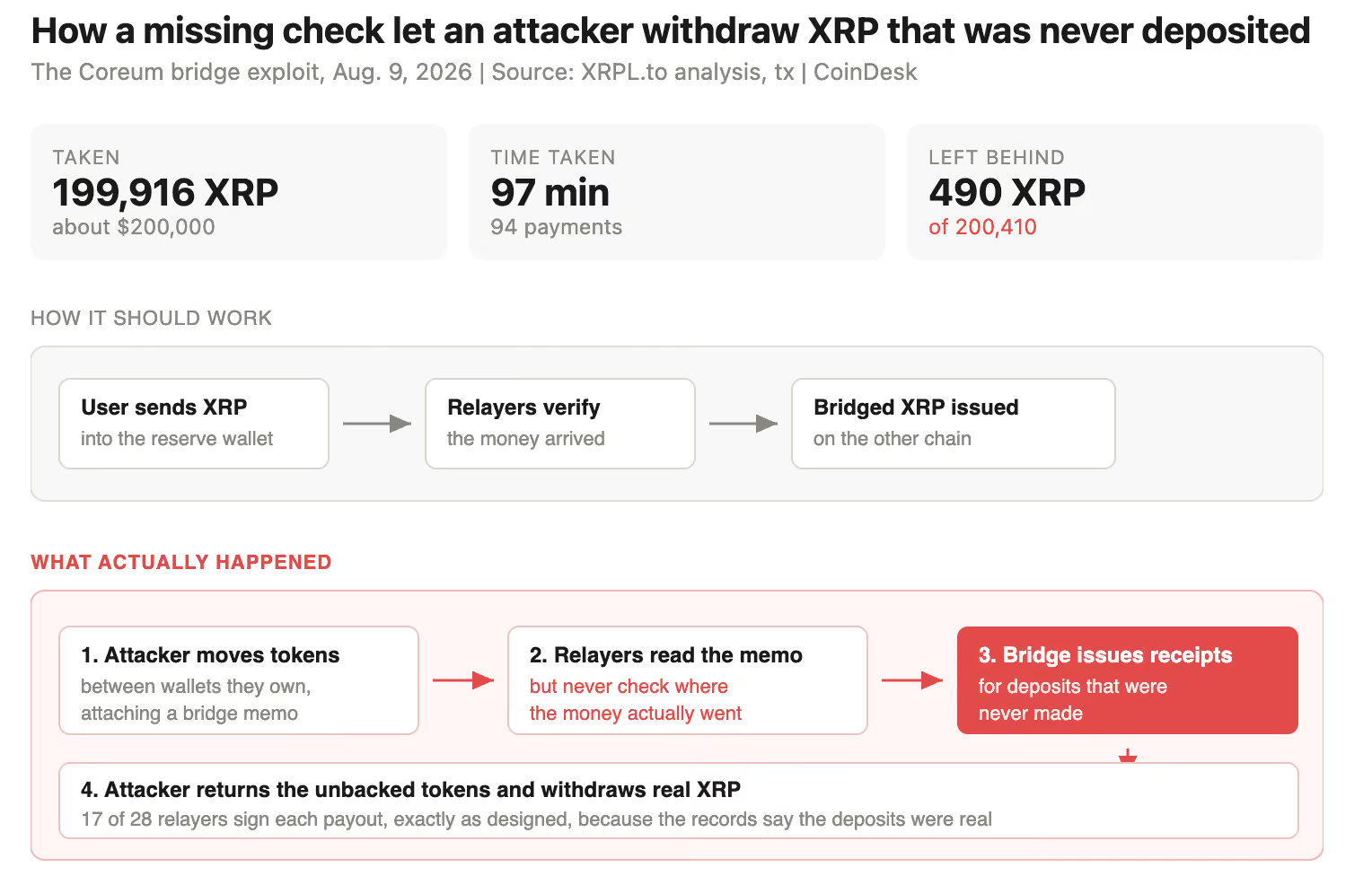
XRP bridge drained after software mistook fake deposits for real ones
-

 Tech5 days ago
DeepSeek Harness launches as open source rival to Claude Code, alongside V4-Pro on API with higher prices
-

 Sports6 days ago
DeQuan Jones in ‘high spirits’ after successful leg surgery
-
 Crypto World6 days ago
Perplexity AI Predicts an XRP Scenario Few Analysts Are Discussing
-

 Tech7 days ago
SpaceXAI’s Grok Bot turns agents into persistent digital coworkers that can operate your apps for $120-per-month
-

 Politics7 days ago
How Average Are You In The UK?
-
 Entertainment6 days ago
2026’s Most Ambitious Fantasy Movie Officially Scores Sequel Update
-

 Crypto World23 hours ago
OCC Greenlights Trump Family Crypto Firm for Trust Charter
-

 Business7 days ago
Evolv Technologies Holdings, Inc. (EVLV) Q2 2026 Earnings Call Transcript
-
 Tech7 days ago
A Zoom Screen-Sharing Bug Let Anyone Take Over Other Devices On a Call
-
 Entertainment6 days ago
All 10 Hayao Miyazaki Fantasy Movies, Ranked
-
 Entertainment6 days ago
Travis Kelce Breaks Silence On ‘Crazy’ Taylor Swift Wedding
You must be logged in to post a comment Login