
Crypto World
Hawaii crypto ATM cash deposits banned from Oct. 1



Hawaii has enacted an October 1 ban on cash-to-crypto kiosk transactions after the FBI recorded 92 related complaints and $3.85 million in adjusted losses among state residents in 2025.
Summary
- Cash purchases of crypto at Hawaii kiosks will become illegal on Oct. 1, 2026.
- The FBI recorded 92 Hawaii kiosk complaints and $3.85 million in adjusted losses during 2025.
- Hawaii had 57 crypto ATMs across four islands as of Aug. 12.
- Operators may still offer crypto-to-cash and crypto-to-crypto transactions under the law.
Hawaii’s enacted House Bill 1642, signed by Governor Josh Green on July 9 as Act 224, prohibits operators from owning, managing, or running a kiosk that accepts U.S. currency in return for a digital financial asset.
The restriction will apply from Oct. 1, with each prohibited transaction treated as a separate offense under the state’s consumer protection law. Hawaii lawmakers passed the final version on May 6 before sending it to Green.
Although some reports have described the measure as a total crypto ATM ban, the enacted text covers deposits used to buy digital assets rather than every service offered by the machines. Operators may continue running kiosks that accept crypto in exchange for another digital asset or U.S. currency.
As a result, Hawaii residents will no longer be able to insert cash into a kiosk to purchase Bitcoin or another cryptocurrency, but the law does not prevent them from selling crypto for dollars at an eligible machine. It also does not prohibit buying, selling, or holding digital assets through online platforms that remain legally available in the state.
Hawaii crypto ATM law targets cash deposits
Under Act 224, a digital financial asset transaction kiosk means an electronic device that can accept or dispense U.S. currency through cash or a payment card in exchange for a digital asset. The definition excludes certain merchant rewards, assets used only within online games, and securities registered or exempt from registration under federal or Hawaii securities law.
Hawaii lawmakers focused on the cash deposit function because scammers commonly direct victims to withdraw banknotes and send the money through a kiosk. According to the legislature’s findings, criminals often pose as government officers, bank workers, technical support staff, or company representatives before giving victims step-by-step payment instructions.
Once a victim reaches a machine, the scammer may remain on the phone, supply a wallet address or QR code, and explain how to get past warnings displayed by the operator, the findings said. After the transaction clears, criminals can route the digital assets through other wallets or offshore platforms, limiting the victim’s chance of recovering the money.
The legislature cited investigations by the attorneys general of Iowa and the District of Columbia, which found that fraudulent activity accounted for a large share of transactions at some operators. Lawmakers said findings from those investigations placed the rate as high as 90%, although the figure does not represent every kiosk or transaction in the United States.
CoinATMRadar data showed that Hawaii had 57 cryptocurrency ATMs and kiosks operating across four main islands as of Aug. 12. Operators will need to disable the affected deposit function or stop offering machines that accept dollars for crypto before the October deadline.
FBI data put Hawaii kiosk losses at $3.85 million
The FBI’s Internet Crime Complaint Center reported in May that Hawaii residents filed 92 complaints involving cryptocurrency kiosks in 2025, producing about $3.85 million in adjusted losses.
Nationally, IC3 received 13,460 kiosk-related complaints involving $388.98 million in adjusted losses during the same year. Complaint numbers increased by 23% from 2024, while reported losses rose by 58%.
More than half of the 2025 complaints came from people older than 50, with their reported losses exceeding $302 million, according to the bureau. The age data support Hawaii lawmakers’ finding that scammers often target older residents with urgent payment demands and impersonation schemes.
IC3 cautioned that its state totals cover complaints in which a cryptocurrency kiosk appeared somewhere in the fraud. A case may also involve bank transfers, payment apps, or other transaction methods, meaning the full loss listed in a complaint cannot always be attributed only to the kiosk.
Separate figures from the FBI’s 2025 annual report showed that Americans submitted 826 cryptocurrency-related complaints from Hawaii, with losses of approximately $80 million. Unlike the kiosk table, the annual state figure covers several forms of crypto-enabled crime and should not be treated as a measure of ATM fraud alone.
For U.S. consumers, the bureau advises against sending cryptocurrency to anyone known only through phone calls or online messages. It also tells users not to scan a QR code supplied by a stranger or provide funds to callers claiming to represent a government agency, bank, or company without independently verifying the request.
State crypto ATM rules have split between bans and limits
Hawaii has chosen a narrower transaction ban than Indiana, Tennessee, and Minnesota, where state laws prohibit crypto kiosk operations rather than only cash-to-crypto deposits.
Minnesota’s statewide prohibition took effect on Aug. 1 after state authorities recorded 134 complaints and nearly $1 million in losses over three years, as crypto.news reported earlier this month. Existing machines had to stop processing transactions, while operators have until Dec. 31 to remove kiosks accessible to the public.
Tennessee began enforcing its own prohibition on July 1. Georgia took a different route on the same date by retaining the machines under transaction caps, customer warnings, and refund duties for some fraud victims, according to earlier state coverage.
Indiana’s ban had already entered into force in March. Delaware and New Jersey lawmakers have also advanced proposals to prohibit crypto ATMs, though neither proposal had become law as of August.
Other states permit the machines but require licensing, warning screens, receipts, holding periods, daily limits or refunds in defined fraud cases. A crypto.news state rule review published Aug. 3 found that U.S. kiosk oversight ranged from complete prohibitions to states without a dedicated regulatory system.
At the federal level, crypto kiosk operators that qualify as money services businesses must register with the Financial Crimes Enforcement Network and comply with Bank Secrecy Act duties. According to FinCEN, those obligations include an anti-money laundering program, transaction records, suspicious activity reports, and sanctions controls, but federal registration does not prevent states from imposing stricter operating rules.
Enforcement begins with each prohibited transaction
Hawaii placed the new provision in Chapter 481B of its Revised Statutes, which governs unfair and deceptive business practices. The law classifies every cash-to-crypto transaction conducted in breach of the restriction as its own offense, rather than treating continued operation as a single violation.
The final version removed the need for a complete shutdown when a machine can support permitted services. Operators may retain crypto-to-cash withdrawals and exchanges between digital assets, provided they do not accept U.S. currency from customers purchasing crypto after Oct. 1.

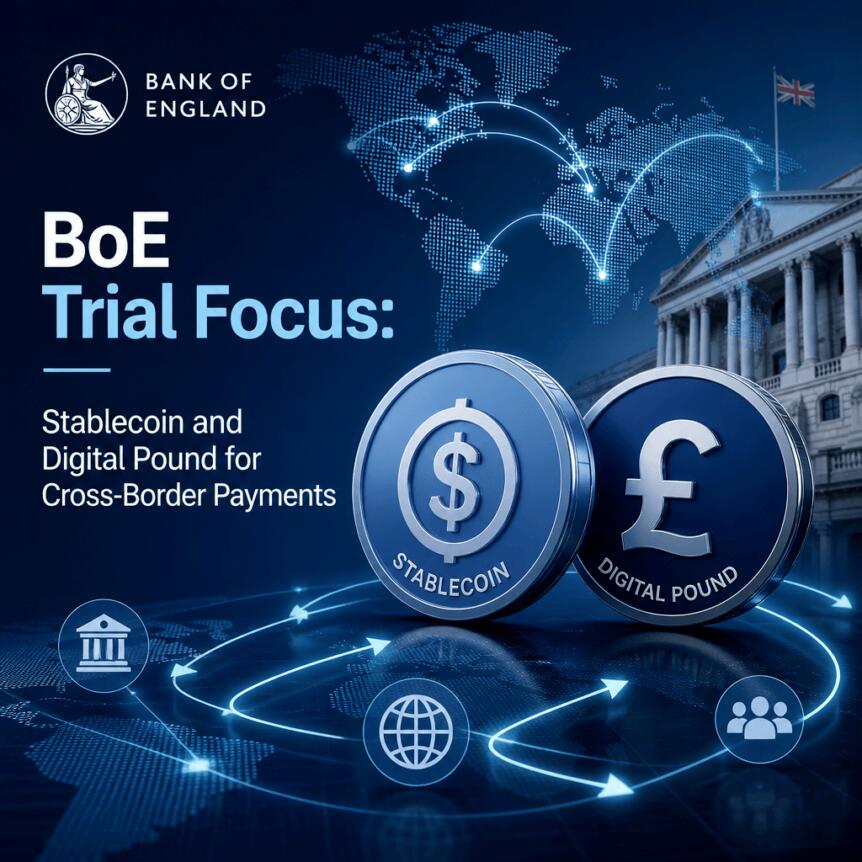
The Bank of England’s Digital Pound Lab is running a trade-finance experiment designed to test whether stablecoins and a potential digital British pound could work together inside the same cross-border payment flow.
In a project announced on Wednesday, NOBO Finance, Dun & Bradstreet and Polygon Labs said the trial links an exporter’s advance delivered via a stablecoin rail with a UK importer’s settlement using simulated digital pounds. The focus is on the practical mechanics of payments timing—particularly the point at which trade finance is released and how long settlement takes.
Key takeaways
- The Digital Pound Lab trial pairs a stablecoin payment to an exporter with simulated digital pound settlement by a UK importer in a single cross-border workflow.
- NOBO Finance, Dun & Bradstreet and Polygon Labs are combining payments testing with a separate effort to generate reusable credit profiles for small businesses.
- The project is explicitly using simulated systems: the Bank of England has not committed to issuing a digital pound and the lab uses no real customers or money.
- The work targets a long-standing trade finance problem where exporters may wait days after shipment to receive payment, tying up working capital.
- The broader initiative aligns with ongoing UK regulatory development for stablecoins and tokenized settlement models.
Trade finance, simulated digital pounds, and stablecoin rails
The Bank of England’s Digital Pound Lab experiment is centered on trade finance—an area where cash flow can be constrained by settlement delays between shipping goods and receiving payment. According to the announcement from NOBO Finance, Dun & Bradstreet and Polygon Labs, the test scenario involves an exporter receiving an advance through a stablecoin-based payment flow while a UK importer completes settlement using simulated digital pounds.
The companies did not describe the trial as a live market product; instead, it is positioned as an experiment within the lab’s research environment. The Bank of England has also emphasized that lab experiments designed by participants should not be treated as signals about future policy or as endorsements of any specific firm or technology.
For exporters—especially smaller businesses—payment timing can determine how much working capital is locked up. When funds arrive days after shipment, firms can face higher financing costs or reduced ability to take on new orders. By testing whether different digital payment components can operate in the same cross-border route, the lab project aims to assess whether tokenized settlement could reduce friction that slows trade.
Reusable credit profiles for small businesses
Beyond payments plumbing, the initiative includes a separate workstream aimed at helping small businesses access credit more efficiently. The plan, as described by the participating companies, is to create reusable credit profiles by combining transaction data, open-finance information and commercial risk data from Dun & Bradstreet.
Polygon Labs is providing the smart contract infrastructure for this part of the project. The practical idea is straightforward: instead of rebuilding risk assessments from scratch for each transaction, the system would attempt to turn available data into a standardized credit profile that could be reused in future trade finance arrangements.
If that approach works as intended, it could reduce the operational cost and time involved in underwriting and credit checks—an issue that often weighs more heavily on smaller firms than on larger counterparties with more established financing relationships.
Why this matters amid UK stablecoin and tokenization rulemaking
The trade-focused lab experiment lands as UK authorities continue building the regulatory structure for stablecoins and preparing the financial system for tokenized assets. In June, the Bank of England published draft rules for sterling-denominated stablecoins it considers systemic to the UK’s financial stability.
That proposal, according to the Bank of England, would allow systemic stablecoin issuers to hold up to 70% of their reserves in interest-bearing government debt. It also introduces a temporary issuance cap of 40 billion pounds (about $52.8 billion) per systemic stablecoin, replacing earlier suggestions that would have limited holdings at the level of individual participants and businesses. The Bank of England has said it aims to finalize those rules by the end of 2026, ahead of a planned 2027 rollout.
Under the framework, stablecoins deemed systemic—because their use could pose risks significant enough to affect financial stability—would fall under the Bank of England’s regime. Non-systemic stablecoins would remain under the Financial Conduct Authority’s oversight.
Meanwhile, tokenization is also being tested through updates to legacy settlement infrastructure. In May, the Bank of England proposed moving its Real-Time Gross Settlement (RTGS) and CHAPS systems toward near-24/7 operation, including weekends and extended daily hours, partly to support cross-border payments and new settlement models as tokenization develops.
Additionally, the Bank of England approved HSBC’s Orion platform to operate in the UK’s Digital Securities Sandbox. That sandbox is expected to support digital bond issuance, including the country’s planned Digital Gilt Instrument—another sign that regulators are exploring how tokenized assets might integrate with existing market infrastructure.
What to watch next in the Digital Pound Lab
Because the Digital Pound Lab trial uses no real money or customers and the central bank has not committed to issuing a digital pound, the near-term value for market participants is primarily methodological: seeing whether a stablecoin rail and a simulated digital pound can coordinate inside a realistic cross-border trade workflow. The next step is whether the lab’s findings inform practical designs for interoperability, settlement timing, and how credit and compliance data could be translated into reusable structures for small businesses.
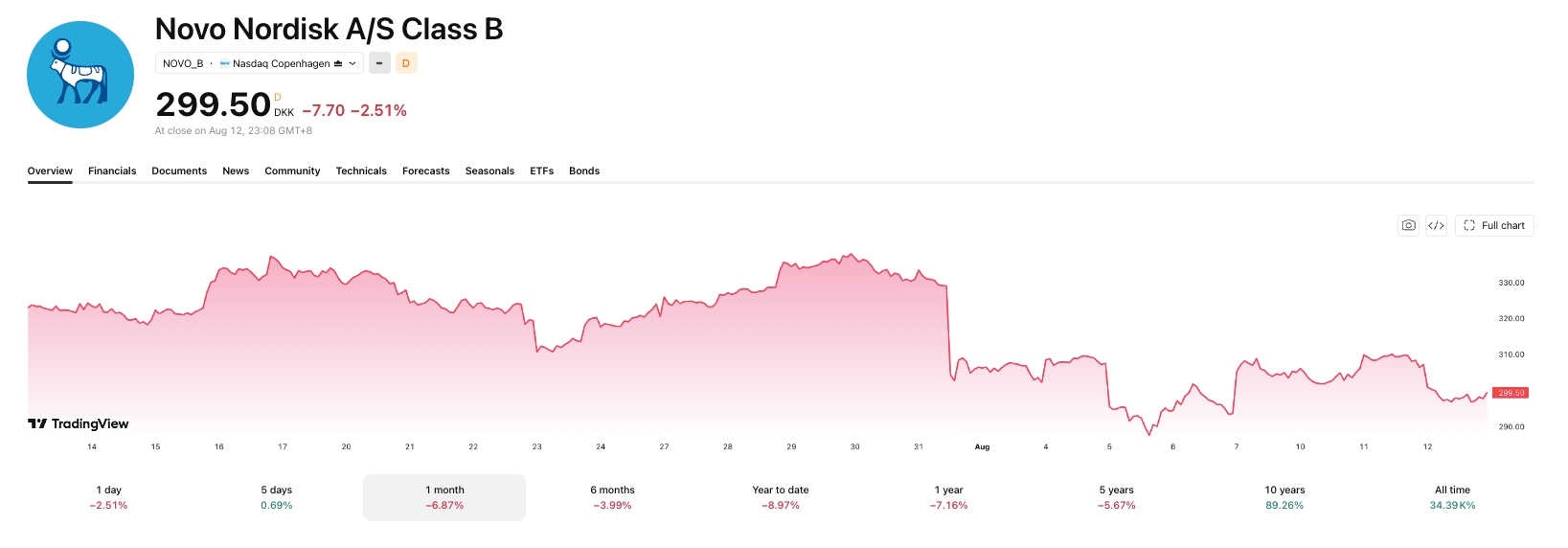
Novo Nordisk’s stock keeps falling even when the news is good, and CEO Mike Doustdar just admitted why. Eli Lilly is beating Novo at its own game.
Doustdar sat down with CNBC’s Jim Cramer this week to explain the disconnect. Novo, famous for its GLP-1 medication Ozempic, raised its full-year sales guidance on August 4, narrowing its projected annual decline from 8% to 3% at the midpoint. Investors sold anyway. NVO shares dropped roughly 6% that day.
A Beat That Still Lost
Doustdar walked through the math on air. Novo slashed prices on Ozempic and Wegovy last year to widen patient access, and volume hasn’t caught up yet to offset those cuts. He compared it to basic arithmetic. Halving a price means you need double the volume just to break even, and volume never doubles on day one.
That gap between falling average revenue per prescription and rising patient counts is exactly what has investors nervous. Novo’s obesity and diabetes drugs now make up around 90% of its business, compared to about 60% at Eli Lilly, leaving Novo more exposed to any pricing or competitive shock in that single category.
Doustdar’s Concession
Oral Wegovy sits at the center of this story. Novo launched the pill version of its weight-loss drug in January, and it quickly became one of the fastest-selling drugs in pharmaceutical history. Doctors have already written more than 5 million prescriptions for it, and 1.5 million patients now take it worldwide. That volume makes Novo’s stock reaction even harder to explain on the surface.
Cramer pressed him on why Eli Lilly’s stock rally has outrun Novo’s despite a less dominant pill. Doustdar didn’t dodge the question.
“Eli Lilly has been gaining market share. And they’re more diversified than Novo Nordisk… there is no secret that Lilly has been quite successful actually in having volume uptake and market share uptake above and beyond Novo.”

He argued Lilly’s ad campaign leans on an older, lower-dose version of Wegovy for comparison. Novo’s newer high-dose formulation matches Lilly’s efficacy, according to Doustdar. That dispute sits at the center of Novo’s lawsuit against Lilly over its advertising claims.
The Pill Still Wins on Paper
The stock slump hasn’t slowed the pill’s numbers. In Novo’s own trials, the pill cuts weight by 17%, against 12% for Lilly’s rival pill, though the two drugs haven’t faced off head-to-head. Doustdar called it the best product launch in pharmaceutical history, a claim that’s hard to dispute on volume alone.
Doustdar is betting that two straight quarters of improving trends will eventually pull the stock along with them. Whether that bet pays off depends on a simple race. Patient volume needs to outrun the price cuts fast enough to convince Wall Street the reset is actually over.
The post Novo Nordisk CEO Concedes Eli Lilly’s Market-Share Gains as Stock Slumps appeared first on BeInCrypto.

“In order to qualify for this care, a young person has to be experiencing very severe, prolonged distress,” Minter says. “I think maybe some people have the misconception that this care is being provided to kids just who are gender nonconforming or who are just identifying as transgender, but that is not the case.”
The number of people who rely on Medicaid and CHIP for gender-affirming care is not publicly available, but in 2023 the spending from both programs on those services totaled $31 million.
Why the new Medicaid rule is contested
Trump wrote about the ruling on social media Tuesday, saying that he directed CMS Administrator Dr. Mehmet Oz to enact the new restrictions.
“We are not going to pay for our innocent children to undergo these barbaric surgeries and practices, which result in unthinkable and irreversible harm to their young bodies,” the post said.
Oz said in a press release that the rule will protect children and is “following the science, saving taxpayer dollars, and, most importantly, protecting children from potentially irreversible harm so they can truly flourish.” TIME has reached out to the CMS for additional comment.
The Securities and Exchange Commission is advancing an “innovation exemption” for tokenized listed securities that Chair Paul Atkins says would give market participants a cabined framework to begin facilitating compliant onchain trading while the Commission develops long-term rules. Bloomberg… Read the full story at The Defiant
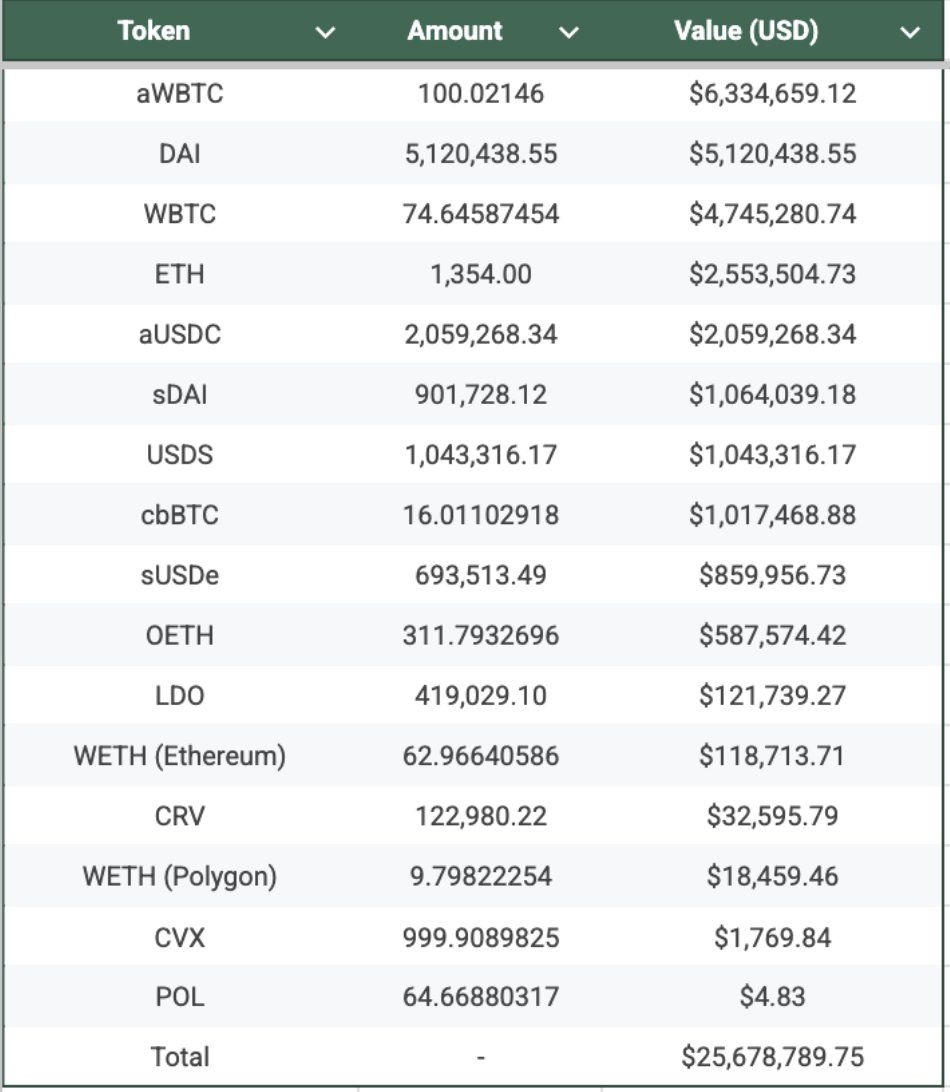
An unknown crypto whale lost $25.6 million after an attacker drained their wallet. The hacker swapped the stolen assets into Dai (DAI) and Ethereum (ETH), onchain analyst Specter reported.
The same wallet lost $24.2 million to a phishing attack in September 2023. Afterward, the attacker returned roughly 90% of the funds.
Follow us on X to get the latest news as it happens
Attacker Drains aWBTC, DAI, and WBTC From Whale Wallet
Blockchain security firm PeckShield detailed the largest holdings taken. This included $6.3 million in aWBTC. DAI losses totaled $5.1 million, while direct Wrapped Bitcoin (WBTC) holdings totaled $4.7 million.
Roughly $2.6 million in ETH also left the wallet. Smaller balances of cbBTC, USDS, Lido DAO (LDO), and Curve DAO (CRV) went the same way.
The attacker converted the proceeds into 20 million DAI and 3,000 ETH. The stolen funds now sit across four addresses.

Whale Fell Victim to a $24.24 Million Phishing Attack in 2023
The victim has a costly history. PeckShield reported in September 2023 that the same whale lost $24.2 million to phishing, including about 4,851 rETH and 9,579.2 stETH.
That phisher swapped the tokens for roughly 13,785 ETH and 1.64 million DAI. These two incidents have now cost the address almost $50 million combined.
The theft lands during a busy month for crypto security. DefiLlama has separately logged 13 hacks in August, with tracked losses above $12 million.
Payment processor Coinsbuy accounted for the bulk of that figure after losing $7.9 million on August 9. Whether this attacker follows the 2023 precedent and returns the funds will likely determine how much the victim recovers.
Subscribe to our YouTube channel to watch leaders and journalists provide expert insights
The post Crypto Whale Loses $25.6 Million 2 Years After $24 Million Phishing Attack appeared first on BeInCrypto.


An Australian Securities Exchange (ASX) shareholder plans to seek Federal Court permission to sue certain former ASX officers and directors over alleged breaches of duty connected to its failed blockchain-based clearing and settlement overhaul.
On Wednesday, ASX said Rosherville Pty Ltd had notified the exchange that it proposes to apply for leave to commence a statutory derivative action under sections 236 and 237 of Australia’s Corporations Act. If approved, Rosherville would bring the proceedings on ASX’s behalf.
The exchange said there were no allegations against ASX itself. It did not identify the former officials targeted, describe their alleged breaches in detail or disclose the remedies Rosherville intends to seek, while the court has not considered whether the proposed case can proceed.
The proposed lawsuit could test whether shareholders can hold former ASX leaders accountable for overseeing one of Australia’s costliest financial-technology failures.
Failed CHESS overhaul draws regulatory action
ASX began exploring a replacement for its Clearing House Electronic Subregister System, or CHESS, in 2016 and selected a distributed-ledger system developed with New York-based Digital Asset. In December 2017, ASX was expected to become the first securities exchange to use blockchain for its core services.
The intended launch was repeatedly postponed. In November 2022, ASX paused the project after an Accenture review found significant problems with its design and ability to meet the exchange’s requirements. In May 2023, ASX had formally abandoned blockchain for the replacement and would consider more conventional technology.
Related: Australia orders Cryptolink Bitcoin ATMs offline over ‘basic reporting’ failures
The Australian Securities and Investments Commission (ASIC) sued ASX in August 2024, alleging it lacked a reasonable basis for telling the market in February 2022 that the project was “progressing well” and on track for an April 2023 launch. At the time, ASIC called the episode a collective failure by ASX’s board and senior executives.
In June 2026, ASX admitted to misleading conduct linked to the blockchain replacement project. On July 3, the Federal Court ordered the company to pay a $14.4 million penalty and $2.1 million toward ASIC’s costs, closing the regulator’s case weeks before Rosherville notified the exchange of its proposed action against former officials.
Magazine: Inside the fake crypto startup that fooled North Korean IT workers


Solana came within roughly 4.5 percentage points of losing transaction finality early Wednesday, when 28.83% of staked SOL went delinquent, according to staking protocol Marinade Finance. Marinade said the episode affected 90 validators and cost them a combined 333 SOL in rewards. The reported… Read the full story at The Defiant
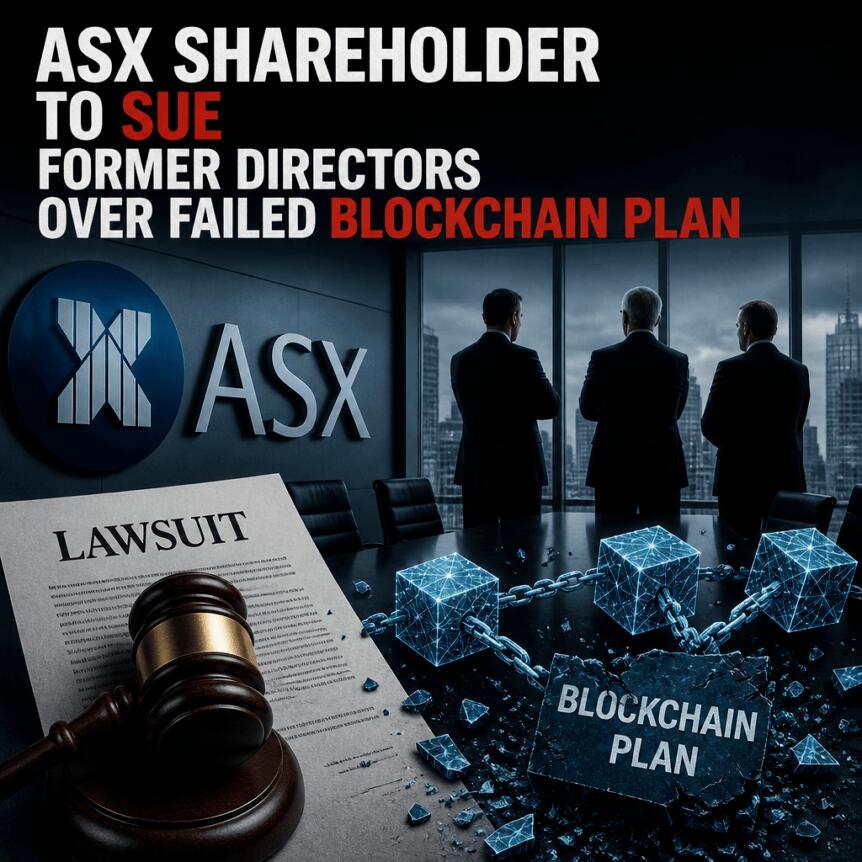
An Australian Securities Exchange (ASX) shareholder is seeking permission from the Federal Court to pursue a statutory derivative lawsuit targeting certain former ASX officers and directors over alleged breaches connected to the exchange’s ultimately abandoned blockchain-based clearing and settlement overhaul.
ASX said on Wednesday that Rosherville Pty Ltd has notified the exchange of its intention to apply for leave to bring the case under sections 236 and 237 of Australia’s Corporations Act. If the court grants leave, the proceedings would be brought on ASX’s behalf. ASX also emphasized that the proposed action does not include allegations against the exchange itself, and it provided limited detail about who would be named, what duties were allegedly breached, or what remedies Rosherville would seek.
Key takeaways
- Rosherville wants the Federal Court’s leave to file a statutory derivative action on ASX’s behalf under Australia’s Corporations Act.
- ASX says the proposed claims target former officers and directors, not the exchange, but the court has not yet considered whether the case can proceed.
- The litigation follows a broader regulatory reckoning over ASX’s CHESS replacement project, including findings by ASIC.
- ASIC’s case against ASX was resolved earlier in 2026 with a penalty and cost order, potentially setting the stage for shareholder-focused accountability efforts.
Why the proposed action could matter for corporate governance
Statutory derivative actions are designed to allow shareholders, with court approval, to pursue claims on behalf of a company when directors or officers may have breached duties owed to that company. Here, Rosherville’s proposed case would test how far that accountability can extend for board and senior leadership decisions related to one of Australia’s most expensive financial-technology failures.
While ASX did not specify which former officials Rosherville plans to name or what conduct it alleges, the core premise is straightforward: that responsibility for overseeing the CHESS replacement project may not have been adequately discharged. For investors, the practical significance is that litigation risk can reach beyond the corporate entity itself and toward the individuals who managed or governed the decisions leading to regulatory and operational consequences.
At the same time, the court has not yet examined whether the proposed suit meets the legal threshold to move forward, meaning there is still uncertainty about the scope and viability of the claims.
From CHESS replacement to abandoned blockchain plans
The dispute traces back to ASX’s long-running attempt to replace its Clearing House Electronic Subregister System (CHESS). According to earlier reporting cited in the record, ASX began exploring a replacement in 2016 and selected a distributed-ledger system developed with New York-based Digital Asset.
In December 2017, ASX was widely expected to use blockchain for core services, a prospect described at the time as a first for a securities exchange. But the project repeatedly slipped. In November 2022, ASX paused the initiative after an Accenture review identified significant problems with the design and with meeting ASX’s requirements.
Then, in May 2023, ASX formally abandoned blockchain for the replacement, saying it would consider more conventional technology instead. The progression—from early expectations of a groundbreaking launch to a pause, then abandonment—became the backdrop for subsequent regulatory scrutiny.
ASIC’s case against ASX and the question of board accountability
The shareholder effort comes after ASIC took action against ASX itself. In August 2024, the regulator sued the exchange, alleging it did not have a reasonable basis for telling the market in February 2022 that the project was “progressing well” and on track for an April 2023 launch. ASIC later characterized the episode as a collective failure by ASX’s board and senior executives.
Later developments in 2026 narrowed the regulator’s focus to misleading conduct tied to the CHESS replacement effort. In June 2026, ASX admitted to misleading conduct related to the project. On July 3, 2026, the Federal Court ordered ASX to pay a $14.4 million penalty and $2.1 million toward ASIC’s costs, effectively bringing ASIC’s case to an end weeks before Rosherville notified ASX of its intention to seek leave for a derivative action against former officials.
Although those steps were not the same as a case against individuals, the sequencing is notable. ASIC’s enforcement action concluded against the company, but the shareholder proposal suggests some investors believe the responsibility for the issues may also sit with former decision-makers at the governance and management level.
What investors should watch next
Rosherville’s application is not yet a filed lawsuit; it hinges on the Federal Court granting leave to commence the statutory derivative action. That process will be central for determining whether the allegations can proceed, who qualifies as a potential defendant, and what legal theories and remedies the shareholder is attempting to pursue on ASX’s behalf.
In the meantime, the case is likely to remain closely tied to how courts interpret directors’ and officers’ duties in complex technology transitions—especially where public statements to the market and later regulatory outcomes are in the background. The next concrete milestone for market participants will be whether the Federal Court approves the leave request and, if it does, how the claims are framed.

Bank of Montreal has placed XRP-linked fund positions inside its massive investment portfolio, according to a new regulatory filing. The Canadian lender submitted a new Form 13F-HR report to the U.S. Securities and Exchange Commission, confirming the token’s presence for the first time. BMO’s total reportable holdings exceeded $303 billion at the close of June 2026, making the bank one of the largest institutions to disclose crypto-linked assets this quarter.
BMO’s XRP Fund Positions
The filing lists 323 shares of the Rex Osprey XRP ETF, a spot fund tied directly to the token’s price. It also reports 20 shares of the ProShares Ultra XRP ETF, a leveraged product designed for short-term moves. Both positions sit within BMO’s much larger equity and fund portfolio, and neither represents a significant share of total assets.
BMO did not buy XRP tokens directly on any cryptocurrency exchange, and it avoided that route entirely. Instead, the bank used regulated U.S. exchange-traded fund infrastructure to gain exposure, which kept the transaction within familiar securities rules. Regulated ETFs also let large institutions report holdings through standard filing channels, so compliance teams face fewer complications.
This structure additionally removes the need for BMO to store or secure the underlying token itself. Fund managers behind the ETFs handle custody, settlement, and daily price tracking on the bank’s behalf. As a result, BMO gains market exposure while transferring operational and security risk to a third party.
National Bank of Canada Set an Earlier Precedent
National Bank of Canada disclosed similar XRP exposure earlier in the same reporting period, and its filing arrived before BMO’s. The bank reported 3,848 shares of the Bitwise XRP ETF, a spot product tracking the token’s market price directly. That stake carried an approximate value of $330,000 at the time of filing.
Together, the two Canadian banks now share a nearly identical approach to digital asset exposure. Each institution enters the market through transparent, SEC-regulated fund vehicles rather than direct token purchases. Neither bank holds XRP on its own balance sheet outside these fund wrappers, and both rely on third-party custody.
This shared pattern points to a wider shift among Canada’s largest financial institutions. Big banks increasingly treat XRP funds as a small but manageable portfolio addition rather than a speculative outlier. Further disclosures from other Canadian lenders could follow in upcoming quarterly filings, given this emerging pattern.
A New Group of XRP Holders Emerges
Goldman Sachs previously held XRP positions worth more than $150 million, and that stake formed around the turn of 2025 and 2026. The firm reduced or fully exited those holdings by the summer of 2026, according to filing data. This shift effectively locked in profits and marked the end of Goldman’s early XRP position.
A newer group of midsize asset managers and family offices has since filled that space. Arax Advisory Partners, Gerber, Vista Finance, and Gallacher Capital now appear among the reported XRP fund holders. Each firm builds its own combination of spot and leveraged token exposure across different funds.
These newer holders typically split capital between traditional spot products and short-term leveraged instruments. The Franklin XRP Trust and Bitwise XRP ETF represent the spot side of that split. The ProShares Ultra XRP ETF, meanwhile, adds leveraged and more volatile exposure to the same overall strategy.
Because 13F filings carry a 45-day reporting delay, they offer only a snapshot rather than a live position update. Positions can change significantly between the reporting date and public disclosure, so current holdings may already differ. Even so, BMO’s filing confirms that XRP now sits on another major bank’s balance sheet, alongside a growing list of regulated institutions.

What if you have a fresh surgical site?
Coming home from surgery might be when you most want your furry friend on your bed. It’s also when experts want you to put a little distance between your pet and whatever is healing.
Dr. Ashley Drews, an infectious disease specialist at Houston Methodist, has seen patients develop infections after a pet licked an incision or surgical drain. “That’s not a good idea,” she says. Keep the site covered and your pet away from it.
Do you need to worry about the litter box?
Yes. Cats can shed Toxoplasma gondii in their poop, and the parasite can travel from the box to your hands to your mouth.
Yet the litter box isn’t the only way to get toxoplasmosis. The parasite can also turn up in soil, unwashed produce, contaminated water, and undercooked meat—especially pork, lamb, and venison.
“I think people are aware of the cat litter thing,” says Jill Roberts, a molecular epidemiologist and professor at the University of South Florida College of Public Health. Meat gets less attention. Roberts is so wary of undercooked pork that she skips thick cuts, which she worries are harder to bring to a safe temperature. “All I can see is Toxoplasma,” she says. You don’t have to give up pork chops, but you should use a food thermometer: Whole cuts of pork should reach 145°F. Once they come off the heat, wait at least three minutes before cutting or eating them; the meat’s temperature holds steady or continues to rise during that time, helping destroy pathogens.

Stablecoin and Digital Pound for Cross-Border Payments

Trippie Redd Insults Coi Leray Amid Claims About Daughter Miyoco
Four of five enterprises that secured AI agent identities still can’t contain one that goes rogue


-

 Fashion5 days ago
Weekend Open Thread: Mattifying Sunscreen
-

 Fashion6 days ago
Frugal Friday’s Workwear Report: Cap-Sleeve Pointelle Crewneck Sweater
-

 News Videos5 days ago
Can Astrology Help Find Gold and Silver Trends? A Financial Astrology Guide
-

 Politics7 days ago
Reform UK And Greens Sink To Lowest Favourability Ratings To Date
-

 Tech5 days ago
Rinn Pharma & Biopharma to join NordicPharmaTrain network
-

 Business4 days ago
How to Start a Cleaning Business: A Step-by-Step Guide
-

 Business4 days ago
Datadog: Best Of Breed For Multiple Reasons
-

 Business4 days ago
BDC Weekly Review: Private BDC Q2 Numbers Are Strong
-
 NewsBeat1 day ago
Communication cards help banking customers access services or report scams
-

 Business6 days ago
Brightwater secures funding for WA-first dementia projects
-

 Tech6 days ago
Price Hikes May Be Coming for PC Motherboards Next
-
 Crypto World7 days ago
Galaxy Digital Stock Slides 14% as Crypto Prices Hit Earnings
-
 Business2 days ago
Oil Price Today (August 11): Crude oil rises to $88 after Trump’s compensation demand dents Hormuz opening. Here’s why
-

 Business7 days ago
SpaceX Shares Plunge 13.6% After First Public Earnings as AI Capex Surge and Lockup Spark Selloff
-

 Tech7 days ago
How to Use Your Phone as a Webcam on PC and Mac (2026)
-

 Tech7 days ago
Hackers just broke into America’s tap water. How scared should you be?
-

 Fashion5 days ago
Weekly News Update, 8.6.26 – Corporette.com
-

 Entertainment7 days ago
This $29 One-Piece Looks Just Like Ashley Graham’s Swimsuit
-

 Fashion7 days ago
Thursday’s Workwear Report: The Everyday Linen Shirt
-

 Business6 days ago
Aussie shares lose steam to close record-breaking week
You must be logged in to post a comment Login