
Crypto World
Kalshi Eyes Crypto Expansion as Perpetual Futures Launch Plans

Kalshi, the U.S.-based prediction-market operator regulated by the Commodity Futures Trading Commission (CFTC), is reportedly plotting a bold pivot into crypto trading by introducing perpetual futures for digital assets, starting with Bitcoin.
In a Tuesday report, The Information cited people familiar with the matter as saying Kalshi intends to roll out perpetual futures, or “perps,” on cryptocurrencies such as Bitcoin, broadening its product slate beyond binary event contracts.
Perpetual futures are a type of derivative that lets traders speculate on price moves without an expiration date. Unlike traditional futures that require rolling over positions, perps offer continuous exposure and are commonly paired with leverage — a structure that gained prominence in crypto markets through platforms such as BitMEX.
Kalshi’s contemplated expansion signals a shift toward continuous financial markets and could widen appeal for both retail and institutional traders seeking regulated onshore access to crypto derivatives.
Kalshi operates under U.S. regulation by the CFTC, a distinction that could position it as a compliant alternative to offshore crypto-derivatives venues. Regulators have signaled openness to bringing more trading volume onshore; CFTC Chair Michael Selig has indicated these products could become available in the United States in the near future.
Related: Onchain real-world perps surge, while altcoins drag on: Report
Key takeaways
- Kalshi reportedly plans to launch perpetual futures on cryptocurrencies, starting with Bitcoin, signaling a move from binary event contracts to continuous markets.
- The Information cites unnamed sources; the product would mark Kalshi’s first major expansion into crypto trading while leveraging its CFTC-regulated status.
- U.S. regulators have signaled a potential onshore path for crypto derivatives, with CFTC Chair Michael Selig suggesting these products could become available in the near term.
- The rise of perpetual futures is intensifying competition among platforms seeking non-U.S. access; major players are expanding into non-U.S. markets with stock- and crypto-linked perps.
- Industry data from DeFiLlama shows daily perp volumes near $20 billion on busy days, underscoring sustained demand despite broader crypto volatility.
Regulatory on-ramp and market dynamics
Kalshi’s possible crypto-perps launch would deepen ties between regulated U.S. markets and the fast-moving crypto derivatives space. By staying within the boundaries of the CFTC framework, Kalshi could offer an onshore alternative to offshore venues that have dominated crypto leverage and liquidity. The statements from CFTC Chair Michael Selig add to a regulatory narrative that seeks to bring more trading activity onto U.S. soil, a development investors and traders are watching closely for its potential to shift liquidity and risk management practices.
As perimeters of onshore crypto derivatives remain under discussion, Kalshi’s move could provide a test case for how a regulated, event-grounded platform might translate to continuous-price contracts. If realized, the product would complement Kalshi’s existing suite and potentially broaden its appeal beyond consumers who seek event-based bets to those looking for ongoing exposure to crypto prices.
Perps race expands beyond crypto to broader markets
The reported Kalshi pivot arrives amid a broader wave of attempts to offer perpetual-style instruments to non-U.S. audiences. Coinbase has begun offering round-the-clock perpetual-style futures tied to equities for non-U.S. traders, expanding beyond its traditional crypto-derivatives offerings and highlighting demand for around-the-clock exposure to traditional assets outside the United States.
Kraken has also pushed into tokenized stock perpetual futures for users outside the United States, giving traders exposure to major U.S. stock indices, precious metals, and individual equities via perpetual contracts. This reflects a growing appetite among crypto and traditional trading venues to cater to global audiences with perpetual formats that do not require contract renewal.
Market data corroborates ongoing interest in perpetual products. DeFiLlama’s latest figures show that daily perpetual futures volumes sit around $20 billion on peak days, roughly half of historical highs, but still point to meaningful liquidity and participation in perpetual markets across asset classes.
Taken together, the developments paint a picture of regulators nudging onshore participation higher while a competitive landscape accelerates the adoption of perpetual derivatives across crypto and traditional assets. Kalshi’s potential crypto-perps launch would be a notable milestone in that evolving dynamics, testing how a U.S.-regulated platform can compete in a market historically dominated by offshore operators.
Investors and users should watch closely for any formal confirmation from Kalshi and for regulatory updates that could clarify the timeline and design of onshore crypto perpetuals. The outcome could influence liquidity, product design, and the broader cadence of regulated crypto derivatives in the United States.

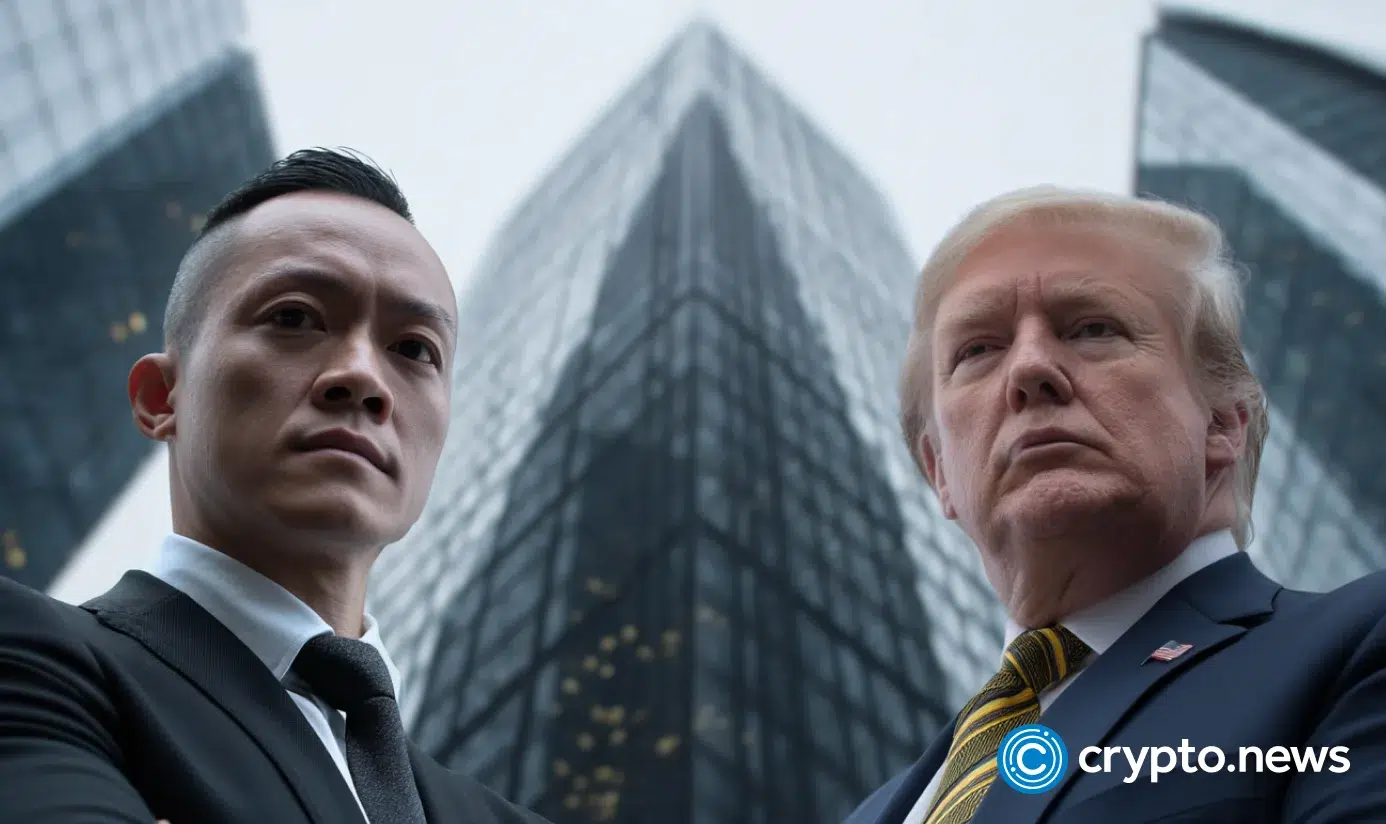
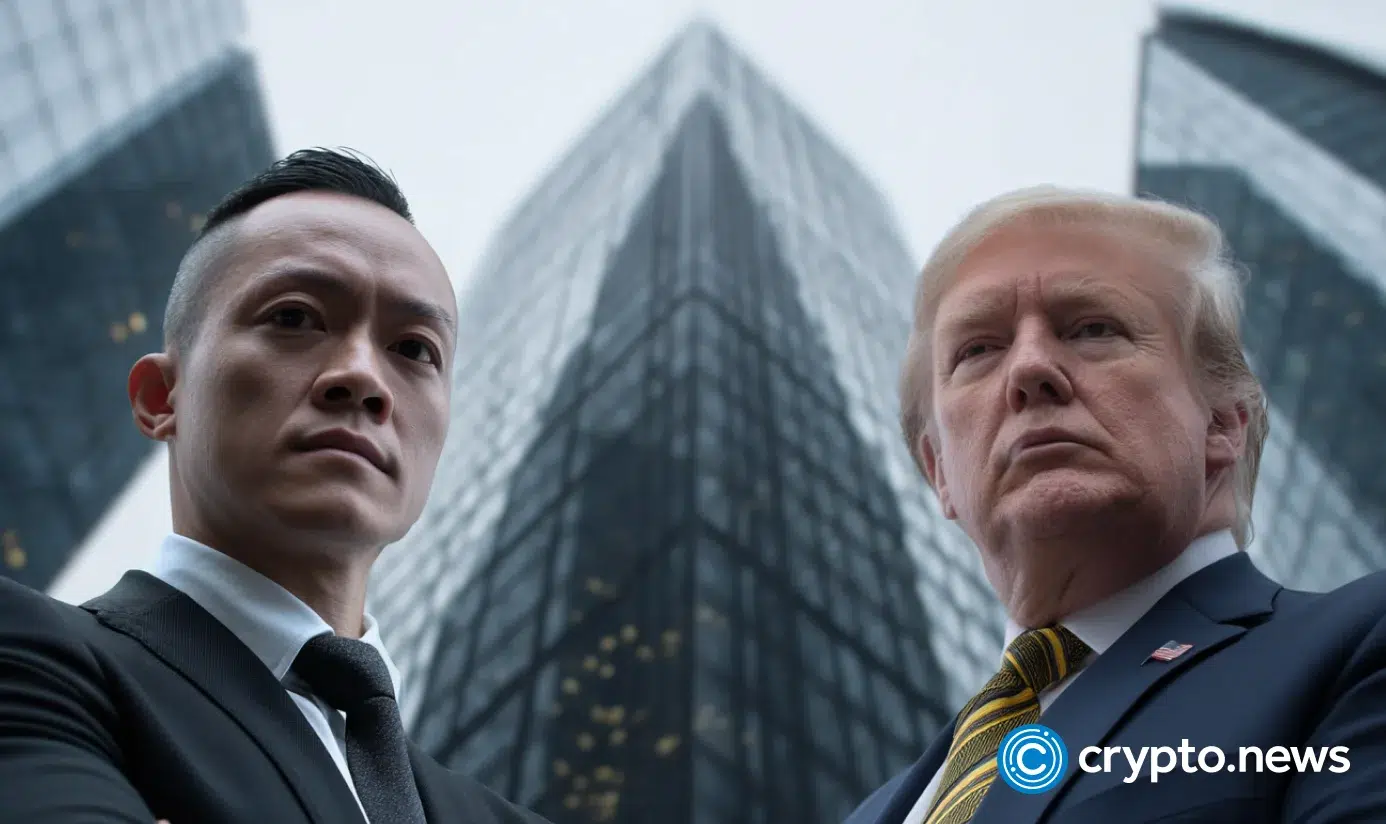
Tron founder Justin Sun said he has filed a lawsuit against World Liberty Financial in a California federal court after the project froze his WLFI tokens and blocked him from taking part in governance votes.
Summary
- Justin Sun filed a federal lawsuit after WLFI allegedly froze tokens and blocked his governance voting rights.
- The dispute grew after Sun accused World Liberty Financial of adding blacklist functions to WLFI contracts.
- Sun said the lawsuit targets unfair token treatment and does not affect support for Trump.
Sun said the lawsuit followed failed efforts to resolve the dispute directly with the team. He claimed the project froze all of his tokens, removed his voting rights, and threatened to burn the holdings without proper cause.
Meanwhile, Sun announced the lawsuit in a post on X on Tuesday. He said the case aims to protect his rights as a WLFI token holder after the project allegedly refused to unfreeze his tokens.
In his statement, Sun said, ”They wrongfully froze all of my tokens, stripped me of my right to vote on governance proposals, and have threatened to permanently destroy my tokens by ‘burning’ them — all without any proper justification.” He added that the team had refused his requests to restore access, leaving court action as his next step.
The dispute adds to a wider conflict between Sun and the Trump-linked project. Sun had once been known as the largest external backer of World Liberty, but he has become one of its most public critics in recent weeks.
The current lawsuit follows public accusations Sun made earlier this month. On April 12, he alleged that World Liberty had placed an undisclosed blacklisting function in the WLFI smart contract.
Sun said that function allowed the project to ”freeze, restrict, and effectively confiscate” investor tokens. World Liberty responded on X within hours and rejected the claims.
The project called Sun’s statements ”baseless allegations” and accused him of using them to cover up misconduct. It also suggested that legal action could follow, writing, ”See you in court pal.”
That exchange marked a sharp turn in the relationship between the two sides. Since then, the disagreement has shifted from public posts to a formal court filing.
Governance proposal deepened the dispute
The dispute also centers on a recent World Liberty governance proposal involving more than 62.2 billion WLFI tokens. The plan sought to move tokens from indefinite lockups to fixed vesting schedules.
Under the proposal, holders who did not accept the vesting terms would keep their tokens locked indefinitely, though they could still use them in governance under future terms. Sun criticized that structure and said it treated early investors unfairly.
Last week, Sun described the proposal as “not governance.” He also said it had been presented as a governance measure while forcing some holders into a two-year cliff followed by a two-year vesting period.
On Tuesday, Sun repeated that position and said he only wanted equal treatment. He wrote, ”All I want is to be treated the same as every other early investor who received tokens — no better, no worse.”
Sun says lawsuit does not change Trump support
Sun said the legal action does not affect his support for US President Donald Trump or the administration’s crypto agenda. He said his complaint targets individuals on the World Liberty team rather than Trump himself.
He wrote that ”certain individuals on the World Liberty project team have been operating the project in a manner that goes against President Trump’s values.” That statement drew a line between his political position and his dispute with the project.
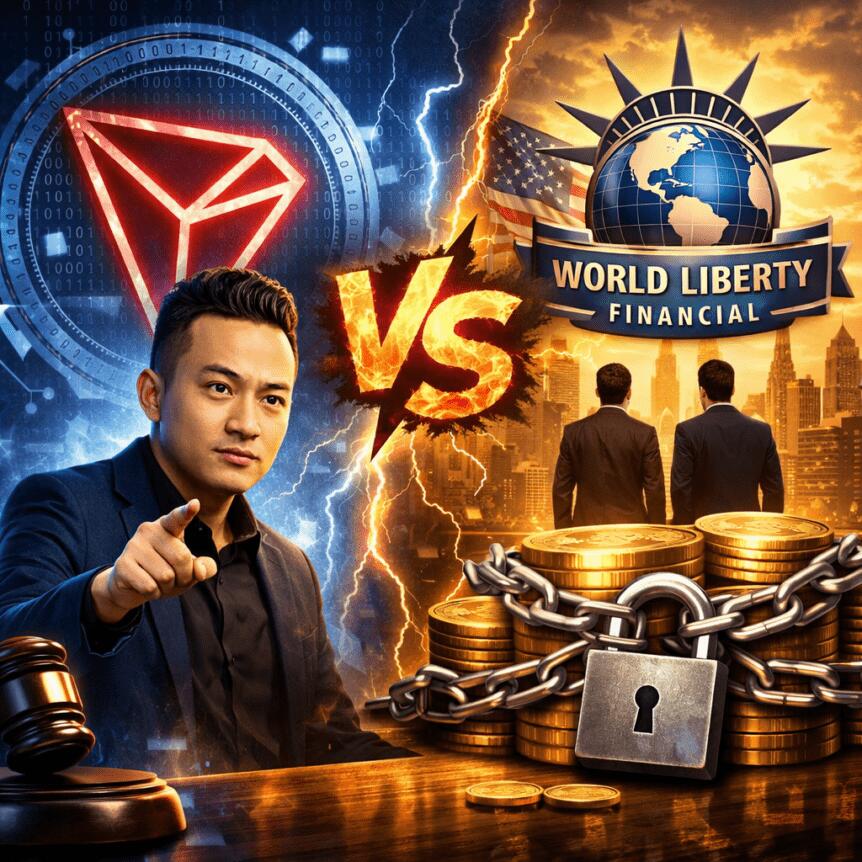
Justin Sun, the Tron founder and the largest individual investor in World Liberty Financial (WLFI), has filed a lawsuit in a California federal court to protect his rights as a WLFI token holder. Sun says WLFI froze his tokens and threatened to burn them “without any proper justification,” prompting the legal action after private attempts at resolution failed. He announced the filing in a post on X, explaining that he sought a court remedy only after WLFI’s project team refused to unfreeze his holdings and restore his rights as a token holder.
Sun’s complaint arrives amid a broader set of governance and liquidity concerns surrounding WLFI, a project closely tied to the Trump family. The investor has previously warned of potential litigation over long lockup periods for WLFI’s governance token and criticized a recent governance proposal for a perceived lack of transparency, pointing to the claim that more than 76% of voting tokens came from just 10 wallets. Sun’s case thus compounds questions about how WLFI balances token holder rights, governance mechanics, and project control.
Cointelegraph has reached out to both Sun’s camp and WLFI for comment on the lawsuit and ongoing governance disputes. In the meantime, Sun stated that the legal action does not alter his political views or his support for President Donald Trump and his administration’s crypto-friendly stance. He also asserted that some members of WLFI’s project team have operated in a way that diverges from Trump’s values.
One of the central questions surrounding the WLFI case is how token custody and governance controls are exercised within a project linked to a high-profile political figure. The founder’s suit underscores ongoing tensions between token holders’ rights and a project’s ability to manage its own token economics, especially when governance proposals suggest concentrated voting power. The dispute also highlights the practical frictions that can surface when a project seeks to implement lock-ups and incentive structures that impact token liquidity and voting influence.
In related background coverage, Cointelegraph previously examined WLFI’s governance mechanics and the token distribution landscape, noting concerns around transparency and concentration. For readers seeking broader context, earlier Cointelegraph reporting highlighted governance-related actions and the project’s response to those criticisms. See the coverage that detailed how a governance vote on WLFI’s stake-lock incentives unfolded and the subsequent reactions from project supporters and critics here. There is also prior reporting on WLFI’s token burn actions and price dynamics linked to those moves here.
Key takeaways
- Justin Sun filed a civil complaint in a California federal court to unfreeze WLFI tokens and protect his rights as a token holder, after private efforts to resolve the issue reportedly failed.
- The action follows Sun’s criticism of WLFI governance practices, including concerns about lock-up terms and the distribution of voting power (Sun cited that more than 76% of voting tokens originated from 10 wallets).
- WLFI defended itself publicly, calling the allegations baseless and stating that it has contracts and evidence, signaling that the matter could escalate in court.
- The dispute sits at the intersection of crypto governance, token rights, and high-profile political associations, potentially impacting investor trust and the perceived legitimacy of WLFI’s governance model.
- Observers will be watching for forthcoming court filings and WLFI’s responses as the legal process unfolds, with broader implications for governance-centric crypto projects tied to prominent figures.
Sun’s lawsuit and WLFI’s governance tensions at a glance
The core of Sun’s complaint is straightforward in legal terms: a request to unfreeze his WLFI tokens and restore his rights as a holder. The California filing comes after what Sun described as attempts to resolve the matter privately with WLFI’s project team were unsuccessful. The billionaire investor frames the suit as a necessary step to protect his property rights within the WLFI ecosystem and to ensure he can participate in governance on the same footing as other holders.
WLFI’s side has offered a counter-narrative in the public sphere. In a post on X, WLFI asserted that the allegations were baseless and claimed, “We have the contracts. We have the evidence. We have the truth. See you in court.” This rebuttal mirrors a broader pattern in crypto governance disputes, where project teams contest accusations of opacity while token holders push for clearer transparency and fairness in voting frameworks.
The earlier governance debate around WLFI remains relevant. Sun’s critique extended to a governance proposal that introduced lock-up incentives. He argued that the distribution of voting power—cited as concentrated in a small number of wallets—undermined the fairness and transparency essential to a legitimate decentralized governance process. The related coverage noted WLFI’s responses, illustrating a wider, ongoing struggle to balance incentive design with broad-based participation.
What WLFI’s case could mean for investors and the DeFi ecosystem
From an investor perspective, the lawsuit raises practical questions about how token-holder rights are protected when a project adopts governance-enabled economics. For Sun’s supporters, the action may be framed as a defense of property rights within a tokenized ecosystem that aspires to be governable by its holders. For critics, the case may amplify concerns about centralization of influence in governance and the risks of platform-driven token controls that can impact liquidity and voting power outcomes.
Beyond WLFI, the case touches on a broader regulatory and industry backdrop. As crypto projects increasingly deploy governance tokens and lock-up mechanisms, questions about transparency, custody, and accountability come into sharper focus. The legal action could serve as a bellwether for how courts interpret token-holder rights in similar contexts and how project teams balance incentives with broad-based participation.
For readers tracking regulatory and policy developments, Cointelegraph Magazine has previously explored how regulatory clarity can influence DeFi and governance structures, offering a broader lens on how a legal case like this might interact with evolving policy frameworks. The CLARITY Act, among other debates, remains a touchpoint for understanding the potential future landscape for crypto governance and non-custodial design, though readers should note that the current case centers on a specific dispute rather than a policy proposal.
What to watch next
The immediate next steps will revolve around the court’s timetable and the parties’ legal strategy. Investors and observers should monitor for upcoming filings, WLFI’s official responses, and any court-approved actions related to token custody or governance rights. As the case unfolds, the question will be whether Sun’s assertions can be substantiated in court and what remedies the judge may consider if WLFI’s actions are found wanting. The broader takeaway will hinge on whether this dispute signals a broader tension between centralized project control and decentralized governance in crypto projects linked to high-profile figures.
In the meantime, readers should keep an eye on how WLFI articulates its governance framework and token distribution practices, as well as whether the court’s rulings—or lack thereof—will influence similar projects’ approach to token custody, lock-ups, and holder rights.
New York Attorney General Letitia James has sued Coinbase Financial Markets and Gemini Titan, accusing both firms of running unlicensed prediction market businesses in violation of state gambling law.
Summary
- New York sued Coinbase and Gemini, alleging unlicensed prediction markets violated state gambling and licensing rules.
- Coinbase removed the case to federal court, arguing federal law governs prediction markets and preemption applies.
- The lawsuit adds pressure on crypto firms as states challenge federally regulated event-based trading products.
The lawsuits add a new legal challenge for crypto companies offering event-based contracts in the United States.
The state argues that both firms allowed users in New York to access prediction-style products without obtaining licenses from the New York State Gaming Commission. James said the cases seek fines, restitution, and the recovery of profits the state describes as illegal.
James said Coinbase and Gemini offered markets tied to events such as sports and elections without meeting state gambling rules. She also said the products were available to people between 18 and 21, even though New York law sets 21 as the minimum age for mobile sports betting.
In a statement, James said “Gambling by another name is still gambling, and it is not exempt from regulation under our state laws and Constitution.” Her office said the lawsuits are meant to stop the companies from offering these products in New York unless they comply with state rules.
Meanwhile, Coinbase has challenged New York’s legal theory and said the case belongs in federal court. Chief Legal Officer Paul Grewal said the company had removed the action to federal court under federal statutes governing federal-question and federal-officer removal.
In a post on X, Grewal said ”We have removed this action to federal court pursuant to 28 U.S.C. §§ 1331, 1441, and 1442. New York’s claims necessarily raise disputed and substantial questions of federal law. They are subject to complete preemption. And New York cannot defeat federal-officer removal through artful pleading.”
That response builds on Coinbase’s broader position that prediction markets fall under federal oversight through the Commodity Futures Trading Commission. Gemini had not immediately responded to media requests for comment in the earlier reports.
Billions sought in claims against both firms
Court filings cited in reports show New York is seeking at least $2.2 billion from Coinbase and $1.2 billion from Gemini. The state says both companies ran unlicensed markets while avoiding the controls that apply to legal betting businesses in New York.
The size of the claims adds more pressure to an area of crypto that has expanded quickly over the past year. Prediction markets have drawn more users and more attention from regulators as platforms move deeper into sports, politics, and other event-based contracts.
Moreover, the lawsuits come as state and federal officials continue to clash over who controls prediction markets. The CFTC has argued that it has exclusive authority over these products, while several states say local gambling laws still apply.
That dispute has become one of the main legal questions facing the sector. Coinbase launched prediction markets in the United States through Kalshi, while Gemini entered the space through Gemini Titan. The new case shows that even as federal oversight develops, state enforcement remains active.
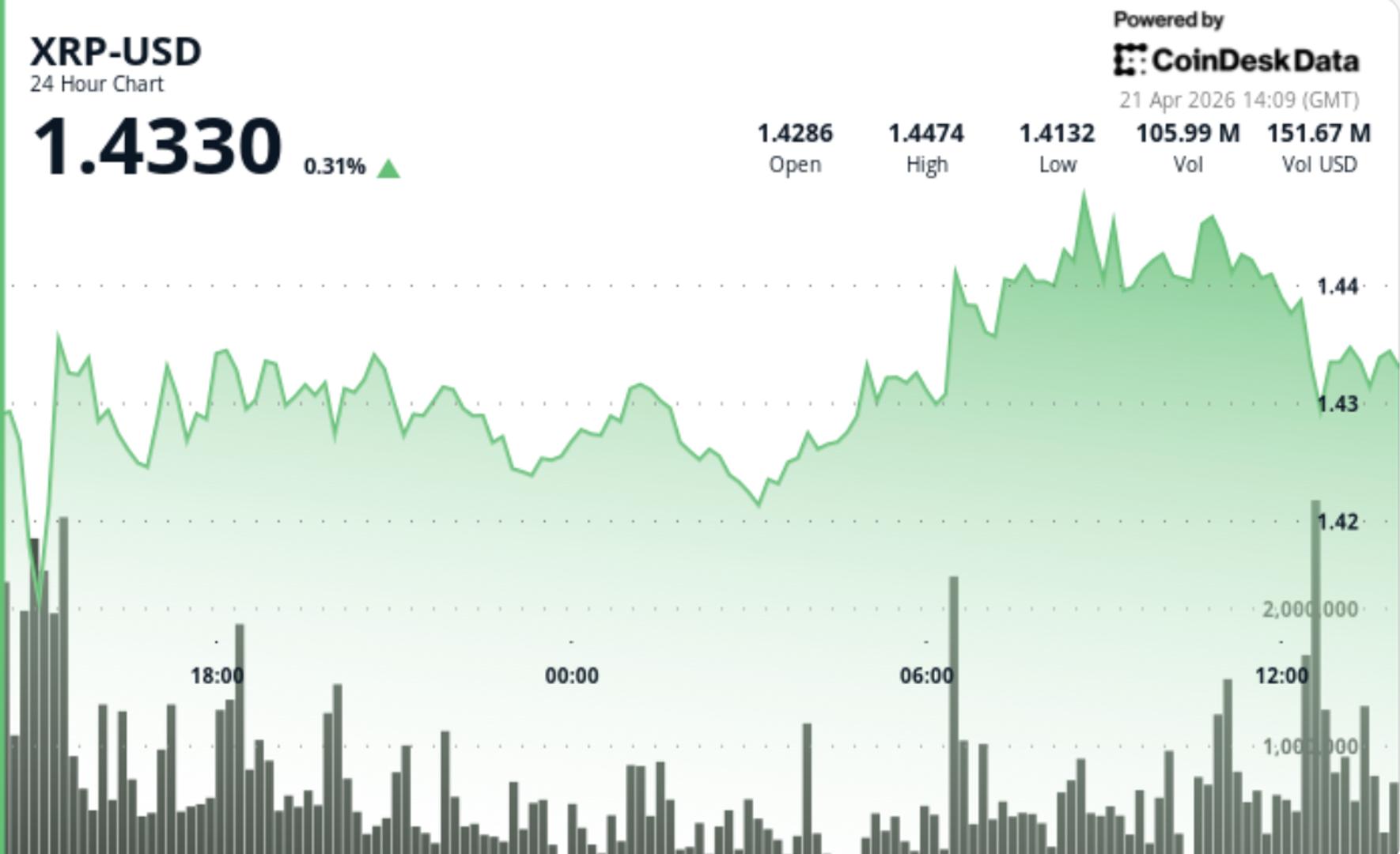
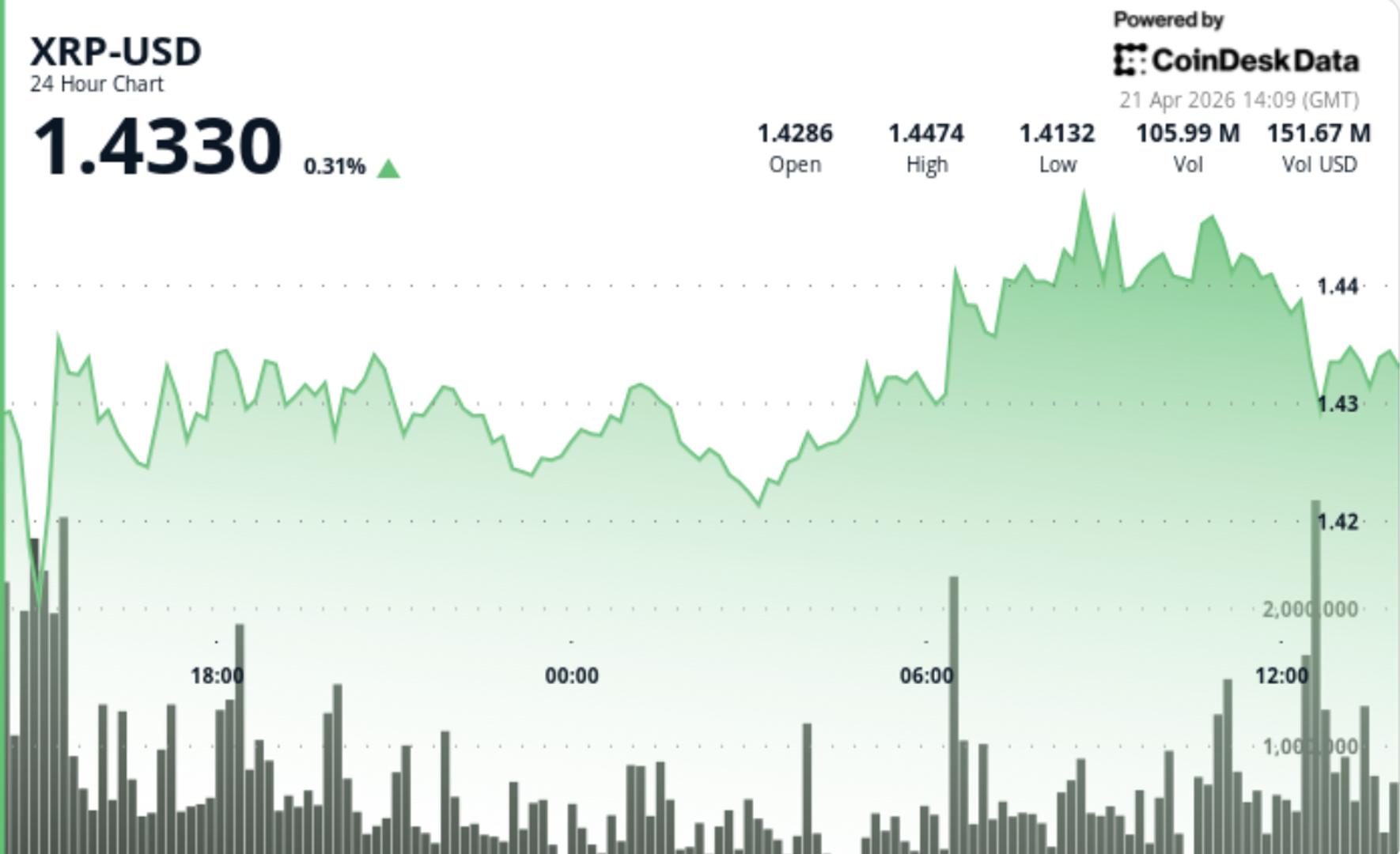
XRP is pushing higher again, and this time the move has volume behind it. The structure looks cleaner than previous attempts, but it is still sitting just below major resistance, which means it has more to prove before this turns into a full breakout.
News Background
• Ripple has outlined a four-phase plan to make the XRP Ledger quantum-resistant by 2028, preparing for a potential “Q-day” scenario where current cryptography could be broken.
• The roadmap includes an emergency fallback allowing migration to quantum-safe accounts and fund recovery using zero-knowledge proofs, followed by gradual integration of post-quantum cryptography without disrupting existing users.
Price Action Summary
• XRP climbed from $1.41 to $1.44, gaining 2.3% over the session on a clear breakout attempt.
• The move was driven by a high-volume push through resistance near $1.435, followed by steady consolidation above $1.44.
• Price is holding near session highs, with buyers defending the $1.438-$1.440 zone.
Technical Analysis
• The key shift is volume confirmation. The breakout came with participation, not thin liquidity.
• Higher lows continue to build, showing buyers are stepping in earlier on each dip.
• A multi-month triangle structure is nearing its apex, which typically precedes a sharp move.
• Despite the strength, XRP is still below the $1.50 level that defines a clearer trend shift.
What traders should watch
• $1.44 is the immediate pivot. Holding above it keeps the breakout structure intact.
• $1.50 remains the key level. A break there would signal a more meaningful shift in trend.
• Failure back below $1.42 would suggest this was another range-bound move rather than a breakout.

Det er ikke alle dager man kan spille casino online med norsk kundeservice. Men for de som er ute etter en unik erfaring, er det nå mulig å velge et casino som tilbyr denne tjenesten. I denne artikkelen vil vi se nærmere på hva det innebærer å spille casino med norsk kundeservice og hvilke fordele det kan gi.
Et norsk casino er et casino som er lisensiert og godkjent av norske myndigheter, og som tilbyr spesifikke tjenester og produkter til norske spillere. Dette kan inkludere norske valuta, norske språk og norske support-team som kan hjelpe deg med eventuelle spørsmål eller problemer du kan ha.
Et norsk nettcasino er en type casino som er tilgjengelig på nettet og som kan spilles på en pc, mobil eller tablet. Disse casinoene er ofte lisensiert og godkjent av andre land enn Norge, men de kan likevel tilby norske spillere en unik erfaring.
Casino Norge er et begrep som kan referere til et casino som er basert i Norge eller som tilbyr spesifikke tjenester og produkter til norske spillere. Disse casinoene kan være lisensiert og godkjent av norske myndigheter eller av andre land enn Norge.
norske casino er et begrep som kan referere til et casino som er lisensiert og godkjent av norske myndigheter, men som ikke nødvendigvis er basert i Norge. Disse casinoene kan tilby spesifikke tjenester og produkter til norske spillere, men de kan ikke nødvendigvis ha norske support-team eller andre norske tjenester.
Et casino med norsk kundeservice kan gi deg en unik erfaring som du ikke kan få andre steder. Med et norsk casino kan du spille med norske valuta, kan du kommunisere med support-teamet på norsk og kan du ha tilgang til spesifikke tjenester og produkter som er tilpasset dine behov som norsk spiller.
Men hva er det som gjør et casino med norsk kundeservice så unikt? Det er en kombinasjon av flere faktorer som kan gjøre en casino-erfaring så spesiell. Først og fremst er det den norske kundeservice som kan hjelpe deg med eventuelle spørsmål eller problemer du kan ha. Det er også den norske valuta som kan gjøre det lettere for deg å spille og å holde styr på din økonomi. Og til slutt er det de norske support-team som kan hjelpe deg med eventuelle spørsmål eller problemer du kan ha.
Et casino med norsk kundeservice kan være det perfekte valget for deg som er ute etter en unik erfaring. Med denne typen casino kan du spille med norske valuta, kan du kommunisere med support-teamet på norsk og kan du ha tilgang til spesifikke tjenester og produkter som er tilpasset dine behov som norsk spiller. Så hvis du er ute etter en unik erfaring, er det nå mulig å velge et casino som tilbyr denne tjenesten.
Velg riktig casino for deg selv!
Les mer om casino med norsk kundeservice!
Velkommen til Norges beste kasinoer
Vi er stolte av å kunne tilby deg et av de beste norske casinoene på nettet. Våre trygge norske casinoer er designet for å gi deg en unik og spennende erfaring, hvor du kan spille dine favorittspill og vinne store priser.
Men hva er det som gjør våre norske casinoer så unike? Vi har samlet noen av de viktigste punktene for deg:
- Trygge og sikre betalingsmetoder: Vi tilbyr deg en rekke trygge og sikre betalingsmetoder, slik som Vipps og Bankoverføring, for å sikre at du kan spille på nettet med fullt tillit.
- Stort utvalg av spill: Vi har et stort utvalg av spill tilpasset for norske spillere, inkludert slots, blackjack, roulette og poker.
- 24/7-kundeservice: Vi er her for deg 24/7, hvis du har noen spørsmål eller trenger hjelp med å registrere deg eller åpne en konto.
- Velkomstbonus: Vi tilbyr deg en velkomstbonus på 100% av din første innskudd, opp til 10 000 kr.
- Mobile casino: Vi har et mobile casino som er designet for å fungere optimalt på både iOS og Android-enheter, så du kan spille på nettet hvor som helst.
Vi er stolte av å kunne tilby deg en unik og spennende erfaring i våre norske casinoer. Vi håper du vil ha en god tid hos oss og at du vil komme tilbake for å spille igjen.
Velkommen til Norges beste kasinoer! Vi ser frem til å se deg på nettet.
Kundeservice på norsk – enkel og hurtig
Vi er stolte av å tilby kundeservice på norsk til våre norske kunder. Vi vet at det er viktig for deg som spiller i et norsk nettcasino å føle deg trygg og å ha en god erfaring. Derfor har vi utviklet en kundeservice som er spesifikt designet for norske spillere.
Vi er bevisst om at det kan være frustrerende å ha å komme seg igjennom en masse teknisk språk og å måtte vente i lange køer for å få hjelp. Derfor har vi valgt å tilby en enkel og hurtig kundeservice som er tilpasset dine behov. Våre kundeservice-ekspertene er spesifikt trent for å hjelpe norske spillere med deres spørsmål og problem.
Vi tilbyr en 24/7-kundeservice som er tilgjengelig via e-post, telefon og live-chat. Dette betyr at du kan få hjelp når som helst du trenger det, uansett hvor du er i verden. Vi er også trygge på at våre kundeservice-ekspertene kan hjelpe deg på norsk, så du kan føle deg trygg og å ha en god erfaring.
Vi er stolte av å tilby trygge norske casino-er, og vi er overbevist om at våre kundeservice-ekspertene kan hjelpe deg med å ha en god erfaring. Vi er her for deg og for å hjelpe deg med å ha det beste mulige spillet.
Vi er her for deg!
La oss hjelpe deg med å ha en god erfaring!
Spill og vinne med norsk kundeservice
Er du ute etter å prøve lykke i et trygt og spennende casino-erfaring? Da er du kommet til riktig sted! Våre trygge norske casino er designet for å gi deg en unik og spennende erfaring, hvor du kan spille og vinne med norsk kundeservice.
Våre casino er godkjente av norske myndigheter og er fullt utlagt for å sikre en trygg og spennende spilleerfaring for alle våre kunder. Våre norske casino er utviklet for å gi deg en unik og spennende erfaring, hvor du kan spille og vinne med norsk kundeservice.
Vi tilbyr en bred vifte av spilleautomater og bordspill, der du kan spille og vinne med norske myndigheter. Våre casino er godkjente av norske myndigheter og er fullt utlagt for å sikre en trygg og spennende spilleerfaring for alle våre kunder.
Vi er stolte av å tilby en trygg og spennende spilleerfaring for alle våre kunder. Våre norske casino er utviklet for å gi deg en unik og spennende erfaring, hvor du kan spille og vinne med norsk kundeservice. Vi er her for å hjelpe deg med alt du trenger for å ha en god tid i våre casino.
Trygge norske casino er våre viktigste prioritet. Vi er stolte av å tilby en trygg og spennende spilleerfaring for alle våre kunder. Våre casino er godkjente av norske myndigheter og er fullt utlagt for å sikre en trygg og spennende spilleerfaring for alle våre kunder.
Vi er her for deg, og vi vil gjøre alt for å sikre at du har en god tid i våre casino. Vi tilbyr en bred vifte av spilleautomater og bordspill, der du kan spille og vinne med norske myndigheter. Våre casino er godkjente av norske myndigheter og er fullt utlagt for å sikre en trygg og spennende spilleerfaring for alle våre kunder.
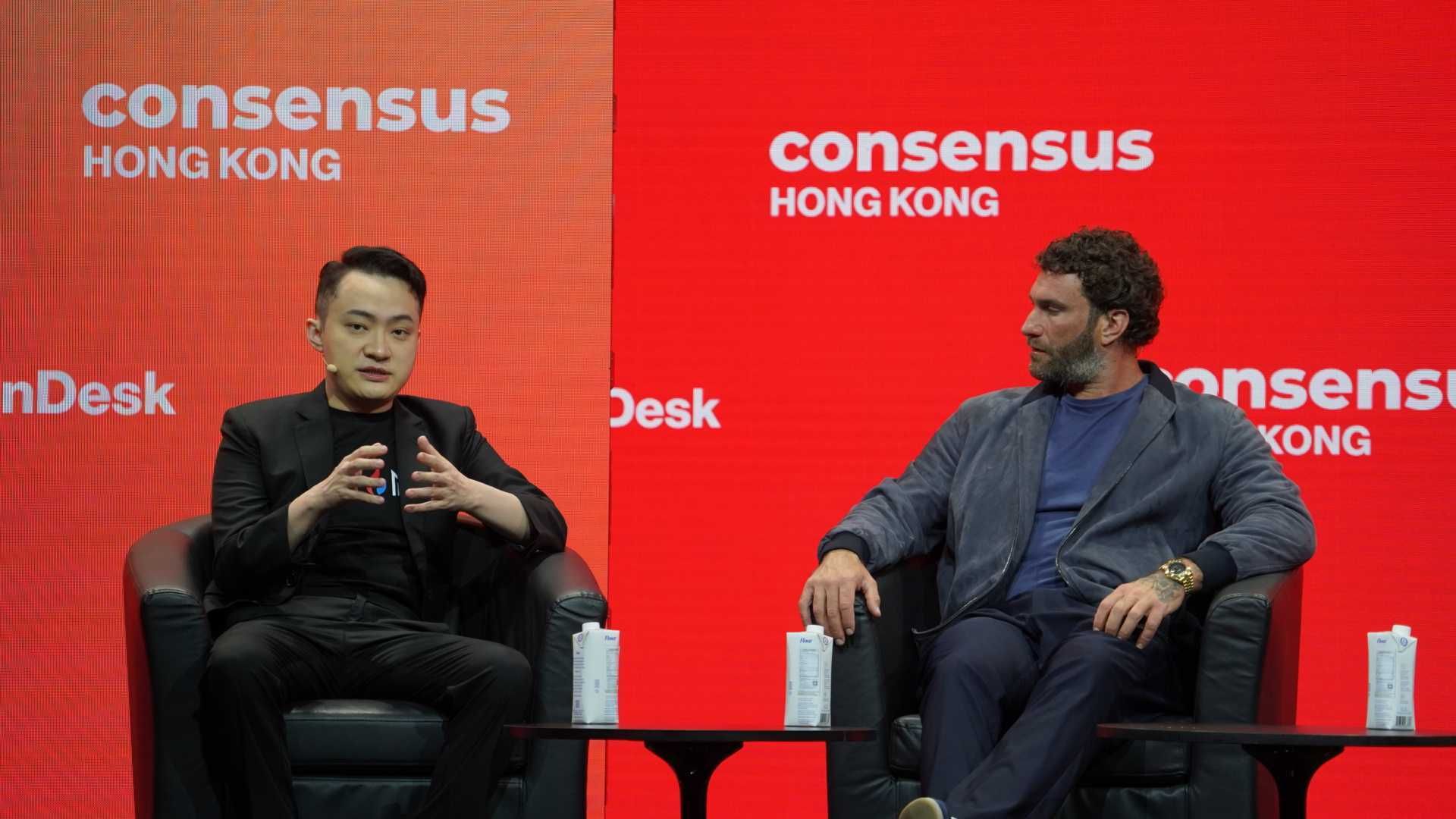
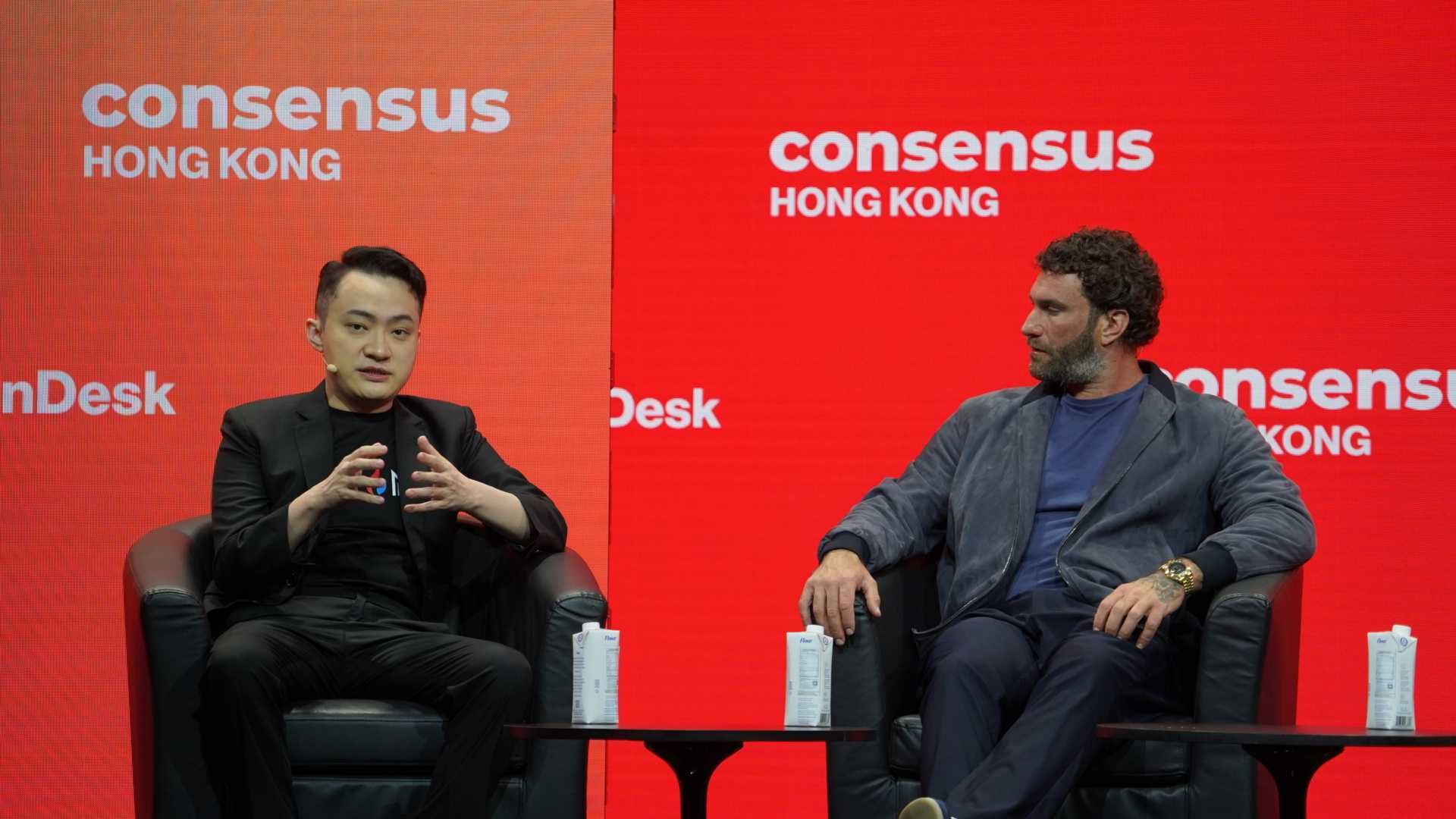
Tron creator Justin Sun sued World Liberty Financial, the stablecoin and crypto firm backed by members of U.S. President Donald Trump’s family, on Tuesday, alleging that the project had unfairly locked up his $WLFI tokens, made fraudulent misrepresentations, and threatened and defamed Sun.
The lawsuit filed Tuesday, which includes a line about Sun’s support for Trump himself, alleged that World Liberty’s leadership had engaged “in an illegal scheme to seize property” in the form of Sun’s tokens, which Sun alleged he had purchased after being solicited by the World Liberty team in 2024.
“At that pivotal time for World Liberty, Mr. Sun invested $45 million to purchase $WLFI tokens from World Liberty not only because of the project’s claims that it would promote adoption of decentralized finance — an issue Mr. Sun cares deeply about and to which he has devoted much of his life’s work — but also because of theTrump family’s association with the project,” the suit said.
World Liberty asked Sun to continue investing through 2025, including through a request to mint World Liberty’s USD1 stablecoin, the filing said. “By July 2025, when it became clear that Mr. Sun would not invest or mint USD1 on their terms, World Liberty principals became hostile toward Mr. Sun.”
“World Liberty induced Plaintiffs to make their investments in World Liberty through fraudulent misrepresentations and omissions about the economic rights and liberties that would come with purchasing $WLFI tokens,” the filing said.
These allegedly fraudulent misrepresentations include statements about the rights token holders had, various public statements World Liberty or its executives made about the governance rights of token holders, and statements about “freedom to transact.”
Sun’s suit also alleged that World Liberty, despite presenting itself as a business operating in the decentralized finance sector, had centralized control over its tokens.
According to the complaint, World Liberty changed the smart contract governing $WLFI in August 2025 to add a “blacklisting” function that allowed the company to freeze tokens in specific wallets. The modification was not put to a governance vote or disclosed to investors, Sun alleges, even as token holders had just approved a proposal to make a portion of the supply tradable
Other allegations in the complaint include that “World Liberty made two overt threats” to Sun and his businesses. Chase Herro, one of World Liberty’s co-founders, allegedly threatened to burn Sun’s $WLFI tokens if Sun did not ask for his tokens to be burned.
“Second, Mr. Herro also falsely claimed that the know-your-customer (‘KYC’) documentation submitted by Mr. Sun and the Sun Companies in connection with their $WLFI token purchases was inadequate,” the filing said.
Herro threatened to report Sun to U.S. authorities, the suit alleged.
Chunks of the lawsuit were redacted. Another filing attached to the lawsuit cited a confidentiality provision, saying Sun’s team was giving the World Liberty team an opportunity to decide whether or not these redacted provisions should remain sealed.
In a post on X, Sun said he had “tried in good faith to resolve this situation.”
“All I want is to be treated the same as every other early investor who received tokens — no better, no worse,” he said.
A spokesperson for World Liberty Financial said they had no comment on the lawsuit.
“I also want the community to know that I strongly oppose the new governance proposal World Liberty published on April 15,” Sun said in his post.
Since Trump took office, Sun has visited the U.S. after previously staying away from the country. He was a guest at Trump’s first memecoin dinner (tied to a different Trump-linked crypto project) last year.
Sun settled charges with the U.S. Securities and Exchange Commission last month, agreeing to pay a $10 million fine to resolve a case brought by the previous presidential administration.
Crypto World
Bitcoin price climbs to $77,500 on Trump ceasefire extension, Strategy’s $2.5 billion buy


Bitcoin is breaking out of the Iran-headline chop.
Bitcoin traded at $77,541 on Wednesday morning, up 2.2% over 24 hours and 4.3% on the week, after Trump said he would extend the Iran ceasefire indefinitely and Strategy disclosed the purchase of 34,164 BTC for $2.54 billion. Ether rose 2.1% to $2,366, BNB climbed 1.3% to $640, and Solana gained 1.8% to $87. The only red in the top 10 was a trickle of 0.1% declines in stablecoins and Tron.
S&P 500 futures rose 0.5% and Nasdaq 100 futures gained 0.6% after Trump’s extension, though the underlying benchmarks closed lower Tuesday as talks briefly wobbled. Brent crude hovered near $98 a barrel. The MSCI Asia Pacific Index slipped 0.7% as investors weighed how long the Middle East conflict runs.
Trump blamed negotiation collapses on what he called a “seriously fractured” leadership structure in Tehran, and said the US would hold off on fresh attacks while keeping its Strait of Hormuz blockade in place.
Strategy’s buy is the largest bitcoin purchase by the company since November 2024. The 34,164 BTC acquisition at an average $74,395 per coin brings the firm’s holdings to 815,061 BTC, bought for $61.6 billion at an average cost basis of $75,527. With bitcoin at $77,541, the position is now modestly in profit for the first time in months.
Spot flows back the move. Global crypto funds pulled in $1.4 billion last week according to CoinShares, the strongest week of inflows since mid-January. Bitcoin took $1.12 billion, Ethereum $328 million, Chainlink $5 million, and Sui $2 million. XRP saw $56 million in outflows and Solana $2 million, despite both trading higher on price.
Two structural signals point the same direction. Bitcoin is now holding above the realized price of short-term holders at around $69,400 per analyst Darkfost, the level at which recent buyers are sitting on gains rather than losses, which historically reduces the odds of a cascade liquidation if sentiment reverses.
Separately, a Nomura survey found 65% of Japanese institutional investors now hold bitcoin for portfolio diversification, with 31% viewing the market outlook positively and most planning 2% to 5% allocations over the next three years.
Whether bitcoin can hold $77,000 through the European session depends on how markets price the ceasefire extension against continued Strait of Hormuz disruption.
A clean break above $80,000 would confirm the 46-day funding rate compression is flipping into a short squeeze. A reversal below $75,000 would mean the extension already priced in and the rally needs a fresh catalyst.
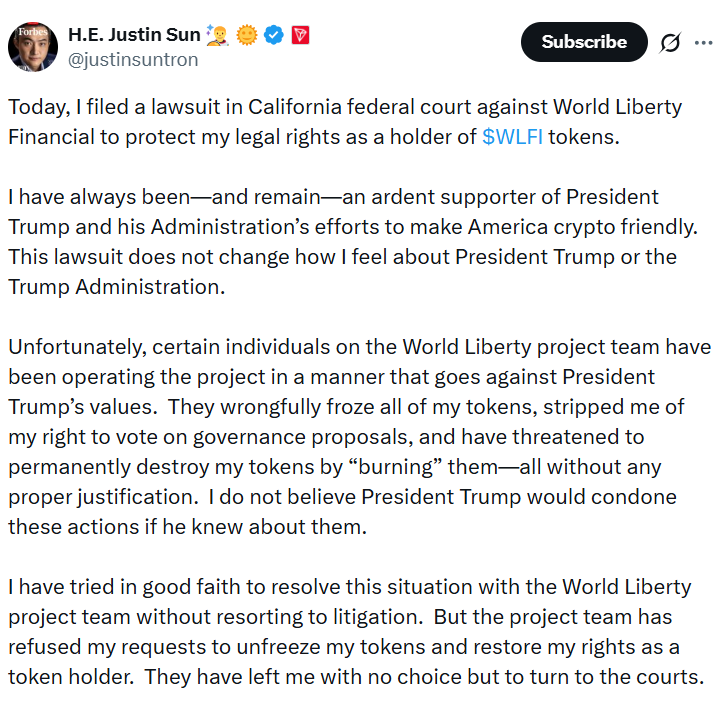
Sun said the lawsuit is to protect his rights as a WLFI token holder and doesn’t change his support of US President Donald Trump and his administration’s efforts to make the US crypto-friendly.
Tron founder Justin Sun said he is suing Trump-family-backed World Liberty Financial for allegedly freezing his tokens and threatening to burn them “without any proper justification.”
In a post to social media on Wednesday, Sun said the suit, filed in a California federal court, was meant to protect his rights as a token holder.
“I have tried in good faith to resolve this situation with the World Liberty project team without resorting to litigation. But the project team has refused my requests to unfreeze my tokens and restore my rights as a token holder. They have left me with no choice but to turn to the courts,” he added.
Sun is the largest individual investor in World Liberty, a project tied closely to the Trump family.

Sun previously threatened legal action earlier this month over lengthy lockup periods for WLFI’s governance token and accused WLFI’s recent governance proposal of lacking transparency, saying more than 76% of the voting tokens came from 10 wallets.
Related: World Liberty burns 47M tokens in bid to pump price as slide continues
At the time, the WLFI project team said on X that the claims were “baseless allegations” and added, “We have the contracts. We have the evidence. We have the truth. See you in court pal.”
Cointelegraph has contacted the Tron and World Liberty Financial teams for additional comment about the lawsuit.
Meanwhile, Sun said on X that the lawsuit doesn’t change his views on President Donald Trump or his administration.
“Unfortunately, certain individuals on the World Liberty project team have been operating the project in a manner that goes against President Trump’s values,” Sun said.
Crypto World
Chinese crypto mogul Li Lin’s private trading arm is set to move into a Hong Kong-listed wealth firm
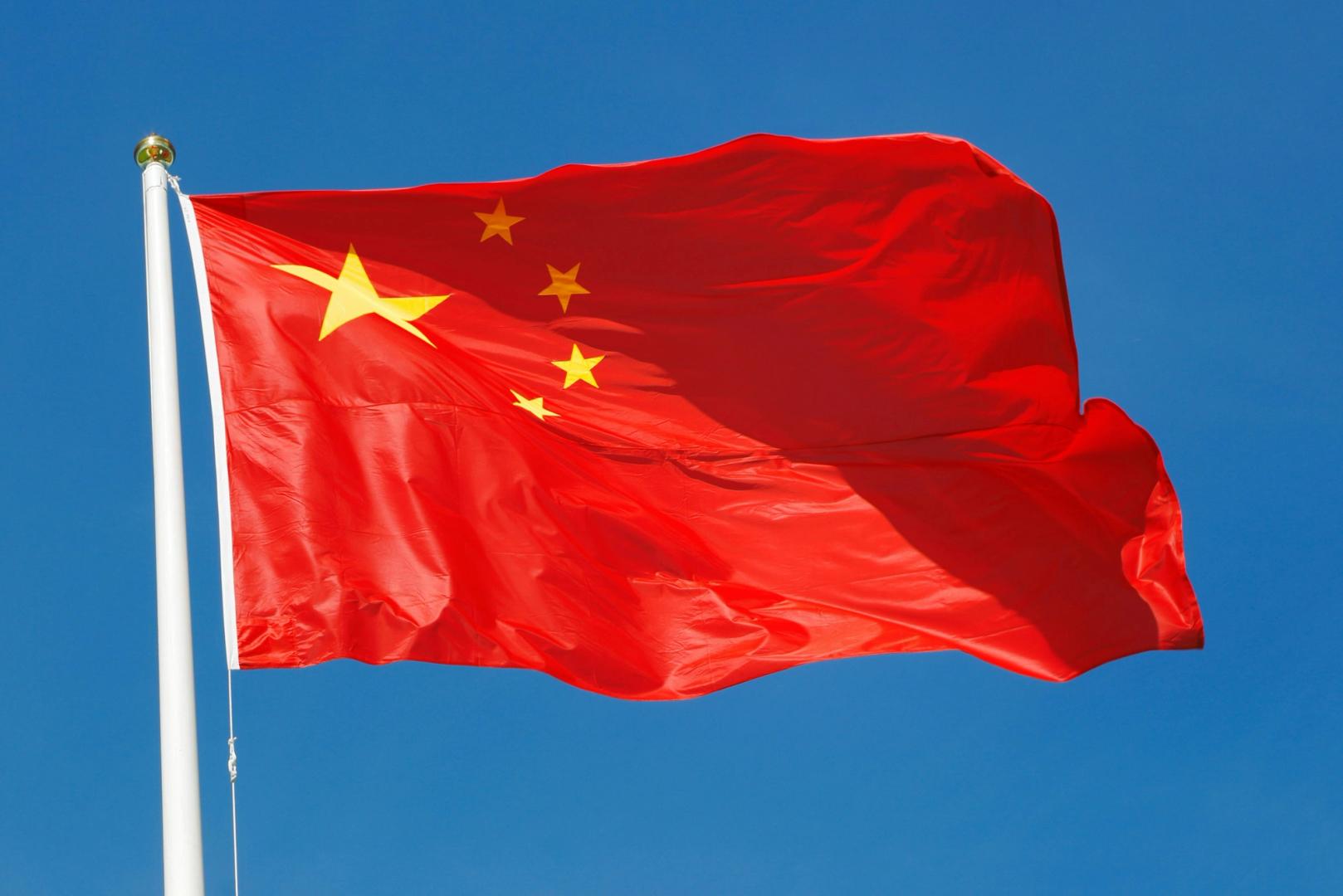
Chinese crypto billionaire Li Lin’s private trading empire will soon move into a Hong Kong-listed company he controls, in a move designed to cater to growing investor demand for digital assets.
That Hong Kong-listed firm is Bitfire, a wealth management company, where Li is the largest shareholder. Bitfire said Wednesday that it will pay $1.6 million to acquire a trading system and investment team from Li’s own family office Avenir Group, according to Reuters.
While structured as a purchase, the deal effectively transfers part of Li’s in-house crypto operation into a publicly listed vehicle, giving it a clearer path to attract institutional investors.
The timing reflects a broader shift in the region. Mainland China has banned crypto trading since 2021, but Hong Kong is positioning itself as a regulated hub for digital assets, drawing interest from firms looking for a compliant base. Hong Kong recently awarded stablecoin licenses to to HSBC and Standard Chartered.
By acquiring Avenir’s capabilities, Bitfire plans to roll out a bitcoin-focused strategy, “Alpha BTC,” targeting more than 10,000 bitcoins, worth about $760 million, in assets within a year.
The strategy will seek returns through derivatives trading, including options tied to bitcoin and products like the IBIT.
Avenir has built a significant position in bitcoin ETFs, holding 18.3 million shares of IBIT, issued by BlackRock, valued at about $908 million as of the end of 2025, as per the company’s regulatory filing.
Li founded Huobi, now known as HTX, and built it into one of the world’s largest crypto exchanges before selling a controlling stake to Justin Sun for about $1 billion in 2022. He has since focused on managing investments through Avenir.
US Vice President JD Vance has called off his planned trip to Pakistan, according to AP, as tensions tied to the US–Iran war escalate again.
The move signals rising uncertainty around diplomatic efforts and comes as markets react sharply to renewed geopolitical risk.
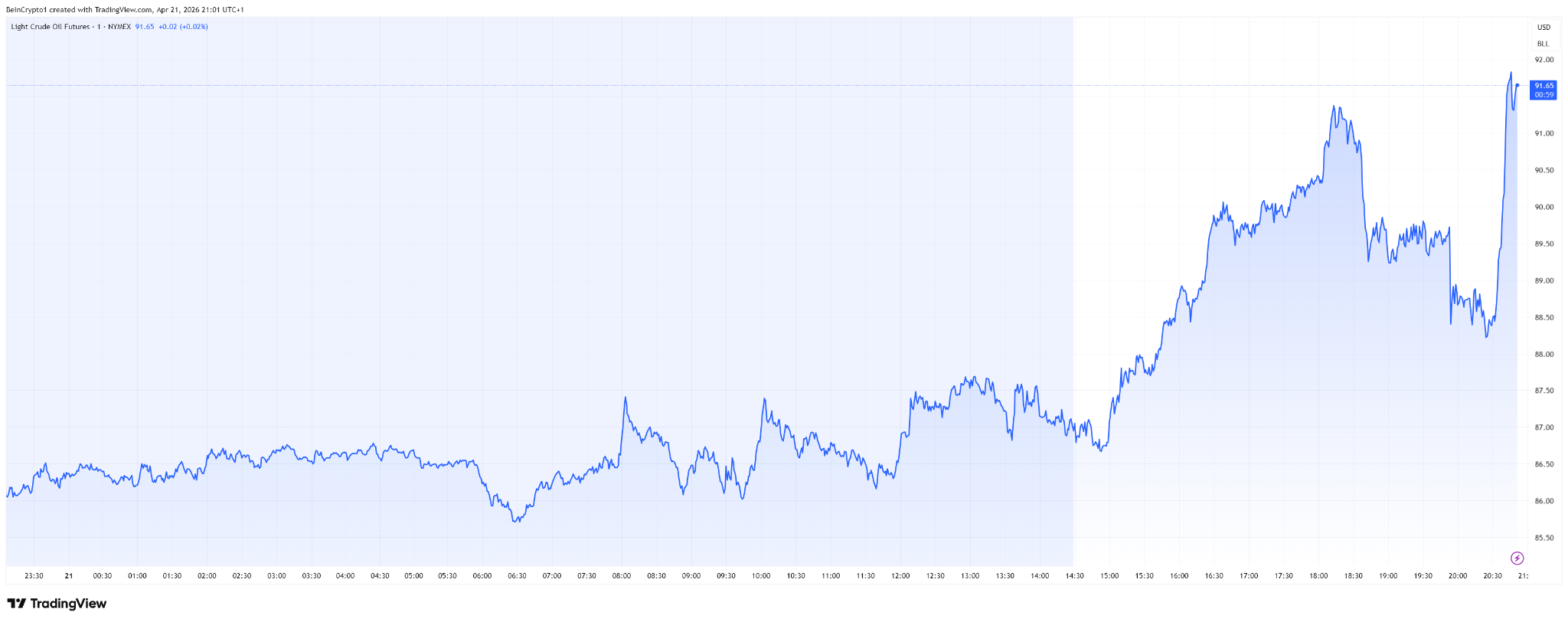
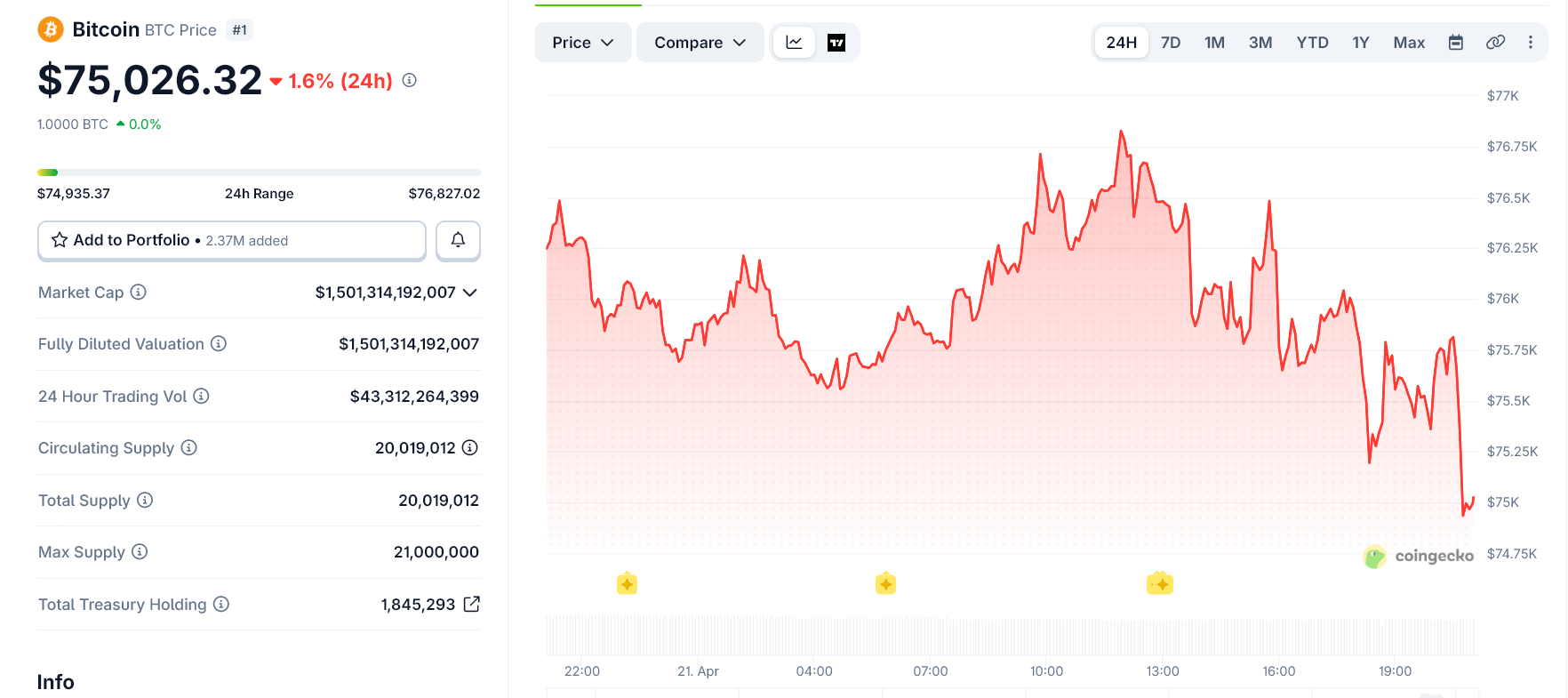
Oil prices jumped immediately following the news, extending gains tied to fears of disruption in the Strait of Hormuz.
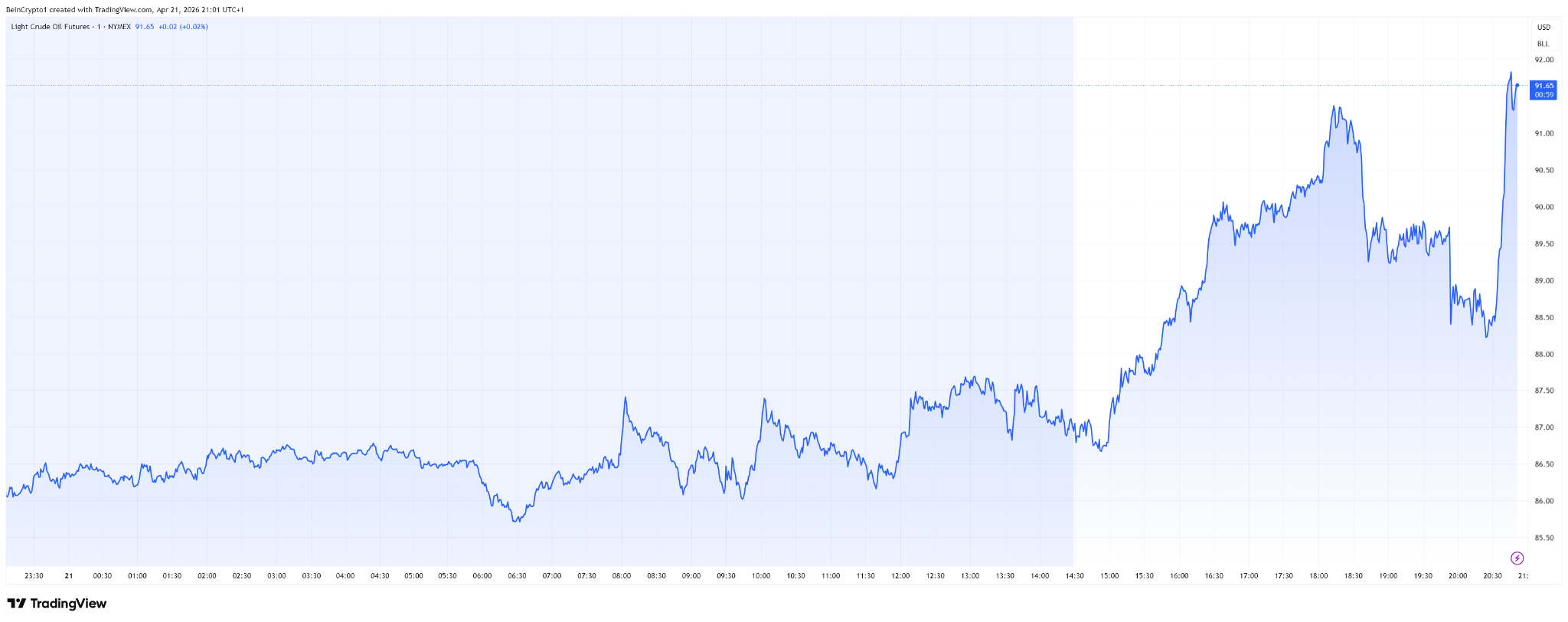
At the same time, Bitcoin fell sharply toward the $75,000 level, while the S&P 500 moved lower on the day, reflecting a broad risk-off shift across global markets.
Crypto derivatives data shows forced selling accelerated the move. Over the past 24 hours, liquidations crossed $250 million, with a large share coming from long positions. This indicates traders were caught offside as sentiment flipped quickly.
The latest reaction fits a pattern seen throughout the past week. Markets have been tightly linked to developments in the US–Iran situation, with oil acting as the primary transmission channel.
Earlier on April 13, the US escalated tensions by moving to enforce a naval blockade near Iran, raising immediate concerns about global energy supply. Oil prices began climbing as traders priced in the risk to shipping through Hormuz.
By April 15, sentiment briefly improved after reports suggested a possible two-week ceasefire window. Stocks rallied sharply, pushing the S&P 500 to fresh highs, while oil pulled back from earlier spikes. Crypto also stabilized during this period.
However, the tone shifted again on April 16 after a US congressional vote failed to advance a war-limiting resolution.
Bitcoin dropped around 4% following the development, reinforcing its role as a macro-sensitive asset rather than a safe haven.
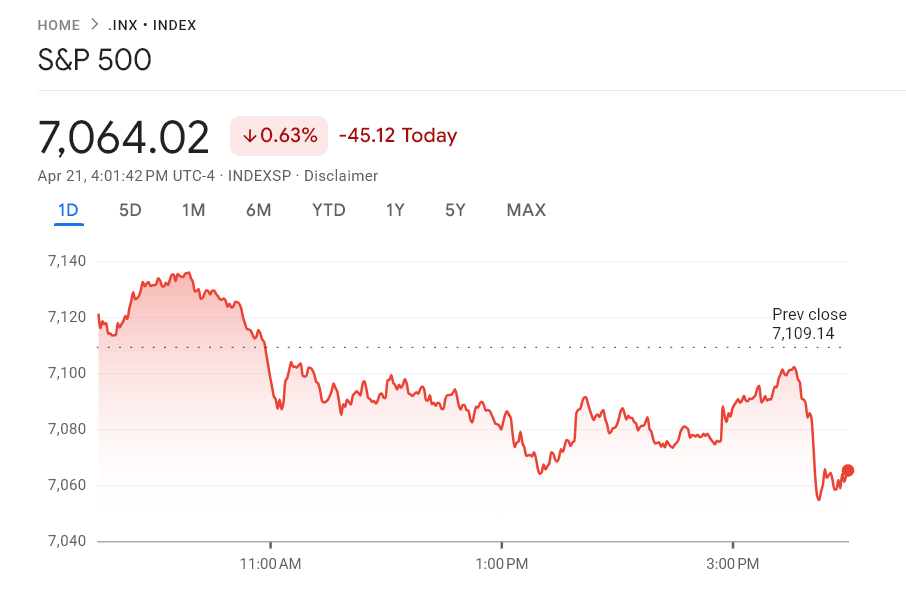
Tensions continued to build over the weekend. Reports of US actions targeting Iranian vessels and Iran’s response in the region kept markets on edge. Oil resumed its upward trend, while risk assets weakened.
By April 20, the divergence became clearer. Oil surged again on renewed conflict risk, while Bitcoin and major altcoins moved lower. The correlation between energy prices and crypto weakness strengthened.
The latest move on April 21 adds to that trajectory. Vance’s canceled trip suggests diplomatic uncertainty at a critical moment, and markets are reacting accordingly.
Overall, the past week shows a consistent pattern. Escalation drives oil higher and pressures both equities and crypto. Temporary de-escalation supports risk assets, but those moves have been short-lived.
The post JD Vance Cancels Pakistan Trip as Iran Tensions Spike, Markets Slide appeared first on BeInCrypto.
new BBC crime drama is visually dazzling but emotionally thin
Taiwan stocks higher at close of trade; Taiwan Weighted up 0.42%

Justin Sun sues Trump-backed World Liberty over WLFI token freeze

Manchester United reach agreement with Casemiro over contract clause amid transfer speculation

Steven Gerrard disagrees with Gary Neville over ‘shock’ Chelsea and Arsenal claim | Football

US brings back mandatory military draft registration


-

 News Videos7 days ago
Secure crypto trading starts with an FIU-registered
-

 Fashion4 days ago
Weekend Open Thread: Theodora Dress
-

 Politics4 days ago
Palestine barred from entering Canada for FIFA Congress
-

 Sports5 days ago
NWFL Suspends Two Players Over Post-Match Clash in Ado-Ekiti
-
Entertainment2 days ago
NBA Analyst Charles Barkley Chimes in on Ice Spice McDonald’s Fiasco
-

 Business3 days ago
Powerball Result April 18, 2026: No Jackpot Winner in Powerball Draw: $75 Million Rolls Over
-

 Politics3 days ago
Zack Polanski demands ‘council homes not luxury flats for foreign investors’
-

 Crypto World4 days ago
Russia Pushes Bill to Criminalize Unregistered Crypto Services
-

 Politics1 day ago
Gary Stevenson delivers timely reminder to register to vote as deadline TODAY
-

 Tech3 days ago
Auto Enthusiast Scores Running Tesla Model 3 for Two Grand and Turns It Into Bare-Bones Go-Kart
-

 Tech6 days ago
‘Avatar: Aang, The Last Airbender’ Leaked Online. Some Fans Say Paramount Deserves the Fallout
-
 Business5 days ago
Creo Medical agree sale of its manufacturing operation
-

 Crypto World4 days ago
Russia Introduces Bill To Criminalize Unregistered Crypto Services
-

 Sports6 days ago
British climbers complete new route in Swiss Alps
-

 Sports6 days ago
“Felt Much Better Today”: Josh Hazlewood Opens Up On His Recovery Win Over LSG
-
 Crypto World3 days ago
Kelp DAO rsETH Bridge Hack Drains $292M as DeFi Losses Top $600M in Two Weeks
-

 Tech6 days ago
Ford EV and tech chief leaving automaker
-

 Business6 days ago
Cheaper Doritos and Lays helps PepsiCo win back struggling snackers
-
 Entertainment6 days ago
Clavicular Says Streaming May Not Work Without Substances
-

 Entertainment6 days ago
Ruby Rose Accuses Katy Perry Of Sexual Assault, Police React
You must be logged in to post a comment Login