






A 7.4-magnitude earthquake rattled western Colombia on Monday, causing widespread destruction and leaving at least 111 people dead.
Colombian President Abelardo De La Espriella, who was sworn into office just days before the disaster struck the nation, said in a post on X on Monday morning that he had “directly assumed leadership of the emergency response.” In another post that morning, he said that he was traveling to the nation’s capital, Bogotá, “to focus on addressing the emergency facing our country.”
“To the Colombians who are going through difficult times today, I want to say: you are not alone,” he said. “You have a President who cares deeply for his people and who will do everything necessary to protect you, support you, and move forward together in rebuilding the affected regions.”
Here’s what to know about the earthquake.
When and where did the earthquake happen?
The epicenter of the earthquake was near San José del Palmar, which is a community west of the country’s capital that has a population of 5,000 and is located in the Chocó region. Other cities nearby, including Pereira, Manizales, and Cali, were impacted, too.
Neighboring countries, including Venezuela, Ecuador, and Panama, also felt the quake.
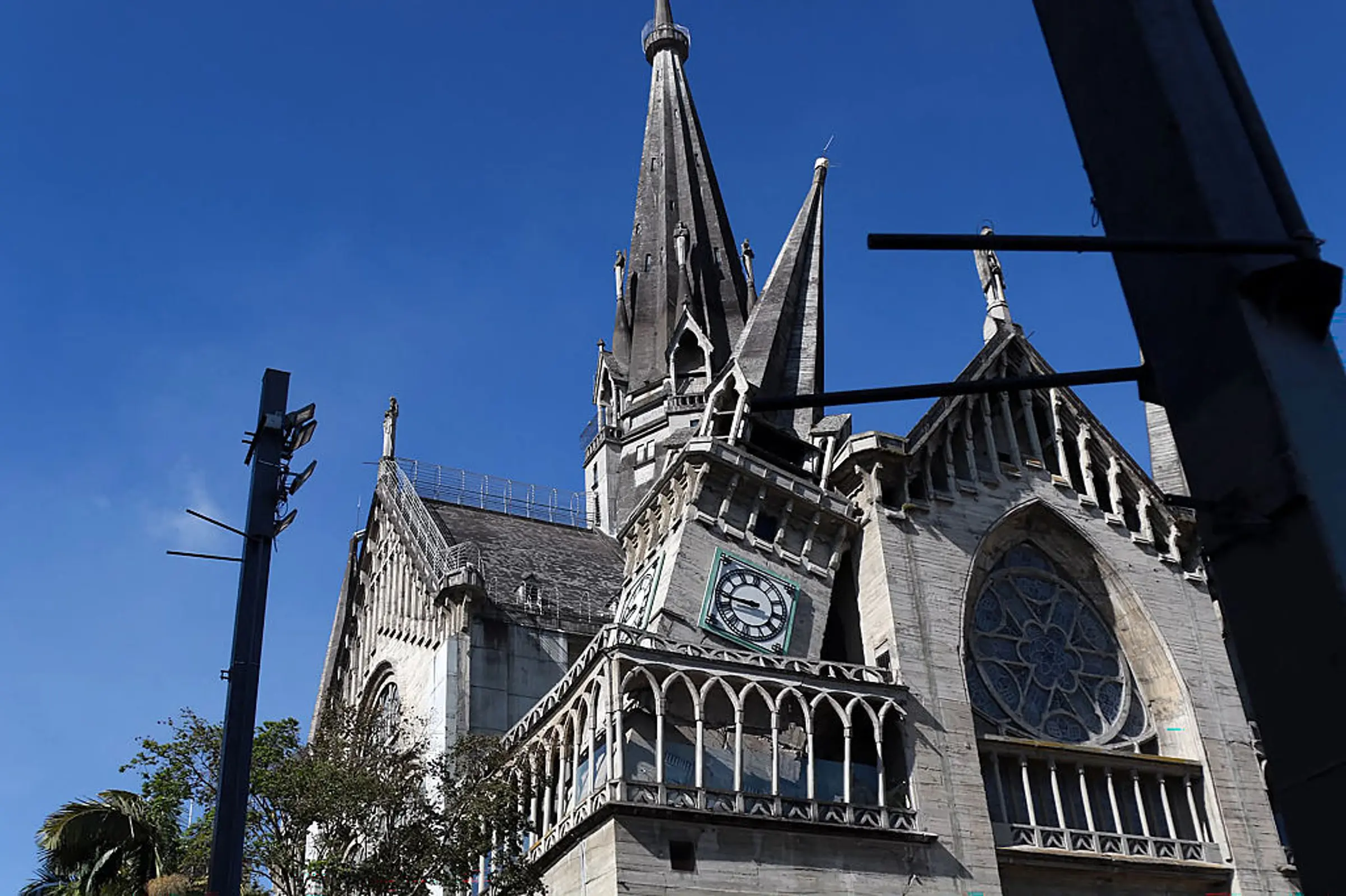
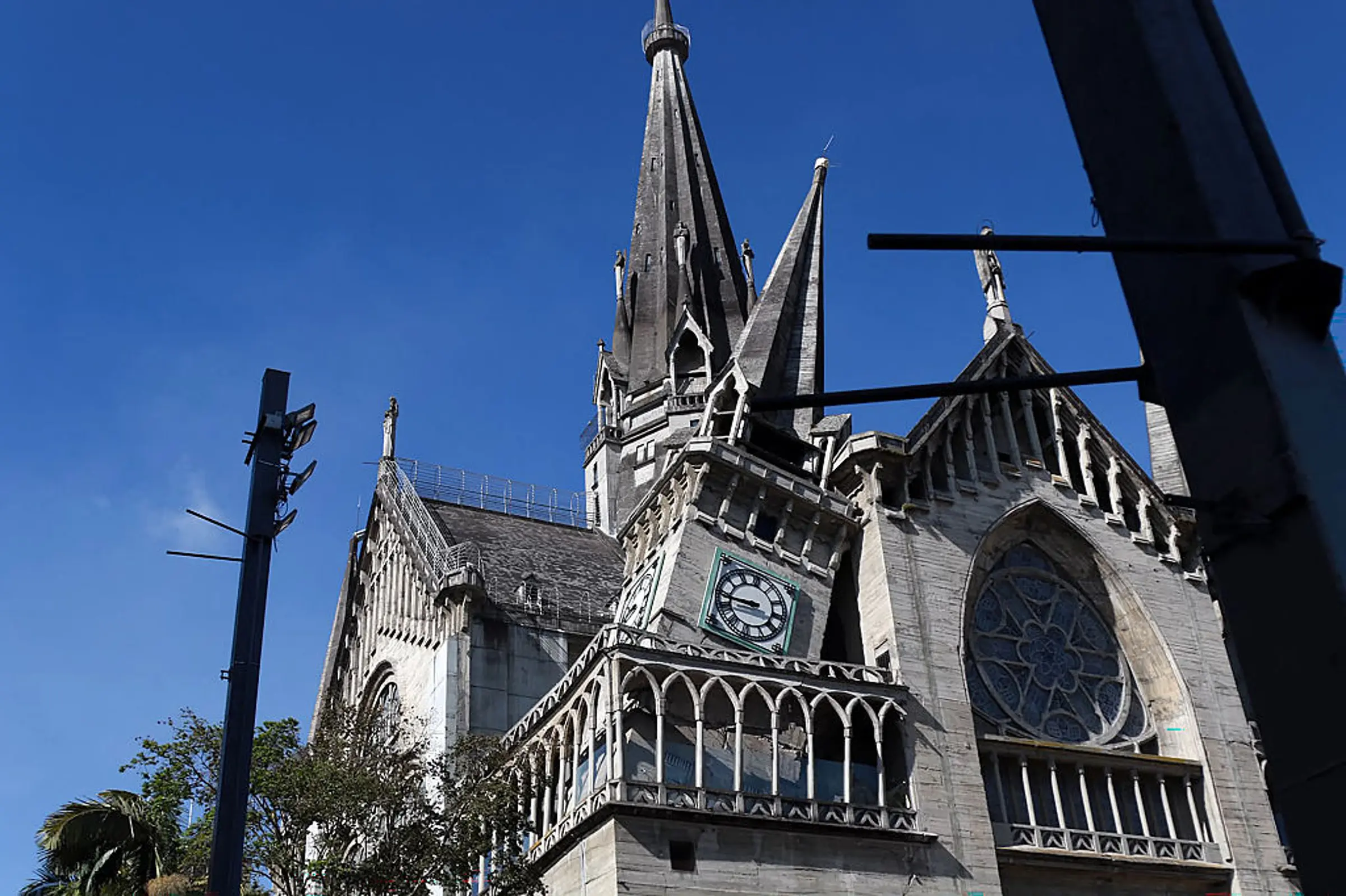
The damage sustained by the Manizales Cathedral are pictured after the earthquake in Manizales, Colombia, on Aug. 10, 2026. Andres Valencia—AFP/Getty Images
How strong was the earthquake?
USGS reported that the earthquake that struck Colombia had a 7.4 magnitude. “Magnitude” indicates the size of a quake—one with a 5.3 magnitude, for instance, is a “moderate” quake, whereas one with a 6.3 is considered “strong,” according to USGS. The back-to-back quakes that shook Venezuela in June and left more than 6,000 people dead each had a magnitude above 7.
The Colombian Geological Service reported that the quake had a depth of about 103 km, in addition to its 7.4 magnitude, “making it the strongest earthquake recorded in Colombia in the last decade.” The agency also said that two aftershocks—with magnitudes of 2.8 and 4.8—have been recorded so far on Monday
What is the death toll?
The disaster in Colombia left at least 111 people dead, according to the AP. The majority of the deaths reported so far occurred in the region of Risaralda—the capital of which is Pereira—where at least 40 people were killed, the AP reported. Authorities said that at least 27 more people were killed in the nearby region of Valle del Cauca.
De La Espriella said on Monday that at least 87 people were wounded by the quake, the AP reported.
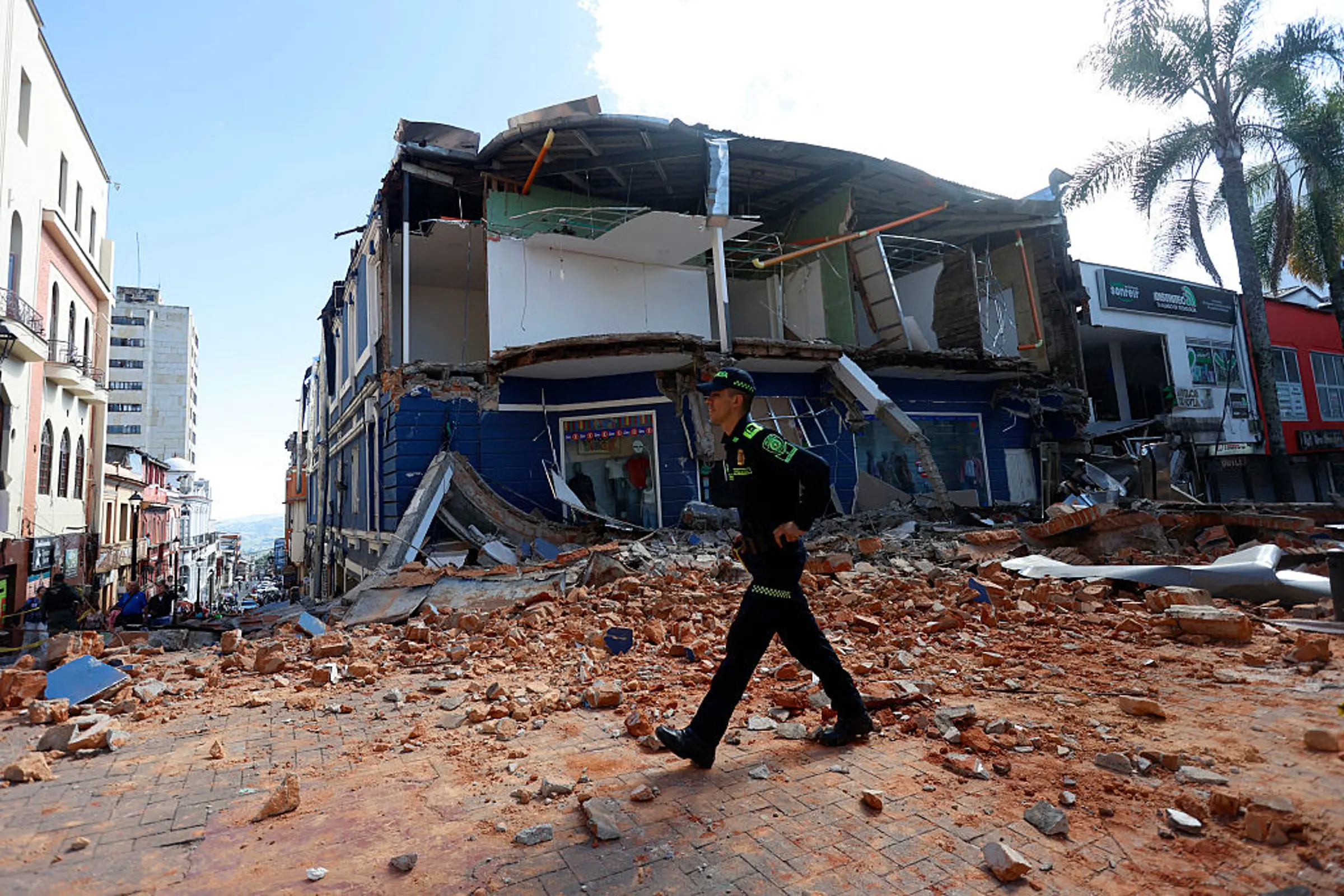
A police officer walks amid the debris of a damaged commercial store after the earthquake in Manizales, Colombia, on Aug. 10, 2026. Jonh Bonilla—AFP/Getty Images
What damage has been reported?
The total extent of the damage caused by the earthquake is not yet clear hours after it hit, but videos and photos shared by news outlets showed buildings in multiple cities collapsing and being destroyed by the disaster.
Local officials said that they had received reports of many people trapped under buildings that had collapsed.
The International Rescue Committee (IRC) said that its teams are monitoring the situation.
“Our teams near the epicenter in Chocó are reporting damages to infrastructure, including to hospitals and clinics,” Nicole Kast, IRC’s Country Director for Colombia, Venezuela and Ecuador, said in a statement. “Impacted communities were already facing armed conflict and high levels of poverty before the ground began to shake. The IRC is monitoring the situation and stands ready to scale up its response as the full extent of the destruction becomes clear.”
Colombia’s civil aviation authority said in a post on X on Monday morning that it had received reports of damage at airports in Pereira, Manizales, Quibdó, Armenia, Cartago, and Buenaventura, and that operations there were being suspended “for safety reasons” until the damage had been assessed.
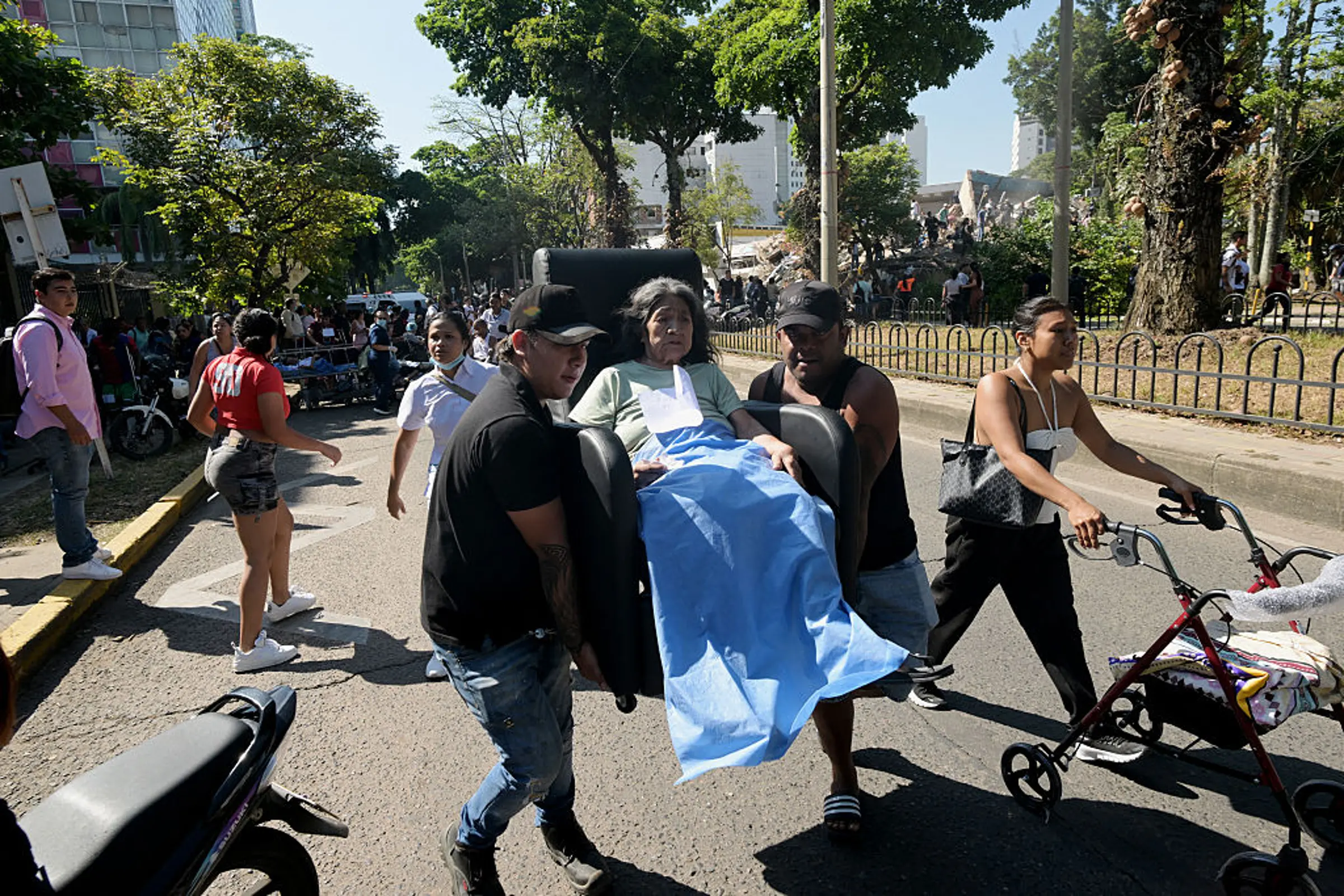
An elderly woman is carried on furniture near a collapsed building after an earthquake in Cali, Colombia, on Aug. 10, 2026. Joaquin Sarmiento—AFP/Getty Images
Is there a tsunami threat after the earthquake?
While earthquakes can sometimes trigger tsunamis, the U.S. Tsunami Warning System said on Monday that there was no warning, advisory, watch, or threat for a tsunami after the earthquake in Colombia.















































You must be logged in to post a comment Login