

Crypto World
Legal Battle Over 39,069 Inactive Bitcoin Wallets Unfolds in New York Court


Key Takeaways
-
Legal action in New York targets nearly 40,000 inactive Bitcoin addresses
-
Court case applies traditional abandoned property statutes to cryptocurrency holdings
-
Legal proceedings challenge fundamental principles of Bitcoin self-custody
-
Plaintiff claims discovery of wallets through proprietary algorithmic methods
-
Case establishes precedent for how courts handle long-dormant digital assets
A groundbreaking legal proceeding in New York has thrust the issue of inactive Bitcoin wallets into the spotlight, creating a potential landmark case for cryptocurrency property rights. A plaintiff identified as Noah Doe has initiated court proceedings seeking legal ownership of 39,069 Bitcoin addresses that have shown no activity for extended periods. This unprecedented case forces courts to grapple with how traditional property abandonment statutes apply to decentralized digital currencies.
Legal Framework Behind the Bitcoin Wallet Claim
On May 1, 2026, Doe submitted his legal petition to the Supreme Court of New York, invoking New York Personal Property Law Article 7-B as the statutory foundation. The legal strategy characterizes these digital holdings as discovered property rather than misappropriated or exchange-managed funds.
The petition lists Doe alongside two Wyoming-incorporated entities as co-plaintiffs. Their objective is securing a declaratory judgment that would establish legal ownership rights over the contested wallets and any cryptocurrency they contain. The core argument maintains that ownership should transfer due to the absence of legitimate claimants stepping forward.
According to the filing, Doe identified 42,001 potentially abandoned wallets using a proprietary algorithmic system he developed. Following protocol for found property, he notified the New York Police Department. Through subsequent verification efforts, 2,932 wallets were removed from consideration, leaving 39,069 addresses at the center of the legal dispute.
Technical and Legal Challenges in the Bitcoin Ownership Case
This legal challenge centers on fundamental issues of notification, possession, and statutory abandonment. Bitcoin wallets operate through cryptographic private keys, meaning courts cannot simply reassign cryptocurrency through conventional judicial orders. Any favorable ruling would carry symbolic and legal significance without enabling direct technical transfer.
Documentation shows Doe attempted blockchain-based notification by embedding messages via OP_RETURN transactions in June 2025. These on-chain communications pointed wallet controllers toward abandonment documentation and a formal claims procedure. A mandatory public notification window then extended through October 10, 2025.
Technical scrutiny has identified potential weaknesses in the notification approach. Blockchain analysts have observed that certain notices targeted P2PKH address formats, while the actual cryptocurrency resides in P2PK outputs. This technical discrepancy could undermine arguments that legitimate owners received adequate notification.
Broader Implications for Cryptocurrency Self-Custody
The targeted addresses include wallets associated with early-stage miners and other historically significant holders. Investigation has connected some listed addresses to cryptocurrency from the Satoshi Nakamoto era and potentially to assets linked to the Mt. Gox security breach. The complete inventory of contested addresses spans 901 pages of court documentation.
This litigation presents fundamental challenges to cryptocurrency self-custody principles. Extended periods of wallet inactivity could indicate lost cryptographic keys, deceased owners, or deliberate long-term storage strategies—not necessarily legal abandonment. Doe’s position maintains that proper notification combined with owner silence creates grounds for ownership transfer.
Traditional property law faces unprecedented challenges when applied to Bitcoin, which operates without centralized control or administration. While courts might bind regulated entities like exchanges if contested funds eventually move through their platforms, the [[LINK_START_2]]Bitcoin[[LINK_END_2]] protocol itself cannot reallocate cryptocurrency without the corresponding private keys.


Crypto World
From Paper Assets to Programmable Assets: The Evolution of Ownership in the Digital Age

For centuries, ownership has been documented through paper-based systems. Stocks were represented by physical certificates, property rights were recorded in filing cabinets, bonds existed as printed documents, and contracts required signatures on paper. While these systems formed the foundation of modern finance, they were often slow, expensive, fragmented, and vulnerable to inefficiencies.
Today, a new transformation is underway. The rise of blockchain technology is enabling the shift from paper assets to programmable assets—digital assets that can carry ownership rights while also executing predefined rules automatically. This evolution has the potential to reshape financial markets, improve transparency, and unlock entirely new forms of economic activity.
As the world moves toward a more connected and automated financial system, programmable assets may become one of the most important innovations of the digital economy.
What Are Paper Assets?
Paper assets refer to traditional financial and legal instruments whose ownership is documented through physical or centralized records. Examples include:
- Stock certificates
- Bonds
- Real estate titles
- Insurance contracts
- Commercial agreements
- Government-issued securities
Although most modern institutions have digitized their recordkeeping, the underlying infrastructure remains heavily dependent on centralized databases, intermediaries, manual verification processes, and legal paperwork.
These systems often require:
- Multiple intermediaries
- Lengthy settlement periods
- High administrative costs
- Jurisdiction-specific procedures
- Significant trust in centralized institutions
While functional, they were designed for an era before global digital networks existed.
The Emergence of Programmable Assets
Programmable assets are digital representations of value or ownership that exist on blockchain networks and contain embedded logic through smart contracts.
Unlike traditional assets, programmable assets do not simply record ownership. They can also perform actions automatically when specific conditions are met.
For example:
- A bond can automatically distribute interest payments.
- A rental property token can automatically distribute income to investors.
- Insurance payouts can be triggered automatically by verified events.
- Tokenized securities can settle instantly upon trade execution.
In essence, programmable assets combine ownership and automation into a single digital object.
Why Programmability Matters
The key innovation is not digitization itself—it is automation.
Traditional financial assets require institutions to process transactions, validate ownership changes, manage distributions, and enforce agreements.
Programmable assets can execute many of these functions directly through code.
This creates several advantages:
Faster Settlement
Traditional securities often settle within one to three business days.
Blockchain-based programmable assets can settle within minutes or even seconds, reducing counterparty risk and freeing up capital.
Reduced Operational Costs
Automation eliminates many repetitive administrative tasks, reducing costs for issuers, investors, custodians, and financial institutions.
Greater Transparency
Every transaction can be recorded on a transparent ledger, allowing participants to verify ownership histories and asset movements.
Enhanced Accessibility
Programmable assets can lower investment minimums, allowing broader participation in markets previously restricted to large institutions.
Continuous Operation
Unlike traditional financial markets that operate within specific hours, blockchain networks can function twenty-four hours a day, seven days a week.
Tokenization: The Bridge Between Physical and Digital Assets
Tokenization is the process of converting ownership rights into blockchain-based tokens.
Virtually any asset can potentially be tokenized, including:
- Real estate
- Stocks
- Bonds
- Commodities
- Intellectual property
- Art collections
- Private equity
- Infrastructure investments
Each token represents a share of ownership, while smart contracts govern how those ownership rights are managed.
This allows traditionally illiquid assets to become more transferable, divisible, and accessible.
For example, a commercial building worth $10 million could be divided into one million digital tokens, allowing investors to own small fractions of the property rather than purchasing the entire asset.
The Rise of Real-World Assets (RWAs)
One of the fastest-growing sectors in blockchain today is the tokenization of real-world assets.
Governments, banks, asset managers, and fintech firms are increasingly exploring ways to bring traditional assets onto blockchain infrastructure.
The appeal is clear:
- Improved efficiency
- Lower costs
- Faster settlement
- Enhanced transparency
- Global investor access
Tokenized treasury bills, corporate bonds, private credit markets, and real estate products are already demonstrating how programmable assets can bridge traditional finance and decentralized finance.
As regulatory frameworks mature, this sector may become one of the largest drivers of blockchain adoption.
Beyond Finance: A New Ownership Layer for the Internet
The impact of programmable assets extends beyond financial markets.
Future applications may include:
Intellectual Property
Creators could receive royalties automatically whenever their content is used or sold.
Supply Chains
Ownership and movement of goods could be tracked and verified in real time.
Digital Identity
Individuals could control and selectively share verified credentials.
Gaming and Virtual Economies
Players could truly own digital assets and transfer them across platforms.
Infrastructure Networks
Energy grids, telecommunications systems, and transportation networks could use programmable assets to coordinate resources automatically.
In each case, ownership becomes dynamic rather than static.
Challenges Ahead
Despite their promise, programmable assets face important challenges.
Regulatory Uncertainty
Governments continue to develop rules regarding digital asset issuance, trading, and custody.
Technical Risks
Smart contract vulnerabilities and coding errors can create security concerns.
Interoperability
Different blockchain ecosystems must communicate effectively to support global adoption.
Institutional Adoption
Large organizations often require extensive compliance, governance, and risk-management frameworks before implementing new technologies.
Addressing these challenges will be critical for long-term success.
The Future of Asset Ownership
The transition from paper assets to programmable assets represents more than a technological upgrade—it reflects a fundamental shift in how ownership is created, transferred, and managed.
Just as the internet transformed communication by digitizing information, blockchain technology is transforming ownership by digitizing value and embedding rules directly into assets themselves.
In the coming decade, investors may own fractions of real estate through tokens, receive automated income distributions from tokenized bonds, and interact with financial products that operate continuously without traditional intermediaries.
The result could be a more efficient, transparent, and accessible financial system where assets are not merely recorded digitally but become intelligent participants in the economy.
Conclusion
The journey from paper assets to programmable assets marks the next stage in the evolution of finance and ownership. By combining digital representation with automated execution, programmable assets have the potential to unlock unprecedented efficiency, accessibility, and innovation across global markets.
While challenges remain, the momentum behind tokenization, smart contracts, and blockchain infrastructure suggests that the future of ownership will be increasingly digital, automated, and programmable. As this transformation unfolds, programmable assets may become the foundation upon which the next generation of financial systems is built.
REQUEST AN ARTICLE

TLDR
- MSFT stock recovered above the $400 level after falling from about $466 to $380.
- The rebound remains weak because buyers have not secured a clean bullish breakout.
- Microsoft’s NHS England Copilot rollout covers about 505,000 clinicians and support staff.
- Strong Q3 2026 results showed $82.9 billion in revenue and $31.8 billion in net income.
- Microsoft Cloud revenue rose 29% to $54.5 billion, while Azure and cloud services grew 40%.
Microsoft regained the $400 level after a sharp two-week drop from about $466 to $380. However, the rebound remains uneven, and sellers still control key resistance zones. The next move depends on whether buyers can force a clean bullish break soon.
MSFT Stock Holds $400 After Sharp Pullback
MSFT stock found support near $380 after sellers erased a large part of its recent advance. The recovery above $400 restored some confidence, but momentum still looks limited.
The stock had climbed above $465 before buyers lost control near key moving averages. Then, selling pressure pushed the price back toward the 50-month SMA.
That level held again last week, and buyers returned as broader market sentiment improved. Still, Microsoft lagged several large-cap technology names during the rebound.
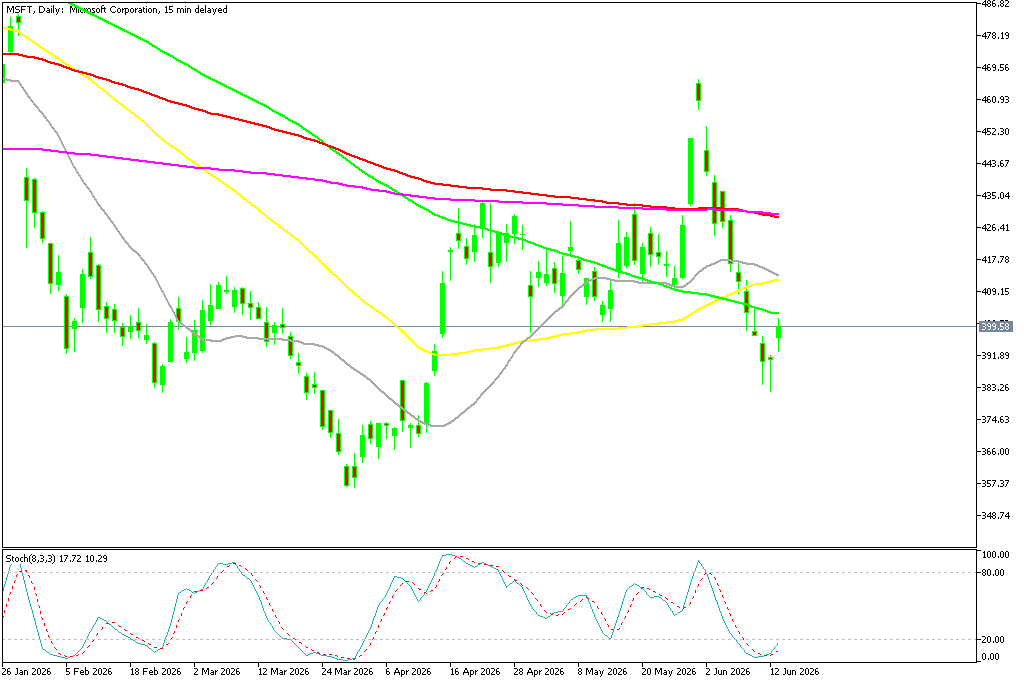
The weaker bounce has raised questions about demand at current prices. If the stock fails to hold $400, sellers may retest the $380 support area.
Market sentiment improved after US officials announced a memorandum of understanding with Iran. The agreement includes plans to reopen the Strait of Hormuz and ease sanctions through compliance steps.
Oil prices declined as traders reduced geopolitical risk premiums. As a result, risk assets gained support, and technology stocks recovered from recent pressure.
Microsoft also secured a large enterprise AI deal with NHS England. The rollout will bring Microsoft 365 Copilot to about 505,000 clinicians and support staff.
NHS England tested the service with more than 30,000 users across 90 organizations. Staff reported average time savings of 43 minutes per day on administrative tasks.
AI Spending and Valuation Pressure Limit Recovery
The NHS deal failed to shift the main market focus away from AI spending. Traders still question how fast Microsoft can turn heavy investment into earnings growth.
Microsoft continues to expand data centers, cloud capacity, computing hardware, and large language model infrastructure. Those projects require heavy capital spending and longer return timelines.
The company reported strong fiscal Q3 2026 results. Revenue rose 18% year-over-year to $82.9 billion, while net income climbed 23% to $31.8 billion.
Diluted earnings per share reached $4.27, up 23% on a GAAP basis. Microsoft Cloud revenue also rose 29% to $54.5 billion.
Azure and other cloud services grew 40%, showing strong enterprise demand. However, capital expenditures could approach $40 billion per quarter.
Fiscal 2026 spending could reach nearly $190 billion as Microsoft expands AI and cloud infrastructure. This spending remains central to the valuation debate.
Competition also increased across cloud computing and artificial intelligence. At the same time, OpenAI reportedly gained more freedom to work with other cloud providers.
Microsoft still holds strong fundamentals, but the stock needs a clear breakout above resistance. Until then, the $400 level remains the key short-term test.
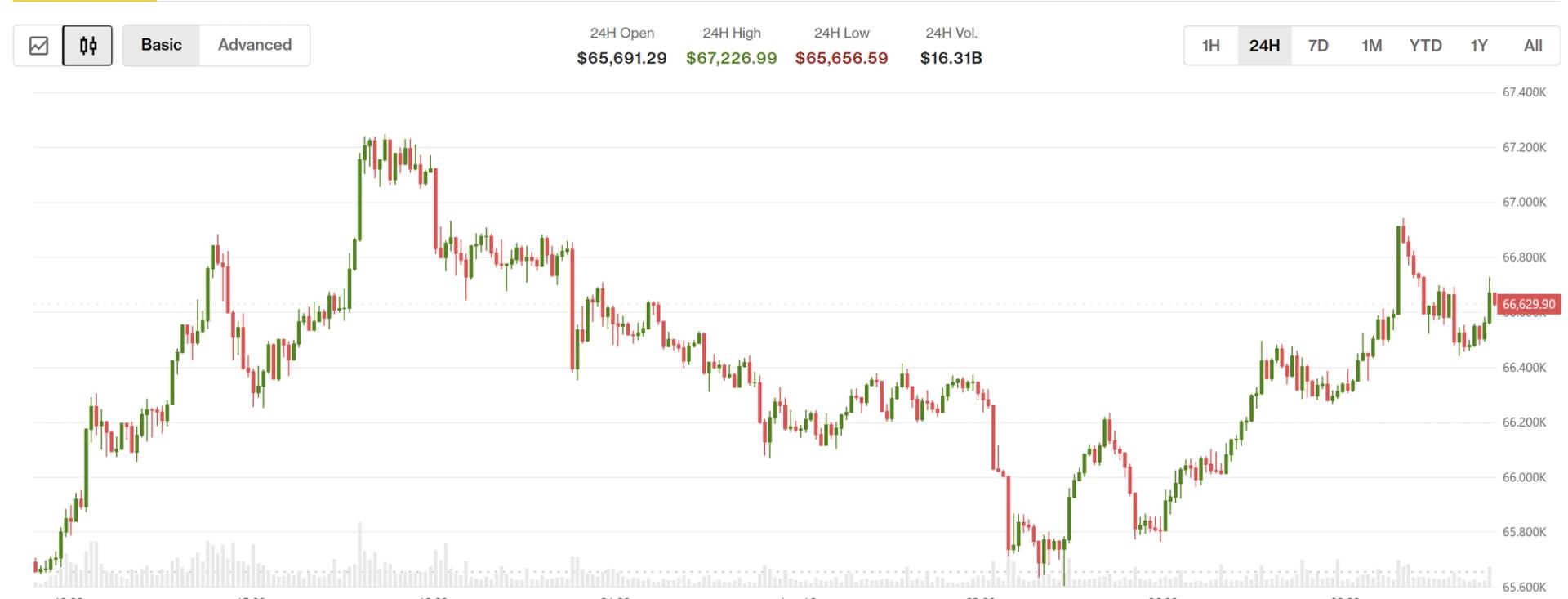
Bitcoin rose after the Bank of Japan raised interest rates to a 31-year high, pushing the price from around $65,600 in Asian trading to more than $66,500 during European hours.
The largest cryptocurrency has added 1.5% over the past 24 hours, continuing its recovery from a June 5 low below $60,000. Several altcoins posted even stronger gains.
Stellar’s XLM, Injective’s INJ and Uniswap’s UNI rose between 13% and 16%, ranking among the best performers in the top 100 cryptocurrencies by market capitalization. UNI’s gain comes after Standard Chartered initiated coverage of Uniswap and set a long-term price target for the token of $100 by 2030.
Memecoin SIREN extended its decline, falling another 21% in 24 hours. The token has now lost a staggering 77% month-to-date. Blockchain data trackers on X pointed to a large holder, or whale, offloading coins representing 92% of the token’s supply as the main driver behind the collapse.
Derivatives Positioning
- Crypto markets are showing renewed risk appetite. Total 24-hour trading volume jumped 51% to $207 billion, open interest rose 2.4% to $113.41 billion and liquidations have surged 64% to $561 million, with shorts accounting for the bulk of the forced exits.
- Leverage is coming back too. BTC futures open interest (OI) has risen to 747,000 BTC, a third straight daily increase and the highest since June 4. The steady climb suggests investors are willing to take on risk again, a message reinforced by annualized perpetual funding rates holding near zero and a positive 24-hour OI-adjusted cumulative volume delta (CVD). Both point to a balanced, recovering market rather than speculative excess.
- Ether futures OI ticked up to 14.20 million ETH from a recent low of 13.64 million, a modest but directionally encouraging move.
- Among the major cryptocurrencies, is the standout. Its OI has risen 6.6% to 6.86 million tokens in 24 hours. While impressive in relative terms, the absolute level tells a more cautious story. It is still just a one-week high and remains well below January’s peak of 9.29 million tokens. Overall positioning, therefore, remains light.
- On the losing side, TON, BCH and HBAR all saw OI decline over the past 24 hours, signaling capital outflows. TON is the most notable; its rebranding to GRAM has done nothing for trader sentiment and 24-hour CVD is the most negative among the majors, a sign the market is being driven by sellers hitting bids at market rather than passive limit orders.
- The volatility picture offers bulls some comfort. Both BVIV and EVIV — the 30-day implied volatility indexes for BTC and ETH, respectively — have nearly fully reversed the spike seen in the first week of the month. The fear that drove that spike has ebbed, and the implied volatility retreat supports the case for a continued recovery.
- On Deribit, BTC puts at strikes between $58,000 and $64,000 are among the most active of the past 24 hours. Block flows featured put condors, a non-directional strategy designed to profit from a specific range of volatility rather than a directional bet.
Token talk
- Avalanche was the most-discussed token on Monday as crypto broadly rallied, though in AVAX’s case, the conversation turned sharply negative. The ratio of positive to negative commentary has fallen to about 0.85, according to Santiment, meaning bearish posts now outnumber bullish ones, down from one of its most optimistic readings back in January.
- The negative chatter is about mindshare. It centers on whether Avalanche can keep pace with faster-growing rivals, with developer activity and user growth seen shifting toward Solana and Sui, Santiment said.
- Price backs the mood. AVAX trades around $6.88, near the low end of its recent range and well below the near-$10 level it held a month ago.
- There’s a contrarian flip angle, however. Santiment notes that extreme negative sentiment has often marked opportunities rather than tops. Markets can reverse when the crowd turns overwhelmingly bearish. It made the same case on XRP days earlier.
- The fundamentals haven’t vanished. Avalanche still holds institutional partnerships, government-linked projects and its subnet design, which lets teams launch custom app-specific blockchains. The bear case is about momentum, not a business falling apart.
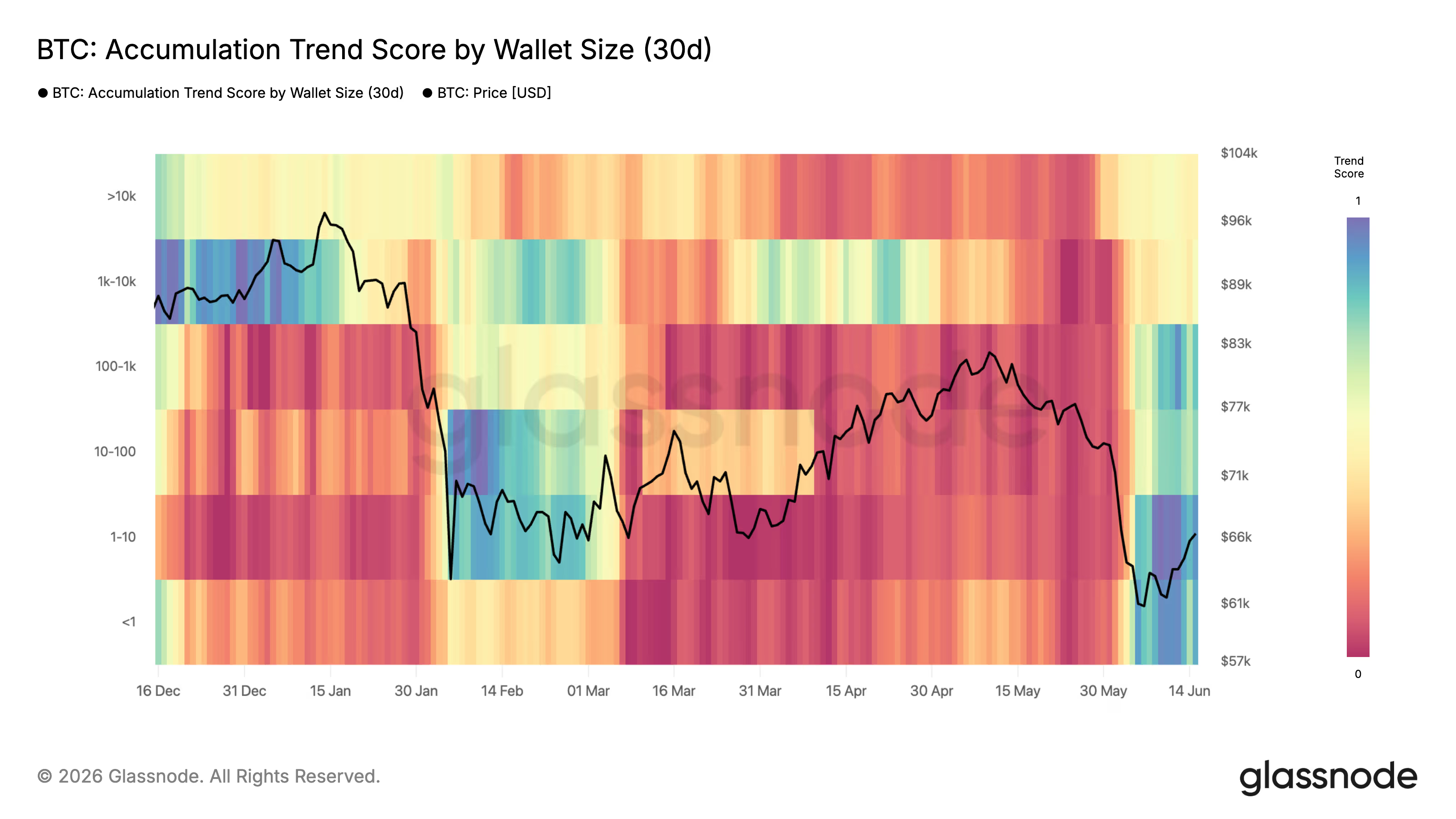
Bitcoin’s drop below $60,000 earlier this month spurred investors to pile into the largest cryptocurrency, with almost 260,000 BTC bought over 10 days and one measure of demand increasing to its highest possible level.
Investors have bought a net 259,298 BTC since June 5, paying between $59,000 and $67,000, according to Glassnode UTXO Realized Price Distribution data. Glassnode’s Accumulation Trend Score by Wallet Cohort, which measures the relative strength of purchasing fervor based on both the size of buyers and the amount acquired over the previous 15 days, stands at 1.0, the top reading.
Buying has been broad-based across wallet cohorts, ranging from holders with less than 1 BTC, typically retail investors, to those with as many as 1,000 BTC. Notably, from March through May, most groups were net distributors, or sellers, as bitcoin stagnated around $70,000.
The aggregate Accumulation Trend Score has now remained at a peak level for more than two weeks, indicating aggressive buying across cohorts and marking the strongest accumulation behavior observed during the current drawdown.

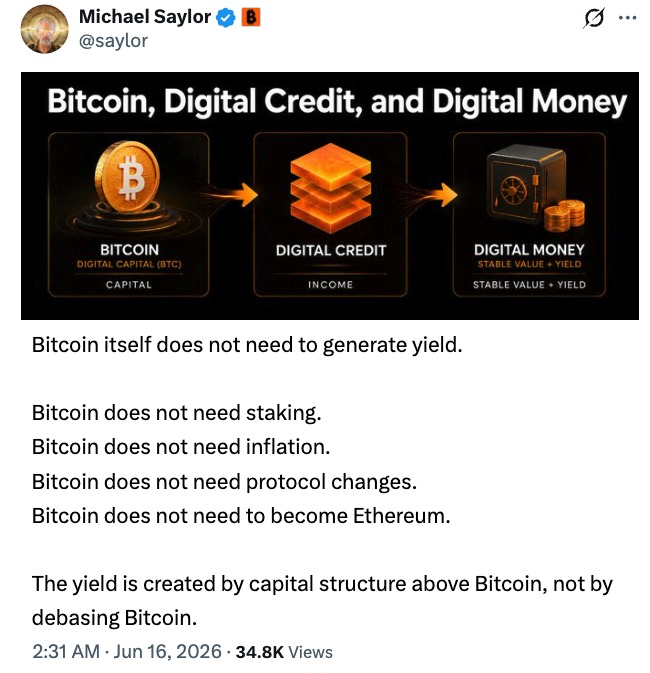
Strategy executive chairman Michael Saylor said Bitcoin does not need staking, inflation or protocol-based yield mechanisms, arguing returns should come from financial products built around BTC.
In an X post on Tuesday, Saylor outlined a five-layer “Digital Asset Stack” positioning Bitcoin (BTC) as the base for credit, money, yield and equity structures.
Saylor said Bitcoin should remain “pure digital capital” and that it “does not need to become Ethereum” to generate investor returns.
The framework reinforces Strategy’s approach to Bitcoin as a treasury reserve asset, where returns are generated through financial products built around the company’s Bitcoin holdings, the largest among publicly listed firms.
Digital credit and yield layer
Saylor’s framework is centered around “digital credit” as financial instruments built around Bitcoin holdings, designed to generate returns while reducing exposure to BTC price volatility.
Under this structure, Bitcoin serves as collateral, while equity absorbs most of the price risk and credit instruments receive more stable returns.
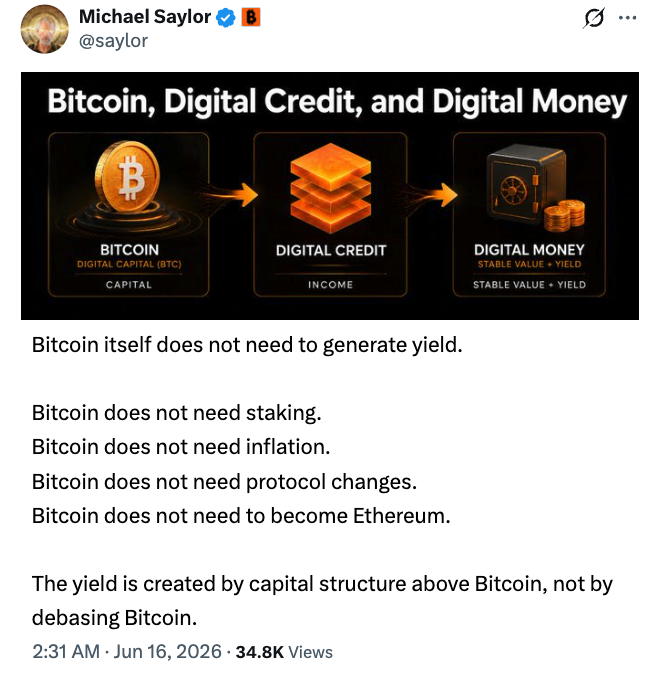
Source: Michael Saylor
Saylor repeatedly referenced Strategy-style securities such as STRC, the company’s perpetual preferred stock, positioning them as a key example of “digital credit.” In this framing, STRC-like instruments are not just company products but examples of a broader asset class built on top of Bitcoin through capital markets engineering.
Saylor argues credit instruments can smooth Bitcoin’s price swings
Saylor said Bitcoin’s volatility is “not a flaw,” framing it as a natural feature of “high-energy capital” that can move sharply because it is scarce, global and traded around the clock. In his model, instruments like STRC are designed to damp those price swings by sitting above Bitcoin in the capital structure.
While Saylor did not directly discuss STRC’s volatility in the X post, he said credit instruments can experience varying levels of risk depending on factors such as market stress, liquidity and investor demand.
Related: Saylor’s Strategy buys 1,587 BTC for $100M, holdings hit 846.8K
“The important point is not that digital credit always has one fixed volatility number. It does not,” Saylor said.
Strategy’s preferred stock STRC closed at $95.20 on Monday, down 1.45%, according to Nasdaq data. The stock has a $100 stated par value and is structured to trade near that level.
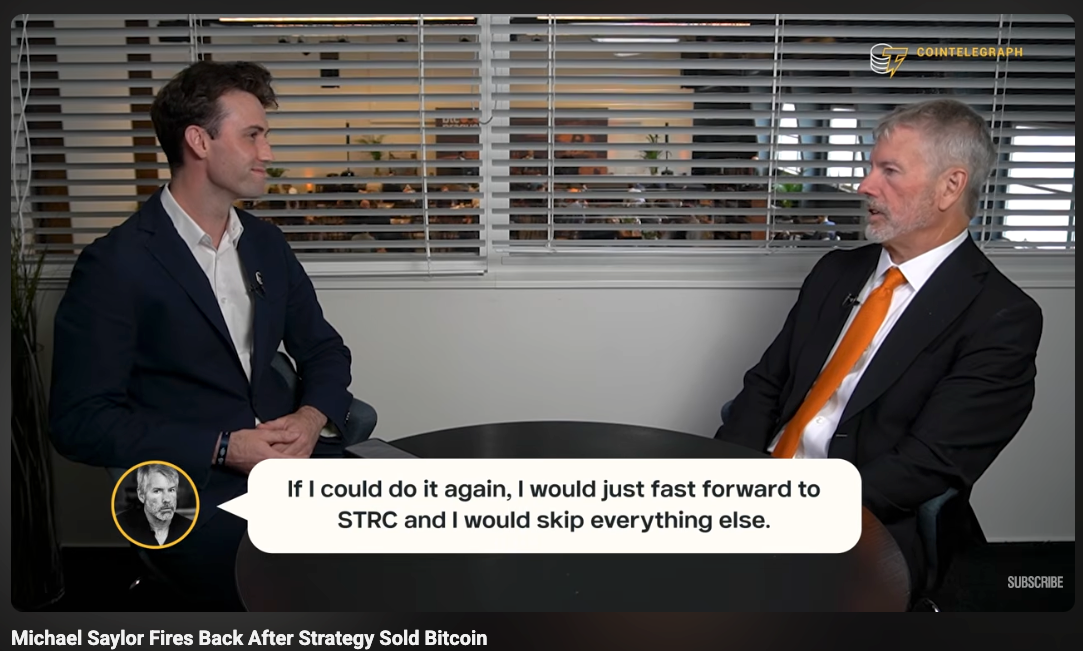
Cointelegraph’s Ciaran Lyons (left) and Strategy founder Michael Saylor (right) at BTC Prague. Source: Cointelegraph/YouTube
The remarks reinforce Saylor’s framing of Bitcoin as “digital capital” and Strategy’s role in issuing “digital credit” built around it, including the view that Bitcoin sales are sometimes required to support the structure.
“If the company’s policy is that we won’t sell the Bitcoin, then the credit won’t have value and the equity won’t have value,” Saylor told Cointelegraph at the BTC Prague conference last week.
Magazine: Bitcoin, the ‘canary in the coal mine,’ XRP transaction demand falls 91.5%: Market Moves


Circle reportedly minted another 1 billion USDC on Solana on June 16, according to on-chain tracker Lookonchain.
Summary
- Circle reportedly minted 1 billion USDC on Solana, bringing weekly issuance to 3.5 billion tokens.
- Large USDC mints can signal higher demand for Solana liquidity, payments, and trading settlement activity.
- Circle’s Movement post links USDC-backed settlement to low-cost payments, remittances, and broader dollar access globally.
The latest issuance lifted Circle’s total USDC minting on Solana to 3.5 billion over the past week. “Circle minted another 1B USDC on Solana today,” Lookonchain said.
The tracker added that Circle had minted 3.5 billion USDC on Solana over the past seven days. Circle had not issued a separate public statement on the specific mint at the time of writing.
Fresh USDC issuance increases the amount of dollar-linked liquidity available on Solana. It does not always mean immediate buying in crypto markets. Stablecoin mints can reflect exchange demand, treasury rebalancing, payment activity, or preparation for future settlement flows.
Solana remains a key stablecoin rail
Solana has become one of the main networks for stablecoin transfers due to its low fees and fast settlement. USDC is widely used across trading, DeFi, payments, and cross-border transfer products, which makes large mints closely watched by market participants.
Circle says USDC is a fully reserved stablecoin that is redeemable 1:1 for U.S. dollars. The company also says USDC is supported across dozens of networks, including Solana. This gives users and institutions several routes to move dollar liquidity across onchain markets.
The latest mint also follows months of rising attention on Solana-based USDC activity. Earlier market reports showed large USDC issuance on Solana during periods of higher trading and payment demand. The new weekly total adds to that trend.
Record HyperEVM transfer adds context
The Solana mint comes days after Circle moved a large amount of USDC through another onchain venue. As previously reported, Circle moved about 4.397 billion USDC to a Coinbase-linked address through HyperEVM.
“Circle just moved $4 billion to Coinbase on HyperEVM,” Arkham said. The analytics firm described the transfer as the largest USDC transaction ever. The move was linked to Coinbase’s role as Hyperliquid’s official USDC treasury deployer.
That transfer matters because Hyperliquid uses USDC as a core quote and settlement asset. Large treasury movements can support trading liquidity, collateral needs, and settlement flows across active onchain markets.
The Solana issuance and HyperEVM transfer show how USDC supply is moving across several networks at the same time. The activity points to growing demand for stablecoin liquidity across trading venues, payment rails, and blockchain applications.
Movement post points to payment demand
Circle also pointed to Movement as part of its wider stablecoin network push. The company said Movement’s Move-powered blockchain ecosystem is designed for low-cost payments, remittances, and financial access.
“With USDCx fully backed by USDC, Movement supports onchain settlement that can help modernize cross-border finance,” Circle said.
The statement connects stablecoin issuance to payment use cases beyond trading. USDCx is designed as a USDC-backed asset within Movement’s ecosystem. Its role is to support dollar-linked settlement across applications that need lower costs and faster transfers.

Key Takeaways
- Novo Nordisk will submit its oral Wegovy formulation to Chinese authorities “within a few months,” according to CEO
- The announcement marks CEO Mike Doustdar’s inaugural China trip following his appointment in August
- Rival Eli Lilly gained first-mover advantage by filing orforglipron with Chinese regulators in late 2025
- China patent protection for semaglutide lapsed in March, opening doors for generic manufacturers by mid-2026
- NVO stock shows modest 0.09% gain and holds a Hold rating with analysts targeting $46 per share
Novo Nordisk is making its move in China’s burgeoning oral obesity treatment sector, with Chief Executive Mike Doustdar revealing plans to seek regulatory clearance for the company’s Wegovy tablet formulation “very soon — a few months.”
Doustdar disclosed the timeline during his maiden visit to China after assuming leadership last August. Shares of NVO were marginally higher by 0.09% following the disclosure.
China represents the globe’s second-biggest pharmaceutical marketplace, with GLP-1 obesity medications emerging as one of its most dynamic therapeutic categories. First-quarter GLP-1 product sales through platforms including Alibaba and JD.com reached approximately 1.4 billion yuan ($207 million), data from Jefferies indicates.
Novo maintains existing market presence. Chinese regulators granted approval for its injectable Wegovy formulation in the middle of 2024. Introducing an oral alternative would provide the Danish pharmaceutical giant with an additional pathway, appealing to consumers who favor tablets over needles.
However, the company trails its primary competitor. Eli Lilly filed its once-daily oral candidate orforglipron with Chinese regulatory bodies in late 2025, securing a temporal advantage in the approval process. Lilly currently markets Mounjaro throughout China for both Type 2 diabetes management and weight reduction.
Generic Competitors Preparing to Enter
The challenge extends beyond Lilly. Semaglutide — the core compound in Wegovy and Ozempic — saw its Chinese patent expire in March. While Novo maintains regulatory data exclusivity through early next year, generic alternatives are anticipated to reach the market around Q2 2026.
Doustdar recognized the incoming challenge but emphasized production complexity as a defensive moat. “Not many of our competitors will be able to reach that level, have the capabilities,” he stated, highlighting the difficulties inherent in large-scale oral formulation manufacturing.
To maintain competitiveness against generic entrants and domestic imitation products, Novo has implemented price reductions for Wegovy across select Chinese regions.
Pfizer and domestic pharmaceutical company Innovent Biologics have likewise penetrated the space, although precise market distribution data for China remains opaque. Neither Innovent nor Lilly provides Chinese revenue breakdowns.
Novo introduced its Wegovy pill in American markets this year after securing expedited clearance there and in Britain. Lilly received U.S. regulatory approval for orforglipron in April.
Wall Street’s Perspective
Among equity analysts, NVO maintains a Hold consensus classification based on three uniform Hold recommendations on TipRanks. The mean price objective stands at $46, suggesting approximately 4.7% appreciation potential from present trading levels.
For the year-to-date period, NVO has declined 11.4%, mirroring investor apprehension regarding patent vulnerabilities, pricing headwinds, and intensifying competitive dynamics.
The China regulatory submission is anticipated within the coming months, per Doustdar’s indication.

Bitcoin (BTC) briefly crossed $67,000 yesterday after a recently brokered peace agreement between the United States and Iran boosted market sentiment.
Despite the rally, the crypto asset may be approaching another capitulation event, according to crypto analyst Doctor Profit, who compared the current market structure to the setup seen before the FTX collapse in 2022.
2022-Style Capitulation Pattern
In the latest tweet, the analyst explained that before that crash, Bitcoin was moving higher while forming a bullish divergence on the weekly chart, which led many traders to buy near the $20,000 level. However, panic selling followed after the market collapsed, leaving many investors with losses of around 20%.
A similar pattern appears to be developing once again, as Bitcoin shows a bullish divergence on the weekly time frame in addition to renewed buying pressure. Based on this setup, he believes the market could still face a sharp capitulation move before reaching its bottom.
The recent rise in Bitcoin came after US President Donald Trump revealed that the United States had completed a peace agreement with Iran following months of conflict. The deal reportedly includes reopening the Strait of Hormuz and lifting the US blockade affecting Iranian ports and shipping routes. Although much of the agreement remains unclear, Trump said the next step would involve fresh negotiations between both countries.
Meanwhile, on-chain data shared by Alphractal founder Joao Wedson revealed that many BTC holders are currently underwater as the crypto asset recorded the second-largest unrealized loss in its history. However, realized losses remain relatively low, which means that panic selling has not fully emerged yet. Wedson said the gap between unrealized and realized losses indicates that broad capitulation may still be ahead if investors begin selling aggressively at a loss.
Downside Target
Bitcoin’s previous major market bottom formed when the price reached the CVDD level before beginning a new bull run. According to the crypto analyst Ali Martinez, the metric is currently sitting near $48,000, a level that could become important if Bitcoin sees another deeper correction.
This also aligns with earlier market predictions from Doctor Profit, who had previously identified the $40,000-$48,000 range as a potential final bottom zone for Bitcoin in the current cycle.
The post Bitcoin (BTC) Is Flashing Same Pattern Seen Before FTX Crash: Analyst appeared first on CryptoPotato.
Crypto World
Crypto News, June 16: US-Iran Deal Oddity, FTX Claim Day, ETH USD Season Drawing Closer

We start today’s crypto news with a few oddities in the US-Iran deal as it closed faster than most expected, while the bombing talk was still fresh. At the same time, FTX claim proceedings showed real movement, and ETH USD started flashing clearer signs of life. They are creating a messy but interesting day where macro relief is mixed with steady accumulation.
Markets didn’t panic when the BOJ raised rates to 1%. BTC held $66k while corporate buyers kept throwing in cash. MARA flipped from seller to buyer, Strategy added more Bitcoin, and Bitmine continued loading ETH. ETF flows are also getting better.

Discover: The Best Crypto to Diversify Your Portfolio
US-Iran Deal Oddity, BOJ Hike, Crypto Butchers Lining Up
The US-Iran deal came with unusual speed, and it also left Israel out completely, which made the whole thing feel incomplete to a lot of observers. Longtime Trump supporter Mark Levin pointed out how strange it was that governments signed so quickly while officials were still talking about imminent strikes.
Netanyahu added to the immediate fear by saying he could still target Iran whenever he chose. As much as we love crypto going up, there are some skeptics. We know, crypto took the news with a lovely bounce and a full celebration. BTC reclaimed $66k, and oil dropped sharply as equities ran harder. The US-Iran rally removed a major barrier, yet it still looks odd.
The market clearly wanted more confirmation before getting too excited, yet the BOJ hike to 1% barely registered. Previous rate increases used to trigger instant BTC dumps, but this time, the market seems unbothered. It either showed how much the market has changed, with even a 31-year high in Japanese rates failing to spark a selloff, or the hike was already priced in long ago.
Discover: The Best Token Presales
FTX Payout Day Slides Bitcoin Dominance, as ETH USD Picks Up Steam
It’s FTX last claim eligibility day, and the US government has moved $349k in seized tokens from FTX and Alameda wallets on-chain. MKR, COMP, and other assets shifted in what looked like routine estate activity. Creditors who lost money in the 2022 collapse finally saw something concrete happening.
The next FTX claim registration window is expected to open soon, with distributions targeted for later this summer. The on-chain transfers have also reduced some uncertainty, though they also highlight how slow these processes remain. No major selling pressure followed the movement, which stood out on a day full of bigger headlines.
Also today, MARA bought 1,000 BTC for around $66.7 million, reversing its earlier selling. Last night, Strategy added another 1,587 BTC while Bitmine kept accumulating ETH. This comes as miner difficulty kept climbing, making spot purchases look more attractive than new mining at current levels, which also likely brings upside pressure.
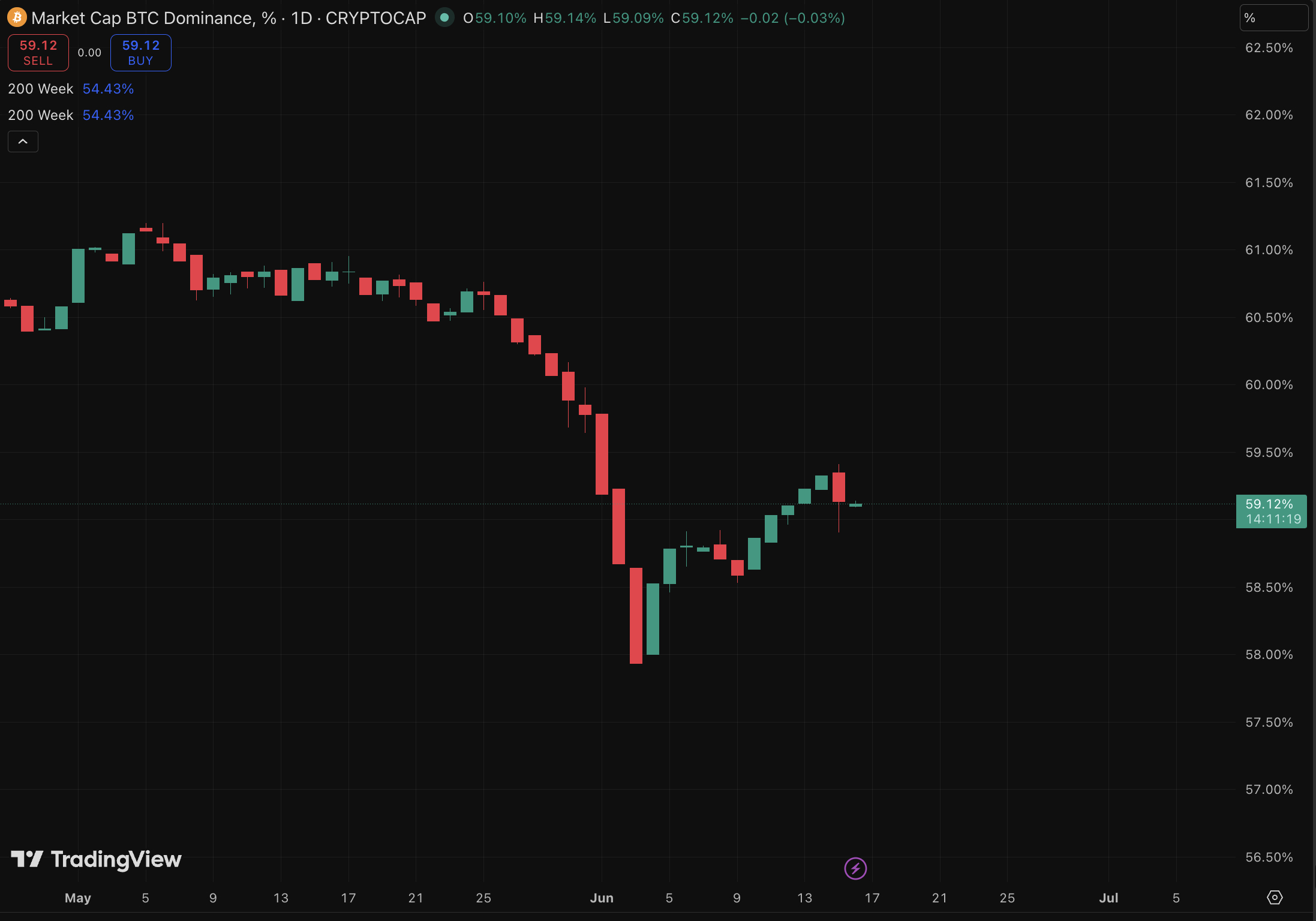
ETF flows show BTC products recorded net outflows near $64 million on June 15, but ETH, SOL, and XRP ETFs saw inflows. BlackRock’s IBIT is still buying tens of millions worth. BTC dominance continues drifting lower as capital enters Altcoins.
ETH USD has shown the strongest fundamental signs in weeks. Staking reached a new all-time high of 32.7%, locking up more supply and reflecting real network conviction. Standard Chartered pours gasoline on the fire by forecasting that UNI could run 40x to $100 by 2030 on the back of tokenized asset growth.
Discover: The Best Crypto to Diversify Your Portfolio
Crypto News Bullish Combo: Up or Down Next?
The combination of locked supply, bold price targets on UNI, and corporate buying is bullish. Dips are getting met with more interest. Although news on Arthur Hayes rebuying ETH seems like a fud than a shill. We saw tokens pumping on his buys and got jeeted days after, even with Hayes’ usual unrealistic targets.
The US-Iran relief, steady progress on FTX payouts, and fresh corporate accumulation all point to clearing barriers. Institutional infrastructure keeps expanding at the same time, with new yield products hitting the market.
Miners and treasury companies stepping up while difficulty rises, countering cost dynamics. MARA’s reversal after months of selling stands out as one of the most bullish signals. MARA is not a strategy; they don’t usually load up aggressively near obvious tops.
ETH USD season feels like it’s closing in, too, which is good for altcoins. Record staking, strong analyst calls, and steady buying from players form a solid base. The market has absorbed plenty of fear this cycle. It’s the time, maybe.
Discover: The Best Token Presales
The post Crypto News, June 16: US-Iran Deal Oddity, FTX Claim Day, ETH USD Season Drawing Closer appeared first on Cryptonews.
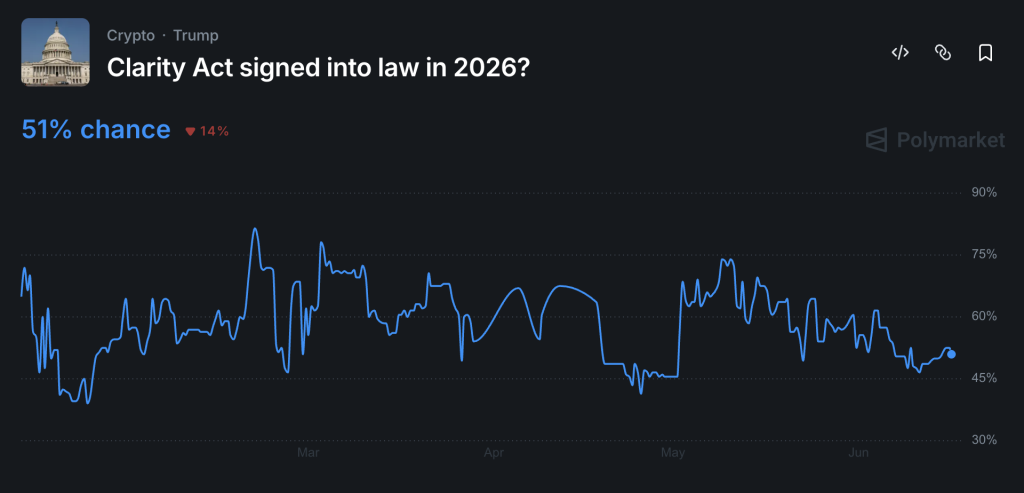
Senator Cynthia Lummis publicly tied Bitcoin to America’s $39.2 trillion national debt crisis on June 15, positioning the asset as a generational hedge against currency debasement as the Digital Asset Market CLARITY Act landed on the Senate legislative calendar.
The convergence of a macro fiscal argument with advancing crypto regulation legislation marks the most direct attempt yet to frame digital asset policy as a national balance-sheet imperative.
The CLARITY Act cleared the House in July 2025 with a 294–134 bipartisan vote and passed the Senate Banking Committee 15–9 on May 14, 2026, with Democrats Ruben Gallego and Angela Alsobrooks crossing the aisle.
Placement on the Senate legislative calendar on June 1 formally enables a floor vote. The bill draws hard regulatory lines by assigning SEC oversight to digital asset securities and new token offerings, while giving the CFTC jurisdiction over spot digital commodities, Bitcoin and Ethereum included.
It also builds out registration frameworks for exchanges, brokers, and custodians, requires capital segregation, and shields software developers from liability solely for publishing code, a provision that directly addresses post-Tornado Cash enforcement exposure.
“Our debt is real. Our fiscal trajectory is unsustainable. Bitcoin is one of the few tools that could help right that wrong for younger Americans.”
Lummis said this framing is intentional. She has argued in multiple forums that Bitcoin’s fixed supply makes it structurally distinct from sovereign debt instruments and that younger generations, those inheriting the fiscal consequences of decades of deficit spending, have the most to gain from institutional access to the asset.
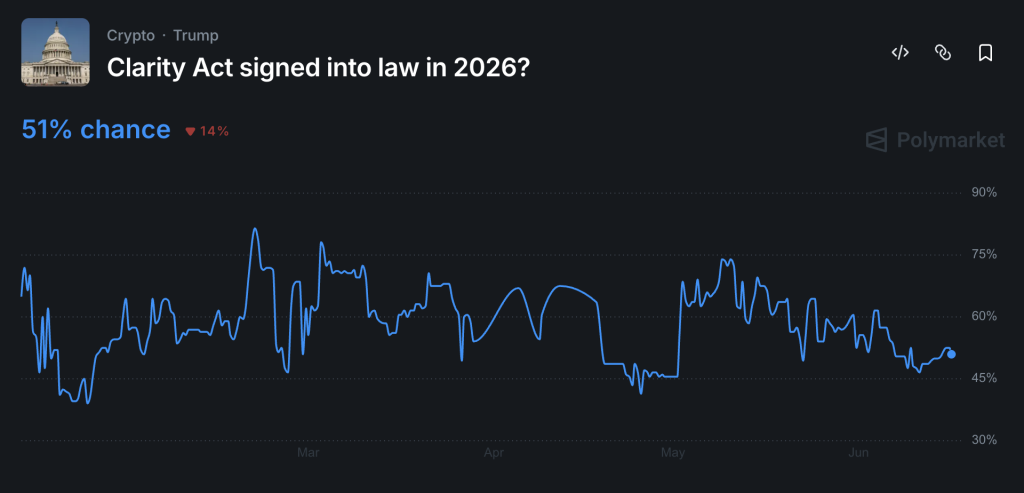
Galaxy Research currently puts the probability of the CLARITY Act becoming law in 2026 at 60–75%.
Discover: The Best Token Presales
What the CLARITY Act Actually Changes for Market Structure
The bill’s most consequential provision for active market participants is the SEC–CFTC jurisdictional split. Under the current framework, most tokens operate in regulatory ambiguity, subject to SEC enforcement posture without statutory clarity on whether they qualify as securities.
The CLARITY Act resolves that by creating an activity-based test: assets that are sufficiently decentralized fall under CFTC oversight as digital commodities, removing the perpetual Howey Test overhang that has depressed institutional participation in altcoin markets.
An analysis of the Howey Test implications under the CLARITY Act framework details how this shift recalibrates risk assessment across the altcoin landscape.
On stablecoins, the bill bans passive yield products outright, a provision that earlier drew Coinbase opposition, while protecting activity-based platform usage rewards.
The compromise held, but the passive yield ban remains a live point of tension for firms whose business models depend on it. Exchange customers also gain first claim on custodial assets in bankruptcy, a structural protection the industry has sought since the FTX collapse.
July 4 Deadline Is Slipping, What Actually Needs to Happen
The White House’s July 4 signing target is under significant pressure. Three distinct obstacles remain: unresolved ethics provisions, competing House and Senate committee versions requiring reconciliation, and the 60-vote cloture threshold in the Senate, a procedural bar that demands meaningful Democratic support before recess.
The specific legislative obstacles around the ethics provisions and the July 4 deadline illustrate just how tight the procedural window has become. Lummis herself acknowledged the timeline, stating that “nobody is popping the champagne quite yet.”
The Senate and House versions also diverge on the SEC–CFTC balance. The Senate Banking discussion draft leans more SEC-centric, giving the commission primary authority over “ancillary assets” and requiring joint SEC–CFTC rulemaking on margining and disclosures, a meaningful departure from the House bill’s CFTC-forward approach.
Reconciling those competing texts is the real legislative bottleneck, independent of the floor scheduling question. If the July 4 window closes without passage, most observers expect the effort to reset entirely into the next Congress, pushing comprehensive digital asset legislation toward the late 2020s.
Over 200 crypto firms have formally urged Senate leadership to schedule a floor vote promptly. Circle has backed the bill publicly, and institutional accumulation of Bitcoin as a treasury asset, Strategy’s continued Bitcoin purchases being the most visible example, aligns directly with the fiscal hedge narrative Lummis is running on Capitol Hill.
The next concrete signal to watch is whether Senate Majority Leader John Thune schedules floor time before the recess window closes, or whether the ethics and jurisdictional disputes force the bill into fall negotiations.
Discover: The Best Crypto to Diversify Your Portfolio
The post Lummis Links Bitcoin to $39.2T US Debt Crisis as CLARITY Act Nears Senate Floor appeared first on Cryptonews.

This is What “Always” Happens Before a Financial Crisis

Cathedral staff ‘saddened and frustrated’ after historic building targeted by vandals

Shark deaths prompt calls for more drumlines, research


-

 Business2 days ago
No Jackpot Winner as $257 Million Prize Rolls Over to $269 Million Monday Draw
-

 Crypto World5 days ago
Oppenheimer backs SpaceX as $70 billion retail frenzy builds
-

 Fashion4 days ago
Weekend Open Thread: Tuckernuck – Corporette.com
-

 Crypto World5 days ago
Markets Rally as SpaceX IPO Looms Amid Iran Tensions and Inflation Surge
-
Crypto World1 day ago
Zimbabwe Requires Crypto Businesses to Register Annually Under New FIU Regulations
-

 Tech3 days ago
NanoClaw integrates JFrog registries to secure AI agent downloads
-
 Sports7 days ago
Bangladesh beat Australia after 20 years in ODIs, register only their second win over six-time world champions | Cricket News
-

 Crypto World3 days ago
Bitget enters Argentina’s regulated crypto market through PSAV registration
-

 Tech4 days ago
This Week In Security: Microsoft On Microsoft, Register Your Domains, Linux On ARM, And FreeBSD Joins The File Cache Club
-
 Tech5 days ago
Dutton Ranch star claims they ‘didn’t see any disruption’ on set following Chad Feehan’s exit from Yellowstone spinoff fueled by Taylor Sheridan clash rumors
-

 NewsBeat5 days ago
El Nino has formed in the Pacific and could set records, forecasters say
-

 Business6 days ago
Thailand Ranks Second Worldwide for AI Adoption Growth, Microsoft Reports
-
 Tech6 days ago
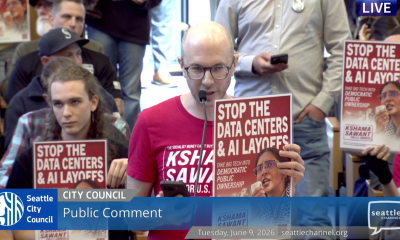
‘This is Seattle’s position on AI’: City Council votes unanimously to pause big new data centers
-

 Politics5 days ago
Politics Home | Healey Resignation Is “Colossal Failure Of Government”, Says Former Labour Defence Secretary
-
 Entertainment5 days ago
Donnie Wahlberg & More Heat Up Las Vegas at Circa’s Barry’s Downtown Prime
-
 Tech5 days ago
Opendoor Ends India Operations, Fueling a Bigger Conversation About AI and Outsourcing
-

 Sports5 days ago
First Time Since 1971: Australia Register Historic Low In ODI Cricket
-

 Politics5 days ago
Belfast burns, while Met chief points finger at Iran and Russia
-

 NewsBeat4 days ago
FBI searches office of Ohio voter registration group
-

 Business5 days ago
AT&T: Verizon's 27% Outperformance Sets Up A Solid Entry Point
You must be logged in to post a comment Login