
Crypto World
MANTRA Chain resumes blocks after Cosmos-EVM fix



MANTRA Chain has resumed block production after deploying version 8.4.0 to fix a Cosmos-EVM vulnerability that kept its mainnet unable to process transactions for about 30 hours.
Summary
- MANTRA Chain restarted at approximately 5:30 a.m. UTC on Aug. 22.
- Version 8.4.0 patched a Cosmos-EVM vulnerability and added security protections.
- Two MANTRA-managed wallets were affected, but user balances remained unchanged.
- MANTRA plans to publish a complete post-incident report in the coming days.
MANTRA Chain said in an Aug. 22 post that its mainnet was producing blocks again after developers fixed the vulnerability found in its Cosmos-EVM module.
The restart followed a coordinated software update involving MANTRA-operated validators and other members of the network’s validator set. According to the project’s incident status page, block production resumed at about 5:30 a.m. UTC on Aug. 22 through the patched v8.4.0 release.
User balances were not changed during the incident, while the restart involved no blockchain rollback or alteration of the network state, the status update said. Token holders were also told that they did not need to take any action.
MANTRA Chain halted after an attacker targeted its EVM module
The incident began late on Aug. 20, when MANTRA detected an attacker exploiting a vulnerability in an upstream software dependency used by the blockchain. Developers responded by halting the mainnet, preventing transactions from being processed while security teams investigated the activity.
MANTRA’s initial notice said all transactions and network endpoints had been frozen. The shutdown also stopped transfers, staking operations, bridges and MANTRA-managed inter-blockchain communication relays, while some exchanges paused deposits and withdrawals connected to the network.
As crypto.news reported on Aug. 21, the halt took validators, public endpoints and bridge services offline, leaving assets temporarily unable to move on the RWA-focused Layer 1.
Later in the investigation, MANTRA traced the vulnerability to its Cosmos-EVM module and said the activity affected two wallet addresses before developers contained the threat. Its status page subsequently identified them as MANTRA-managed wallets and said there was no indication that user, exchange, or partner funds had been directly affected.
“No user funds were exploited,” the project said in an update after identifying the source of the incident.
MANTRA has not disclosed what activity occurred in the two managed wallets, how much value was involved, or whether any assets left the addresses. The project also has not released the attack path or named the specific upstream software component responsible for the vulnerability.
Before beginning the restart process, the team took a complete snapshot of the blockchain at the halted state. Mainnet remained stopped at block 17,449,398 while developers reviewed known attack paths and prepared the patch.
Version 8.4.0 enabled the coordinated restart
Following the initial investigation, developers built v8.4.0 to repair the vulnerability in the EVM module and add supplementary security protections. MANTRA first tested the release on its DuKong testnet before validating it in an internal environment that replicated the mainnet state.
Repeated upgrade rehearsals were completed before validators received the signal to restart. According to the incident page, the software update did not require module changes, state migrations, or changes to the blockchain’s stored data.
MANTRA-operated validators were upgraded first, followed by validator partners, ordinary node operators, RPC services, and archive nodes. The team said it chose a coordinated restart because bringing back only part of the validator set could have created operational problems.
Block production returned roughly 30 hours after the last reported block was processed at about 11:13 p.m. UTC on Aug. 20. Public RPC and EVM endpoints later became operational, although the project warned that explorers, indexers and other services could lag while processing data created after the restart.
DuKong remained offline after the mainnet returned. MANTRA said work to restore the public testnet would continue over the next several days as engineers monitored mainnet stability.
The affected Cosmos-EVM component forms part of MANTRA’s system for running Ethereum-compatible smart contracts. In September 2025, the chain added EVM support alongside CosmWasm, allowing developers to deploy applications using either environment on the RWA-focused network.
Earlier Cosmos EVM flaw remains unconfirmed as the cause
The incident has drawn attention to a separate critical vulnerability disclosed by Cosmos Labs in March 2026. Security advisory ASA-2026-002 described an error in the ICS20 precompile, a component that allows EVM smart contracts to initiate cross-chain token transfers through the Inter-Blockchain Communication protocol.
According to the Cosmos EVM advisory, incorrect state handling during nested EVM execution could allow the same token balance to be used repeatedly within one transaction. The flaw led to an estimated $7 million loss on Saga EVM in January.
Cosmos Labs identified 15 chains running code containing the flaw. Six did not have the affected feature enabled, one was exploited, and the remaining networks applied a mitigation before an attack occurred, according to the advisory.
MANTRA was named among the teams that helped investigate and address the earlier issue. Cosmos Labs said the permanent repair was included in Cosmos EVM version 0.6.0 and that known affected chains had either upgraded or disabled the vulnerable component.
Neither MANTRA nor Cosmos Labs has said the Aug. 20 incident used the same ICS20 flaw. Until MANTRA publishes its technical report, attributing the latest exploit to that previously disclosed vulnerability would go beyond the available evidence.
MANTRA price hit a record low before the halt
During the hours surrounding the incident, the MANTRA token fell from approximately $0.005060 to a record low of $0.004126, a decline of about 18.5%. CoinGecko data cited in market reports placed the low at roughly 11:10 p.m. UTC on Aug. 20, minutes before the network’s last reported block.
Trading volume rose nearly 600% to approximately $24 million during the initial market reaction. MANTRA has not said the token selloff was related to the attack, leaving any link between the price movement and the incident unconfirmed.
Earlier in March, the token had risen 62% after MANTRA completed a rebrand, network upgrade, and 1:4 non-dilutive token split. Under the change, holders received four MANTRA tokens for every former OM token without altering the total value of their holdings at the conversion point, according to March market coverage.
For U.S. token holders using MANTRA’s native network, the chain halt prevented the same on-chain transactions, staking, and transfers that were unavailable in other regions. The project did not identify a separate impact on American users, and its confirmation that user balances remained unchanged applied to token holders generally.
MANTRA’s network focuses on tokenized real-world assets and is tied to several institutional projects. In June, Inveniam Capital Partners announced an agreement to acquire MANTRA and its affiliated entities after making a $20 million strategic investment in the company in August 2025, as detailed in the acquisition announcement.
The companies had also worked on NVNM Chain, a Layer 2 network built on MANTRA Chain for private-market asset data. MANTRA said a complete post-incident analysis covering the Cosmos-EVM vulnerability and the network’s response will be released in the coming days.



Fairmint CEO Joris Delanoue warns tokenized stocks risk recreating Wall Street’s 1960s paper crisis through fragmented systems and standards.

Ray Dalio, once one of the most prominent crypto critics, has made a new case for owning gold and bitcoin as he believes the United States is approaching a dangerous point in its debt cycle.
The founder of Bridgewater Associates noted that investors should reduce their exposure to bonds, allocate 10%-15% of their holdings to gold, and hold ‘a bit of bitcoin’ as protection against what could eventually become a full-blown US debt crisis.
Gold and BTC Over Bonds
As reported by CNBC, the billionaire investor’s arguments center around the rapidly deteriorating US fiscal position as the federal government is expected to collect approximately $5.5 trillion in revenue this year while spending is anticipated to be at roughly $7.5 trillion. In other words, this presents a shortfall of around $2 trillion.
At the same time, $10 trillion of government debt needs to be refinanced, and interest expenses alone are approaching $1 trillion. Without a major change in direction, Dalio estimated that a US debt crisis could arrive in “three years, give or take two.”
His solution is rather controversial to some, as he proposed to reduce the federal deficit from roughly 6% of GDP to 3% through a combination of spending cuts, increased tax revenue, and lower borrowing costs.
Individual investors, though, should not rely solely on the government’s actions and should prepare for the consequences of years of negligence. His recommendation is to diversify across financially strong countries and asset classes, while reducing their exposure to debt securities such as bonds. Instead, investors should go for gold and BTC, albeit to a lesser extent, he said.
The Timing
The comments arrive during a rather impressive week for both assets, as BTC surged from $64,000 to almost $80,000, while gold rebounded from $4,000 to $4,600 per ounce. These moves came after US Treasury Secretary Scott Bessent announced plans to substantially increase buybacks of long-dated government bonds.
The announcement pushed Treasury yields lower and weakened the dollar almost immediately. BTC’s rally only intensified the following day, producing its strongest performance in more than three years.
Meanwhile, US government debt surpassed $40 trillion this week, while longer-term Treasury yields recently climbed to their highest levels in years.
If investors become increasingly reluctant to finance enormous government deficits, Treasury yields may have to rise further to attract buyers. In contrast, policymakers could eventually respond with monetary intervention that risks weakening the dollar further and fueling inflation.
Both outcomes strengthen Dalio’s argument for assets that cannot simply be issued by governments.
The post Ray Dalio Predicts US Debt Crisis and Backs Bitcoin, Gold Over Bonds appeared first on CryptoPotato.

Zepbound maker and drug giant Eli Lilly’s (LLY) stock is in the buy zone of a flat base after hitting a new high. The IBD Sector Leaders name is in a race with Novo Nordisk (NVO) in the fast-growing weight-loss medication industry. Lilly makes injectable obesity drug Zepbound and Type 2 diabetes treatment Mounjaro. It launched its weight-loss pill Foundayo in…
Copyright ©2026 Investor’s Business Daily, LLC. All rights reserved. 87990cbe856818d5eddac44c7b1cdeb8
MiCA left crypto lending outside its original rulebook — but now Brussels is considering whether to bring it in.
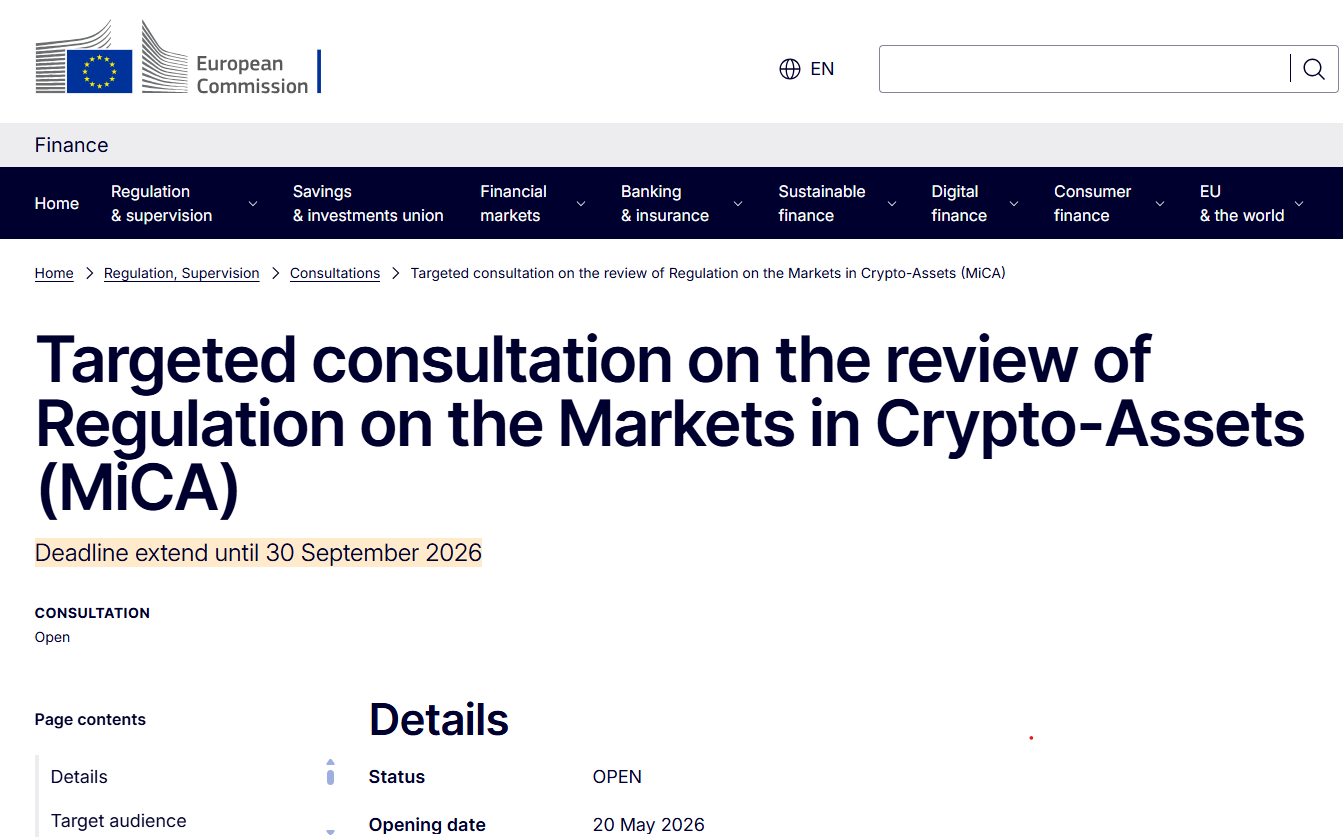
On May 20, 2026, the European Commission asked stakeholders to weigh in on areas left outside the original Markets in Crypto Assets (MiCA) framework. These include issues around decentralized finance (DeFi) and crypto lending and borrowing.
One area of contention involves lending vaults, which can channel billions of dollars into onchain credit markets without looking like conventional lending. Their legal status currently depends on non binding interpretations that they fall outside of MiCA and EU fund rules.
Yuriy Brisov, an EU digital assets lawyer and partner at Digital & Analogue Partners, tells Magazine the law pertaining to vaults at present is unclear:
“EU law has no category called a ‘vault.’ A lawyer therefore defines it the way a regulator would qualify it: by function, not by label.”
That’s just one of myriad regulatory problems, since vaults can perform the economic functions of lending while spreading other functions over smart contracts and multiple participants rather than a single company.
If Brussels decides lending should come inside the regulatory perimeter, what does that mean for DeFi, and where does it leave the people and protocols behind these vaults?
Morpho puts the problem into practice
Decentralized lending protocol Morpho’s lending infrastructure gives some clues as to why this question will be so hard to answer. The way its vaults are set up and managed does not neatly map on to any existing regulatory model.
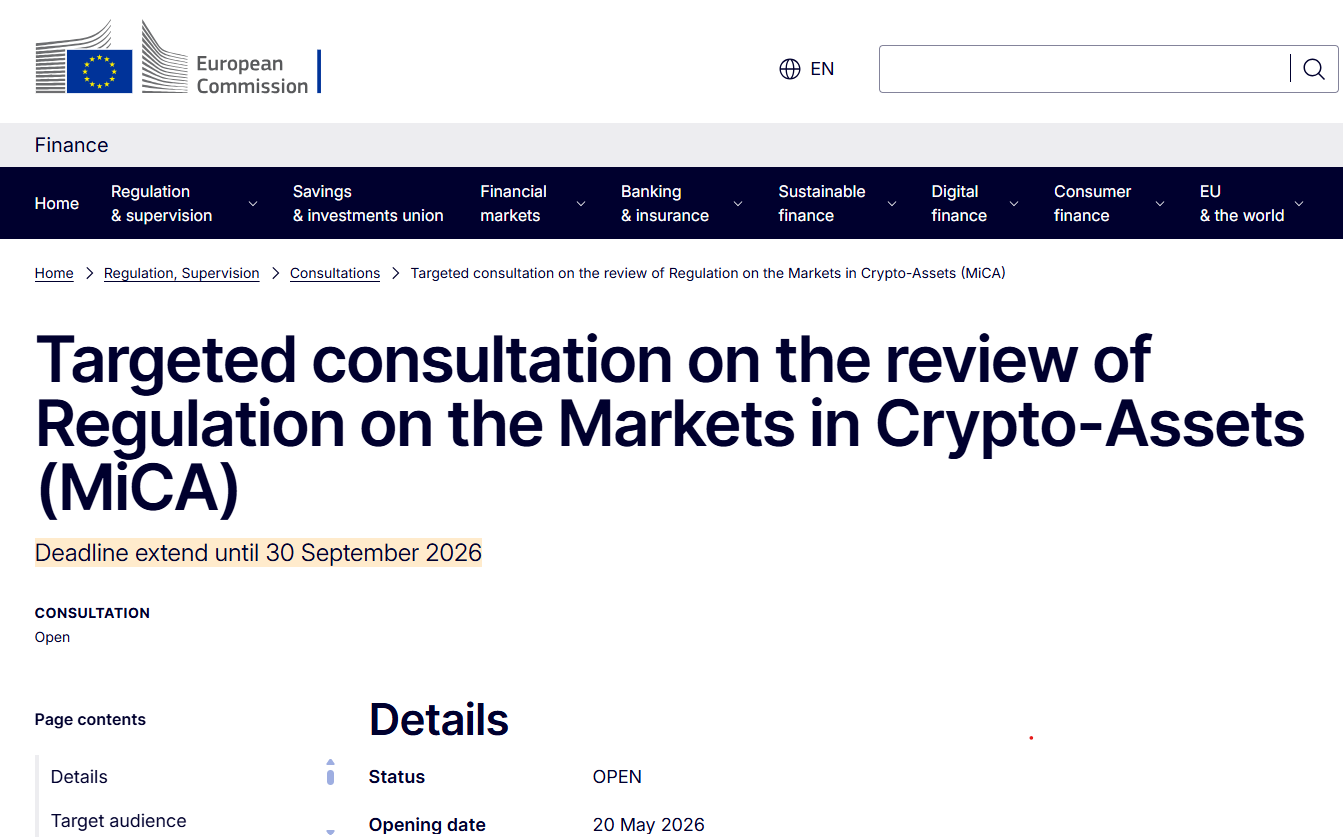
Targeted consultation on the review of Regulation on the Markets in Crypto Assets (MiCA). Source: European Comission
Its Vault V2 architecture divides responsibilities between an owner, curator, allocator and sentinel. The curator configures strategy and risk parameters, while the allocator executes allocations and the sentinel has powers intended to reduce risk.
While none of this establishes any of these participants as providing a regulated lending service under MiCA, it does show why identifying the relevant “provider” is less straightforward than with a conventional lender.
Related: Bitwise to launch onchain vaults via Morpho
Jonathan Galea, a partner at Cahill Gordon & Reindel, explored the issue in a recent client update on lending vaults and their position under EU financial regulation. His analysis looks at how vault structures can sit across MiCA, stablecoin rules and European fund law.
Galea says policymakers should be careful about treating lending vaults as a single category, telling Magazine, “lending vaults solve more practical problems than they create.”
He says lending vaults help direct fragmented liquidity into lending markets, while other vaults may buy and sell crypto assets and should be treated differently:
“Bring ‘DeFi lending’ into the perimeter as a single label, and structures that deserve opposite answers risk ending up captured together.”
That would be important if Brussels decides to regulate lending, since a broad category covering “DeFi lending” could capture structures with very different economic functions—and people exercising control over them.
Who should actually be regulated?
MiCA currently excludes crypto asset services that are provided in a “fully decentralized manner,” although it can apply where only part of an activity is performed in a decentralized way.
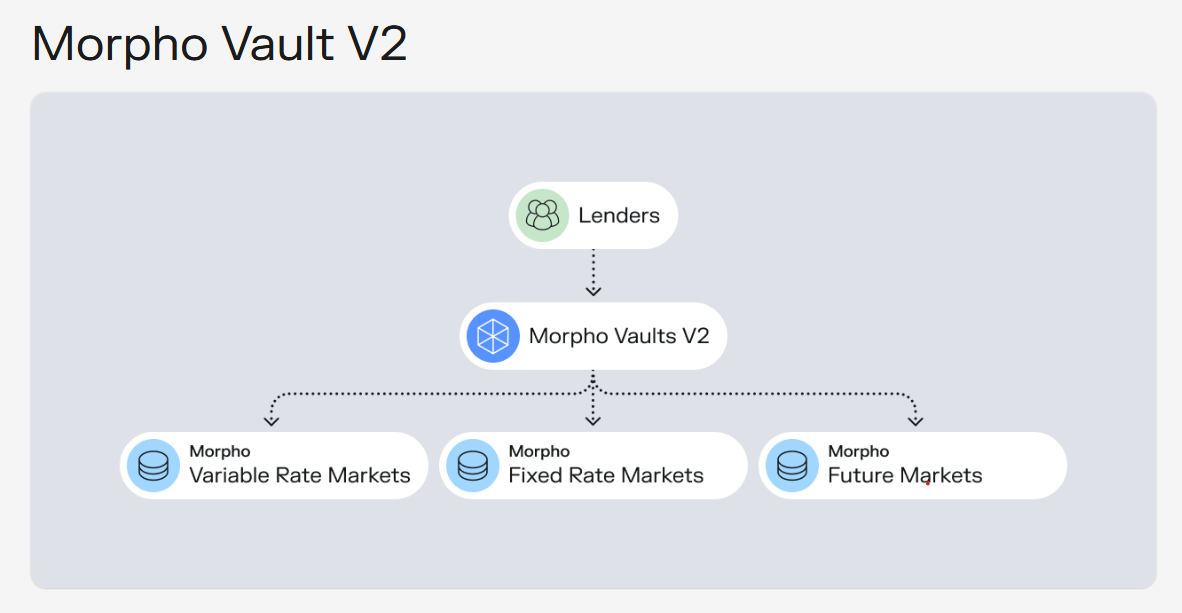
Morpho’s Vault V2 architecture. Source: Morpho
One possible solution would be to make decentralization the dividing line, but Galea argues that could disadvantage newer protocols. He says:
“Decentralization is a spectrum and a function of time: a test built on it would penalize newer, more novel protocols while entrenching mature incumbents that have had years to distribute control.”
Brisov says the focus should instead be on the structure of the vault and the control people have over it:
“The safer ground is structural: there is no undertaking, no appointed manager, the holder has a direct coded claim on the pool, and the user can exit before any parameter change takes effect.”
He says if Brussels decides that lending and borrowing warrant regulation, they should be explicitly added to the list of regulated crypto asset services rather than broadening the definition of a crypto asset service provider itself.
Related: ‘DeFi doesn’t exist anymore,’ just onchain finance: Andre Cronje
Curve Finance founder Michael Egorov argues that the rules also need to account for the differences between decentralized lending and conventional finance. He says:
“If DeFi lending is ever brought into the scope of regulation, it should be treated completely differently. DeFi doesn’t need some of the safeguards which traditional lending requires, and yet, at the same time, it may need others.”
Egorov says regulation should be approached “really carefully,” and that a dedicated framework could improve safety and open DeFi lending to new users, while avoiding rules that some protocols cannot comply with because of how they’re built.
The Commission’s consultation closes Sept. 30, and what follows could determine whether lending vaults remain outside MiCA or become subject to a new regulatory framework.
For Brussels, the challenge is not simply whether to regulate DeFi lending; it’s how to write rules that distinguish between very different forms of onchain lending and the people (if any) that actually exercise control over them.
Magazine: 200,000 fake AI ‘victims’ deployed to scam bait online fraudsters
Cointelegraph publishes long-form journalism, analysis and narrative reporting produced by Cointelegraph’s in-house editorial team with subject-matter expertise. All articles are edited and reviewed by Cointelegraph editors in line with our editorial standards. Some articles contain affiliate links, from which Cointelegraph may earn a commission. These relationships do not influence which products we review or our editorial conclusions. Content published in here does not constitute financial, legal or investment advice. Readers should conduct their own research and consult qualified professionals where appropriate. Cointelegraph maintains full editorial independence.

Each week, Investors Intelligence, an independent provider of market research and technical analysis, tracks more than 100 stock market newsletters and measures how many are making bullish calls and how many are advising against owning stocks. When the number of bulls reaches irrationally high levels — you guessed it — the market is often near a significant top. When fear…
Copyright ©2026 Investor’s Business Daily, LLC. All rights reserved. 87990cbe856818d5eddac44c7b1cdeb8
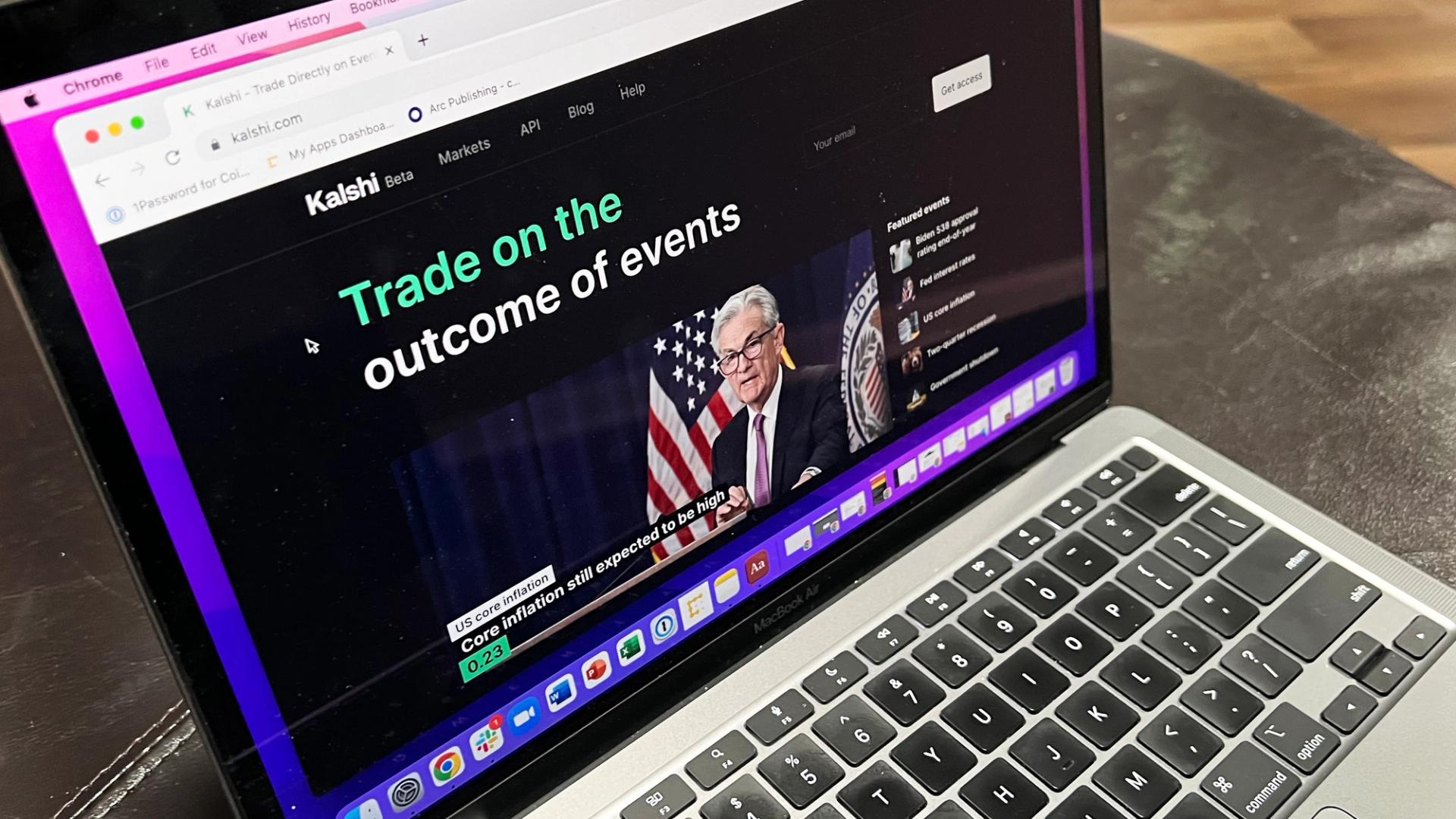
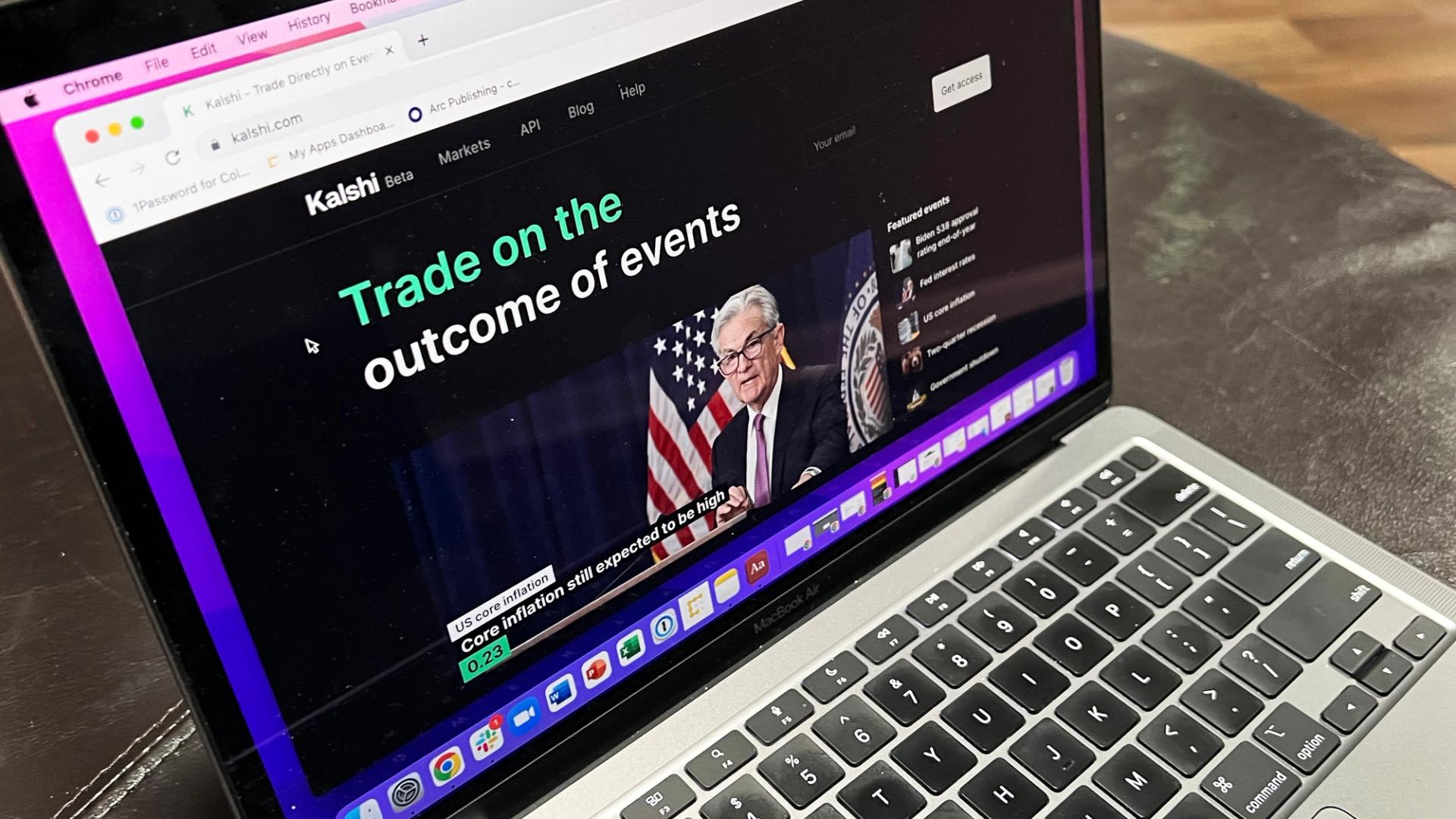
Washington state is cut off for Kalshi customers while the company combats the development in court and its federal regulator keeps pursuing new rules.

Dow Jones futures rose modestly early Friday, along with S&P 500 futures and Nasdaq futures. Bitcoin continued to surge. The stock market rally resumed a recent slide Thursday as crude oil prices kept rising and bond yields recouped Wednesday’s declines on an unusual Treasury move. The key indexes undercut key short-term levels while the Nasdaq also triggered a highly bearish…
Copyright ©2026 Investor’s Business Daily, LLC. All rights reserved. 87990cbe856818d5eddac44c7b1cdeb8

Tired of collecting the S&P 500’s paltry 0.9% dividend? Prepare to take your money overseas. The rising weight of low-yielding tech giants in the S&P 500 — and rising stock prices — are pushing the index’s yield lower. One way to fight back is by expanding your portfolio’s geographic horizons. “Dividend yields provide a partial offset to the risk of…
Copyright ©2026 Investor’s Business Daily, LLC. All rights reserved. 87990cbe856818d5eddac44c7b1cdeb8

Dow Jones futures will open Sunday evening, along with S&P 500 futures and Nasdaq futures. Nvidia earnings take center stage with CrowdStrike leading several cybersecurity reports. Federal Reserve Chairman Kevin Warsh will give his first Jackson Hole speech. The stock market rally took damage this past week, but did a little repair work on Friday. Mining stocks and crypto plans…
Copyright ©2026 Investor’s Business Daily, LLC. All rights reserved. 87990cbe856818d5eddac44c7b1cdeb8


South Korea has advanced a three-part digital-finance program covering crypto accounts for about 3,500 companies, legal recognition for tokenized securities, and deposit-token trials involving nine banks.
Summary
- About 3,500 listed companies and professional investors are eligible for South Korea’s corporate crypto pilot.
- Tokenized-securities laws were passed in January and will take effect in February 2027.
- Project Hangang Phase II has expanded deposit-token testing from seven banks to nine.
- Deposit tokens will support government payments, AI-agent transactions and tokenized-asset settlement.
FACTBLOCK CEO and Korea Blockchain Week organizer Andrew Park said South Korea’s crypto market is moving away from its long reliance on retail trading as financial institutions focus on custody, tokenization, stablecoins, settlement systems and regulatory compliance.
The change covers three connected areas of financial activity. Corporate investors are preparing to enter the crypto market under Financial Services Commission rules, securities firms are building systems for tokenized assets, and the Bank of Korea is testing digital bank deposits that can carry programmable payment conditions.
South Korea prepares crypto accounts for 3,500 companies
Under a roadmap released by the Financial Services Commission in February 2025, South Korea planned to let about 2,500 listed companies and approximately 1,000 corporations registered as professional investors open real-name bank accounts linked to crypto exchanges.
Financial companies were excluded from the group, while access for the eligible corporations was designed as a controlled pilot rather than unrestricted participation.
Since 2017, Korean companies have been unable to trade virtual assets through local exchanges because banks have not provided the required real-name accounts. Although the restriction was not written as a direct statutory ban, the account rules effectively kept corporate money out of the market.
The FSC first opened limited account access to nonprofit organizations, universities, law-enforcement agencies, and crypto exchanges. Eligible institutions could sell virtual assets received through donations, criminal seizures, or exchange fees, but the first stage did not allow general investment.
Listed companies and registered professional investors formed the second group in the FSC’s roadmap because the regulator considered them better equipped to assess investment risk. Officials also cited corporate demand for blockchain businesses and digital-asset investments when choosing the pilot participants.
Subsequent guidelines considered an annual investment ceiling equal to 5% of a company’s equity capital, according to Korean media reports. Eligible purchases would be limited to the 20 largest cryptocurrencies by market value across South Korea’s five major exchanges, although regulators were still considering whether dollar-backed stablecoins such as Tether’s USDT should qualify.
Corporate access also creates demand for regulated custody. On Aug. 18, BitGo Korea secured VASP registration from the Korea Financial Intelligence Unit, allowing the company to develop crypto custody and transfer services for institutions and businesses.
Hana Financial Group owns 25% of BitGo Korea, while SK Telecom holds 10%. BitGo has not disclosed a service launch date, supported assets, custody fees, or named clients.
Tokenized securities enter South Korean law
Alongside corporate crypto access, South Korea has established a legal route for issuing and trading tokenized securities.
The National Assembly passed amendments to the Electronic Securities Act and Capital Markets Act on Jan. 15, 2026. The measures were promulgated on Feb. 3 and are scheduled to take effect on Feb. 4, 2027, according to a legal summary from Kim & Chang.
Under the amended Electronic Securities Act, distributed ledgers can serve as legally recognized records for securities issuance. Issuers must follow registration procedures involving the Korea Securities Depository, rather than treating blockchain records as a separate and unregulated ownership system.
Changes to the Capital Markets Act also bring investment-contract securities and fractional investment products into the regulated market. Licensed intermediaries will be able to handle distribution, while over-the-counter trading will operate under rules prepared by financial authorities.
Infrastructure work has proceeded before the law takes effect. As crypto.news reported in May, Samsung SDS won a contract to turn the Korea Securities Depository’s test system into a production-ready token-securities platform.
KSD expects the system to connect distributed-ledger data with its existing electronic securities accounts. The planned functions include issuance records, circulation checks, rights management and real-time monitoring of token volumes, with completion expected by February 2027.
In August, Shinhan Bank and Plume also began an offshore proof of concept involving a won-denominated tokenized fund backed by ultra-short-term bonds. The test excludes Korean residents and will not issue or distribute tokens, but the companies are examining whitelist controls, know-your-customer checks, anti-money-laundering procedures, and onchain operations before the domestic law begins.
For U.S. readers, the Korean structure differs in administration but follows the U.S. Securities and Exchange Commission’s position that putting a financial instrument on a blockchain does not remove it from securities law. In a January 2026 staff statement, the SEC divided tokenized securities into issuer-backed and third-party models and said market participants may still need registrations, proposals or regulatory relief.
SEC Commissioner Hester Peirce previously said “tokenized securities are still securities,” adding that distributors, buyers and trading platforms must consider federal disclosure and market rules. South Korea’s framework similarly places tokenized instruments inside its existing securities system, with KSD handling formal registration.
Project Hangang expands deposit-token testing
The Bank of Korea has developed a separate payment layer through Project Hangang, which combines wholesale central-bank money with deposit tokens issued by commercial banks.
Deposit tokens are digital versions of bank deposits rather than cryptocurrencies issued directly by the central bank to consumers. Participating banks issue the tokens to customers, while tokenized central-bank money settles transfers between the banks.
During Phase I, which began in April 2025, about 80,000 of the 100,000 invited users opened wallets. Participants completed approximately 118,000 payment transactions, although the total value remained below 700 million won.
In March 2026, the Bank of Korea launched Phase II with nine banks, adding BNK Kyongnam Bank and iM Bank to KB Kookmin, Shinhan, Woori, Hana, NH Nonghyup, IBK Industrial Bank and BNK Busan Bank.
Phase II includes person-to-person transfers, biometric payment approval, and automatic conversion between ordinary deposits and deposit tokens. The central bank is also extending digital vouchers and testing programmable controls on government spending.
Electric-vehicle charging infrastructure grants and public-sector operating expenses are among the first public-payment uses. Payment conditions can restrict which recipient spends the funds, where the money is accepted, and how long it remains available, according to the Bank of Korea.
A separate 9.6 billion won, or roughly $6.9 million, deposit-token payment program began in July under the Korea Internet & Security Agency and the Ministry of Science and ICT. Nine banks, eight payment companies, and two major merchants joined the consortium led by the Korea Financial Telecommunications and Clearings Institute.
The program will connect deposit tokens with existing payment networks, allowing merchants to process transactions without replacing all their terminals. Participating agencies said the test would examine whether the system can lower processing fees for small businesses.
AI agents gain a programmable payment method
Project Hangang’s technical work has also covered payments initiated by AI agents.
LG CNS demonstrated an agentic payment service in January 2026 using deposit tokens on the Bank of Korea’s infrastructure. Under the model, an AI agent can search for a product or service, check user-defined conditions, and complete a payment through a tokenized bank deposit.
The Bank of Korea said it would continue studying deposit tokens as a payment method for AI-agent services and as settlement money for tokenized bonds and shares. Because payment conditions can be written into the system, a transaction can execute only after a specified action or market condition occurs.
At the European Central Bank Forum in July, Bank of Korea Governor Hyun Song Shin said “the big prize is tokenizing government bonds.” Shin described a unified ledger where tokenized bonds, commercial-bank deposit tokens, and wholesale central-bank money could operate on the same platform.
The central bank has also connected Project Hangang with the Bank for International Settlements’ Project Agorá. In 2026, South Korea completed tests linking its digital-currency system with the cross-border platform, including real-value transactions using tokenized central-bank reserves across six currencies.

Is Casualty on tonight? When it’s back and next on TV confirmed | Soaps
InvestingPro’s Fair Value spotted TTM’s 38% drop before it happened

Tokenized stocks risk repeating Wall Street’s 1960s ‘paper crisis,’ Fairmint CEO says





-

 Fashion20 hours ago
Weekend Open Thread: Madewell – Corporette.com
-

 Business4 days ago
SMA Solar Technology AG (SMTGY) Q2 2026 Earnings Call Transcript
-

 Tech4 days ago
Qwen3.8-27B runs frontier-class coding agents and reasoning locally, no cloud API required
-

 Crypto World5 days ago
OCC Greenlights Trump Family Crypto Firm for Trust Charter
-
 Tech7 days ago
Every fusion startup that has raised over $100M
-

 Crypto World5 days ago
NAVI Prime launches institutional lending framework on Sui
-

 News Videos2 days ago
Don’t Leave Your Financial Future To Chance | August 19, 2026
-

 Crypto World6 days ago
Data of 54K Wallet Users Leaked, Clarity Odds Just 10%: Hodler’s Digest, Aug. 16
-
 NewsBeat5 hours ago
The ‘Lucky Dip Gang’ causing carnage for clicks: After five thugs were killed speeding in the wrong direction on a motorway, GUY ADAMS investigates a sick new trend… and why police aren’t even allowed to pursue them
-

 Business7 days ago
Stephen Curry Trade Rumors Persist as Warriors Insist Superstar Remains Committed to Golden State
-

 Politics6 days ago
Britain is facing a housing disaster
-

 Tech6 days ago
What are the rumors about the AirPods Pro 4?
-

 Business6 days ago
Rebel Creamery files Chapter 11 with $23.8M Van Leeuwen judgment on appeal
-

 Business7 days ago
(VIDEO) Frozen 3 First Look Reveals Anna’s Wedding, Olaf’s New Love Interest And A Mysterious Villain
-
 Crypto World5 days ago
Dow’s 3-Year Winning Run Isn’t a Crash Signal, Still 49% Odds of Double-Digit Gains
-

 Business4 days ago
Stock Market Today: Tech Futures Slide As Treasury Yields Jump; Nvidia, Micron, Sandisk Sell Off
-

 Tech7 days ago
DeepSeek’s innovative harness treats everything as a plug-in
-

 Tech7 days ago
Three new Windows flaws can bypass security, gain system privileges, and even install malware remotely
-
 Tech6 days ago
OpenAI’s new ChatGPT feature logs your keystrokes and stores them in plain text
-

 Tech5 days ago
Straight Up the Cliff, Yunnan’s New Fuyao Ladder Turns a Three-Hour Climb Into a 50-Second Ride for Students
You must be logged in to post a comment Login