

Crypto World
Michael Saylor says Strategy is turning Bitcoin into “digital credit” and “digital equity”



Michael Saylor says Strategy is “converting digital capital Bitcoin into digital credit (STRC) and digital equity (MSTR),” pitching a three‑layer capital stack with BTC as reserve asset, STRC as yield‑focused credit, and MSTR as the levered equity layer.
Summary
- Michael Saylor says Strategy is converting its Bitcoin “digital capital” into digital credit via STRC and digital equity via MSTR.
- STRC, a Bitcoin-backed perpetual preferred stock, has grown into an $8.5 billion “digital credit” product in under a year.
- The framework cements Strategy’s model: Bitcoin as reserve asset, STRC as yield-focused credit layer, and MSTR as leveraged equity tied to BTC upside.
Michael Saylor, founder and executive chairman of Bitcoin treasury company Strategy, said on X that the firm is “converting digital capital Bitcoin into digital credit (STRC) and digital equity (MSTR),” underscoring what he called a Bitcoin-centric capital market architecture. The post reiterates a theme Saylor has been pushing since his Bitcoin 2026 keynote, where he framed Bitcoin as “engineered capital,” STRC as a digital credit instrument built on that capital, and MSTR as the equity layer that absorbs the residual upside and volatility.
Bitcoin as capital, STRC as credit, MSTR as equity
At the Bitcoin 2026 conference, Saylor detailed Strategy’s three-layer model, with Bitcoin as layer-one digital capital, STRC as layer-two digital credit, and a range of yield and money products at layer three. “Digital credit is a killer application of digital capital. Every dollar that flows into digital credit will flow into digital capital,” he said, describing STRC as the credit layer built directly on top of Strategy’s BTC reserves.
STRC (ticker STRC), nicknamed “Stretch,” is Strategy’s variable-rate perpetual preferred stock backed by the company’s Bitcoin holdings and designed to trade near a $100 par value, according to the digital credit dashboard. Strategy manages STRC’s price stability by adjusting its monthly dividend rate and using an at-the-market (ATM) issuance program to sell new shares when they trade at or above $100, raising cash to buy more BTC and expand its reserve. In an April update, Saylor said STRC had reached $8.5 billion in assets under management in roughly nine months, making it “the world’s largest preferred stock” and targeting what he described as a $3.5 trillion private credit market.
In that same presentation, Saylor argued traditional private credit is “illiquid, opaque, discrete, and burdened with fees,” while “digital credit” such as STRC is “liquid, transparent, homogeneous, scalable, accessible, and carries no fee,” positioning the product as a structural fix to what he sees as misaligned incentives in legacy markets. KuCoin’s summary of the Bitcoin 2026 talk noted that STRC’s design channels Bitcoin’s capital returns into monthly income, with an 11% yield based on BTC’s 38% annualized return and a 5:1 collateral ratio intended to protect principal even if Bitcoin falls by 80%.
On the equity side, MSTR — Strategy’s common stock — functions as what Saylor calls “digital equity,” a leveraged claim on the firm’s expanding BTC treasury that captures the excess return from Bitcoin after servicing STRC’s coupon. A BitcoinTreasuries profile notes that Strategy now holds more than 800,000 BTC, and a recent digital credit overview frames MSTR as the equity layer sitting above STRC and other Bitcoin-backed preferreds. Yahoo Finance, in a separate report, estimated that roughly 85% of a recent $2.5 billion BTC purchase by Strategy was funded through STRC issuance, illustrating how the preferred stock has become the engine for scaling the company’s Bitcoin balance sheet.


Nearly half of US voters are willing to cross party lines to get clear crypto regulation off the ground, while public support for the CLARITY Act could bring an electoral benefit for politicians, according to a new survey from HarrisX.
The poll included responses from 2,008 registered voters from May 1-4. It found that 52% of respondents support the CLARITY Act, with just 11% opposed.
About half, or 47%, said they would consider voting for a candidate outside their preferred party if that candidate backed the bill and their own party did not. Among crypto users, that number jumped to 72%.
“Passing the CLARITY Act is a bipartisan, winning issue,” Coinbase CEO Brian Armstrong said on X on Thursday. Robinhood CEO Vlad Tenev added: “There’s real momentum now to finally get CLARITY across the finish line. One more small push and we establish the legislative foundation to ensure American dominance in digital finance.”

Source: HarrisX
The crypto industry has been waiting for the CLARITY Act to move through the US legislative process. It is expected to provide long-awaited regulatory clarity for crypto and could help the country become a major hub for crypto and digital finance.
The HarrisX poll also highlighted strong bipartisan support for the bill, with 55% of Democrats, 58% of Republicans and 42% of independents supporting it. Public support for the bill could also give senators a 20-point electoral advantage, it said
Related: Bitmine’s Tom Lee says ‘crypto spring’ has already begun
Some predict the CLARITY Act will receive additional markups as soon as next week.
Speaking at the Consensus 2026 crypto industry conference in Miami on Wednesday, Coinbase’s vice president of US policy, Kara Calvert, said her “prediction is that we have a markup next week” from the Senate Banking Committee.
Calvert stressed that bipartisan support will get the bill across the line, saying it needs at least 60 votes to pass the Senate, but she is unsure how things will unfold in the coming days.
“That means you need Democrats. You need a bipartisan bill, and we have all been working really hard to make sure that bipartisanship holds. I think the big question is, how do these votes shape up over the next few days?”
The timeline for a vote may still be months away, however. US Sen. Kirsten Gillibrand recently suggested additional markups are required before the bill can progress, predicting a Senate vote in August.
Magazine: Guide to the top and emerging global crypto hubs — Mid-2026


Arbitrum delegates approved the release of $71 million in ether frozen after last month’s Lazarus-linked rsETH exploit, setting up a direct clash between decentralized governance and an active U.S. court fight over who owns the funds.
The on-chain vote, which closed Friday afternoon Hong Kong time with more than 90% support, authorizes the release of 30,765 ETH frozen by Arbitrum’s Security Council after the April 18 exploit, when attackers used unbacked rsETH tokens as collateral on Aave to borrow roughly $230 million in ETH from the protocol.
The funds are earmarked for a coordinated industry recovery effort led by Aave, KelpDAO, LayerZero, EtherFi and Compound, aimed at making affected users whole.
But the frozen ether is also at the center of an escalating legal dispute in Manhattan federal court.
Last week, attorney Charles Gerstein, representing families holding roughly $877 million in unpaid terrorism judgments against North Korea, served a restraining notice on Arbitrum DAO claiming the frozen ETH constitutes North Korean property because the exploit has been widely attributed to Pyongyang’s Lazarus Group.
That triggered an emergency legal fight.
Aave moved earlier this week to vacate the restraining notice, arguing the assets belong to innocent users, not North Korea, and warning that continued delays risk “cascading liquidations” and broader instability across decentralized finance markets.
Gerstein fired back Tuesday, arguing the exploit was not theft but fraud, meaning the attackers obtained legal title to the ETH by deceiving Aave’s lending markets with worthless collateral.
Friday’s governance vote does not mean the funds move immediately.
Because the measure was structured as a Constitutional AIP under Arbitrum’s governance framework, the transfer cannot be executed for at least eight days, giving the Manhattan court time to intervene before any ETH moves.
Arbitrum delegates were also not voting blindly to the legal risk. The proposal included indemnification protections for the Arbitrum Foundation, Offchain Labs, Security Council members, and governance delegates against certain claims arising from either freezing or releasing the ETH, underscoring how unusual the stakes around the vote had already become.
Speaking at Consensus Miami this week, Aave Labs Chief Legal and Policy Officer Linda Jeng said the exploit had already forced the protocol to rethink its risk framework, expanding collateral standards beyond financial metrics to include cybersecurity, interoperability, and technical architecture reviews.
Jeng, who worked as a regulator during the 2008 financial crisis, drew a contrast with traditional finance’s taxpayer-backed rescues.
“In the financial crisis, we had to bail out the banks,” she said. “Here, we came together as an ecosystem to bail ourselves out.”
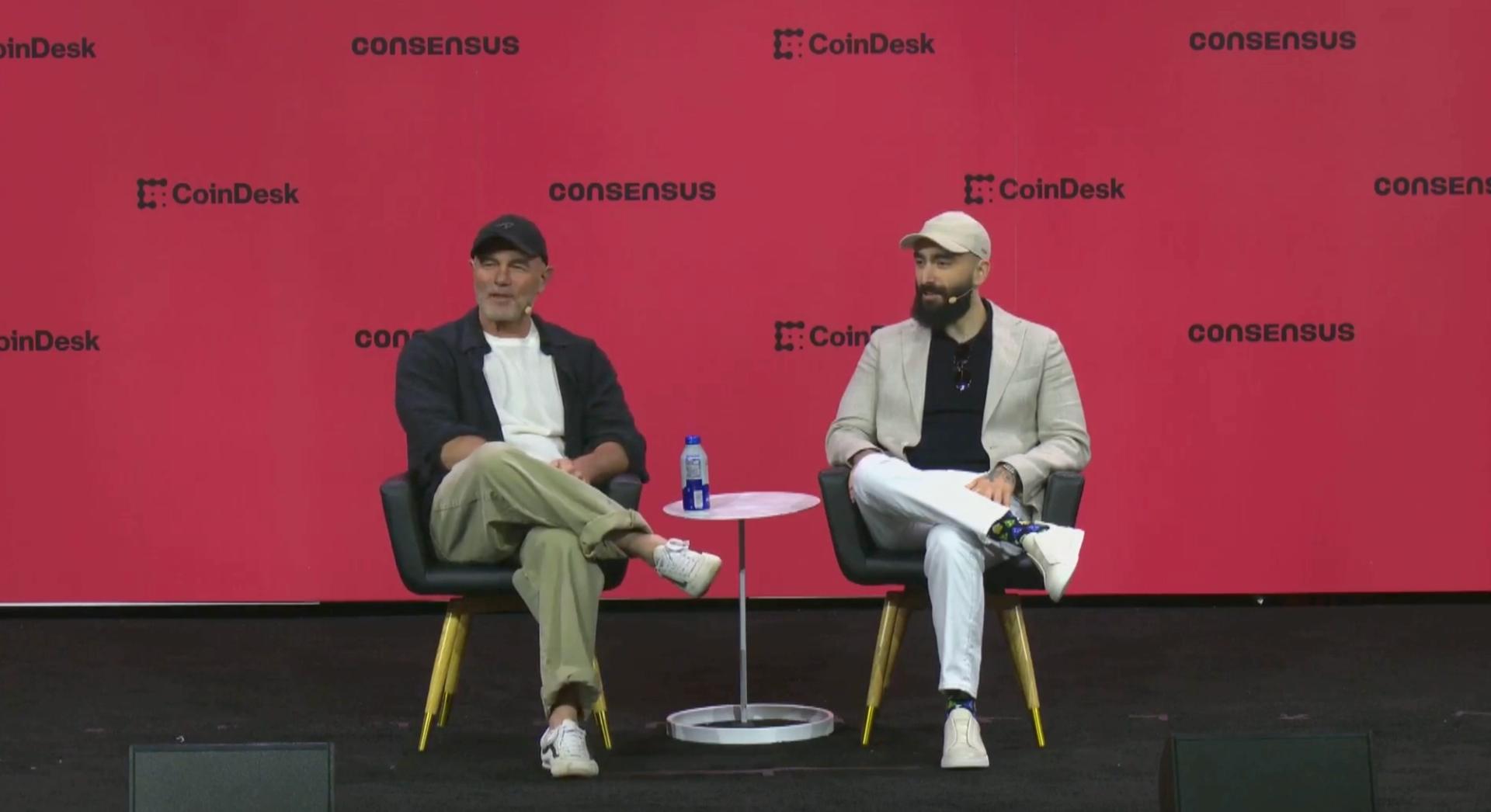
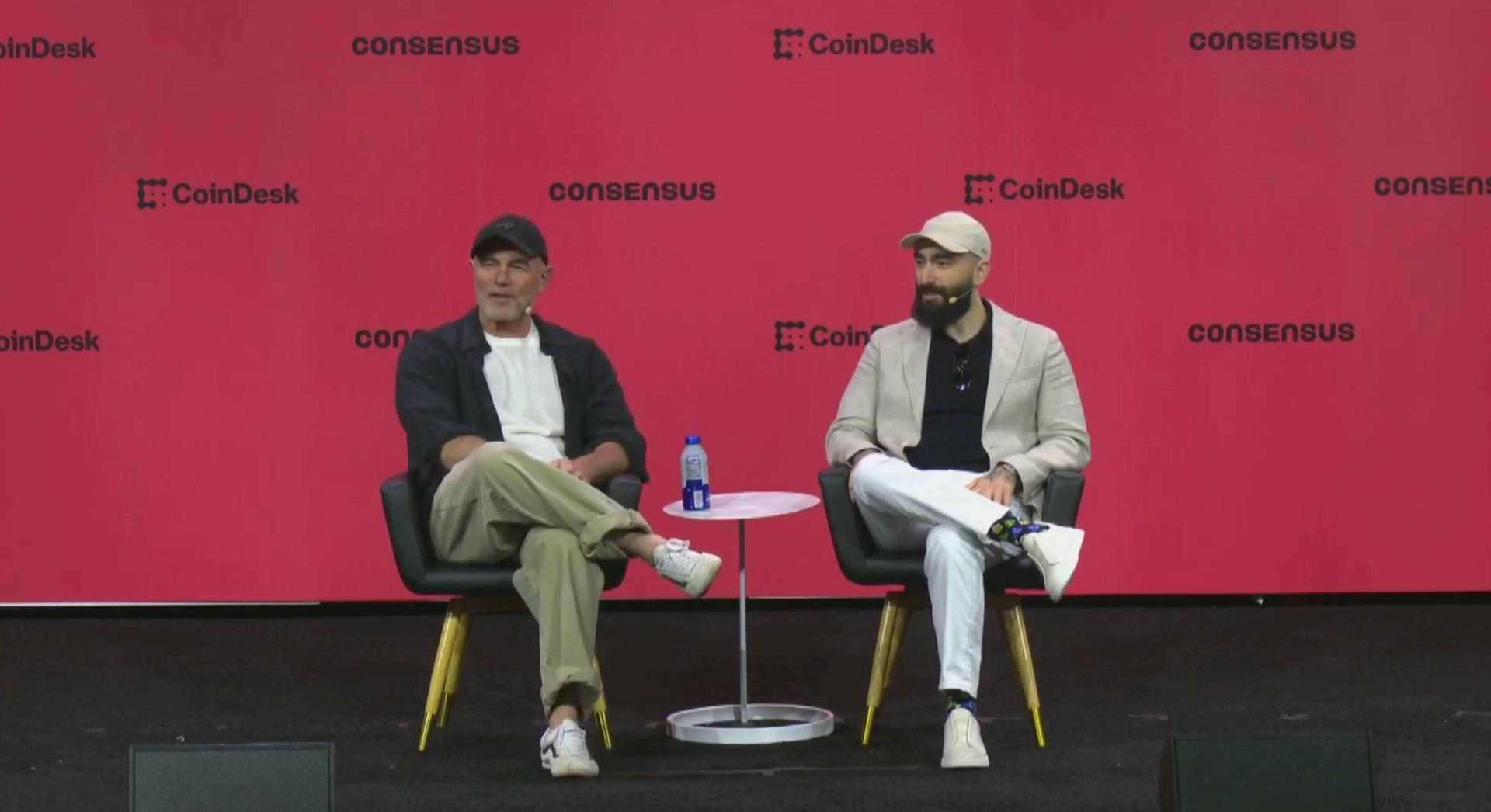
Zcash will roll out quantum-recoverable wallets within a month and reach full post-quantum status within 12 to 18 months, Zcash Open Development Lab founder and CEO Josh Swihart told a Consensus Miami audience on Thursday in a session moderated by Solana infra firm Helius’s founder Mert Mumtaz.
A separate scaling track is targeting MasterCard- and Visa-scale throughput on a similar horizon.
The roadmap arrived during a ZEC rally that has lifted the token more than 110% over the past 30 days as prominent crypto fund Multicoin Capital disclosed a sizable ZEC investment and the privacy narrative caught on among investors, sentiment daata shows.
Swihart’s pitch was that Bitcoin no longer holds up as the cypherpunk-grade money it was meant to be. The asset works as an ETF wrapper and a store of value, he said, but as a peer-to-peer private payment system “it’s just fundamentally broken.”
Visible balances on a transparent ledger let governments seize what they can see, he argued, the same wealth-visibility critique Multicoin’s Tushar Jain leaned on this week when disclosing the fund’s purchases.
The user-side traction is running through the Electric Coin Company’s mobile wallet after an October integration with Near Intents opened cross-chain swaps from assets like BTC, SOL and USDC directly into shielded ZEC.
Near Intents lets a user state what they want, like turning USDC into ZEC, while specialized routers handle the multi-step trade across different blockchains in the background.
Roughly $600 million to $700 million has flowed through that route since launch, mostly to and from USD and USDC, Swihart said. Near’s broader intent-based system has processed close to $800 million in volume over the past 30 days alone, per Near Protocol data, with Ethereum, Solana and Zcash dominating the chain side.
A separate proposal to cut Zcash’s target block time from 75 seconds to 25 seconds is in active discussion on the project’s community forum, with bridges to Solana and Hyperliquid already live, Mumtaz noted.
Token-holder voting through Zashi is also slated, Swihart said, less as formal governance and more as an opinion layer feeding the project’s existing rough-consensus model.
For traders, the cleanest near-term test is whether quantum recoverability actually ships within Swihart’s stated month. The fail-safe is the shielded pool, which now sits at roughly 30% of circulating ZEC, an all-time high. If it keeps growing alongside price, the rally is being underwritten by adoption rather than speculation


The crypto market turned sharply lower on Friday, with total market capitalization falling nearly 3.8% to around $2.61 trillion as renewed military tensions between the United States and Iran triggered a broad risk-off move across global markets.
Summary
- The crypto market fell nearly 4% on May 8 as renewed U.S.-Iran military tensions triggered a broad risk-off selloff across digital assets.
- Bitcoin slipped below $77,000 while Ethereum dropped over 6%, with more than $344 million in long liquidations accelerating downside pressure.
- Investor sentiment weakened as capital rotated into gold and U.S. equities, with the S&P 500 hitting fresh record highs amid a tech-led rally.
Bitcoin (BTC) dropped roughly 4.5% over the past 24 hours, slipping below the $77,000 mark before recovering slightly to trade near $77,400 at press time. Ethereum (ETH) fell more than 6% to around $1,980, while major altcoins such as Solana (SOL), XRP (XRP), BNB (BNB), and Dogecoin (DOGE) also recorded notable losses amid accelerating sell pressure.
Among the worst performers were high-beta altcoins and meme tokens, many of which posted double-digit intraday declines as traders rapidly reduced exposure to risk assets.
The latest downturn triggered a large wave of long liquidations across crypto derivatives markets. More than $344 million in bullish positions were wiped out over the past 24 hours as falling prices forced leveraged traders out of their positions, further intensifying downside momentum.
Investor sentiment also deteriorated sharply. The Crypto Fear and Greed Index fell by 9 points to 38, returning to fear territory as geopolitical uncertainty and rising volatility pushed traders toward a more defensive stance.
Crypto prices tanked after tensions in the Middle East escalated again despite earlier ceasefire expectations between Washington and Tehran.
Iran’s military accused U.S. forces of targeting an Iranian oil tanker near coastal waters and another vessel approaching the Strait of Hormuz, while also alleging U.S. air strikes on Bandar Khamir, Sirik, and Qeshm Island in southern Iran. Iranian air defenses were reportedly activated over western Tehran as local media described explosions and exchanges of fire near the Strait of Hormuz.
Meanwhile, U.S. Central Command said Iranian forces launched missiles, drones, and fast boats against American naval destroyers transiting the Strait of Hormuz. CENTCOM stated that U.S. forces eliminated inbound threats and struck Iranian military facilities tied to the attacks, including missile launch and surveillance infrastructure.
Despite the escalation, U.S. President Donald Trump insisted that the ceasefire agreement still remains in effect. He has described the strikes on Iranian targets as a “love tap” while warning Tehran that the United States would respond “a lot harder” if tensions continued.
The geopolitical flare-up pushed investors toward traditional safe-haven assets. Gold strengthened further during the session, while oil prices also moved higher on concerns that instability around the Strait of Hormuz could disrupt global energy supplies.
At the same time, capital continued rotating into traditional equities. The S&P 500 climbed to fresh record highs above the 7,300 level, supported by a strong technology rally driven by upbeat AI-related earnings from companies such as AMD. The move drew additional capital away from crypto markets as investors favored large-cap equities over speculative digital assets.
Looking ahead, traders are expected to closely monitor further developments surrounding U.S.-Iran negotiations and any potential disruptions in the Strait of Hormuz, which remains one of the world’s most critical oil shipping routes.
Broader market focus also remains on upcoming U.S. macroeconomic data and Federal Reserve expectations, both of which continue to influence risk appetite across crypto and global financial markets.
Disclosure: This article does not represent investment advice. The content and materials featured on this page are for educational purposes only.


The full-year free cash flow at Amazon, Alphabet, Meta, and Microsoft is set to fall to its lowest level since 2014.
The decline reflects mounting pressure from heavy investments in artificial intelligence (AI).
AI Spending Spree Pulls Big Tech Cash Flow Down
According to recent estimates from Morgan Stanley, hyperscalers including Amazon, Alphabet, Meta, Microsoft, and Oracle could spend nearly $805 billion this year, up from an earlier projection of $765 billion. Forecasts for next year have also been raised sharply to $1.1 trillion.
“To put that into perspective, their 2026 spending alone would be roughly equal to what all non-tech companies in the S&P 500 spent combined in 2025. The expected ~$800bn for 2026 is nearly double the 2025 levels and about three times what was spent in 2024,” reporter Holger Zschaepitz posted.
Follow us on X to get the latest news as it happens
The aggressive push into AI is leaving these tech giants with significantly less cash. Wall Street forecasts show the combined free cash flow of Amazon, Alphabet, Microsoft, and Meta could drop to around $4 billion in the third quarter. This marks a dip from the quarterly average of $45 billion since the COVID-19 pandemic.
“Their full-year free cash flow is set to hit the lowest level since 2014, when their revenues were about a seventh of their current size, according to analysts’ estimates compiled by Visible Alpha,” the Financial Times reported.
The report noted that Amazon is projected to spend more cash than it generates this year. Visible Alpha estimates point to a roughly $10 billion cash burn.
The company has also announced plans to invest $200 billion in 2026, marking the largest spending commitment among its peers.
Meta is also expected to “burn cash” in the second half of the year. Over the past six months, the firm has issued $55 billion in debt and halted share buybacks.
Meanwhile, analysts expect Alphabet to remain free cash flow positive for the full year, though at its weakest level in more than a decade. The company also refrained from repurchasing shares in the first quarter for the first time since initiating its buyback program in 2015.
“After largely funding their investments from their income for the first few years of the AI boom, these tech giants face trade-offs more familiar to capital-intensive businesses: cutting jobs, reducing shareholder returns or borrowing to fund the build-out,” the report added.
Still, analysts view the pressure on cash flow as temporary. They expect that rising AI-driven revenue will improve cash generation next year.
Subscribe to our YouTube channel to watch leaders and journalists provide expert insights
The post Hyperscalers’ Free Cash Flow Dips as AI Arms Race Hits Balance Sheets appeared first on BeInCrypto.
Despite the ongoing protocol updates and major high-profile appearances from the project’s co-founders at one of the most influential cryptocurrency conferences for the year, the native token experienced another painful rejection in the past 24 hours.
This behavior continues to raise questions about its overall state, as this is yet another classic sell-the-news moment.
PI’s Decline
Recall that the Pi Network protocol updates began in late February with the introduction of version 19.6. Since then, the new versions have been deployed almost like clockwork, and the latest was announced at the start of the month – v22. Moreover, the team set a deadline for the implementation of the next one in its roadmap – v23, which should be completed by May 15.
In addition, they continue to publish different posts about other aspects of the overall ecosystem, such as the completion of more than 520 million tasks from a million verified users by combining human input with AI.
Perhaps even more notable was the feature of the two project co-founders, Dr. Chengdiao Fan and Nicolas Kokkalis, at the 2026 Consensus conference in Miami. As reported yesterday, Dr. Fan took the Convergence Stage to talk about how users can align web3, AI, and blockchain for utility. She also distinguished Pi Network from other cryptocurrency projects mainly in the token usage regard.
Yet, none of those developments has managed to produce a long-lasting positive impact on the native token. PI is deep in the red today, slumping to $0.166 minutes ago. This means that the asset has plunged by over 11% since its local peak at $0.188 marked on May 6.

Not the First Time
PI’s latest breakout attempt came ahead of the Miami conference, and the asset plunged immediately after both co-founders had completed their appearances. This appears to be a classic sell-the-news event for the asset, and is far from the first such occasion.
In March, massive hype built ahead of the so-called PiDay (March 14) and the major listing on Kraken. The token exploded as most of the market stagnated, going from $0.17 to $0.30 within just a few days. Once PI actually went live for trading on the veteran US exchange and PiDay passed, it plummeted instantly to its starting point, wiping out roughly $1 billion from its market cap.
The post Another Pi Network Sell-the-News Moment as PI Plunges Hard Again? appeared first on CryptoPotato.

A new HarrisX survey signals growing bipartisan momentum for the United States to settle crypto regulation under the CLARITY Act. The poll of 2,008 registered voters, conducted May 1–4, shows a modest majority in favor of the bill, with a notable willingness among voters to cross party lines for regulatory clarity that could shape the trajectory of the crypto sector in the U.S.
Key takeaways from the survey include strong cross-party support and a notable openness among cryptocurrency users. Specifically, 52% of respondents back the CLARITY Act, while 11% oppose it. Among those who identify as crypto users, 72% said they would consider voting for a candidate outside their preferred party if that candidate backed CLARITY while their own party did not. The poll also found bipartisan margins, underscoring a political imperative that could influence electoral dynamics in districts with crypto constituencies.
Key takeaways
- HarrisX data shows 52% overall support for the CLARITY Act, with 11% opposed; a plurality, not a landslide, but a clear majority.
- Crypto users exhibit especially strong alignment: 72% would consider crossing party lines for a CLARITY-backed candidate.
- Across party lines, support is bipartisan: 55% of Democrats, 58% of Republicans, and 42% of independents back the bill.
- The polling also suggests an electoral edge: supporters of CLARITY could carry a roughly 20-point advantage in Senate contests where the issue plays a role.
Momentum vs. timetable: what lawmakers are signaling
The industry has long urged regulatory clarity to attract investment, foster innovation, and reduce the legal ambiguity that many crypto firms contend with. In the wake of the polling results, industry figures have stressed that the moment could be pivotal. Coinbase’s chief executive, Brian Armstrong, wrote on X that “Passing the CLARITY Act is a bipartisan, winning issue.” Similarly, Vlad Tenev of Robinhood stated that there is “real momentum now to finally get CLARITY across the finish line,” arguing that a legislative foundation is essential to maintain American leadership in digital finance.
The political path, however, remains nuanced. During Consensus 2026 in Miami, Coinbase’s vice president of U.S. policy, Kara Calvert, indicated a potential markup next week on the CLARITY Act by the Senate Banking Committee. Calvert emphasized that bipartisanship will be crucial to delivering a final bill, noting that passage would require sufficient votes across party lines. Yet even with the anticipated markup, the timeline for a Senate vote remains uncertain, illustrating a broader pattern of early-stage progress accompanied by lingering questions about the pace of legislative action.
Senate timing could extend into late summer or beyond. For instance, U.S. Senator Kirsten Gillibrand has suggested additional markups could be needed before progress accelerates, signaling a possible August vote window. The tug-of-war between momentum and procedural realities highlights a common dynamic in crypto regulation: broad public and industry support can collide with the complexities of parliamentary procedure and the need to secure a durable, bipartisan consensus.
What the CLARITY Act represents in practice is a path toward formalizing how crypto offerings, exchanges, and related services are treated under U.S. law. Supporters argue that clear, predictable rules will reduce compliance friction, attract legitimate U.S. crypto businesses, and set a benchmark for global best practices. Opponents, meanwhile, have urged caution to ensure that any framework carefully guards consumer protections and financial stability. The HarrisX data suggests that even with lingering political questions, the underlying public sentiment sympathy toward a regulated, predictable crypto framework has substantial resonance across the spectrum.
Implications for investors, users, and builders
From an investor and builder perspective, the poll’s takeaway is twofold. First, the prospect of regulatory clarity reduces uncertainty that can cloud funding and strategic planning in crypto ventures. Firms operating in the U.S. — or considering expansion there — often cite regulatory clarity as a prerequisite for long-term capital commitments and product development timelines. Second, the bipartisan expressed support signals that any regulatory framework may be less susceptible to abrupt shifts with changes in party control, potentially delivering a more stable operating environment for innovative crypto projects and digital asset platforms.
For users and traders, clearer rules can translate into more reliable protections and a clearer understanding of what is permissible, what is regulated, and how enforcement might unfold. In the broader market narrative, the CLARITY Act functions as a hinge point: its passage or deferment could influence where startups locate, how exchanges structure compliance programs, and how institutions view the feasibility of mainstream crypto adoption in the United States.
What comes next and what to watch
Investors and industry watchers should monitor the Senate Banking Committee’s docket in the coming days for signals about whether a markup materializes as anticipated. If a markup occurs, observers will weigh the kinds of amendments that surface and how negotiators bridge remaining differences across parties. The public polling underscores a political incentive to push forward, but it does not guarantee a swift conclusion. The timeline remains contingent on the maneuvering of lawmakers, committee dynamics, and the degree of consensus that can be forged around the precise regulatory approach.
Beyond procedural milestones, the broader question remains the content of the CLARITY Act itself. While the poll confirms popular support for clearer crypto rules, details about what constitutes regulatory clarity and how it will be implemented are still being refined. As the discussion moves from rhetoric to drafting and committee votes, market participants will be watching not only for a timetable but for the substance that would define compliance, oversight, and enforcement in the next phase of U.S. digital finance policy.
In the near term, observers should pay close attention to updates from the Senate Banking Committee, remarks from industry policymakers, and any new polling that gauges how living policy proposals translate into public approval. The convergence of public sentiment and legislative activity could be a meaningful inflection point for the domestic crypto ecosystem, potentially shaping investor confidence, project funding, and the location of future innovation in digital assets.
Readers should stay tuned to how the CLARITY Act evolves, as the coming weeks will likely clarify whether the United States can translate broad public support into actionable, durable regulation that supports responsible innovation in crypto and digital finance.


Coinbase Markets said it will suspend trading for 12 perpetual futures on May 21 at about 13:00 UTC.
Summary
- Coinbase will suspend twelve perpetual futures, citing liquidity and market-quality standards across affected contracts soon.
- Open positions will settle automatically using the average index price before the final trading suspension.
- The move comes as crypto derivatives competition grows, with exchanges reviewing weaker markets more closely.
The affected contracts are KAITO-PERP, SENT-PERP, SAHARA-PERP, CAKE-PERP, TOSHI-PERP, AKT-PERP, VET-PERP, ANIME-PERP, THETA-PERP, ZK-PERP, KERNEL-PERP, and BARD-PERP.
The exchange said any open positions left at the time of suspension will be settled automatically. It also said the final settlement price will be based on the average index price during the 60 minutes before trading stops.
Open positions face automatic settlement
Coinbase said the funding rate will be set to zero for the final funding period before settlement. It also reserved the right to suspend trading at any point and adjust the final settlement price to a reasonable level.
The notice gives traders time to close or reduce exposure before the halt. However, users who keep positions open will move into automatic settlement. That makes timing, margin, and price movement important before May 21.
Moreover, Coinbase said the suspensions reflect its effort to maintain high-quality derivatives markets. The exchange said it is focusing on products that meet liquidity and market-quality standards, while seeking price integrity and deeper liquidity for users.
The affected tokens span several market areas, including AI, DeFi, gaming, infrastructure, and older layer-1 networks. Coinbase’s product page lists these markets as linear perpetual futures settled in USDC, with no expiry date.
Wider derivatives market keeps shifting
The suspension comes as competition in crypto derivatives grows. Related crypto.news coverage said Kalshi has explored crypto perpetual futures as U.S. derivatives rules shift and competition widens against Binance, Hyperliquid, Coinbase, and Kraken.
Coinbase has also been adjusting other listed markets. A recent crypto.news report said the exchange moved to disable DAI trading on Coinbase.com and its mobile app from May 4, while also suspending TIME trading and disabling TRU ahead of migration.


Polygon has reduced its average block time to 1.75 seconds as the network expands infrastructure built around stablecoin payments and institutional settlement tools.
Summary
- Polygon reduced its average block time to 1.75 seconds to increase transaction throughput for stablecoin payments and DeFi activity.
- The network has recently introduced shielded stablecoin transfers verified through zero-knowledge proofs while maintaining compliance checks through KYT screening.
Polygonscan data showed the latest Polygon blocks were being produced in 1.75 seconds after the network implemented its first block-time reduction since launch. Polygon software engineer Lucca Martins said the change increases Polygon’s theoretical throughput to roughly 3,260 transactions per second, allowing the network to process about 14% more payments per second.
Faster block production can shorten transaction queues during periods of congestion, reducing delays and fee spikes tied to payment activity, decentralized finance trading, and stablecoin transfers.
Under Polygon Improvement Proposal PIP-86, the latest upgrade forms part of a two-stage plan that also proposes cutting block times further to 1.5 seconds. The proposal additionally seeks to reduce checkpoint rewards to keep Polygon’s annual POL token emissions near the targeted 1% level after the throughput increase.
Polygon expands stablecoin infrastructure for institutions
Earlier this week, Polygon introduced a wallet feature that routes stablecoin transfers through a shielded pool verified with zero-knowledge proofs as part of its integration with Hinkal. Polygon said the system keeps transaction details hidden from public view while still screening activity through Know Your Transaction checks before execution.
Polygon community lead Smokey said businesses require operational privacy for financial activity rather than systems designed to avoid oversight. Polygon stated in its earlier announcement that institutions already operate within confidential payment environments in traditional finance and require similar protections for blockchain-based transfers.
According to Hinkal’s documentation, users can generate auditable transaction files for regulators and tax authorities without exposing transfers in real time on-chain. Polygon said the feature is intended to preserve compliance access for authorities while limiting public visibility into payment flows.
The network has increasingly focused on stablecoin payment infrastructure over recent months. In an April report, Polygon Labs disclosed plans to seek as much as $100 million in additional funding for a payments stack involving Coinme and Sequence.
Data from DeFiLlama showed Polygon’s stablecoin market capitalization reached $3.6 billion on April 10, placing the network among the larger chains for stablecoin activity. Polygon Labs has also stated that the network processes a significant share of non-USD stablecoin transfers tied to local currency payments.
Traditional payment firms have continued expanding stablecoin settlement experiments on Polygon’s infrastructure. On April 29, Visa added Polygon, Base, the Canton Network, Arc, and Tempo to its stablecoin settlement pilot launched in 2023. Visa said the program allows partners to settle transactions using stablecoins instead of conventional banking rails to test whether digital assets can improve settlement speed.
Additional payment integrations have already gone live on the network. In April, Meta Platforms began offering select creators payouts in USDC through wallets on Polygon and Solana, with Stripe processing the transactions and supporting tax reporting tools.
Despite the network upgrades and payment-focused expansion, Crypto.news data showed Polygon’s (POL) token trading near $0.09 at the time of writing, down 54% over the past year.


US airlines spent $5.06 billion on jet fuel in March. This marked a 56% jump from February, after the war between the US, Israel, and Iran disrupted global oil supply.
The Kobeissi Letter highlighted that fuel costs surged $1.83 billion month-over-month and $1.16 billion year-over-year. Per-gallon prices hit $3.13, up nearly 31% from February.
US Airlines Face Rising Jet Fuel Costs as Iran War Squeezes Supply
The closure of the Strait of Hormuz, a vital oil transit corridor, sent jet fuel prices climbing. Jet fuel typically represents 25% to 30% of an airline’s total operating costs, according to IATA.
With margins squeezed, major carriers have responded by raising fares and baggage fees, trimming routes, and cutting costs. German flag carrier Lufthansa plans to cut 20,000 short-haul departures through October.
Delta also announced that it will end food and beverage service on flights under 350 miles beginning May 19, the latest sign of belt-tightening across the sector.
Follow us on X to get the latest news as it happens
Meanwhile, United and American Airlines have slashed their 2026 financial outlooks.
“Major carriers, including Delta, have already withdrawn or significantly reduced their 2026 financial guidance, with some scaling back growth plans to avoid operating unprofitable routes at elevated fuel prices. Furthermore, several major carriers now expect customers to absorb higher jet fuel costs by the end of 2026 or early 2027,” The Kobeissi Letter wrote.
Spirit Airlines suspended all operations early on May 2, 2026, bringing an end to more than three decades of service. In a statement, the airline said a sharp rise in oil prices, along with broader business pressures, had severely affected its financial outlook.
With the Strait of Hormuz still closed, elevated April fuel costs will come as no surprise. As long as tensions persist, so will the pressure on US airlines.
Subscribe to our YouTube channel to watch leaders and journalists provide expert insights
The post Jet Fuel Bills Surge as US Carriers Spend $5 Billion in March appeared first on BeInCrypto.

Why Spurs fans face Arsenal dilemma in Premier League over the weekend

What we could learn from the world’s happiest country Finland
HarrisX Poll Found 52% of Registered Voters Support the CLARITY Act

Manchester United reach agreement with Casemiro over contract clause amid transfer speculation

US brings back mandatory military draft registration

Steven Gerrard disagrees with Gary Neville over ‘shock’ Chelsea and Arsenal claim | Football


-

 NewsBeat5 days ago
Channel 5 – All Creatures Great and Small series 7 new post
-

 Crypto World1 day ago
Upbit adds B3 Korean won pair as Base token gains Korea access
-
 Tech7 days ago
Trump’s 25% EU auto tariff breaches Turnberry Agreement that also covers semiconductors and digital trade
-
 NewsBeat1 day ago
NCP car park operator enters administration putting 340 UK sites at risk of closure
-
 Sports7 days ago
Paul Scholes issues Marcus Rashford reality check as agreement emerges over Man United star
-

 Entertainment7 days ago
Met Gala 2026 Rumored Guest List Is Turning Heads
-

 Entertainment6 days ago
Kylie Jenner Hit With Second Lawsuit From Ex-Housekeeper
-
Entertainment7 days ago
New on Prime Video in May 2026 — Full List of Movies and Shows
-

 Tech7 days ago
Meta ends Sama contract after Kenyan workers report seeing intimate footage from Ray-Ban smart glasses users
-

 Sports6 days ago
Cavaliers vs. Raptors Game 6 live score, updates, highlights from 2026 NBA playoffs first-round series
-
 Sports6 days ago
David Benavidez responds to team Canelo saying the fight will never happen
-
Entertainment5 days ago
New Netflix Movies in May 2026 — My Top 3 Picks to Stream
-

 Entertainment5 days ago
Melissa Joan Hart and More Stars Attend 2026 Kentucky Derby
-
 Sports6 days ago
IPL 2026: ‘Love you darling’- Hardik Pandya’s reaction to MS Dhoni steals the show |Watch | Cricket News
-

 Entertainment6 days ago
Young and the Restless Next Week: Cane Arrested & Matt’s Deadly New Scheme!
-
 Crypto World6 days ago
Pi Network Mandates Protocol 23 Upgrade for All Mainnet Nodes Before May 15 Deadline
-

 Business5 days ago
Luka Doncic Injury Update: Doncic’s Hamstring Recovery Slows Lakers’ Hopes Against Thunder: Can He Run Yet?
-

 Tech7 days ago
Mother’s Day 2026 Gift Guide: Audio to Upgrade Mom’s Lifestyle
-

 Sports7 days ago
What Preity Zinta Said After Punjab Kings’ First Defeat Of IPL 2026
-

 Business6 days ago
Can Victor Wembanyama Bring the NBA Ring to Spurs in 2026? Historic Playoff Run Fuels Title Dreams
You must be logged in to post a comment Login