
Crypto World
Nexo says 67% of affluent investors own crypto but few make it central to wealth plans – CoinJournal



- Nexo says 67% of affluent investors own crypto, but integration stays low.
- Security, fees and platform complexity emerge as key barriers to adoption.
- US investors show deepest crypto integration despite lower ownership rates.
High-net-worth investors are increasingly buying crypto, but many are still reluctant to make it a major part of their long-term wealth plans, according to a new Nexo survey.
The report found that 67% of affluent investors across the US, UK and Argentina already own crypto. However, security concerns, high fees and complicated platforms are stopping many from using digital assets for retirement planning or replacing traditional investments.
Nexo published its “Future of Digital Wealth 2026” report on September 23 after surveying 1,000 affluent investors. Its new Crypto Integration Index, which measures how deeply crypto is incorporated into investors’ finances, produced an average score of 4.83 out of 10.
Ownership outpaces deeper integration
Nexo said a score near the survey average of 4.83 represents a small, short-horizon crypto position outside retirement planning.
Only 4.7% of surveyed investors scored seven or higher, a level Nexo describes as structurally integrated, where crypto has replaced a traditional asset and forms part of longer-term financial planning.
The report found that just under 20% of respondents expect crypto to become their number-one personal wealth driver over the next decade, ahead of salary, equities and real estate.
More than 40% are already invested in crypto without yet building wealth with it.
“Once an investor gets past the risk perception stage, what’s left is security, fees, and platform user-friendliness and capabilities – the same things we’ve spent years building Nexo to solve,” said Neil Steinhardt, COO, Nexo US.
That’s the gap between owning crypto and actually building wealth with it, and it’s exactly where our platform is designed to meet investors.
Integration also varies by market. Argentina had the highest ownership rate at 74%, but a CII score of 4.62. The US had the lowest ownership at 62%, but the deepest integration with a score of 5.07.
The UK recorded 65% ownership and a CII score of 4.75.
Platform trust becomes the next hurdle
The report said crypto integration peaks among investors aged 35 to 44, with 28% treating digital assets as a core retirement asset.
Investors aged 18 to 25 reported the highest ownership and conviction, with more than 90% holding crypto, but only 2% maintaining a horizon of 10 years or longer.
Among structurally integrated investors with CII scores of seven or more, reported frictions shift towards platform trust. Security concerns were cited by 36%, high fees by 34%, and platform complexity by 28%.
“Risk perception used to be the story in every crypto adoption survey. It isn’t anymore,” said Iliya Kalchev, analyst at Nexo.
In our data, risk perception barely separates investors who’ve built real wealth with crypto from those who haven’t — what actually divides them is whether they’ve substituted crypto for a traditional asset and folded it into retirement planning. For affluent investors it’s the planning and the smoothness of operating with that crypto that remains to be resolved.
The survey was fielded in February and March 2026 through Attest. Respondents needed at least $100,000 in liquid assets in the US and UK, or $40,000 in Argentina, thresholds calibrated to capture the top 25% to 30% of each market by investable wealth.


BNB price has fallen 3.3% to about $761 as Binance has announced that it will start moving crypto balances from Funding Accounts to Spot Accounts on Sep. 29, ahead of a Stocks Account rename in January 2027.
Summary
- BNB price traded near $761 on Sep. 23, while remaining up 7.4% over seven days.
- Binance will begin moving non-stock assets from Funding Accounts to Spot Accounts on Sep. 29.
- The future Stocks Account will support equities, options, and six settlement assets, including BNB.
- Users can move assets with a new button or wait for automatic transfers starting in January.
Binance said in its Sep. 23 announcement that the migration will run from Sep. 29 into January 2027, with dates for individual stages to follow. The exchange will rename the Funding Account after the migration period and reserve it for stock and stock-options settlement.
The price decline and announcement occurred on the same day, but the available data does not establish that the account change drove BNB lower. CoinGecko put BNB’s 24-hour trading volume at about $1.34 billion when checked. Despite the daily fall, the token was still up 7.4% over the previous week.
BNB remains a stock settlement asset
From Sep. 29, Funding Accounts will stop accepting on-chain crypto deposits, according to Binance. Customers will instead use Spot Accounts for regular crypto deposits and withdrawals, while the account being renamed will continue to serve eligible stock and options traders during the transition.
BNB is one of six assets Binance says customers will be able to use for stock and stock-options settlement in the future Stocks Account. The others are USD, USDC, USDT, USD1 and U. Its inclusion means BNB remains part of the exchange’s funding choices for those products, even as other crypto balances move to Spot.
For customers who want to move funds sooner, Binance plans to add a One-Click Migration button to the Funding Account. The feature requires the latest version of its iOS or Android app. Customers who take no action will have remaining eligible assets transferred to Spot automatically in batches beginning in January 2027, the exchange said.
Binance says the transfers will leave users’ total asset balances unchanged and preserve historical transaction records under their original Funding Account labels. The company has yet to give an exact date for the January rename.
Stock trading explains the dedicated account
Binance’s securities service gives eligible users outside the United States access to more than 7,000 U.S.-listed stocks and ETFs, including fractional purchases starting at $5. In June, crypto.news covered Binance’s Alpaca arrangement: Nest Trading acts as introducing broker, while Alpaca Securities handles execution, clearing, settlement and custody. Binance also disclosed a minority stake in Alpaca.
Direct stock positions have since been joined by options. On Sep. 1, Binance introduced physically settled options on selected U.S.-listed stocks and ETFs for eligible users. Customers can buy calls and puts under the initial offering, and exercised contracts settle into shares held through Alpaca Securities. The product follows U.S. market hours for most supported contracts.
The U.S. connection is therefore the underlying securities and brokerage infrastructure, rather than a new offer of Binance stock trading to American customers. Binance says access to its securities products depends on a user’s location. The account rename does not itself change the eligibility rules stated for those products.
Binance also offers bStocks, which follow the prices of U.S. shares but are blockchain-based tokens. Its June bStocks launch covered names including Nvidia, Tesla and Circle. Binance said eligible customers could convert supported direct stock positions into bStocks and trade the tokens on its spot market around the clock. Unlike direct shares, the tokens do not grant ownership of the listed companies’ stock.
Under the migration plan, bStocks held in Funding Accounts will move to Spot, while direct stocks and options remain in the account that becomes the Stocks Account. Newly converted bStocks will also go directly to Spot, according to Binance’s account guidance.
USDC keeps a role after Binance’s Circle deal
USDC’s place among the six settlement assets follows an expansion of Binance’s relationship with its issuer, Circle. On Sep. 22, Binance disclosed a $100 million Circle stake and a five-year commercial agreement concerning USDC use across its platform. The equity purchase involved about 1.24 million Circle shares issued through a private placement.
The settlement list also includes USDT, USD1 and U alongside BNB and U.S. dollars. Binance’s earlier stock-service information identified USDC as a main stablecoin funding choice while allowing eligible users to fund purchases with other supported assets. The future Stocks Account keeps those named assets available for securities transactions, while regular crypto activity moves through Spot.
Pay, Convert and P2P routes change from Sep. 29
Several services will begin sending funds to Spot as the migration starts. Binance says assets received through Pay, Card and Gift Card will be credited to Spot Accounts from Sep. 29. Funding can temporarily remain a Binance Pay payment source, but scheduled sends relying only on it will stop when the exchange removes that option; affected users will need to choose another source.
For Convert, existing unfilled limit orders that lock funds in Funding can remain open. Orders settled or expired after Sep. 29 will return assets to Spot, while new limit orders will lock and settle funds there. Binance advises customers with recurring Convert plans to update any Funding Account selection to Spot. API users referencing Funding have also been advised to change that account reference.
P2P advertisers will continue using Funding for listings and related deposits until Binance introduces a dedicated P2P account in December. Advertisers will then need to move assets tied to their listings; Binance says advertisements left unmigrated after January 2027 will close automatically.
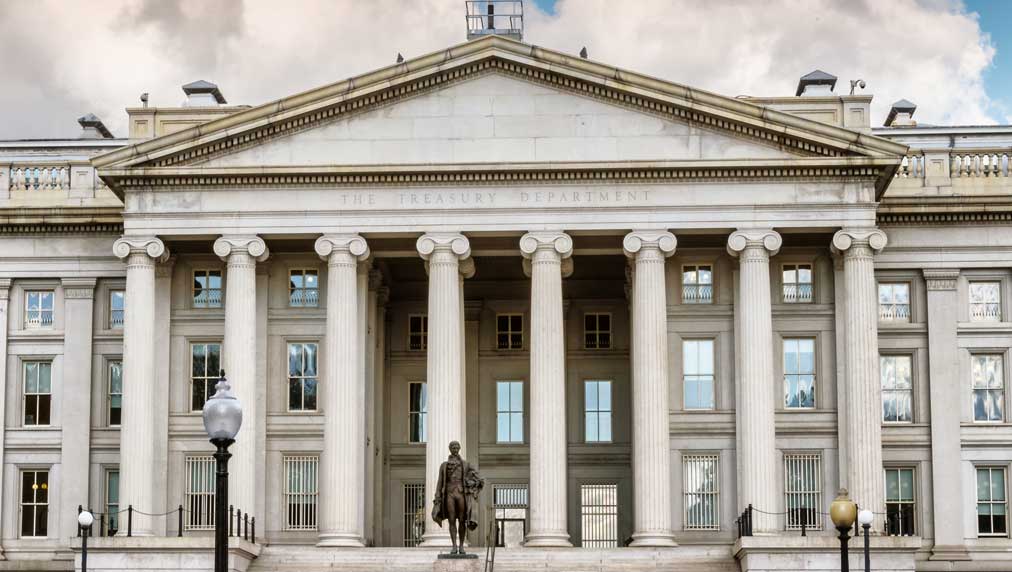
The 10-year Treasury yield hit a 19-year high on Wednesday on strong economic data that has Wall Street betting on two more Fed rate hikes in 2026. Despite the jump in interest rates, the Treasury Department kept a $6 billion ceiling for buybacks of long-term Treasury bonds, signaling no appetite to fight market pressures. The preliminary S&P Global purchasing managers’…
Copyright ©2026 Investor’s Business Daily, LLC. All rights reserved. 87990cbe856818d5eddac44c7b1cdeb8

“I think that the problem is that there’s too much focus on what’s good for my children and who cares about other people’s children, whether it’s in a country or around the world,” he said. “We all pay a price for that lack of finding common cause—that we all benefit from everyone in the world being healthier.”
Britto said that another challenge was trying to convince governments to invest in caring for children, and convincing them that both maternal and child health is a public sector issue, rather than just a nonprofit or private sector issue.
“The universal aspiration of every adult, which is wanting the best for their child … has not converted to a vote-getting issue,” Britto said. “It hasn’t converted into a commercial incentive, and it hasn’t converted into a way that a country can stand tall, or a nation or a district can stand tall and say, ‘We’re doing this well.’”
One way to address this is to bring the community into conversations with policymakers, she said, while explaining that UNICEF is trying to bring teachers, parents, and caregivers to the forefront to understand what they need to care for children and give them what they need.
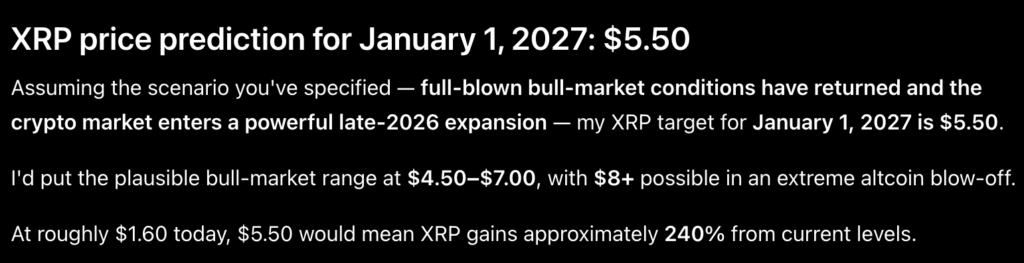
The Sam Altman-led OpenAI ChatGPT AI predicts that in a blow-off top bull market, XRP could reach $8+ by January 1, 2027. It puts the plausible bull-market range at $4.50–$7.00, with $8+ possible in an extreme altcoin blow-off.
At roughly $1.57 today, $5.50 would represent an approximately +240% gain from current levels. The setup has changed considerably over the past week.

XRP rallied from roughly $1.25 on September 16 to around $1.65 on September 23, posting weekly gains of +22%. Daily trading volume is sitting at $7.2Bn.
More importantly, XRP has moved back above the $1.6–$1.62 resistance area that capped the market in August. Recent technical analysis identified $1.59 as the key breakout level, with the 200-day EMA around $1.57.
ChatGPT AI Predicts Ripple to $8: What Does the Technical Analysis Say About That?
The first major test is around $1.65–$1.80. XRP has just reached $1.65 this week, while $1.81 represents a significant previous price level identified by prior technical analysis.
If XRP can establish itself above $1.80, the psychological $2.00 level becomes the next obvious target. Above $2, the chart opens up considerably.
The next major historical resistance is around $3.10, corresponding to the 2025 cycle’s closing-high area. XRP’s ultimate 2025 all-time high was approximately $3.65, reached in July 2025.
And $3.65 is the critical level. A decisive break above it would put XRP into a phase of genuine price discovery. At that point, $4, $4.50, $5, and eventually $5.50 become psychological rather than historically established resistance levels.
Historical Price Action Makes that $5.50 Target Interesting
XRP’s history is characterized by extremely large percentage moves during crypto bull markets. The most recent cycle provides the clearest example.
XRP rose from below $1 to a $3.65 peak in July 2025, then fell by almost -73%, reaching about $0.99 in August 2026. That means the current market has already demonstrated both sides of XRP’s characteristic volatility, going from $0.99 to an all-time high of $3.65 and back to $0.99.
The important thing is that the latest recovery has already taken XRP back above $1.50. There is also an interesting historical pattern: analysis of previous XRP crashes found that major drawdowns were followed by very large subsequent rallies.
Got a Gut Feeling? Have Your Say on Polymarket
Bitcoin Hyper Targets Early Mover Upside as XRP Tests Key Levels
A 45-week-overdue moving average flip is exactly the kind of headline that gets long-term holders nodding along, but at an $81,000 handle, Bitcoin’s percentage upside from here is a different animal than it was at $16,000. Doubling from here adds $1.6 trillion to market cap.
That math is why traders chasing asymmetric returns are increasingly looking one layer down, toward infrastructure being built directly on top of Bitcoin’s network.
Bitcoin Hyper ($HYPER) is positioning itself as the first Bitcoin Layer 2 with full SVM integration. Hyper runs smart contracts at speeds it claims outpace Solana, while settling back to Bitcoin’s base chain for security.
The presale has raised $33M at a current token price of just $0.0136865, with staking rewards offered at a high 30% APY.
Its Decentralized Canonical Bridge aims to solve BTC’s two biggest structural gaps: near-zero programmability and sluggish, expensive transaction throughput.
Gain Access to New Bitcoin Layer 2 Early Here
Discover: The Best Crypto Presales This September
The post OpenAI ChatGPT AI Predicts XRP to Hit $8 by 2027, in the Right Conditions appeared first on Cryptonews.

Blockchain.com and NYSE Group have signed an agreement to explore giving eligible users access to tokenized U.S. stocks and ETFs through the exchange’s planned 24/7 digital trading venue.
Summary
- The proposed access would use NYSE’s planned platform and requires regulatory approval.
- NYSE says the venue is designed for continuous trading, fractional shares, and onchain settlement.
- The agreement also covers crypto data for ICE clients and stock data for Blockchain.com users.
- Blockchain.com already offers Ondo-linked tokenized U.S. stocks to eligible users in Europe.
According to Blockchain.com’s Sep. 23 announcement, the companies signed a memorandum of understanding covering distribution of tokenized U.S. exchange-listed shares and exchange-traded funds. Eligible Blockchain.com customers would access the products through a digital alternative trading system, or ATS, that NYSE has yet to launch. The arrangement remains subject to required regulatory approvals.
The companies did not identify the countries where access would be offered or set a launch date. Blockchain.com operates in more than 70 jurisdictions, according to its announcement, but eligibility would depend on the rules governing the products and the markets where they are offered. Its agreement with NYSE outlines a proposed distribution route rather than an available trading service.
Blockchain.com could connect users to NYSE’s planned venue
NYSE first outlined its digital platform in January and said it was still developing onchain settlement infrastructure in August. The exchange plans to support trading at any hour, orders for fractions of a share and settlement using blockchain-based systems. It has also described stablecoin-based funding and orders placed in dollar amounts.
Under the proposed agreement, Blockchain.com would provide a route for its customers to reach the NYSE venue once it is operating and the necessary approvals are in place. NYSE’s January plan calls for a separate digital market that combines its Pillar matching engine with blockchain-based systems used after a trade. The exchange said its design can support multiple networks for settlement and custody.
NYSE also said the venue could handle both tokenized versions of traditionally issued securities and securities issued in tokenized form from the start. Its plan calls for tokenized shareholders to retain conventional dividend and governance rights. Access to the venue would run through qualified broker-dealers under the model described by the exchange.
Blockchain.com Executive Chairman and CEO Peter Smith said a connection to the venue could extend tokenized stock access to users across the company’s international network. NYSE Group President Lynn Martin described Blockchain.com’s customer reach and digital asset operations as a fit for the exchange’s planned platform. Neither executive announced that trading had begun.
US stock tokens bring shareholder rights into focus
For U.S. readers, the proposal concerns shares and ETFs listed on American exchanges, even though the companies have framed Blockchain.com’s customer network as international. A token tied to a U.S. stock does not necessarily carry the same legal rights as the share itself. The product’s structure determines what its holder owns and whether the holder can receive dividends, vote, or claim an interest in the underlying shares.
In September, the U.S. Securities and Exchange Commission set out conditions for tokenized stocks traded by qualifying venues under a five-year exemption. The SEC said eligible tokenized National Market System stocks must preserve the rights attached to the corresponding conventional shares. Products that only track a stock’s price do not qualify under that exemption. The agency’s action provides context for U.S. tokenized stock trading, but Blockchain.com and NYSE have not said that their proposed arrangement has received approval under it.
NYSE has taken another, separate step involving its existing exchange. An April SEC filing on tokenized trading established rules for eligible securities to trade in tokenized form alongside conventional shares during a Depository Trust Company pilot. Coverage of the filing noted that trades under that arrangement continue to settle on the usual next-business-day schedule. NYSE’s proposed 24/7 venue is a different project, designed for immediate settlement and still awaiting regulatory approvals.
Existing Ondo products show a different route to access
Blockchain.com already offers stock-linked tokens in some markets through Ondo Finance. In February, the companies expanded tokenized stock access to eligible users in 30 European Economic Area countries, with more than 200 U.S. stocks and ETFs available through the Blockchain.com DeFi wallet. Blockchain.com said it had previously introduced Ondo products to users in parts of Africa and South America.
According to Blockchain.com, its Ondo-linked tokens track the returns of the underlying assets, including price moves and reinvested dividends after applicable taxes. The structure of an existing Ondo product should therefore be considered separately from NYSE’s plan for a regulated digital venue. Blockchain.com’s Sep. 23 announcement describes a potential connection to that future venue; it does not say that the two sets of products would have identical ownership terms.
Blockchain.com’s geographic expansion has also included a regulatory step in Nigeria. The company announced its admission to the Nigerian Securities and Exchange Commission’s Accelerated Regulatory Incubation Programme, a supervised route for eligible digital asset businesses. Its Sep. 23 agreement with NYSE does not name Nigeria, Europe or any other region as a confirmed market for the proposed service.
ICE and Blockchain.com also plan to exchange market data
Beyond trading access, the memorandum covers distribution of data in both directions. ICE Data Services, part of NYSE parent Intercontinental Exchange, plans to provide Blockchain.com’s crypto market data and analytics to its subscribing clients. Blockchain.com, in turn, plans to add selected ICE and NYSE exchange data feeds to its app.
Blockchain.com said the app integration would give its more than 44 million confirmed accounts access to real-time stock information. The announcement also listed more than 95 million wallets created since the company’s founding; that figure is distinct from its count of confirmed accounts.
Blockchain.com and the New York Stock Exchange have signed a memorandum of understanding to give Blockchain.com users access to tokenized US-listed stocks and exchange-traded funds through NYSE’s planned digital trading platform.
Under the proposed arrangement, Blockchain.com would distribute tokenized US equities and ETFs traded on NYSE’s digital alternative trading system (ATS), subject to regulatory approval. The deal would extend NYSE’s planned tokenized securities offering to Blockchain.com’s global customer base.
The agreement also covers an exchange of market data. NYSE affiliate ICE Data Services plans to distribute Blockchain.com’s crypto market data and analytics to its clients, while Blockchain.com would add certain ICE and NYSE market data feeds to its platform.
Reid Noch, vice president of US equity market structure at TD Securities, told Cointelegraph that NYSE’s planned tokenized ATS appears “primarily like a play for retail flow,” pointing to its planned 24/7 trading and request-for-quote functionality. Because retail trades are already pre-funded, Noch said the shift to instant settlement would require little change to existing retail workflows.
“The bigger differentiator is true weekend trading,” Noch said. “This could be impactful for retail heavy names or around episodic news events, similar to what we saw with tokenized oil PERPs during the start of the Iran conflict that started over the weekend.”
Related: Ondo lets institutions convert stocks directly into tokenized shares
Exchanges race into tokenized stocks
“Crypto venues are becoming multi-asset platforms, and traditional assets are adopting the 24/7, programmable structure crypto pioneered,” Tanay Ved, senior research associate at institutional digital asset technology firm Talos, said in comments shared with Cointelegraph.
That shift is playing out across major exchanges. Kraken offers xStocks and has partnered with Nasdaq on a separate tokenized equity model, while Binance, Coinbase and Robinhood have rolled out their own approaches to bringing equities onchain.
However, Ved said the different approaches involve trade-offs between ownership and accessibility:
The models of tokenization sit across a spectrum, from issuer-native equity to custodial exposure to pure derivatives. Each trades ownership for accessibility. Which model wins out is yet to be seen, as we sit in the early innings of adoption. For exchanges, the opportunity is a more diversified revenue base and for the market, the line between crypto and traditional assets continues to blur.
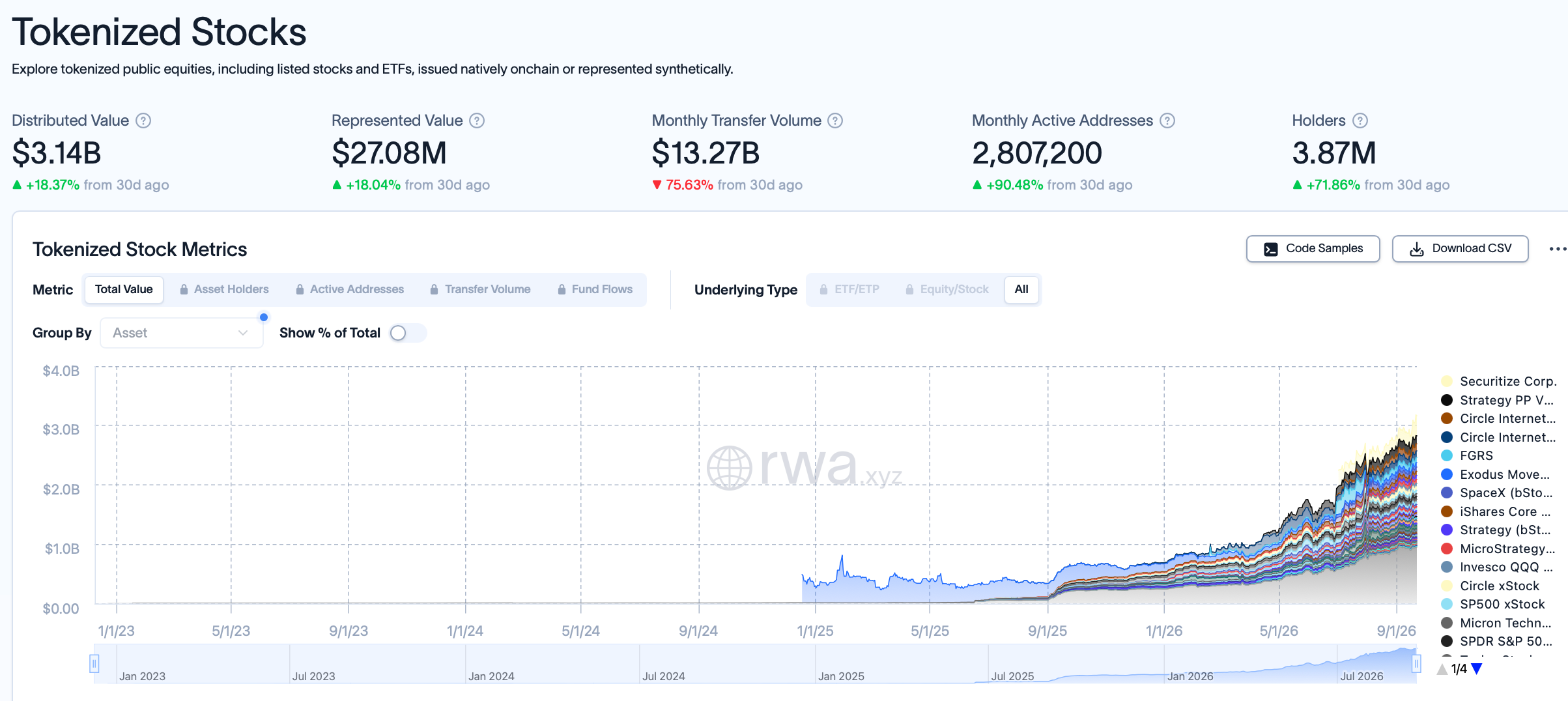
Meanwhile, the tokenized stock market has been expanding rapidly. Distributed value reached $3.14 billion as of Wednesday, up more than 18% over the past 30 days, while the number of holders climbed nearly 72% to 3.87 million, according to RWA.xyz data.
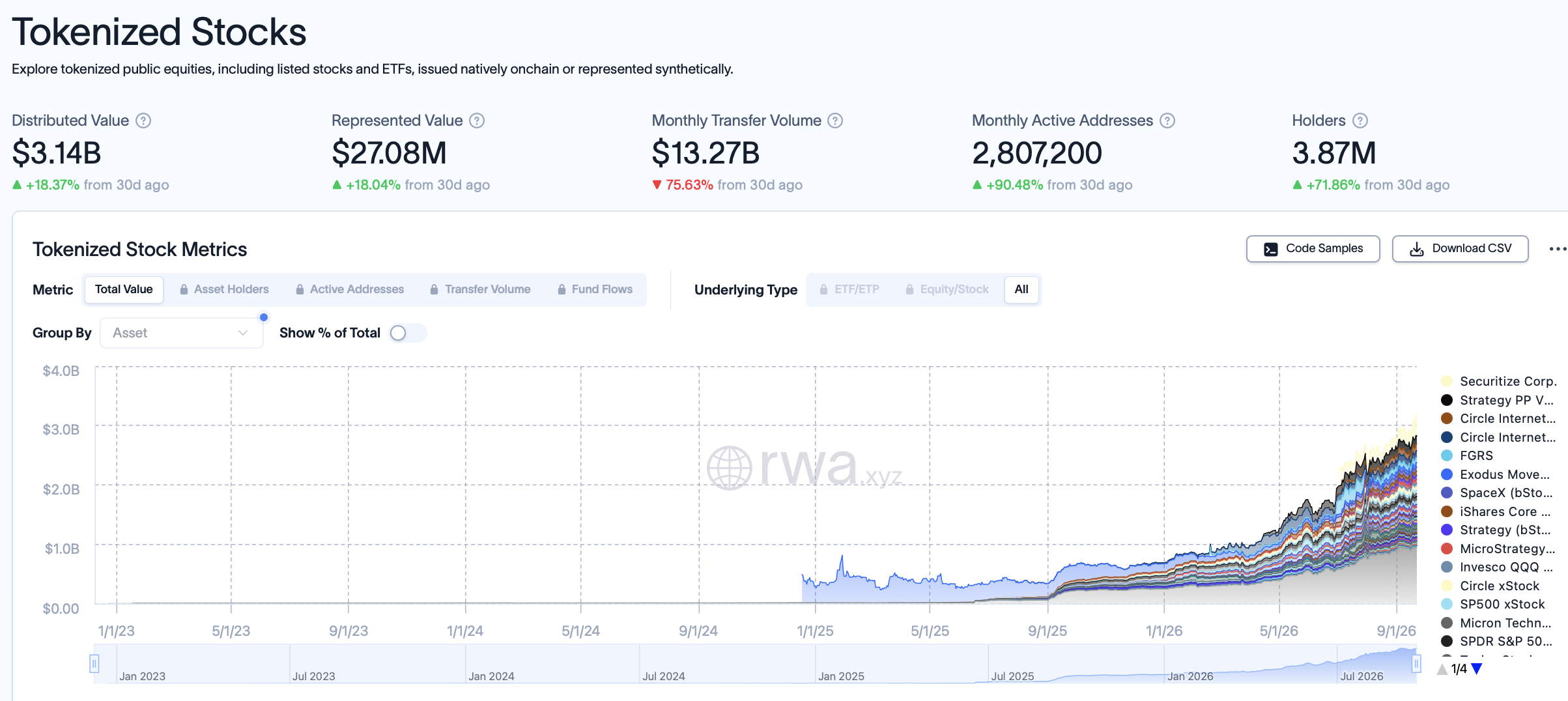
Tokenized stocks. Source: RWA.xyz
SEC opens path for tokenized stocks
The partnership also comes less than a week after the US Securities and Exchange Commission (SEC) introduced a five-year “Innovation Exemption” for certain tokenized securities venues.
Under the exemption, eligible tokenized securities venues can use permissioned automated market maker liquidity pools to facilitate trading without being treated as exchanges under the Exchange Act. Among the conditions, venues must ensure that tokenized stocks carry the same rights and privileges as equivalent traditional shares.
Those requirements exclude some existing products from the exemption in their current form, including Kraken’s xStocks and Robinhood’s Stock Tokens, which provide exposure to underlying equities but do not give holders the same rights as conventional shareholders.
However, SEC Commissioner Hester Peirce has said that while the exemption covers one specific model for tokenized securities, it leaves open the possibility of other approaches outside the framework.
Magazine: Big Questions: Does Satoshi actually own 1.1 million Bitcoin?
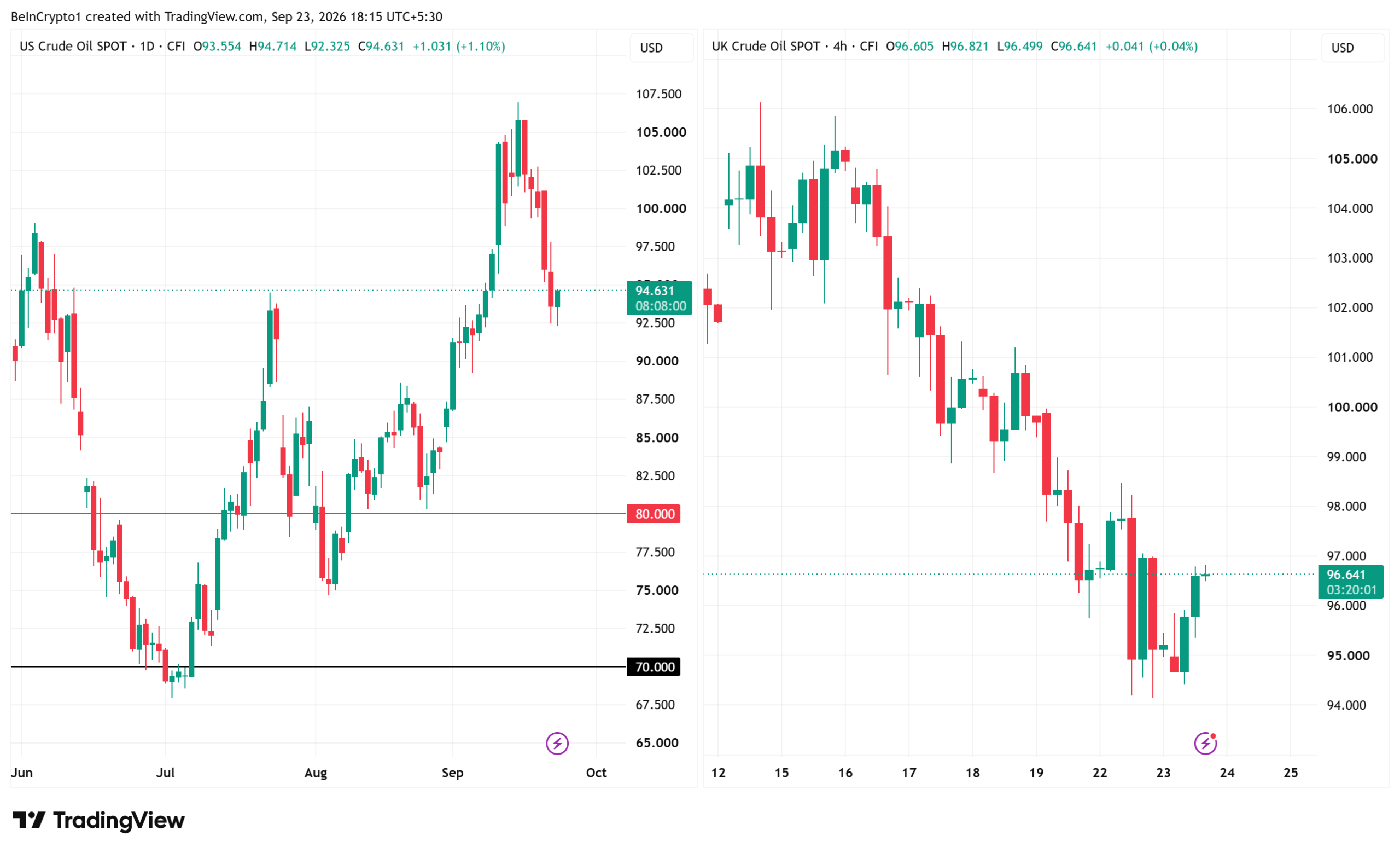
Traders placed record bets against oil on Tuesday. Volume in Brent put options topped 764,000 contracts, according to preliminary ICE Futures Europe data cited by Bloomberg.
A put option pays off when prices fall below a set level. Some of Tuesday’s biggest trades pay only if oil drops to about $70 by December, from roughly $96 now.
Record Bets Against Oil Target $70 by December
December $70/$69 put spreads alone topped 110,000 contracts. A spread pairs two options a dollar apart, capping both the cost and the payout. These positions profit only if Brent, the global oil benchmark, sinks below $70.
However, the record overstates pure bearish conviction. Narrow spreads made up more than half of Tuesday’s volume, per the same ICE data. Traders often use them to hedge existing positions rather than bet outright.
Why Oil Fell More Than 10% in Eight Days
Brent traded near $106 on September 14. By Tuesday, it briefly slipped below $98, its sixth straight daily loss and the longest run since August 2025. The slide reversed a war-driven rally as the Strait of Hormuz stayed largely shut.
Two developments drove the selling. First, U.S. envoys Steve Witkoff and Jared Kushner met Iranian Foreign Minister Abbas Araghchi at the UN General Assembly. President Donald Trump praised the three-hour session.
“They had a very good meeting, a very productive meeting,” Al Jazeera reported, citing Trump.
Iran said it could reopen Hormuz within seven days if Washington eased military pressure. Its terms also include lifting the U.S. naval blockade of Iranian ports and releasing frozen assets.
Second, Saudi Aramco restarted its East-West pipeline on Tuesday, Hydrocarbon Processing reported. The line carries crude to the Red Sea port of Yanbu, avoiding Hormuz. Drones knocked it offline on September 13.
What Stands Between Oil and $70
Oil steadied on Wednesday. Brent spot traded near $96.64, while U.S. crude rose 1.1% to about $94.63, TradingView data showed. Reaching $70 would require a further fall of roughly 28%.

No U.S.-Iran agreement has been announced. The Saudi pipeline also restarted at a low rate, and a security source said restoring about 4 million barrels a day could take weeks.
Earlier this month, JPMorgan dropped its forecast baseline, saying it could no longer model the war’s endgame.
The post Traders Place Record Bets Against Oil: Could Prices Fall to $70? appeared first on BeInCrypto.

Cryptocurrency payments company MoonPay is set to acquire private-markets investment platform North Capital to support its tokenization efforts, according to an emailed announcement Wednesday.
Salt Lake City, Utah-based North Capital, whose platform boasts around $9 billion in primary and secondary transaction volume, will become a wholly owned subsidiary of MoonPay after the transaction closes, subject to regulatory approval.
The all-stock deal is worth over $60 million, sources familiar with the matter told CoinDesk.
The acquisition will support MoonPay’s aim of “building the regulatory foundation to support mass adoption of tokenized real-world assets,” according to CEO and founder Ivan Soto-Wright.
“We believe bringing those capabilities into the MoonPay ecosystem can help connect different parts of the financial system through modern, programmable infrastructure,” Soto-Wright added.
North Capital provides the tech infrastructure for tokenizing securities for private securities issuers and fund managers, supporting capital raising, asset management, clearing, custody, and secondary trading.
North Capital’s affiliates hold relevant broker-dealer, trading, transfer and investment advisory registrations with the U.S. Securities and Exchange Commission (SEC).
MoonPay has expanded beyond its core business of crypto payments in recent months, establishing its Trade platform to connect banks and fintechs to tokenized assets, DeFi protocols and stablecoin liquidity.
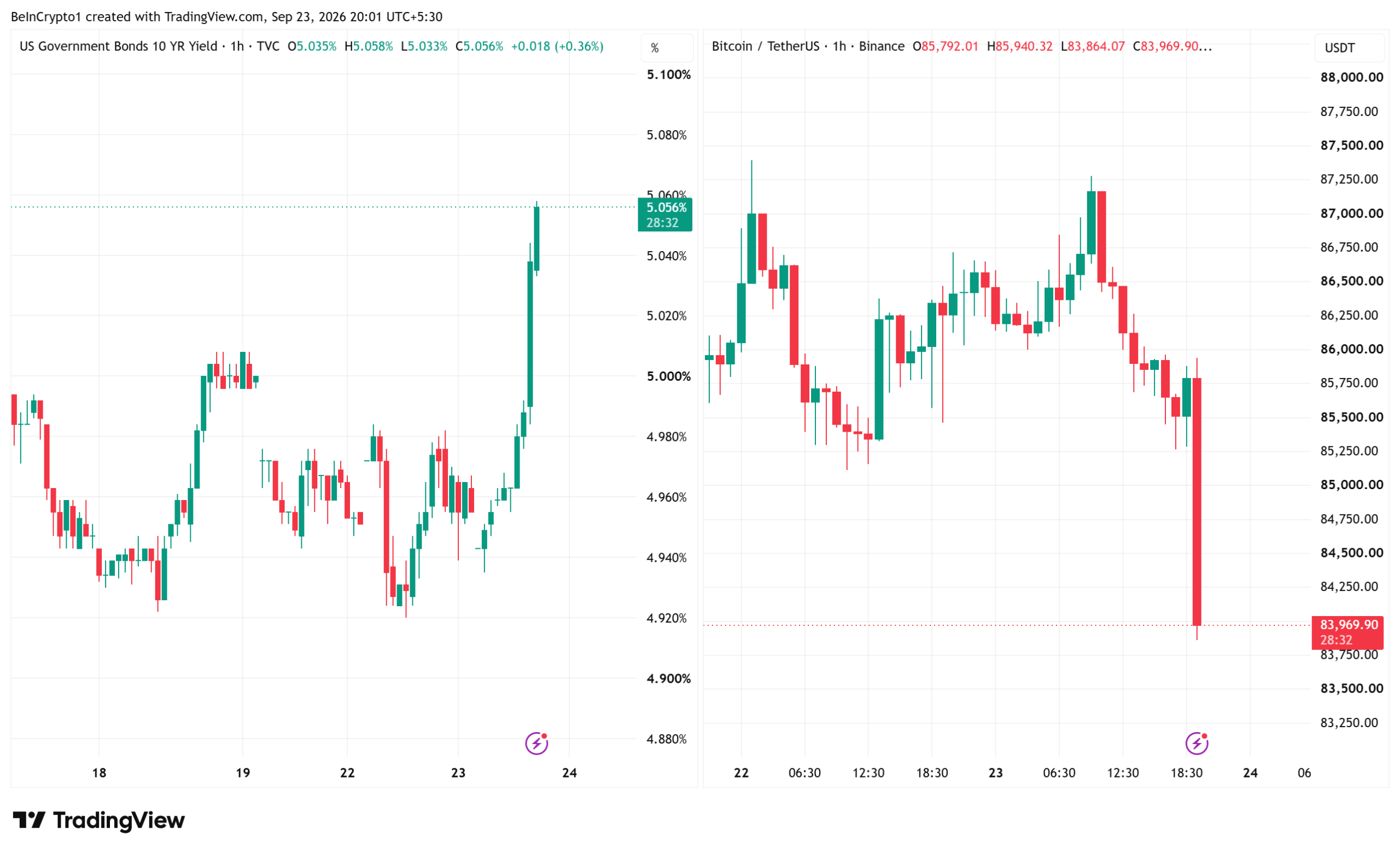
Bitcoin (BTC) fell below $84,000 on Wednesday after a surprise jump in US business activity sent Treasury yields higher.
The drop came within about an hour of the data release. It reversed a morning rally that had carried Bitcoin above $87,000 on Binance.

What the US Business Survey Showed
The S&P Global flash Purchasing Managers’ Index (PMI) is an early monthly survey of about 1,150 US companies. A reading above 50 means business activity is growing.
September’s composite reading rose to 58.4 from 56.0 in August. That is the fastest growth since July 2021. The manufacturing gauge jumped to 57.0 from 53.9, its strongest since May 2022.
However, the report also flagged rising costs. Input prices climbed at the fastest rate since October 2022 as oil pushed fuel and transport bills higher. Meanwhile, hiring hit its quickest pace since June 2022.
Chris Williamson, chief business economist at S&P Global Market Intelligence, warned about what comes next.
“Firms’ input costs have meanwhile jumped in September at the steepest rate for four years, with fuel and transport costs spiking higher thanks to the rise in oil prices seen during the month, which will add further to the upward pressure on selling prices and inflation in the coming months,” said Chris Williamson.
Why Higher Yields Pushed Bitcoin Below $84,000
Treasury yields show the return investors demand to lend to the US government. They tend to rise when markets expect higher interest rates.
The 10-year yield climbed to 5.058% after the release, TradingView data shows. It had closed at 4.96% on Tuesday, according to the Treasury.
The Federal Reserve (Fed) raised its benchmark rate to a range of 3.75% to 4% on September 16. Its statement said the hike would speed a return to 2% inflation.
Higher yields make assets that pay no interest, such as Bitcoin, less attractive. BeInCrypto flagged that exact risk on September 15, when the 10-year first touched 5%.
The slide came hours after BeInCrypto reported Bitcoin up 13% since the Fed hike. A day earlier, Tom Lee and iTrustCapital’s chief executive said the worst is over.
Final September PMI readings arrive on October 1 for manufacturing and October 5 for services.
The post Bitcoin Falls Below $84,000 as Hot US Data Sends Yields Higher appeared first on BeInCrypto.
Tron uses a delegated proof-of-stake (DPoS) consensus mechanism. Under this system, TRX holders stake their tokens to gain voting power and use that power to elect 27 Super Representatives, the validators responsible for producing blocks and maintaining the network. Because block production is concentrated among a limited, elected set of validators rather than distributed across a broad network of participants, Tron can achieve fast confirmation times and low computational overhead.
Stablecoins and the payments use case
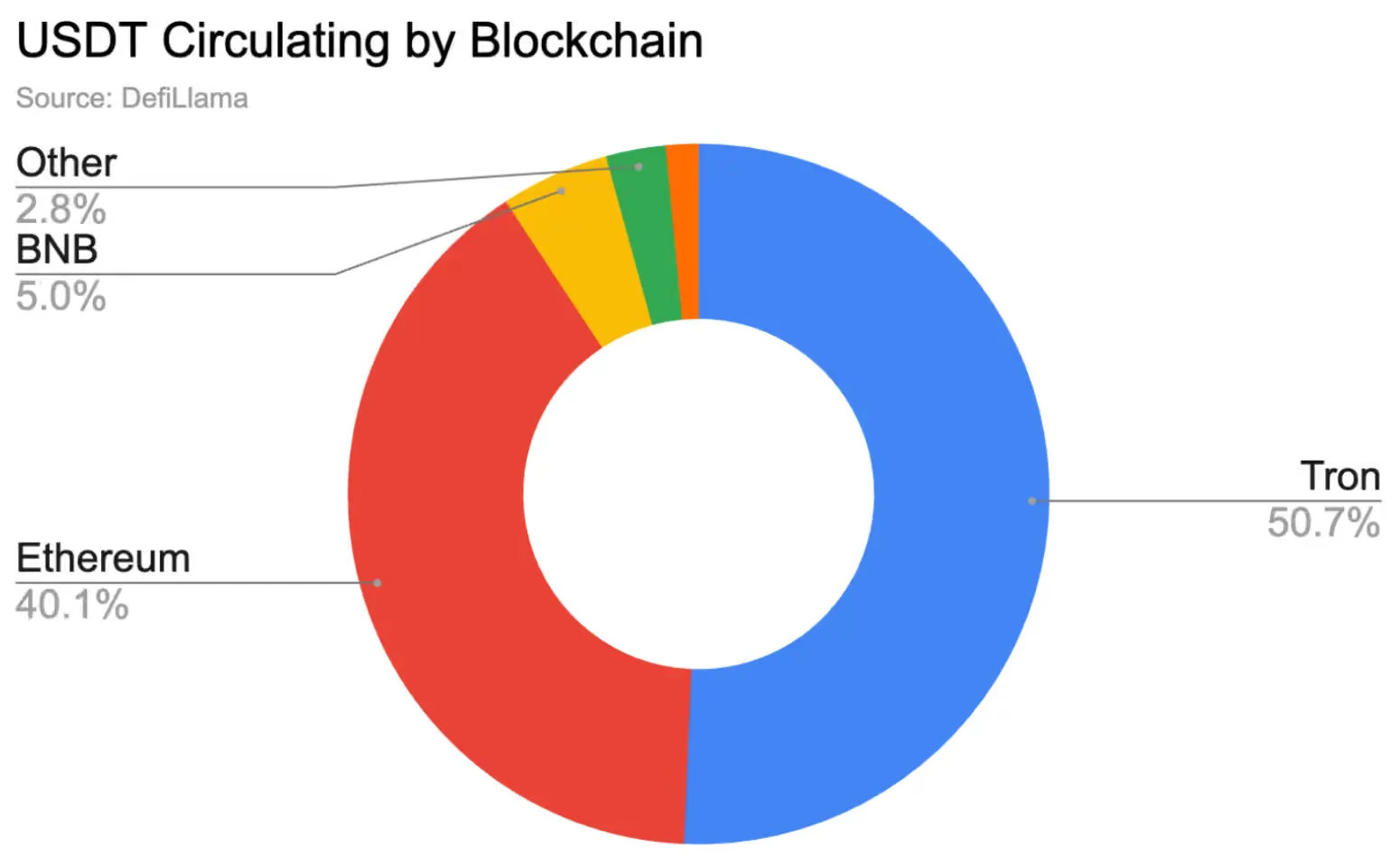
The single most important development in Tron’s evolution has been its emergence as the leading settlement network for stablecoins. A substantial share of global USDT circulation now resides on Tron, and this characteristic separates Tron from many of its layer-1 peers: rather than competing primarily on DeFi innovation or consumer applications, Tron has positioned itself as digital payment rails for dollars.

That positioning shows up clearly in the network’s usage data. According to Tron’s blockchain explorer, weekly transaction counts on Tron have climbed to record highs, recently approaching 100 million transactions per week, even as the average onchain transaction fee has fallen to around seven cents, a multiyear low.


Weekly active addresses, a measure of unique wallets transacting on the network over a seven-day period, have also been climbing toward record levels, reflecting broad and sustained usage rather than a narrow base of activity. Stablecoin transfer volume on Tron has grown alongside this activity, recently running at roughly $150 billion to $190 billion per week.

BNB price slips as Binance plans Stocks Account migration

Andrew Scott Gives the Performance of a Lifetime in ‘Elsinore’

Christian Eriksen: Denmark midfielder leaves Wolfsburg by mutual consent

Weekend Open Thread – Corporette.com

Weekend Open Thread: Talbots – Corporette.com

Memory prices are slowing because buyers ran out of money

Neeraj Bawana #neerajbawana #trending #viralvideo #trendingshorts #viralnews #bollywood #money

Singapore firms, households have sufficient buffers to weather financial shocks: MAS

Money Rain – Karym x Willy x Js Serna x Jhean T ( Video oficial ) kevin cheng #sonrelatosdeuntrapper
-
 Fashion5 days ago
Weekend Open Thread: Talbots – Corporette.com
-

 Tech3 days ago
Researchers escape OpenAI Codex sandbox to run commands on host
-

 Crypto World5 days ago
Circle launches Arc Studio AI agent for building onchain apps
-
 NewsBeat5 days ago
Trump says US has reached an agreement to take permanent control of Greenland’s security
-

 Crypto World3 days ago
Who Needs CLARITY Anyway? ARB Could See 70X Increase: Hodler’s Digest
-

 Crypto World5 days ago
Trading Bitcoin on Robinhood? Why 2% Spread Has Traders Worried
-

 Crypto World6 days ago
Mortgage and refinance interest rates today, Thursday, September 17, 2026
-

 Crypto World5 days ago
Bitcoin price breaks channel as RSI climbs to 63
-

 Crypto World7 days ago
US Charges Robinhood Engineers Over Crypto Listing Trades
-

 Tech2 days ago
Google’s $899 Googlebook is a bet that you’ll buy a new laptop for Gemini
-

 Crypto World18 hours ago
Goldman Sachs and Deutsche Bank Agree: The S&P 500 Rally Isn't Over
-

 Business3 days ago
Analog Devices (ADI) Bets $1.35 Billion on Chips that Let Machines Think for Themselves
-

 Crypto World5 days ago
World Money launches in 150+ countries with Stripe
-

 Crypto World3 days ago
Coinbase, Robinhood, Circle Seen as Tokenized-Stock Winners
-

 Crypto World5 days ago
Silver prices recover quickly, hitting weekly high today
-

 Tech6 days ago
GPT-6 Astra Reached the Nether in Minecraft, Lost Its Stash to a Creeper, and Farmed Potatoes for Hours
-

 Tech4 days ago
Trump suggests rebranding AI with a new name, says he’s also creating an AI Force
-
 NewsBeat5 days ago
US was ‘on brink of war’ with China over false AI report of nukes moving in Middle East
-

 Entertainment7 days ago
Grey’s Anatomy Showrunner Teases Changes After Cast Exits
-

 Crypto World2 days ago
Bitcoin price holds above $81K as key catalysts line up
You must be logged in to post a comment Login