
Crypto World
Pi Network’s PI Hits New ATL After 11% Crash as 130M Token Unlock Looms

The cryptocurrency market has dipped once again over the past several hours, but Pi Network’s native token has taken this minor correction a lot worse, with a fresh dump to a new all-time low.
Moreover, nearly 130 million coins are scheduled to be unlocked in the following months, which could further worsen PI’s state.
Low After Low
It’s almost impossible to imagine now, but PI traded at $0.30 in March after its major listing on Kraken. The subsequent rejection, though, pushed it south to $0.20, where it managed to stand there for a while. Although that key support was breached briefly, the token challenged it in late April, only to be halted again.
The following few months have brought nothing but pain for the PI token holders. As the chart below will clearly demonstrate, the asset has been on a violent free-fall that has taken it to several consecutive all-time lows. The latest arrived earlier today when PI decisively lost the $0.10 support and even the $0.09 floor.
Another double-digit price dump pushed it south to $0.086, which became its new all-time low. PI is down by over 22% weekly, and a whopping 97.1% since its all-time high in February 2025.

What’s even more worrisome for investors is the fact that over 127 million coins are set to be unlocked in the next 30 days, according to data from PiScan. Such large token releases could increase the immediate selling pressure from investors who had been waiting for their coins for a long time. This is particularly true in bear markets when the distress is higher than usual.
Can New Updates and Products Help?
Although the recent price picture looks more than grim, the team behind the project has not stood still. They continue to outline new products, significant protocol updates, and celebrate the major milestones.
The latest was the Pi2Day (June 28), when the Core Team unveiled three major infrastructure products aimed at expanding the ecosystem beyond its existing user base. Namely, those were SoloHost, a framework for locally hosting AI apps and distributed computing; Pi Sign-in, which enables third-party websites and apps to authenticate users through Pi accounts; and PiVerify, a KYC and identity verification service for external businesses.
Despite the significance of some of those products, the timing remains a challenge. Such infrastructure improvements require months or even years to translate into measurable network activity and token demand. For now, the actual benefits are missing, and the protocol’s native token continues to dig new lows.
The post Pi Network’s PI Hits New ATL After 11% Crash as 130M Token Unlock Looms appeared first on CryptoPotato.

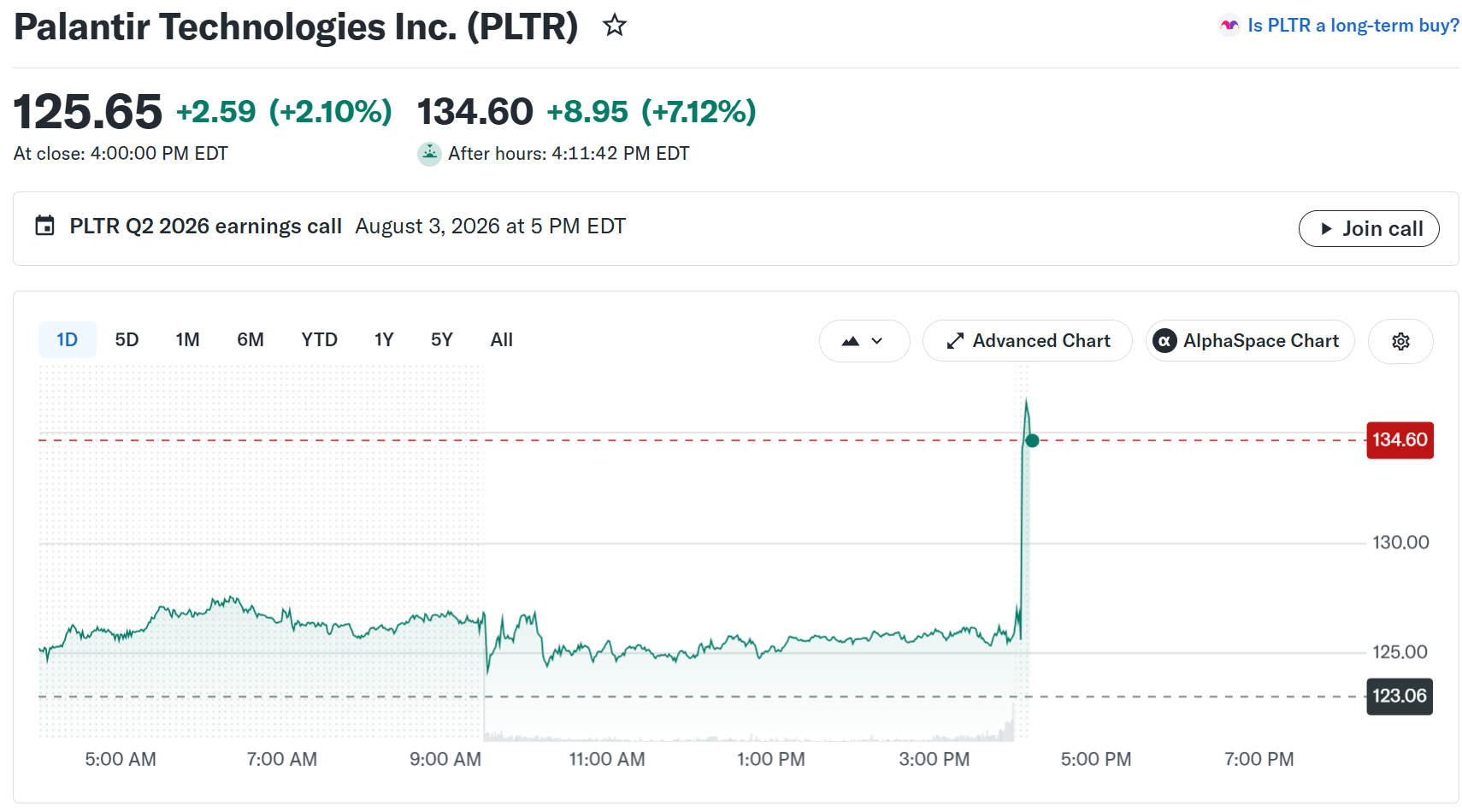
Palantir Technologies (PLTR) beat Wall Street on every headline figure in the second quarter and lifted its full-year outlook. Shares climbed more than 7% in after-hours trading on Monday.
The data analytics firm reported $1.94 billion in revenue, up 93% from a year earlier. Adjusted earnings reached 41 cents per share, above the roughly 35 cents analysts had modeled.

Palantir Earnings Beat Every Major Estimate
Revenue landed well above the $1.81 billion consensus and the company’s own guidance of about $1.80 billion. Growth also accelerated from the 85% pace set in the first quarter.
Follow us on X to get the latest news as it happens
U.S. commercial customers did most of the work. That segment rose 149% year over year to $764 million. Government revenue gained 90% to $809 million, despite Democratic scrutiny of contracts earlier this summer.
Profitability moved in step. GAAP net income reached $1.06 billion, a 55% margin, while adjusted operating margin hit 62%. The company’s Rule of 40 score, which adds revenue growth to operating margin, climbed to 155%.
Deal flow expanded alongside it. Palantir closed 220 contracts worth at least $1 million and booked a record $2.13 billion in U.S. commercial total contract value, up 153%.
Remaining deal value in the same segment reached $6.24 billion, more than double the year-ago figure. That backlog gives management visibility into 2027 revenue.
Guidance Raise Points to Sovereign AI Demand
Management now expects full-year revenue between $8.150 billion and $8.158 billion, roughly 82% growth. The previous range topped out near $7.66 billion.
Adjusted operating profit guidance moved to about $4.89 billion, comfortably ahead of the $4.51 billion analysts had penciled in. Adjusted free cash flow is now guided to $4.5 billion to $4.7 billion.
Chief Executive Alex Karp framed the quarter around what he called demand for AI sovereignty, meaning customer control over their own data and decisions rather than reliance on outside models.
“Demand for AI sovereignty has now been unleashed. And Palantir is the only company that has demonstrated it can transform tokens into actual economic value. Our customers trust us to provide them with maximal control over their operations, data, and decisions,” Alex Karp, Co-Founder and Chief Executive Officer of Palantir Technologies, in the company’s earnings release.
Palantir Stock Still Trails Its 12-Month High
Shares closed regular trading at $125.65, up 2.10%, then jumped to $135.12 after the release. Options traders had priced an 11% swing in either direction.
Even after that move, the stock sits far below its 12-month high of $207.52. Palantir entered Monday down about 31% for the year, as investors questioned AI stock valuations across the sector.
Bulls argue the spending cycle is still early, a view echoed in the debate over AI capex that has split Wall Street since June.
Palantir guided third-quarter revenue to roughly $2.16 billion. Whether the guidance raise holds the stock above $135 depends on how quickly commercial bookings convert into recognized revenue.
The post Palantir Just Crushed Wall Street by $125 Million: How Will Stock React? appeared first on BeInCrypto.

The SHIB team and community have scorched billions of tokens in the past month.
The resurgence of the burning program has coincided with the positive performance of the self-proclaimed Dogecoin killer, whose price has jumped by 10% within that period.
Big Burn, But There’s a Catch
The X account Shibburn revealed that over 3.2 billion SHIB have been transferred to a null address in July, permanently removing them from circulation. This represents a major 1,395% increase from the June figure.
The July number may seem substantial, but its USD equivalent is less than $17,000. It’s also important to note that the major burns occurred only during a handful of days toward the end of the month, while during the remaining days there wasn’t much action on that front. On July 27, for instance, the team and community scorched almost 1.3 billion tokens, nearly 40% of the total amount.
The core purpose of SHIB’s burning mechanism is to reduce the token’s supply and make SHIB more valuable via scarcity. But with more than 585 trillion coins in circulation, the remaining amount is enormous, meaning the team and community should up their game to trigger a rally.
Meanwhile, the meme coin has posted a 10% increase over the last 30 days, potentially propelled by the rising burn rate and certain whale activity, which CryptoPotato reported on.
Happy Birthday, Shiba Inu
On August 1, the meme coin project celebrated its sixth anniversary. The SHIB Army expected an ecosystem update or a major announcement on that day, but instead the team simply outlined the rise from “zero to a global movement” and said that “the experiment continues.”
Many X users congratulated Shiba Inu for its birthday, yet others voiced clear disappointment over the lack of meaningful progress lately, as well as the massive price collapse the native token has suffered over the past years.
The post Shiba Inu Turns 6: Here’s How Many SHIB Tokens Were Burned in July appeared first on CryptoPotato.
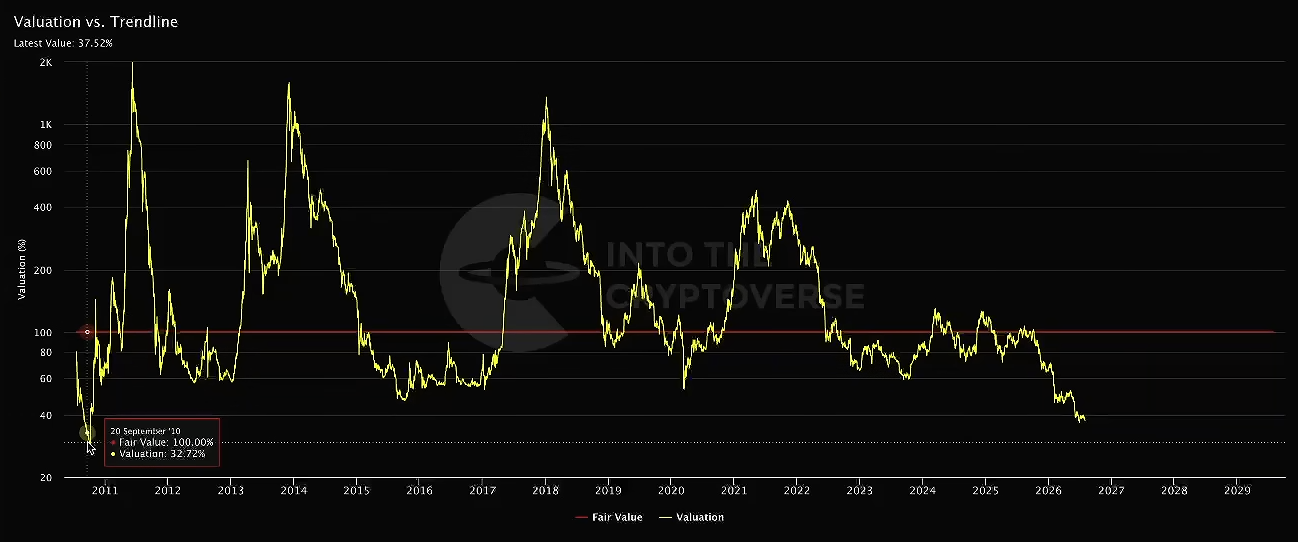
Crypto has not been this cheap relative to its long-term trend since 2010, according to Benjamin Cowen. Still, the Into The Cryptoverse founder warns that the bottom is not in yet.
Cowen, a member of BeInCrypto’s Markets Intelligence Council, expects one more leg down in the third quarter. He points to midterm-year seasonality and rising bond yields as the likely triggers.
Crypto is 62% Below Fair Value, the Cheapest Since 2010
In two new videos, Cowen measured the total crypto market cap against his logarithmic regression trendline. The gap has never been wider in the asset class’s tradable history.
The total market cap stood at $2.152 trillion on July 31. Meanwhile, the model’s fair value sat at $5.737 trillion, leaving crypto 62.49% undervalued.

The market now trades at 37.52% of fair value. The only lower reading came on September 20, 2010, at 32.72%.
“We have been lower before all the way back when crypto first launched. Actually, it was the only time that it’s been lower than it is right now,” Cowen said.

Because fair value keeps rising over time, Cowen argued the discount could deepen even if prices move sideways. Recent Coldcard hacks and fading retail interest add to the pressure, he noted.
Bitcoin’s Window of Weakness Opens Within Weeks
The undervaluation signal clashes with seasonality. Bitcoin (BTC) gained 10.42% in July, and Cowen sees the relief rally ending soon.
“If history is any indication, the next window of weakness… is going to start sometime in the next two to three weeks,” he warned.

The pattern is consistent across midterm years. August and September turned red in 2014, 2018, and 2022, and they remain the only months with negative average returns. Historically, weakness arrived in early August 2018 and mid-August 2022.
BTC trades near $62,648, down 45% over the past year and 27% year-to-date. It’s 2026 path tracks between the 2018 and 2022 trajectories, which both rolled over in August. On-chain models point to a similar final bear leg.

Cowen also flagged a macro trigger. A similar yield move preceded Bitcoin’s decline from July 2023, and the Fed faces its most divided decision in years.
“The bond market is starting to revolt. The Fed’s not raising rates,” he said.
Benjamin Cowen Sees Crypto Bottom Near November
Despite the near-term caution, Cowen’s cycle framework suggests the end is close. Measured low to low, this bear market would match prior ones in just a few months.
“I’m hoping that by around November or so, we’ll be either at a market cycle bottom already or it’ll be relatively close to being in,” he said.
Long-term holder data from Fidelity also approaches past-cycle bottom levels. Rather than timing the exact low, Cowen favors a systematic approach.
“I would encourage people, not financial advice, but normally a DCA strategy is going to work best rather than trying to time the exact bottom,” he added.
Dollar-cost averaging, or DCA, spreads purchases over time to smooth out volatility. Beyond the cycle, Cowen maintained his call that the asset class could eventually reach $10 trillion, plus or minus a few trillion.
However, his thesis carries a clear caveat. If the four-year cycle stretches as it did in 2022, the recovery could slip toward 2027, and the bear market resistance band may stay out of reach until then.
The post Benjamin Cowen: Crypto Hasn’t Been This Cheap Since 2010, But It Might Drop Lower appeared first on BeInCrypto.

The primary cryptocurrency has experienced another pullback over the past few days.
Potential reasons for the negative performance include the Coldcard exploit, waning institutional interest, and Strategy’s latest sell-off. Here’s everything you need to know.
The Coldcard Drama
Last week, Coinkite, the company behind the Colcard hardware wallet, warned users that their Bitcoin funds could be at risk if their seed phrase was generated on certain affected firmware versions. This alert came shortly after reports that almost $40 million worth of BTC had been drained from such devices.
The attacks continued with two more waves, and at one point the total amount of embezzled coins reached 1,367.05 (equaling around $88.6 million). Alex Thorn (head of firmwide research at Galaxy Digital) spotted a fourth organized wave, saying:
“These are likely Coldcard victims – they match the shape of Coldcard vulnerable UTXOs, and the elevated transaction pattern gives me high confidence they are another wave of attacks.”
He also advised all users to move their funds off their wallets as soon as possible. Somewhat expected, the exploit affected market mood, with Santiment saying it pushed Bitcoin’s positive-to-negative commentary ratio on X, Reddit, Telegram, and other platforms to its lowest level since its modern social tracking began.
The ETF Front
Unlike June, which emerged as the worst month for spot BTC ETFs, July started on the right foot and attracted nearly $200 million in net inflows during the full first week.
Interest faded toward the middle of the month, but it picked up again. In fact, there were seven consecutive green days between July 14 and July 22, something unseen since April. Since then, though, outflows have dominated, while SoSoValue has not yet presented data on how August has kicked off.
Investing in spot BTC ETFs is generally favored by more conservative players, such as pension funds and hedge funds, who seek regulated exposure and would rather skip steps like managing private keys themselves. Some of the financial giants that have introduced such products over the years include BlackRock, Fidelity, Bitwise, Franklin Templeton, and many others.
Strategy Sold Again
Just a few hours ago, Michael Saylor (co-founder and Executive Chairman of Strategy) revealed that the entity has increased its USD Reserve by $250 million and repurchased $81 million of STRC shares.
At first glance, that was it, yet a closer look at the announcement showed that the company has also sold 1,637 BTC for approximately $105 million between July 27 and August 2. After all, its total stash stood at 843,775 coins, while the current number is 842,138 units.
BTC Price Outlook
The aforementioned news has been among the main factors suppressing BTC’s valuation over the past few days. As of this writing, it trades at around $63,600 (per CoinGecko), translating into a 1% weekly decline.
Meanwhile, August can cause even more pain to the bulls. The month has historically been a poor period for the cryptocurrency, with the price ending in red territory 9 out of 13 times.
The post Bitcoin (BTC) News Today: August 3 appeared first on CryptoPotato.


XRP Ledger developers and users can now connect to globally distributed public nodes operated by Ankr, expanding network access ahead of the expected xrpld v3.3.0 release.
Summary
- Ankr has deployed XRPL nodes across Singapore, New York, Amsterdam and San Francisco.
- Developers can use free mainnet and testnet JSON-RPC endpoints without operating their own nodes.
- The rollout comes ahead of five proposed amendments covering privacy, settlement and institutional access.
- XRP traded near $1.08, with no immediate price reaction to the infrastructure announcement.
Ankr brings global public nodes to XRP Ledger
The XRP Ledger Foundation announced the infrastructure partnership with Ankr, saying the rollout would improve public access for developers and users.
“We’re expanding public infrastructure access to the XRP Ledger for developers and users with Ankr. Globally distributed XRPL nodes from New York to Singapore to give you the best connectivity,” the foundation said in an X post.
The new portal provides free JSON-RPC endpoints for the XRP Ledger mainnet and testnet. Developers can use these endpoints to interact with the network without installing, maintaining or monitoring their own xrpld infrastructure.
A Quickstart section also includes ready-to-use cURL and JavaScript examples. The portal displays network health, ledger height, median latency, global coverage, request volume and average requests per second in real time.
Active nodes are currently located in Singapore, New York, Amsterdam and San Francisco. Ankr’s system automatically routes traffic to the most suitable node, which could reduce latency and provide backup connectivity if one location becomes unavailable.
XRPL validator Vet said full-history access would be introduced later. The existing service focuses on current network access rather than offering a complete record of all historical ledger data.
Why expanded XRPL access matters
Public RPC infrastructure lowers the technical barrier for wallets, exchanges and application developers building on XRP Ledger. Running an independent node requires hardware, storage, maintenance and continuous monitoring, while shared endpoints offer faster access for testing and early product development.
The US locations are particularly relevant to American developers. Nodes in New York and San Francisco can shorten the connection path for applications serving US users, although businesses handling financial activity must still assess security, compliance and reliance on third-party infrastructure.
Public endpoints do not replace independently operated nodes for organizations requiring direct control over data availability. Heavy dependence on a small number of infrastructure providers can also create service concentration risks.
The rollout follows the July 29 activation of fixCleanup3_2_0. XRPScan data showed that 30 of 35 participating trusted validators supported the amendment, giving it 85.71% backing.
That activation made xrpld 3.2.0 the minimum version compatible with the amended mainnet rules. Nodes using version 3.1.0 or earlier became amendment-blocked.
XRP Ledger prepares five v3.3.0 amendments
RippleX head of product Jazzi Cooper said developers were preparing five proposed amendments for xrpld v3.3.0. Releasing the software will not activate those changes automatically.
“XRPL has already proven it can support tokenized assets at scale. Now it’s time to put these assets to use: global transfers, trading, collateralizing, and settling.”
The proposals include Confidential MPT, which would add privacy features for Multi-Purpose Tokens using zero-knowledge proofs. Batch would support atomic settlement and delivery-versus-payment transactions.
Permission Delegation would let institutions grant limited transaction authority without surrendering control of their signing keys. Sponsored Fees and Reserves would allow issuers or platforms to cover network costs for users, while Dynamic MPT would permit selected token properties to be changed after issuance.
Each amendment must complete XRPL’s validator-governed approval process. Changes affecting transaction processing generally require at least 80% support from trusted validators for two consecutive weeks.
XRP holds near $1.08 before upgrade
XRP (XRP) showed little immediate response to the Ankr announcement. The token traded near $1.08, remaining almost flat over 24 hours and down about 0.8% over seven days, according to CoinGecko.
Trading volume rose by roughly 46% from the previous day to about $1.03 billion. The muted price action suggests traders have not yet treated the node rollout as a direct market catalyst.
Attention will now turn to the v3.3.0 software release and subsequent validator voting. None of the five amendments will become active unless it secures the required level and duration of support.


While Brock Pierce has been relatively quiet since Protos and Decrypt reported on his ties to late sex trafficker Jeffrey Epstein, the billionaire Tether founder did find time the month before to conduct a lengthy interview with an outlet calling itself AllatRa TV.
The interview is wide-ranging, from blockchain to the impact of AI on our future, and while there are no bombshells or sensational moments, there is an important problem with the interview.
Namely that AllatRa is a pro-Putin, anti-Ukraine doomsday cult that pushes mass amounts of generative AI disinformation.
Pierce took part in this interview after it became evident that AllatRa was a serious issue.
AllatRa, a dangerous global cult
AllatRa has existed for years and is largely known in the US and Europe for disseminating disinformation through the use of generative AI.
In 2024, US streamer Destiny discovered a fake YouTuber named “Dr. A. Egon Chalokian,” who people were referring to as an expert.
After watching some of the videos, which often refer to an upcoming apocalyptic climate event, and glorify Russia and Russian leadership, he noticed a number of glaring issues. These include hands that don’t move for hours, books in the background without titles, and pictures without discernible faces.
Chalokian’s LinkedIn states he studied at Harvard, MIT, Stanford, and the Cleveland Clinic — at the same time.
Ukraine’s AllatRa problem
Despite the fact that charges were brought against AllatRa’s founders in 2022, and that, in 2023, Ukrainian officials had already taken to raiding safe houses related to the group — finding weapon caches and false IDs — the Ukrainian government failed to take out the cult in any meaningful manner.
But, in 2025, everything changed.
As detailed by Ukrainian court documents, AllatRa had crypto assets seized in August of 2025.
The documents also detail how the group was actively “financing actions committed with the aim of violently changing or overthrowing the constitutional order, committing high treason… producing and distributing works that promote a cult of violence and cruelty, racial, national or religious intolerance and discrimination, fraud, and the legalization of funds obtained by criminal means.”
According to these documents, the group was utilizing USDT and Justin Sun’s TRX to move funds.
The interview
In a grainy interview that streamed in January of 2026, six months after AllatRa had cryptocurrencies seized and years since the group’s nefarious online activities were well-documented, Pierce went on for over half an hour to chat with Valeria Smian, who is “head of communications and partnerships and events at AllatRa.”
At one point during the interview, Pierce states that he “is not defined by reality as it exists.”
Protos reached out to Smian for comment on the legal issues in Ukraine and generative AI videos produced by AllatRa but received no response.
Brock Pierce, Ukraine, and Russia
This is hardly Pierce’s first foray into the opaque world of Russia, Ukraine, and their respective politics.
Indeed, he’s been shuttling between America, Ukraine, and Russia since at least 2012, for reasons unknown — though the Epstein Files suggest that there could be nefarious purposes behind the visits.
In August of 2012 Pierce told Epstein he would “take photos and find [Epstein] a present.”
He also sent the convicted sex trafficker a slew of images and stated “[sic] The Ukraine is now my favorite country :-).”
The fact that Pierce, who’s familiar with the ongoing strife in Ukraine and the disinformation campaigns perpetrated by the Kremlin, is willing to conduct an interview with a cult tied to pro-Putin propaganda should give anyone familiar with his antics pause.
The end of AllatRa?
While AllatRa continues to regularly post on social media and often uses generative AI to share their narratives, they’ve transitioned to pro-Ukraine messaging.
The shift seems to have occurred sometime after Ukrainian raids and legal actions.
Regardless of the change in tone, Czechia has recently called a conference and has sought international law enforcement to move against AllatRa. Interpol has failed to bring notices against any of the individuals involved.
Got a tip? Send us an email securely via Protos Leaks. For more informed news and investigations, follow us on X, Bluesky, and Google News, or subscribe to our YouTube channel.

Bitcoin mining has long become a massive business niche in which the individual miner has been sidelined, but there are occasional exceptions.
A single miner managed to mine block number 960804, which secured them the 3.125 BTC prize, worth roughly $200,000 at today’s prices.
Pseudonymous software developer at CKPool, Dr -ck, was among the first to congratulate the miner. However, they explained that the miner’s hashrate peaked at 100 PH, which is significantly higher than that of so-called hobby miners.
Consequently, Dr- ck determined that the miner in question had probably rented the equipment. In addition, popular market observer going under the X moniker Bitcoin Archive described the miner as “not the average Joe,” but still admitted the substantial luck needed to succeed given the current miner environment.
This development comes amid the Coldcard saga, in which many investors using the hardware wallet lost millions of dollars worth of BTC as the wave of attacks continues. Dr -ck noted that the chaos has not deterred the Bitcoin network from operating as intended.
The post Lucky Solo Bitcoin Miner Lands $200K BTC Reward: But There’s a Catch (Flash News) appeared first on CryptoPotato.
FalconX, the digital asset prime brokerage that acquired crypto ETF issuer 21shares last November, has laid off roughly 10% of its global workforce as it prepares for a prolonged downturn in the cryptocurrency market, Bloomberg reported Monday.
Citing people familiar with the matter, Bloomberg said FalconX is also reshaping its strategy in Singapore by focusing on crypto derivatives trading and plans to withdraw its license application with the Monetary Authority of Singapore. The company intends to maintain its presence in Asia while expanding its European business.
FalconX employed about 350 people across the United States, the United Kingdom, Singapore and Hong Kong before the layoffs.
Cointelegraph contacted a FalconX spokesperson for comment but did not receive an immediate response.
The reported workforce reduction adds FalconX to a growing list of crypto companies scaling back operations during the market downturn, joining exchanges including Coinbase, Crypto.com, Luno and Gemini, and infrastructure provider BitGo.
Related: Ethereum Foundation sacks 20% of workforce amid strategic restructuring
Crypto exchanges pivot beyond spot trading
Crypto exchanges have been under pressure as Bitcoin (BTC) and other digital assets retreated from last year’s highs, weighing on trading volumes and retail participation. As Cointelegraph reported, some analysts believe Bitcoin has yet to reach a market bottom, suggesting the industry could face continued headwinds.
Bitcoin was last trading below $64,000, roughly 50% below its October peak above $126,000.
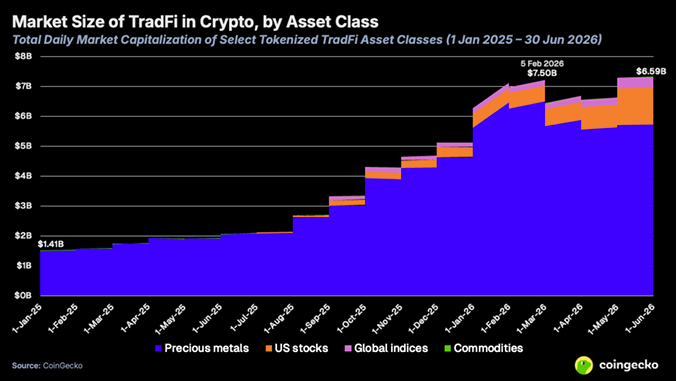
In response, many exchanges are expanding beyond spot trading. According to a recent CoinGecko report, the “crypto TradFi” sector, which includes tokenized assets, derivatives and other traditional financial products, grew fivefold to $6.6 billion between January 2025 and June 2026.
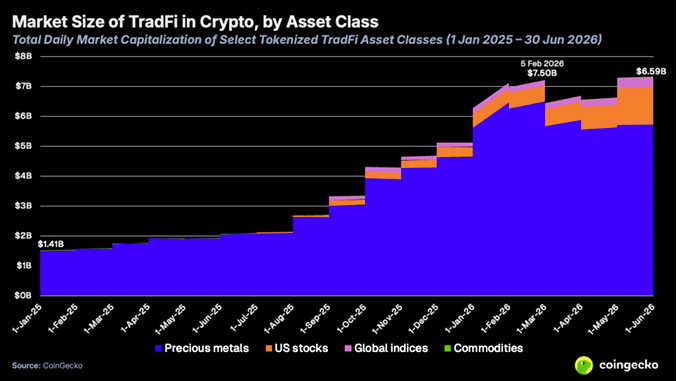
Tokenized stocks and commodities have emerged as leading drivers of crypto TradFi growth. Source: CoinGecko
Coinbase’s latest earnings underscore that shift. Although the company missed earnings expectations, it reported that 88% of second-quarter net revenue came from businesses other than spot Bitcoin trading, with derivatives, prediction markets and tokenized assets playing an increasingly important role.
Magazine: Dubai tops Asian crypto hubs, Taiwan passes crypto laws: Asia Express
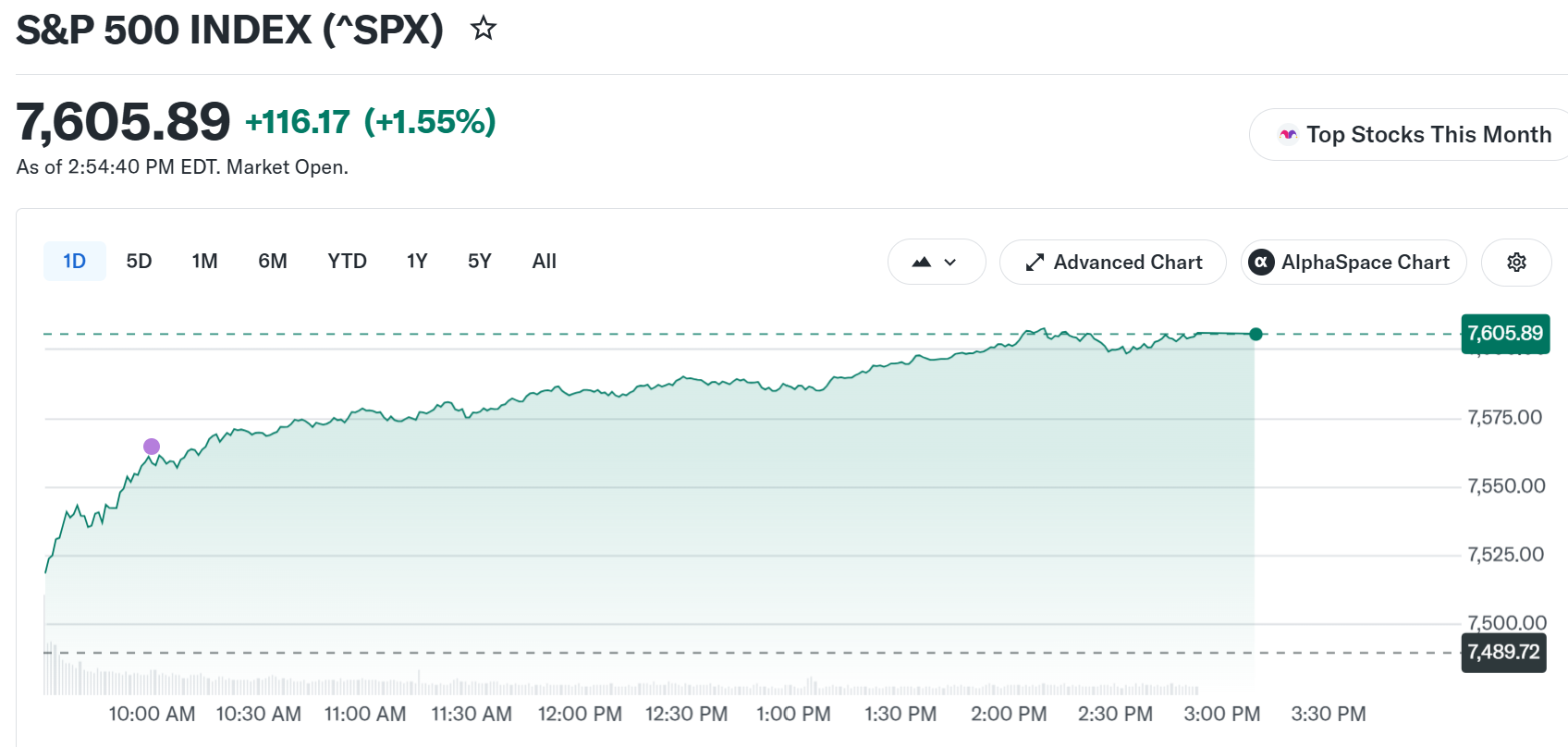
Two of Wall Street’s loudest voices said the same thing on Monday. Stay bullish. Tom Lee expects 2027 to be a banner year for stocks. Jim Cramer wants people buying Amazon on any dip.
July was ugly for stocks. But Lee says the selling came from one blown-up fund, not weak company profits. That gap drives his call.
Tom Lee Says Stocks Are a Coiled Spring Before 2027
Lee runs research at Fundstrat, a Wall Street firm. He expects August to be a recovery month. He sees the S&P 500 reaching 7,800. It sat near 7,605 on Monday.

Profit forecasts rose in June and July. Share prices did not. Lee calls that a coiled spring. This is not a new view. Fundstrat lifted its year-end target to 8,000 from 7,700 on June 24. Higher 2027 profits drove it.
July’s drop had one main cause. A fund called Situational Awareness borrowed heavily to bet on artificial intelligence (AI) stocks. When those stocks fell, it had to sell fast.
Former OpenAI researcher Leopold Aschenbrenner runs it. The fund shrank from about $45 billion to roughly $10 billion.
South Korea took the worst of it, because its market leans on SK Hynix and Samsung. Stocks there have since staged a Korean chip stock rebound.
“So I think 2027 could be one of the best years for the stock market,” Tom Lee, Fundstrat head of research, on CNBC.
Two worries fade by next year. SpaceX only listed in June, and early backers could not sell. That lock now lifts in stages. Up to 44% of its shares could hit the market by September.
The other is the Federal Reserve’s new head. Kevin Warsh took the oath on May 22. He has set US rates for barely 10 weeks.
Lee expects inflation to cool too. He points to falling house prices and slow wage growth. The data is mixed. Case-Shiller had April home prices up 0.8% in a year. Inflation ran at 3.8%.
Cramer Says Amazon Is the Dip to Buy
In a post on Monday, Cramer pointed followers to his weekend column. He named one stock to buy on weakness.
“As you know from my piece this weekend, the one to buy on any downturn is Amazon…” he said.
Amazon just had a strong quarter. Its cloud arm made $42.23 billion in sales, up 37% in a year, per its filing. Analysts replied with Amazon price target hikes reaching $400.
His Bitcoin Call Goes the Other Way
Cramer likes stocks. He does not like Bitcoin (BTC). He says he will sell all of his. Price is not the reason.
Quantum computers are. These are new machines that could one day crack the maths guarding Bitcoin wallets.
IBM boss Arvind Krishna told him on CNBC to be paranoid within three to four years. Krishna sees quantum creating $1 trillion in value by the end of the 2030s. This Bitcoin quantum exposure analysis covers the timing.

BTC trades near $63,873 as of this writing, up 0.9% in a day.
Cramer has said this before. In December 2022 he announced he had dumped all his crypto. Bitcoin sat near $16,797 then. It is up about 259% since.
Friday’s jobs report will test Lee’s inflation view. Cramer’s track record makes his Bitcoin exit the call to watch.
The post Jim Cramer and Tom Lee Share a Bullish Call That Could Shape Investors’ Next Move appeared first on BeInCrypto.
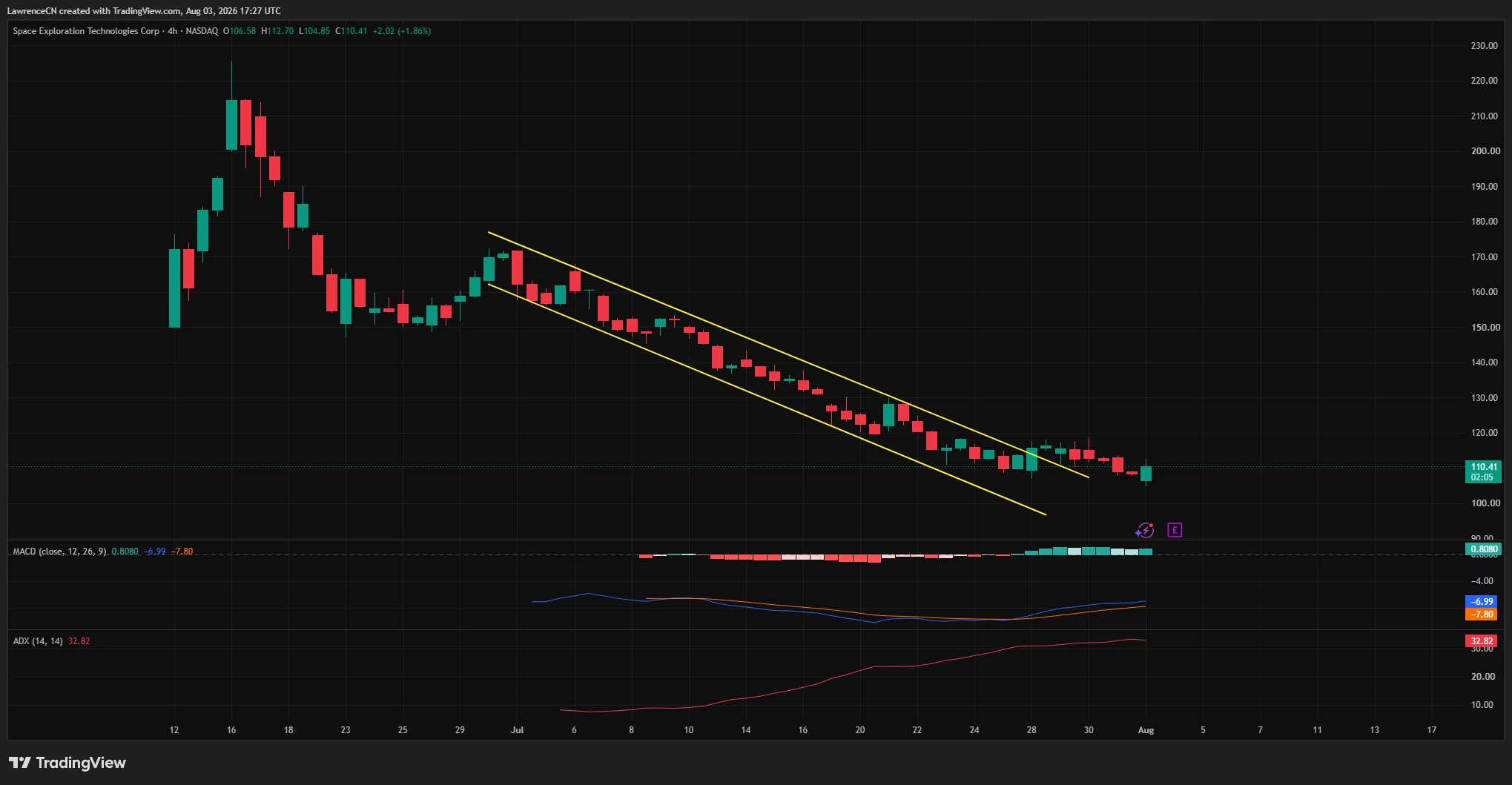
SpaceX stock is attempting to stabilize near $110 ahead of its first post-IPO earnings report, but a $100 billion share unlock could limit any recovery.
Summary
- SPCX has fallen 52% from its June intraday peak of $225.64.
- Analysts expect $6.88 billion in revenue and a loss of $0.23 per share.
- The 4-hour chart shows improving momentum after SPCX exited a descending channel.
- Up to 911.5 million shares become eligible for sale on Aug. 6.
- A recovery requires SPCX to reclaim $120, followed by the $130 resistance area.
SpaceX will report its second-quarter results after the US market closes on Aug. 4, giving investors their first detailed look at the company since its June initial public offering.
The report arrives at a difficult point for SPCX stock. Shares recently traded at $110.41, down about 18% from their $135 IPO price and roughly 52% below the June intraday high of $225.64.
That decline has reduced some of the valuation premium created by the IPO’s limited float. However, the company is still valued at roughly 35 to 37 times projected 2026 revenue, leaving little room for weak results or cautious guidance.
SpaceX earnings face unusually high expectations
Wall Street expects SpaceX to report approximately $6.88 billion in second-quarter revenue, according to FactSet data. Analysts forecast a loss of $0.23 per share and adjusted earnings before interest, taxes, depreciation and amortization of about $2.1 billion.
Full-year expectations stand near $39 billion in revenue and $17.3 billion in EBITDA.
These estimates place considerable pressure on SpaceX’s three main businesses: Starlink, rocket launches and artificial intelligence. Investors will assess whether revenue growth from Starlink and launch contracts can support the company’s spending on Starship, satellites and AI infrastructure.
Cantor Fitzgerald analyst Colin Canfield has warned that the first report could contain an “extreme expectation bias,” reflecting the potential gap between Wall Street forecasts and SpaceX’s actual performance.
Starlink is likely to receive the most attention because its recurring subscription revenue could help offset the more volatile economics of rocket development. Analysts expect the connectivity segment to remain SpaceX’s largest revenue source, supported by more than 10 million users.
The launch business also enters earnings with a substantial order pipeline. SpaceX recently secured a $1.6 billion US Space Force contract covering 18 Falcon 9 launches through 2027, adding visibility to its government-related revenue.
AI presents a less certain outlook. Investors will want details on spending, revenue and expected returns following SpaceX’s expansion into AI infrastructure. High capital expenditure without a clear path to positive free cash flow could renew concerns about the company’s valuation.
SPCX stock shows early signs of stabilization
The 4-hour chart shows SPCX stock moving out of a descending channel that guided prices lower throughout July. Shares recently rebounded from an intraday low of $104.85 and reached $112.70 before settling near $110.41.
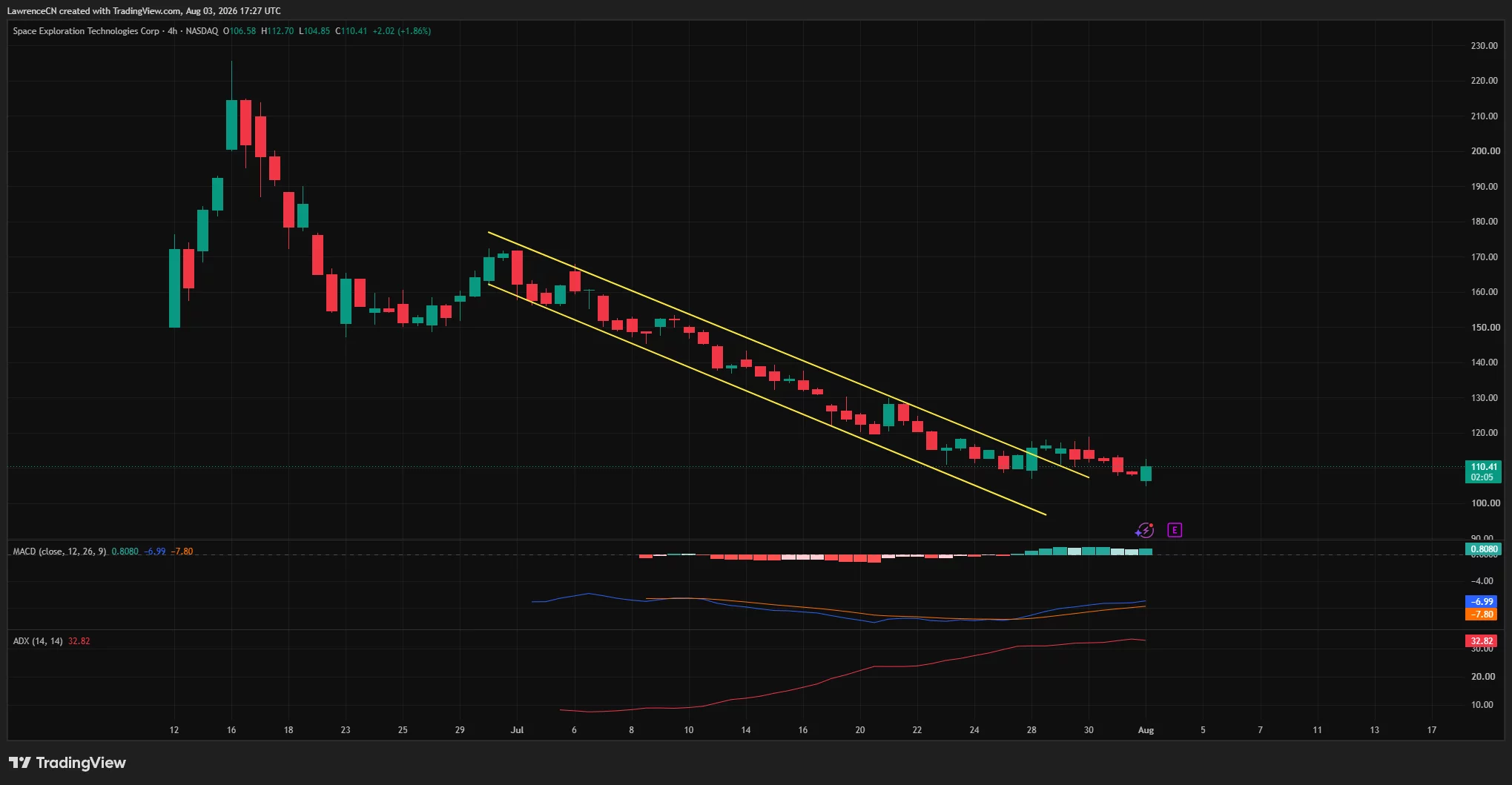
That breakout suggests the decline may be losing momentum. However, it does not yet confirm a wider trend reversal because the stock remains close to its record low and well below several former support levels.
The Moving Average Convergence Divergence indicator has produced an early bullish crossover. The MACD line stood at minus 6.99, above its signal line at minus 7.80, while the histogram turned positive at 0.81.
Because both lines remain below zero, the signal points to improving short-term momentum rather than an established bullish trend.
The Average Directional Index stood at 32.82. An ADX reading above 25 normally indicates a relatively strong trend, but the indicator does not determine its direction. In this case, it primarily confirms the strength of the decline that preceded the latest stabilization attempt.
A strong earnings report could provide the catalyst needed to validate the channel breakout. Weak results, however, could turn the move into a temporary pause within the larger downtrend.
SPCX needs to reclaim $120 to extend its recovery
Immediate resistance sits between $112.70 and $115, an area that has repeatedly limited rebounds since late July. A 4-hour close above that zone could allow SPCX to test $120.
The $120 level previously acted as short-term support before the latest breakdown. Reclaiming it would improve the technical structure and could expose the stock to resistance between $127 and $130, near the upper boundary of the former descending channel.
A move above $130 would offer stronger evidence that SPCX has formed a short-term bottom. The next major resistance area would then sit between $140 and $150, where sellers controlled several July rebounds.
On the downside, $104.85 is the first support level. A break below that intraday low would place the psychological $100 mark at risk.
Falling below $100 after earnings would invalidate the latest channel breakout and leave SPCX without a clear historical support level because the stock has traded publicly for less than two months. That lack of price history could increase volatility as investors search for a new valuation floor.
The Aug. 6 unlock could limit an earnings rally
Even an earnings beat may not remove the stock’s most immediate supply risk.
Up to 911.5 million shares held by employees and some early investors become eligible for sale on Aug. 6, the second trading day after the earnings release. At $110.41 per share, the tranche is worth about $100.6 billion.
The release exceeds the approximately 639 million shares initially available for public trading. If every eligible share entered the market, the tradable supply would rise to roughly 1.55 billion shares. Eligibility does not mean holders must sell, but the size of the tranche creates the potential for considerable selling pressure.
A second tranche of 455.8 million shares could have qualified for early release if SPCX closed at or above $175.50 on at least five of the 10 trading days through earnings. The stock’s decline means that condition will not be met.
SpaceX’s staggered lock-up structure will release additional shares over the coming months. By Dec. 8, the number of potentially tradable shares could reach approximately 5.33 billion, compared with fewer than 640 million following the IPO. Elon Musk’s holdings remain subject to a longer restriction extending into mid-2027.
Can SpaceX earnings revive SPCX stock?
The bullish scenario requires SpaceX to beat revenue expectations, demonstrate strong Starlink margins and give investors a credible plan for funding AI and Starship investments. Those results could push SPCX through $115 and toward $120 or $130.
The bearish case centers on continued losses, elevated capital spending and weak guidance. Those concerns would become more damaging when combined with the Aug. 6 unlock, particularly if employees and early investors use the earnings window to sell.
SPCX’s improving MACD and channel breakout provide an early technical basis for a rebound. Still, the stock must reclaim $120 before the move can be treated as more than a relief rally.
Earnings could revive SPCX in the short term, but holding those gains may prove harder. The company must satisfy high operating expectations just two days before its available share supply begins to expand.
Disclosure: This article does not represent investment advice. The content and materials featured on this page are for educational purposes only.

Selena Gomez Reveals Fitness Habits That Keep Her Strong While Managing Lupus and Prioritizing Wellness

Palantir Just Crushed Wall Street by $125 Million: How Will Stock React?

WAFCON: Nigeria’s Group C Qualification Scenarios Explained


-

 Business5 days ago
Why Trees Belong on the Risk Register
-

 Fashion3 days ago
Weekend Open Thread: Wit & Wisdom
-

 Politics3 days ago
Meta enters AI-training agreement with far-right ‘propaganda rag’ Newsmax
-
 Entertainment6 days ago
‘Stargate’ Creator’s New Sci-Fi Series Returns for Season 3 Tomorrow
-

 Crypto World2 days ago
MicroStrategy Post-Earnings CLARITY Act Push Could Add New Catalyst for Its Stock
-

 Politics6 days ago
The Part of the Electric Transition Nobody Wants to Discuss
-

 Business6 days ago
Major shareholder moves on Canyon
-

 Crypto World3 days ago
XRP Ledger v3.3.0 brings five institutional features
-

 News Videos4 days ago
Bitcoin Enters the 3rd Stage of the Bear Market
-

 Crypto World6 days ago
Kraken Enables Retail Access to Jersey Mike’s IPO via Tokenized Shares
-

 Tech7 days ago
New macOS Sequoia & Sonoma security updates for older Macs
-

 News Videos6 days ago
Claude: Build Financial Dashboards in Minutes (2026)
-

 Politics4 days ago
Luke Littler’s dominance sparks GOAT debate
-

 Sports4 days ago
Seema Kaliramna Wins Discus Throw Bronze, Takes India’s CWG Medals Tally To 17
-

 Business6 days ago
Johnson & Johnson agrees to $5.5B settlement over talc cancer claims
-

 Crypto World1 day ago
Crypto PAC spending tops $2M in Michigan House race
-

 Business3 days ago
Trump Announces Hamas Disarmament Agreement as Iran Strikes Kuwait Air Base and US Attacks Pause Overnight
-

 Crypto World3 days ago
New York sues Kalshi over prediction market gambling
-

 Tech5 days ago
Gemini can now summarize the messiest comment threads in Google Docs
-

 Tech2 days ago
ESET tracks rise in malicious AI skills and adaptable malware
You must be logged in to post a comment Login